Currently reading: McLaren to add SUV and second factory in major UK expansion

£500m investment paves way for new model lines, two bespoke engines and added production facilities

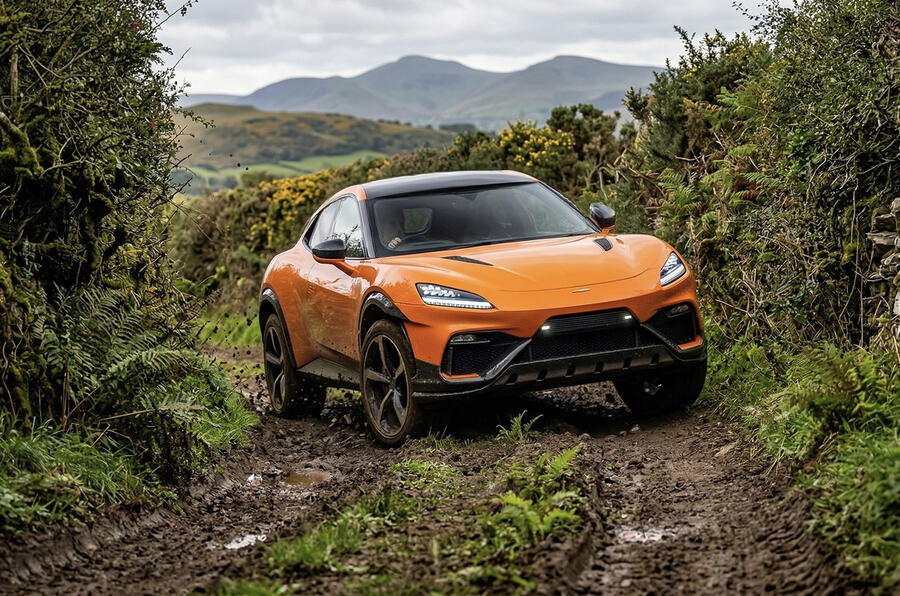
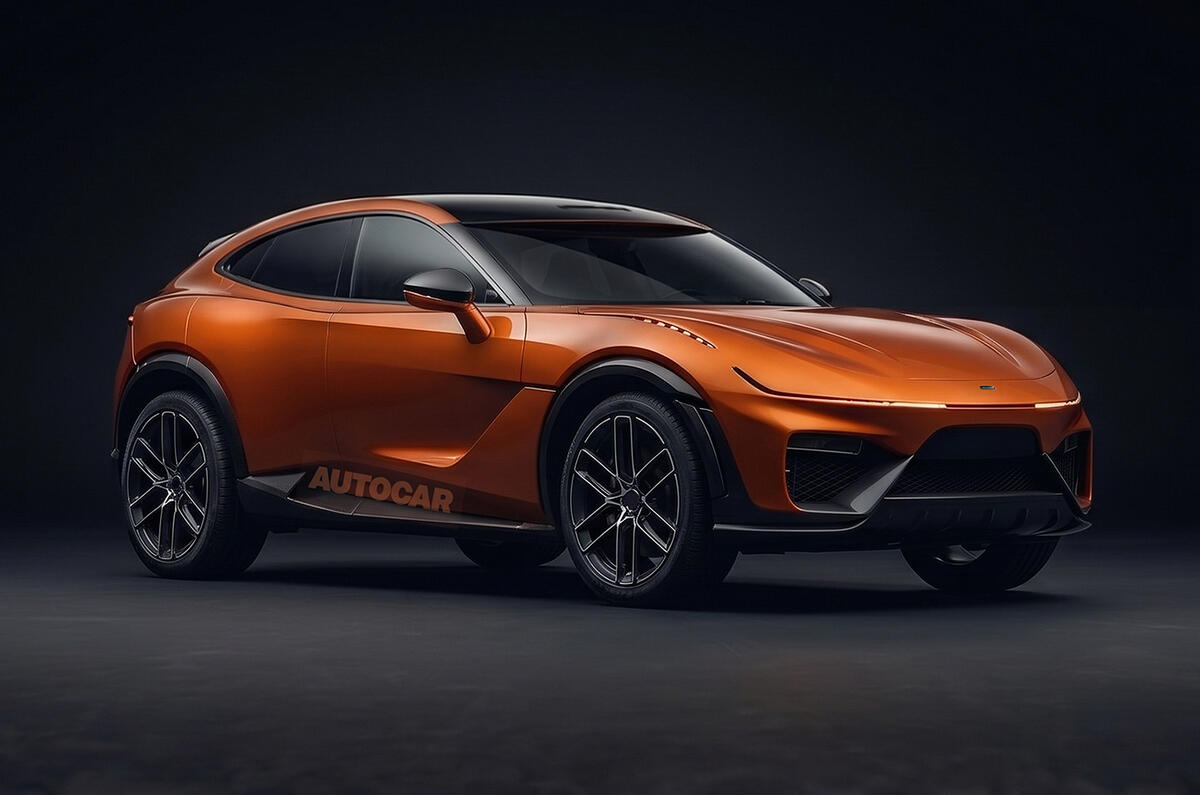
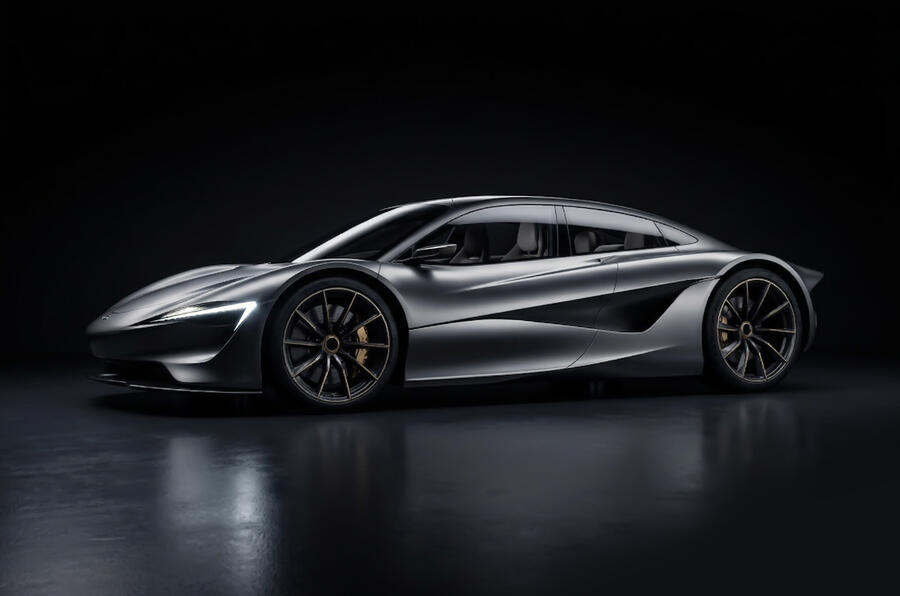
McLaren will begin production of a performance SUV in Britain in the coming years, as the first in a new line-up of models enabled by a landmark £500 million investment that will fund another factory, significantly boost its production volumes and create 4000 jobs.

McLaren merged with EV start-up Forseven in early 2025 and hinted at plans for a significant expansion of its operations and model line-up, but had yet to reveal any firm details about what the future held for the Woking supercar maker.

Now, McLaren has confirmed £500m of investment from the Abu Dhabi government's L'IMAD investment arm, and has disclosed new details of how the company will be transformed over the coming years - as well as confirming that it will launch a long-mooted SUV model line. That machine could be carbon-tubbed and is likely to spawn other front-engined models in the future.

Speaking exclusively to Autocar, McLaren's chief operating officer Michael Straughan gave details about what the announcement means for the company and its cars, and emphasised the firmness of the strategy that has been signed off.

"There's a roadmap for about the next 10 years that gives us real confidence. We've got a growth plan and a delivery perspective on how we can get to where we want to get to,” he said. 

"This isn't empty words - this is a firm plan, and we'll be held to task against the plan, and rightly so."

L'IMAD is McLaren's new owner, having recently absorbed CYVN Holdings, which acquired the sports car firm from Bahraini wealth fund Mumtalakat in late 2024 and promptly merged it with another automotive brand in its portfolio, Forseven. L'IMAD's £500m injection into Woking forms part of a "larger commitment" in McLaren's future, but it has not hinted at the scope of any future investments. 

The money will be used to develop future models and expand McLaren's UK production operations, chiefly with the addition of a second assembly facility to supplement the McLaren Production Centre at Woking, which built around 2000 cars in 2025. 
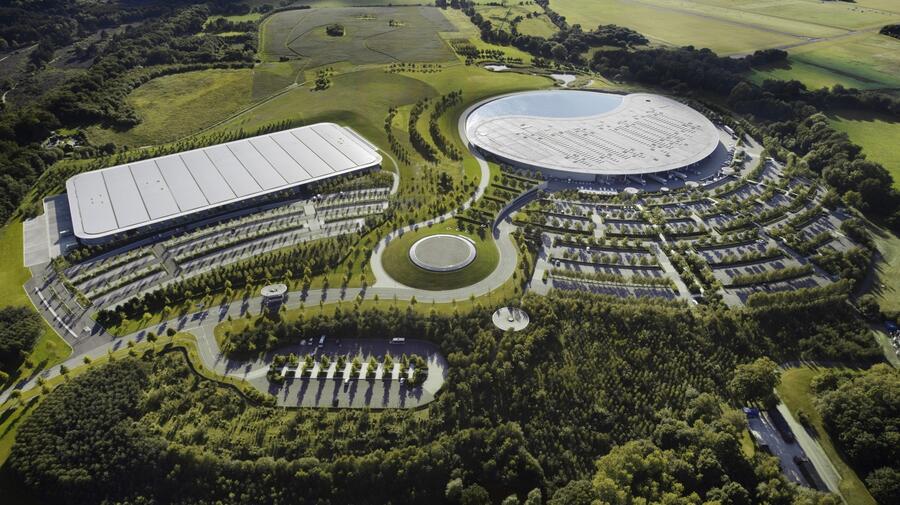
The company has not revealed where this new facility will be, but said it forms part of a plan to "ensure the next generation of McLaren Automotive cars are built in Britain" - including the long-awaited SUV, which is in the advanced stages of planning ahead of a launch before 2030. 

Straughan explained that the expansion into new car segments makes extra production capacity necessary: "No longer will we be only rear-engined, rear-wheel-drive cars. There's going to be front-engined, and either four-wheel drive or perhaps rear-wheel drive in the future. It's very difficult off one assembly line, so we need another assembly line - wherever we decide to put that."
Back to top

He also said that McLaren would not look to build cars on a line within another manufacturer’s factory in the UK, because “low volume is quite disruptive to an OEM's larger volumes”, so the new facility will be all-new and bespoke.

The main factory in Woking will also be expanded, as will the firm's carbonfibre facility in Sheffield

Significantly, McLaren will also bring engine development and production in-house for the first time, having previously bought in engines for all of its road cars - primarily from Shoreham-based engineering firm Ricardo, which has powered all core models since McLaren's relaunch with the 12C in 2011. 

First among these are a pair of new combustion engines and associated gearboxes. McLaren hasn't alluded to their technical specifications, but says they will support "the company's hybrid engine strategy".

Altogether, the new models, production operations and development programmes are estimated to create "at least" 1000 jobs within and around McLaren, with another 3000 added across the supply chain as a result. 

McLaren's expansion announcement comes just a few days after JLR – the UK's biggest automotive employer – announced it would cut 4000 jobs from its global workforce as part of a radical cost-cutting initiative, and Straughan acknowledged that meant there was "a skilled workforce out there" that could fill some of Woking's vacancies.

However, he also noted that while McLaren "will reach out" to affected JLR employees, "not everybody travels well to Surrey from the Midlands" and the priority for McLaren was to "grow our own" through apprentice, graduate and internships that "turn into full-time jobs".

McLAREN’S PUROSANGUE IS OFFICIAL

One of the headlines of the investment announcement is the long-awaited confirmation of a McLaren SUV, which has been under consideration for years – long before the merger with Forseven – and which will be charged with driving a huge increase in Woking’s luxury car market share.

McLaren is the last ‘mainstream’ luxury and sports car manufacturer to not offer an SUV, having doubled down on its supercar focus as rival marques pushed for higher volumes in recent years with higher-riding, five-door model lines - including the Ferrari Purosangue, Aston Martin DBX and Lamborghini Urus

Back to top

Following the Forseven merger, the company pledged to expand its model range beyond the mid-engined supercars it has made exclusively since it was founded, but it is only now that it has confirmed a “performance SUV” is one of its upcoming models. 

Set to be powered by one of McLaren’s new self-developed hybrid powertrains and be launched by 2030, the unnamed new model will be a natural rival to the DBX and Purosangue, but is tipped to still be more of a supercar than a luxury car, with Straughan revealing to Autocar that it could stay true to McLaren tradition in being built around a carbon tub, like its mid-engined stablemates.

"It's one of the discussions we're having at the moment, because nobody has ever done this before,” he said. “Every other SUV [of this type] has been aluminium, and we've got a number of options at the moment for what the body structure will be in the future.

"If we went that way, it would be the first. It would be incredibly special." 

Straughan acknowledged that there were "challenges we would have to overcome", in opting for a carbon tub – such as the impact on refinement, cost and repairability – but said the company was having "some really interesting discussions at the moment as to what way we should go". 

Back to top

Asked if those ongoing discussions meant the SUV was still in the early stages of development, Straughan said yes, but said the company still plans to launch it this side of 2030. 

Whatever its technical make-up, the SUV is planned to contribute significantly to McLaren’s planned volume increase over the coming years. Straughan would not be drawn on a target number, but pointed to the success of rivals like the Aston Martin DBX, Lamborghini Urus and Bentley Bentayga, which are comfortably their respective makers' best-selling models. 

"In terms of volume aspirations, you can guess as well as I can as to where this could go," he said, noting that McLaren's volumes "are about half of the next in the league table", referring to Aston Martin, which sells around 6000 cars per year.

Although it is preparing for a wide-reaching revamp of its line-up and production operation, McLaren will continue to produce its existing mid-engined supercars in Woking in the coming years, with no plans for a 'firebreak' like Jaguar imposed for a year between its previous-generation line-up and the imminent Type 01 GT. 

"A small company like McLaren can't afford that," said Straughan, "but we will start to phase in new products as quickly as we possibly can - and it's not too far away, either." 

DOOR OPEN TO CONTI GT RIVAL

The introduction of the SUV’s new architecture will pave the way for McLaren to chase rivals into other segments, too, with additional front-engined models that have more of a luxury focus than the current supercars.

While development is ongoing and the SUV remains the only model confirmed in the strategy, Straughan said:  "The interesting thing - and I'm not saying there's any firm plan behind this at the moment – is that once you put an engine in the front of the car, it opens up other opportunities."

He would not be drawn on which precise segments would be open to McLaren once it has introduced its new architecture, but suggested that any related models could also play a significant role in boosting volumes. 

Back to top

A notable gap in McLaren's line-up, compared to rivals, is in the front-engined grand tourer segment, currently populated by the likes of the Bentley Continental, Aston DB12 and Ferrari Amalfi - each of which is closely related to an SUV stablemate. Woking could look to adapt the new SUV platform to replace the mid-engined, supercar-derived GT it launched in 2019, with a more traditional long-nosed tourer. 

Not on the cards in the immediate future, however, is a pure-electric car. Straughan said it was important that McLaren launched an EV "at the right time, which is the most important decision to make". Rivals including Aston, Lambo and Bentley have each made similar pledges when delaying their debut EVs in recent years. 

"It's inevitable - it will come, and we've got to be ready for when it does come. The amalgamation of Forseven in McLaren actually gives us an advantage over the fact, by virtue of the fact that we had a group of individuals who were developing an electric SUV. 

"But the market reception to EVs in this space is not fantastic at the moment, so we can't afford to make a mistake with the product, and therefore we will hold off until we're certain that the customer demand is there."

McLaren parent L'IMAD is also a shareholder in Chinese EV firm Nio, which would seem a logical technical supplier for any forthcoming electric McLaren models. Indeed, Straughan hailed Nio as "an incredibly important partner", and said that some level of component-sharing on future products would be needed because "gone are the days where a small car maker can develop a car with their own IP entirely". 

Back to top

Straughan said the McLaren line-up will effectively comprise three 'swim lanes': the core supercars, the front-engined SUV and its derivatives, and the top-rung Ultimate Series models like the W1

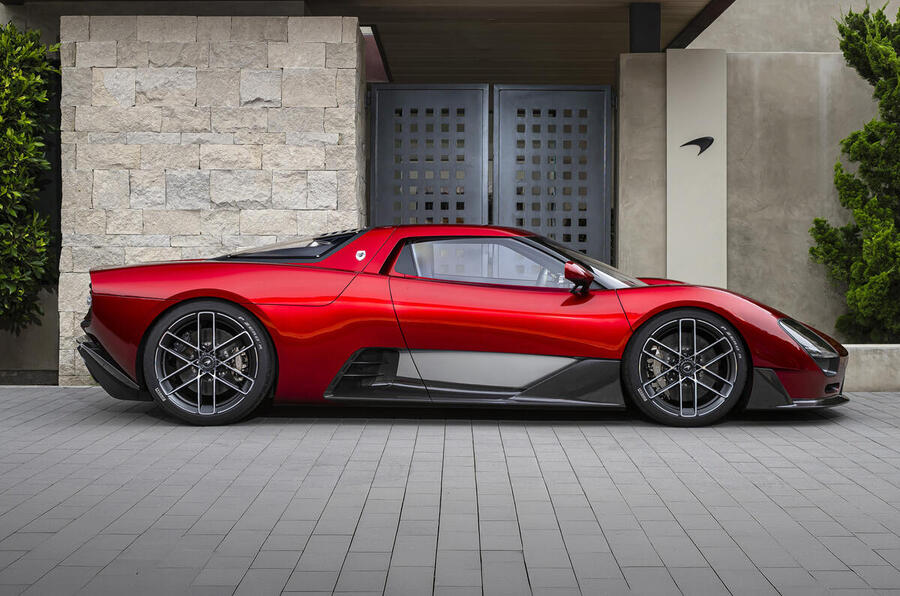
The new McL 6GT (below) – a highly exclusive special edition that harks back to the 1960s M6 GT supercar – sits outside of these three categories, and Straughan said that its successful debut at Monterey Car Week last month proved that there was "a real appetite for some really interesting concepts", noting particularly the "incredible" reaction to its six-speed manual gearbox, McLaren's first since the F1. 

He hailed the decision to equip the McL 6GT with a manual as a "masterstroke", but said the business case behind putting a manual option in the company's core models was "a different question altogether".

NEW ENGINES INBOUND

McLaren’s landmark move to take engine development and production in-house forms part of a drive to make its cars more bespoke, and to enhance their “emotional” qualities.

While Woking’s current V6 and V8 engines are developed with and supplied by Ricardo, they are exclusive to McLaren, and Straughan said the firm plans to double down on that exclusivity as it takes full ownership of the powertrain programme.

Back to top

"Not all of our customers understand that a McLaren engine is a McLaren engine - it isn't purchased off another brand, it's designed and developed by McLaren,” he said. “And for the first time ever, on future generations of engines, we can make the engine in-house." 

He stopped short of giving any details of these new powerplants – which will be used in combination with hybrid elements, as in the W1 hypercar – but said they will be developed and tuned to maximise engagement. 

"The engine of the car is probably the most important element in terms of creating emotion - not only from what you sense in the vibration through the car, what happens when you accelerate, the feel of power and performance, but also in the emotion of the sound that comes out the exhaust pipe. So it's a pretty critical component,” he said. 

McLaren’s long-standing partnership with Ricardo continues on other engineering projects, he said, but the Sussex outfit will no longer build and ship engines to Woking as it does now.

Asked about the technical make-up of these new engines, Straughan said: “Obviously it’s going to start with the current V8 products or the future generation of that, but once you start building engines there are lots of opportunities”.

Confirmation of plans for two distinct engine programmes suggests McLaren will offer different cylinder counts and capacities across its line-up going forward. A new-generation V8 looks likely, and it’s possible that McLaren could follow Ferrari in developing a new V6 to replace the Ricardo six-pot in today’s Artura. 

Join our WhatsApp community and be the first to read about the latest news and reviews wowing the car world. Our community is the best, easiest and most direct place to tap into the minds of Autocar, and if you join you’ll also be treated to unique WhatsApp content. You can leave at any time after joining - check our full privacy policy here.

Felix Page

Felix Page
Title: Deputy editor

Felix is Autocar's deputy editor, responsible for leading the brand's agenda-shaping coverage across all facets of the global automotive industry - both in print and online.

He has interviewed the most powerful and widely respected people in motoring, covered the reveals and launches of today's most important cars, and broken some of the biggest automotive stories of the last few years.