





































McLaren introduces its third '1' car in its history, with almost 1300bhp and a £2 million price tag

Find A worthy P1 successor? 1258bhp, RWD McLaren W1 driven on road and track deals
Other Services
Sell your car
84% get more money with

There is a recent trend for hypercars to have four-wheel drive, with engines typically in their middle and supplemented by electric motors at the front.

And with good reason, because more than 1000bhp is an awful lot for two wheels to deal with by themselves. Some engineers say that to get the best out of so much power, it must be distributed through four tyres.

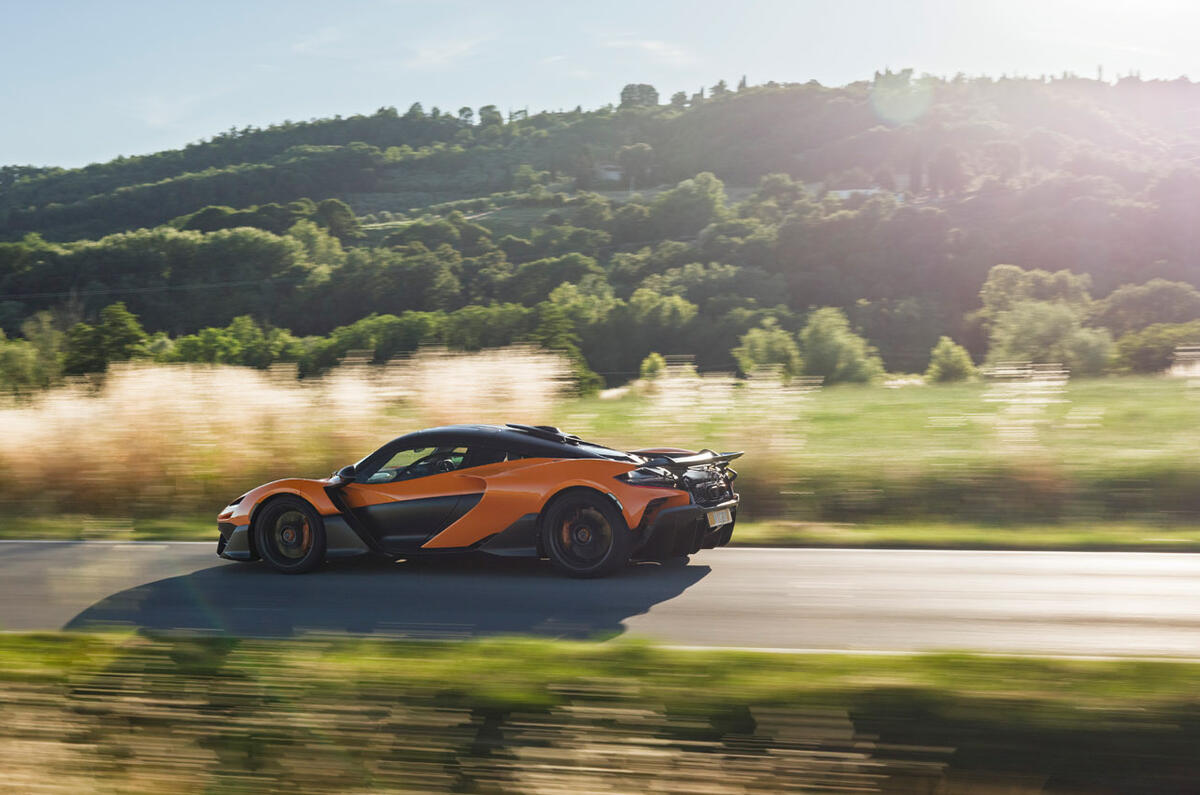
McLaren engineers don’t feel the same. This is the W1, McLaren’s latest Ultimate Series hypercar and the third in the lineage of ‘1’ cars, after the F1 and P1 (and only the second ‘1’ during the new iteration of McLaren’s road car division). Like those, it is carbonfibre-tubbed and mid-engined – and exclusively rear-wheel drive.

As with the P1 it’s a hybrid, but this time it can’t be plugged in, because that would make it heavier. McLaren has taken a different path from some of its competitors by attempting to rule out anything that adds unnecessary weight.

So, as with equipping it with rear-wheel drive only, it has opted for a mechanical layout that makes the car as light as is realistically possible. McLaren claims a lightest dry weight of 1399kg (I’d prefer a wet kerb weight, but rivals use this number too). Anyway, you can imagine how hard they will have worked for the last kilo.

Here’s how it pans out.

 

Advertisement

DESIGN & STYLING

McLaren W1 review 2026 26

The W1’s chief engineer, Andy Beale, showed me around an unclothed W1 in the garages at Mugello circuit, which is just 70 miles from Ferrari’s home in Maranello. You can read something into that if you like: it isn’t the first time McLaren has, figuratively or literally, arrived on Ferrari’s patch – although it may just be due to circuit suitability and availability for this car and at this time of year.

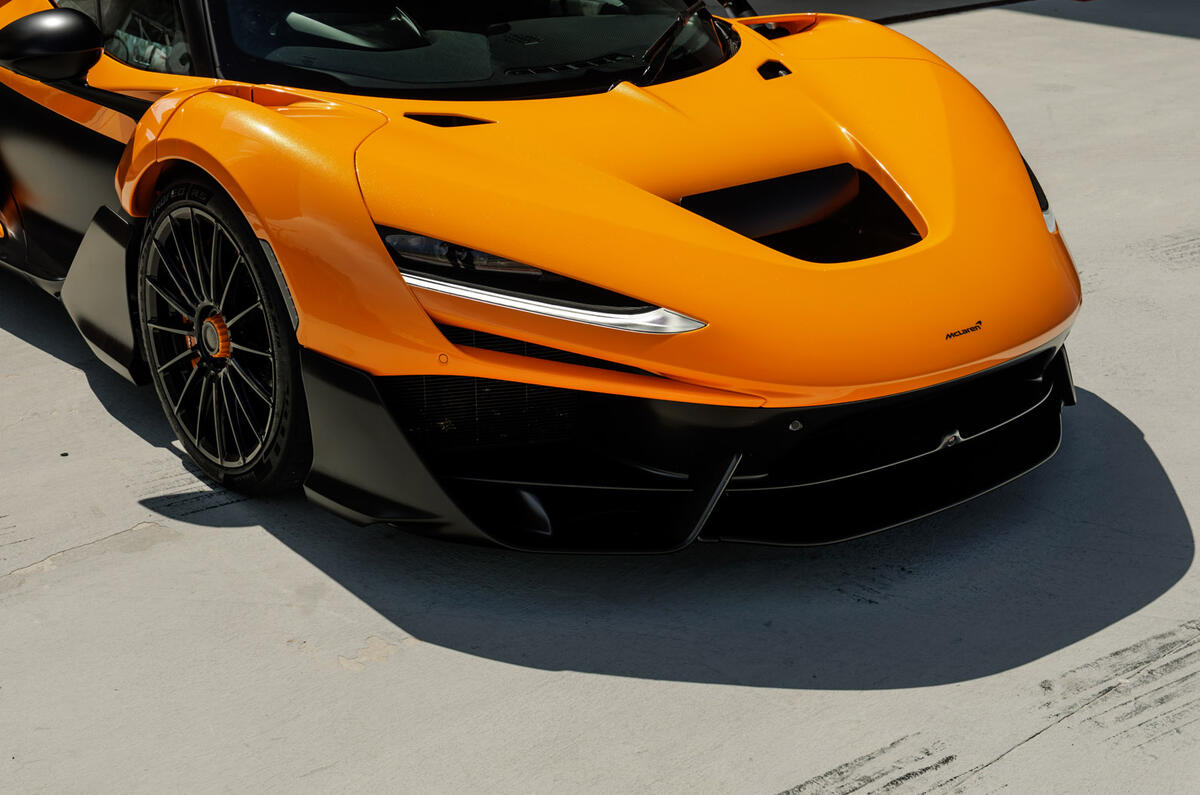
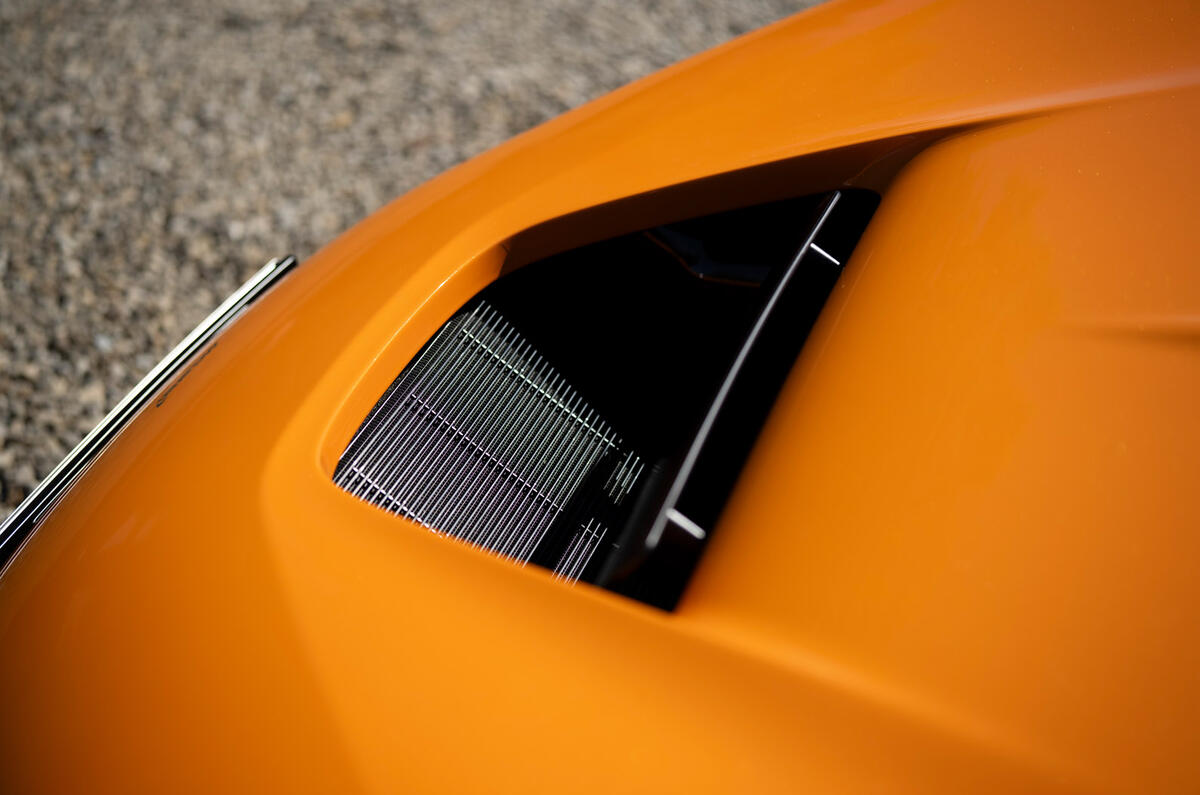
At the W1’s front there’s an aluminium crash structure, which also holds the bodywork and some of the W1’s (many) cooling radiators, but the suspension and steering rack are both mounted directly to the carbonfibre tub.

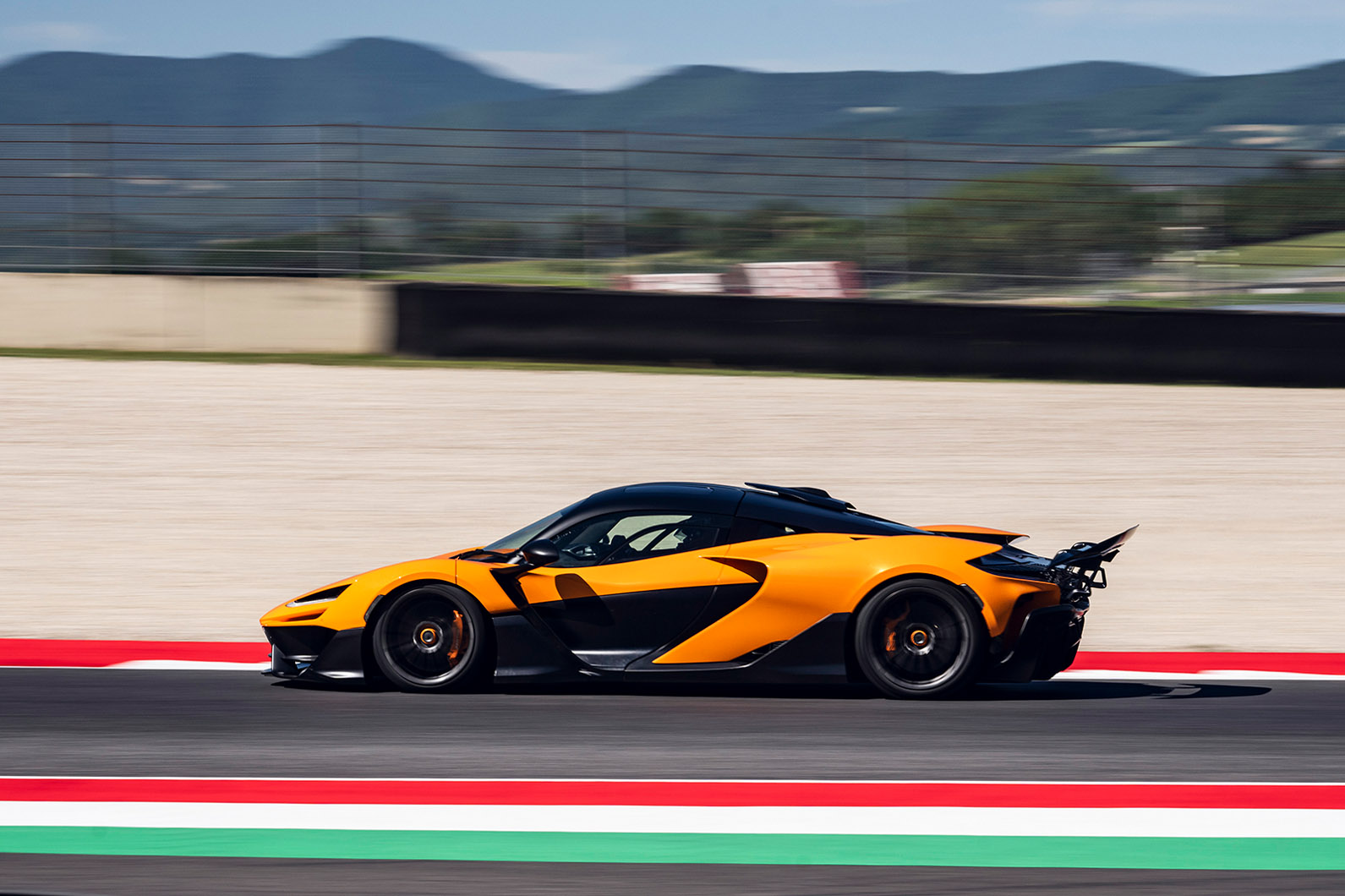
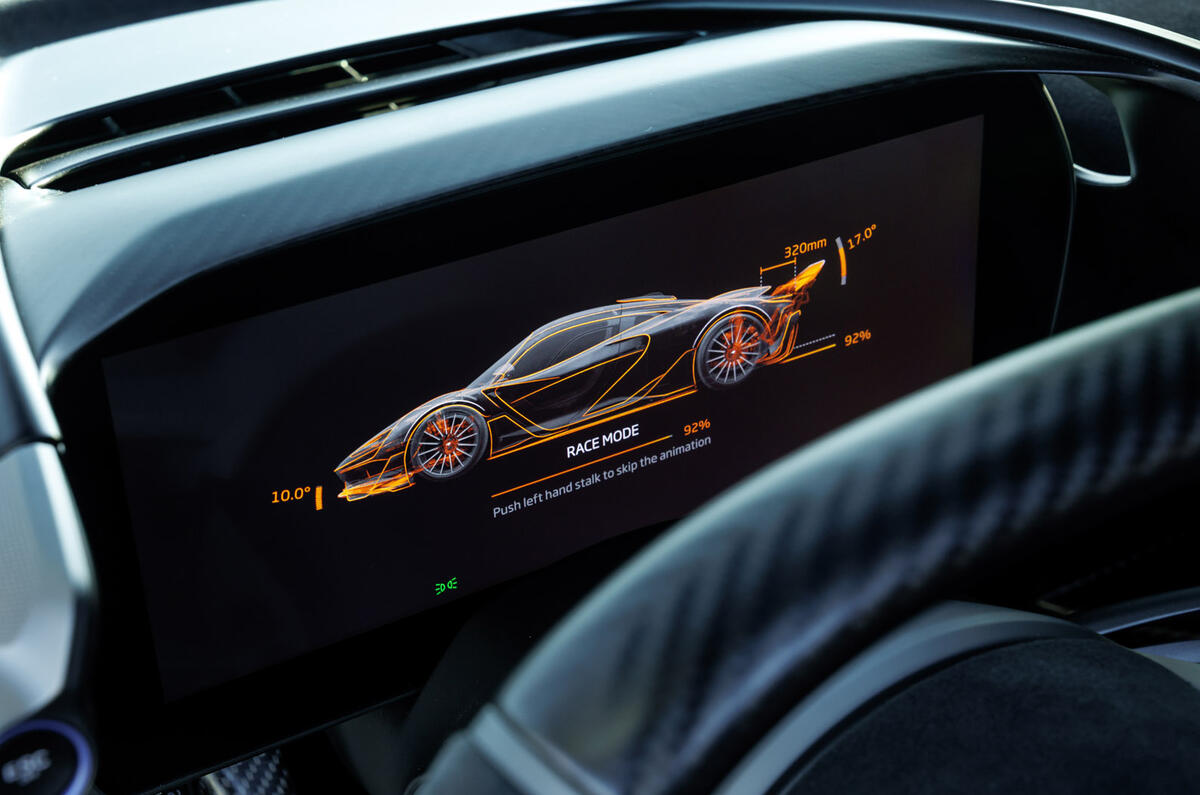
In Race or Race+ modes, the ride height is lower, by 37mm at the front and only 17mm at the rear, because they want to change the angle of attack too.

This is laid up using resin pre-impregnated (pre-preg) carbonfibre, the first in a road-going McLaren since the F1, because it’s such a labour-intensive process. McLaren tubs are usually laid up dry, then resin is injection-moulded using a high-pressure tool, which is more suitable for high volumes. The W1, given they’re only making 399 (all spoken for), is not a high-volume car.

Torsional rigidity is a claimed 44kNm/degree, and the tub, including all of its metal inserts, weighs 70kg. Suspension is by double wishbones front and rear, with coil springs and adaptive dampers. There is no 48V trickery or linked hydraulics or stuff like that: by the time you’ve added inverters and so on, says Beale, it all gets too heavy.

But there is some suspension magic going on. At the front the W1 is low, and there are pushrods because that helps keep the damper units lower, so the scuttle is lower and the driver lower, yet visibility remains fine.

Beale had to explain the suspension to me twice before I totally got it, but here goes: in the standard ride height there are two drive modes available: Comfort and Sport. The only difference is between them is damper stiffness.

There is a blank section within the spring/damper unit that gets compressed when the ride height is dropped. It doesn’t affect the coil spring, the rate of which is unchanged. However, McLaren wanted the spring rate to increase when Race mode/height was engaged. So there are what look like anti-roll bars and what McLaren calls ‘heave bars’ front and rear.

At the front, the bar is telescopic and attaches to the suspension via thin torsion rods. When the suspension moves, in high ride mode, the bar is free to slide, unlocked, so its ends move entirely freely, and only the main springs are doing any resisting.

In low-ride-height mode, however, that bar is locked in position, which brings the torsion rods to which it is attached into play: suspension forces not only have to overcome the regular springs, but now they also have the resistance of these wee torsion bars, thus significantly increasing the spring rate.

At the rear the theory is the same, but the application is slightly different: a transverse heave bar, mounted high, is not engaged until its drop links are made rigid, as they are in Race mode. Otherwise they slide.

That sounds easier to explain than at the front, but they work on the same principle – and it’s packaging that means they’re different front to rear. At the back there’s a lot of engine and transmission stuff to lift the heave bar over. 

Pushrods also keep the unsprung mass down, while at the front those and the inboard bar also help clear space around the wheel well, which is used to channel air through to the sides of the car to cool the brakes along the way.

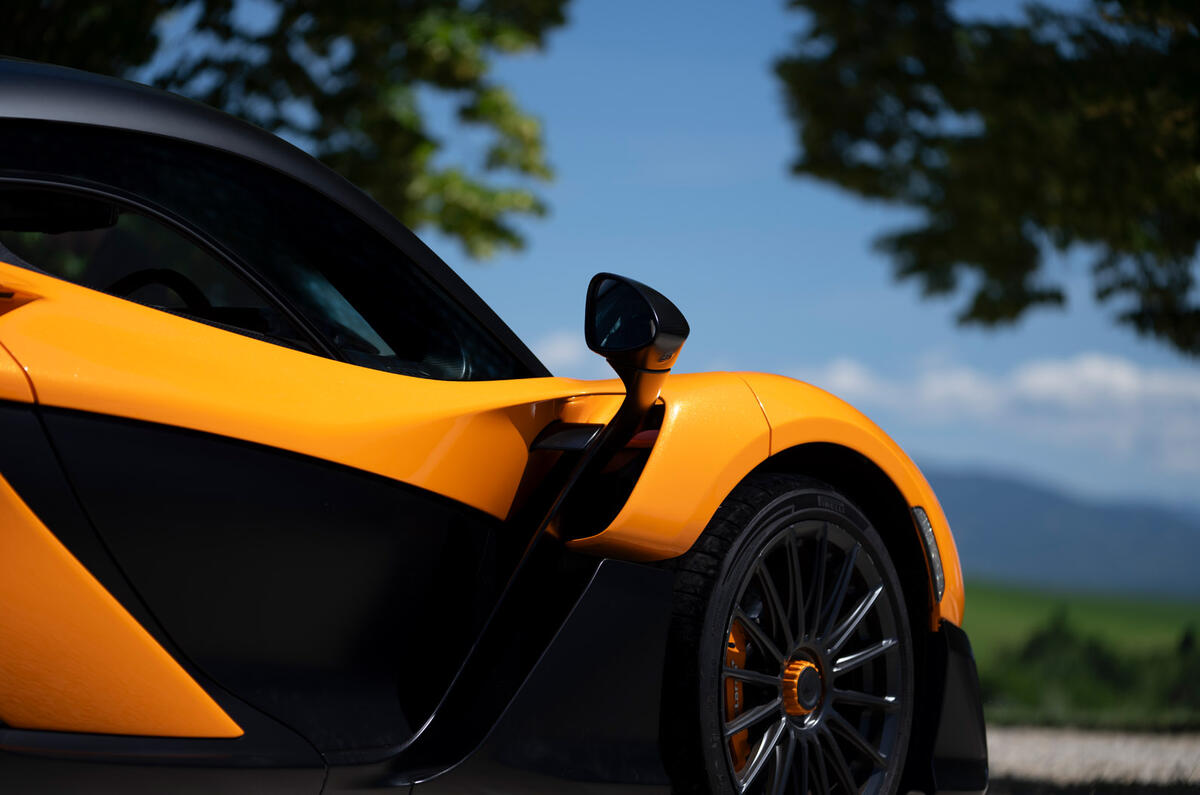
For this same aero reason, McLaren’s trademark dihedral-opening doors aren’t here: their hinges would be in a high airflow area, because McLaren directs it out from the front splitter and onto the bodywork. So there are gullwing doors. 

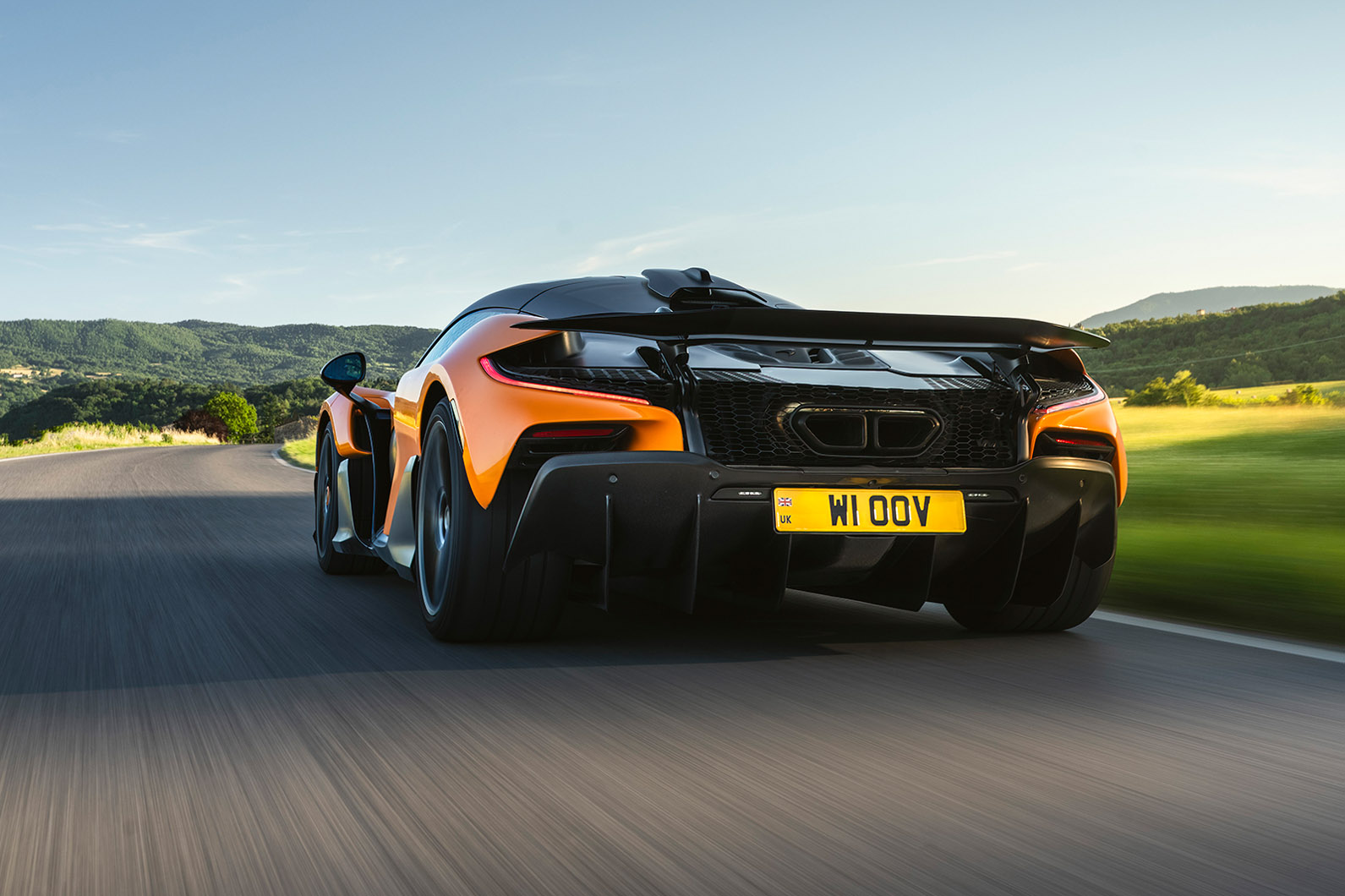
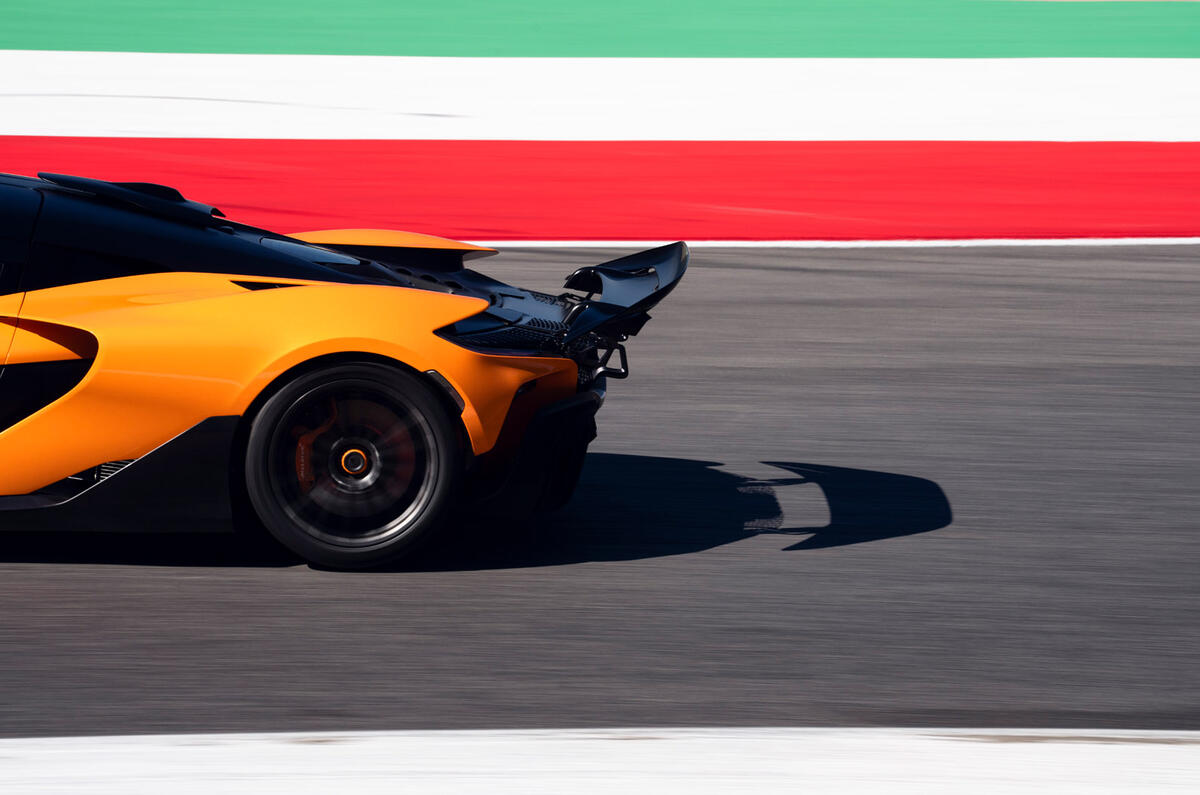
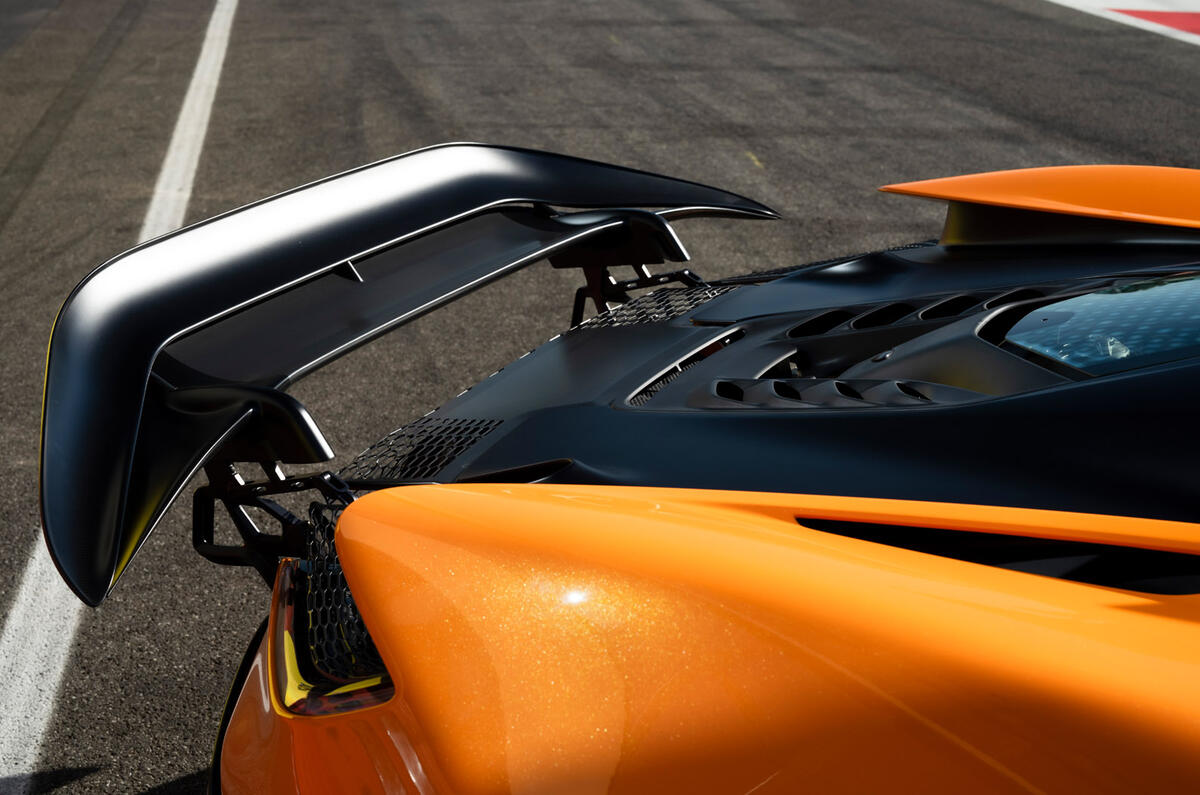
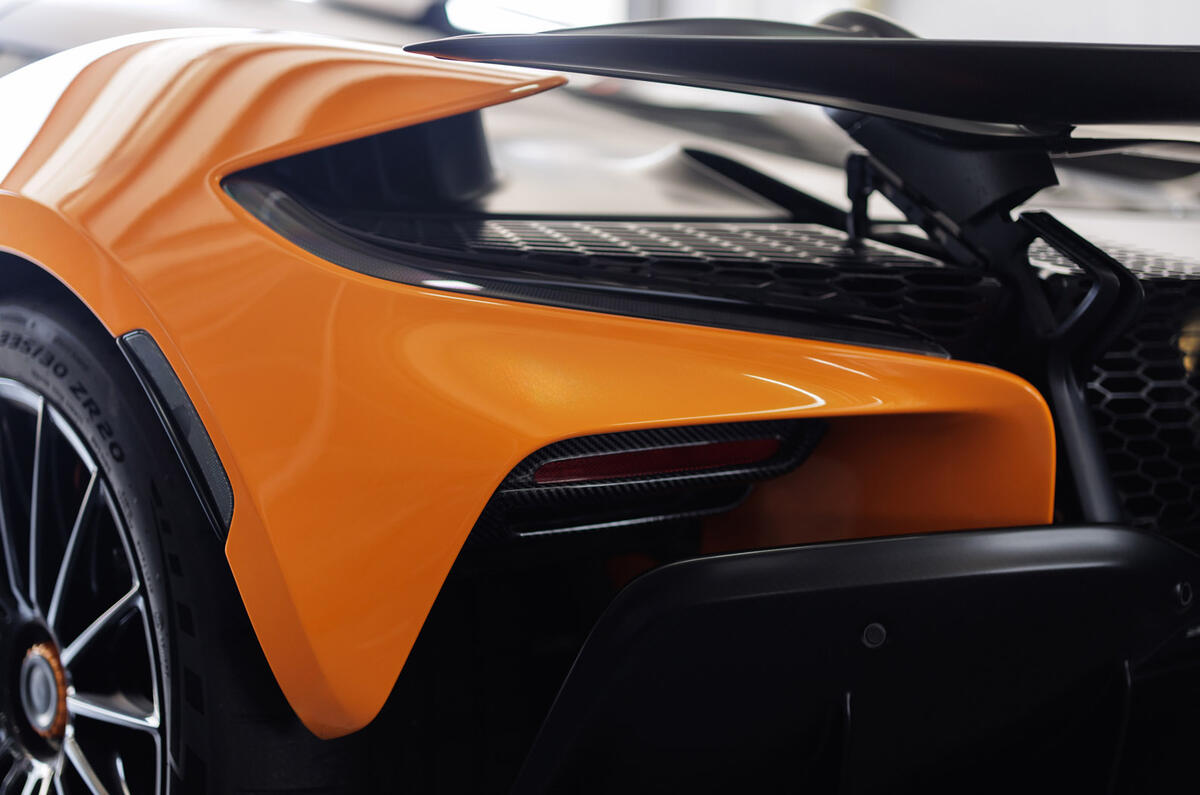
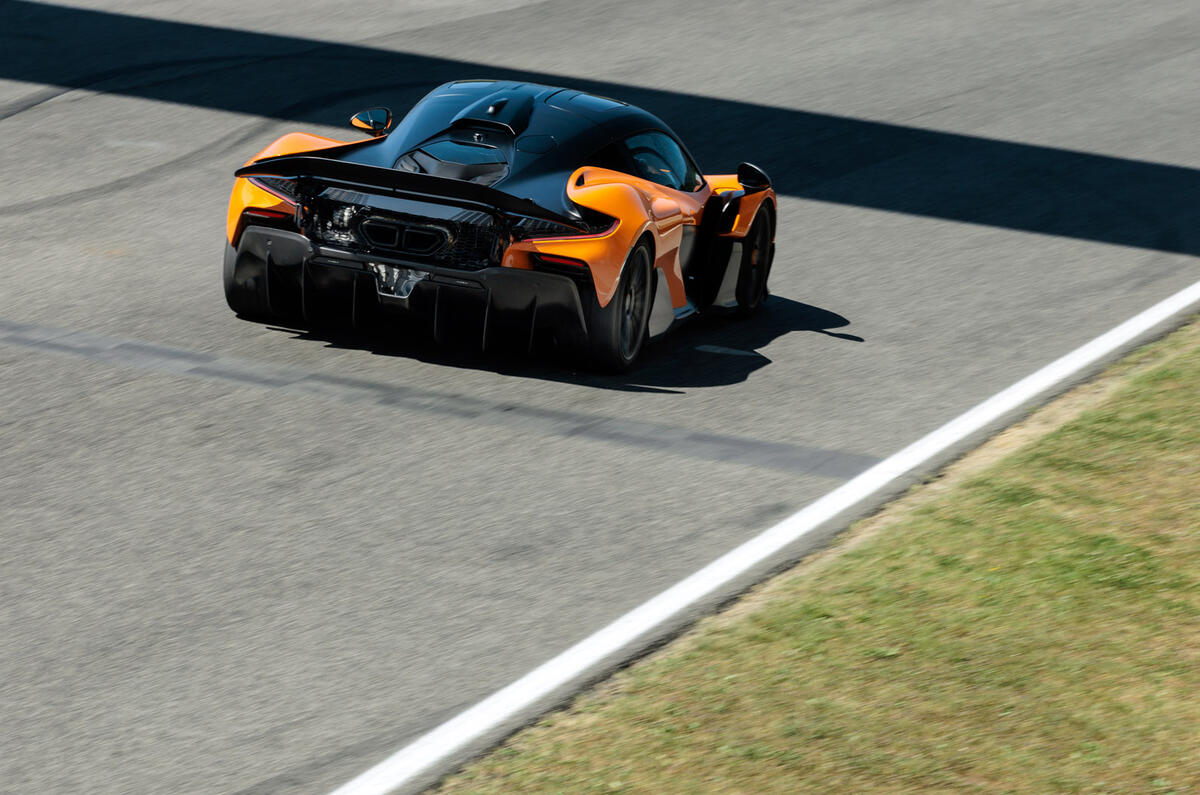
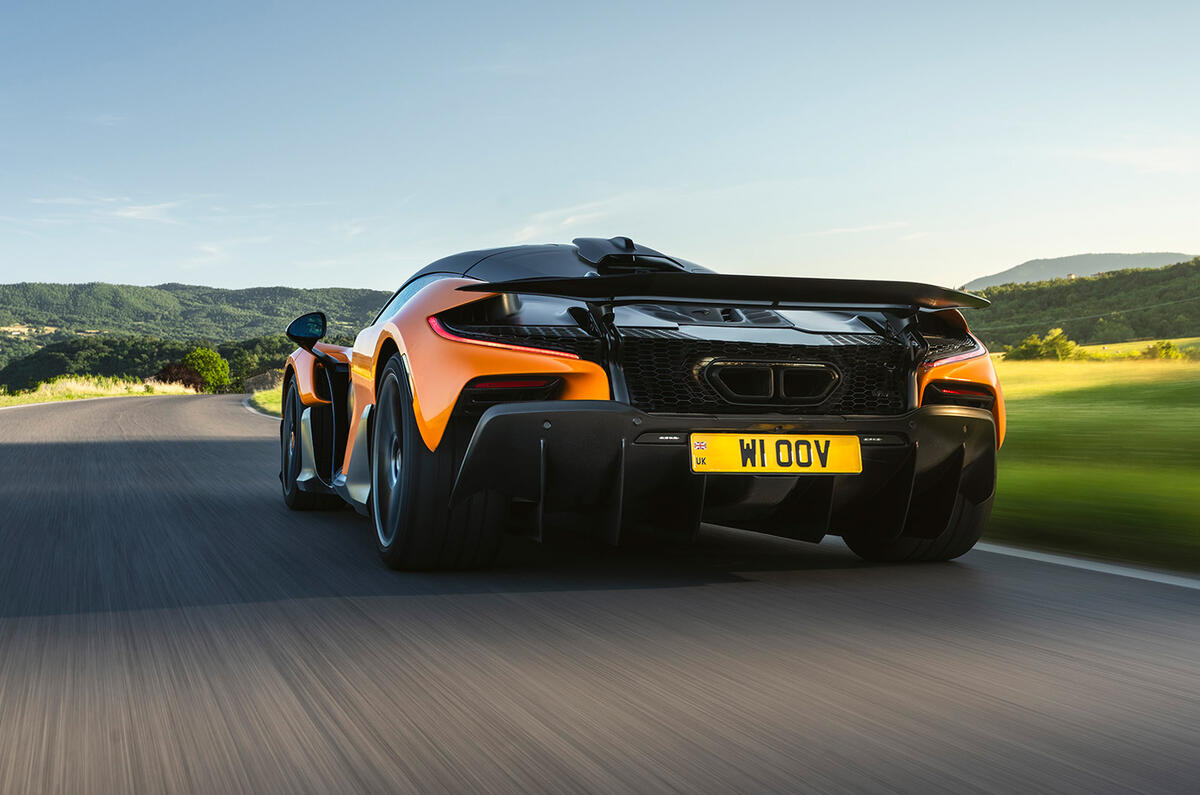
There’s a movable front splitter and a big active rear spoiler, whose full extension moves the rear wing 300mm backwards, where its underside takes up some of the flow from the diffuser (and in which form it’s not road-legal, so its use is geofenced for circuits or static display). Overall downforce is 1000kg; that figure is capped, so its effect bleeds off at speed.

The W1 is 4635mm long and 2191mm wide across the mirrors (2074mm with them folded, which is one gnat wider than body width). 

INTERIOR

McLaren W1 review 2026 38

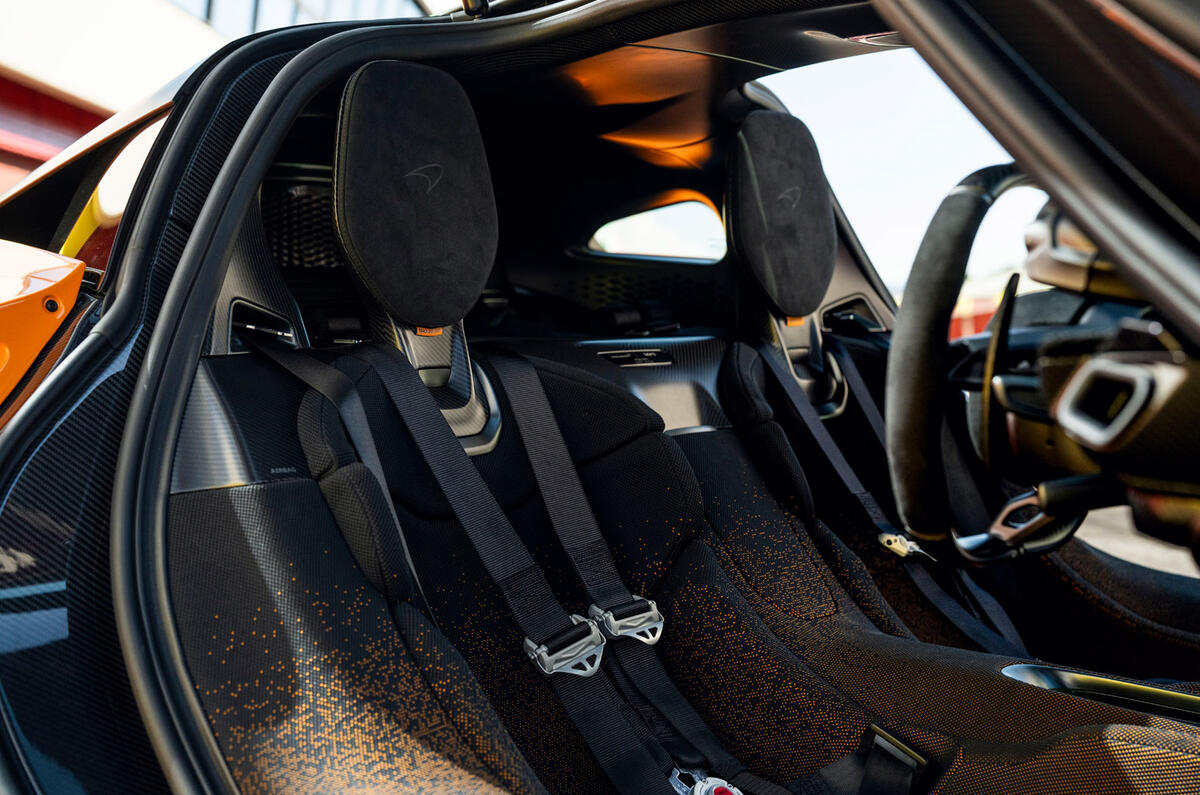
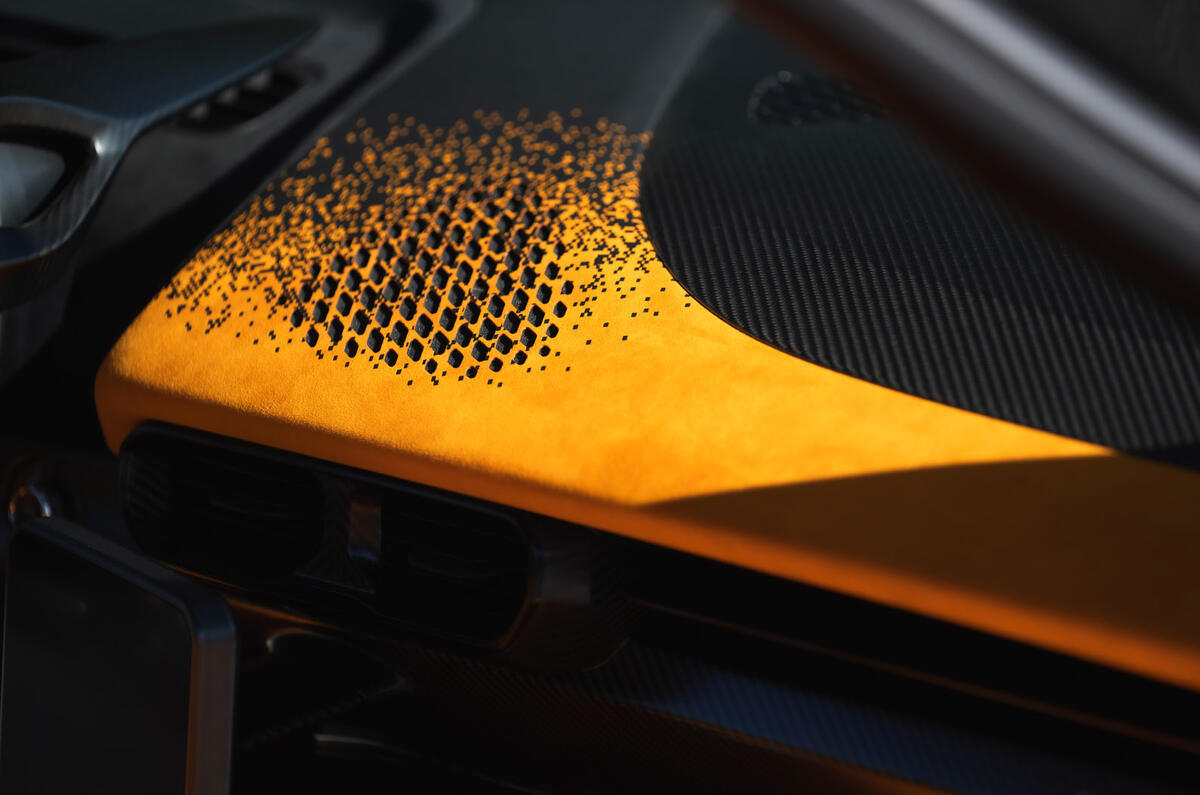
The interior houses two seats. As with the Aston Martin Valhalla, the Ferrari F80’s passenger seat and the Morgan Super 3, their structure is fixed rigidly into the chassis; the pedal box moves instead.

This is lighter and more space-efficient than a sliding seat (you only have to worry about head room at a single point), and while the seatback angle doesn’t adjust, McLaren says the decrease in weight and the increase in rigidity (because all seats will flex a little under load) make it worth it.

As is the McLaren way, the brake pedal is far left enough for comfortable left- or right-foot braking.

I find it easy enough to duck beneath the doors for entry (I don’t suppose forgetting they're there is a mistake one makes too often) and into the non-adjustable seats. The pedal box is sprung, so you push it away until it’s comfortable.

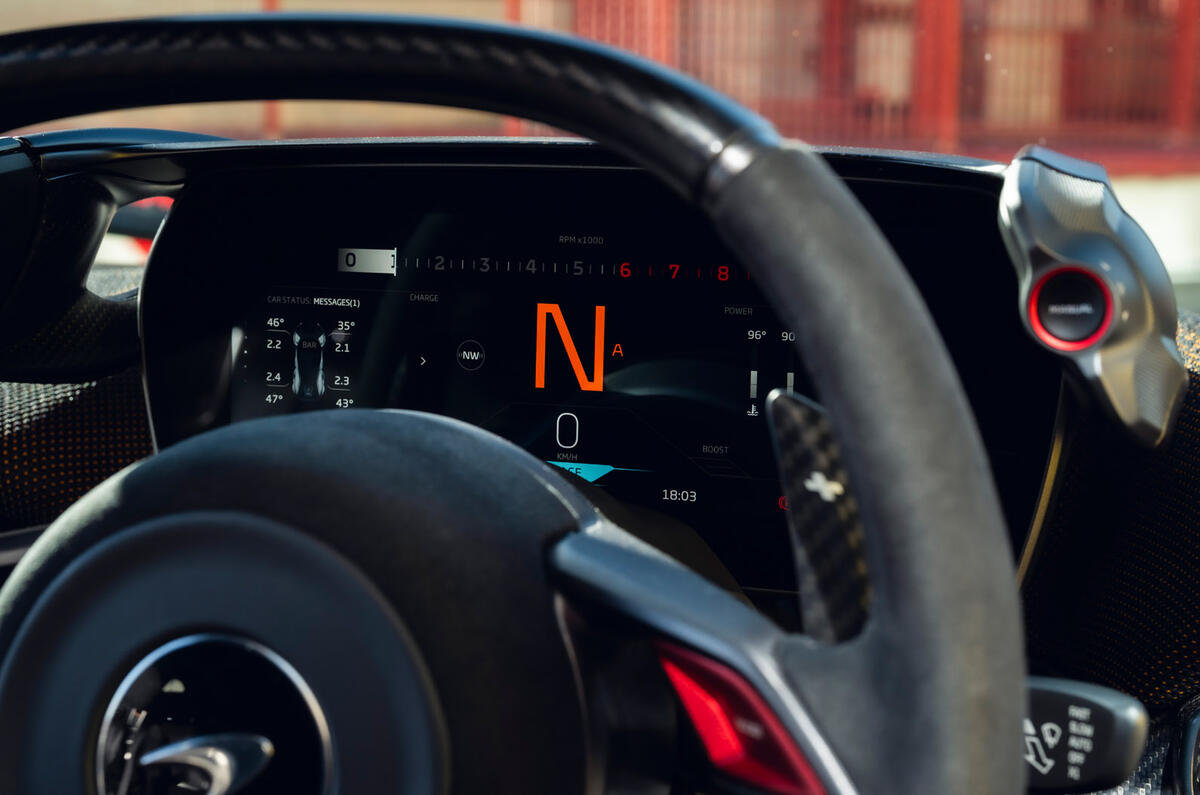
The steering column and instrument binnacle adjust electrically, with a wheel that, they say, is as round as they can make it while allowing clearance for legs and flattening the top for better visibility.

Given how low you are, visibility is good. You can see the front haunches, the A-pillars are said to be McLaren’s thinnest, the mirrors are big and, while there’s no rear glass, there is one of those mirror-camera thingies, plus space behind the occupants for a bit of luggage.

Squabs for cushions are inserted into the W1’s spaces and a space in the carbonfibre box under your thighs is where they put the subwoofers. There’s a gap in the seat squab in case you want to fit the optional five-point harness; with three-point inertia belts in place, an insert can cover the hole, which is helpful for not losing wine gums, pens or – ask me how I know – microphones, which then stay lost for many miles to follow.

ENGINES & PERFORMANCE

McLaren W1 review 2026 45

McLaren calls its engine all-new, “and when we say new we really mean new”, promises W1 product manager Heather Rhodes.

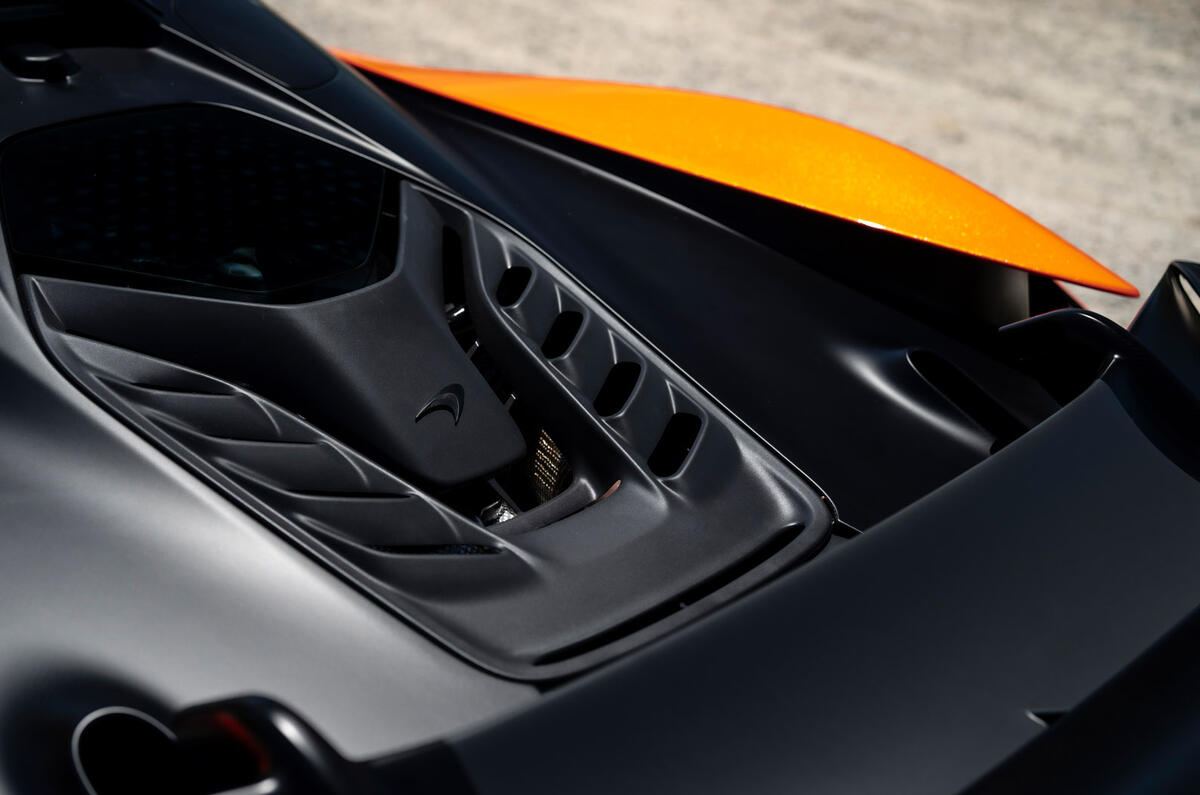
Designated MHP-8, it’s an oversquare 4.0-litre flat-plane-crank V8 (92mm bore, 75mm stroke and 3988cc capacity), made from aluminium, with spray plasma- coated bores rather than sleeves, which means the cylinders can be closer together and the block something like 40mm shorter. It’s heavily turbocharged and makes 916bhp on its own. Electric turbos would add 30kg where they don’t want it, so it doesn’t get them.

There is an EV mode, but from a full battery you will get only 1.6 miles out of it, at best. This is a performance-enhancer, not a fuel-saver.

There is, though, assistance from a radial-flux electric motor mounted to the side of the eight-speed dual-clutch automatic gearbox (driving onto either shaft) and which makes an additional 342bhp.

In Comfort mode it torque-fills so you ‘only’ have access to the V8’s power peak; in other modes it chips in further around the rev range, up to the 9200rpm rev limit. Peak power is 1258bhp.

In most modes the W1 tries to retain a bit of oomph in the 1.384kWh battery for torque filling (and reverse), with a Boost button that gives you the lot. Or there’s a Sprint mode in which it lets you flatten the battery, should you need to do one urgent hot lap.

At the back there’s a relatively straightforward electronically controlled hydraulic limited-slip differential. Brakes are 390mm discs with six-piston front and four-piston rear calipers. Wheels are 9.5Jx19in fronts, 12.0Jx20in rears, with bespoke Pirelli P Zeros, stickier Trofeos or even winter tyres, all of them 265/35 R19 and 335/30 R20 respectively. We drove with the Trofeos on both the road and at the track.

When you have a car with this much power and which can hit 60mph in 2.7sec, 124mph in 5.8sec, 186mph in 12.7sec and 217mph flat out (electronically limited becuase faster would need a different tyre structure), there is a requirement, says McLaren, to make it agreeable and enjoyable even if you’re not trying.

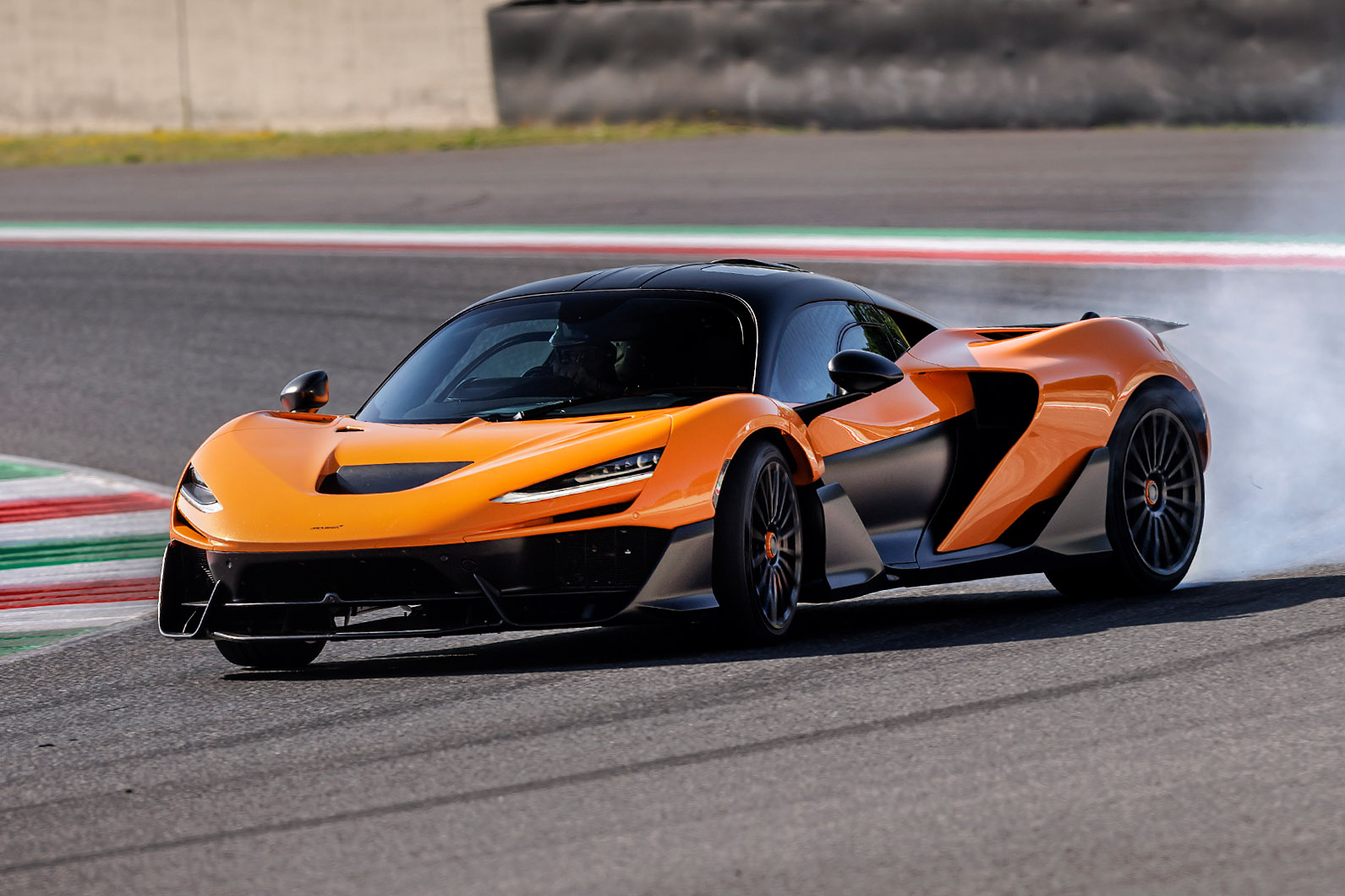
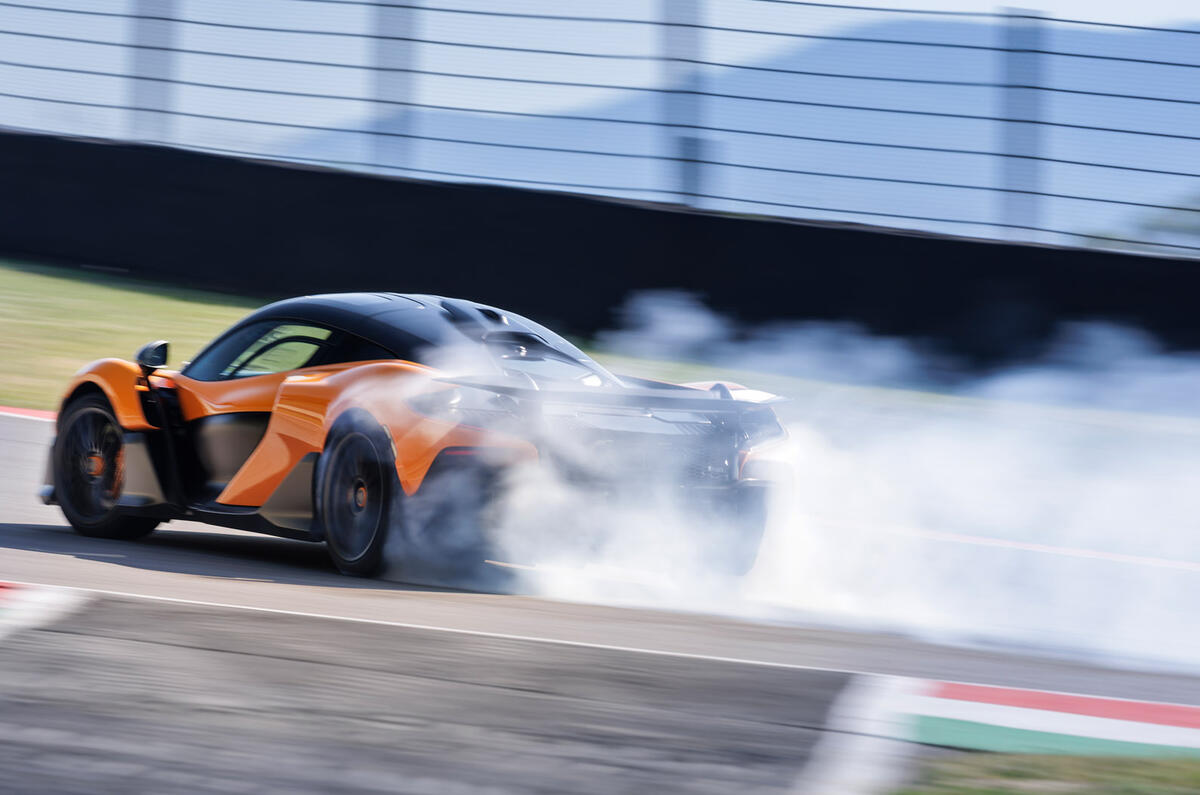
If you are, let’s talk first about the ridiculous amount of power. Can the rear tyres handle it? Yes. Does it feel rear-driven? Also yes. Will it overwhelm them if you make it? Of course yes.

But what strikes me is how usable this much poke and two-wheel drive feels. Conditions will help. This drive is hot and sticky, on a fast, smooth, flowing high-speed circuit, plus surrounding roads.

The engine note is more hollowly bwoap-ish than those of previous V8 McLarens. There's more appeal in its tone.

The gearshift will select as high a gear as comfortable if left in Comfort and auto mode. It shifts cleanly and sharply if you take control of the paddles yourself.

RIDE & HANDLING

McLaren W1 review 2026 49

The W1 really is a car you could use to cover decent distances in comfort. Beale told me it will “breathe with the road”, and he’s not kidding. Most road-going McLarens ride well but given this one’s focus – “equally good on road and track”, said Rhodes – I’m still surprised to find just how compliant it is.

Italy’s roads are poor in places (maybe not quite as bad as ours overall, but pretty dodgy here and there), but the W1 remains absorbent and composed over them, with a tiny bit of noticeable front-rear pitch now and again.

Even in its Race+ mode it will ride kerbs, but the ride is tied down, to the extent that there’s some diagonal pitch in quick bends. I suspect there’s a mode or a driving style that would work around it, though.

Brakes and steering are hydraulic, which is now very unusual in the hypercar sphere, because, said Beale, the “connected feel can’t be bettered”. McLaren thinks modern driving enthusiasts want this interactivity, simplicity, perhaps honesty. It steers beautifully, though. Brakes well. Talks to you. Engages you.

It’s the same if a sports car has 400bhp or 1200bhp. On the road and whether it has four-wheel drive or not, you’re never going to be using all of it, so the trick is to make the car enjoyable without using all of the horsepower it has. I think McLaren has pulled that off.

That the front is doing no driving means the steering is uncorrupted; the rack is mounted to the tub, too, which means the wheelbase can be shorter (80mm shorter than the Valhalla’s) and everything overall is lighter. There’s no torque vectoring to try to make the car feel more agile; it just will be naturally, the thinking goes.

Hopefully, as with the F1 and P1, we will add a full road test to our time with the W1, but for now two short stints around Mugello is our initial chance to get to know what it's like when you do give it the lot.

And it’s really impressive. Above everything, it's agile and involving in an honest way, a linear way. A bit more effort is required in steering it than whatever you might consider to be the norm in this segment, but feel and feedback are amped up as a result.

I love how uncorrupted the steering and brakes feel, too. Modern tuning of electric assistance and the blend of motors and brakes is something else, but I think McLaren is right: there’s not quite a substitute for the real thing. In faster corners you can feel the aero doing its work. I’d like to spend more time getting into that. 

Trailing the brakes into a turn will unsettle it; you can use the power to straighten things on the exit. I’d want to mess around with it more to say how happy it is transiently, but the vibe is good.

MPG & RUNNING COSTS

McLaren W1 review 2026 25

That McLaren sold its 399 allocated cars easily bodes well for future residual values of the W1. That’s despite a £2 million list price (including UK taxes).

The average option spend was £600,000 and the peak £900,000, which, given there are no mechanical option changes, means a lot is being spent on bespoke personalisation.

Every McLaren dealer can service the car. 


VERDICT

McLaren W1 review 2026 53

Of the cars that exist around the W1, that I’ve driven, the Valhalla feels more willingly silly, somewhat less serious and quicker to move around, although conditions were colder when I drove it. The F80 will move around too, but it feels as though it most likes to be driven as an aero-heavy race car: precise and fast.

The good thing is that they represent three very enjoyable and different ways to achieve the same goal. Line up all three in a pit lane for the day and I imagine you would come away having spent serious time getting to know all of them. 

Which is ‘best’? I’m not trying to pull punches: I just honestly couldn’t say with certainty. But I love the W1’s straightforwardness of feedback and its built-in natural agility.

Matt Prior

Matt Prior
Title: Editor-at-large

Matt is Autocar’s lead features writer and presenter, is the main face of Autocar’s YouTube channel, presents the My Week In Cars podcast and has written his weekly column, Tester’s Notes, since 2013.

Matt is an automotive engineer who has been writing and talking about cars since 1997. He joined Autocar in 2005 as deputy road test editor, prior to which he was road test editor and world rally editor for Channel 4’s automotive website, 4Car. 

Into all things engineering and automotive from any era, Matt is as comfortable regularly contributing to sibling titles Move Electric and Classic & Sports Car as he is writing for Autocar. He has a racing licence, and some malfunctioning classic cars and motorbikes.