











Hyundai's entry-level electric hatchback arrives with head-turning style and a jaw-dropping price tag

Find Hyundai Ioniq 3 deals
Other Services
Sell your car
84% get more money with

Like almost every ‘legacy’ car maker, Hyundai is feeling the pinch at the moment. One of the automotive industry’s success stories over the past few decades (alongside sibling brand Kia), the Korean firm experienced a small slump in global profits in the first half of this year in the wake of geopolitical turmoil and the onslaught of ambitious Chinese brands.

Despite the dip in income, the brand’s big cheeses are predicting that normal service will resume sooner rather than later. This confidence is backed by an ambitious plan to increase total production by 1.3 million by 2030 – a number that requires Hyundai to launch or facelift 100 models by 2030. Go big or go home, as they say.

A total of 41 of those new releases will be landing on European shores, and the latest is the Hyundai Ioniq 3. An entry-level addition to Hyundai’s burgeoning electric sub-brand, this B-segment hatchback is also arguably one of its most important arrivals to date.

Packing a decent range, especially in bigger-battery guise, distinctive looks and a claimed focus on driver satisfaction, the Ioniq 3 is charged with capturing a new generation of EV customers.

Then there’s the pricing. Yours for an attention-grabbing £18,495 (after the full £3750 Electric Car Grant from the UK government), the newcomer is perfectly placed to do battle with cut-price Chinese upstarts.

Moreover, the eye-catching Ioniq 3 very usefully undercuts a new wave of European rivals, such as the Renault 5, Cupra Raval and Volkswagen ID Polo.

Advertisement
Back to top

We got to sample a late pre-production version of the Ioniq 3 earlier this year and came away impressed. Now it’s time to drive the finished article on the roads of Turkey (not all that far from where this European-designed and developed car is built) and discover whether the Hyundai lives up to that early promise.

DESIGN & STYLING

Hyundai Ioniq 3 review 041

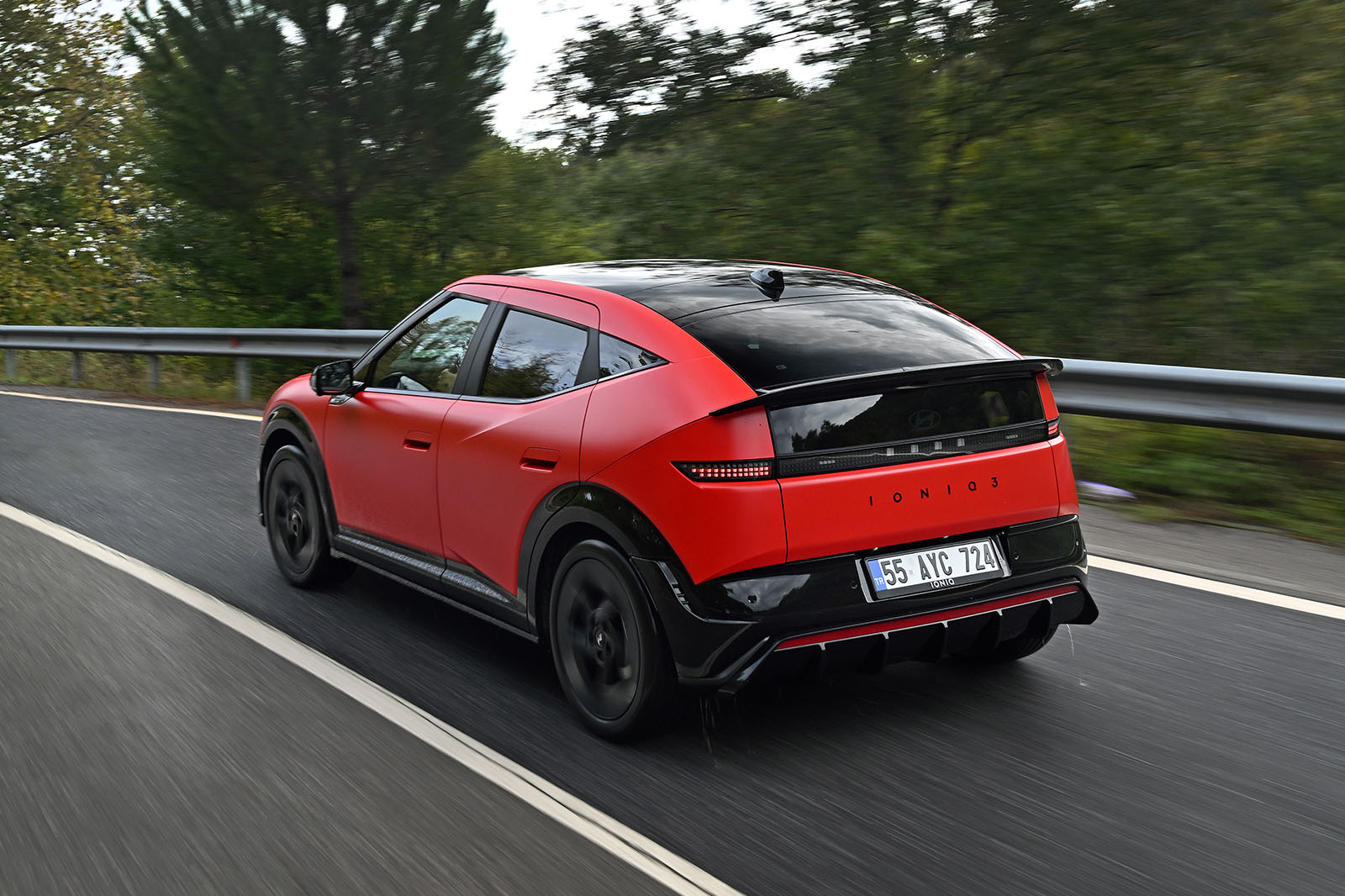
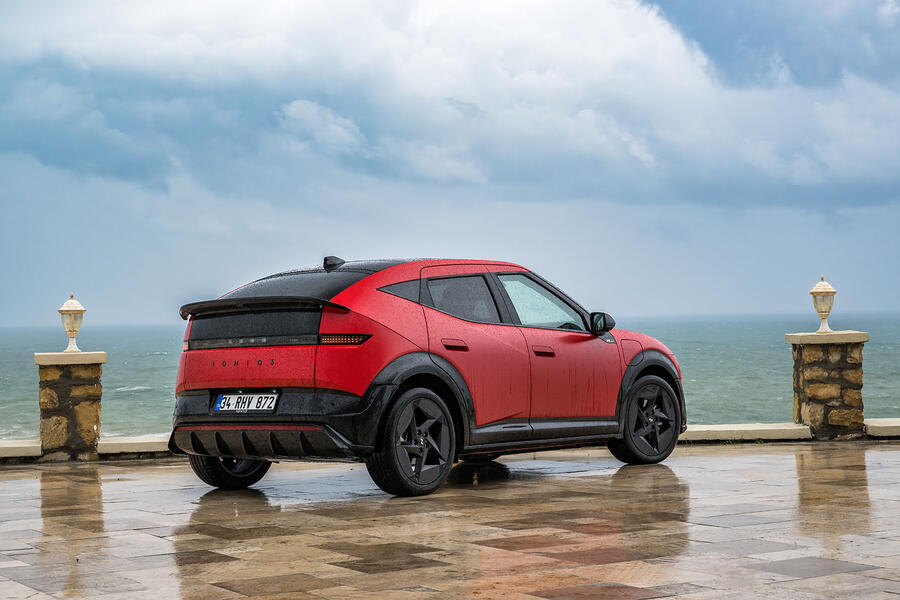
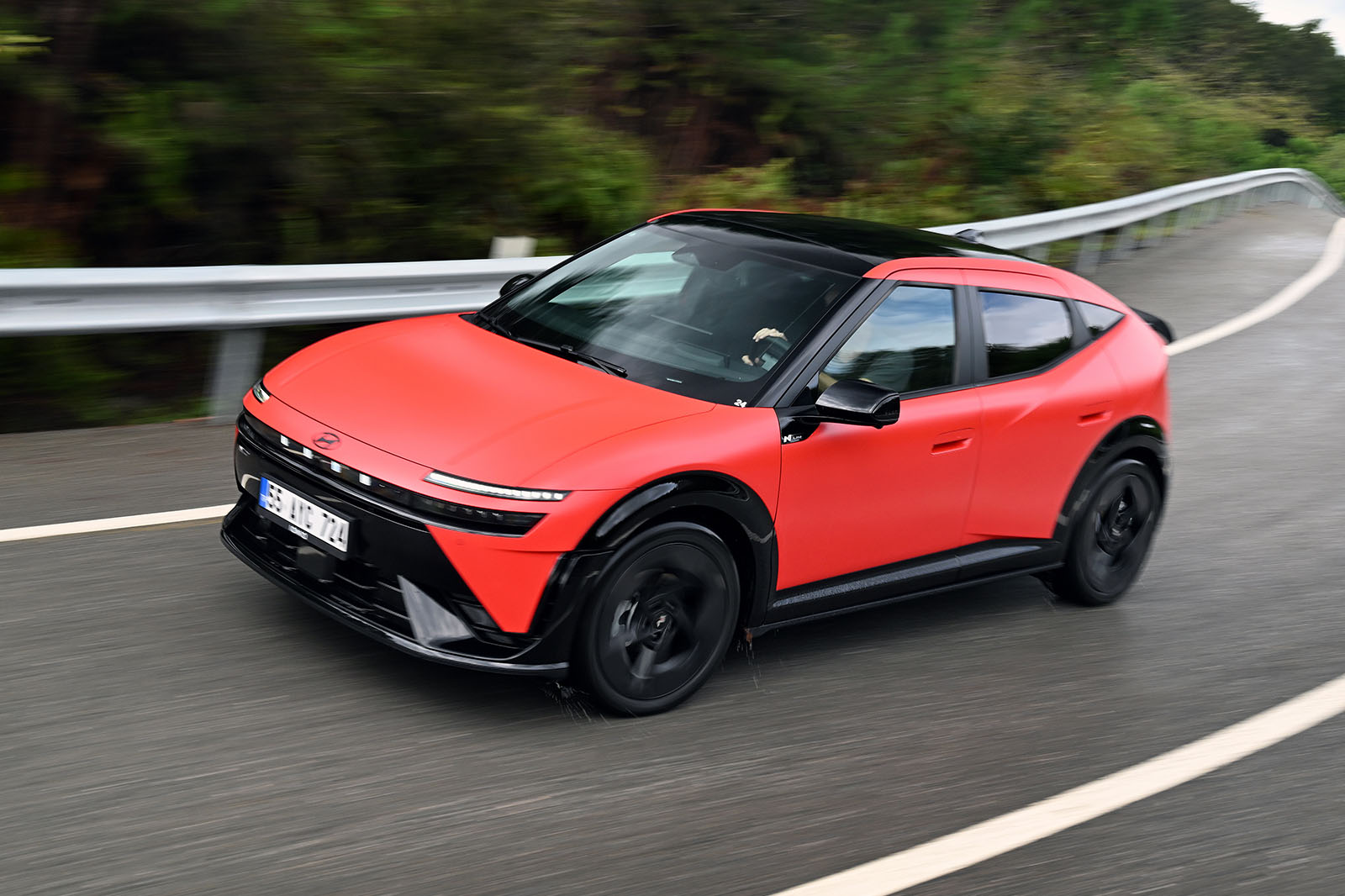
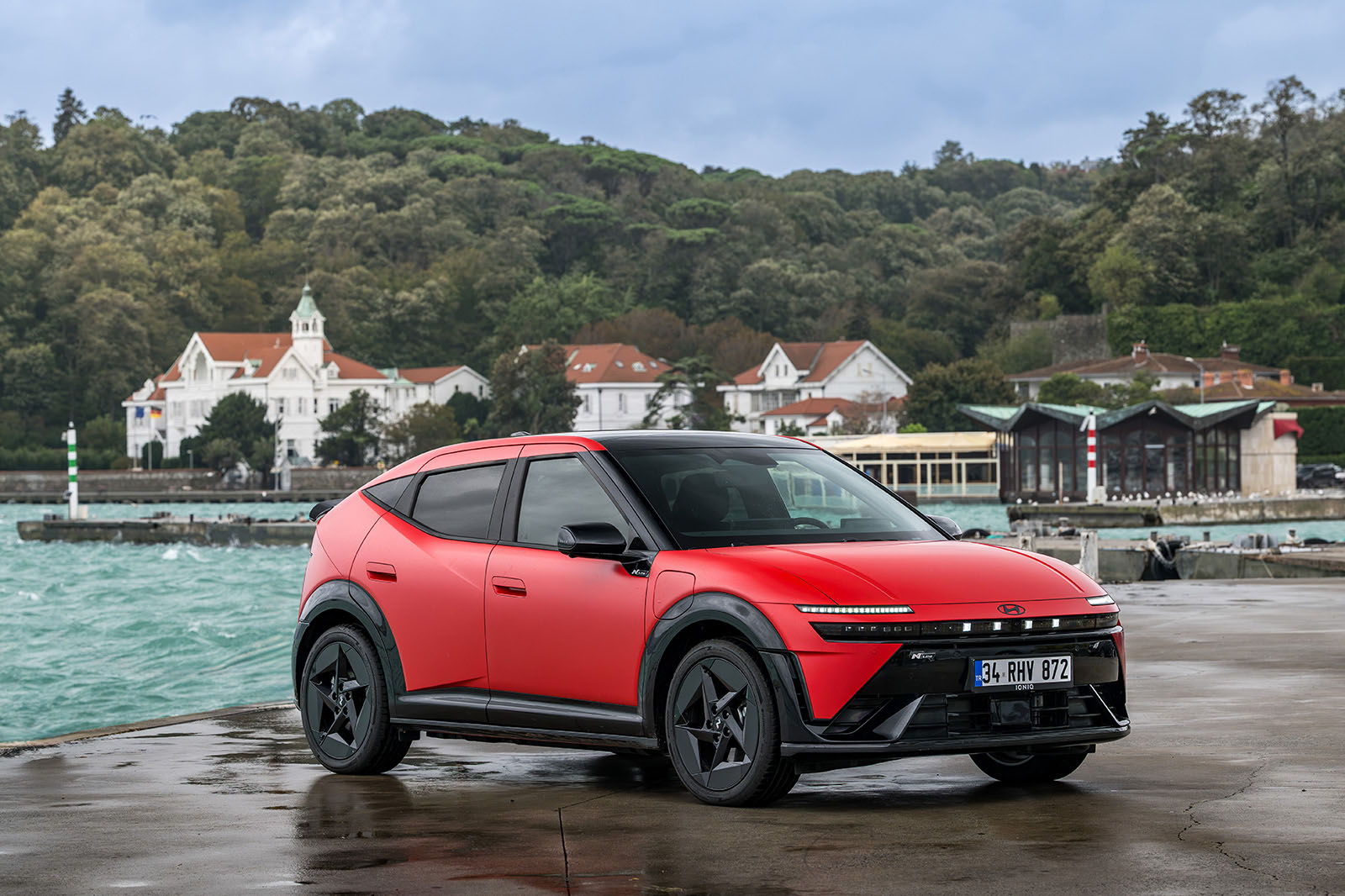
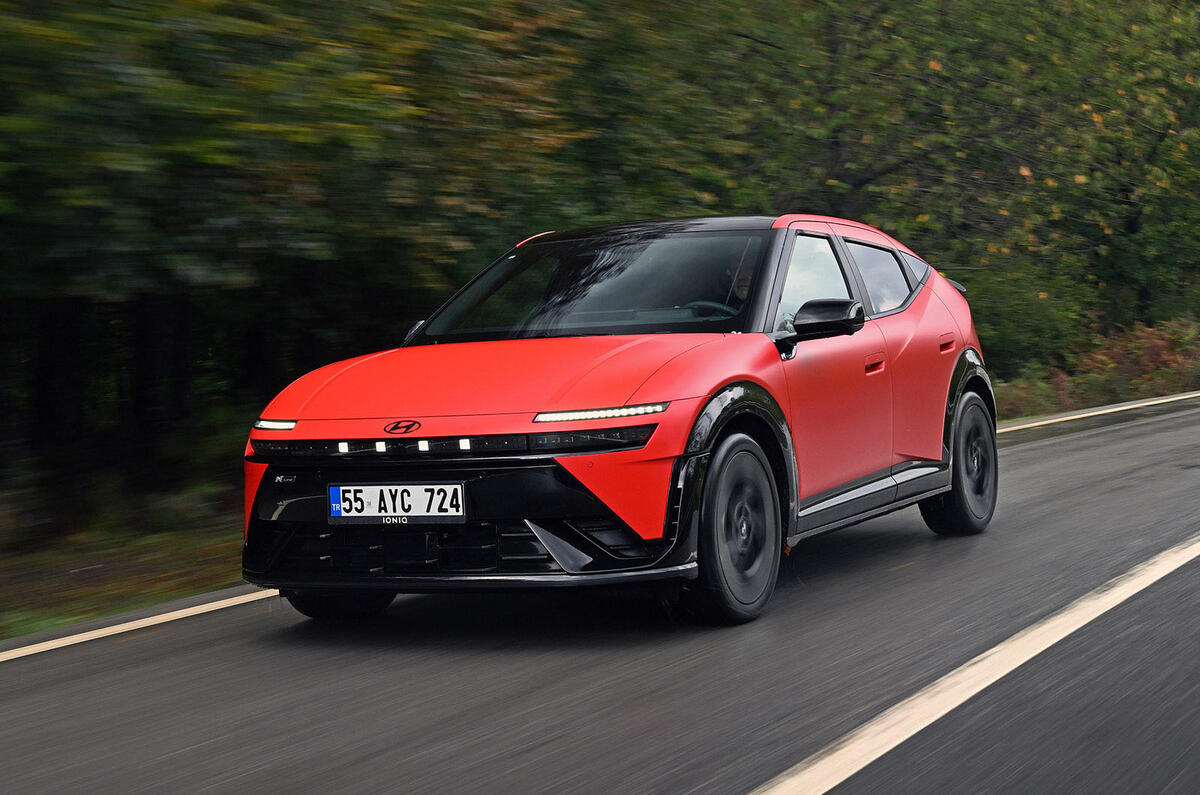
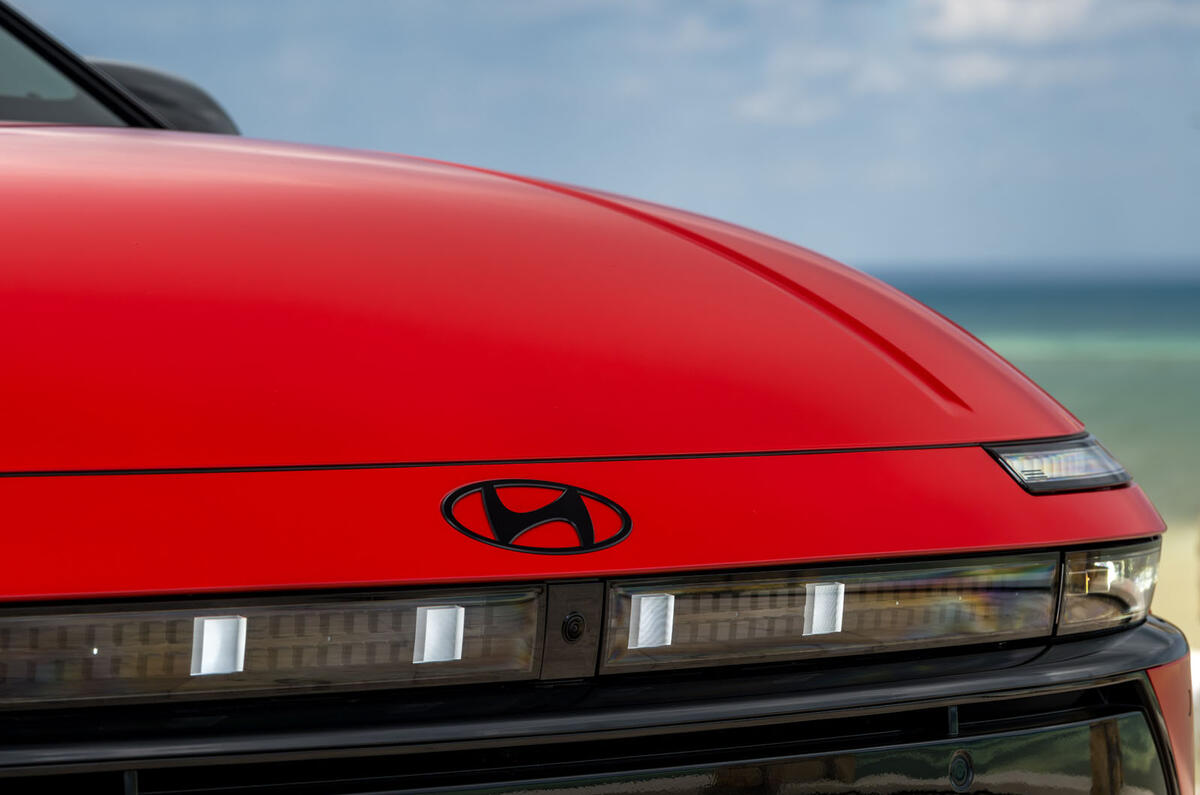
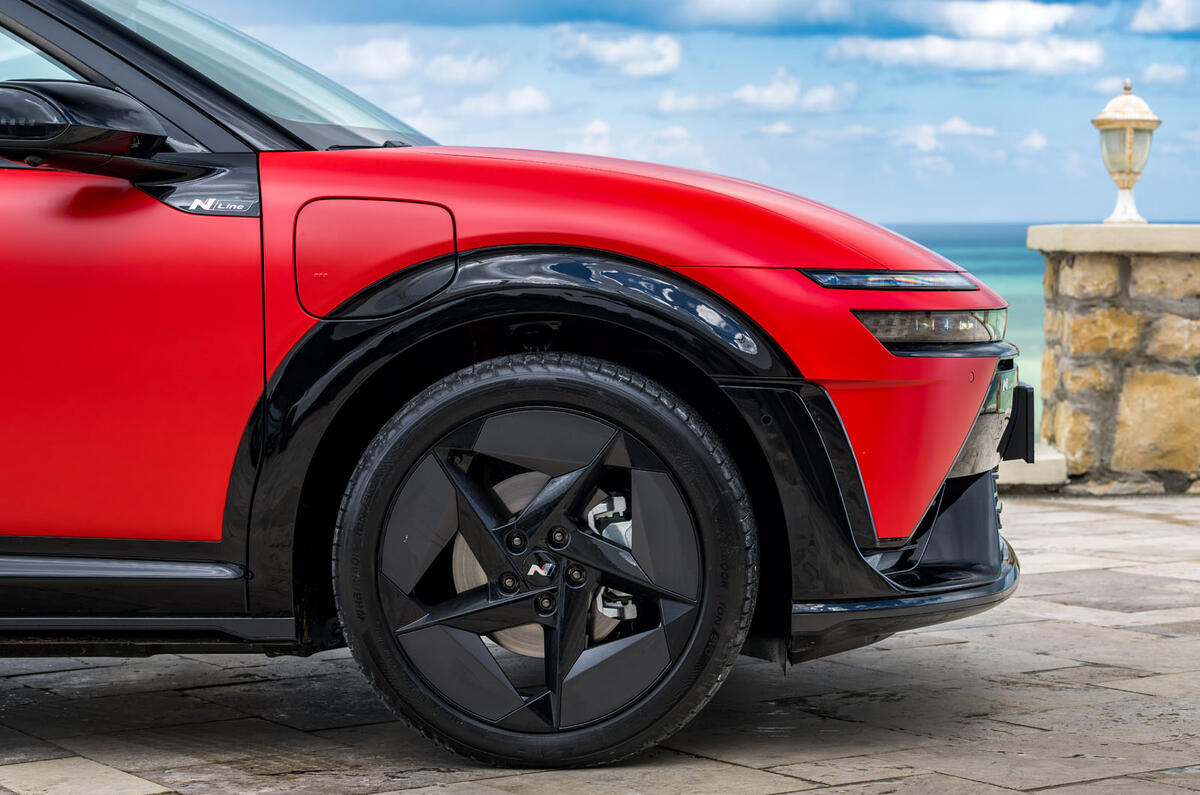
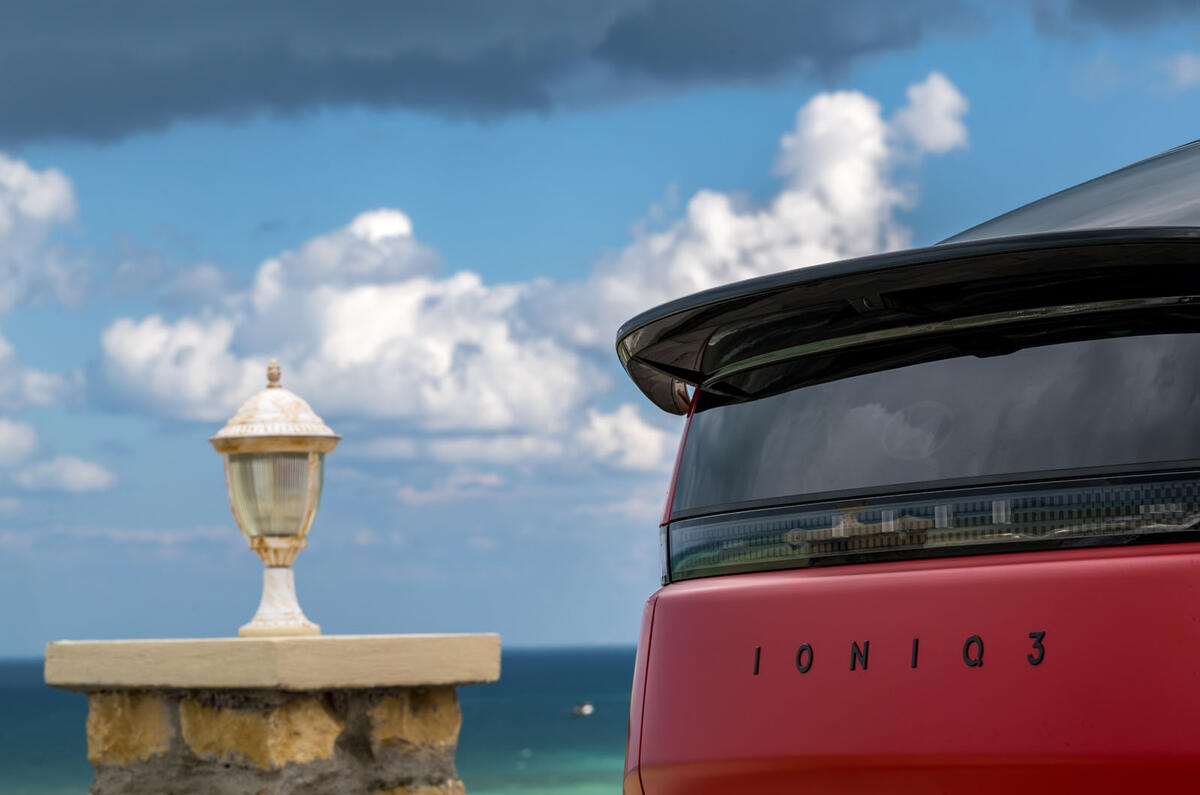
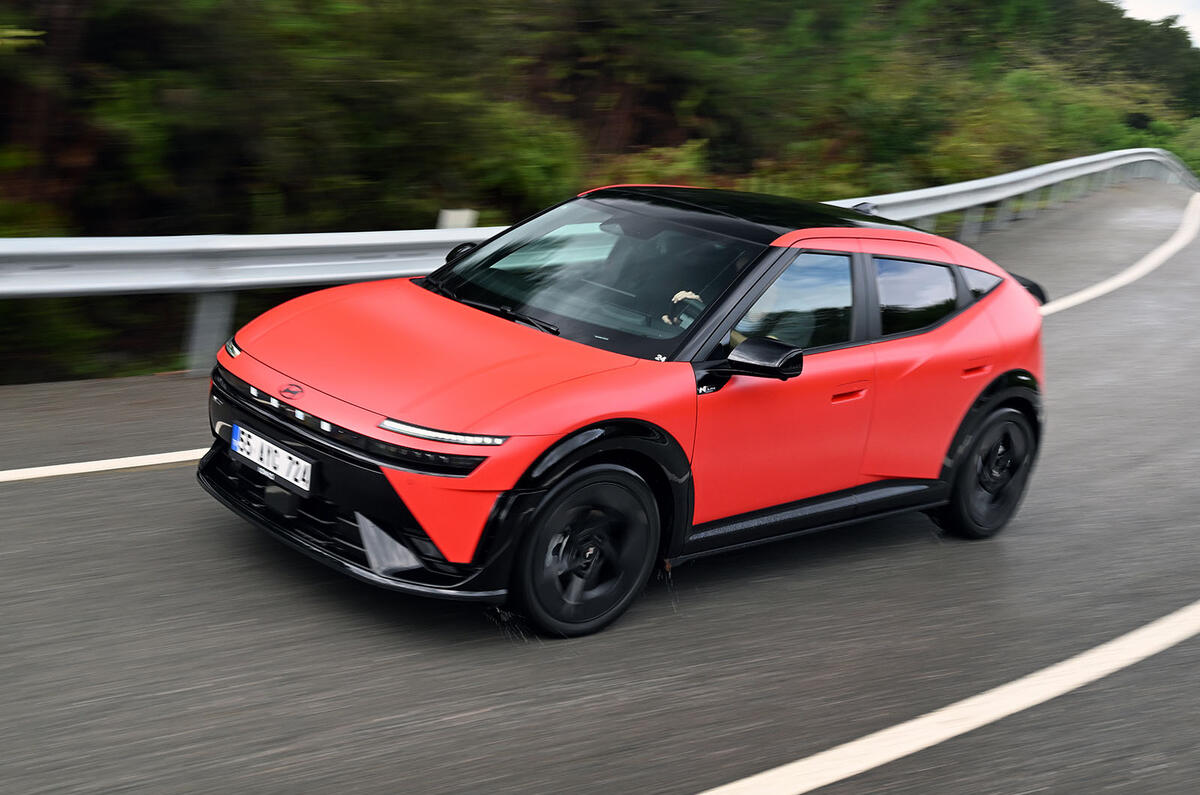
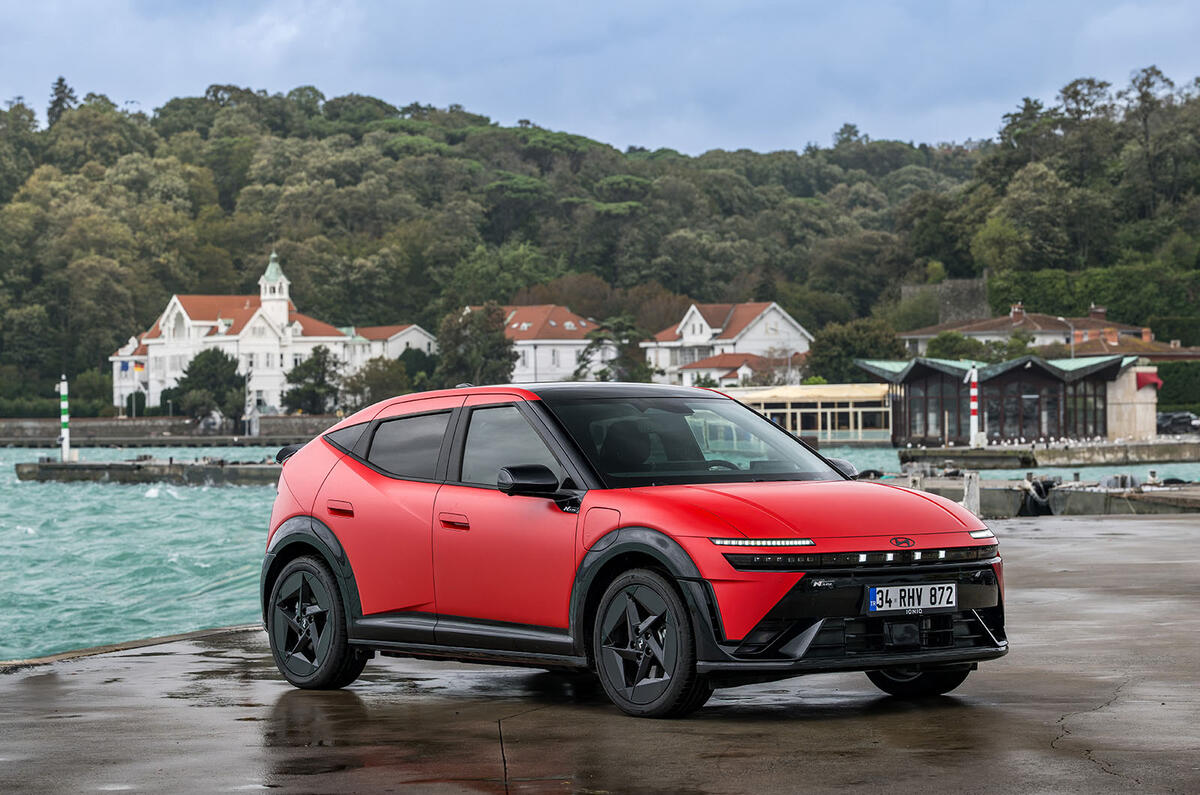
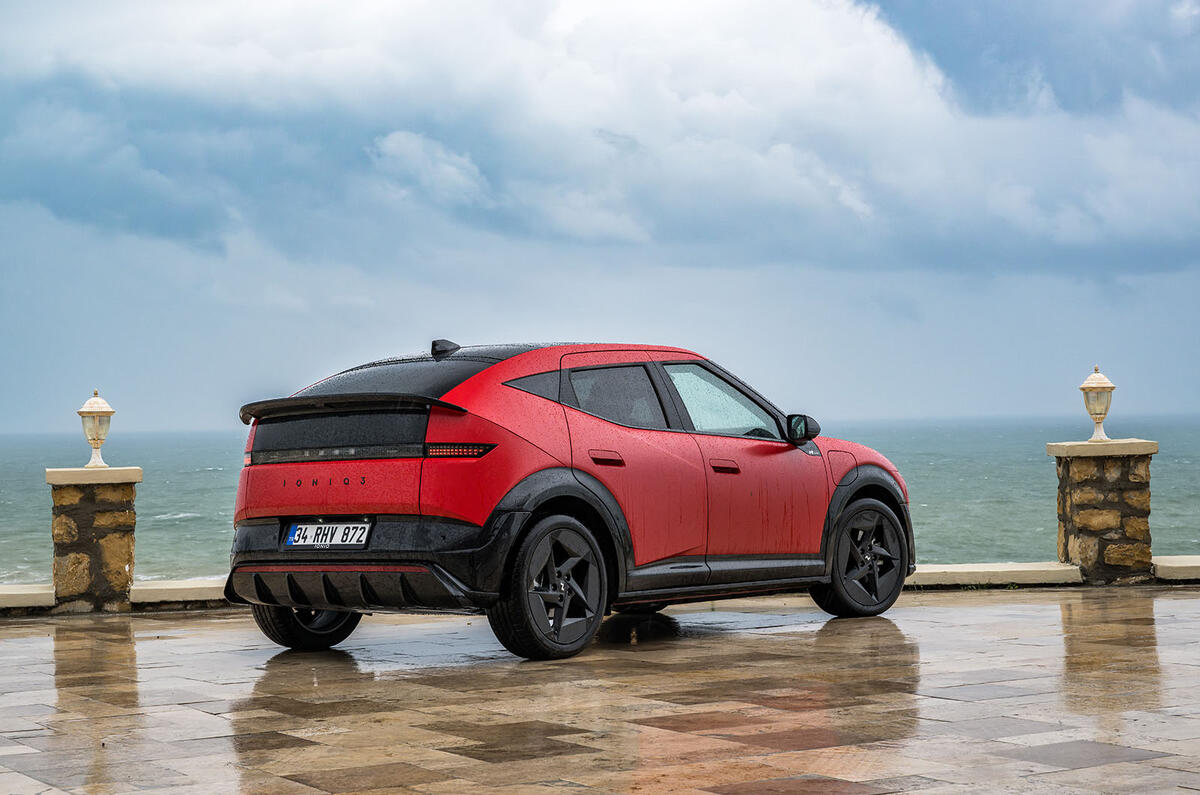
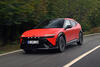
Last time we saw it, the Ioniq 3 was wrapped in strategically placed dazzle camouflage. With the disguise ditched, the edgy and angular Hyundai cuts a bold, modern dash alongside rivals such as the retro-themed 5 and the play-it-safe ID Polo.

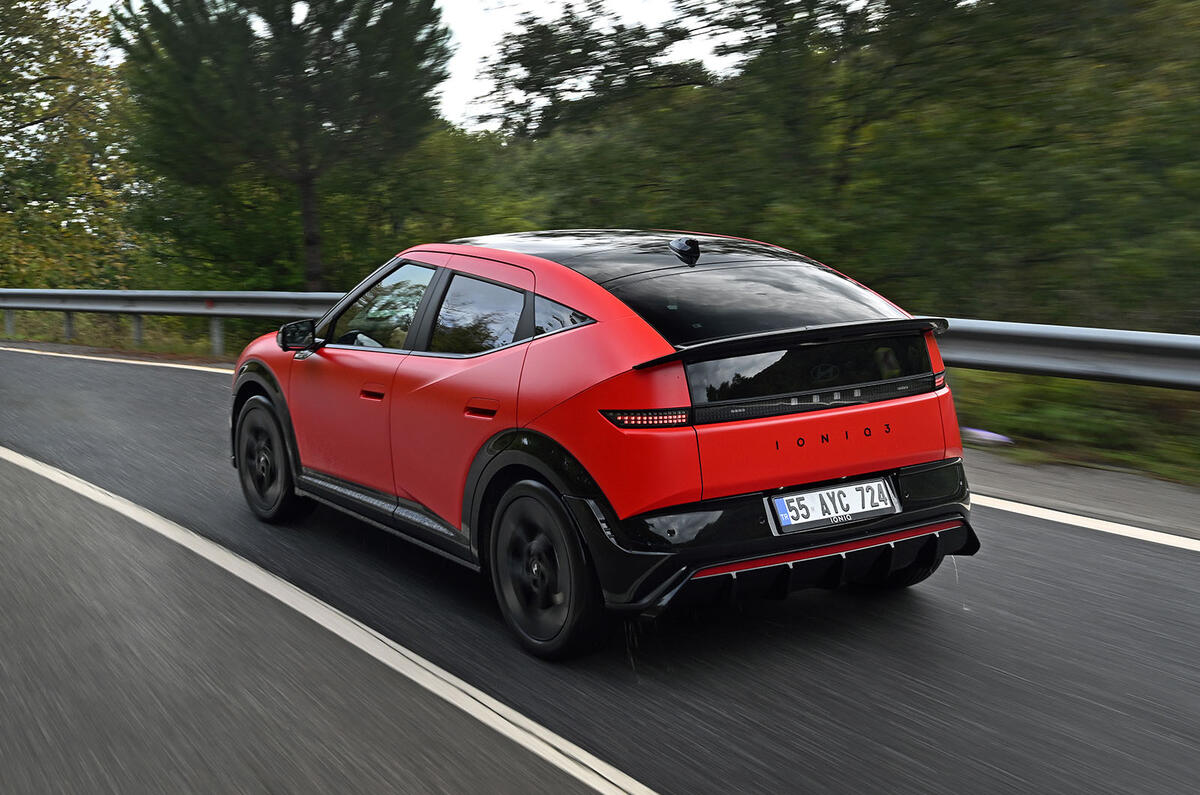
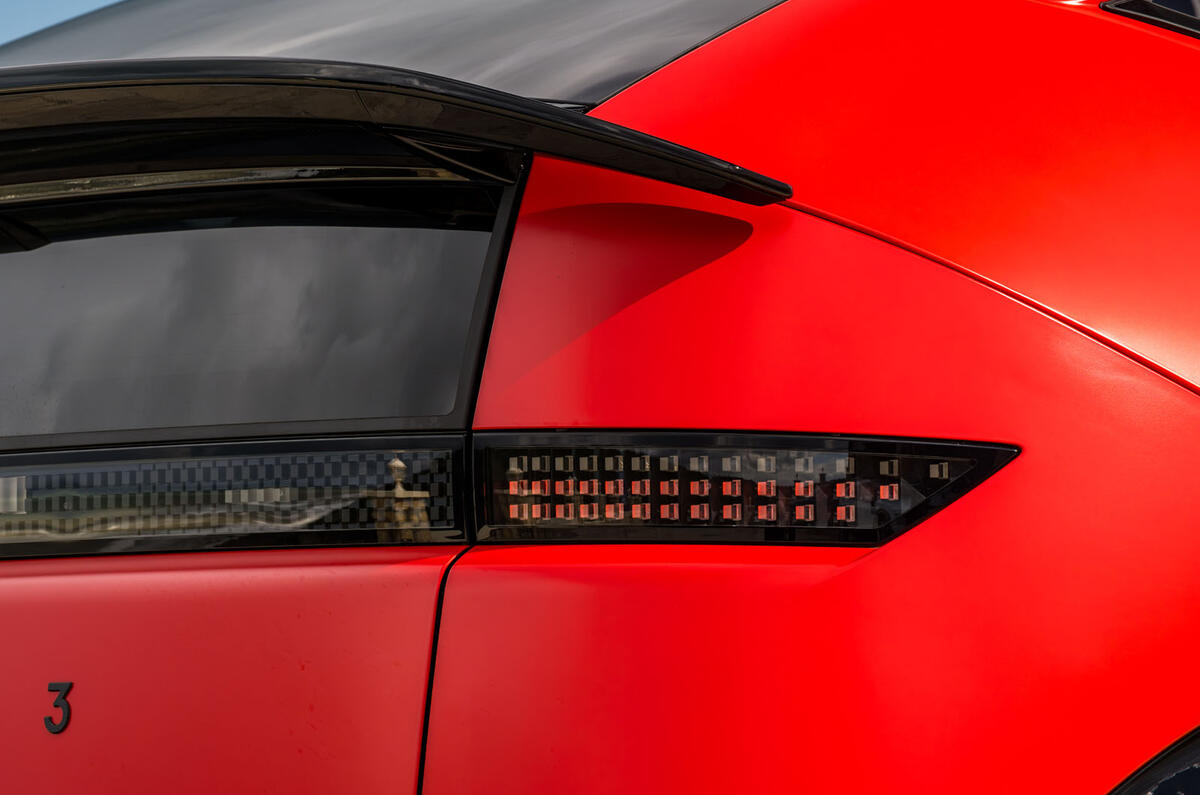
That said, there’s more than a hint of Hyundai’s short-lived, asymmetrically doored Veloster coupé in the sharply raked C-pillar and slightly humpbacked profile.

Hyundai calls the Ioniq 3 an ‘aero hatch’ – an attempt, maybe, to ensure it’s not pigeonholed as yet another crossover but also an acknowledgement of a wind-cheating drag coefficient that dips as low as 0.26 on the entry-level model.

Either way, we can just rejoice in the fact that Hyundai decided against serving up yet another SUV-inspired confection.

Underneath the head-turning exterior is what Hyundai claims is a cut-down version of its E-GMP architecture. In reality it’s an EV version of the K3 platform that underpins cars such as the Kona, which explains the less powerful 400V electricals and the use of simpler, less costly torsion-beam rear suspension.

There are two battery options for the Ioniq 3, a 42kWh and 61kWh. The former features lithium ion phosphate (LFP) chemistry (the larger pack uses nickel manganese cobalt), which offers a stronger 123.8 kW output (up from 113kW with the 61kWh cells) that allows the motor to deliver a stronger 144bhp motor output.

An 11kW onboard charger means both can be replenished from 10-80% in as little as 30 minutes when using DC rapid charging. V2L charging is standard across the range, while V2X capability has been built in, meaning the Ioniq 3 can be configured for bi-directional charging - particularly useful if you have solar panels at home and a compatible charger.

INTERIOR

Hyundai Ioniq 3 review 047

Whatever its lineage, the engineers have been able to get space-efficient with the packaging. Despite stretching the tape measure to a modest 4150mm in length (the N Line Evo version in our pictures adds an extra 15mm courtesy of a natty bodykit), the Ioniq 3 has a 2650mm wheelbase.

As a result, it is genuinely roomy inside, especially for the class, with space for five adults at a pinch. Rear leg room is good, as is head room – although the small side windows and dark headlining might make you feel a little claustrophobic.

Boot capacity runs to 411 litres if you include the deep, hidden Megabox (not to be confused with the hybrid Ford Puma's similarly located MegaBox) under the boot floor. Despite its compact exterior dimensions, this is a car that many could genuinely consider as their sole family transport.

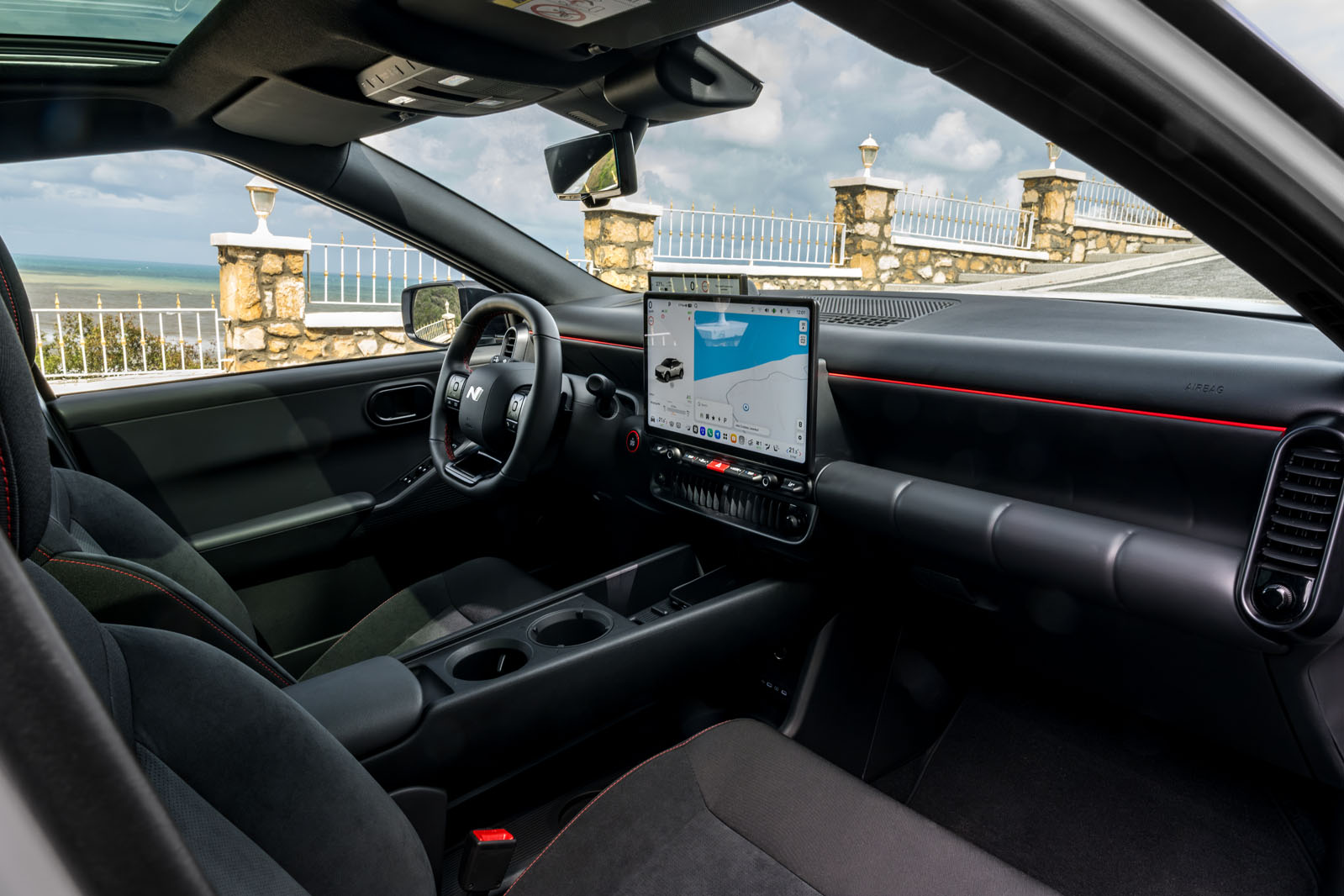
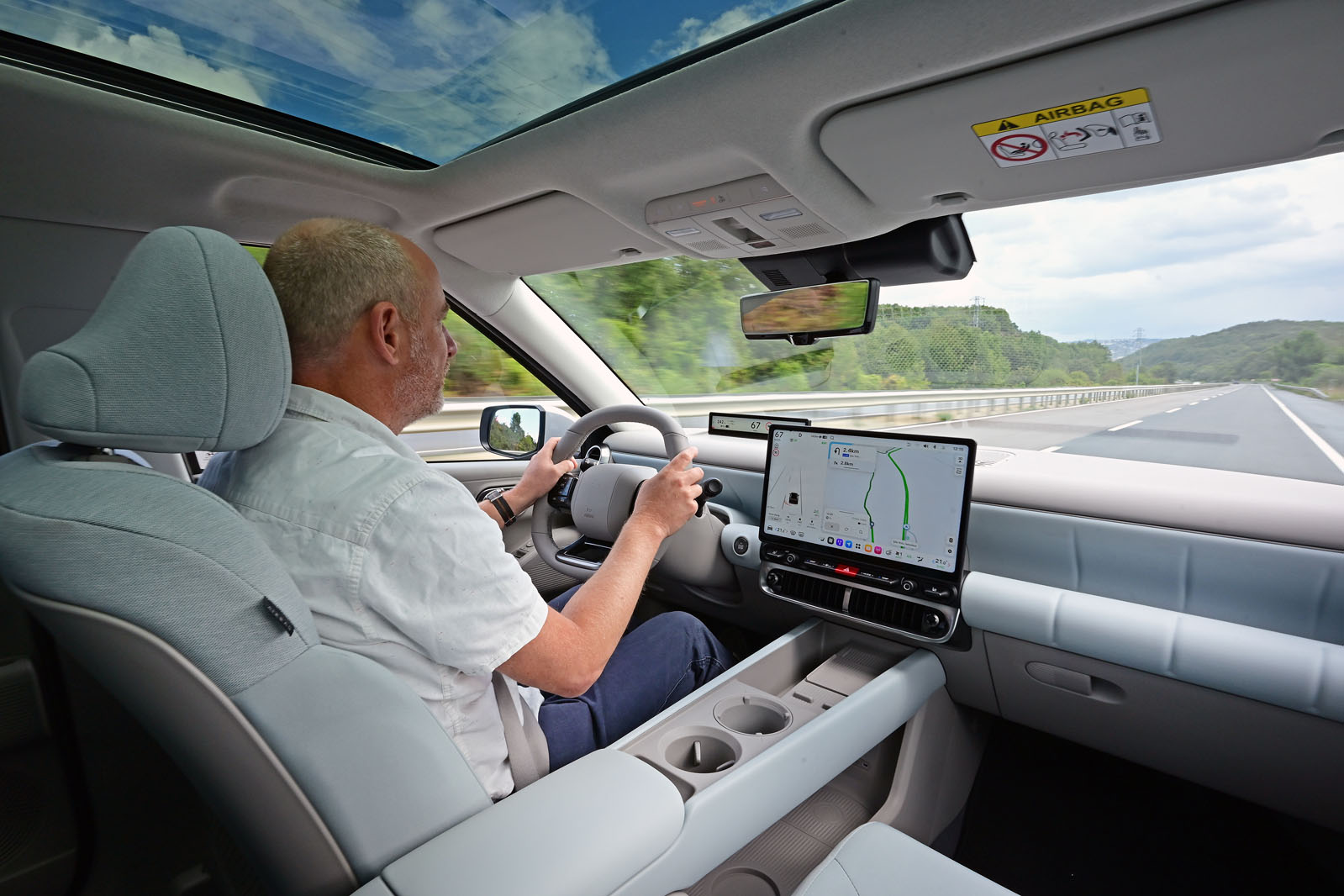
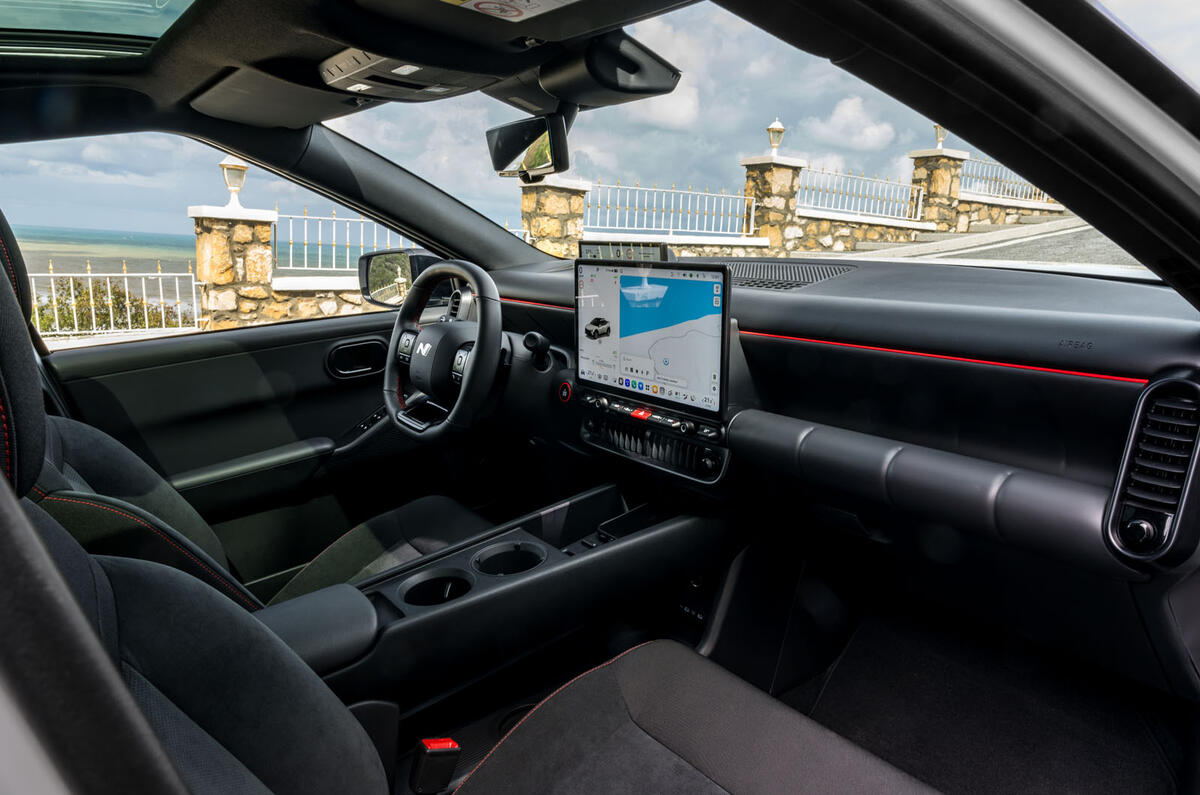
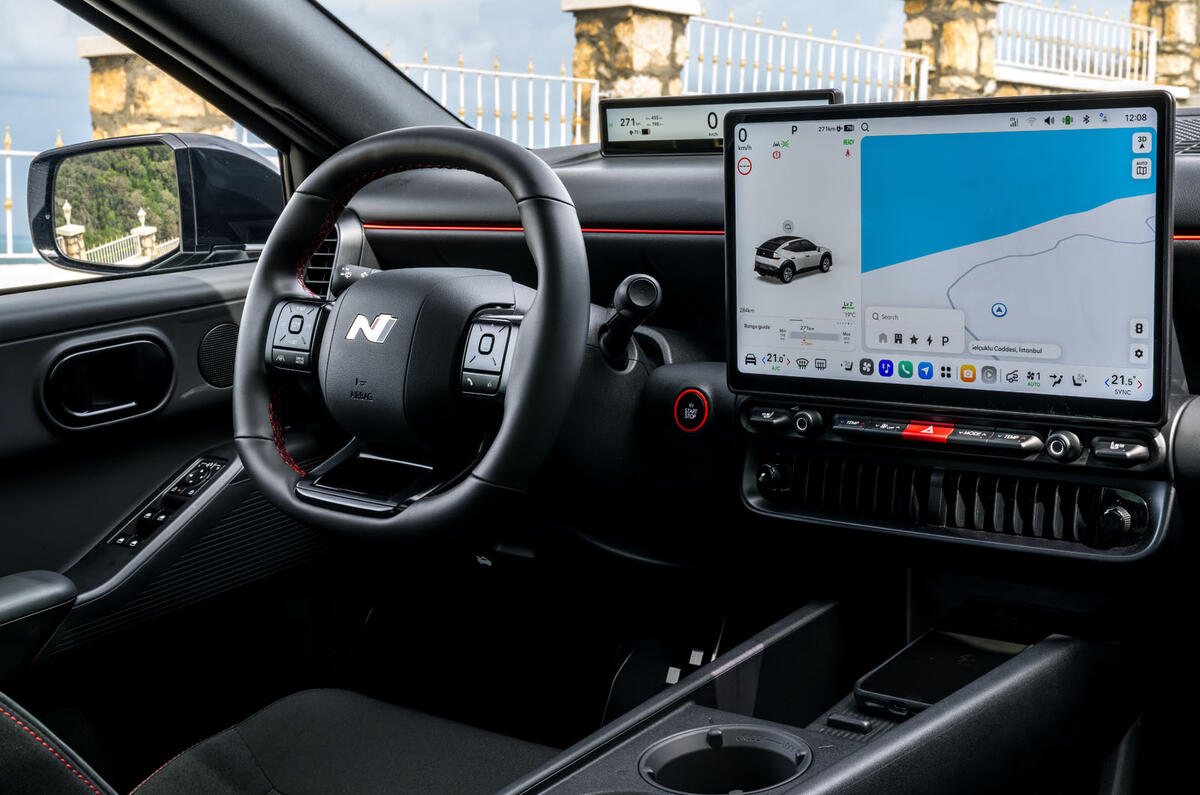
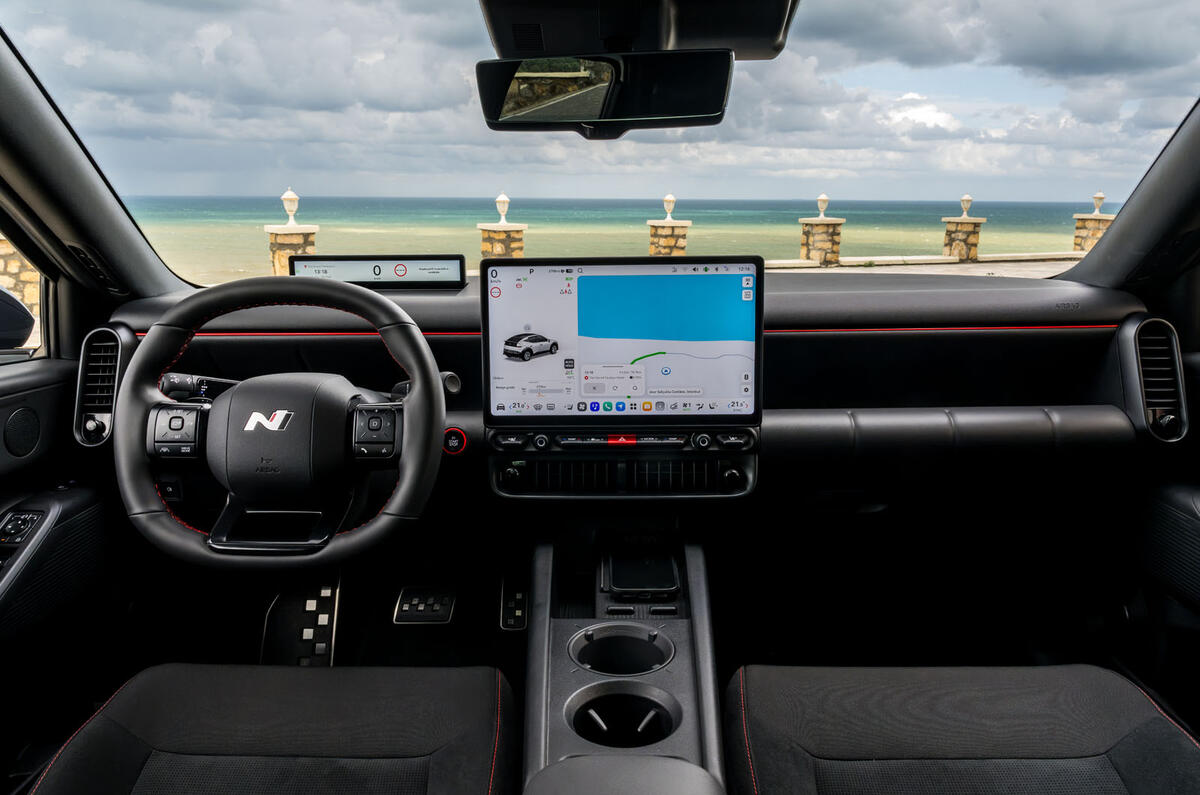
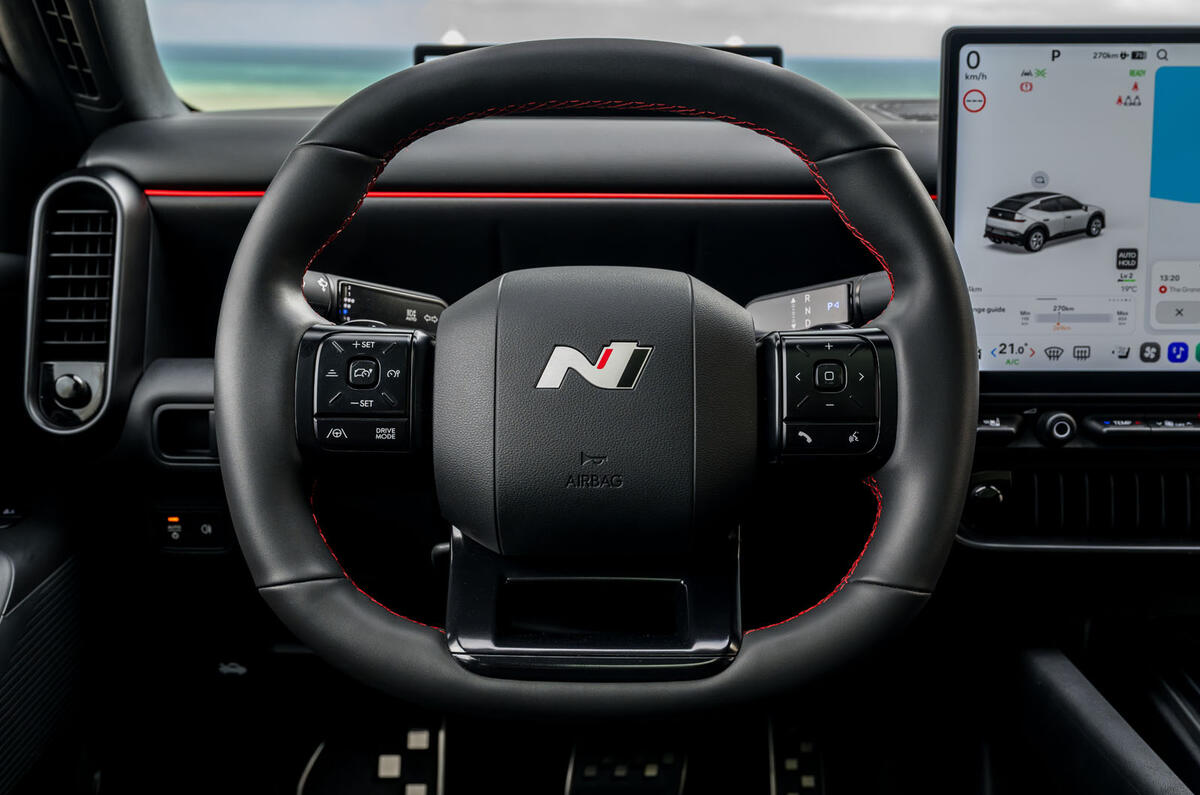
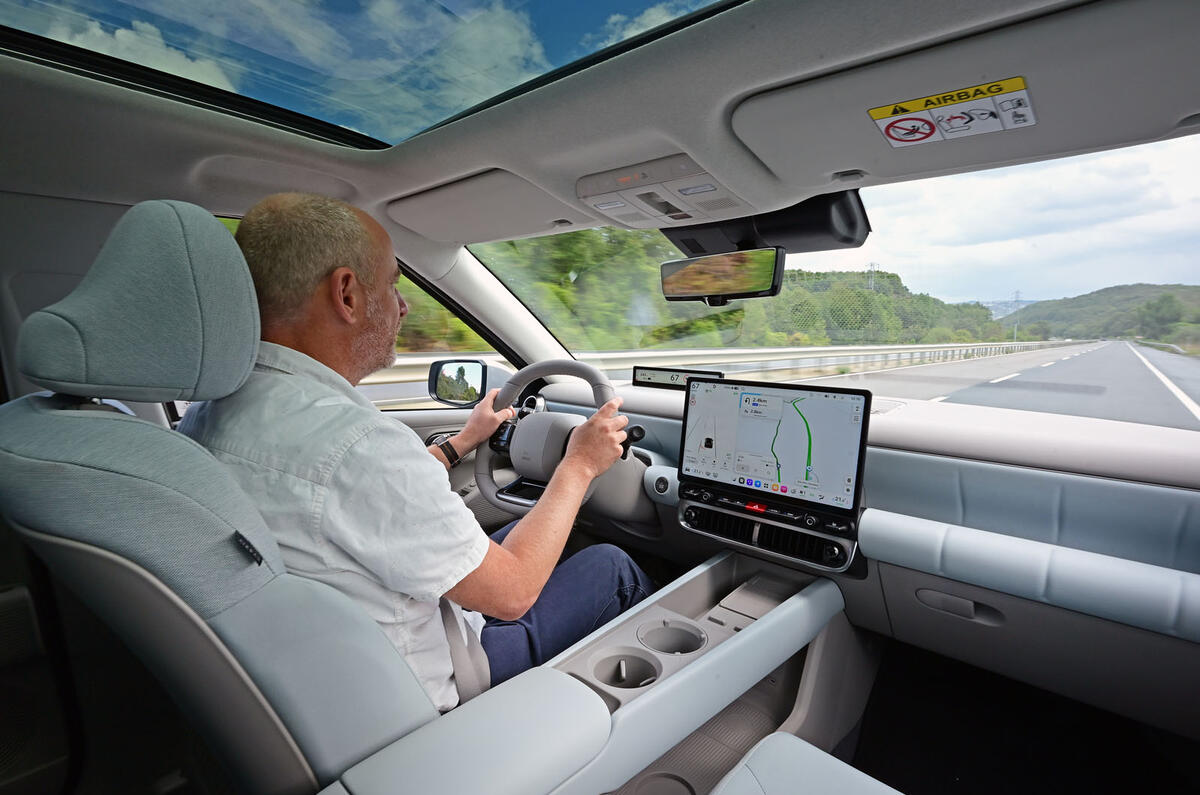
You sit a little high behind the wheel, an inevitable side effect of the underfloor battery location. Yet there’s plenty of seat and wheel adjustment, while the dashboard strikes a welcome balance of physical controls and touchscreens.

Moreover, perceived material quality is top-notch, the premium feel being at odds with the rock-bottom price tag. Then there’s the standard kit count, which is generous on entry-level versions and positively extravagant on flagship versions. Heated front and rear seats? The decadence.

Hyundai also makes much of its new Pleos Connect infotainment system, which on a glitzy, top-spec car features a big 14.6in touchscreen (lesser versions get a 12.9in one), and it largely lives up to the hype. Crisp graphics, slick menus and decent responsiveness mean it’s fairly intuitive to use on the fly.

ENGINES & PERFORMANCE

Hyundai Ioniq 3 review 051

There is a choice of two powertrains: the Standard Range car has a 145bhp motor on the front axle and a 42.2kWh battery (gross) giving 213 miles between charges, while the Long Range version drops a negligible 13bhp and switches to a 61kWh pack for 308 miles - decently competitive for a car of this size.

Maximum charging speed is pegged at 115kWh, which is hardly mind-blowingly fast, but engineers say they've focused on being able to reliably sustain high speeds for longer, rather than being able to hit a headline-baiting kW figure for just a few seconds in ideal conditions.

We drove the longer-range car and quickly determined that it should be well worth the inevitable premium it will command over the shorter-legged variant. Off the line, the Ioniq 3 is warm-hatch brisk, while there’s just enough in reserve for snappy excursions to the overtaking lane.

Special mention goes to the brakes, which achieve strong stopping power and a progressive, easily modulated pedal action. Dialling in some regenerative braking is a doodle too, thanks to steering wheel-mounted paddles.

Despite the Ioniq 3’s slippery shape, there’s some wind rustle at speed, particularly around the large door mirrors. Yet in all other respects it’s a hushed companion: there’s only the faintest whine from the transmission, while tyre and suspension noise are largely well suppressed.

In terms of efficiency, the aero work seems to have paid off, because our 61kWh test car managed respectable 4.0 miles per kWh in normal use, only tailing off after extended exposure to Turkey’s motorway network, where the speed limit is a heady 87mph.

RIDE & HANDLING

Hyundai Ioniq 3 review 052

The grown-up feel extends to the way the Ioniq 3 goes down the road. Despite all the talk of extensive European development, it ultimately lacks the dynamic sparkle of the 5 or the hot hatch edge of the Raval, but there’s a pleasing poise and polish to its gait.

Deeper manhole covers and transverse ridges betray a stiff low-speed ride, but once you’re up and running the Ioniq 3 rolls along with a nicely judged compliance – even on some of Turkey’s worst roads, which rival the UK’s for cratered lack of care.

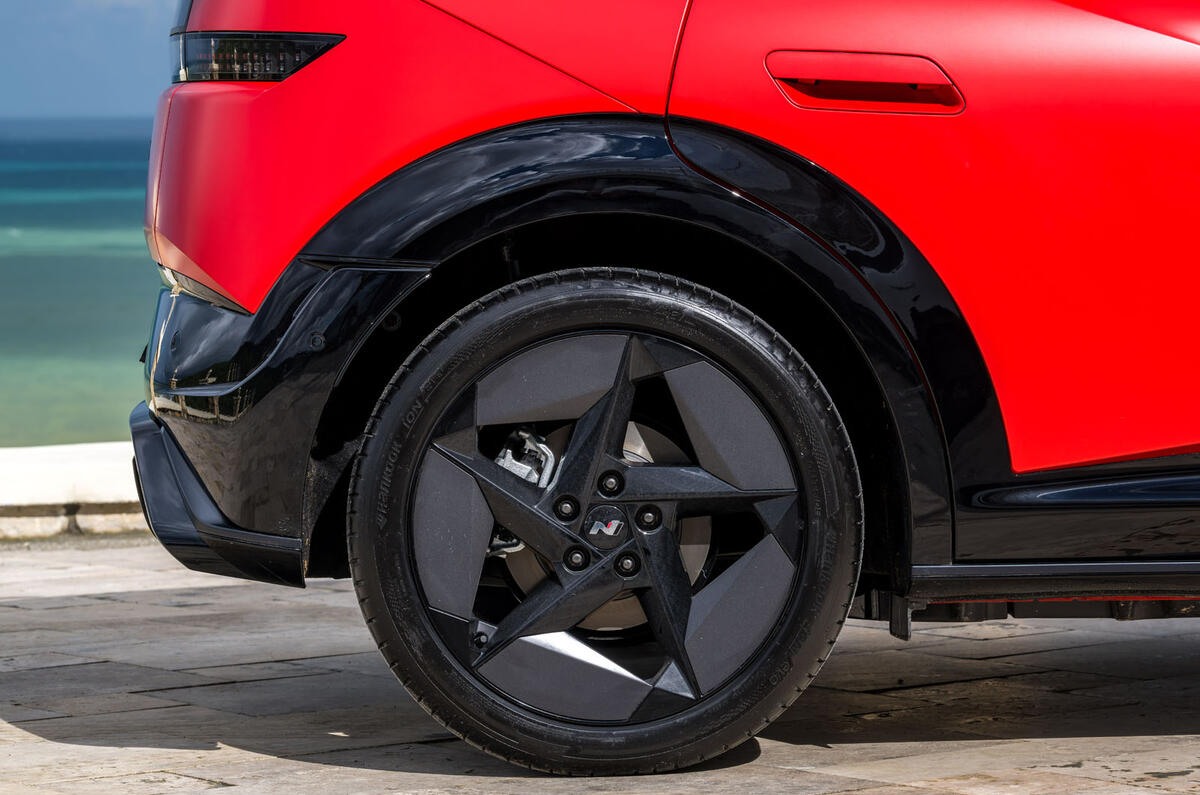
We also tried examples on 18in and 19in rims and there was little in it for comfort. (The entry-level Advance gets 16s in the UK.)

Hyundai was keen to point out how much time had been spent tuning the steering, and overall its efforts have paid off. It lacks feel but there’s decent weighting, natural pacing and good response off the straight-ahead. As a result, you can place the Ioniq 3 with accuracy and enjoy its ability to cling on gamely as it slices quickly and cleanly through corners.

It doesn’t have the immediacy or adjustability of the 5: there’s more roll in corners, softer responses and body control that’s not quite as reassuringly taut. Yet the Ioniq 3 feels handily agile and is a surprisingly effective point-to-point machine. A good base for a hot N version? Undoubtedly.

VERDICT

Hyundai Ioniq 3 review 053

Beyond the obvious (and numerous) rational reasons to like forward to the Ioniq 3 – its low cost, impressive range, dramatic styling and pleasant interior among them – it also merits recognition for bucking the trend of homogeneity that many feel is increasingly defining the modern automotive landscape.

A stylish, spacious and affordable entry point to EV ownership, it's also good to drive, generously equipped and, with the larger battery, offers a real world range that should be enough to banish most users' range anxiety.

All this and we haven't even got onto the subject of money. Even if the Ioniq 3 were pitched at a similar level to rivals we'd be suggesting it merits your attention and should be placed at the top of your shortlist. Take into account the gobsmackingly keen pricing once the Government's ZEV grant is taken into account and it's hard not to conclude that the Hyundai hits the bullseye. 

James Disdale

James Disdale
Title: Special correspondent

James is a special correspondent for Autocar, which means he turns his hand to pretty much anything, including delivering first drive verdicts, gathering together group tests, formulating features and keeping Autocar.co.uk topped-up with the latest news and reviews. He also co-hosts the odd podcast and occasional video with Autocar’s esteemed Editor-at-large, Matt Prior.

For more than a decade and a half James has been writing about cars, in which time he has driven pretty much everything from humble hatchbacks to the highest of high performance machines. Having started his automotive career on, ahem, another weekly automotive magazine, he rose through the ranks and spent many years running that title’s road test desk. This was followed by a stint doing the same job for monthly title, evo, before starting a freelance career in 2019. The less said about his wilderness, post-university years selling mobile phones and insurance, the better.