Roma successor brings vital updates for Maranello’s entry-level car

Ferrari tends not to do ‘facelifts’. Updated cars usually get an entirely new name, such as with the 360 and F430 or the F12 and 812. But they do tend to be pretty big updates that incorporate some major technical changes.

This brings us to the new Ferrari Amalfi, which we can all see is the facelifted version of the Roma, Ferrari’s front-engined V8 sports GT that’s a distant descendant of the California and has been the entry point to the Ferrari range since 2020.

Visually, there’s a clear evolution from the sinuous style of the Roma and towards the more angular 12Cilindri but, as we’ll see, the mechanical updates are relatively minor. Then again, the ‘old’ Roma saw off the then brand-new Aston Martin Vantage in both coupé and roadster group tests in the past year, so there weren’t an awful lot of wrongs to right. The Amalfi is more about keeping it fresh and, importantly in today’s regulatory climate, legal to sell in Europe.

Advertisement

DESIGN & STYLING

Ferrari Amafi review 2025 067

The Roma came as a bit of a shock when it was launched. With its minimal detailing, solid-looking front grille and body panels that looked like they were under tension, it was divisive. Some said that it looked like an Aston Martin, others that it lacked aggression. I for one thought it was one of the most beautiful Ferraris in years.

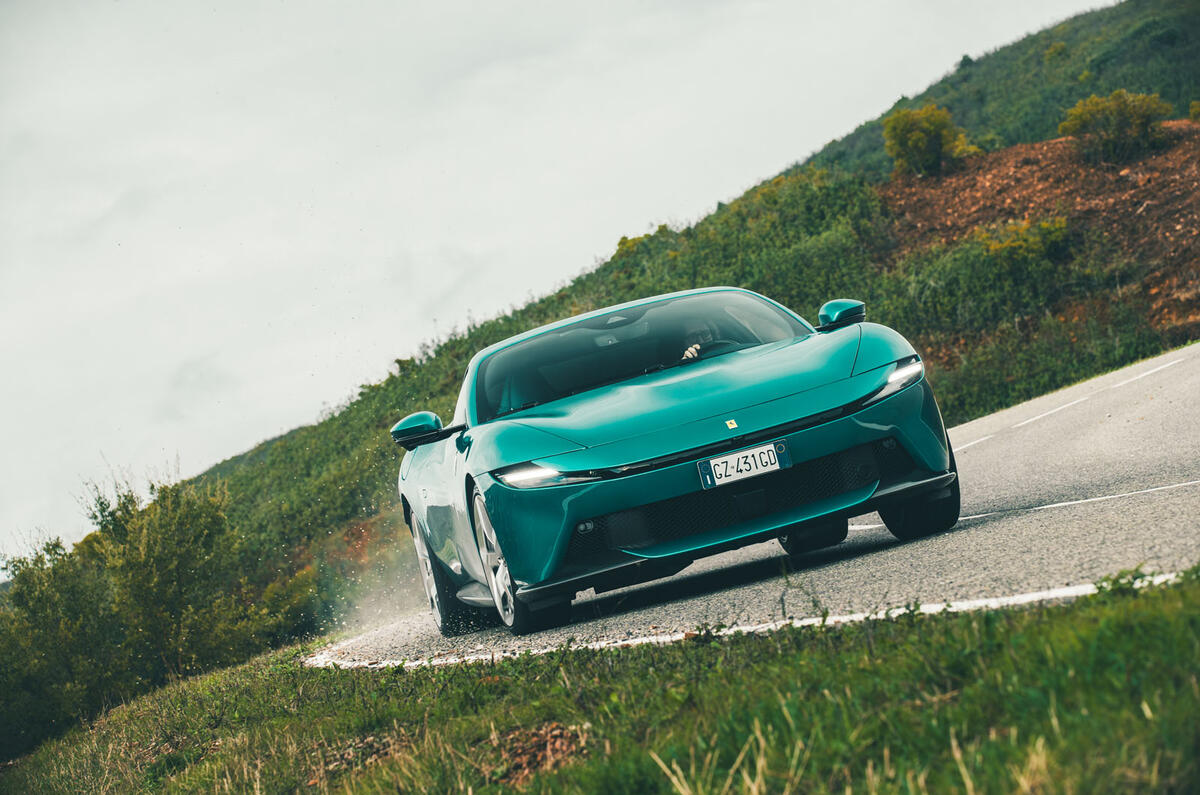
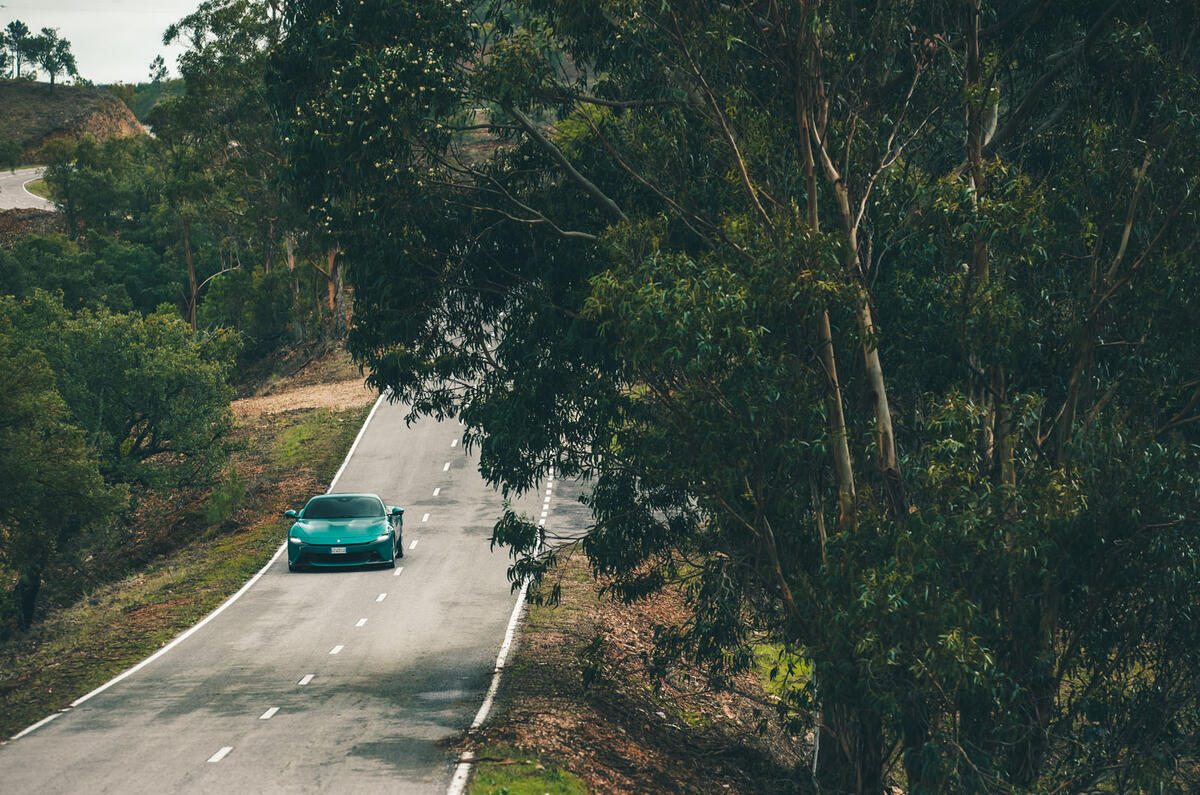
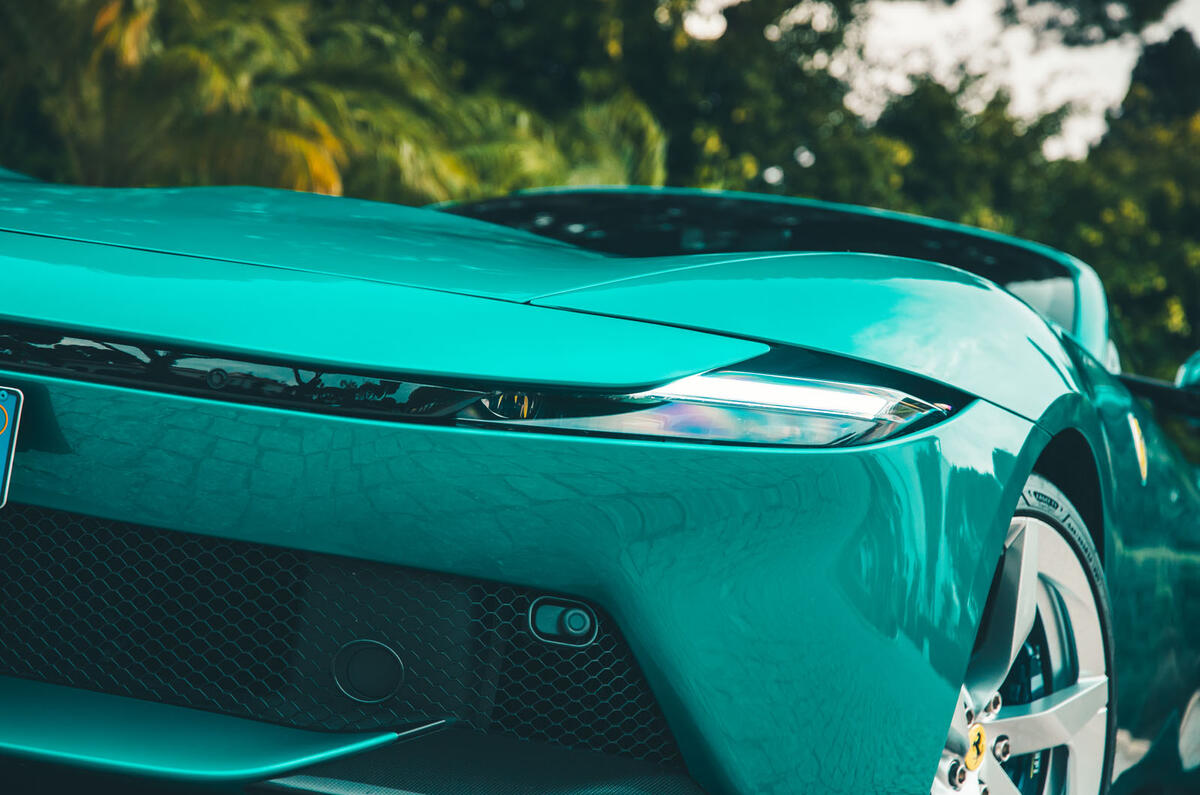
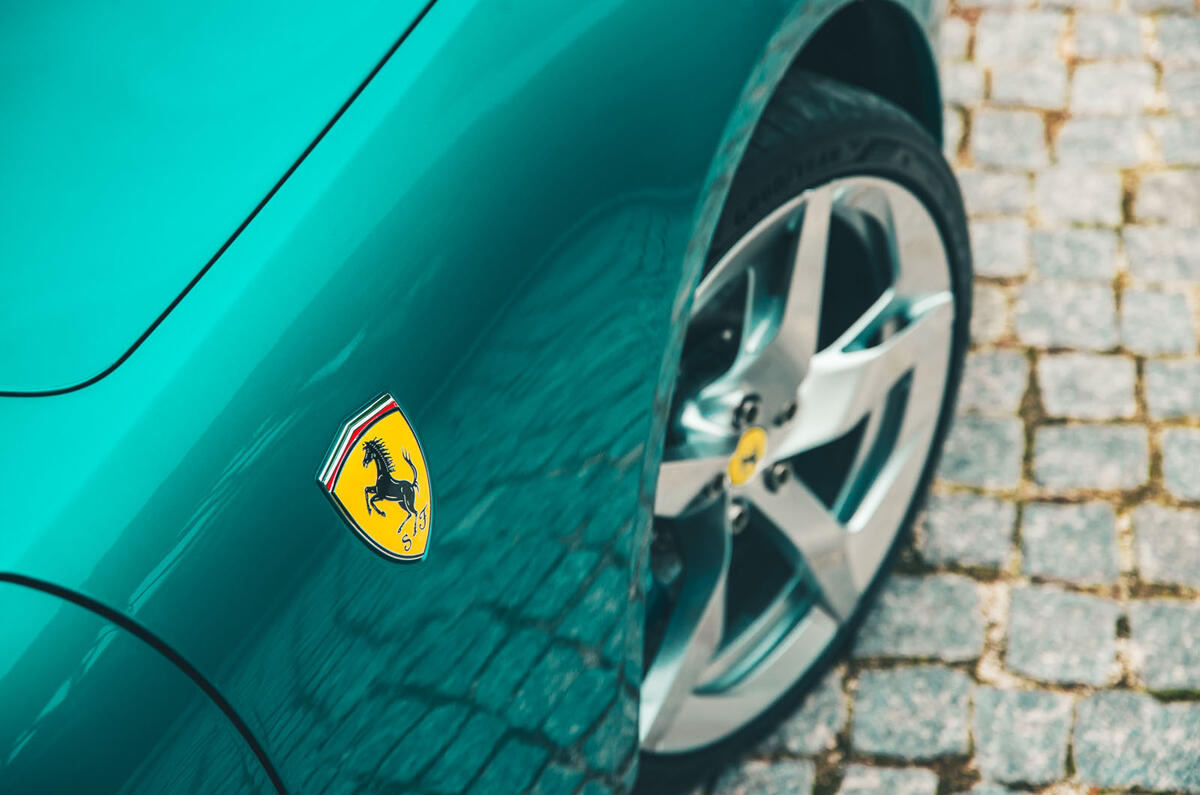
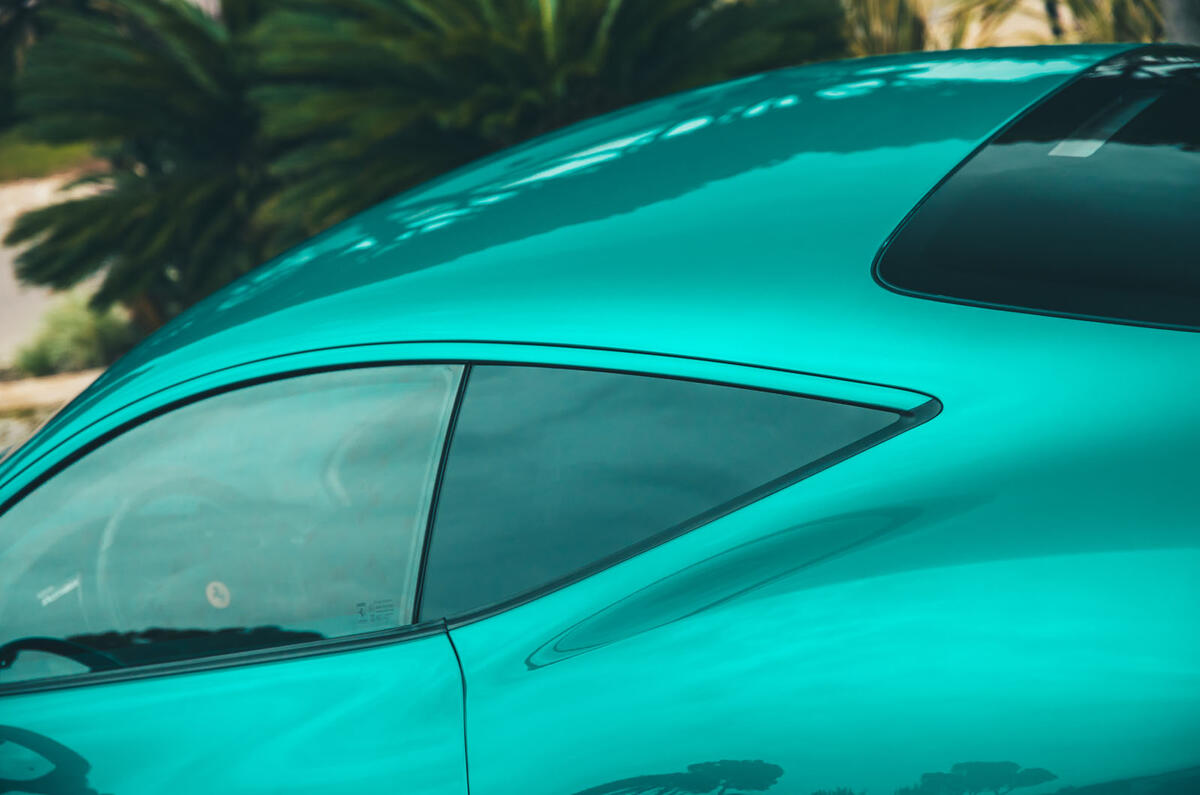
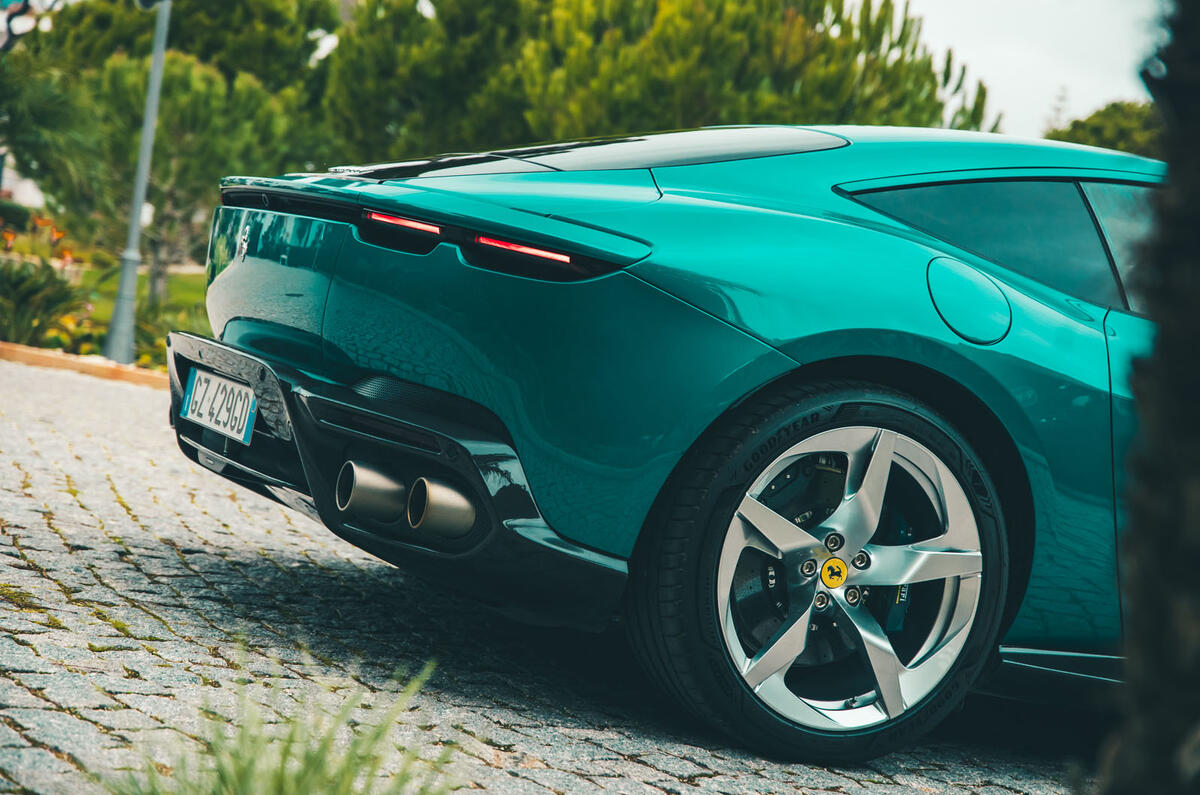
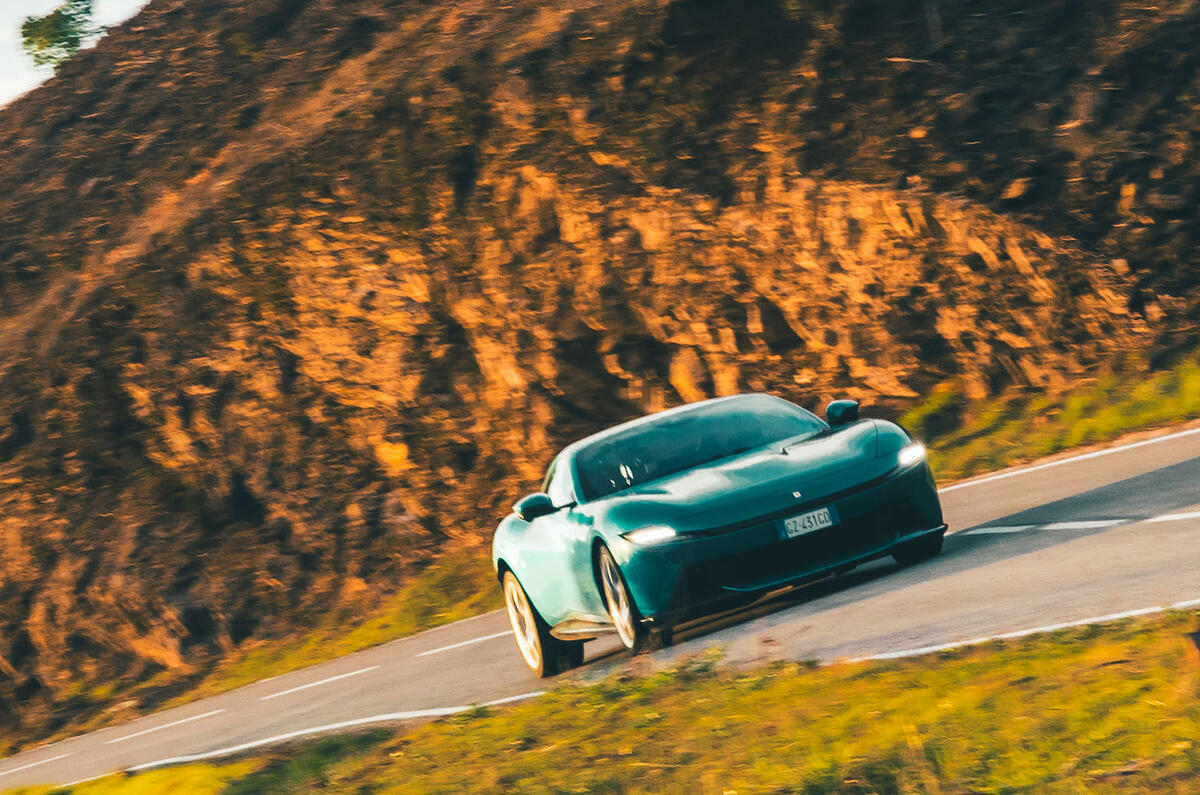
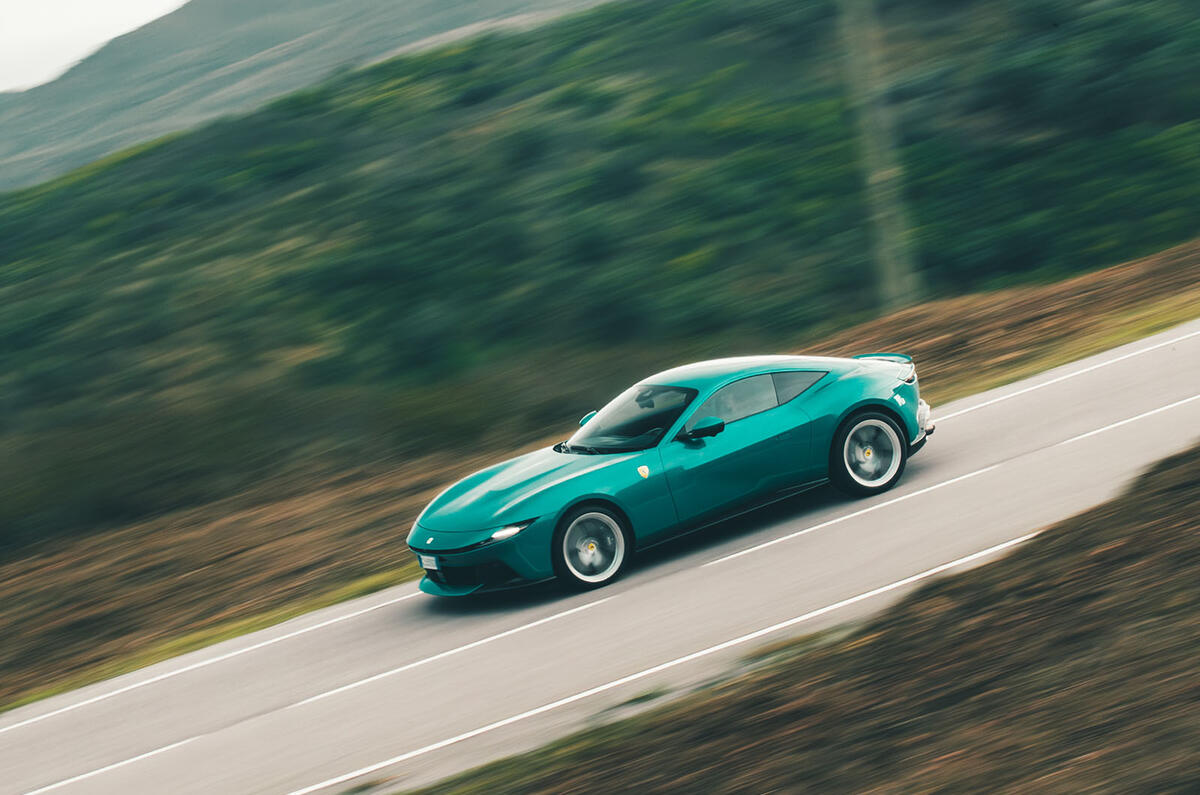
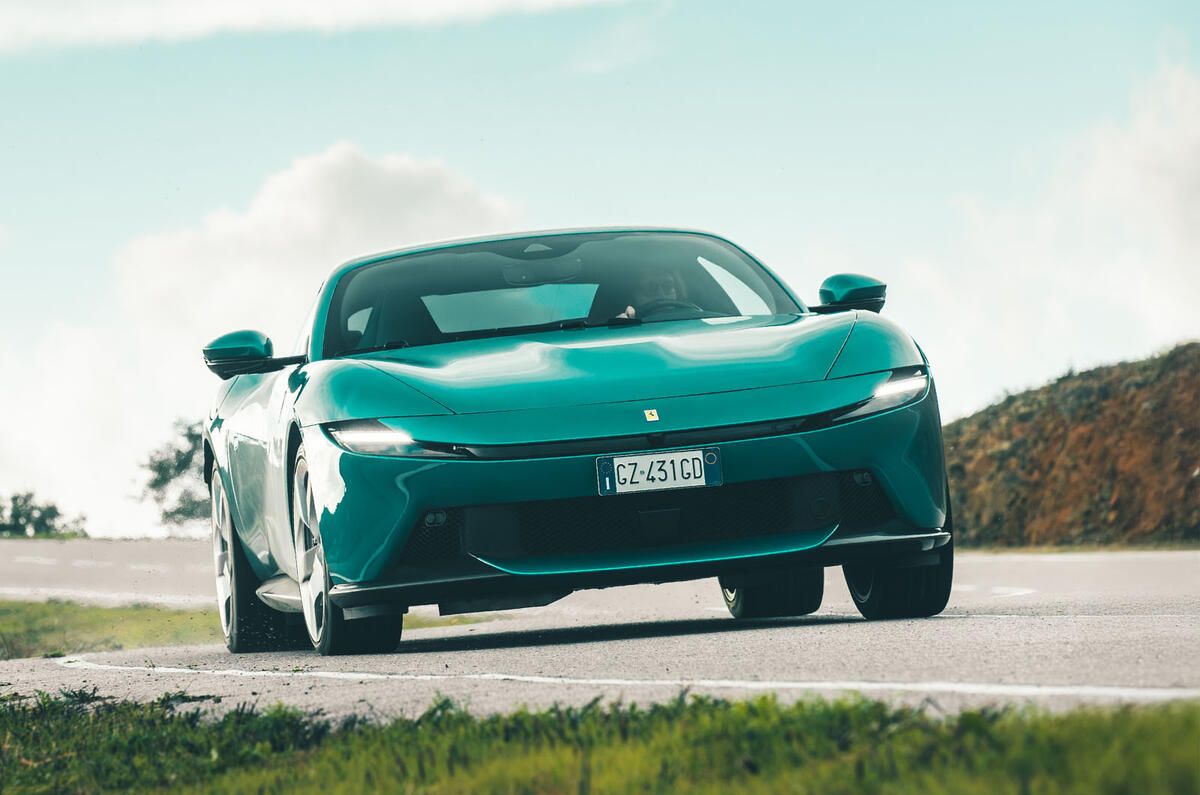
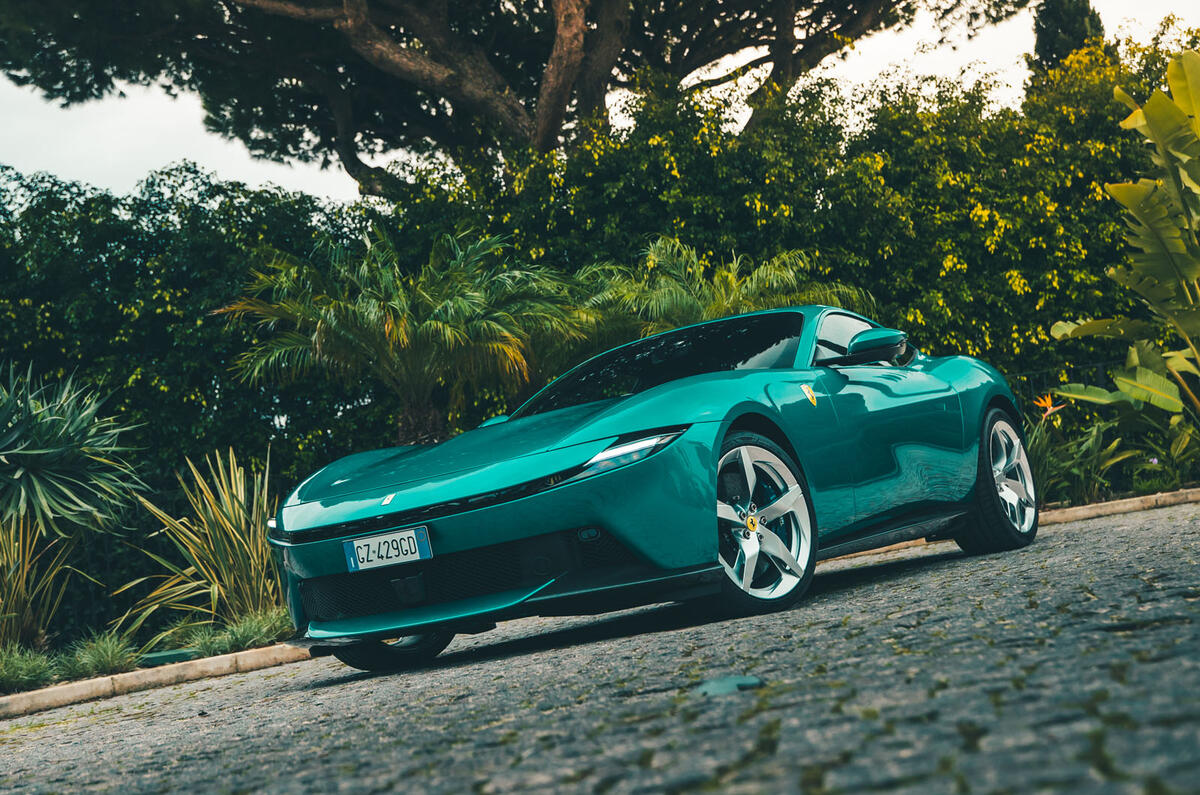
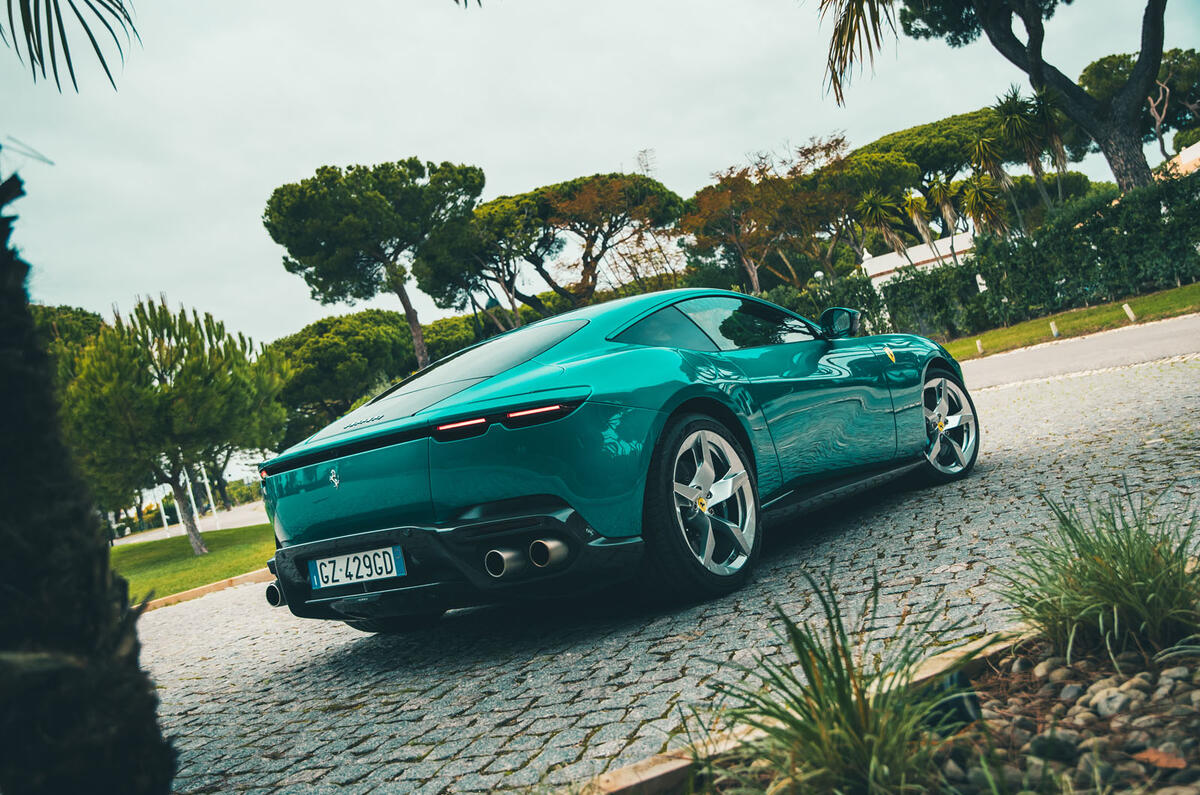
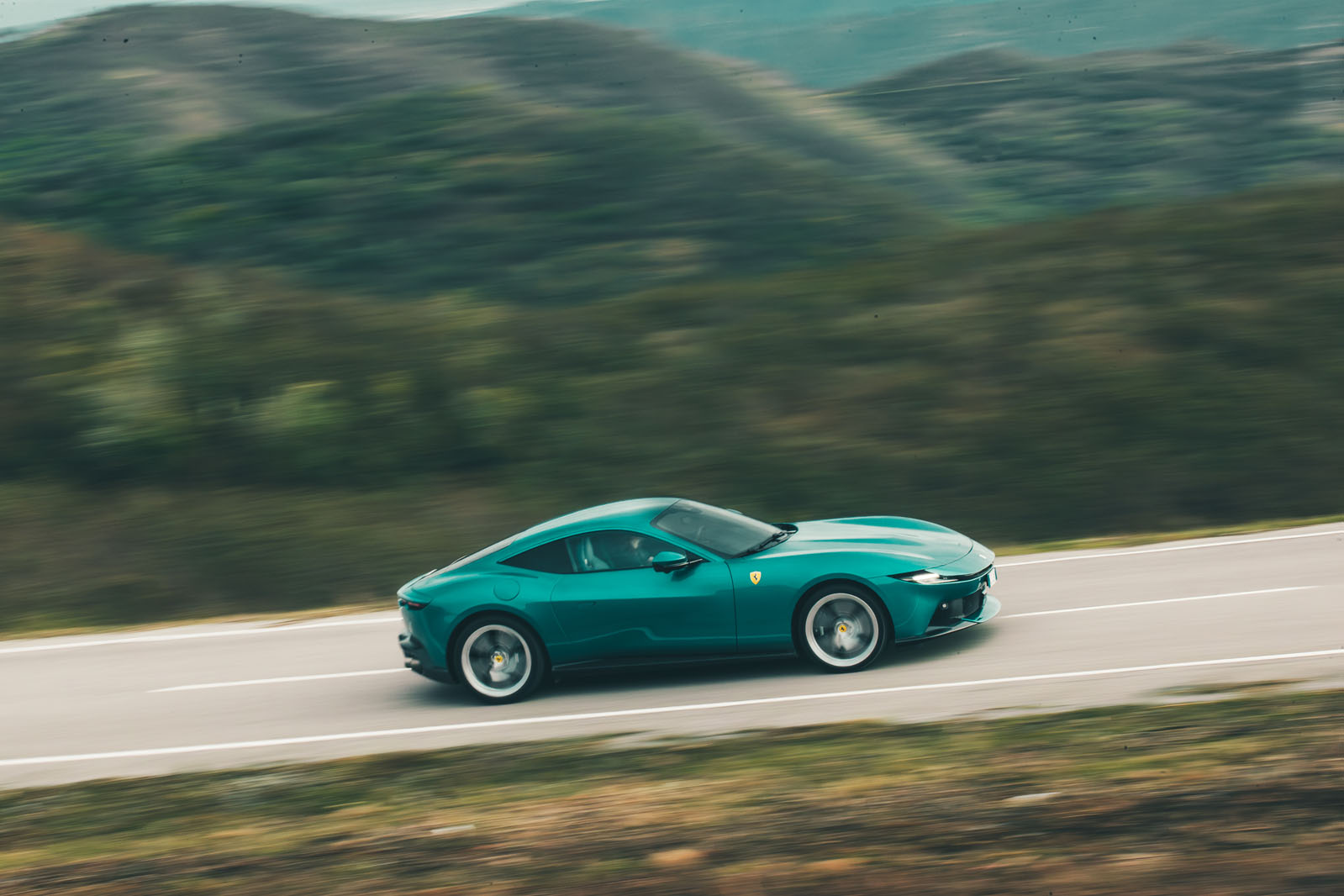
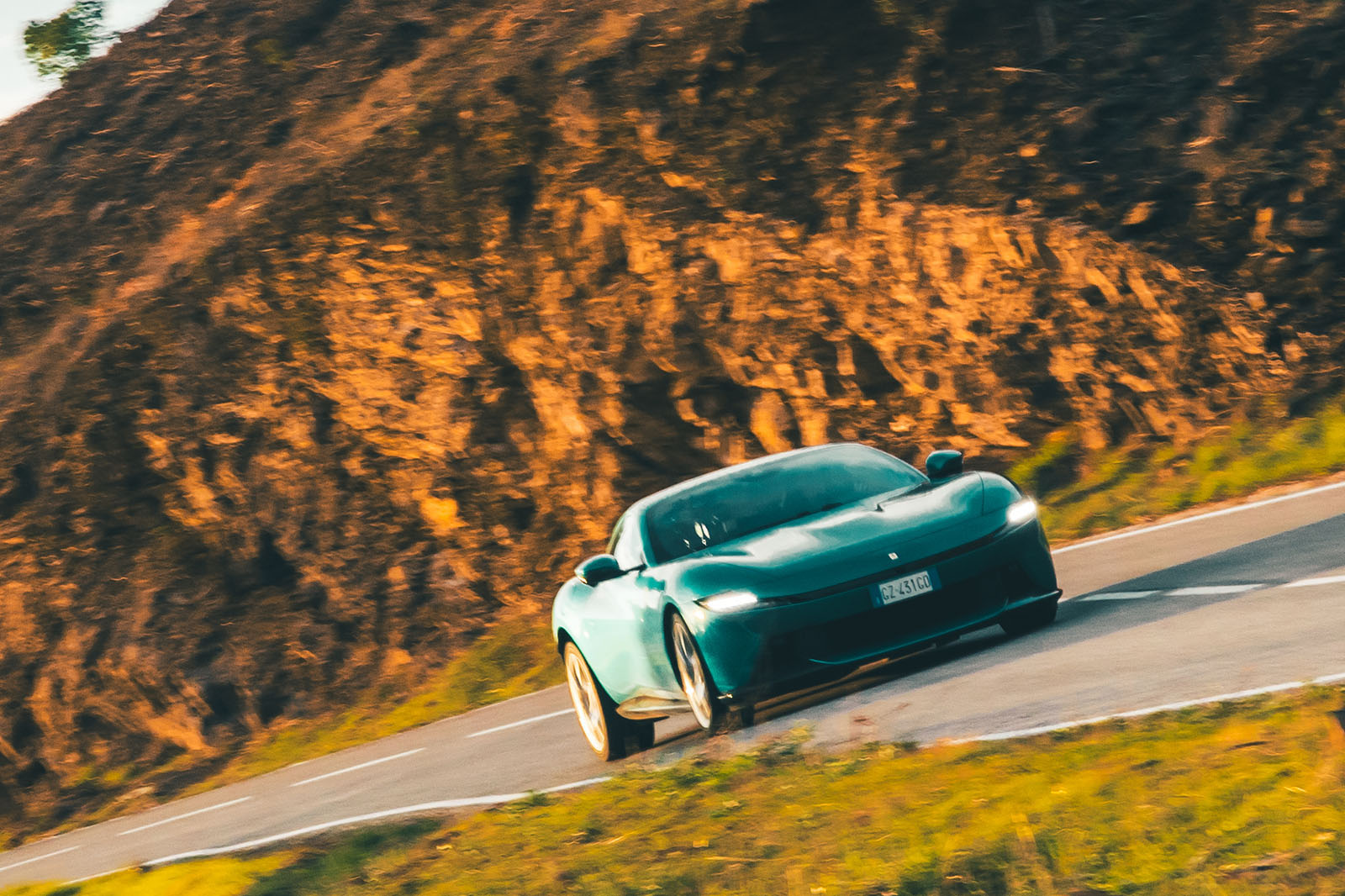
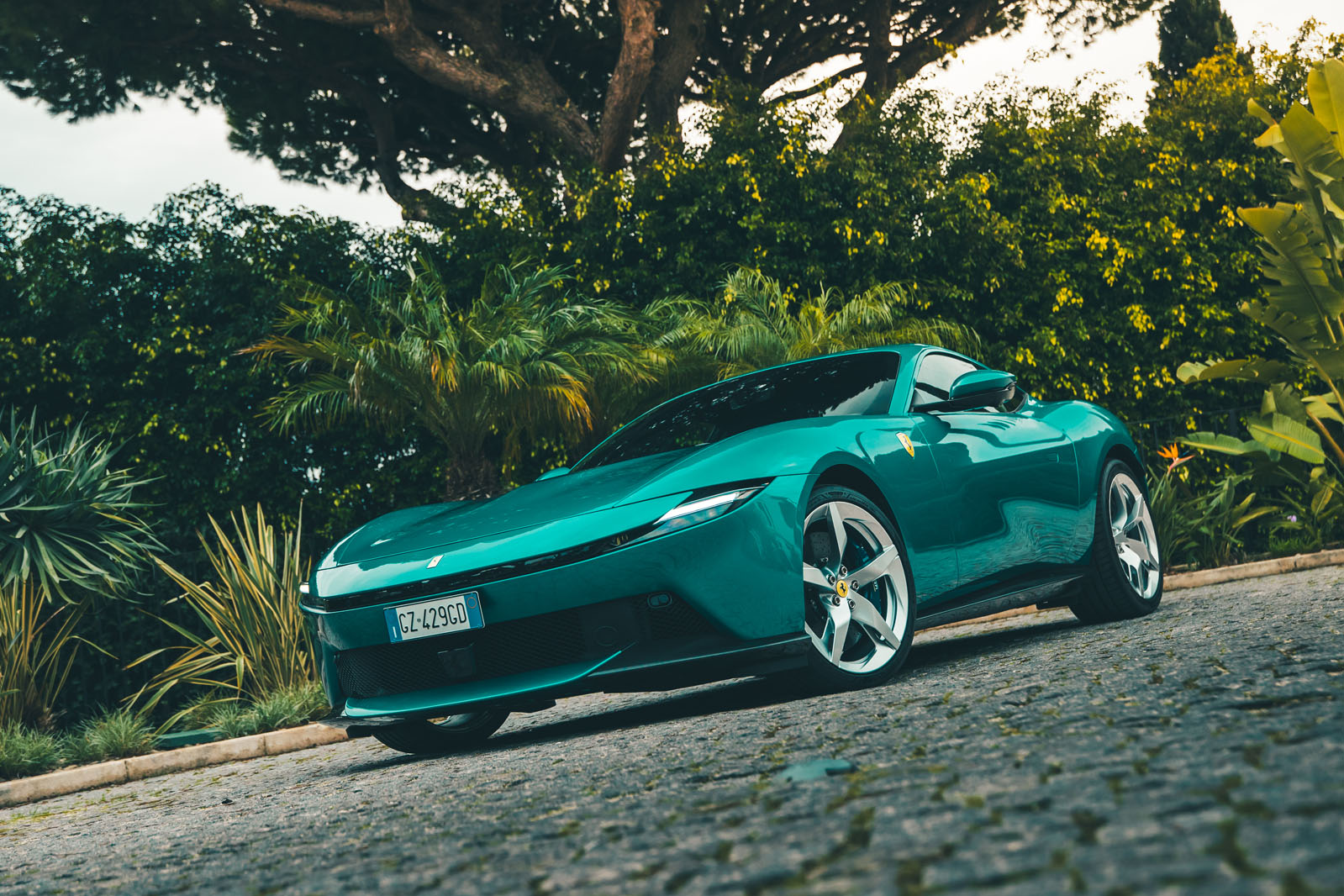
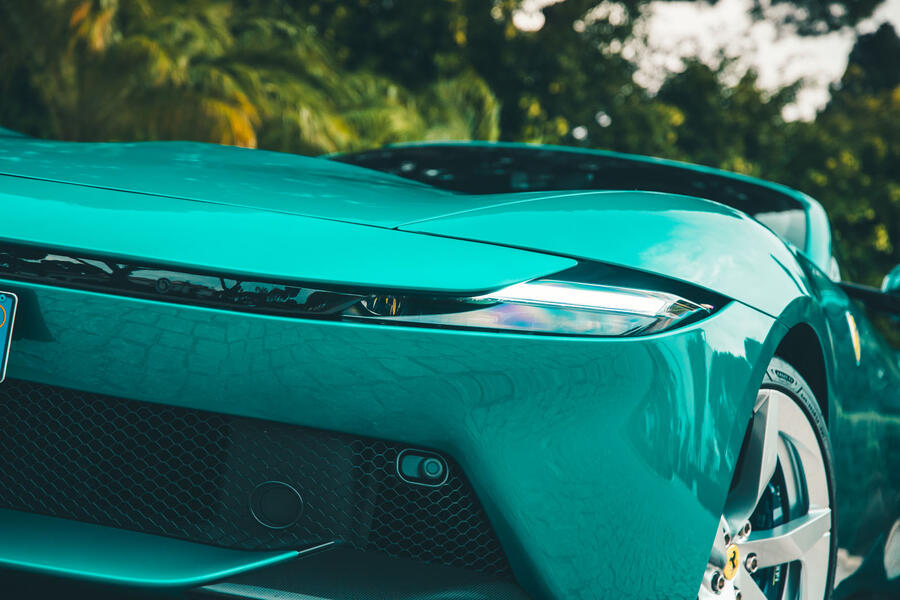
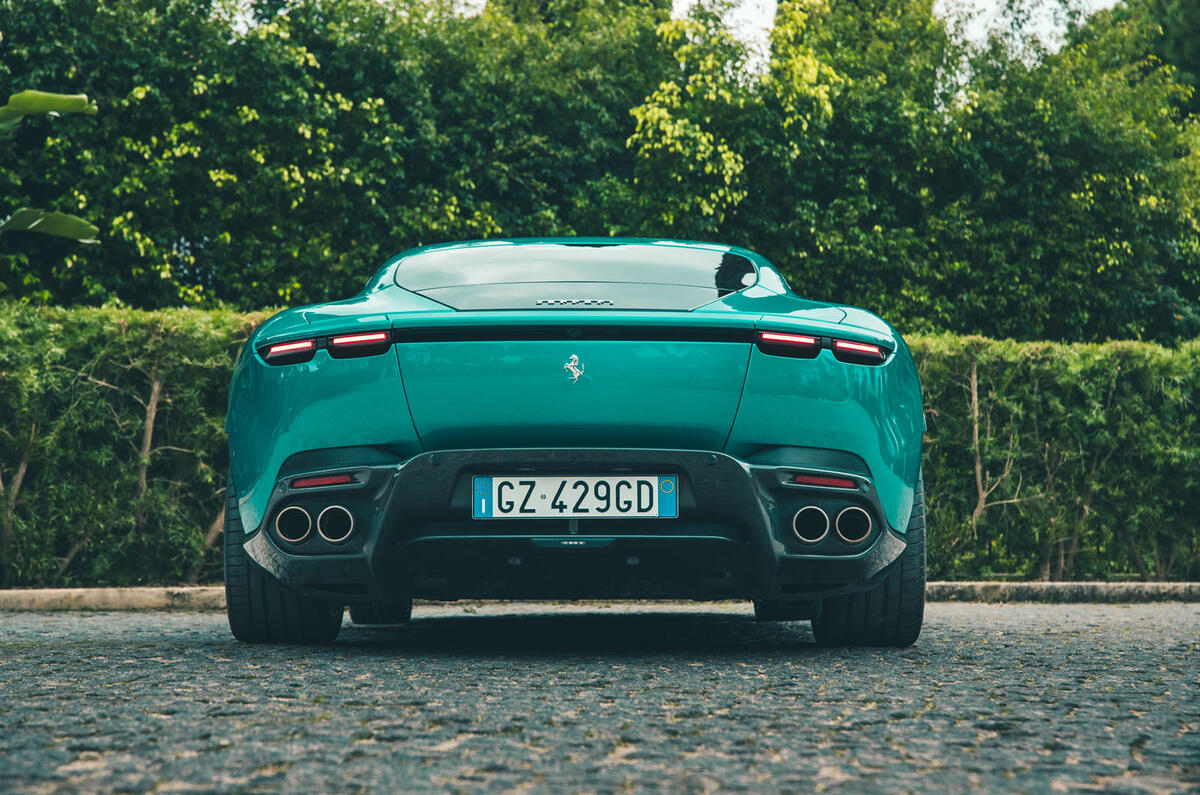
This new one clearly has to fall in line with a fresh era of Ferrari design. There’s no obvious front grille at all. The Amalfi swaps it for a body-coloured ‘wing’ and a gloss black bar running between the headlights. In the initial, highly digitally enhanced press images, it reminded me a little of the Toyota bZ4X’s ‘hammerhead’ look, but in the metal it looks much more purposeful, particularly in the spectacular greeny-blue Verde Costiera launch colour.

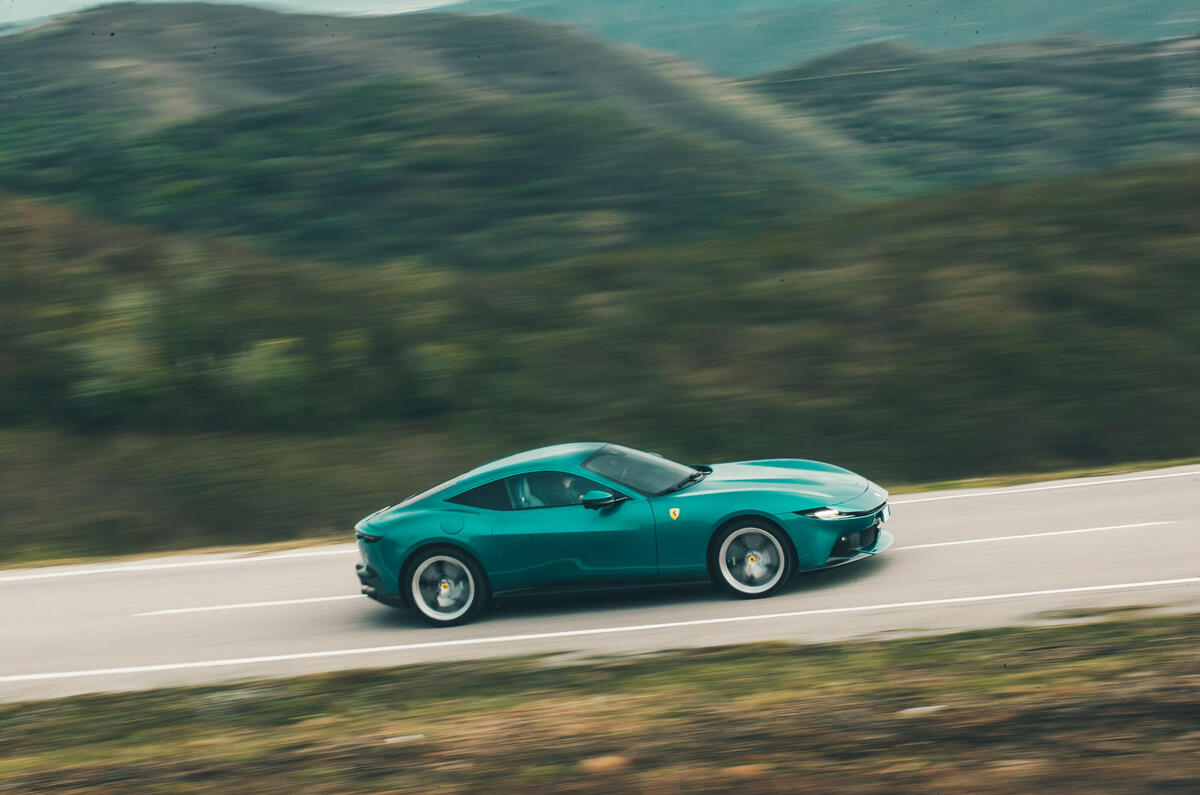
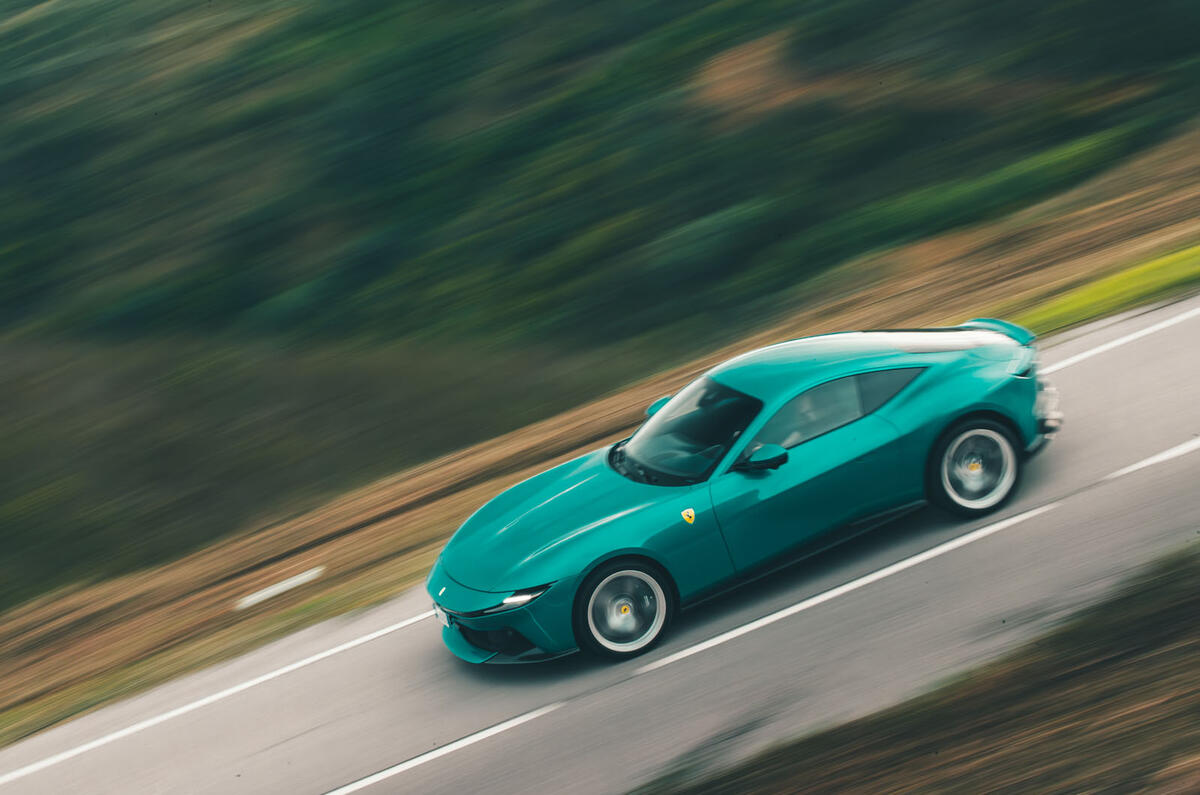
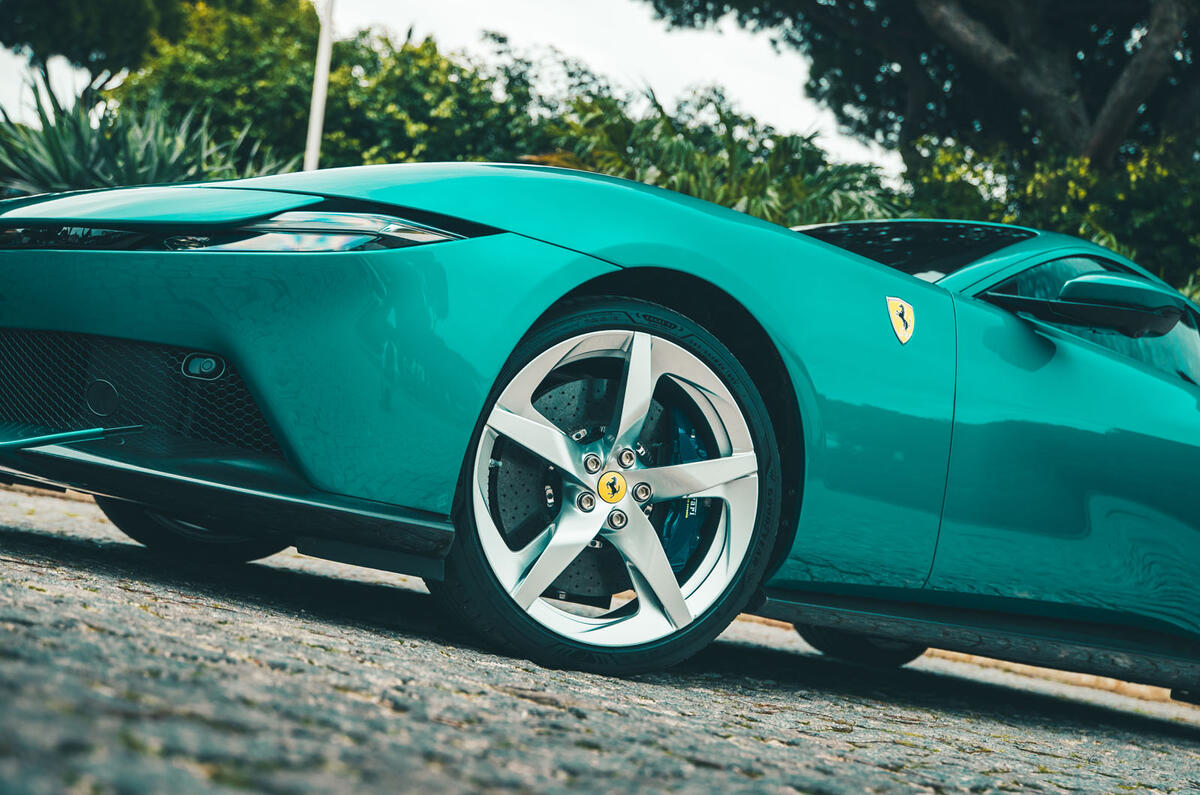
Despite having the same size of wheels and tyres as the Roma, the Amalfi manages to shed its predecessor’s slightly under-wheeled appearance, surely helped by the alloys, which look simple and solid from some angles and intricate from others. Talking of which, props to Ferrari’s press department for snubbing the latest trends and speccing silver wheels.

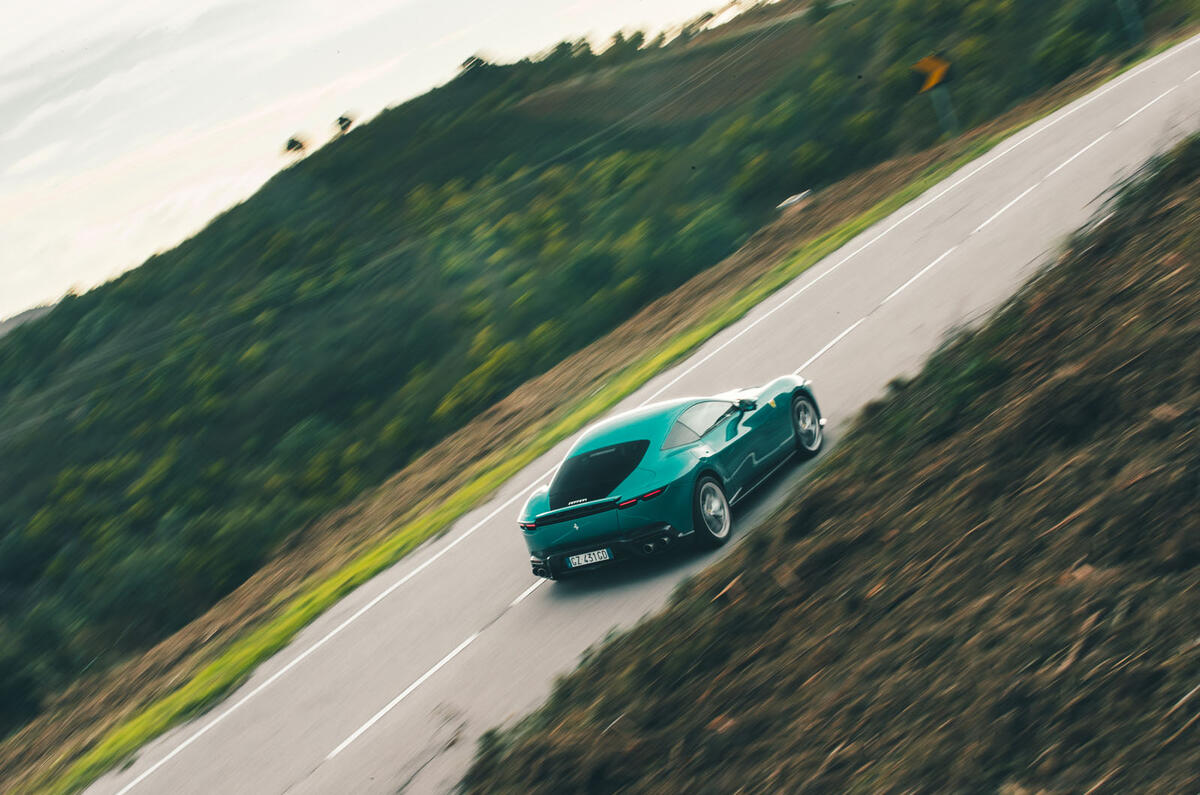
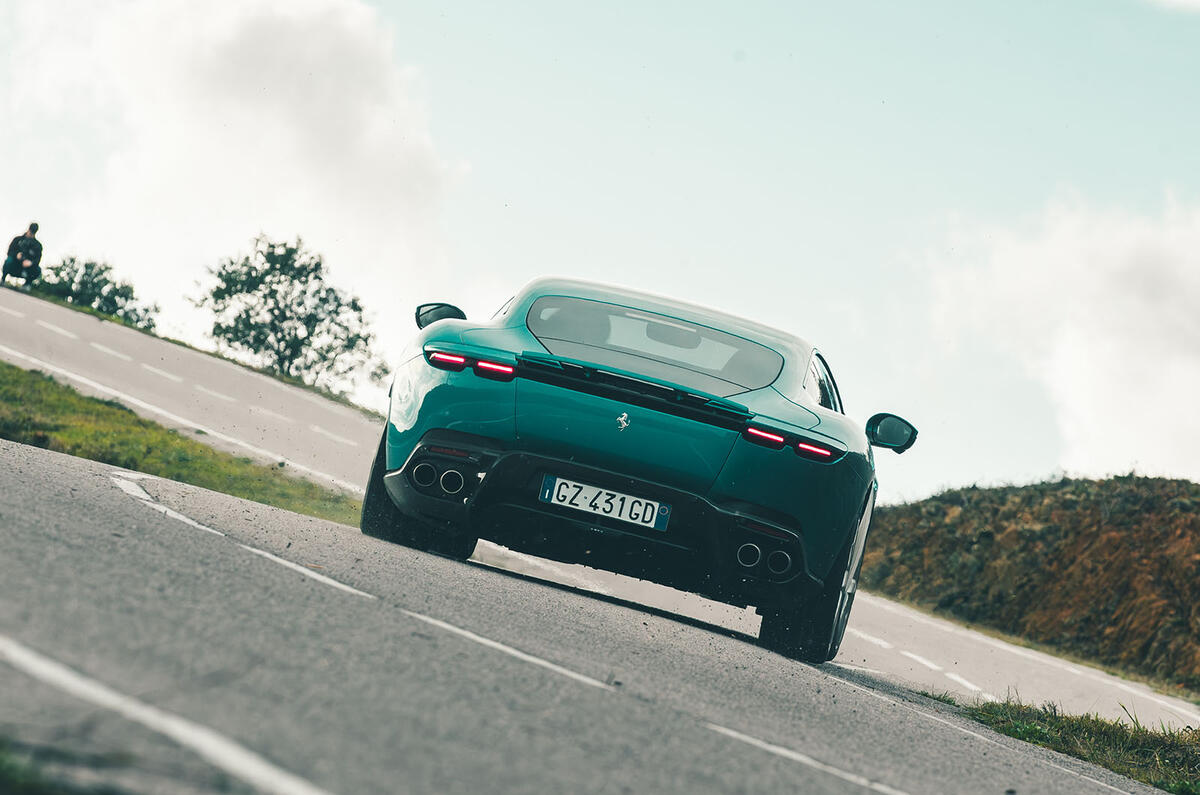
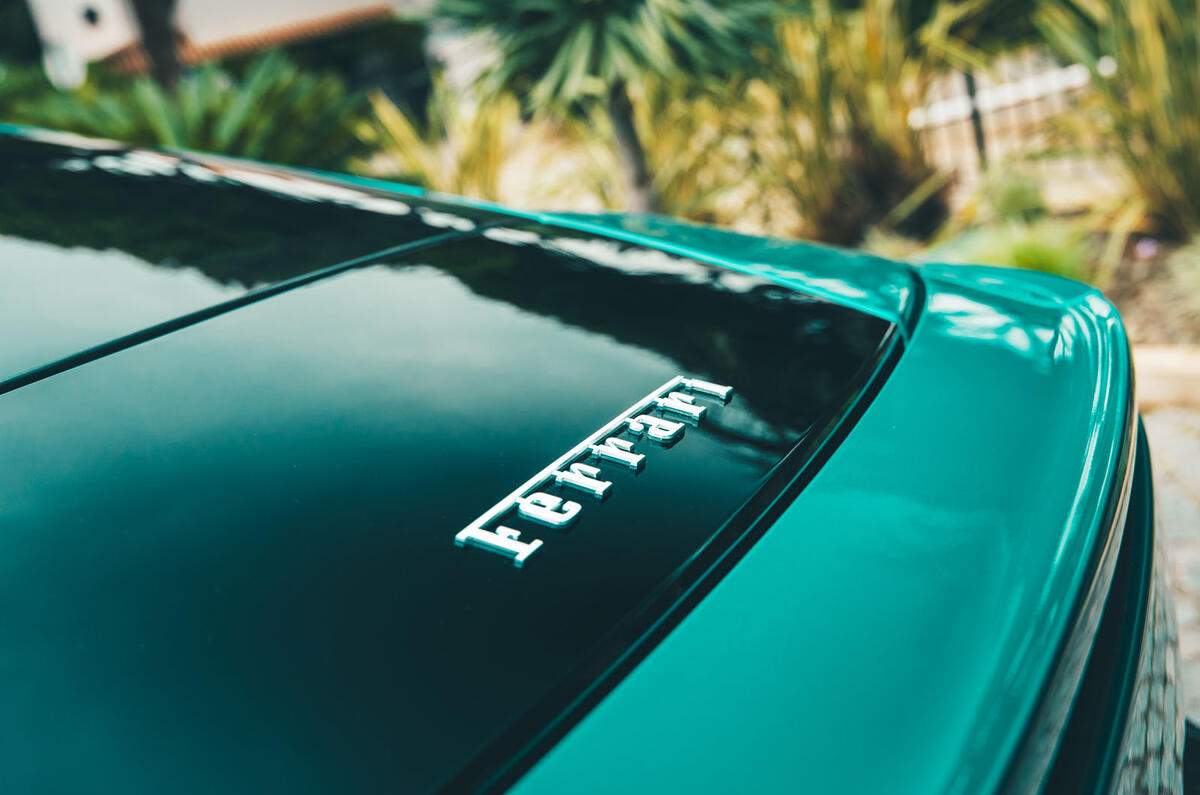
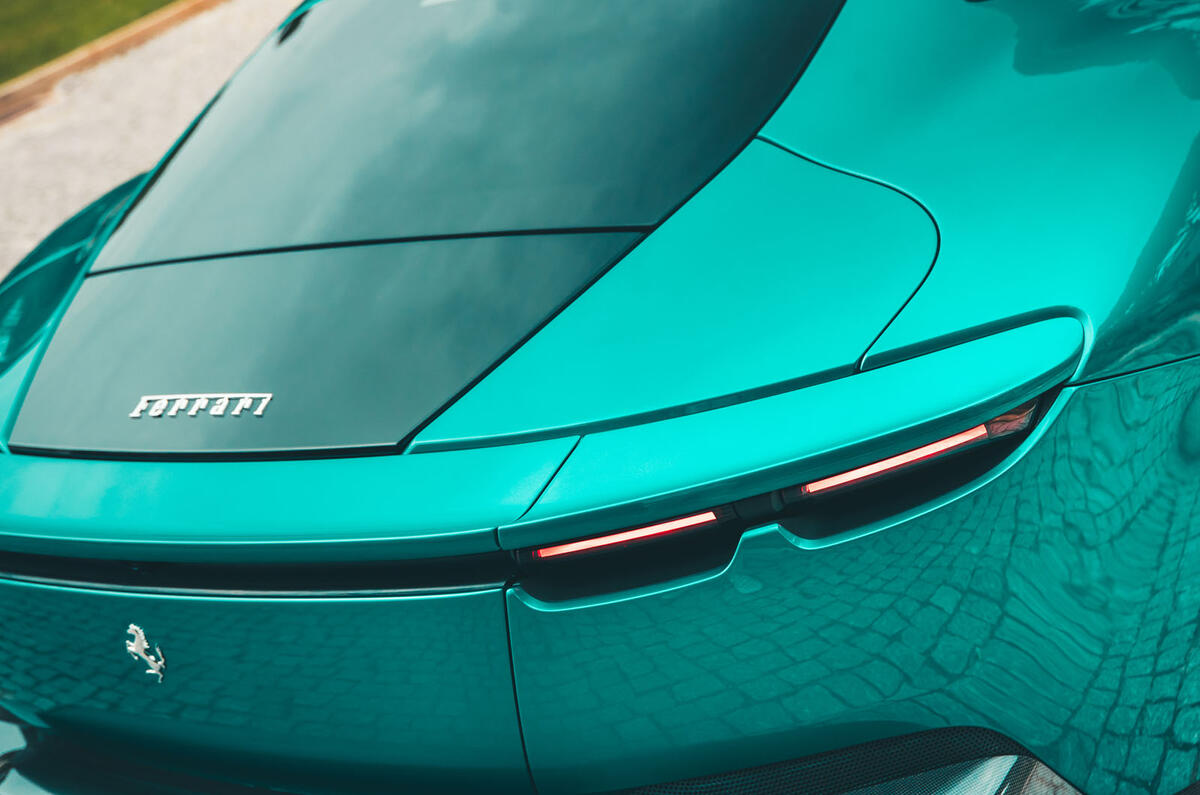
A big slash along the side of the car breaks up the surface visually, while at the back the lights are recessed and the panelwork has become a little cleaner. If you prefer the look of the Roma, you can still buy one as a Spider. An Amalfi Spider is surely coming, just not yet.

Sorry to harp on about design, but the Amalfi is one of those cars that get better with quiet contemplation, and there aren’t any momentous technical developments here, contrary to what the page count of the media presentation document suggests (74, in case you’re wondering).
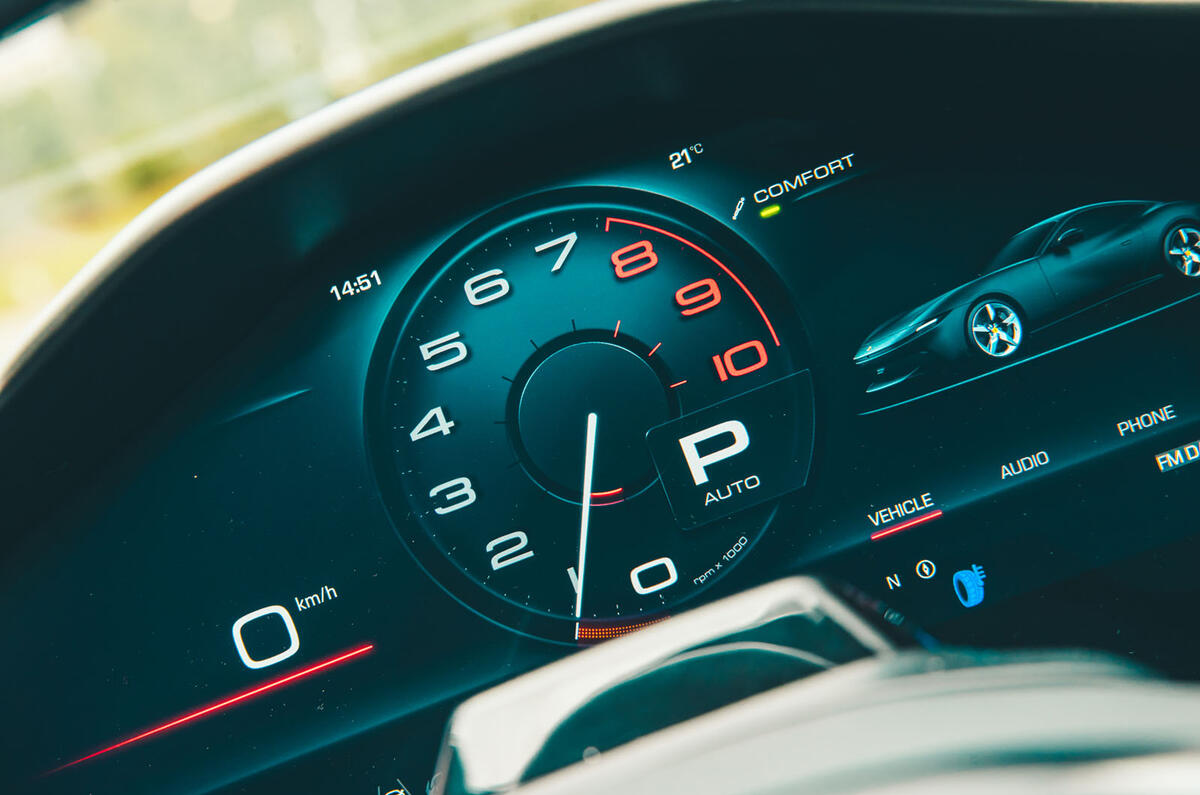
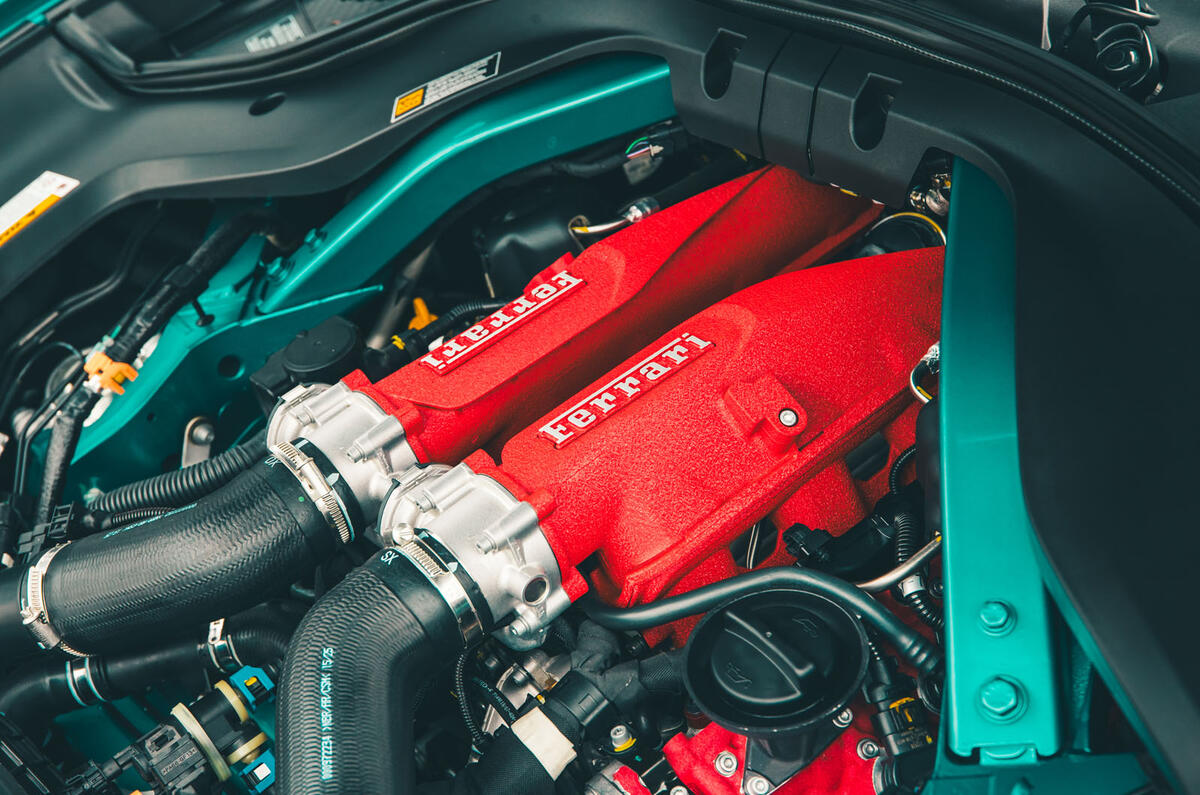
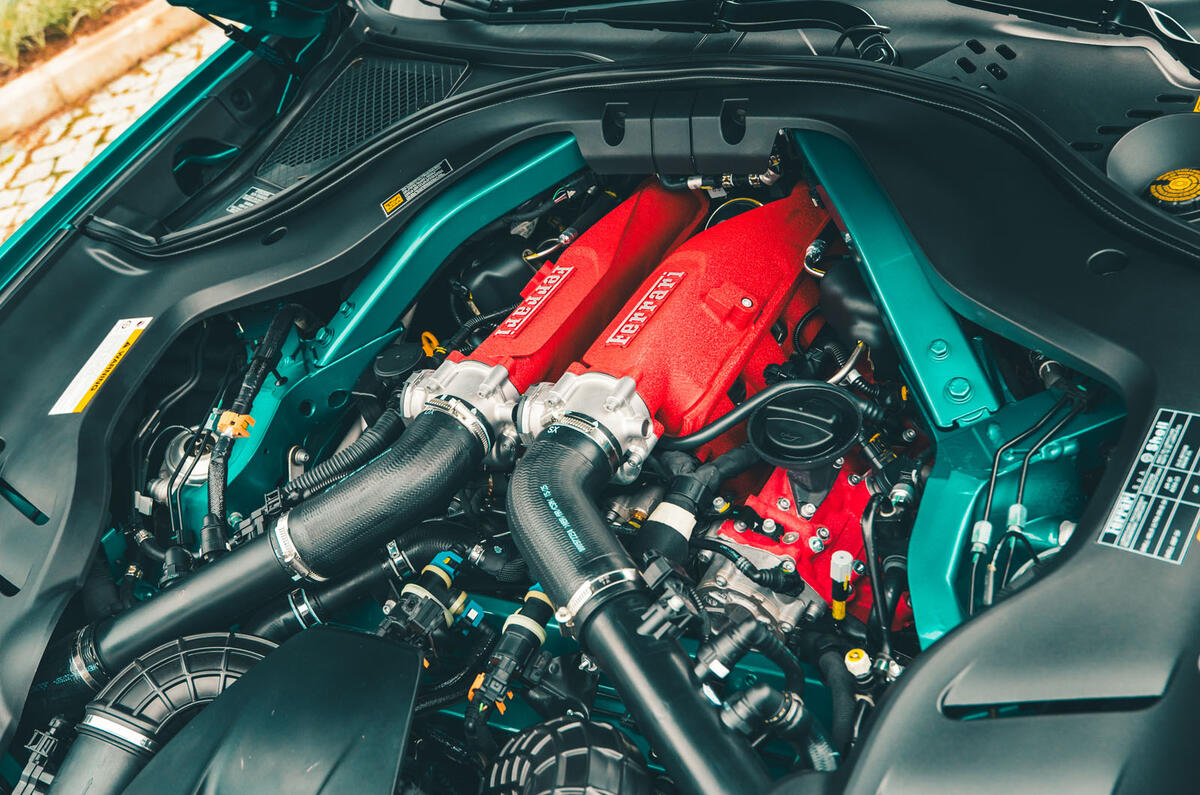
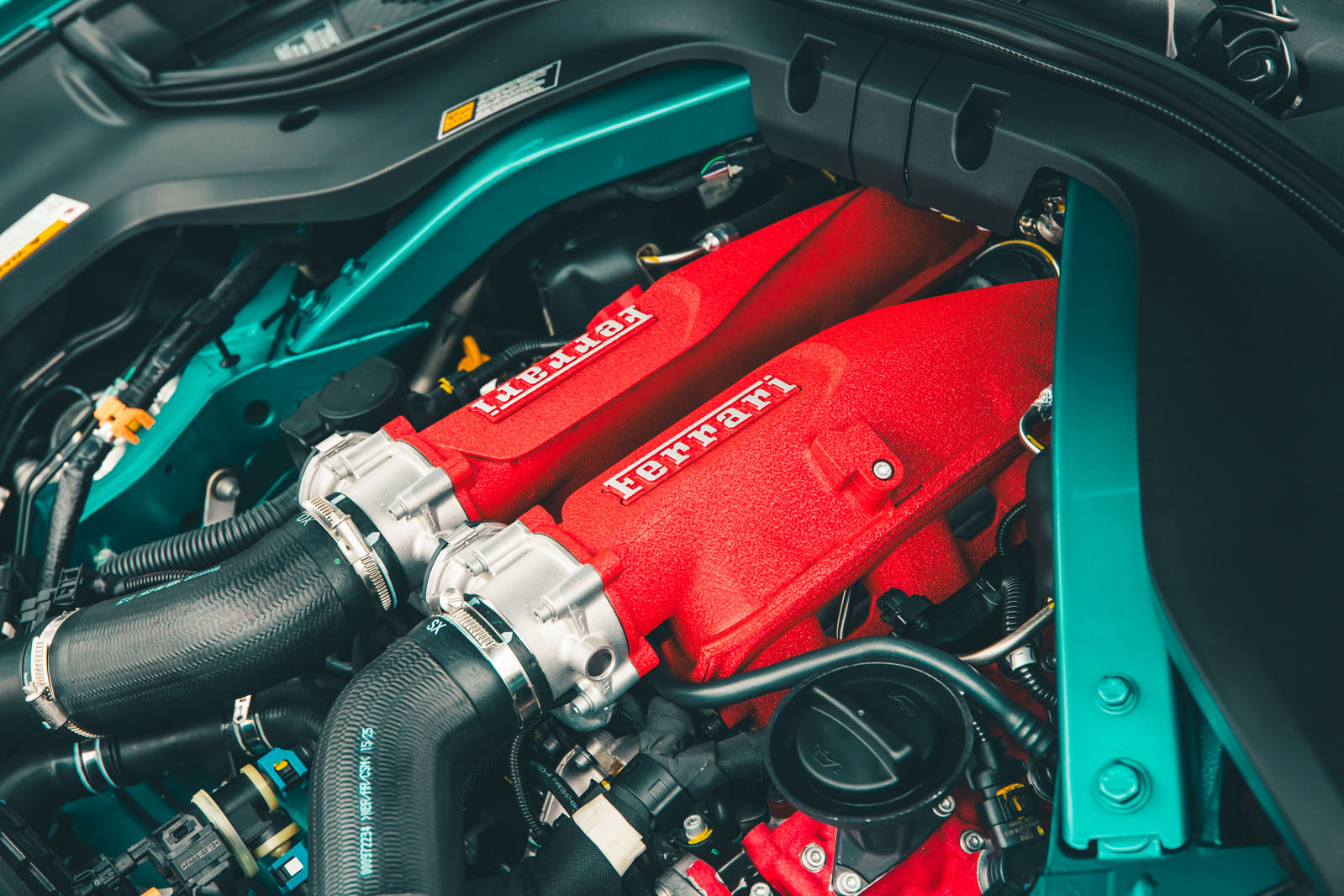
The engineers have extracted a bit more power (but no more torque) from the 3.9-litre flat-plane V8 while also making it better at passing emissions tests. More accurate boost control means that the two twin-scroll turbochargers can safely spin 6000rpm faster (to 171,000rpm) and the engine’s redline has been increased to 7600rpm, although peak power (now 20bhp more) still arrives at the same 7500rpm.

The engine also runs on thinner oil (0W30 instead of 5W40) so that it’s more efficient while warming up (which is important for Euro 7 emissions testing).

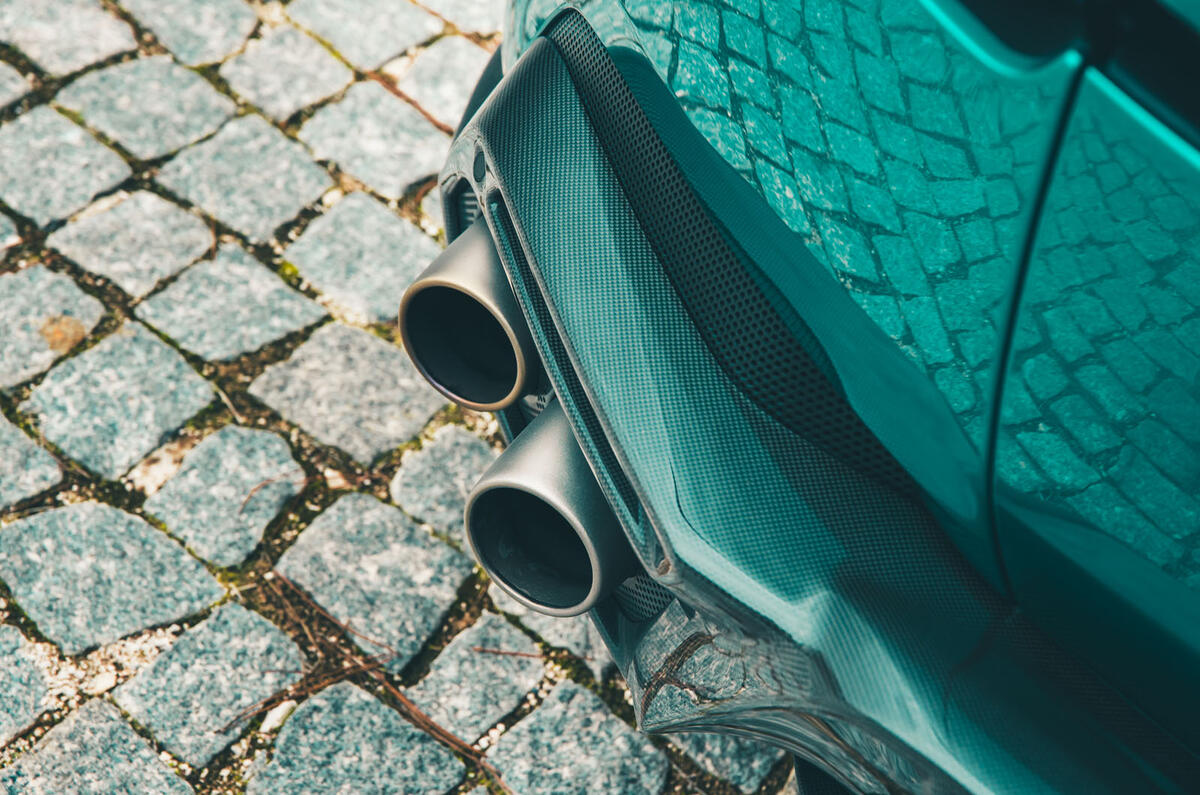
The exhaust system has been tweaked as well to enable the catalytic converter to warm up more quickly and it’s a little quieter at idle too.

As for the chassis, the hardware is the same, but since the Roma’s launch, Goodyear has been added as a tyre supplier alongside Pirelli and Bridgestone, and the magnetorheological dampers (still a £3695 option, or £7501 if you want it with nose lift) have been recalibrated slightly. The aerodynamics have evolved as well, with a new and more aggressive deployable rear spoiler.

INTERIOR

Ferrari Amafi review 2025 080

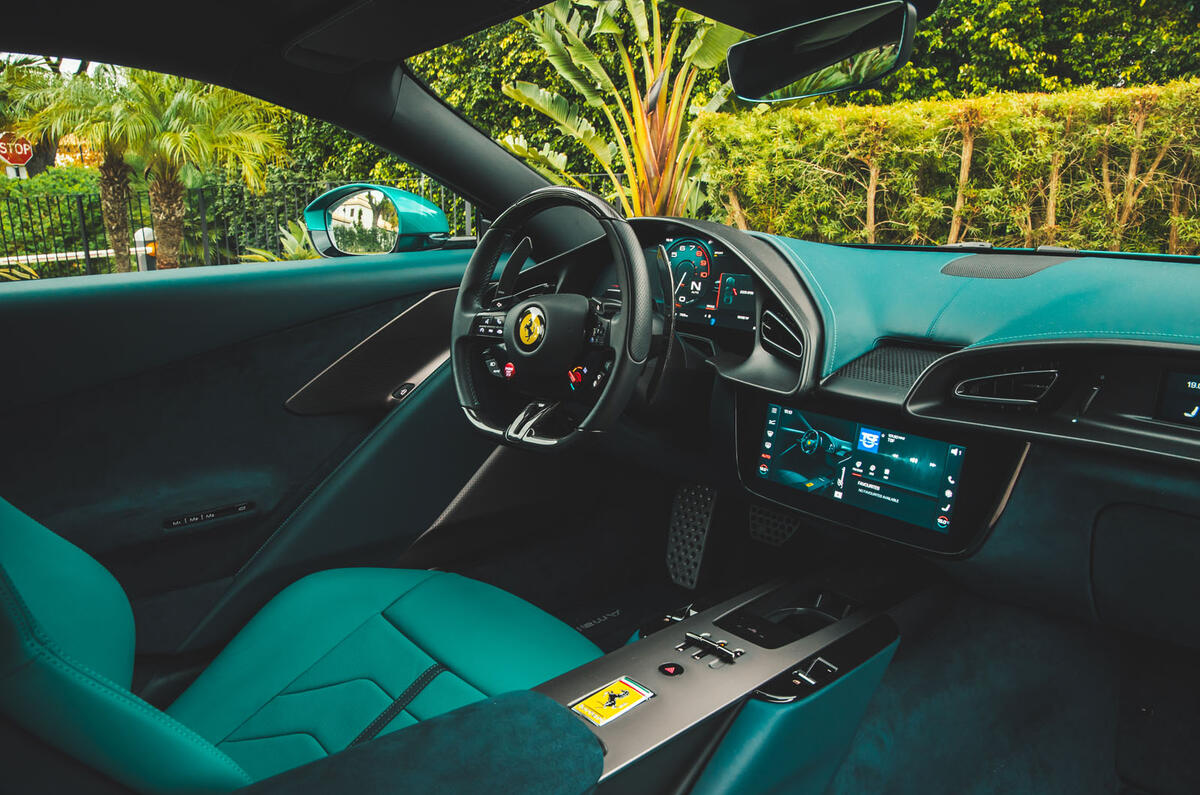
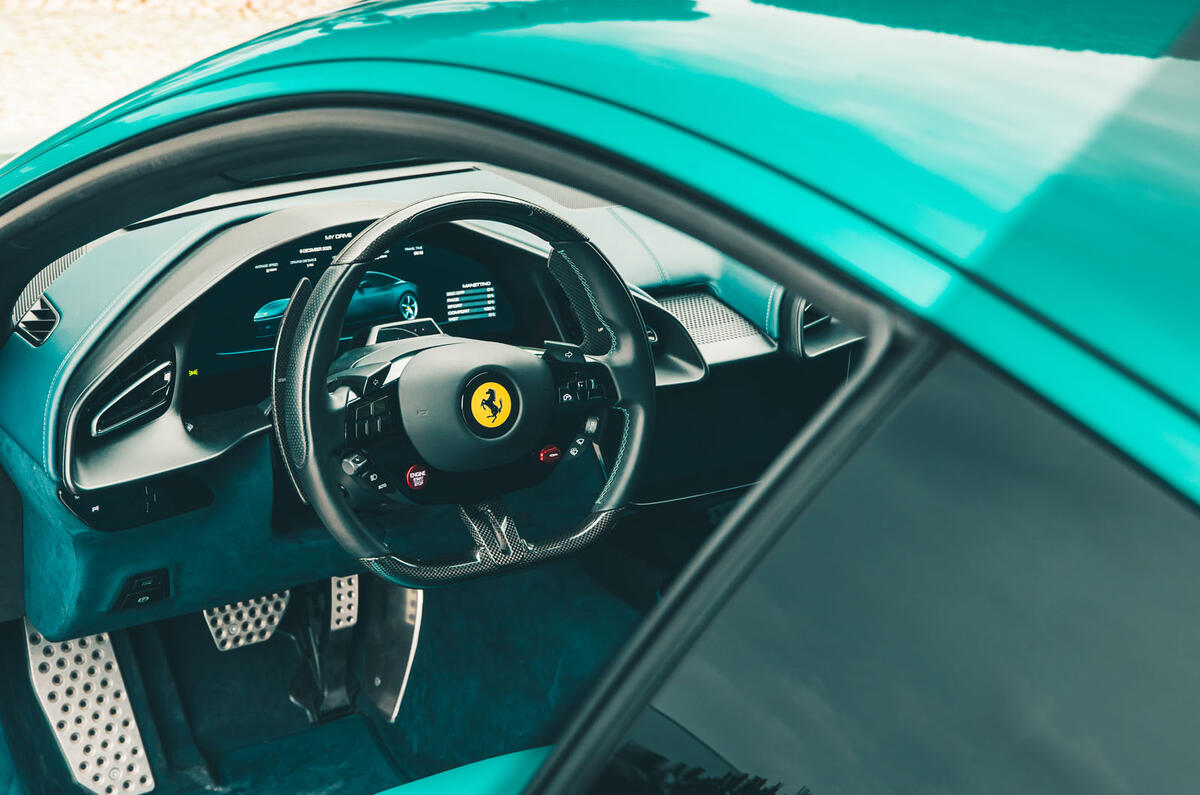
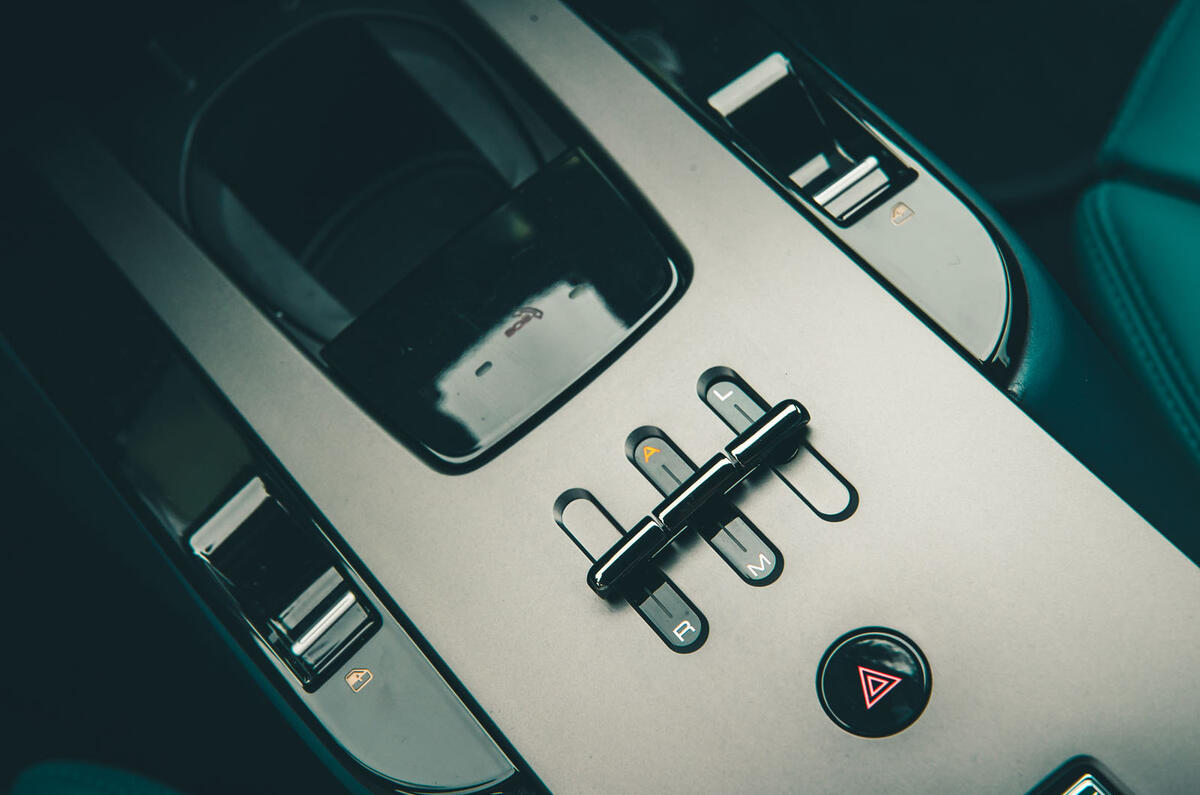
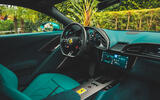
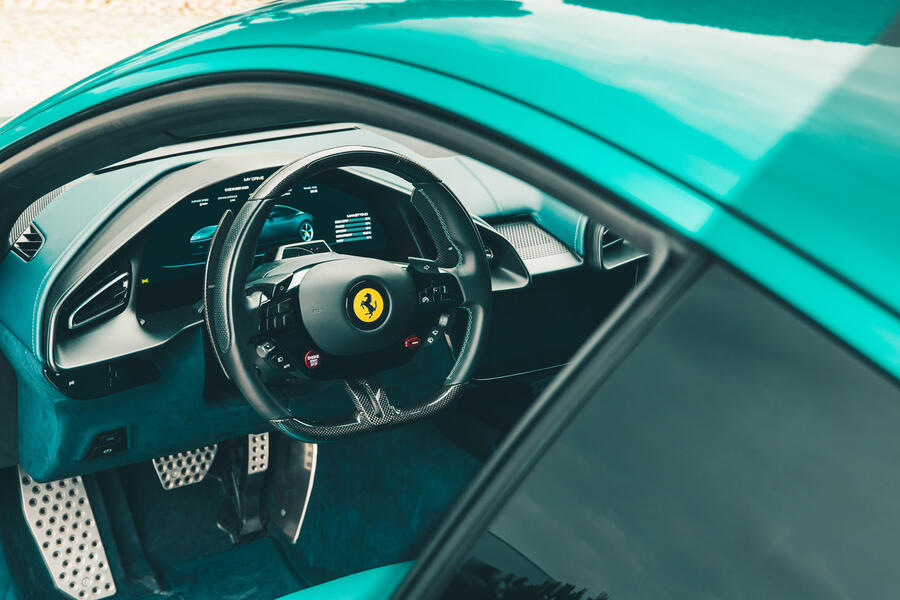
The biggest changes are inside, where the tall, cascading centre console with gloss black trim has given way to a much lower, flatter one made out of anodised aluminium. It doesn’t impart quite the same sense of occasion, but it is certainly more practical and less sensitive to fingerprints.

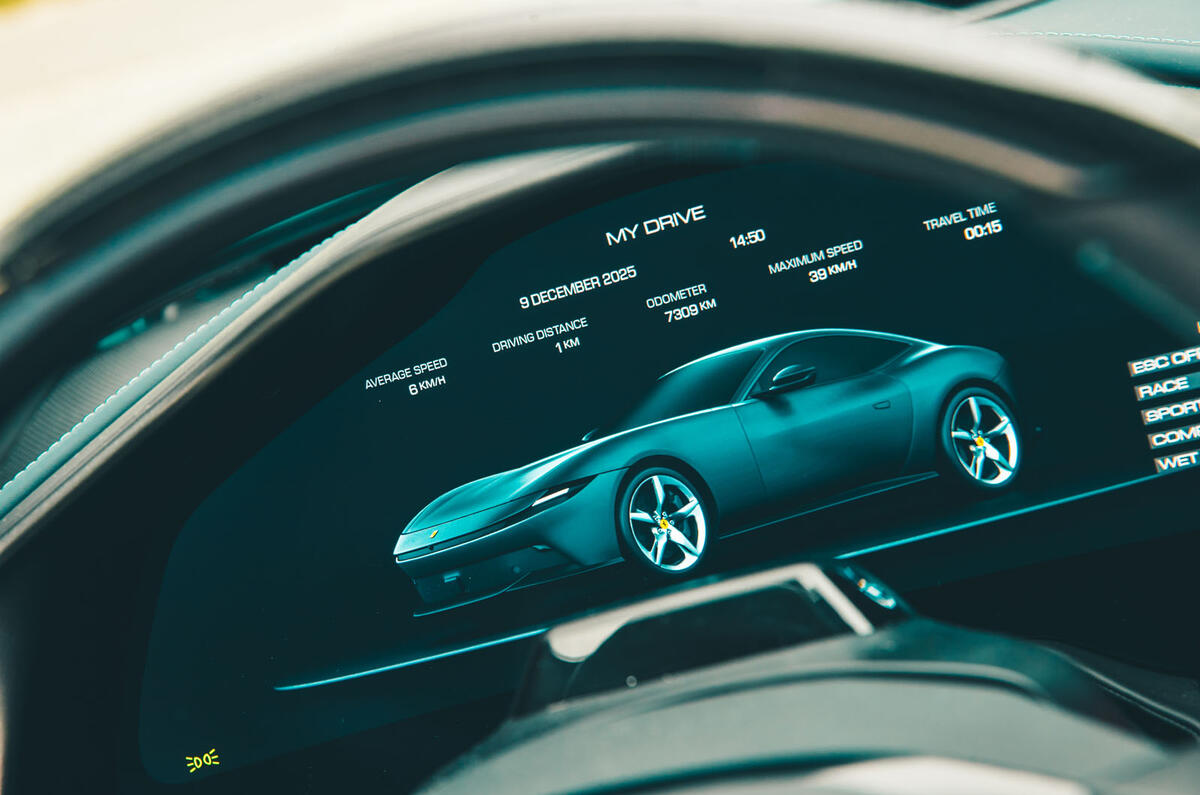
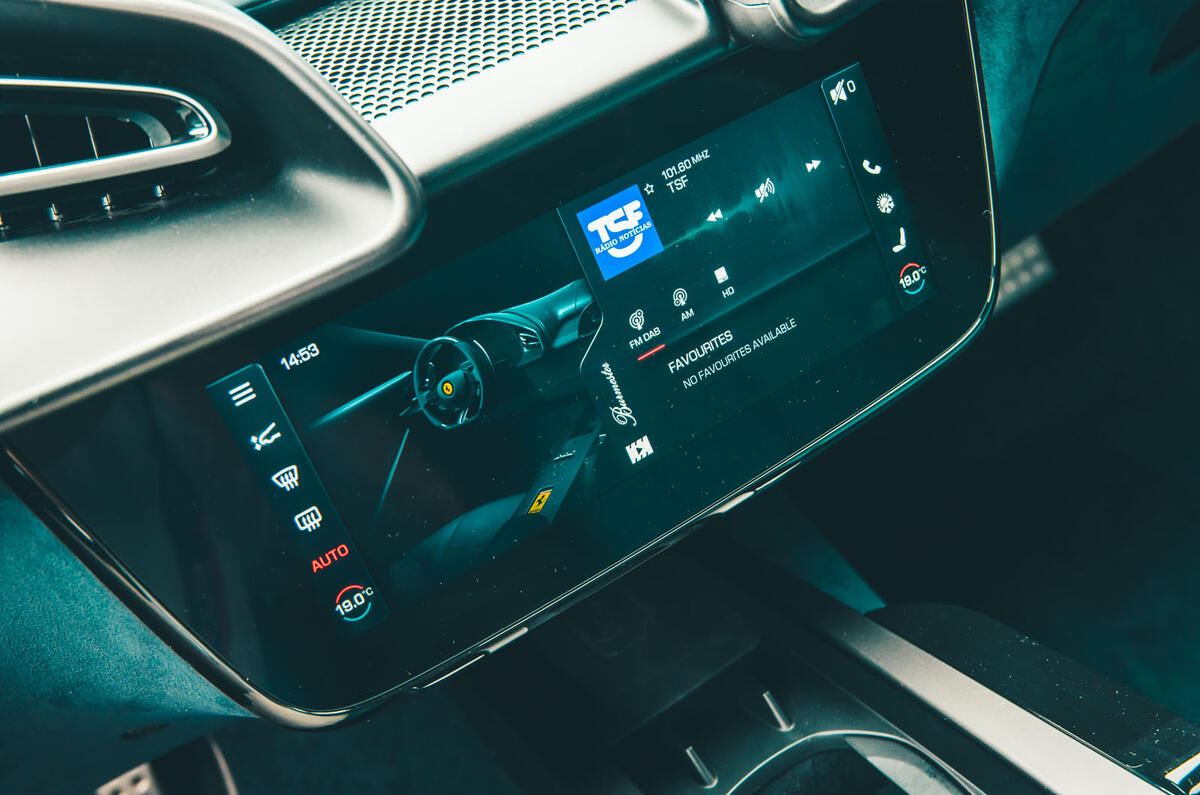
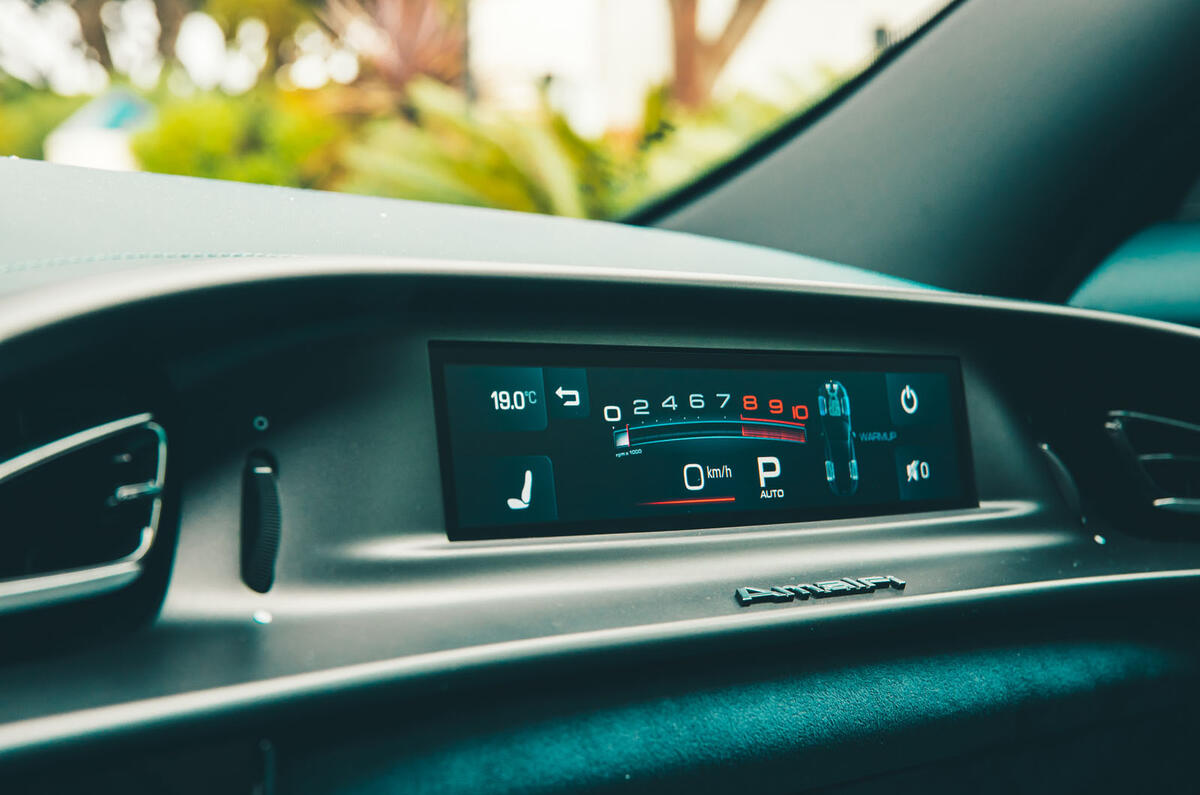
The small, portrait-aspect touchscreen has been swapped for the landscape one from the 12Cilindri. The way you have to use it to adjust the cabin temperature and various seat settings is still rather fiddly, but I do like its discreet integration into the dashboard rather than being plonked on top of the dash, drawing attention to itself.

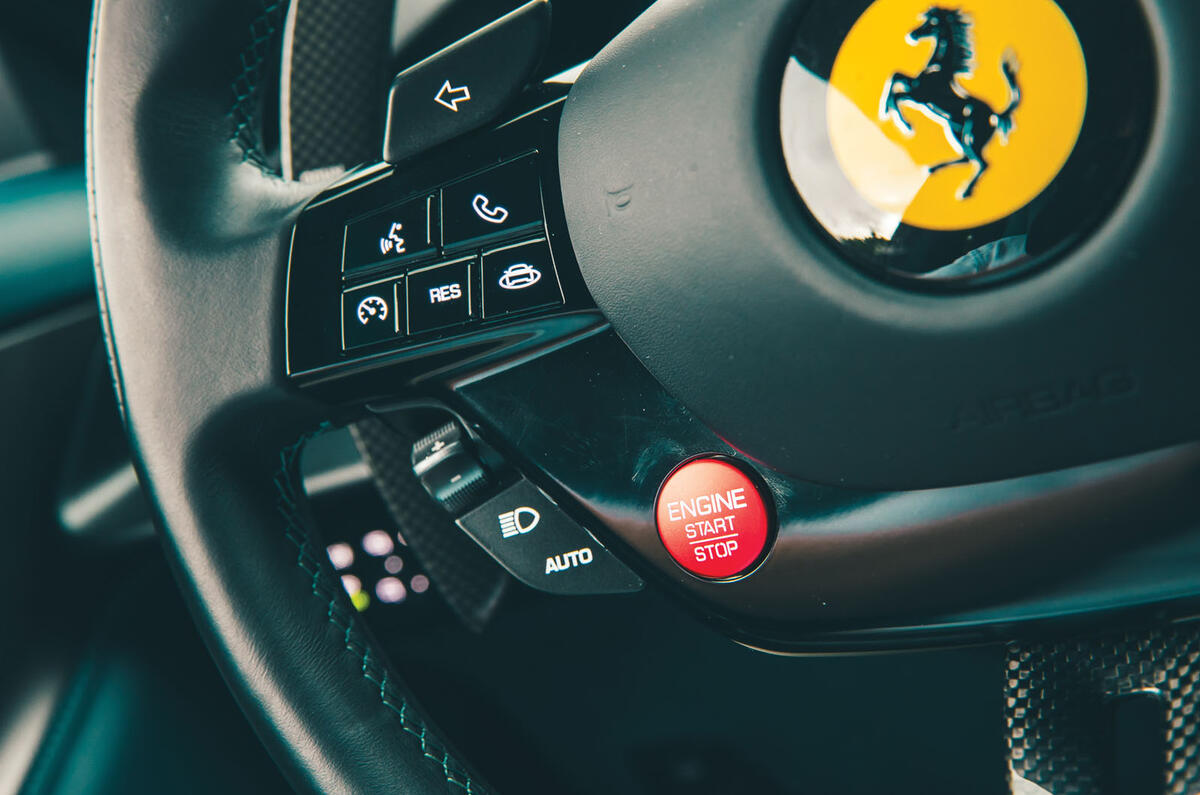
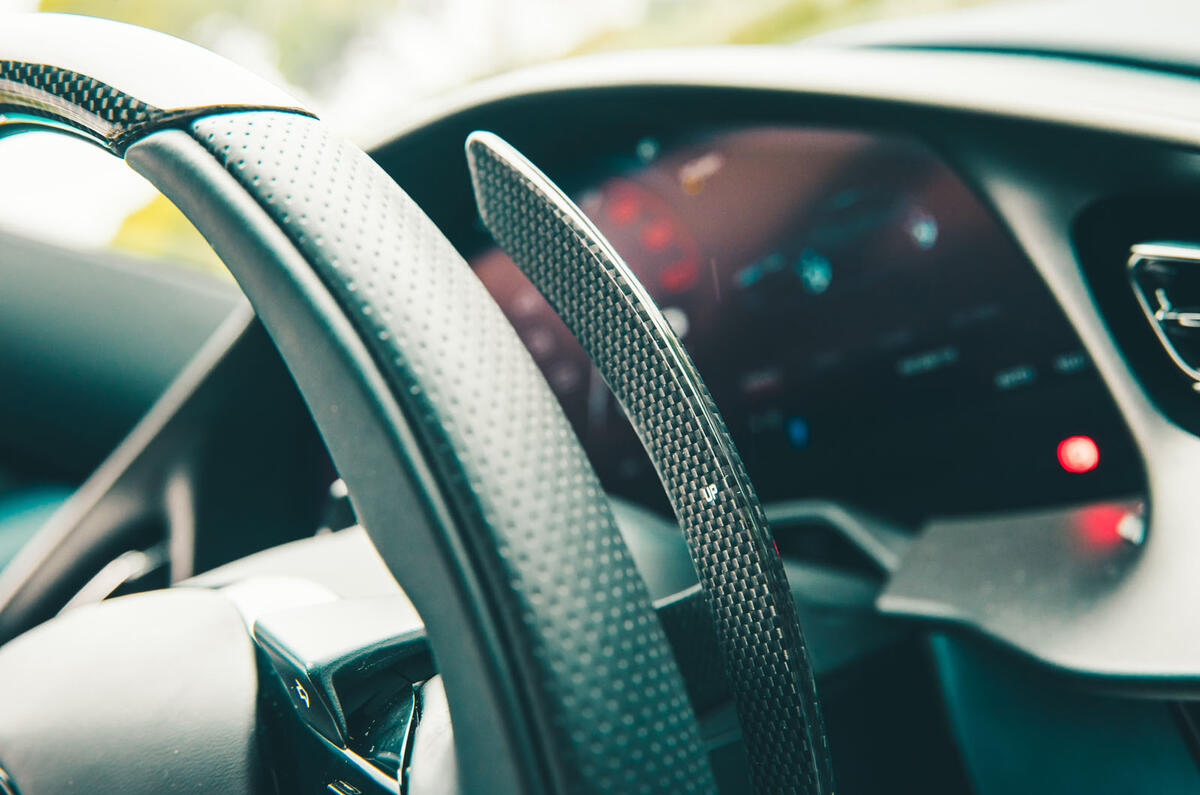
The Amalfi also debuts a much-requested change: the Roma’s touch-sensitive steering wheel controls on the Roma have been swapped for proper buttons. That includes a glorious return for the big red start button. Indeed, they work much better.
Existing Ferrari owners needn’t feel left out. The button panels can be retrofitted to the steering wheels of existing Romas, 296s, 12Cilindris and Purosangues too. At £7000, it’s not cheap, but if you’ve already laid down a similar sum for some carbonfibre trim parts, it might well be worth it.

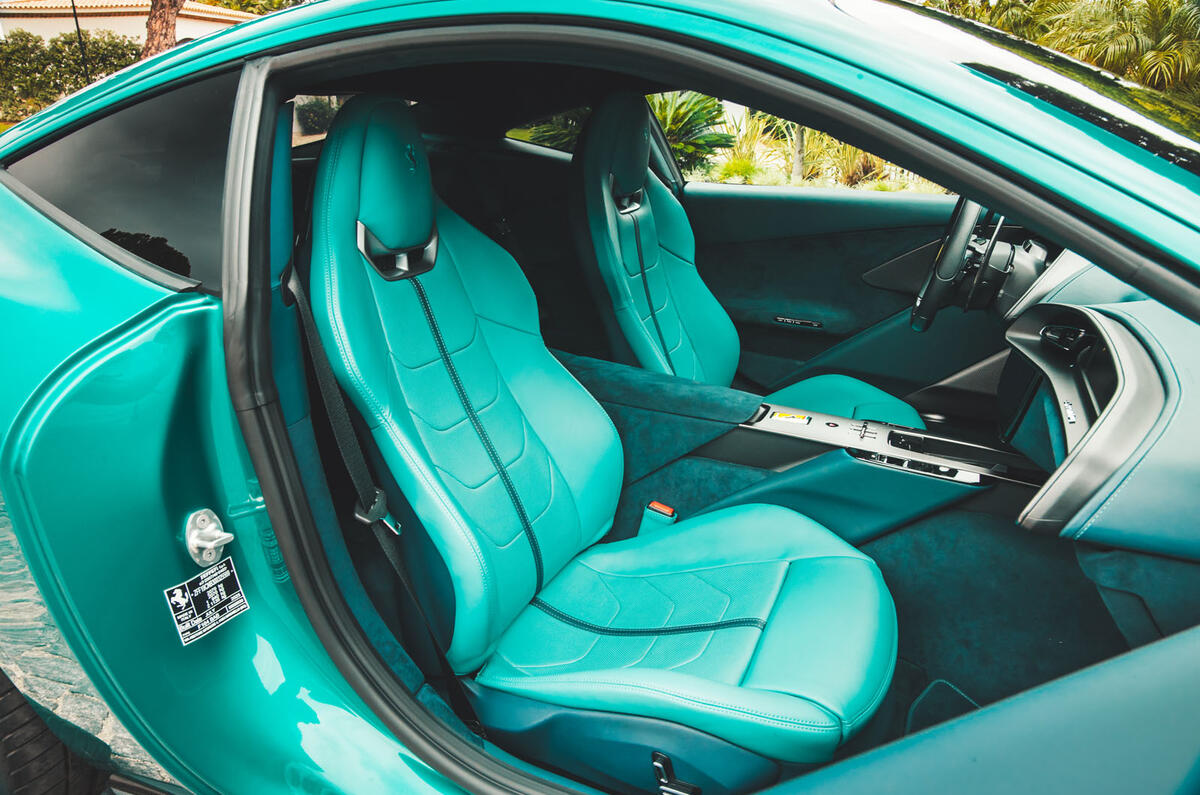
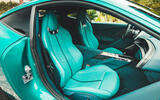
The fundamentals of the Amalfi’s cabin remain the same as in the Roma. The materials are really high quality, you can have leather in pretty much any colour you like and the general look is intricate but classy – the opposite of the generic shapes we see in so many new cars. It still feels like something special, not just another car.

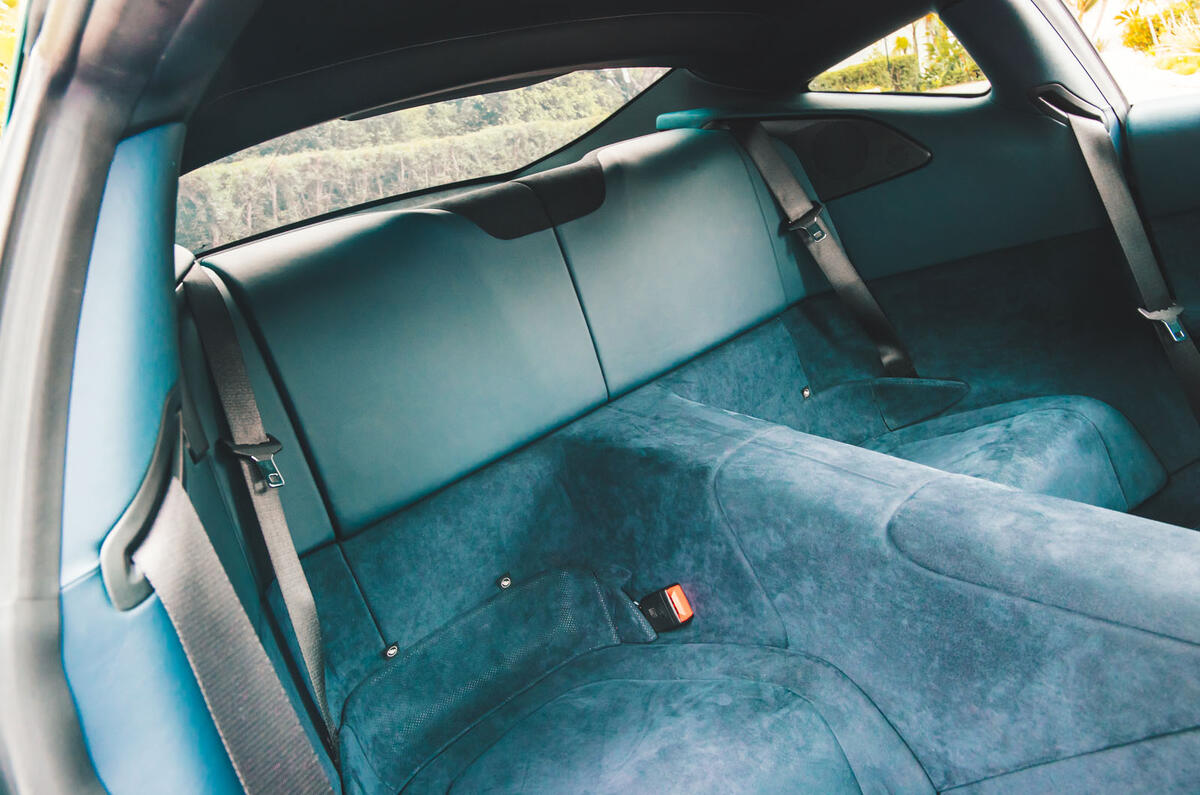
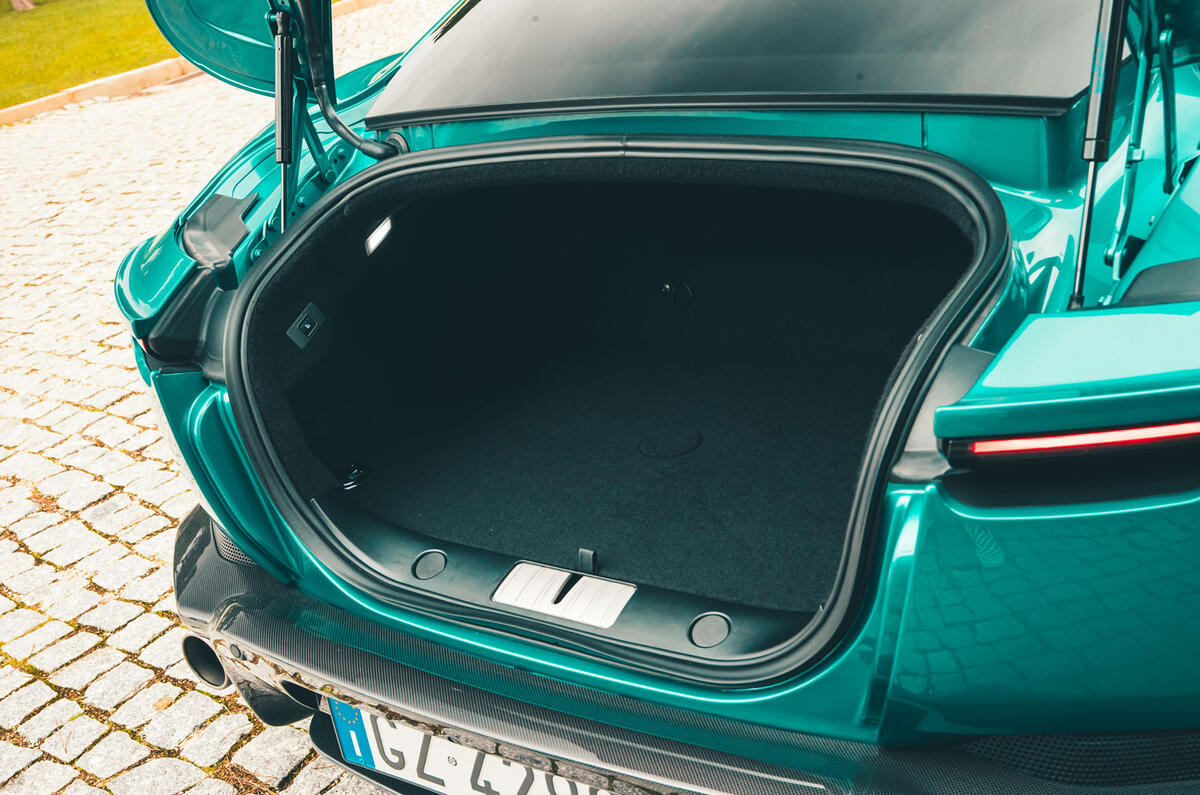
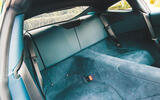
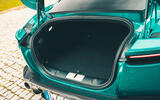
As in many Ferraris, you sit relatively high, and if you’re very tall indeed, you might struggle with head room. If you’re not, you get used to it quite quickly. As before, the rear seats are more for storage than people, although the boot is surprisingly big and, unlike the Vantage’s, has a very low loading height.

ENGINES & PERFORMANCE

Ferrari Amafi review 2025 093

Press the newly reinstated start button and the engine still kicks into life with a theatrical boom, despite the changes to appease the regulators.

As in the Roma, this 3.9-litre twin-turbo V8 is a deeply impressive engine in any objective metric you care to mention. Unlike some highly tuned turbo engines, this one has incredible response, which lets you play with the equally superb chassis balance, which we’ll get to in a minute. This sort of response is all the more impressive given the Amalfi remains free of any electrification.

Like the 12Cilindri, the Amalfi switches to by-wire braking. It does tame the Roma’s over-sensitive pedal but can feel a little dead when you’re really leaning on the brakes. Brake-by-wire is more commonly used to blend electric motor regen and friction brakes, which makes me wonder if Ferrari is working on hybridisation in the background.

At the same time, the engine is still this car’s biggest letdown. It has all the power and response you could want and revs freely to its 7600rpm redline, but unless you keep it above 5000rpm, it doesn’t sound particularly good. Its flat-plane crank makes it sound like two four-cylinders in a way that the Mercedes-AMG-sourced 4.0-litre V8 in the Vantage doesn’t. Between 4000rpm and 5000rpm on part throttle, there’s a particularly unpleasant chainy resonance, so a spirited drive becomes a game of keeping it out of that range.

The snappy dual-clutch automatic transmission with eight well-spaced gears makes that enjoyable enough, but I do wonder what it would be like with the 296’s V6.

Failing that, I’d take a way to turn off the sports exhaust in the sportier drive modes.

RIDE & HANDLING

Ferrari Amafi review 2025 095

Whereas the engine is functional rather than truly soul-stirring, the most compelling aspect about the Amalfi, like the Roma before it, is the chassis.

You would expect a Ferrari to be exciting to drive, and the Amalfi certainly is that, but the first thing that strikes you is how compliant it is. For all the power and promises of pin-sharp handling, it’s a superb cruiser when you just leave it in Wet or Comfort mode. The slightly hard seats are actually very comfortable, road noise on the motorway isn’t particularly intrusive and the ride is mind-blowingly pliant. Big bumps, small bumps, potholes: the suspension soaks it up better than many cars billed as luxurious. I suppose that’s what £3695 dampers get you.

Like all manufacturers, Ferrari has had to fit a driver monitoring camera, as well as lane keeping assistance and a speed limit bong. But they know what’s up: there’s an obvious button on the steering wheel to turn the whole lot off. Ironically, it all works fairly well when you do leave it on.

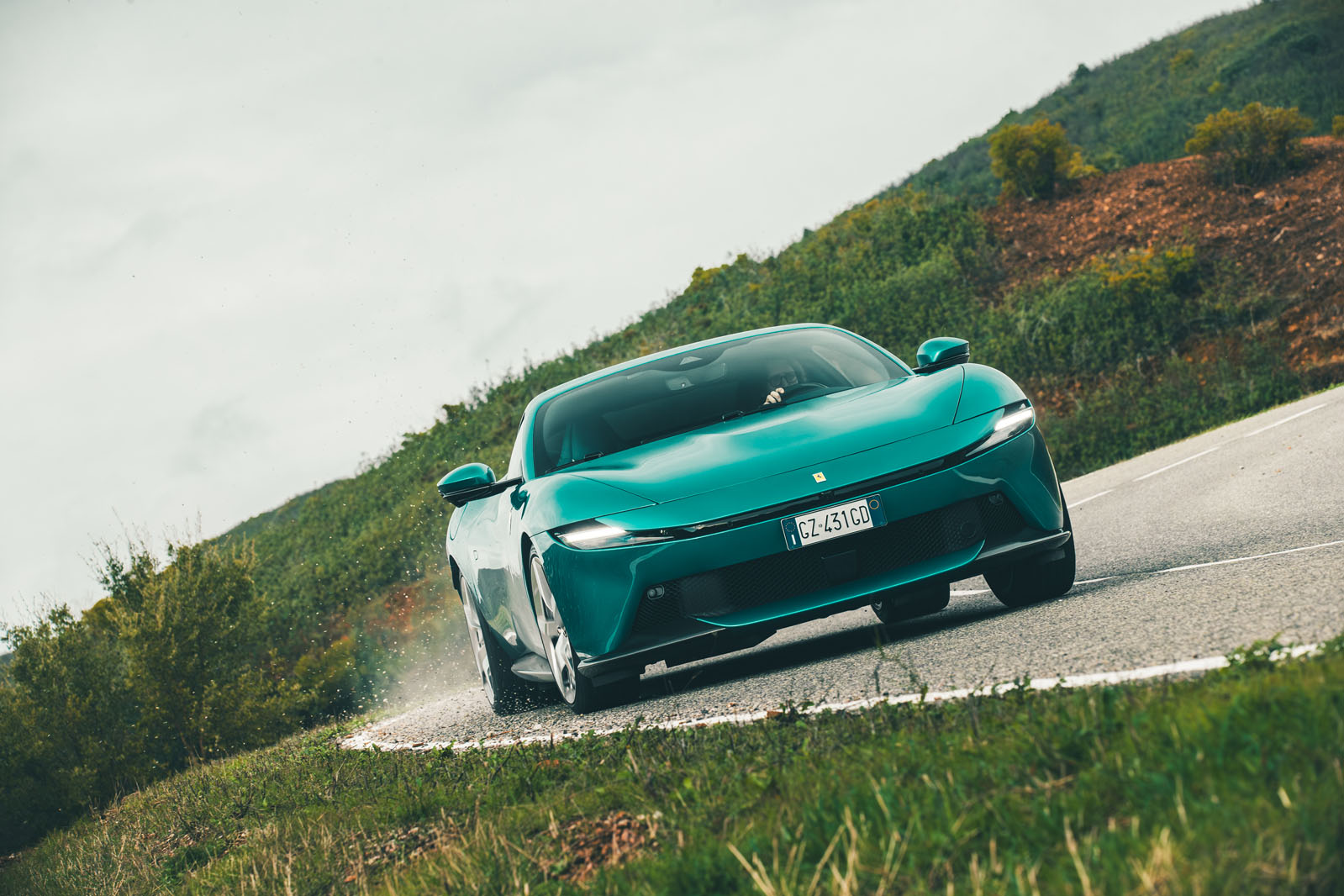
The Amalfi sort of disproves that ride and handling have to be a compromise, because up in the hills it’s equally sensational. Just like Porsches have a very ‘Porsche’ feel, Ferraris all feel very ‘Ferrari’, whether the car in question is mid- or front-engined, V6, V8 or V12. Quick, light, slightly dry-feeling steering, discernible yet closely controlled movements to the body and a balance between the front and rear grip levels that suggests a sense of fun: it’s all present and correct in the Amalfi.

The steering is darty but not as hyper as on the 12Cilindri, and even though there isn’t a huge amount of feel, you somehow always know it’s going to stick. Moving from the slightly restrictive Comfort mode to Sport liberates minute amounts of slip from the rear axle that makes the car feel alive; Race gives you just enough freedom for the road. It really is expertly judged.

MPG & RUNNING COSTS

Ferrari Amafi review 2025 066

The Amalfi starts at £202,459, which is more than the old Roma and the Vantage. But the base price is almost academic, because most owners will spend a lot of time and money to spec their car exactly as they want it.

The options list is extensive, to say the least. A few highlights? The excellent new Burmester hi-fi system at £5330; a heated steering wheel at £840; a passenger display at £3919. Every car gets a plaque in the boot that details every single option on it, which is quite a nice touch.

Given there’s no MPG readout that we could find, one imagines fuel consumption isn’t of great concern to Ferrari owners. The fuel tank holds 80 litres, which experience with the Roma suggests gives a very comfortable cruising range, but if you’re enjoying yourself, you’ll get through it quite quickly.

VERDICT

Ferrari Amafi review 2025 098

You might say the Amalfi is an atypical Ferrari, in that it’s not all about the engine. If you’re on it and wind it out, it’s exciting all right, but the star of the show is the chassis.

You could easily drive this car every day, then have a great time on a mountain road. The duality of purpose is incredible, and the looks and interior quality live up to the price.

I don’t suppose Aston Martin will be itching for a rematch.

Illya Verpraet

Illya Verpraet Road Tester Autocar
Title: Road Tester

As a road tester, Illya drives everything from superminis to supercars, and writes reviews and comparison tests, while also managing the magazine’s Drives section. Much of his time is spent wrangling the data logger and wielding the tape measure to gather the data for Autocar’s in-depth instrumented road tests.

He loves cars that are fun and usable on the road – whether piston-powered or electric – or just cars that are very fit for purpose. When not in test cars, he drives an R53-generation Mini Cooper S or a 1990 BMW 325i Touring.