Currently reading: Top 10 ways to get the most miles out of your electric car

Range anxiety might seem like a dated concept, but a few small changes and checks can make a big difference

Although ‘range anxiety’ might seem like a dated concept in the era of the 500-mile-plus electric car, there’s still good sense in wringing extra mileage out of a full charge.

With high energy prices at home and especially on the road, efficient driving can make a big difference to your running costs, and you’ll spend less time on mid-journey top-ups. It’s a win-win.

Whether you’re shopping for your next EV or looking to get a bit more out of the one you have, here are a few simple steps to eke as many miles as possible out of your battery.

Check the spec

As electric cars have become more competitive and found a wider audience, manufacturers have offered a much wider choice of models for different needs and budgets. It pays to be picky if range is your priority.

Battery capacity is the most important factor to look for: generally speaking, the larger it is the farther you’ll go on a full charge. However, some cars (such as the Polestar 3) reserve their largest packs for versions with all-wheel drive, which blunts efficiency slightly and means you’re not getting the full benefit of those extra electrons.

Trim levels matter, too. All versions of the Hyundai Kona Electric have the same 65.4kWh battery, but only the Advance has 17in wheels. They offer a 37-mile range advantage (319 miles total) compared with the 19s fitted to other trims.

Plan your route

It’s not just a question of how far you go in your EV, it’s also how you get there. They offer the longest range on flowing A-roads and in stop-start city traffic, where they’ve got plenty of opportunities for regenerative braking to top up the battery. Unlike a petrol or diesel car, they’re at their least efficient on the motorway, where they’re running at a constant high speed.

Route planning is a great way to wring more kilometres from every kilowatt-hour, but you won’t need to spend hours poring over a road atlas. Most sat-navs can calculate efficient routes in seconds, and Google Maps can also plot EV-specific journeys if it’s set up in your profile. Sure, it’ll take a bit longer getting from A to B, but the trade-off might be spending less time at a charger en route.

Pre-journey checks

Mass is always the enemy of efficiency, so make sure your EV is as light as possible. We’re not condoning anything as extreme as stripping out the seats and sound deadening, but it’s worth making sure the boot isn’t full of clutter before setting off.

Slippery aerodynamics also help, so always remove roof racks and bike holders when not in use. And, believe it or not, a clean car will scythe through the air with less drag than a dirty one, so frequent washing and waxing is a sensible move.

Pre-conditioning

One of the biggest perks of driving an EV is being able to pre-programme (and remotely activate) the climate control features from the comfort of your armchair. It’s especially useful when the weather is coldest, become you’ll come out to a pre-warmed cabin and de-iced windows when you’re ready to leave.

From a range preservation perspective, it’s best to do this when the car is plugged in and charging. Warming and cooling uses a lot of energy, and most cars will draw thier pre-conditioning power from the mains if that's available. As a bonus, this also brings the battery pack up to its ideal operating temperature before you set off, which again offers an efficiency boost.

Back to top

Drive modes

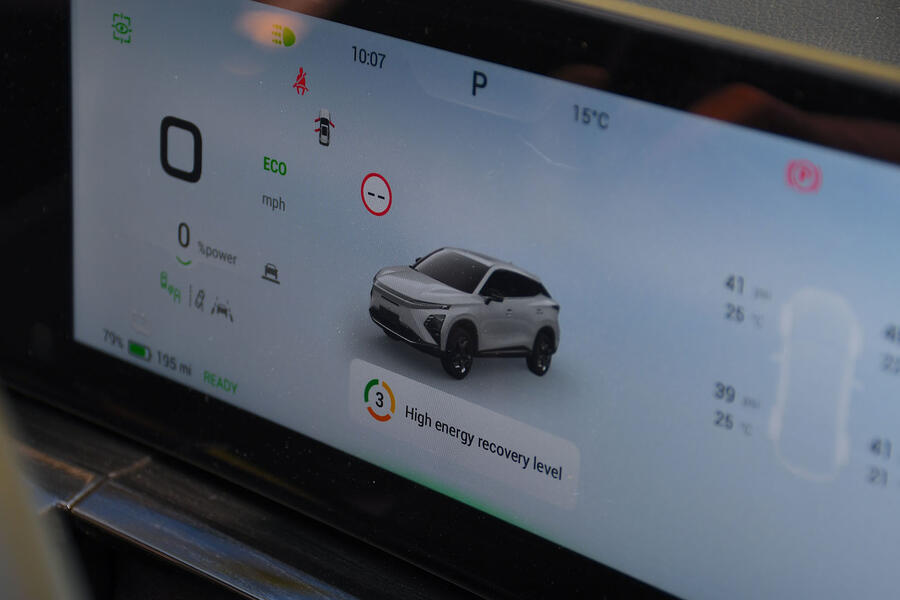
Modern cars are packed full of software-controlled features which offer plenty of potential for specific settings that prioritise performance, comfort or efficiency. If you’re setting off on a long drive, then switching your car into ‘Eco’ mode can make a big difference to your range.

Eco mode encourages gentler driving by dialling down the sensitivity of the throttle pedal, reducing powertrain output and shutting down the air conditioning compressor to save energy. That last point can be a headache if it’s really hot (or really cold), but it’s usually fine for mild British weather. 

Heating

Electric powertrains produce a lot less heat than a combustion engine. That’s great for avoiding wasted energy, but it removes a useful heat source for keeping the cabin warm. An EV has to find that heat elsewhere.

Heat pumps are the most efficient way to do this. These move warmth between the cabin, powertrain and outdoors to regulate the cabin temperature instead of using an energy-hungry electric heater. Not all EVs have them, but if they’re an option then it’s worth paying a bit extra to have it because it wll reduce the range drop-off in winter.

Regardless, it’s worth being selective with how you keep yourself warm. Heated seats and steering wheels waste less energy than using the blowers, for example, because they’re warming you directly instead of trying to heat the whole cabin. A heated windscreen performs the same trick if you’re trying to stop the glass fogging up while you’re driving.

Marathons, not sprints

“Slow and steady wins the race,” as the old saying goes. But few vehicles reward a gentle driving style quite as much as an electric car.

Electric motors deliver peak torque from the moment they start to spin up, and they continue to do so for a lot longer than a combustion engine. It’s why the vast majority of EVs have only a single gear – the power band is so wide that you don’t need multiple ratios to keep them in their performance sweet-spot.

Back to top

The good news is there’s no need to work an EV hard to make progress. It’s easy to pull away from a standing start with only a gentle prod of the throttle pedal. However, that single-gear set-up also means you’ll work the motor progressively harder the faster you go. Keeping your cruising speed down and resisting aggressive acceleration is a smart way to stretch your range.

Regenerative braking

All EVs feature regenerative braking, which uses the resistance of magnetic fields within the motor to slow the car down, with the added benefit of putting energy back into the battery. It’s usually only a small amount of electricity that’s generated, but it can make a big difference over the course of a journey.

The trick is being gentle. Regenerative braking can scrub off a lot of speed. Some cars allow you to adjust it in levels, the most aggressive of which will bring the car to a stop without touching the middle pedal at all. However, EVs still lean on their friction brakes if you’re heavy-footed, so it pays to look ahead and slow down a bit earlier if you can.

Tyres

Whatever you’re driving, it’s worth checking your tyre pressures at least once a month. Under-inflated rubber generates more friction with the road surface and requires a lot more energy to rotate. This takes a toll not only on your range but also on the life of the tyre and your ability to corner and stop safely.

A lot of more recent EVs are supplied with specifically designed tyres optimised for the different weight and performance characteristics of an electric car and to maximise range. Stick to tyres rated A or B for efficiency on the label. They might be pricier than the alternatives, but it’s an investment in spending less time and money charging.

Charge where you rest

Okay, so this one’s a bit of a cheat, but in terms of cracking range anxiety it’s a sure-fire winner. Essentially, whatever journey you’re undertaking, try and factor in a bit of charging time whenever you stop.

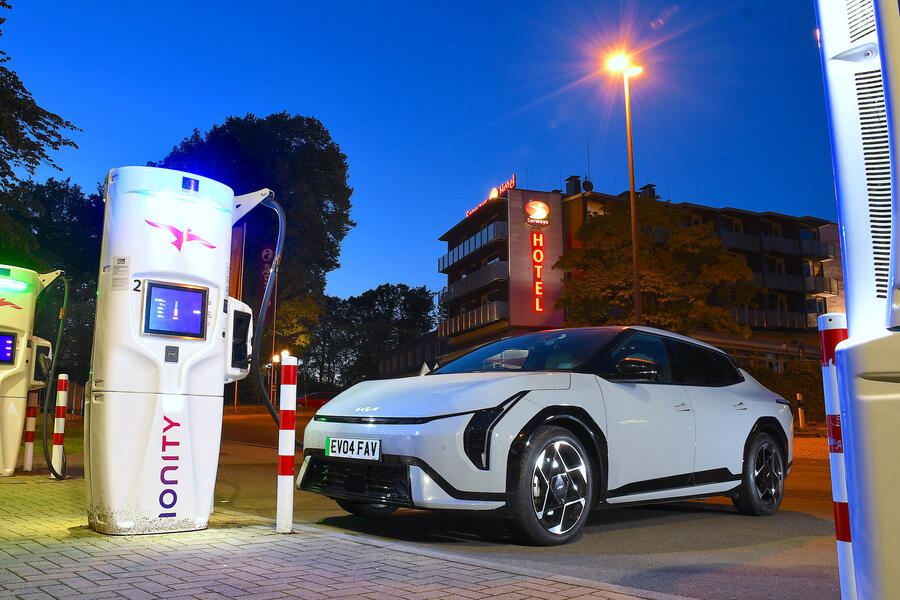
The Highway Code recommends a 15-minute break every two hours, and there are ultra-fast chargers at most service stations. It’s a useful opportunity to top up the battery without feeling like you’re standing around waiting for it to charge, and it leaves a bit more in reserve for later on.

Join our WhatsApp community and be the first to read about the latest news and reviews wowing the car world. Our community is the best, easiest and most direct place to tap into the minds of Autocar, and if you join you’ll also be treated to unique WhatsApp content. You can leave at any time after joining - check our full privacy policy here.