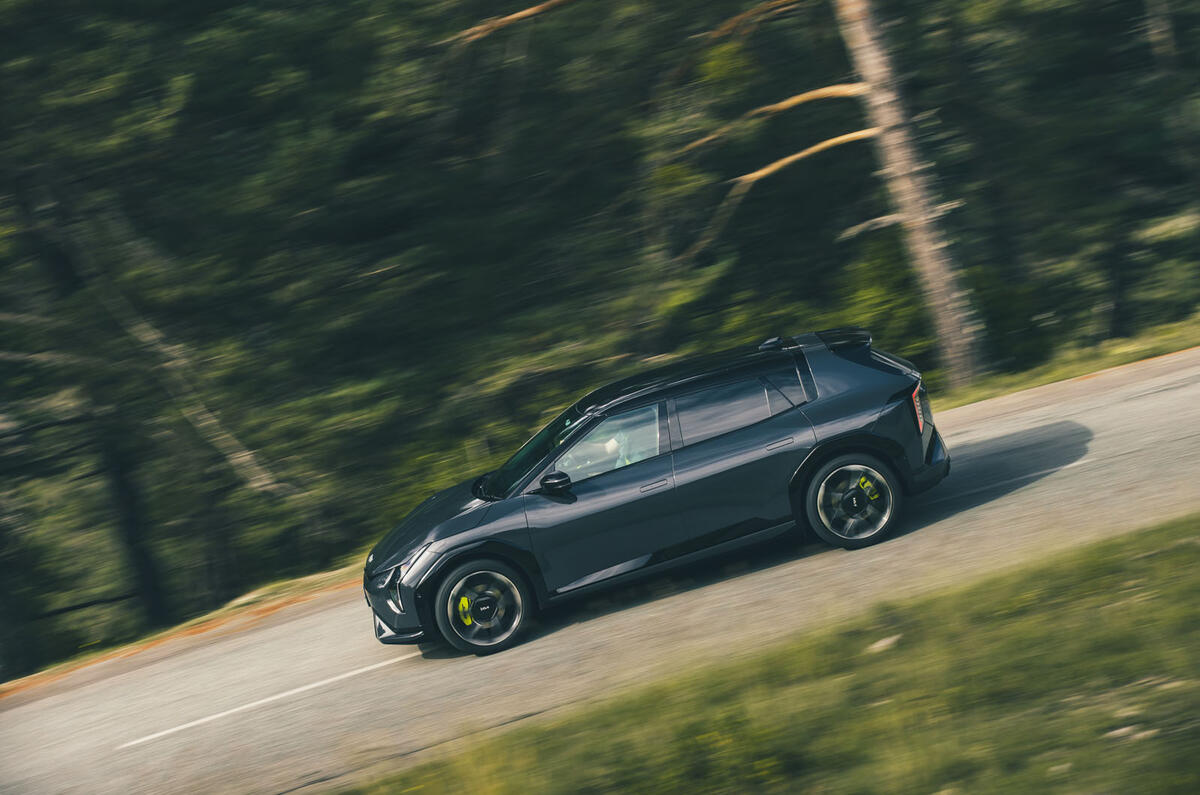






















Kia's all-electric answer to the VW Golf R prioritises handling fluency with an involving powertrain

Find Kia EV4 GT tested: Could less be more in an electric hot hatch? deals
Other Services
Sell your car
84% get more money with

Kia’s GT performance sub-brand has been guilty of sending some mixed messages in its early years. The Kia Stinger of 2017, referenced as its breakthrough performance offering, was quite a laid-back sports saloon with a dynamic character not unlike that of the car about which we’re now concerned. But the EV6 GT that came along in 2022 was more of a tyre-shredding, 600-horsepower, drift-mode-touting weapon.

The missing consistency in the product offering might be about to materialise, however. Because, over the next few months, we are to see GT versions of the EV3 crossover SUV, the EV5 SUV, and this: the Kia EV4 GT electric hot hatchback.

This particular part of the market has had small electric hot hatchbacks such as the Alpine A290, and large ones like the Hyundai Ioniq 5 N - but, as yet, not a lot in the real heartland of Volkswagen Golf GTI-sized machinery.

To be fair, the lack of traditional family-sized electric hot hatches has been due to a near total absence of donor cars. Almost all five-door, five-seat, circa 4.3m-long EVs have been homogenised crossovers, in part because of the need to accommodate the depth of a battery pack. A few years down the line, it's an excuse that is starting to wear a bit thin.

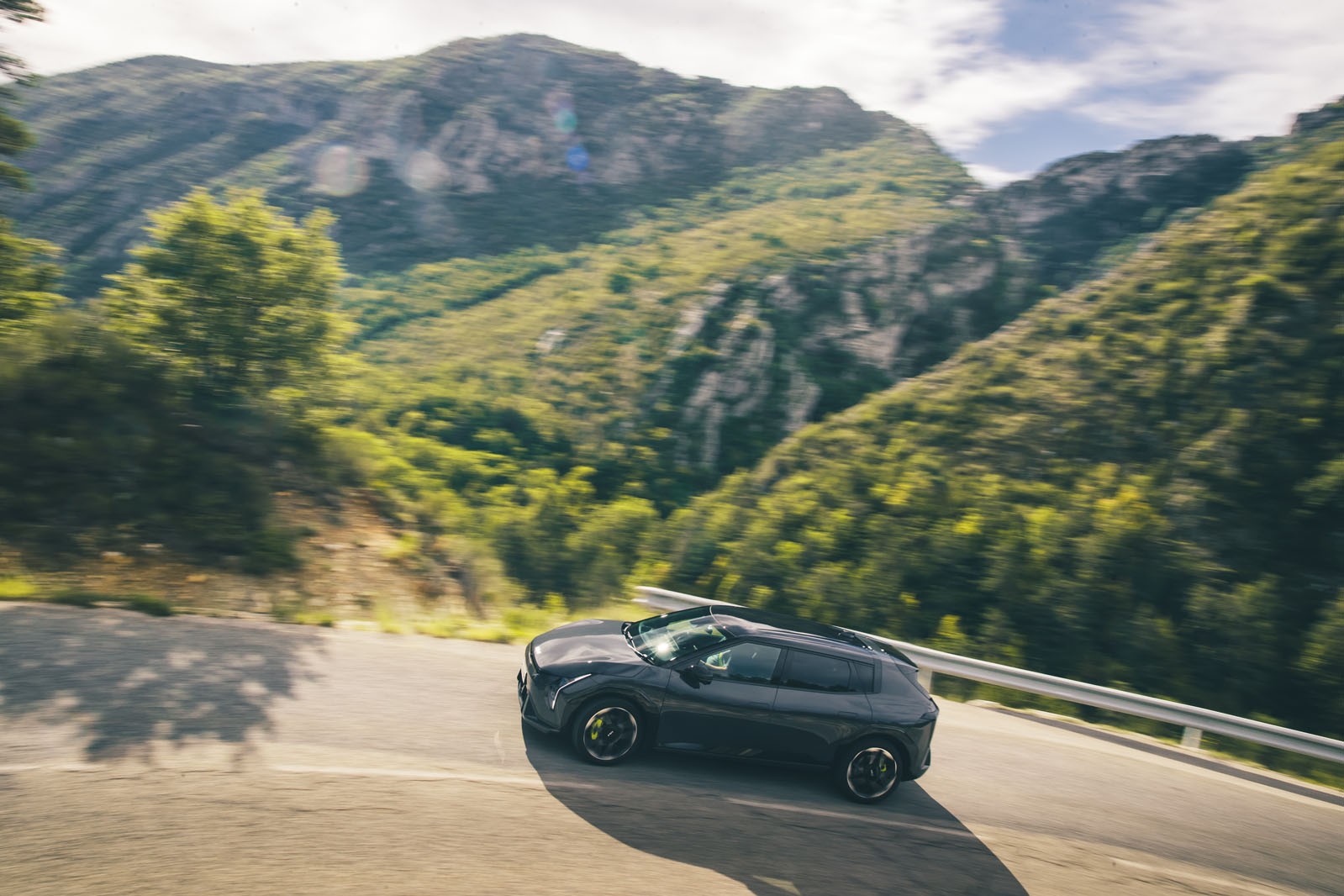
But then the Kia EV4 arrived, as arguably the first electric family hatch in the traditional mould. And now Kia has decided to turn it into the first Golf GTI-sized electric hot hatch as well. The Cupra Born, Volkswagen ID 3 and MG 4 are the closest conceptual rivals, but none dip under the 1500mm mark in terms of height (not even the 'little' Alpine), as the EV4 GT does. It feels like a bit of a watershed moment for the performance EV.
Advertisement
Back to top

DESIGN & STYLING

KIA EV4 GT review 2026 002

The regular EV4 is, of course, Kia’s European-manufactured, European-market-targetted, ‘classic hatchback’ option; so a hot hatch version of it was always a bankable eventuality. 

On paper, this looks like a particular kind of hot hatchback: twin motors for four-wheel drive, a ballpark three-hundred horsepower, and a pricetag just under £50,000.

But, in fact - and as we’ll go on to explain - this isn’t really the electric Volkswagen Golf R or Mercedes-AMG A35 you might expect it to be. It’s much more devoted to unimposing, accessible, usable performance and dynamic versatility than that would imply. An everyday-use Volkswagen GTI rival, you could say, rather than an R-brand chaser; albeit one that happens to have four driven wheels, just to keep things nice and complicated.

In making it, Kia has ostensibly added an additional drive motor at the rear of the regular front-drive EV4, which produces considerably less power and torque than the one at the front; without particular mechanical torque-vectoring trickery beyond the brake-actuated ‘electronic’ kind. So peak ‘system output’ power is an alluring but also measured 288bhp, and peak torque 345lb ft.

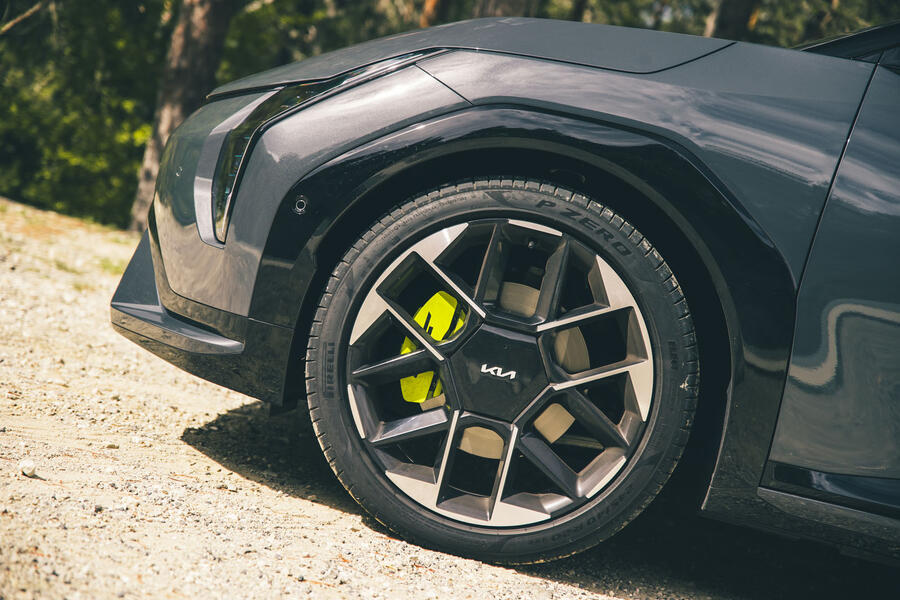
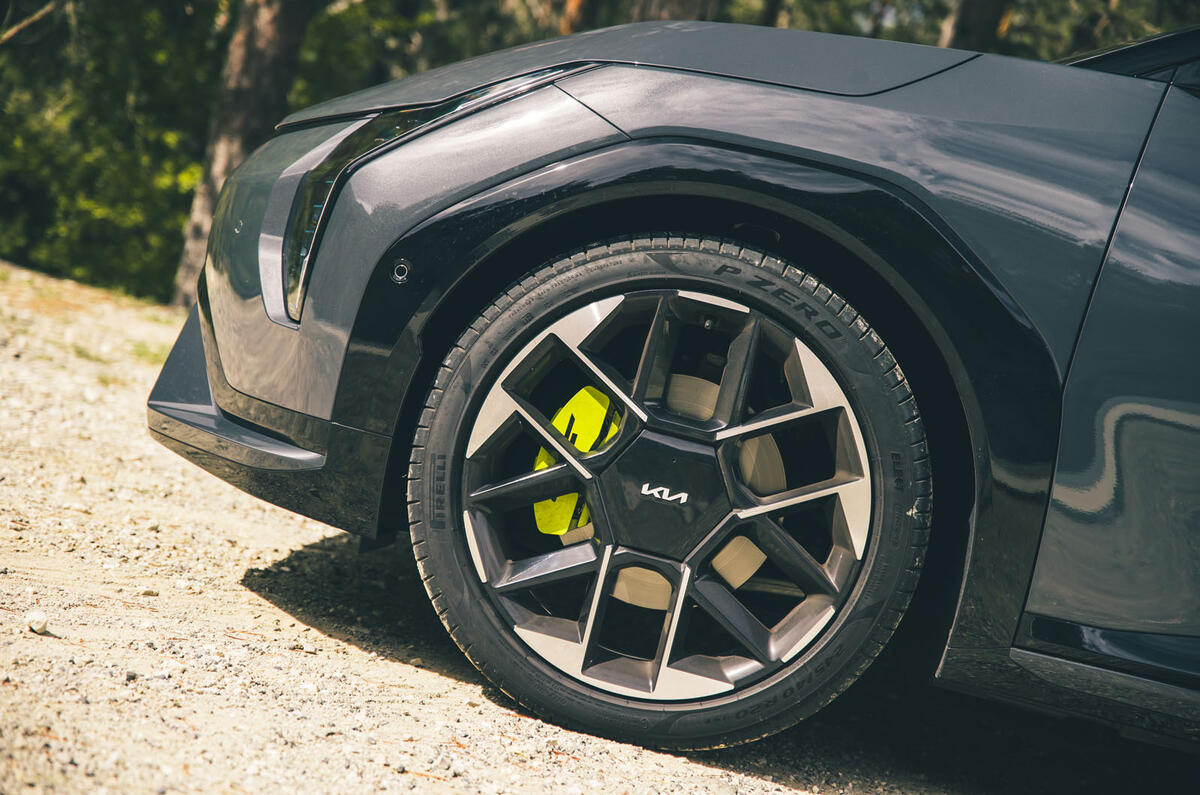
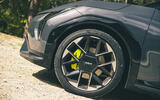
Kia’s uprated the EV4’s standard passive suspension dampers with electronically controlled ones, which are fed data from the car’s forward-facing cameras for ‘road preview’-style, road-reading active functionality, in addition to allowing the body control to firm up or soften off according to selected drive mode. And it’s also beefed up the car’s brakes front and rear, sitting inside of standard 20in wheels.

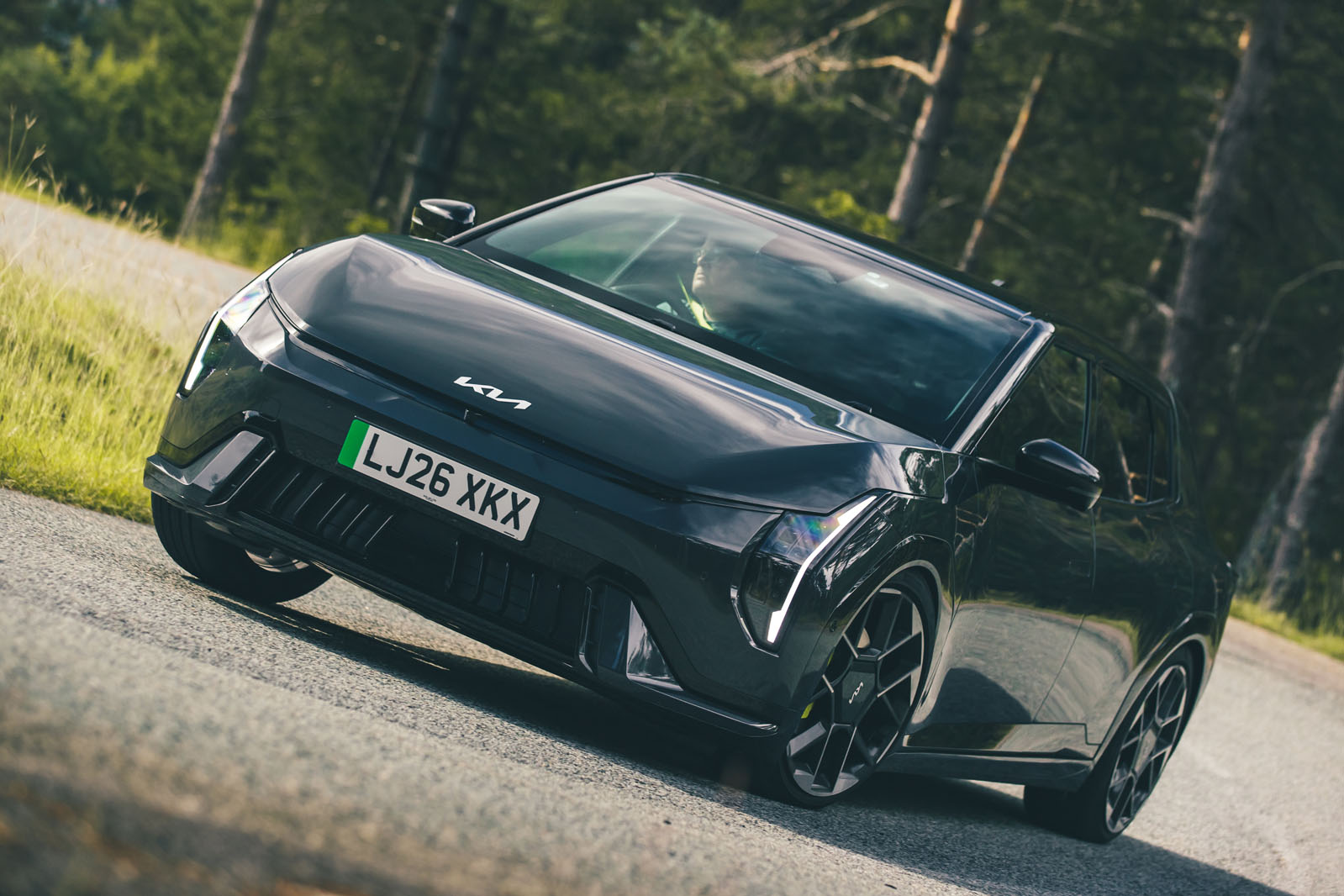
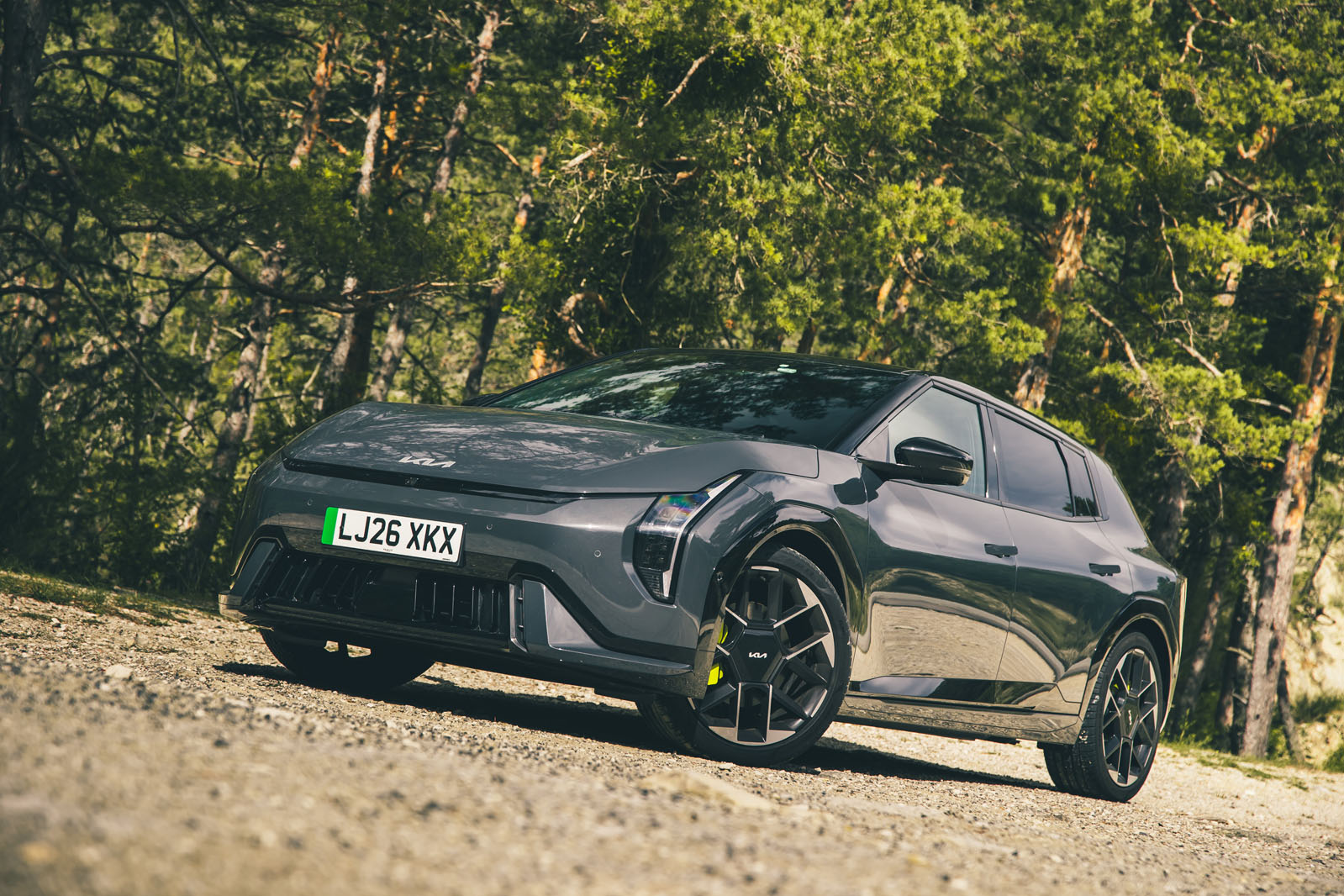
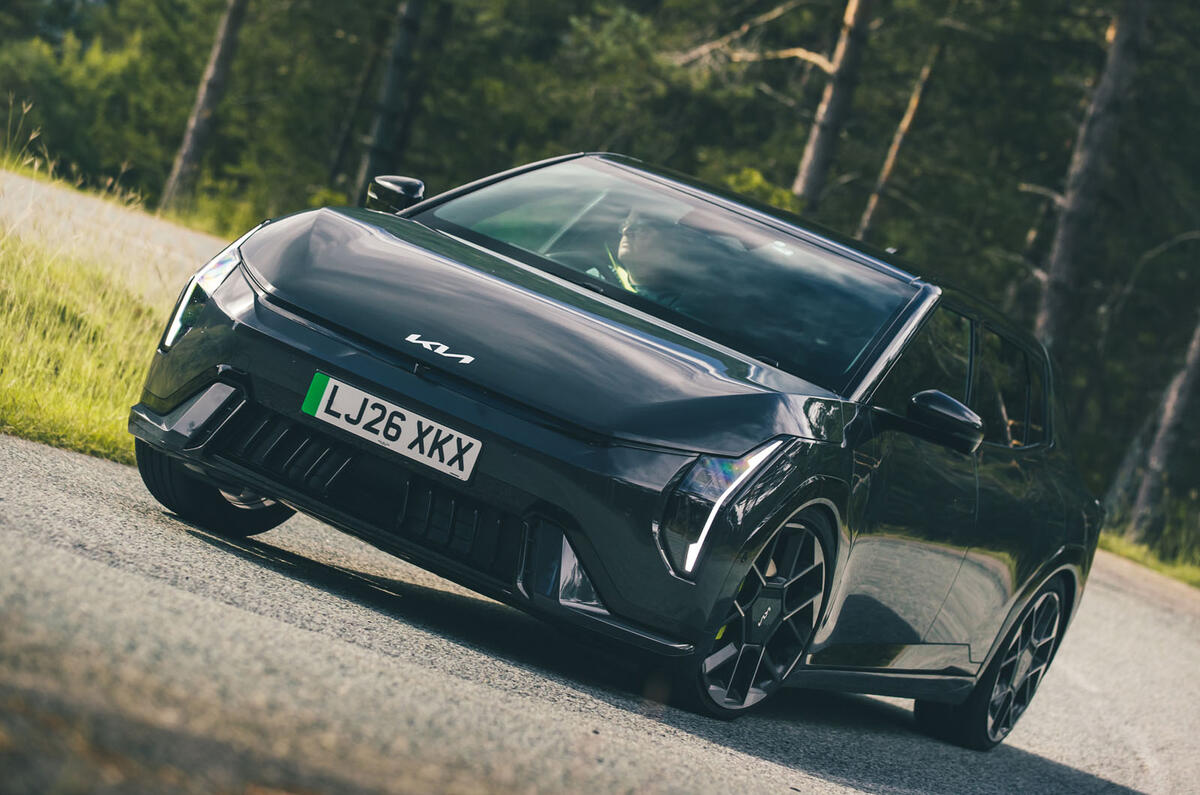
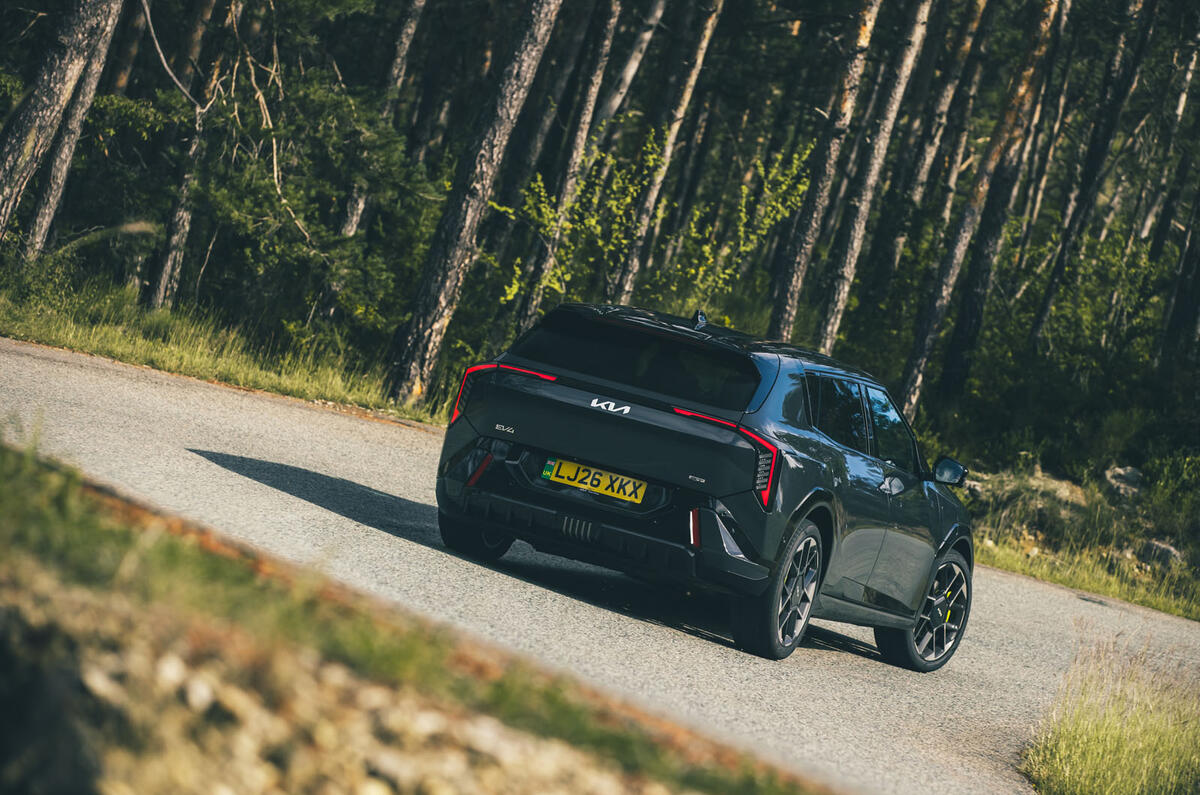
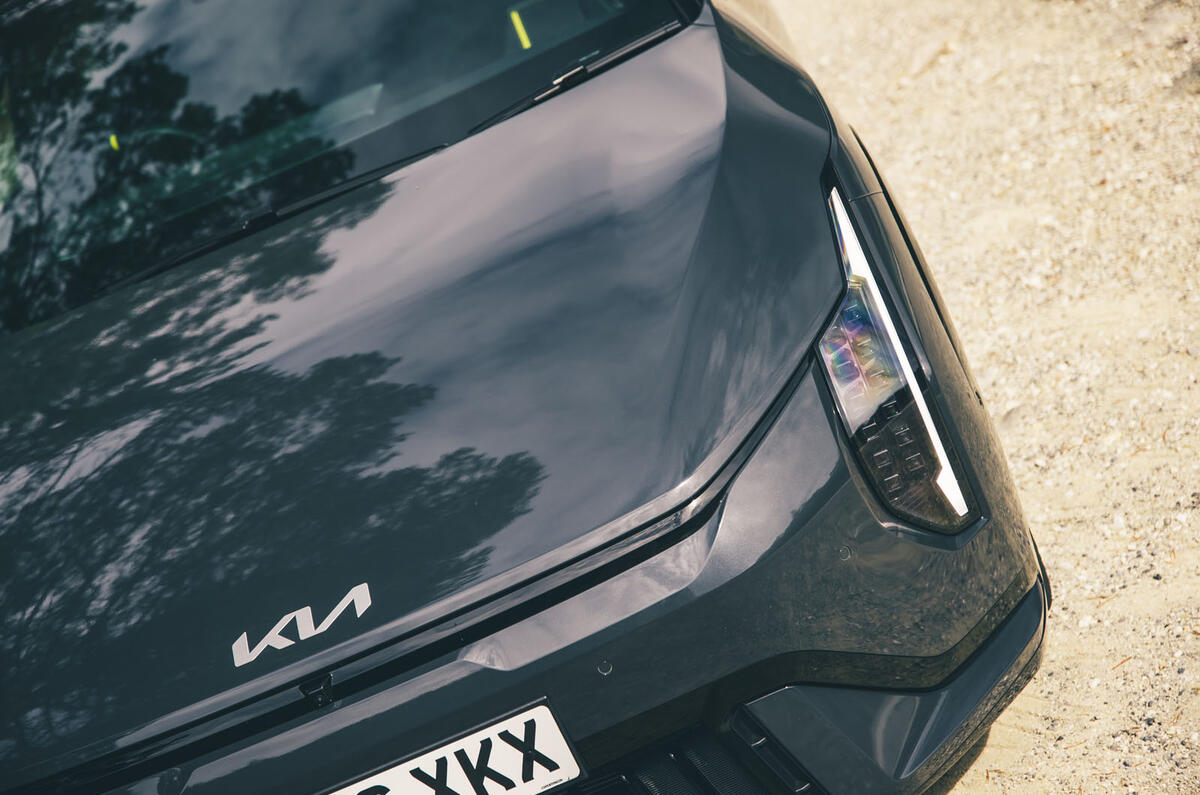
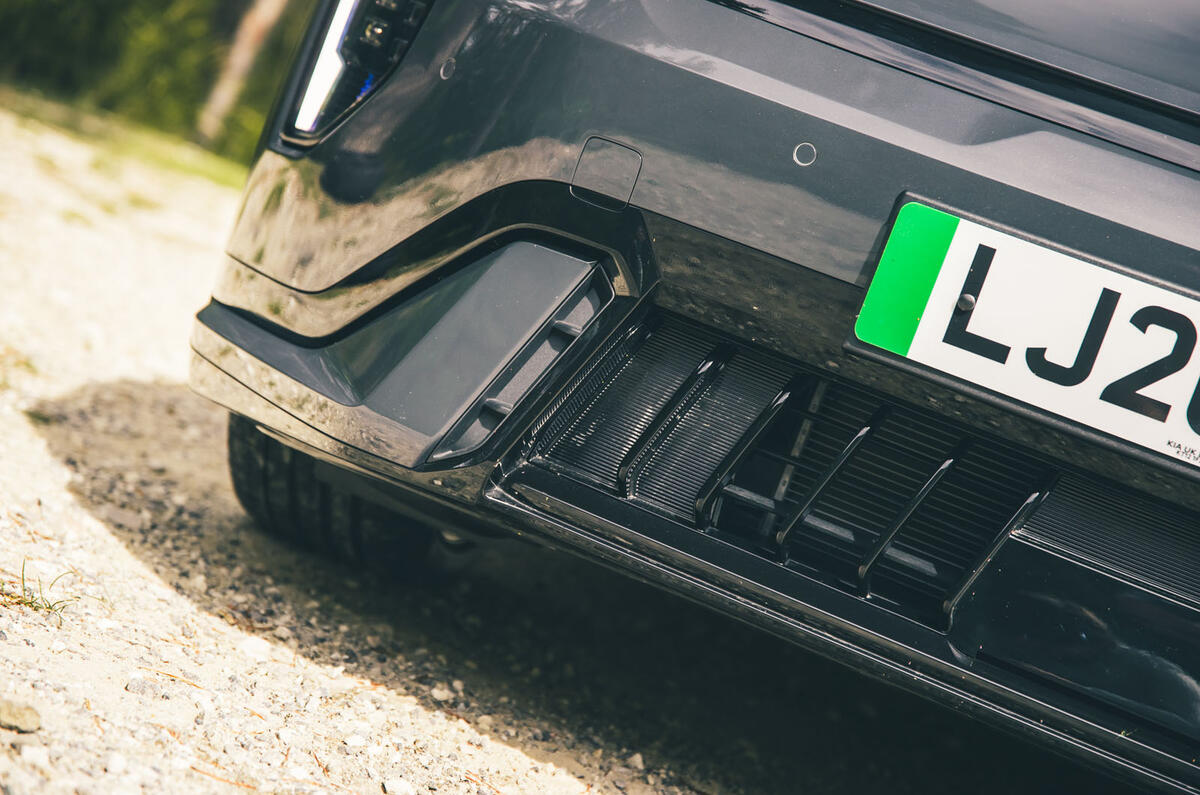
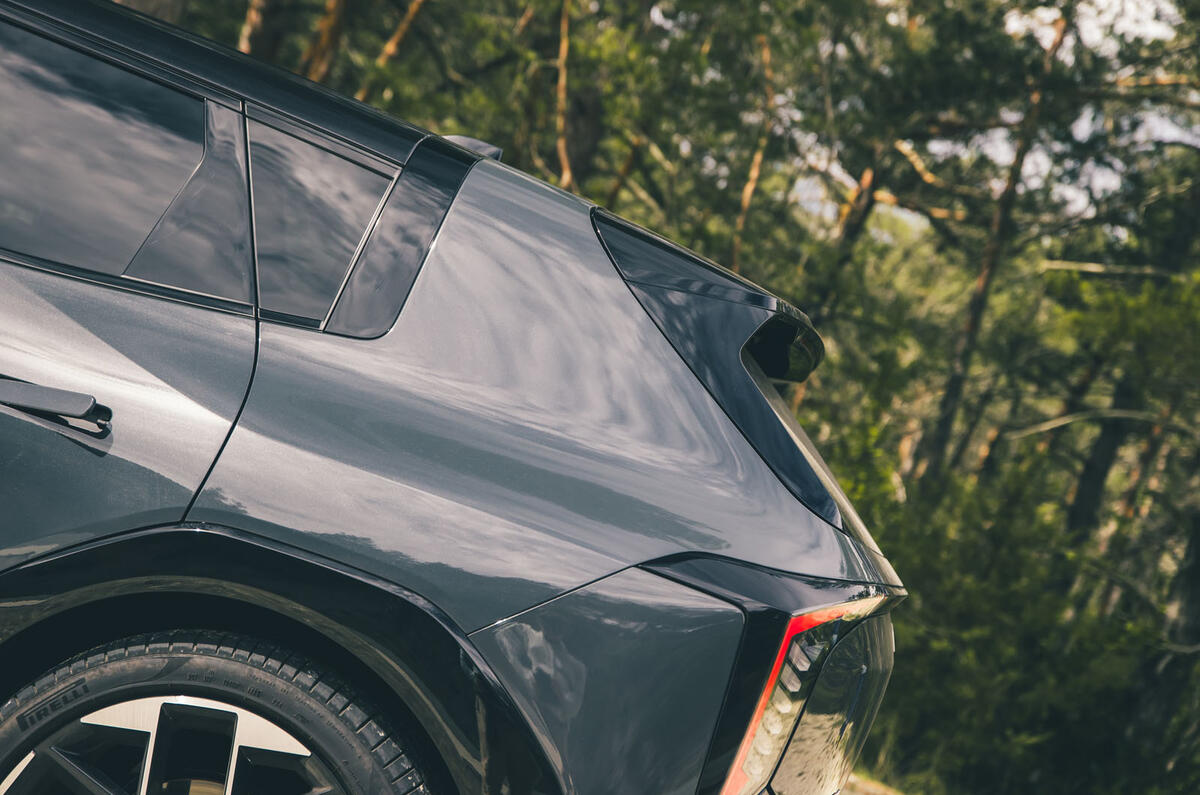
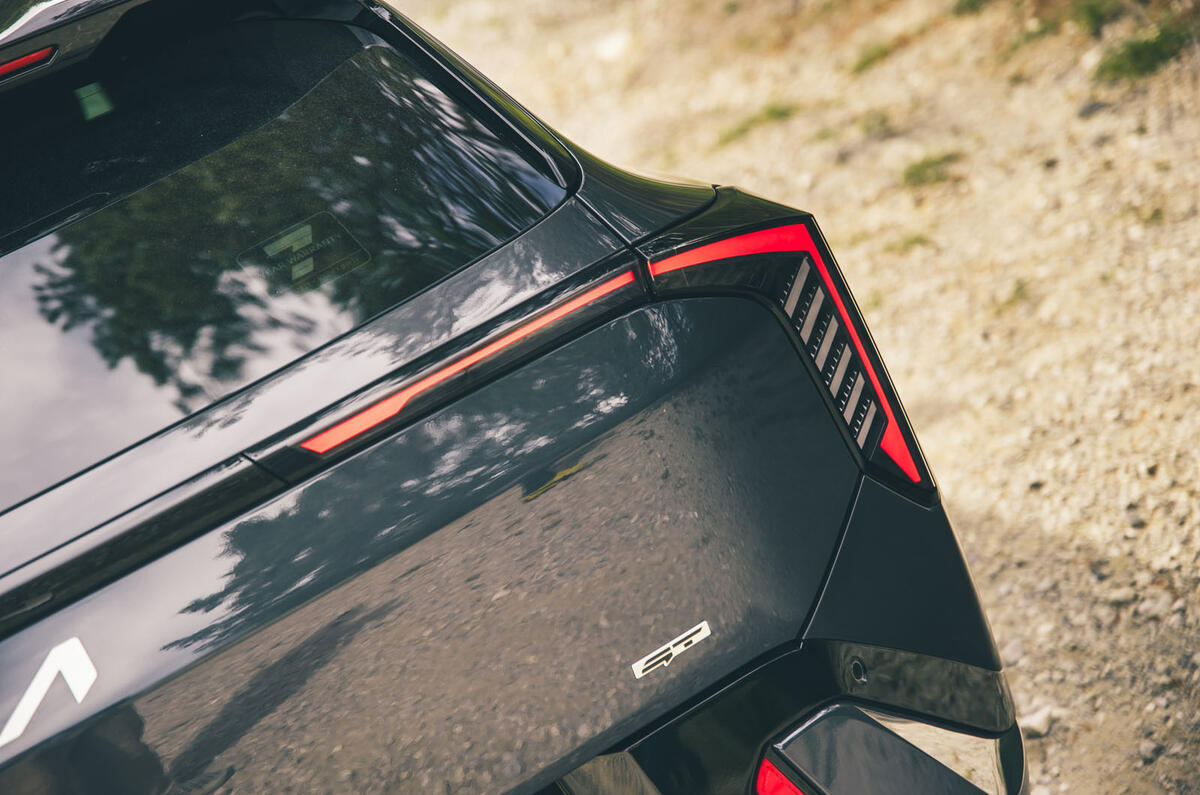
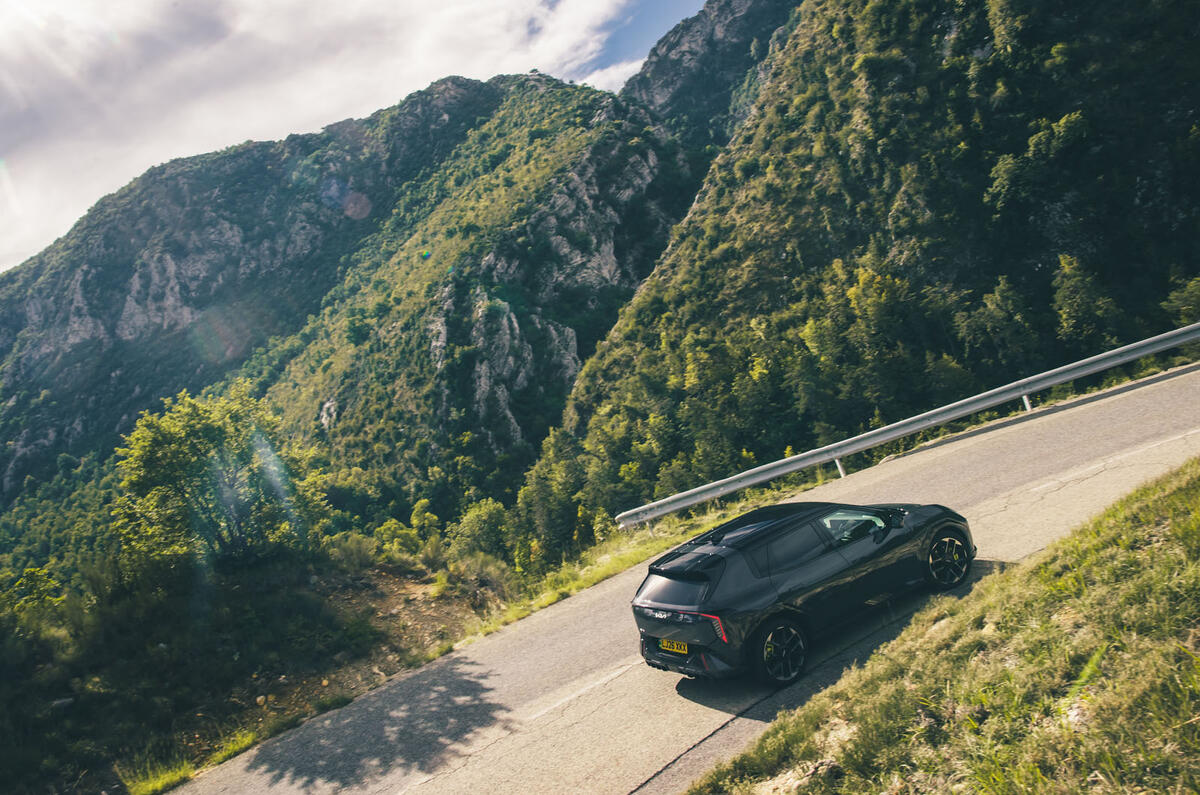
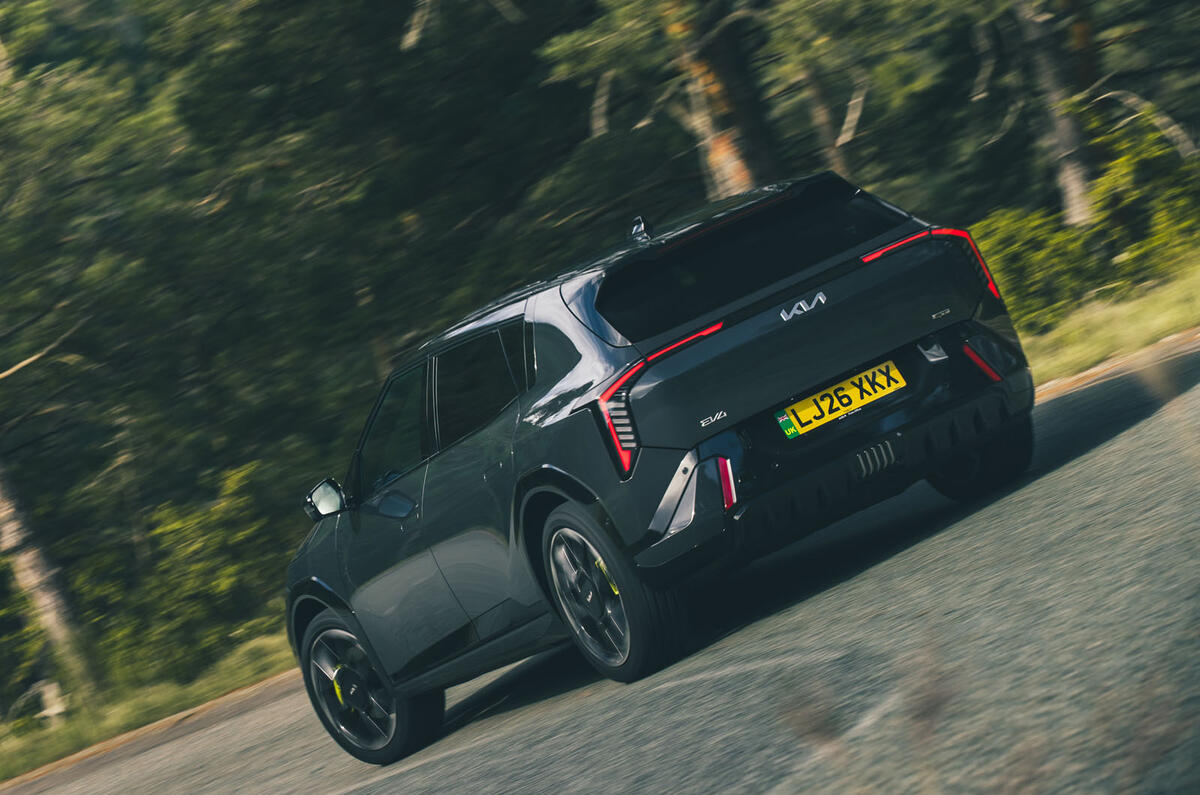
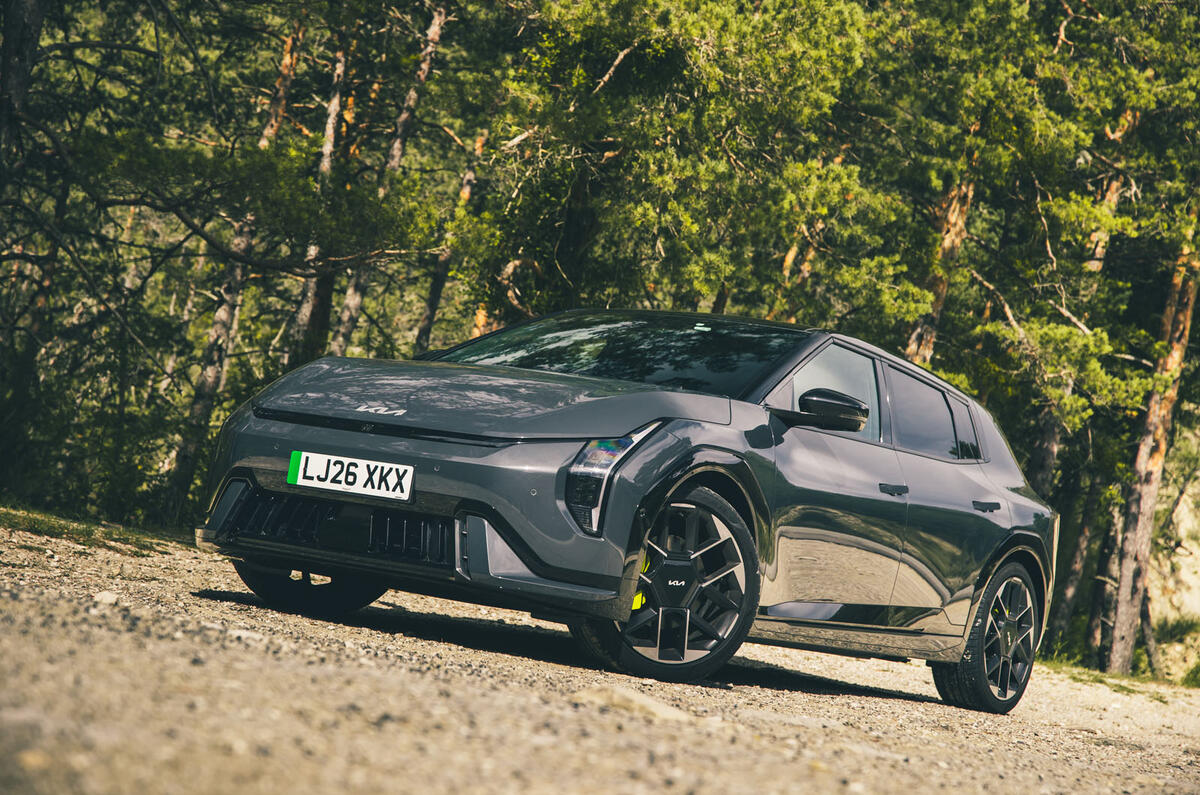
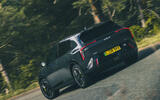
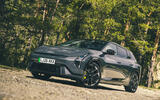
The car has subtly overhauled exterior performance styling; Kia wants it to communicate its credentials “with restraint rather than excess” (which might explain why there are only four colours, and three of them are monochrome).

INTERIOR

KIA EV4 GT review 2026 004

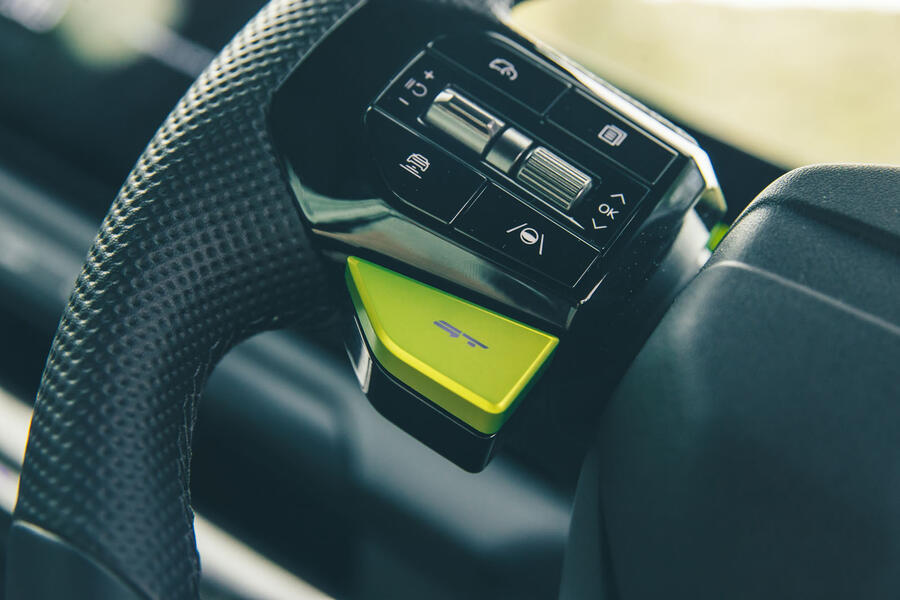
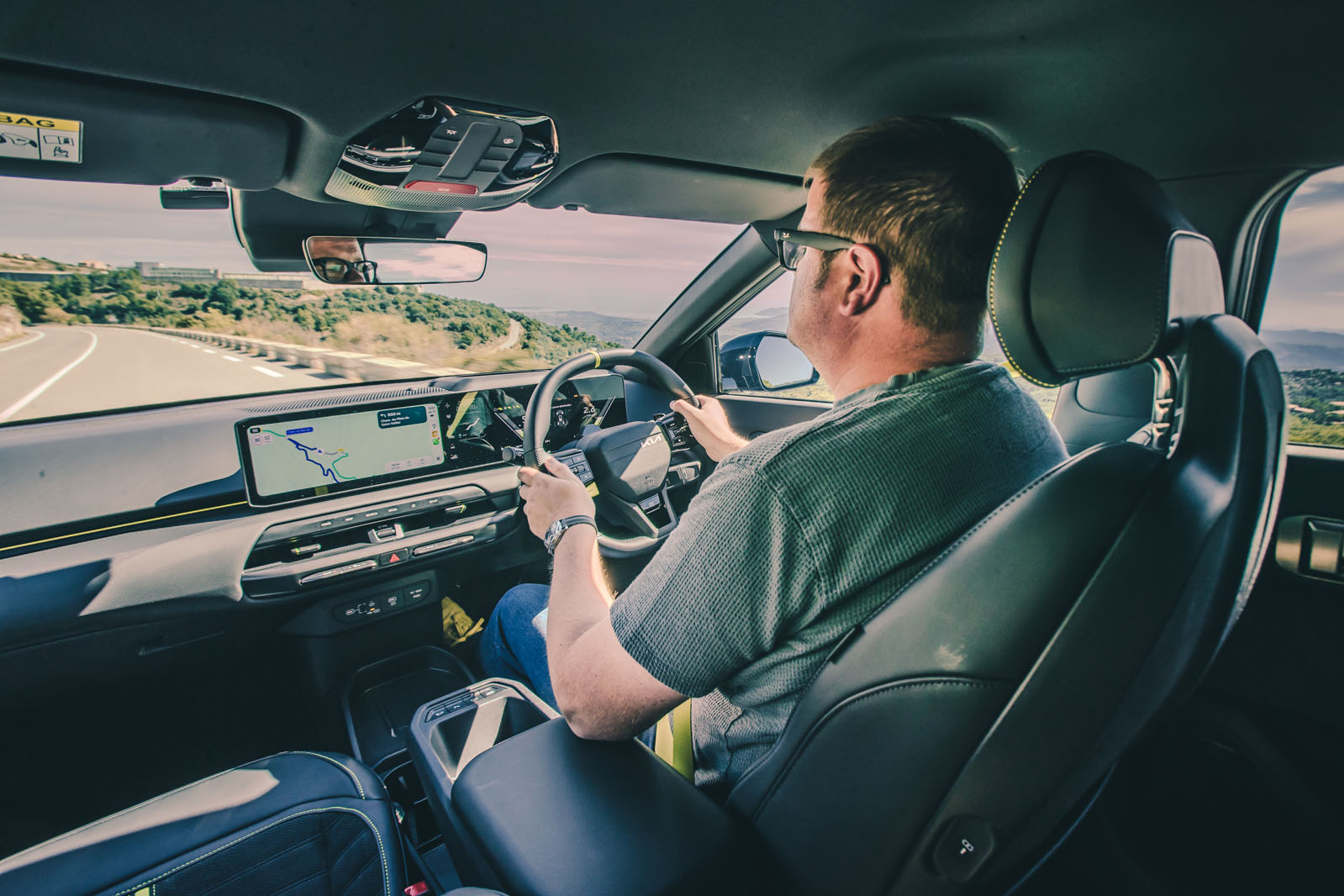
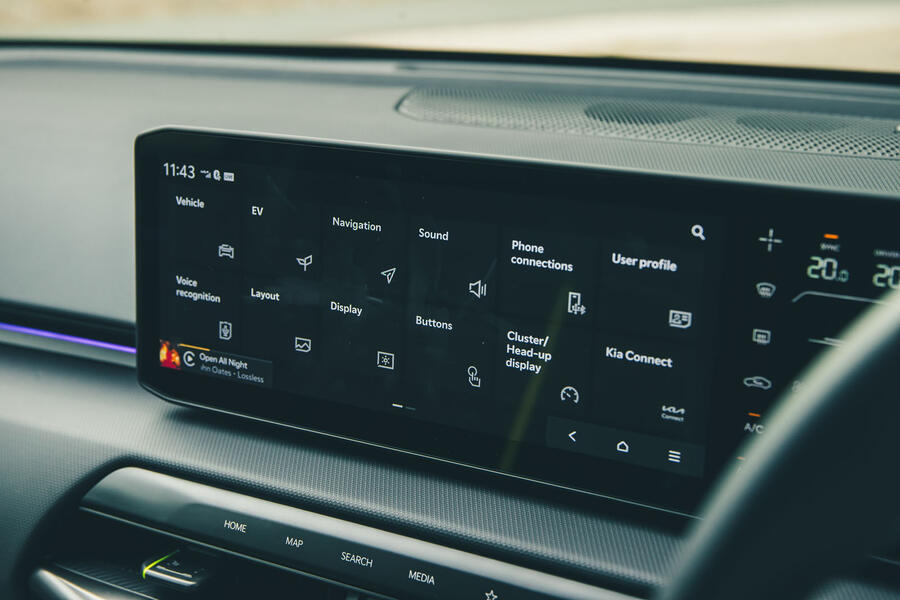
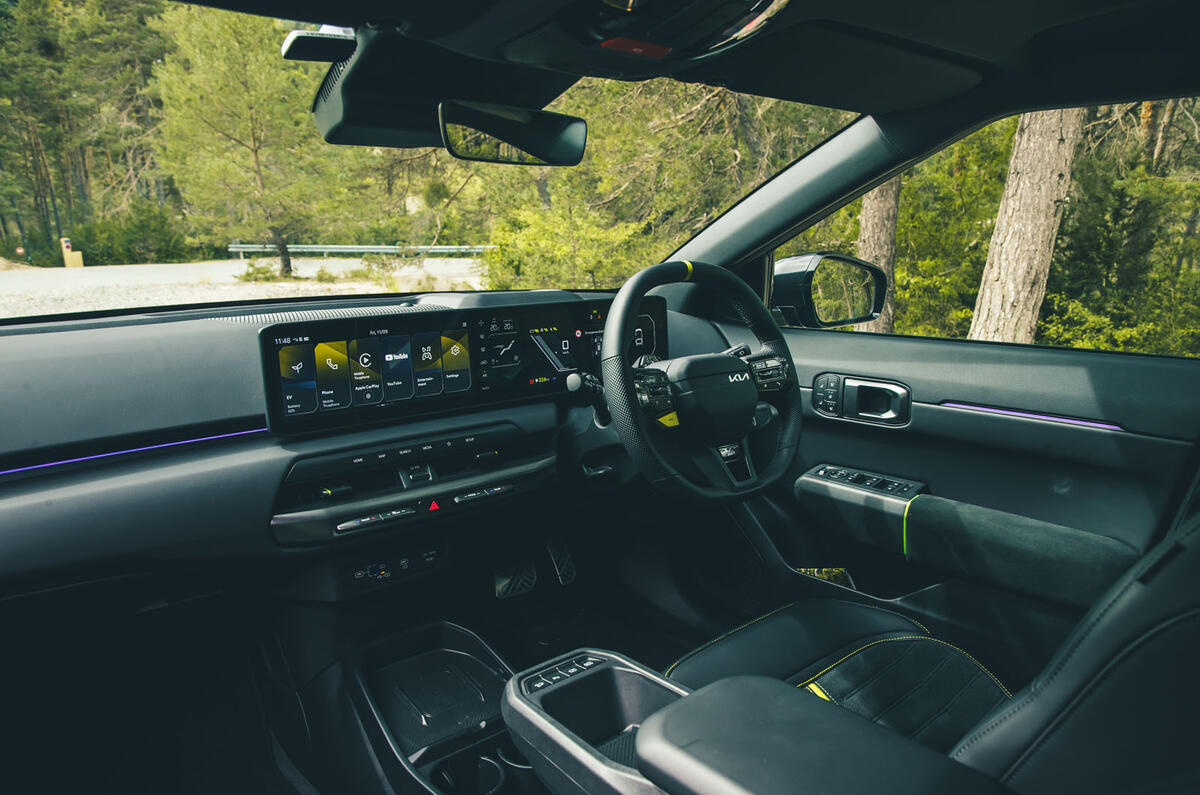
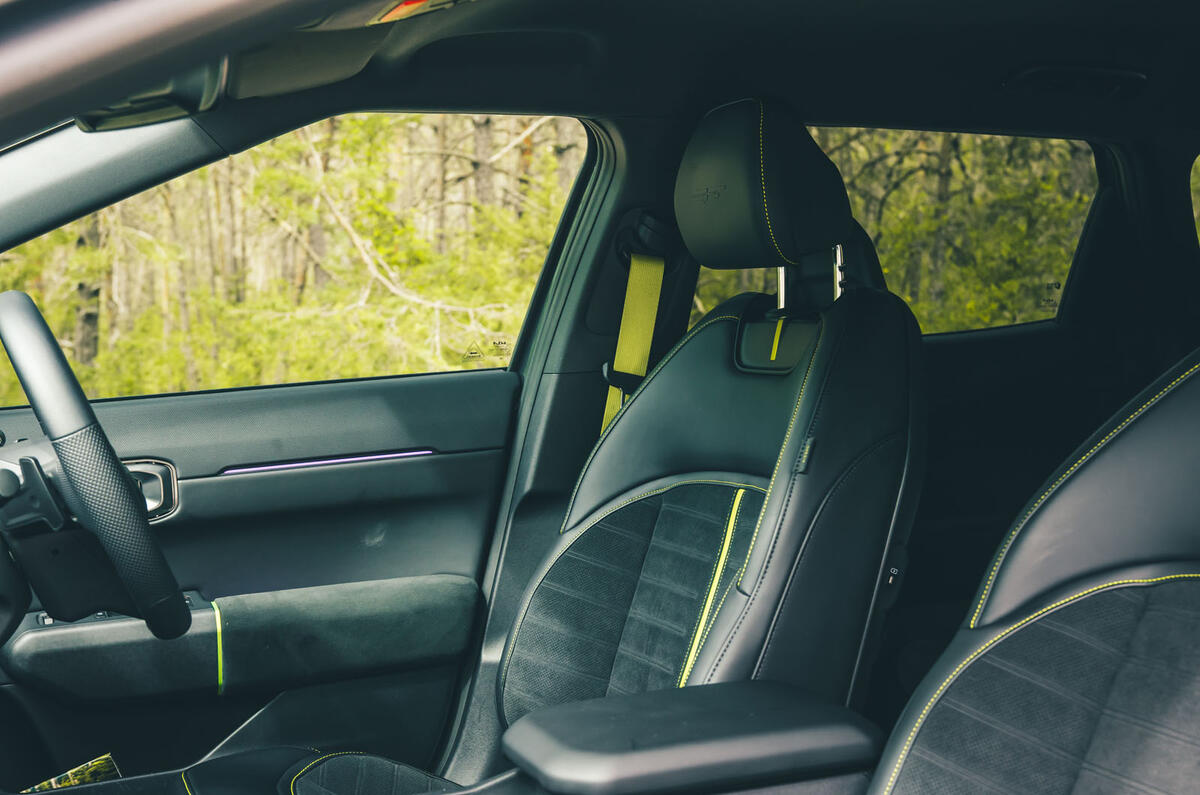
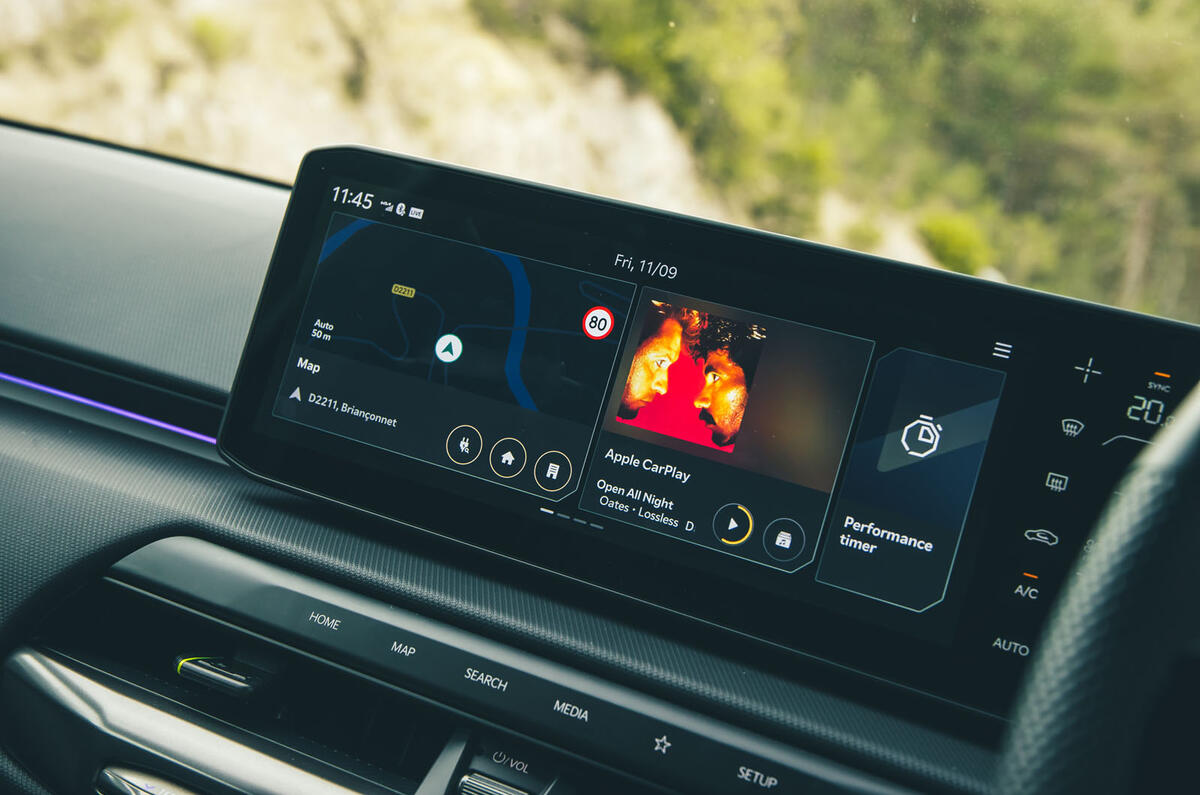
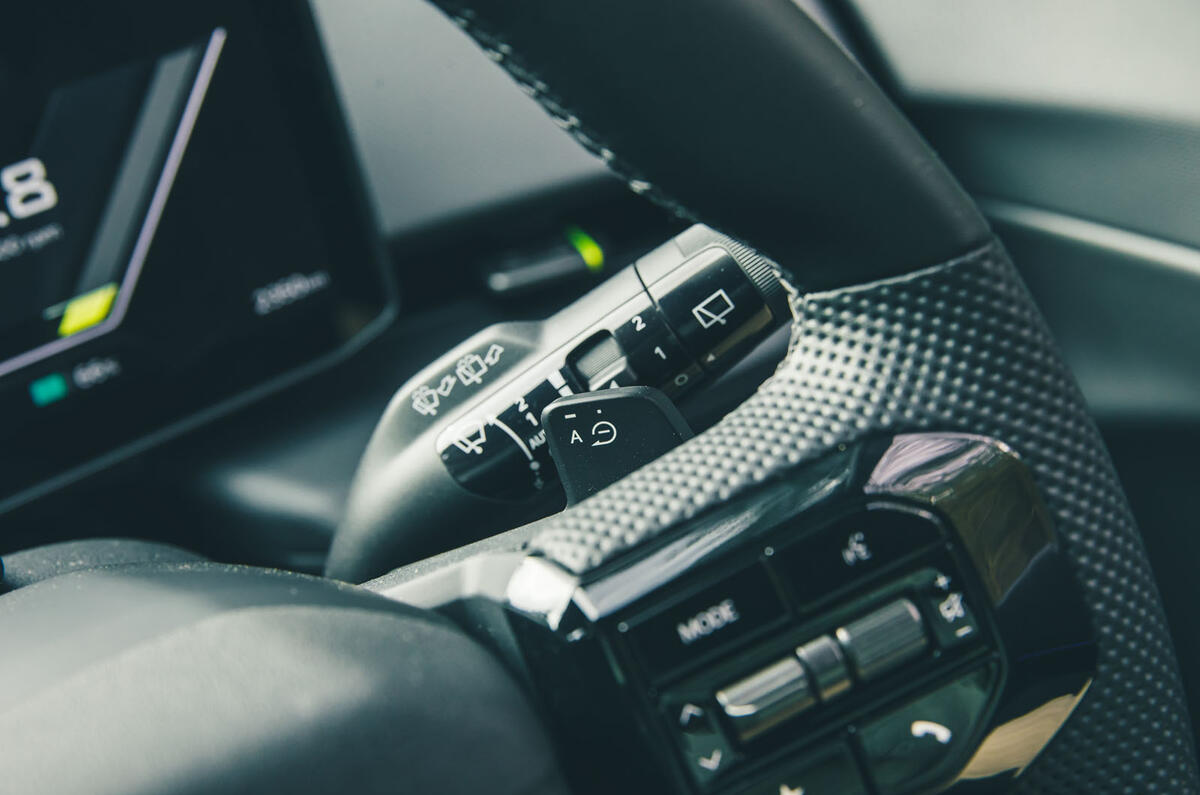
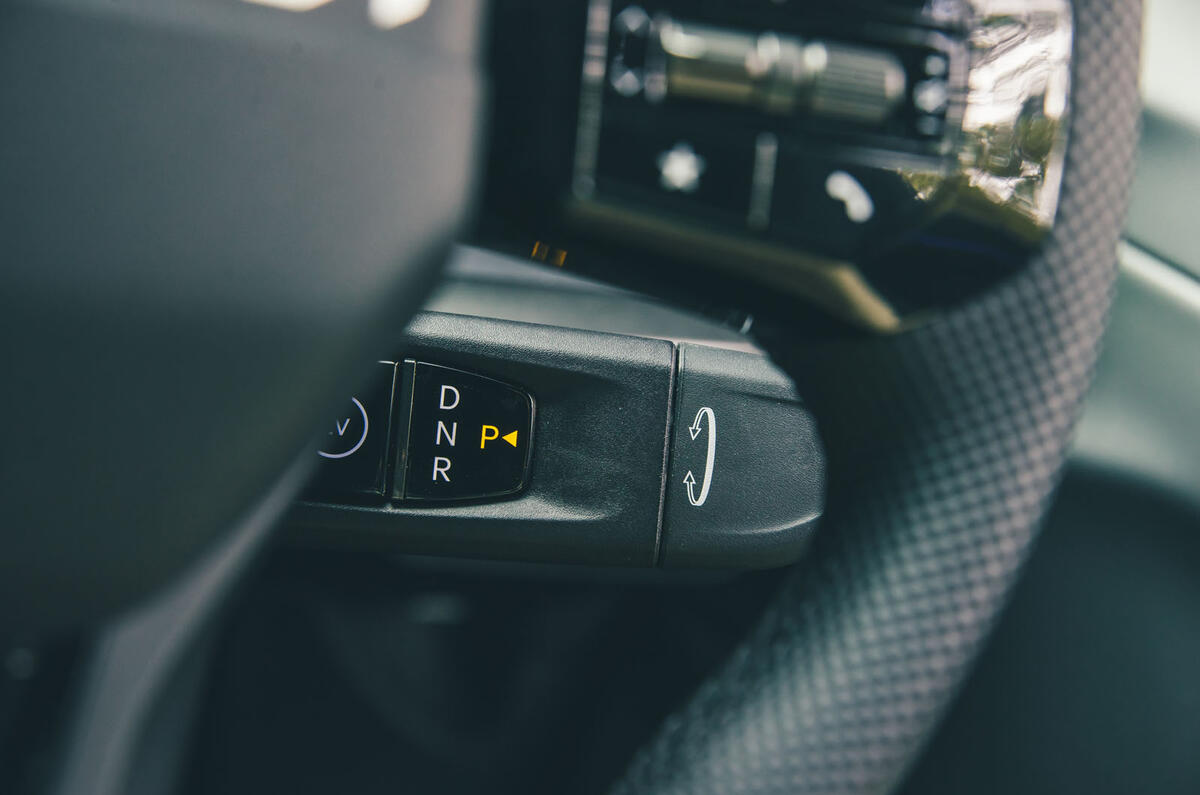
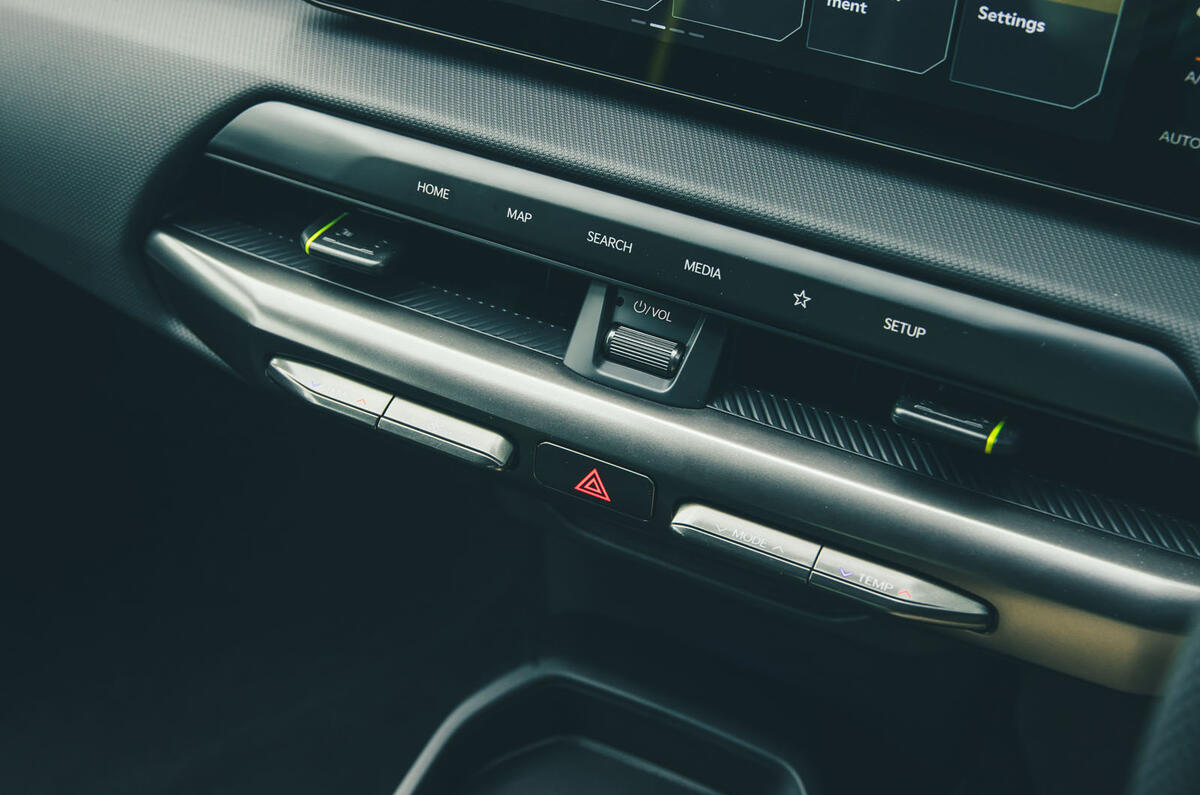
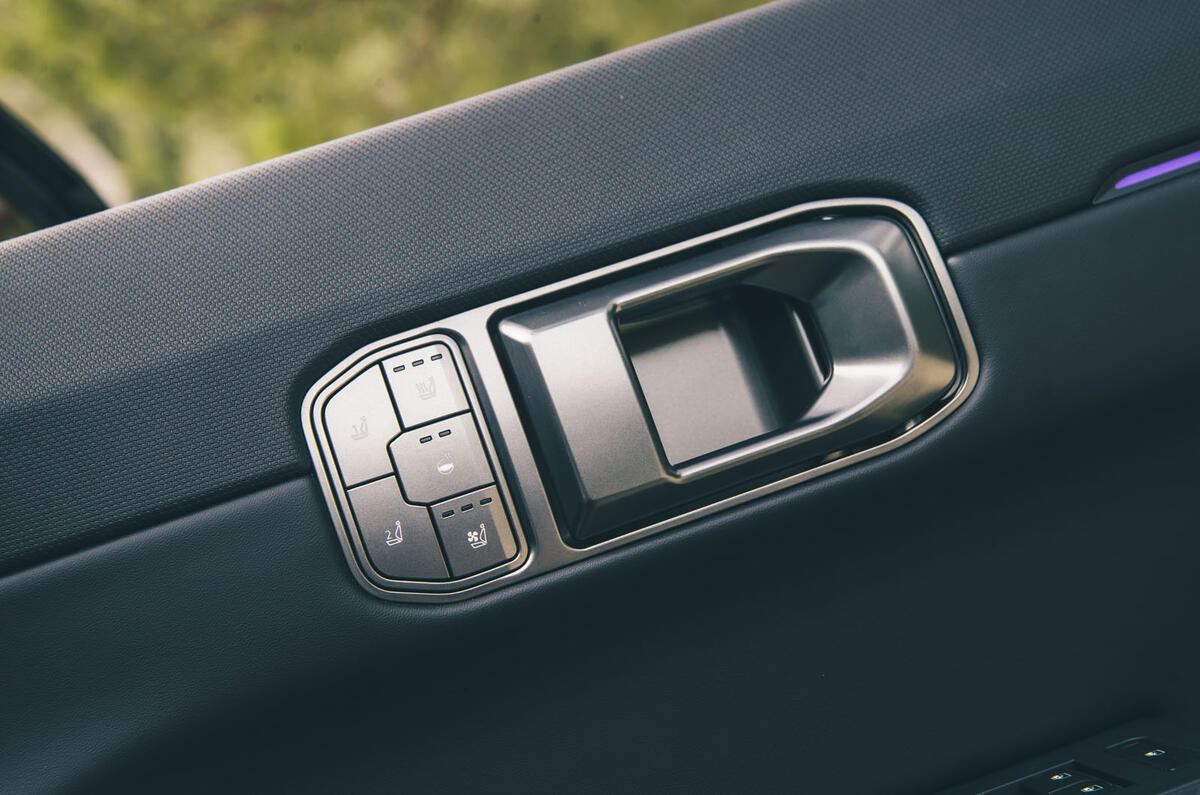
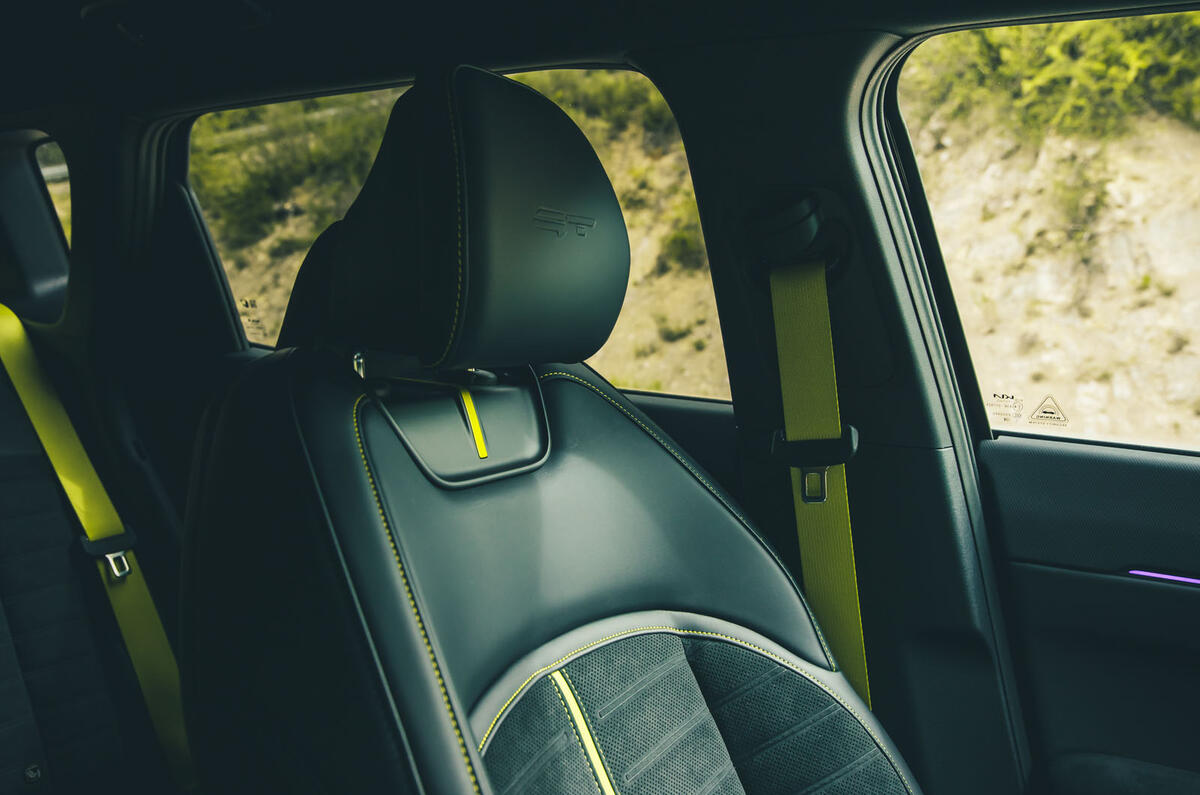
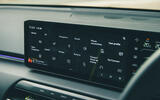
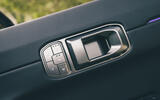
On the inside, the restraint continues. Kia’s sports front seats are comfortable but generously sized, to the point that slimmer drivers might slide around in them a little. But the car’s primary controls are well-located and -arranged; and Kia includes plenty of physical secondary controls, also, and buttons for switching off things like speed limit monitoring and lane keeping systems, which remain very welcome.

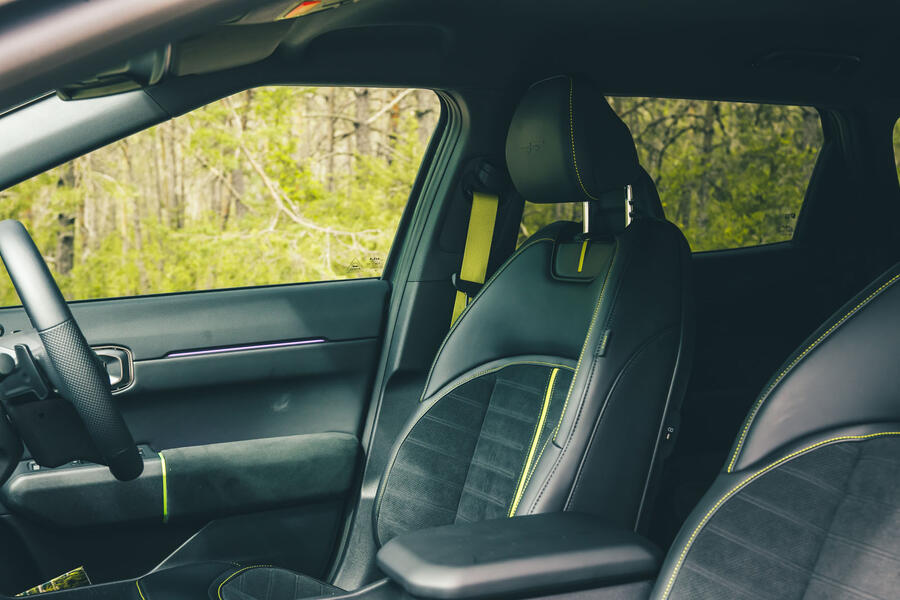
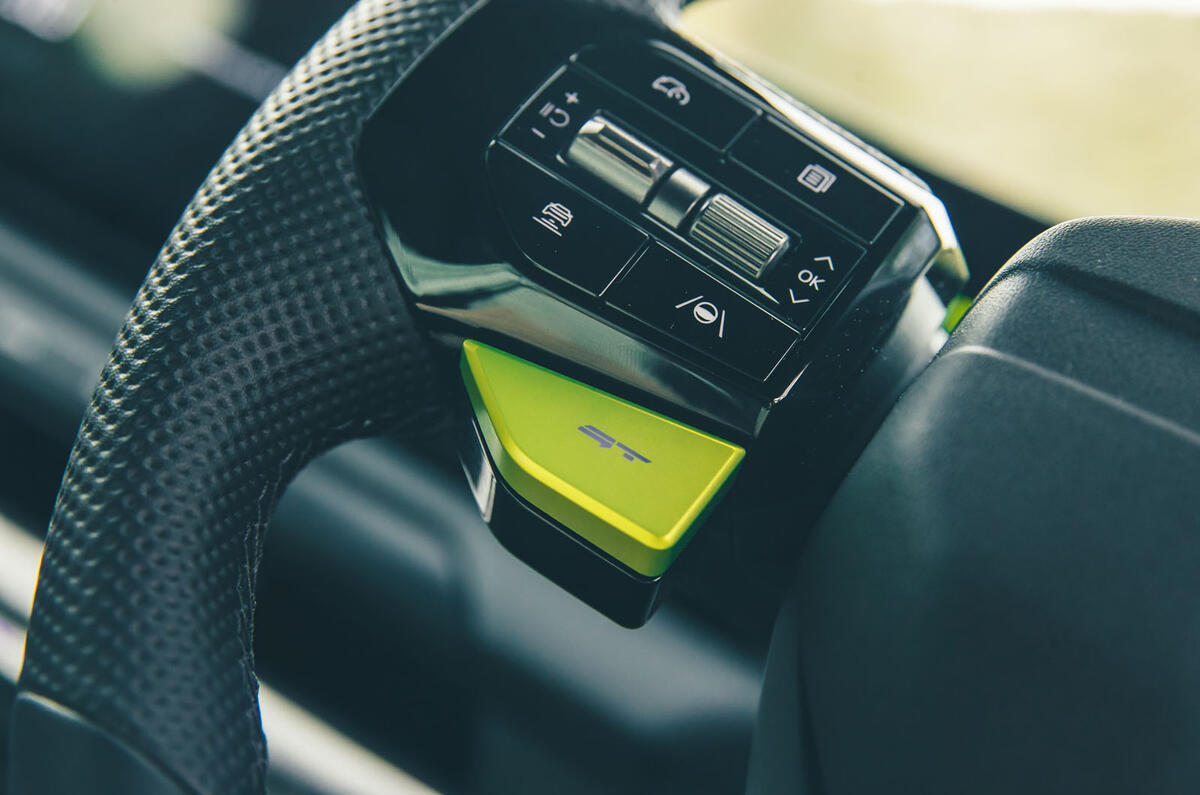
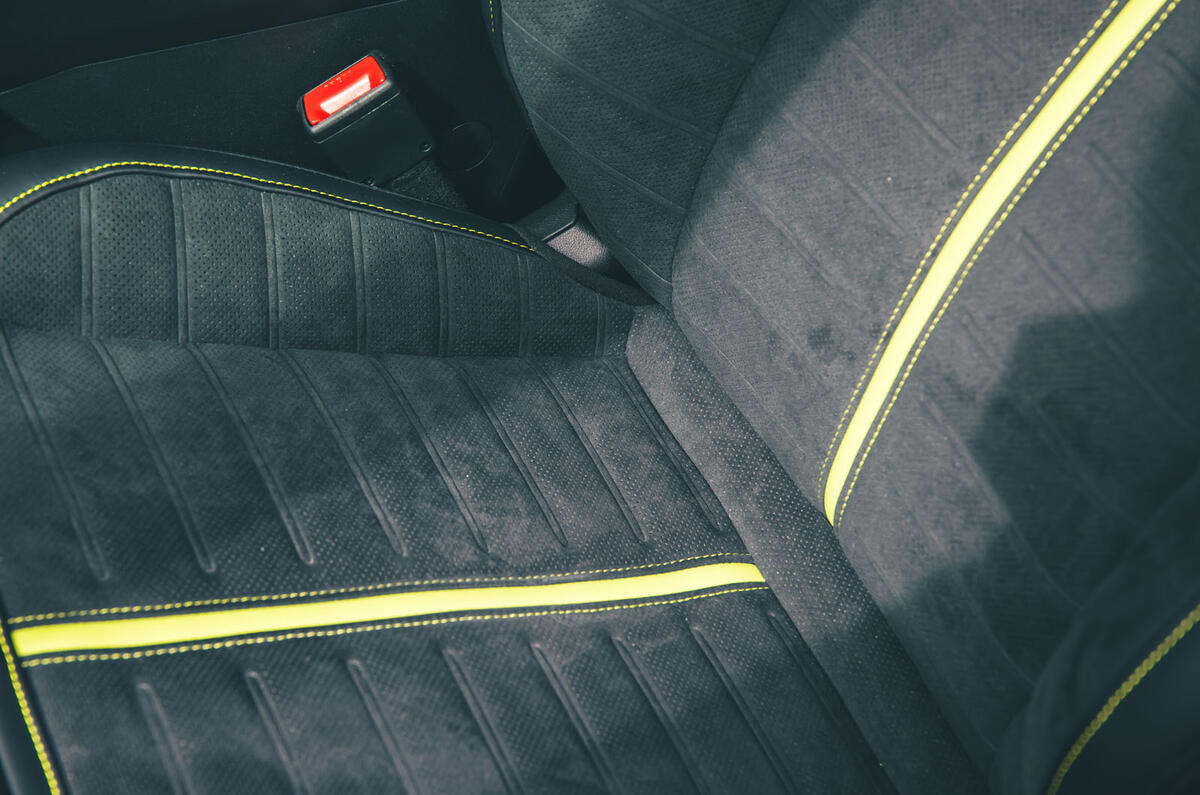
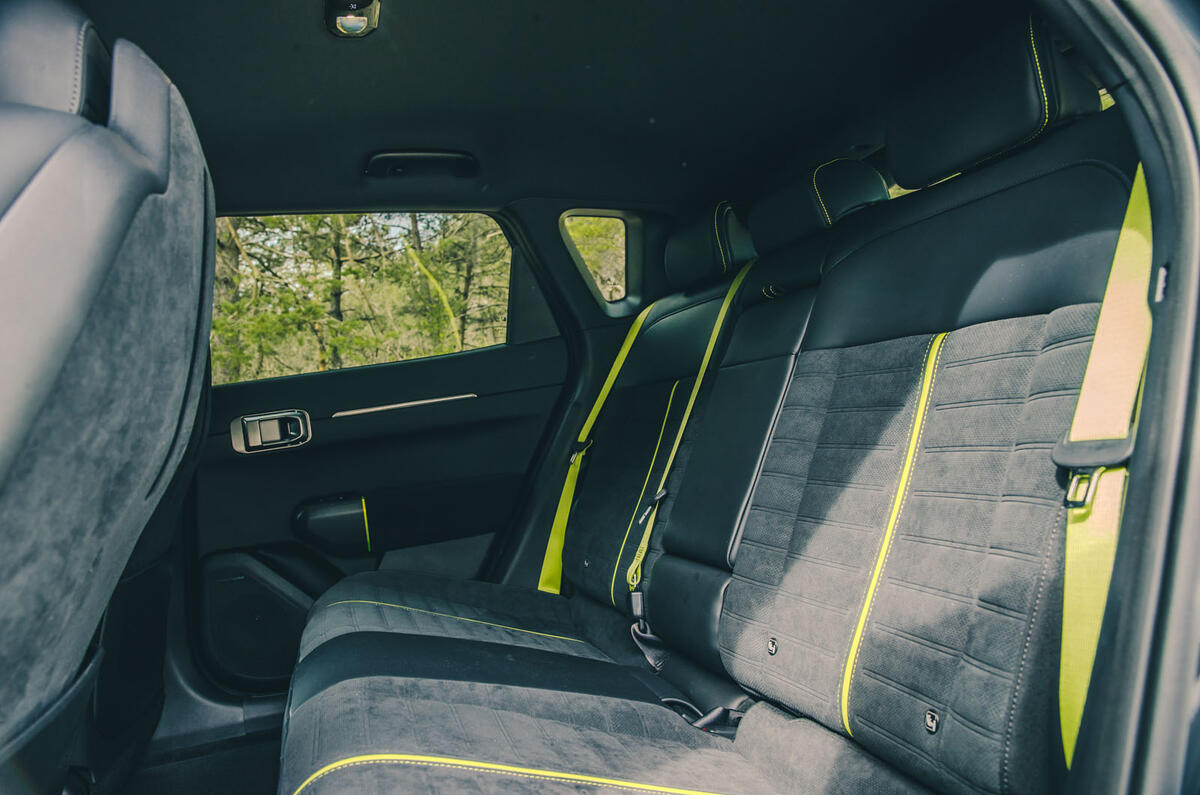
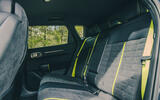
Neon green is used as an accent colour for the car’s seatbelts, seat stitching and steering wheel trim, and makes plenty of impact in what feels like quite an expensive-feeling if otherwise dark cabin.

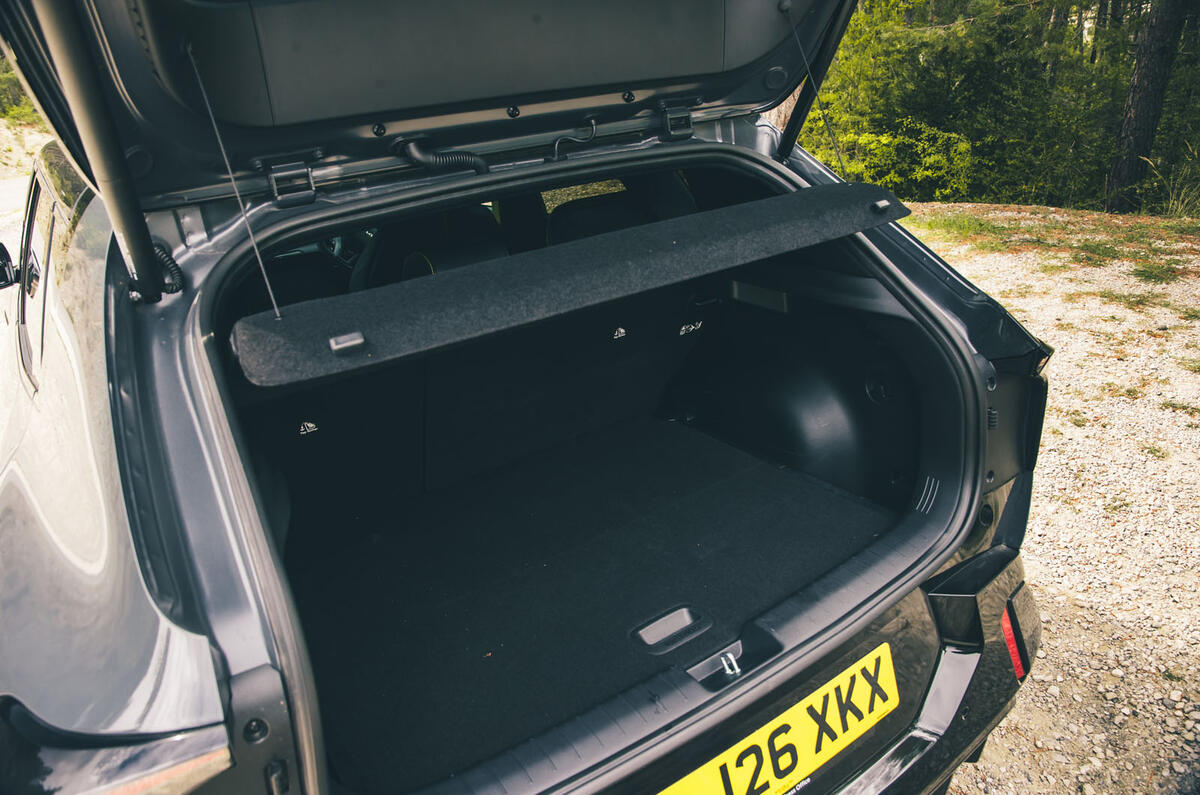
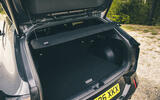
Space is generous by C-segment hatchback standards; legroom in the back seats, especially so - even if headroom isn’t quite on the same level. The EV4’s slightly outsize wheelbase and dimensions see to this; while, for boot space, it offers a more class-typical 377 litres below the tonneau cover.

ENGINES & PERFORMANCE

KIA EV4 GT review 2026 030

Having a little under 300 horsepower and weighing a little over two tonnes, the EV4 GT’s got plenty of performance for keen road driving - though not enough, revealingly, to feel like just another point-and-squirt, rocketship performance EV.

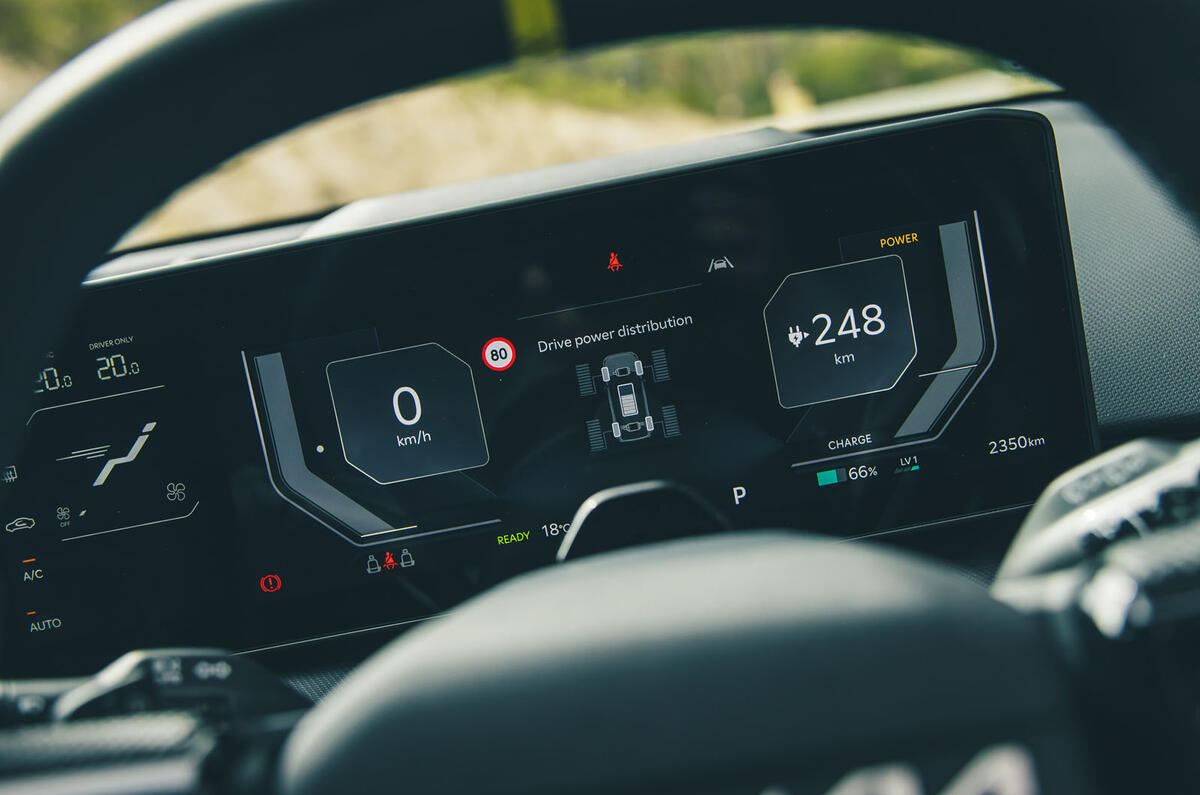
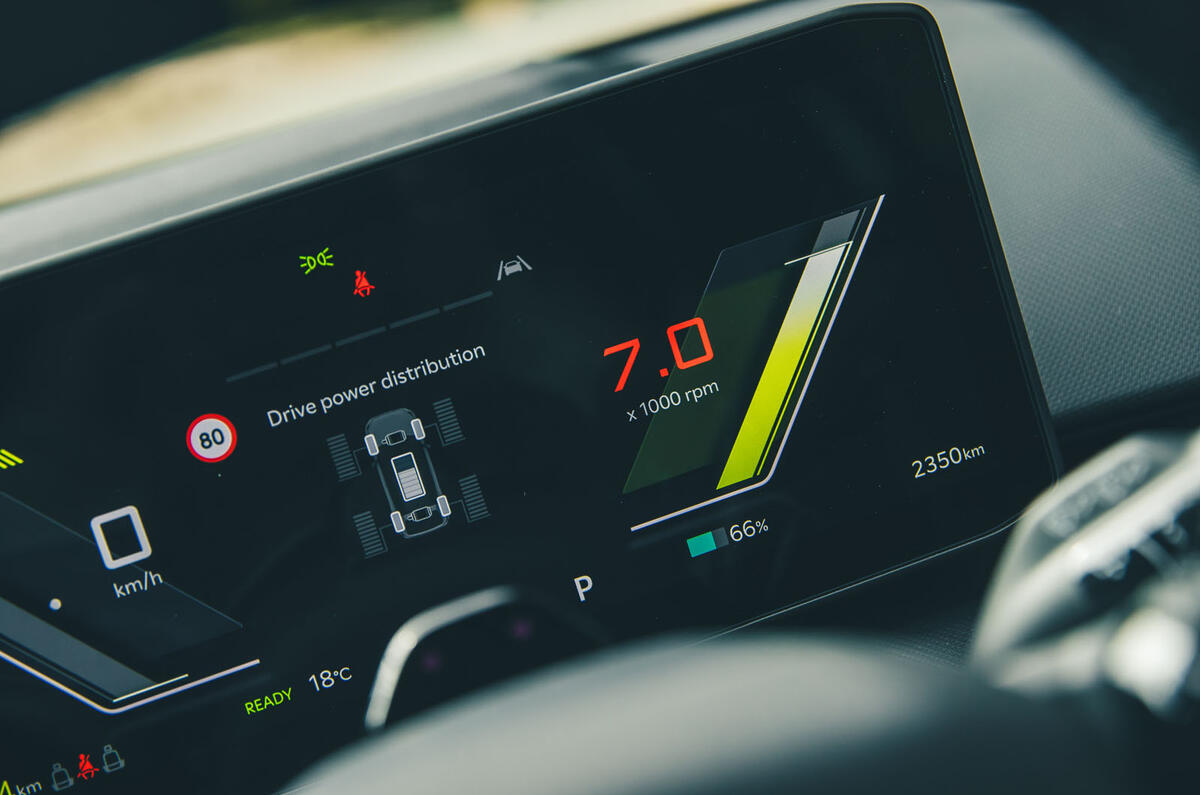
Honestly, there are combustion-engined hot hatchbacks that accelerate harder than this. But that’s a conscious choice on Kia’s part; because it wants to lean on the car’s Virtual Gear Shift and Active Sound Design systems - those that make it drive and sound like a petrol-powered performance car, ostensibly - to make up the shortfall.

They do that rather well. The VGS system has both paddleshift manual and ‘automatic’ modes; in the latter it’ll shift ‘gears’ like a DSG-equipped ICE hatchback, while in the former it’ll run smack into a make-believe rev limiter if you forget to shift up. The way it regulates pedal response, and adjusts motor regen to feel like engine braking in the lower gears, is very convincing - and it’s remarkable how much more engaged you are at the wheel with it turned on than when just driving the car in its default setting.

As regards soundtrack, Kia gives you maximum power to choose. If you just want to drive a quiet, straightforward EV, simply leave the car in ‘normal’ drive mode and turn the volume down on the car’s Active Sound Design sound generator (which, by default, isn’t too strange or flying-saucer-esque on the ear, thankfully). 

If you want something more familiar, however, turn on the VGS system, and the car’s audio speakers start issuing forth a combustion-engine warble not unlike an old Ford Focus ST’s five-cylinder engine note at lower crankspeeds; but becoming more like a Lamborghini V10’s howl at higher ‘revs’.

The car doesn’t broadcast the same engine noise externally, you might be a little disappointed to learn (though your neighbours doubtless won’t be). But, for a similar effect, you could just roll the windows down and turn the system up; because it’s hilariously loud at its most exaggerated (turned down to its lowest, thankfully, it’s acceptably subtle).

RIDE & HANDLING

KIA EV4 GT review 2026 026

The EV4 GT’s chassis offers measured but noticable gains on grip, body control and outright handling agility over the regular car; even if the steering, though weightier than the regular EV4’s, isn’t a great deal more feelsome. It’s composed and adhesive, certainly.

But throw the GT at a tighter bend and you’ll be more aware of its size and weight than is typical of a hot hatchback. Try to pick up the power early and you’ll find the nose nudges gently wide as you exit, the rear motor doing little to rotate the chassis positively.

Which is all another way of explaining that, because of the arrangement and relation of its drive motors, the EV4 GT’s handling balance gives more of a front-drive hot hatch feel than Kia’s hitherto rear-biased more senior GT creations. The car can’t be steered gently on the accelerator in the way that, say, a Cupra Born VZ can. The less powerful rear motor exists mainly to neutralise the cornering balance, not fundamentally alter it for tail-happy antics.

There’s no form of diff lock at the front, either; only a torque-vectoring programme that uses both physical and regenerative braking to help the car pivot. Traction is not generally a problem, and there’s no sign of axle-tramp or torque-steer - but trail the EV4 GT into a tight bend and the attempt at a swift exit can scruffily expose the limitations of the torque-vectoring system.

That all being said, the EV4 GT’s lower centre of gravity really tells in the way it gets that Tron-like snout into corners. It doesn’t steer with genuine alacrity, but there’s a gratifying elasticity to the pick-up and motion as you load it up into a bend.

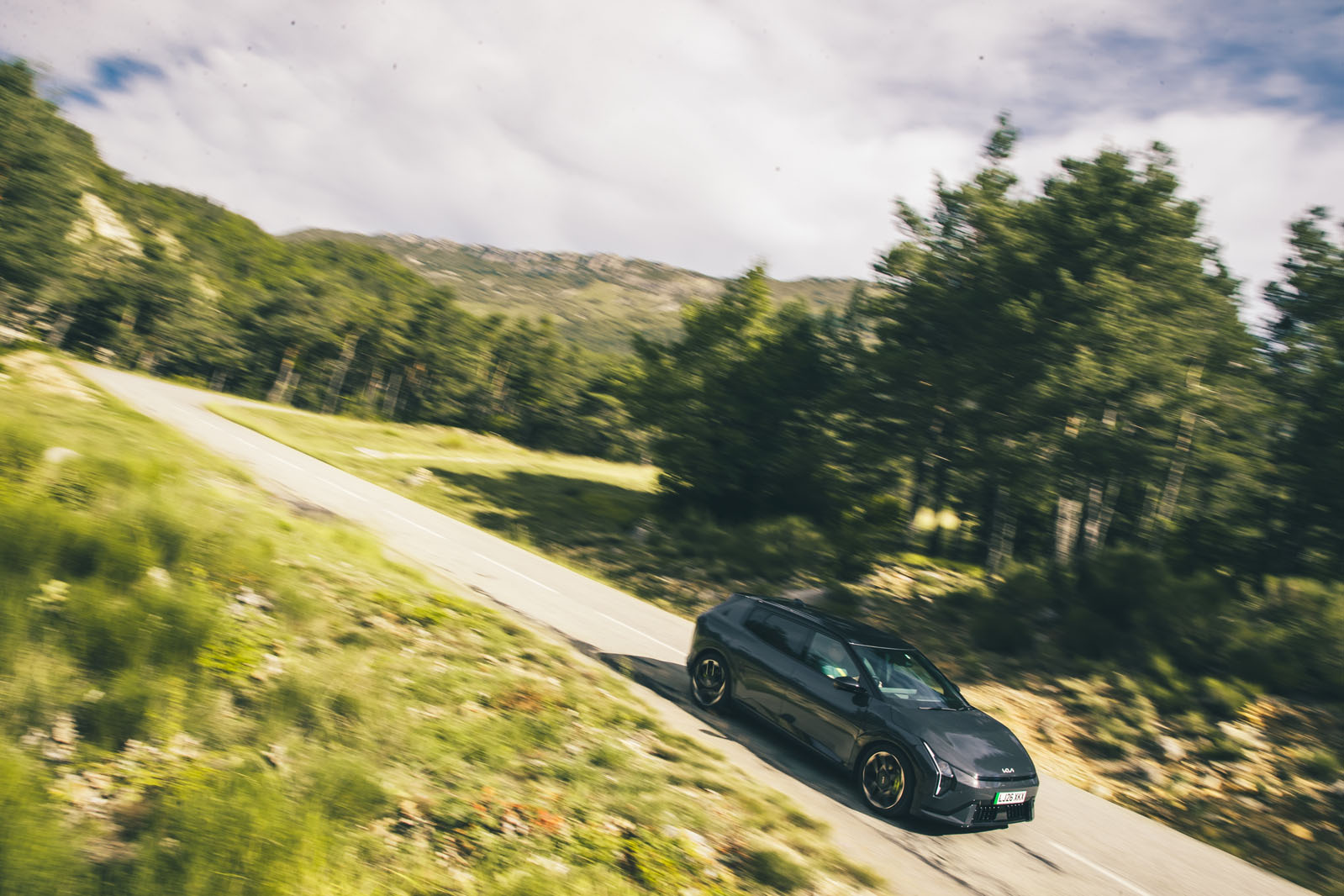
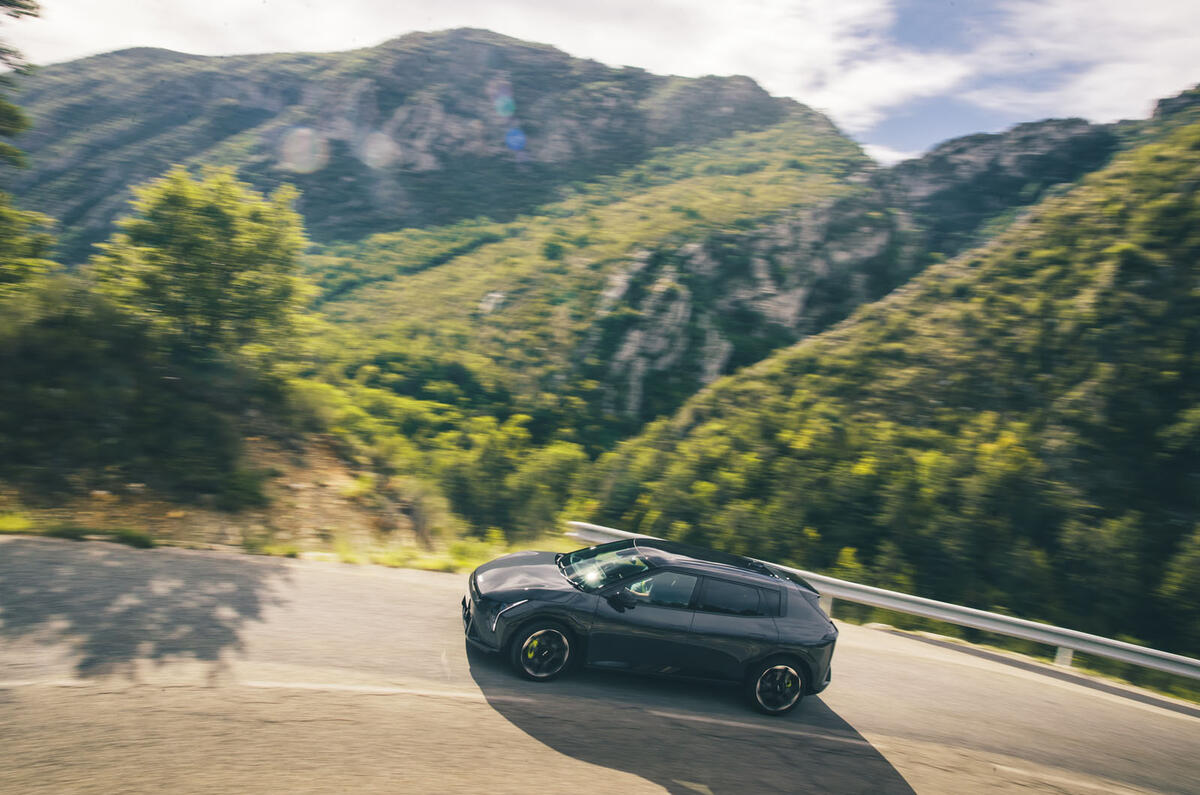
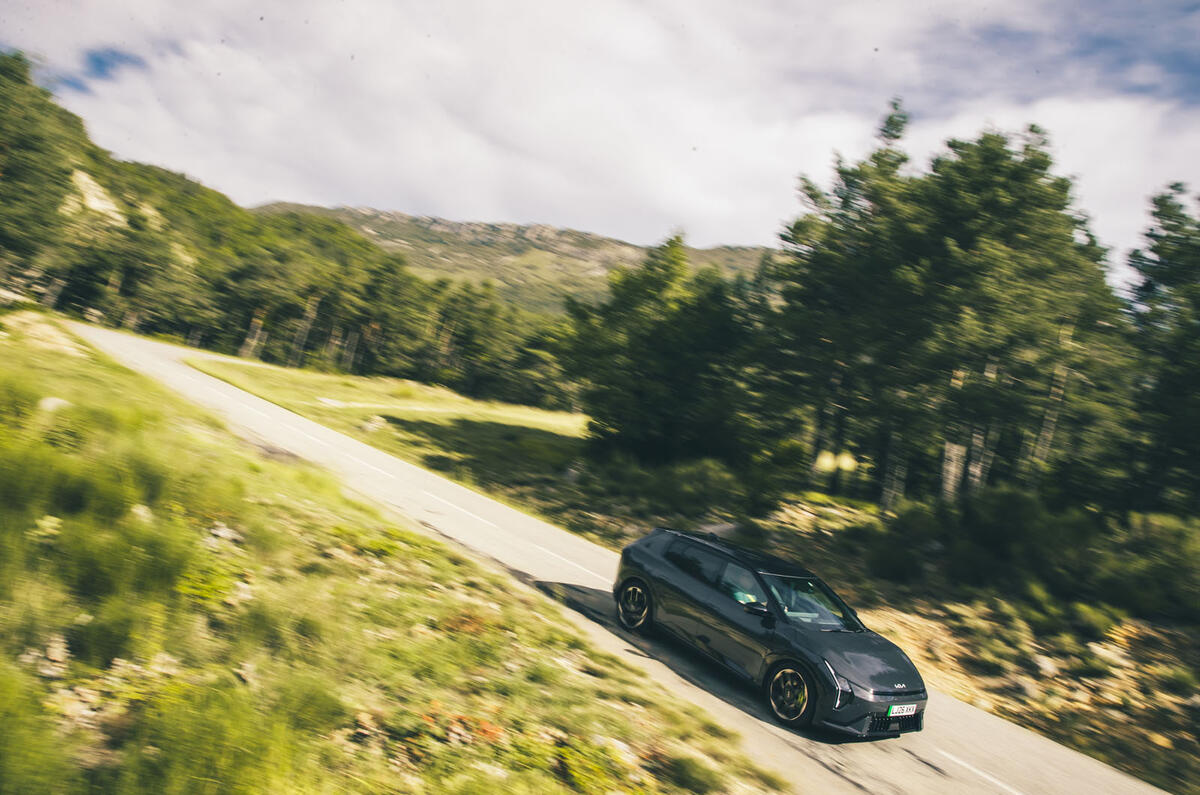
Pretty clearly, this isn’t trying to be the most sharp and vigorous driver’s car of its kind. And yet that leaves it feeling peculiarly well-tuned for fast road driving, adopting an appealingly fluent and fast-flowing stride as it does on open country roads; and standing out from the performance pack for a sense of pragmatism that isn’t very typical of a hot hatchback in 2026.

MPG & RUNNING COSTS

KIA EV4 GT review 2026 001

The EV4 GT is priced very much to rival the last remaining, ICE-powered, four-wheel drive hot hatchbacks on the market, in order that it might appeal to retail buyers as well as to the fleet drivers to whom it might appeal because of its low benefit-in-kind liability.

There are almost no options to inflate the price, either. A departure tag of £49,345 leaves room to add metallic paint and still stop short of the £50,000 threshold for UK luxury car VED tax, which would effectively save an owner more than £2000 in road tax over a five-year ownership period.

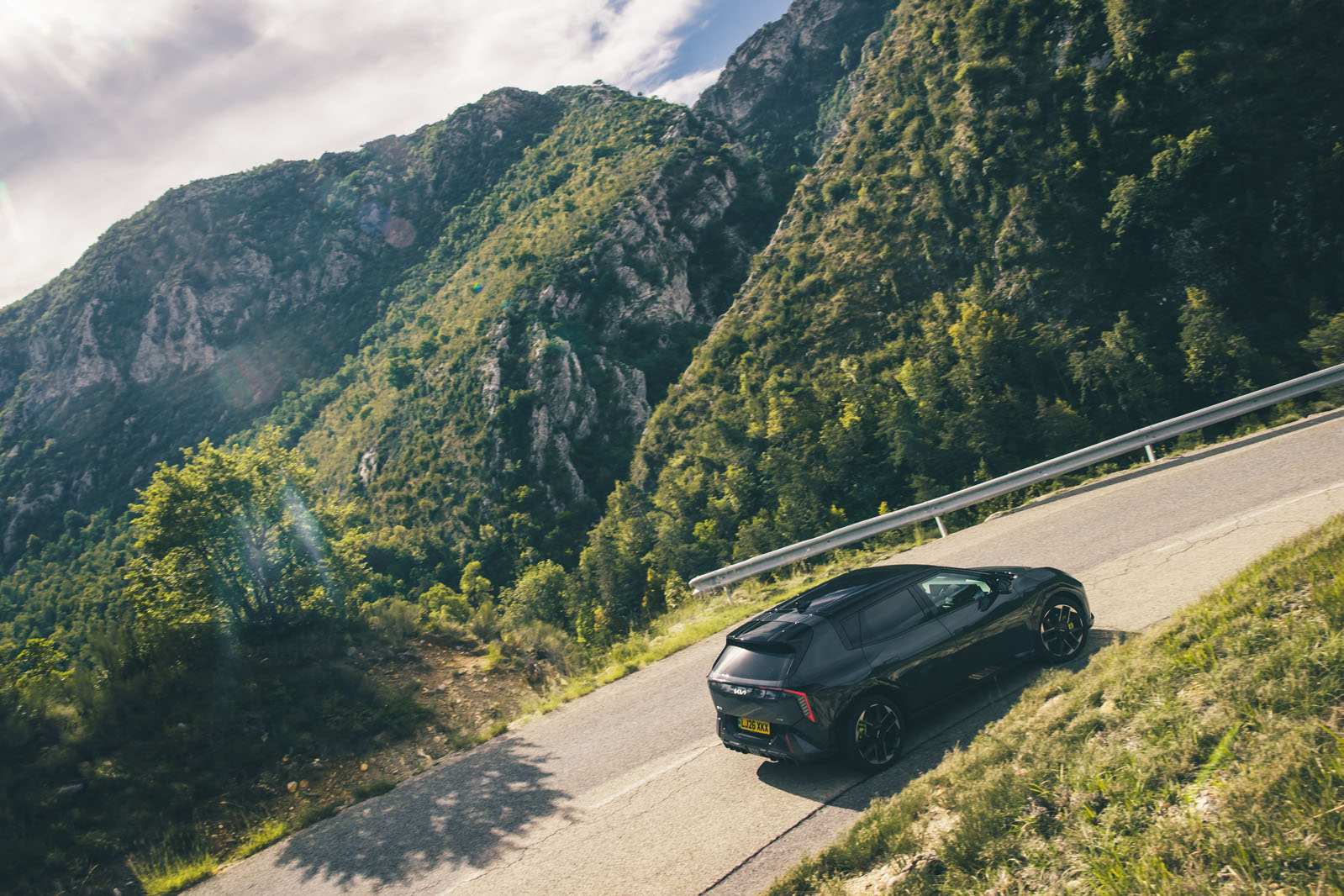
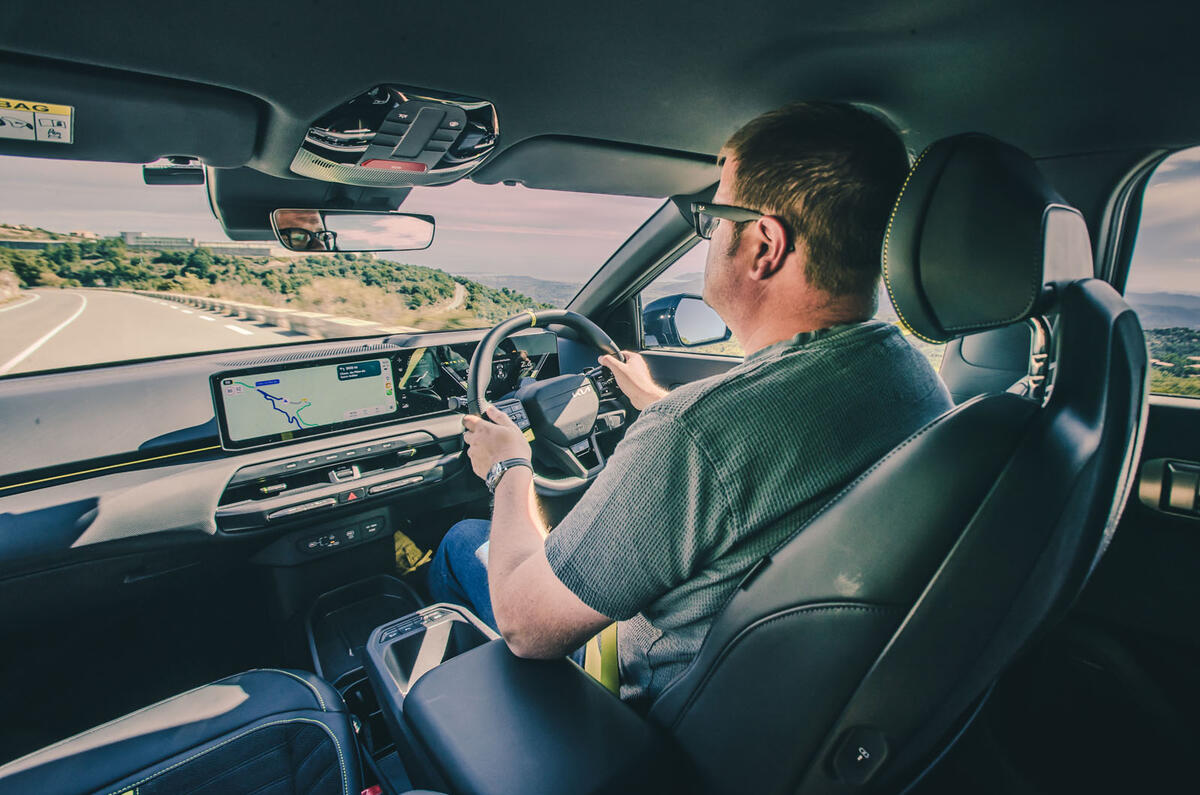
That the car’s 400-volt electrical architecture supports DC rapid charging at up to 128kW means it isn’t as rapid-charging as some £50,000 electric cars, mind you. Our testing in the Alpes Maritime, on mixed highway and mountain roads, suggested that a real-world range of between 200- and 250 miles could be expected from the car, depending mostly on how much use of the car’s 288bhp you care to make.

VERDICT

KIA EV4 GT review 2026 031

Clever VGS engine-and-gearbox-fakery system aside, the best thing about the Kia EV4 GT is that, even though it’s got plenty of sporting appeal, it never feels like too much performance car; not for any particular road or journey. And if that turns out to be the defining dynamic characteristic of a Kia GT-brand performance car from here on out, we’d say the company could aim for an awful lot worse.

On first proper acquaintance on European roads, this feels like one of motordom’s better attempts at an electric driver’s car. It’s fast enough, and purposeful enough in its dynamic agenda and chassis tuning, to stand up as a £50,000 performance car; but not overcooked or overbearing in either respect. 

Moreover, Kia’s versatile powertrain makes it capable of involvement beyond the reach of most, more one-dimensional performance EVs, and of adding sporting appeal at a wider spread of speeds and to a broader variety of journeys.

This isn’t some slightly smaller, lower, cheaper take on a Kia EV6 GT or electric Hyundai N car; and it isn’t the most outright thrilling, poised or entertaining car in its class. But the fact that it’s bold enough to be a little bit different - more mature and pragmatic than the hot hatchback class norm, and less needlessly fast and firm for its own sake - makes it more usable, versatile and accessible than many £50,000 rivals, electric or otherwise.

Matt Saunders

Matt Saunders Autocar
Title: Road test editor

As Autocar’s chief car tester and reviewer, it’s Matt’s job to ensure the quality, objectivity, relevance and rigour of the entirety of Autocar’s reviews output, as well contributing a great many detailed road tests, group tests and drive reviews himself.

Matt has been an Autocar staffer since the autumn of 2003, and has been lucky enough to work alongside some of the magazine’s best-known writers and contributors over that time. He served as staff writer, features editor, assistant editor and digital editor, before joining the road test desk in 2011.

Since then he’s driven, measured, lap-timed, figured, and reported on cars as varied as the Bugatti Veyron, Rolls-Royce Phantom, Tesla Roadster, Ariel Hipercar, Tata Nano, McLaren Senna, Renault Twizy and Toyota Mirai. Among his wider personal highlights of the job have been covering Sebastien Loeb’s record-breaking run at Pikes Peak in 2013; doing 190mph on derestricted German autobahn in a Brabus Rocket; and driving McLaren’s legendary ‘XP5’ F1 prototype. His own car is a trusty Mazda CX-5.