
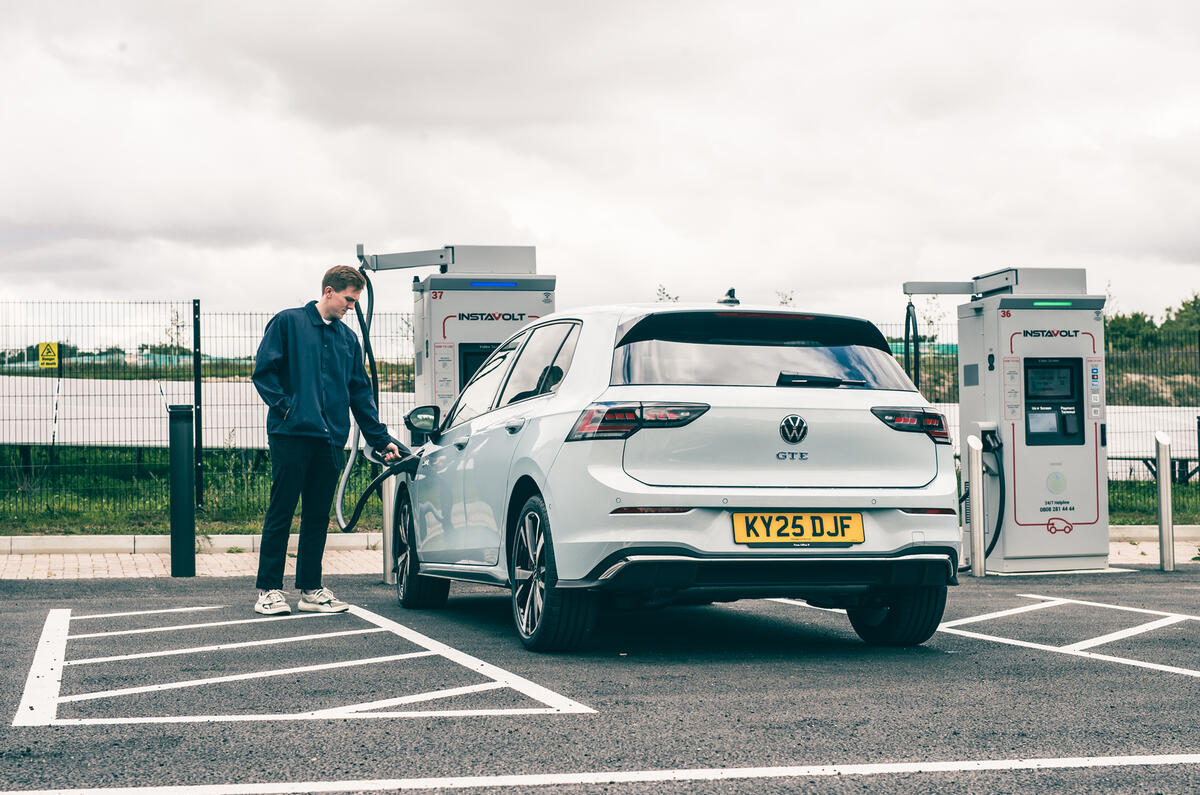

New cars just keep getting more expensive. That's why many drivers take advantage of company car and salary sacrifice schemes offered by their employers.
The latter especially can be quite the money saver, because the car payments come out pre-tax. Of course, there are caveats. You will never actually own the car outright, and you must pay benefit-in-kind tax.
But when compared with PCP, HP or private leasing, these schemes can be vastly cheaper. That's why last year more than a million new cars sold in the UK went through them.
It's therefore a no-brainer for car makers to ensure certain models fit into that space. Electric cars are by far the most advantageous, incurring just 3% BIK tax, but for those who can't or don't want to make the switch, there are now some plug-in hybrids with very low official emissions, not to mention official MPG figures that look like typos (yes, 850mpg is correct).
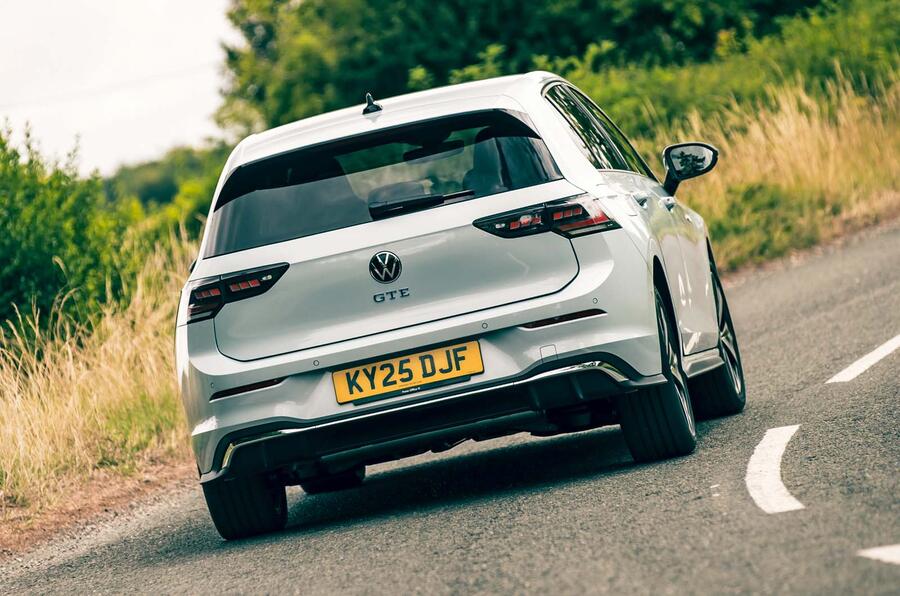
Prominent among these is my long-term test car, the Volkswagen Golf GTE. If you are after a sporty hatchback and have a reasonable budget, you will inevitably look at a Golf.
The GTE packs 268bhp and can hit 62mph in 6.6sec, while the GTI makes 7bhp less but is lighter and so completes the sprint in 5.9sec. The GTE costs £40,140, the GTI £40,870.
It's a close-run thing, then, so what's the answer? All things being equal, you would pick the GTI: it's simply the better driver's car. But if you're a salary sacrifice buyer, the GTI occupies one of the highest BIK tax brackets, while the GTE falls into one of the lowest. GTE owners as a result pay £155 a month in BIK tax and GTI owners £243, or about a grand extra a year.
Of course, despite the similar badges, the GTE isn't really a GTI with a plug. But it's definitely sportier than the other Golf PHEV, the eHybrid (same 19.7kWh battery, 201bhp, £36,420).
So can its significant savings and warmed-up (if not quite hot) hatch positioning combine to sway a car lover? This is the main question I'm endeavouring to answer here.
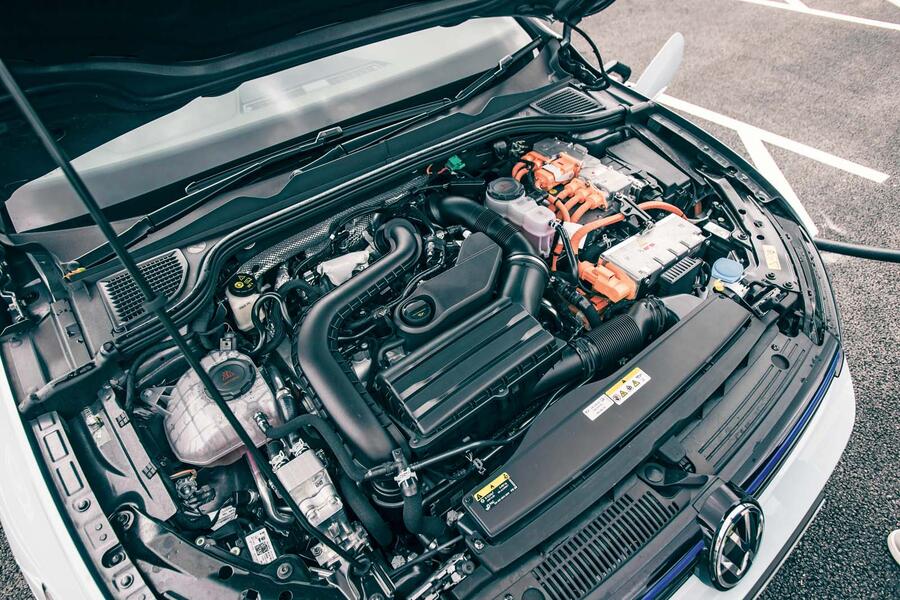
The GTE's PHEV powertrain consists of a 160bhp 1.5-litre four-cylinder turbocharged petrol engine and a 108bhp electric motor. They combine for 268bhp, which is delivered to the front wheels via a six-speed dual-clutch gearbox (DSG).
The battery has a considerable 19.7kWh capacity, enabling the GTE to run for up to 81 miles on electricity alone. Not bad when you consider that the equivalent Mercedes-Benz A250e manages a relatively meagre 44 miles.
Of course, there is a catch: the need to both charge the battery and fill the tank. So given I have no means of plugging in at home, another question to answer will be if the GTE is a viable prospect for someone like me and if the lower running costs make up for it. That the GTE is now compatible with DC fast chargers will be a big help.
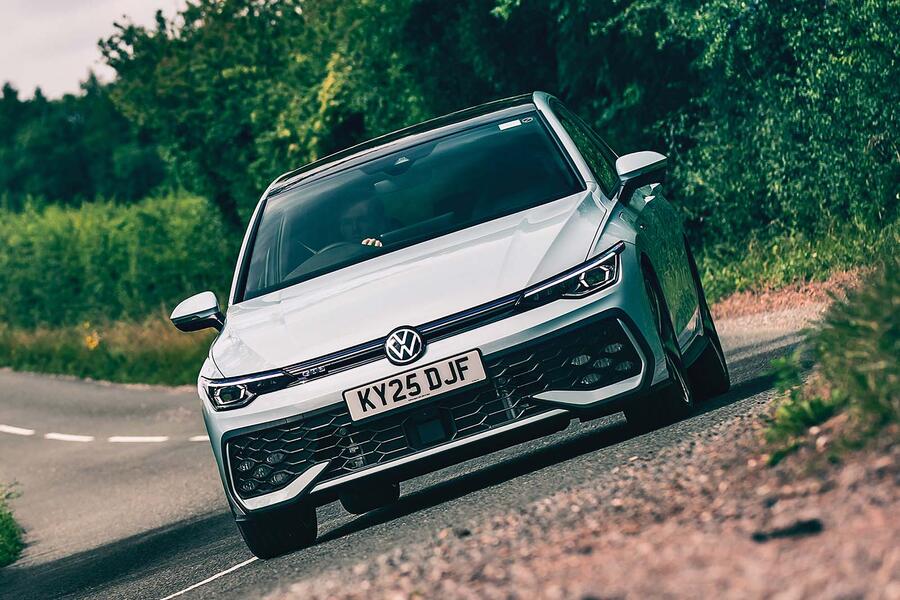
Visually, the GTE is midway between the standard Golf and the GTI. While the GTE and GTI have the same aggressive front-end design, the GTI sits lower (the GTE's ride height is equal to a standard Golf's), has different wheels and sports a pair of chunky tailpipes (the GTE's exhaust is hidden from view).
I'm a big fan of the Mk8.5 GTI's looks, especially how it sits on the road. And while it may not be an out-and-out hot hatch, I don't think the GTE is that far behind it visually, especially in Crystal Ice Blue paint (a £1375 option). Let's just not talk about the illuminated badges....
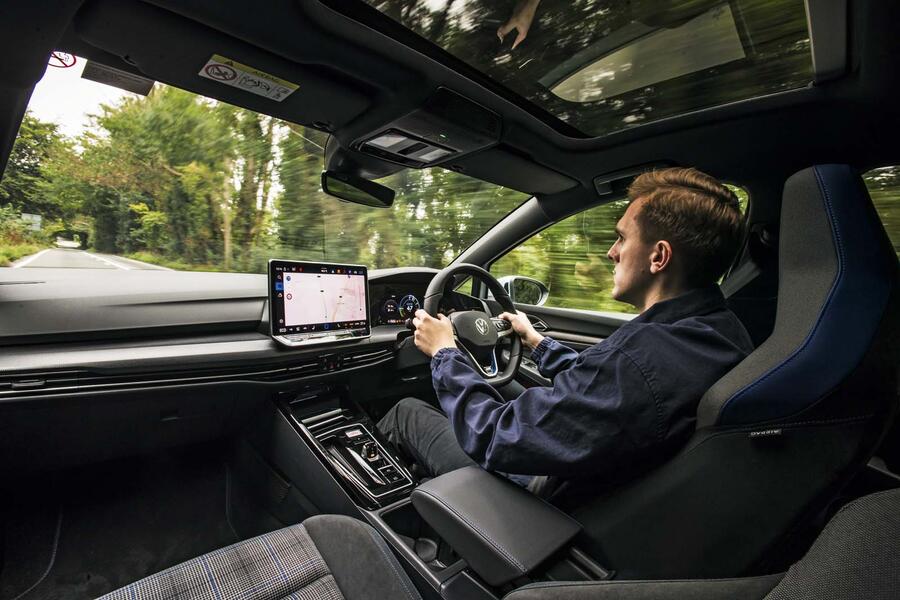
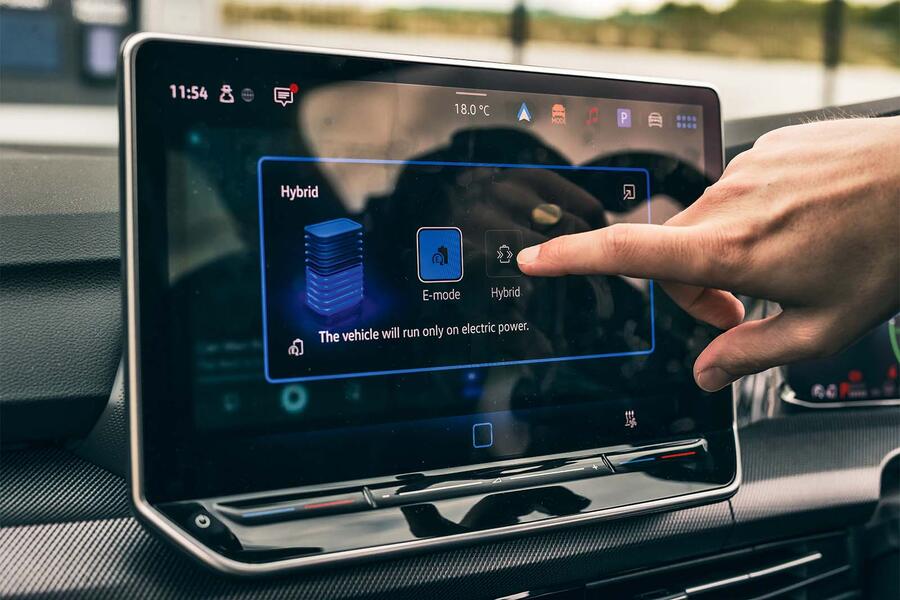
Inside, the GTE follows the same recipe as the standard Golf: a huge 12.9in central touchscreen dominates the dashboard, physical buttons are restricted mainly to the steering wheel and copious amounts of gloss black plastic are used throughout.
Wireless phone charging is standard. The seats are fairly sporty and clad in Jacara checked cloth—a similar tartan design to the GTI but with blue and white detailing instead of red and black. I can confirm they are very comfortable.
Annoyingly, due to the large battery, boot space in the GTE is rated at just 273 litres, down from 381 in the regular Golf. That seems like it could prove problematic.
I've yet to spend much time behind the wheel of the GTE, but first impressions are good. I recently drove the new GTI, and while the GTE isn't as focused as that car, the pedigree still shines through: its steering is well weighted and responsive, the handling is precise and direct and the chassis is just about stiff enough for a bit of cornering fun.
Not too shabby for a pound-stretching, salary-sacrifice special.
Update 2
I've always loved science and experiments. From ad hoc bedroom lab tests as a child, a love of experimentation has branched into me being that guy who always fiddles with new things - especially cars.
My dad gets anxiety when I go near his Audi A5 Cabriolet's menu settings, and the same happened recently when my brother picked up his new Renault Clio (above) and dad was hovering: "Luke, be careful. He's fiddling again!".
This brings us to the Golf GTE. I've had a fiddle - quite an extensive one, given everything is controlled by the central touchscreen - in order to get the just car as I'd like it.
Some of the mandatory safety systems are pretty rubbish, the lane keeping and speed limit warning especially (more on which in a future report), so they have to be turned off - every time the car is started. Please, spare us this pain.
I've also configured my own drive mode: Sport drivetrain (which gives some quite spicy acceleration) and Comfort everything else, including Volkswagen's 15-way-adjustable Dynamic Chassis Control adaptive dampers.
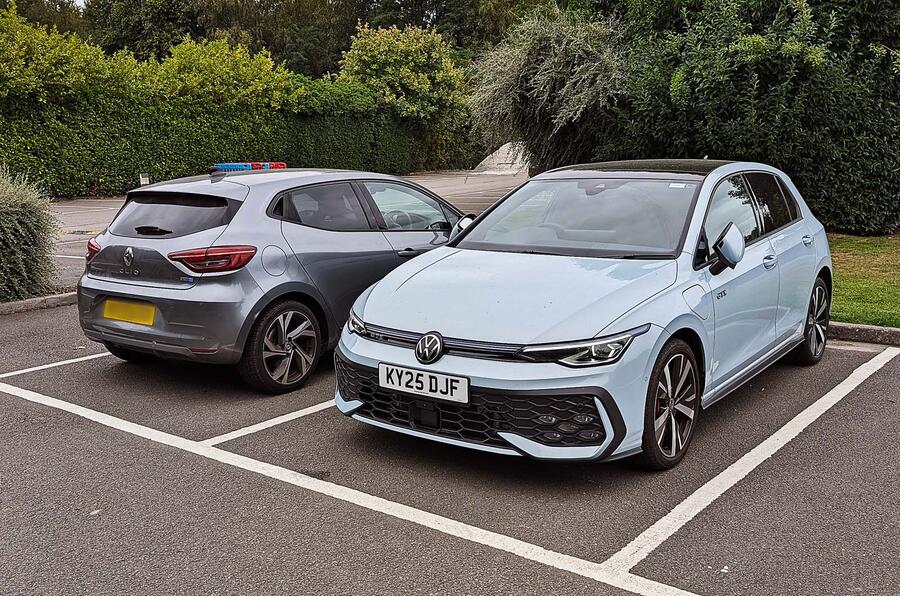
Next, the powertrain. Last week, I had three 130-mile round trips to undertake in four days. On Monday the brimmed fuel tank was showing 400-odd miles and the fully charged 19.7kWh battery was indicating 60 miles.
With an eye on efficiency, my plan was to spread the electric juice across the three trips, because I have neither a home charger nor the capacity to charge every night.
I was five miles in to commute number one when I noticed I'd yet to hear the engine. Odd. It's then I realised the GTE was in E-mode, which drives exclusively on electricity until it's all gone. Grumble. I selected Hybrid mode, the engine sparked into life and I plodded on, cross with myself for not noticing it earlier.
After 65 miles I arrived at my destination and nearly jumped out of my seat: I'd used half of the electric range already. Time for a rethink, because this wasn't going to be sustainable.
Before my return leg I had a further fiddle and found that, no, you can't make it default to Hybrid on start-up. Why, Volkswagen?
I did come across a 'manual control' setting, though, which lets me tell the car how much battery charge I want left when I arrive at my destination. Okay, that's exactly what I was after. So I told it to use 20% of the charge (the allocation is split into 20% increments).
Yet again, though, it didn't do what I thought it was going to do. I'd expected the system to spread the charge across my journey, but it drained it within the first 20 miles, so I was pulled by the engine for the remaining 55 miles. Again, my fault - the car needed to know how long the journey was, and I didn't tell it.
For the next attempt - the battery having been topped up again for the sake of the experiment - I set my 20% limit, but this time I also entered my destination into VW's own mapping system (I usually use Android Auto) before setting off.
I'd been told by road tester Illya Verpraet that this should do the trick. Cars are clever things, right? Well, seemingly not always: it didn't work. I was again around 20 miles in when the powertrain took control and depleted my allocated charge. Take a breath; stay calm....
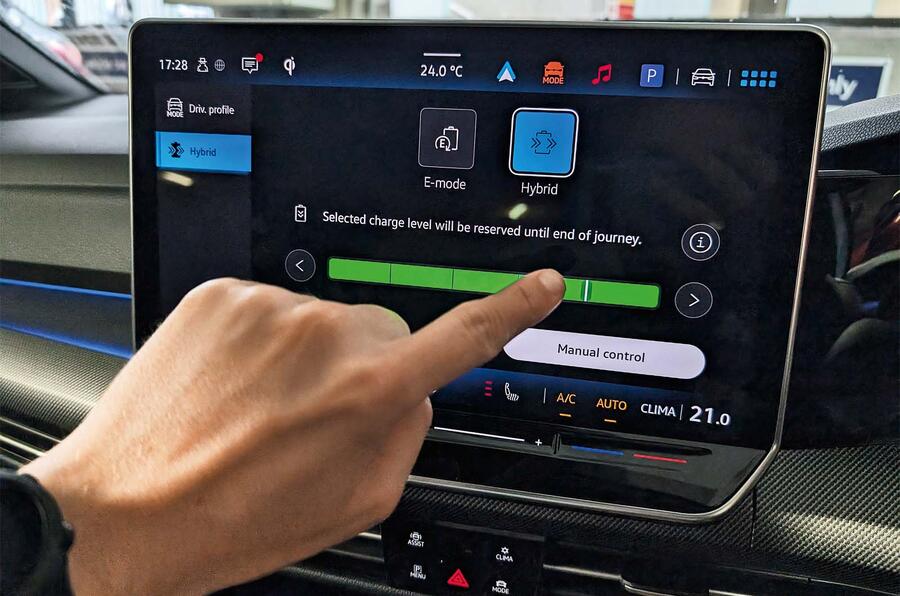
I reminded myself that this was an experiment, so I continued performing the same routine for the next few trips, and by the end of the week, during which I'd travelled just under 400 miles in total, I'd averaged - drum roll, please - 77mpg!
So that's fairly amazing. But with an eye on a fair conclusion, I spent the weekend using just the 1.5 TSI four-cylinder engine and achieved an average of 52mpg. That hybrid system, even starting with no battery power, used the charge gained via regenerative braking really well. I was impressed.
The question is, then, does charging once a week and making sure everything is correctly configured each time you set off merit the extra 25mpg? For me at least, yes.
Without a home charger it costs me as much to fill the battery as it does to add half a tank of petrol, but with a PHEV you get the best results when you optimally blend both power sources.
Hopefully, as I spend more time with the GTE, familiarity will make that task easier
Update 3
I've been really enjoying the Golf GTE. This plug-in hybrid hot hatch has so far proven extremely easy to live with, it's incredibly comfortable, it's returning very good economy and in my view it sports a rather dashing look. Insert 'do you really need more car than this?' comments here.
The only problem that I've encountered (and it's one I could choose to ignore) is hot hatch fans - including Autocar's own Golf GTI-owning Jack Warrick - saying the GTE has all the gear but no idea; that it gives off a sporty persona without being able to back it up.
Warrick noted in his review that "it doesn't quite excite in the way its badge might suggest" and "the purer GTI is more attractive to the driving enthusiast". I do get this criticism, but I have a rebuttal. I believe we should look at it from another angle and ask: is this car engaging enough for the average driver?
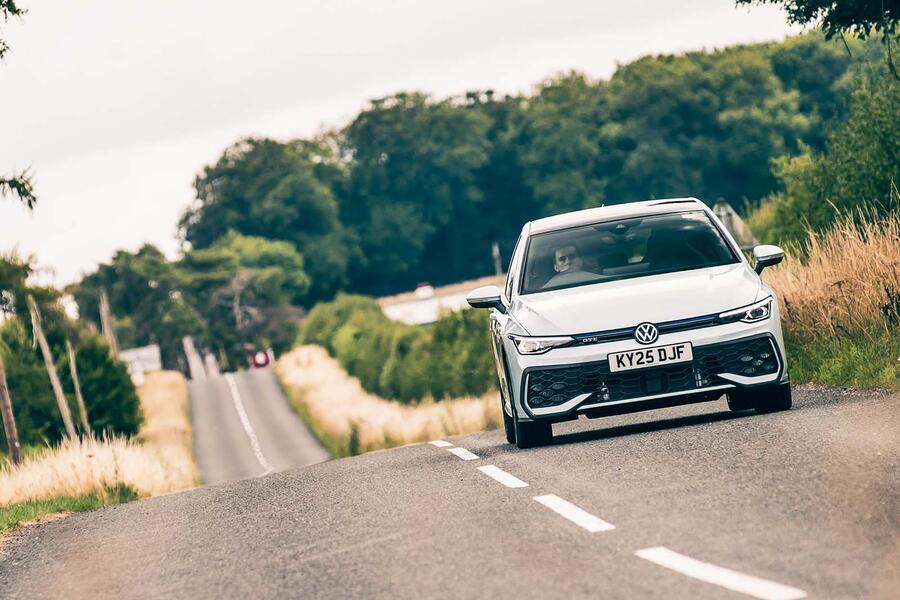
To test the theory, for my past few commutes home I have avoided the M3 and headed down the A31 and its many neighbouring B-roads. And do you know what? I had fun. No, it's not a GTI. You don't get the same connection through the steering wheel, you don't get to enjoy the creamy EA888 turbo engine and you're always aware of the electrical componentry's additional weight.
Yet there are still genuine thrills to be had. The instant shove of the electric motor gives the GTE a punchy feel out of tight bends, and once the petrol engine joins in, the car pulls with gusto.
The steering has enough weight and accuracy to inspire confidence, grip levels are strong and body roll is kept well in check. This isn't a car that eggs you on relentlessly, but it is one that responds positively if you decide to press a little harder.
The real test for an enthusiast is whether a car makes you want to drive it for no reason at all. I admit that I am not waking up any earlier on a Sunday desperate for a blast in the GTE - but I now find myself opting for the slightly longer route home, and that's a good thing
Update 4
The popularity of hatchbacks has dipped in recent years, which is sad. Key to this, of course, is SUVs: they account for almost 60% of the new cars sold in the UK so far this year, up from 13% just a decade ago.
Don't get me wrong: I like an SUV. They offer lots of space, a high seating position and a large fuel tank and/or drive battery. Earlier this year, I ran a Dacia Duster Hybrid 140 and heartily proclaimed that it was "all the car you'll ever need".
Yet having spent what feels like more time with my Volkswagen Golf GTE than with my wife over the past few months, racking up nearly 2000 miles during that time, I've decided I'd take a hatch over an SUV.
A key reason for this is its ability to do pretty much anything that's asked of it. For example, sometimes a task dictates that I need to swap my car for something larger.
Only once over the past few months has that occurred, and that was when I needed to transport quite a few mates and accompanying kit to a festival, which Kris Culmer's enormous Mazda CX-80 did brilliantly instead. The rest of the time, despite all that has been thrown at it, the Golf has been a bloody dream.
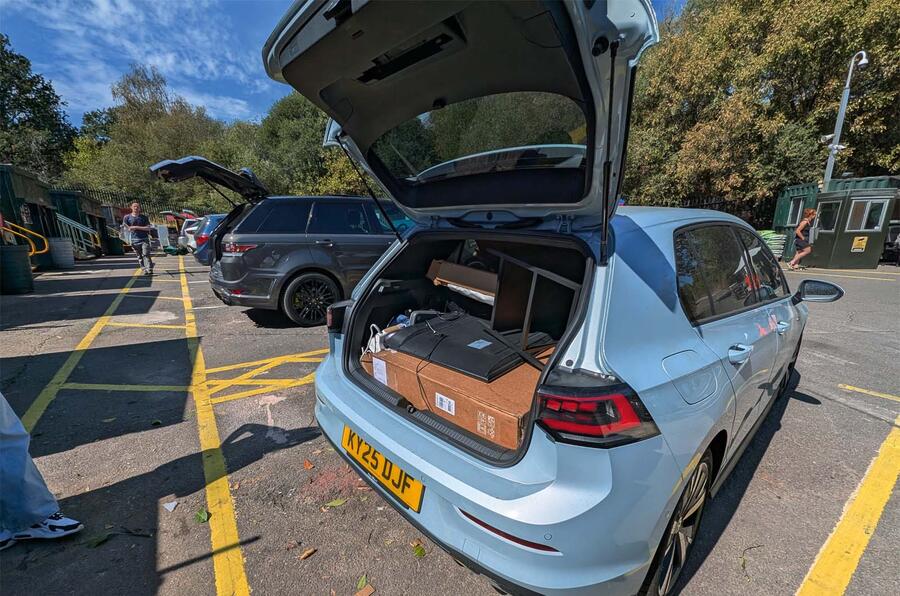
For example, in August, the wife and I were undertaking our biannual flat clearout. I needed to get rid of a TV and its stand, clothes, boxes and some other space-filling tat. We were able to fit it all in the back of the VW, seats down (utilising the full 1162 litres of capacity), and still have enough comfortable space for us two in the front.
Later that week, having created space from that trip to the dump, I needed to pick up a new TV from a seller 30-odd miles away. I was sceptical, given the TV's 55in corner-to-corner size, but with the rear seats down again, we were able to fit it in.
Granted, it was a bit of a squeeze and I needed to move the front seats forward a little, but we got it in. Another tick in a box for the Golf. A few 200-mile-plus round trips then followed, which the Golf dispatched without fuss, without pain and without much cost: it averaged 49mpg.
We again got close to capacity with a Bristol excursion that required use of all five seats and the boot. It was touch and go in the back, but those who squeezed in said it wasn't uncomfortable.
The wife and I then shot off on a trip that included a wedding and a holiday abroad - meaning lots of luggage space was needed - and again it was a breeze.
On all those occasions, not once did I wish for something bigger, which I believe is the best compliment I could pay a hatchback. The Golf's 4289mm footprint made parking easy, its slick infotainment system kept us entertained and its sporty chassis set-up was engaging no matter the distance of the trip.
Yes, I wish the boot were slightly bigger (I've been putting the rear seats down or putting bags on laps quite a bit) and the cabin were less drab, but I've found that I can live with those niggles, given how accomplished the car otherwise is.
So, the Golf continues to be a great thing and a genuine alternative to any SUV. Whether I would pick the GTE version again isn't so clear, though. It's a question I will answer when it leaves our fleet very soon.
Final report
An email sent to me by reader Rob Lightbody provides an ideal starting point for this final report and ties in nicely with the mission statement for our long-term test car displayed above.
"As the owner of a 2017 Golf GTI, I was wondering if you think you'd be better off in the GTI version instead of the GTE," he asked. "The boot in the GTI is quite a lot bigger and you'd have no large cable to store. You'd lose some MPG, but on a longer run I get over 40mpg."
This is an interesting question from Rob, especially given that the GTI, at £41,810, costs only a little over £1500 more than the GTE, so going for the sportier option might seem like a bit of a no-brainer. But it's not quite as cut and dried as that, based on my time with the plug-in hybrid Golf at least.
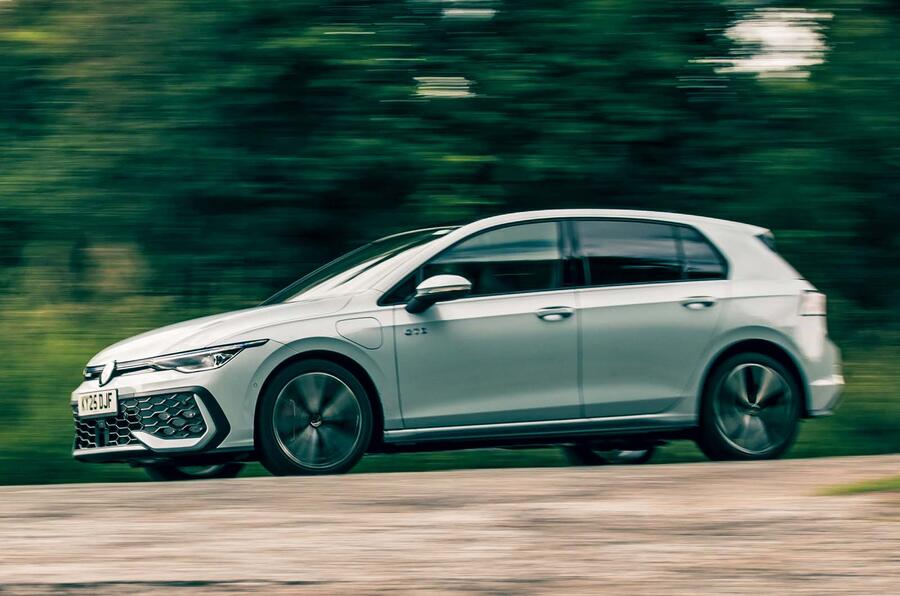
For starters, as with the GTI, it looks brilliant. I especially liked its aggressive front end and our Crystal Ice Blue paint (a £1375 option). I just wish it had some visible exhausts (the GTE's are hidden) and that there was an option to turn off the boy-racer-style illuminated badges.
Then there's the interior. The GTE was the comfiest car I've driven this year, thanks in large part to its deep, bolstered seats. Long drives, of which I undertook many, never resulted in a sore bum. I also liked the 12.9in infotainment screen, which, while garish, was responsive, sharp and just very good to use.
The touch controls I could have done without - especially for the sliding roof, which sometimes didn't register a connection. It's a shame the cabin of our car was a rather drab affair, though, filled with dull colours (lots of grey), while the materials, such as the black plastic trim, felt cheap.
And Rob's got a point about the storage space on offer. I had a moan in a previous report about the GTE's modest 273-litre boot capacity, made worse by the lack of a dedicated place to stow the charging cables.
Because it doesn't have a 19.4kWh battery sited under the boot, the GTI consequently has 100 additional litres of storage space. It's not the sort of thing you'll notice on a daily basis - more when you're planning time away. For example, only one suitcase, or two weekend bags, could fit in the boot of the five-seater at any one time.
But, crucially for a car with a sporty positioning, the GTE was fun to drive when those journeys came around. It didn't have the measure of the more focused GTI, true, but its confidence-inspiring grip levels, sound chassis set-up and weighty steering also encouraged me to take the longer, B-road route home on a regular basis. I made sure I had enough battery charge at my disposal on those occasions, as the additional torque of the front motor turned the GTE into a corner killer.
Rob's final point concerning the MPG will be just as important for prospective GTE owners. As I don't have a home charger, I'm clearly not VW's target audience for such a car.
But given the rise of company car schemes, coupled with the GTE's very low £40-per-month benefit-in-kind tax (by comparison, a GTI owner must cough up £243 in BIK), the GTE is very likely to end up with some of the 43% of UK residents who do not have access to a private driveway.
So, for me, I had to use (heinously expensive) public chargers to keep the GTE's 19.4kWh pack topped up. While those 60 engine-off real-world miles bumped my average MPG to a lofty best of 77(!), it actually made the cost per mile, on average, more expensive (19p) than if I'd run it purely on the 1.5-litre petrol four (12p) instead.
This was a key reason why I, more often than not, ran the hatch solely on petrol power - achieving 46.7mpg overall, so probably not too dissimilar to the "over 40mpg" that Rob gets in his GTI on a longer run.
These figures are more of an indictment of the cost of public charging than they are of the plug-in hybrid. However, the GTE with a full, 'self-charging' hybrid powertrain would make more sense to me, while broadening its appeal. As luck would have it, Volkswagen is looking to bring such a powertrain to the Golf line-up, so watch this space.
Anyway, back to the original question: would I be better off in a GTI? If I had the means to buy and run a GTI, I'd go for it. But if I were a company car user given the choice of both cars, the £2436 annual BIK savings would potentially be enough to turn my head.
While not as refined as the GTI, this is still a great car - and, as the brief demands, one that's fun to drive.
Volkswagen Golf GTE
Prices: List price new £40,140 List price now £40,140 Price as tested £44,435
Options: Crystal Ice Blue metallic paint with black roof £1375 , panoramic sunroof £1250 , Adaptive Chassis Control £735 , 18in Catania black alloy wheels £600 , parking camera £335
Fuel economy and range: Claimed economy 849.9mpg Claimed electric range 81 miles Fuel tank 40 litres Test average 46.7mpg Test best 77.0mpg Test worst 39.0mpg Real-world range (petrol) 398 miles (ICE only) Real-world EV range 60 miles
Tech highlights: 0-62mph 6.6sec Top speed 143mph Engine 4 cyls in line, 1498cc, turbo, petrol, plus electric motor Max power 268bhp Max torque 258lb ft Gearbox 6-spd dual-clutch automatic Boot 273 litres Wheels 18in, alloy Tyres 225/40 R18 Bridgestone Potenza Kerb weight 1670kg
Service and running costs: Contract hire rate £716.49 pcm CO2 8g/km Service costs None Other costs None Fuel costs (plus electric charging) £881.83 Running costs including fuel £881.83 Cost per mile 19 pence Faults None



Join the debate
Add your comment
It's 2025, 38% of cars sold have a plug. You are a motoring journalist. Why don't you have access at home to a charger. It's pretty easy to not use one if you want to answer if the car works for people without home chargers. It's not just you but it makes it hard to take any advice seriously when someone says their car gets 40 mpg. If you do 120,000 miles that's £20k drive that on night rate electricity is 2-3k Enough money to pay for your next car. If you can't have one installed at your home you should be raging about the injustice and campaigning to make sure people can. It just feels like you're still sort of ignoring current technological trends.
I'll summarise the autocar's conclusion paragraphs, PHEV's are tax dodgers. A fact borne out by typically suffering 21k worth of depreciation after 3 years when a GTI would have only lost 16k.
Remove the tax advantages and they wouldn't sell.
Unless you actually charge them at home in which case you save enough on fuel that you wouldn't care about the depreciation
Really, why buy a car that doesn't lose quite so much on running costs if you do big mileage, but the irony is it'll only does 50 miles on electricity. And bear in mind you switching to a cheaper tarriff is pointless because the battery's so small.
An extra 5k of depreciation over 3-4 years to save £400 a year on petrol makes no sense. And bear in mind you'll have a worse car with a tiny boot.
For private buyers it makes no sense.
400 on petrol at 40 mpg is ~ 2300 miles if you're travelling 6 miles a day you should buy an ebike. I'd agree though. If your doing low mileage up to 5000 miles a it doesn't really matter as depreciation is going to be your main cost. If you're doing 5,000-80,000 miles a year ( up to 220 miles / day) you can probably buy an ev and save a small fortune. If you don't have a cheap charger at home or work, the maths on an ev don't make sense because fast chargers are massively overpriced these days. If youre driving more than 220 miles on a typical day and there aren't chargers where you would typically rest then don't bother with a PHEV there's more to go wrong and you're just lugging extra weight.
You've got there, to simplify you post.... basically PHEV's don't make sense for anyone unless it's used as a tax dodge.
Yeah, all the problems of combustion and an ev with none of the benefits.