Currently reading: New 2027 BMW X7 to rival Range Rover with I6, V8 and EV power

New SUV heads upmarket in EV and ICE forms - with Alpina range-topper

BMW is preparing to take its X7 SUV flagship further upmarket next year with a new second-generation model to rival the Range Rover with bold Neue Klasse styling, an Alpina V8 range-topper and - for the first time - a fully electric option.

BMW is moving to more obviously differentiate its largest SUV from its core line-up and position it to compete directly with traditional luxury rivals such as the Mercedes-Benz GLS and Range Rover, as well as the new wave of Chinese competitors headed by BYD's Yangwang and Geely's Zeekr luxury brands.

Following the latest X5, the new X7 - and electric iX7 - will be based on a heavily revised version of BMW's Cluster Architecture (CLAR). This versatile structure has been re-engineered in its largest form to accommodate conventional internal combustion engines as well as a fully electric drivetrain.

Sources in Munich suggest the iX7's battery could be as much as 150kWh in capacity, in a bid to provide a WLTP combined range in excess of 500 miles.
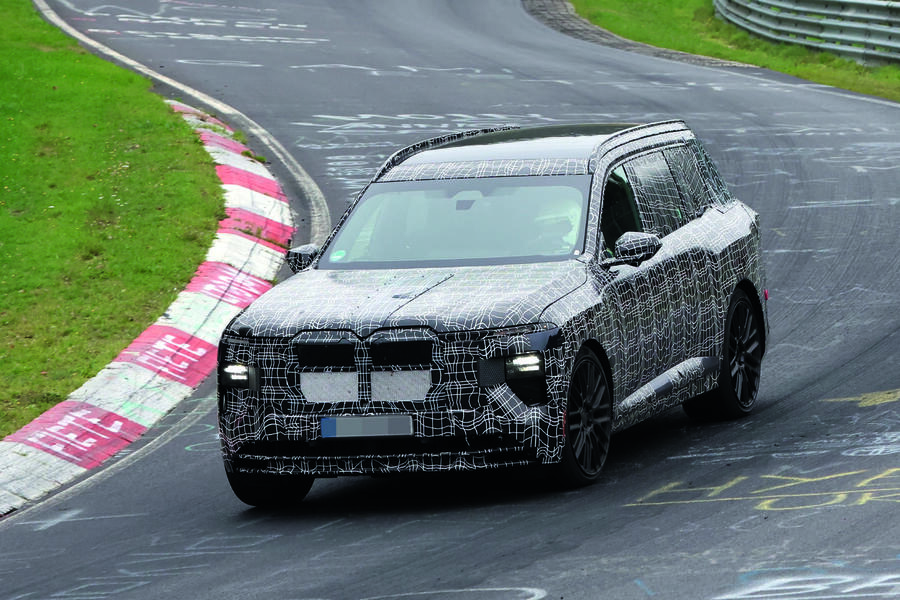
Much of the engineering programme for the new X7 has been focused on ensuring the EV and ICE derivatives are all but identical, with the same exterior design, driving position and interior packaging. This comes as part of BMW's attempts to further integrate electric models into its traditional model ranges.

The decision distinguishes the X7 from the new 3 Series and the closely related X3, which are sold alongside related, but technically different, i-badged EVs. But the move brings the model in line with the X5 and iX5, which are almost indistinguishable from one another and share the same core hardware.

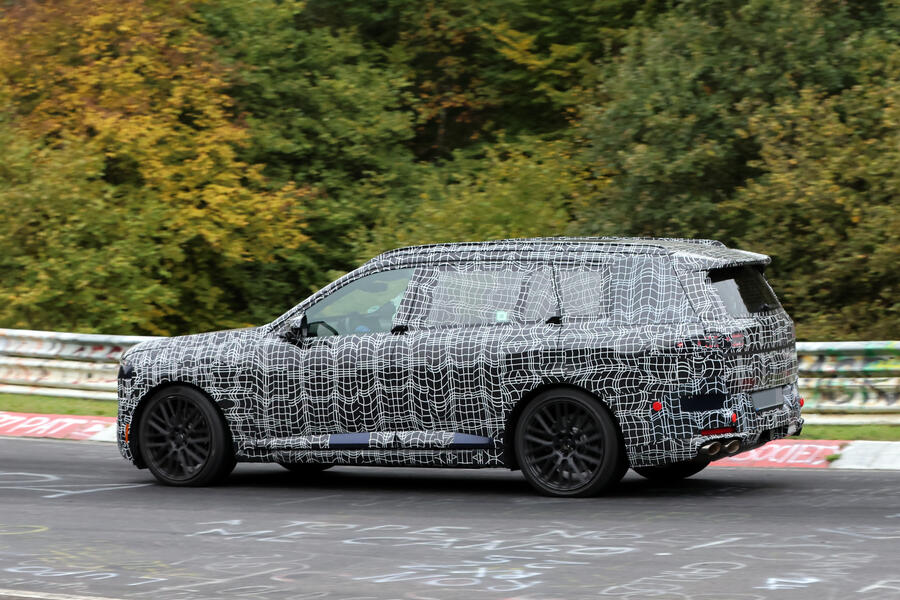
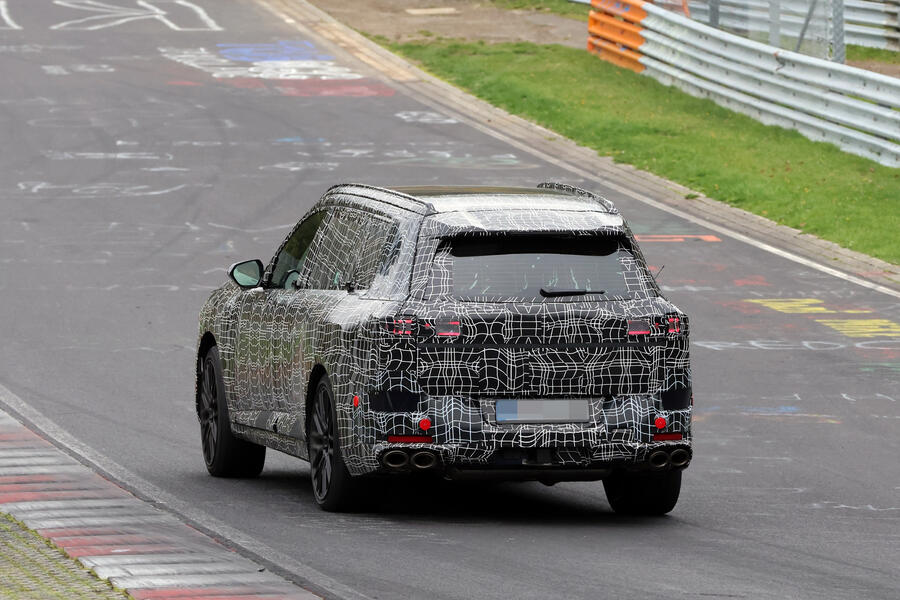
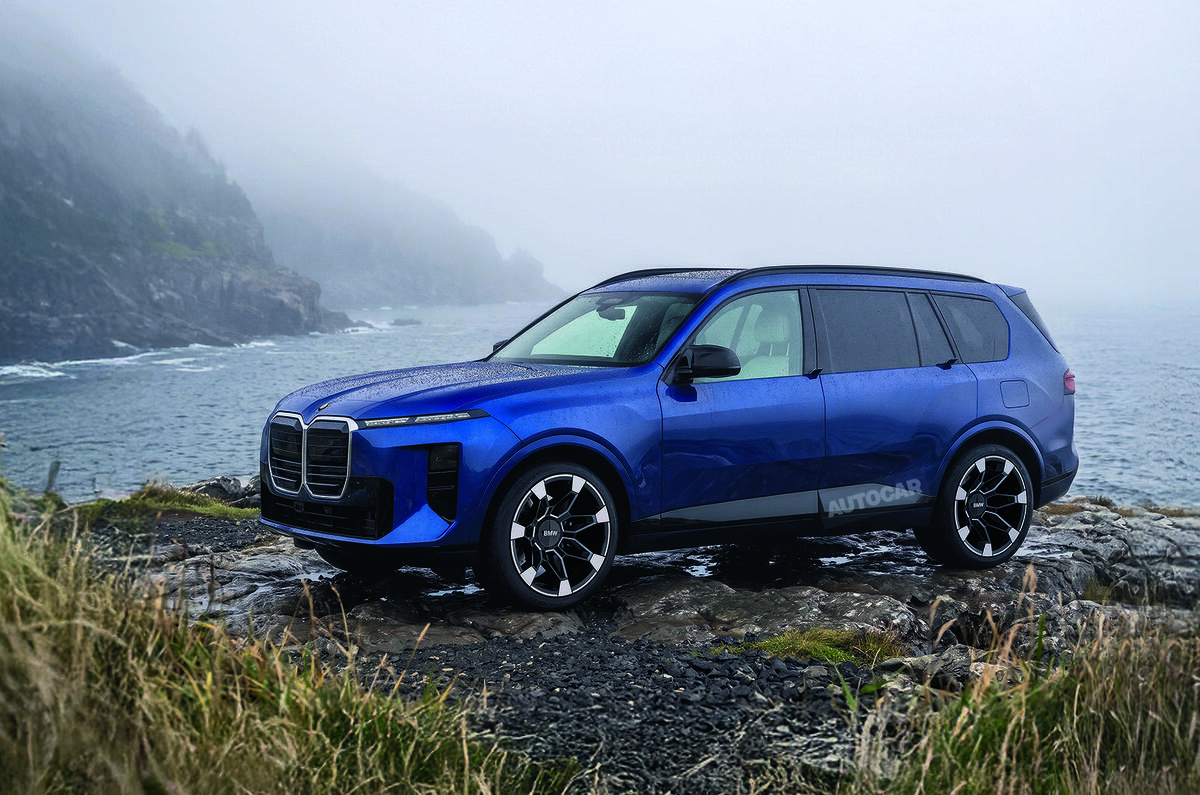
While the exterior styling remains under wraps, prototypes reveal a larger car extending to more than 5200mm in length, with a familiar shape but extensive new detailing. The split-headlight arrangement introduced on the facelifted X7 appears to have been retained alongside a new, taller interpretation of BMW's trademark kidney grille, which, in line with recent design developments, will be joined by a distinctive new lighting signature.

The front end is expected to draw heavily on the appearance of the facelifted 7 Series, while the flanks will receive winglet-style door handles similar to those on the new X5. More prominent wheel arches and a chunky sill beneath the doors also add visual mass, and wheels are expected to range from a standard 19in up to a generous 23in in diameter.

The new X7 is set to use a conventional one-piece tailgate in place of the outgoing car's two-piece arrangement. It will both improve boot access and simplify production.

Back to top

The most extensive changes, however, are planned for the interior, with which BMW intends to position the X7 much more closely to the 7 Series in terms of comfort, equipment and rear-seat accommodation.

The dashboard will adopt BMW's Panoramic Vision display, which projects driving and other information across the lower section of the windscreen, together with the new iDrive X operating system, which dispenses with the rotary controller. At the centre of the dash sits a 17.9in trapezoidal display, angled towards the driver and paired with a new 3D head-up display at the base of the windscreen.

As in the saloon, rear seat passengers are expected to have their own touchscreen controller mounted in the rear doors for controlling climate and comfort functions. A 31.3in Theatre Screen for the second row and a separate front-passenger display are also thought to be planned, while the options list should include ventilated and massaging rear seats. Automatic doors are also thought to be under development.

The new X7 will continue as one of few seven-seat luxury SUVs on the market, rivalling Audi's new Q9 SUV and indirectly replacing the now axed three-row X5.

Back to top

The ICE car's powertrain line-up will be underpinned by a mildly hybridised 3.0-litre six-cylinder petrol engine, which is shared with the X5 and should send 394bhp and 398lb ft of torque to both axles in entry-level xDrive40i guise. A six-cylinder MHEV diesel is also planned for Europe, likely matching the oil-burning X5 with 313bhp and 494lb ft.

The M60 xDrive is set to retain BMW's twin-turbo 4.4-litre V8, with a modest increase over today's 523bhp range-topper. The most powerful X5, the M60e plug-in hybrid, produces a combined 603bhp, so the V8 will need a similar output if BMW wants its largest SUV to keep pace with the X5 - particularly given that the larger car isn't due to receive a PHEV powertrain.

Details of the EV are yet to be revealed more than six months out from the iX7's unveiling, but the new iX5 60 xDrive gives an idea of what to expect. The most potent X5 EV has 578bhp and 593lb ft from its dual-motor drivetrain, drawing on the sixth generation of BMW's eDrive technology with an 800V electrical architecture, bidirectional charging capability and cylindrical battery cells with 20% more energy density than the prismatic cells they replace.

The iX5's 144kWh battery accepts up to 460kW on a DC charger and delivers a WLTP range of between 401 and 525 miles. The iX7 is likely to offer similar or greater outputs and will give BMW a direct rival to the Mercedes-Benz EQS SUV and Range Rover Electric.

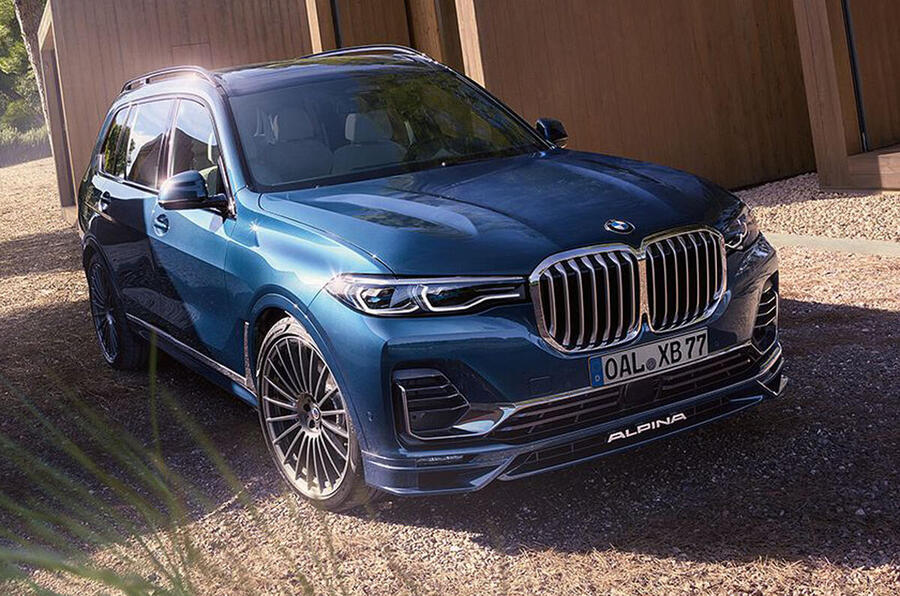
The expansion of the X7 line-up will also include a new Alpina derivative, known internally as G69 and planned to follow the standard X7 into production in 2028.

Back to top

It is set to use a specially tuned version of the new X7 M60 xDrive's twin-turbocharged 4.4-litre V8, with dedicated engine management software, transmission calibration and suspension tuning. It will follow the first Alpina model developed under BMW ownership, a V8-powered derivative of the new 7 Series - which recently topped 186mph during high-speed tests at the Nardò ring in Italy, in a showcase of Alpina’s new ‘speed, not sport’ ethos. 

A fully electric Alpina derivative is also understood to be under consideration – which would be the marque’s first EV – although no decision has been taken.

Join our WhatsApp community and be the first to read about the latest news and reviews wowing the car world. Our community is the best, easiest and most direct place to tap into the minds of Autocar, and if you join you’ll also be treated to unique WhatsApp content. You can leave at any time after joining - check our full privacy policy here.