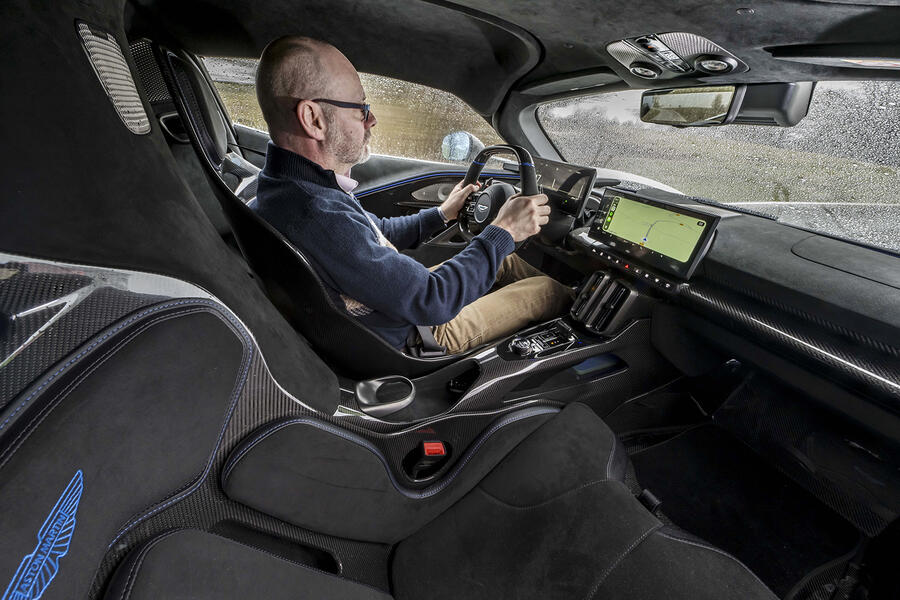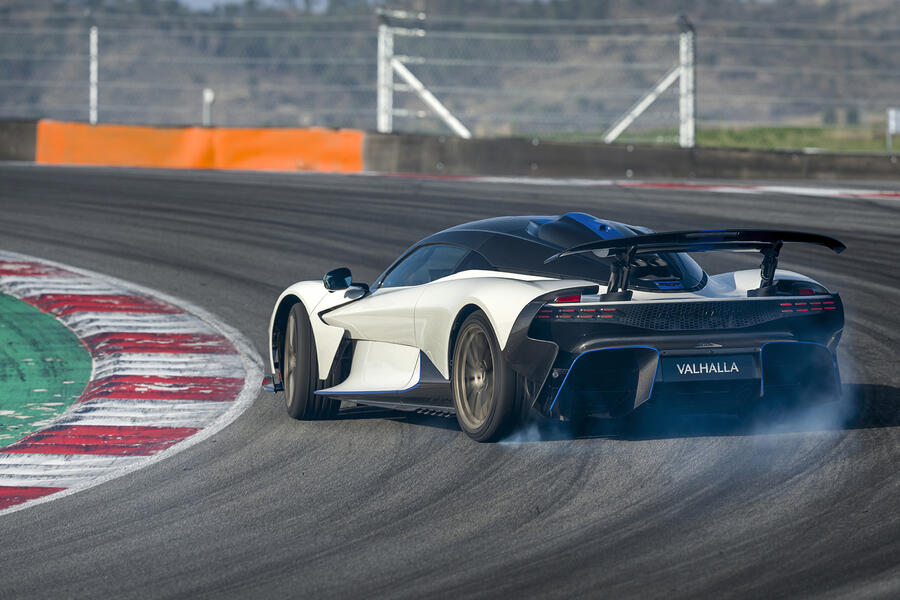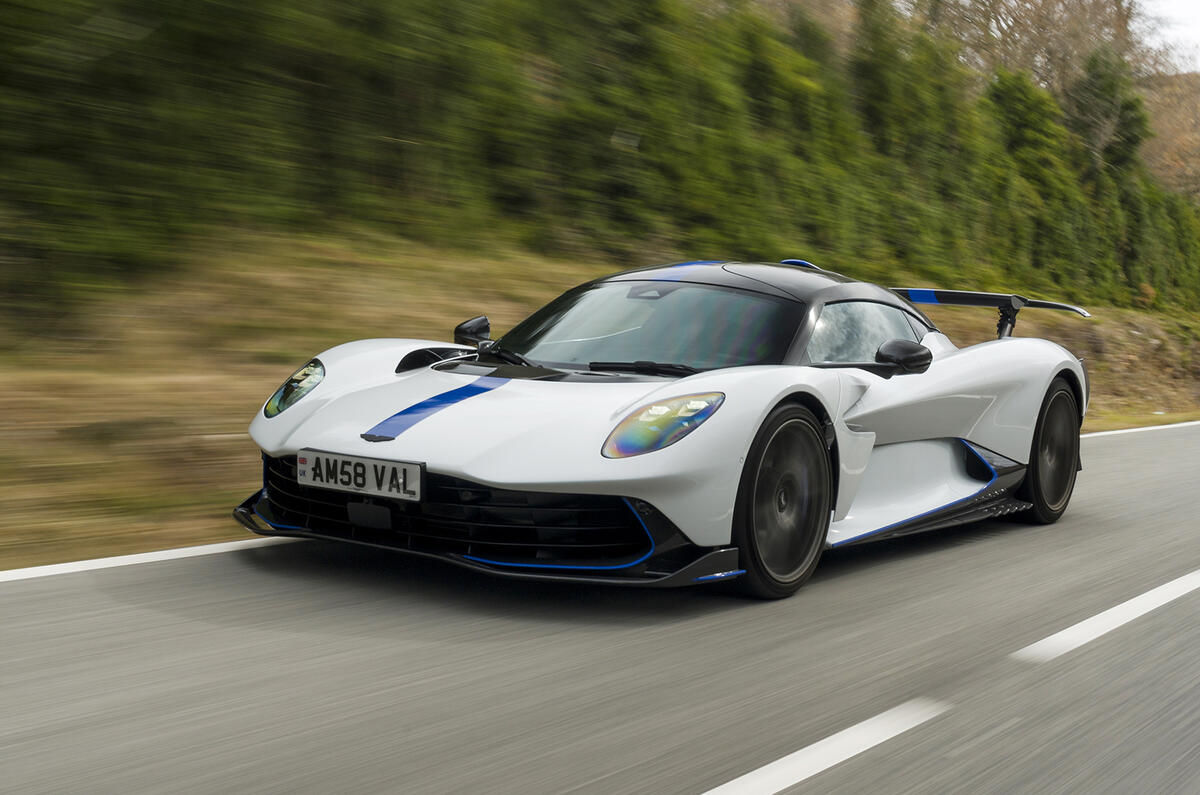

This is the finished Valhalla, the mid-engined Aston Martin that sits somewhere between the supercar and hypercar spheres.
We've driven a prototype previously but this is now a production-spec car-so production-ready, in fact, that they've already delivered around 200 of the 999 they're planning to build. Do let them know if you have £850k and would like one.
To recap, this is Aston's first sort-of-series-production mid-engined car, and they call it the 'son of Valkyrie'. The idea was pitched publicly as long ago as 2019, but the car has become more complicated since. It's a plug-in hybrid with a carbonfibre two-seat tub, aluminium subframes front and rear and a flat-plane-cranked 4.0-litre Mercedes-AMG V8 in the middle. That takes the GT Black Series engine (which is no longer in production) as its base but receives Aston-specific mods to its internals, intakes, turbos and exhausts. It drives through a bespoke eight-speed dual-clutch automatic transmission, to which a 201bhp electric motor is applied.
This is where it begins to get decidedly complex. That motor is attached only to the shaft that deals with even gears. Aston didn't want to put the motor between the engine and gearbox, where the flywheel would be, because that would have extended the length of the unit and made the wheelbase too long, consequently reducing agility.
But it wanted it geared, so it couldn't put it after the gearbox. So it went to the side. It torque-fills at low revs, can raise overall peak power, reduces fuel consumption when cruising, works as a generator and can help blip the engine revs to sharpen gearshift rev-matching. Aston's people have explained this to me, but I still can't comprehend how it does it while being attached to one gearset (don't write in). And this whole shebang drives the rear through an electronically controlled limited-slip differential.
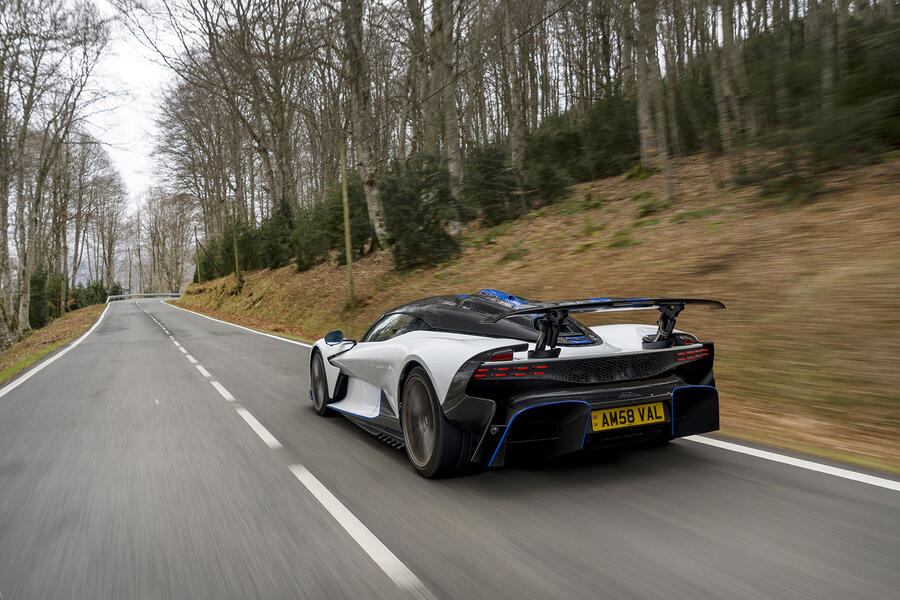
There's multi-link suspension at the rear, with Bilstein DTX adaptive dampers, and the tyres are 285/30 ZR20 front and 335/35 ZR21 rear Michelin Pilot Sport S 5s or more aggressive Pilot Sport Cup 2s. There's no reverse gear, with that being taken care of by a pair of front electric motors, making 161bhp each, which is also how the car drives in EV mode - making it the world's second front-driven Aston after the Cygnet (obscure car-related pub quiz question setters can have that one for free). These units don't all max at the same time, so when they're all blowing, the maximum outputs are 1064bhp and 811lb ft of torque - both of which would have been terrifyingly large numbers a few short years ago, but here we are.
The Valhalla sort of has rivals in the cheaper Ferrari 849 Testarossa and much pricier Ferrari F80, as well as the Lamborghini Revuelto, and you could probably make an argument for a couple more besides. Whatever, though, it's a novel direction for Aston, and I suspect it now likes having a mid-engined car in its range, especially as more than half of all Valhalla buyers are new to the brand (two-thirds in Europe) and it's helpfully lifting the average transaction price. The company needs both new customers and an uptick in sale prices if it wants to make any money.