From £33,6905

Puma-based MPV turns all-electric but aims to retain its usefulness

Find Ford E-Tourneo Courier deals
Other Services
Sell your car
84% get more money with

It’s been a tough decade for Ford of Europe, leaving the brand a shadow of its former self. The positive spin that the management has tried to put on the process, you may remember, is that it’s “transitioning into an SUV brand” – a trend that even the firm’s commercial vehicle spin-offs have tried to reflect.

Now we check in with the smallest of them. Although its nameplate has roots stretching back to US-market pick-ups of the 1950s, the Courier has only been a part of Ford of Europe’s product catalogue since the early 1990s. The company hit on the idea of making twinned Transit (commercial) and Tourneo (MPV) Courier models in 2014. It used the Ford Puma’s model platform and Romanian production line as the basis for the latest version, which was launched in 2023.

In 2025, meanwhile, after the Puma itself had been electrified, it meant the Courier could be, which brings us to our test subject: the Ford e-Tourneo Courier. We tested the equivalent Ecoboost petrol version almost two years ago. So how does this EV version compare?

Advertisement

DESIGN & STYLING

7
Ford E Tourneo Courier review 2026 002

The Courier-badged compact versions of Ford’s Tourneo and Transit lines are made independently from the collaboration that Ford has with Volkswagen, which produces the larger Transit and Tourneo Connect. They’re based on the firm’s ‘Global B-segment’ platform, which in various forms has served under pretty much every small car that the company has made since the Mk5 Fiesta of 2002, so it’s nothing if not a survivor. 

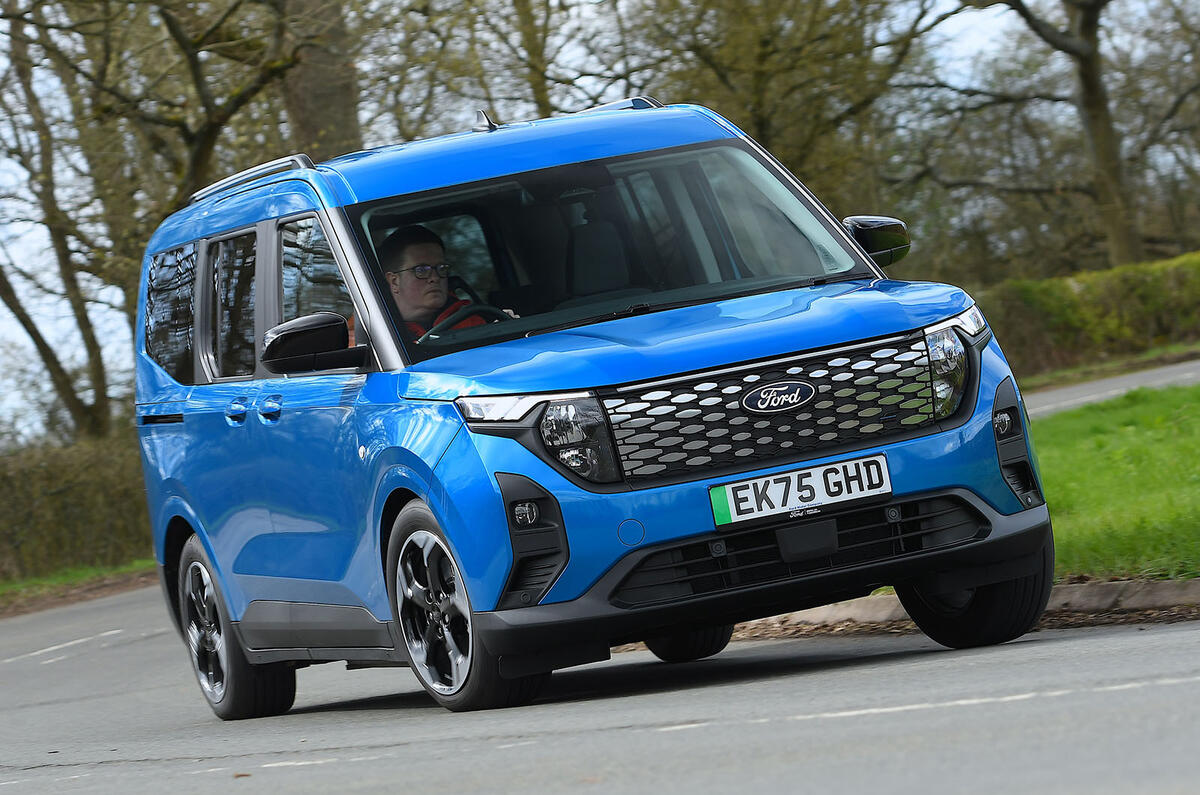
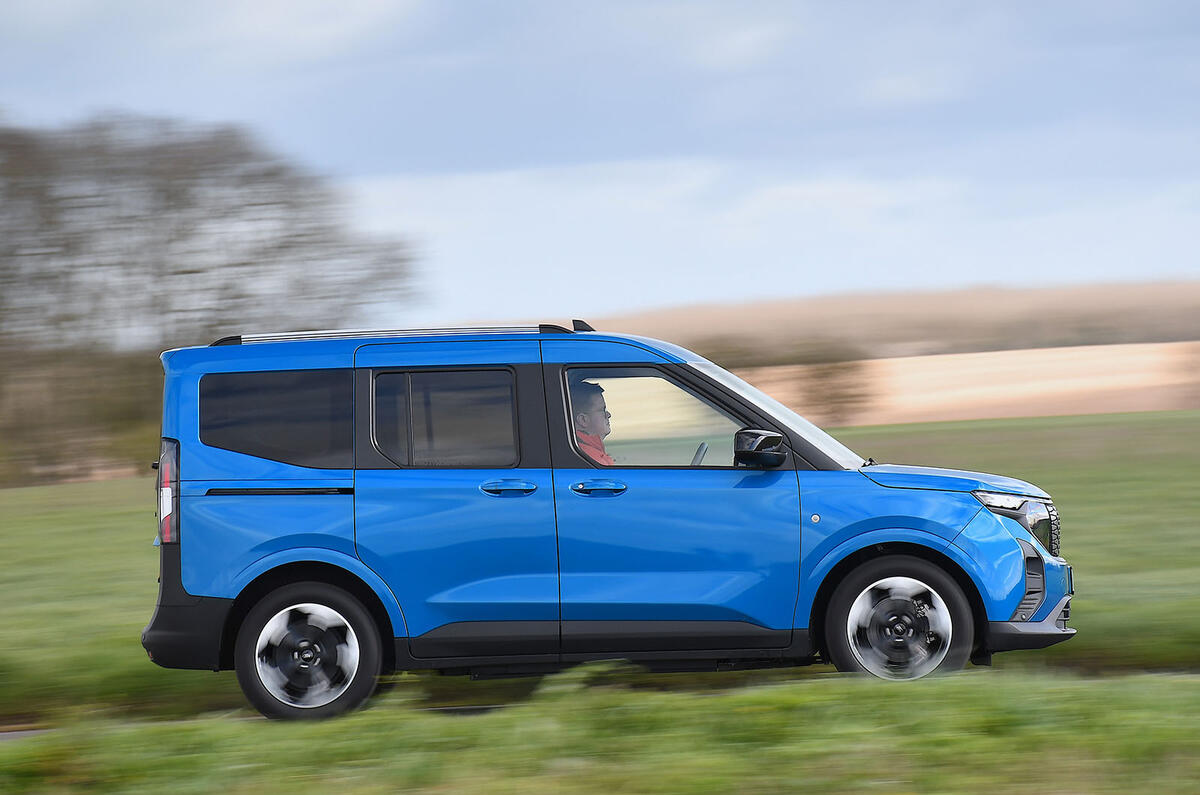
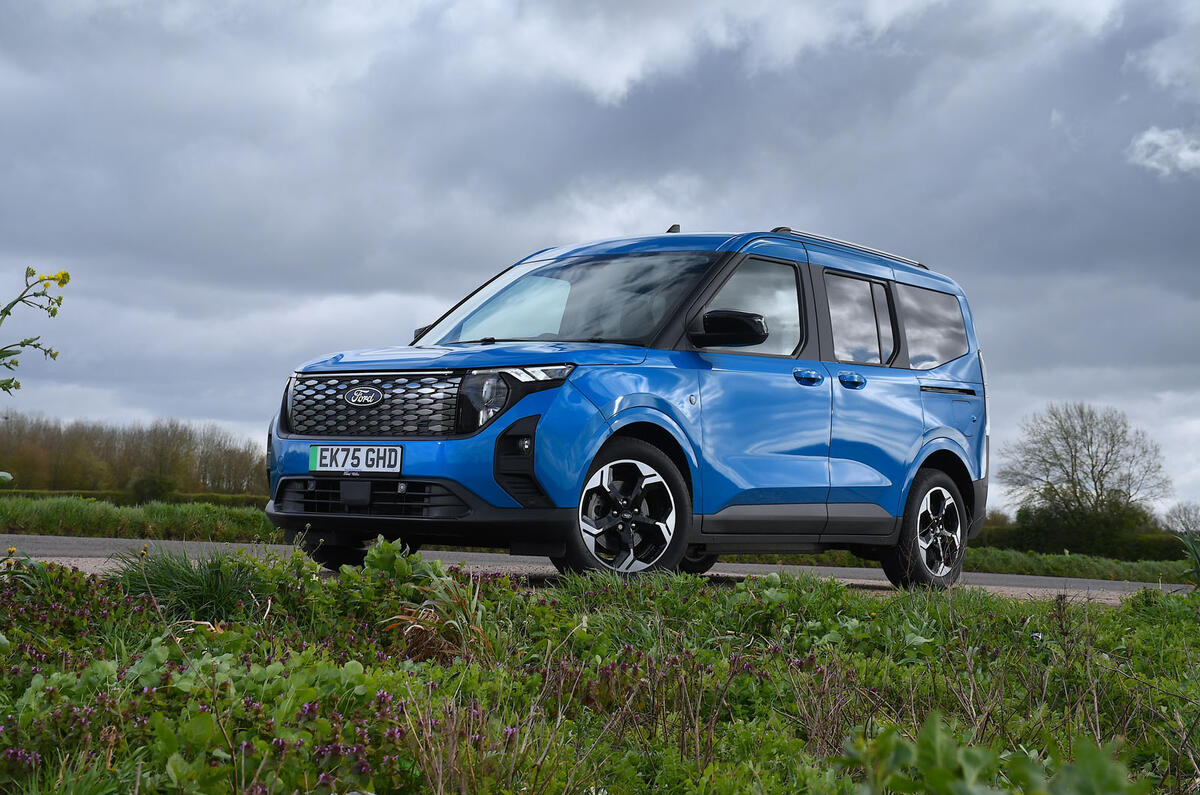
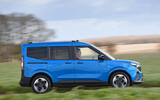
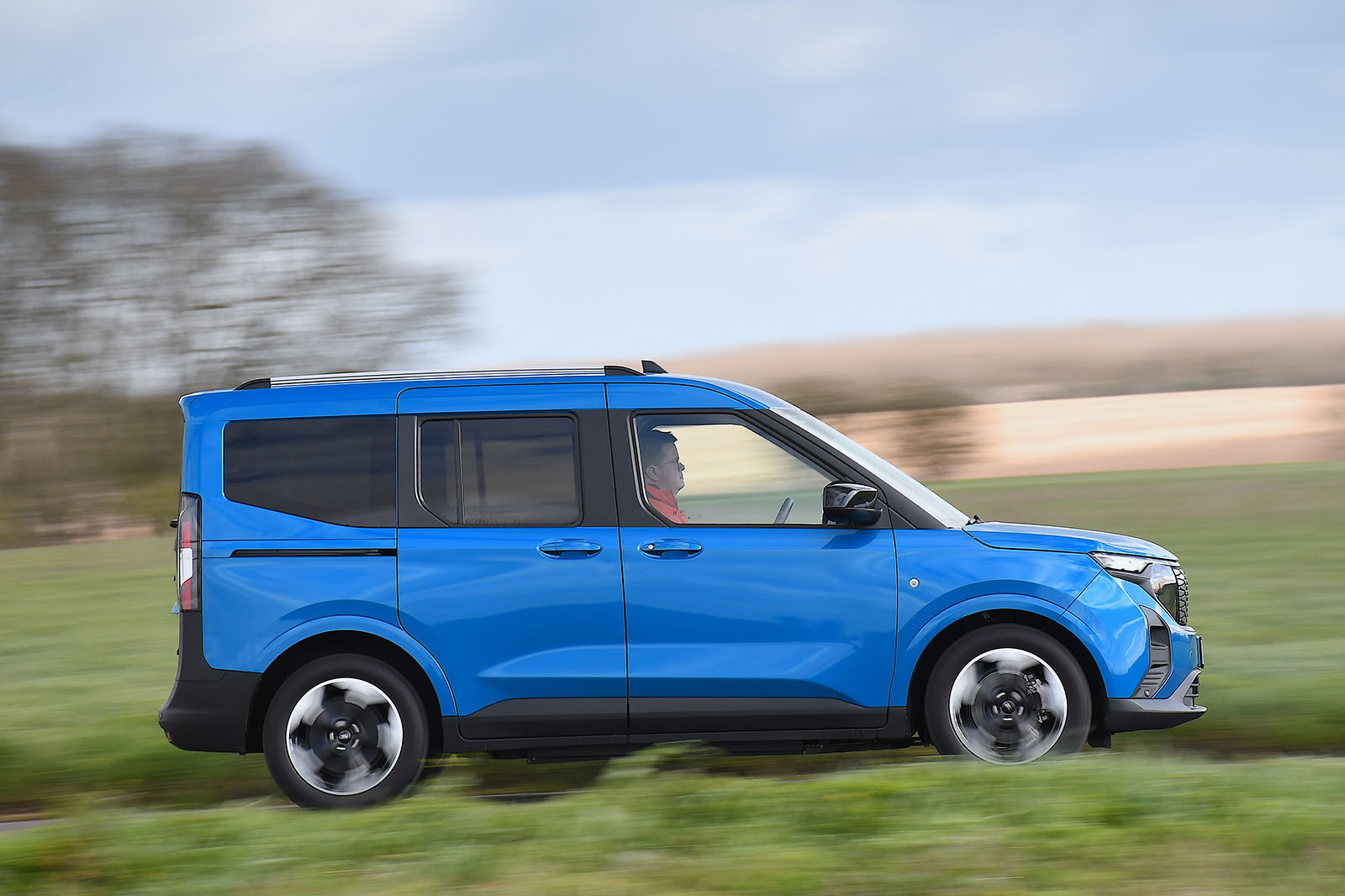
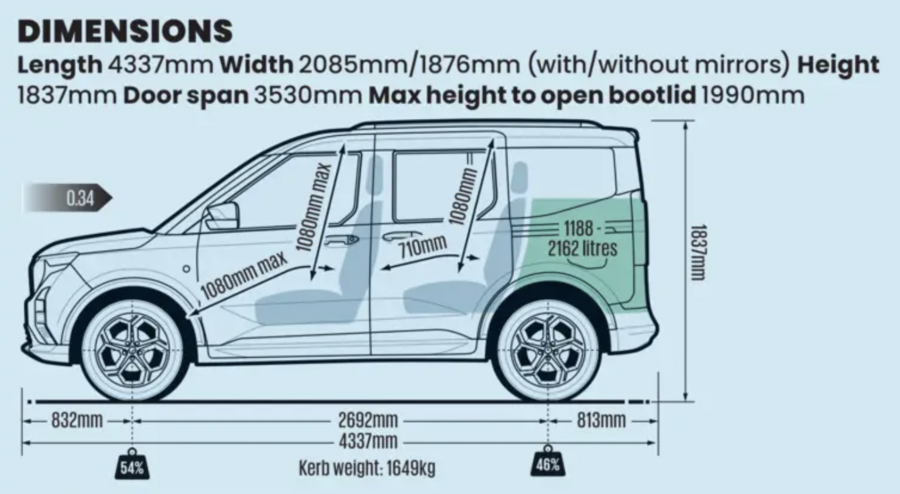
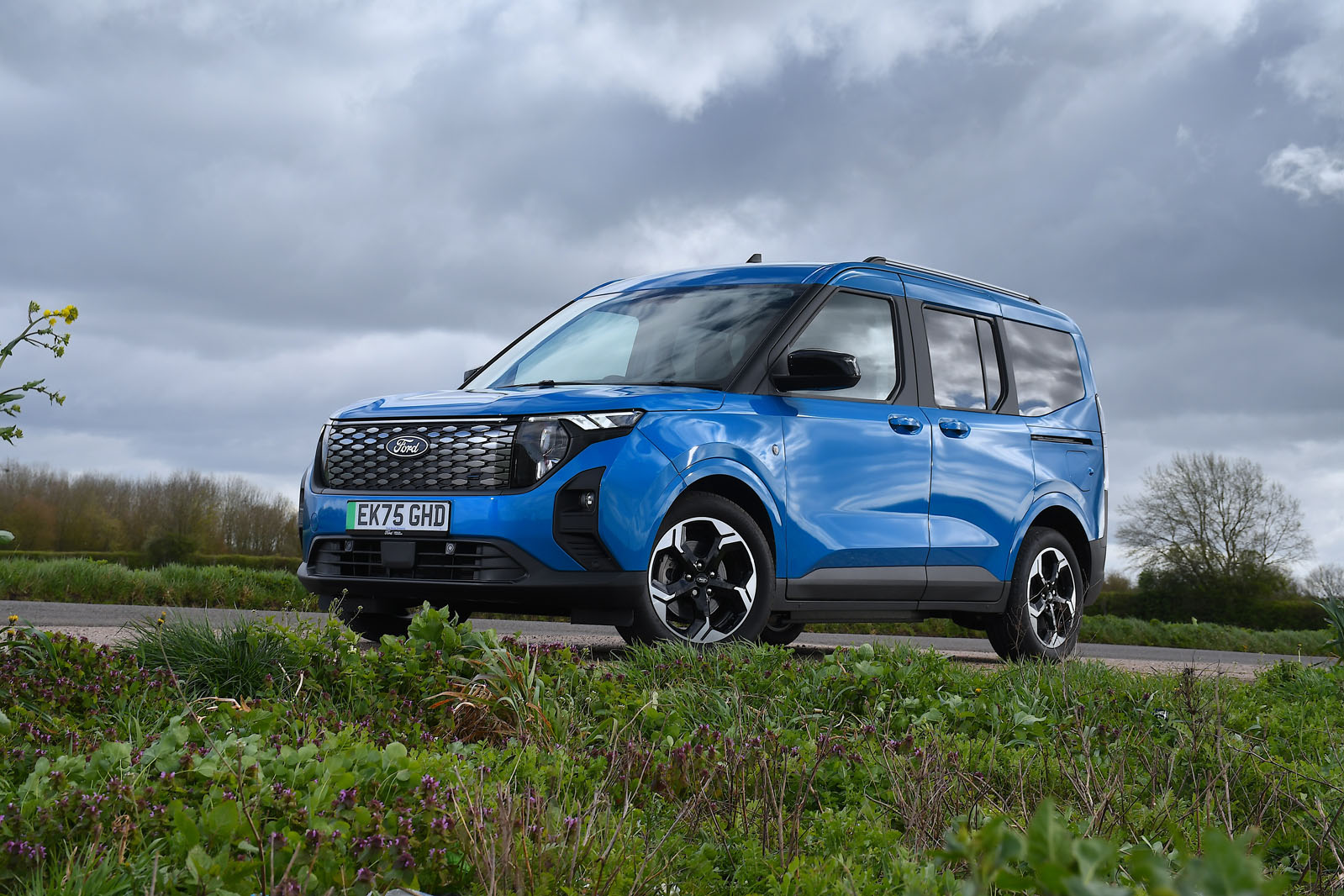
In the e-Tourneo Courier’s case, the platform is stretched in several ways. That’s because it underpins a boxy-proportioned vehicle that is more than 4.3m long and 1.8m tall, weighs in excess of 1.6 tonnes and is driven by an all-electric powertrain. 

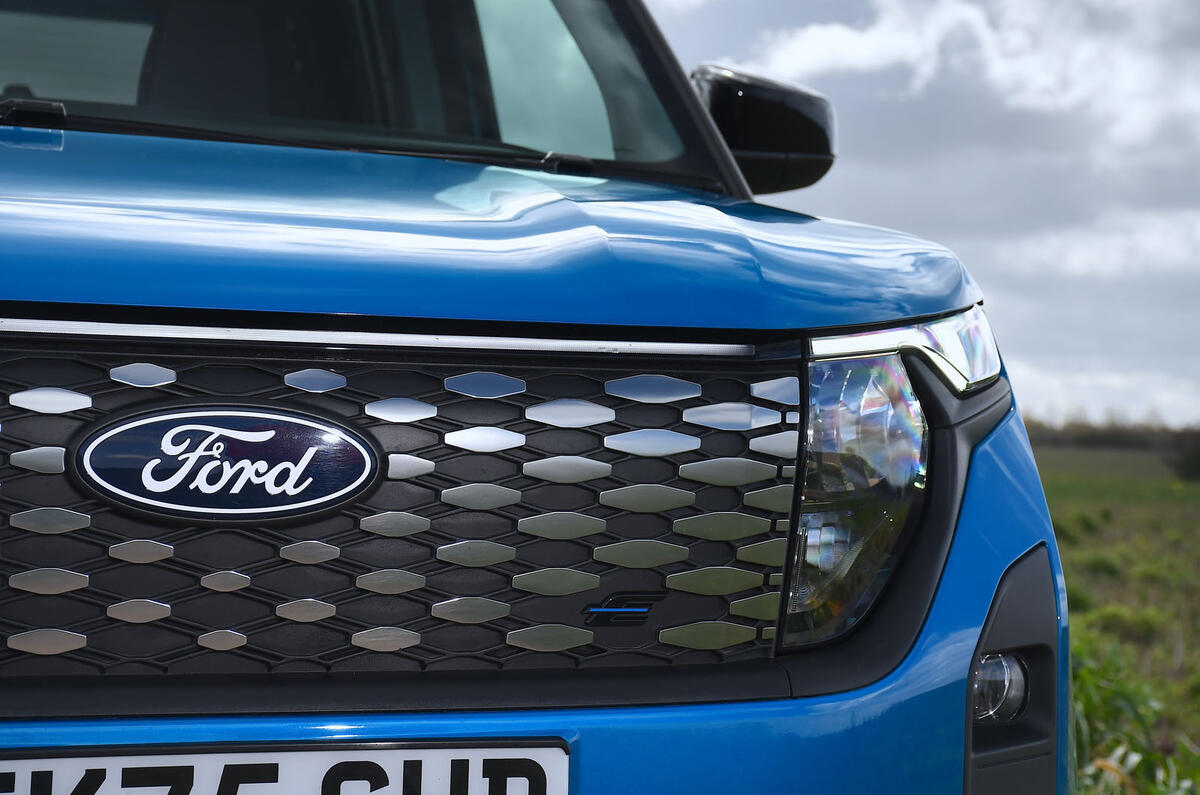
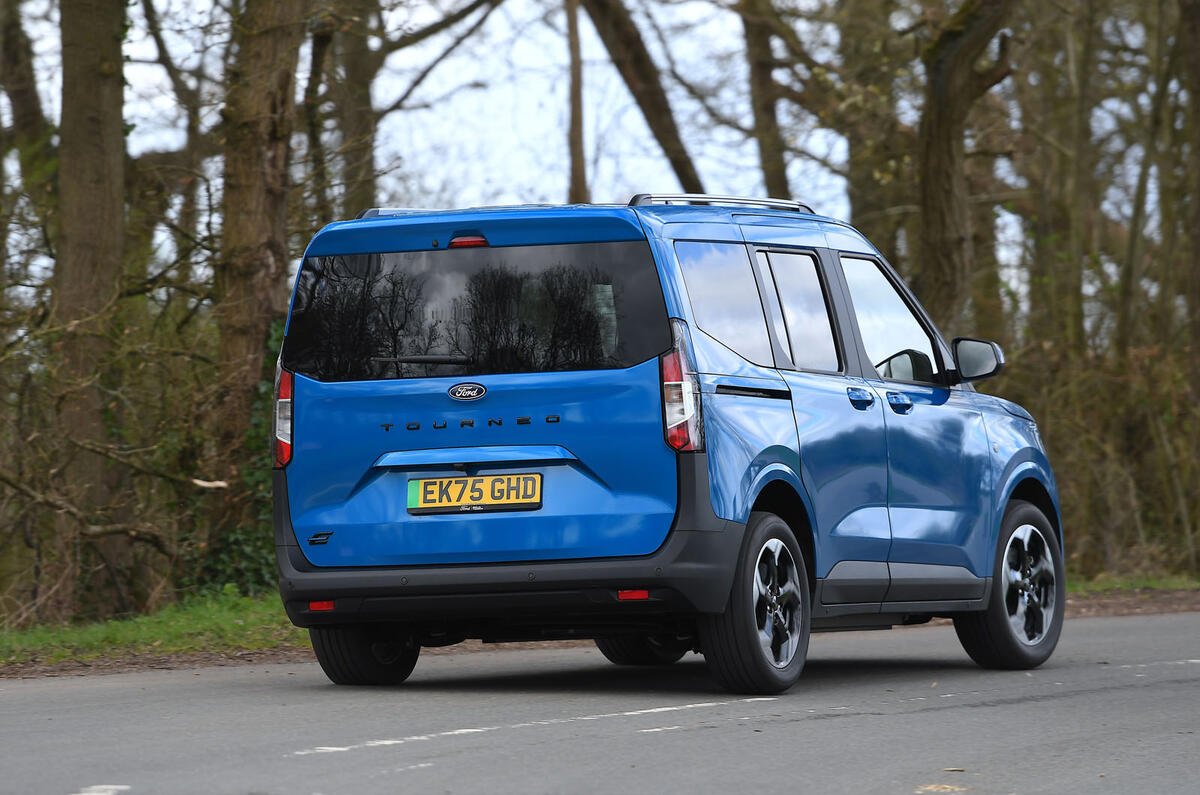
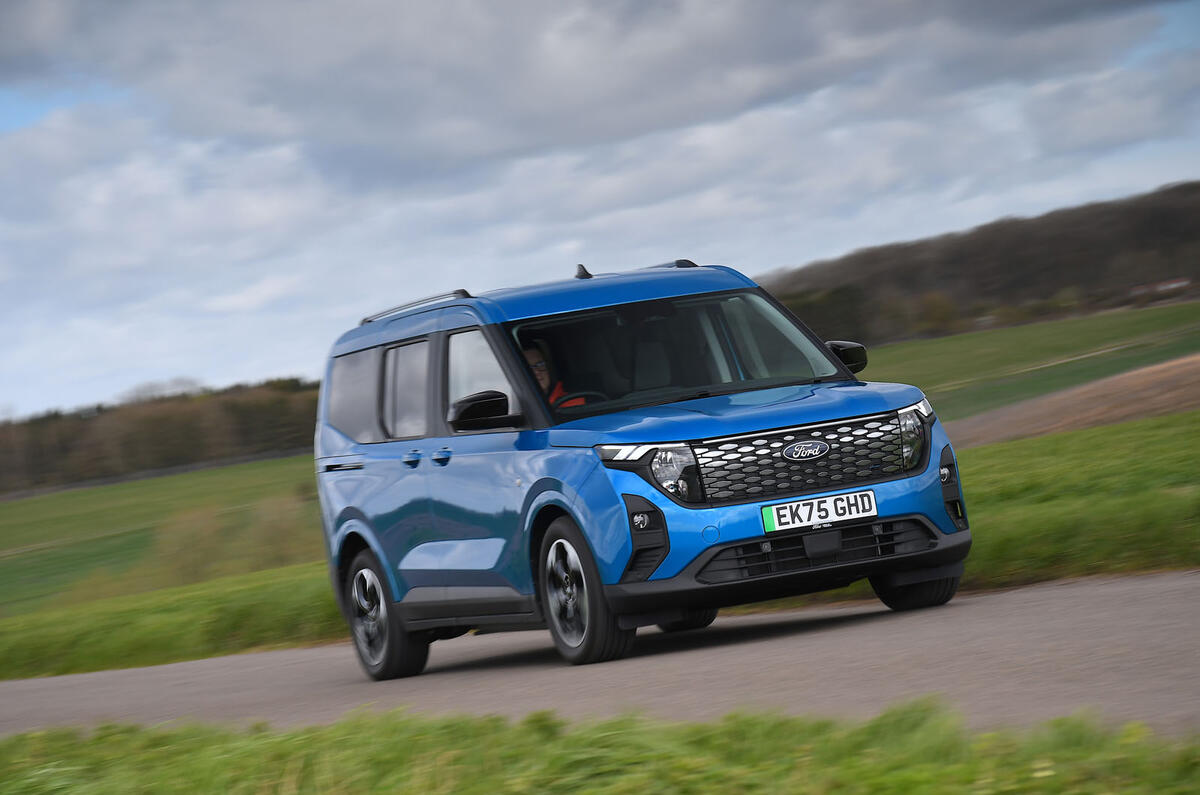
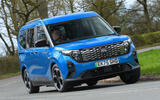
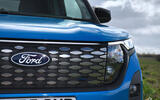
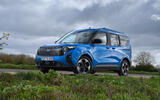
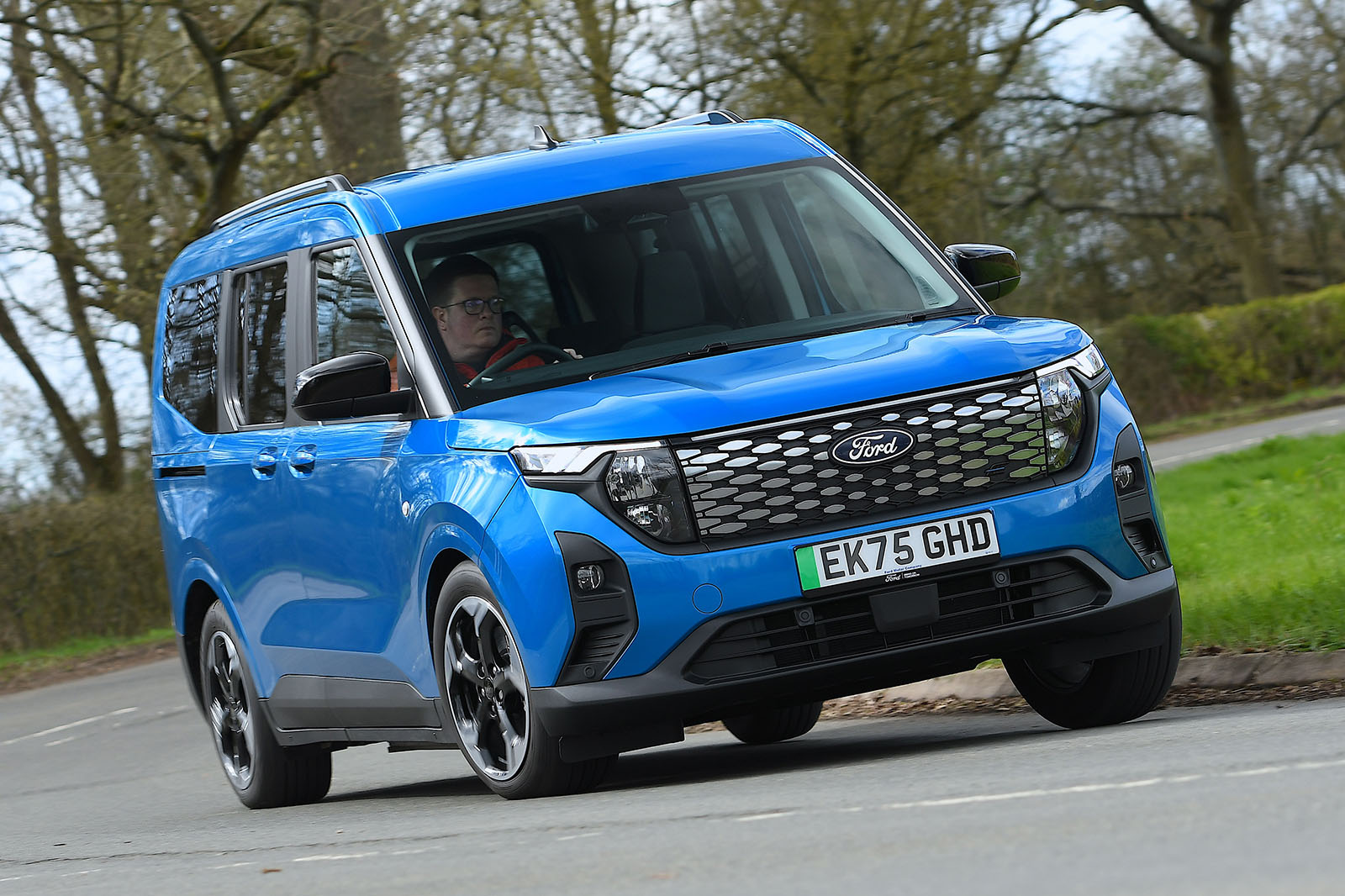
The bluff front end has an extra-chromey front grille, with a hexagonal patterns, in place of the regular plain one. The flat-bonnet look is certainly distinctive next to more monocab-style rivals.

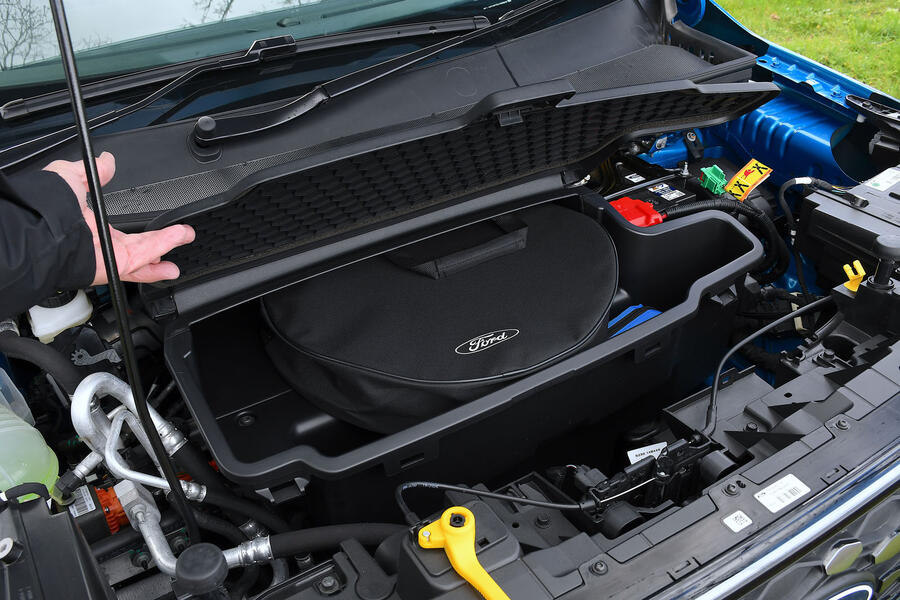
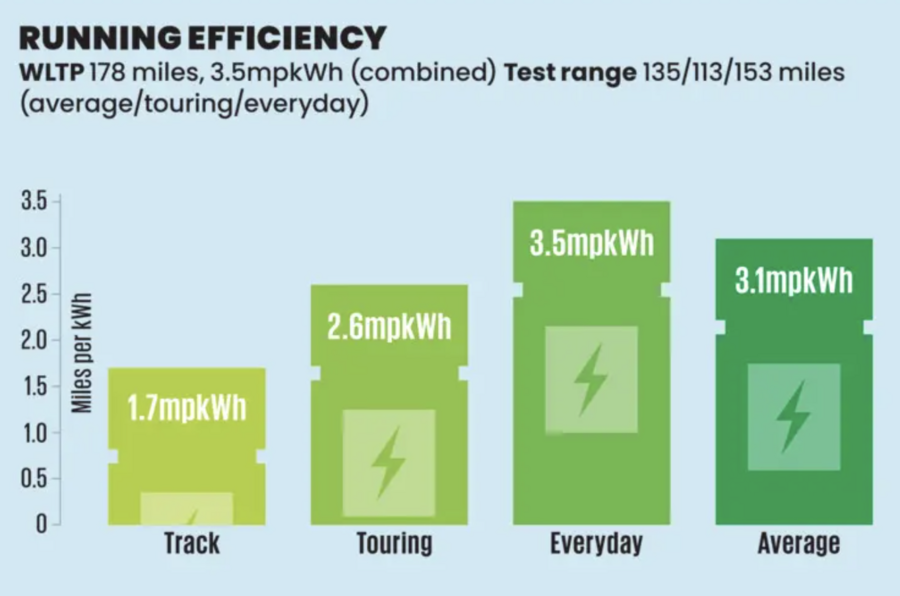
The car adopts the same nickel-manganese-cobalt drive battery used in the Puma Gen-E. It’s carried under the cabin floor and is made up of pouch-style cells. Our test car had the 2025-model-year battery pack, rated for 43.6kWh of usable capacity, which delivers only 178 miles of WLTP combined lab-test range.

We will, of course, come on to explain what kind of real-world range that translates to. But we should note that Ford has added about 10% of usable capacity to it, boosting its WLTP range to a claimed 198 miles, as part of a 2026-model-year update. It’s the revised battery you’ll get in a car ordered from the factory today, though probably not in one bought from dealer stock.

The drive motor is similar to the Puma’s but it’s detuned for peak power and produces 134bhp. However, it provides the same 214lb ft as the Puma Gen-E’s. Drive goes exclusively to the front axle and suspension is via struts up front and a torsion beam at the rear, under fixed-ride-height coil springs. 

An Active-trim model is available as an alternative to our test car’s Titanium spec. It’s styled to look even more SUV tough but it doesn’t have four-wheel drive.

INTERIOR

6
Ford E Tourneo Courier review 2026 007

Two years ago, we were a little disappointed by the lack of storage versatility that the regular petrol-powered Tourneo Courier offered. The e-Tourneo does slightly better but still not well enough to use its space as cleverly as, for example, a well-equipped Citroën Berlingo or a Vauxhall Combo Life.

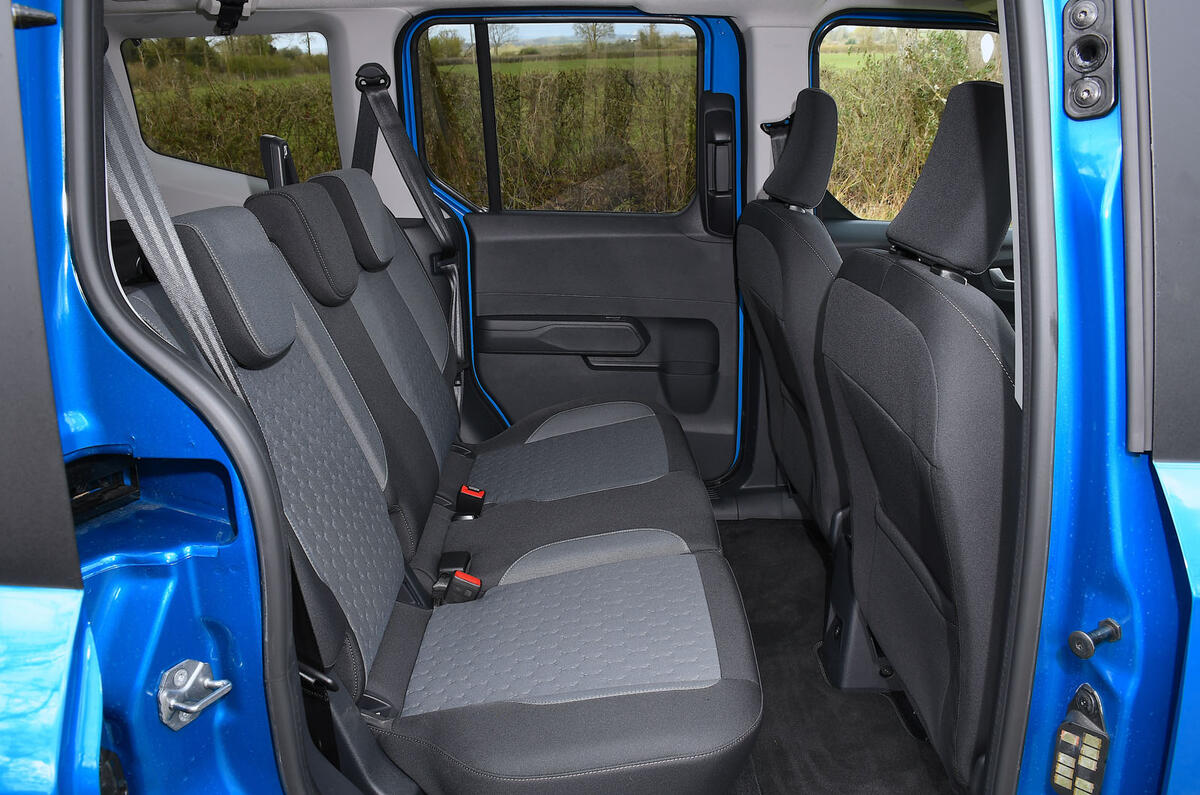
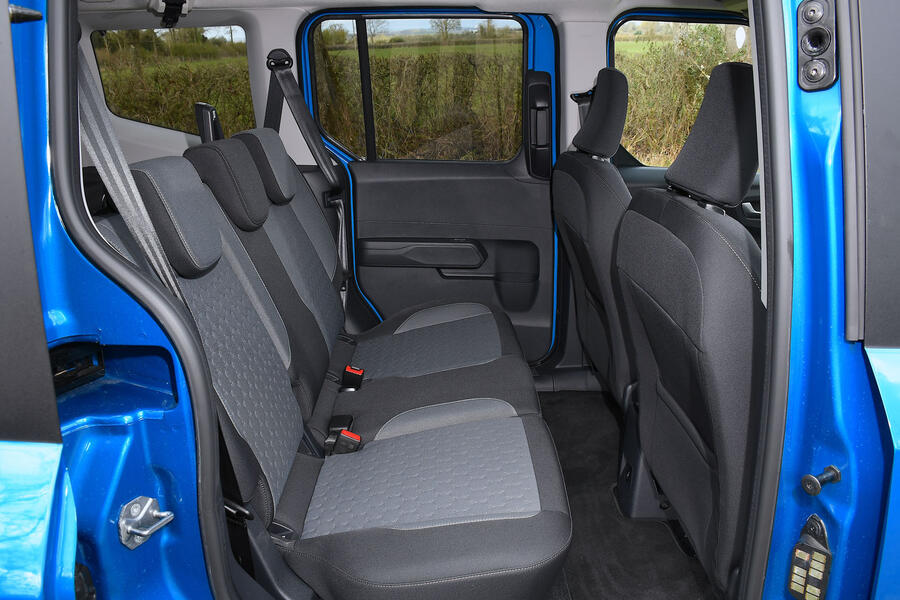
What you have here is a very square-shaped, high-roofed five-seat passenger car. Unlike the aforementioned rivals, Ford offers it in only one wheelbase length and with a maximum of five seats, so it misses a trick in catering for larger families. The second row is very generous for head room, but only average for leg room by compact car class standards.
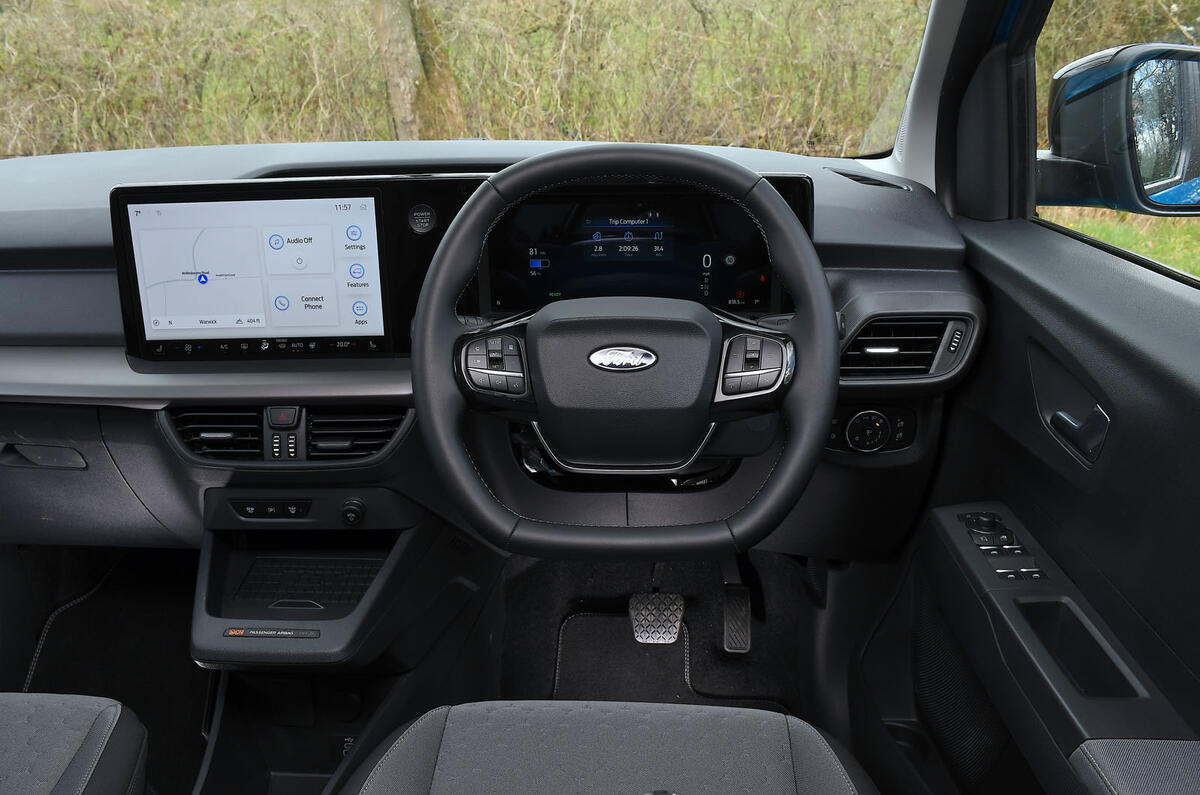
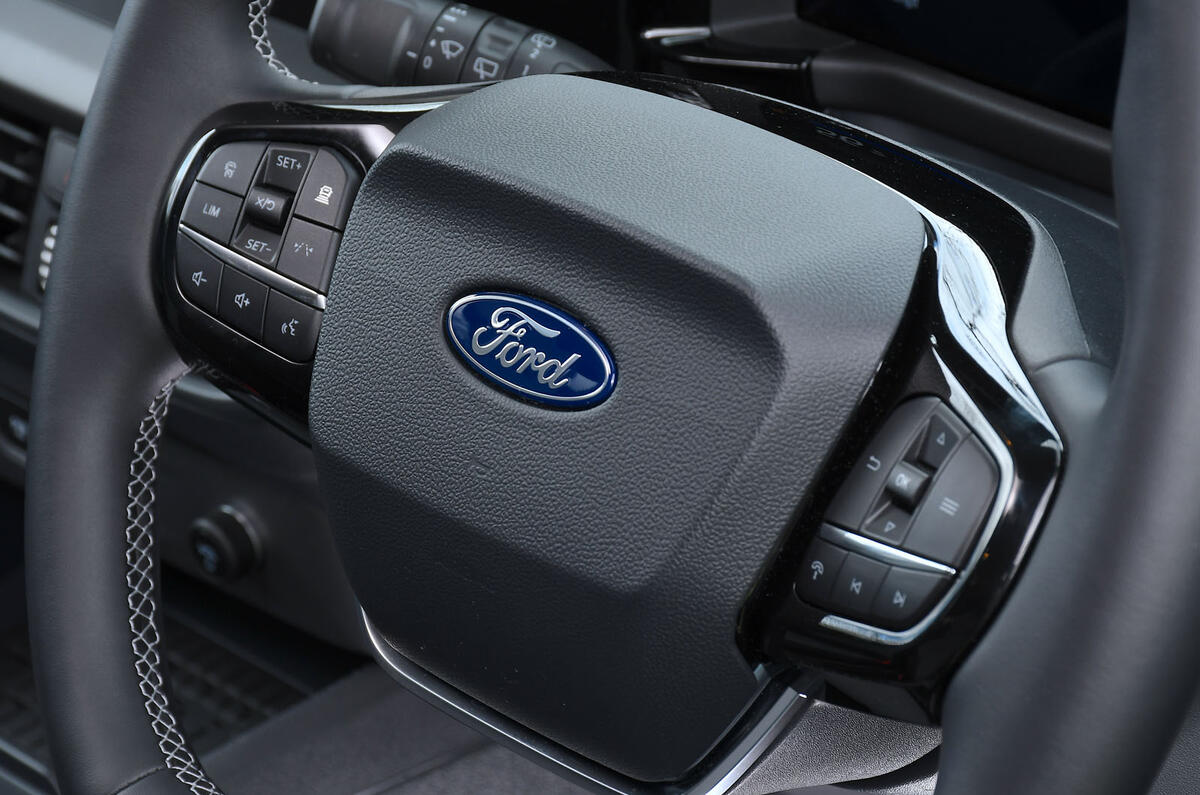
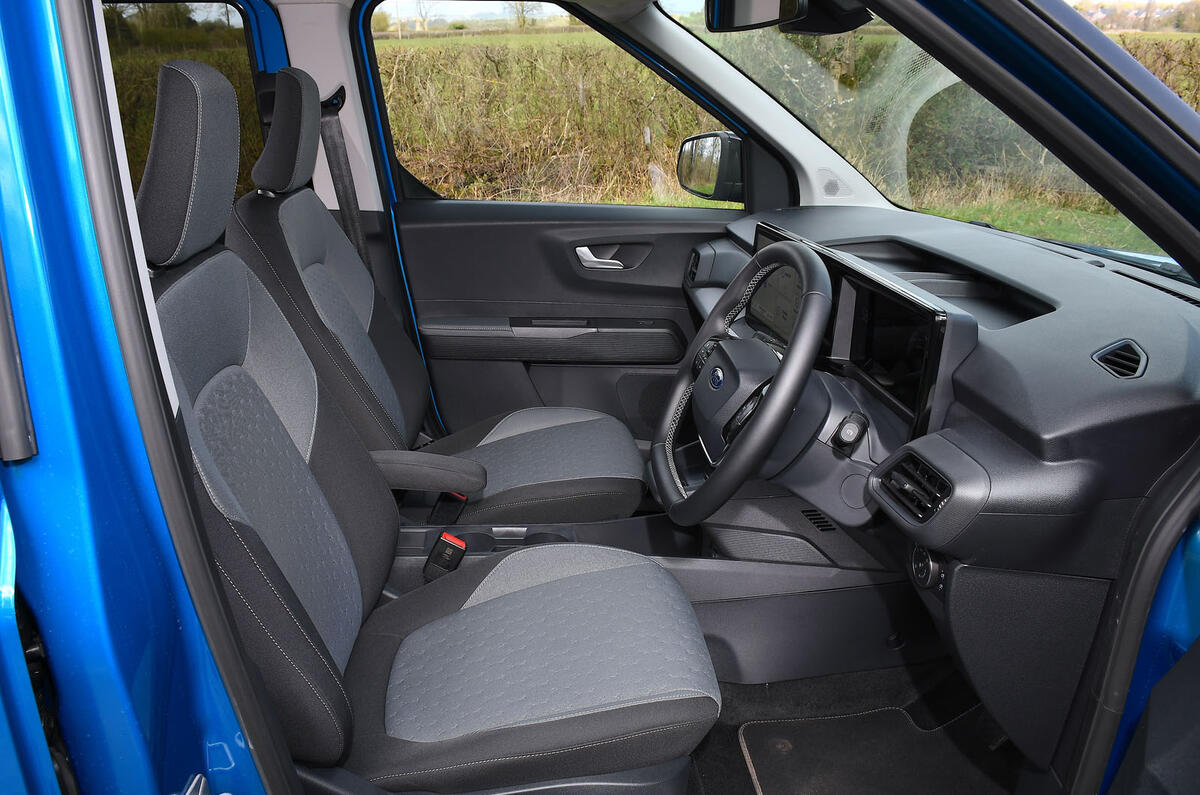
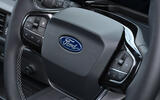
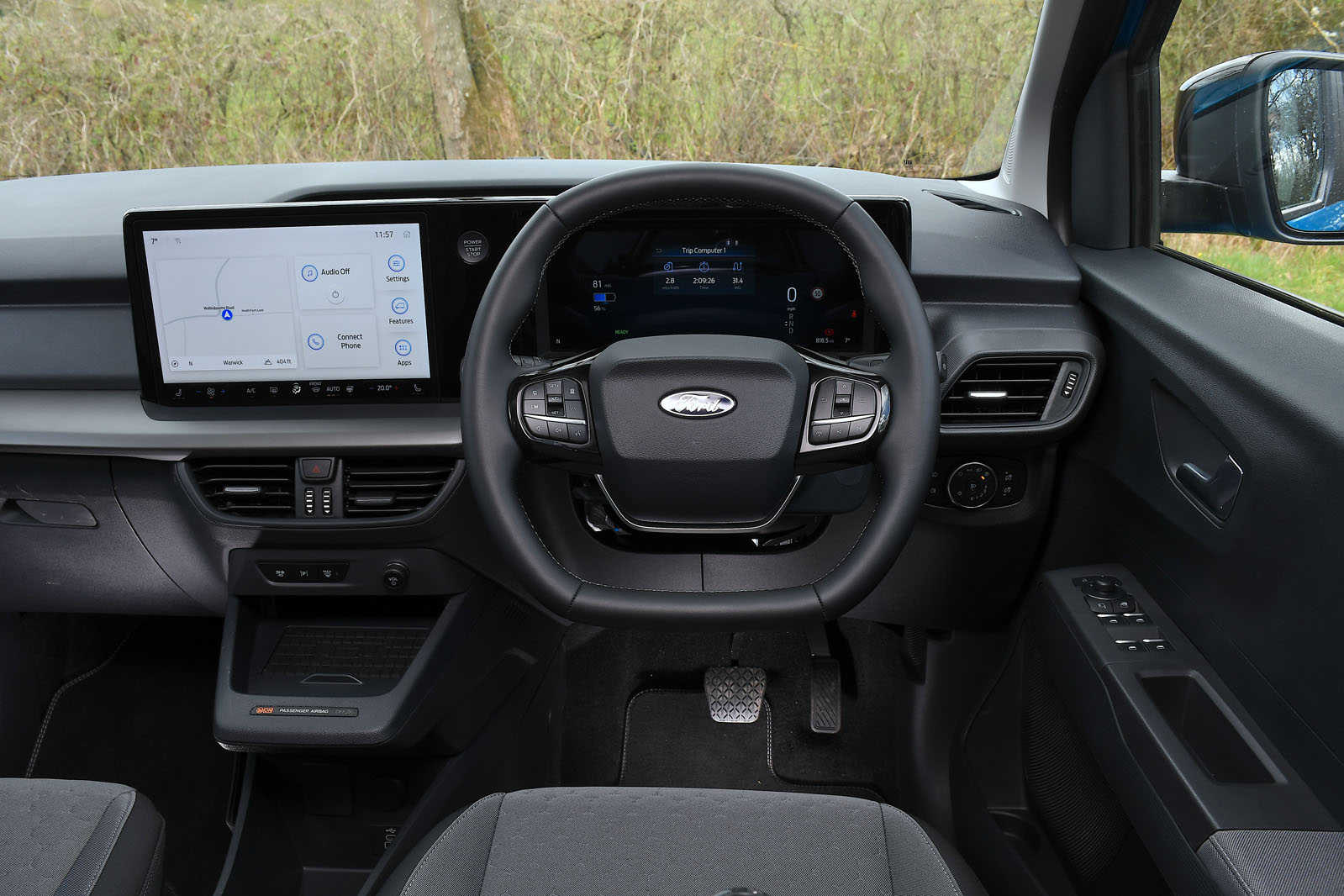
Sports cars have long had steering wheels with squared-off rim sections, often for packaging reasons, but does an MPV warrant it? In the ICE version, it’s round.

The rear passenger seats aren’t quite as clever as those of rivals we’ve tested. They fold and tumble forwards, but doing that doesn’t leave a totally flat, clear loading area, such as you get in key rivals. There’s also no option to fold the front passenger seat flat to accommodate longer items.

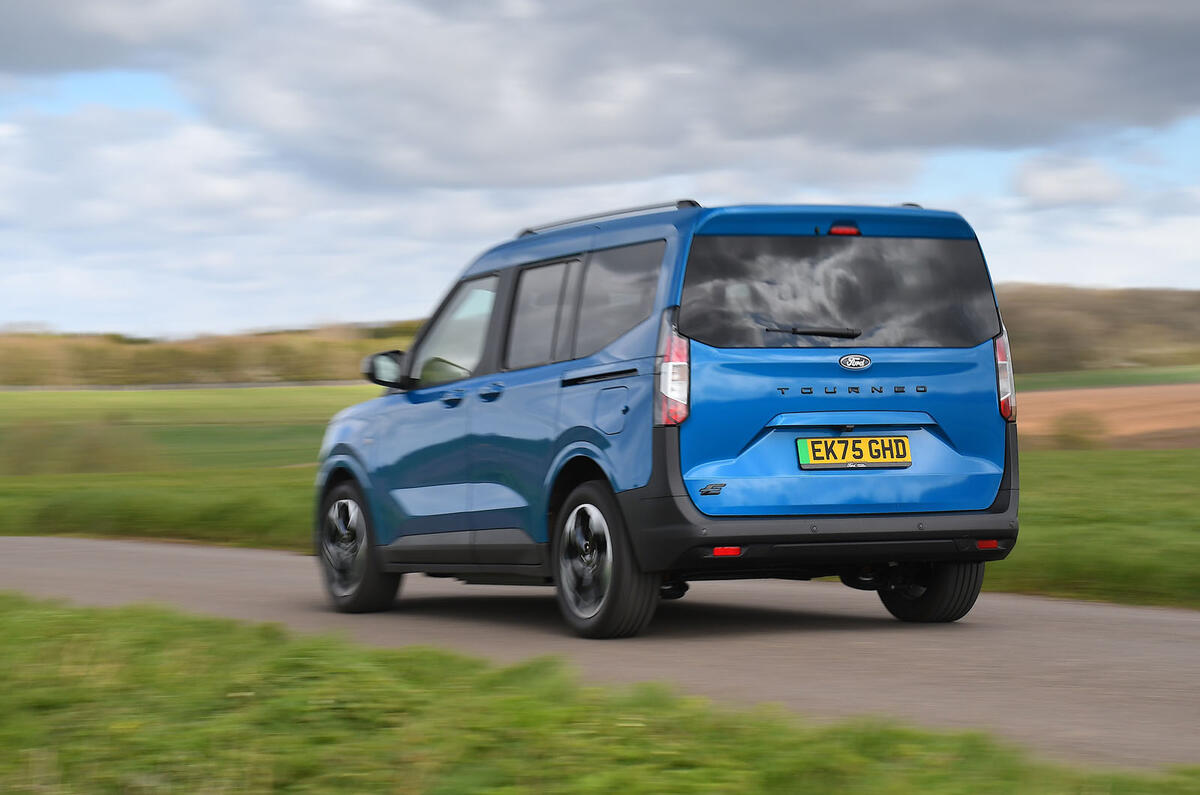
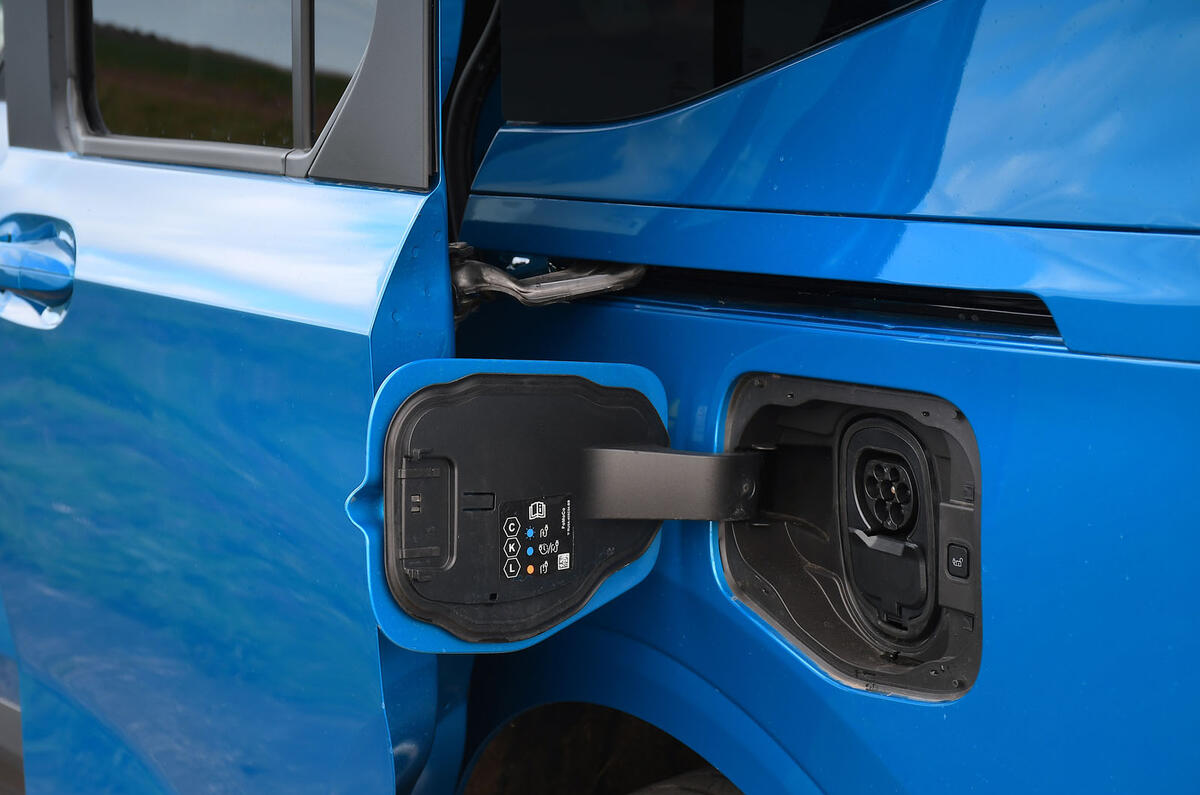
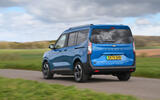
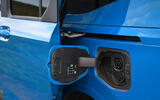
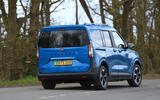
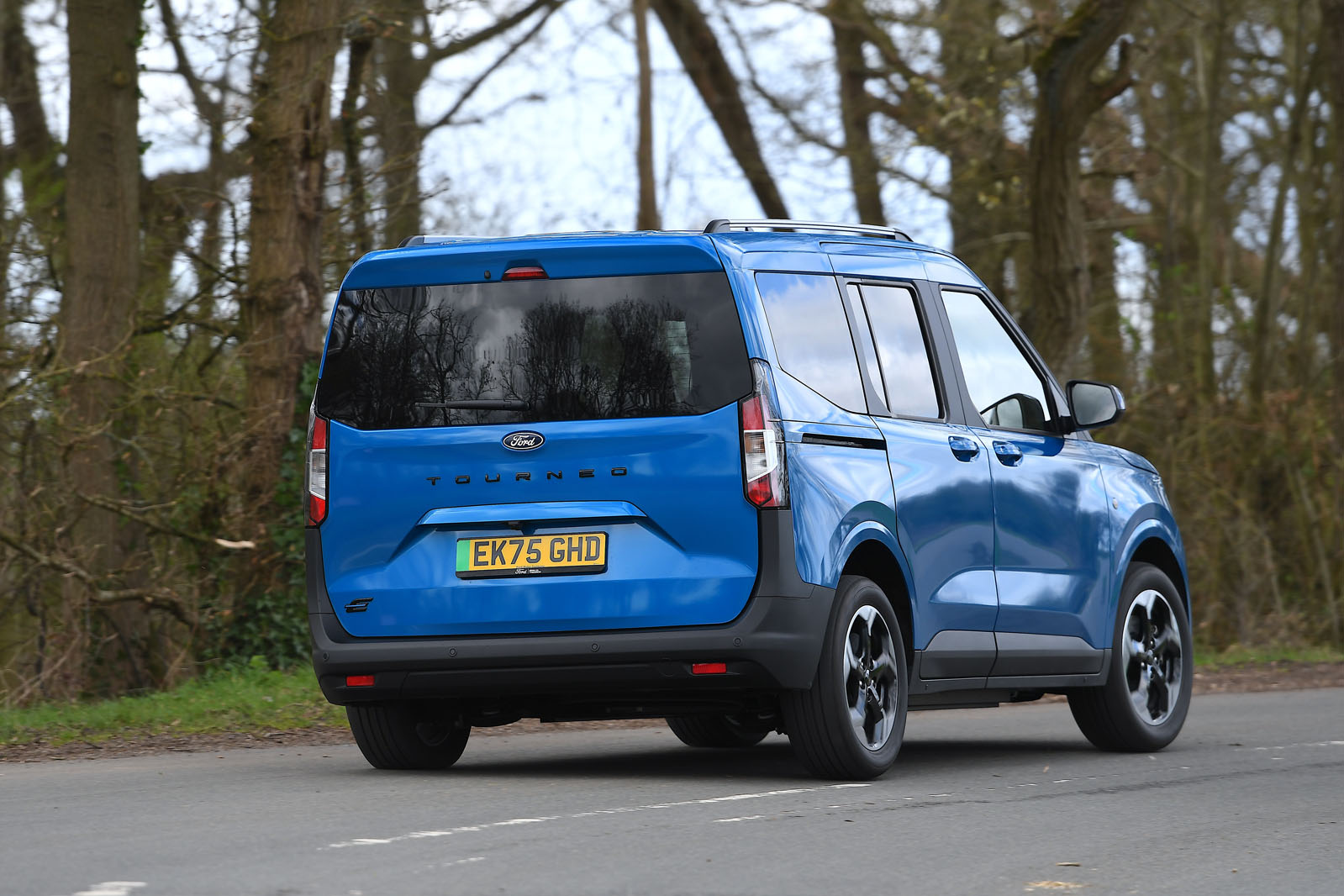
Like its rivals, the e-Tourneo Courier has sliding rear passenger doors, which make access into the second row very easy in tight spaces. The action of them is light enough. But the placement of the car’s recharging port on the nearside rear wing makes the adjacent door useless when the car is plugged in. It’s an annoyance that could have been avoided if the car’s designers simply had the foresight to put the port elsewhere.

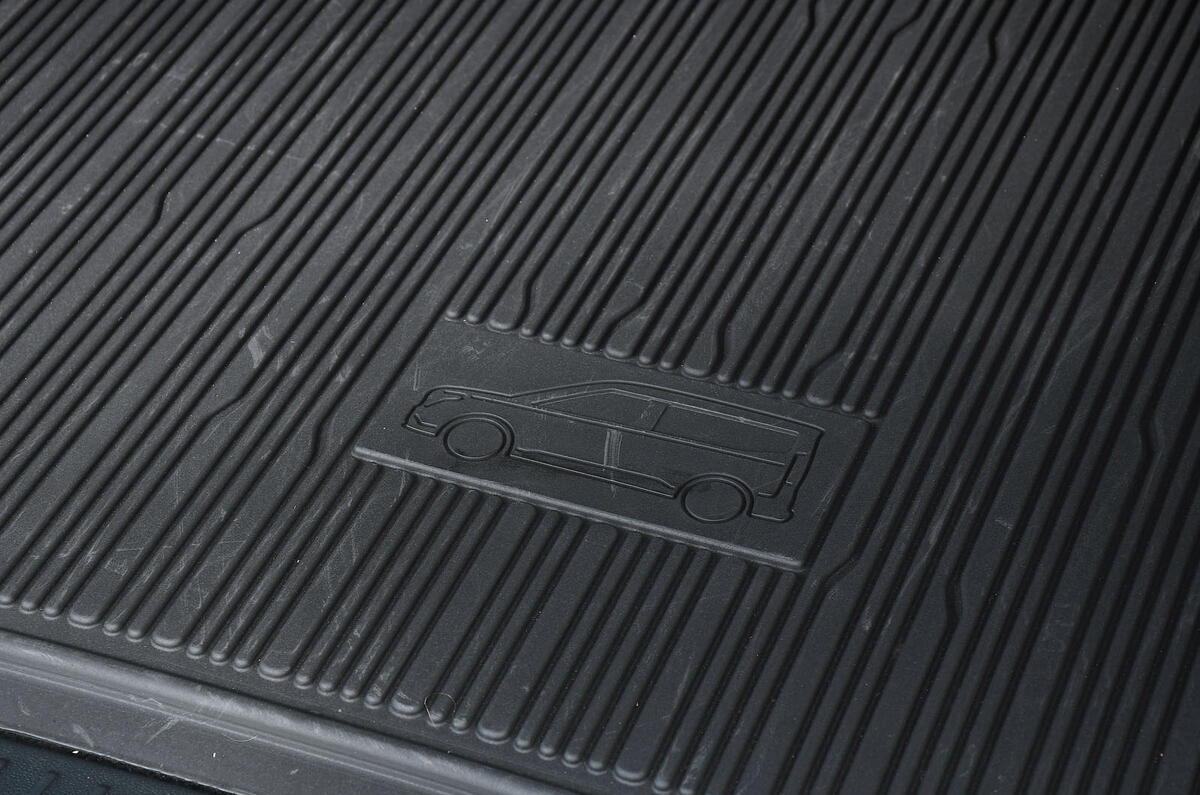
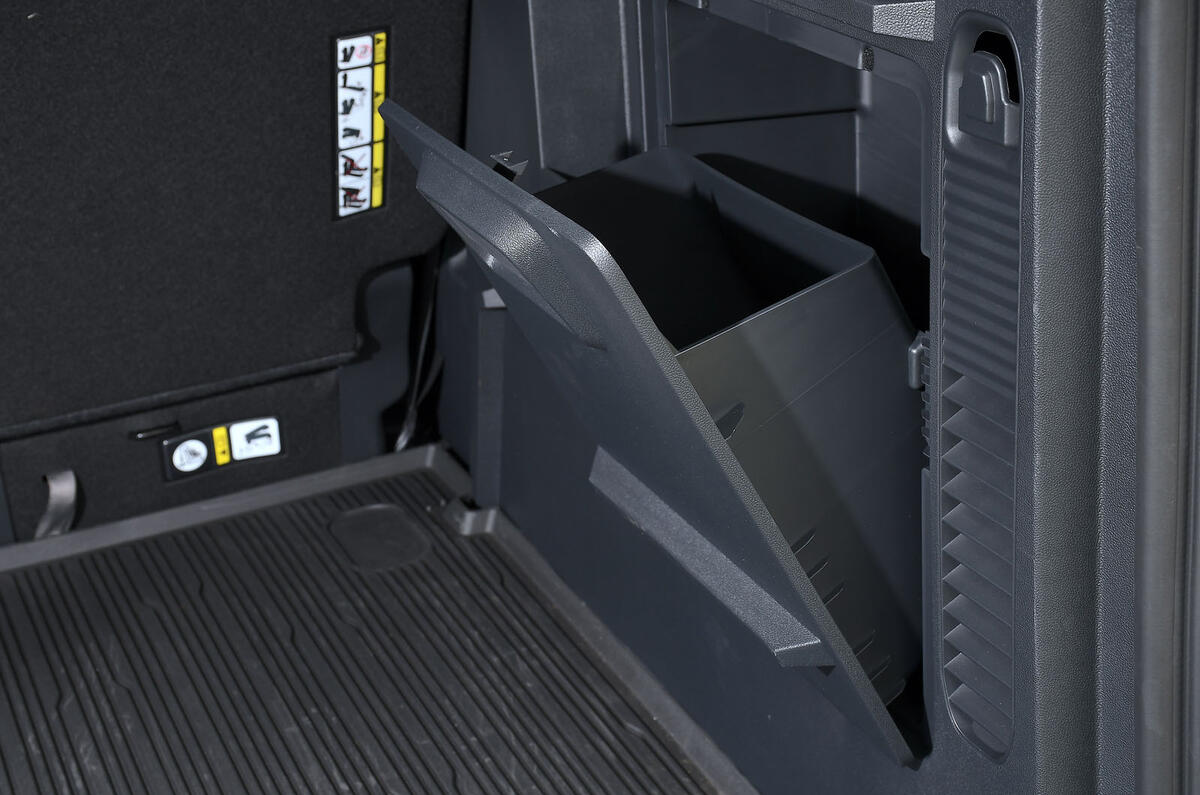
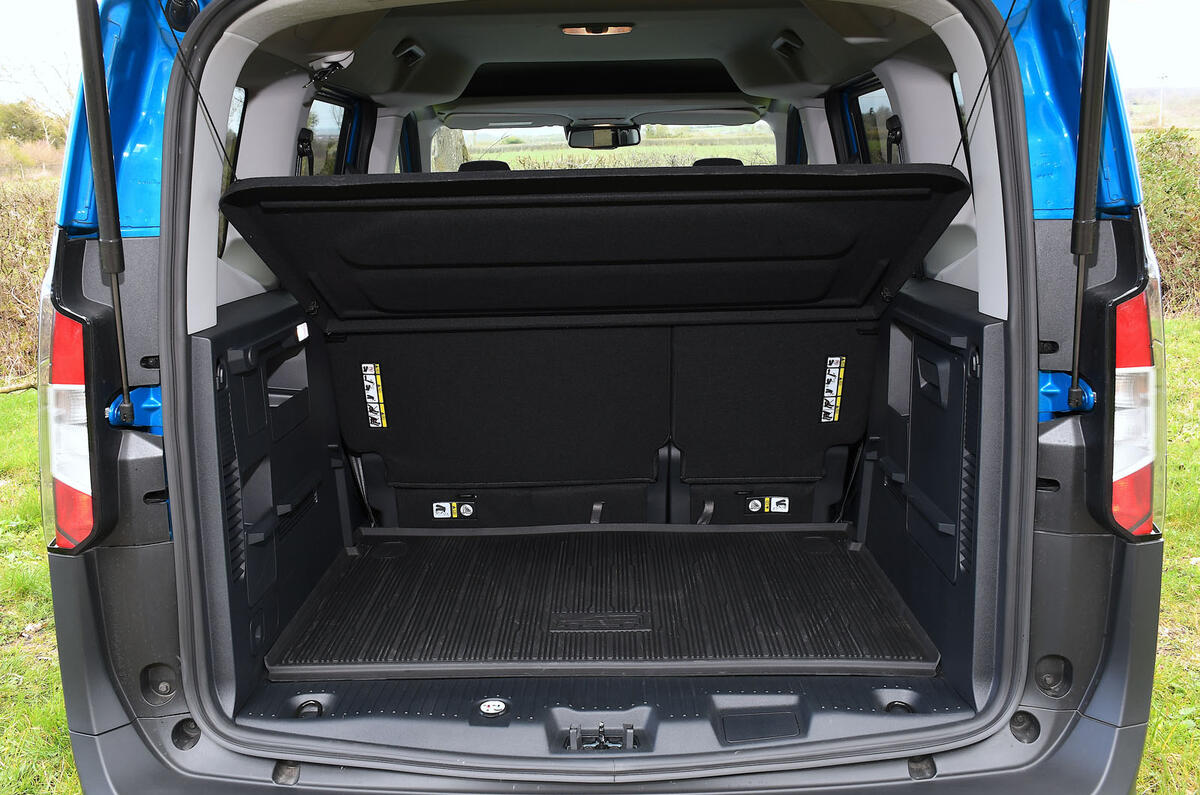
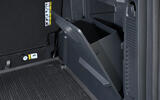
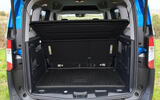
In the boot, there’s a very wide and tall cargo area with straight sides; a handy compartment built in on one side that’s ideal for shoes, tools or accessories; and provision for a raised false floor, level with that of the forwards cabin, so you can load bulky items like mountain bikes more easily. There’s more than enough space here for bigger dog boxes and the like. However, access isn’t ideal. Opening the long, roof-hinged hatchback becomes problematic in tight spaces and there’s no separately opening rear window either as standard or as an option.

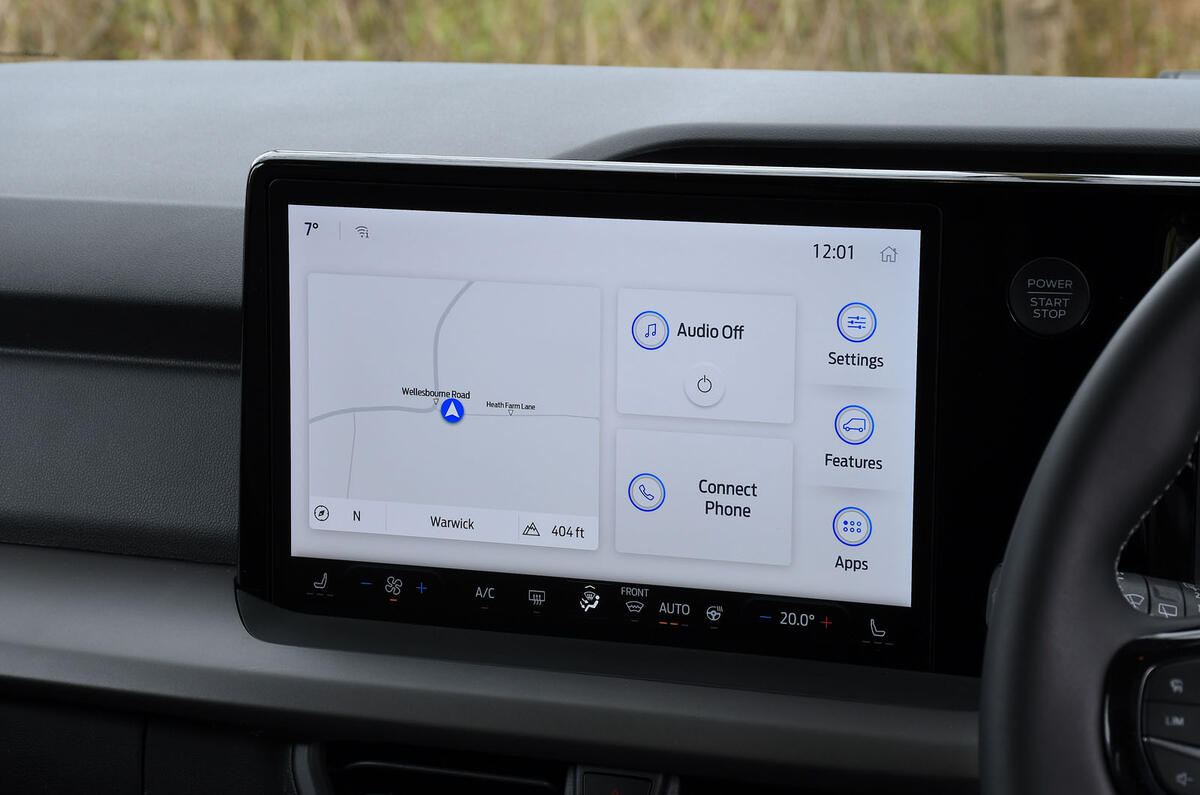
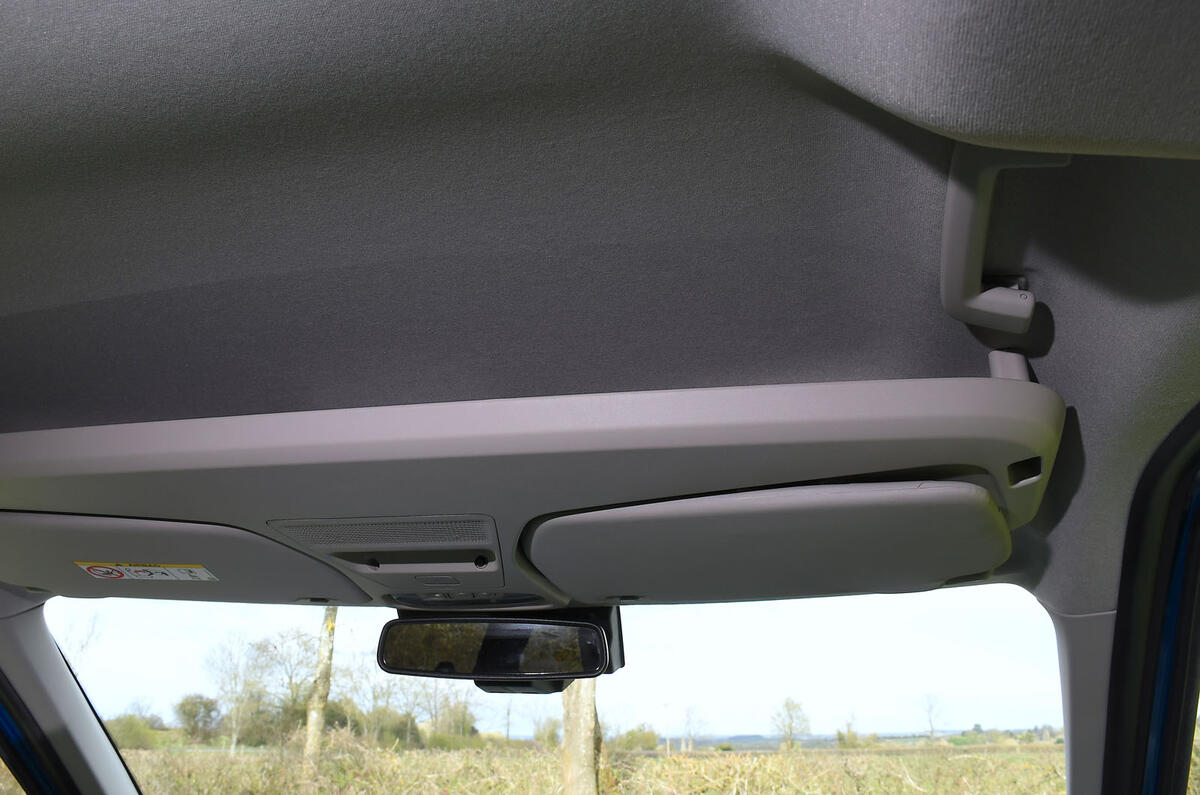
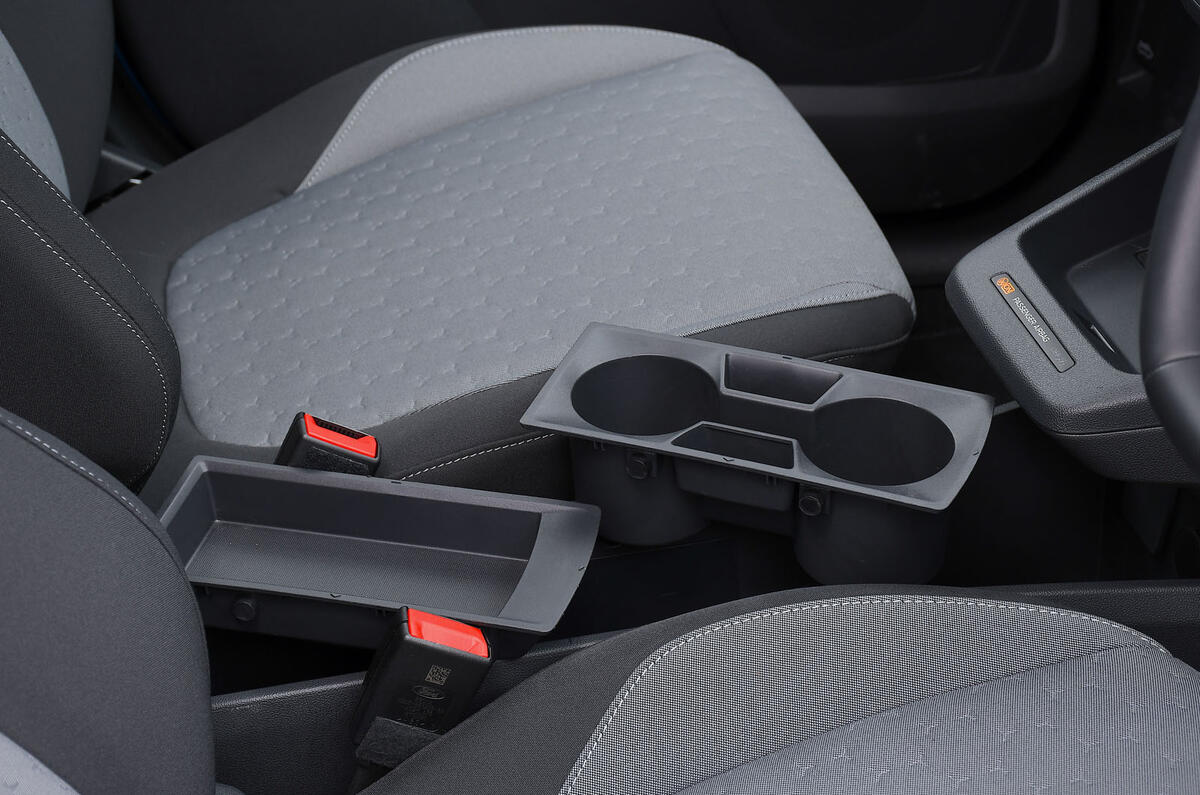
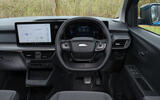
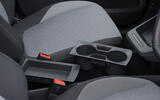
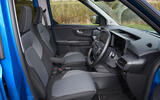
Up front, the seats are comfortable and adjustable enough, if a little firm in the cushion. The dashboard and surrounding architecture are somewhat different from the regular Tourneo Courier’s. A ‘squircle’ steering wheel, with a flattened top and bottom, is fitted in an effort to make more space for the driver’s thighs; a new all-digital instrument binnacle and multimedia console appears, with a larger 14in ‘Sync 4’ touchscreen system; and there is more storage space on the top of the fascia, as well as quite a clever centre console between the front seats that you can configure by moving or removing cupholder and tray inserts.
ENGINES & PERFORMANCE

7
Ford E Tourneo Courier review 2026 019

Our test of the 123bhp petrol-powered Tourneo Courier two years ago provides some very direct and informative comparisons for the e-Tourneo. Although the EV weighed 271kg more than the 1.0-litre Ecoboost car did on the proving ground scales, it has more power and more accessible torque – and no gearchanges to execute. 

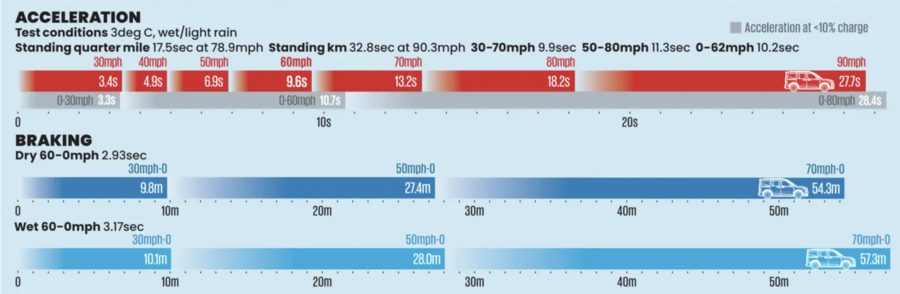
On a wet test day, it hit 60mph from rest more than a second sooner and was the better part of a second quicker from 30-70mph (the motorway slip road performance test, if you like). It was also quicker from rest to 60mph than the larger and more powerful Kia PV5 we tested earlier this year.

There are no grounds to criticise this car’s objective performance level, then. The e-Tourneo Courier’s electric motor chimes in with plenty of torque at low speeds. It’s nippy enough to be squirted into a gap in urban traffic and it keeps pulling fairly stoutly up to about 50mph. At that point, it begins to feel less responsive, albeit without becoming out of its depth on the motorway (50-80mph: 11.3sec, where the 123bhp Ecoboost petrol needs 11.2sec).

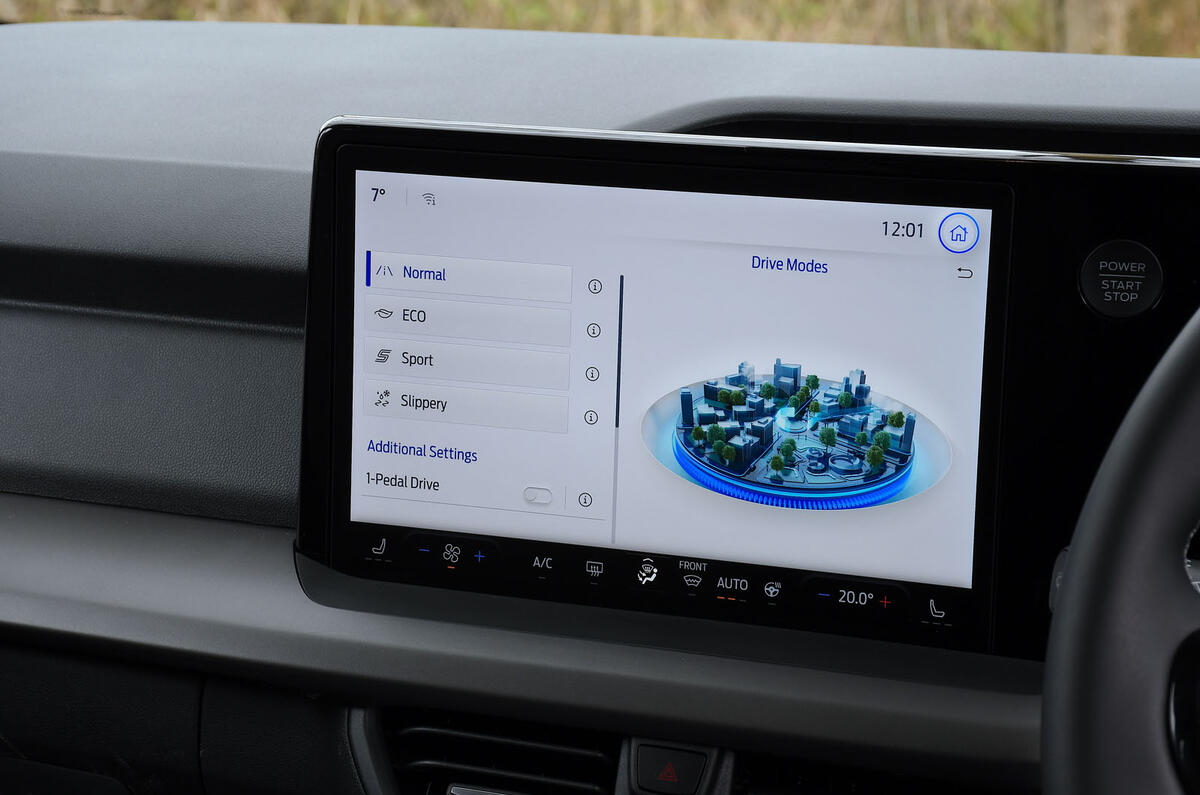
You can select a one-pedal driving mode via the central multimedia screen, if that’s your preference; or you can use the button on the column-shift drive control lever to select ‘L’ instead of ‘D’ to simply cue up more trailing-throttle regen, which you might want when hauling or towing. Otherwise, there are no manual regen controls but, tellingly, the car doesn’t feel like it’s missing any and is easy and predictable to drive.

As regards ride and handling, there’s an edge of firmness about the suspension tuning that isn’t typical of a boxy utility car. It makes the ride a little laterally fussy and choppy over uneven roads as the body jostles slightly on its wheels; but there’s good body control during cornering, with plenty in reserve for when the car is heavily loaded. It certainly doesn’t ruin the car’s comfort levels – and it does feel like a characteristically Ford sort of tuning philosophy. 

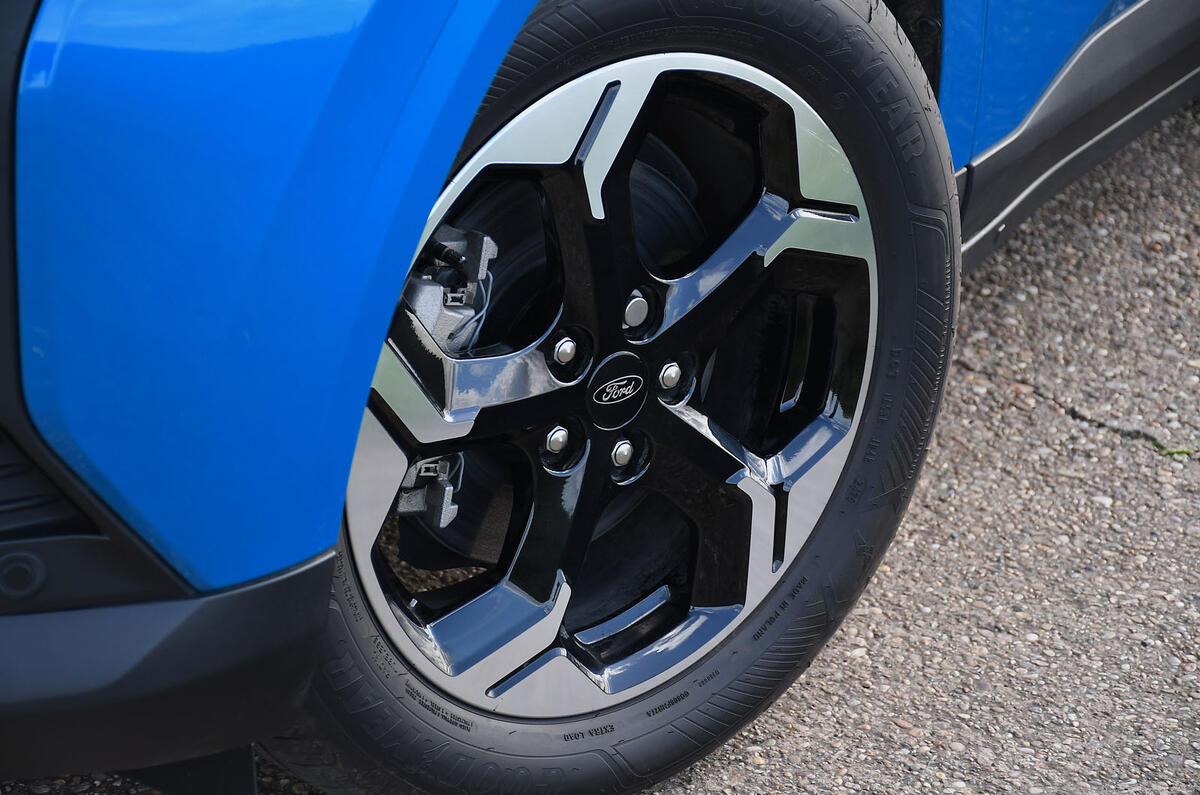
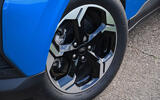
The e-Tourneo’s mechanical grip level, on its 17in wheels and Goodyear EfficientGrip tyres, is fairly modest, but it’s still high enough that you can hurry the car around a traffic island or a tighter bend and not be bothered by traction control interventions, early-onset understeer or pronounced body roll.

MPG & RUNNING COSTS

4
Ford E Tourneo Courier review 2026 001

The e-Tourneo Courier has a value advantage over some competitors in one sense, because it qualifies in full for the UK government’s £3750 Electric Car Grant. (Rivals typically get only £1500.) However, that only makes it roughly the same price as an entry-level Citroën ë-Berlingo, albeit slightly better priced than, say, a Toyota Proace Verso EV or a Peugeot e-Rifter.

But there’s a bigger problem here because, compared with those rivals, electric range, efficiency and associated usability are not where they should be for the e-Tourneo. True, slightly more usable battery capacity for it is imminent, but only around 10% of it - and that isn’t likely to make enough difference to bridge the gap. Wider test experience suggests that an ë-Berlingo or Combo Life Electric would beat 200 miles of range in urban use and hit 170 miles when touring, but our e-Tourneo Courier test car failed to be efficient enough to suggest that it would exceed 120 miles of motorway range, or get much beyond 150 miles in day-to-day, shorter-range use.

That may be the impact of the car’s bluff, boxy proportions but it’s unlikely to cut it on a car with an agenda for hard work and versatility – especially when the e-Tourneo Courier’s rivals are already probing the bounds of acceptability on usable range. 

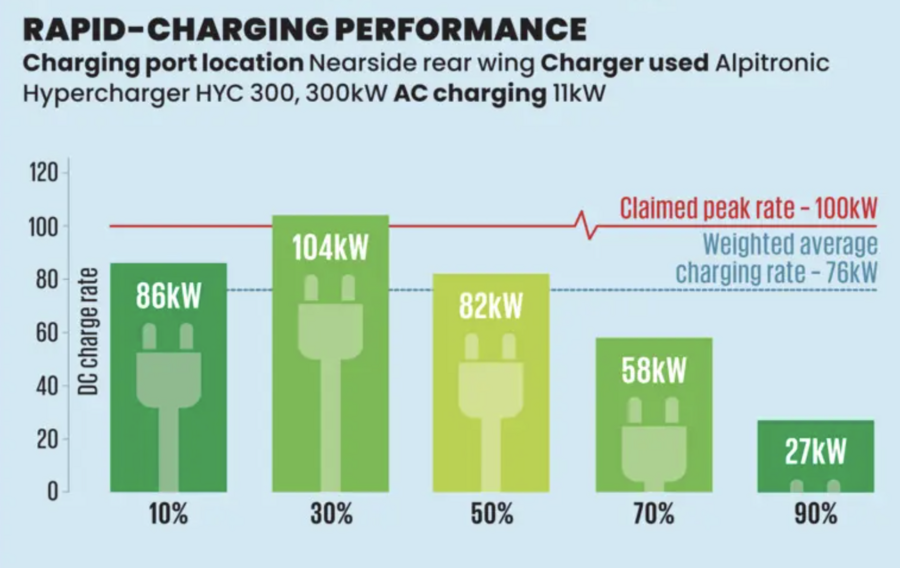
Ford claws a little credibility back with respectable DC rapid charging test results (weighted test average: 76kW; Kia PV5: 101kW). Even here, though, the car has an annoying tendency to default to charging to only 90% of usable SOC unless you specifically instruct it, via the touchscreen, to charge to 100% every time you plug it in. And 90% of ‘not enough’  is definitely not enough.

VERDICT

5
Ford E Tourneo Courier review 2026 021

When we road tested the Ford Puma Gen-E a year ago, we were impressed that an adapted ICE platform could produce such an efficient EV. But when the same technology is applied to something larger and squarer, very different results present. 

The e-Tourneo Courier’s tough, flat-bonnet styling may catch the eye and its handling may have a dash of keenness about it. But it’s simply not efficient or rangy enough to be recommendable, at least until Ford takes more serious measures to address the problem; and it’s still missing the key practicality features that turn something big and square into something genuinely versatile.

Matt Saunders

Matt Saunders Autocar
Title: Road test editor

As Autocar’s chief car tester and reviewer, it’s Matt’s job to ensure the quality, objectivity, relevance and rigour of the entirety of Autocar’s reviews output, as well contributing a great many detailed road tests, group tests and drive reviews himself.

Matt has been an Autocar staffer since the autumn of 2003, and has been lucky enough to work alongside some of the magazine’s best-known writers and contributors over that time. He served as staff writer, features editor, assistant editor and digital editor, before joining the road test desk in 2011.

Since then he’s driven, measured, lap-timed, figured, and reported on cars as varied as the Bugatti Veyron, Rolls-Royce PhantomTesla RoadsterAriel Hipercar, Tata Nano, McLaren SennaRenault Twizy and Toyota Mirai. Among his wider personal highlights of the job have been covering Sebastien Loeb’s record-breaking run at Pikes Peak in 2013; doing 190mph on derestricted German autobahn in a Brabus Rocket; and driving McLaren’s legendary ‘XP5’ F1 prototype. His own car is a trusty Mazda CX-5.