8

New upper-level DB12 'super tourer' gets 20bhp extra, weighs up to 50kg less, and aims for a sportier feel.

Find Full test: Aston Martin DB12 S is a sharper, louder and lighter GT, but is it better? deals
Other Services
Sell your car
84% get more money with

Among distractions ranging from Adrian Newey-masterminded hypercars to bleak reports in the business pages to military-grade off-roading concepts (take it you’ve seen the Dreadnought?), it’s easy to forget about Aston Martin’s DB12.

Less commonly seen than the entry-level Vantage and less ‘special’ than the V12-engined Vanquish, in so many ways the DB12 'super-tourer' is the car that best represents its maker. It is the model whose breadth ensures it is the one you would throw into a juicy group test against rivals including the Porsche 911 Turbo S, Maserati Granturismo Trofeo and Ferrari’s sublime Amalfi. You might also invite Bentley’s Continental GT and a fruity version of the AMG GT.

That group test – more of a battle royale, let’s be honest – just got a bit more tantalising, because there is now an S derivative that aims to sharpen up the DB12, three years on from debut. Power rises, the suspension is retuned not only for closer body control but better ride quality at lower speeds too, and detail changes are said to improve everything from steering feel to yaw damping. The S will exist alongside the regular car, and it is an addition to the range worth getting excited about because the last time Aston Martin took this approach to a senior GT, it transformed the very good DBS Superleggera into the truly wonderful DBS 770 Ultimate.

In terms of lineage, look further back and you’ll find Aston has a history of even quicker models with ‘S’ badges, starting with the DB3 S of 1953. However, never before has it deployed them as widely or consistently as now. The S version of the first, noughties-era Vanquish was in reality a facelift; a reason for dealers to call up Vanquish owners and invite them to part with another five- or six-figure sum. The S suffix was used more like it will be from now on only with the Vantage in 2011 – as an addition to the range, and an extension of the territory that these cars can ultimately span, rather than as a mid-life update.
Advertisement
Back to top

What we will now learn is if the DB12 S justifies its positioning, and where it sits in the GT ecosystem.

DESIGN & STYLING

8
Aston Martin DB12 S review 2026 002

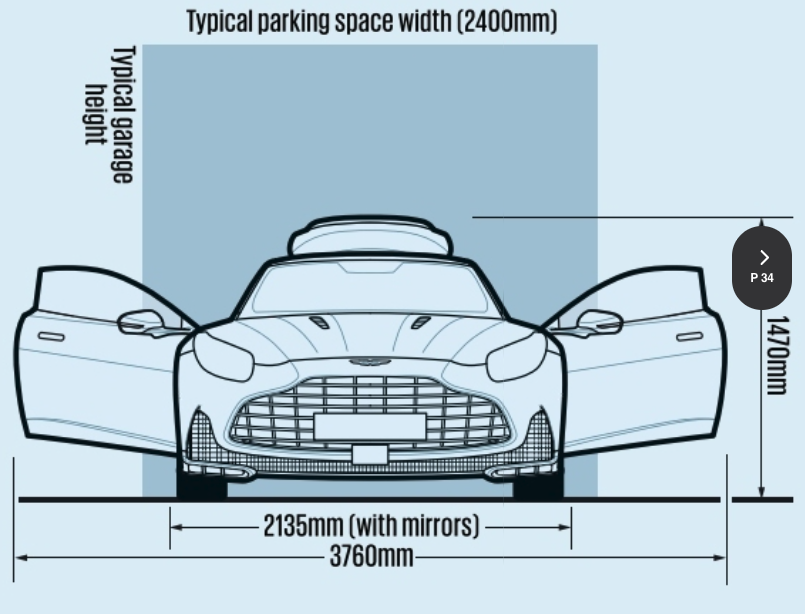
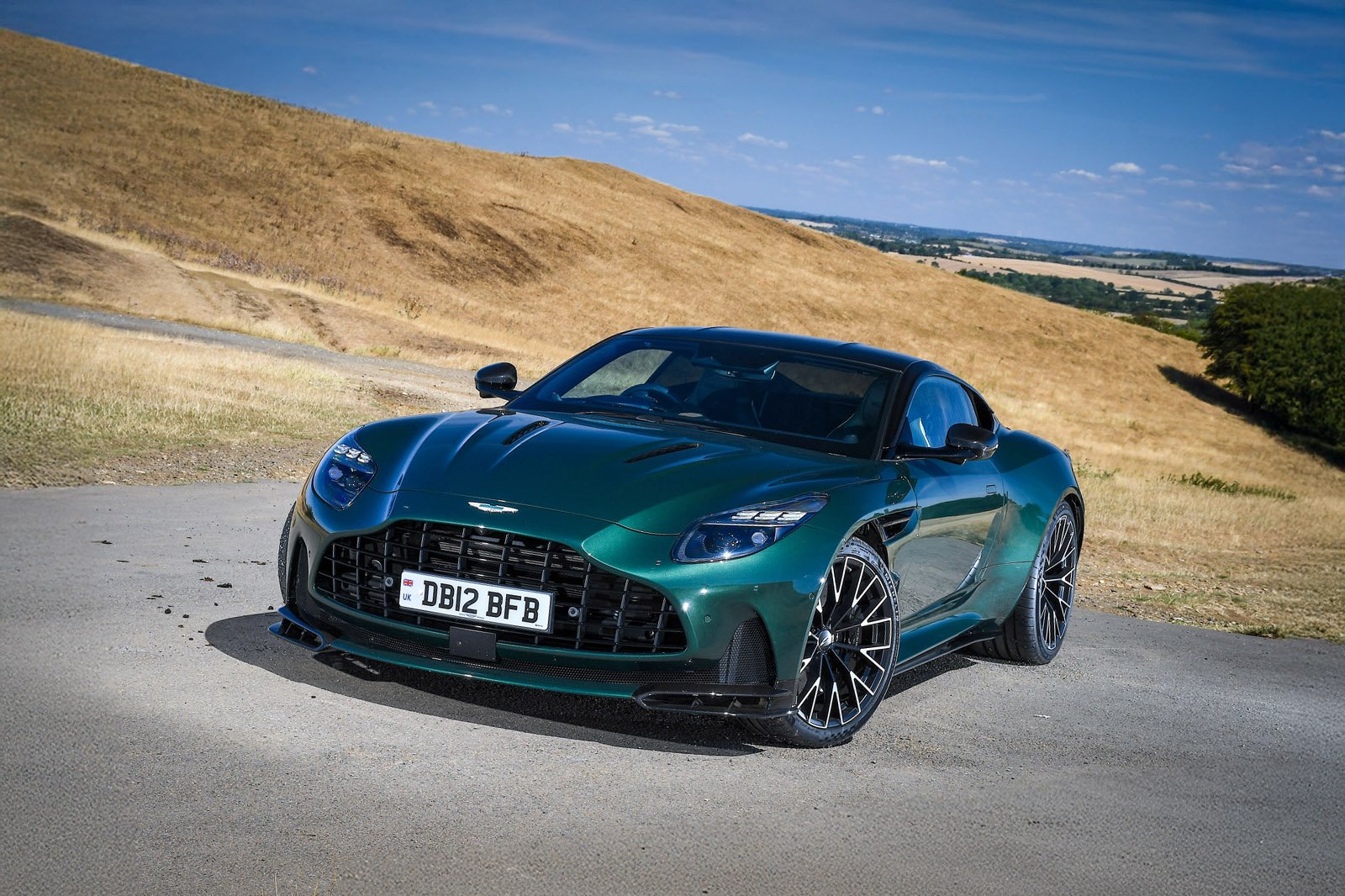
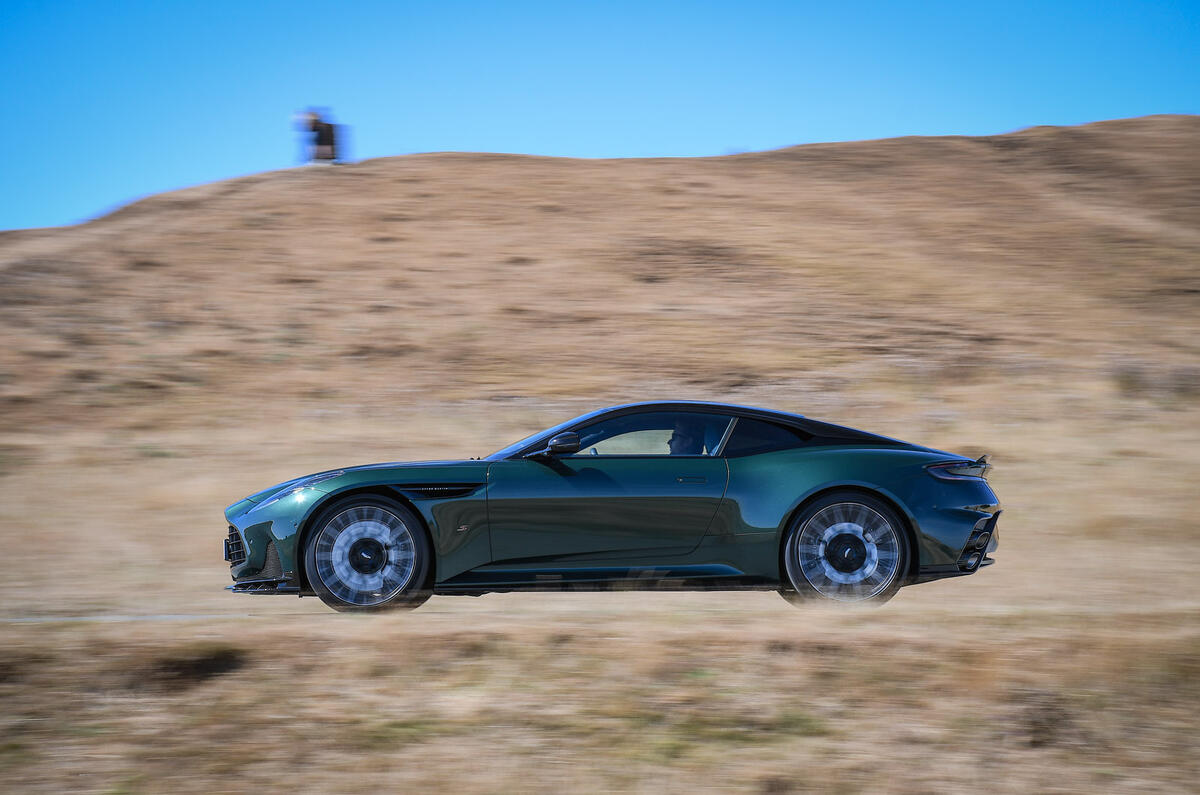
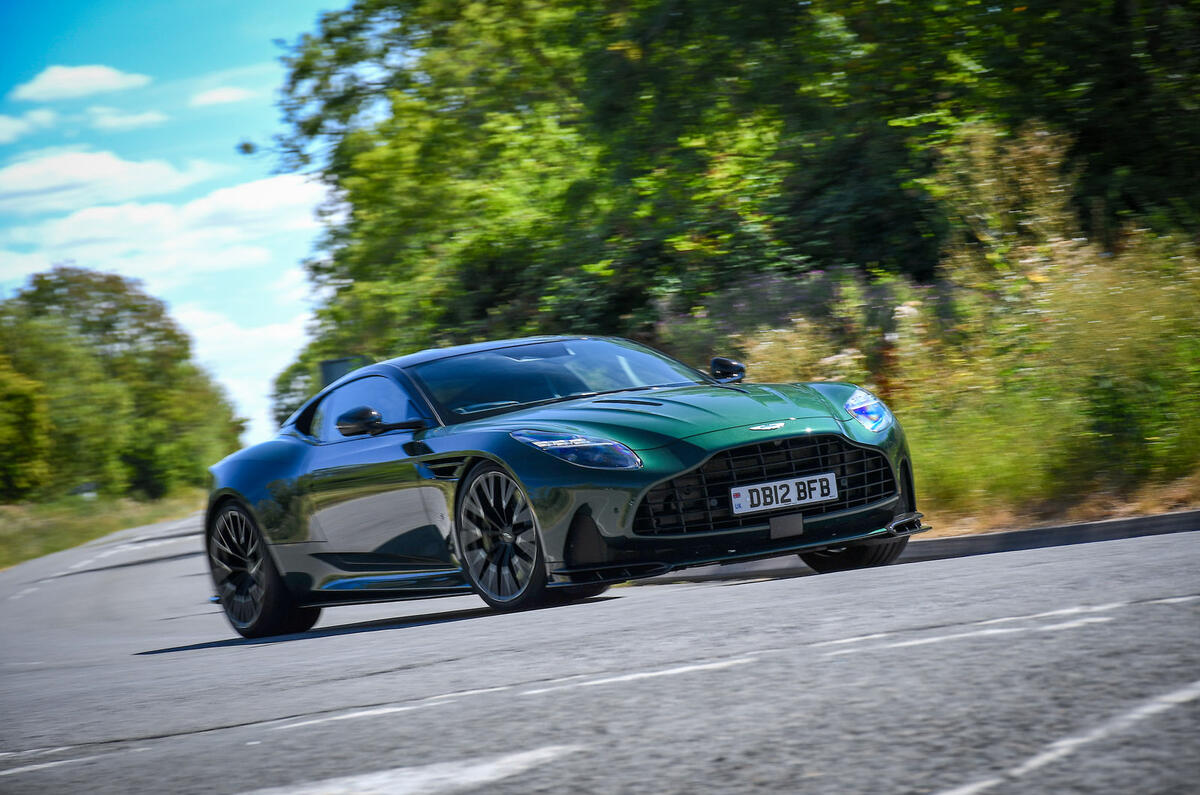
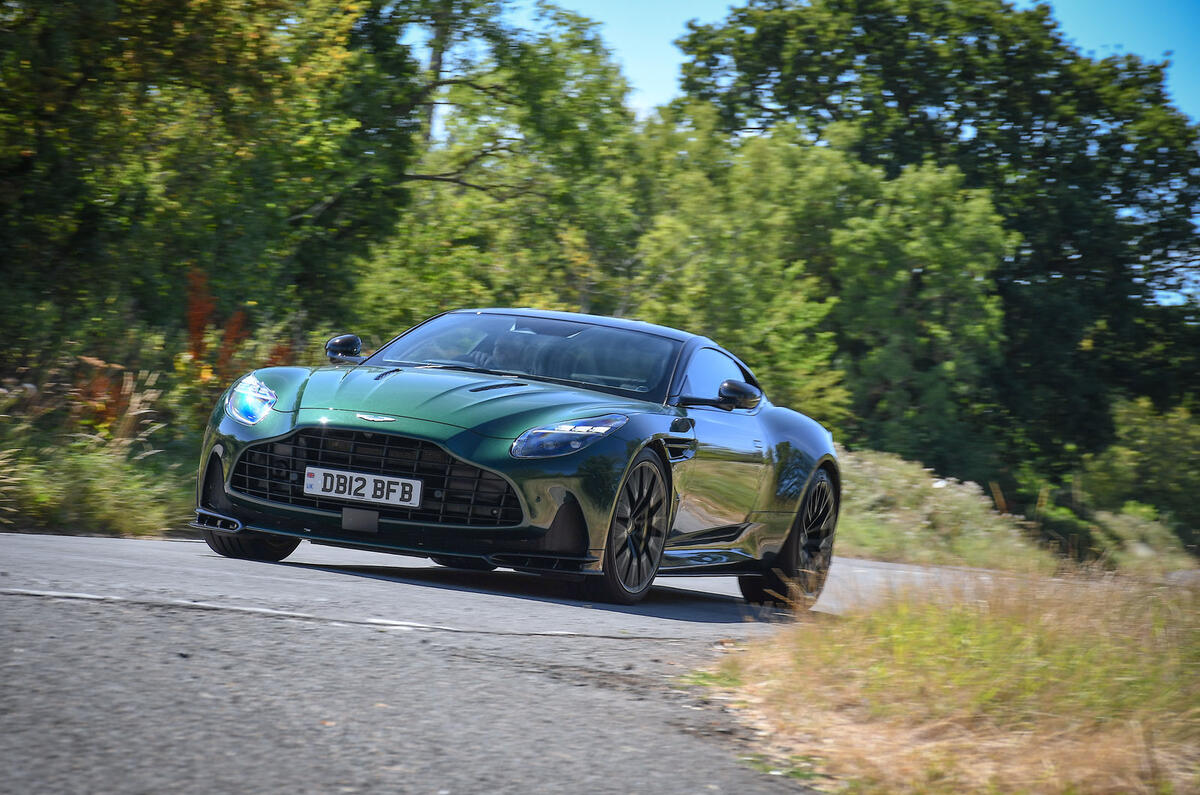
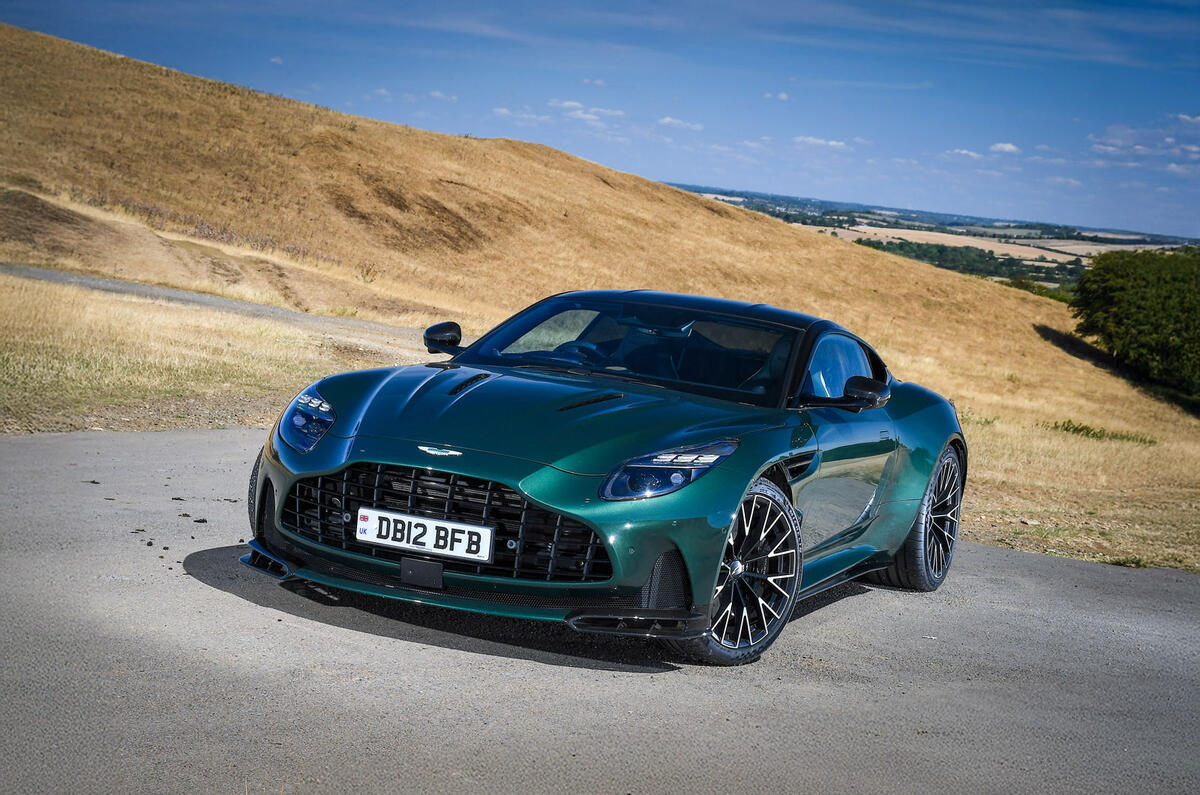
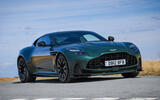
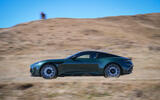
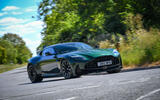
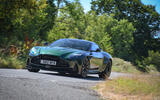
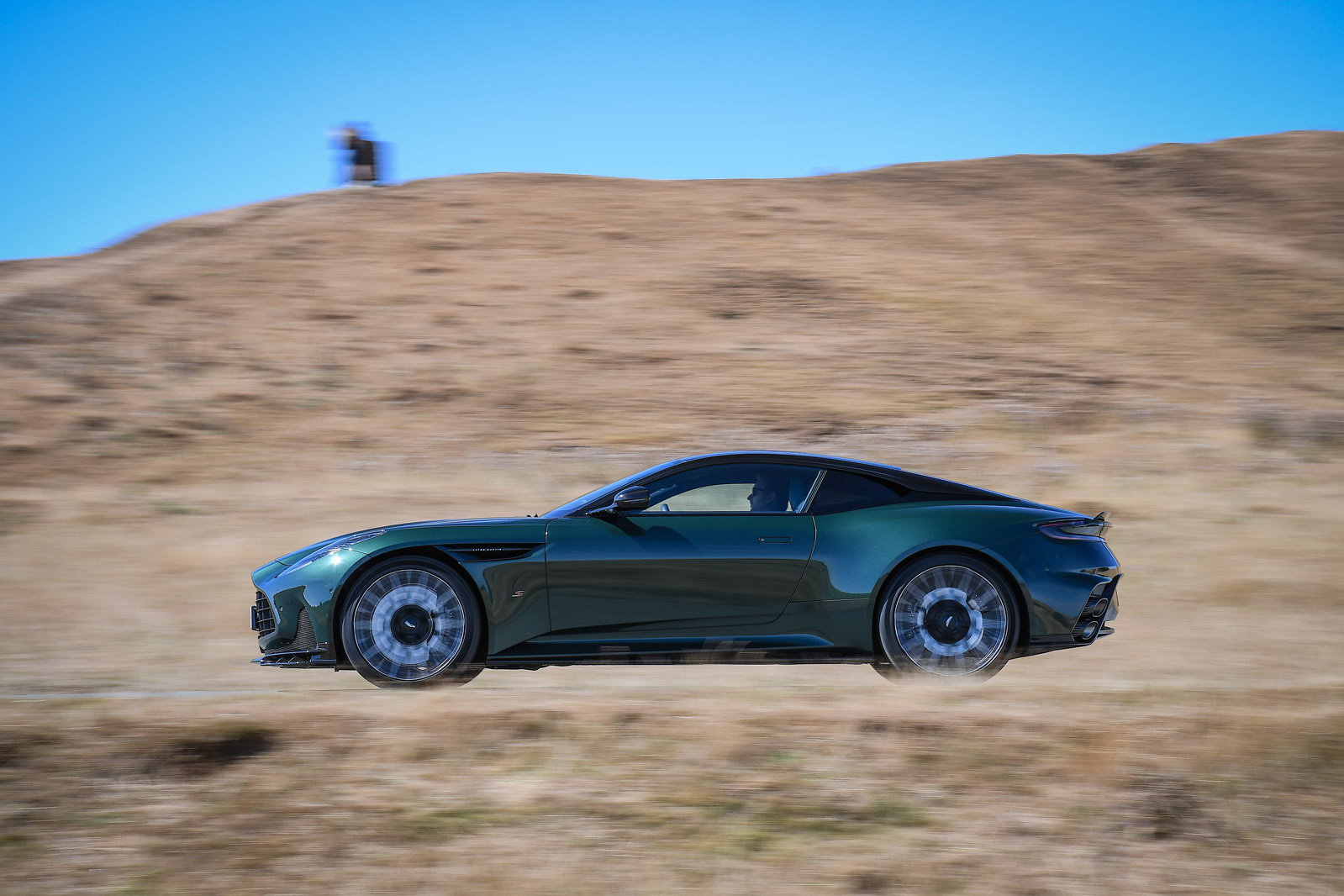
The DB12, whether in S form or not, remains a thoroughly striking presence with a footprint roughly the match of not the Ferrari Amalfi but the 12Cilindri, with the Vanquish then lording it over both Italians when it comes to stature.

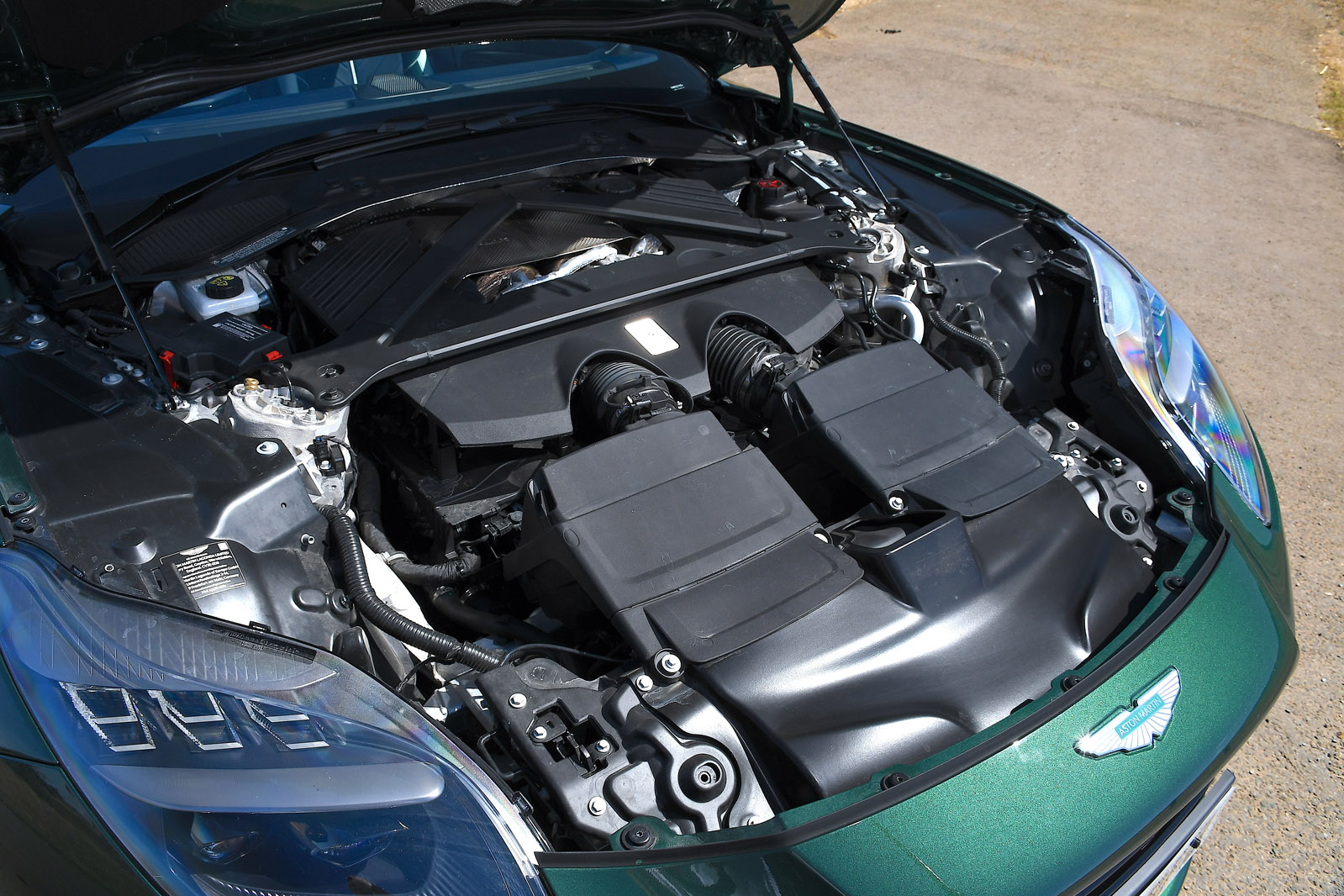
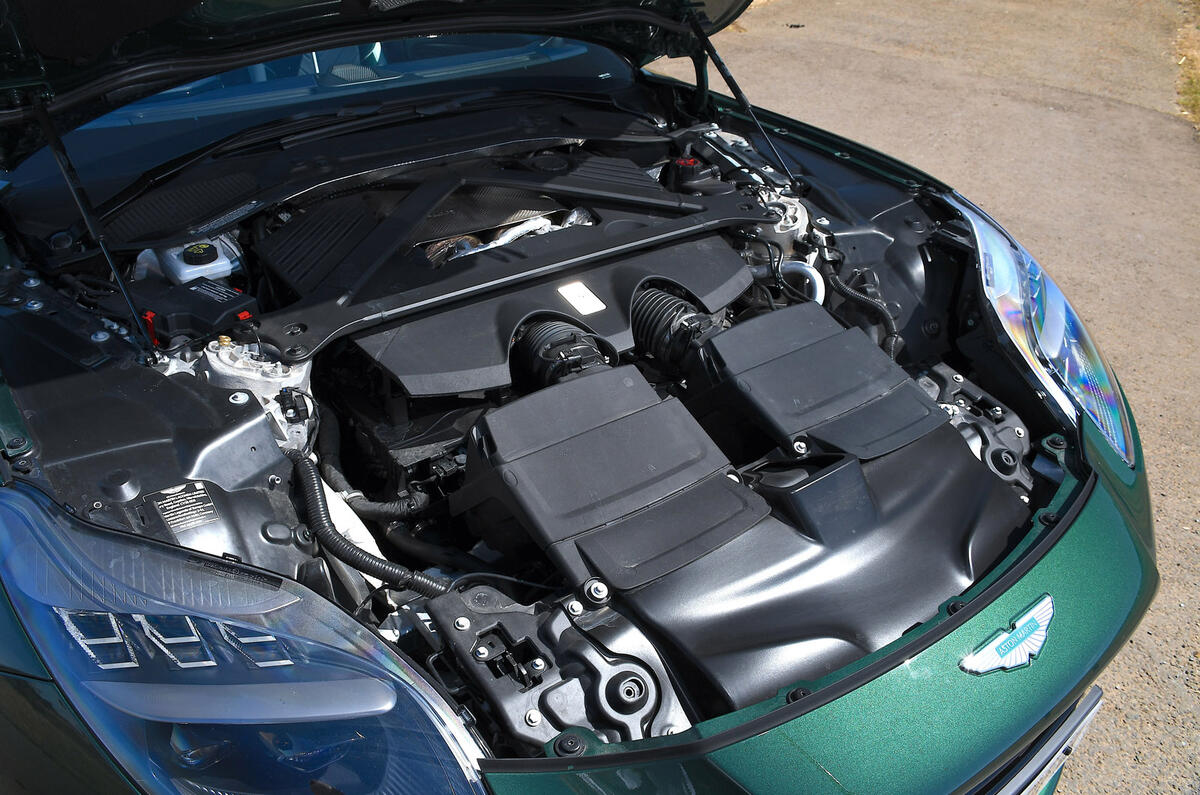
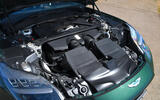
As for the new S alterations, the treatment applied here is predictable in its performance agenda, but also pretty detailed and wide-ranging. It starts with the DB12’s AMG-sourced 4.0-litre twin-turbo V8, which is recalibrated for a fatter torque curve with headline power hiked by 20bhp to 691bhp. An updated transaxle automatic gearbox puts that power to the road via a recalibrated torque-vectoring Bosch electronic differential, and then the rear wheels.

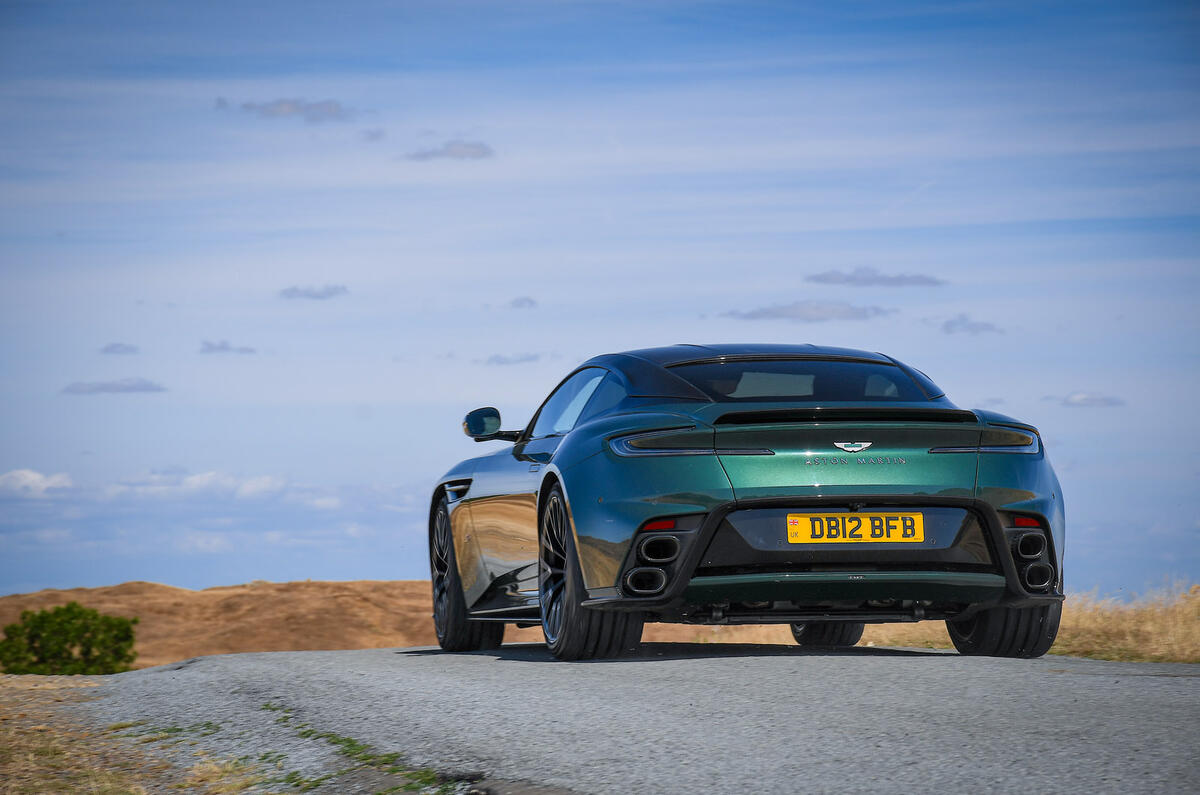
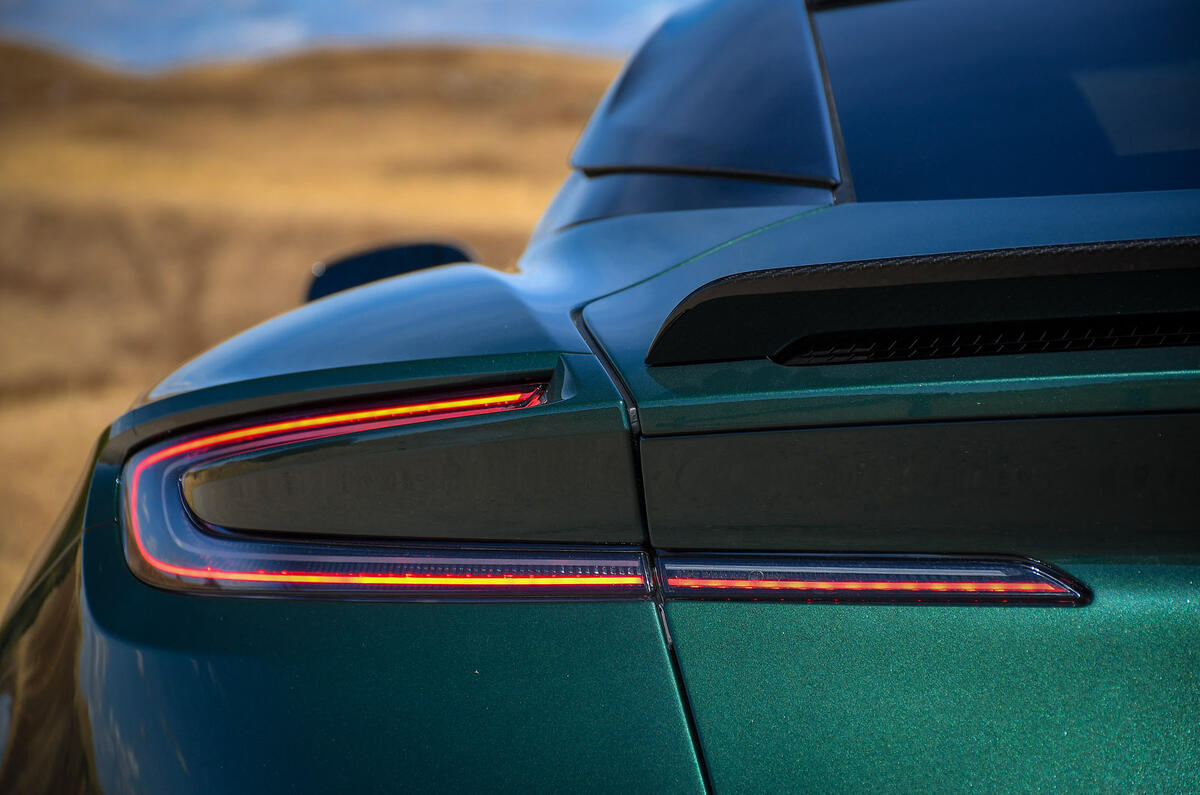
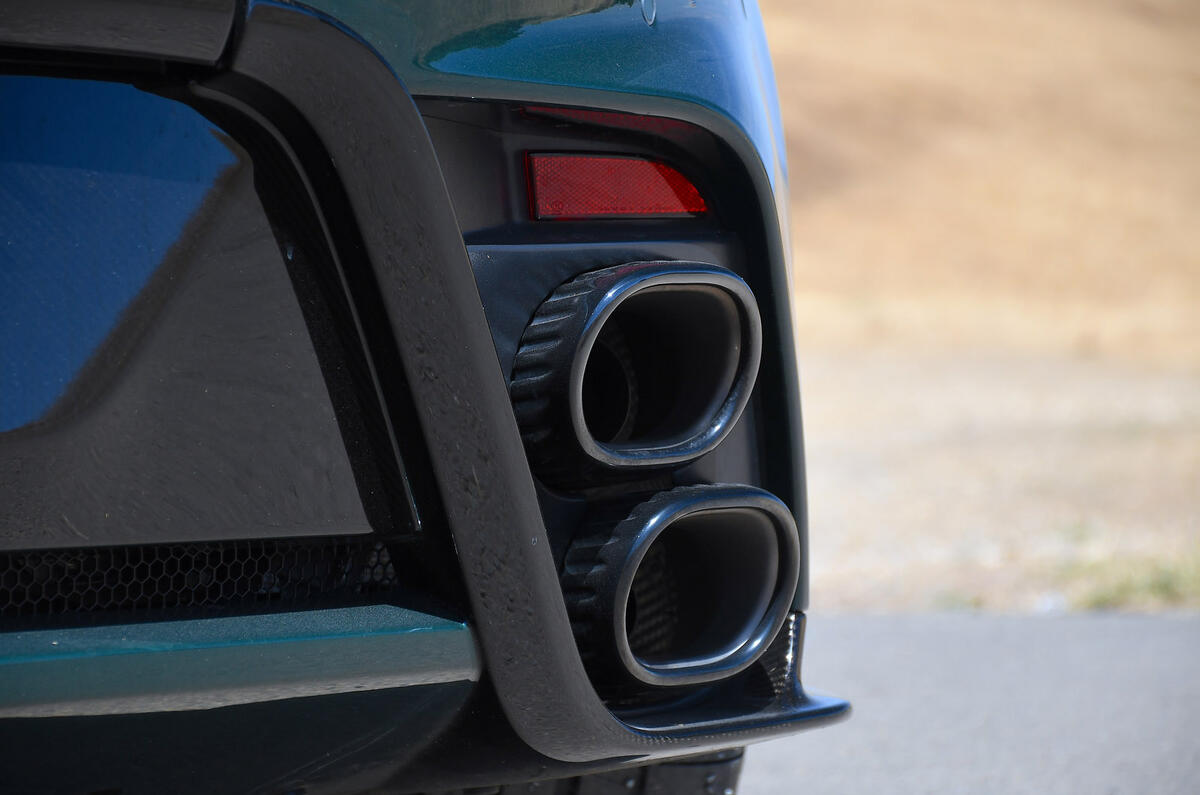
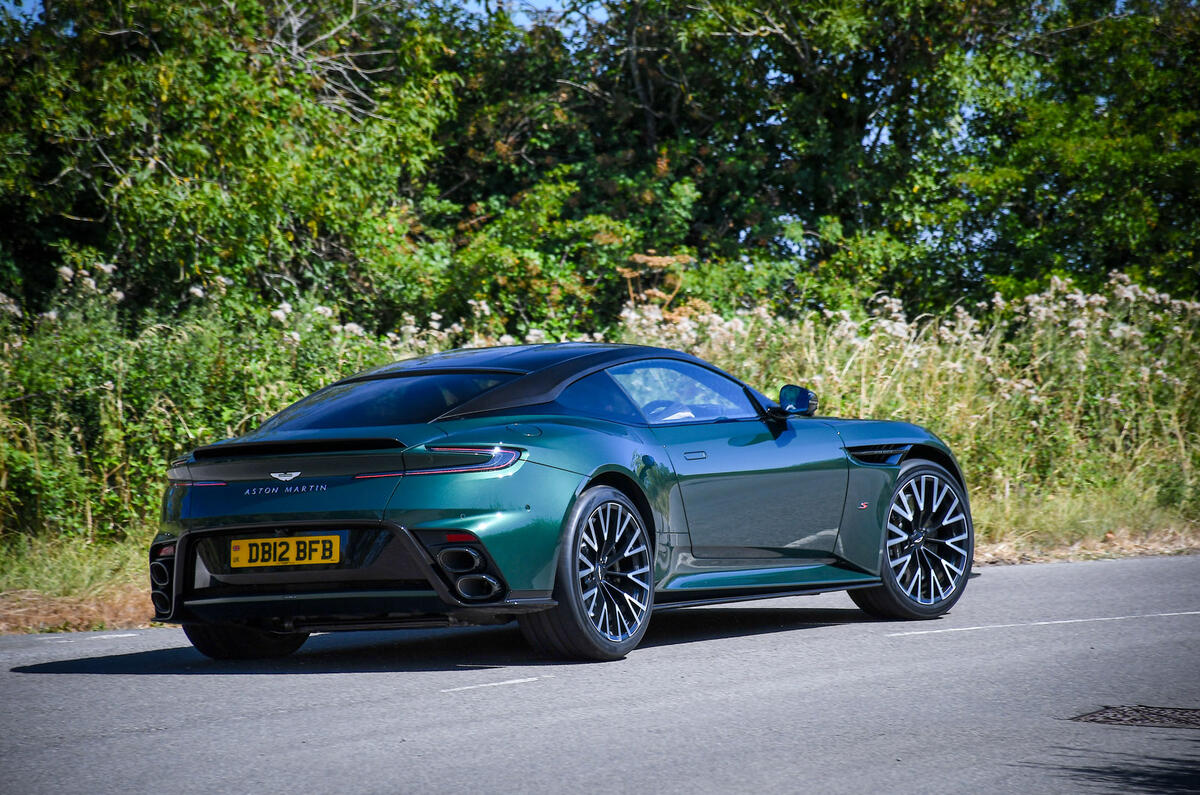
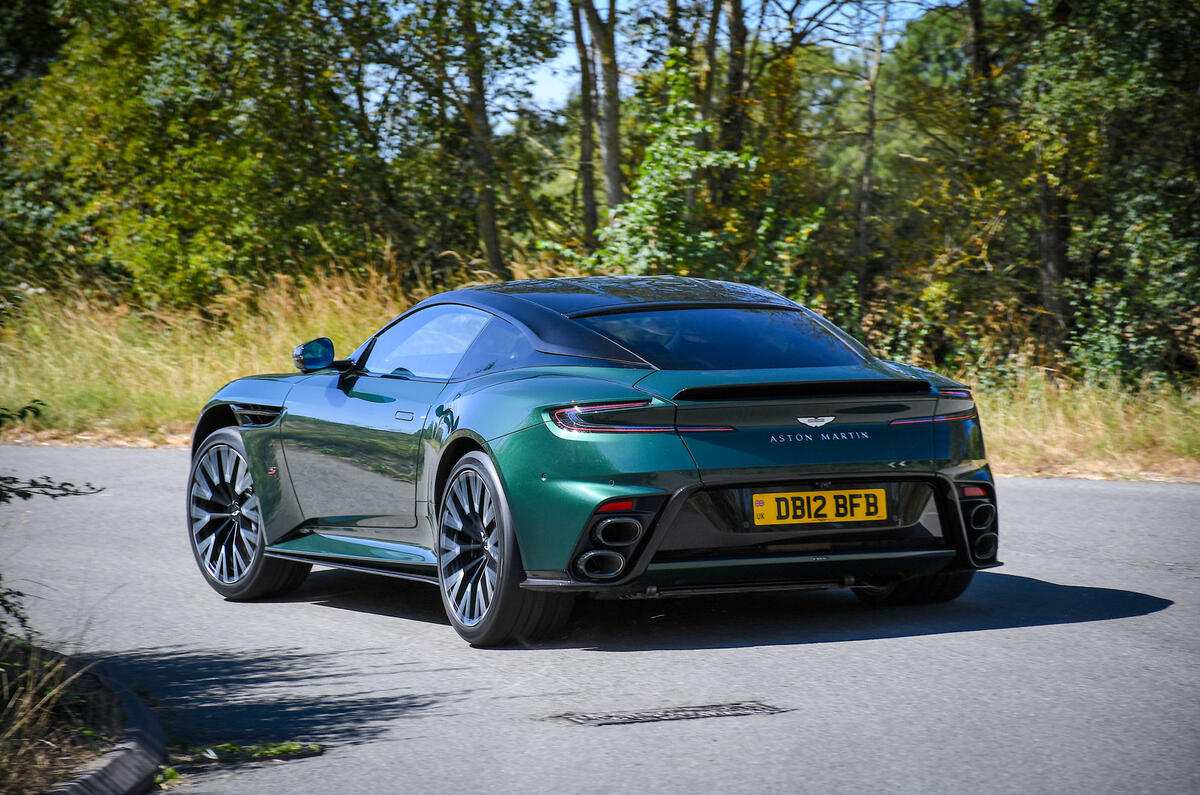
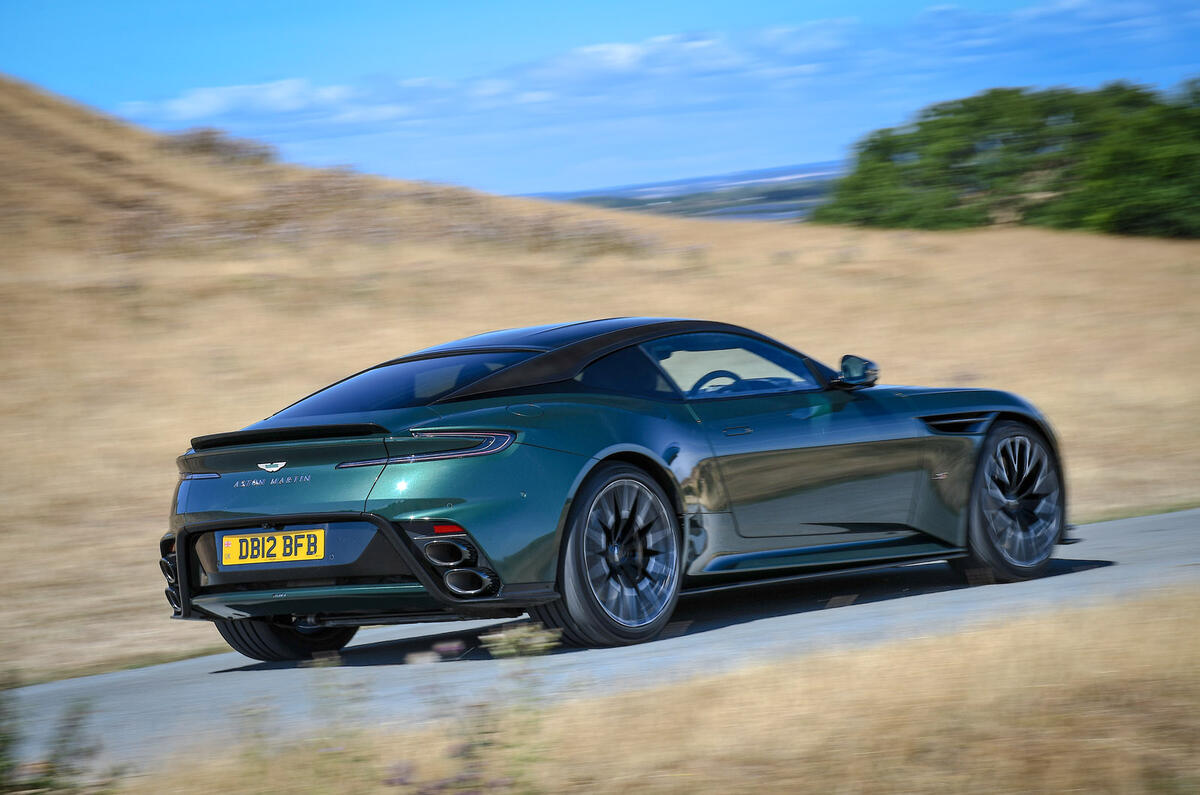
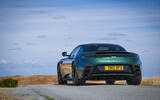
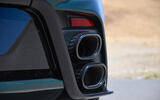
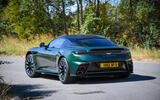
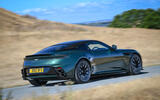
The stacked exhaust is the most obvious sign that you are looking at an S and not the regular DB12, production of which will continue alongside the upgraded car. As standard the system comes in steel but a louder (and 11.7kg lighter) titanium system is an option.

The running gear makeover, meanwhile, takes in Bilstein DTX adaptive dampers (retuned to take advantage of the saving in unsprung mass delivered by the standard fitment of carbon-ceramic brakes). These, claims Aston, make the close body control of the DB12 S more linear and also ultimately more effective, allowing more wheel travel at low speeds but also better outright body control at higher speeds.

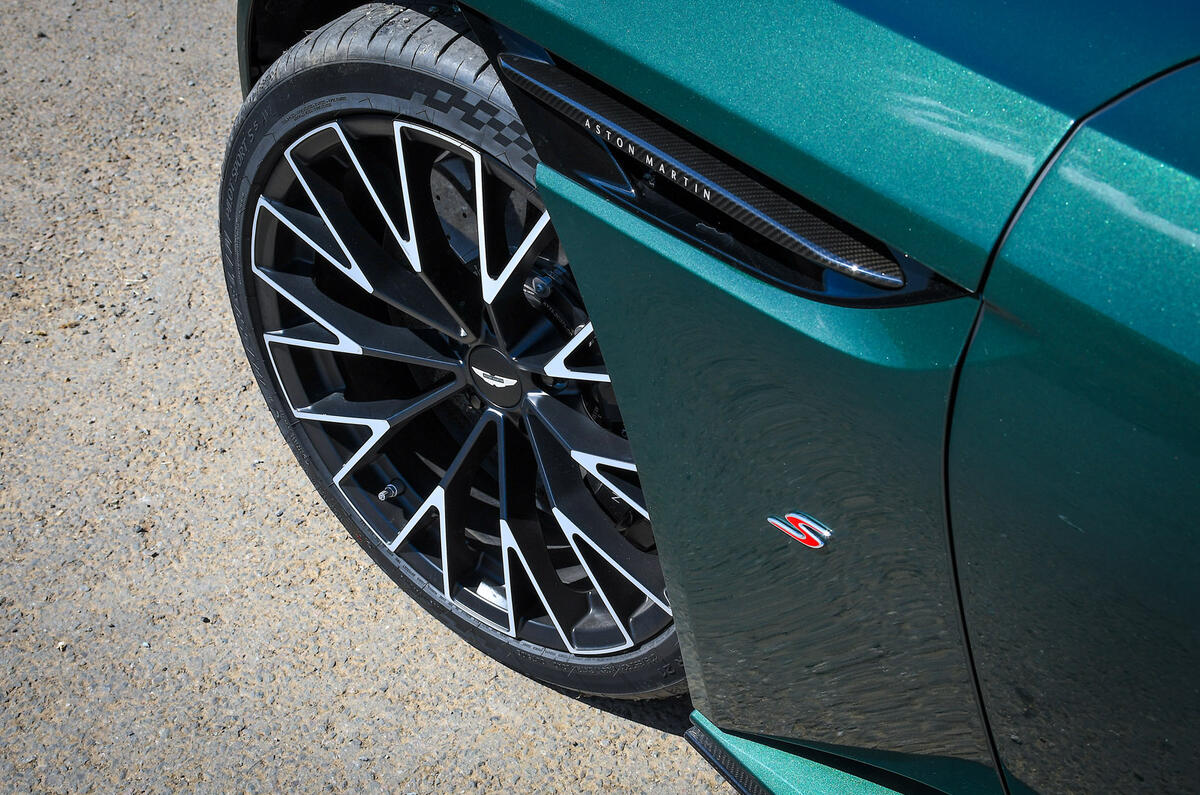
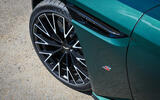
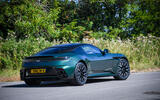
At the rear axle, a stiffer anti-roll bar has been fitted. Revised wheel geometry then dials in enough negative camber that you can clearly see it when the car is parked. These changes in turn give the front wheels a stronger platform to push against on turn-in, sharpening cornering agility while also better reining in rear-axle stability. Modifications to the power steering up front also look to filter through better off-centre steering precision and tactile feel.
So too has the contact patch grown, from 315-section AML-marked Michelins at the rear of the non-S car to 325-section here, with 275 at the front. This matches the scope of the rubber on the Vanquish – and also, to your possible surprise, the more junior Vantage.

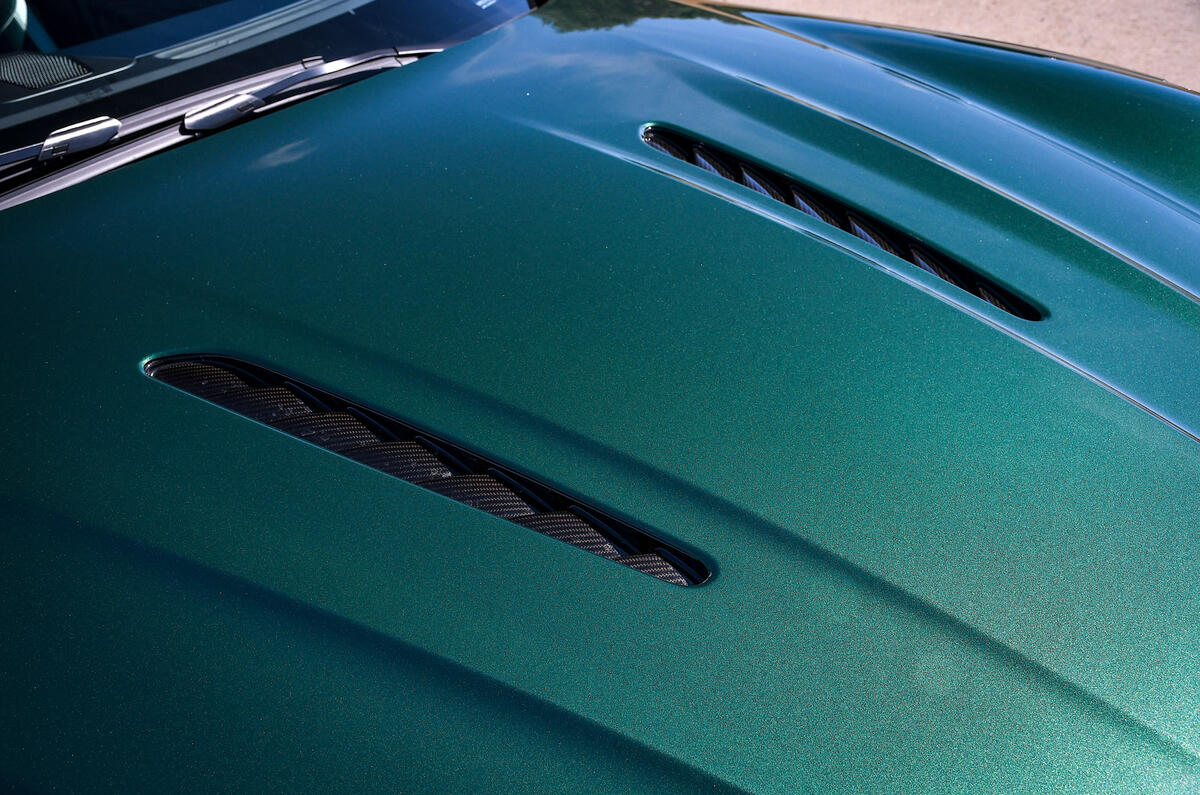
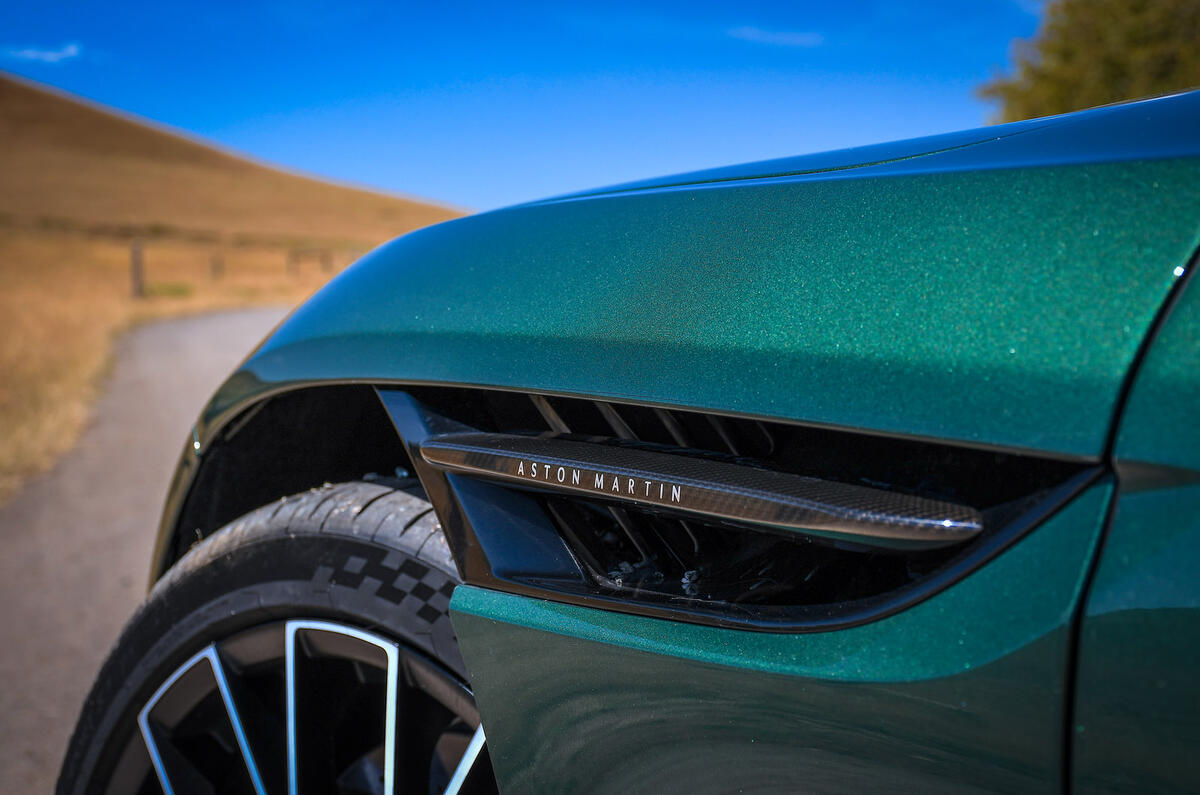
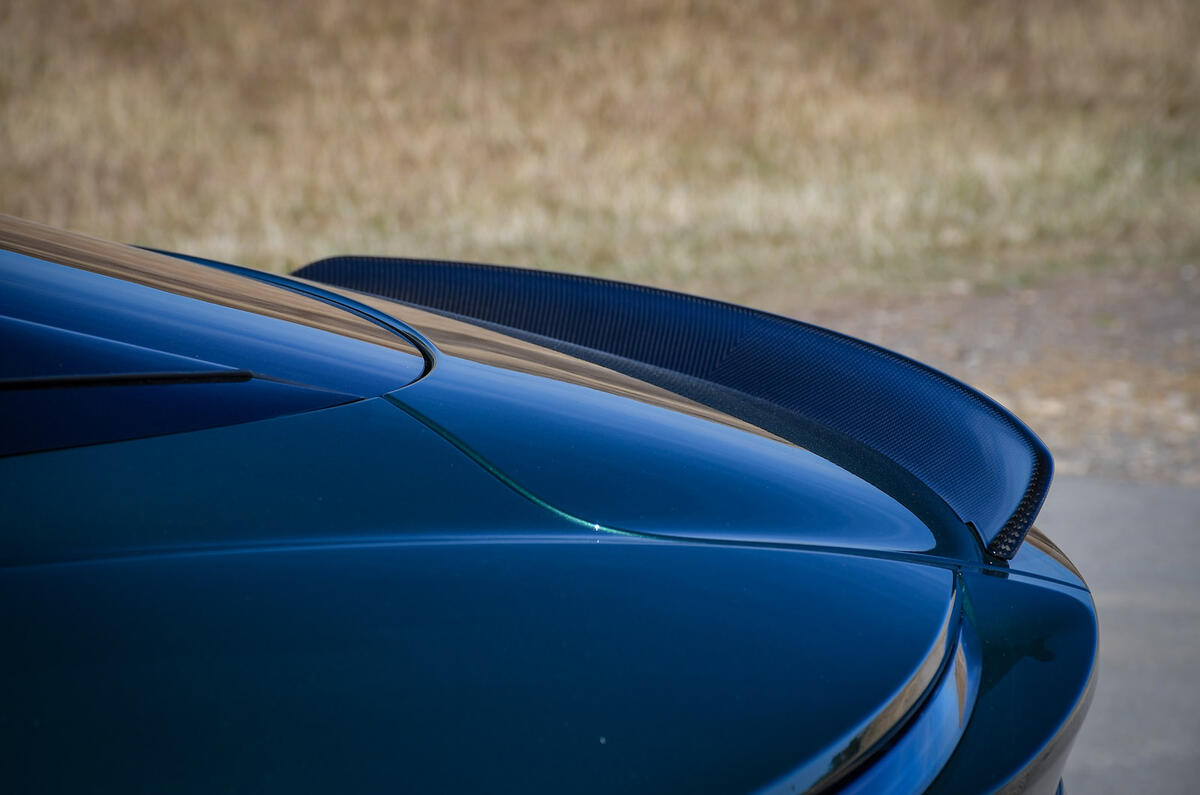
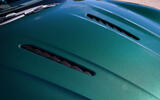
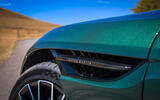
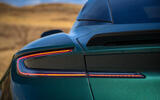
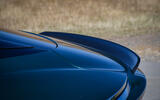
The DB12 S’s bodywork then gets some noticeable but understated revisions as well. The usual chin spoiler, sill extensions and extra bonnet louvres come in, and a fairly subtle fixed lip spoiler on the boot (there in place of the regular DB12’s ‘Aeroblade’ active system) helps to offset the added weight of the beefed-up, F1-style aero ducting around the corners of the bumpers.

The net effect is that, counting those carbon brakes, the DB12 S weighs 38kg less than a standard DB12 without any factory extras: and, if you go for Gaydon’s new lightweight titanium active sports exhaust (both it and the standard steel one have a new ‘stacked’ quad-pipe look), you can boost that weight-saving to just under 50kg.

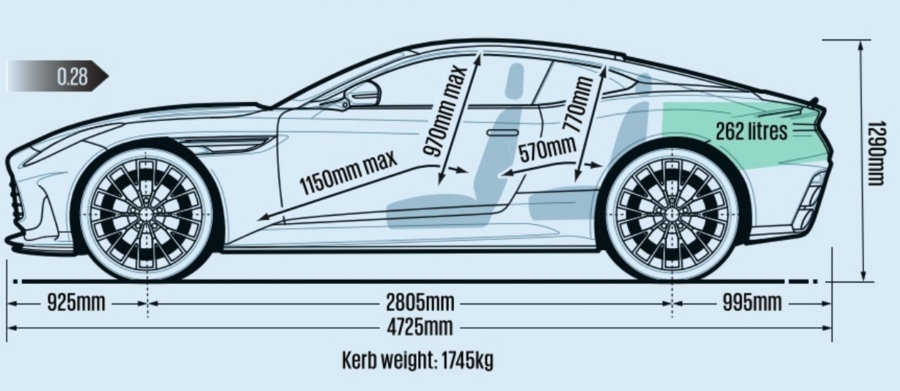
In the end, it is a figure unlikely to have a transformative effect on a car that still weighs in excess of 1800kg (an out-of-action weighbridge at Horiba MIRA meant we are unable to state a precise as-tested weight). But at a claimed 1745kg, the DB12 isn’t too heavy to discount these benefits as meaningless spend.

INTERIOR

9
Aston Martin DB12 S review 2026 009

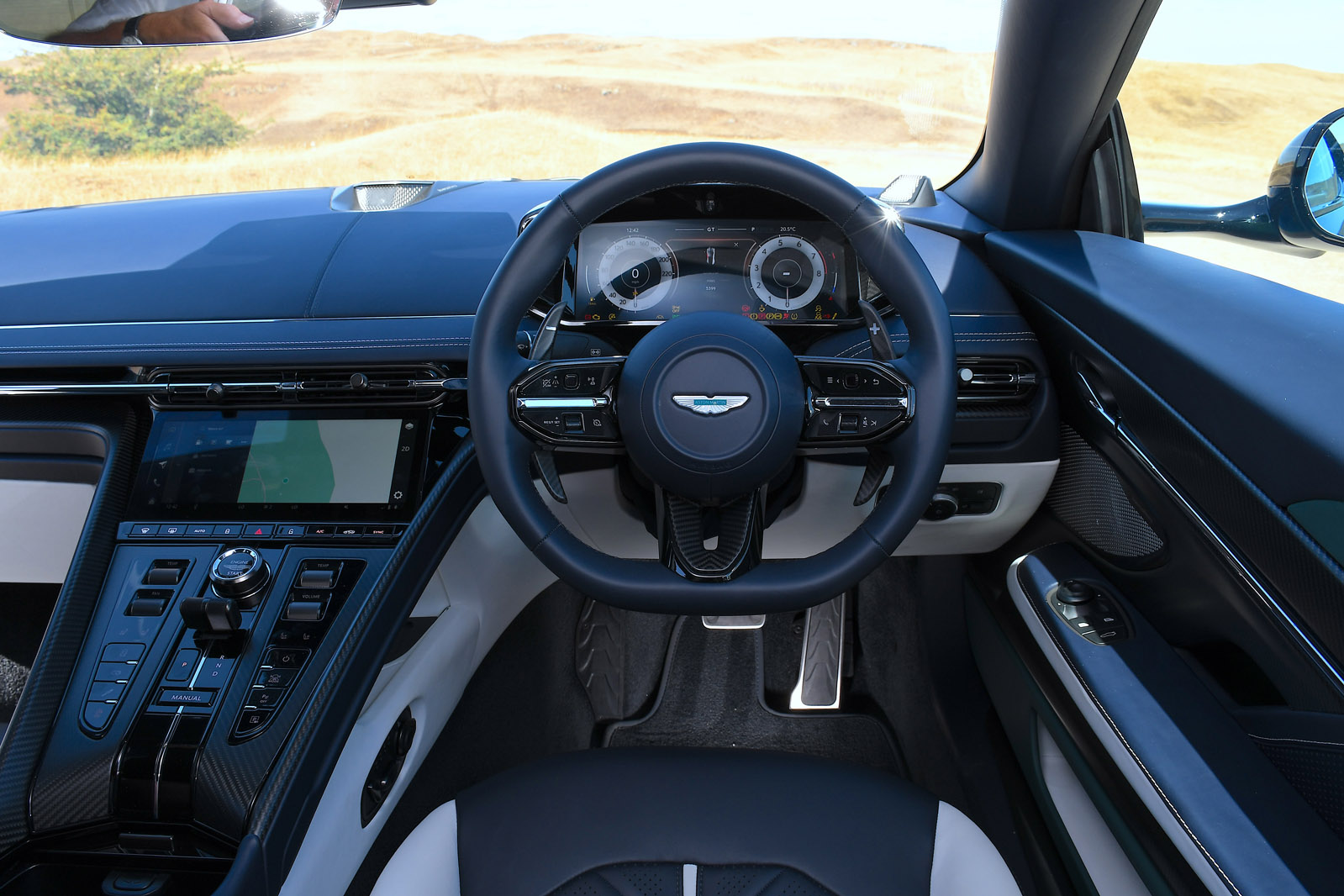
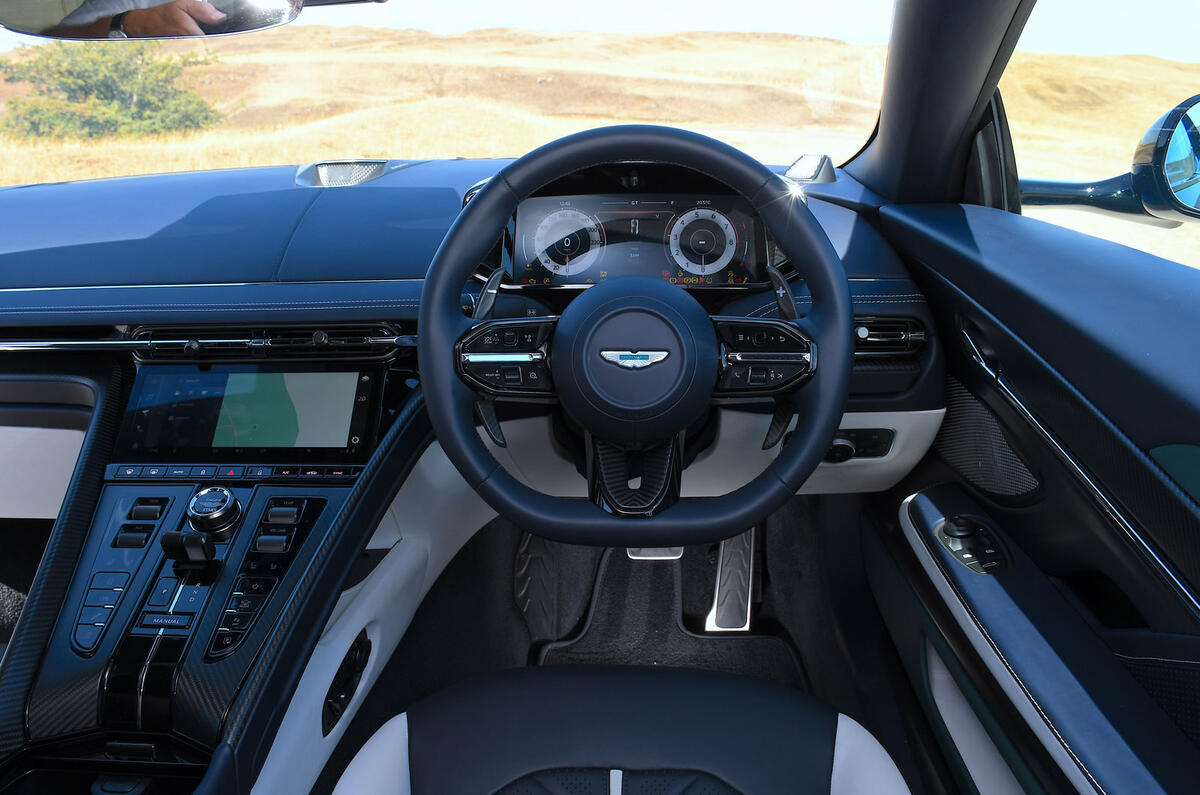
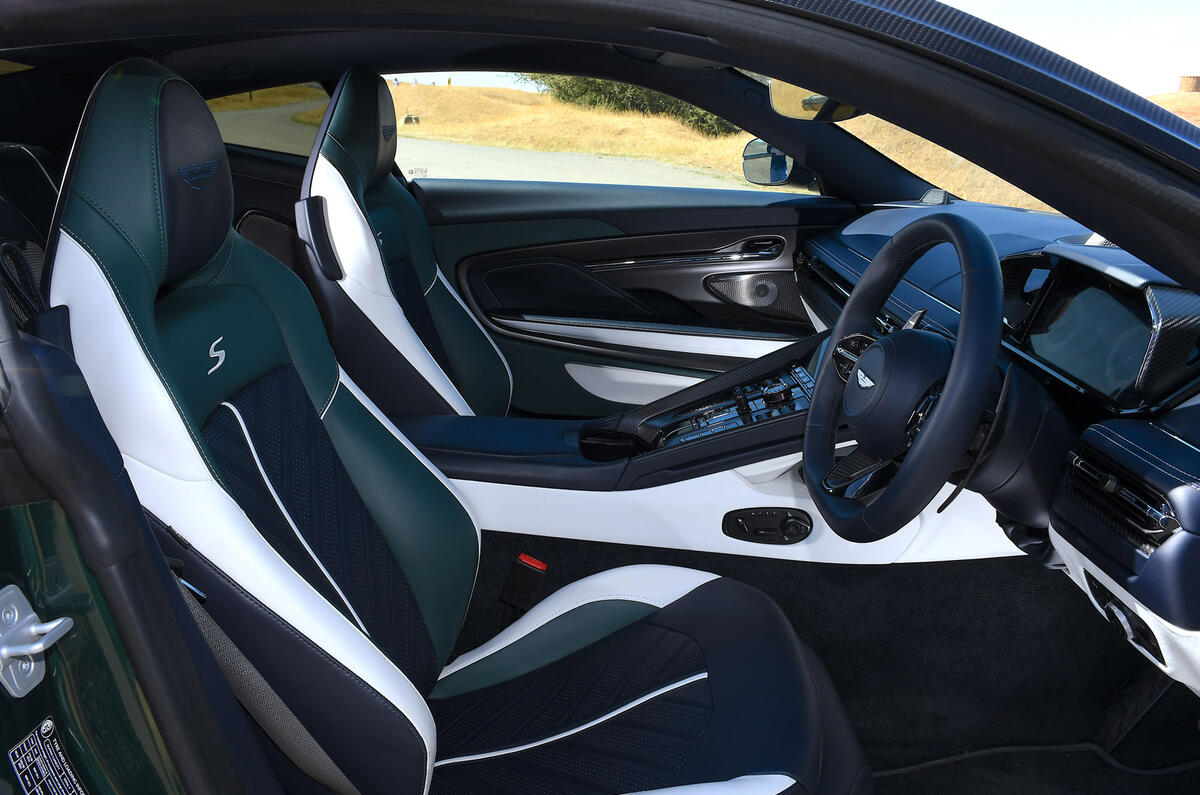
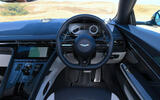
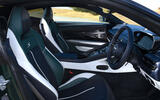
When it comes to the interior, changes are few but notable. The DB12 S comes with a new three-way colour combination for its Bridge of Weir leather, which is both embossed (where the detailing rises above the surface of the leather) and debossed (where it’s pressed into it). Our test car’s faintly Wimbledon-themed combination struck all the right notes of specialness and flair. There are also some fairly subtle S badges deployed here and there, not to mention Alcantara in places where you would normally find hard plastics. It’s subtle but decadent.

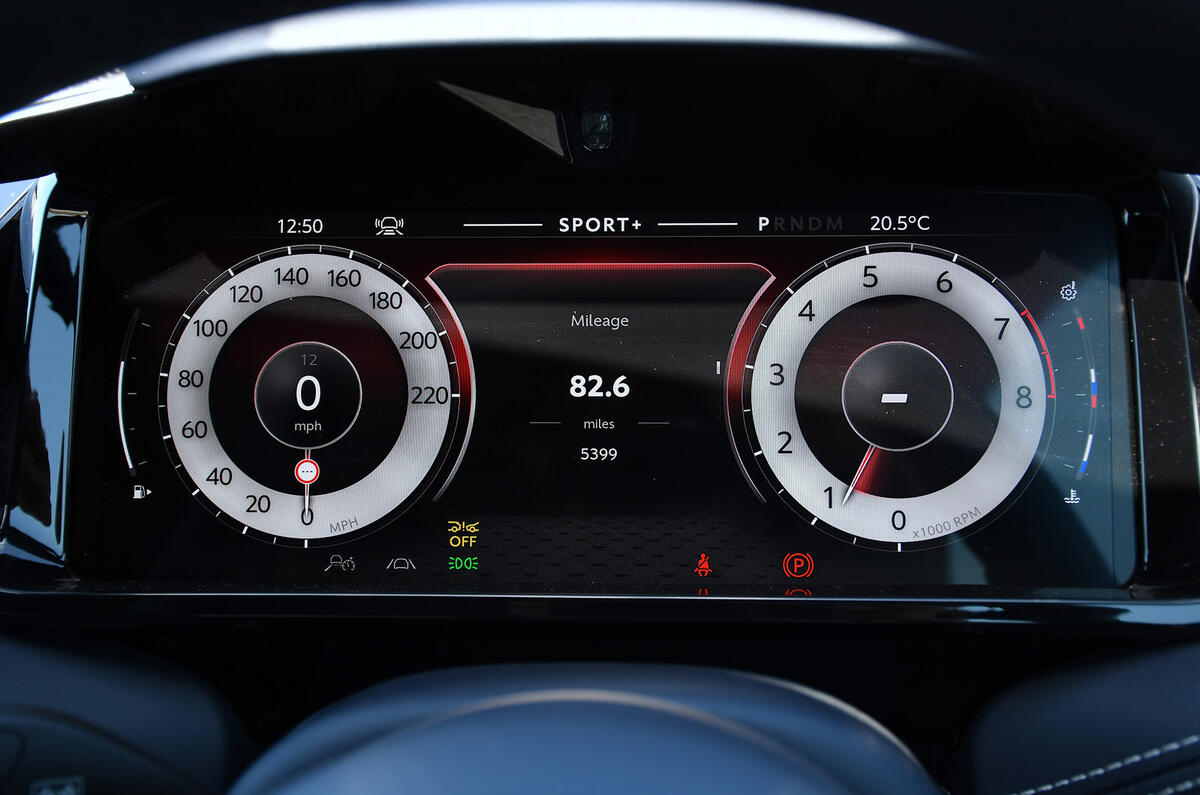
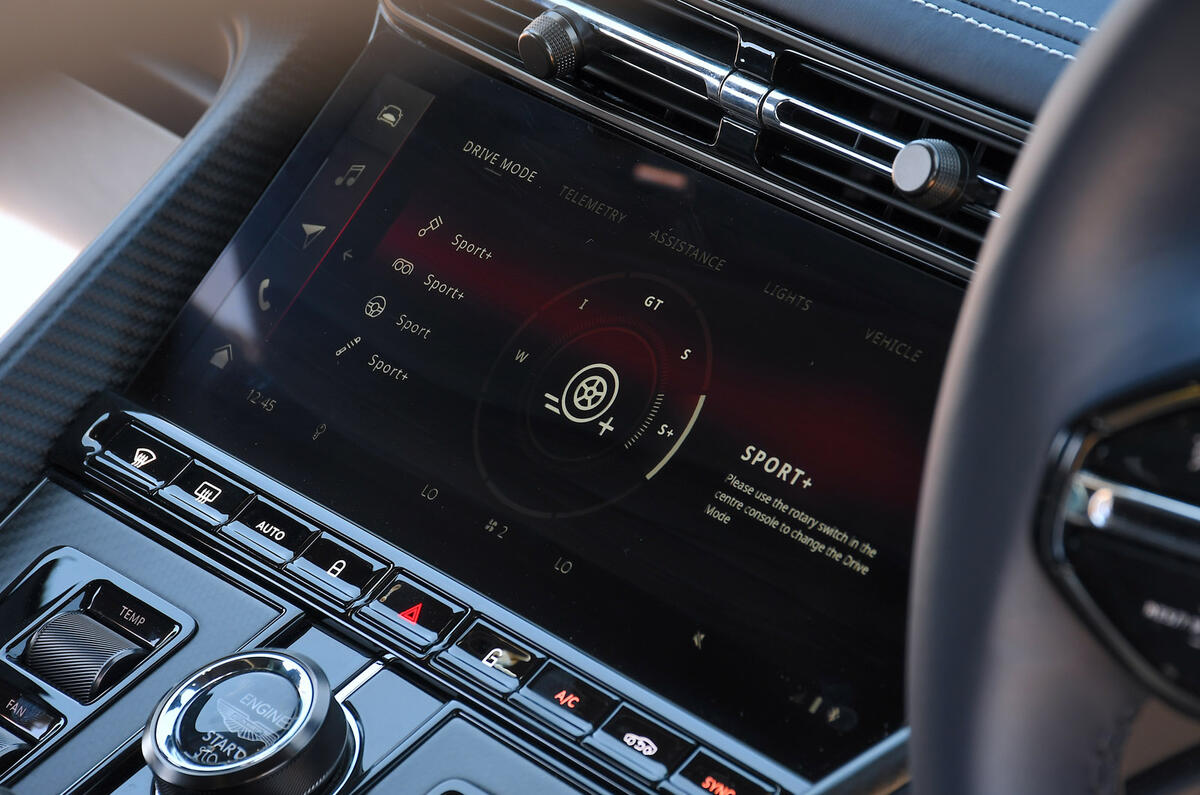
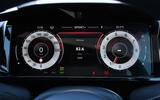
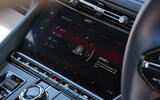
The main development is the addition of Apple CarPlay Ultra technology for the car’s infotainment and instrument screens: a broader integration of the mirroring technology than most other brands have yet to adopt, which is intended to act as your main interface with the car (you can control ADAS and climate through it, for example).

They’ve sorted out the strange overheating problem the central touchscreen had when it was introduced. Sounds like a minor issue but it got so warm it was almost like having the heating on at times. Glad it’s fixed.

This appeared on the DBX and Vanquish last year and will be rolled out onto all of Aston’s cars by the end of this year. It makes the car’s instruments look slightly more generic, and takes a little bit of learning, but (for Apple phone users, at least) usability is certainly better with it than it was.

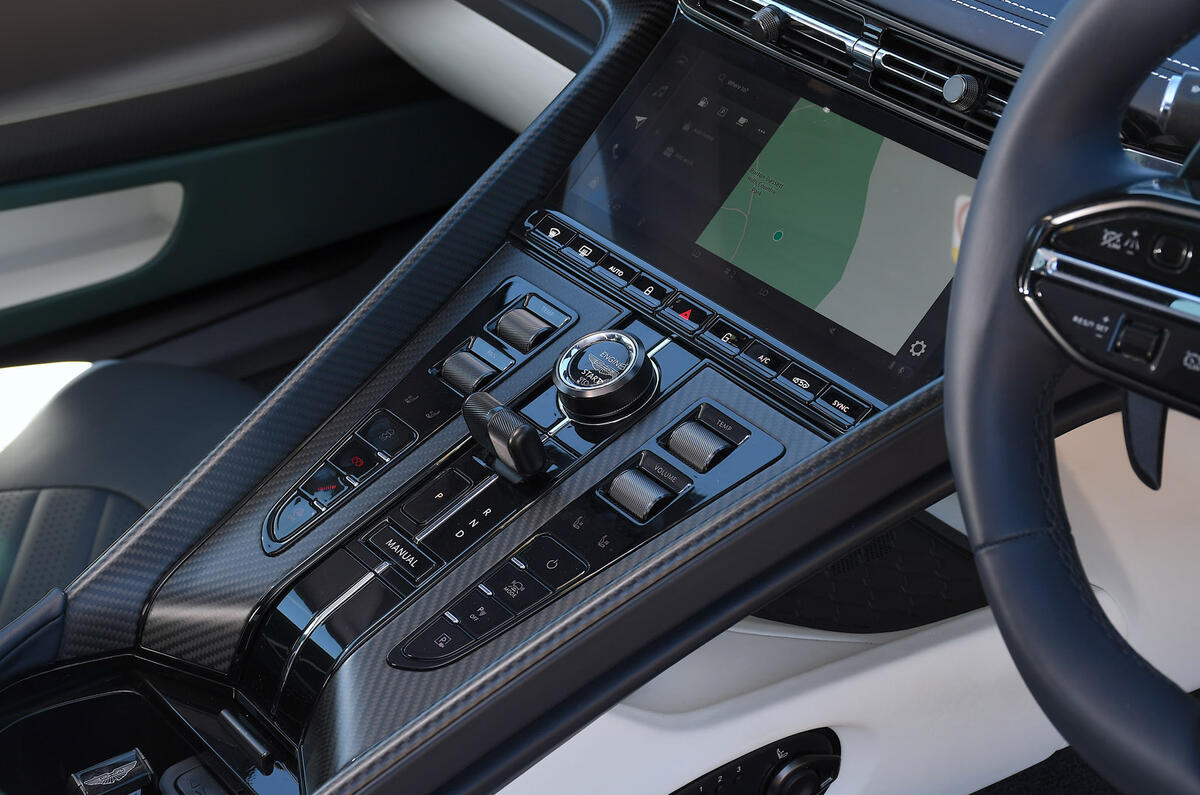
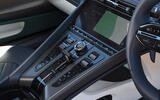
Elsewhere the DB12’s comfort seats have now been deleted from production, so all DB12s will get sports seats as standard. They are comfortable enough in their own right, if a little firm-feeling and thinly padded in places. There are brighter colour combinations available for the interior, combined with a racier carbonfibre finish for the centre console and fascia. And Aston gives you plenty of physical switchgear to make multimedia usability that bit easier.

As for ergonomics, our road test rule shows front occupant space to be essentially identical to that of the longer-wheelbase Vanquish. Certainly this is an excellent cockpit in which to dispatch several hundred miles, with the scuttle cut at a level that is neither so high that it makes the place feel claustrophobic and intimidating, nor low enough to lose that big, bruising, front-engine GT feel.

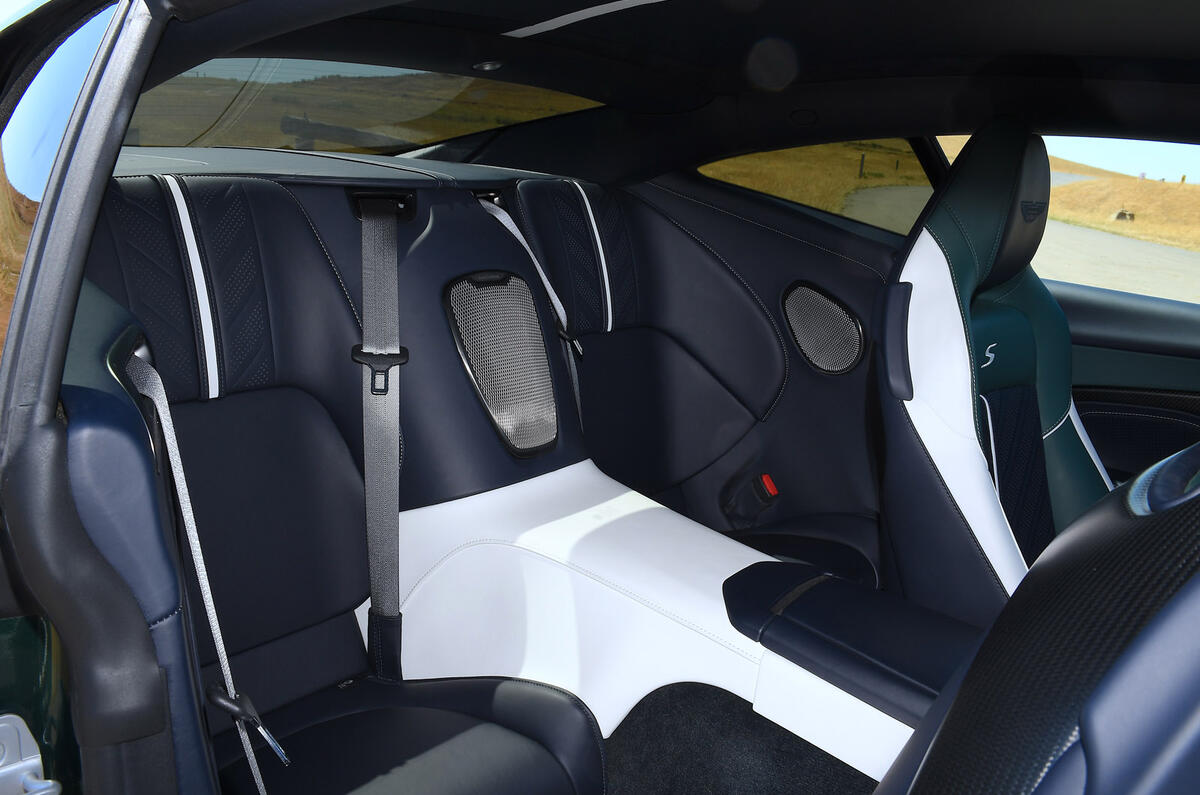
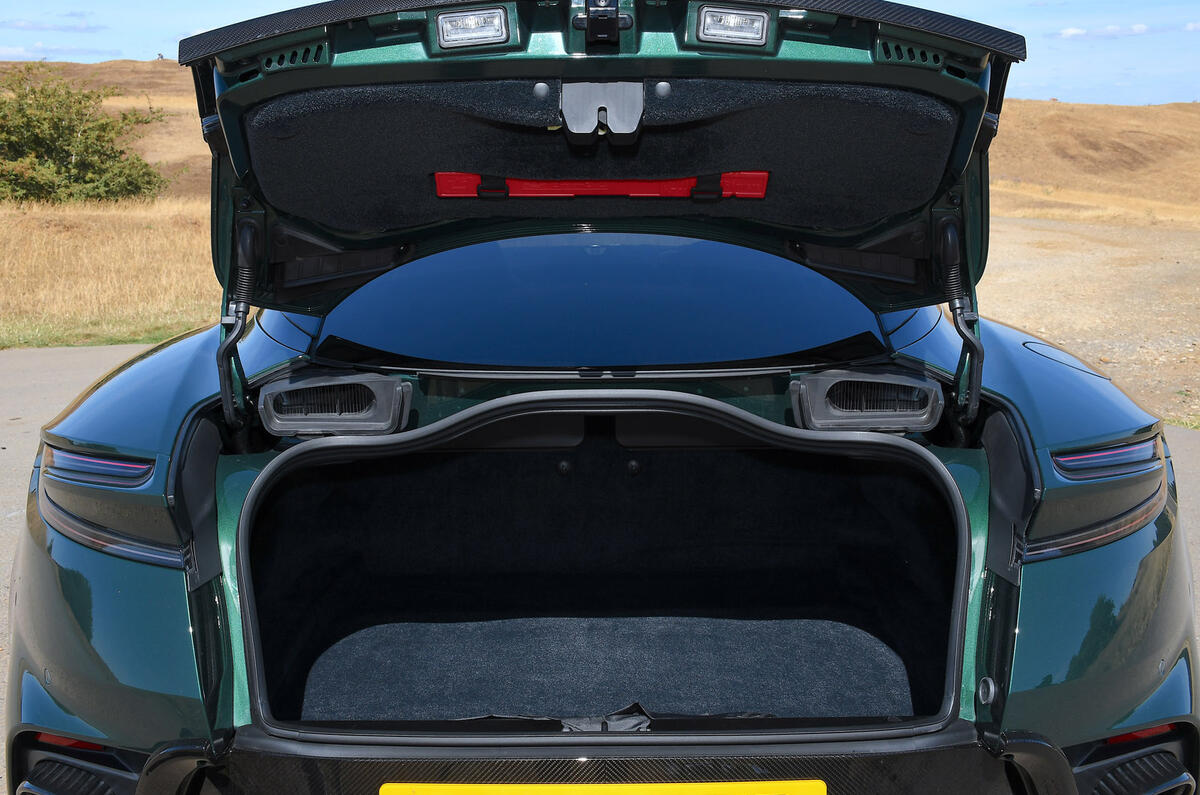
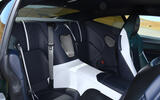
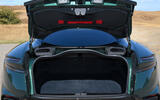
Finally, the S’s 262-litre boot is the same as the regular DB12’s – smaller than in some cars of this ilk and a bit harder to access by dint of the fact that the Aston Martin has a notchback-style bootlid, not a hatchback rear end. The back seats remain small and tight; barely usable even by the smallest adults and youngest children, really. Much better for some added duffel bags if you’re going to be away for more than a night or two and the boot isn’t quite capacious enough.

ENGINES & PERFORMANCE

9
Aston Martin DB12 S review 2026 017

Torque fill is not in the DB12 S vocabulary, and so lower- and mid-range response for this entirely unhybridised V8 can be slightly soft to pedal inputs.

However, it is certainly robust-feeling when it lands and for a machine that will carry its occupants in real comfort, the Aston’s savagery can come as a shock. Moreover, no testers felt that turbo lag had been exacerbated by the dialling up of boost pressure versus the regular DB12. What you will notice in the S is the way the voice and ferocity of the delivery builds with revs, surging to the 7500rpm limiter without the slight breathlessness of the non-S.

And so to the numbers. Aston Martin has habitually tuned its ZF-sourced gearboxes for alacrity on the move rather than standing-start prowess (interestingly there’s a trade-off here). As such, during a launch-control start the revs are held at only 2000rpm. It’s the kind of stunt you can pull when 590lb ft arrives at only 2750rpm.

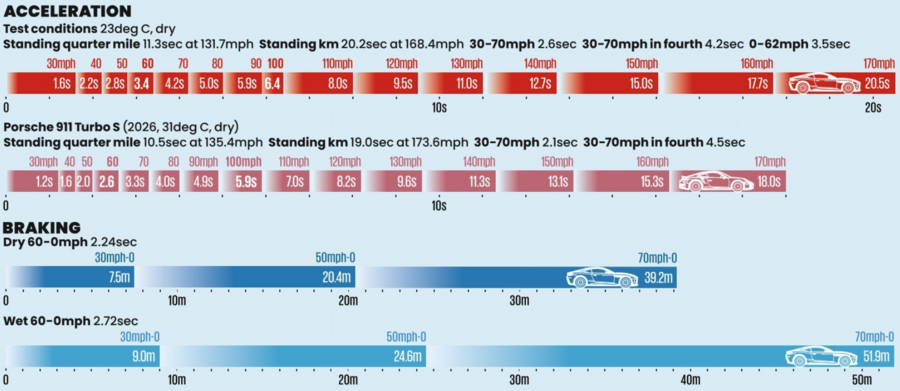
Our test car subsequently fired itself to 60mph in 3.4sec, matching Aston’s claim. This is just three-tenths shy of the time set by the 824bhp Vanquish. Surprisingly, by 100mph the DB12 S has closed the gap to just two-tenths, though thereafter the V12 power of its bigger sibling begins to tell. In fact, the new Vantage is also quicker than the DB12 S to 150mph. This is what you get from putting the same hulking powertrain in a considerably smaller machine.

Aston deserves credit for creating three models of similar speed but clearly demarcated in character and use case. You might want to look elsewhere, of course, and if straight-line speed and touring chops are what you want, the new 911 Turbo S is easily quicker than any of the front-engined Brits. Not quite as tractable, mind: 4.5sec for 30-70mph in fourth for the Porsche is beaten by the 4.2sec of the DB12 S.

The Aston Martin also stops well. Remarkably well, in fact. We know Michelin’s Pilot Sport S5 is a superb tyre and the carbon-ceramic discs resemble Chinese banquet tables, but in similar conditions our test car’s best 70-0mph stop of 39.2m bettered the best stop of the Turbo S. Is such monumental stopping power worth it for the not infrequent brushing and whimpering of the rotors in normal use? Possibly, especially since the car’s wet-braking display was every bit as impressive as the dry runs.

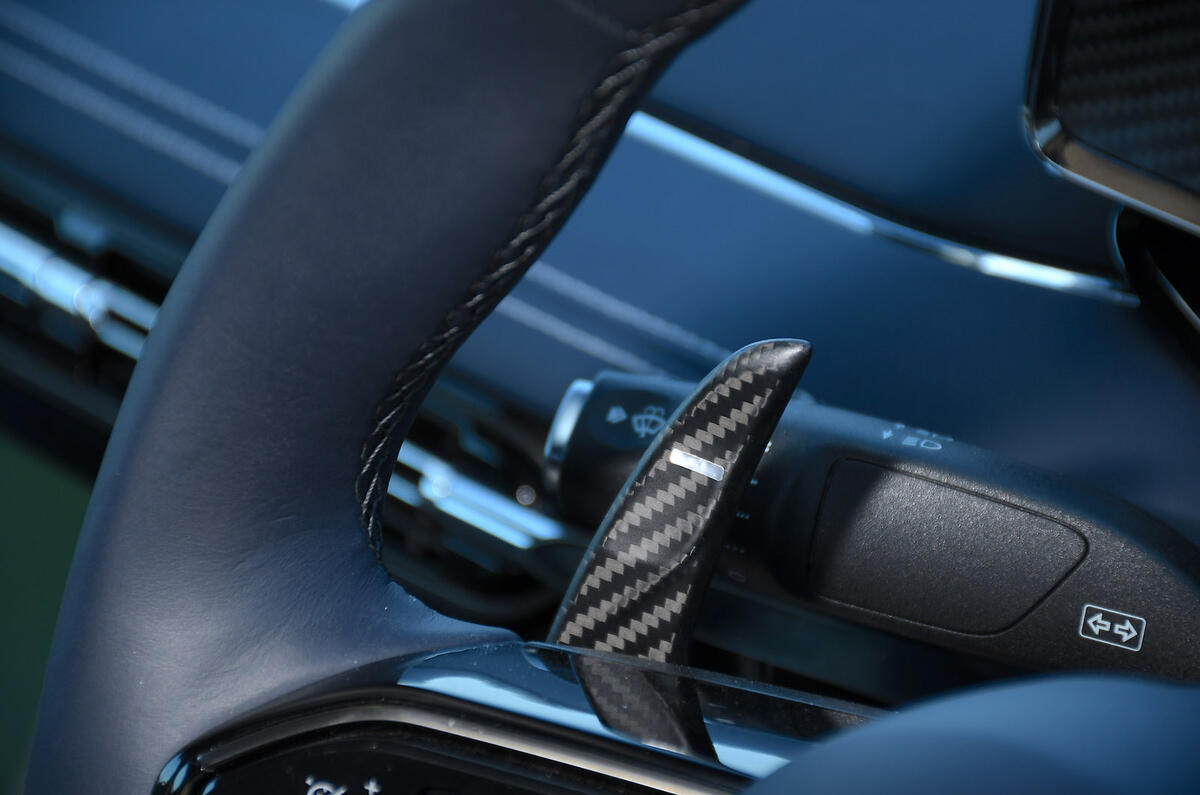
That slight feeling of mechanical presence, for want of a better word, is something you find elsewhere. The car uses a rear-mounted transaxle eight-speed automatic gearbox, whose shifts come pretty quickly, and also with just a hint of a clunk, and the odd vibration, on occasion. And you can detect a little bit of propshaft whine from the transmission tunnel at motorway speeds, but it’s all part and parcel of this car’s slightly old-fashioned, appealingly honest, muscular and mechanical mystique, which the S revisions seem to bring to the fore. 

RIDE & HANDLING

8
Aston Martin DB12 S review 2026 019

When we drove this car for the first time in Provence earlier this year, we questioned whether the ride and handling balance was better with the S revisions, or without them. The answer then was ‘it’s complicated’ and the same is true having driven the car in the UK.

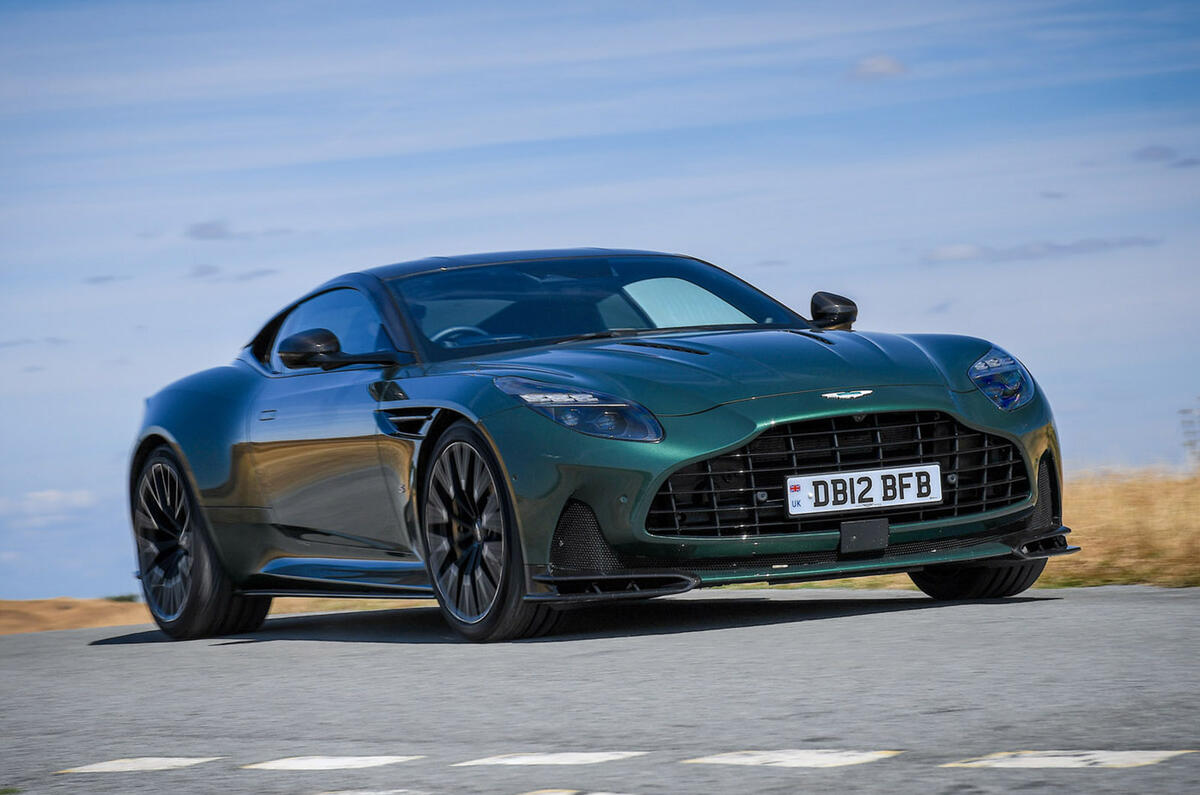
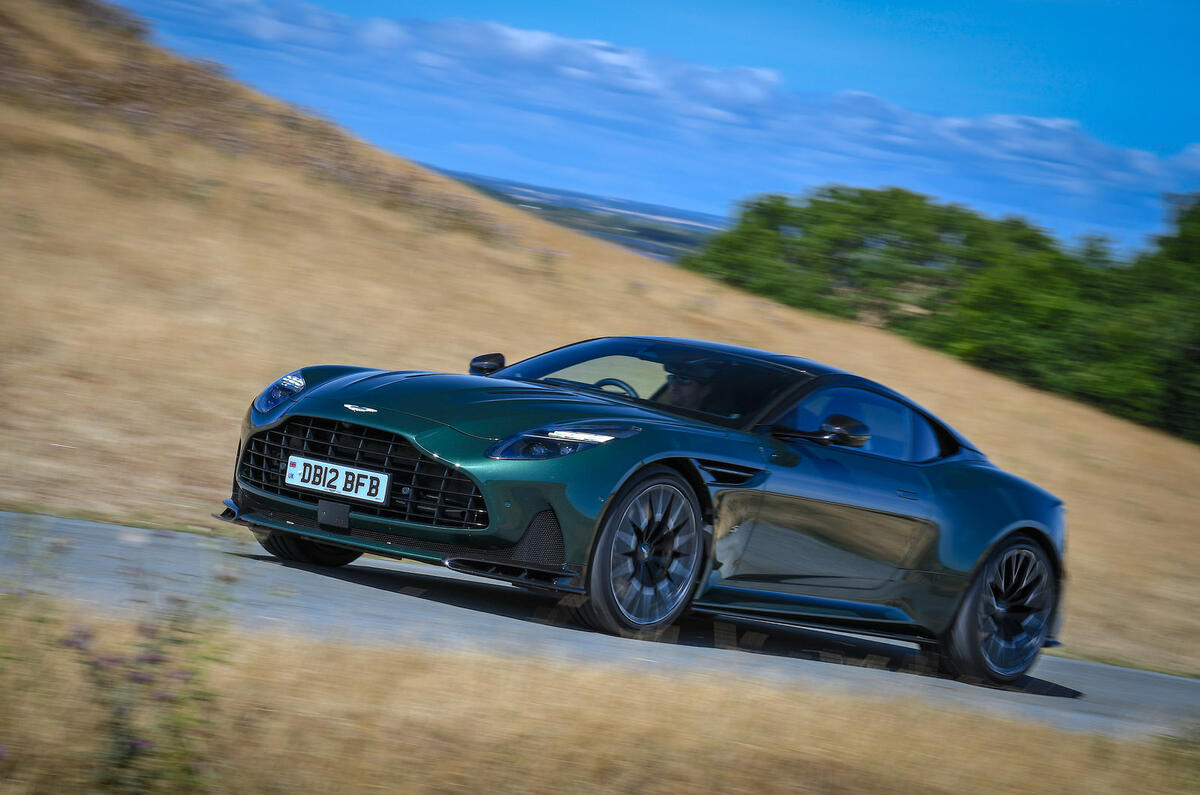
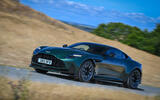
First, the good bits. Modern Astons have an uncanny ability to get into corners in a way that defies the unending length of their snouts and their considerable kerb weights. The S takes this characteristic and runs with it, cleaving into bends with electric front-end response and stability you can generously lean on.

That confidence, and the ability to bring the car’s rear balance into play, is what helps make the DB12 S a genuinely fun super-GT to punt along a good road. We would have preferred it if the car had stuck with the old 315-section tyres of the regular DB12, because it would require less commitment to gently steer the car on brake or throttle, but, as is, only the Ferrari Amalfi feels happier to play about. The steering also deserves special mention: it is palpably more precise than that of the regular DB12, and marries well with the tautness of the revised dampers in Sport mode.

There is real detail in the set-up too. The DB12 S skids for England on track – of course it does – but set the traction control to Track mode and flow it quickly through a second- or tighter third-gear corner with your fingertips, and you can sense the e-diff working its magic as the chassis goes up on tiptoes and pivots mid-corner without the need for additional steering lock. It is something 911s do well and is evidently something that is now not beyond big, bad, 700bhp Aston GTs.

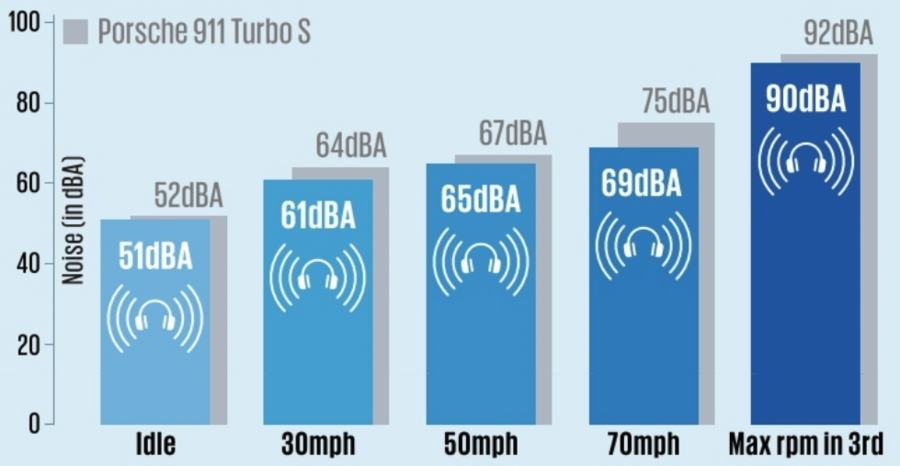
At the same time, there is noticeably less isolation from the road surface in the S. That new rear axle tuning also makes for more fidget and head toss in the ride over bumpier B-roads, while the new damper tuning makes for a noisier secondary ride, even in GT mode, which is the most languid.Recording 65dBA at 50mph and 69dBA at 70mph, the DB12 is quieter than a Vantage S but no more isolated than the Vanquish – a model unapologetically intended to offer a more intense experience.

So, to the return to the premise: is this a better sports car, keener and less floaty, than the regular DB12? Certainly, though we might contend that it still plays second fiddle to the alternatives from Porsche and Ferrari when it comes to raw precision. But is it a better DB12 all round? Perhaps it is for the German, American or French owner lucky enough to enjoy smooth roads in all categories. British drivers should be more wary of the S’s more sporting outlook, though, even if we say this in the context of the car being well mannered and enjoyable company both day to day and for touring.

MPG & RUNNING COSTS

8
Aston Martin DB12 S review 2026 001

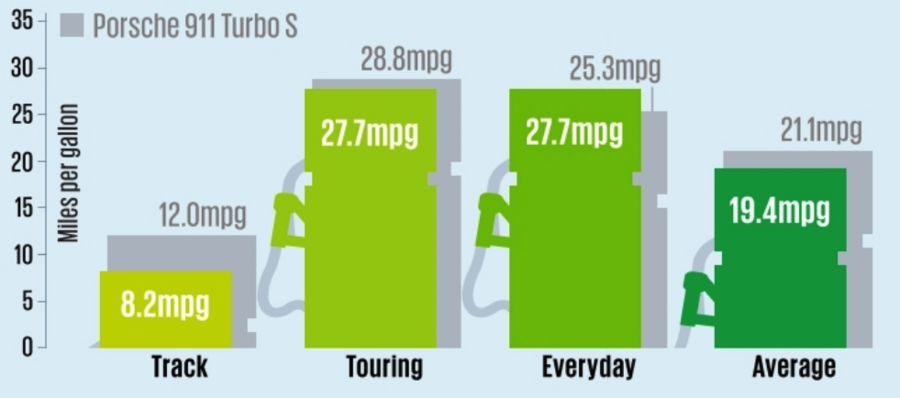
The DB12 S has a slightly smaller fuel tank than that in the Vanquish but 78 litres is still enough to give the car nearly 500 miles of motorway range, based on our touring economy of 27.7mpg.

As it happens, we recorded the exact same figure on our simulated ‘everyday’ route, which is good going for a car for this type. Hard driving is another matter, of course, and expect to approach single-digit economy with the V8 on boost for sustained periods.

More broadly, the S isn’t priced at a huge jump over the regular DB12. So while a regular DB12 coupé is available from £191,000, the equivalent S costs £205,000, even with its standard-fit carbon-ceramic brakes. Volante cloth-top versions of both derivatives are available, the S Volante commanding a slightly greater premium compared with the regular DB12, starting at £218,500.

Options spend can get serious, though, especially when you get stuck into the carbon packages and more extreme elements such as the alien-esque Performance seats. It will not be unusual to see these cars with at least £50,000 of extras fitted.

Then again, this is now business as usual in the haute-GT class, and the Aston’s base price keeps it on a par with the Ferrari Amalfi. It may also surprise you to learn that both cars will cost you less than the new Porsche 911 Turbo S, which for the first time breaks the £200k mark.

VERDICT

8
Aston Martin DB12 S review 2026 027

With outstanding new threats from Porsche and Ferrari gliding into the circa-£200k airspace, there was justification for taking the loping DB12 to a more engaging level.

The result – the DB12 S – is well priced and delivers on the brief, summoning the kind of taut control and ebullient handling that is typically reserved only for the lighter, shorter-wheelbased Vantage. This car is an elegant GT but is also a lot of fun, and the burly V8 now freely hammers its way all the way to the redline.

Aston Martin also deserves praise for the quality of this car’s artful cabin, and for an improved digital array supported by lovely switchgear.

Mind you, there is still work to do to match the best in the class when it comes to blending pliancy and precision, and for many the regular, more rounded DB12 will remain the better option.

Richard Lane

Richard Lane
Title: Deputy road test editor

Richard is Autocar's deputy road test editor. He previously worked at Evo magazine. His role involves travelling far and wide to be among the first to drive new cars. That or heading up to Nuneaton, to fix telemetry gear to test cars at MIRA proving ground and see how faithfully they meet their makers' claims. 

He's also a feature-writer for the magazine, a columnist, and can be often found on Autocar's YouTube channel. 

Highlights at Autocar include a class win while driving a Bowler Defender in the British Cross Country Championship, riding shotgun with a flat-out Walter Röhrl, and setting the magazine's fastest road-test lap-time to date at the wheel of a Ferrari 296 GTB. Nursing a stricken Jeep up 2950ft to the top of a deserted Grossglockner Pass is also in the mix.

Matt Saunders

Matt Saunders Autocar
Title: Road test editor

As Autocar’s chief car tester and reviewer, it’s Matt’s job to ensure the quality, objectivity, relevance and rigour of the entirety of Autocar’s reviews output, as well contributing a great many detailed road tests, group tests and drive reviews himself.

Matt has been an Autocar staffer since the autumn of 2003, and has been lucky enough to work alongside some of the magazine’s best-known writers and contributors over that time. He served as staff writer, features editor, assistant editor and digital editor, before joining the road test desk in 2011.

Since then he’s driven, measured, lap-timed, figured, and reported on cars as varied as the Bugatti Veyron, Rolls-Royce Phantom, Tesla Roadster, Ariel Hipercar, Tata Nano, McLaren Senna, Renault Twizy and Toyota Mirai. Among his wider personal highlights of the job have been covering Sebastien Loeb’s record-breaking run at Pikes Peak in 2013; doing 190mph on derestricted German autobahn in a Brabus Rocket; and driving McLaren’s legendary ‘XP5’ F1 prototype. His own car is a trusty Mazda CX-5.