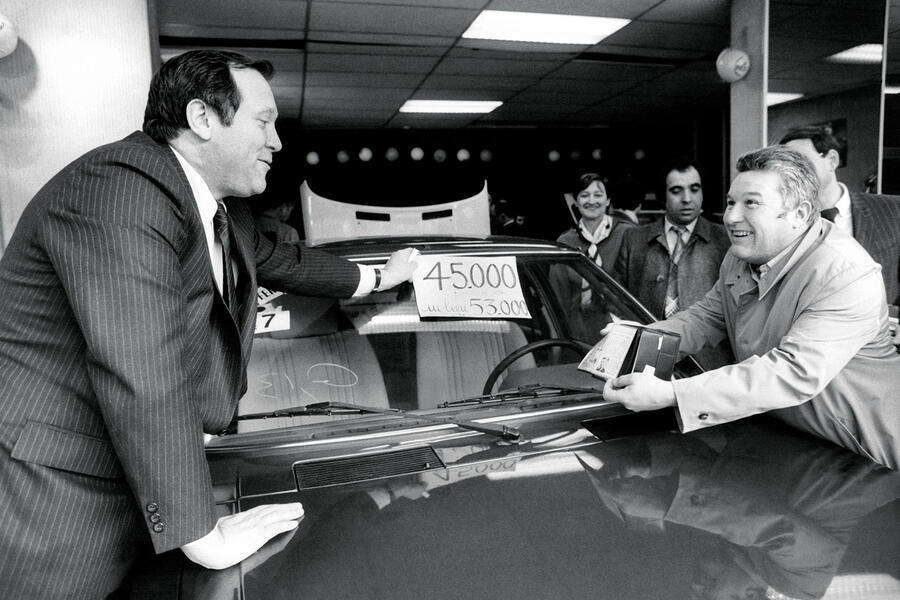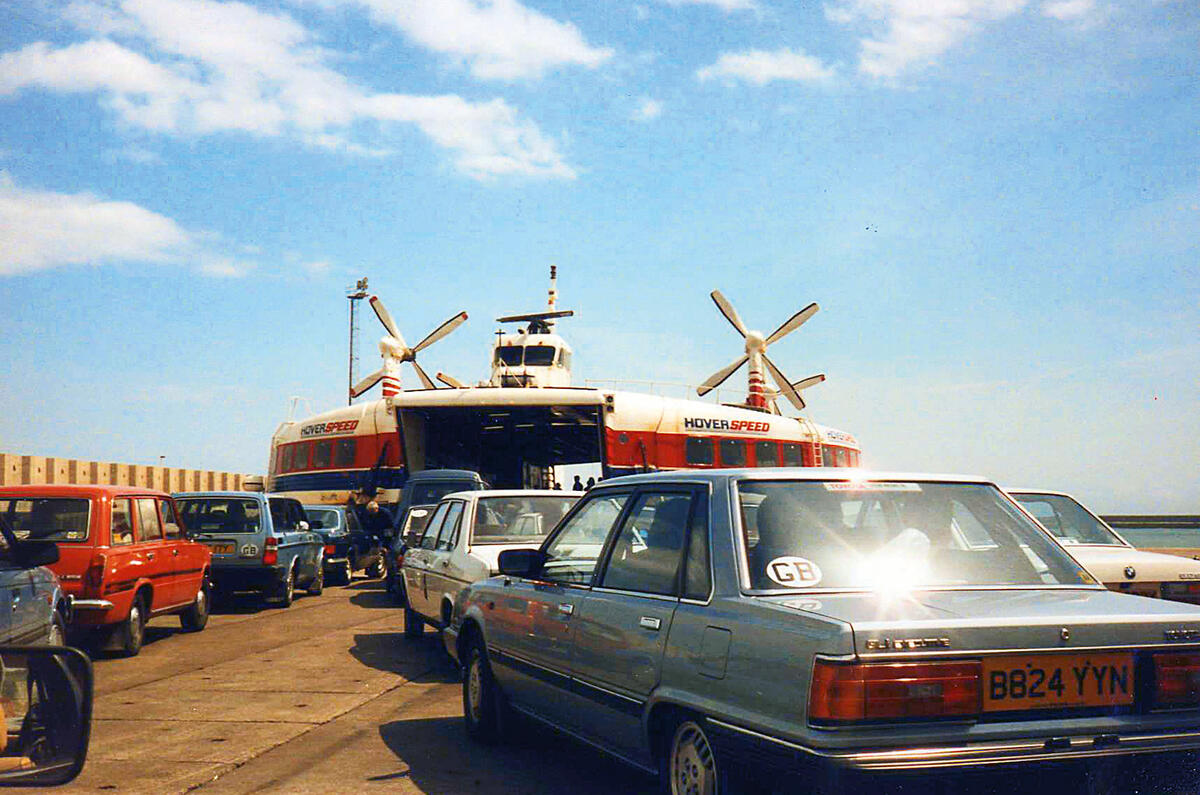

What if I told you that you could get your new Ford for virtually half price, and all you’d have to do is take a chartered bus to Antwerp? You’d probably start packing a bag right away – and your local dealer would probably make an angry phone call to Ford’s head office.
This is precisely what happened when a German company, Markant, advertised just such an offering in early 1981. That Granada Ghia deal was its best, but savings averaged 25% and you could even get 15% off Volkswagen’s in-demand Golf GTI.
We explained: “Markant short-circuit normal trade channels and, apparently legally, arrange for their clients to buy cars in Belgium, import them, paying the VAT and Special Car Tax, registering them in Britain under a concession that exempts cars personally imported from the requirements of National Type Approval. The cars are RHD, to British specification and carry manufacturers’ warranties which may not be repudiated by British dealers and distributors.”
Official importers saw this as “an attack on their marketing structure”, but Markant boss Hans Georg Wiesner simply countered that “if the importers reduced their UK prices to the level of [West] German prices, they could put me out of business tomorrow”.
The possibility of running this operation was a result of “the relaxation of Exchange Control and the long-promised freedoms of movement and exchange amongst countries of the Common Market”, following Britain’s 1973 entry into what would later become the EU.
Amusingly, Markant’s British office was a flat not just above the HQ of VAG Ltd but actually rented from the VW importer! A month after Wiesner spoke to us, though, it evicted him for illegally running a business at a residential address.
But by then Markant had already drawn too much attention to the loophole: VW estimated that of the 837 RHD cars personally imported in the first third of 1981, only 260 belonged to the forces, for whom the exemption was primarily intended.
Predictably, the SMMT fruitlessly lobbied the Thatcher government to close the loophole; British Leyland jacked up its Belgian prices for RHD cars; and an MEP complained to the European Commission about Britain’s Type Approval regulations.
We were deluged with pleas for advice on bagging a bargain abroad, while Which? received some 35,000 applications for its ‘how-to-do-it’ kit.
The process was “really very easy”, so it was no surprise personal imports accounted for more than 40,000 of the 1.5 million new cars registered in Britain in 1981.