











It's Skoda's turn to introduce an affordable small EV – and this one will have its rivals worried

Umbrellas hidden in the doors? Check. Ice scraper in the charging port cover? Check. Little clippy thing to hold parking tickets on the windscreen? Check. The new Epiq may be part of the Volkswagen Group’s new ‘electric urban car family’ and built in Spain on a shared platform, but have no doubts: it’s a proper Skoda.

Platform sharing is often criticised and, when there’s still a mistaken assumption that EVs are white goods, it’s easy to look at the near-identical technical specs of the Epiq, Cupra Raval and Volkswagen ID Polo and ID Cross and assume this is all a badge-engineering exercise. But the Volkswagen Group has a strong track record of platform synergies, and Skoda in particular has form for taking those architectures and turning out distinctive, hugely practical and immensely likeable vehicles.

Skoda claims the Epiq name is because the car is "the perfect guide for everyday explorers navigating the urban jungle and beyond". Err, sure.

So what is the firm's entry into the Volkswagen Group's new family of sub-£25,000 EVs like?

Advertisement

DESIGN & STYLING

Skoda Epiq reveiw 2026 020

Arriving shortly after the Raval and ID Polo hatchbacks, the Epiq is the first crossover to use the cut-down, front-wheel-drive MEB+ platform for entry-level vehicles.

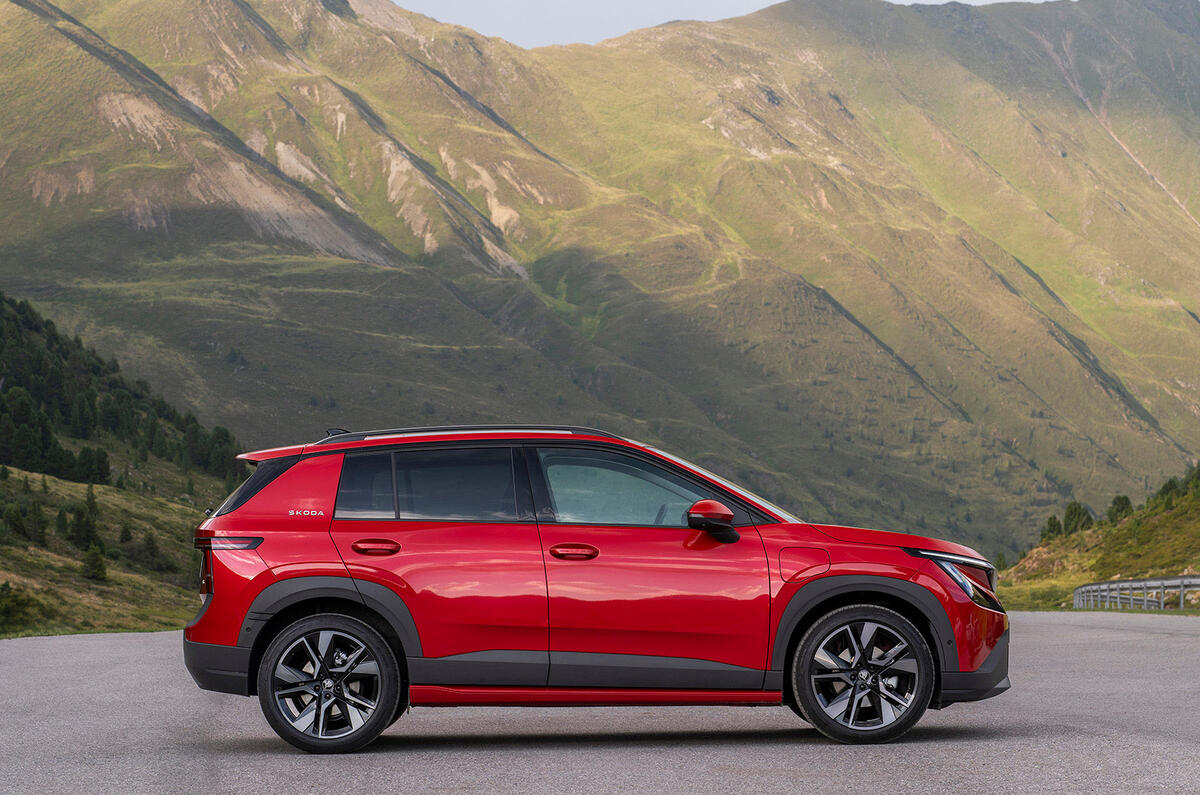
It’s twinned with the ID Cross and built in Pamplona, but Skoda’s reference points were cars in its own range: the similar-sized combustion Kamiq and the larger Elroq EV.

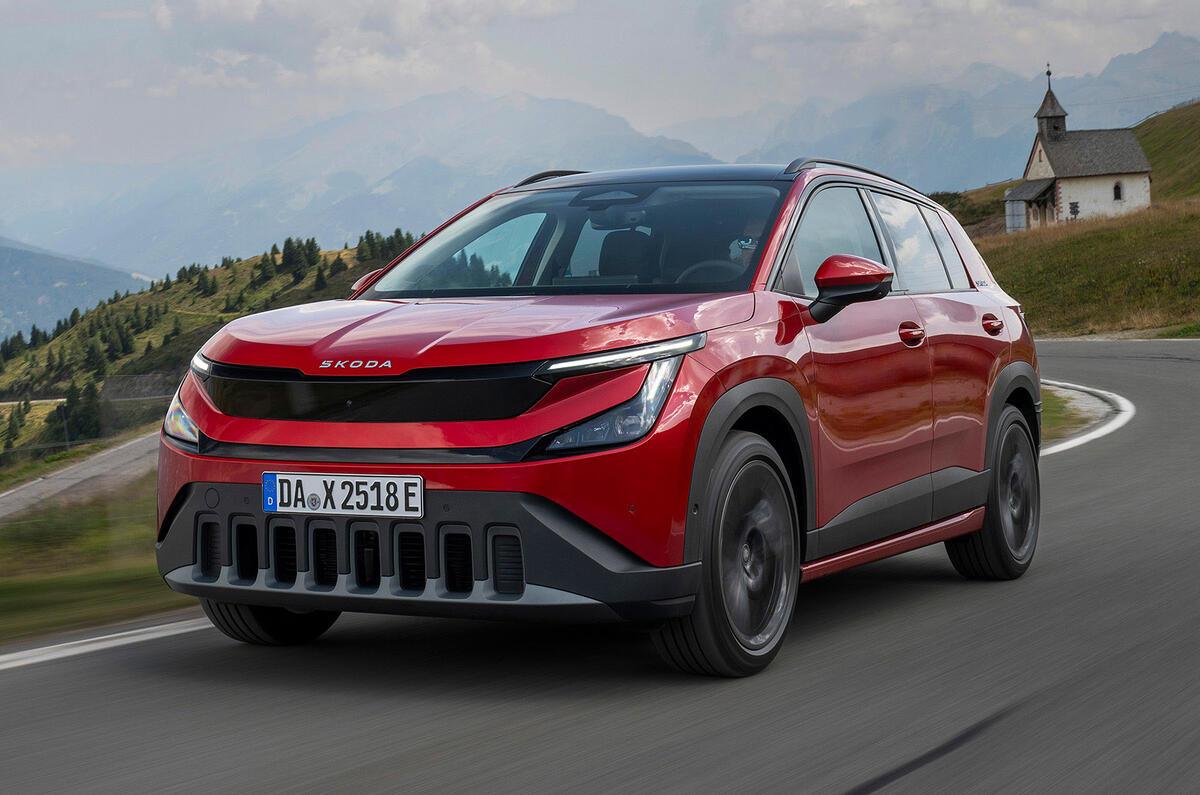
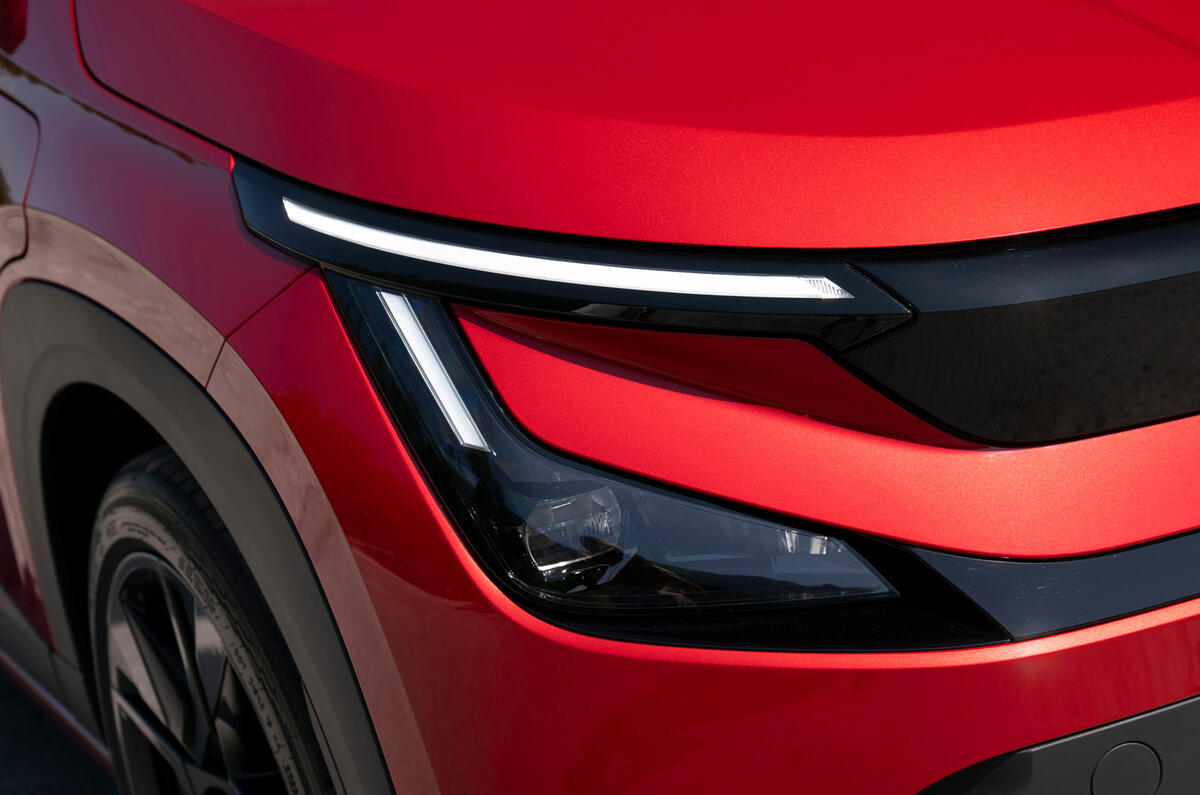
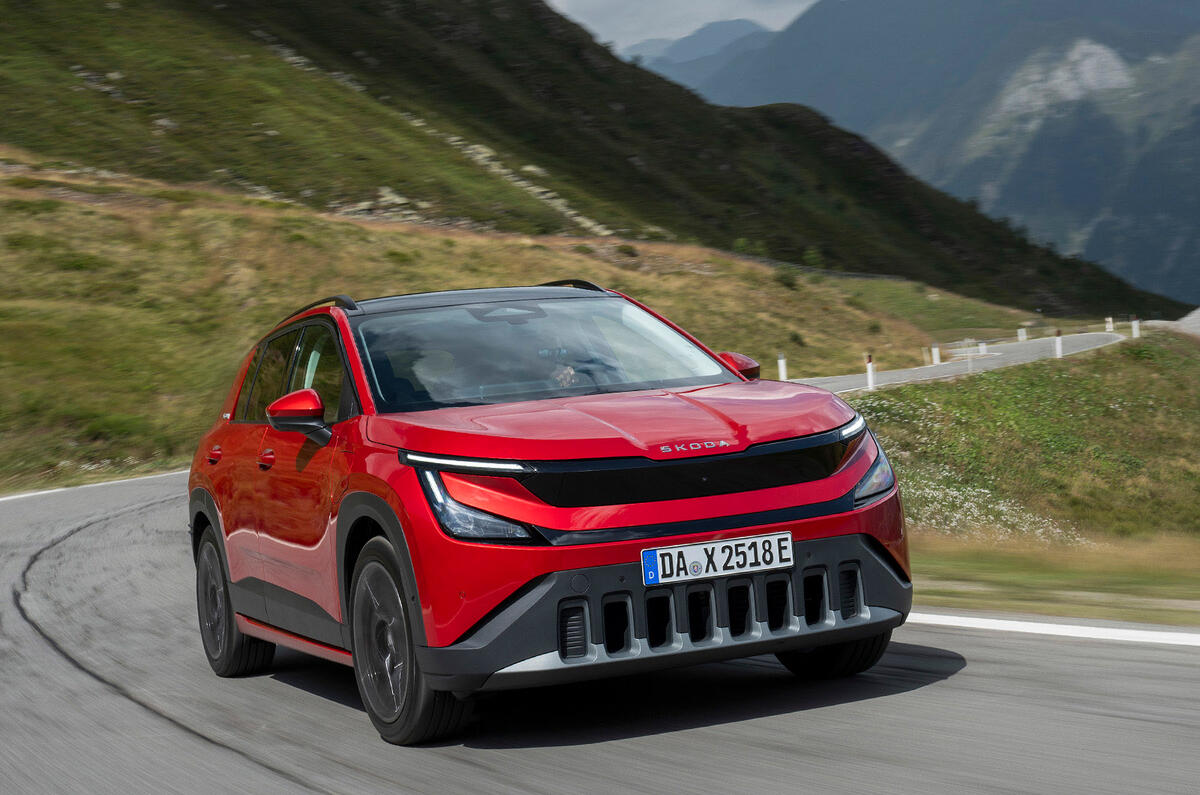
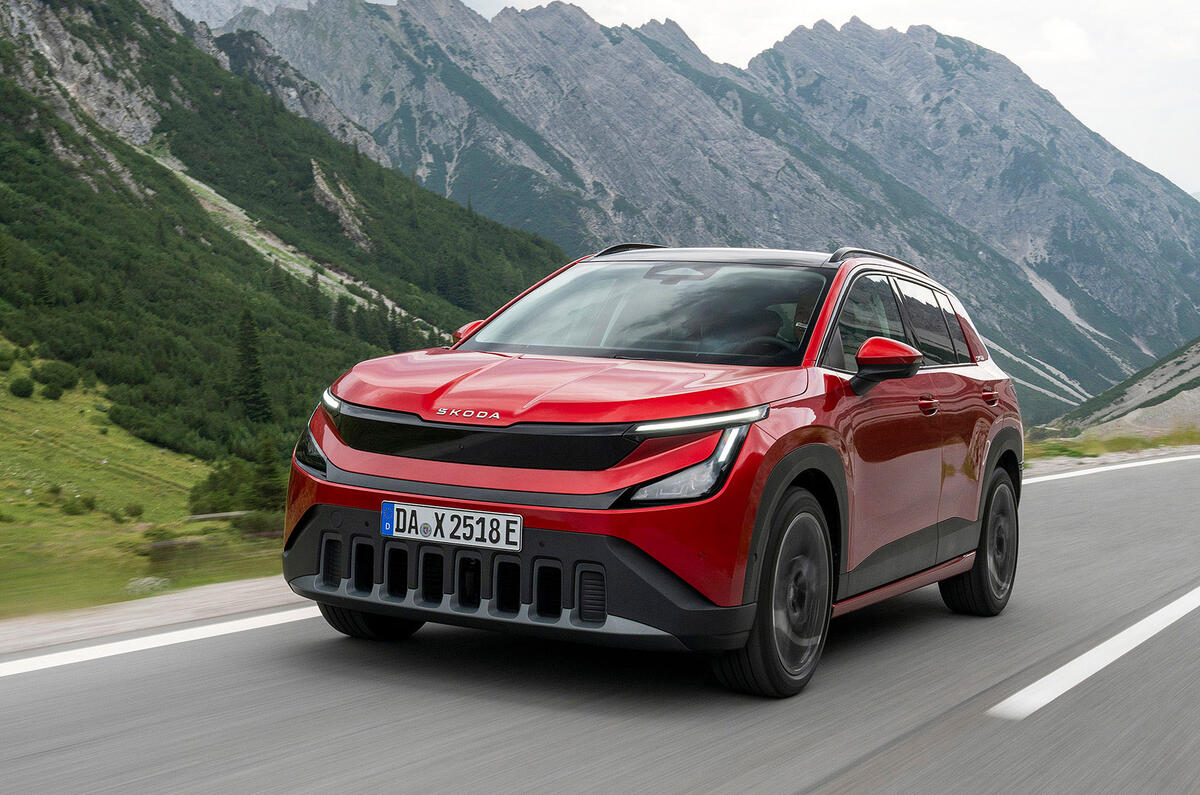
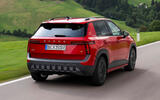
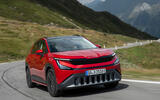
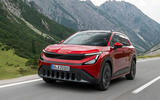
The Modern Solid design principles have optimised the Epiq's aerodynamics too, with the O-shaped air intakes in the front bumper covering active shutters, helping the car achieve an enviable drag coefficient of 0.27.

Given the sales success of the Elroq, the brief was essentially to make that car, only smaller.

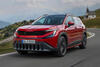
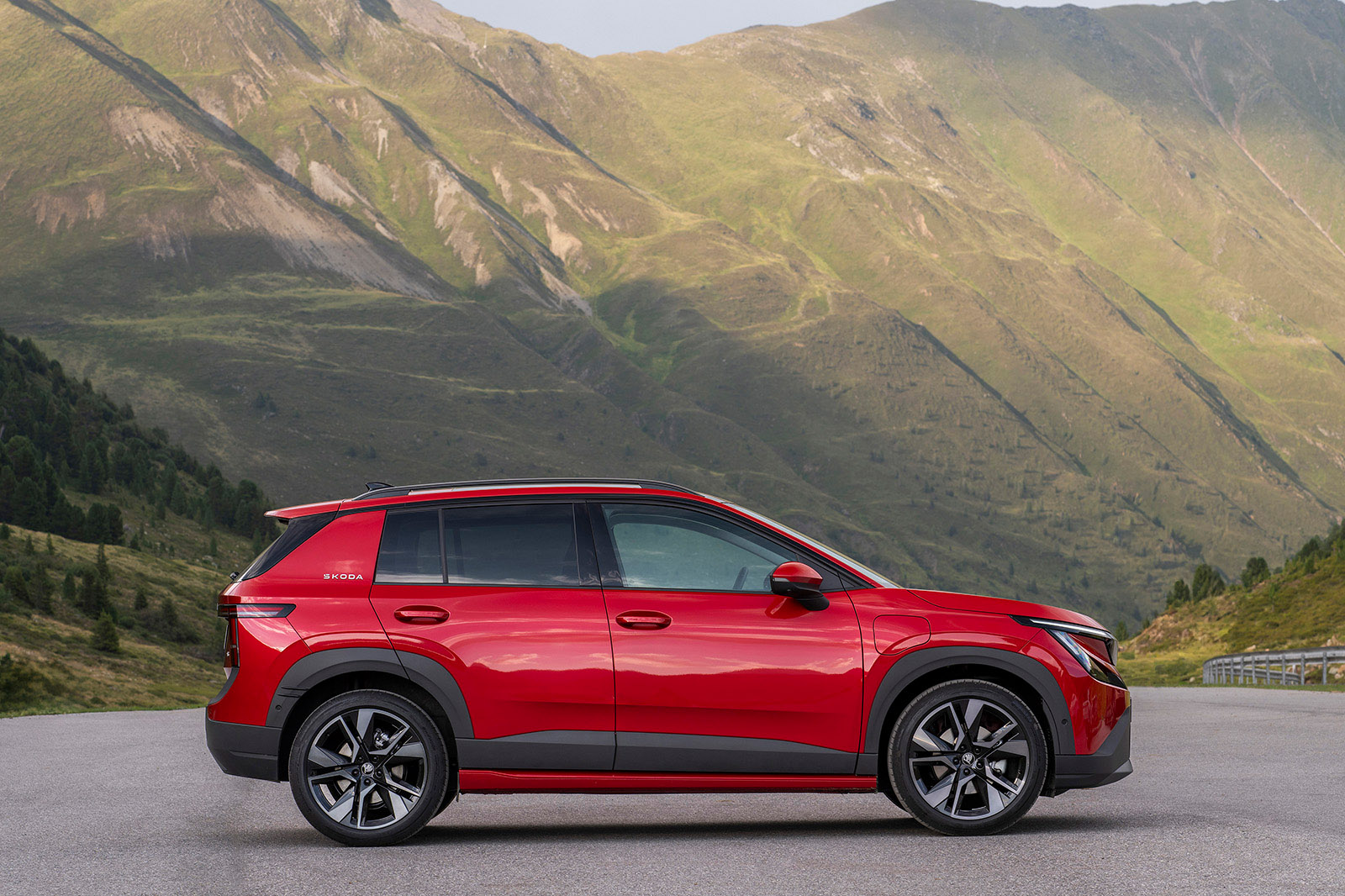
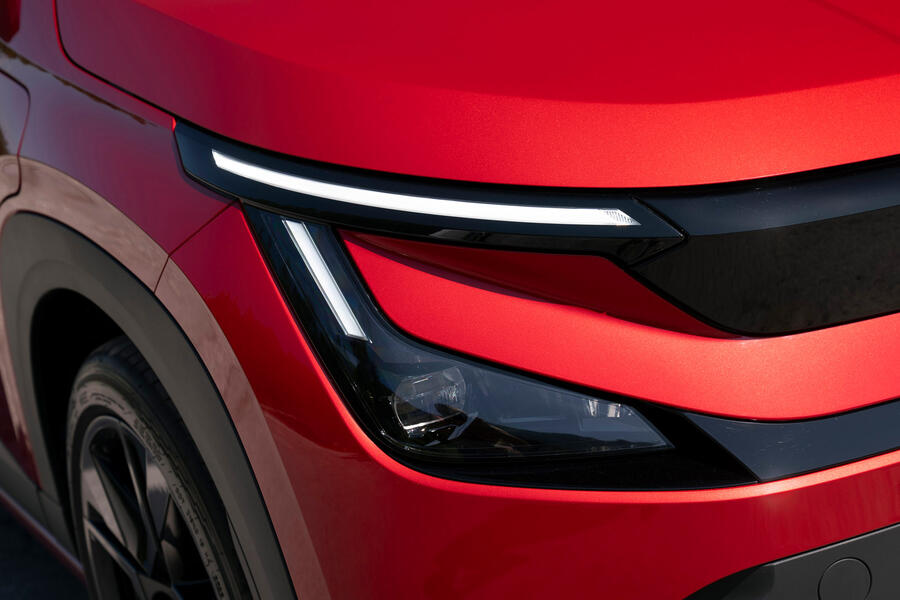
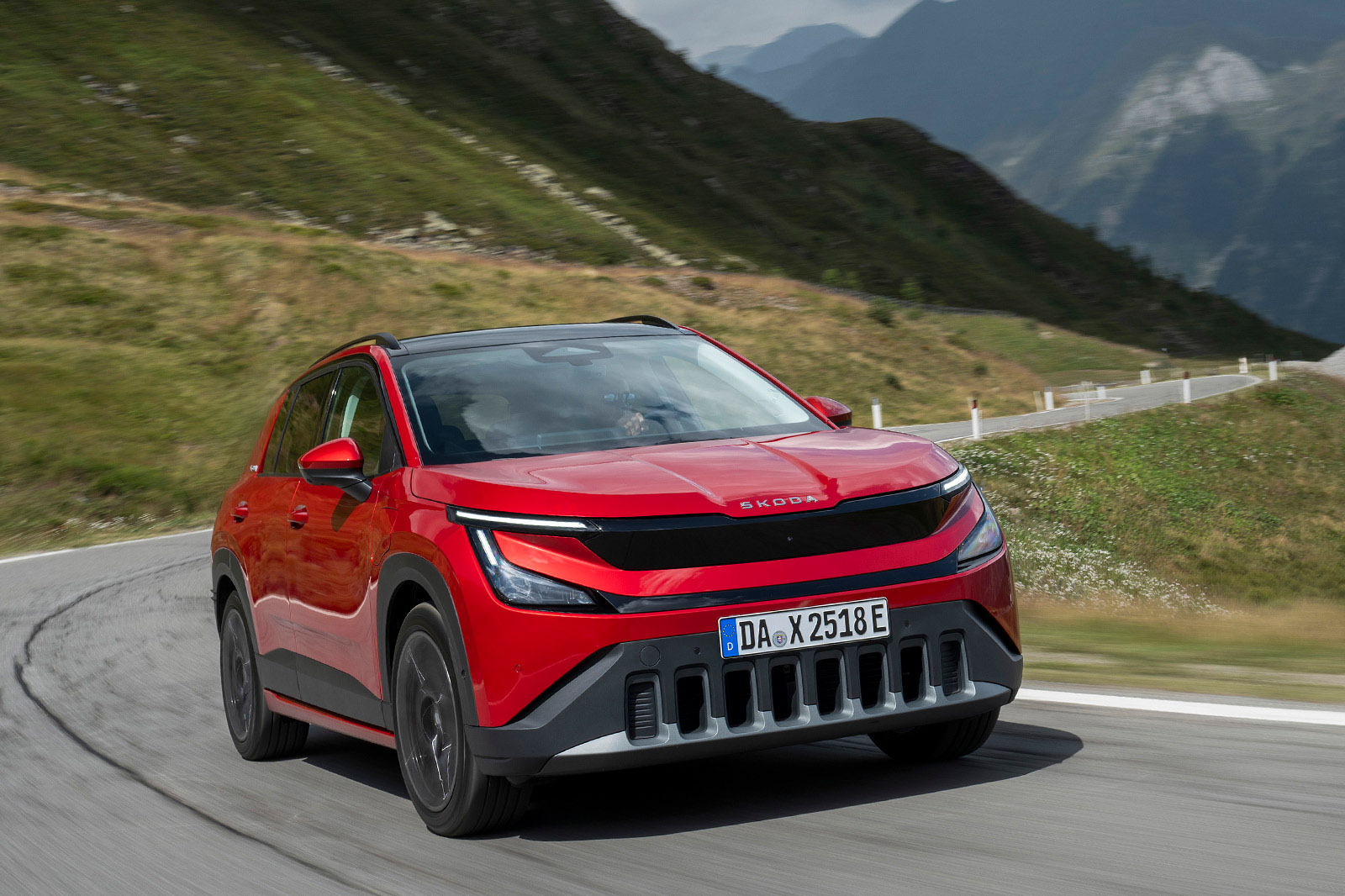
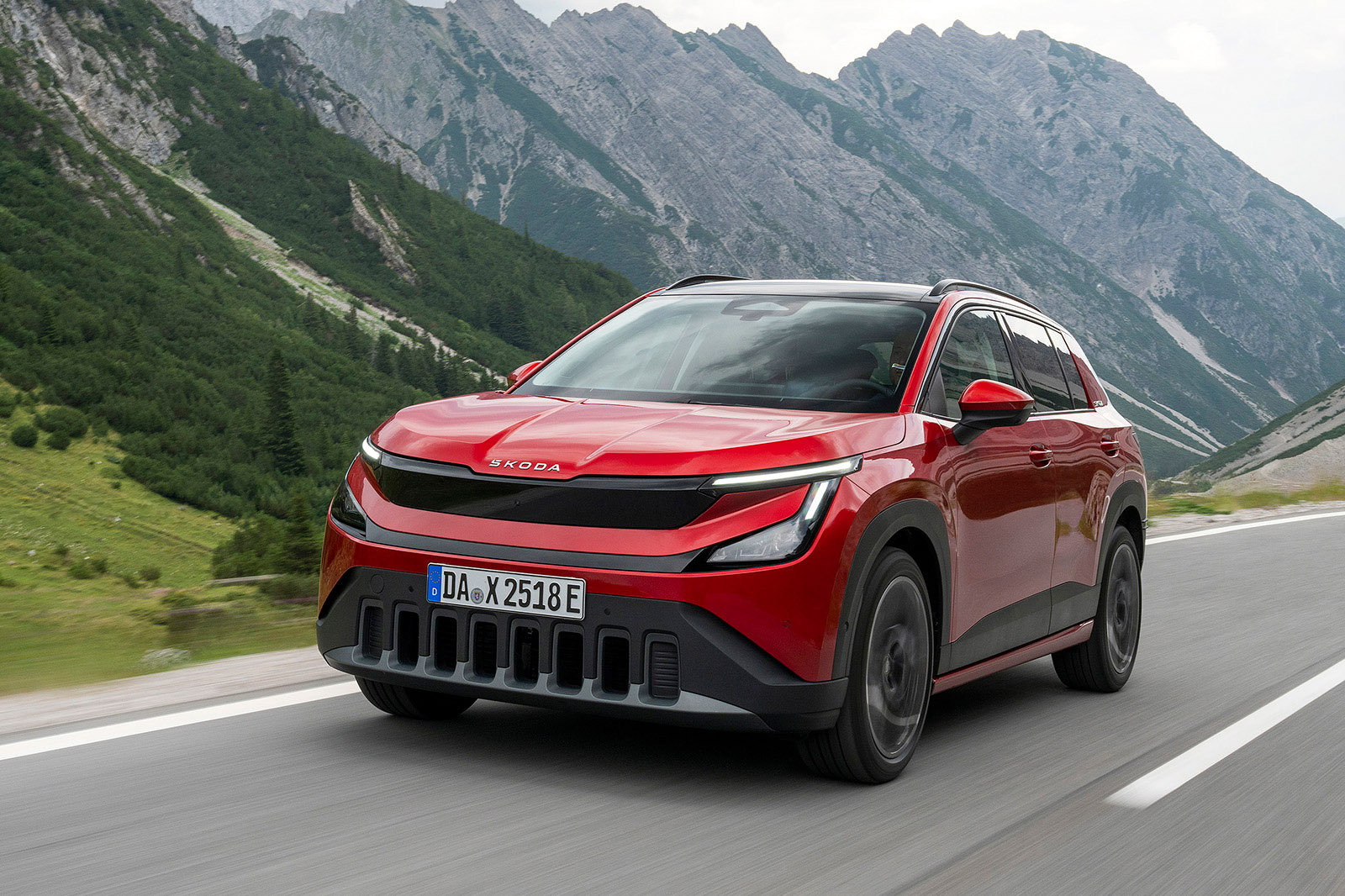
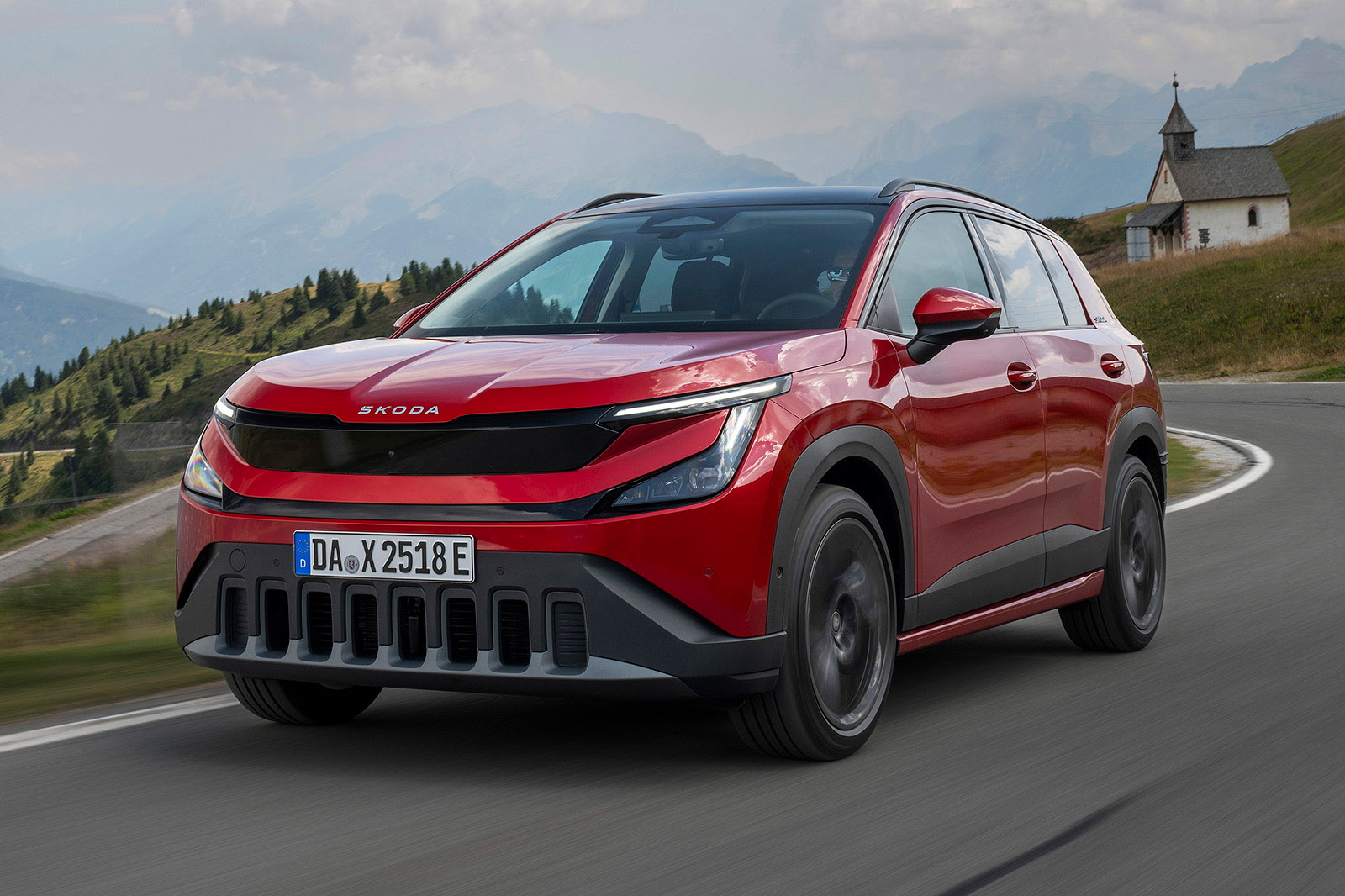
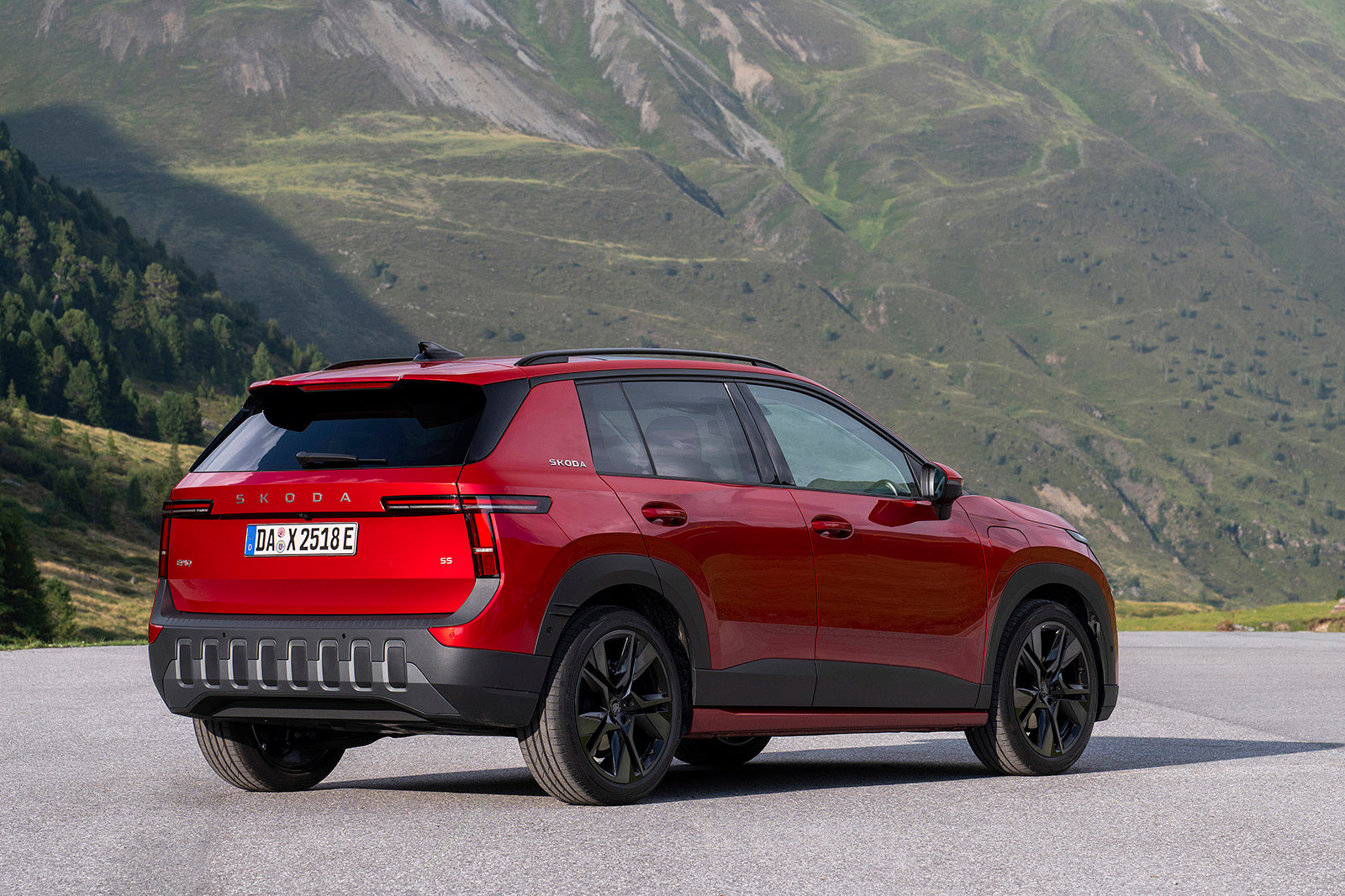
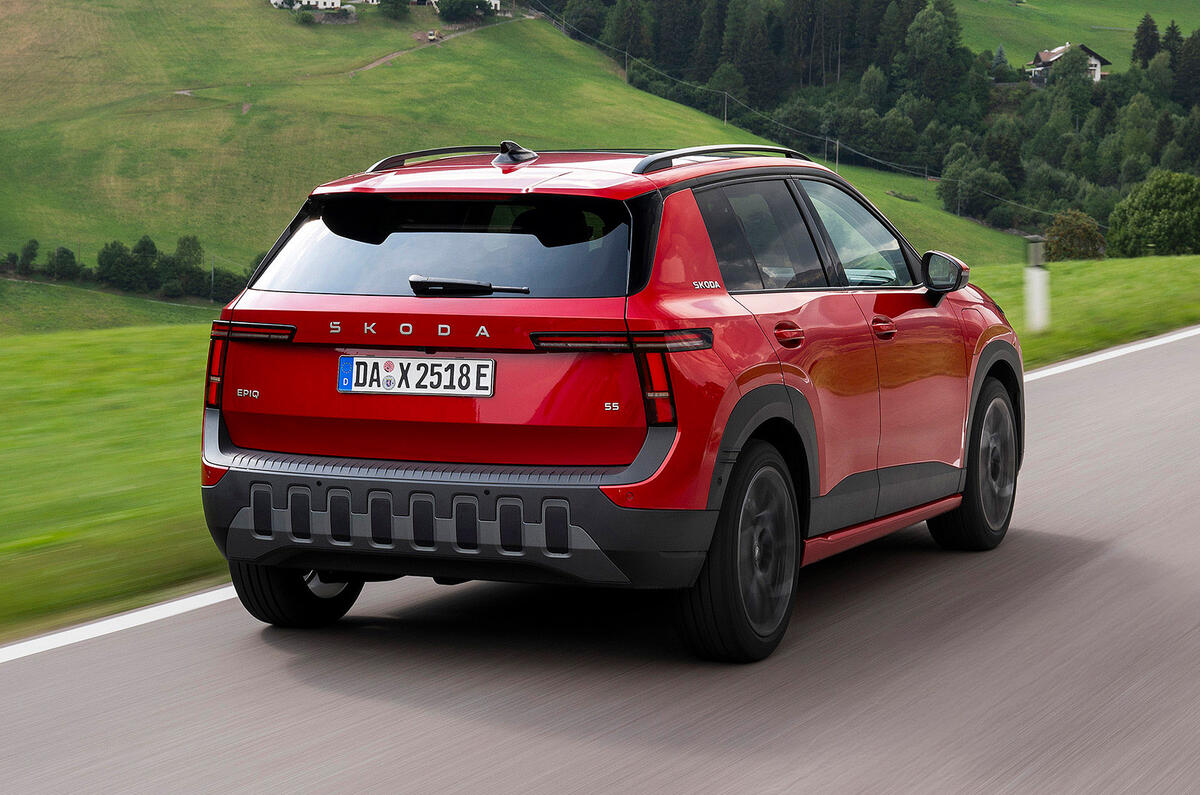
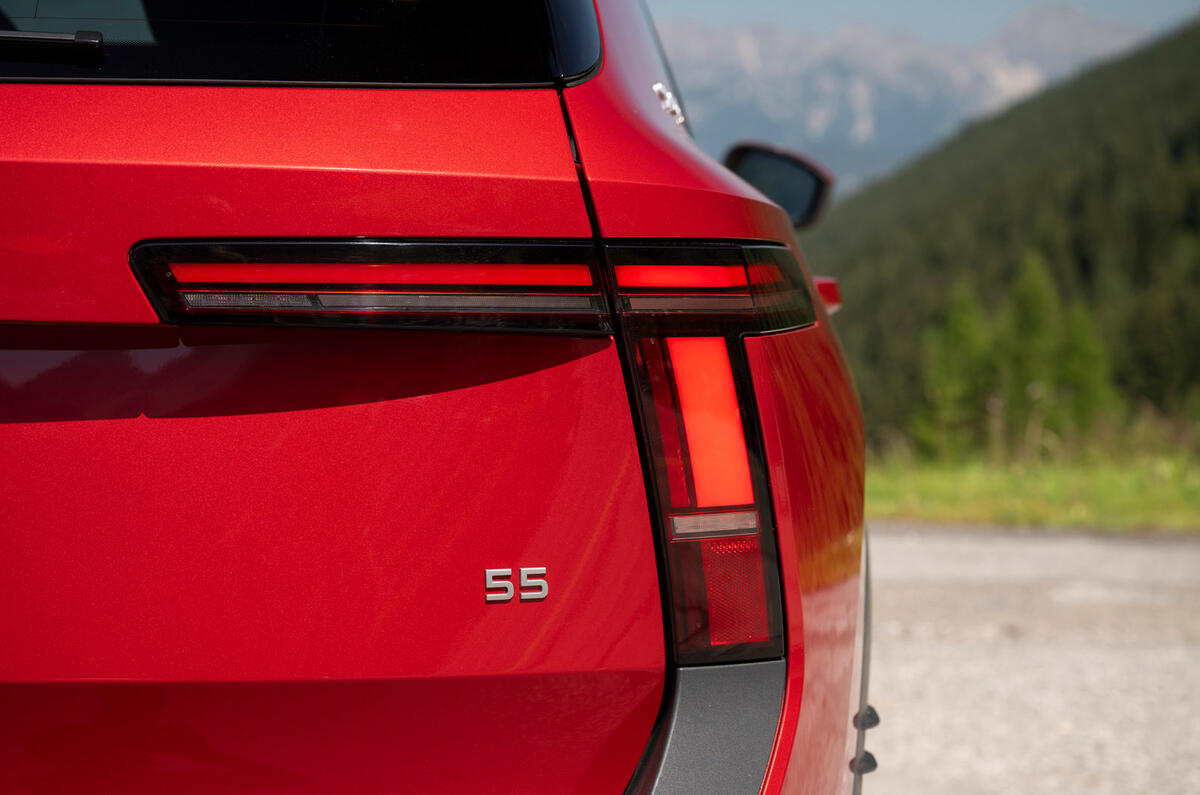
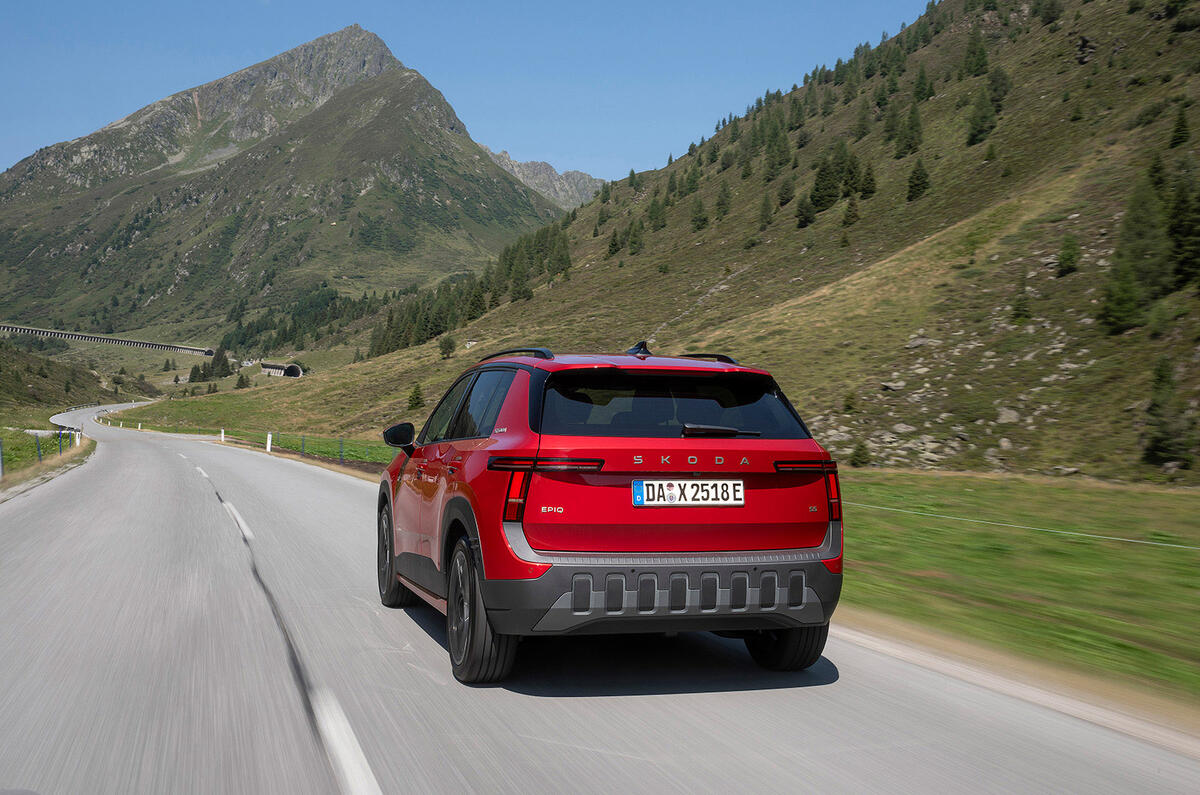
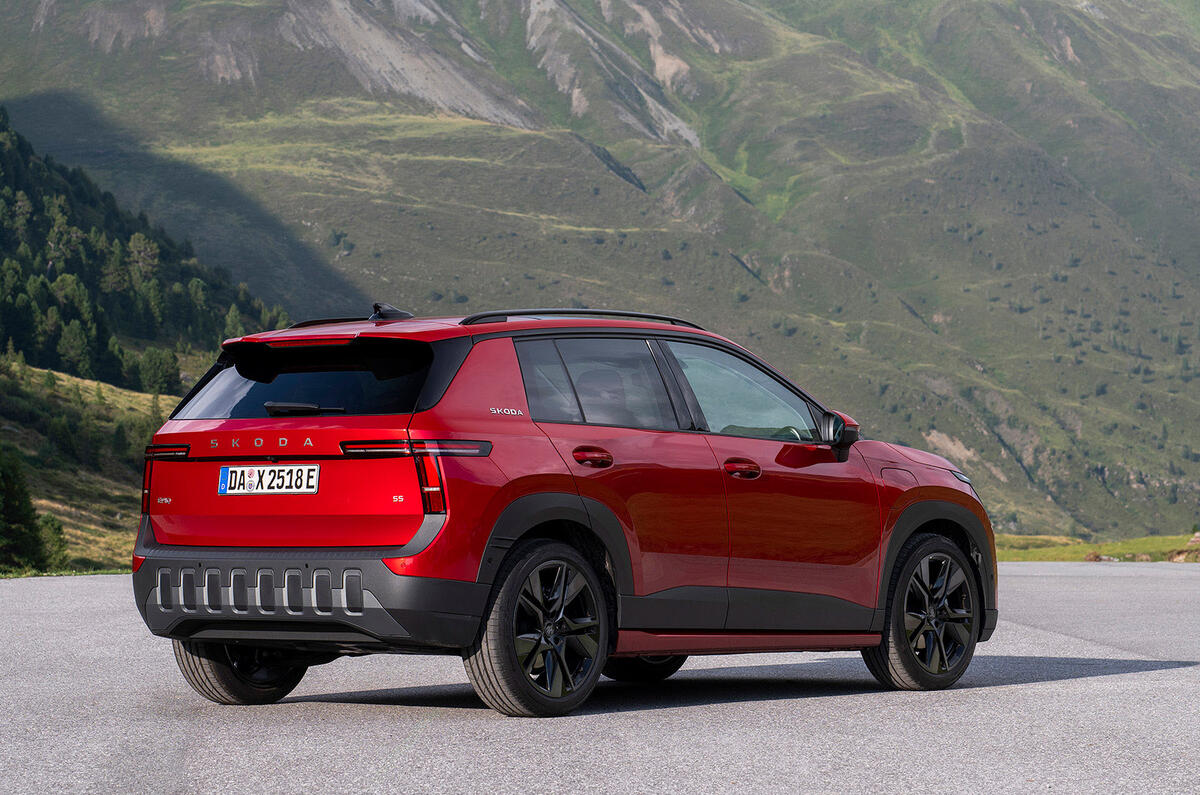
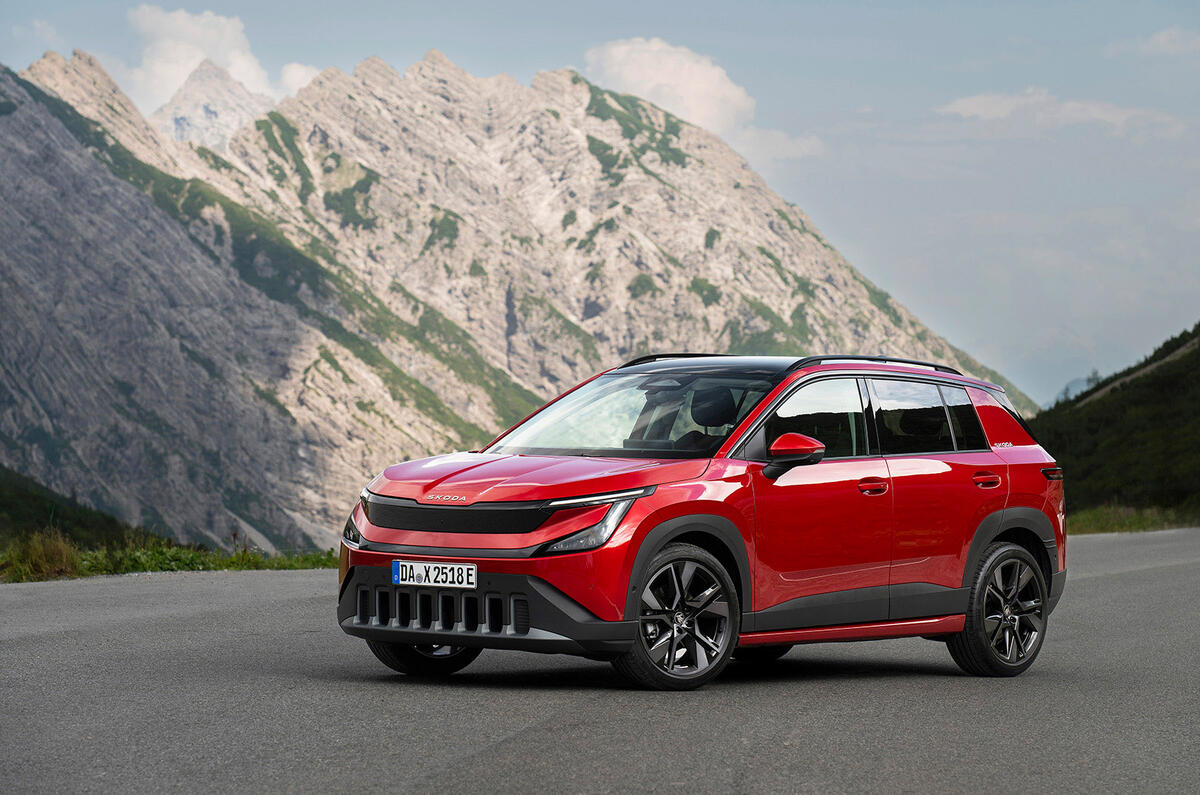
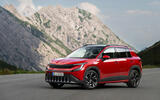
The Epiq embraces Skoda's new Modern Solid design theme. As a result, it has a clear family resemblance to the Elroq and particularly the forthcoming Peaq EV, although the Jeep-esque lower front and rear bumpers give it a bit of distinctiveness and character.

The Epiq is always powered by a single front-mounted motor but will eventually offer the choice of 114bhp, 133bhp or 208bhp outputs. The two lesser variants use a 37kWh lithium-iron-phosphate battery.

At launch, only the punchiest 55 model will be offered, featuring a 52kWh nickel-manganese-cobalt battery. Prices start at £24,950, but the 55 costs from £30,450 (after the UK government’s EV grant).

That means the Epiq 55 can achieve 0-62mph in 7.4sec, while an official economy of 4.5mpkWh gives it a range of 274 miles. For comparison, that’s eight miles less than its ID Polo sibling.

INTERIOR

Skoda Epiq reveiw 2026 024

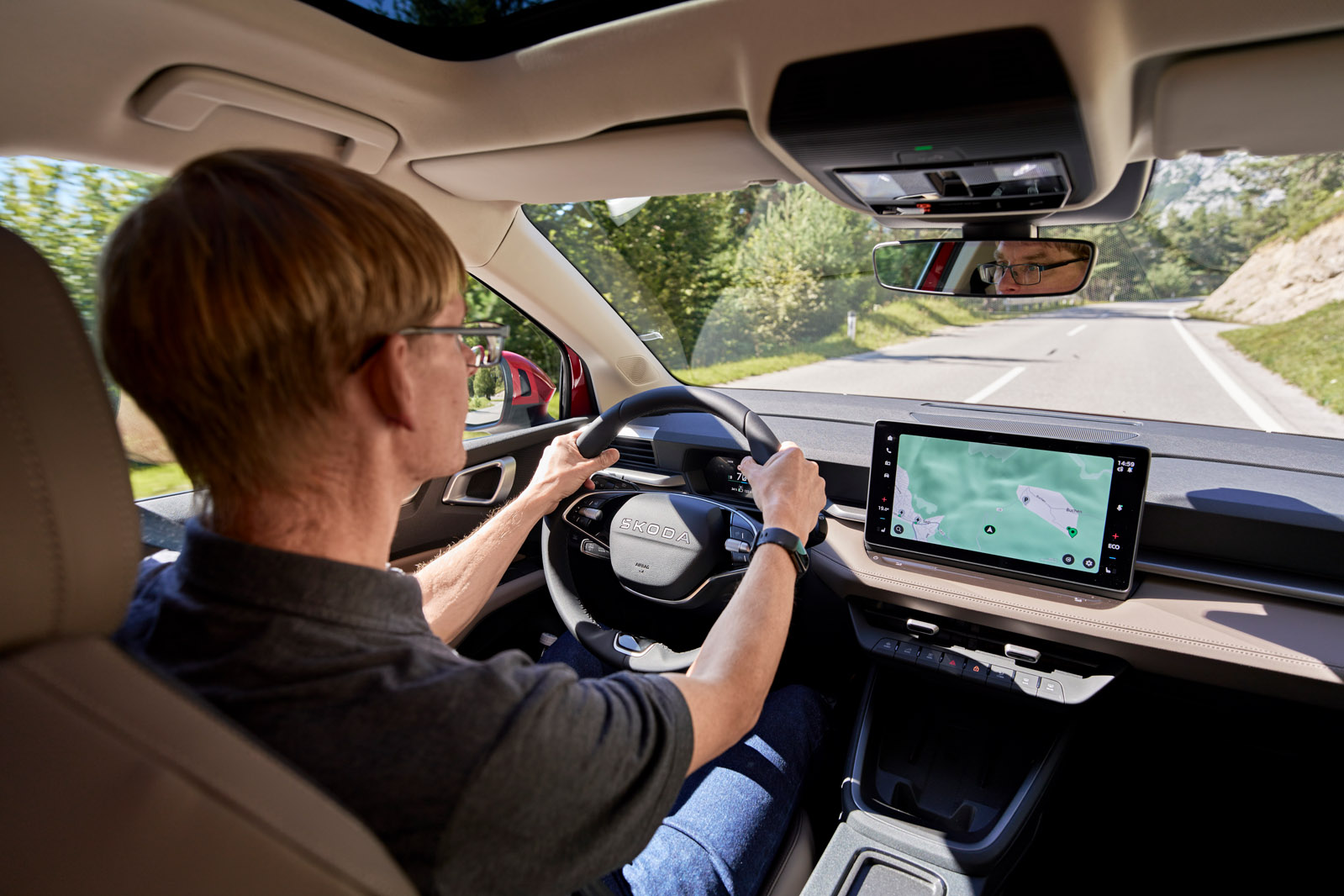
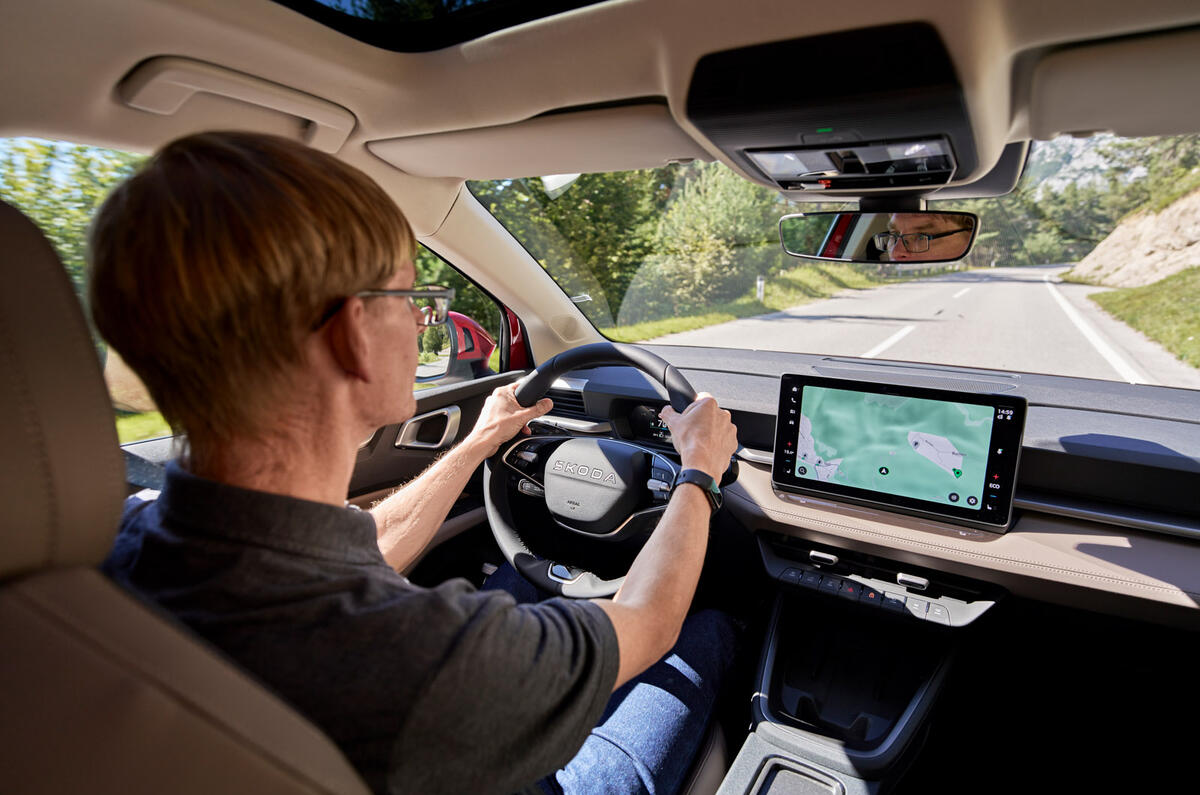
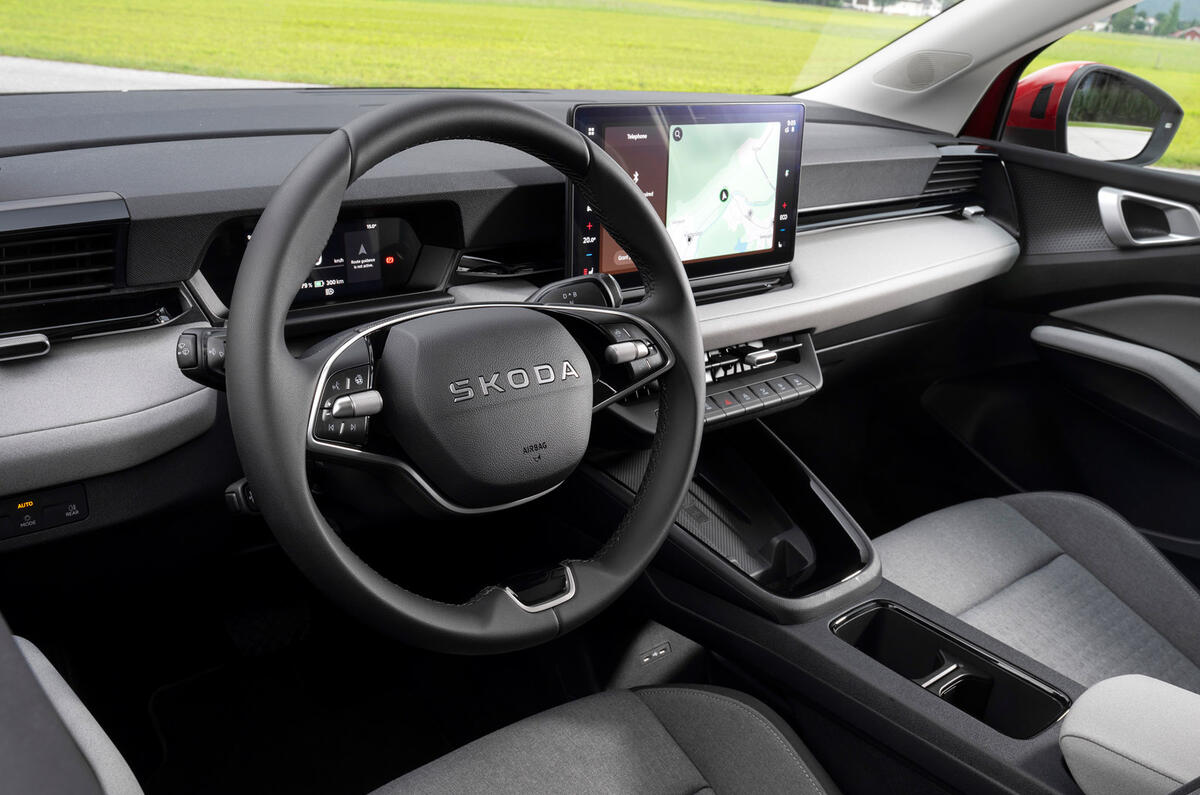
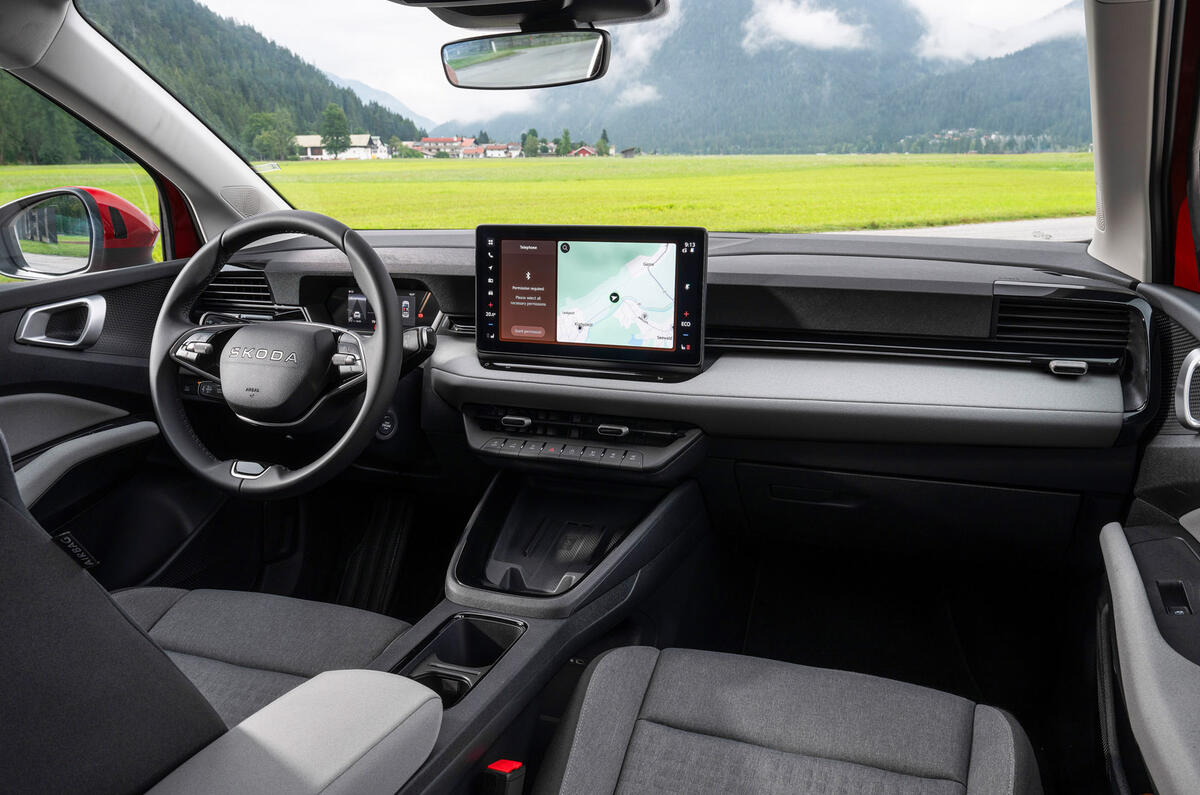
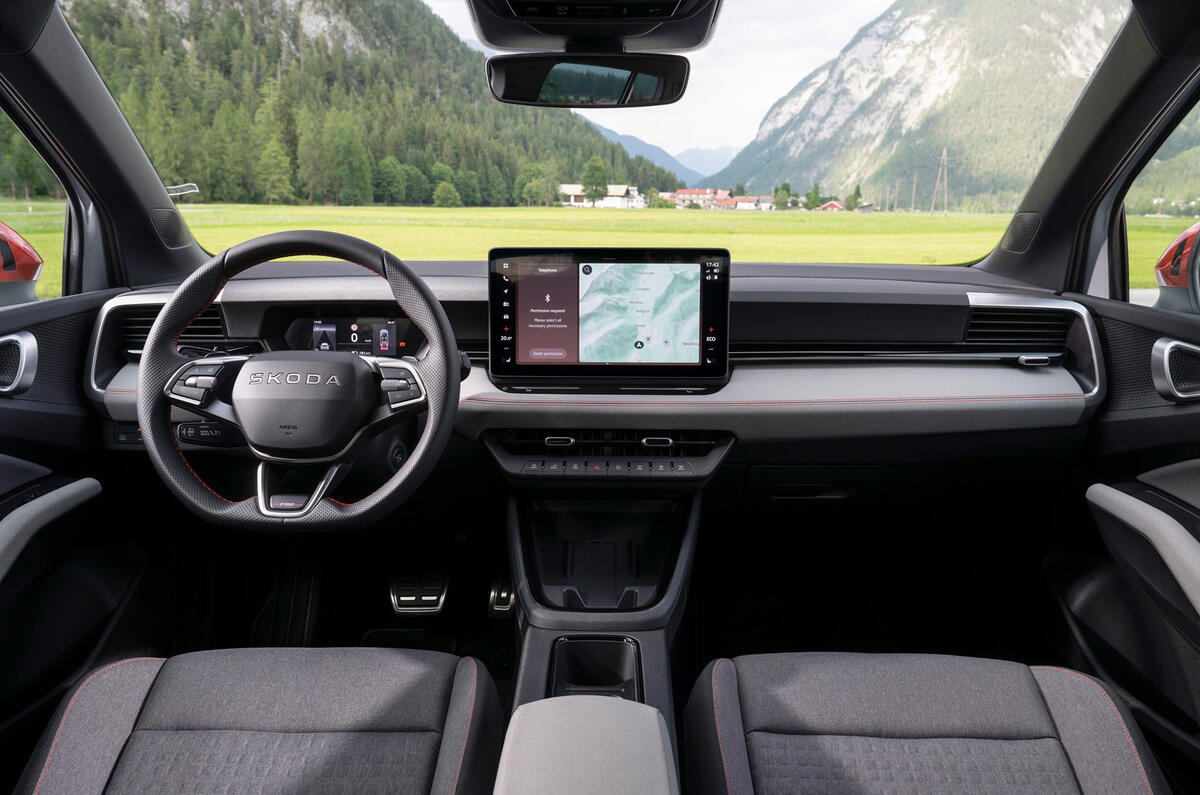
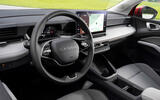
The interior is relatively conventional and a little plain but has a classy feel to it. In an era when manufacturers seem obsessed with making steering wheels that are small and not actually round, the Epiq’s is pleasingly normal and surprisingly large – and as a bonus even features physical buttons.

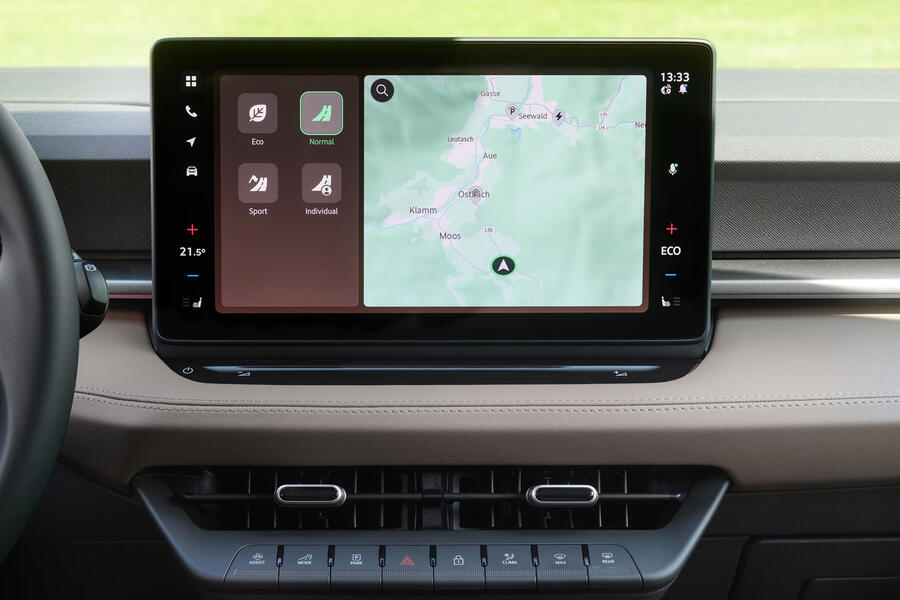
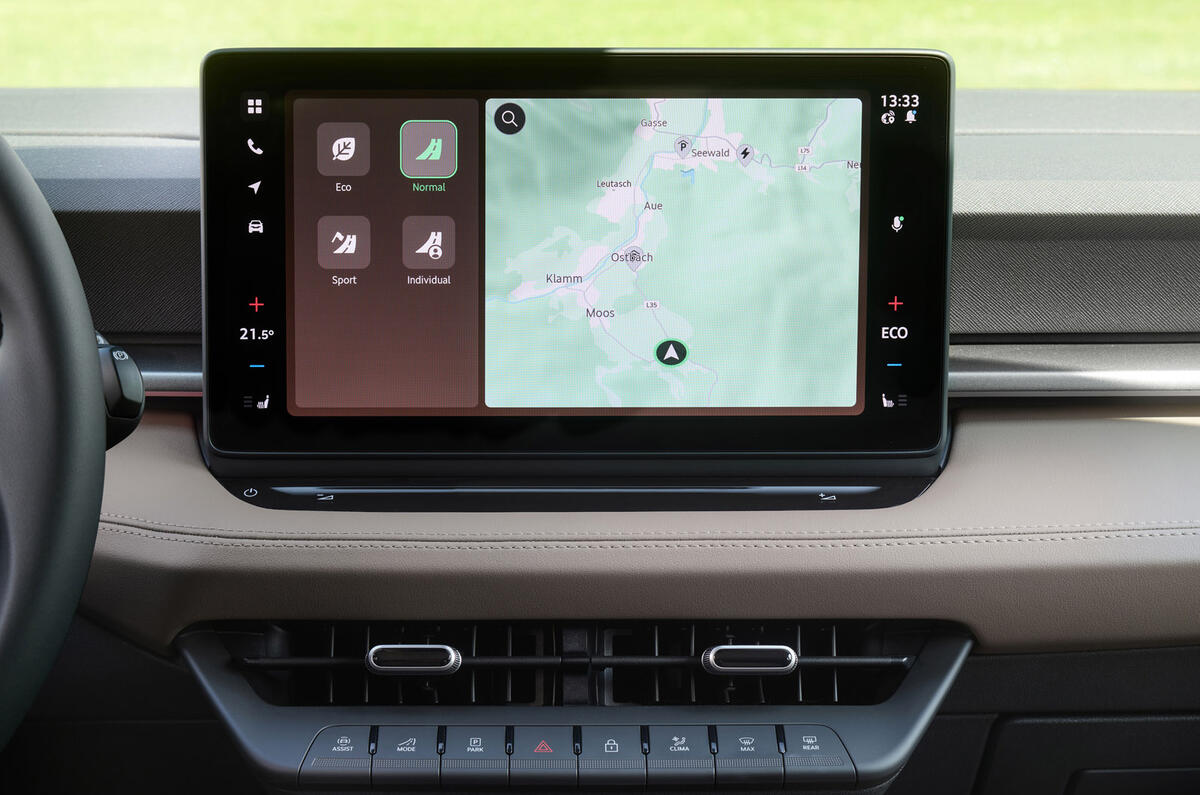
There’s also a handy bunch of toggle buttons just underneath the 13in central touchscreen to control some of the key functions. They are a bit plasticky to the touch, but that’s just being picky. The infotainment system, running new Android-based software, is well designed and usable, although don’t expect any fun flair such as the ID Polo’s retro dials.

The Epiq will be the only MEB Entry model offered with a small, 32-litre frunk – although it will arrive later and, weirdly, be an optional extra. It will be worth paying for only if you really hate charging cables in your boot.

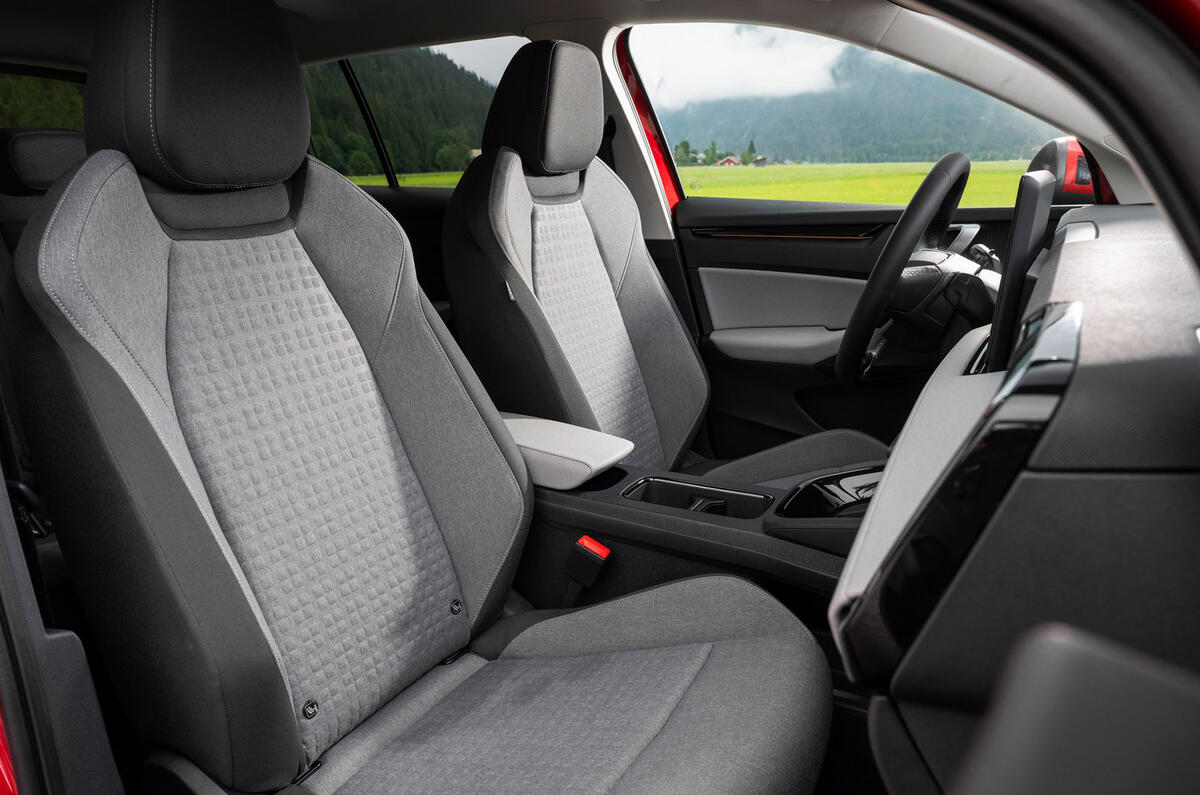
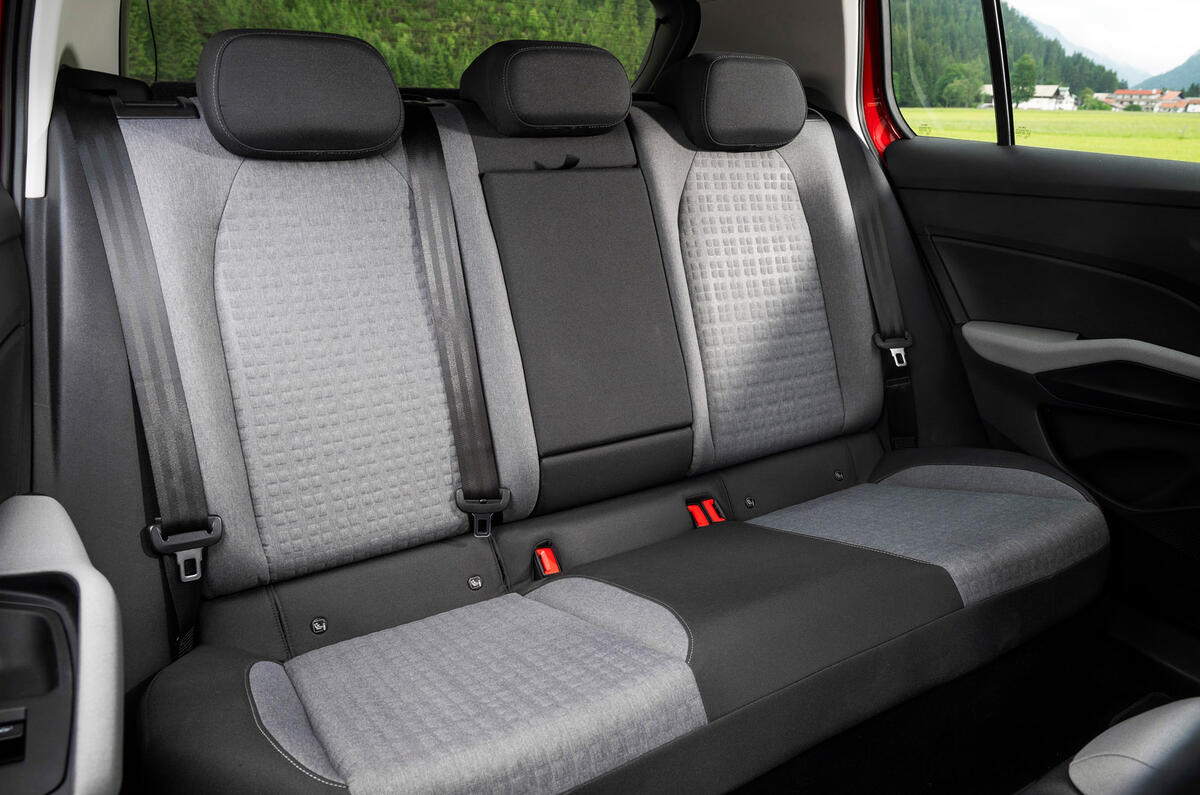
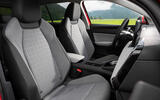
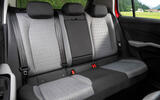
Skoda has done well to maximise interior space within the constraints of a small crossover body. Adults will find themselves a little cramped in the rear, while the centre console is on the small side.

Notably, the only cupholder is a 3D-printed unit that slots into that centre console, but it’s so small that all but espresso drinkers will struggle to fit their mugs in. Skoda’s 3D-printing experts are working on a freely downloadable design for a new one, apparently.

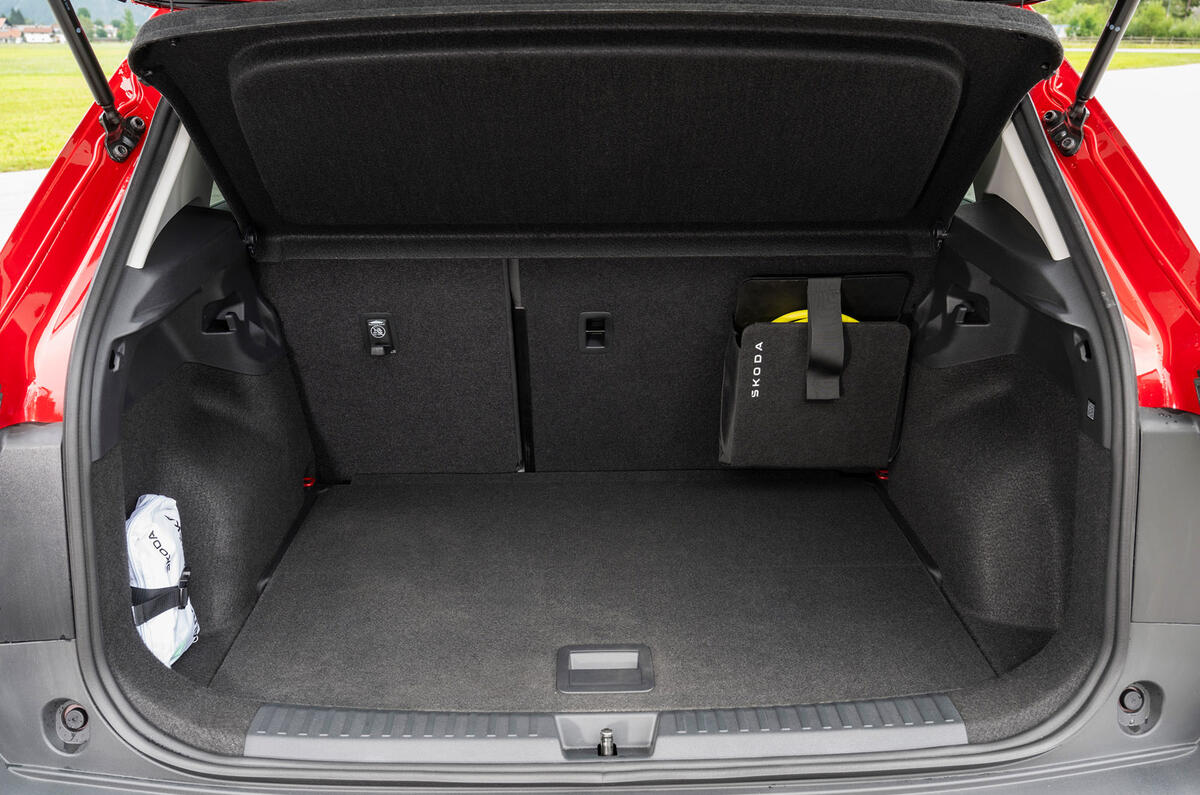
Still, Skoda has done its usual trick of maximising the space of the platform: the Epiq has a chunky 475-litre boot, which is 34 litres bigger than the ID Polo’s and also bigger than electric crossover rivals such as the Kia EV2 (362 litres) and Renault 4 (420 litres).

ENGINES & PERFORMANCE

Skoda Epiq reveiw 2026 032

Making 208bhp and 214lb ft of torque, the 55-spec motor allows for a 7.4sec sprint to 60mph, and in the main it feels brisk, building speed in a progessive manner that's not dissimilar to the Elroq. 

Skoda’s engineers spent much time working out where the balance should be in the acceleration to best allow for some of that instant-torque zip without the unnatural push that many EVs produce. You can tell: it’s nicely balanced, with the emphasis on smooth, easily accessible power rather than trying to provide performance that few really need.

The Epiq’s regenerative braking system offers you two modes, Standard and High, but neither reined in the car that aggressively. The brake itself is also a bit mushy with a lot of travel in the pedal. 

Traction is good, with only the odd squirm from the front when pulling away in wet conditions. Rolling refinement impressed as well: there was just a hint of wind intrusion at motorway speeds. 

RIDE & HANDLING

Skoda Epiq reveiw 2026 034

What will really make the Epiq stand out in its class is the quality of its ride and driving dynamics. Clearly, this is a practical family crossover rather than a hatchback, so the focus here wasn’t on making something as vibrant as the Cupra Raval or even as pleasingly fun as the ID Polo. But as with both those relations, there’s a keenness to the handling that makes it feel more resolved and grown-up than many of its rivals.

The suspension set-up is familiar from its sister models – MacPherson struts up front and a torsion-beam rear – and it works well to keep the Epiq balanced and planted. It’s set up relatively softly for comfort, and it can’t mask bigger bumps in the road, but there’s an inherent stability and solidity that some crossovers lack. So if you do want to push on a bit in flowing corners, it responds reasonably well.

Vertical body control is good and the Epiq feels settled at higher speeds and over longer undulations.

The steering is equally well weighted: you can adjust it a bit in the settings, but placing the Epiq on the road is always really easy.

MPG & RUNNING COSTS

Skoda Epiq reveiw 2026 019

The Epiq offers an official economy of 4.5mpkWh, which gives it a range of 274 miles. For comparison, that’s eight miles less than its ID Polo sibling.

On an extended mixed test route, my test car averaged 4.1mpkWh, which suggests a creditable real-world range of around 215 miles. It can charge at speeds of up to 105kW, meaning a 10-80% fill in 24 minutes. So this isn’t a crossover that’s confined to shorter trips.

It's worth noting that the smaller battery versions can't charge that fast, making those cars more suitable for urban use or those who rarely need to do longer trips.

VERDICT

Skoda Epiq reveiw 2026 036

There's a lot to like about the Epiq: there's an air of common sense running through every element of the car, from its sensible drive to its large boot and its decent range. 

It all combines to make a very compelling package. Sure, it could be more thrilling to drive, its interior is a little plain and my Yeti mug wouldn’t fit in it. But it’s incredibly polished, very efficient, extremely well priced and packed full of pleasing design details. For those in the market for a small electric crossover, those are more important factors, and undoubtedly the Epiq feels more grown-up and solid than many of its rivals at this price point.

It's a proper Skoda, then, and one that will have its rivals worried.

Sam Phillips

Sam Phillips
Title: Senior Staff Writer

Sam joined the Autocar team in summer 2024 and has been a contributor since 2021. He is tasked with writing used reviews and first drives as well as updating top 10s and evergreen content on the Autocar website. 

He previously led sister-title Move Electric, which covers the entire spectrum of electric vehicles, from cars to boats – and even trucks. He is an expert in new car news, used cars, electric cars, microbility, classic cars and motorsport. 

Sam graduated from Nottingham Trent University in 2021 with a BA in Journalism. In his final year he produced an in-depth feature on the automotive industry’s transition to electric cars and interviewed a number of leading experts to assess our readiness for the impending ban on the sale of petrol and diesel cars.

James Attwood

James Attwood, digital editor
Title: Associate editor

James is Autocar’s associate editor, and has more than 20 years of experience of working in automotive and motorsport journalism. He has been in his current role since September 2024, and helps lead Autocar's features and new sections, while regularly interviewing some of the biggest names in the industry. Oh, and he once helped make Volkswagen currywurst. Really.

Before first joining Autocar in 2017, James spent more than a decade in motorsport journalist, working on Autosport, autosport.com, F1 Racing and Motorsport News, covering everything from club rallying to top-level international events. He also spent 18 months running Move Electric, Haymarket's e-mobility title, where he developed knowledge of the e-bike and e-scooter markets.