

Currently reading: Budget “missed opportunity”: PHEV and EV tax hikes hit cost-pressured fleets

Chancellor confirms tax rises for company cars; monthly BIK bill for some EVs and PHEVs will almost triple

The Autumn Budget hasn't delivered vital tax breaks to support demand for plug-in hybrid and electric company cars, fleet specialists have warned.

For operators, the Chancellor’s most important announcement was benefit-in-kind (BIK) tax rates for the 2030/31 tax year, following repeated industry calls for clarity given that drivers are already ordering cars that will still be on the road in April 2030.

Company car drivers (including those on salary sacrifice schemes) pay BIK for the perk of using that vehicle for private journeys. It’s effectively treated as an additional salary and taxed at the same rate as their income (typically 20% or 40%).

Since 2002, the car’s taxable value has been calculated as a percentage of its list price. Cars fall into one of 27 percentage bands, currently ranging from 4% to 37%, and the pricier and more CO2-intensive a car is, the higher the tax cost.

It’s a powerful incentive: three quarters of company car drivers are paying BIK tax on a vehicle emitting less than 50g/km, according to the latest HMRC data.

The Budget confirmed that all rates will rise by one percentage point in April 2030, with EVs facing the steepest rises in that period: from 4% in 2026/27 to 10% in 2030/31.

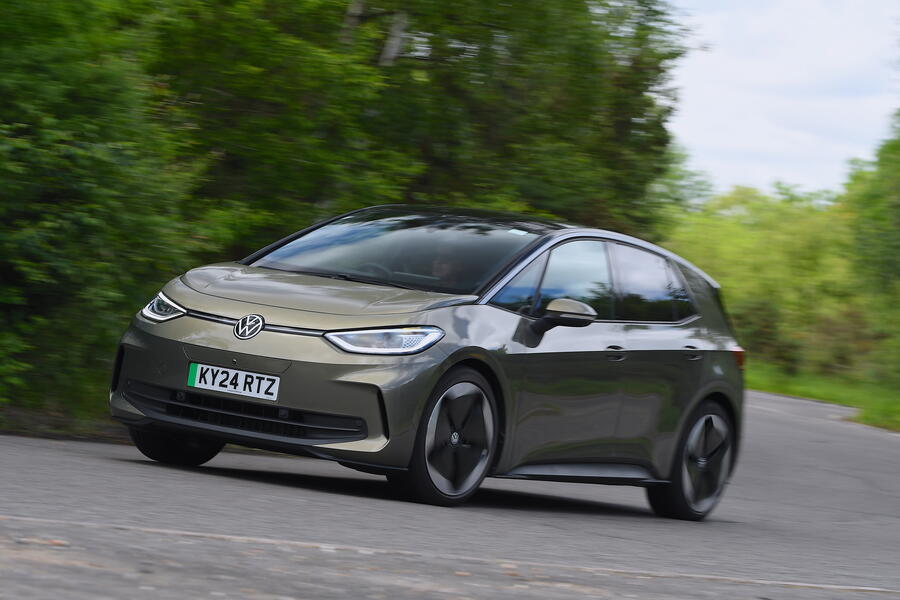
For a 20% taxpayer in a Volkswagen ID 3 79kWh Style, that equates to monthly BIK bills increasing from £27 to £67.
PHEVs fare worse. The 2024 Budget removed incentives for vehicles emitting between 1 and 50g/km CO2 to offer a longer electric range, placing all of them into a single 18% band.

The Volkswagen Golf eHybrid, with an 88-mile electric range, will rise from 7% BIK today to 20% in 2030/31 – with resulting monthly BiK tripling from £44 to £133.

Dave Bushnell, director of consultancy and strategy at Fleet Operations, said that the announcement was welcome as a step towards restoring confidence but it could have gone further.

“We’re disappointed that the Chancellor hasn’t taken this opportunity to make used electric company cars more affordable,” he said.

“Drivers are still taxed on a vehicle’s original list price, even when it has depreciated significantly. Changing this could have opened up electric cars to more employees through salary sacrifice schemes while also helping to boost demand in the second-hand market and support residual values.”

Back to top

The Budget also confirmed changes to capital allowances. These enable businesses to offset investment costs against their gross profits and reduce their corporation tax bill.

For cars, the system is CO2-based. Businesses can offset 100% of the cost of EVs, falling to 14% for vehicles emitting 1-50g/km and 6% for anything above that threshold.

The 'main rate' was cut from 18% to 14% in April 2026 and will fall to 12% in April 2027, effectively reducing the tax breaks for businesses that purchase PHEVs in that bracket. 

Tax breaks for leased cars are unchanged: businesses can offset 100% of the monthly rental costs for vehicles emitting 50g/km CO2 or less. 

Businesses with a “grey fleet” will face rising costs too. HMRC issues an approved mileage rate for employees to claim back the cost of driving their own car for work – covering not only fuel but also depreciation, wear and tear and other operating costs.

There are two rates: one for the first 10,000 miles and a lower rate for anything above that. The initial rate was temporarily raised from 45p to 55p per mile in June, and this will now become permanent, while the higher-mileage rate is increasing from 25p to 35p.

Those changes are the first in 15 years and are expected to support three million employees who use their own car for work, according to the Treasury.

Jon Lawes, MD of fleet management firm Novuna Vehicle Solutions, said: “With manufacturers facing intense global competition and pressure on residual values, the priority must be a transition that customers can afford and businesses can plan for. 

“Greater certainty on EV taxation, charging costs and future sales targets will be critical to sustaining demand, protecting used car values and supporting long-term investment in the UK motor industry.”

Join our WhatsApp community and be the first to read about the latest news and reviews wowing the car world. Our community is the best, easiest and most direct place to tap into the minds of Autocar, and if you join you’ll also be treated to unique WhatsApp content. You can leave at any time after joining - check our full privacy policy here.