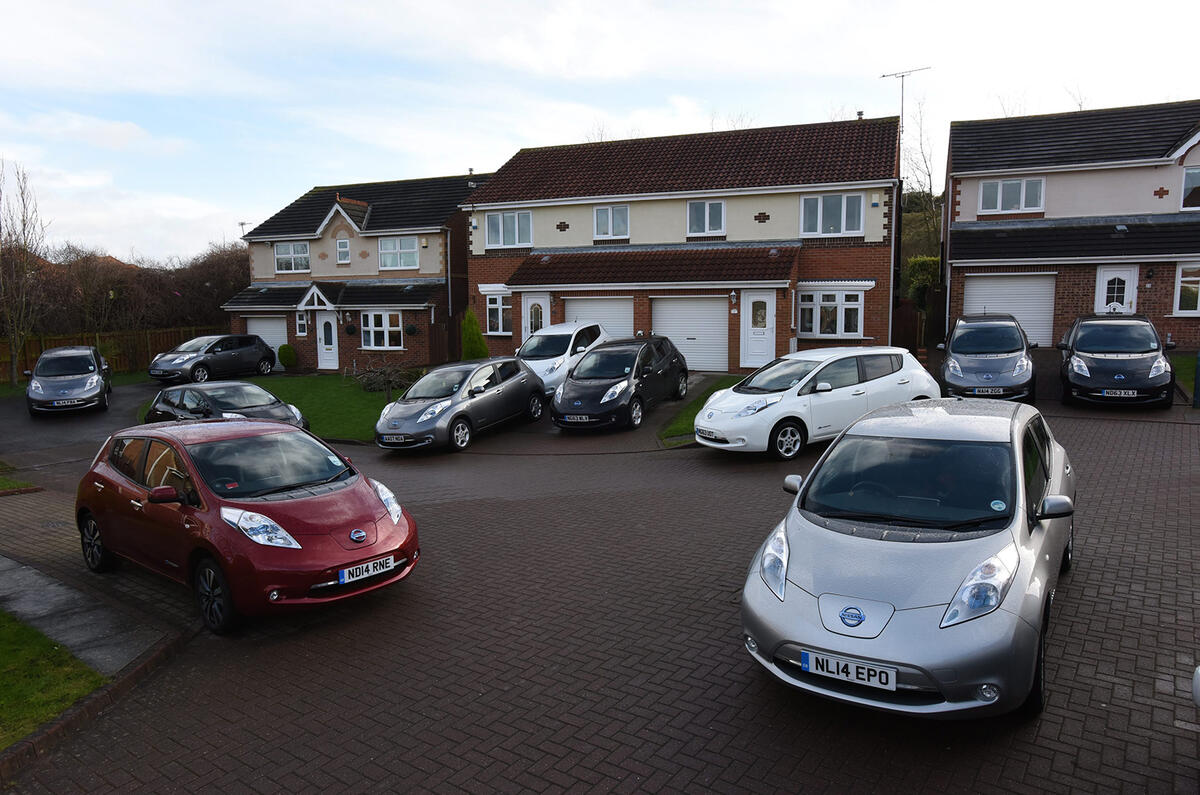

Almost one-third of Britain’s local electricity networks could need upgrading if electric vehicles reach the point of mass acceptance, according to the results of a project funded by energy regulator Ofgem.
The three-year project, named My Electric Avenue, carried out trials to discover the impact that charging large numbers of electric vehicles (EVs) might have on local electricity networks at peak times.
It aimed to assess how rising sales of plug-in cars and the larger battery capacities of vehicles could impact the country’s infrastructure in the year 2030.
The project recruited clusters of neighbours around the country to drive Nissan Leaf electric cars for 18 months, with the aim of to mimicing a future scenario where many people in an area choose to use a pure electric vehicle or plug-in hybrid electric vehicle.
It analysed the various kinds of low voltage networks in the UK and the results suggest that four types could experience issues if and when the uptake of EVs increases.
Susceptible networks are typically characterised by available capacity of less than 1.5 kW per customer. Based on 3.5kW (16 amp) charging, about 312,000 circuits – 32% of Britain’s total – will “require intervention” if the nation reaches a point where between 40% and 70% of motorists own EVs.
The intervention would normally mean the replacement of underground cables in the public highway, but the My Electric Avenue project trialled a potentially lower-cost solution in the form of ‘Esprit’.
Esprit is an piece of technology installed into the electricity network that can control the charging of EVs if the local grid reaches a certain level of demand, preventing underground cables, overhead lines and substations being potentially overloaded. Forecasts suggest that Esprit could save around £2.2bn of infrastructure reinforcement costs up to 2050.
My Electric Avenue was hosted by Scottish and Southern Energy Power Distribution and led by EA Technology and funded through Ofgem’s Low Carbon Networks Fund. Partners included Nissan and Ricardo, with the latter providing independent technical verification to the project.
Olivier Paturet, general manager of zero emission strategy for Nissan Europe said: "Not only has My Electric Avenue provided us with a greater understanding of the impacts of electric vehicle charging on local grids, but it has also given us a clear vision of what the streets of the future may look like.
“EV sales are increasing at a phenomenal rate in the UK and wider Europe and it’s vital that automakers continue to work closely with the energy industry to progress the EV movement.”
Stewart Reid, head of asset management and innovation at Scottish and Southern Energy Power Distribution added: “The project has been invaluable in showing us what challenges we are likely to face in the near future as more and more customers adopt EVs. It’s also demonstrated that there is a solution which is capable of helping us overcome these challenges before they affect our customers.
“With new vehicles due to place even greater demands on our networks, we are conscious of the need for both ourselves and the automotive industry to share our learning, challenges and innovations with one another. We are excited at this prospect, which will allow the decarbonisation of our respective industries to continue at pace.”