Currently reading: Used Dacia Sandero: £1000 gem is Britain's best-value car

A ten-year-old car for such a low price is hard to disagree with - especially when it's as competent as the Sandero

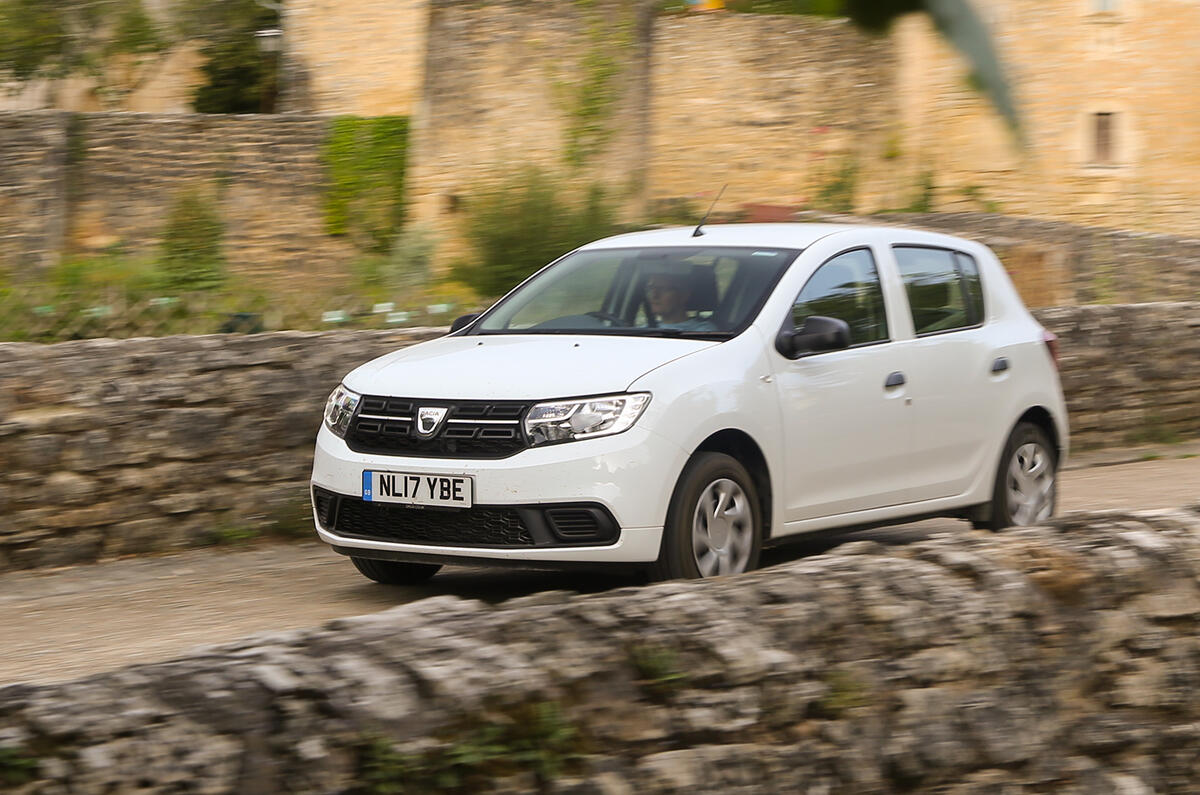
Good news! You can now have a Dacia Sandero for less than the cost of an annual railway season ticket.

The Sandero was designed to rival budget superminis such as the Fiat Panda and Kia Rio, but it also represents a compelling alternative to the bus and train. And used prices now start from around £1000.

When the Mk2 version (2013-2020) was launched, it made headlines for all the right reasons. Here was a car with five seats, Isofix mountings, four airbags and a three-year warranty for as little as £5995—more than £2000 cheaper than a Skoda Citigo. Today, you can get one for a sixth of that.

Now well into its third generation and heading for a fourth, the Sandero is so popular that it consistently ranks as Europe's best-selling car. A new one today will set you back more than £15,000, so bona fide bargain hunters are best served by a tidy second-gen one.

There are a couple of caveats, though. First, be sure to pick the right trim level.

Entry-level Access really is entry-level. It has power steering and, well, that's pretty much it. The big plastic bumpers, white paint (the only choice) and steelies (minus hubcaps) make it look like a UN support vehicle. Inside, there isn't even a radio, never mind such frivolities as central locking, air-con or a car alarm.

Unless you've got your eyes on the grand prize at the 2045 Festival of the Unexceptional, we would advise steering clear. Besides, Access models aren't much cheaper than higher-spec versions and they'll be difficult to sell on.

Instead, choose Ambiance or Laureate. The former adds body-coloured bumpers, metallic paint, wheel trims, central locking, a radio and electric front windows. Laureate gets you climate control, cruise control and a leather steering wheel.

Back to top

There's also the rugged Stepway version, which adds plastic cladding, a 40mm suspension lift and chunky roof bars. It all makes the Sandero look a bit funkier but doesn't transform it into a capable off-roader.

Another word of warning is that at higher speeds you start to notice a few more areas where Dacia cut costs.

The engines feel the need for a sixth gear, while the numb steering and limited ride sophistication become obvious.

The driving position can also leave something to be desired: the steering wheel doesn't offer any adjustment and the height of the seat cushion is fixed. The interior feels plain no matter the spec, but it's functional, and Stepway models do have a smarter seat design. Leather is a rare option.

On the plus side, it's roomier than more expensive rivals like the Peugeot 208, and dynamically the Dacia can hold its own on tight, twisty or cratered roads. The range was updated in 2017, when all Sanderos were made to look a bit more appealing, with extra chrome trim and LED running lights. Access models were binned and Ambiance was replaced by Essential and Comfort.

The atmospheric 1.2 petrol (later ditched for a marginally better 1.0) feels slow and inefficient, so seek out the 900cc turbo, which is better in all areas. The 1.5 diesel is the most powerful and efficient option, and from 2016 onwards it's ULEZ-compliant. A five-speed manual is the only gearbox for all engines.

Back to top

As cars become ever more expensive and complex, the simple, sensible Mk2 Sandero is a breath of fresh air with a definite whiff of future classic about it.

What to look for

Diesel particulate filter: Like all modern diesels, the DPF needs cleaning out by taking a longish drive at speed every now and then. If this hasn't happened and it has become clogged, it can cost £1000, including labour, for a new unit.

Belts and chains: Diesel and atmospheric petrol Sanderos are belt driven and should have their belts and water pumps changed at six-year or 72,000-mile intervals (typically at least £300). The 0.9 SCe is chain driven and won't last the life of the car, as Dacia claimed. 'Death rattle' can happen as early as 40,000 miles (expect £1400-plus for a new chain) but frequent oil changes will extend that greatly.

Interior: Rattles, scuffs and squeaks are to be expected at this price point but they can still be annoying. The interior's fit and finish can vary from car to car, so look at a few if you're not satisfied at first.

Body: Owners have reported extensive rust on their Mk2 Sanderos. It seems to affect only some cars, although not necessarily in correlation with their age or build date. Have a poke around before buying, because an extensive welding job and/or new panels may cost more than the car itself.

Electrics: Owners have reported persistent engine management lights (and other dash lights) requiring repeated trips to the dealer, even when nothing is actually wrong.

Also worth knowing

The less common Dacia Logan MCV is basically a Sandero estate and offers a tremendous amount of boot space—573 litres with the back seats up or 1518 litres with them folded down—for very little cash. They weren't big sellers, so you might have to go farther afield to find one, and you'll definitely want the torquey 1.5-litre diesel or the 0.9-litre turbo petrol to cope with any heavier loads or light towing.

Back to top

However, they make a dependable workhorse when properly looked after—possibly even a good alternative to a small van—and can also be had in rugged-looking Stepway form. Other than a big boot, they're the same as a Sandero, so watch out for the same problems.

An owner's view

David Turner: "I bought my Sandero nearly new in 2017, mainly for the price, and it's proved a dependable runabout. Running costs are tiny: cheap insurance, low tax and decent fuel economy. The 0.9 TCe petrol feels lively enough around town, and the boot is bigger than expected. Reliability has been faultless: just routine servicing and tyres. It's no-frills motoring but honest and practical. I'd happily have another; I can't find another car that gives you so much for your money."

How much to spend

£1000-£2499: Mostly high-mileage cars, but some appear to be in good nick. Only a marginal difference in price between trim levels.

£2500-£4999: A mix of lower-mileage early examples and high-mile facelift cars. A good supply of Stepways, turbo petrols and diesels.

£5000-£7499: Lots of reasonable-mileage, looked-after and good-specification facelift cars.

£7500-£10,000: There seems little point in spending this much on a second-generation Sandero. Most of these cars cost almost as much when they were new.

Join our WhatsApp community and be the first to read about the latest news and reviews wowing the car world. Our community is the best, easiest and most direct place to tap into the minds of Autocar, and if you join you’ll also be treated to unique WhatsApp content. You can leave at any time after joining - check our full privacy policy here.

Alex Wolstenholme

Alex Wolstenholme
Title: Editorial Assistant

Alex joined Haymarket, the publisher of Autocar, in 2023. A car fanatic, he loves to delve into the spec-sheet, especially when it concerns something obscure or quirky. He currently drives a 2007 Alpina D3 estate but is often seen in his mum's Ford Fiesta (much to her annoyance). 

In his current position, as an editorial assistant, Alex mainly assists in managing Autocar's presence on MSN, but also writes features for the magazine.

Join the debate

Comments
1
Add a comment…
Peter Cavellini 5 February 2026

Yes, and it also shows that cars competent ones can be built and sold at a good price and still produce a profit for a manufacturer.