
The Volvo V40 will be fitted with a pedestrian airbag as standard, the company has confirmed.
Volvo's announcement marks the latest step in its stated target that no-one should be killed or injured in a new Volvo by 2020.
The pedestrian airbag system is active at speeds between 20 and 50kph (approximately 12.5mph to 31mph). Volvo estimates that 75 per cent of all accidents involving pedestrians take place at up to 40kph (approximately 25mph). It is designed to protect pedestrians from injuries caused by the V40's hard structure under the bonnet, the windscreen's lower edge and the A-pillars.
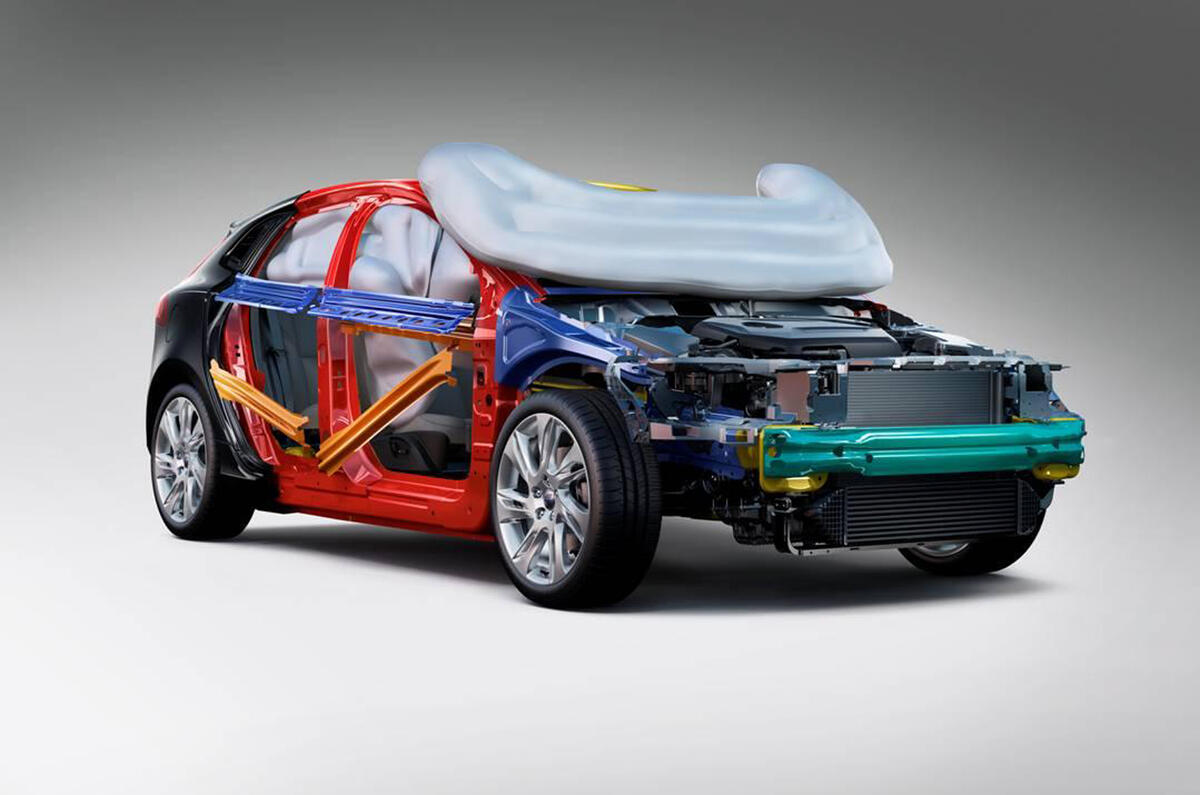
The system uses seven sensors embedded in the front of the car which transmit signals to a control unit. When the car comes into contact with an object, the control unit evaluates the signals and if it registers what it interprets as a human leg the pedestrian airbag is deployed.
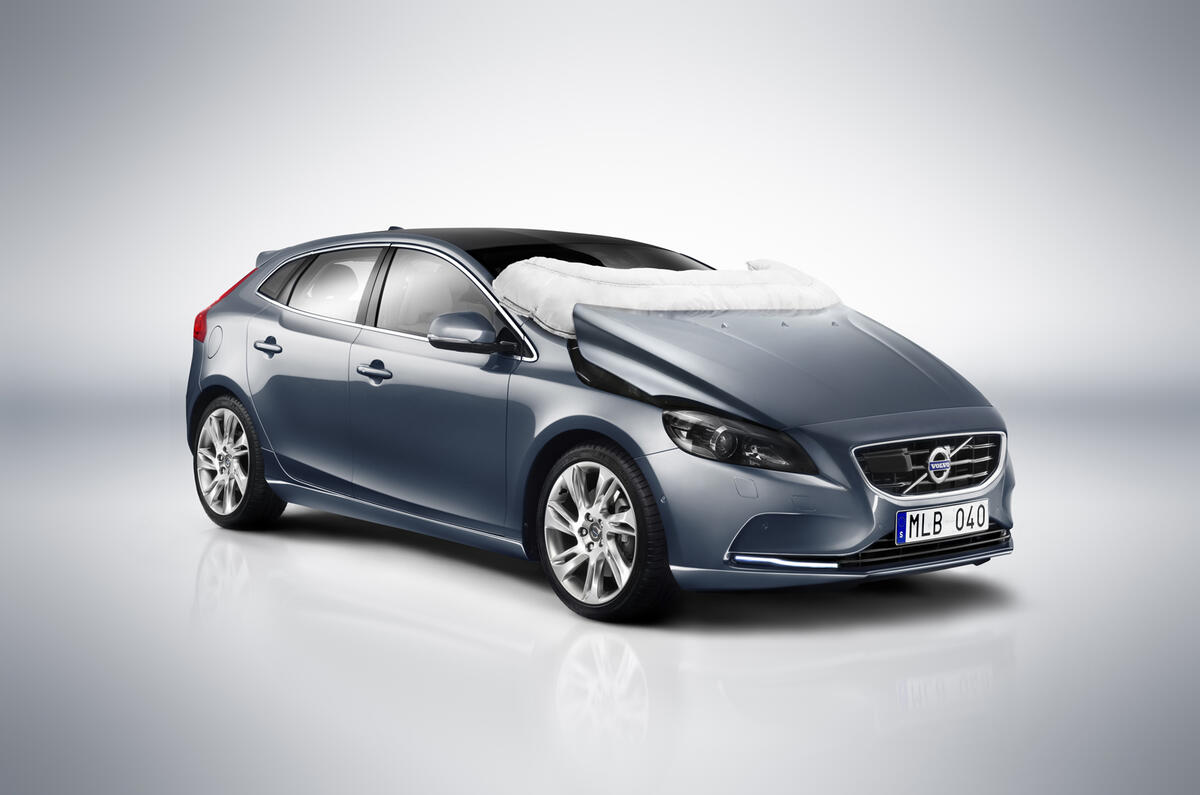
The bonnet hinges are each equipped with pyrotechnic release mechanisms which, when the system is activated, pull out a pin and release the rear of the bonnet panel. At the same time, the airbag, consisting of a sack and a gas hybrid generator, is activated and starts filling with gas. During the inflation sequence the airbag raises the bonnet by 10 centimetres and stays in the raised position.
The added gap between the bonnet and the hard components in the engine compartment gives space for the bonnet to deform, creating a dampening effect when it is hit by a pedestrian.
When inflated, the airbag covers the entire windscreen wiper recess, about one-third of the windscreen and the lower part of the A-pillars. The entire sequence from activation of the system to full inflation takes a few hundredths of a second.