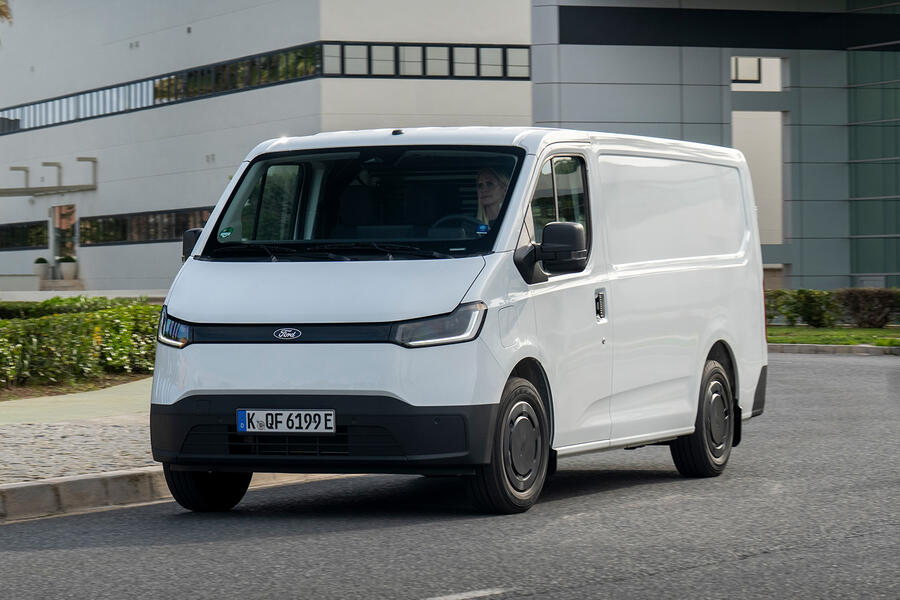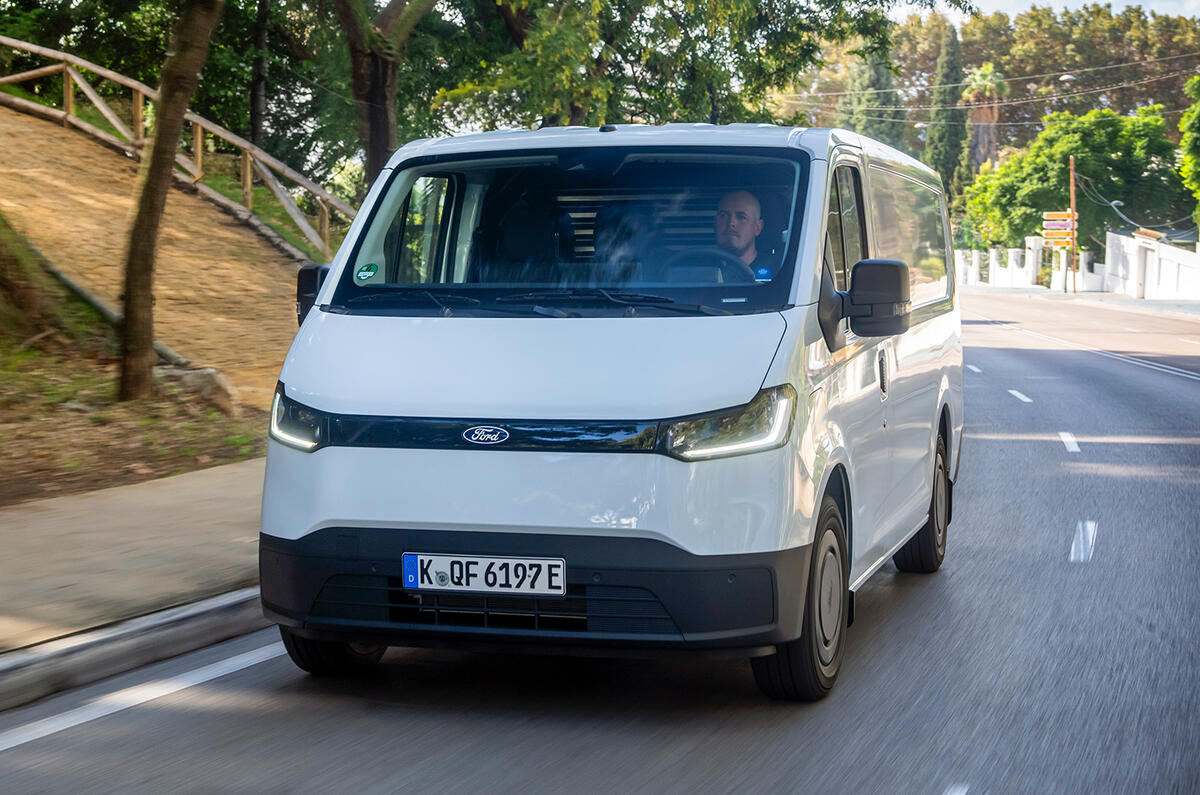
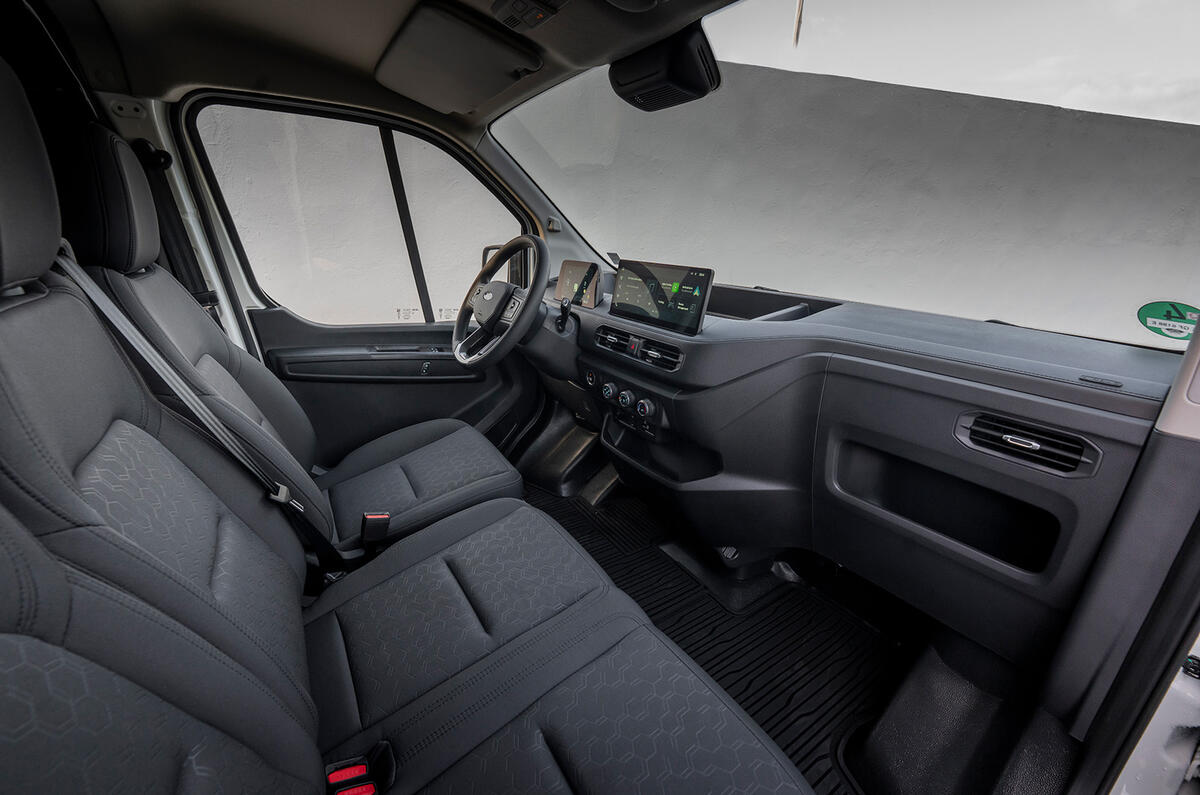
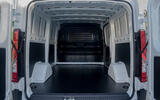

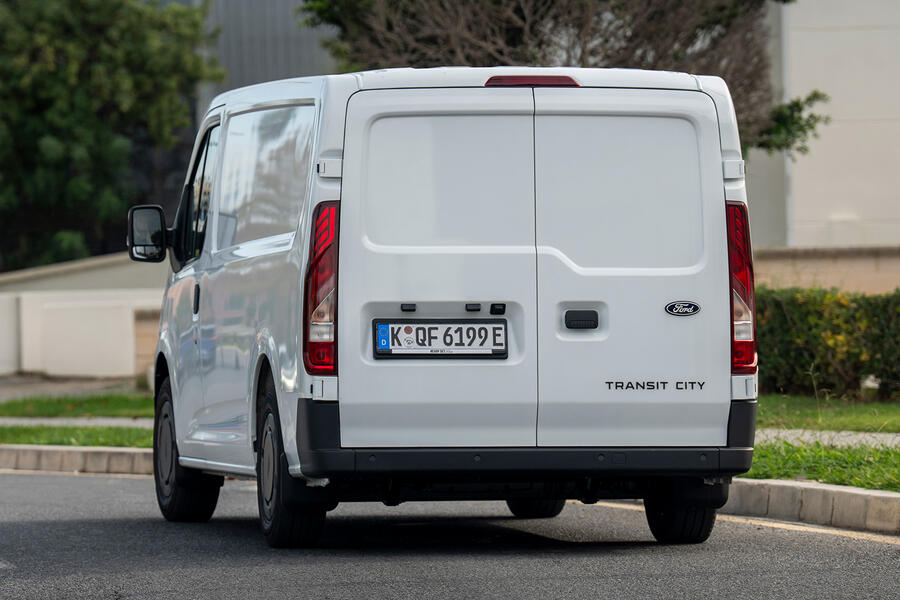
Specifying a new van often means wading through a maze of trims, wheelbase lengths and optional extras. With the new Transit City, Ford has gone back to basics, offering a single trim, two body sizes and just four colours.
Built by Ford’s long-standing Chinese partner JMC in Nanchang, the Transit City uses the JMC Touring’s platform. It sounds like a bit of a gamble to put a Ford badge on something so unfamiliar, but not only has Ford changed everything ahead of the A-pillars, developed a new high-voltage battery system and revised the ride, safety and ergonomics for Europe, but also it has actually been working with JMC for more than 30 years.
Perhaps more contentious is that it shares no components with the E-Transit Custom, its closest size match in the range and arguably the best electric van in its class. What the City does do, however, is substantially beat the Custom on both volume and payload.
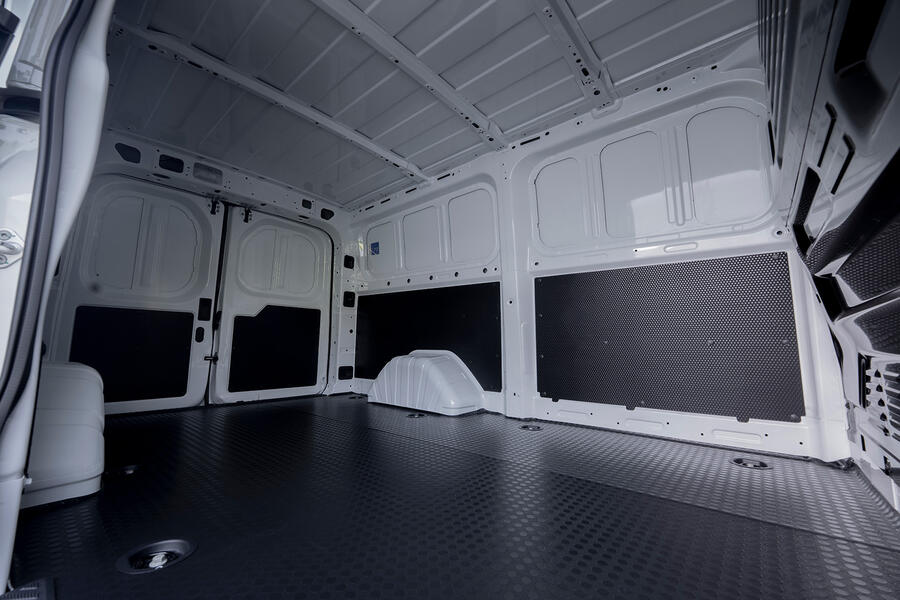
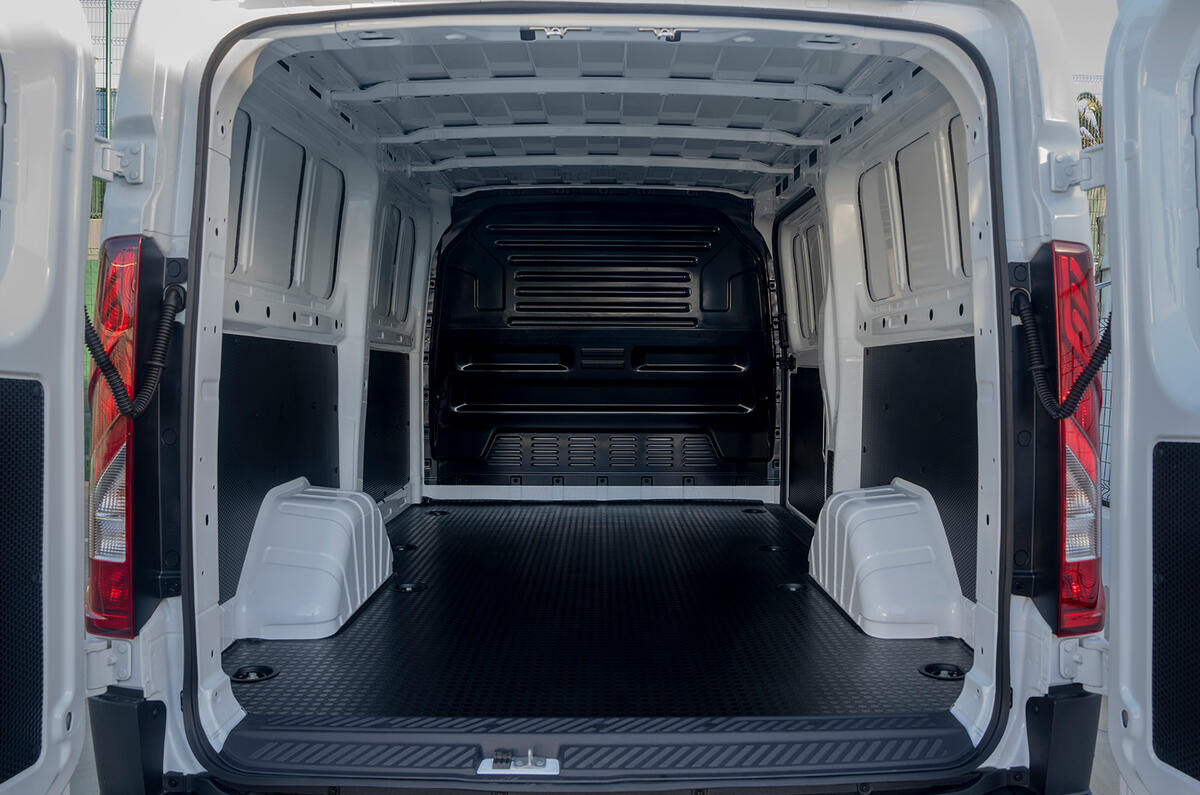
The smaller L1H1 version carries 1085kg and has a load volume of 6.4m³, while the L2H2, which is plated at 3.3 tonnes rather than the usual 3.0 tonnes, gets a 1275kg payload and up to 8.5m³ of cargo space.
The extra height of the L2H2 gives it substantially more room than the E-Transit Custom, which tops out at 6.8m³, making the Transit City the second biggest model in the Transit range, behind the eponymous big van itself.
There’s no towing capacity and although there is a chassis-cab option, you will have to wait until the third quarter of 2027 before you can get your hands on anything beyond a standard dropside or box van.
Power comes from a CATL-supplied 56kWh lithium-iron-phosphate battery, which gives the L1H1 a claimed range of 158 miles and the L2H2 one of 139 miles.
Charing speeds are up to 87kW and plugging in to an 11kW three-phase AC supply will mean a wait of just over five hours for a charge from 10-100%.