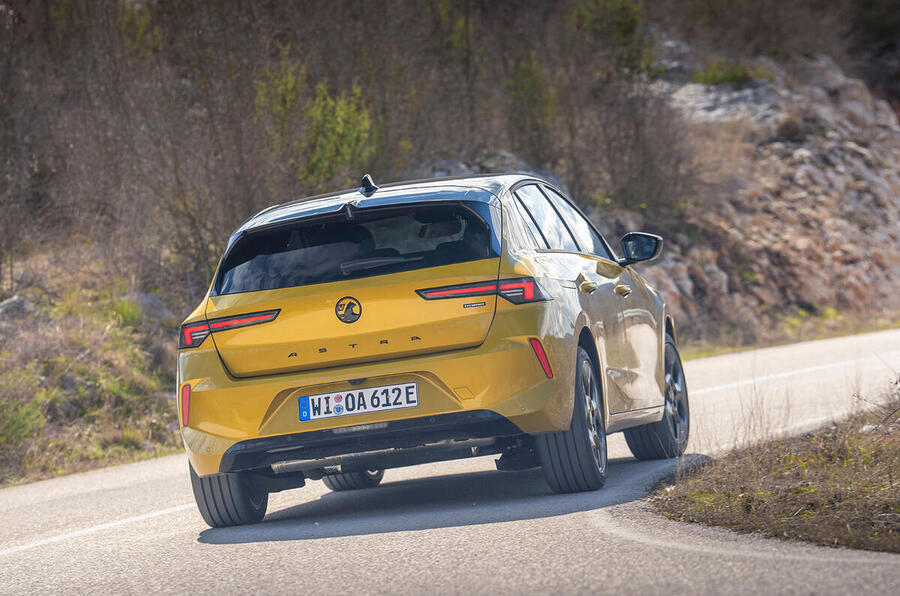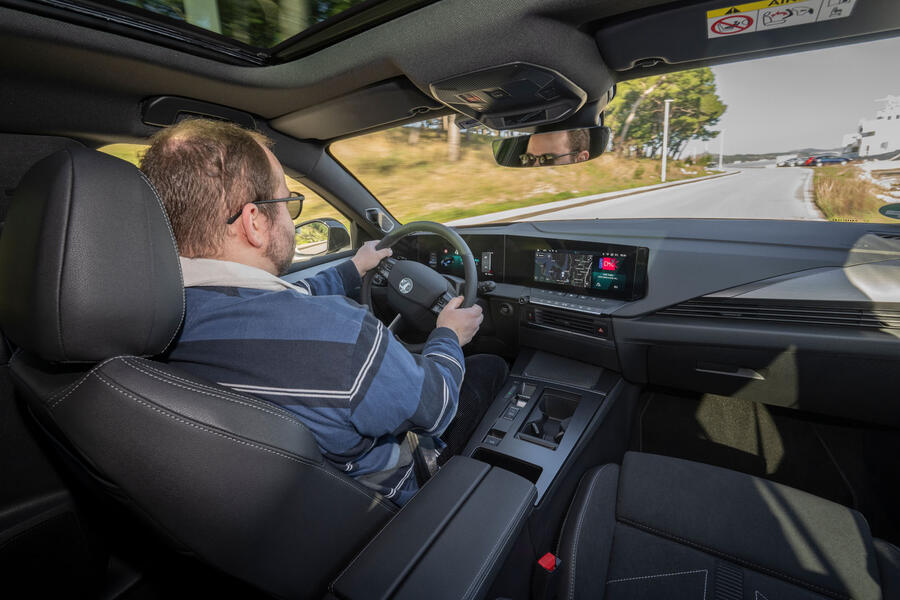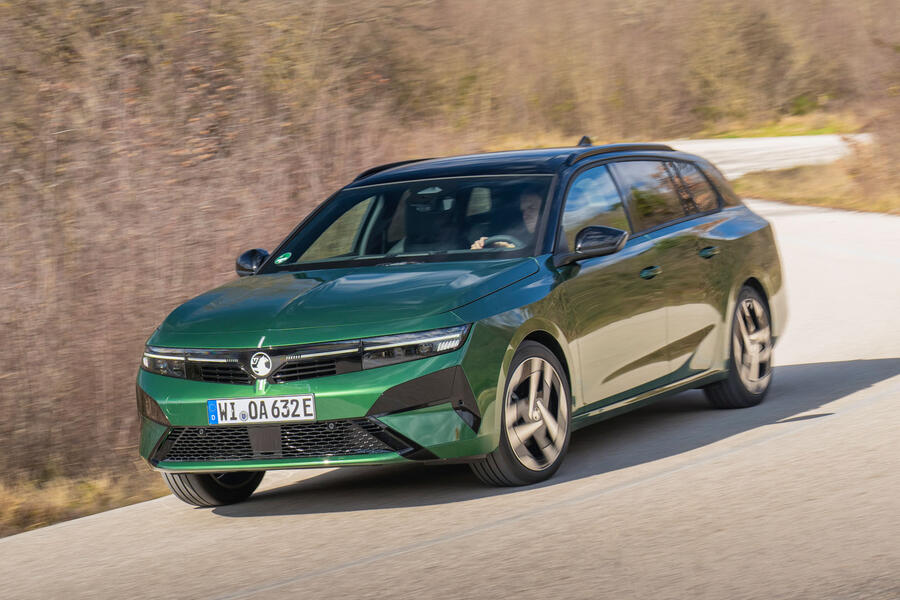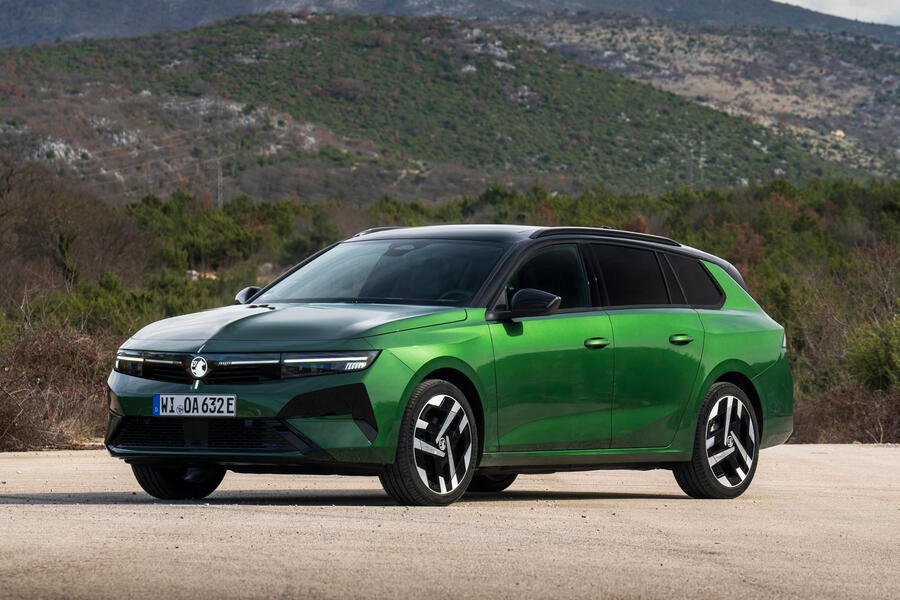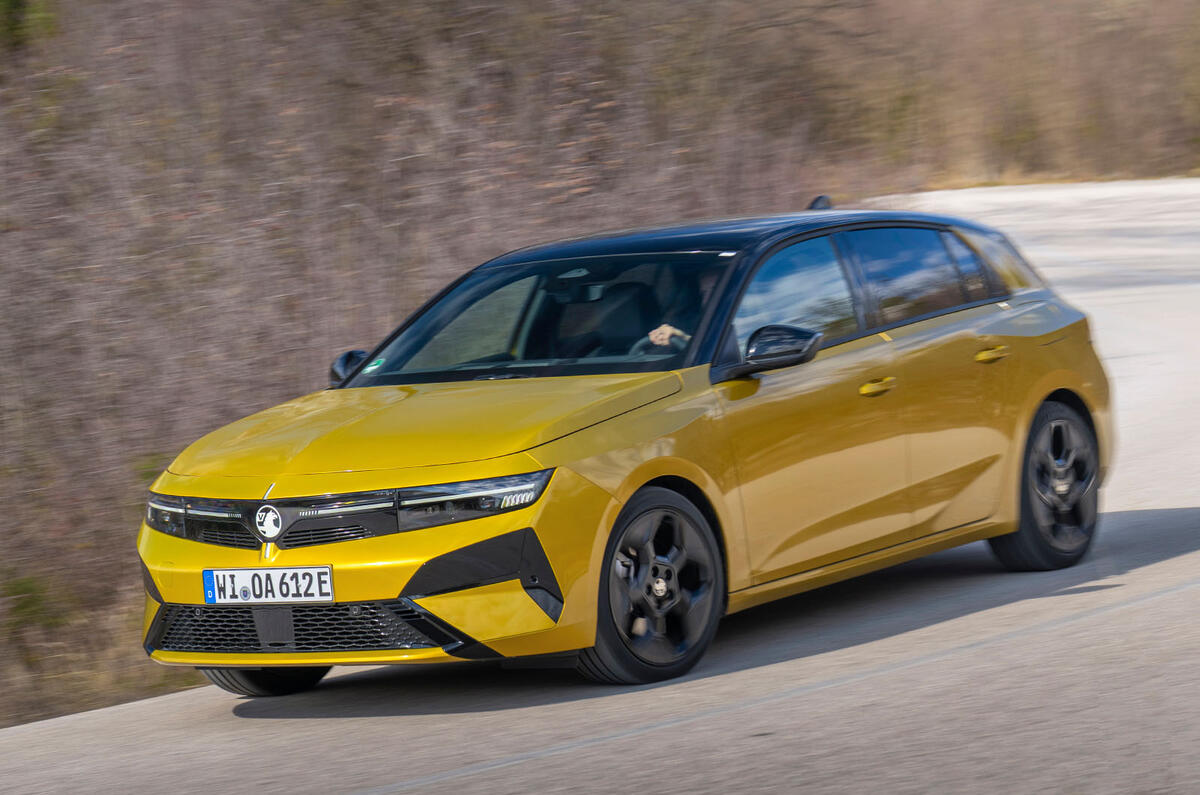
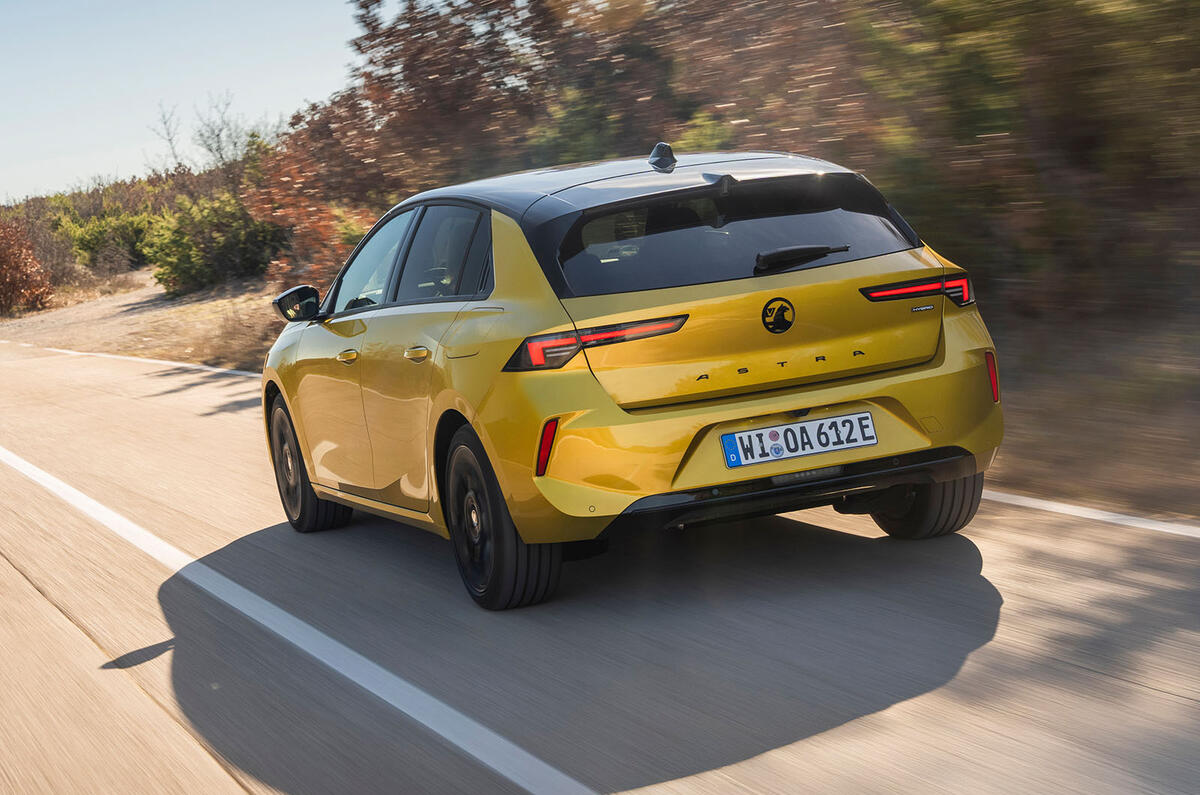
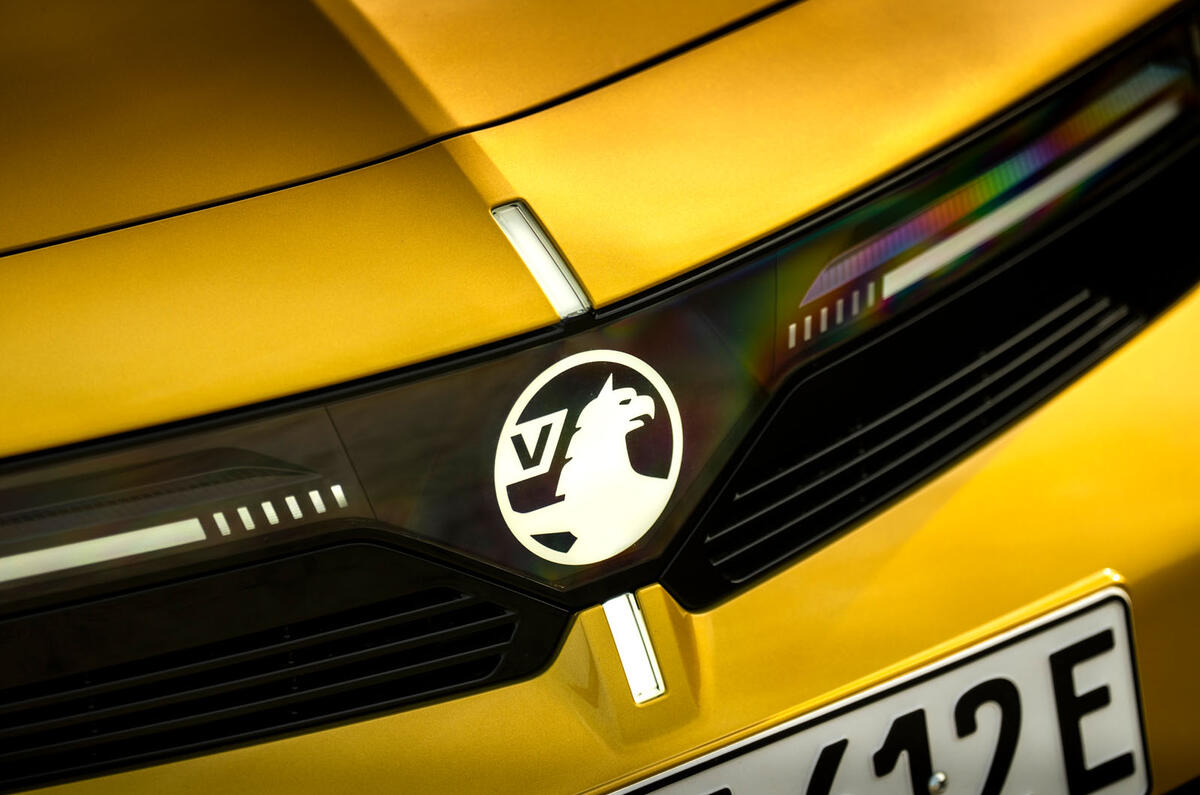
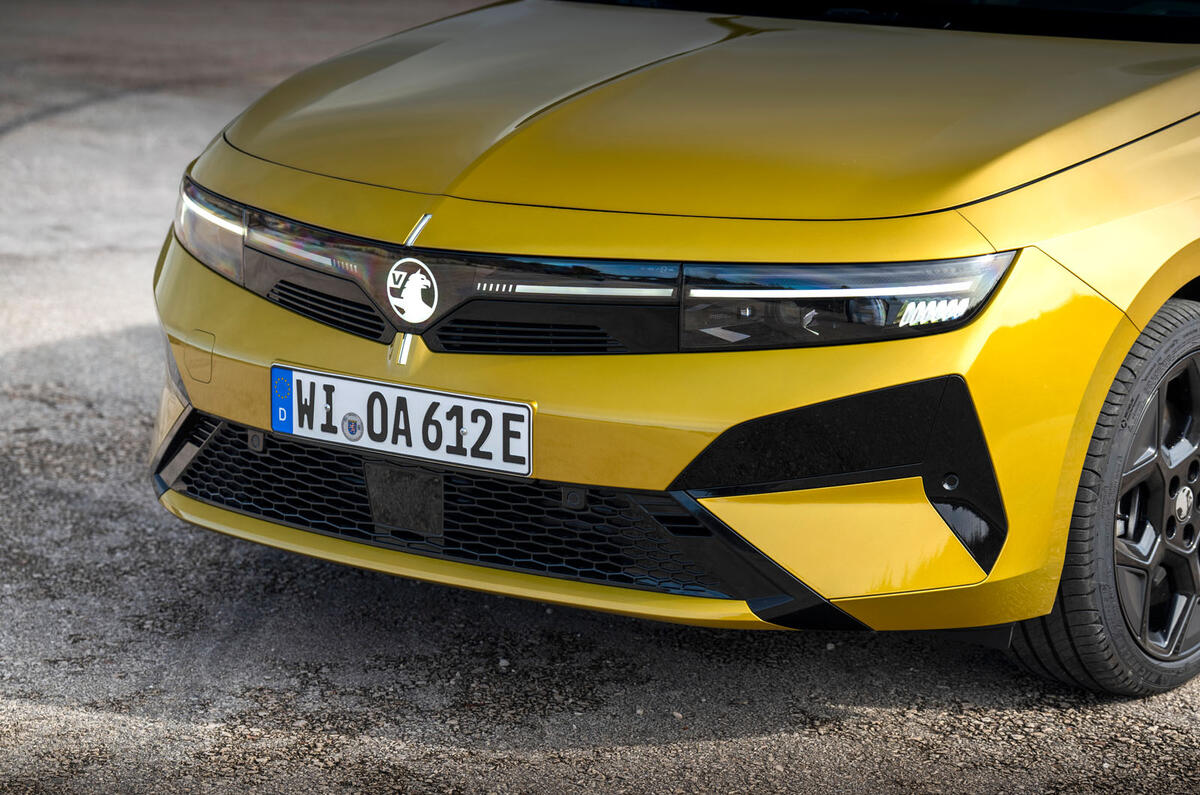
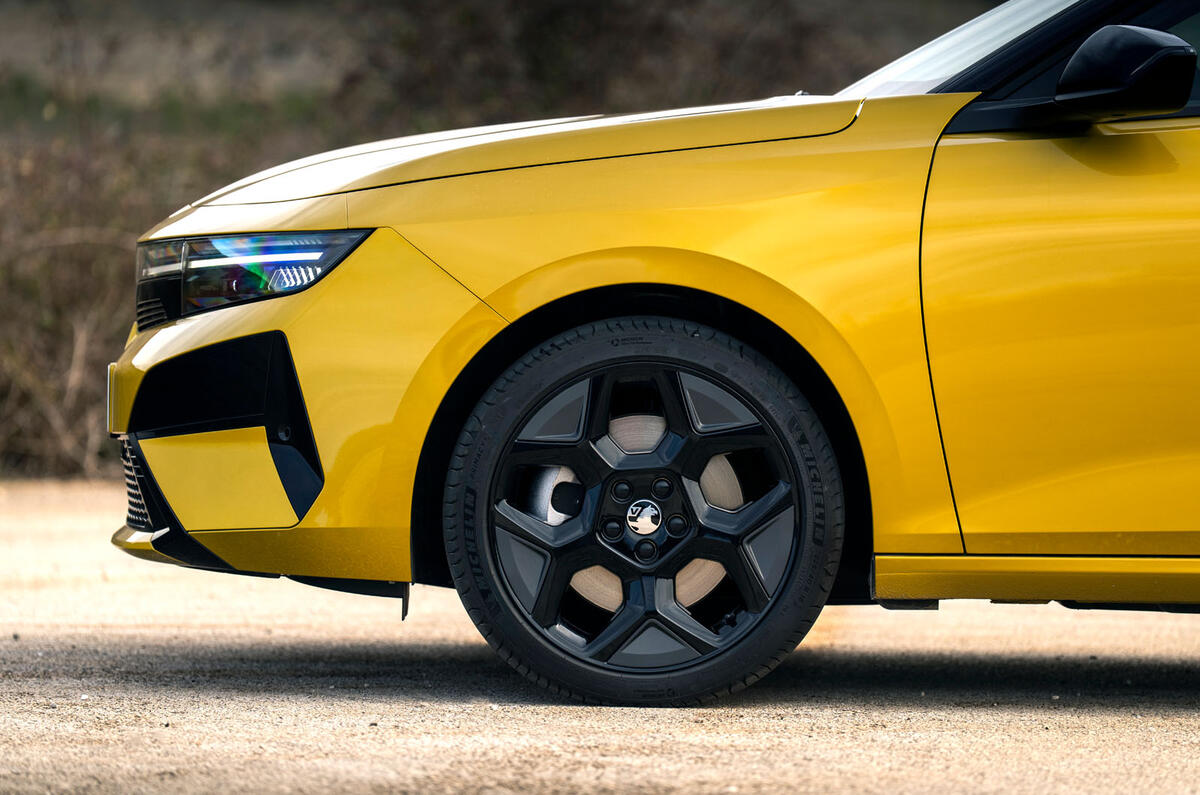
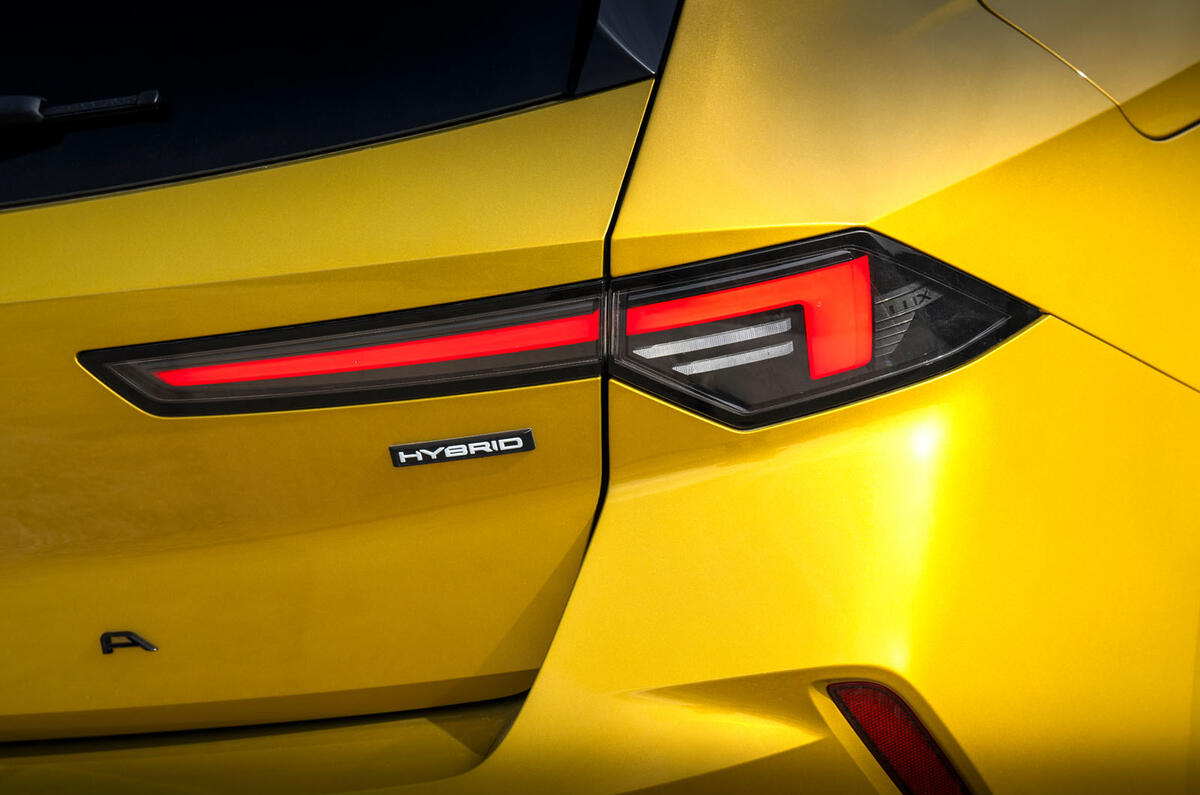
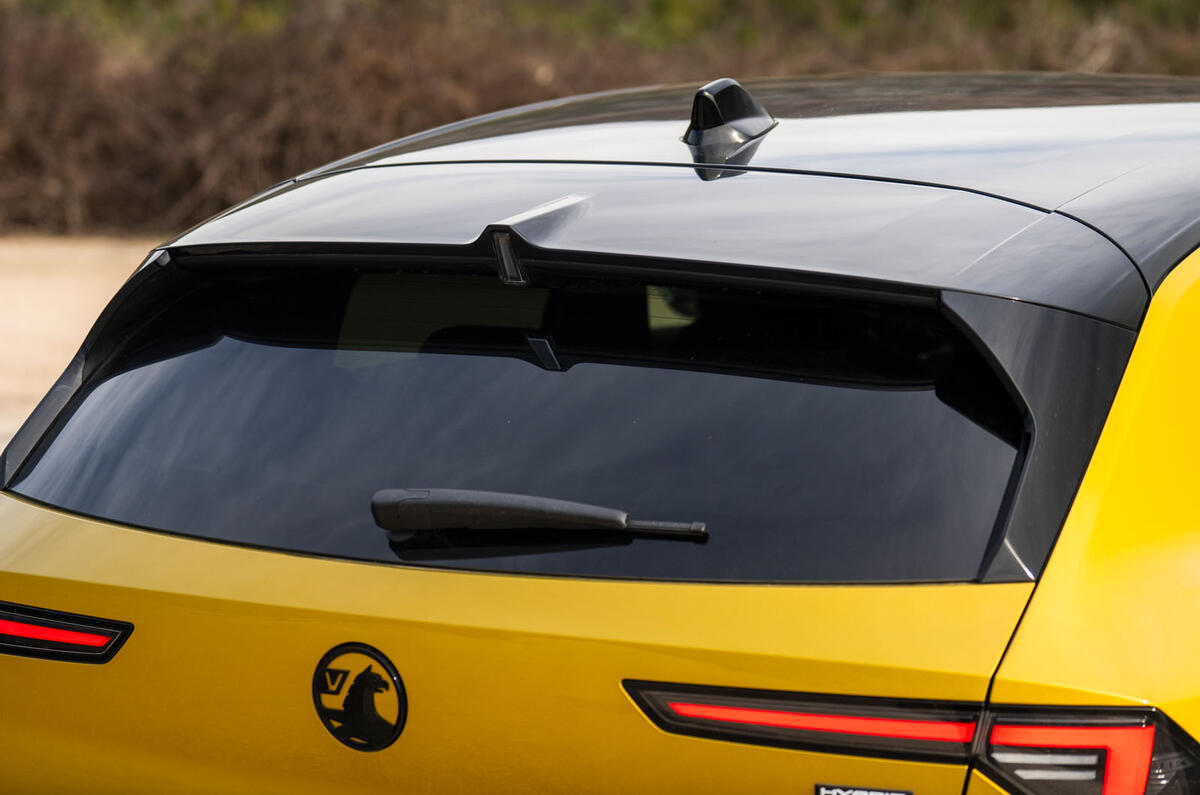
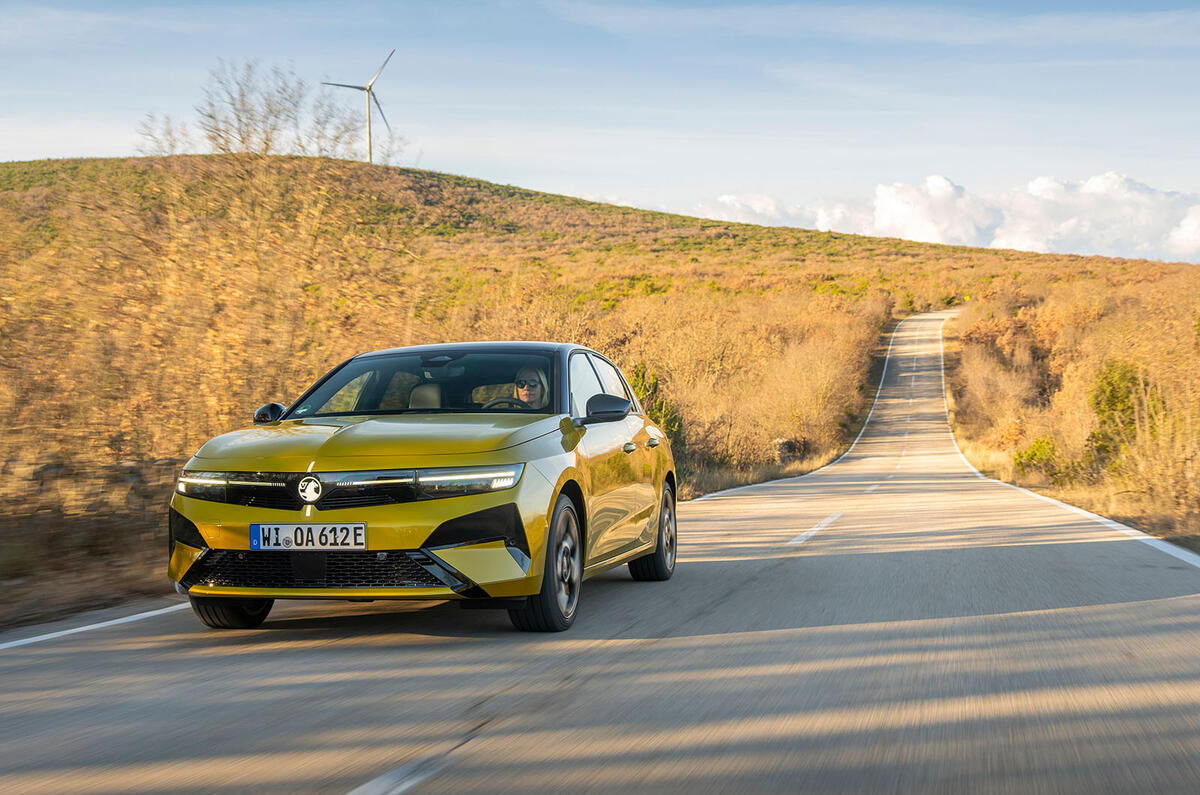
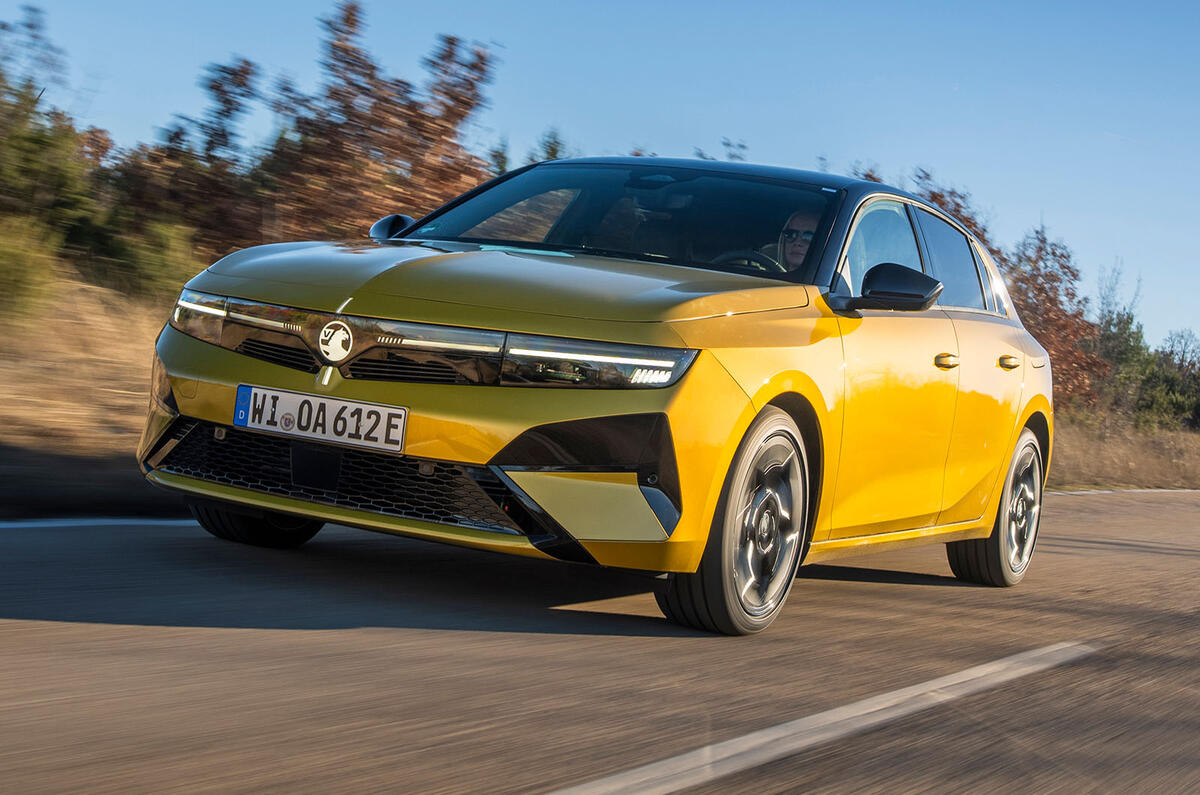
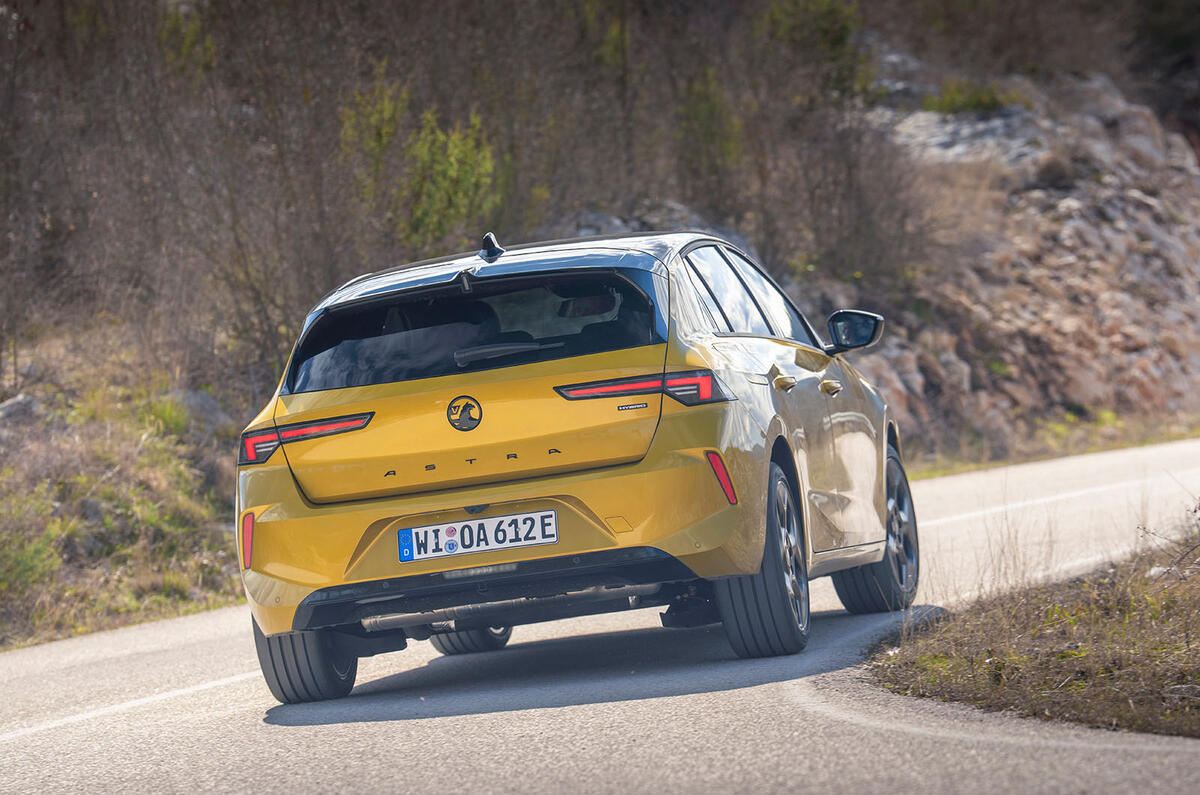









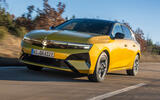


It seems Vauxhall’s bosses have gone to the Burger King school of management, because with the facelifted Astra, you can have it your way.
Regardless of whether you opt for a hybrid, plug-in hybrid or EV, hatchback or Sports Tourer estate, it’s the same price, starting at £29,995. (Cheaper petrols are coming later this year, though.)
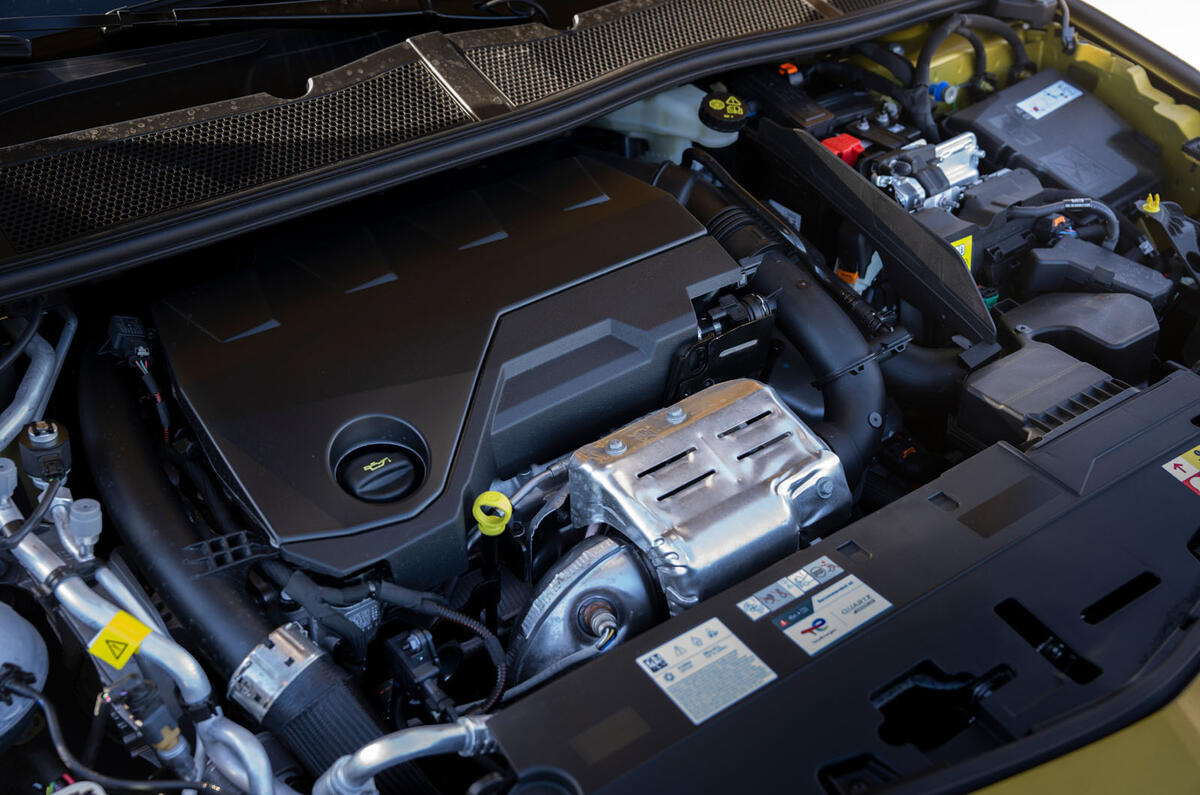
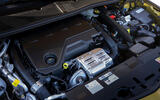
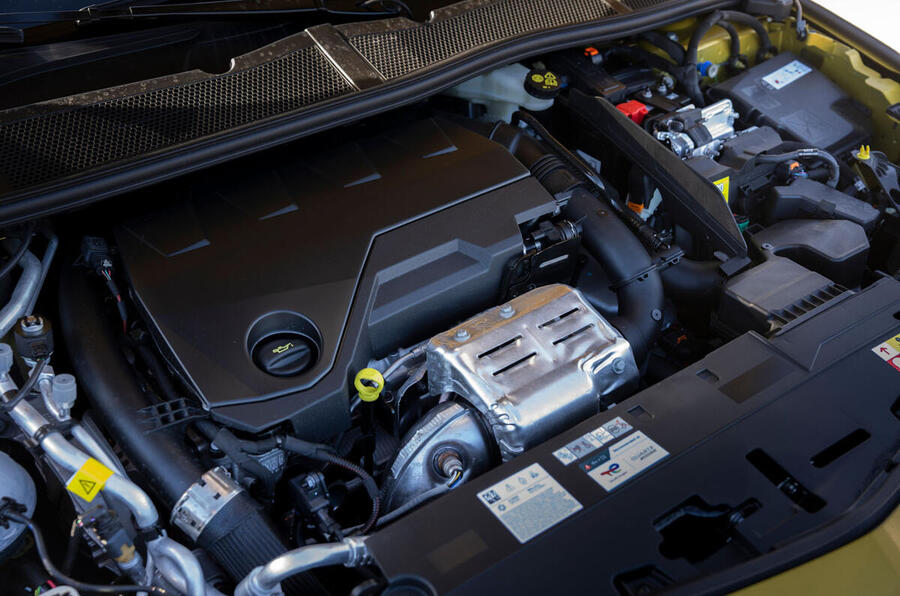
The hybrid matches Stellantis’s ubiquitous 1.2-litre turbo petrol triple with an electric motor (mounted inside its six-speed dual-clutch automatic gearbox) and a 0.9kWh battery. That nets 128bhp, 170lb ft of torque and 56.5mpg.
It’s worth noting that this engine doesn’t use the now-infamous ‘wet belt’ design found in previous Astras, having moved to a timing chain. That should hopefully abate concerns over long-term reliability.
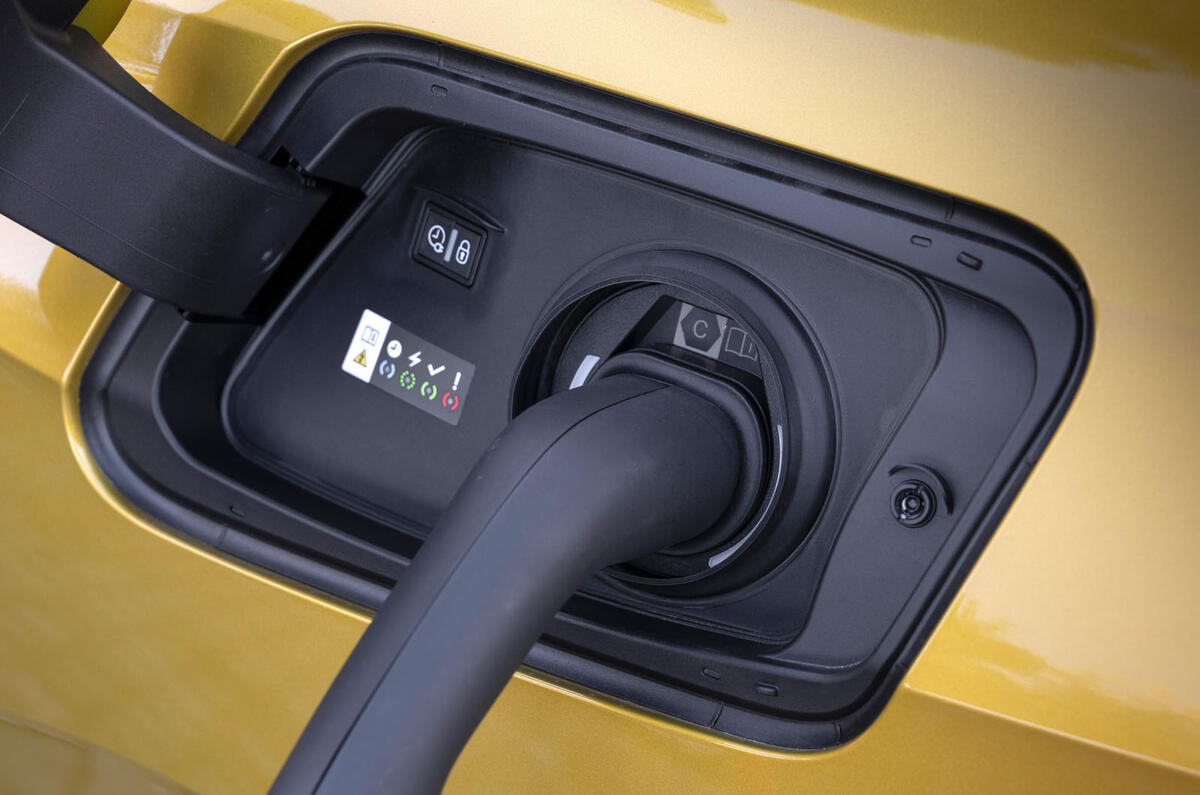
The PHEV gets a 1.6-litre turbo petrol four, a seven-speed dual-clutch gearbox, a punchier electric motor and a 17.2kWh battery (up from 12.4kWh previously) for 192bhp, 266lb ft and an electric range of 52 miles.
Emissions are rated at 50g/km in the hatch and 51g/km in the estate, landing benefit-in-kind tax rates of 10% for each (from the new financial year). Take this figure with a huge pinch of salt, but its fuel economy is officially rated at up to 128.4mpg.
Here I will focus on the PHEV: not only is it great value, considering the Volkswagen Golf eHybrid costs £6490 more, but it’s also the best all-rounder in the Astra range.
Unlike in the regular hybrid, its motor is pokey enough to glide through town and faster A-roads on electrons alone. Give the throttle a squeeze and the engine fires into life after a second or so, transforming it into a surprisingly fizzy car: its 266lb ft makes it feel significantly more urgent than the hybrid or the EV.
But the most notable benefit of going for the PHEV over the hybrid is its refinement. Although a tad droney, its four-pot engine is much easier on the ear than the shouty triple, whose bark soon grates. And, because the PHEV’s battery is nearly 20 times larger than the hybrid’s, it calls on the assistance of its engine much less frequently. You could drive it entirely as an EV if you really wanted to, whereas the hybrid requires you to tip-toe on the throttle to disengage the engine and plod around on the motor.
Around 40 miles of real-world range in the PHEV (albeit on a 20deg day in sunny Croatia) should prove plenty for many urban commutes, and you get the flexibility of petrol power when you run it empty.