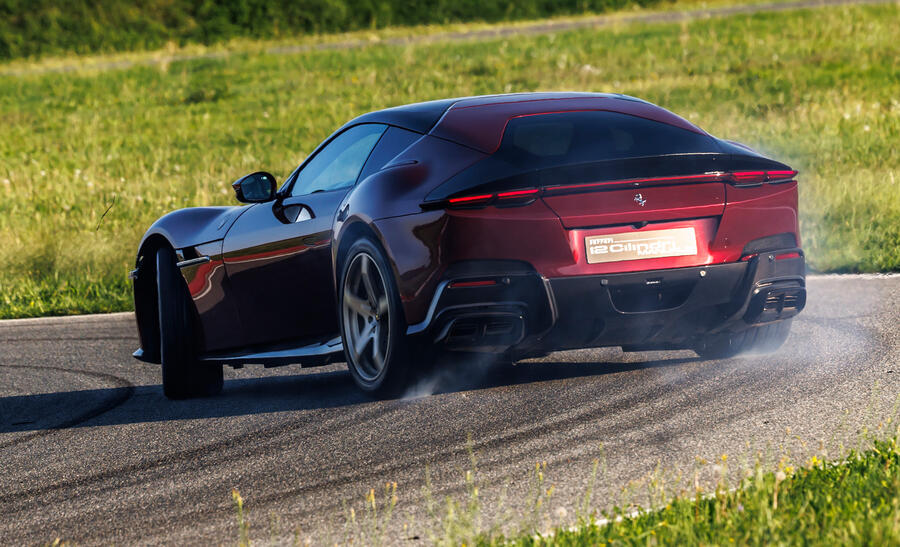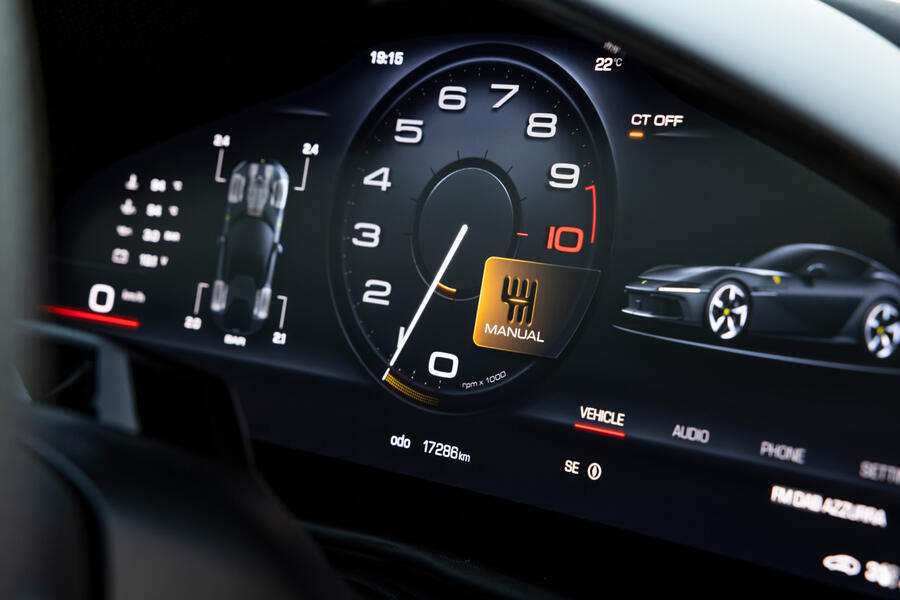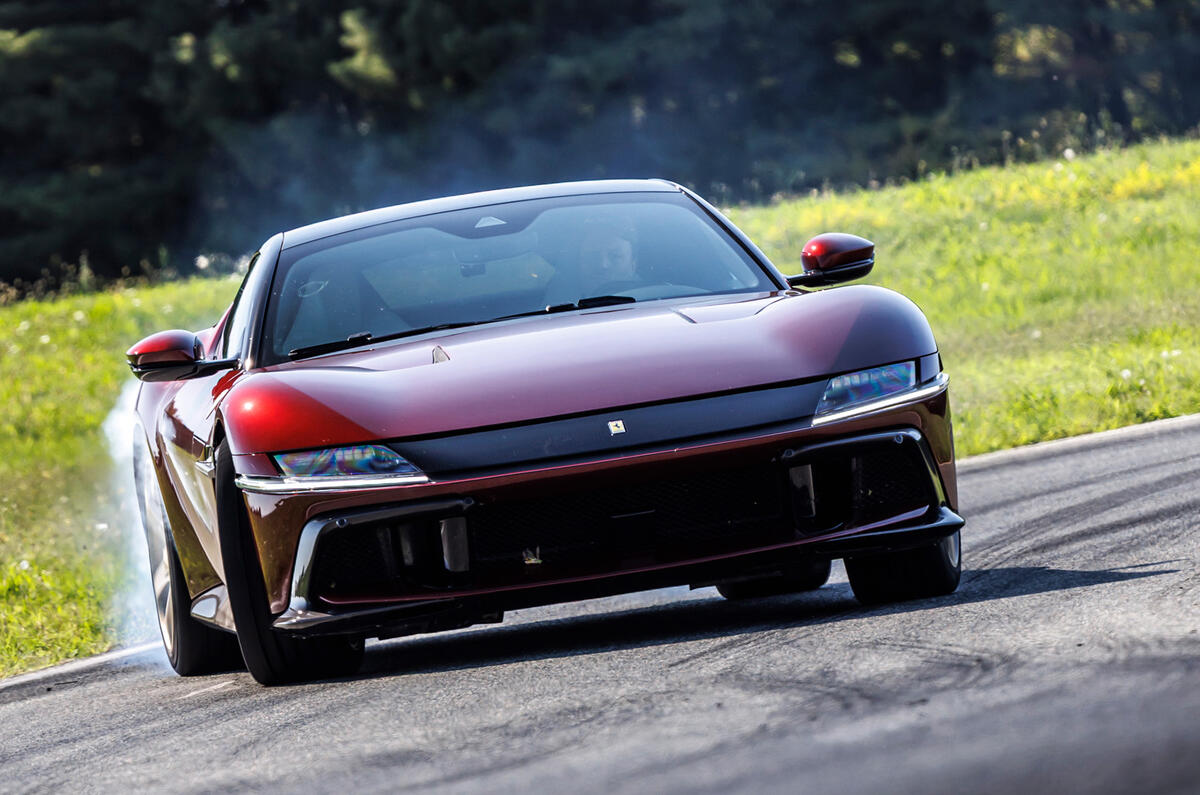

Ferrari development drivers experienced enough to have the 599 GTB on their palmares felt a pang of emotion when work began on the 12Cilindri Manuale. The snick-snack of steel on aluminium, ringing through the cabin with every gearshift, had a rejuvenating quality about it.
This is one of those times when the cultural significance of a car - in this case the 1499-off, £508,000 Manuale - exceeds the reality of the product. Here we have little more than a new gearbox option for the 12Cilindri, and not even that, strictly. The existing eight-speed dual-clutch automatic unit, co-developed with Magna, remains in situ.
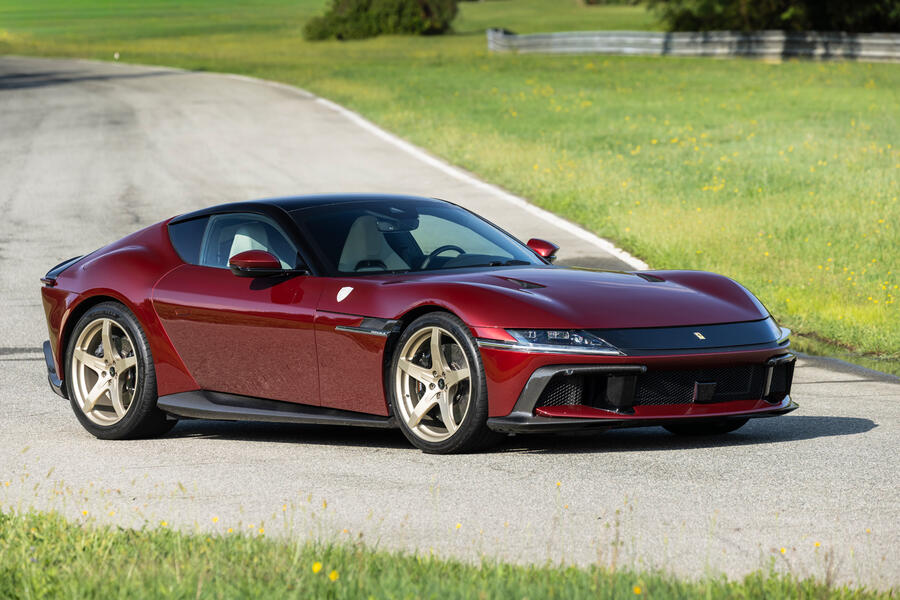
However, the Manuale – distinguishable from the regular car by its Group A-style five-spoke wheels – is also an inflection point. This is the most storied supercar maker on the planet sacrificing speed for simple fun, having met emissions requirements for an epic V12 paired with an old-school H-pattern shifter in a series-production model. Where Ferrari goes next we will have to wait and see, but we're told the tech also works with hybrids.
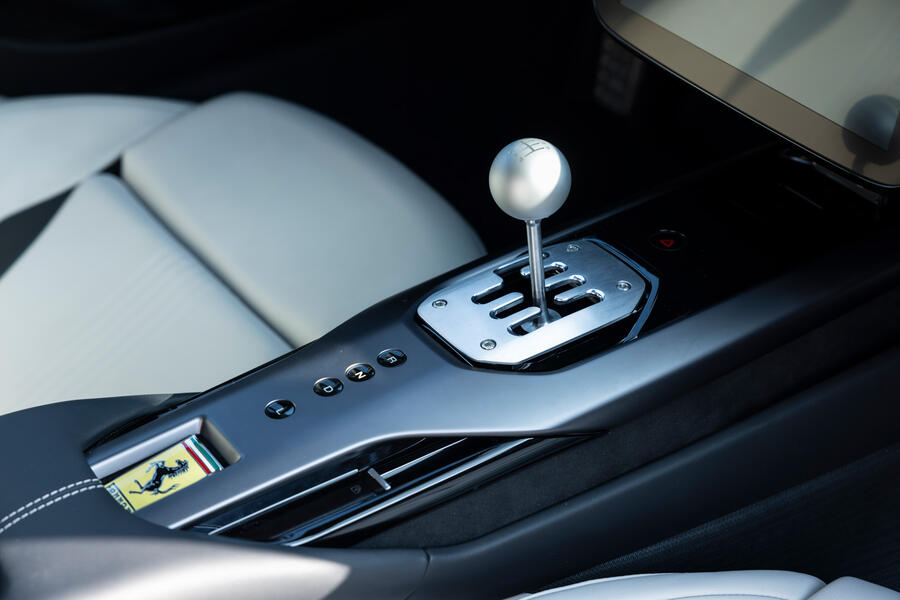
So how have they done it? It's common knowledge that there's no mechanical linkage between the Manuale's pretty gearlever (with its anodised knob of precisely 48mm in diameter, as per the older Ferraris) and the rear-mounted dual-clutch transmission (DCT).
Reasons why the Manuale isn't truly manual range from the inability of a suitable single-clutch transmission to cope with the 500lb ft of torque from the 6.5-litre engine (tell that to the twin-turbocharged V12 Pagani Utopia and its 811lb ft) to the fact that ditching the DCT would diminish the overall 12Cilindri package.
Lose the DCT and you lose the electronic limited-slip differential and its integration with the torque vectoring and ABS. All of that is critical for Ferrari's Slip Control and the astonishing playfulness it allows. The 12Cilindri wouldn't drop out of the sky without its DCT, insists test chief Raffaele de Simone, but it wouldn't be in any recognisable sense a 12Cilindri. So the DCT hardware stays and the manual bit is all done by wire.
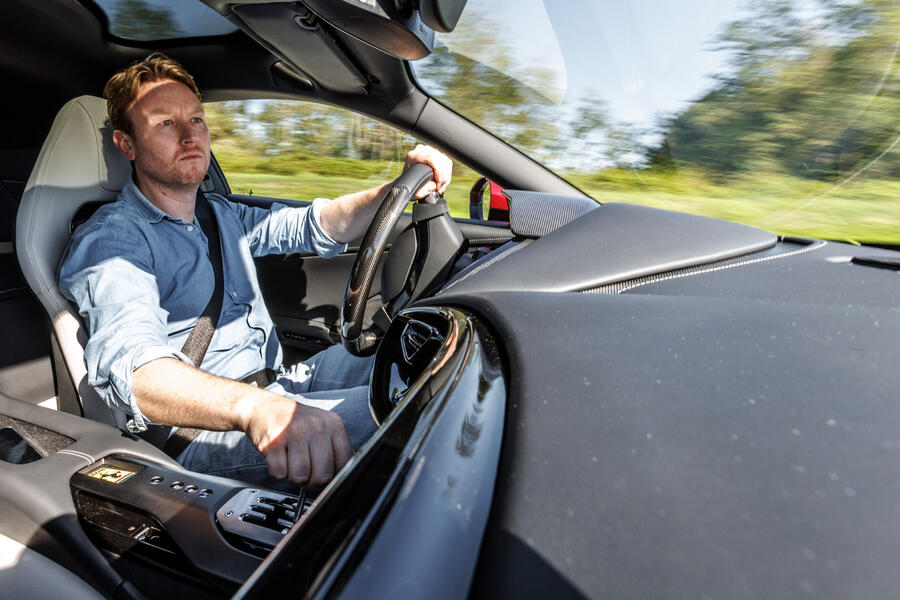
Pulling off the mark in first gear at Balocco proving ground, knowing a position sensor on the artisanal clutch-pedal assembly is informing the precise degree of engagement of a clutch buried somewhere behind me, is an odd sensation, admittedly. But if I were none the wiser as to the underlying technology (as well I might be, given you can start up the paddle-less Manuale as you would a real manual), might I be fooled?