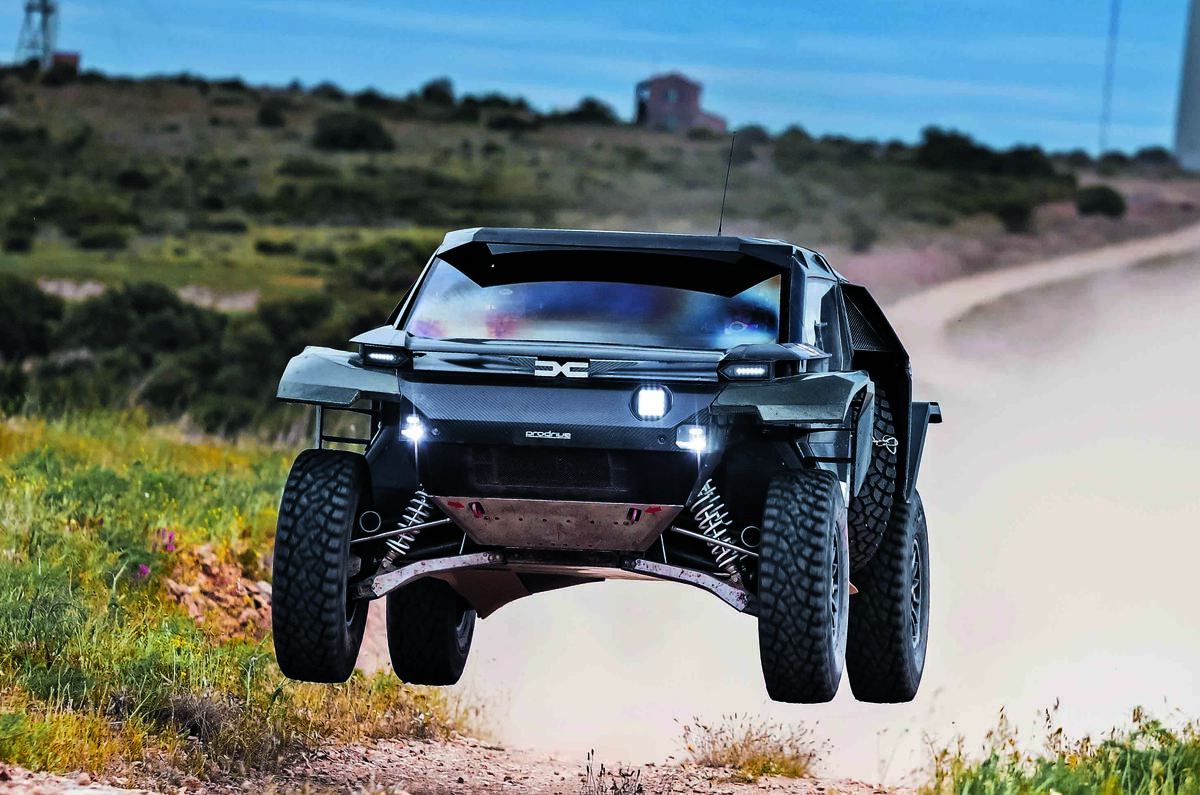

What a place to make your first mark in motorsport. Dacia, the Romanian budget car brand that has zero association with competition motoring, will plunge head first with a three-car entry into the epic, most gruelling event of them all.
The Dakar Rally will run for the sixth time in the deserts of Saudi Arabia (despite its name) across two weeks from 3 to 17 January, and what’s most remarkable is not just the inclusion of the Renault-owned car maker among the 340 entries in classes for cars, motorcycles and trucks: it actually (whisper it) has a genuine chance to win.
That’s because Dacia took the eminently sensible decision to partner with Prodrive for its first motorsport campaign. One of the world’s most respected competition specialists, Prodrive hasn’t yet won the Dakar but it sure knows a thing or two about the famous rally raid, through its previous Hunter T1+ programme, which culminated in a podium third for World Rally Championship legend Sébastien Loeb last January.
Loeb is back to helm one of the Dacias, along with his old Extreme E partner Cristina Gutiérrez and five-time Dakar winner Nasser Al-Attiyah. A decent line-up, to put it mildly.
So there’s hope, perhaps even optimism. But Prodrive’s team of grizzled engineers know better than to make rash predictions. To conquer the Dakar, its three all-new Dacia Sandriders must negotiate a prologue and 12 stages that include a so-called ‘chrono’ that lasts 48 hours (no, that’s not a typo) and another dubbed ‘marathon’ and emerge unscathed from the desert region known, all too accurately, as the Empty Quarter.
From the start in Bisha to the finish in Shubaytah, the total mileage is 4784, and 3168 of them are within the competitive stages. It’s beyond daunting.
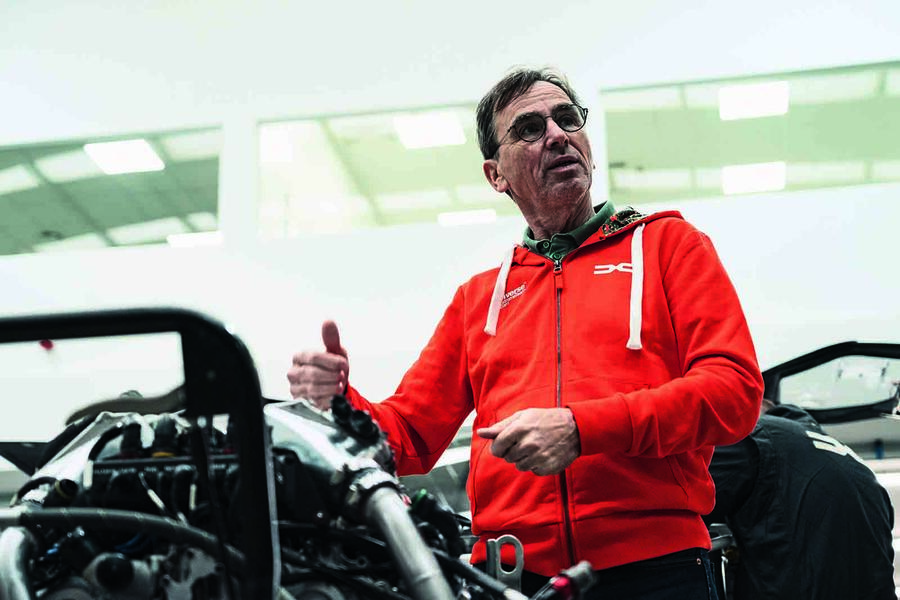
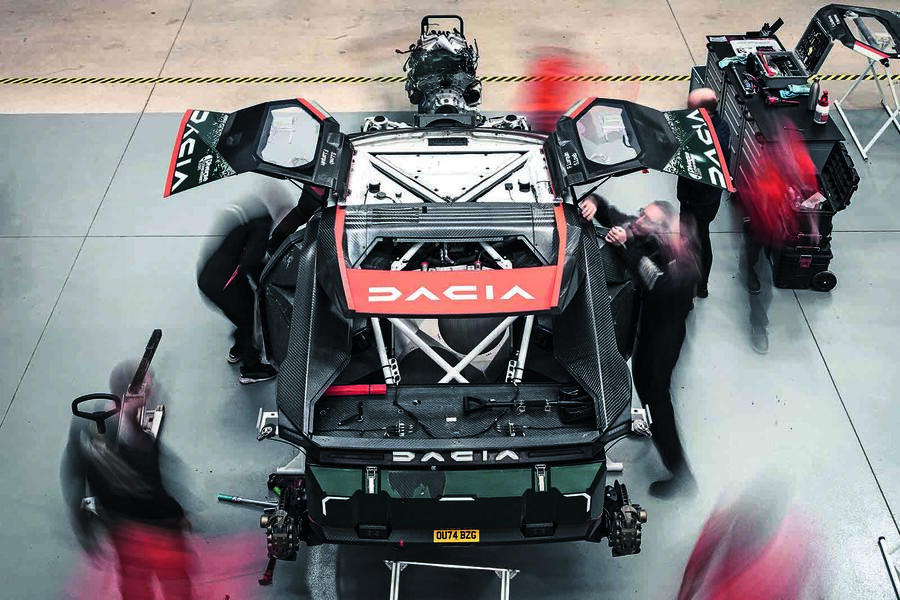
But why is Dacia doing it? We travelled to to Prodrive’s Banbury base beside the M40 to find out.
The short answer is because it’s “cool”, according to Dacia UK brand director Luke Broad.
Also, in the wake of the brand’s repositioning as the rugged, outdoors choice for those on a budget, the epic rally meets Dacia’s new principle for “human adventure”.
“The ambition is to win,” says Broad. “But this is also an outdoor technical laboratory to develop innovations that will influence our road cars, and it’s an experiment with sustainable fuels.” To that end, the Sandrider runs on a synthetic brew supplied by Aramco. The Ultimate T1+-class machine is a bespoke design that, insists technical director Philip Dunabin, is a genuine Dacia. The company’s designers were involved in the concept and styling, a collaboration with Prodrive that, says Dunabin, worked smoothly.