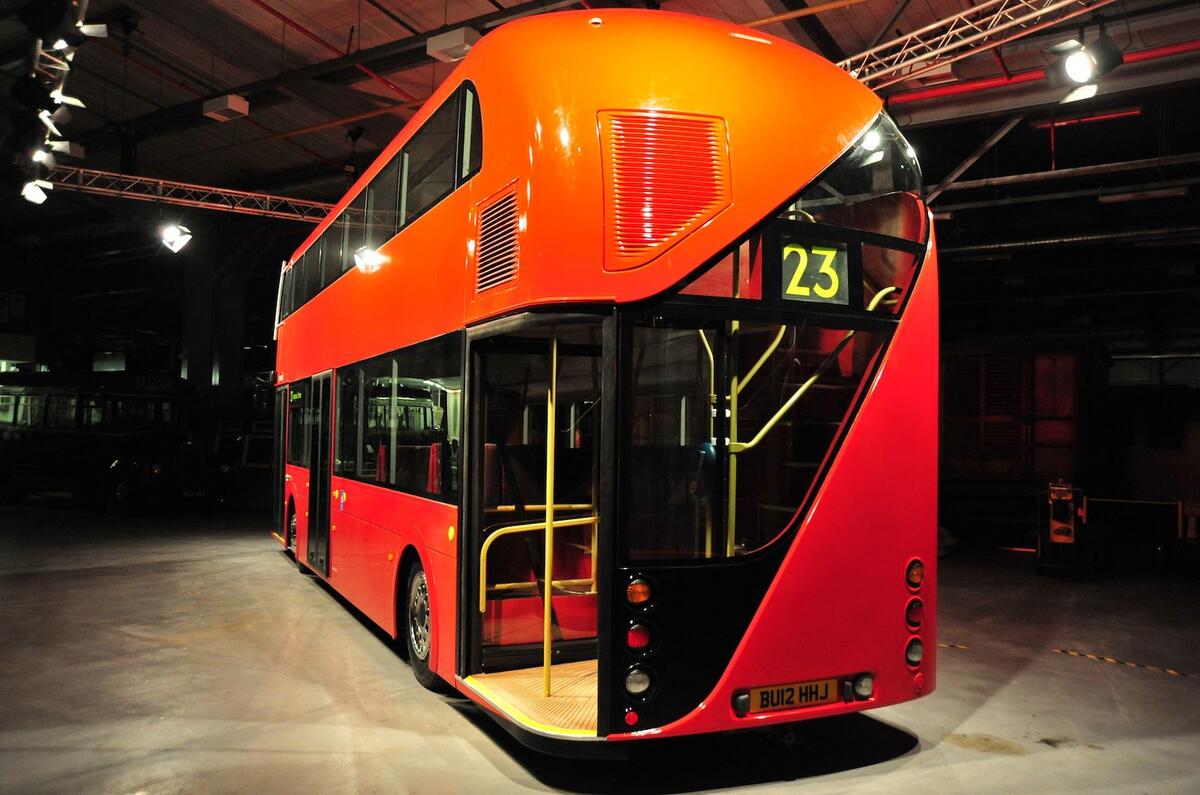
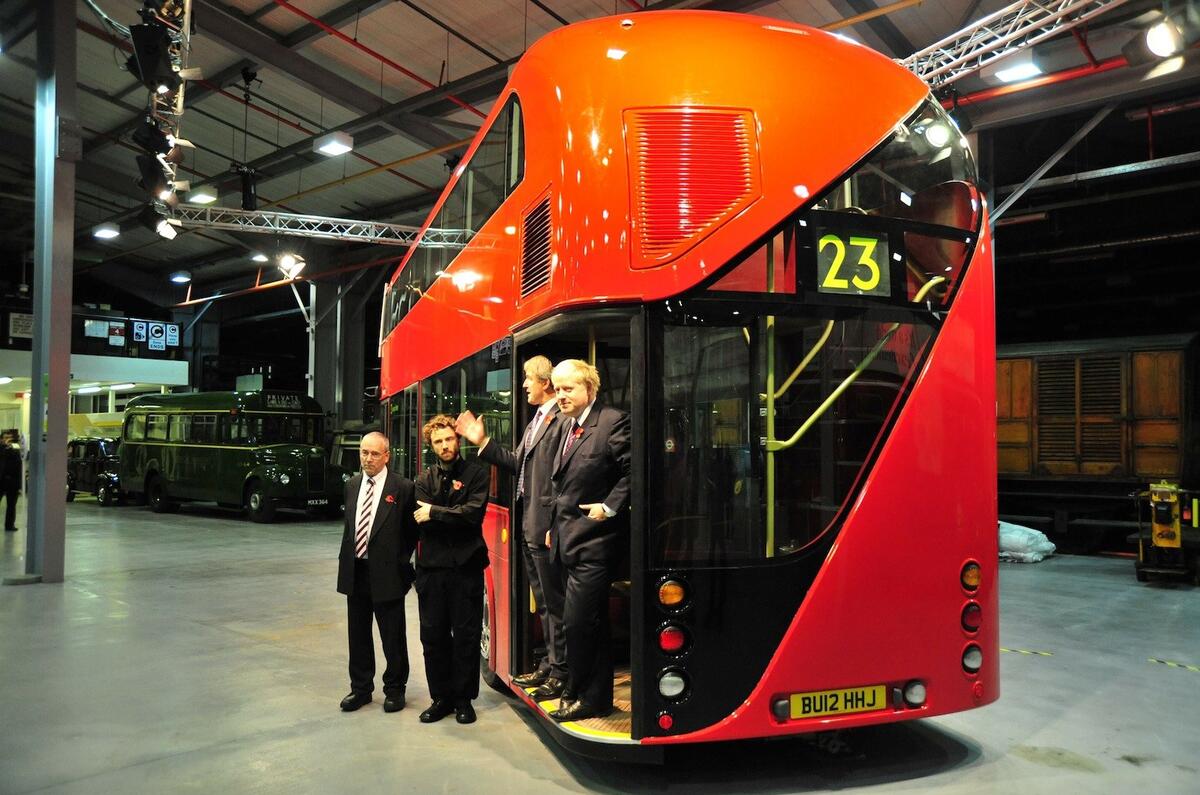
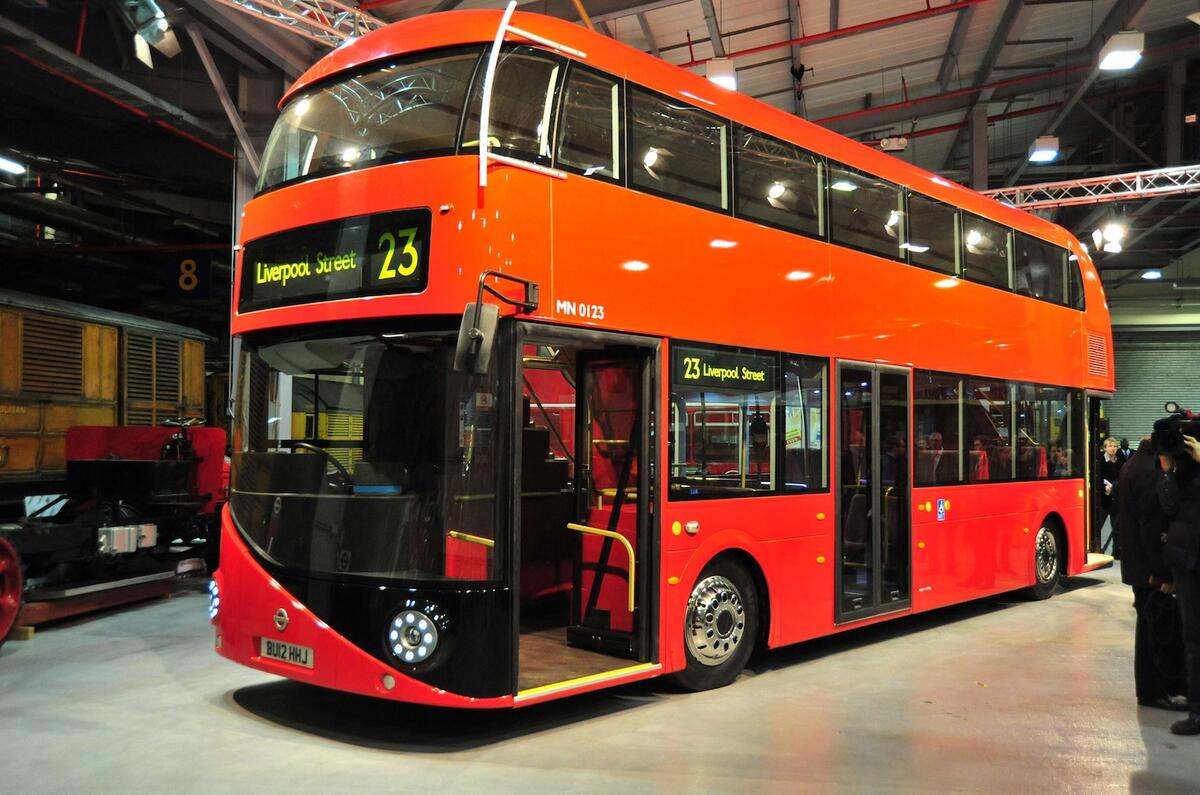
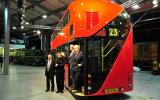
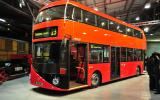

The all-new, open platform, London double decker bus has been unveiled by Mayor Boris Johnson.
The ‘New Bus for London’ project was inspired by a design commissioned by Autocar in December 2007 and backed by Johnson, who was then the Conservative party candidate for London Mayor.
Technically, the bus is significantly more advanced than current double-decker buses. It is built around an aluminium spaceframe chassis and is powered by a ‘range-extender’ electric transmission.
The rear wheels are driven by an electric motor, which is powered by both a lithium-Ion battery pack and a 4.5-litre diesel engine/generator, which is mounted at the rear of the bus under the staircase.
Wrightbus sources say that the battery will not charged overnight, but will be kept in a constant state of readiness by the engine/generator.
The on-board computer will constantly decide how to mix and match power to the electric motor from either the battery, the generator or both.
Lurching starts should also be a thing of the past with this new bus. TfL and Wrightbus are working on a torque limit for initial acceleration, which should prevent standing passengers from being wrong-footed.
Transport for London, which commissioned the design from Northern Irish bus specialist Wrightbus, is claiming significant reductions in fuel consumption and pollutants compared for the NB4L, even when compared with current hybrid-powered buses. A significant reduction in noise pollution is also expected.
As well as the return of the traditional open rear platform, the NB4L gets two additional doors and has twin staircases. The aim is to make loading and unloading passengers much quicker than on conventional buses.
The open rear platform can also be closed off at certain times of the day, via slimline folding doors.
This full-size mock-up was built by Wrightbus, which is currently working on the first NB4L prototypes. Real-world testing begins early next year at the Millbrook test track in Bedfordshire.
Wrightbus and TfL expect to have the first example running in the capital by the end of next year, with another four to follow in the first half of 2012.
The bus has not yet been named, though ‘Olympian’ (an old Leyland bus badge) is thought to be a contender.
Peter Hendy, head of TfL, told Autocar that he expected all the double-deckers on London’s 8000-strong fleet would eventually be replaced by this new design.