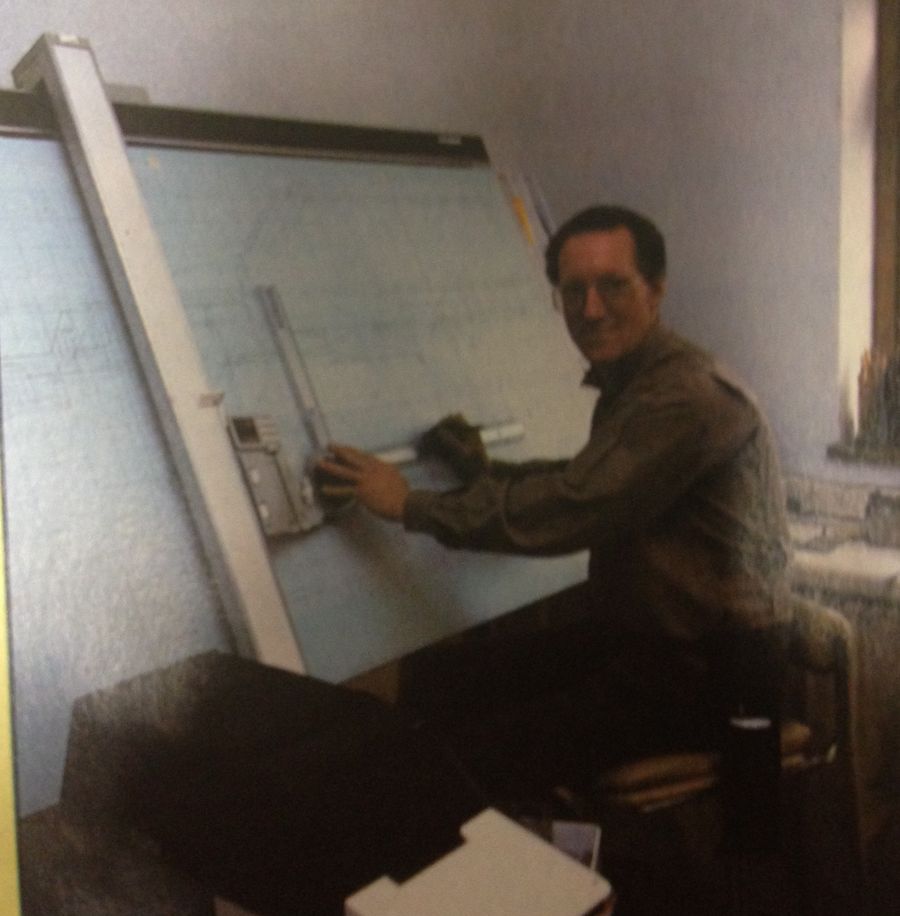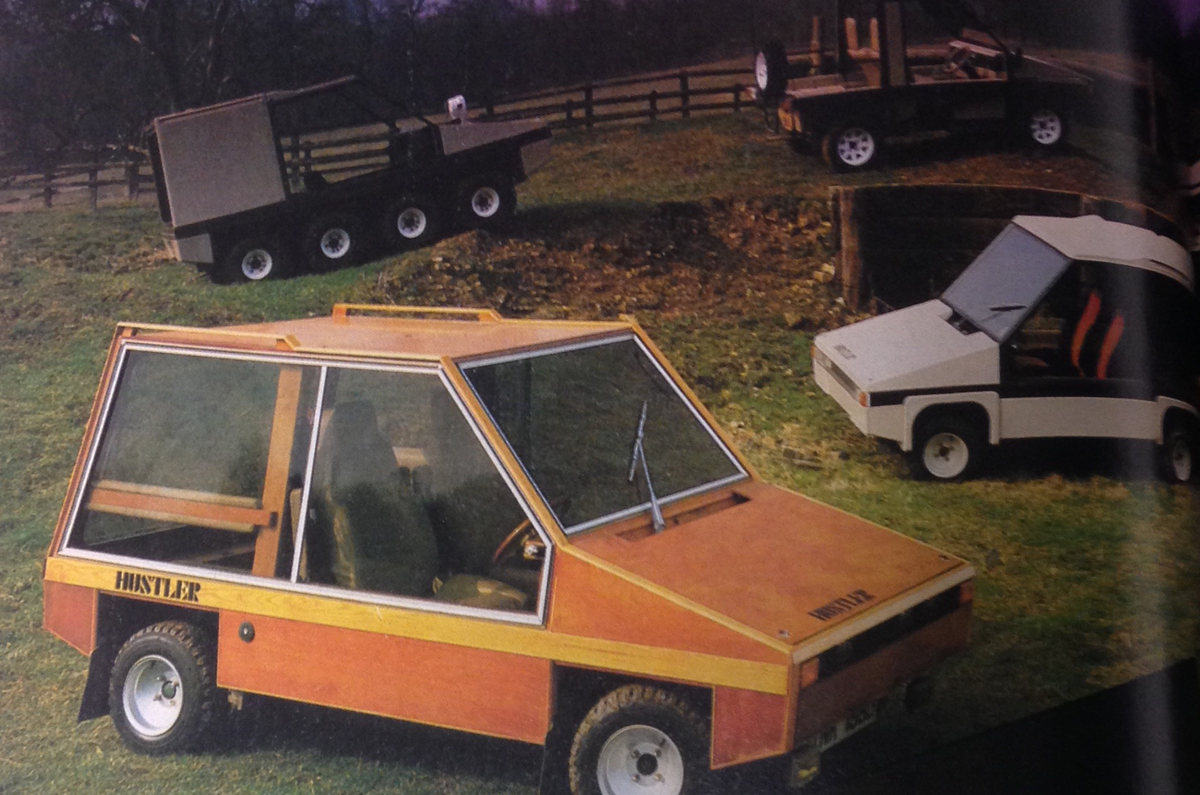

"Unconventional but effective. That describes both the Hustler kit car and its designer, William Towns,” said Autocar’s Nigel Fryatt.
Automotive designer Towns began his career at Rootes in 1954, helping with the styling of some Hillman models, before moving to Rover in 1963, and then Aston Martin in 1966, where he designed the divisive original Aston Martin Lagonda saloon.
After leaving Aston, he worked on numerous odd projects, including for Reliant, Jensen-Healey and Railton. Most interesting, though, was his own endeavour, the Hustler, a kit car based on the Mini that looked rather like the 1980s’ golf cart of the future.
After road-testing the initial version in December 1978, where we found it to be "an impressive concept that really worked", we went to see how the project was progressing on 19 May 1984, by which time the Hustler was a modest commercial success.
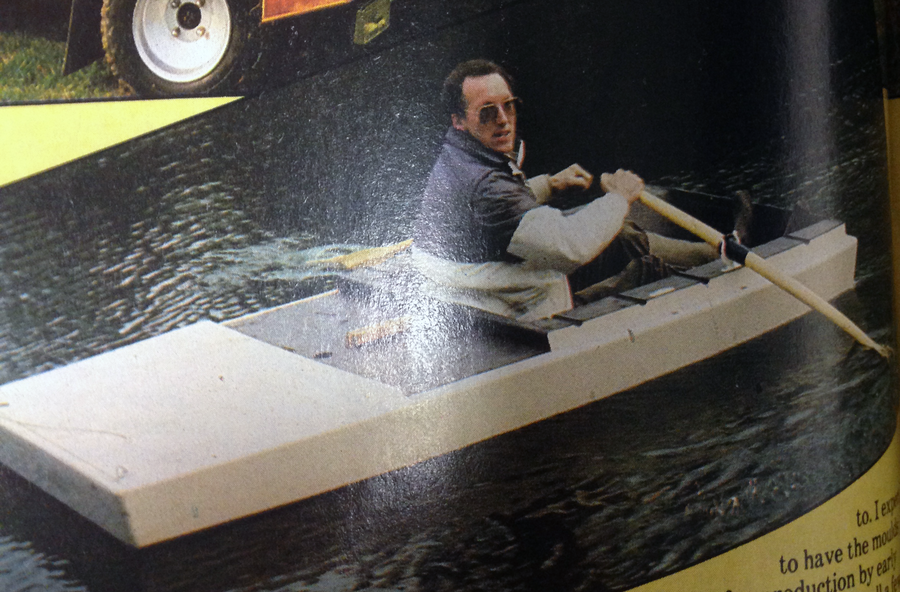
We began, “It doesn’t look like a boat, does it? But then you wouldn’t expect it to, because a visit to designer William Towns’ home in rural Warwickshire exceeds expectations.”
“The rowing boat that emerges could have come from the pen of only one man. It looks like the roof of an ice-cream van.”
“We haven’t put a sail on her yet, but we’re going to,” Towns proclaimed. Turns out the reason it looks like the roof of an ice-cream van is because it is – a Hustler ice-cream van, to be precise.
In fact, the rowing boat could be had as a roof-mounted optional extra for six-wheeled models…
By 1984, Towns had various four and six-wheeled versions of his whacky car: the Huntsman, the Hellcat, the Sprint, the Sport, the Harrier – and one built of marine ply.
“Except for the latter, the principle of the all is the same,” Fryatt explained.
“A basic tubular steel chassis frame is utilised in each one and the donor components come from rusty Mini, BMC 1100 or 1300 vehicles, or brand new, straight from Austin Rover’s Metro parts shelves.
“The chassis frame is in two parts, onto the lower one bolts two Mini sub-frames, the front complete with engine, and the top frame sandwiches the main glass-fibre body tub. The top frame holds the glasshouse and roof. It is as simple as that.”
Interestingly, the reason the Hustler took five years to become successful is because Towns didn’t think the car was a commercial proposition. Once shown to the public, plenty of ‘entrepreneurs’ put in offers, but eventually, Towns realised the best way forward was to just put it into production himself.