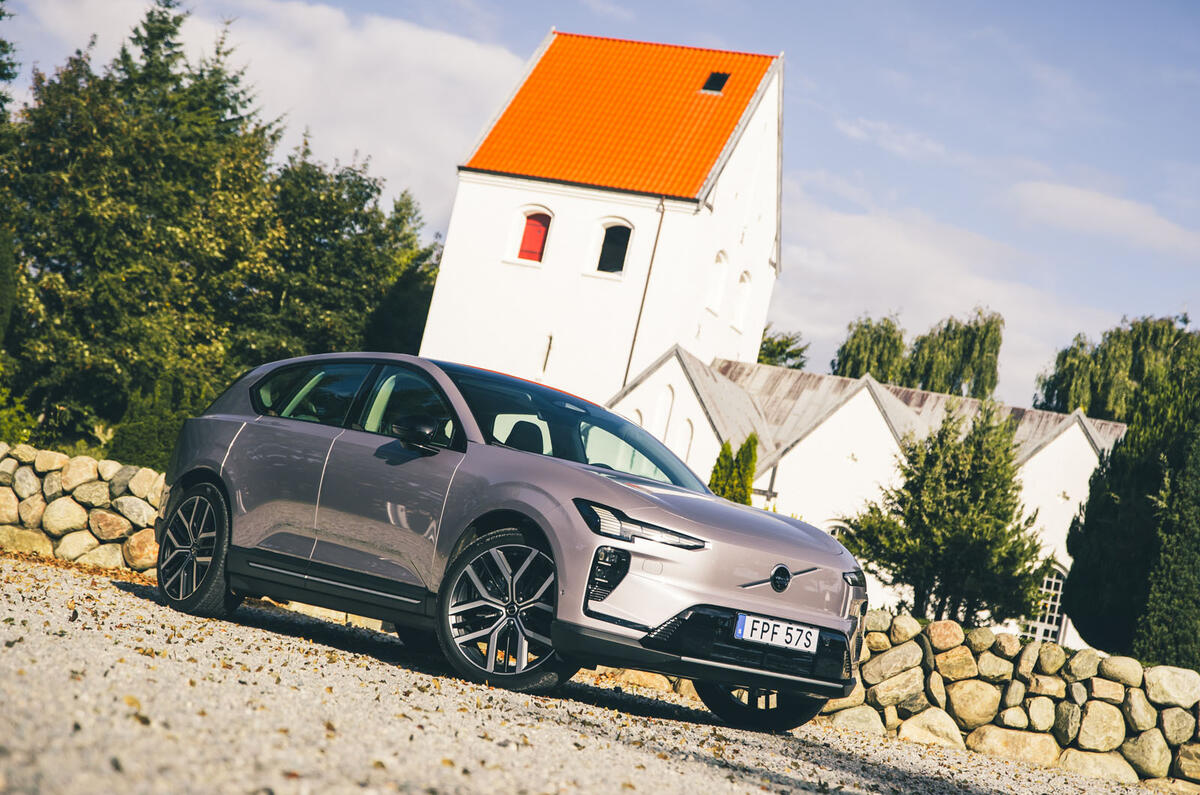

Volvo says production of its new EX60 SUV is “taking longer than planned to ramp up” because of the challenges associated with its radical new technology and construction.
The company says it has taken more than 50,000 orders for the electric equivalent to the best-selling XC60 but so far has built just 5000 units since the model entered production in April – and CEO Håkan Samuelsson has warned that the crucial new model’s “financial contribution will be delayed as we are not ramping up to the plan we had before”.
Delays to the EX60’s full-scale launch are particularly poorly timed because Volvo has today (23 October) posted losses of nearly £280 million in a “very disappointing” third quarter of 2026 and announced plans to cut its workforce by 2500 as part of a drive to rebuild profits.
Samuelsson said the EX60 will play a crucial role in Volvo’s turnaround plan, eventually serving as “one of the company’s best profit-contributing models” – but its impact on the bottom line will not be fully realised until output reaches capacity at the Swedish firm’s Torslanda plant near Gothenburg.
BMW recently announced that it had taken 100,000 orders for the iX3 – a close rival for the EX60, which was launched last October – with its new Hungary factory ramping up more quickly than any BMW plant in history to meet demand. Production of the iX3 was boosted recently with a third shift at the Debrecen facility, which is now running at capacity 24/7.
Volvo chief commercial officer Erik Severinson said it has been “difficult to start production as we want” with the EX60, because the new SPA3 platform on which it is based requires significant adaptation to the production process.
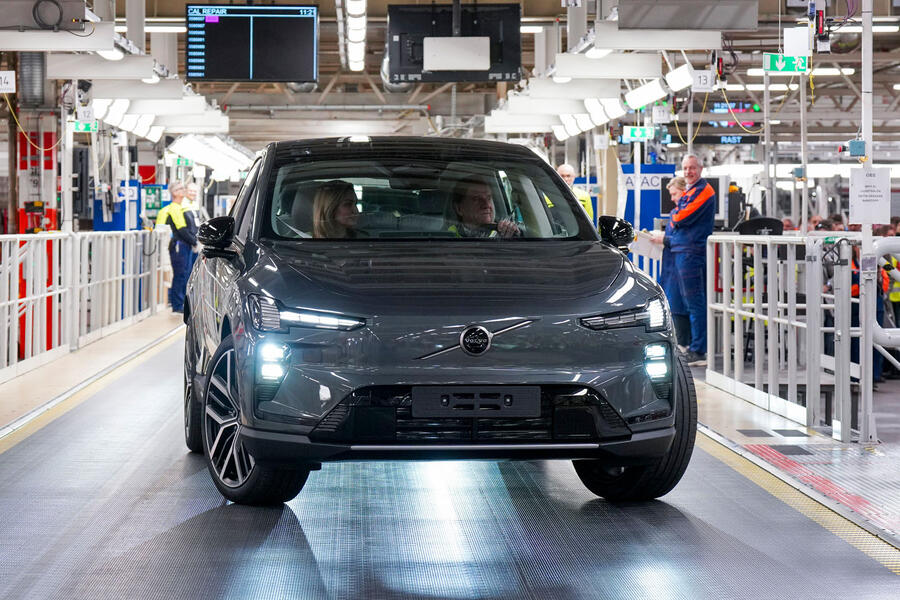
Volvo has invested around £750 million in its Torslanda facility to build EVs based on the architecture, which introduces a radical new megacasting production method – reducing the number of individual bodywork components – and uses an innovative cell-to-body battery packaging arrangement.
Volvo cited the battery packaging as the main reason behind the delay and said the setback is completely unrelated to the software issues that delayed the rollout of the larger EX90 in 2024.
Samuelsson said the slow start highlighted the differences between the EX60 and Volvo’s existing EVs and said the firm is steadily accelerating output.