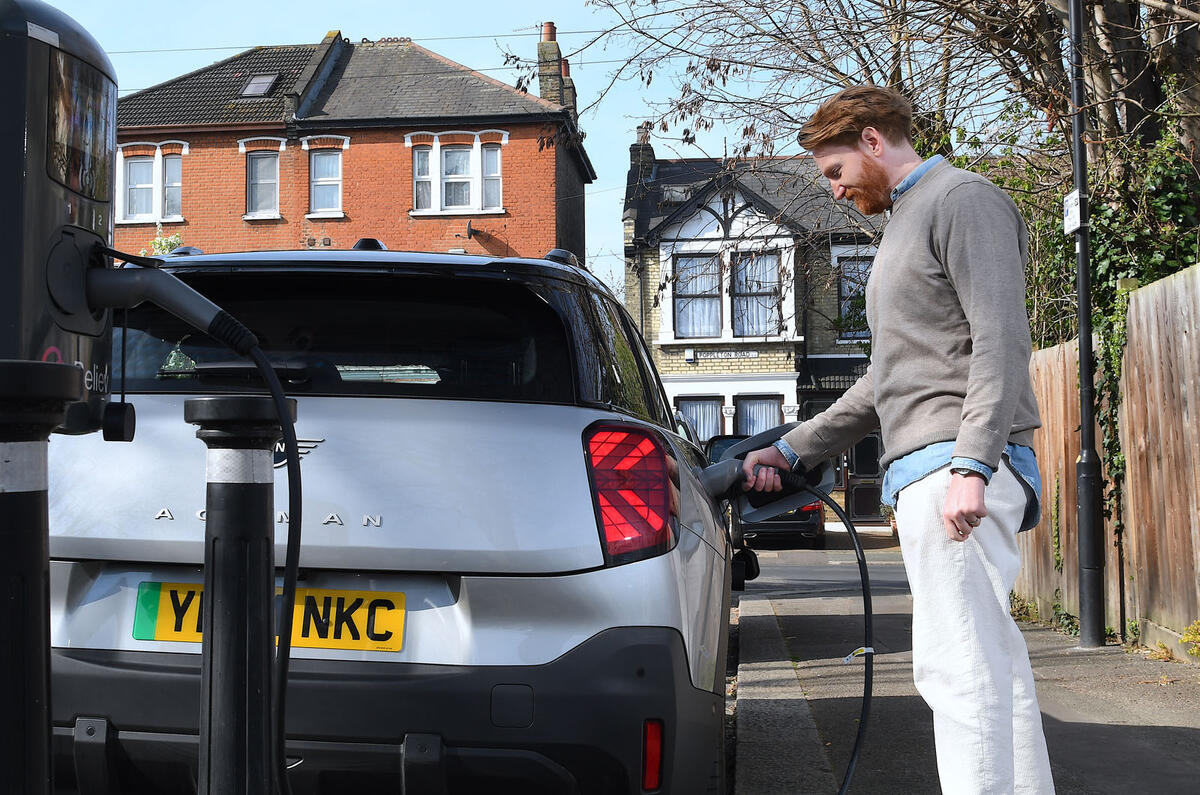
EV drivers who rely on public chargers are facing rising running costs, as operators warn that higher network charges could soon be passed on to motorists.
Osprey, one of the UK’s largest rapid-charging networks, with more than 1500 chargers, last month reported a sharp increase in fixed grid costs, particularly standing charges, at some sites.
In the space of five years, annual fixed charges for one site in Wolverhampton rose from £87 to £33,651.
Andrew Nosworthy, Osprey’s commercial director, told Autocar the current situation is unsustainable. “The industry is absorbing an awful lot of these costs, but we can’t do that forever," he said. "Some of it will have to be passed on to drivers.”
Industry trade body ChargeUK said public charging prices have risen by around 38% on average since the beginning of the decade.
Jarrod Birch, its head of policy, said standing charges remain the most pressing challenge for operators, “having risen by nearly 500% since the start of the 2020s”.
That ultimately feeds through into what drivers pay for public charging. Zapmap’s latest price index puts the average cost of rapid and ultra-rapid charging at about 76p per kWh.
ChargeUK said a large share of that price is made up of fixed costs, including standing charges.
Birch explained: “The costs that we're saying are controllable are the standing charge, which is around 30p [per kWh]; policy levies, which come to around 6 to 10p; and VAT, which is around 10p [or 20%]. That is a very significant proportion of what a driver pays at the charging point.”
The warning comes as the debate about VAT on public EV charging rages. In February, a tribunal ruled that drivers were paying too much tax (20% compared with the 5% that domestic chargers incur), setting a precedent that could result in the price of public charging dropping. But last week the government said it was set to appeal that decision, leaving the change in limbo.
Why costs are rising
If only around 5.4% of cars on UK roads are electric, why are charging costs so high? Birch said operators are investing ahead of demand, putting around £6 billion into the charging network before it turns a profit.
In practice, that means "the industry is paying standing charges based on future capacity, not current utilisation”, Birch said.
That’s partly because the electricity grid has to be built to handle peak demand, meaning capacity has to be available even if it isn’t used all the time.
At some sites, the gap is significant. One charger operator that didn't wish to be named told Autocar that for some of its sites it was only using “a quarter or a third” of capacity.
The reality for drivers
The high cost of public charging is hitting both private drivers and fleets.
Catherine Bowen, head of decarbonisation at the British Vehicle Rental and Leasing Association (BVRLA), said the “cost of charging is a barrier for many”, particularly drivers who can't charge at home.