Currently reading: Bold new 2028 Dacia Sandero primed to gain 249-mile EV

Next-gen supermini will get fresh look but retain familiar underpinnings and bargain pricing

Dacia will reinvent Europe's best-selling Sandero supermini in 2028 when it ushers in a lighter, bolder new generation with hybrid power, a heavily upgraded cabin and the option of pure-electric power for the first time.

Dacia has performed well since 2021, with the Sandero and Duster consistently among Europe's most popular cars, but the market is proving tougher for the Romanian brand in 2026. Chinese competition and aggressive pricing from Citroën and Fiat in the budget small-car segment are putting it under pressure.

Company insiders acknowledge that Dacia no longer has the market to itself, nor a monopoly on generous equipment at an affordable price, so the fourth generation of its Renault Clio-based hatchback has a hugely important role to play in shoring up the brand's footprint.

The new Sandero's arrival in spring 2028 will also give Dacia an opportunity to reshape its brand image and positioning within the Renault Group.

For the new Sandero, codenamed DB4B1, Dacia has focused on making the car more competitive through rigorous cost control and a tightly managed development budget, according to Autocar sources.

The new Sandero is expected to be unveiled in spring 2028, with production in Morocco scheduled to begin in April. Sales are due to start that summer.

Familiar but fresh Sandero

The fourth-generation Sandero will retain the current car's dimensions, including its 4.10m length. That is because it will carry over the existing, Clio-derived RGMP Small platform, previously known as CMF-B, together with the underlying body structure, including the roof, A-pillars, door structures and glazing.

This will bring substantial savings in development costs and tooling at the Casablanca factory in Morocco – which will help to preserve the Sandero's value positioning. It follows the approach Renault adopted for the sixth-generation Clio, focusing changes on the elements customers see.
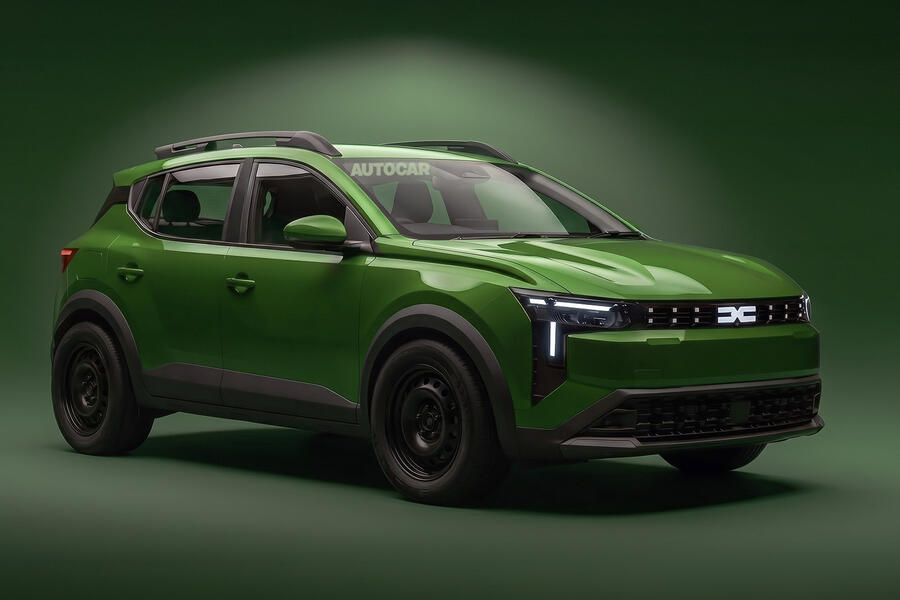
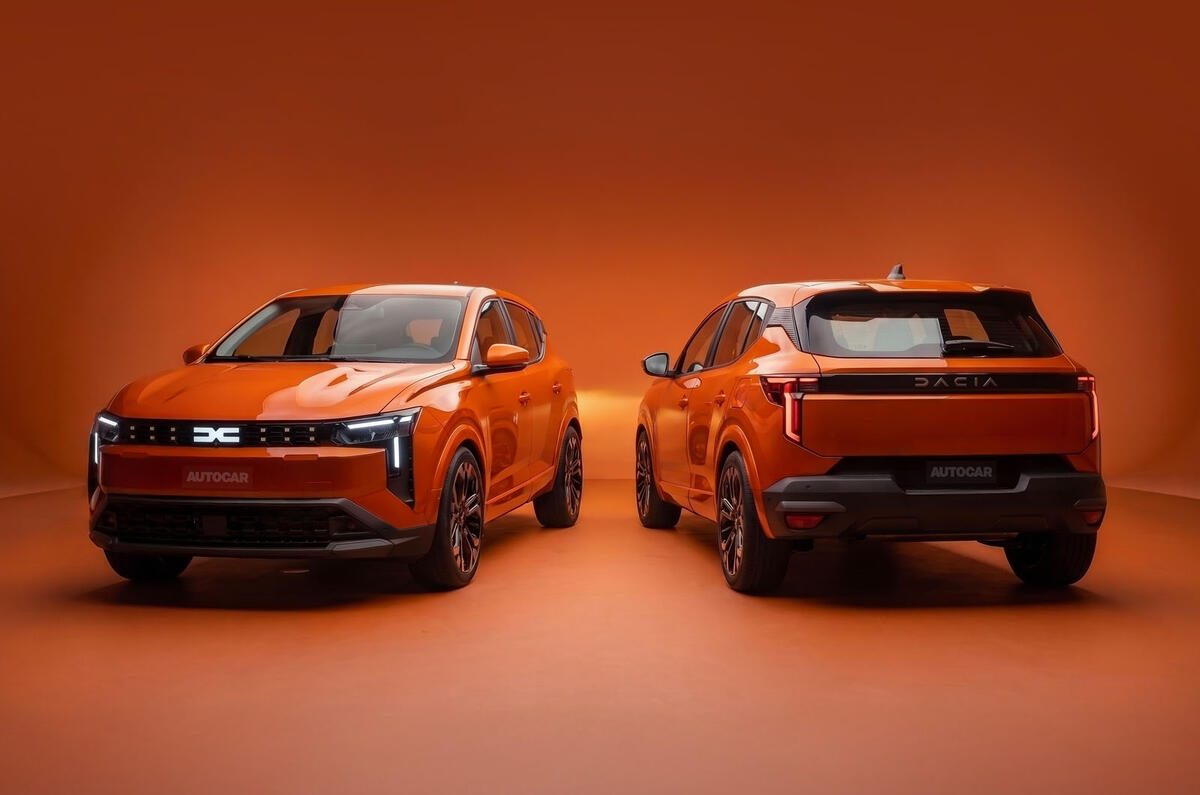
So although the Sandero's proportions will be familiar, its exterior bodywork will be new. The front end, in particular, will take styling cues from the new Striker estate-SUV, as shown in our artist's impression at the top.

Inside, the dashboard will be completely redesigned. Our sources say the Sandero is set to follow the lead of larger Dacia models in adopting a cockpit that is more heavily stylised – with textured surfaces and chunky, angular details – but that also maintains a healthy array of physical controls, in keeping with Dacia's focus on utility.

Back to top

It will offer familiar levels of passenger space and a 410-litre boot – bigger than the Skoda Fabia's and Vauxhall Corsa's.

Sandero goes electric

The biggest changes will be beneath the bodywork, enabling the next version of Dacia's best-seller to become the firm's second EV, after the Spring city car.

There is no version of RGMP that is capable of accommodating both electric and combustion powertrains. The Renault 5 uses the electric-only RGEV Small architecture, while the same-sized Clio sits on the RGMP Small platform for ICE and hybrid models.

In order to offer ICE and EV in one model line, therefore, Dacia's engineers have adapted the RGMP, making technical compromises to accommodate an electric motor and an underfloor battery. They have also taken the opportunity to shed around 100kg in a bid to improve efficiency.

The Sandero Electric will share its Chinese-sourced, 107bhp Shanghai e-Drive motor with the entry-level Renault 5, along with its 44kWh lithium-iron-phosphate battery. Although the original range target was 242 miles, the latest information from company sources suggests it will manage slightly more than 249 miles.

The electric model will play a crucial role in reducing Dacia's fleet CO2 emissions and balancing the output of its Jogger, Duster, Bigster and Striker models, so keen pricing will be essential.

Based on its specification and positioning, a starting price of around £18,500 seems likely for the EV, putting it up against the Citroën ë-C3 and Fiat Grande Panda, as well as new Chinese small cars including the Geely EX2, MG Go, Chery Q and Leapmotor B03. The current petrol Sandero is priced from just under £15,000.

Cheaper ICE model

The 2028 Sandero range will also feature a new entry-level petrol engine. The 99bhp 1.0-litre TCe will make way for a new 1.2-litre TCe unit with the same power output, produced by Renault-backed engine manufacturer Horse, with a lower starting price.

The current Sandero recently received a new 153bhp full-hybrid powertrain, based around a 1.8-litre four-cylinder engine, which is taken from the Duster crossover and has a capacity and output deemed too large for the new supermini.

Back to top

So the fourth-generation Sandero will gain a more affordable full-hybrid option built around a 114bhp 1.2-litre three-cylinder TCe engine. This powertrain will also feature in other Renault models, including the Clio and the Captur.

Stepway takes a step away

When the new Sandero entered development, Dacia planned to replace the rugged Stepway version with a new stand-alone model line: a small SUV measuring around 4.15m long, comparable in concept to the Renault Captur.

In autumn 2025, however, the new management team cancelled this 'Stepway 2.0' project, saving roughly £169 million earmarked for the programme.

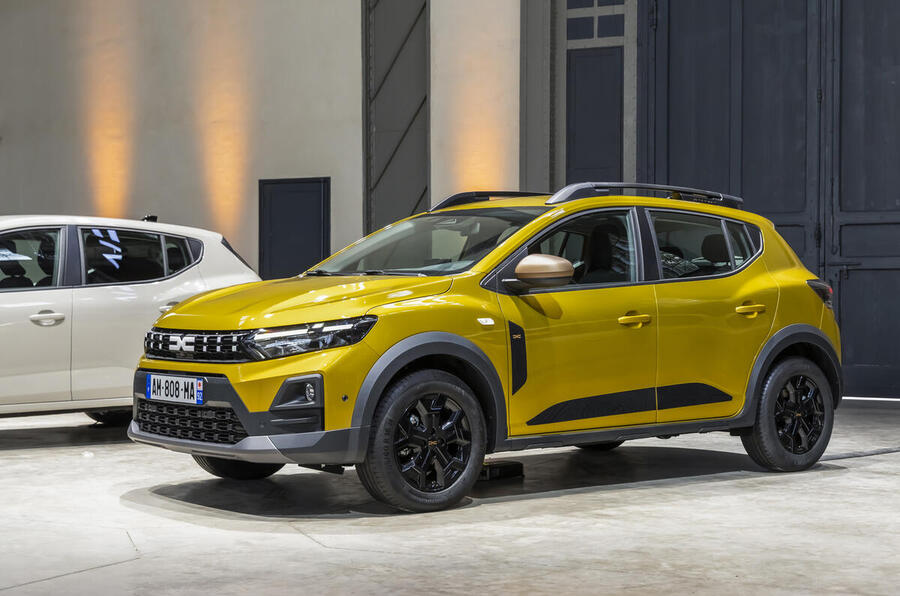
Since then, the design team led by David Durand has been working on a new Stepway version of the hatchback, with raised ground clearance, black cladding and roof rails.

Speaking to Autocar at the Paris motor show, Durand explained that the two models cater to disparate target markets and so each requires a different character.

He said: "I thought in the beginning that you would start with a [regular] Sandero and then work up to Stepway. But in fact, we realised that if people went to the dealer and asked for a Sandero, they would never go for Stepway. That's interesting – they want a Sandero.

"If the dealer doesn't match their request, they will leave and not consider Stepway at all – and the opposite is true too. People coming from Stepway, they don't want to hear about Sandero.

"Both cars, even if they are very similar in the body-in-white, are addressing completely different customers. This recipe is still working very well and I think it will make sense in the future, perhaps integrating more powertrain choices, including hybrid, including electric, to respond to all those questions."

Pierre Henry

Join our WhatsApp community and be the first to read about the latest news and reviews wowing the car world. Our community is the best, easiest and most direct place to tap into the minds of Autocar, and if you join you’ll also be treated to unique WhatsApp content. You can leave at any time after joining - check our full privacy policy here.