Currently reading: As diesel nears £2 per litre, could petrol be next?

Fuel prices have surged, hitting wallets across the UK – and disruption may not end soon

The government is facing pressure to act on fuel prices as diesel edges closer to £2 per litre – with significant ramifications for businesses.

Tim Wray, managing director of Felixstowe-based Multimodal Logistics, estimated the cost of fuelling his fleet of 80 44-tonne HGVs to now be up to £20,000 extra per week.

Wray, who is also vice-chairman of the Road Haulage Association, said the average cost of diesel (excluding VAT) has risen from £1.08 per litre before the war in Iran to around £1.65 today.

“Fuel is around a third of a typical operator’s costs at a normal price,” he said. “If your fuel goes to 50% of your costs, you have very little left to operate and to trade, and businesses will start to struggle.”

On Sunday, Liberal Democrats leader Ed Davey called on the Labour government to cut fuel duty by 10ppl until Christmas. He also urged it to scrap the 3p increase in fuel duty, which is planned for January.

According to James Hitchman, operations director at fuel comparison website PetrolPrices, around 1000 forecourts across the UK are already charging 199.9ppl for diesel, and he said he wouldn't be surprised if the national average passes £2 very shortly.

This is a view shared by Simon Williams, the RAC’s head of policy, who expects diesel to break the price record set in the summer of 2022.

Could petrol hit £2?
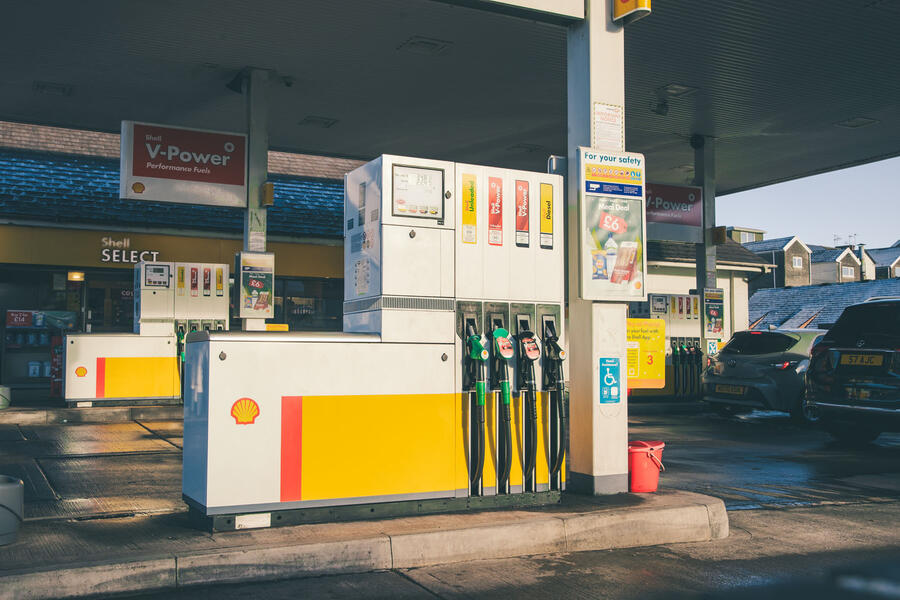
As for petrol prices, Nigel Driffield, a fuel economics professor at Warwick Business School, said £2 per litre at the pumps “is not unrealistic” but it remains possible rather than probable.

“We are definitely on an upward climb and appear to be about back to the peak back in April, although not climbing as quickly as then," he said. "If I had to guess, I’d say that at the moment oil prices are pricing in further chaos, so there might be more likelihood of pricing calming than spiking – but that’s not much more than a guess.”

Hitchman is also doubtful that petrol will reach £2 per litre. In the near term, he expects prices to peak around the 175ppl mark. Before then, he believes there is another 3-4ppl price increase still to come at the pumps over the next seven to 10 days, but “there’s nothing in the markets at the moment for them to suggest that it would go higher than that”.

For unleaded petrol to get to £2 per litre, Hitchman said “the UK would have to see sustained issues with global supply and potentially local UK issues as well”.

Energy market intelligence provider Argus Media isn't expecting petrol prices to rise much further for now.

Sarah Raffoul, a manager in its consulting division, said: “Europe is not facing a physical shortage of gasoline. However, the market has less cushion than normal.”

She said that refiners “have increasingly prioritised diesel and jet fuel production” while petrol stocks remain lower than normal, leaving the market more exposed if supplies are disrupted.

Back to top

“For UK motorists to see petrol prices move materially beyond current levels, crude prices would likely need to rise further and remain elevated for an extended period,” she added.

Nick Butler, a former BP vice-president, has a different view. He thinks petrol prices are likely to go up by “at least another 10% and probably 20-25% over the next few months”.

He said this is partly because of a shortage of supply but also because the stocks “we’ve relied on to get us through the last few months” have now fallen to such low levels that they can no longer support the kind of drawdown seen until now.

He said prices could rise further if the situation gets worse. Problems in the Strait of Hormuz and around Bab al-Mandab, the route into the Suez Canal, could disrupt two of the world’s key oil shipping routes at the same time. Damage to Saudi Arabia’s East-West Pipeline would also make it harder to move oil another way.

Could Britain face fuel rationing?

If so, could Britain actually run short of fuel? 

Hitchman said “there’s no indication that there’s necessarily a shortage of diesel as it stands”, adding that the UK produces more unleaded petrol than it consumes.

“Drivers shouldn't be worried that there's an immediate issue in terms of fuel. There is fuel in the UK. However, the global events are affecting the price that we're having to pay.”

But Butler is less certain that a price problem won’t eventually become a supply issue and believes that rationing can't be ruled out if the situation worsens.

“We’re not yet, but I think everybody is going to face a physical challenge, because there’s going to be limited supply, particularly if the Saudi line is closed for any length of time,” he said.

Asked whether that could be weeks or months away, Butler said: “It depends on the geopolitical situation. It could be weeks away. It could be a bit longer, but the situation is taking supplies off the world market, which can’t now be replaced because the stocks have been so run down.”

Back to top

He believes the government should start telling people now what would happen if the situation worsens.

“I think they have a responsibility to say how they would handle it, who they would protect, whether they would intervene on prices to households,” he said. “I think they need to set out their plans and explain the rationale and the fairness of them.”

But even if rationing never happens, the situation is still likely to prove incredibly painful for drivers.

Driffield points to data from the governmental Office for National Statistics that reveal the average spend on petrol per household per year is around £1500.

“A family with children however might be double that,” he said. “Now, if prices have gone on average up by 40p or so, starting at 130p or so, that implies an annual additional spend of about £750 a year. And how many ordinary families felt like they had a spare £750 a year ago?”

Autocar asked the government whether it would consider cutting fuel duty or taking other measures if prices rise further.

It also approached Meg Hillier, chair of the House of Commons' Treasury Select Committee, for an interview, but her office declined.

An HM Treasury spokesperson said: “As has always been the case, decisions on tax are a matter for the chancellor to set out at fiscal events, rather than routinely commenting on rumour, speculation or proposals.”

Back in Felixstowe, Wray warned that the consequences could extend well beyond the haulage sector.

“The implications to the wider economy are severe,” he said. “Costs will go up on supermarket shelves and in warehouses, because the haulage cost has to be paid for somewhere. That will be felt by us all in our spending.”

Wray’s message to the government is simple: “If they want to control inflation, they need to keep the price of fuel down.”

Join our WhatsApp community and be the first to read about the latest news and reviews wowing the car world. Our community is the best, easiest and most direct place to tap into the minds of Autocar, and if you join you’ll also be treated to unique WhatsApp content. You can leave at any time after joining - check our full privacy policy here.