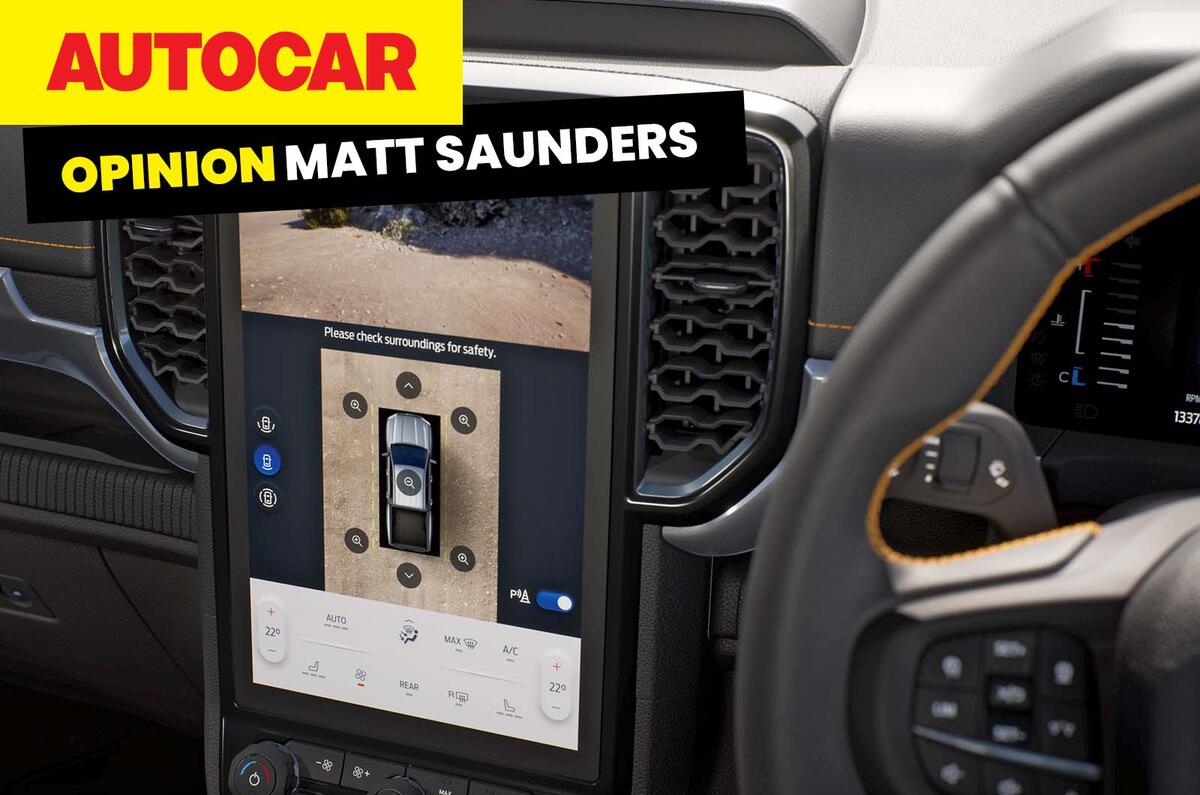

The BMW 7 Series I’m currently testing shows how it should be done: it’s a big car and use of digital cameras really helps you to deal with its bulk.
I’m sure it was BMW that first offered the plan-perspective parking aid which it now calls Surround View. It’s a composite image, delivered as if you were hovering about 30 feet above the roof of the car, in order that you know you’ve parked perfectly in the centre of the bay you’re aiming at without getting out to check.
It’s a little bit of genius, digital technology enabling a perspective you couldn’t get any other way – and proof positive that cameras do have their place on new cars.
A lot of the digital camera technology that I find in new cars isn’t nearly so clever, however. Since cameras seem to be being used ever more widely and are now even influencing things like big-picture vehicle design, it’s high time we lay some ground rules.
Simple rules that you might not imagine needed stating at all, although they clearly do. Rules like: do the cameras in question actually work in the first place? Are they adding something or just doing a second-rate job at replacing something?
And are they fit for the intended purpose to which they are put and the best way to achieve that purpose?
A camera system that makes parking so much easier satisfies such tests at a stroll. So does one that can make the bonnet of an off-roader seem to disappear, in order that you can drive over obstacles and through ditches with more confidence.
Or a wireless one that you can attach to the underside of a car or the back of a trailer (anyone remember the L322-generation Range Rover’s VentureCam? Scarily, it’s nearly a 20-year-old idea).
But I have yet to test a digital rear-view or door ‘mirror’ that would pass any of those bars. The first such ‘mirror’ that I tried was on a Range Rover Evoque. I liked it, on an idyllic test route in the Peloponnese.
It was supplementary, not a substitution, so you could easily use the real mirror instead. You certainly got a wider view of the road behind in camera mode and a brighter one for use at night.
When I drove an Audi E-tron with digital door ‘mirrors’ a few years later, however, I discovered the dirty truth: a low sun caused lens flare and road grime built up on the lens itself, exposed as it was at a fairly road-adjacent level. The system was all but useless in murky, wintry conditions.
Particular camera placement can be a problem in other respects too. If they sit too close to the side of the car, such as on the Lotus Evija, the image they produce is filled with bodyside and not enough of the road behind. That’s annoying.