Currently reading: The 10 planes that won World War 2

The 10 planes that won World War 2

Never was aeronautical engineering more significant than in the six years of the second world war.

A deadly technological race ensued, where making an aircraft faster, better armed or easier to produce had massive implications.  The sky was awash with horsepower and destruction, and key to the ultimate victory was the right aircraft at the right time. Bombers pummelled cities, fighters engaged in desperate flying duels and a whole range of other equally important roles were performed.

While reality rarely conforms to the top 10 format, all these aircraft made significant contributions to the Allied victory in 1945. Many other aircraft types that didn’t make the cut could easily merit a place in this list.


10: Boeing B-29 Superfortress
 Boeing B-29 Superfortress

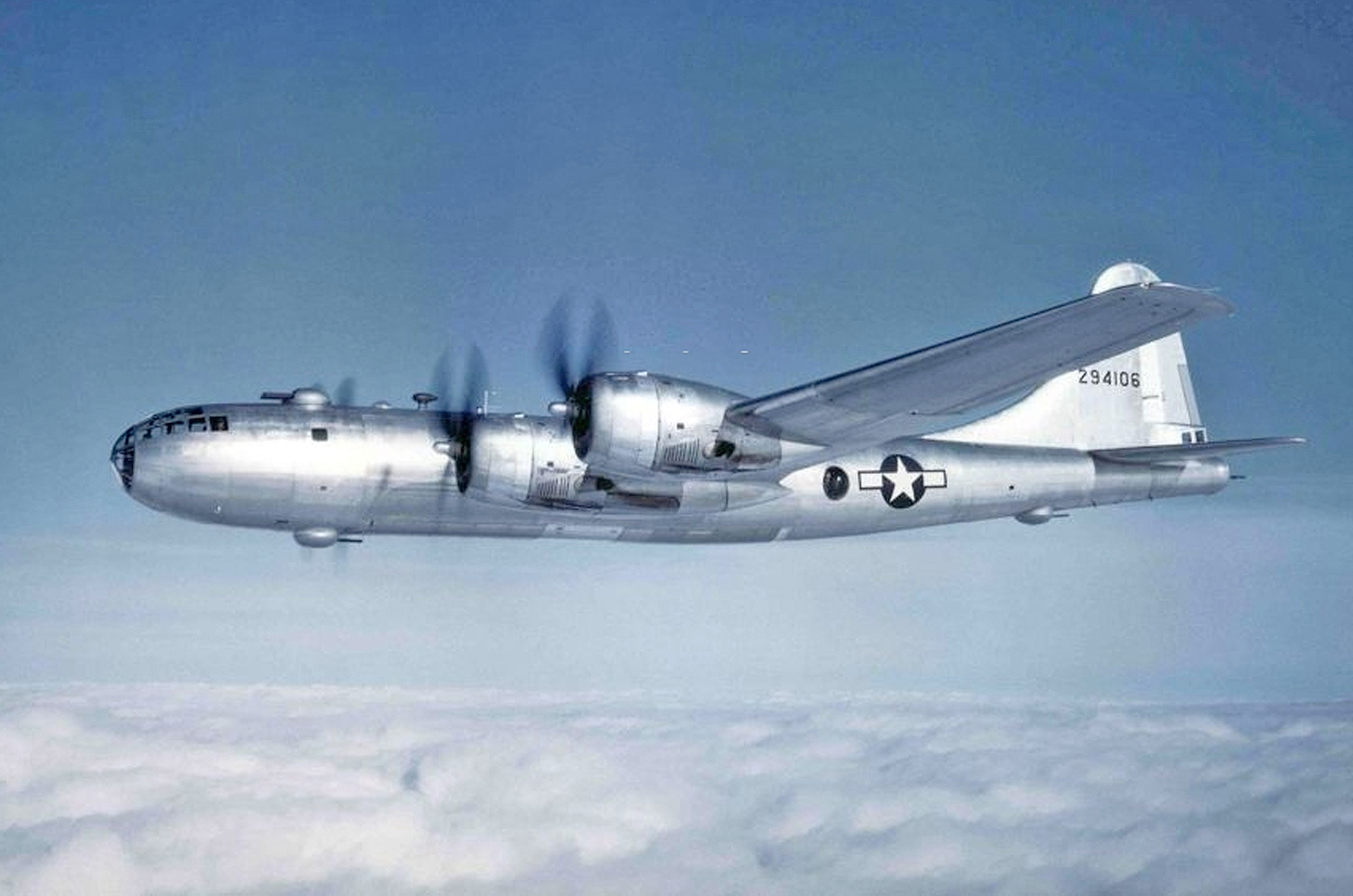
The final chapter of the war was ushered in by the vast destructive force of the most technologically advanced piston-engined aircraft of its time, the astonishing B-29. The Superfortess was a long-range strategic bomber that could fly extremely high and fast and was used in the Pacific Theatre.

The B-29 was state-of-the-art in many ways, including the style of construction, defensive systems and the inclusion of pressurisation that made the aircraft much more comfortable for the crew. With close to double the horsepower of the earlier B-17 Flying Fortress it was very much in a league of its own.


10: Boeing B-29 Superfortress
 Boeing B-29 Superfortress

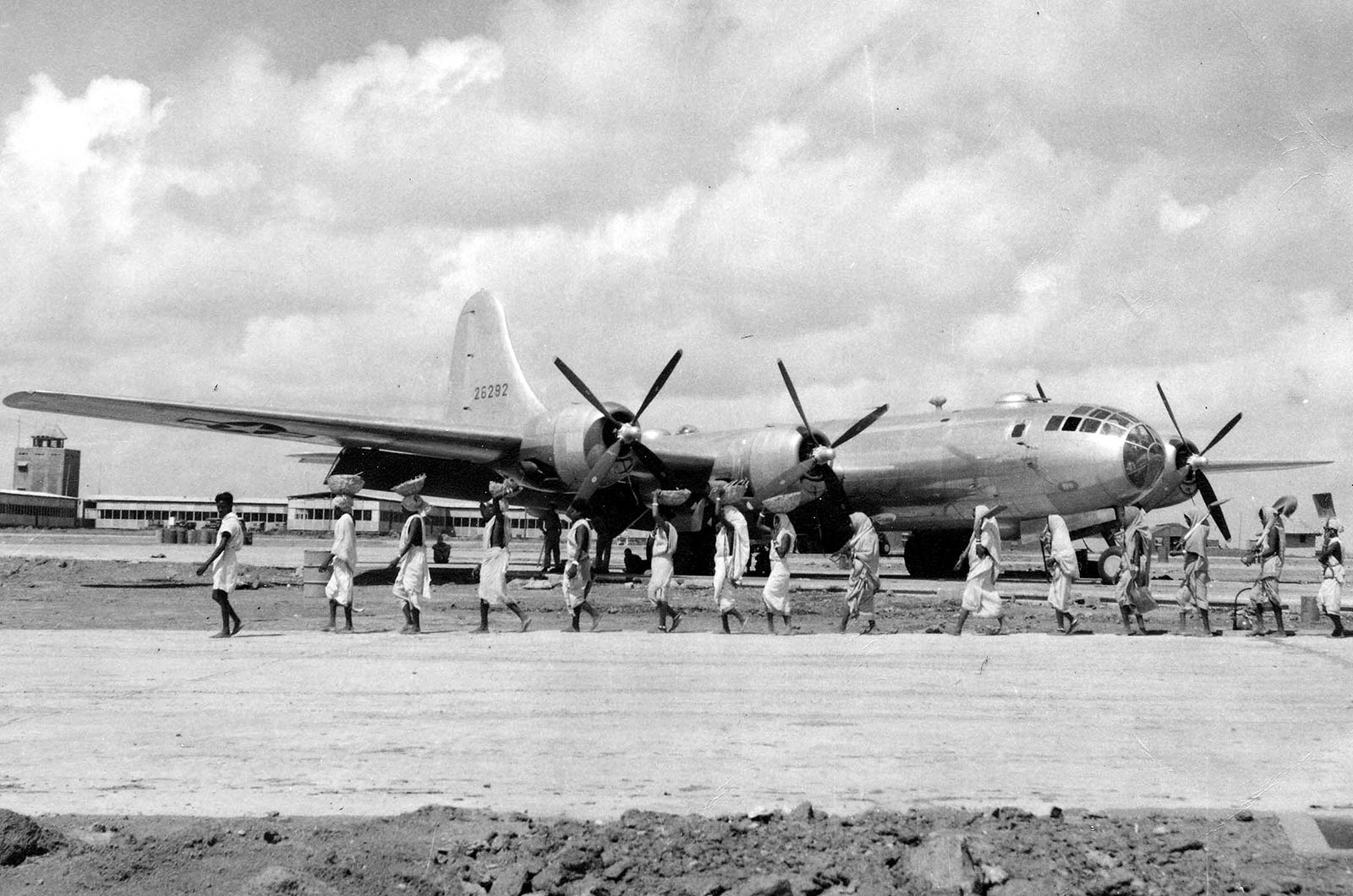
Atomic bombs dropped on Nagasaki and Hiroshima by B-29s are said by some historians to have ended the war and ultimately saved many lives, though debate continues to this day as to whether this is the case. More destructive, at least in the short term, were some of the B-29’s ‘conventional’ bombing raids, notably the devastating fire-bomb attacks on Tokyo in March 1945.

The B-29 only entered service in May 1944, so did not take part in most of the conflict. It was an enormously expensive plane to develop and cost even more than the atomic bomb project. An astonishing total of over 3000 were produced by the end of the war.


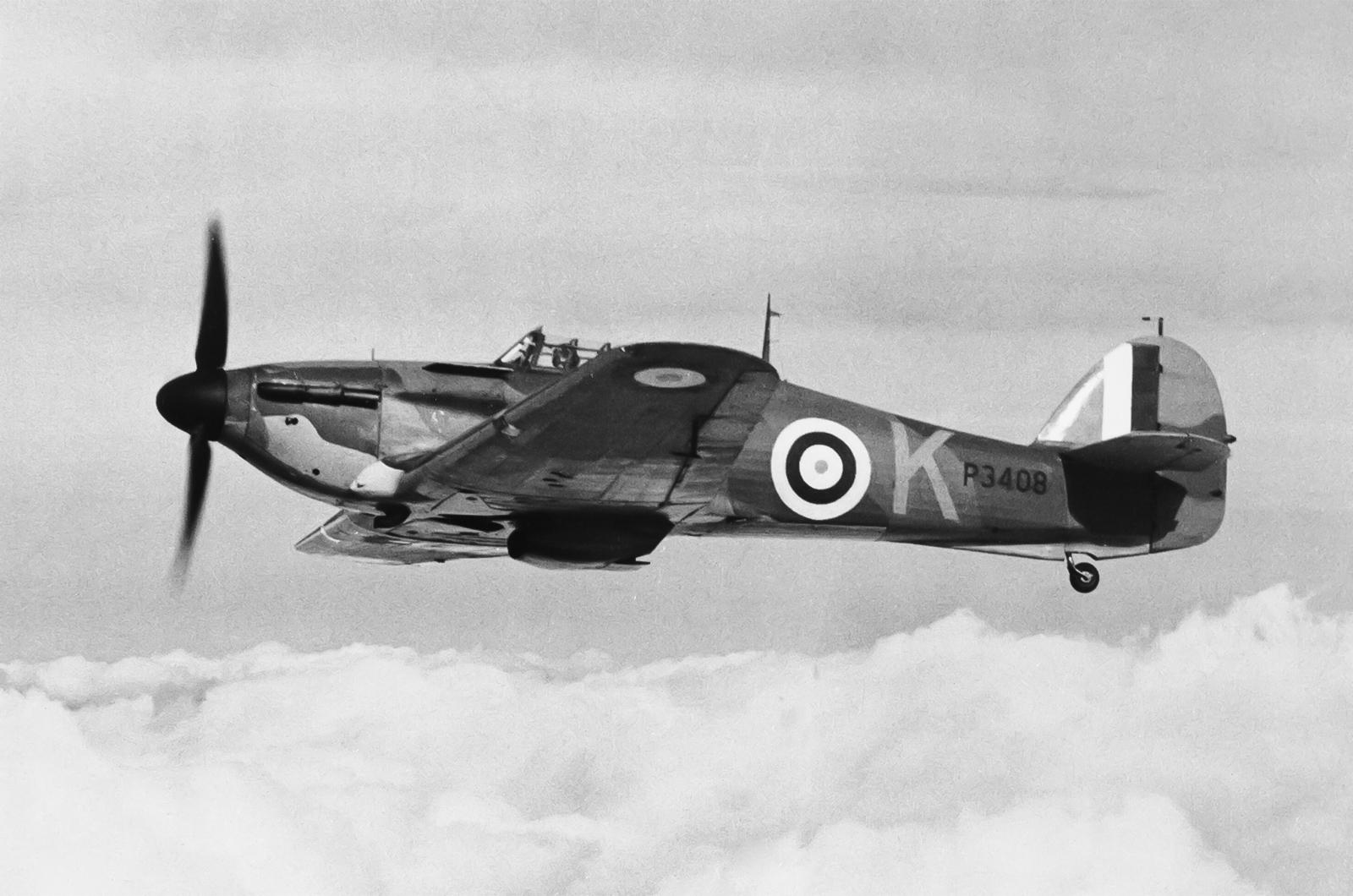
9: Hawker Hurricane
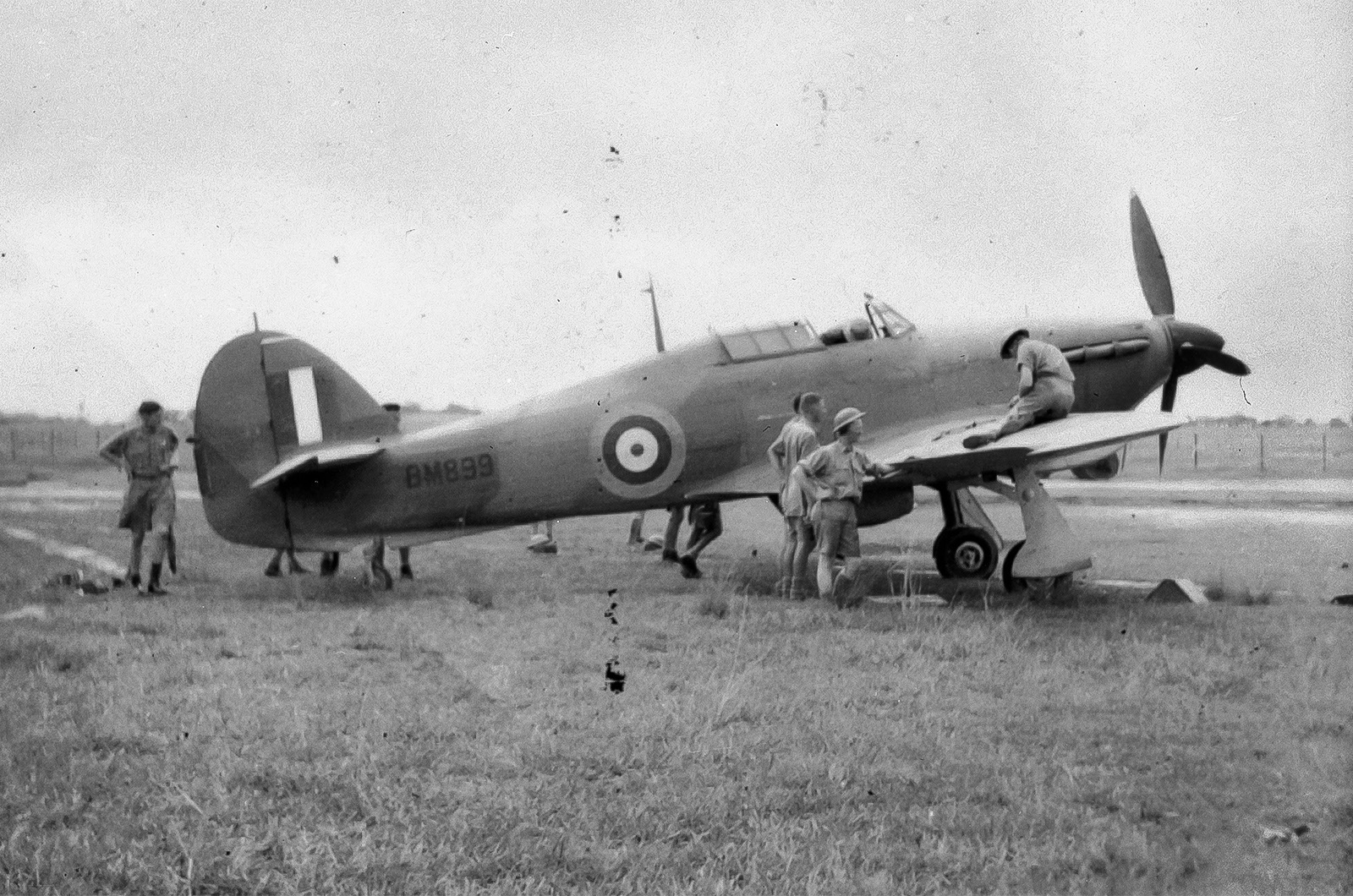
 Hawker Hurricane

The Hawker Hurricane was a tough British fighter (and later fighter-bomber) that designed by Sydney Camm was the first RAF aircraft to exceed 300mph. Its construction was a mix of old and new techniques, including the use of stitched Irish linen. The Hurricane formed the bulk of the Royal Air Force’s fighter force until 1941.

In the Battle of Britain, Hurricanes proved well up to the task of destroying German bombers, leaving the higher-performance Spitfire as the preferred type to deal with fighters. The Hurricane performed well in the Battle of Britain, accounting for over 60% of the air victories.

Back to top

9: Hawker Hurricane

 Hawker Hurricane

In a most heroic action in August 1942, 70 Sea Hurricanes fought off a great number of Axis attackers (sometimes quoted as high as 600 in number) to defend a vital convoy heading to Malta. Hurricanes also served with distinction in Asia and Africa (and with more mixed results in the USSR).

RAF and Commonwealth Hurricanes claimed a total of 4540 aerial victories, a figure only bested by the Spitfire for the RAF. In North Africa, armed with a pair of fearsome 40-mm cannons, it proved a capable tank destroyer, and in many places was a pioneer of the fighter-bomber role. A total of 14,487 Hurricanes were made, in the UK and Canada.


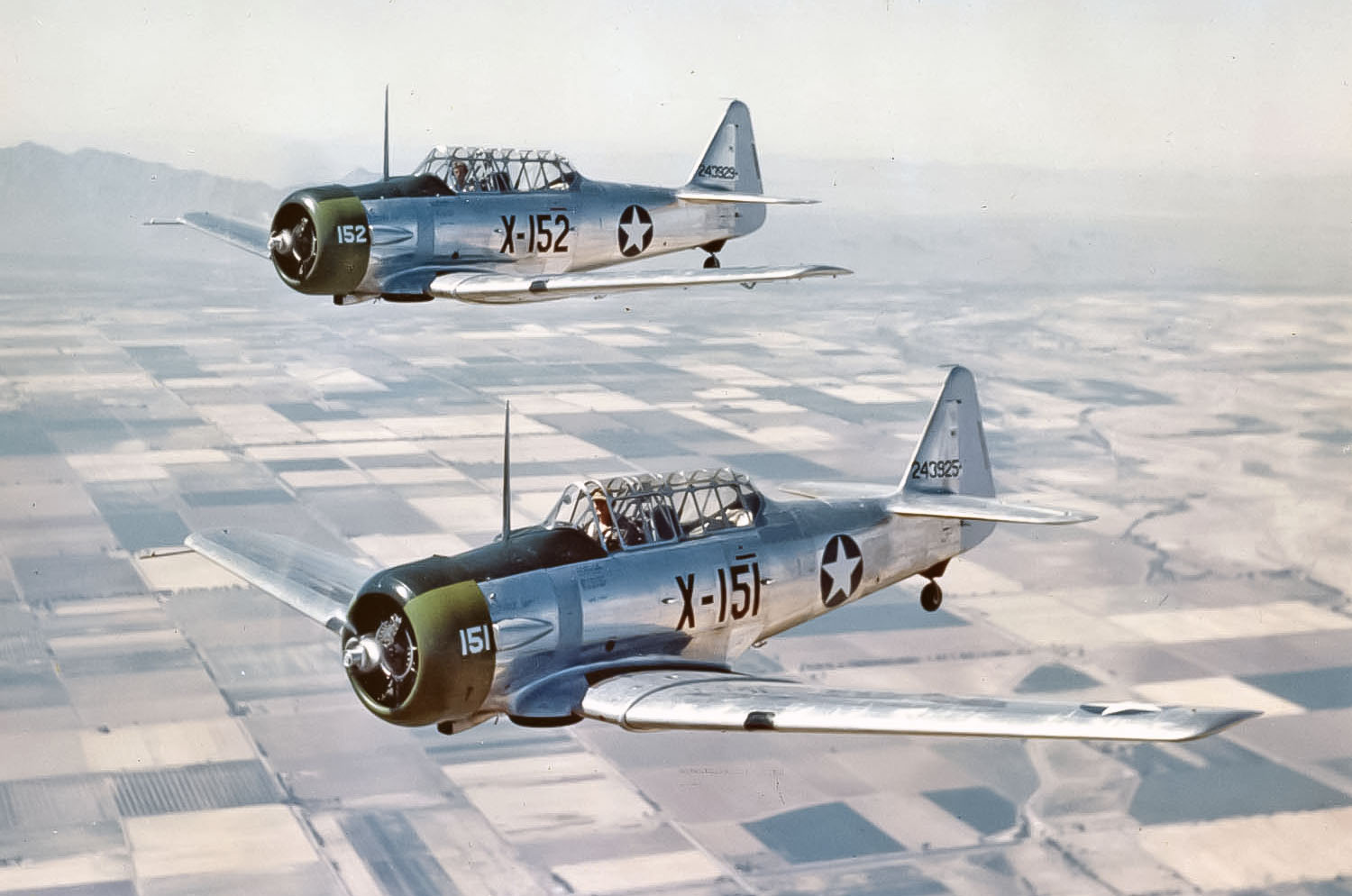
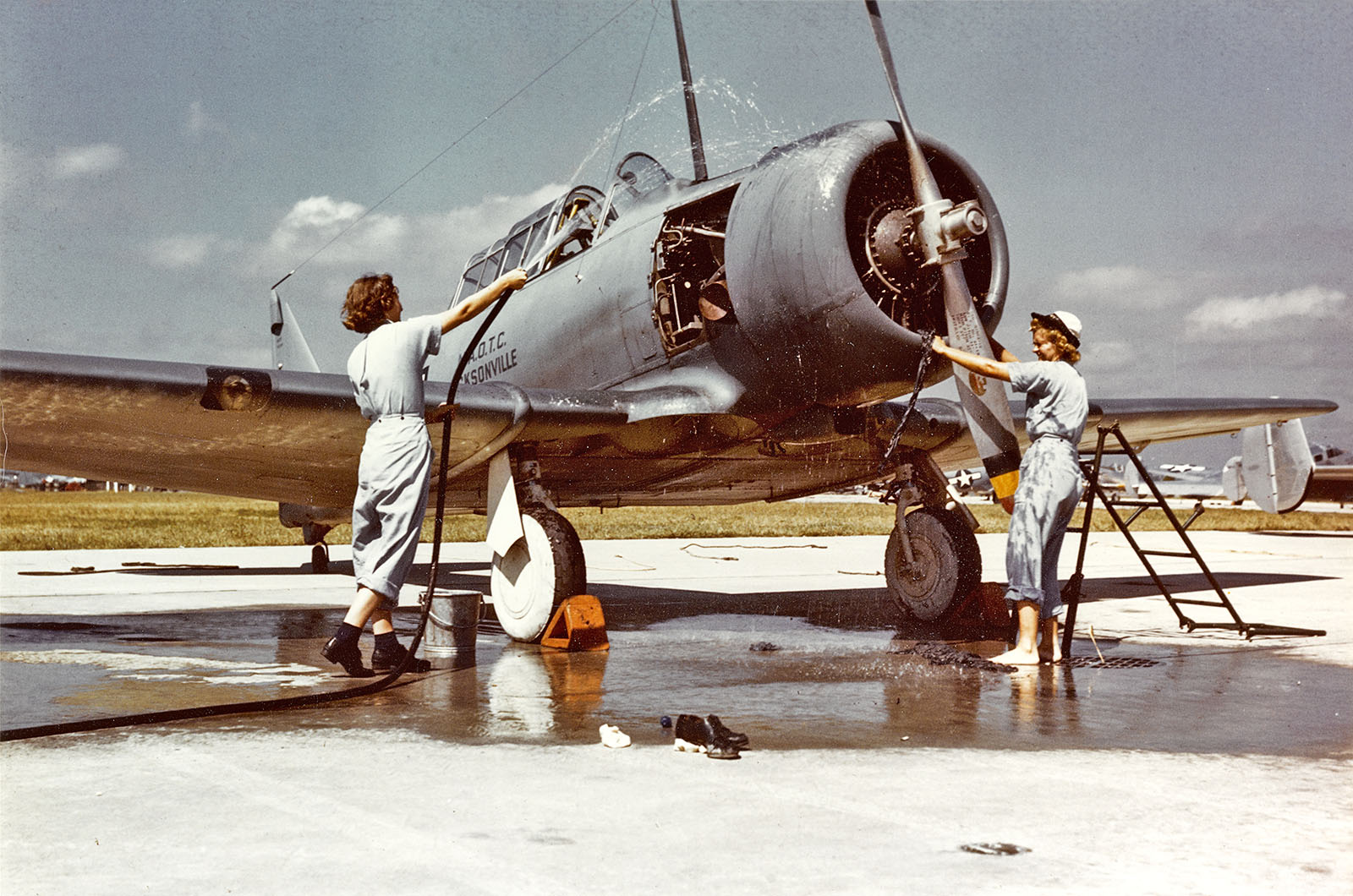
8: North American T-6 Texan/ Harvard

 North American T-6 Texan/ Harvard

Pilot training is the core of all airpower, and without training aircraft, there would have been no air power at all. Thus, this modest plane, with its 500-horsepower radial engine and low top speed of 205mph made a bigger mark on the War than did many more directly belligerent aircraft types.

This American trainer aircraft, first flown in 1935 as the essentially similar North American NA-16, was used to train pilots of the United States Army Air Forces (USAAF), United States Navy, Royal Air Force, and many other air forces of the British Commonwealth during World War II.


8: North American T-6 Texan/ Harvard

 North American T-6 Texan/ Harvard

Some of the first RAF Harvards were delivered to the United Kingdom, but training with the possible presence of Luftwaffe intruders was dangerous. So, the majority of Commonwealth flying training units were moved to Canada, Southern Rhodesia and the United States.

This also freed up base space in the UK for frontline types. The ability of the Allies to train safe from enemy action was an enormous and largely unnoticed advantage over the Axis. Named the Commonwealth Air Training Plan, it was a vast success. Over 75,000 pilots were trained. 15,495 T-6 aircraft were built.


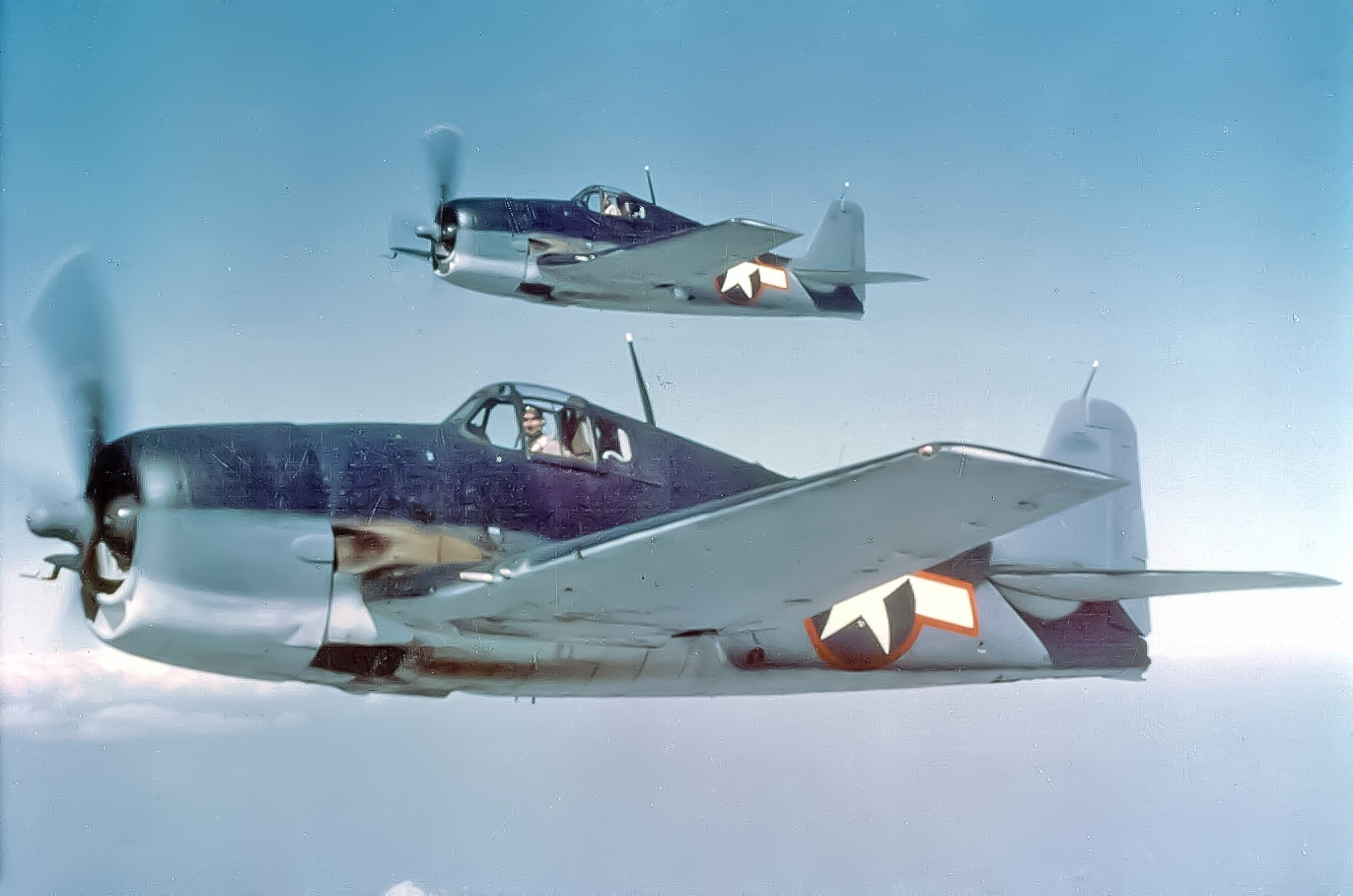
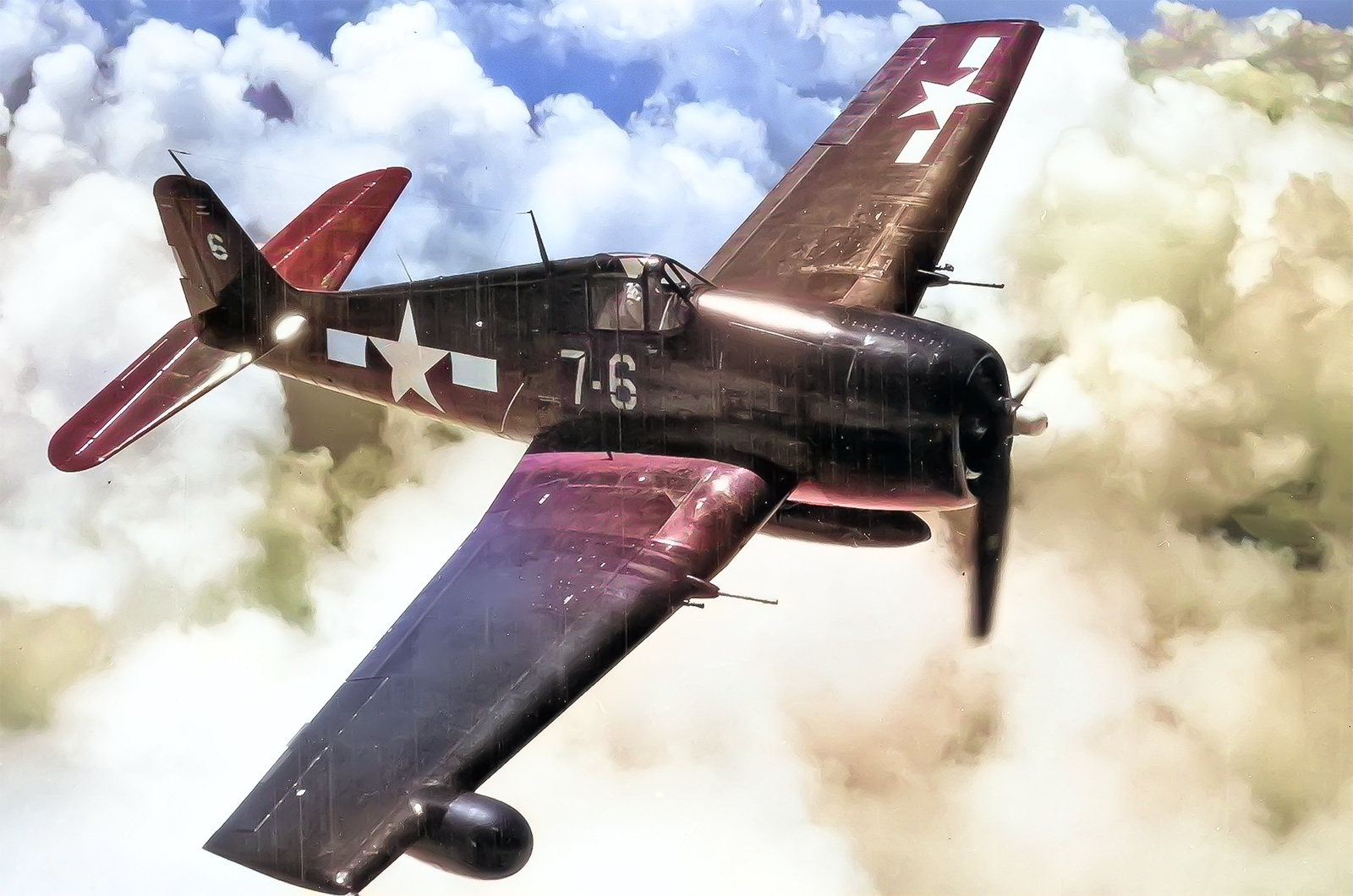
7: Grumman F6F Hellcat

 Grumman F6F Hellcat

The Grumman F6F Hellcat naval aircraft has often been described as the fighter that defeated the Japanese, and with good reason. The Hellcat’s main opponent was the Mitsubishi Zero, against which it was faster, better armed, and better armoured. The majority of Hellcats had six 0.50 calibre machine guns with 400 rounds per gun providing a balance of bullet mass with rate of fire.

Back to top

A sobering 5215 aircraft fell to the Hellcat (though claims above the sea are hard to verify). The six guns allowed the Hellcat to achieve a very high rate of victory against aircraft of the Japanese Navy and Army with claims as high as 13:1 against the Mitsubishi Zero. Barely used in Europe, it still downed two Bf 109s, two He-115, a Fw-190, three He-111s, three Ju-52, a Ju-88, and a Do-217.


7: Grumman F6F Hellcat

 Grumman F6F Hellcat

11,000 of a final total of 12,275 Hellcats were built by Grumman’s factory. As an indication of quite how right the Hellcat’s design was, there were only two production versions, the -3 and the -5 which featured another 200 hp, a flat windshield integrating the armoured glass, and a few other minor modifications. In fact, only two airframes seem to have not been built as -3 or -5s.

Hellcats were more likely to have shot something down, better at surviving damage, better at landing, and more versatile than any other fighter of the war. At the same time, this was all achieved with only two basic marks all of which were built in one factory. Like all great performers, Grumman also knew to leave them wanting more so as the war drew to a close so did Hellcat production.


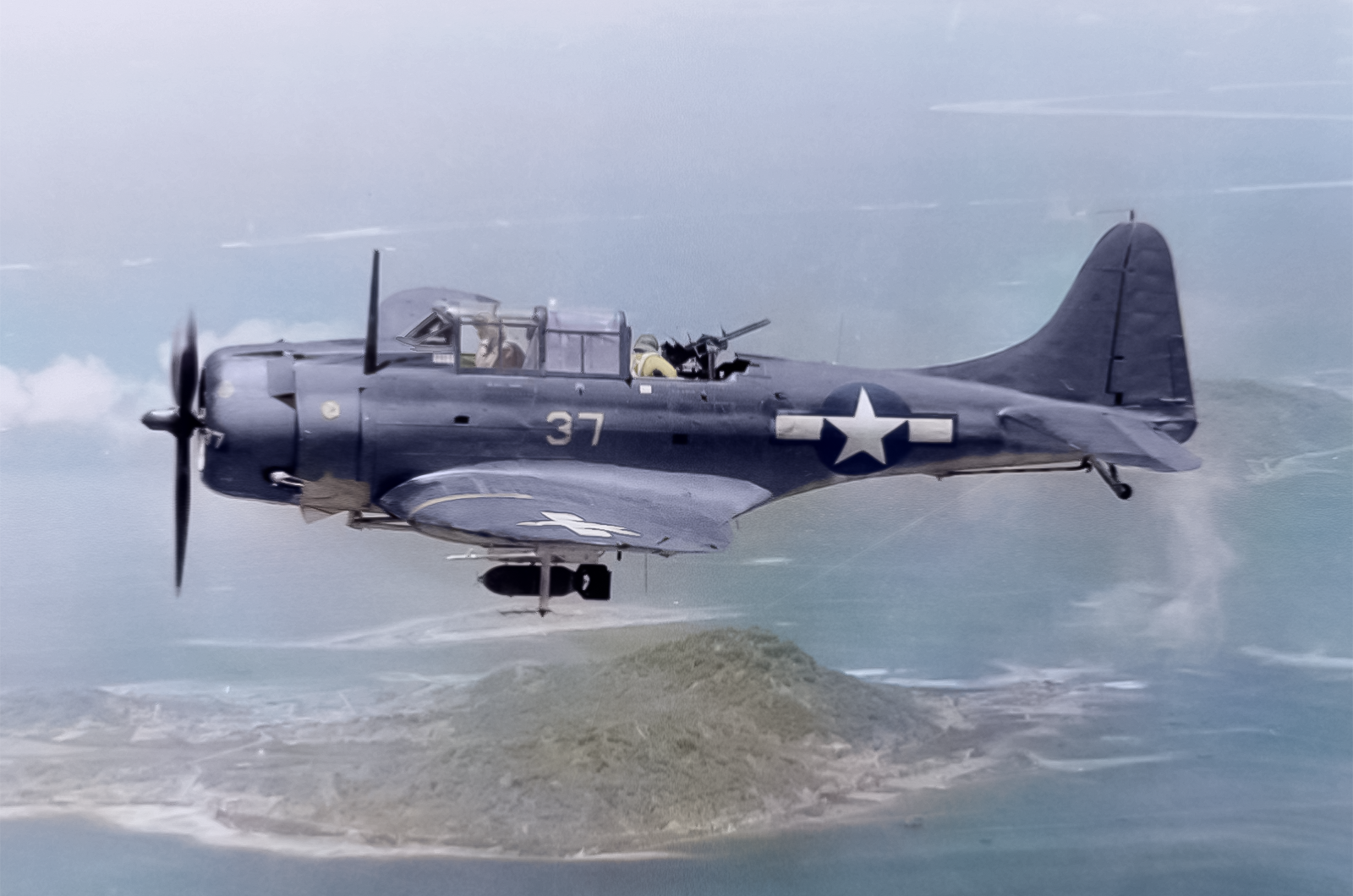
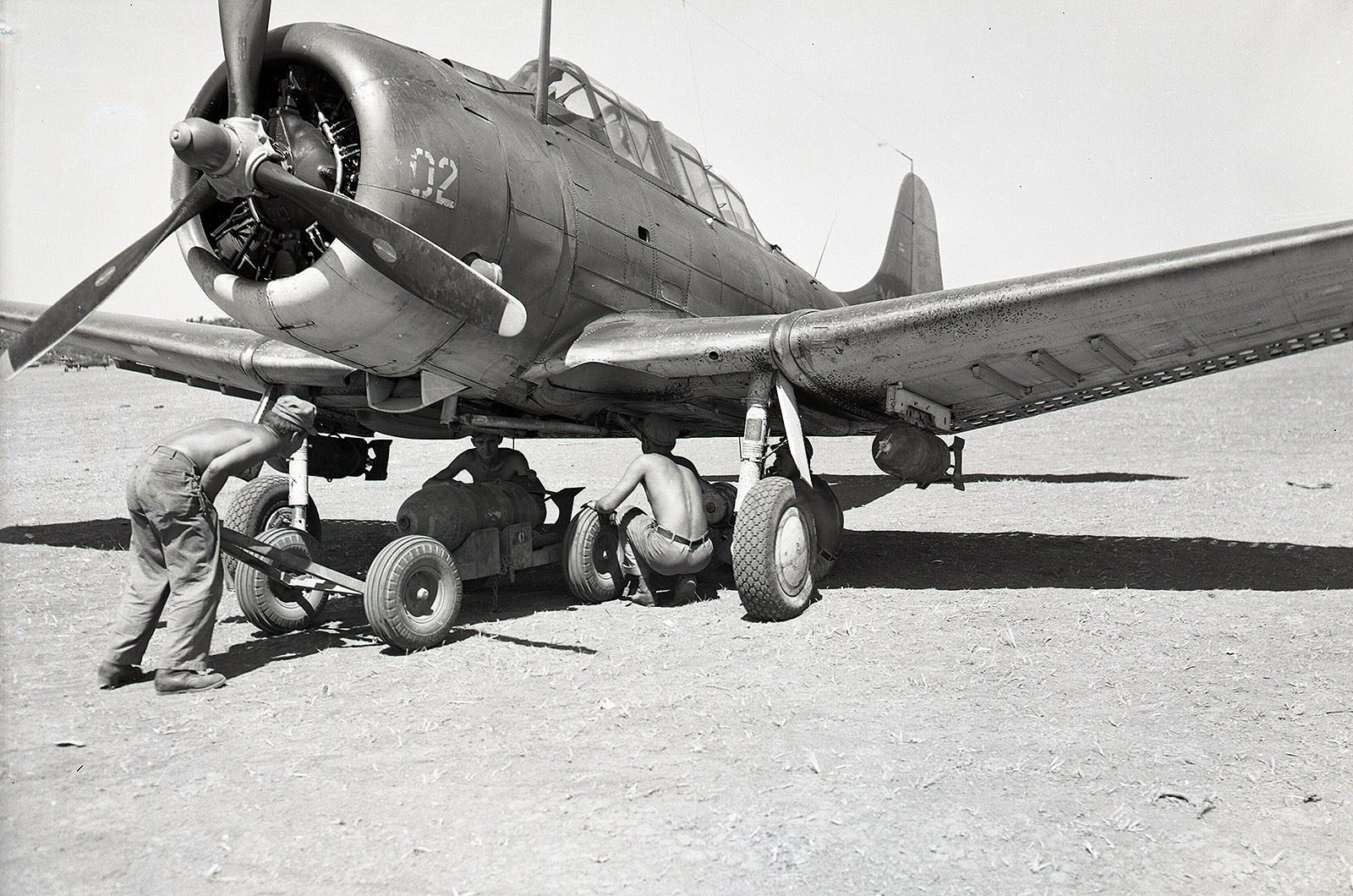
6: Douglas SBD Dauntless

 Douglas SBD Dauntless

Ed Heinemann (1908-1991) was one of the greatest aircraft designers who ever lived. Among his achievements include design work on both the Cold War A-4 fighter-bomber and the Douglas A-26 Invader of World War II. But, his greatest contribution to the war effort was not the A-26, but the Dauntless.

The Douglas SBD Dauntless is remembered as the US carrier aircraft that turned the tide of war in the Pacific, the Curtiss Helldiver may have sunk more ships but the Dauntless did the job when it really mattered.


6: Douglas SBD Dauntless

 Douglas SBD Dauntless

At the Battle of Midway in June 1942, the Dauntless fatally damaged all four Japanese fleet carriers present, disabling three of them in the span of just six minutes. The pacific war was effectively won in that period as the carriers were impossible for the Japanese to quickly replace. Amazingly the SBD came through the war with the lowest crew loss rate of any US carrier aircraft despite being present at harrowing moments like Midway.

Back to top

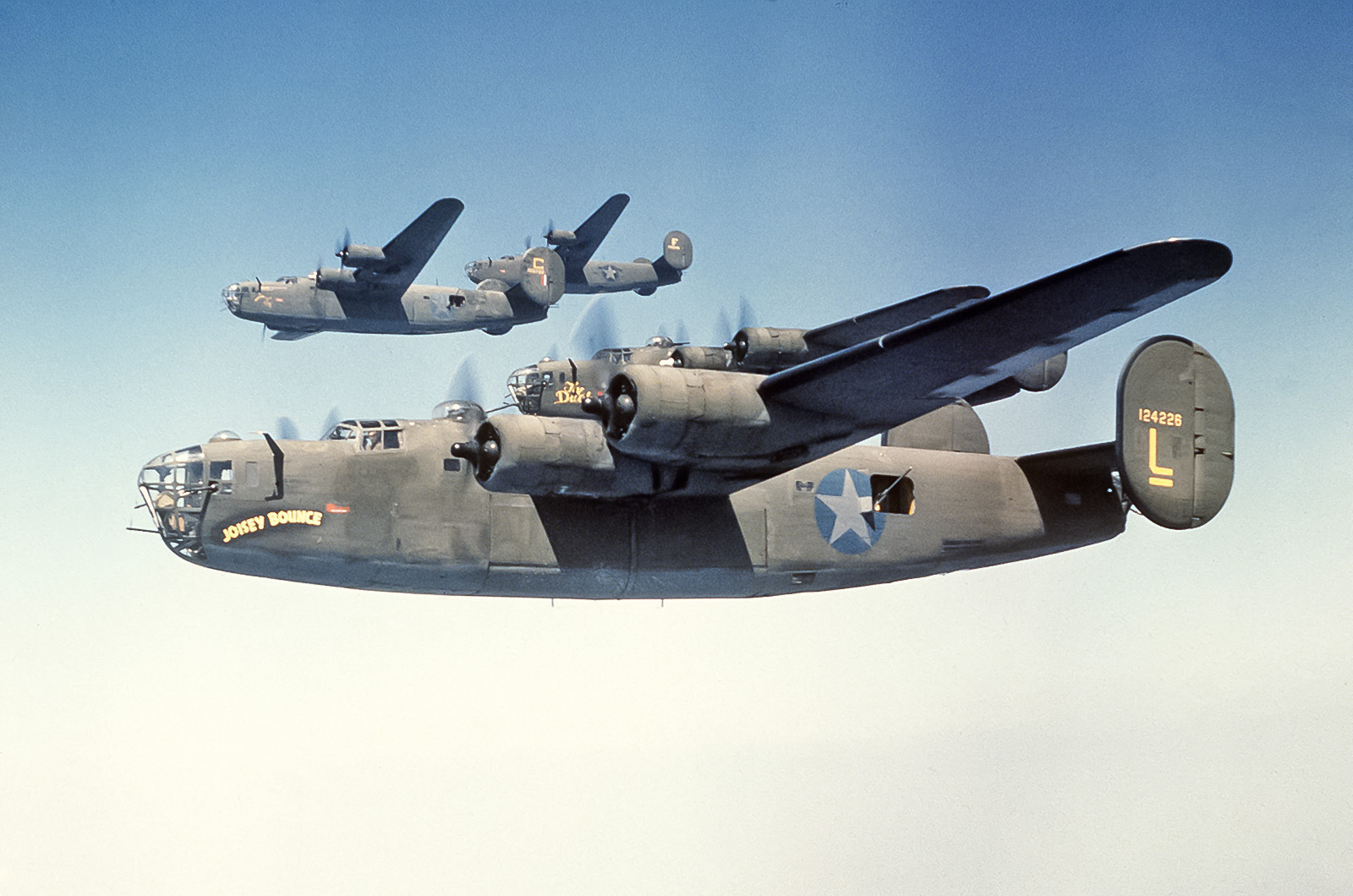
5: Consolidated B-24 Liberator

 Consolidated B-24 Liberator

The Consolidated B-24 Liberator was the most versatile heavy aircraft of the Second World War. Produced in greater numbers than any other bomber, the astonishing final ally was a massive 18,000 units.  In all of aeronautical history, there are only ten other aircraft types created in greater numbers, and all of them are small single-engine types, quite unlike this hulking four-engine bomber.

The B-24 Liberator proved brilliant in the Battle of the Atlantic, where its long-range capabilities were vital in combating the German naval, particularly U-boat, threat to the ships supplying Britain. A section of the Atlantic known as the ‘Gap’ proved hard to defend as it was out of range of most aircraft, it was eventually ‘closed’ in 1943, with a force of VLR Liberators (Very Long Range models) that had a range of around 1600 miles (2575 km).


5: Consolidated B-24 Liberator

 Consolidated B-24 Liberator

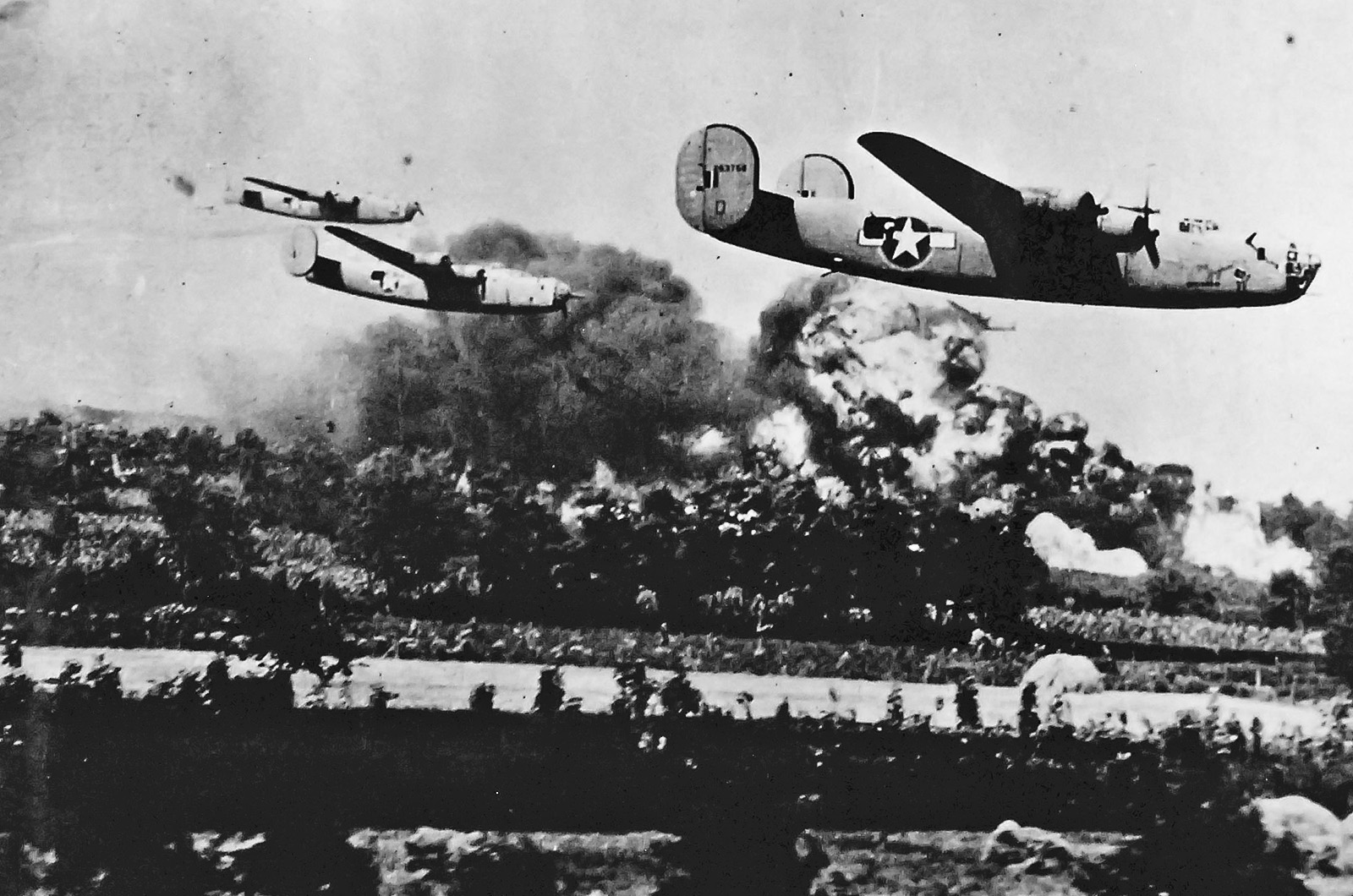
The B-24 served in the Western European, Pacific, Mediterranean and China-Burma-India theatres. It was operated by all branches of the US military: the USAAF, Navy and USMC. The B-24 was used in the ill-fated Operation Tidal Wave, where Libyan-based USAAF B-24s attempted to hinder Axis oil production in Ploiești (pictured), in Romania and suffered heavy casualties.

It made a vital contribution towards winning the war in the Pacific, where its long-range made it suitable for over-water missions attacking Japan. As well as bombing, it served in a mass of roles including long-range reconnaissance, troop transport, anti-submarine warfare, fuel supply and even electronic ‘jamming’ warfare.


4: Ilyushin IL-2 ‘Shturmovik’

 Ilyushin IL-2 ‘Shturmovik’

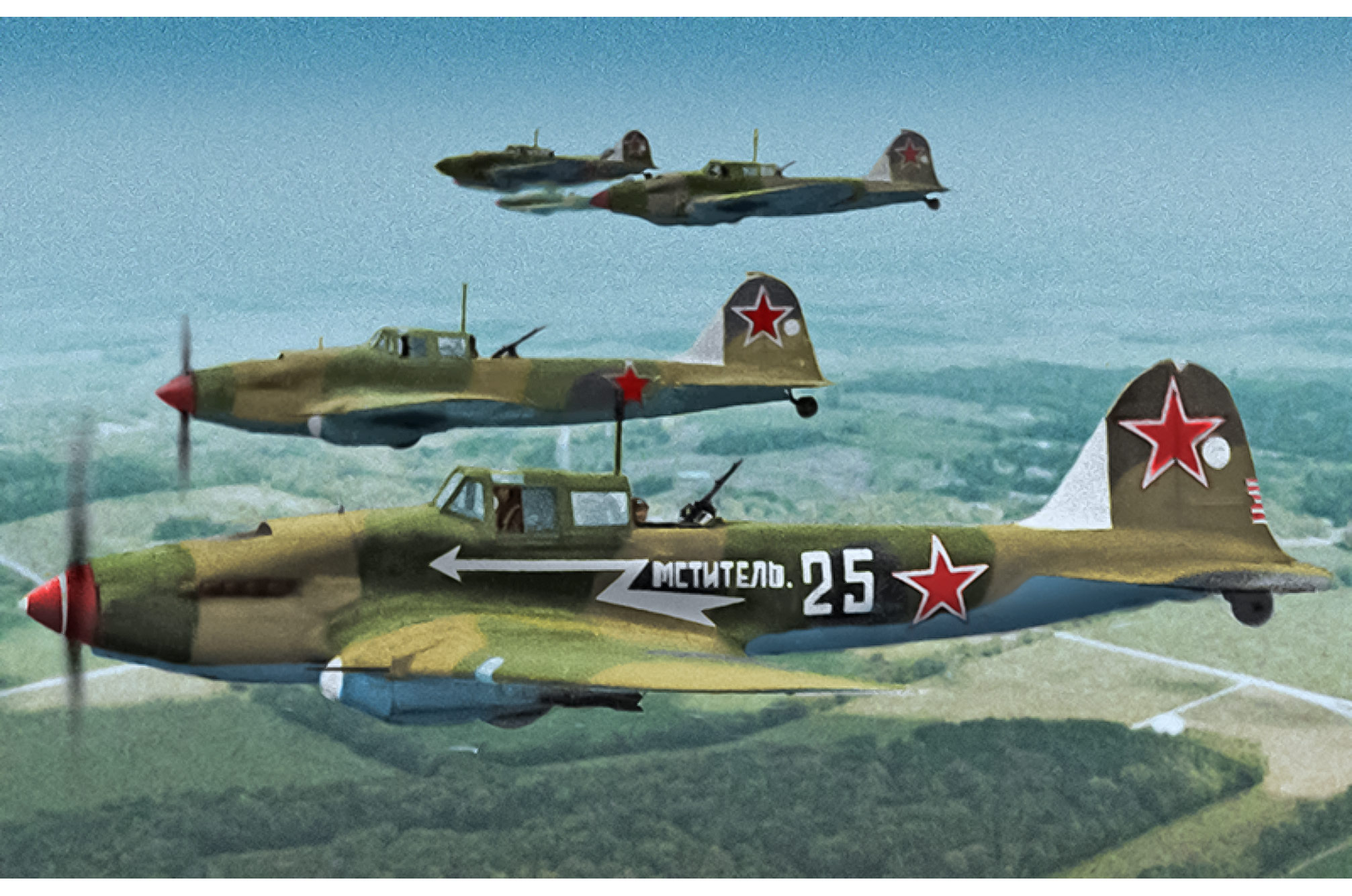
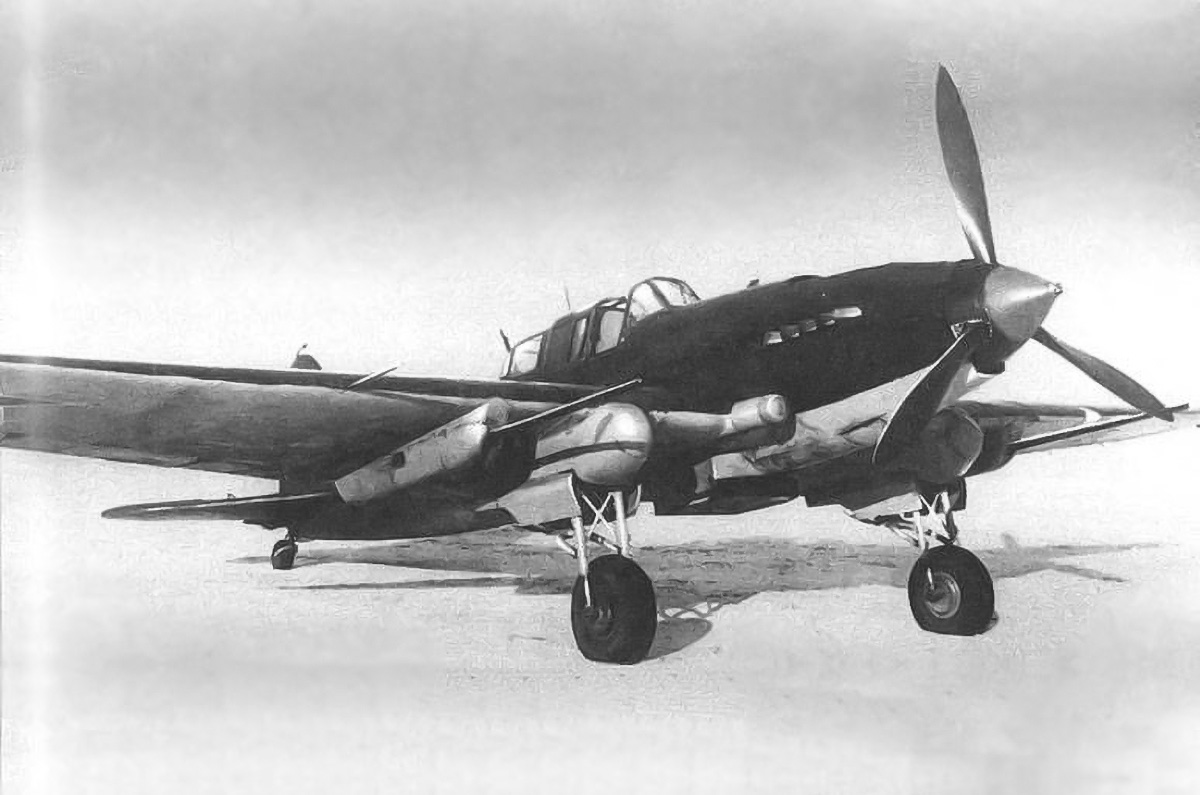
“Our Red Army now needs Il-2 aircraft like the air it breathes, like the bread it eats.” - These were the words Stalin used to express his dissatisfaction with an aircraft factory behind on production rates. This might just tell you something about how important the Shturmovik (“ground attack aircraft” in Russian) was on the Eastern Front.

This was the original tank-killer. The aircraft that devastated German mechanised columns, that frustrated Luftwaffe aces, that scared Wehrmacht troops so much they dubbed it ‘The Flying Tank.’ German pilots would report emptying their entire ammunition loads into Il-2s, only to watch them carry on flying.

Back to top

4: Ilyushin IL-2 ‘Shturmovik’

 Ilyushin IL-2 ‘Shturmovik’

Anti-aircraft could get direct hits and the Shturmovik would shrug it off. While Soviet reports of combat destruction were, without a doubt, exaggerated, the impact that the Il-2 had on harrying and disrupting the German war machine was vital to the Red Army’s success and progress on the Front.

The total figure regarding the volume of German war materiel destroyed by the Il-2 is vast. The failed German invasion of the USSR was probably a war-losing decision, and enabling that loss was the most prolifically produced warplane in history. Over 36,000 Il-2s served, and undoubtedly altered the course of the war.


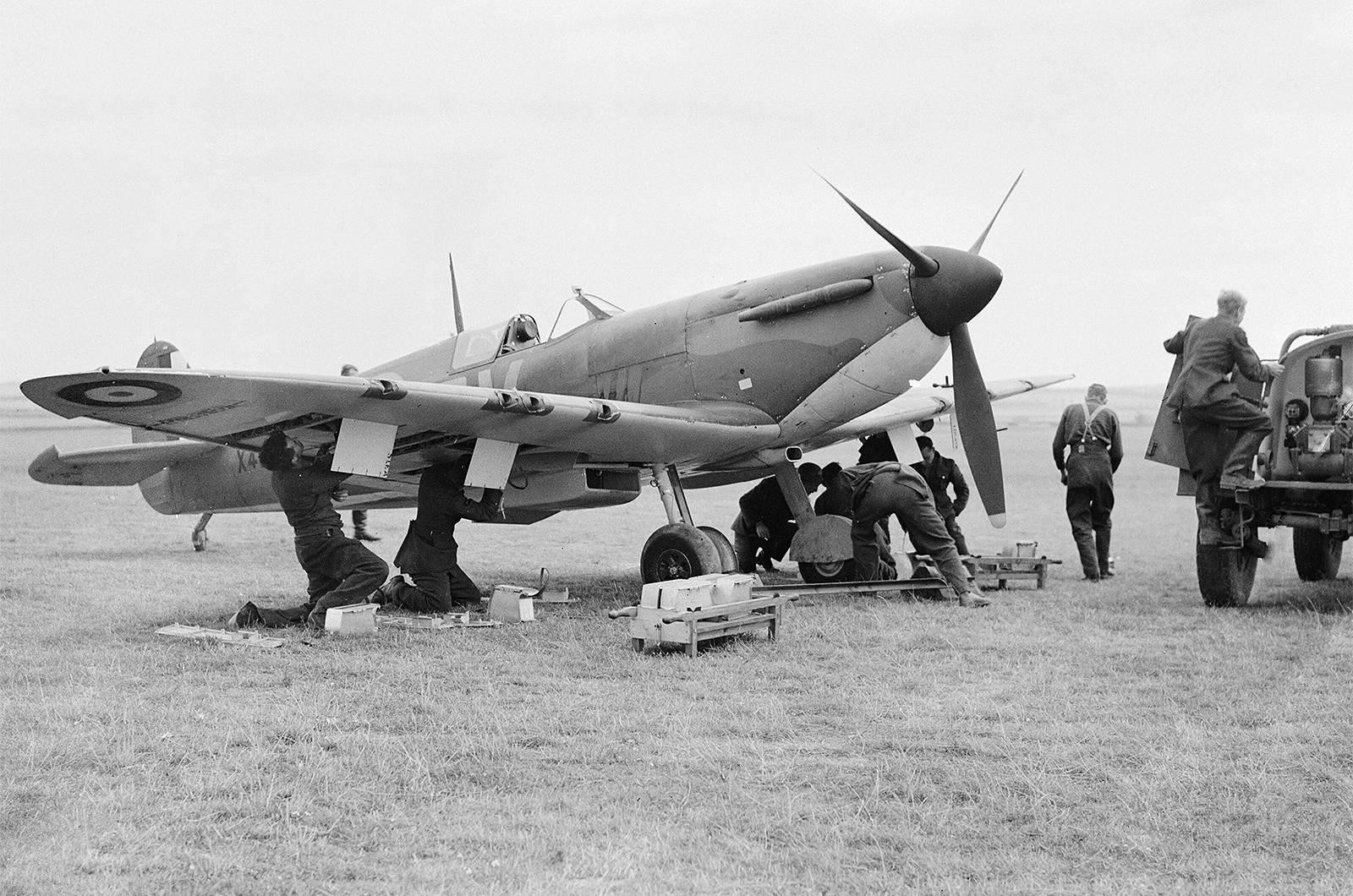
3: Supermarine Spitfire

 Supermarine Spitfire

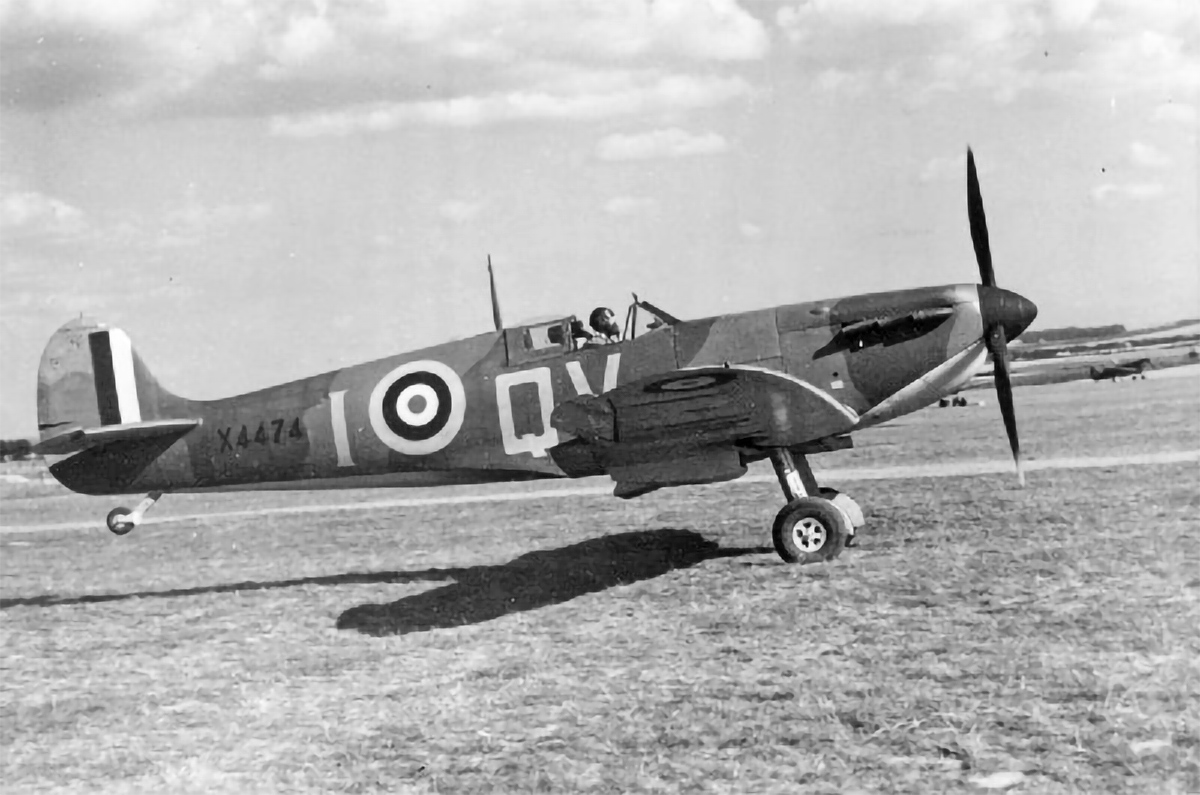
The Battle of Britain of 1940 was an attempt by the German Luftwaffe to smash Britain’s air force to enable a full-scale invasion, one which would have radically altered the course of the War. Thanks to Britain’s well-organised air defence, which also included radar and Hurricane fighters, Britain won the battle. The fast and agile Spitfire was vital to this victory.

Throughout the War, apart from the brief ascendency of the Focke-Wulf Fw 190, the Spitfire was never utterly outclassed. When the Spitfire wasn’t there, Britain tended to lose. In theatres lacking Spitfires, what occurred was one disaster after another. It needed a very special fighter to turn this around. And that fighter was the Spitfire.


3: Supermarine Spitfire

 Supermarine Spitfire

If the battle had been lost, and Britain had been invaded, the whole course of the war would likely have shifted -  with both later US involvement and the support of the Soviet Union falling by the wayside. As well as being a superbly handling high-performance fighter, the Spitfire was a stellar reconnaissance aircraft leading the world in this vital tool for victory.

Its potency was also psychological, its undeniable beauty made it an easy propaganda symbol to fortify the hearts of those facing the possibility of defeat. The human spirit when in accord with the right tactics, technology and luck, is what ultimately wins wars. There is much debate on which fighter downed the most Axis fighters, the Spitfire is likely the holder of this title, with 5950 victories (with RAF and Commonwealth alone).

Back to top

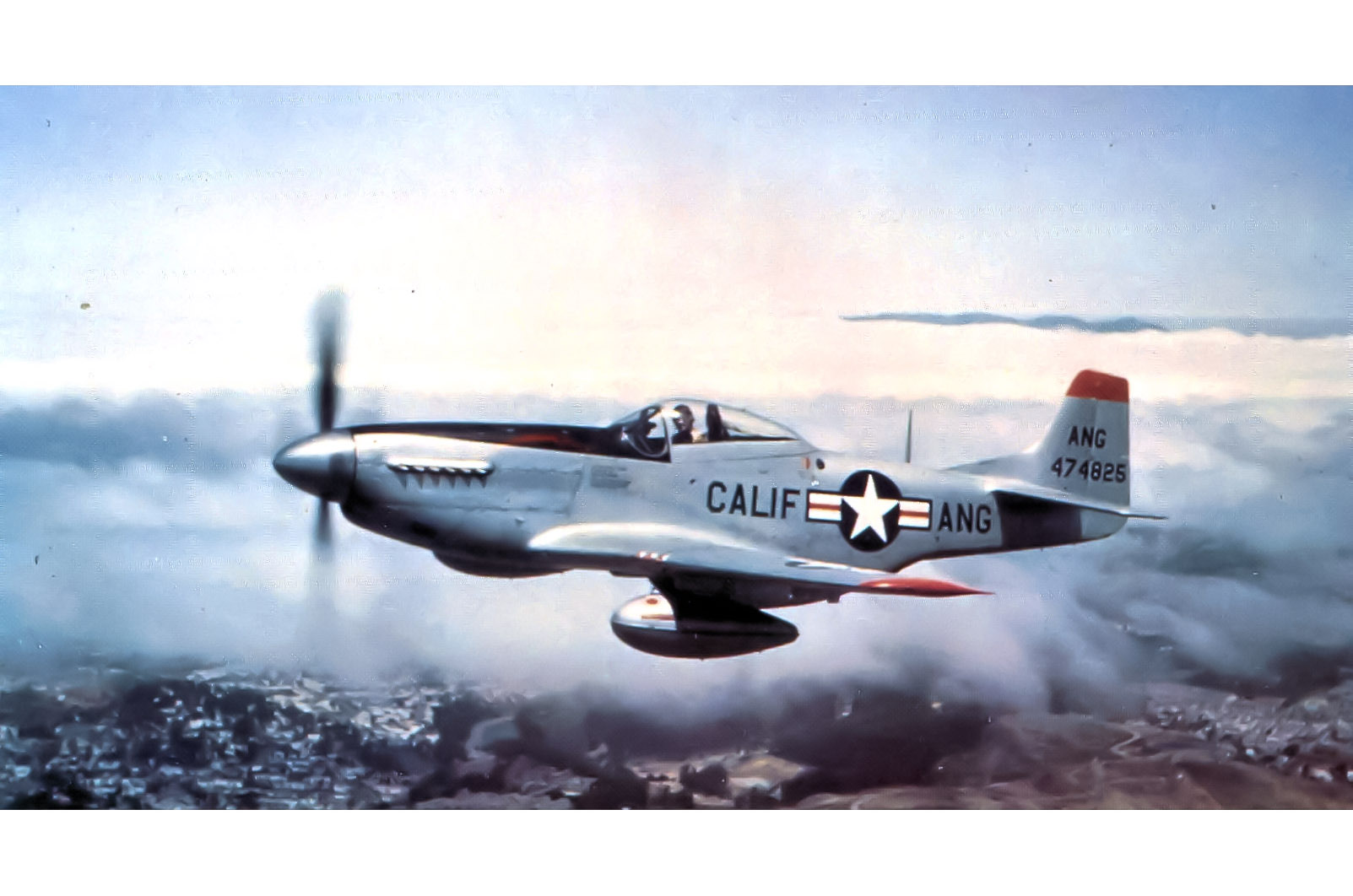
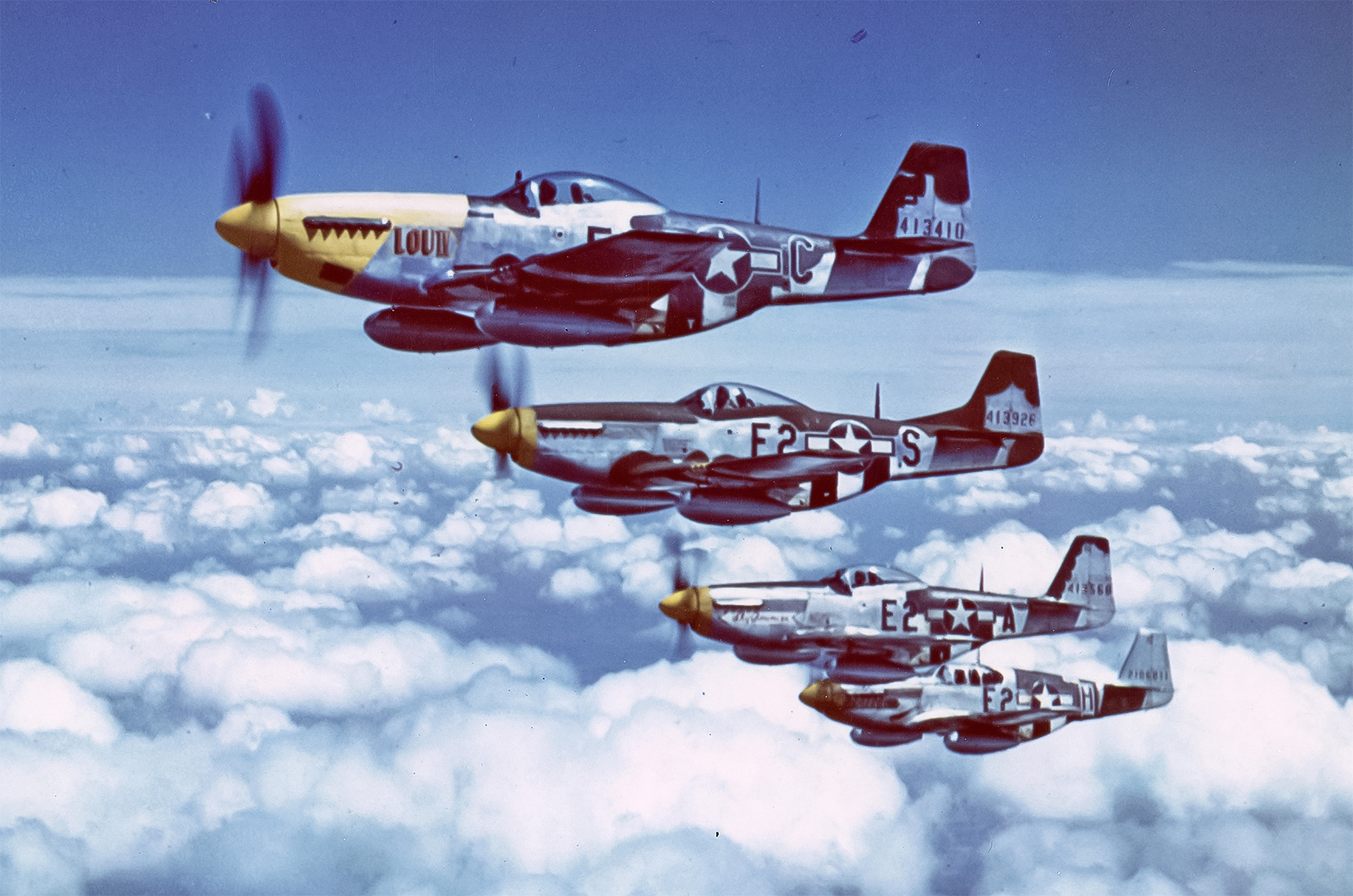
2: North American P-51 Mustang

 North American P-51 Mustang

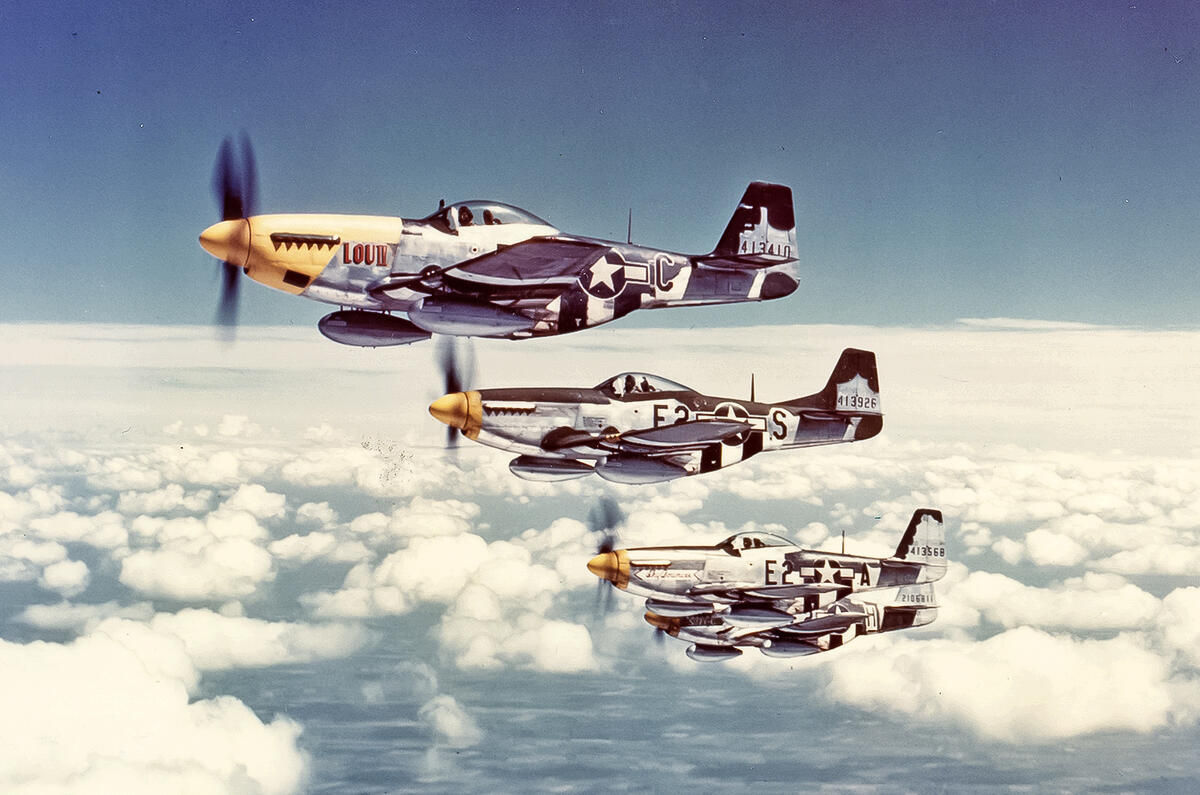
Pairing an extremely ‘clean’ aerodynamically advanced airframe with the best aero-engine of the time, the Rolls-Royce designed Merlin, turned a capable low-level fighter into a superb fighter at any altitude. The Mustang wasn’t lacking in any key areas, but what it most excelled in was range, it was also extremely fast with good manoeuvrability.

The Mustang had the remarkable ability to fly from the UK to Berlin escorting bombers, and once there, take on the Luftwaffe’s best fighters on even terms. This not only increased the survival rate of bombers smashing Germany’s infrastructure to pieces, it also tied up and destroyed many German defensive fighters.


2: North American P-51 Mustang

 North American P-51 Mustang

The P-51 could roam the Third Reich with a freedom that put Germany on the back foot. Not only that it was cheaper and easier to build than the giant P-47 Thunderbolt or twin-engined P-38 and importantly, it was designed for efficient mass production. Despite it having the best-performing wing of the war, it was also amongst the simplest.

Among its many war-winning accolades, the North American P-51 Mustang destroyed around 5784 Axis aircraft and was pivotal in the Allied forces gaining air superiority. Over 15,000 Mustangs were built before production ended. As well as the escort fighter role, the Mustang performed ground attack and tactical reconnaissance missions. The Mustang must be mentioned in the same breath as the P-47 fighter, which also boasted long range and excelled as a tough ground attack aircraft.


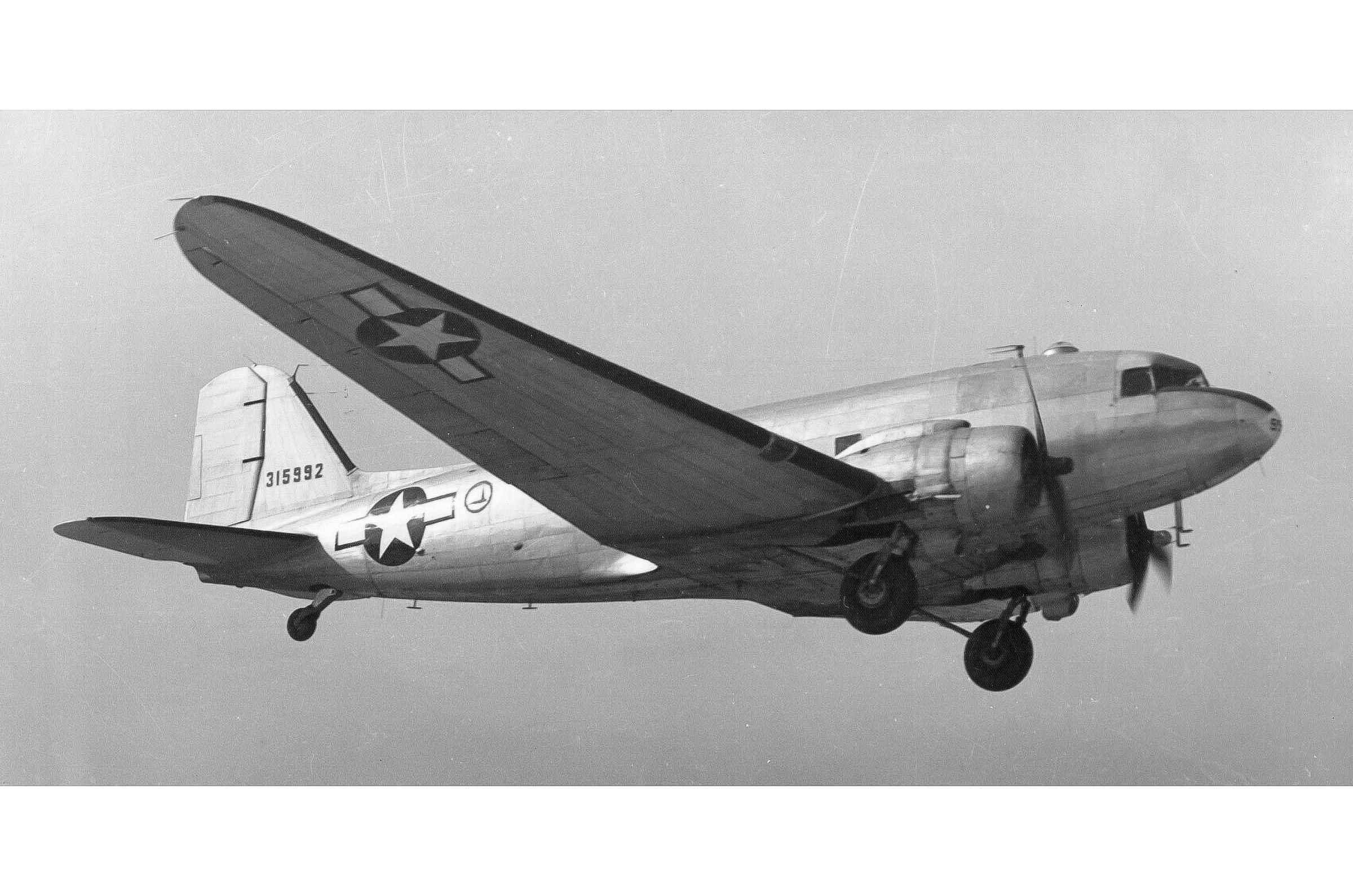
1: Douglas C-47 Skytrain/Dakota

 Douglas C-47 Skytrain/Dakota

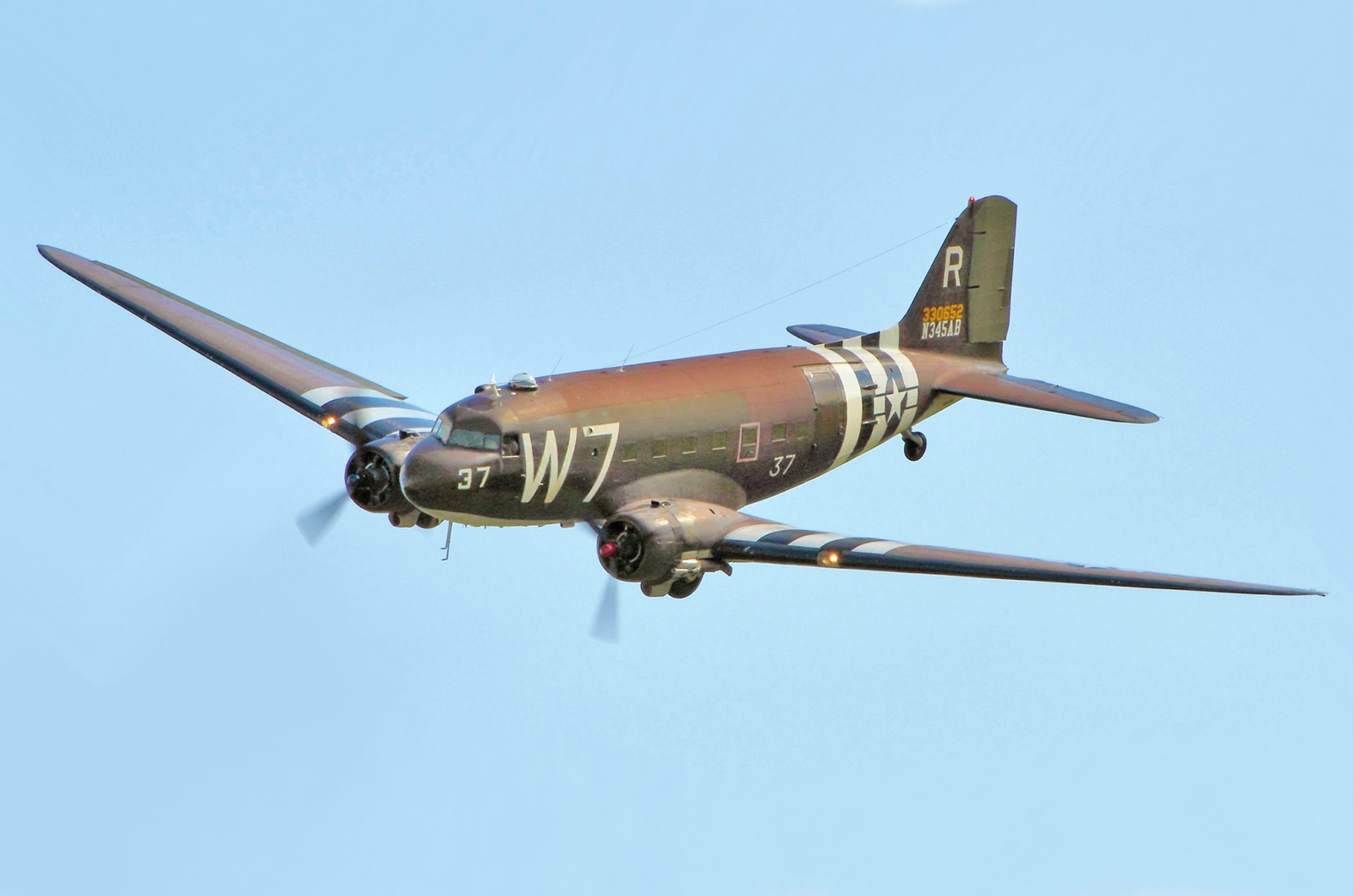
No less an authority than US General Dwight D. Eisenhower, Supreme Commander of the Allied Expeditionary Force in Europe, described the C-47 as one of four tools that won the War for the Allies (the others were the ‘Bazooka’, Jeep and the atomic bomb carried by the B-29 Superfortress).

Fast and comfortable, the Douglas DC-3 was a very popular 1930s airliner that became the most significant military transport aircraft in history. In 1940, a military transport version was flown, designated the C-47. The new C-47 had more powerful engines than the airliner, the provision for generously large loading doors and a strengthened rear fuselage and cabin floor.

Back to top

1: Douglas C-47 Skytrain/Dakota

 Douglas C-47 Skytrain/Dakota

The tough, reliable C-47 did many things in the War. It is best known for delivering paratroopers to the battlefield, but it was also used for general military transport, moving cargo, military cargo parachute drops and even towing military gliders. The Soviet version, the Lisunov Li-2, was used for military transport, supporting partisan forces, as an ambulance aircraft – and even as a bomber.

It excelled in many airborne operations around the world, notably in Arnhem, Burma, Normandy, Sicily and the crossing of the Rhine. A total of 10,048 C-47s had been made by the end of the war, and their role in Allied victory cannot be overstated. With everything it did, the C-47 was undoubtedly a war-winner.

Follow Joe Coles on Substack, Twitter X  or Blue Sky. His superb Hush-Kit Book of Warplanes is available here.

If you enjoyed this story, please click the Follow button above to see more like it from Autocar

Photo Licence: https://creativecommons.org/licenses/by/4.0/deed.en

Join our WhatsApp community and be the first to read about the latest news and reviews wowing the car world. Our community is the best, easiest and most direct place to tap into the minds of Autocar, and if you join you’ll also be treated to unique WhatsApp content. You can leave at any time after joining - check our full privacy policy here.

Add a comment…