Currently reading: 10 Wooden Wonders & Misfits of the Second World War

10 Wooden Wonders & Misfits of the Second World War

The de Havilland Mosquito was the “Wooden Wonder”—outrageously fast, and formidable.

But it wasn’t the only aircraft fashioned from timber. In an age when aluminium promised the future, war forced designers to turn back to wood: abundant, adaptable, yet flawed. Here are 10 Wooden Wonders & Misfits of the Second World War.


10: Messerschmitt Me 321/323 Gigant
 Messerschmitt Me 321/323 Gigant

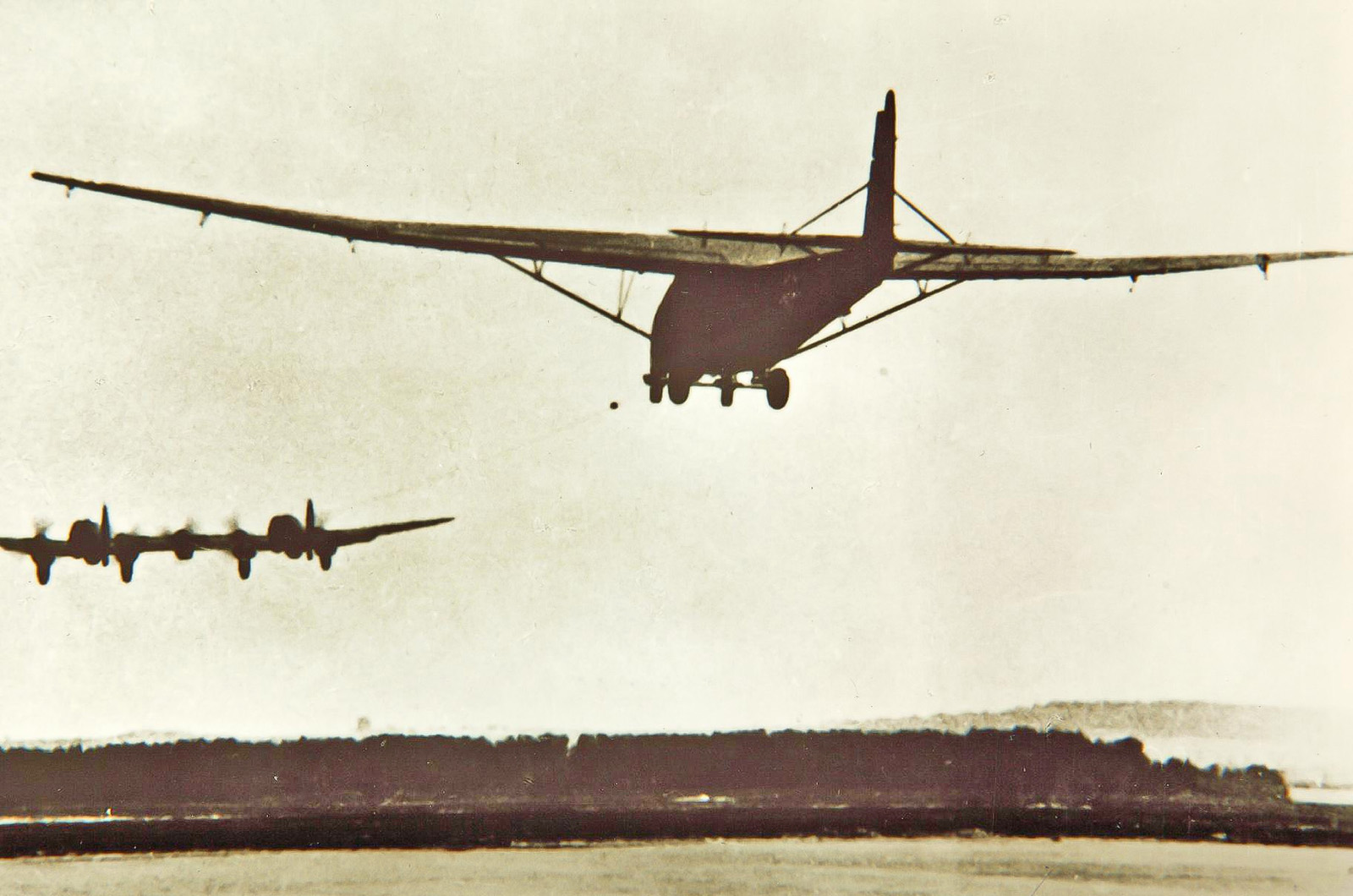
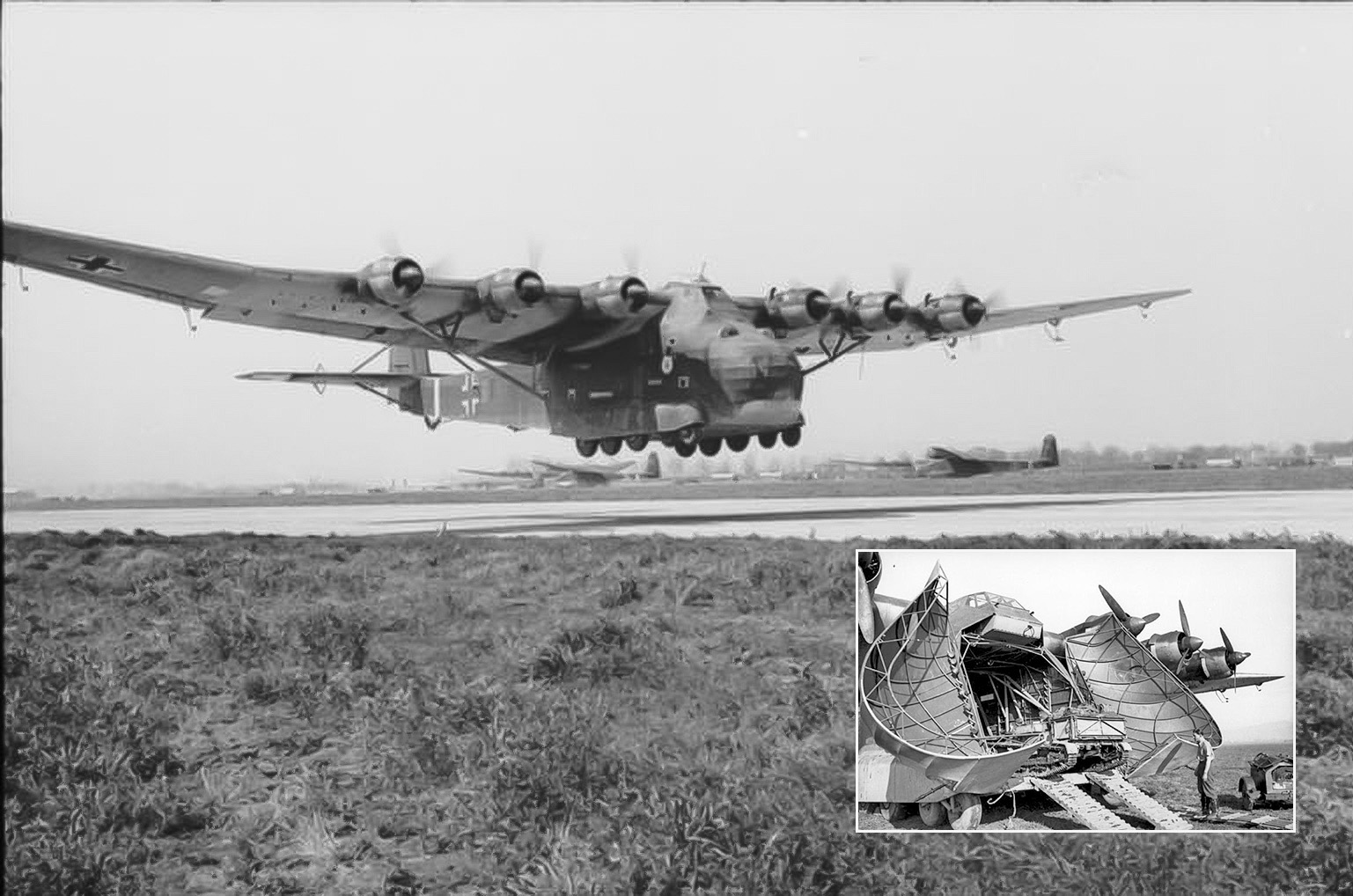
The planned German invasion of Britain required the swift delivery of tanks, guns and men across the English Channel, prompting a call for a massive glider. Built in weeks, the Messerschmitt Me 321 was then the world’s second-largest aircraft. The massive Me 321 used wood to conserve scarce metals, easing production despite shortages.

It immediately became apparent that it was exceptionally difficult to launch the enormous machine – it had a wingspan as wide as today’s B-52. The initial tow aircraft, the Junkers Ju 90, was too weak; using three Messerschmitt Bf 110s at once was attempted, but it proved to be tricky and extremely dangerous.


10: Messerschmitt Me 321/323
 Messerschmitt Me 321/323

Although the arrival of the twin Heinkel He 111Z tow aircraft (essentially two He 111s joined at the wing – see previous picture) eased the issue somewhat, a more straightforward solution was to convert the transport glider into a powered aircraft. The Me 323 emerged with six 1140-hp (850kW) Gnome-Rhône 14N 14-cylinder piston engines.

Though slaughtered whenever it met enemy fighters (not unusual for a transport aircraft), the Messerschmitt Me 323 is the ‘father’ of modern transport aircraft in many ways. The clamshell nose that opened to load or deliver outsize loads easily foreshadowed a new breed of transport aircraft with large nose or rear doors, as did the multi-wheel undercarriage.


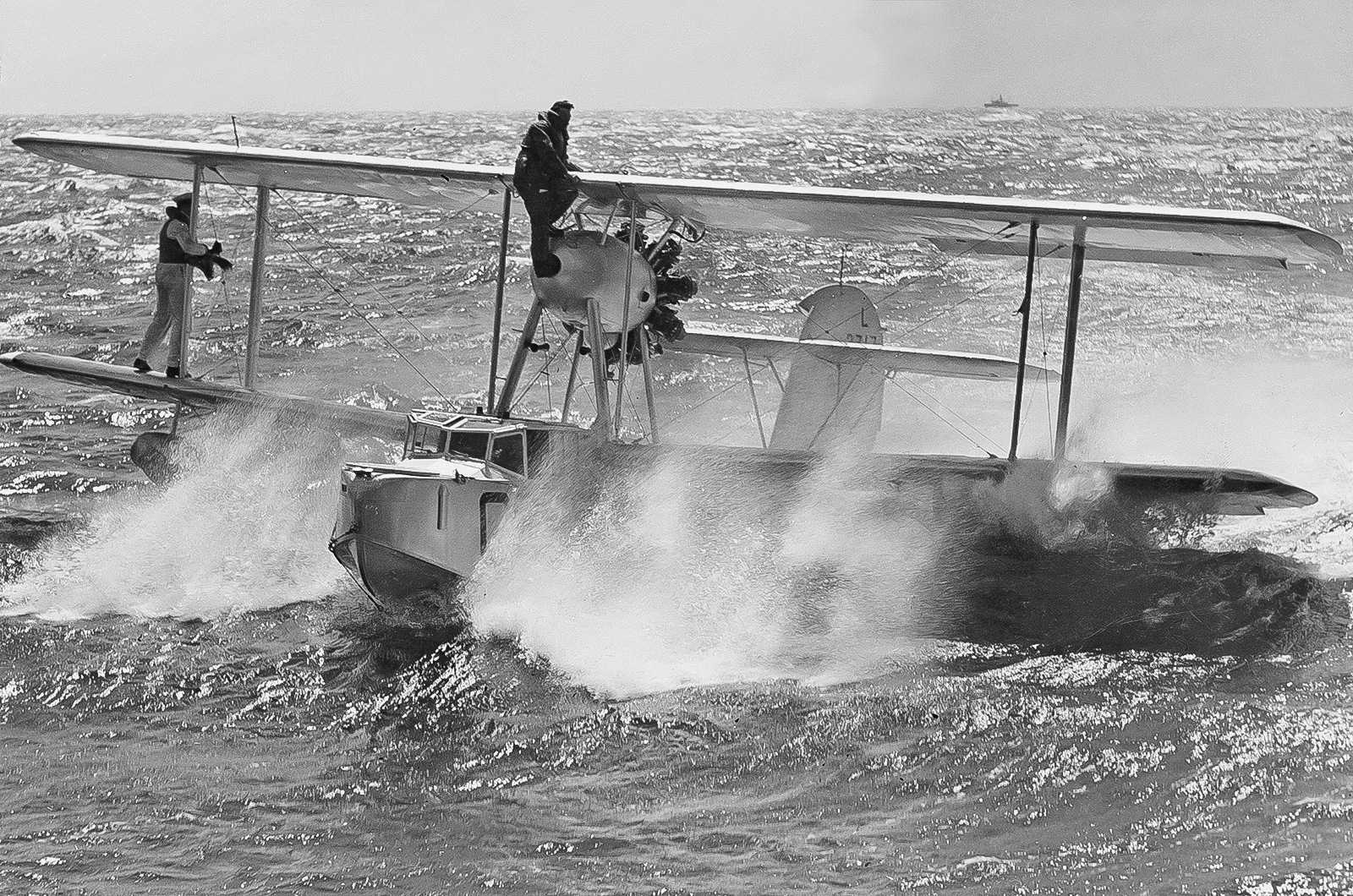
9: Supermarine Walrus
 Supermarine Walrus

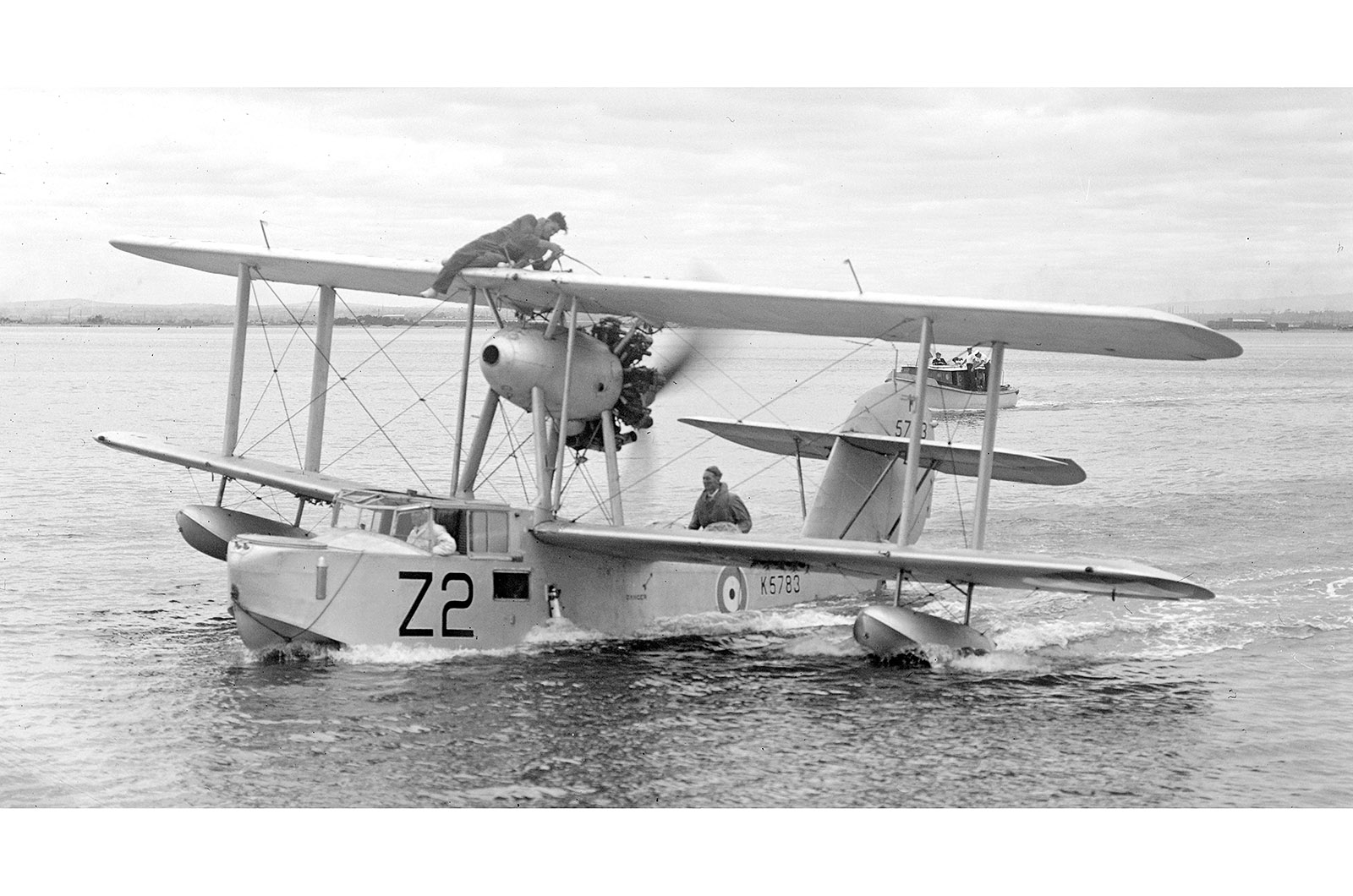
As the Walrus was an amphibious flying boat intended for catapult launch from battleships, designer RJ Mitchell built it like one. The Walrus was astonishingly robust, a fact demonstrated in several wheel-up landings. These incidents were learned from, and the Walrus became one of the first aircraft to have an automatic undercarriage position indicator (a horn would also sound should a pilot fail to notice).

The Supermarine Walrus had a metal hull to start with, but then Supermarine switched to wood in the Mk.II to free up materials for more essential types. There aren’t many aircraft types that make that seemingly backwards progression.

Back to top

9: Supermarine Walrus

 Supermarine Walrus

It did vital work in the roles of fleet gunnery spotting and observation. After catapult launch, it was recovered from the water by crane. The small bomb load proved enough to sink a U-boat. But just as the Walrus was not quite a pure aeroplane, it was not quite a warrior. When the better, faster and meaner came along, it was given over to air-sea rescue. It found its true calling in saving, not killing.

For the half-drowned, who know hypothermia isn’t far off, a Walrus meant a blanket, a thermos of hot tea laced with rum; it was life. And when the weight of ten Americans from a ditched B-17 couldn’t be flown, the pilot just pointed the bow towards England, and taxied home by water. Not bad for an aircraft that can be looped.


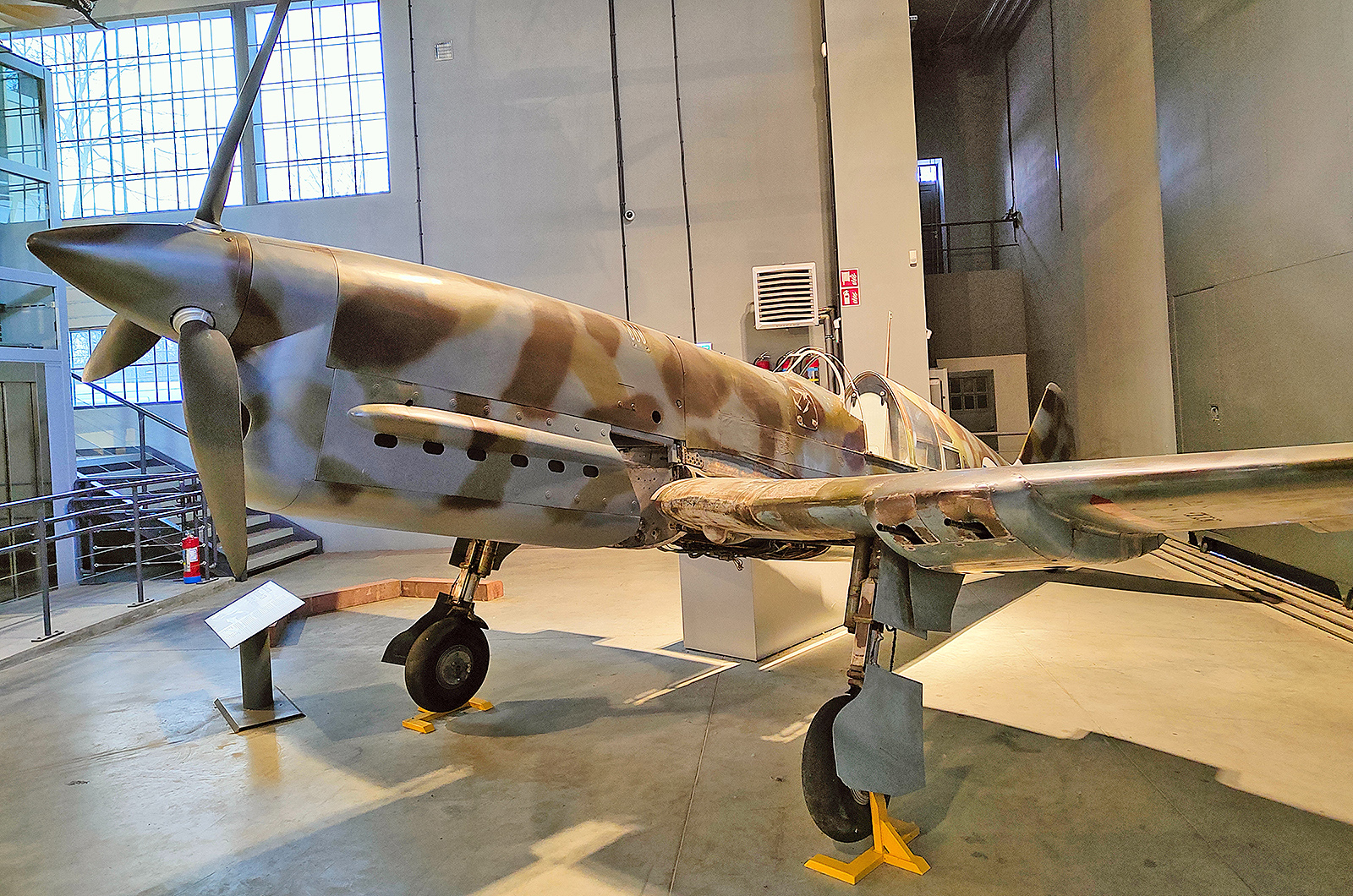
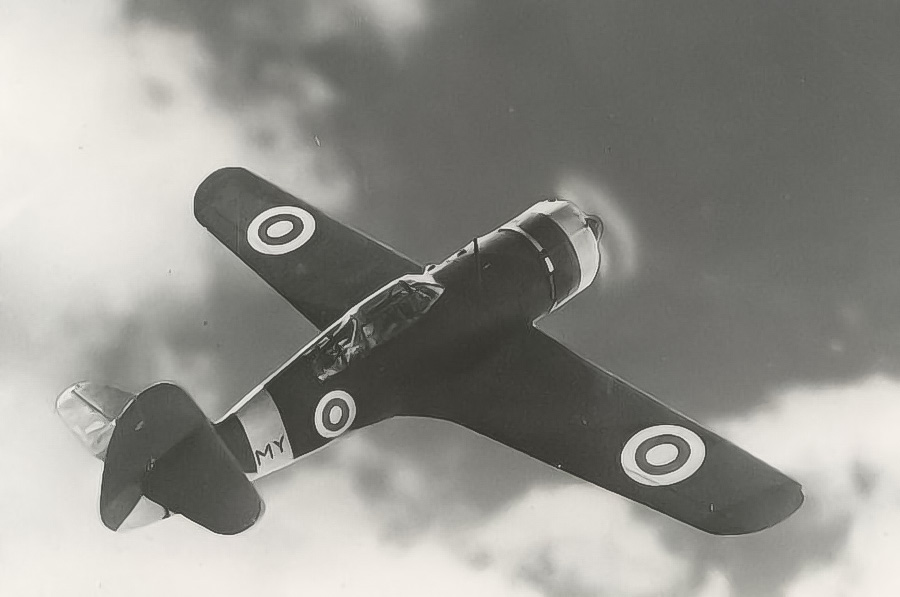
8: Caudron C.714 Cyclone

 Caudron C.714 Cyclone

The series of Cyclone fighters achieved respectable top speed despite modest engines thanks to their small size and lightweight wooden construction, following the French predilection for petite fighters. The Caudron C.714 Cyclone emerged in 1938; its monocoque fuselage was fashioned from laminated plywood, skinned smooth for aerodynamic efficiency, while its wings combined wooden spars and ply coverings.

The rather attractive 714 embodied France’s ambition to conserve aluminium without sacrificing modernity. Carpenters and craftsmen played as vital a role as engineers, shaping fuselages in workshops more accustomed to furniture than fighters. Each airframe bore the scent of resin and varnish, a reminder that timber, abundant and familiar, was being pressed into the urgent service of aerial warfare.


8: Caudron C.714

 Caudron C.714

Performance on paper suggested promise: a top speed near 300mph and fine handling. Beneath its elegant appearance, the Cyclone suffered from the weediness of its small Renault 12R engine. Pilots quickly discovered that speed alone (it reached 283mph, still slower than the Me 109) could not compensate for underpowered climbs and sluggish acceleration.

Deployed briefly in 1940, the C.714 proved inadequate against German fighters, and production ceased. Yet the wooden fighter remains notable as an experiment born of necessity. A sizable force of 80 was intended for the Finnish Air Force, though only six were delivered. The 714 was armed with four 7.5mm MAC machine guns. 

Back to top

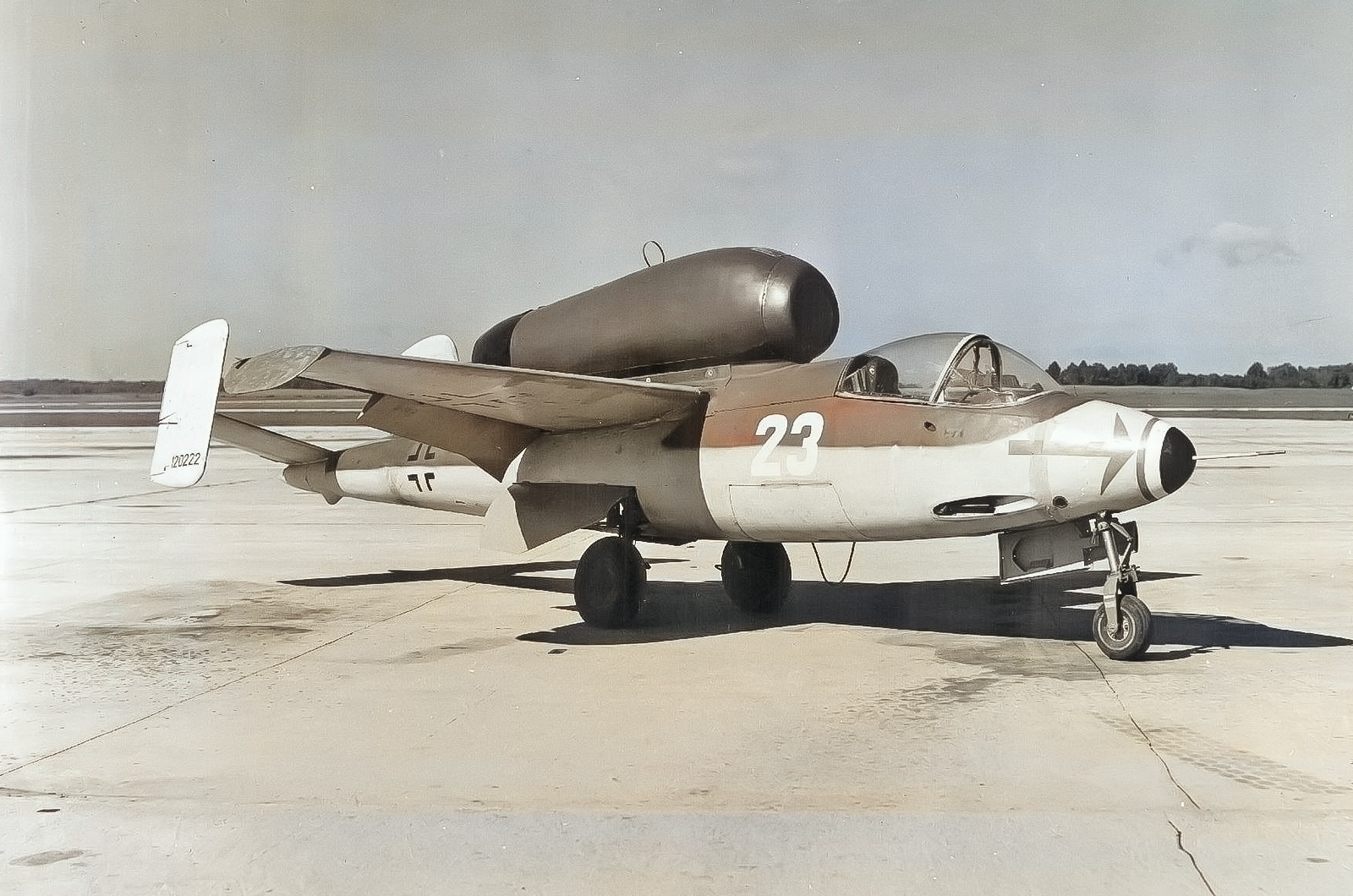
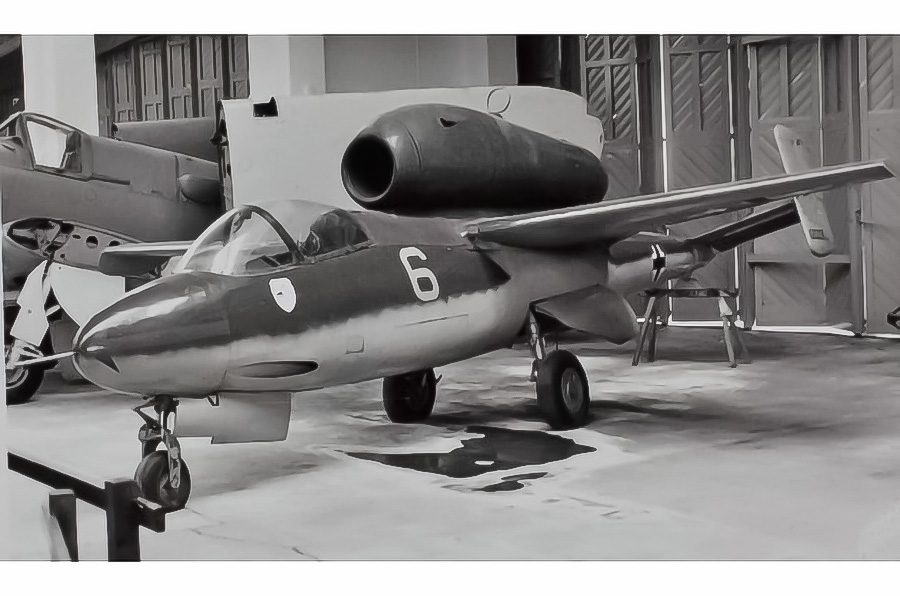
7: Heinkel He 162 Volksjäger

 Heinkel He 162 Volksjäger

Conceived in Nazi Germany’s desperate last days, the tiny Heinkel He 162 ‘Volksjäger’ (People’s fighter) was born of the hope that a mass-produced, cheap yet highly advanced design could defend against the hundreds of Allied bombers pummelling Germany. Cheap manufacture came courtesy of the misery of subterranean forced labour and resulted in appalling build quality.

Conception to first flight took just three months. It was an extremely innovative design combining the new technologies of jet propulsion and ejection seat that was intended to be flown by young, fanatical men (and boys), minimally trained on gliders. Though an impressive achievement, capable of 550mph, it was difficult to fly.


7: Heinkel He 162 Volksjäger

 Heinkel He 162 Volksjäger

In the final days of the project, it became apparent that jet engines were too costly and used too many valuable materials. A simple solution was considered: the replacement of the jet engine with one or two pulse jets as used on the V-1 cruise missile.

Another proposal was for an He 162 to form the upper component of a Mistel composite, atop a massive air-launched bomb, the Ar 377 or Ju 268, to guide it near its target and then detach. The bomb (or missile or drone, depending on how you wish to define it) was essentially a twin-engine jet bomber in its own right.


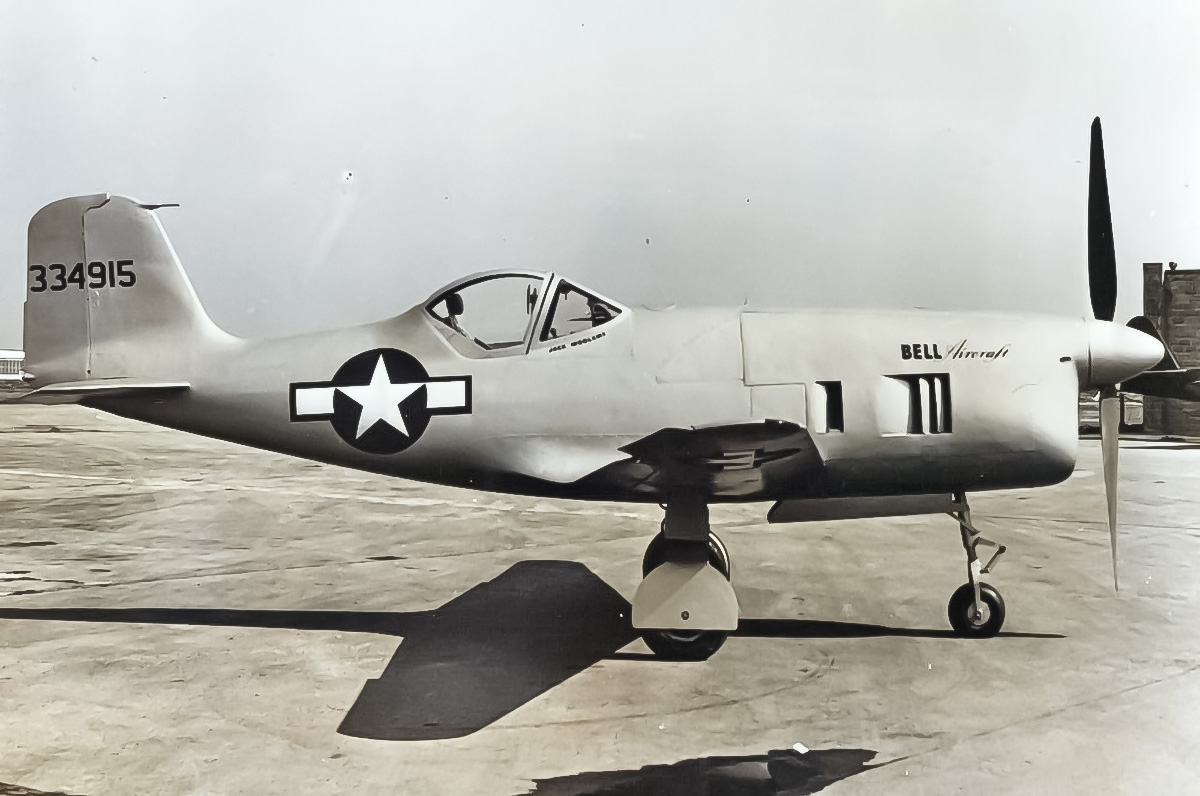
6: Bell XP-77

 Bell XP-77

The rather tiny and gawky Bell XP-77 took Miles M.20 philosophy even further. Where the M.20 had sought to be an expedient fighter built from non-strategic materials, the Bell XP-77 pursued this notion to its ultimate conclusion. Conceived in 1941, it was imagined as a lightweight interceptor fashioned largely from laminated wood to be manufactured and deployed if the tide of war had gone very badly for the US.

America’s aircraft industry was straining under demands for aluminium, and the idea of a “wooden fighter” had great appeal. Bell envisaged a machine that could be quickly built, using techniques familiar to furniture makers and boatyards. The XP-77’s structure was accordingly of resin-bonded plywood, a striking departure from mainstream American practice.

Back to top

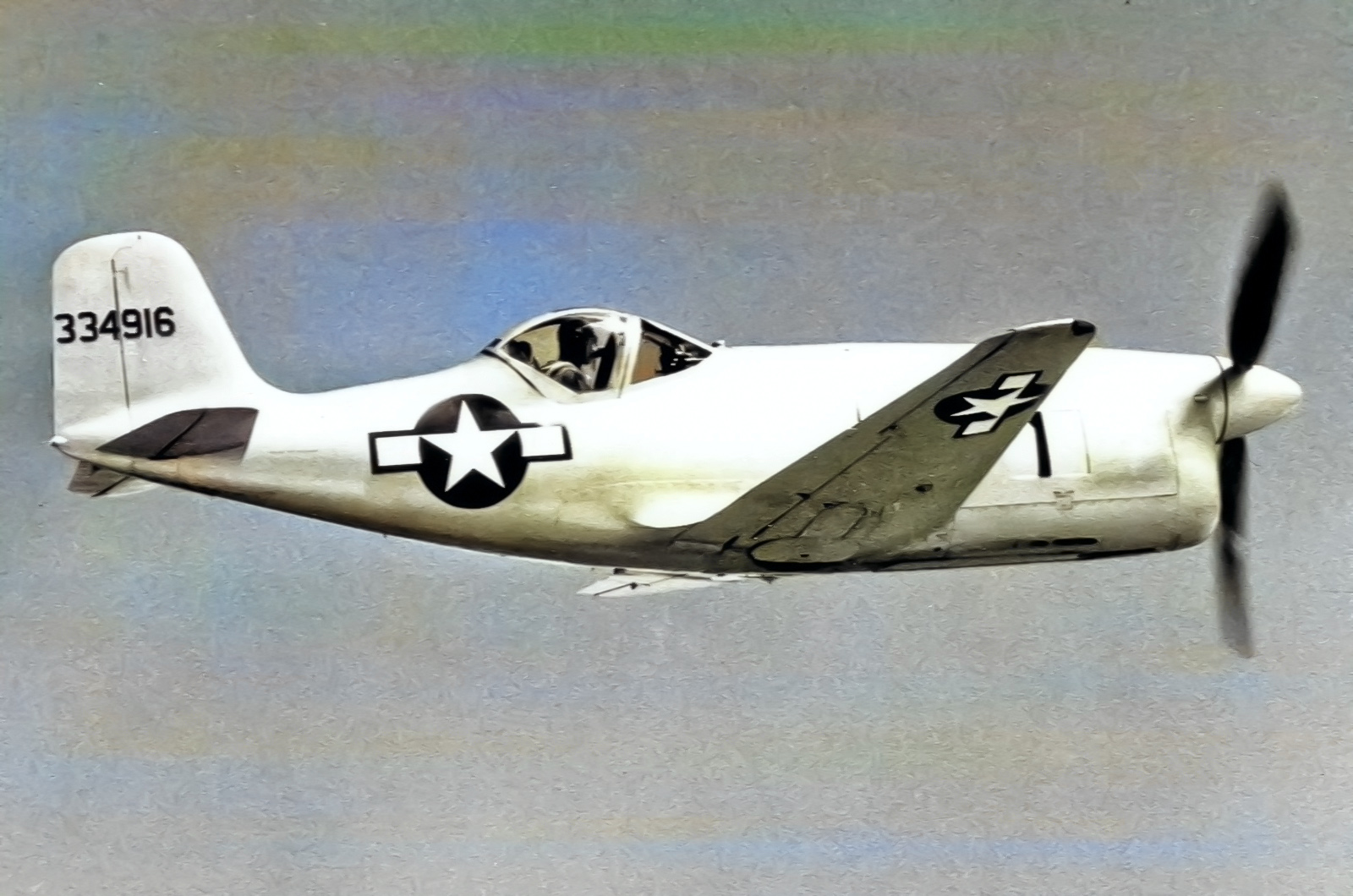
6: Bell XP-77

 Bell XP-77

The aircraft itself was tiny, elegant in an odd kind of way, and somewhat austere. Powered by a modest 520 horsepower engine, it was intended to rely on high manoeuvrability for survival. Armament was to consist of a pair of machine guns or cannons, housed neatly in the nose, keeping construction simple. It bears interesting comparison with the Italian Ambrosini SAI.207.

In the event, performance, including a top speed of 330mph, disappointed. It was underpowered, with vibration and handling issues. The wooden structure, though ingenious, did not confer the expected advantages. Only two prototypes were completed, and the project was quietly abandoned. Yet it remains a fascinating experiment in wartime improvisation. Had it entered service in 1944, this rather meek aeroplane would have faced fighters with more than a 100mph speed advantage, a daunting prospect.


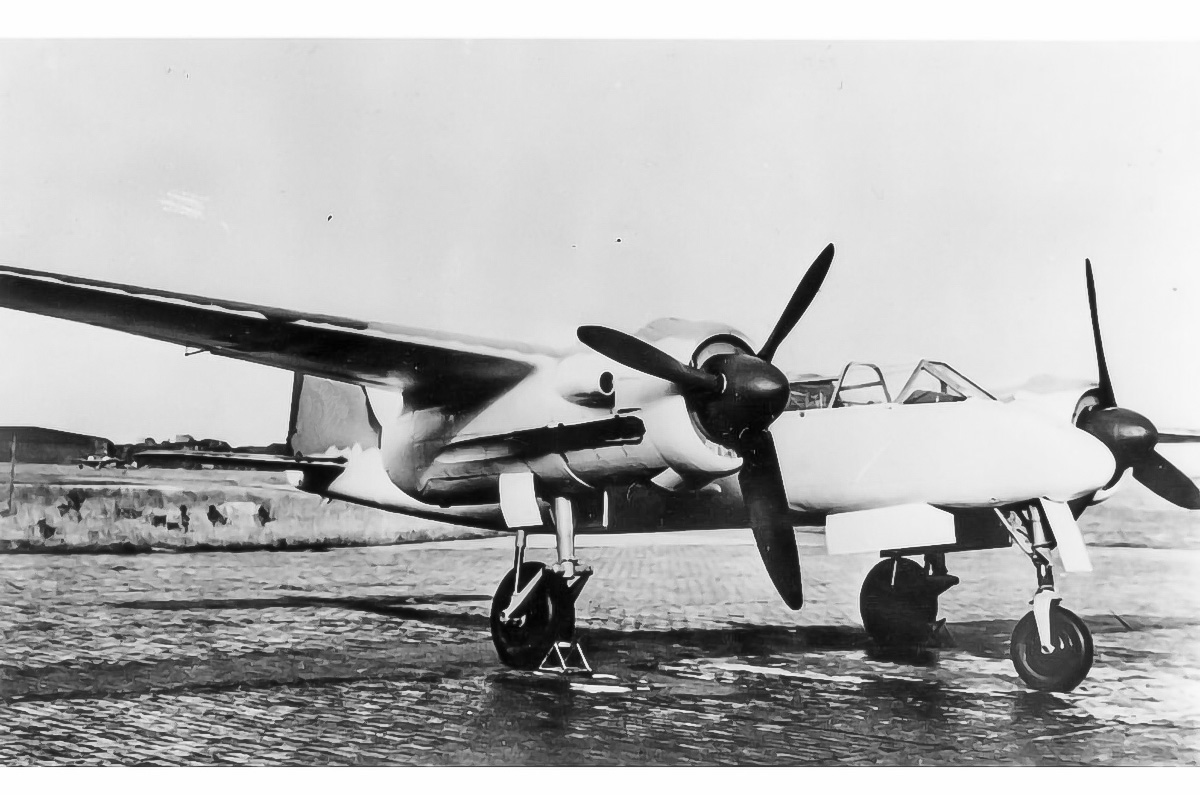
5: Focke-Wulf Ta 154 ‘Moskito’

 Focke-Wulf Ta 154 ‘Moskito’

The Focke-Wulf Ta 154 was one of Germany’s more unusual responses to the pressing demands of the second world war. Conceived as a fast night fighter, it owed much of its inspiration to Britain’s de Havilland Mosquito, earning the nickname “Moskito” from the Luftwaffe. Its defining feature was its use of wood, a feature it shared with the Horton Ho 229.

At a time when aluminium was increasingly scarce, German engineers sought alternatives, and wood offered an attractive solution. The Ta 154’s fuselage and wings were built largely from plywood, bonded with synthetic adhesives. This was both pragmatic and ironic, given Germany’s own propaganda had previously mocked Britain for using “furniture” materials in aircraft.


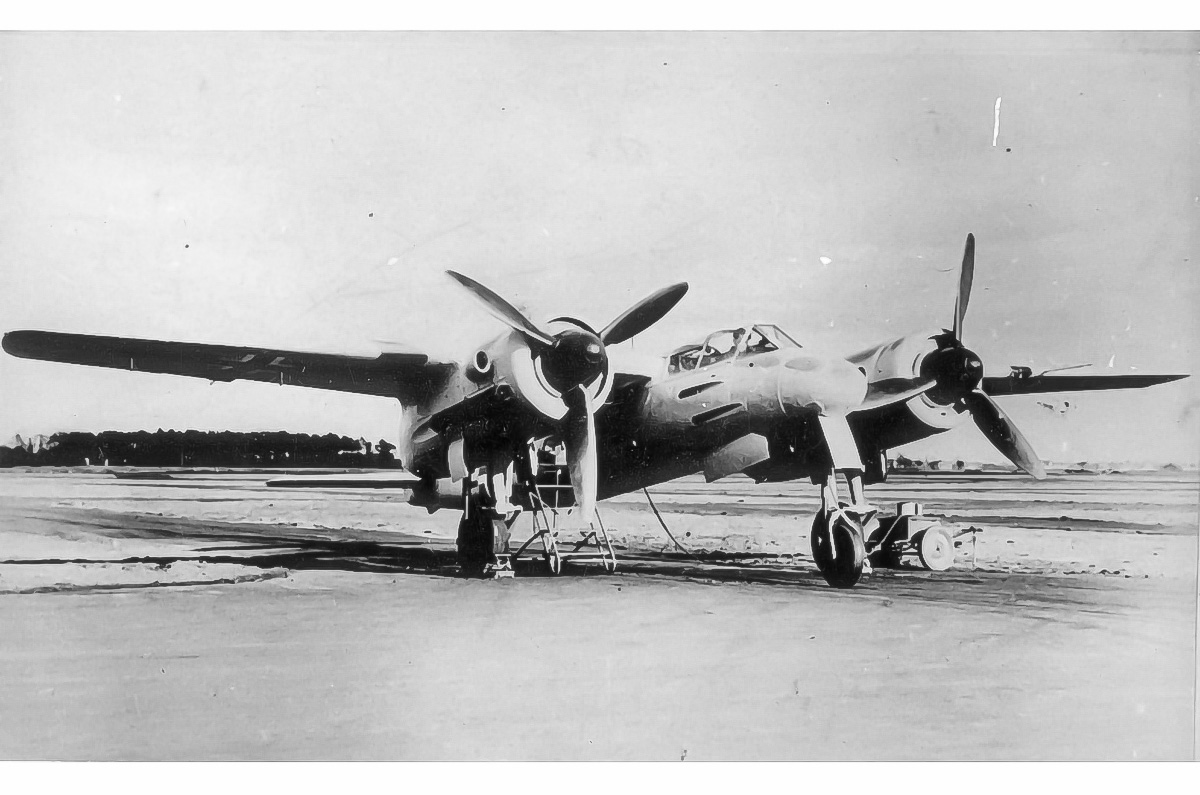
5: Focke-Wulf Ta 154

 Focke-Wulf Ta 154

The choice of wood carried both advantages and severe drawbacks. On the one hand, the Ta 154 could be produced with fewer strategic resources, and its light structure promised excellent speed and agility. On the other, quality control was disastrous. A shortage of suitable adhesives led to structural failures, and entire airframes were lost to glue that literally dissolved in rain. A few Ta 154s did see service in January 1945, and 28 were produced in total.

Back to top

Three bizarre uses of the Ta 154 were considered, all involving it being used as an explosive-filled anti-bomber device: one involved it being taken to battle by a piggy-backing Fw 190; another as a towed bomb; the most alarming involved the bomber being steered on to its target by a pilot in the rear of the aircraft who was then expected to escape via a downward-firing election seat.


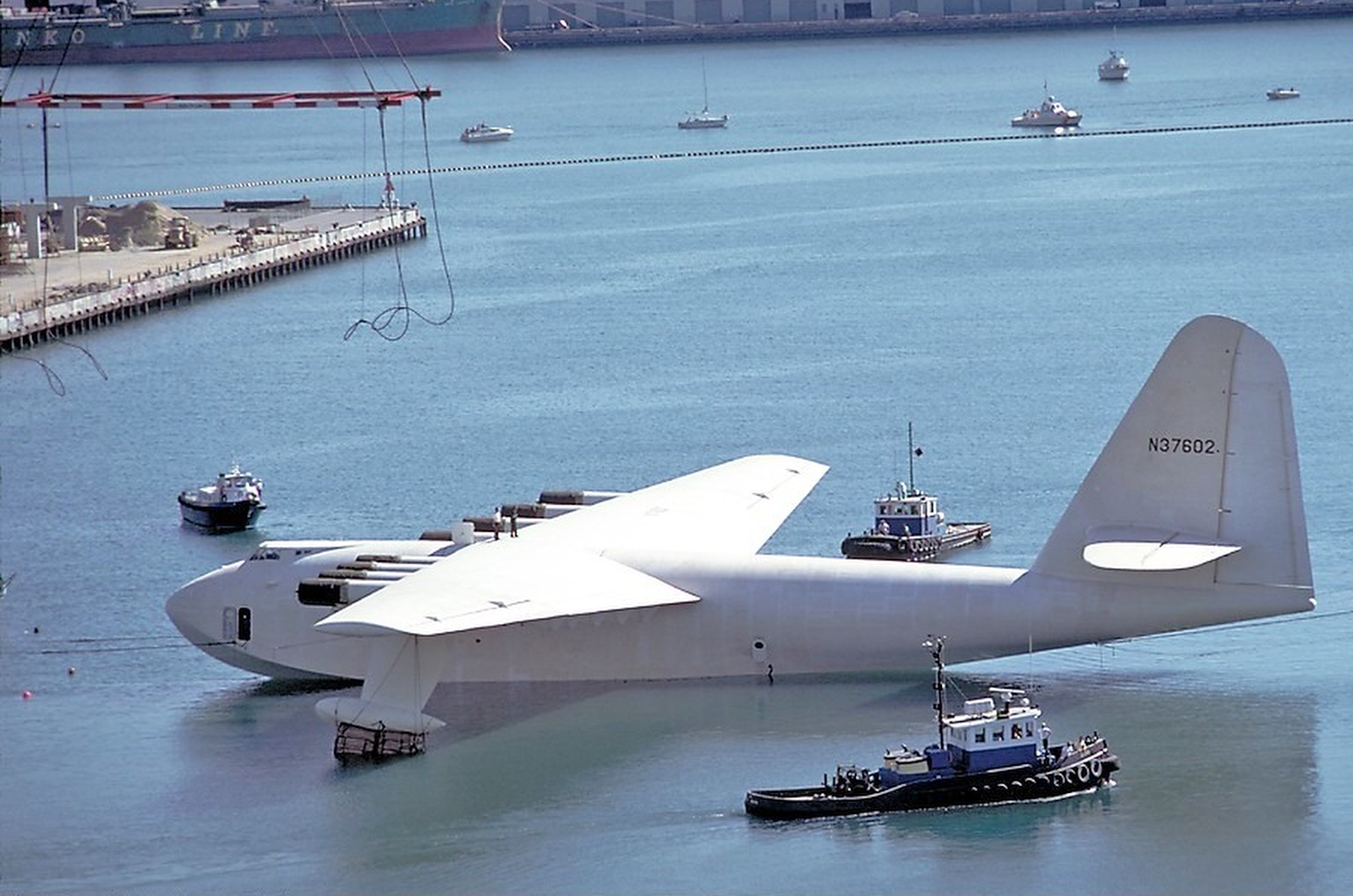
4: Hughes H-4 Hercules ‘Spruce Goose’

 Hughes H-4 Hercules ‘Spruce Goose’

Only missing out the top slot as it missed the war it was intended to take part in, no story about wooden aircraft could miss out the incredible H-4. Popularly known by its nickname of the ‘Spruce Goose’, the Hughes H-4 Hercules was a colossal wooden flying boat designed by the famously eccentric Howard Hughes.

Conceived during the Second World War, the intention was to create a vast strategic transport aircraft to move troops and cargo across the Atlantic, bypassing the menace of German U-boats. Its massive size and innovative design captured global attention.


4: Hughes H-4 Hercules ‘Spruce Goose’

 Hughes H-4 Hercules ‘Spruce Goose’

Constructed primarily from birch, not spruce, the plane boasted an unprecedented 320-foot wingspan. With eight powerful engines, it was intended to carry 750 troops or heavy equipment. Wartime restrictions delayed its completion, and the war ended before the H-4 could serve its intended purpose.

On November 2, 1947, Hughes piloted the Spruce Goose for its only flight. Lifting off from Long Beach Harbor in California, it flew for about a mile, reaching a height of only 70 feet. This brief journey proved its airworthiness but also marked its retirement, as critics questioned its practicality and cost. The war had ended, and with it, the need for the Hercules.  Though it never saw operational use, its legacy endures as one of the great wonders of aviation. It survives today at the Evergreen Aviation & Space Museum in Oregon, USA.


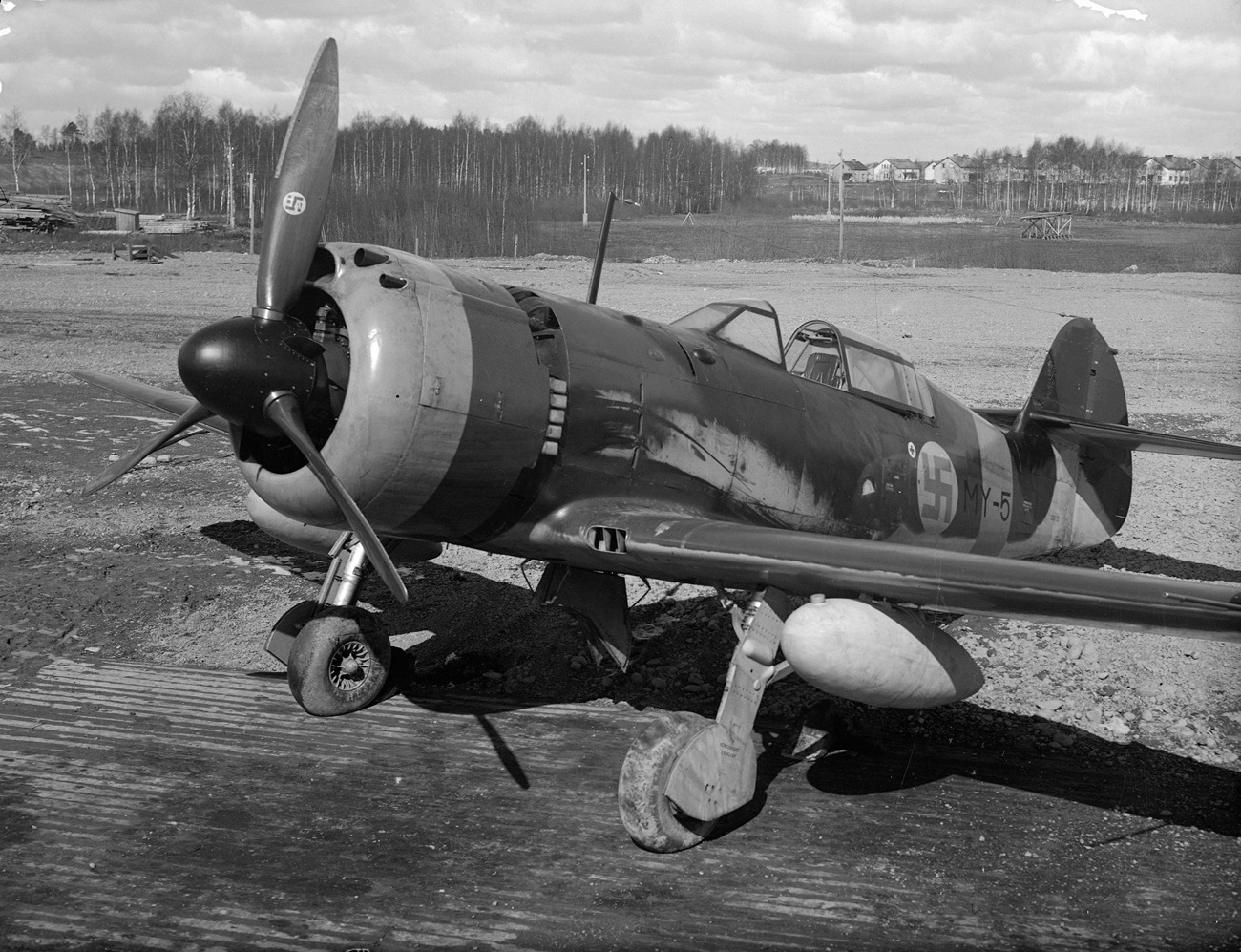
3: VL Myrsky (‘Storm’)

 VL Myrsky (‘Storm’)

The VL Myrsky first took to the air on 23 December 1941, marking Finland’s ambitious attempt to design and build its own modern fighter during the Second World War. Powered by a Pratt & Whitney R-1830 Twin Wasp radial engine, licence-built in Sweden, it achieved a decent maximum speed of around 332mph.

Back to top

Armed with four 12.7 mm wing-mounted heavy machine guns and the ability to carry small bombs, the Myrsky served in both fighter and ground-attack roles. Its distinctive wooden airframe, built from laminated birch and plywood, reflected Finland’s need to conserve scarce metals, balancing resource constraints with performance demands. The two-spar wing was plywood-skinned.


3: VL Myrsky

 VL Myrsky

In total, 51 Myrsky aircraft were built, including prototypes and production models. Finland was the sole operator, and although the type never matched the performance of the most advanced German or Soviet fighters, it provided the Finnish Air Force with urgently needed reinforcements at a critical stage of the war.

It was flown operation over Lapland against German forces. Operationally, pilots appreciated the Myrsky’s handling, but its wooden structure was susceptible to damp weather, resulting in warping and maintenance difficulties. Its durability was always in doubt, and when one broke up during a dive in 1947, the type was retired. Another wooden fighter worthy of attention was the Latvian VEF I-16.


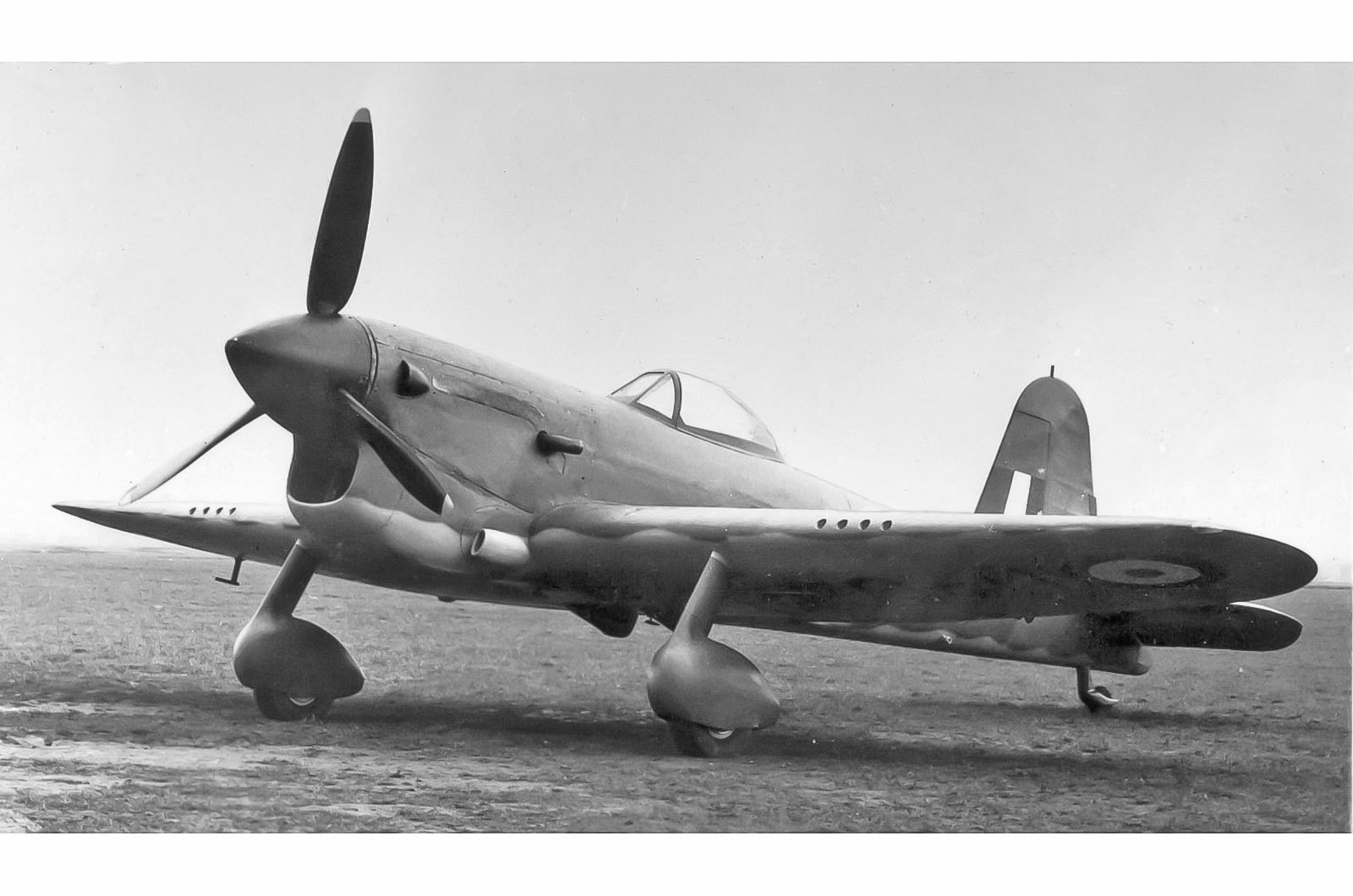
2: Miles M.20

 Miles M.20

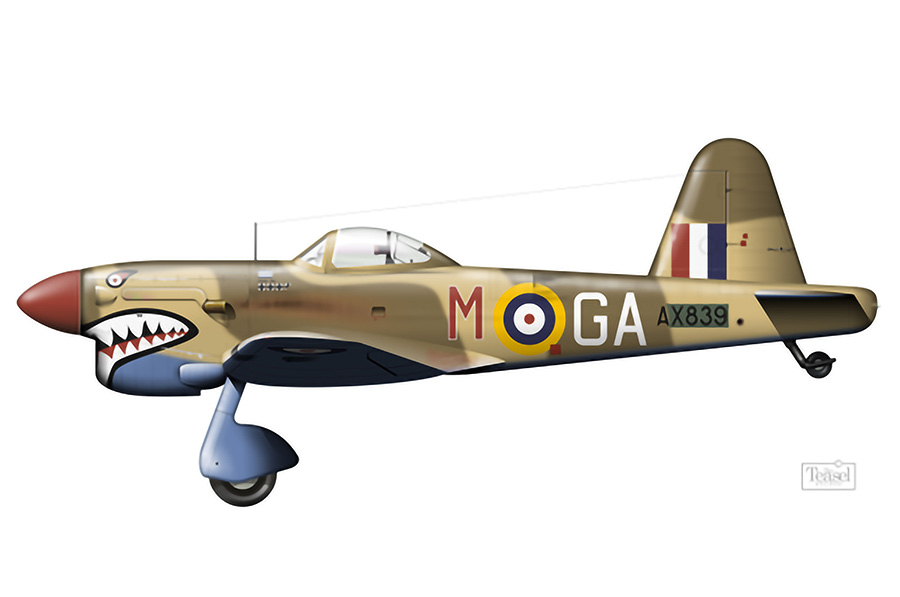
The Miles M.20 was constructed largely of wood due to wartime necessity. Britain faced shortages of strategic metals like aluminium, prioritised for Spitfires and Hurricanes. Wood allowed rapid, inexpensive production with existing skills and materials. This design aimed to provide an emergency fighter should conventional aircraft production be disrupted.

To maintain simplicity, the M.20 dispensed with a hydraulic system, and while this meant that the landing gear wasn’t retractable, the weight saved allowed for a large internal fuel capacity and the unusually heavy armament of twelve machine guns with twice as much ammunition as either the Hurricane or the Spitfire.


2: Miles M20

 Miles M20

Tests revealed that the M.20 was slower than the Spitfire but faster than the Hurricane, and its operating range was roughly double that of either. It also sported one of the first clear-view bubble canopies to be fitted to a military aircraft.

Back to top

Due to the M.20 being viewed as a ‘panic’ fighter – an emergency back-up if Hurricanes or Spitfires couldn’t be produced in sufficient numbers – production of the M.20 was deemed unnecessary, since no serious shortage occurred of either of the existing fighters.


1: Lavochkin La-5FN/ La-7

 Lavochkin La-5FN/ La-7

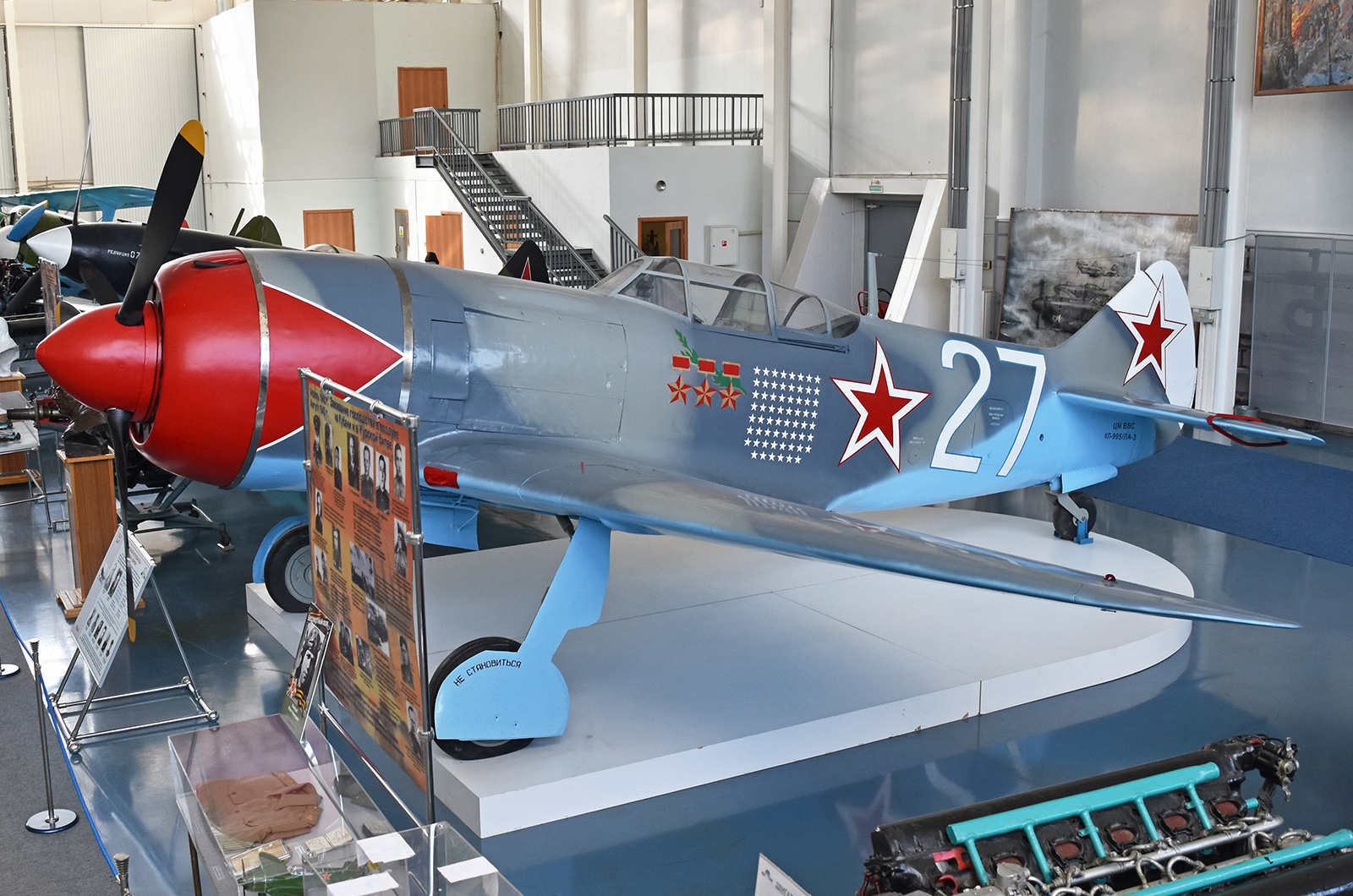
Lavochkin reinvigorated the lacklustre LaGG-3 fighter, by replacing its inline 1260 horsepower Klimov-M 105PF engine with the Shvetsov M-82 radial engine. The new aircraft, the La-5, was massively improved with this new 1649 horsepower engine. The first La-5 was completed in December 1941, two months after design work began.

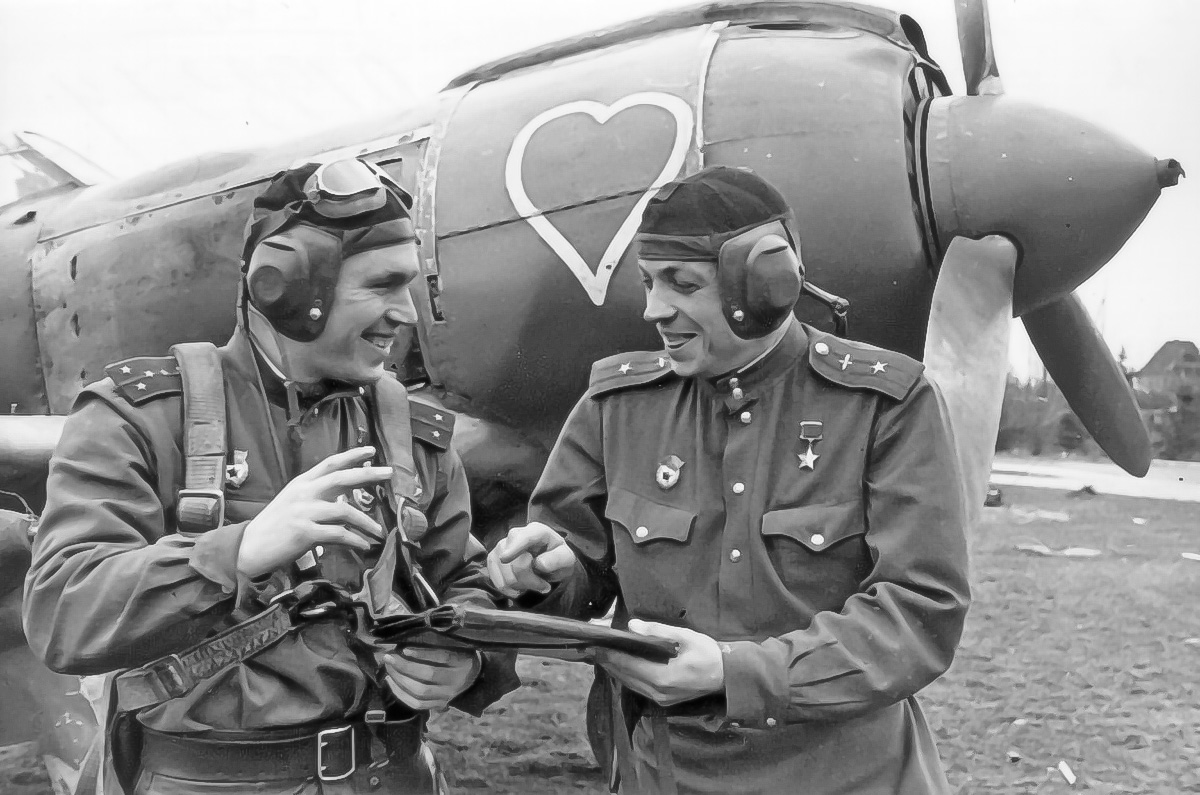
It was further improved with the addition of the M-82FN (FN short for fosirovanny meaning boosted). The new fuel-injected engine was a beast, with 1850 horsepower at take-off. Faster than 400mph, the La-5FN proved formidable in combat. It was the mount of the greatest Allied ace, Ivan Kozhedub (1920-1991), for the most of his victories.


1: Lavochkin La-5FN/ La-7

 Lavochkin La-5FN/ La-7

With delays in the development of the all-metal La-9, the La-7 was only intended as an interim fighter. However, the relatively low-key refinements and timing of world events meant this ‘interim’ fighter became the ultimate Lavochkin fighter of World War II, as well as the last new fighter of largely wooden construction. The Lavochkin La-5FN and La-7 fighters extensively used wood in their construction, particularly laminated plywood for fuselages and wings. This reduced reliance on scarce aluminium.

The Soviet Union’s vast forests provided abundant timber, ensuring steady aircraft production even during wartime shortages, making wood a strategic resource in aviation.  Though formidable in many ways, Lavochkin took the La-5FN and further improved it. They started by removing the supercharger air intake from the top of the engine cowling and repositioning it on the port wing root. This improved the pilot’s view as well as reducing drag. The oil cooler was also relocated, along with the starter dog. This new, cleaned-up aeroplane was impressive with a top speed greater than 410mph.

Follow Joe Coles on Substack, Twitter X  or Blue Sky. His superb Hush-Kit Book of Warplanes is available here.

If you enjoyed this story, please click the Follow button above to see more like it from Autocar

Photo Licence: https://creativecommons.org/licenses/by/4.0/deed.en


Join our WhatsApp community and be the first to read about the latest news and reviews wowing the car world. Our community is the best, easiest and most direct place to tap into the minds of Autocar, and if you join you’ll also be treated to unique WhatsApp content. You can leave at any time after joining - check our full privacy policy here.

Add a comment…