Fighters may have the glamour and bombers the awe, but logistics win wars.
Behind the great aerial logistical effort of the Second World War was a large force of transport aircraft charged with a multitude of vital tasks that included getting men, weapons and vehicles to combat, the resupply of ammunition and equipment, and the removal of casualties. Here are 11 great transport aircraft of the Second World War.
11: Messerschmitt Me 321/323 Gigant
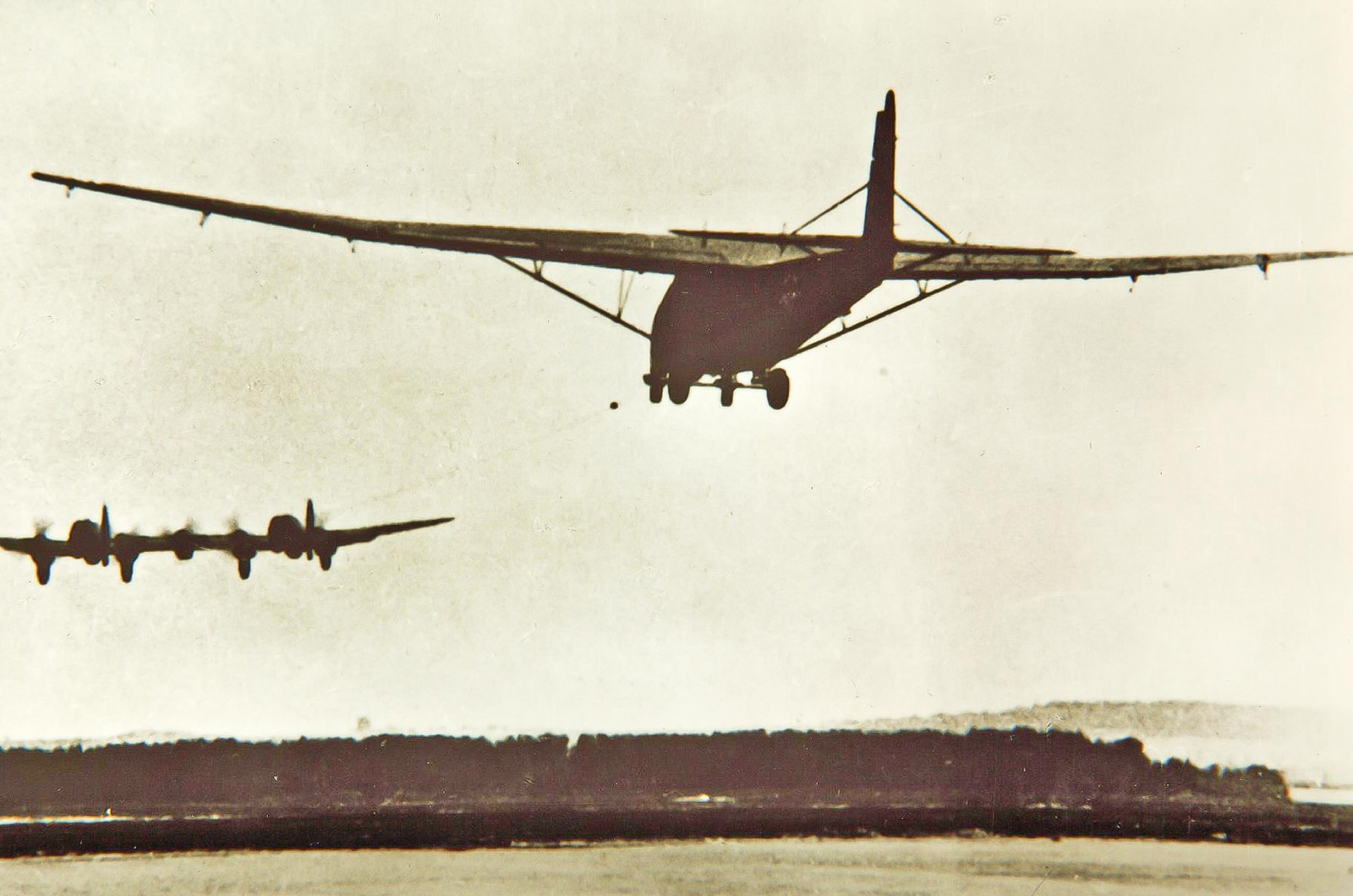
The planned invasion of Britain would require the German army to deliver tanks, guns and men across the English channel quickly. A requirement was issued for a massive glider. Designed and built in a matter of weeks, the resultant Messerschmitt Me 321 was then the world's second-largest aircraft.
It immediately became apparent that it was exceptionally difficult to launch the enormous Me 321 transport glider (which had a wingspan as wide as today's B-52). The initial tow aircraft, the Ju 90, was too weak; using three Messerschmitt Bf 110s at once was tried, but it proved tricky and extremely dangerous. Eventually two Heinkel Heinell He 111s were joined together for the task (pictured).
11: Messerschmitt Me 321/323
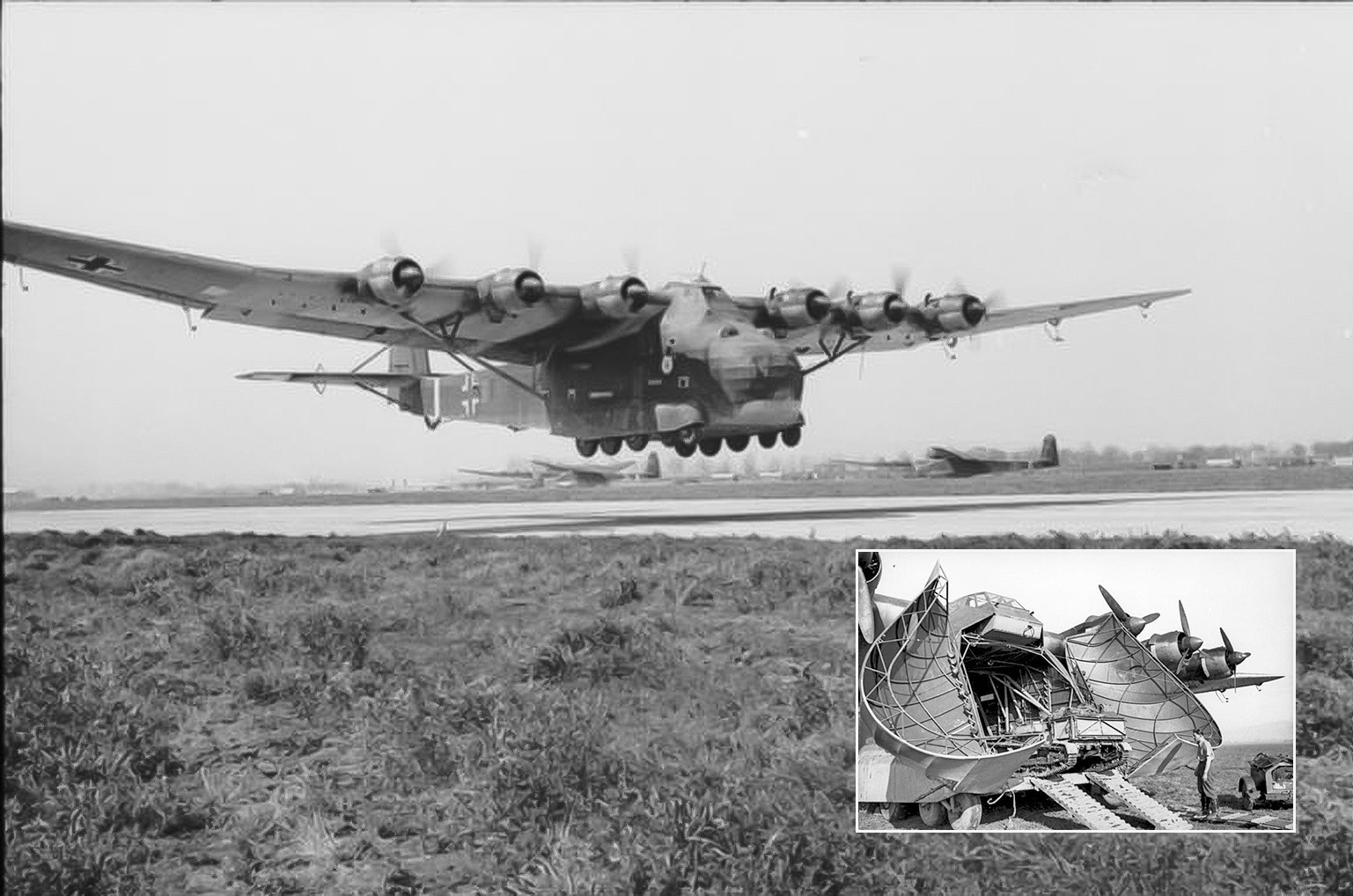
However, a more straightforward solution was to convert the transport glider into a powered aeroplane. Thus the Me 321 became the Me 323, and emerged with six 1140-hp (850kW) Gnome- Rhône 14N 14-cylinder piston engines.
Though very vulnerable whenever it met enemy fighters (not unusual for a transport aircraft), the Messerschmitt Me 323 is the 'father' of modern strategic transport aircraft in many ways. The clamshell nose that opens to load or deliver outsize loads easily foreshadowed a new breed of transport aircraft with large nose or rear doors (see inset picture), as did the multi-wheel undercarriage. 213 Me 323s were produced in total.
10: Junkers Ju 90
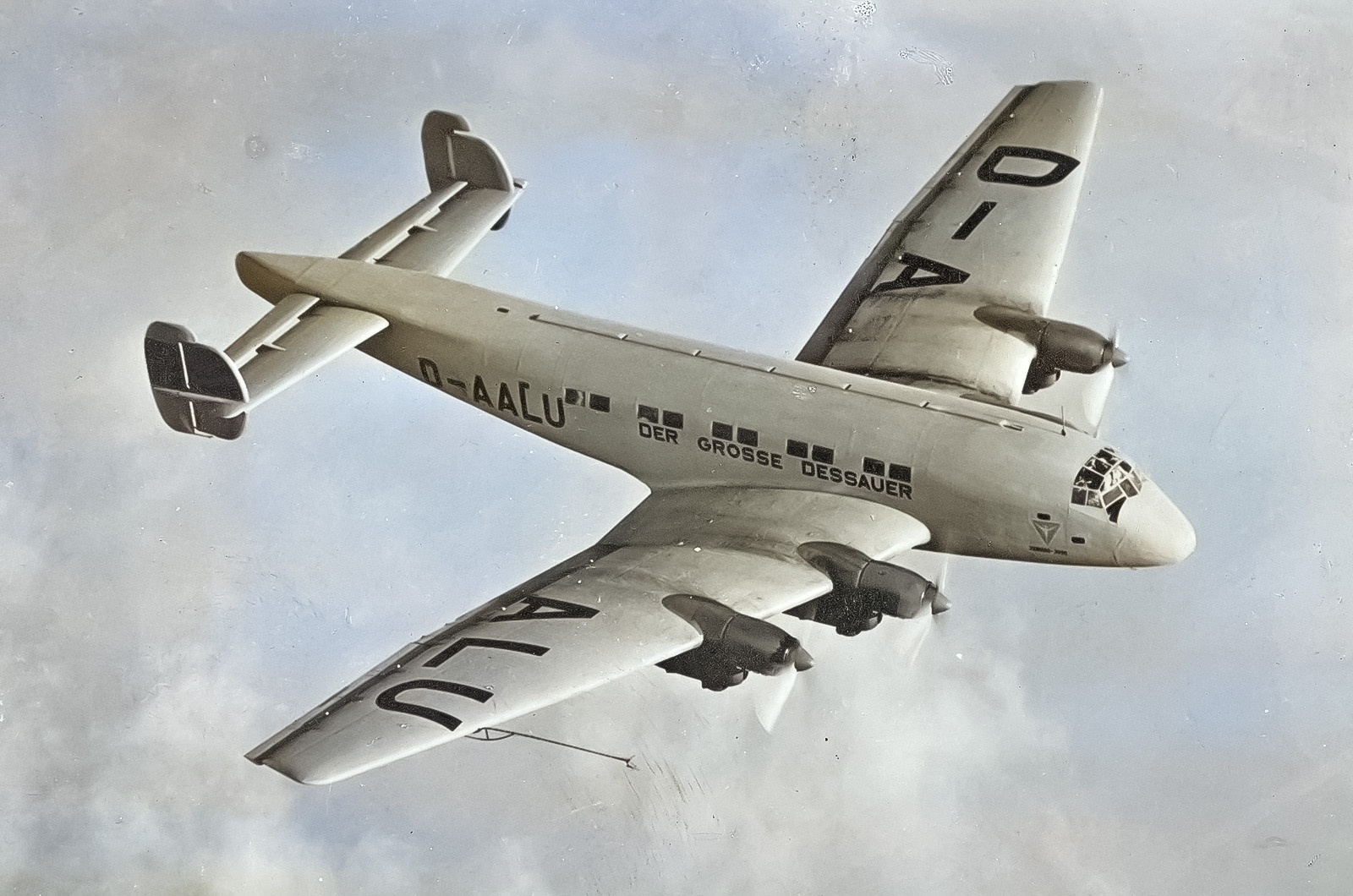
The Ju 90 was an impressive airliner that appeared in the late 1930s and demonstrated much-improved performance over the ubiquitous Ju 52/3m. The Ju 90 was impressed into military service and was used throughout the conflict, but Junkers were charged with building an enlarged version purely for military use.
Two Ju 90s were modified on the production line to become the prototype Ju 290s with a bigger wing and more powerful engines, allowing greater weights to be carried. Most impressively, though, the rear fuselage was altered to include a hydraulically powered loading ramp – called a Trapoklappe - for loading vehicles and freight.
10: Junkers Ju 90
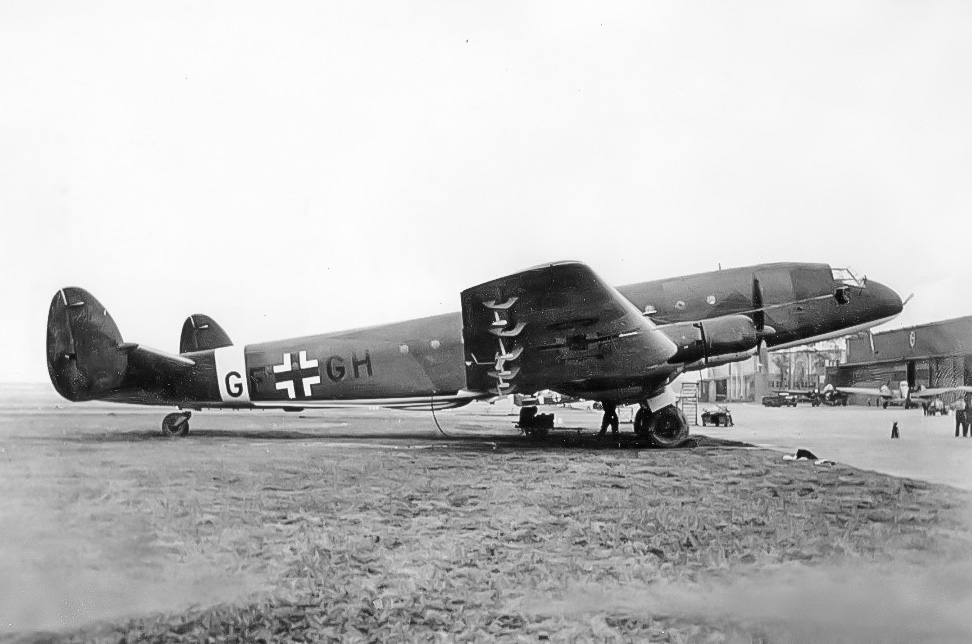
Today, rear-loading ramps, allowing vehicles to be driven straight into the aircraft, are essentially universal, but this was a radical development in the 1940s, not least on an aircraft fitted with a tailwheel undercarriage. The Trapoklappe, however, when lowered, was powerful enough to raise the fuselage to a horizontal position.
Entering service in 1942, the Ju 290 was used to supply the encircled army at Stalingrad, but its excellent range saw it developed into a maritime patrol aircraft, and most production aircraft were used in this role. A single example was converted into a luxury personal transport for Adolf Hitler and delivered in February 1945, though he never flew in it, and it was destroyed in an Allied bombing raid on Munich airport a few weeks later.
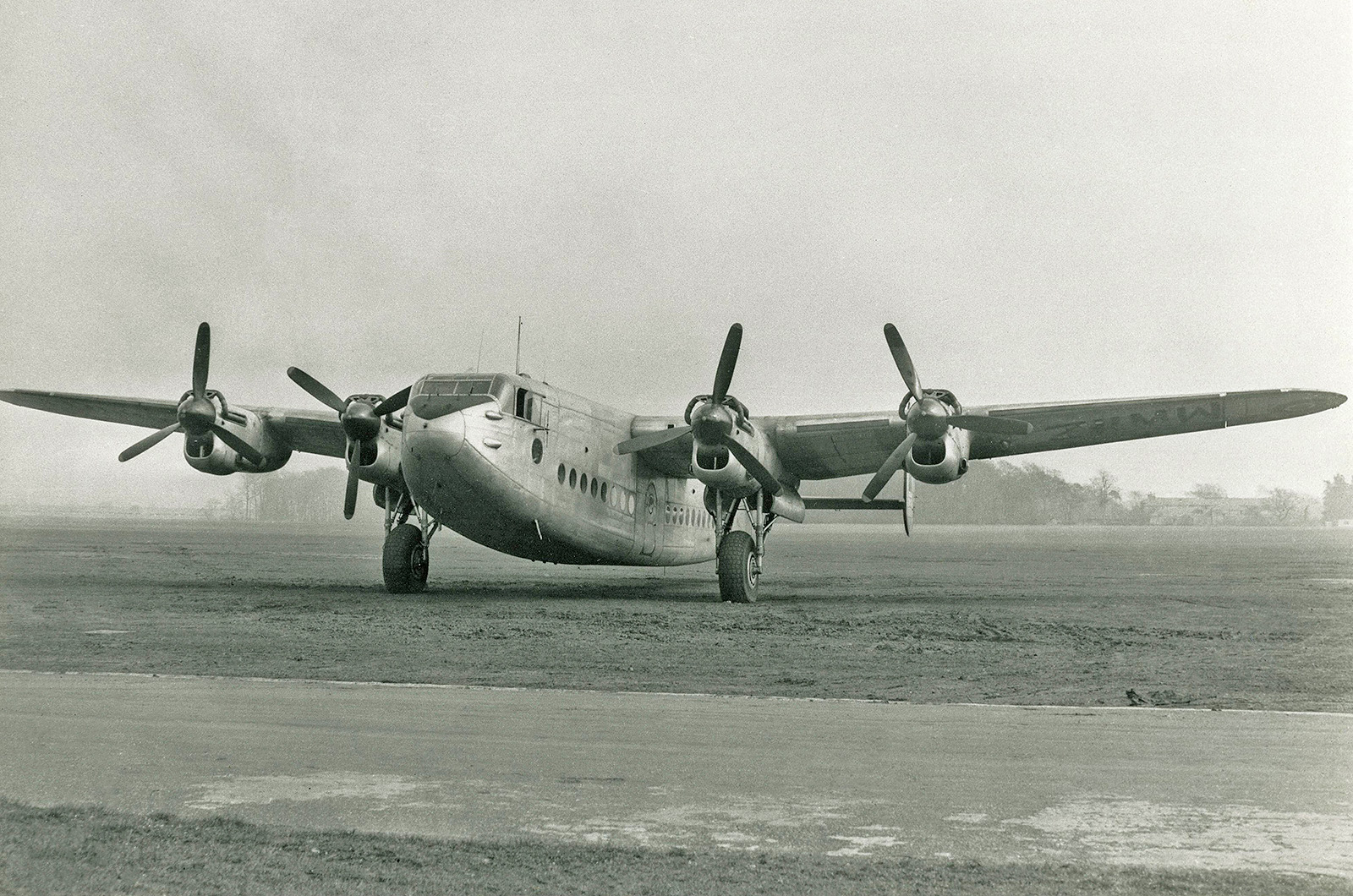
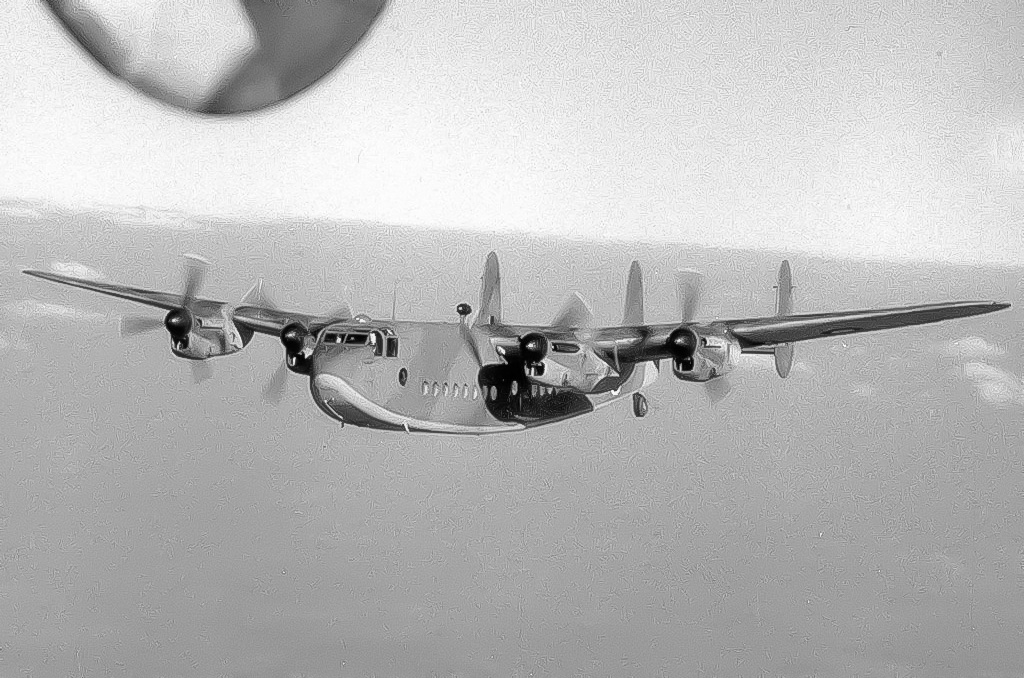
9: Avro York

The Avro Lancaster was a formidable four-engine bomber, and its designer, Roy Chadwick, realised its huge range and load-carrying abilities made it suitable as the basis for a new transport aircraft. He took the wing, power units, tail assembly, and undercarriage and added a new square section fuselage twice the internal volume.
The Avro York first flew on 5 July 1942. Like the Lancaster, it was powered by four V12 Rolls-Royce Merlin engines. It had an all-up weight of 68,000Ib (30,909 kg)and rather pacy maximum speed of 298mph (480 km/h). The Lancaster, however, dominated Avro's work, and only three Yorks were manufactured in 1943.
9: Avro York

The third prototype, named 'Ascalon', fitted with distinctive square rather than round windows, was operated by No.24 Squadron as a personal transport for Prime Minister Winston Churchill, with a relatively luxurious interior. It also transported King George VI on his tour of the Mediterranean and North Africa in 1943.
The York delivered high-ranking officers and cabinet ministers to conferences of huge significance including Cairo, Tehran, Moscow and Yalta. The latter was held near Yalta in Crimea in early February 1945; heads of government of the USSR, USA, and Great Britain met to discuss the reorganisation of Germany and Europe, following the end of the war.
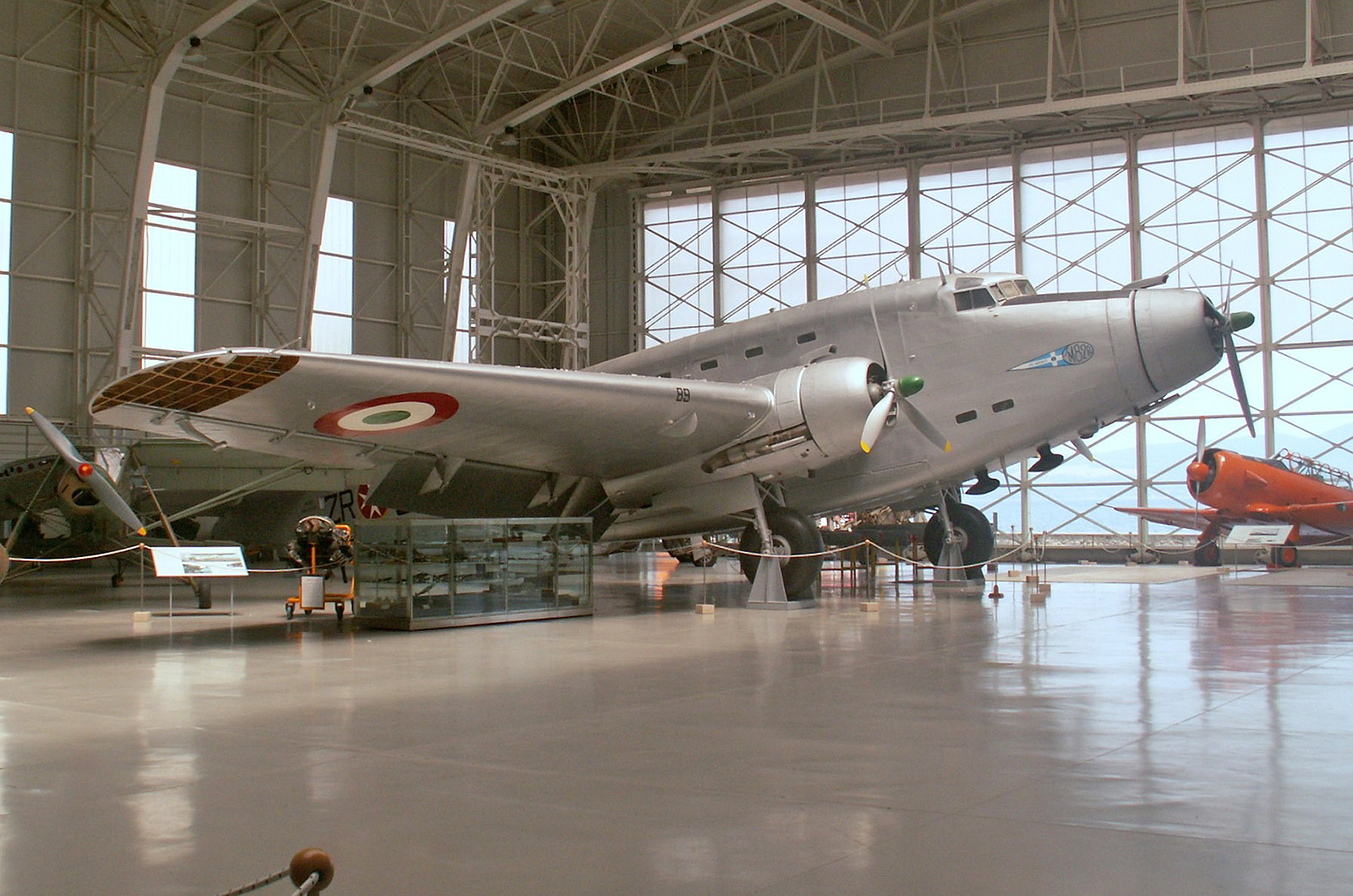
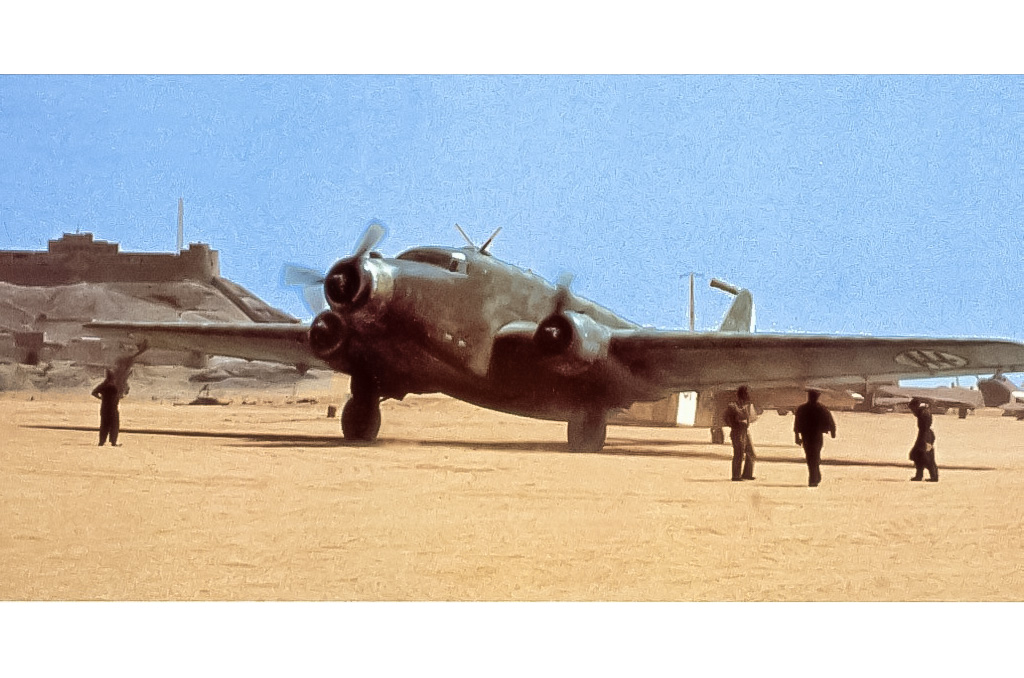
8: Savoia-Marchetti SM.82 Kanguru

The SM.82 was the best transport aircraft of the Axis powers to see production in any numbers. It was so useful that after 1943, large numbers served both the Allies and Germany at the same time, and the Kanguru remained in service with the Italian Air Force until the early 1960s. The SM.82 was likely the most useful aircraft produced by Italian industry during the conflict.
First flown in 1939, the SM.82 was a development of the earlier SM.75 Marsupiale airliner, itself a highly capable trimotor transport which saw considerable wartime service, including several extremely long-range flights such as a 3728 miles (6000 km) non-stop flight from German-occupied Ukraine to Japanese-occupied Mongolia.
8: Savoia-Marchetti SM.82 Kanguru

In the same year as its first flight, the prototype SM.82 caused something of a stir by flying for 6214 miles (10,000 km) non-stop in 56 hours 30 minutes. The Kangurus were kept busy throughout 1940 and 1941, supplying Italian forces in East and North Africa. One of the most notable transport actions took place during the latter half of 1940 as SM.82s supplied 51 complete CR.42 fighters with a further 51 spare engines to East Africa.
The most effective wartime aircraft produced by a country best known for beautiful fighter aircraft was a lumbering transport of prodigious size and less-than-inspiring aesthetics. Yet the 726 SM.82s built were probably the best aircraft produced in Italy during the War. They contributed meaningfully to the conflict (on both sides) to an extent that cannot be matched by any other Italian aeroplane.
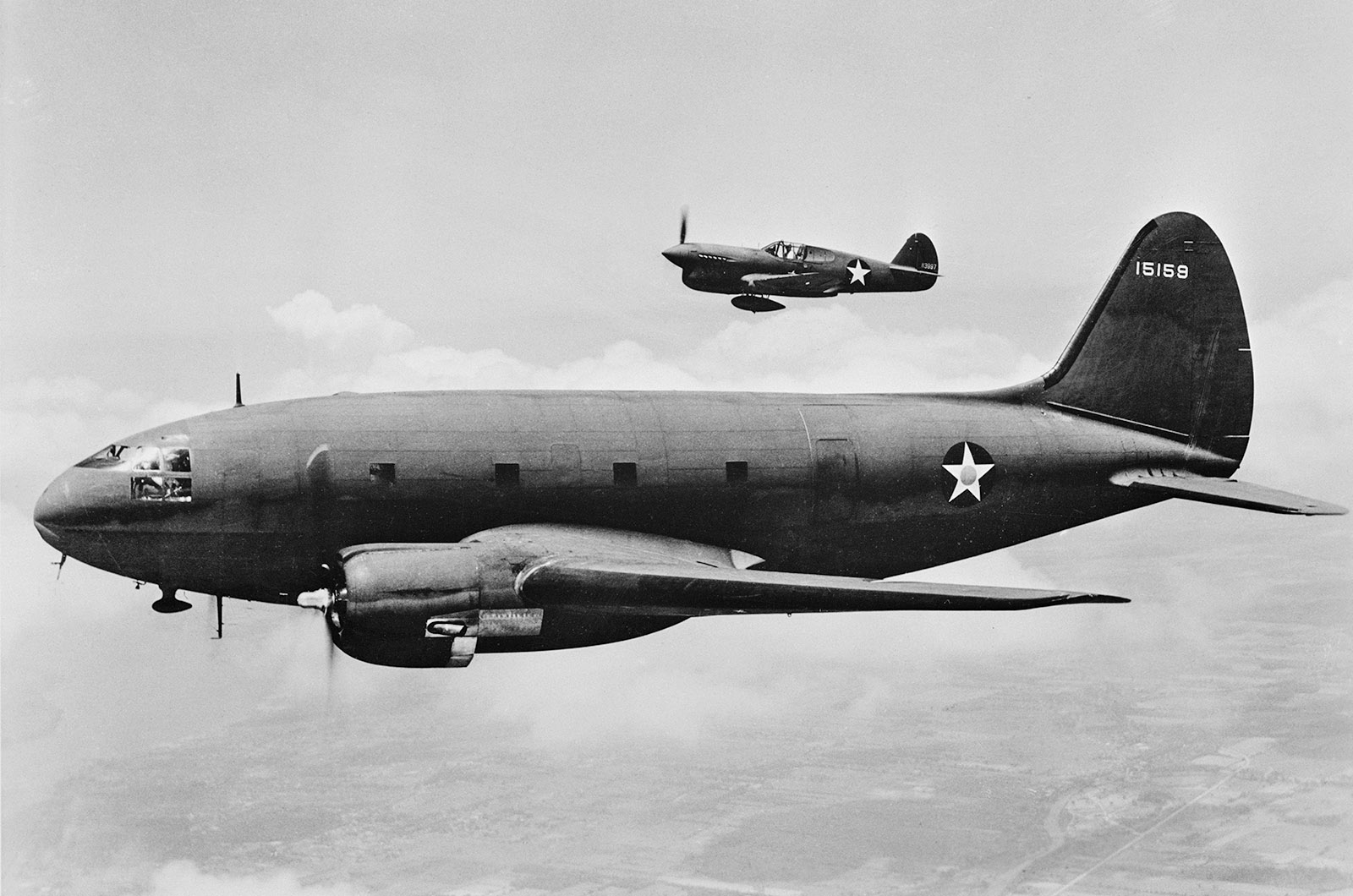
7: Curtiss C-46 Commando

The handsome and capable C-46 grew from the equally impressive CW-20 airliner. The CW-20 was a bold response to Curtiss being shouldered out of the airliner market by brilliant new designs from Boeing, Douglas and Lockheed. A radical redesign turned it into a truly brilliant transport aircraft.
The rather lovely, pressurised fuselage of the CW-20 was replaced with an unpressurised fuselage with large doors for easy access and outsize items. Firing ports were added in the windows where an infantryman could use his personal weapon. A single fin replaced the twin fins.
7: Curtiss C-46 Commando

The first Curtiss C-46 Commando took its maiden flight on 26 March 1940, and the first aircraft was delivered to USAAF in late 1941. It could carry up to 55 passengers or 33 litter casualties (with four attendants) when performing the medical evacuation role.
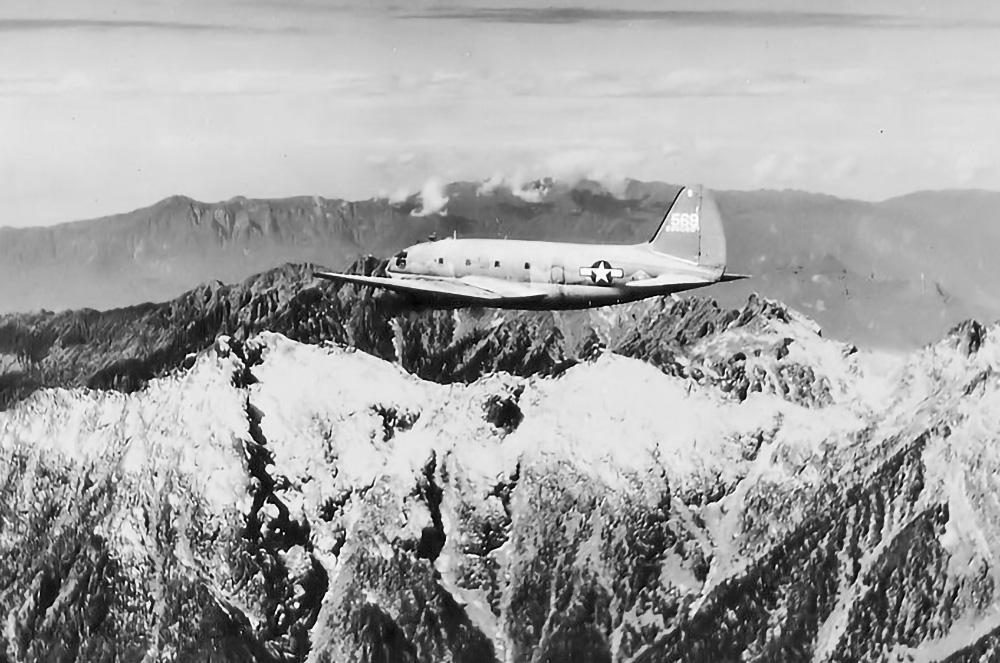
They proved invaluable serving 'The Hump' (the air route used by Allied forces to transport supplies to China from India, over the eastern part of the Himalayan Mountains, pictured) and towing CG-4 gliders (up to two per aircraft) during the Rhine crossing in 1945. Its cargo and altitude performance were awe-inspiring for a twin-engine aircraft. By the end of the War, around 3330 aircraft had been delivered.
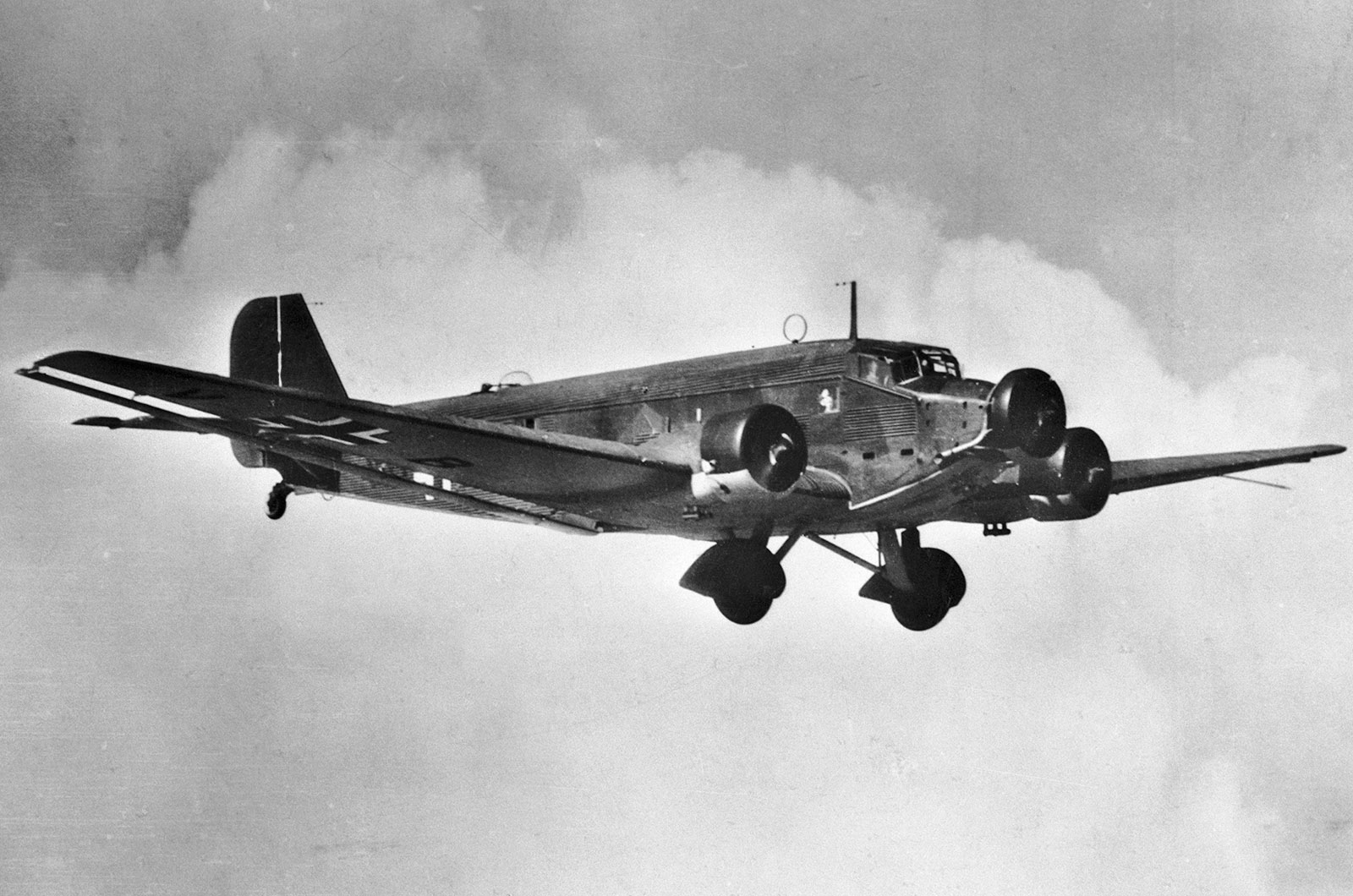
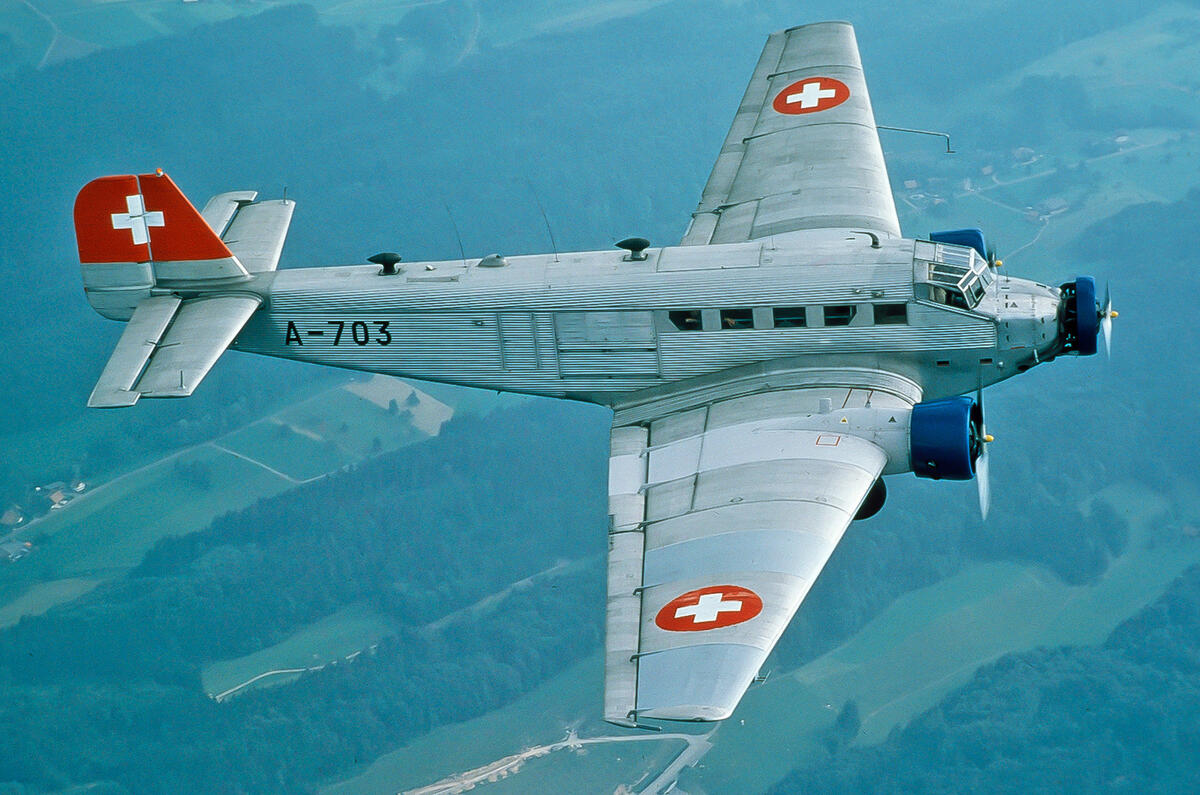
6: Junkers Ju 52/3m

Designer Hugo Junkers and the Junkers & Co. aircraft company pioneered metal aircraft. Their 1915 J-1 Blechesel ("Sheet Metal Donkey") monoplane was the first successful all-metal aeroplane, and their F-13 of 1919 was the first all-metal transport plane.
The Ju 52 was originally a single-engine design, and as such (as the Ju 52be), it first flew in 1930. But it was when the seventh airframe was fitted with three 550 horsepower (410kW) Pratt & Whitney Hornet radial engines the aircraft's success story as a trimotor began.
6: Junkers Ju 52/3m

The then 'underground' Luftwaffe were interested in the aircraft as bombers and transport aircraft. It first saw military action in the Spanish Civil War in 1936, bringing Franco’s soldiers from Morocco to Spain. With the outbreak of the Second World War, the Luftwaffe took over 59 ex-Lufthansa aircraft. The aircraft saw much use in the supply and the airborne assault role.
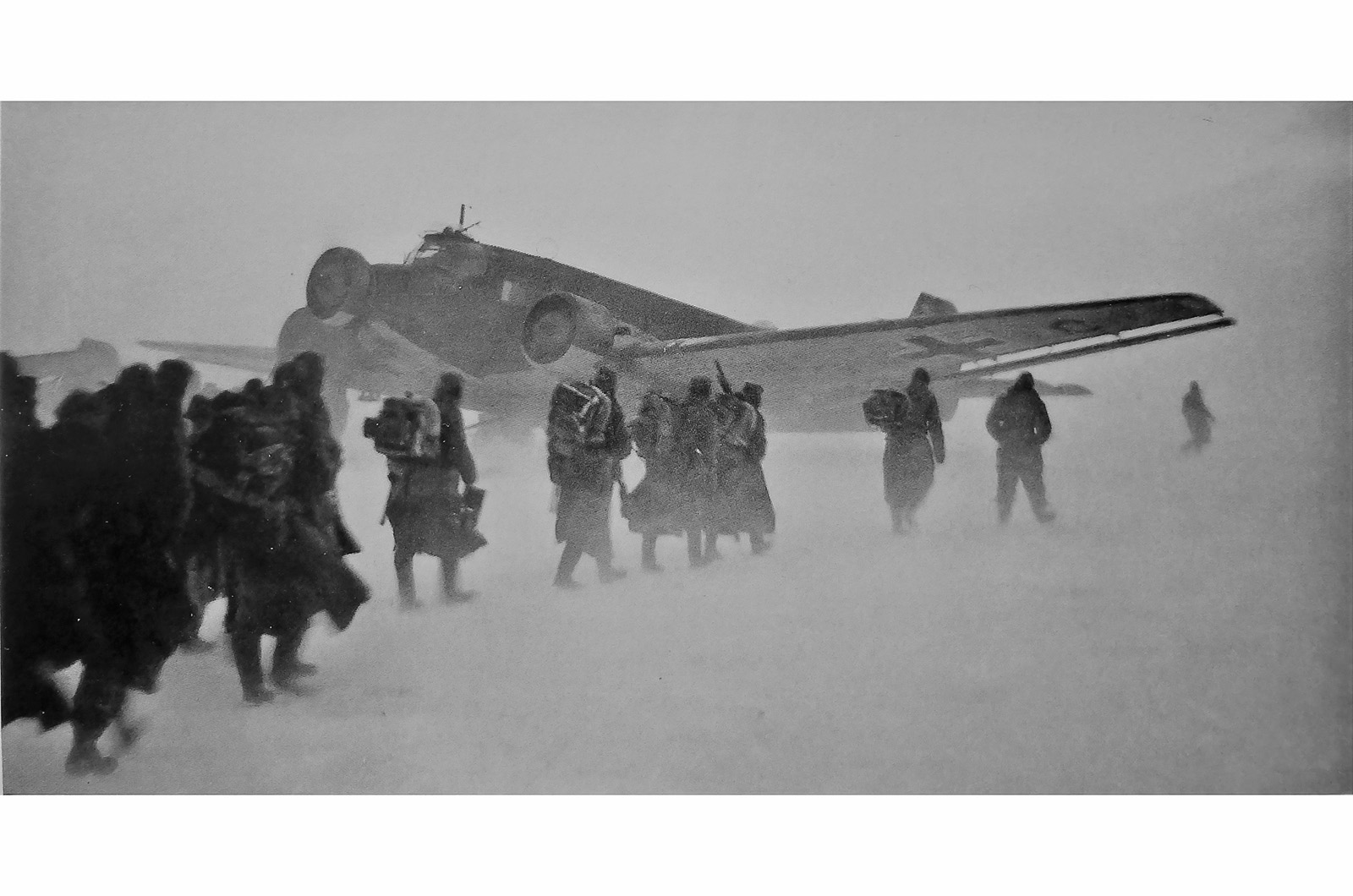
In North Africa, the Ju 52 was widely used and often suffered tremendous losses, as their low speed made them vulnerable to enemy fighters; in April 1943 140 Ju 52s were lost in the Mediterranean theatre in just two weeks. The Ju 52 force worked very hard in support of German land forces in the Battle for Stalingrad (pictured) and were mauled again, with 266 lost. By the end of the War, 4845 had been built; production continued in France and Spain after the War, until 1952.
5: Douglas C-54 Skymaster

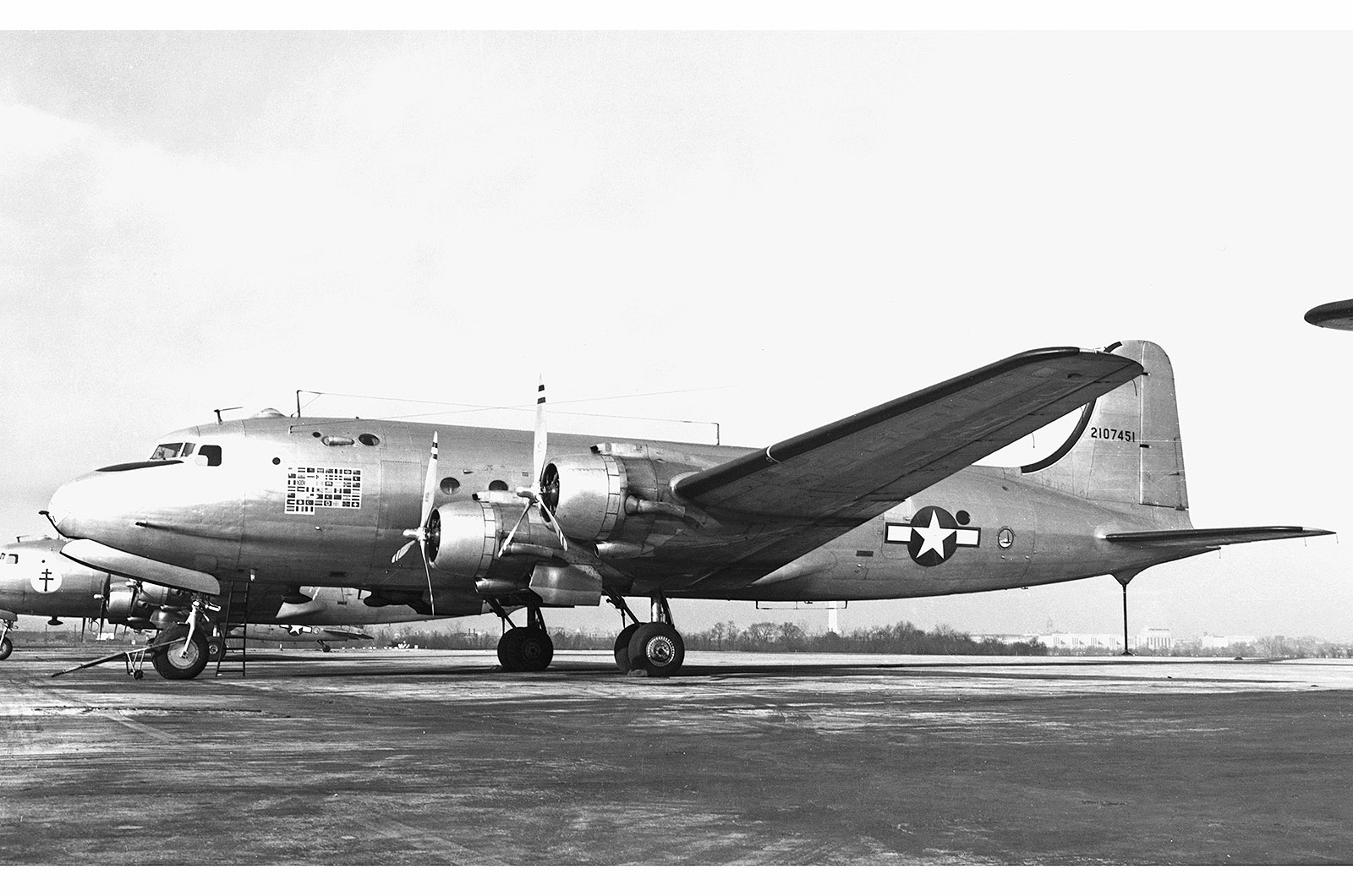
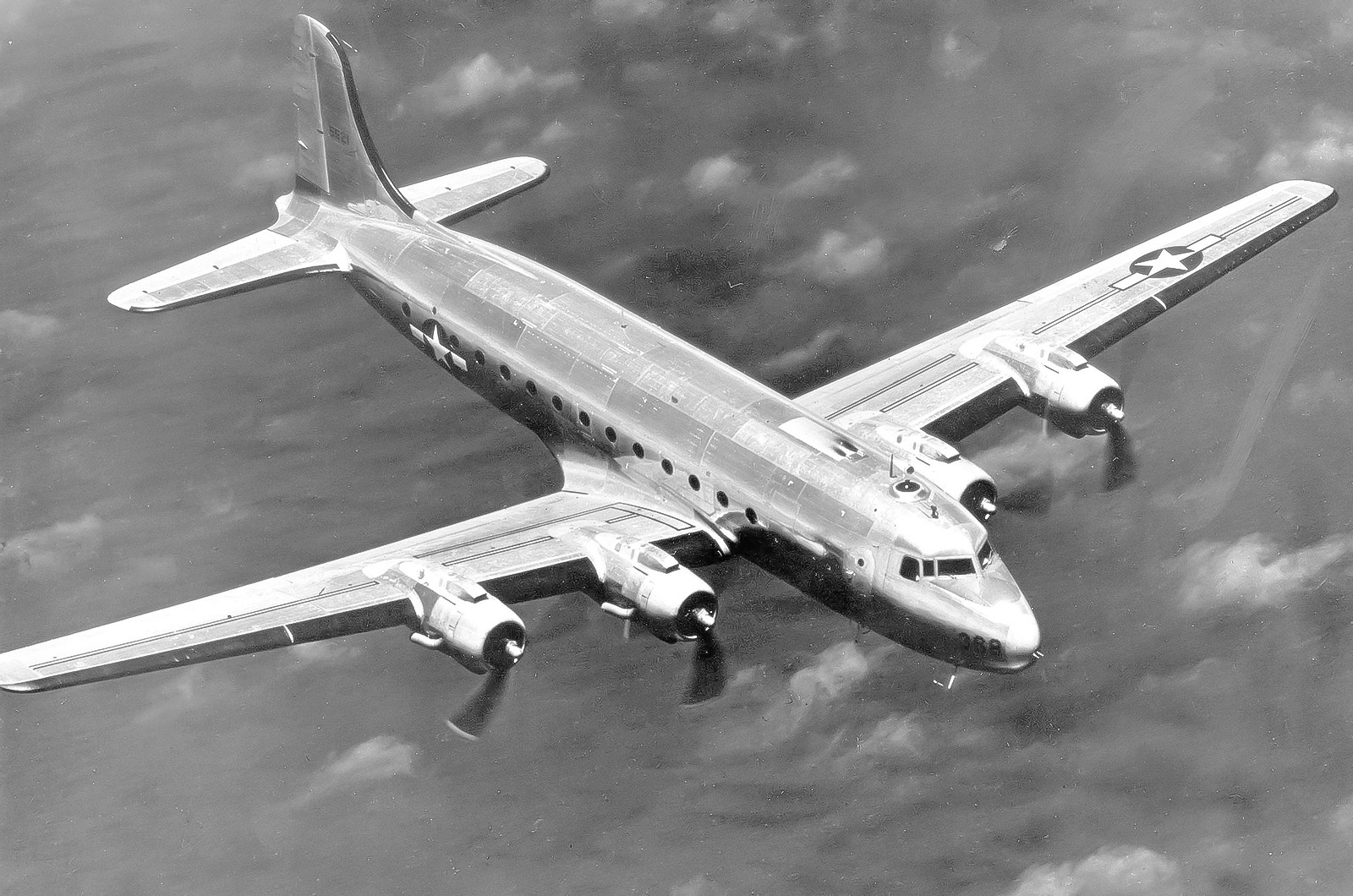
Douglas' initial pre-war DC-4 airliner did not enjoy the same levels of success as the DC-3. But the Douglas Aircraft Company, rather cannily, returned to the design, shortening and simplifying it. The result was infinitely superior. The U.S. Army was keen on this and ordered it as a military transport.
The C-54 proved excellent transports and served in several roles, notably as VIP transport (with an electric wheelchair hoist) for President Roosevelt (pictured). General Douglas MacArthur and Winston Churchill also used it. The American delegates to the Casablanca Conference in January 1943 travelled by C-54.
5: Douglas C-54 Skymaster

With its strong floor and large doors, the C-54 proved hugely useful. Unlike the 'tail-dragging' C-47, the C-54 had a more modern tricycle landing gear. Well-designed slotted flaps enabled the aircraft to take off and land in reasonable distances despite having a relatively highly loaded wing by the standards of the time.
It primarily flew across the North Atlantic, the Pacific, and over the "Hump" in the China-Burma-India theatre, transporting personnel, cargo, and supplies. Later, the C-54 became an icon of the Berlin Airlift, known as the 'candy bomber' for delivering sweets to hungry German children.
4: Lockheed C-69 Constellation

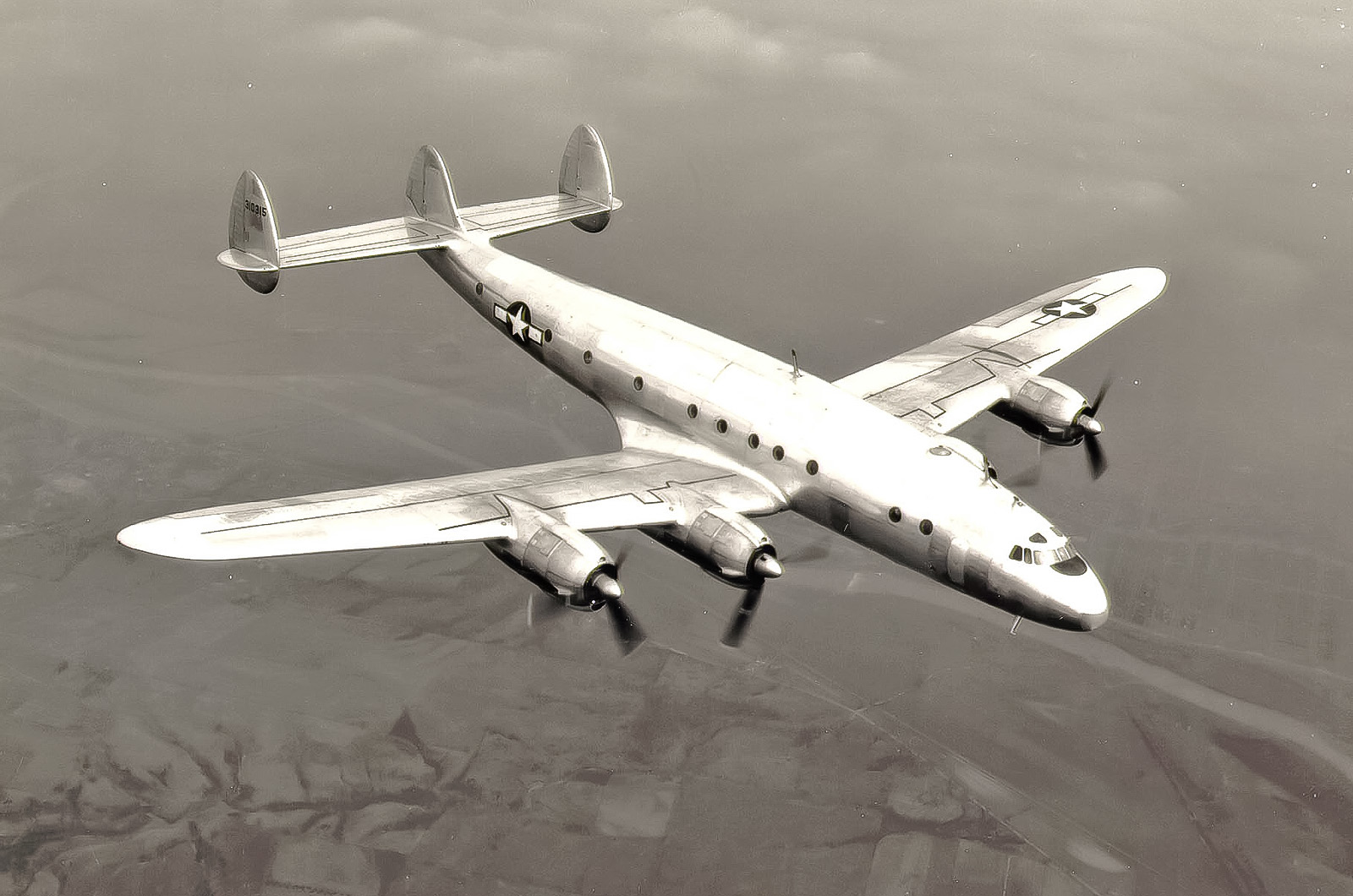
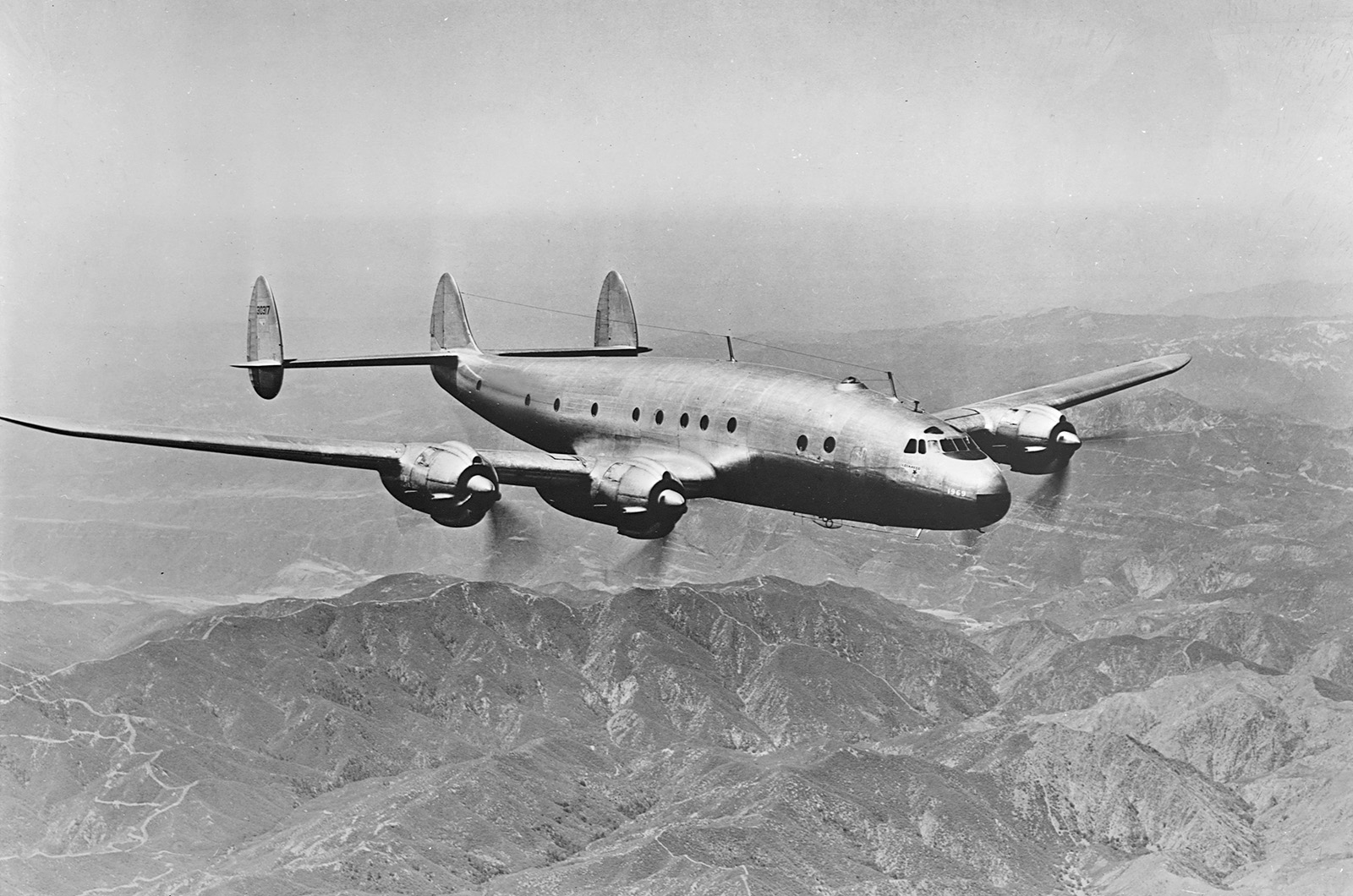
The Lockheed Constellation, first flown in 1943, was a revolutionary airliner. With its sleek dolphin-shaped fuselage and triple-tail design, it became a symbol of luxury air travel in the 1950s. TWA and Pan Am were among the primary operators of this long-range, pressurised aircraft.
The Constellation was praised for its speed, comfort, and range. Capable of crossing continents and oceans, it redefined commercial aviation. Its pressurised cabin allowed for higher altitude flights, avoiding turbulence and improving passenger comfort. The elegant design and smooth performance earned it admiration from pilots and passengers worldwide.
4: Lockheed C-69 Constellation

The first Constellations, developed as an airliner for TWA and Western Air, were requisitioned for military use before they were completed as the USA had now joined the War. Until this time, military transport aircraft had tended to be relatively pedestrian, but the C-69 boasted a wealth of advanced features, including Fowler flaps, a pressurised cockpit, turbocharged engines, and power-boosted flight controls.
Though the C-69 only served in tiny numbers in the Second World War, they were likely the conflict's most technically advanced transport aircraft. With a maximum speed of 340mph fully loaded, a cruising speed of 300mph, and a range with a 20,000 Ib (9090 kg) payload of over 2000 miles (3219 km), they were in a league of their own.
3: Arado Ar 232

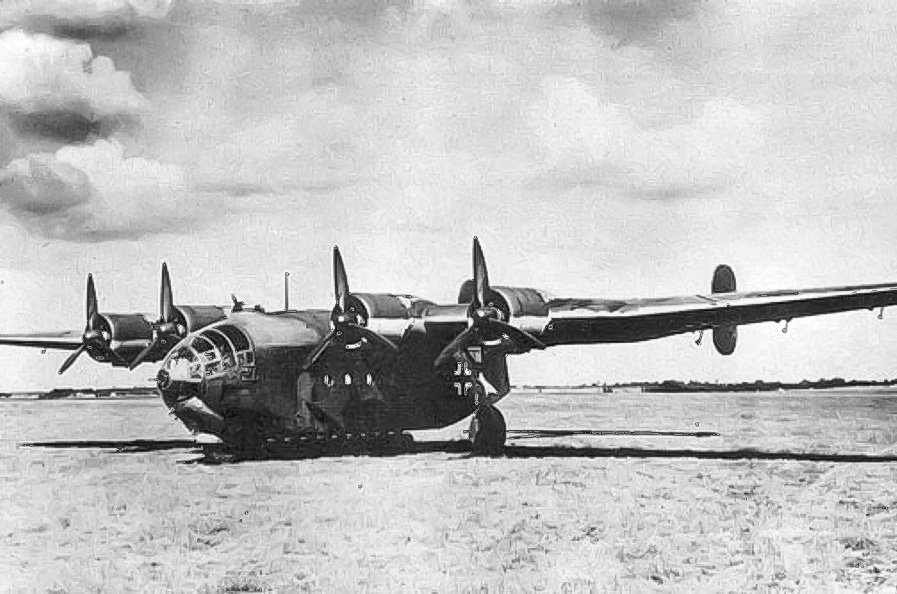
The Ar 232 was designed to complement and eventually replace the Junkers Ju 52/3M. Whereas most other transports had been conversions of airliners of bombers, the Ar 232 was purpose-designed for the role and, along with the Me 323, did much to define the configuration of later military transport aircraft.
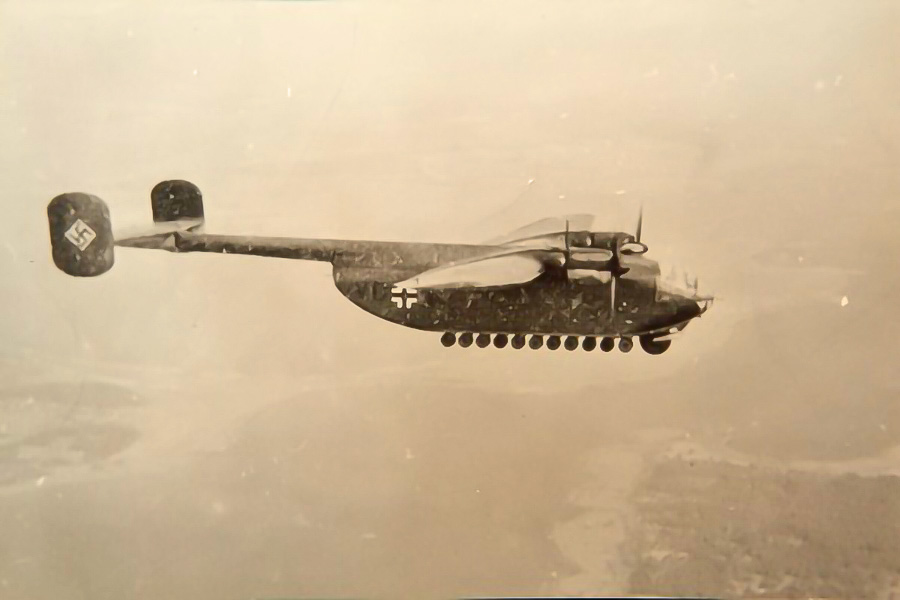
The Ar 232 featured a pod and boom fuselage and a distinctive undercarriage featuring no less than eleven pairs of small wheels. It also had a conventional tricycle undercarriage and could lower itself onto the central wheels for taxiing on soft ground and to aid loading (with the added benefit of reduced ground pressure from all the wheels).
3: Arado Ar 232

It also benefitted from hydraulically operated rear-loading clamshell doors and loading ramp, a high tail to facilitate access to the ramp, a built-in crane, rough field capability, and decent short field performance. At least five Ar 232s are believed to have been operated by the Luftwaffe's secretive special operations unit, KG200. Attempts were made using Ar 232s to get covert agents behind Soviet lines and even an attempt to kill Stalin.
The Ar 232 combined features now considered standard in transport aircraft, including a box-like fuselage, a high wing and a rear loading ramp. The high-mounted twin tail enabled less obstructed access to the hold. Its many-wheeled undercarriage earned it the name "Millipede".
2: Gliders

In addition to powered transport aircraft, military gliders played a significant role in the Second World War. Gliders were towed into the air by a tow aircraft (many of the other aircraft in this story were used in this role); once released, gliders had the benefit of stealth as they were virtually silent.
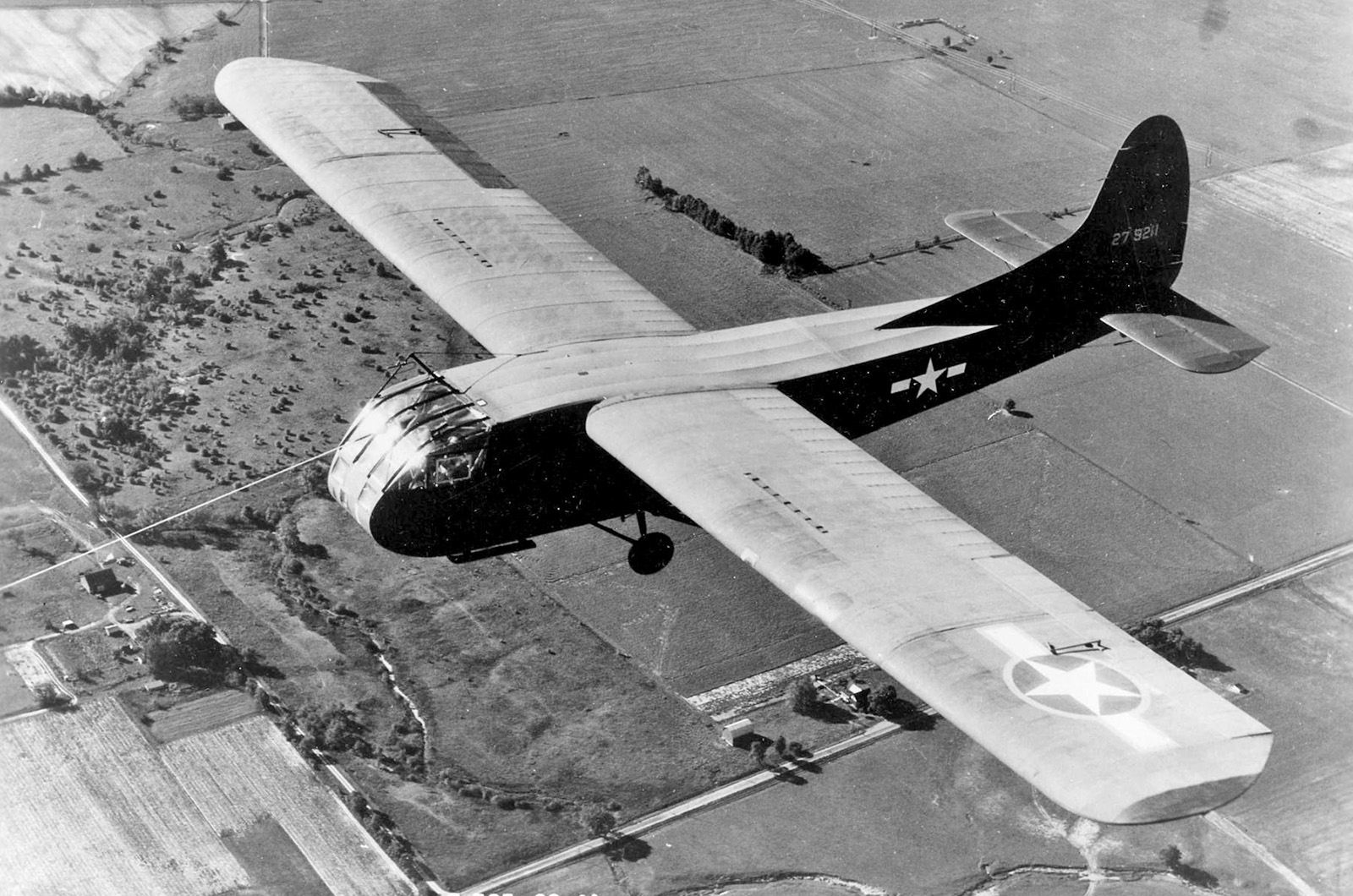
An advantage over para-dropping was that men and equipment arrived in a glider at the same exact location rather than scattered over a large area. The Soviets made great use of gliders. In the West, military gliders are best known for their involvement in the fighting in Europe. The Waco CG-4 was the War's most widely used American military glider (pictured).
2: Gliders

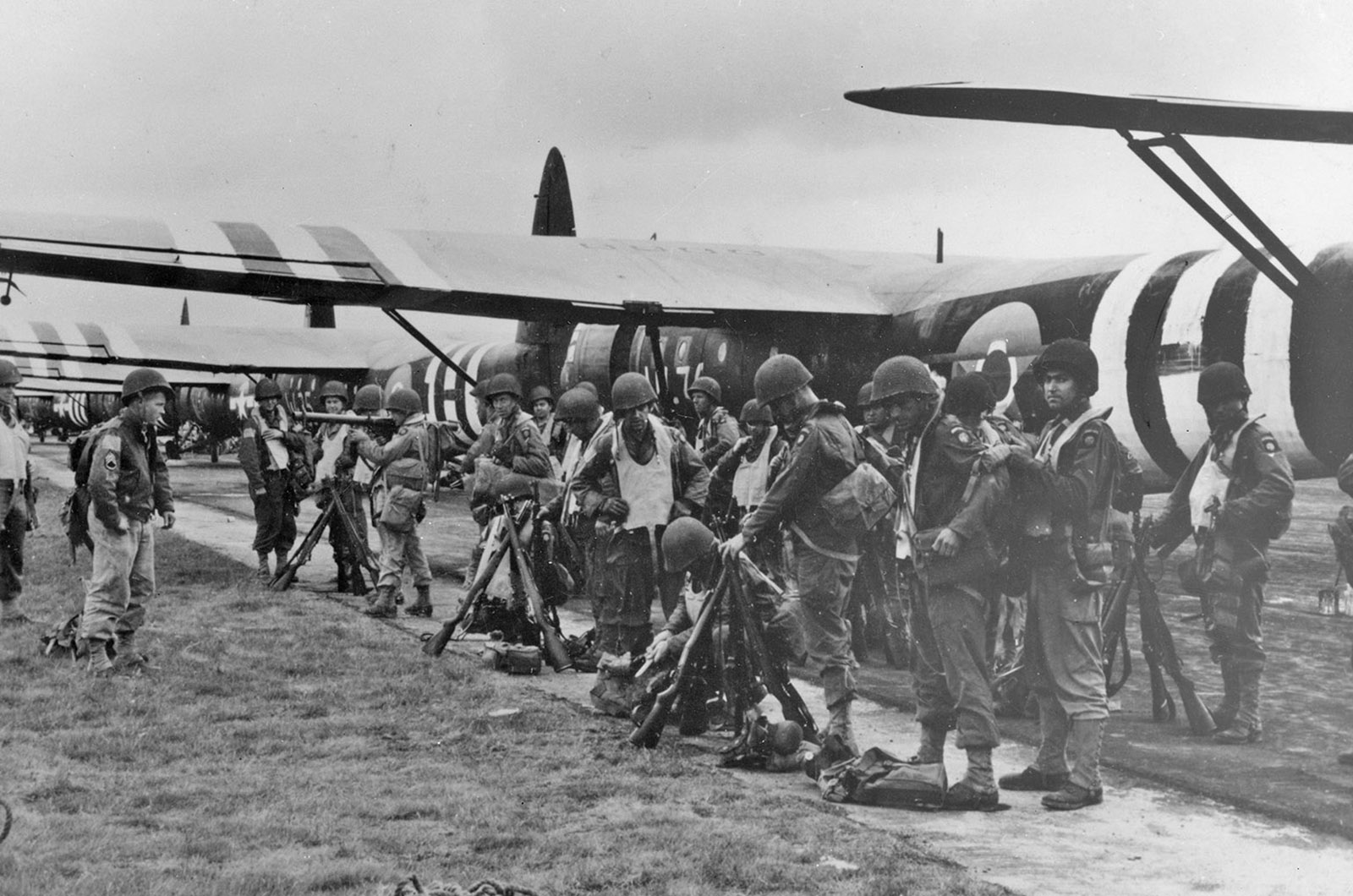
The Airspeed Horsa (pictured) was probably the best of these military gliders, though the largest and heaviest Allied glider used during the Second World War was the British General Aircraft GAL49 Hamilcar. The Hamilcar was capable of transporting a 16,800 lb (7600kg) Tetrarch IV light tank.
The Messerschmitt 321, mentioned earlier, was by far the largest military glider. There were some postwar attempts to revive the military glider concept, notably America’s Chase XCG-20.
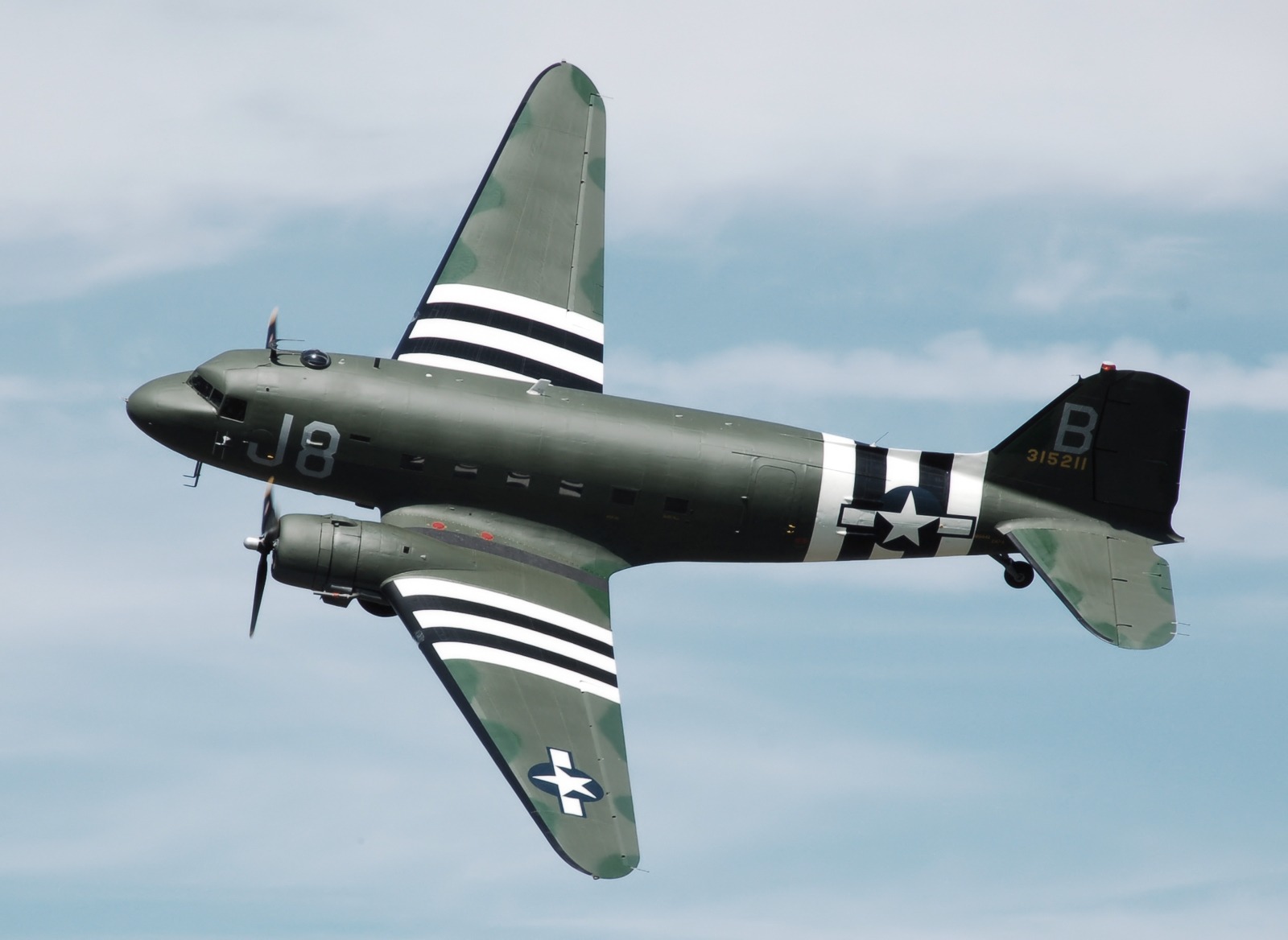
1: Douglas C-47 Skytrain/Dakota

The senior US General Dwight Eisenhower described the C-47 as one of four things that won the War for the Allies (the others were the Bazooka, Jeep and the atomic bomb).
Fast and comfortable, the Douglas DC-3 was a popular 1930s airliner that became history's most significant military transport aircraft. In 1940, a military transport version was flown, designated the C-47. The new C-47 had more powerful engines than the airliner, the provision for generously large loading doors and a strengthened rear fuselage and cabin floor.
1: Douglas C-47 Skytrain/Dakota

The tough, reliable C-47 did many things in the War. It is best known for delivering paratroopers to the battlefield, but it was also used for general military transport, moving cargo, military cargo parachute drops, and even towing military gliders. The Soviet version, the Lisunov Li-2, was used for military transport, supporting partisan forces, as ambulance aircraft – and even as a bomber.
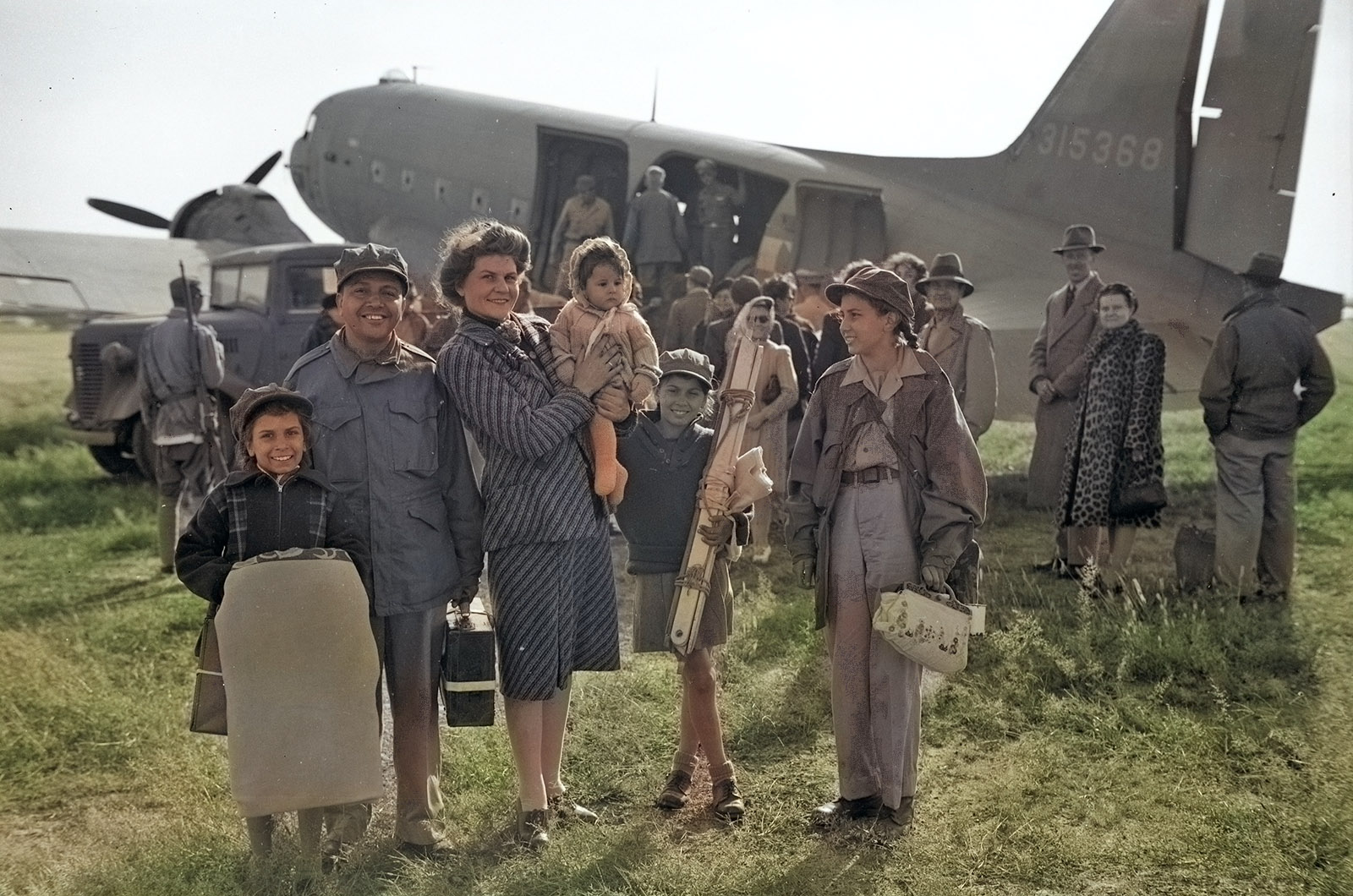
It excelled in many airborne operations worldwide, notably in Arnhem, Burma, Normandy, Sicily and the crossing of the Rhine. A total of 10,048 C-47s had been made by the end of the War, and their role in the Allied victory cannot be overstated. The C-47 was undoubtedly a war-winning aircraft. And once the war was over, it helped vast amounts of people to get home again, as in this picture in China in 1945.
Follow Hush-Kit's incredible aviation stories on Substack and X
If you enjoyed this story, please click the Follow button above to see more like it from Autocar
Photo Licence: https://creativecommons.org/licenses/by/4.0/deed.en

Add your comment