Rarity has a value of its own, making the aircraft we’re looking at today particularly special.
For one of several reasons only a solitary example of each of these remarkable aeroplanes flew. In the case of experimental or technology-tested aircraft, the limited number was intentional. For others, it was a sign that something went very wrong indeed. Whatever the reason, each of these aeroplanes has a fascinating story:
10: MiG 1.44
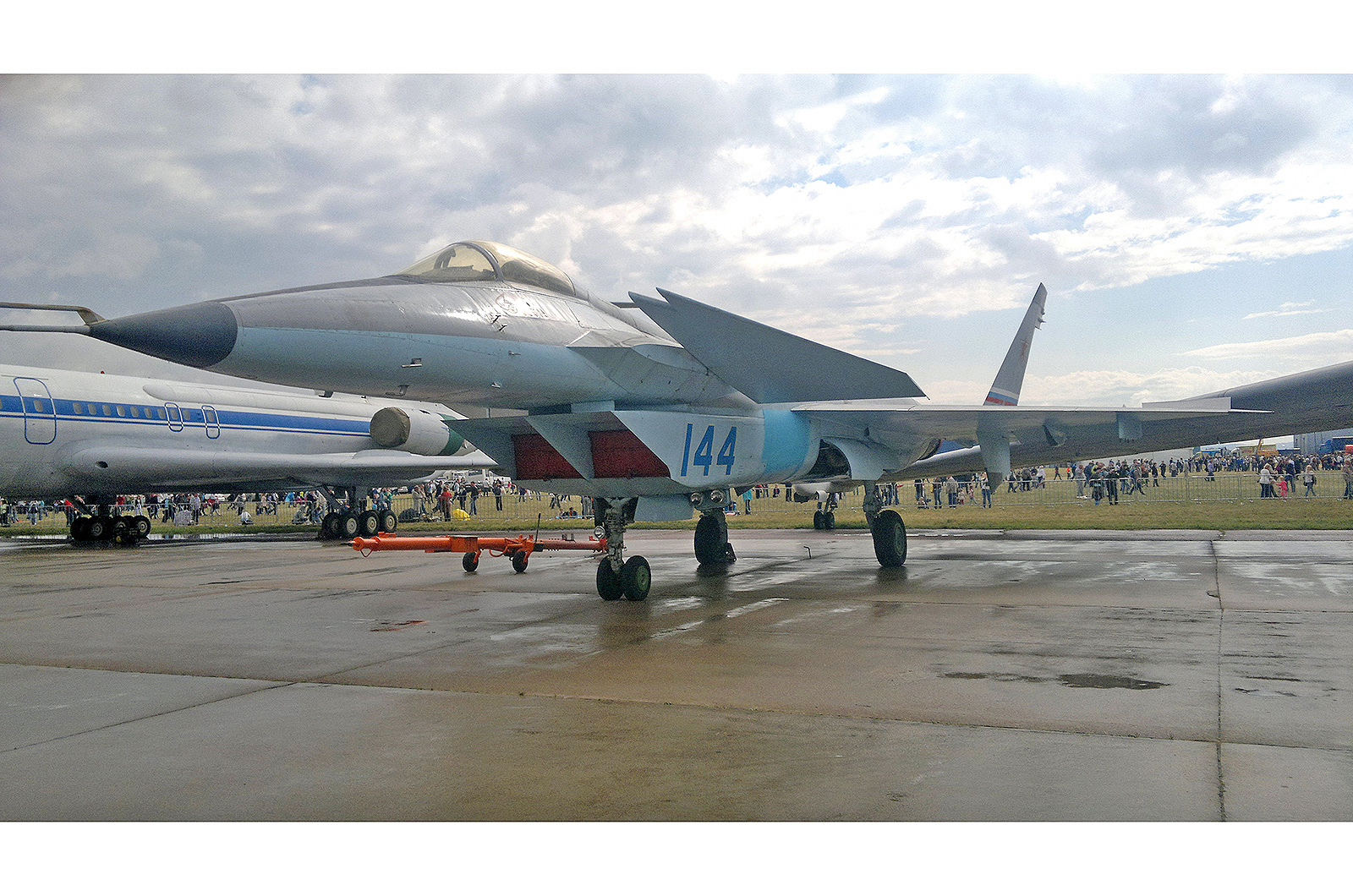
In the 1982 movie Firefox, Clint Eastwood plays a pilot with a bold mission deep in the Soviet Union to find and steal an advanced Soviet fighter aircraft. The ‘Firefox’ was not real, but its nearest real-world equivalent was the exotic Mikoyan Project 1.44.
The aircraft was of the canard delta (tail-first) configuration with twin tailfins. A shark-like nose sat atop a vast ramp-like air intake. The aircraft had a formidably muscular appearance. It was expected to be able to reach speeds of Mach 2.35 and supercruise at Mach 1.5. The definitive fighter version, the 1.42, would carry an arsenal of advanced air-to-air missiles in its internal bay.
10: MiG 1.44
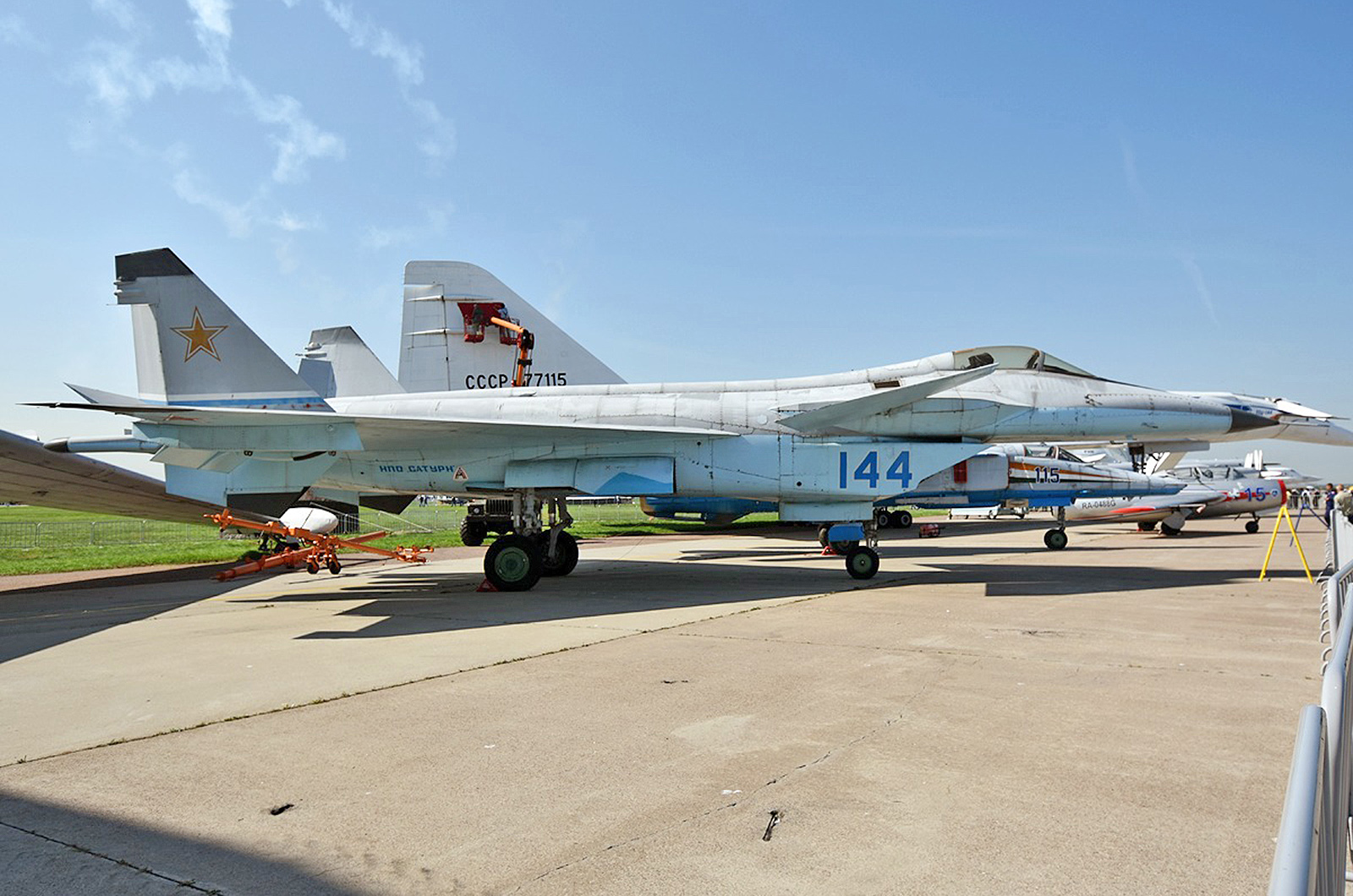
The MiG was intended to prove technologies for an advanced heavyweight tactical fighter version. But by the time the 1.44 had flown in 2000, the USSR was no more. The new nation of Russia had endured terrible economic hardship in the 1990s and couldn’t afford such a project, and there were big questions of whether it was still relevant.
The project was cancelled, and the single example of the aircraft was destined to fly only twice. The first flight was 18 minutes, the second 22 minutes, meaning the vast design effort resulted in only 40 minutes of flying time.
9: Sukhoi Su-47 (S-37)
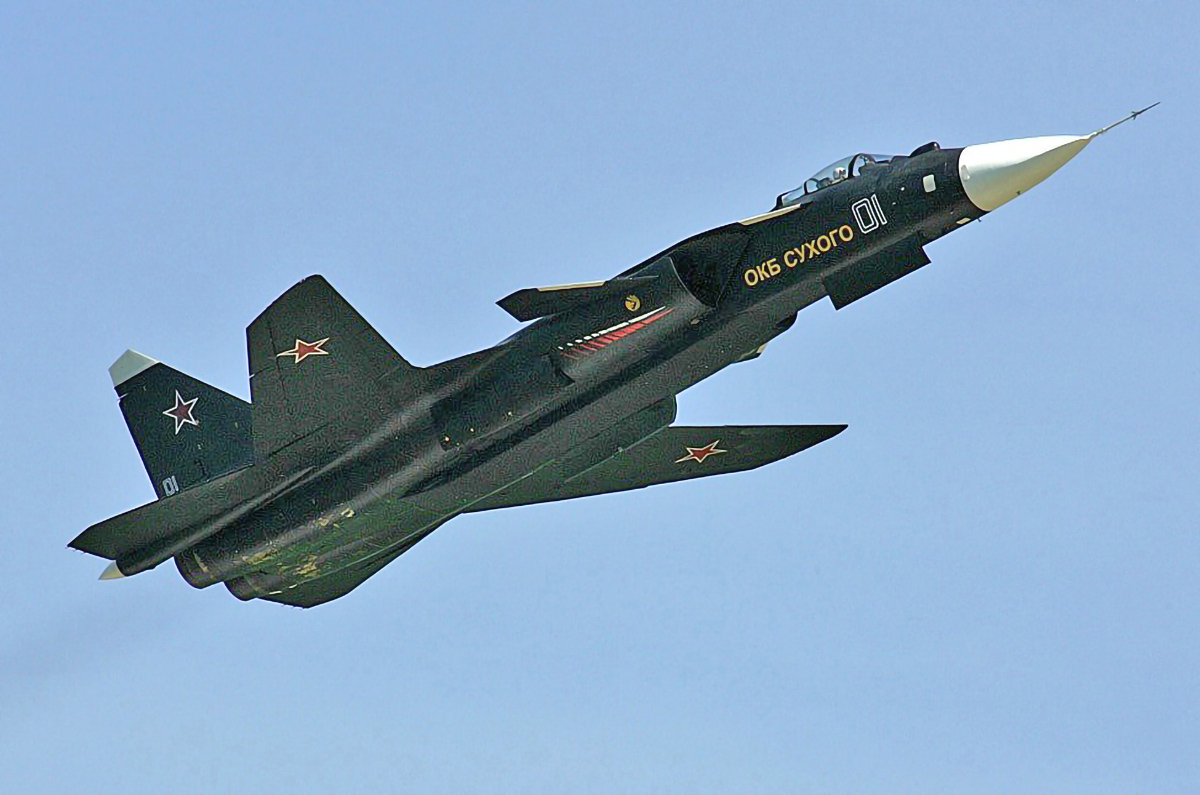
Though the 1.44 was exotic in appearance, the Sukhoi S-37 was even more so, appearing utterly sinister with its black paint scheme and bizarrely forward-swept wing. Whereas the MiG 1.44 had endured poor publicity, with the state seemingly quite embarrassed about the aircraft, the S-37 was something of a ‘rockstar’ and enjoyed far more exposure and popularity with the Russian public.
The USSR had been considering forward-swept wings for many years. Swept forward wings offered many benefits, aiding manoeuvrability, and made the aircraft virtually ‘spin-proof’. They also made it easier to design in an internal weapons bay, something that the fighter version of the S-37 (later dubbed Su-47 Berkut), with improved stealth characteristics, would carry.
9: Sukhoi Su-47 (S-37)
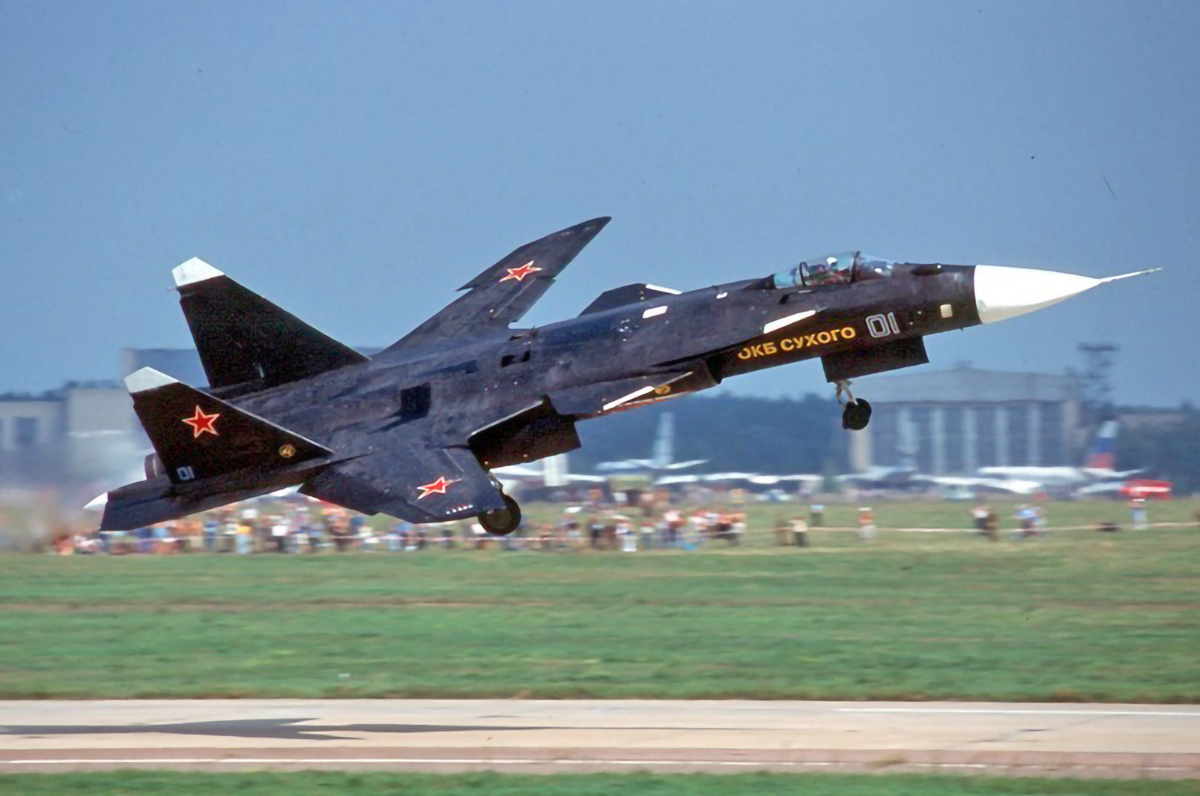
The sole S-37 first flew on September 25 1997. Though only one was made, its Batman-like aesthetic earned it a lasting place in the pantheon of aircraft loved by enthusiasts. It served as a test bed for advanced technologies later incorporated into other Sukhoi designs, particularly the Su-35 and Su-57.
In the end, like the MiG 1.44, the Sukhoi Su-47 Berkut and the idea of a fighter based upon it was cancelled. It was considered too heavy, too expensive and not up to the task of providing a match to the US F-22 Raptor should US-Russian relations turn frosty again.
8: Martin-Baker MB3
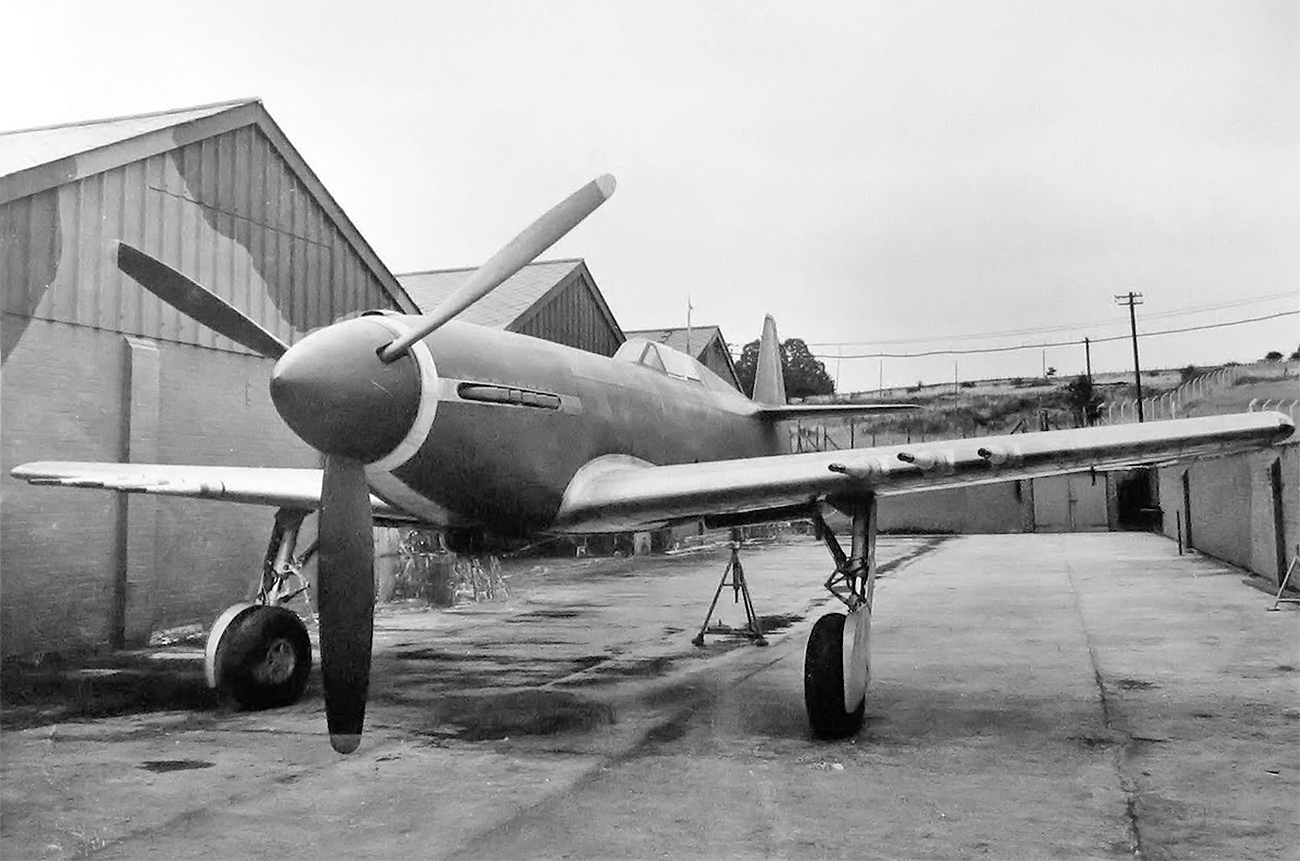
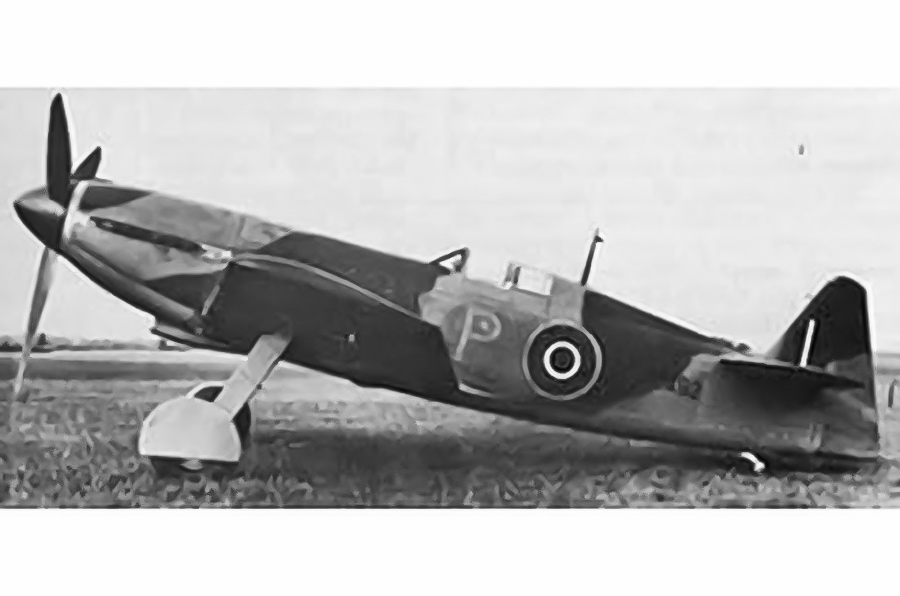
Despite never entering service, the MB3 has been indirectly responsible for saving 7700 lives (and counting). Friends and business partners James Martin and Valentine Baker had been designing unconventional monoplanes since the early 1930s. From the start, they believed that aircraft should be as simple as possible.
The MB3 was their response to a wartime RAF requirement for a fast, heavily armed fighter. Formidably furnished with six 20-mm cannon, it was also designed for ease of maintenance and manufacture (unlike the Spitfire).
8: Martin-Baker MB3
Test flights, which started on August 31 1942, proved it was highly manoeuvrable and easy to fly. Its top speed of 415 mph was a touch faster than the contemporary Spitfire Mk VIII. The main load-bearing structures were constructed of heavy tubing (or built-up spars), so it would have been able to survive greater battle damage than an equivalent stressed skin aircraft.
It was not to be, however: on a test flight on September 12 1942, the engine failed soon after take-off, and the MB3 crashed in a field and killed its pilot, Valentine Baker. Though the team had been investigating the idea of escape seats since 1934, it was Baker’s death that motivated Martin to focus exclusively on ejection seats. Today the company is the market leader, supplying ejection systems to aircraft like the Eurofighter Typhoon and the Lockheed-Martin F-35.
7: Payens

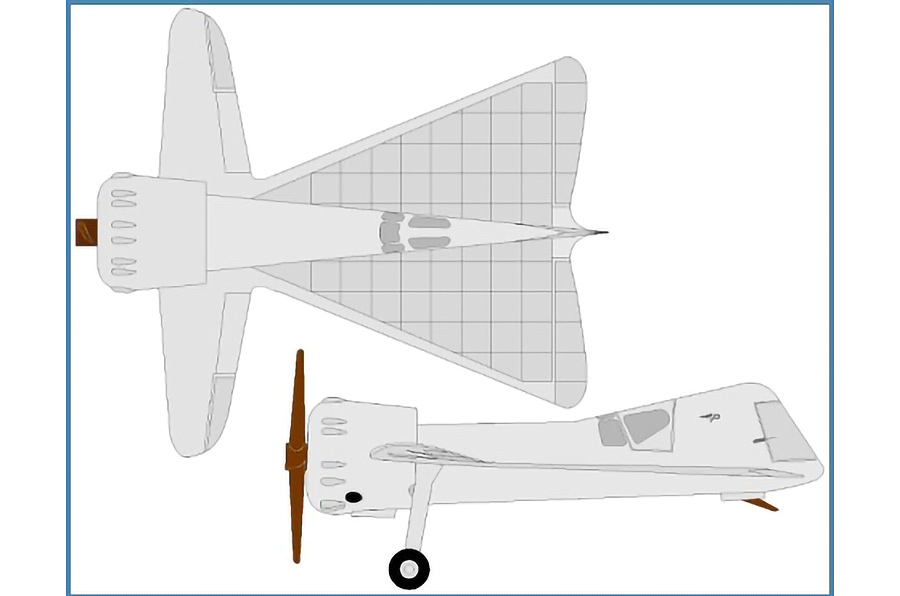
Often overlooked, Nicolas Roland Payen (1914-2004) nevertheless was the French father of the delta (triangular) wing, and, in turn, the Mirage and today’s euro-canards, the Gripen, Rafale and Typhoon. In November 1931, when he was only 17 years old, he patented the Avion Autoplan, a delta-wing aircraft, but it was in 1935, the year he turned 22, that he designed and built the world’s first true delta-wing aircraft, the PA-100 Fléchair.
The PA-100 was unique for its time and remains so even today: Its main wing was a delta wing with flaps to ensure stability during low-speed flight, with two small wings (then known as “machutes”) installed at the front of the airframe to ensure control of the aircraft at low speed.
7: Payens

The PA-100, with its 180 hp Régnier in-line engine, proved extremely underpowered and failed to reach the high speeds required for the wing to be completely efficient. It was after a few flips and a crash on April 27 1935, that a second prototype named PA-101 was built to take part in the French speed race, the Coupe Deutsch de la Meurthe.
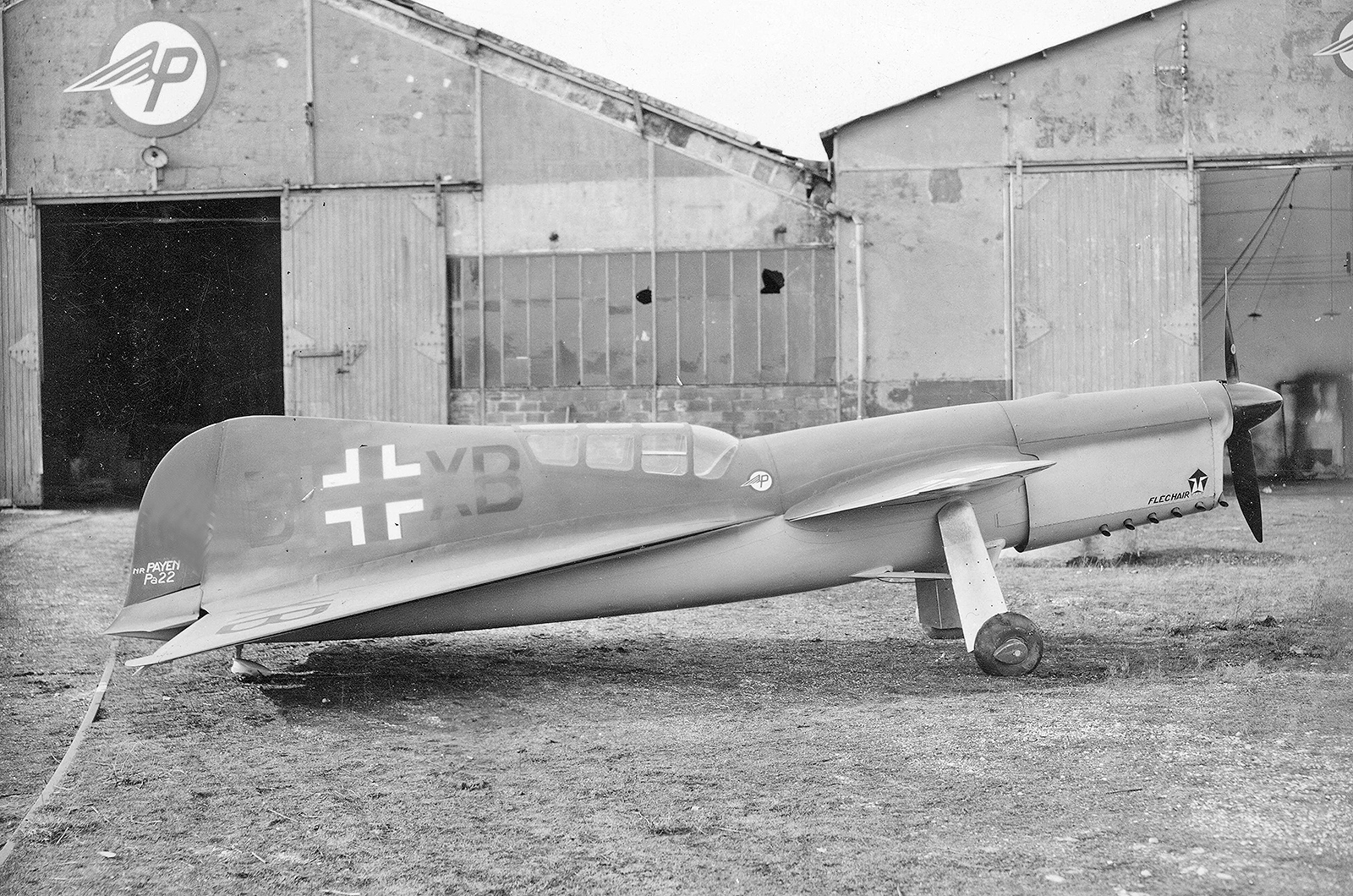
The last Payen delta was the PA-22, an experimental aircraft built in 1939 and originally powered by a Melot 1R ramjet. The aircraft was later converted to a conventional engine, the 180 hp six-cylinder Regnier. The aircraft had not yet flown when Germany invaded France in 1940, and the Germans, intrigued by the machine, decided to complete the wind tunnel tests.
After being repainted in German colours, the aircraft was transferred to Villacoublay, and in October 1942, pilot Jacques Charpentier made the first flight. An extensive test programme was then launched, but before it was completed, Mr Payen managed to get his aircraft out of the hands of the occupiers by claiming that modifications were necessary. He sent the prototype back to his factory in Juvisy. Continued improvements included a new propeller, this time with variable pitch and additional fuel tanks, but in 1943, an Allied air raid on the Juvisy railway yard hit the factory, destroying the PA-22.
6: Hughes H-4 Hercules ‘Spruce Goose’

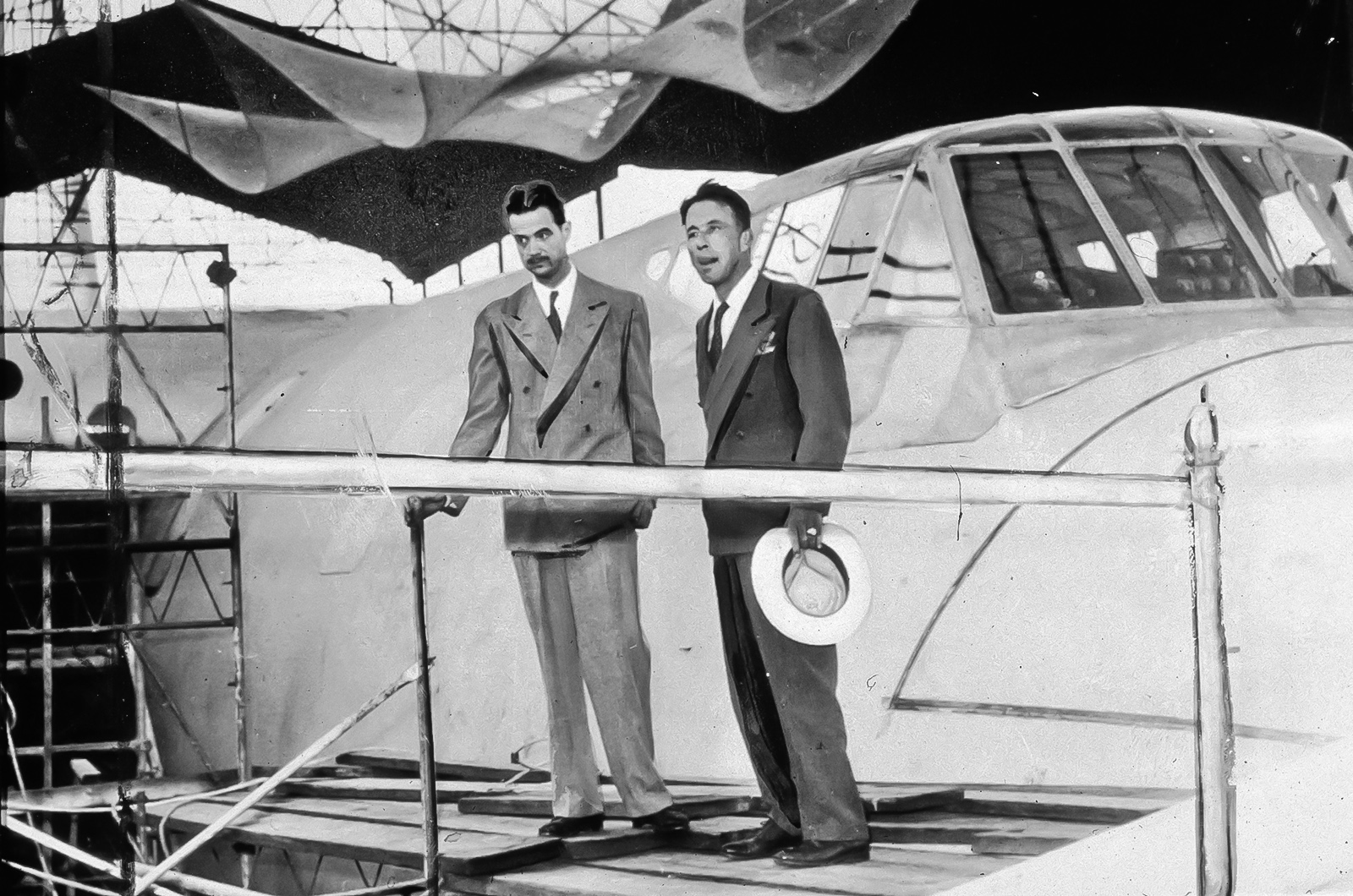
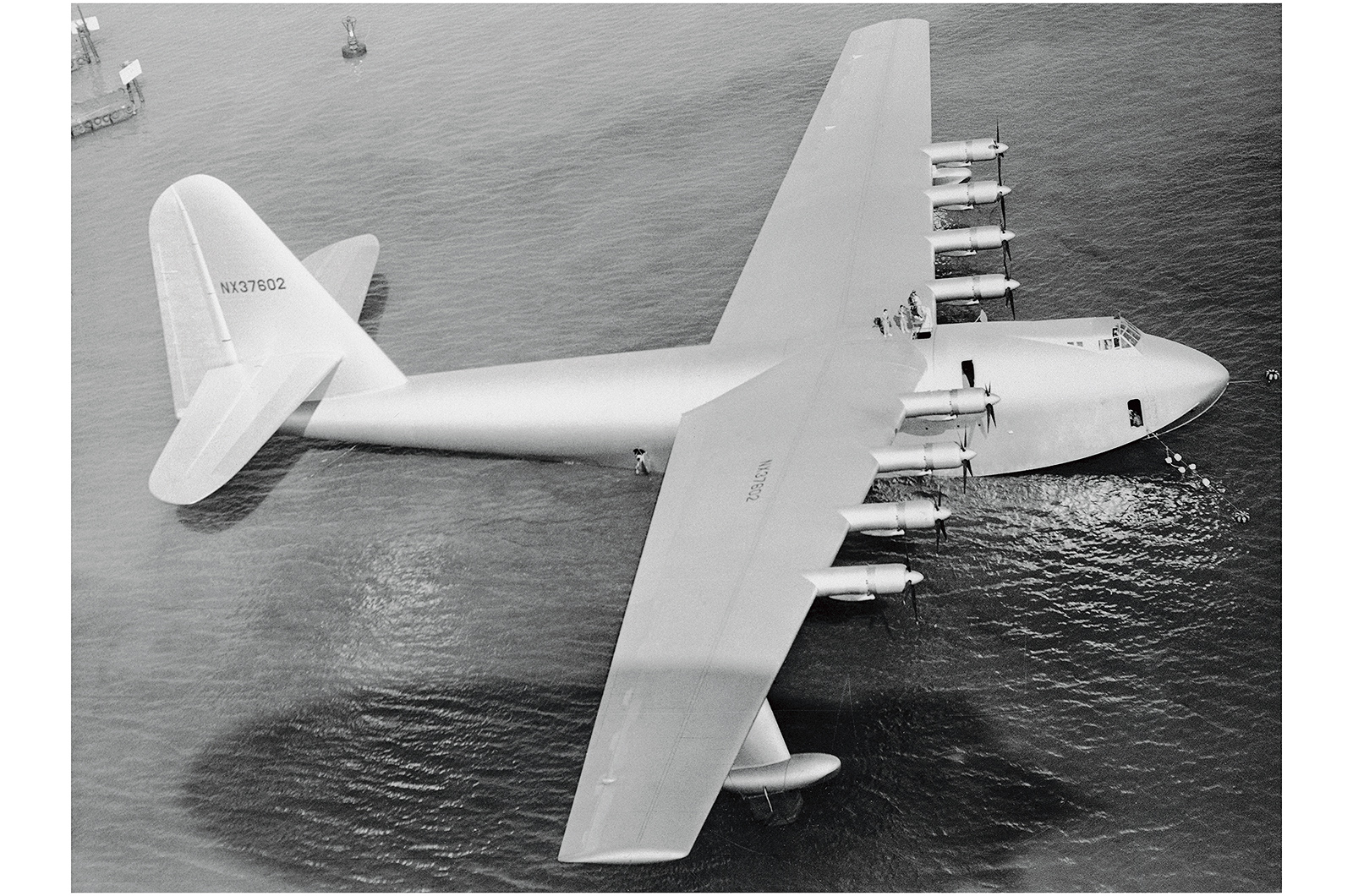
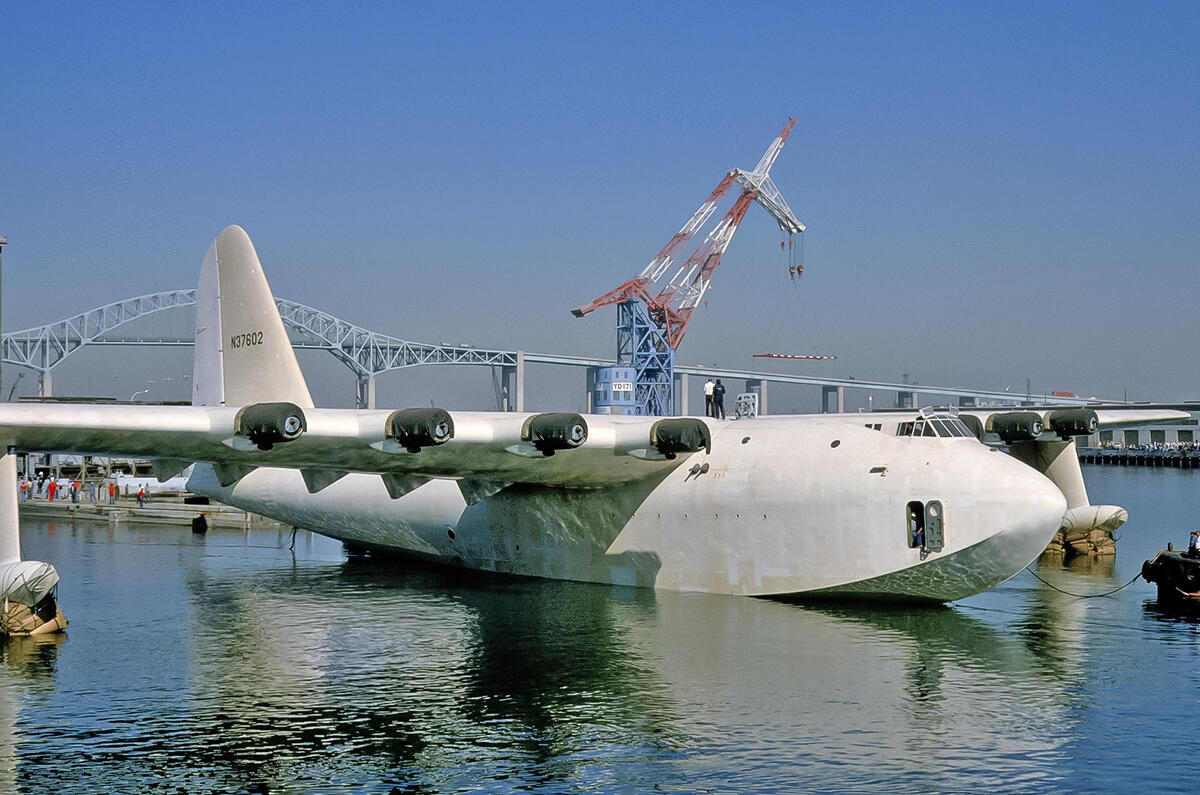
Popularly known by its nickname of the ‘Spruce Goose’, the Hughes H-4 Hercules was a colossal wooden flying boat designed by the famously eccentric Howard Hughes (pictured left). Conceived during the Second World War, the intention was to create a vast strategic transport aircraft to move troops and cargo across the Atlantic, bypassing the menace of German submarines. Its massive size and innovative design captured global attention.
Constructed primarily from birchwood, the plane boasted an unprecedented 320-foot wingspan – 22% more than a modern-day Airbus A380. With eight powerful engines, it was intended to carry 750 troops or heavy equipment. Wartime restrictions delayed its completion, and the war ended before the H-4 could serve its intended purpose.
6: Hughes H-4 Hercules ‘Spruce Goose’

On November 2, 1947, Hughes piloted the Spruce Goose for its only flight. Lifting off from Long Beach Harbor in California, it flew for about a mile, reaching a height of only 70 feet. This brief journey proved its airworthiness but also marked its retirement, as critics questioned its practicality and cost. The war had ended, and with it, the need for the Hercules.
Standing 80 feet tall, it is probably the tallest aeroplane ever made. Today, the Spruce Goose resides at the Evergreen Aviation Museum in Oregon, a testament to Hughes’ ambition and engineering audacity. Though it never saw operational use, its legacy endures as one of the great wonders of aviation.
5: Antonov An-225 Mriya

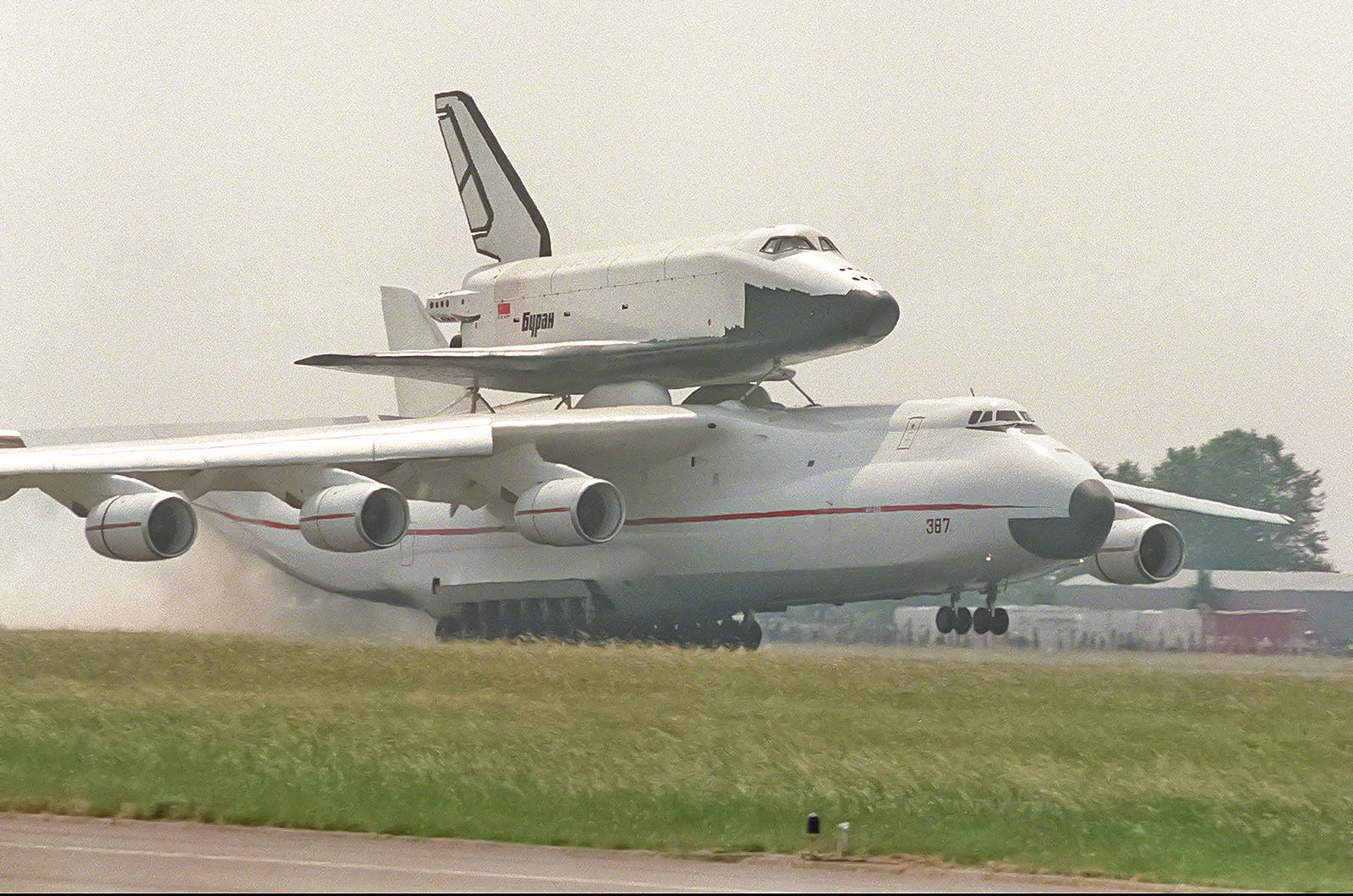
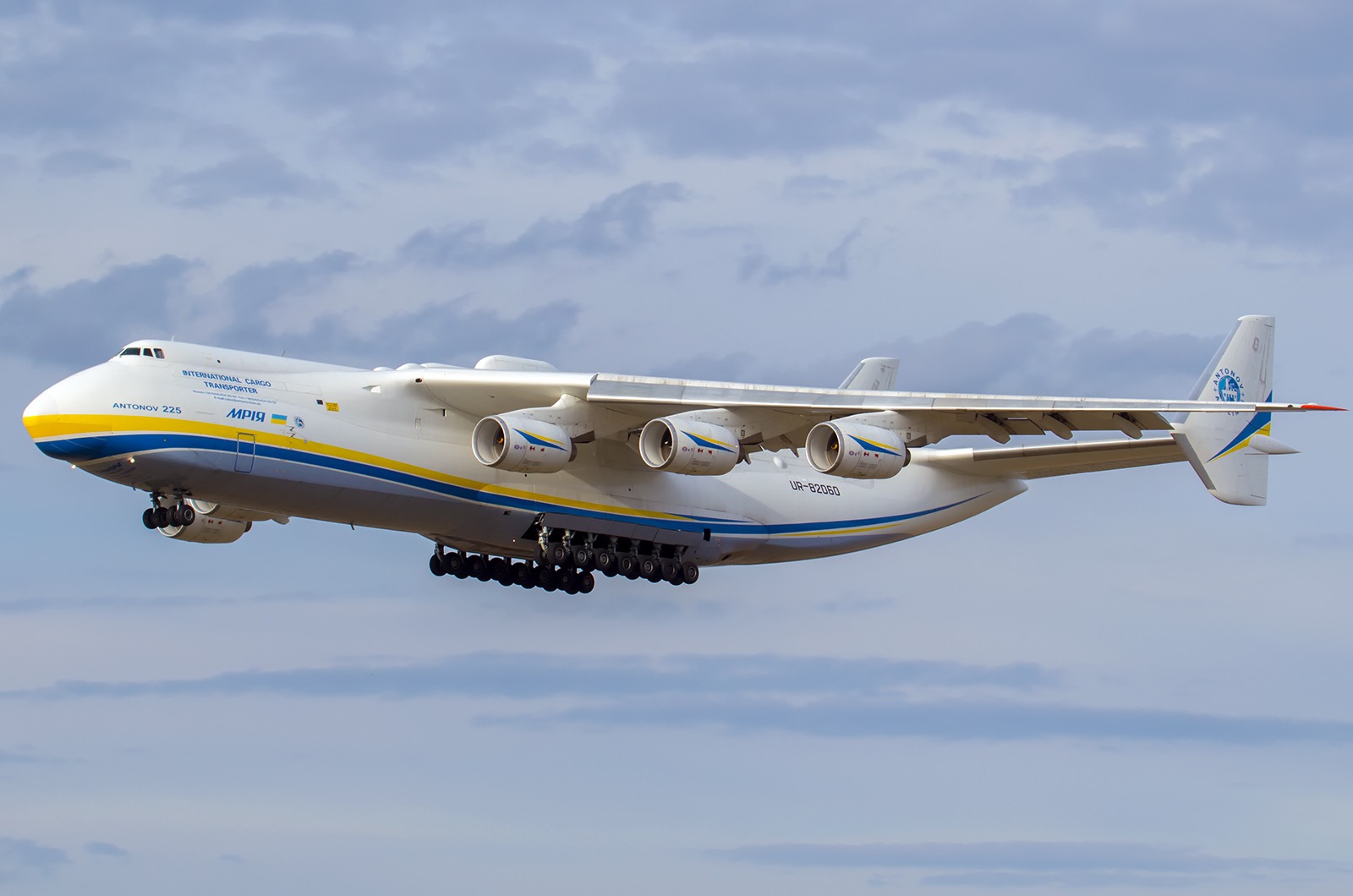
The Antonov An-225 was a giant, even among giants. Purpose-designed to move booster rockets and Buran orbiters (the Soviet space shuttle, pictured) for the space programme, the An-225 needed to be large. Prior to its development, the biggest aircraft in the world at the time, the Antonov An-124, was too small and not powerful enough for this new task.
The new design took much from the An-124 but added an additional pair of engines (there are very few modern aircraft with more than four engines, though the American B-52 bomber has eight), a longer fuselage, and a completely new tail to handle the wake turbulence generated by the massive external loads carried ‘piggy-back’ on the aircraft’s upper fuselage.
5: Antonov An-225 Mriya

The An-225 first flew in late December 1988 and was soon smashing a series of world records. The An-225 set 214 national and 124 world records, including transporting the heaviest payload ever lifted by air, an astonishing 253,820 kg (559,577 Ibs) – the same as 42 elephants…
Six massive Progress D-18T turbofans powered it, each pumping out an awe-inspiring 229.5 kN for a grand total of 1377 kilonewtons. Sadly, the sole Antonov An-225 was destroyed at the Battle of Antonov Airport in Ukraine in 2022, though there is an effort to fund and rebuild this fantastic machine.
4: Grumman F5F ‘Skyrocket’

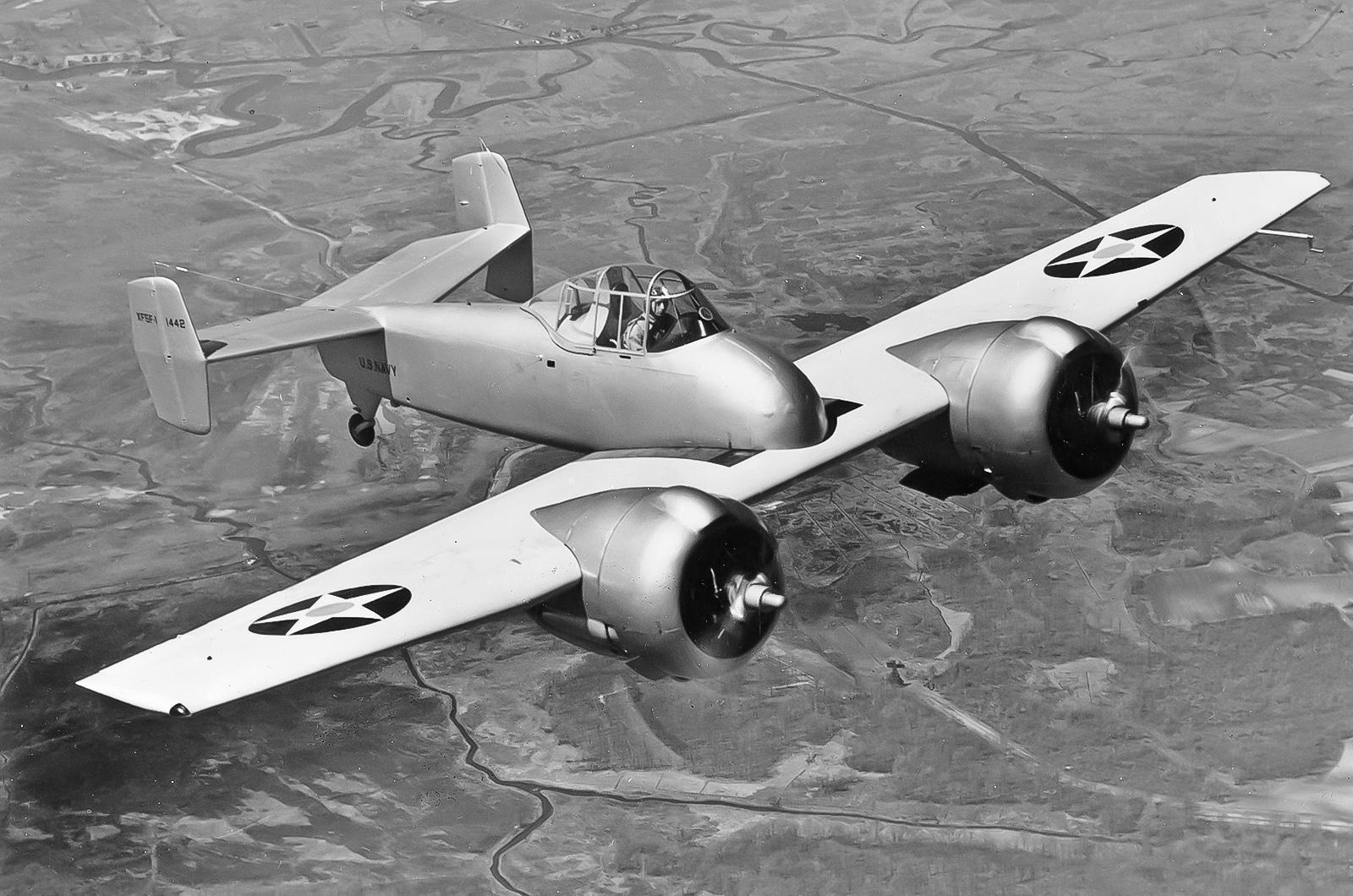
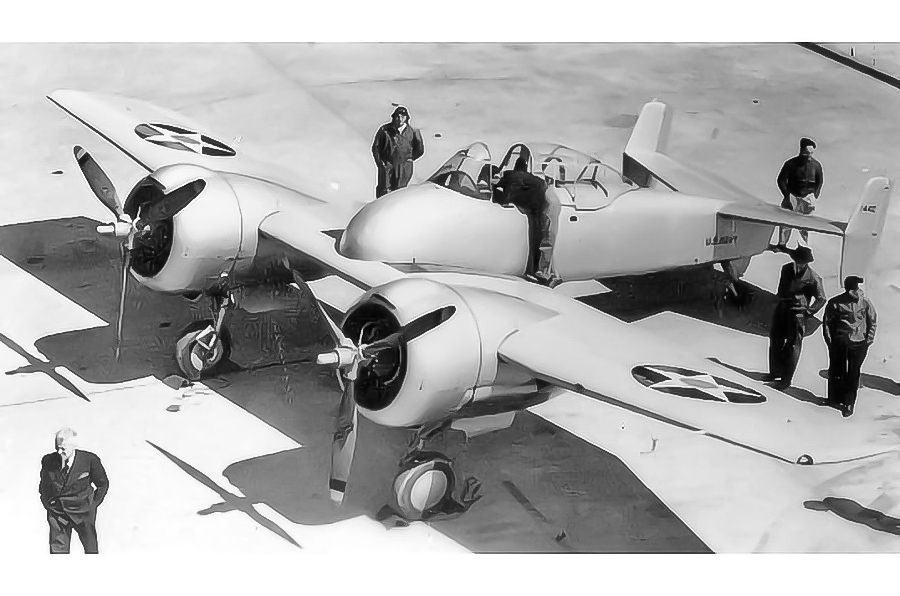
As it originally appeared in April 1940, the Skyrocket was a radical-looking aircraft with a snub-nosed fuselage ending abruptly on the leading edge of the wing and twin tails to match the two engines. Its distinctive aesthetic was undoubtedly the reason it became a comic book star, and its performance matched its futuristic looks, particularly in rate of climb, which may have led to the ‘Skyrocket’ name.
In a 1941 fly-off against a range of contemporary operational and experimental US fighters (Curtiss P-40 Warhawk, Bell P-39 Airacobra, Bell XFL Airabonita, Vought XF4U Corsair, Grumman F4F Wildcat, and Brewster F2A Buffalo) with a Spitfire and Hurricane thrown in to give an international flavour, the F5F came out on top.
4: Grumman F5F ‘Skyrocket’

Lieutenant Commander Crommelin later stated, “I remember testing the XF5F against the XF4U on climb to the 10,000 foot level. I pulled away from the Corsair so fast I thought he was having engine trouble. The F5F was a carrier pilot’s dream, as opposite rotating propellers eliminated all torque…The analysis of all the data definitely favored the F5F, and the Spitfire came in a distant second.”
So why did this wonder aircraft never enter service? Two engines meant added complexity and a more demanding supply chain, which is a serious business when operating from a carrier. Furthermore, the Skyrocket was afflicted with multiple small problems. Ultimately, the muscular F5F performed its most important work flying as a development aircraft for the impressive F7F Tigercat, which entered service in August 1945.
3: Mitsubishi X-2 Shinshin

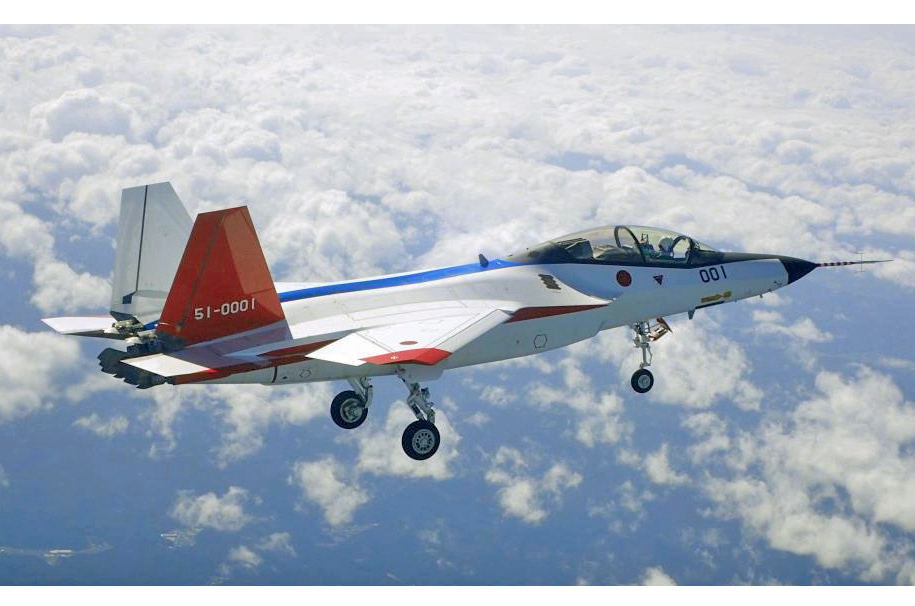
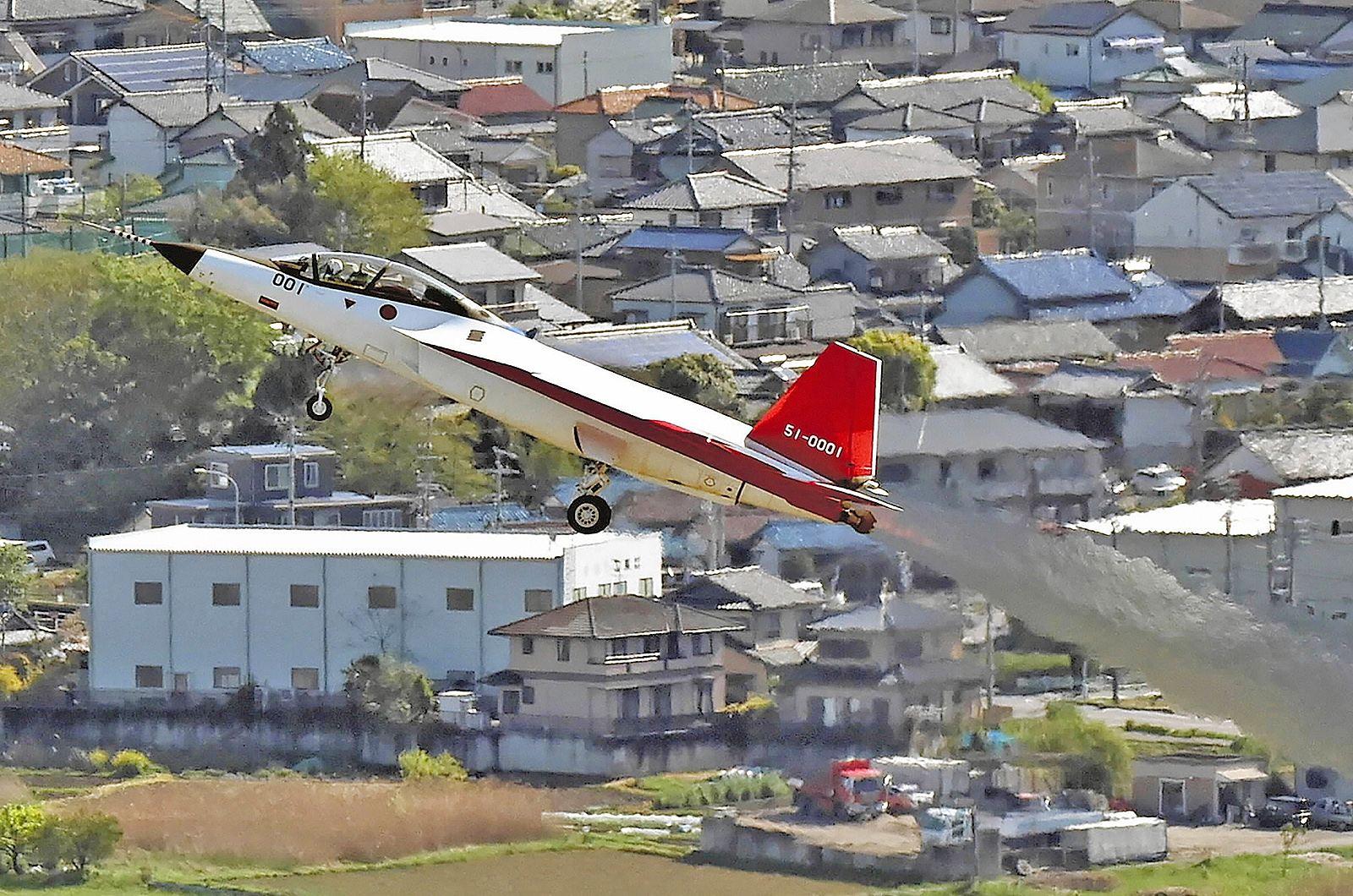
The X-2 is an advanced technology demonstrator to get Japanese industry up to speed with the design and construction of modern stealthy tactical fighters. It first flew on April 22 2016. It is a twin-engine twin tailfin design powered by two Ishikawajima-Harima Heavy Industries (IHI) XF5 is a low bypass turbofan engine developed by Ishikawajima-Harima Heavy Industries for the Mitsubishi X-2 Shinshin.
For extreme manoeuvrability and trim drag reduction, the aircraft features 3-D thrust vectoring. Thrust is steered in by three paddles on each engine nozzle, similar to the system used on the Rockwell-Messerschmitt-Bölkow-Blohm X-31. The X-2 had a maximum speed of Mach 2.25 and is said to be capable of supercruising (reaching and sustaining supersonic speed) at Mach 1.28.
3: Mitsubishi X-2 Shinshin

A radio-controlled 1/5 scale model was made ahead of the fullscale aircraft to gain data on the design’s performance at high’ angles of attack’ - a high angle of attack refers to a nose-high attitude to the direction of flight. The X-2 cost approximately the equivalent of $330 million.
The X-2 was originally intended to support the effort to create the Mitsubishi FX (F-3) indigenous fighter, but since then, Japan has joined the international Global Combat Air Programme (CAP) stealth fighter project with the United Kingdom and Italy. The X-2’s testing concluded in March 2018.
2: Vought V-173

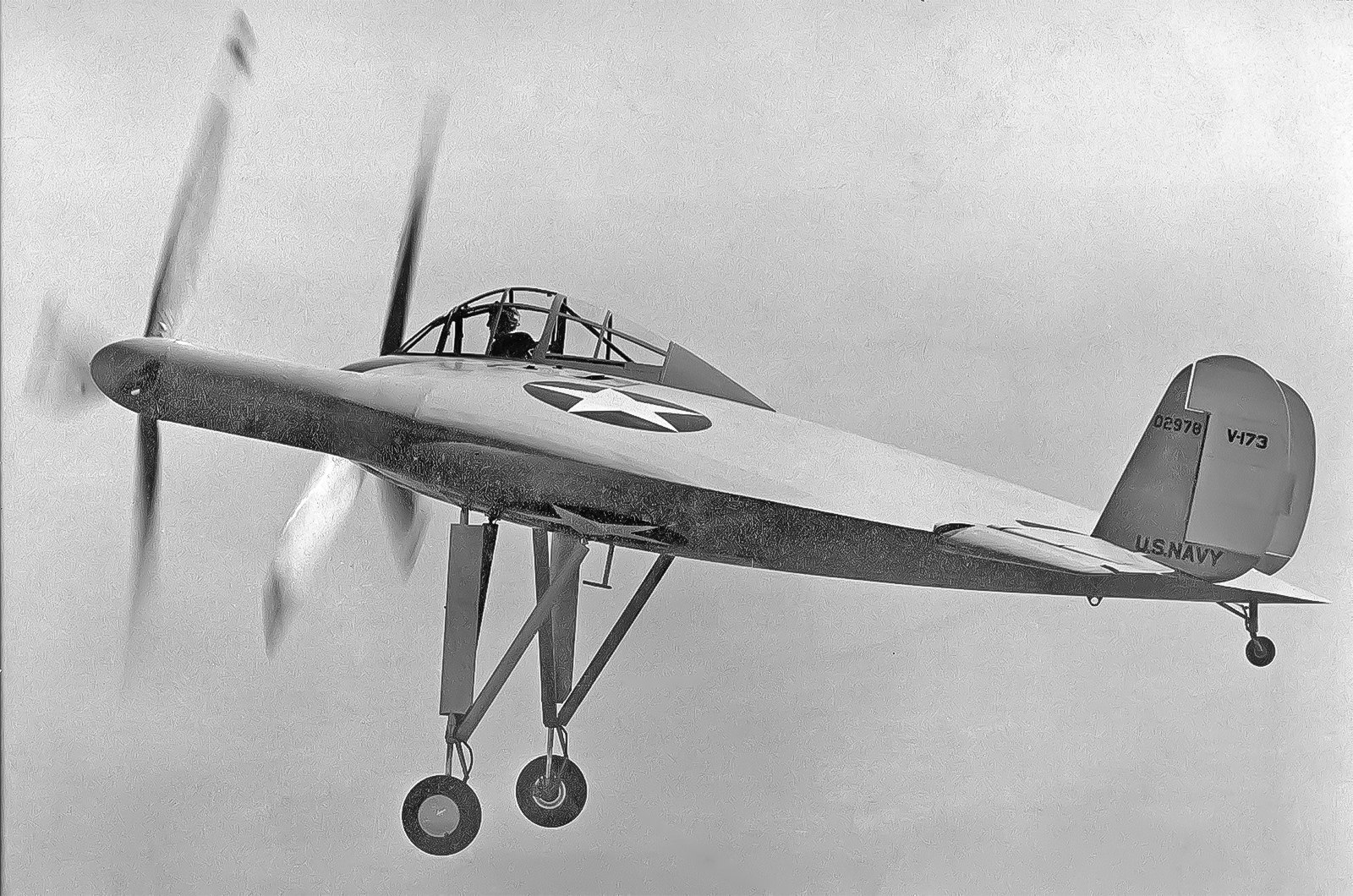
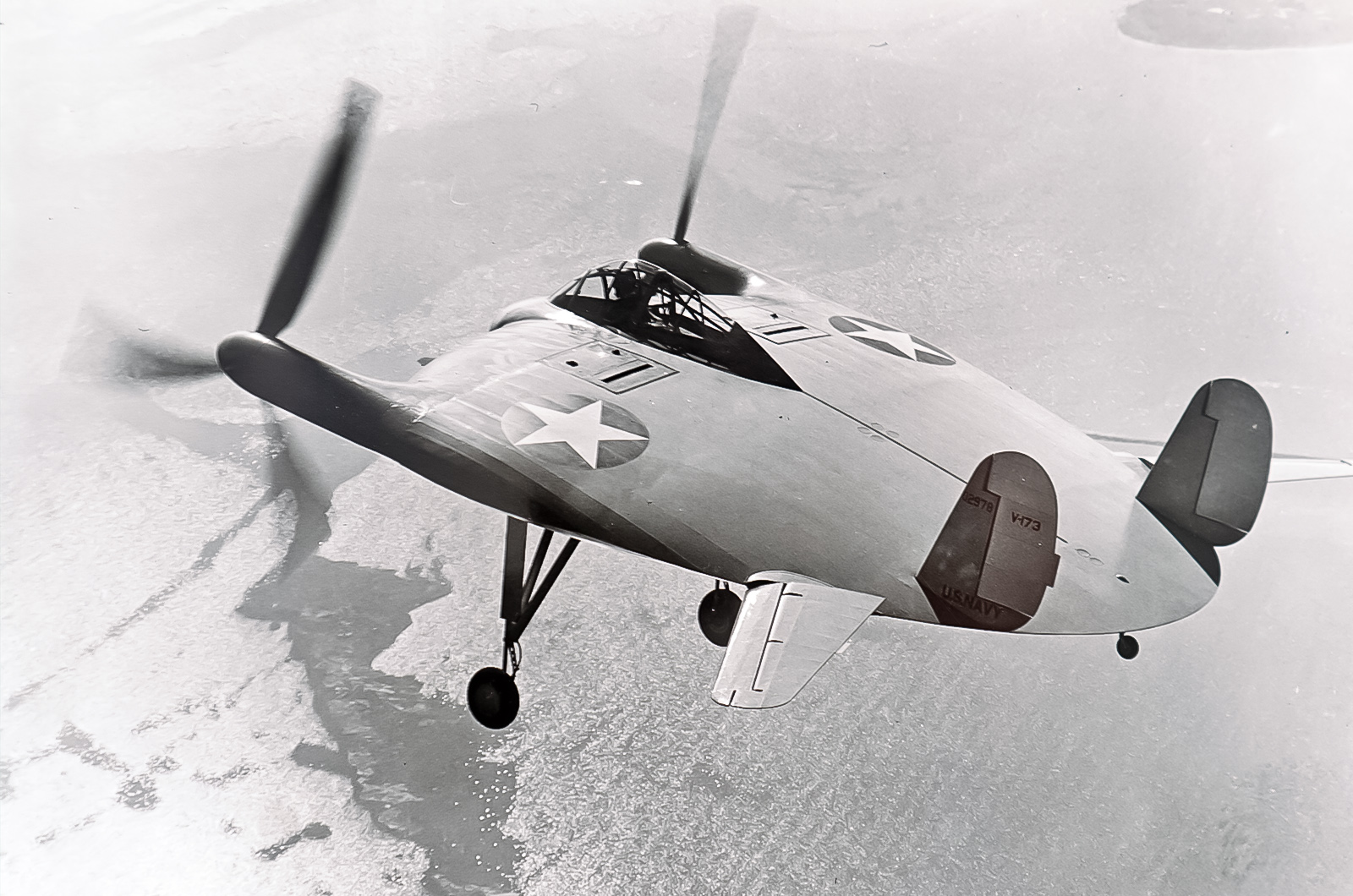
In the 1930s, Charles H. Zimmerman advocated the ‘discoidal’ aircraft with a pancake-shaped fuselage as a lifting surface. Zimmerman had worked on NACA’s (later renamed NASA) early wind tunnels. He wanted to produce a circular VTOL aircraft capable of flight at unbeatable speeds and altitudes, and able to hover like a helicopter. This proved overly ambitious with contemporary technology but earned Zimmerman a prestigious NACA award.
Zimmerman believed that discoidal aircraft could be capable of near vertical take-off and landings. They also promised excellent manoeuvrability, high speed and great structural strength. The concept, nicknamed the ‘Zimmer Skimmer’, was radical and unlikely- so Zimmerman set about demonstrating its veracity with a series of prototypes for both himself and the Vought company. The V-173 first flew in 1942 (pictured).
2: Vought V-173

Soon, locals were reporting UFOs, even if the term didn’t exist yet (‘UFO’ was coined in 1953 by USAF). Aviation pioneer Charles Lindbergh flew the type and found it handled extremely well. Initial problems were centred more around the propulsion system, which used a complex geared system to route power to the propellers from the engine, than the novel aerodynamic configuration.
One propulsion failure led to a dramatic emergency landing on a beach. As the aircraft landed the pilot spotted two utterly bewildered bathers in the aircraft’s path. Full braking effect was applied, resulting in the aircraft somersaulting over on itself. Thanks to the aircraft’s immense strength, both the pilot and aircraft emerged unscathed.
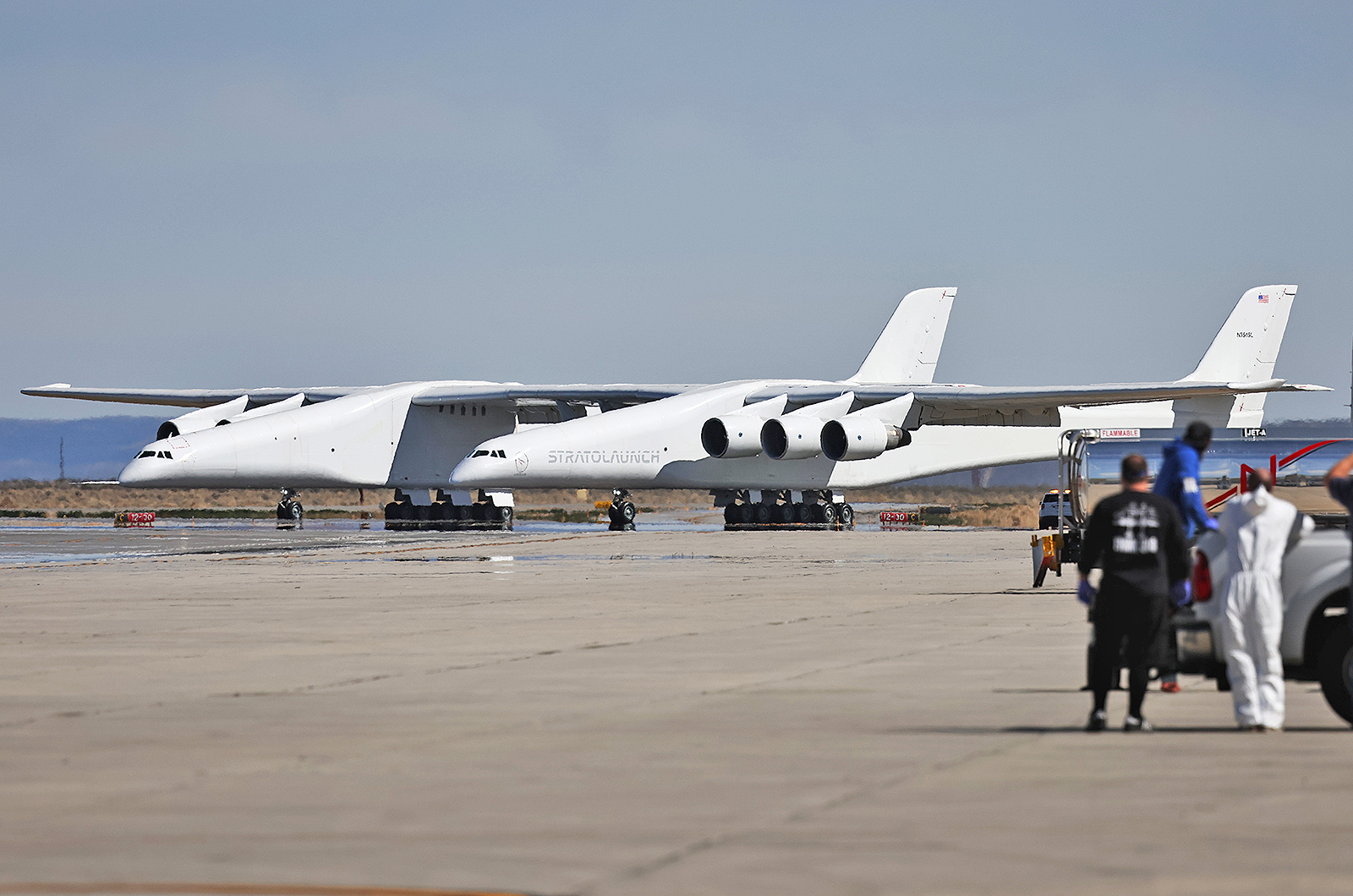
1: Scaled Composites Model 351 Stratolaunch/Roc

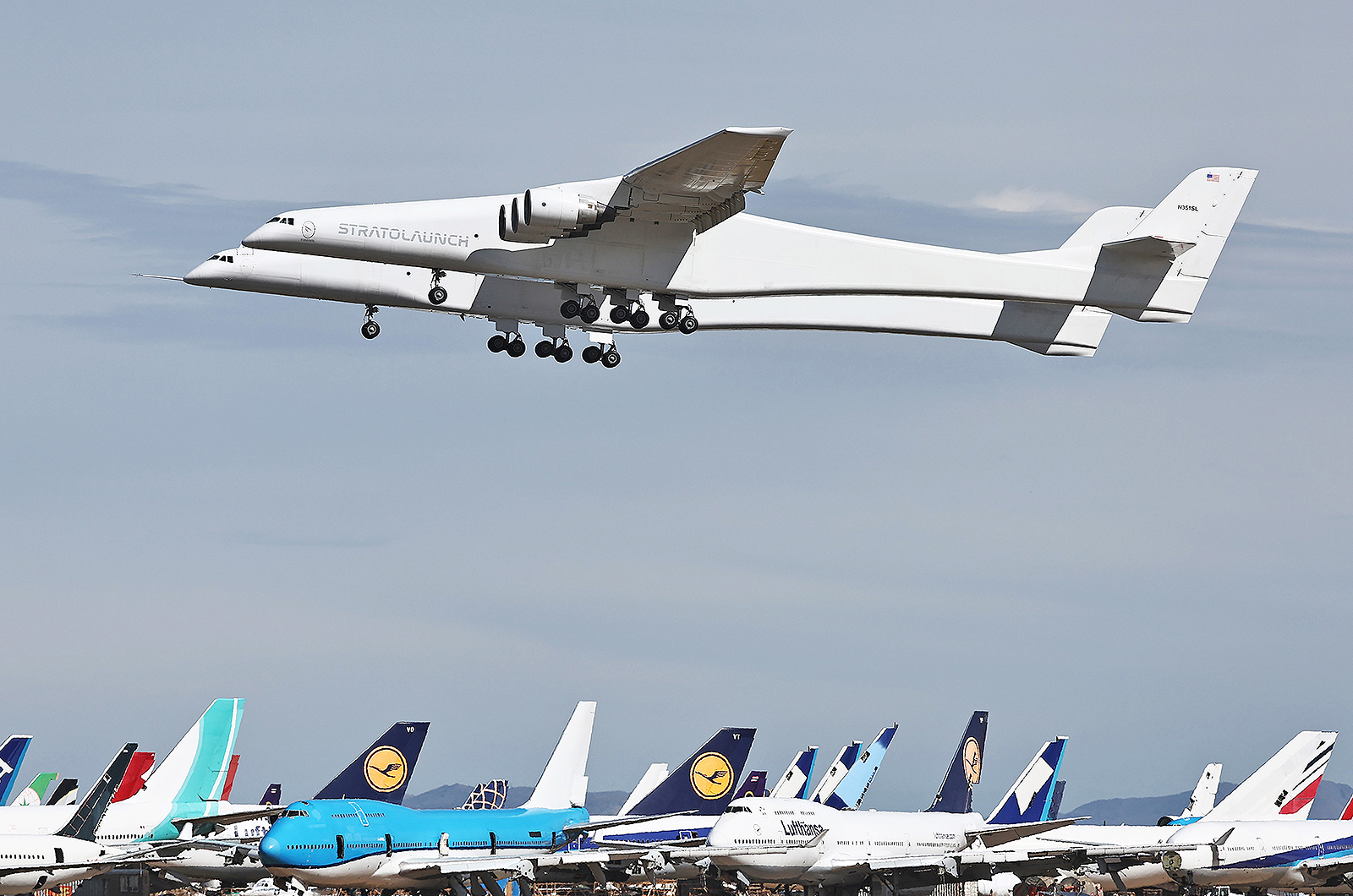
The incredible Stratolaunch Roc is the largest aircraft flying and the most powerful. Used for the air launch of space rockets and hypersonic vehicles, this ‘mothership’ is powered by two six Pratt & Whitney PW4000 turbofans combining to give a massive maximum of 1776 kilonewtons of thrust.
The Roc is named after a legendary bird of prey that was big and strong enough to carry elephants in its talon; this is an appropriate name for this gargantuan aircraft. The Roc boasts a wingspan of 117 metres (or 385 feet), the largest of all aircraft, dwarfing even the next biggest, the ‘Spruce Goose’ of 1947, with its 97.51 metres (319 ft 11 in) wingspan.
1: Scaled Composites Model 351 Stratolaunch/Roc

Like the twin aircraft of the Second World War, the Roc has a dual-fuselage configuration. It has a high-wing design that allows for the launches of spacecraft and aircraft from the aircraft centreline and below the wing.
The enormous Roc can carry a payload of over half a million (500,000 lbs or 226,796 kg) and is not built for speed. Despite being the most powerful aircraft on this list, it is also among the slowest, with a cruising speed of 250mph, more suitable for a 1940s airliner.
Follow Joe Coles’ wild aviation adventures on Substack and X
If you enjoyed this story, please click the Follow button above to see more like it from Autocar
Photo Licence: https://creativecommons.org/licenses/by/4.0/deed.en

Add your comment