From £25,2158

What do you get when you make a Duster bigger? A silly name and a real worry for the likes of Ford and Hyundai

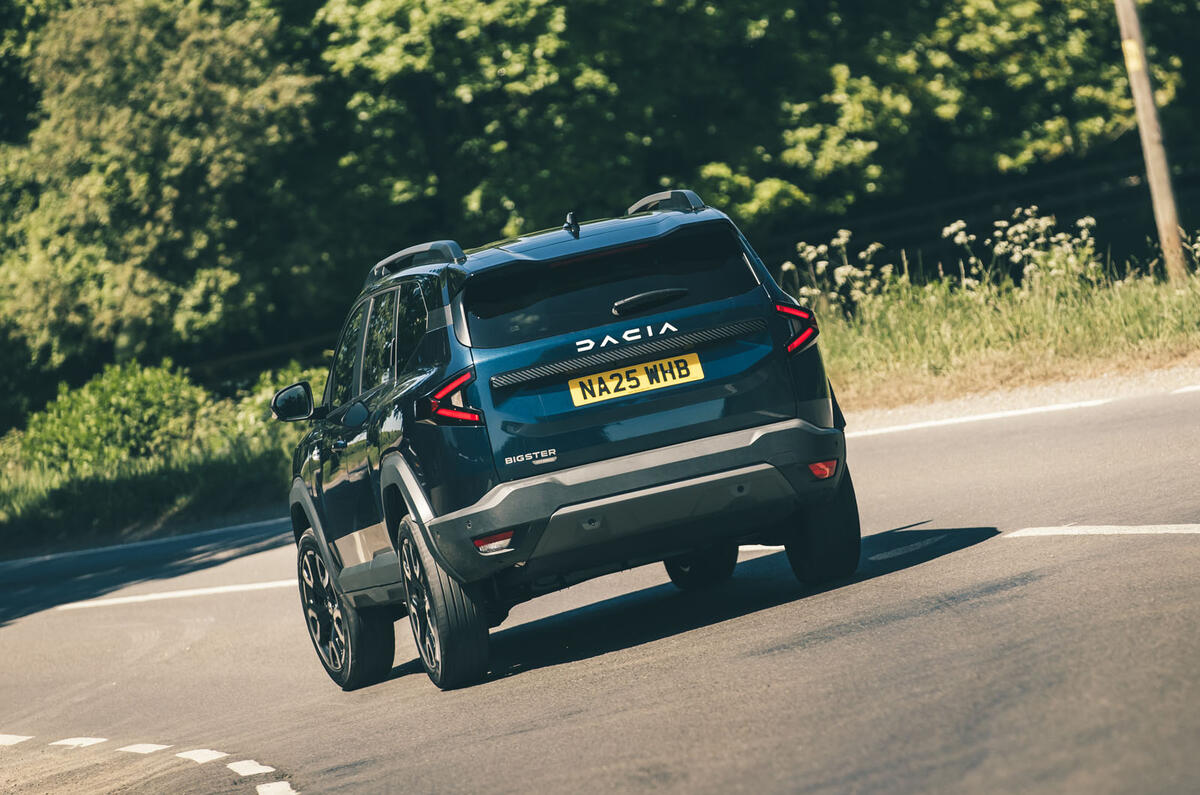
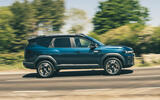
The Dacia Bigster is a Dacia Duster but bigger. Sometimes naming cars doesn’t have to be complicated. Sure, the name is a bit of an oddball, but we’ll get used to it.

Being named after a household cleaning tool hasn’t been a barrier to success for Dacia’s other SUV, after all, and it’s good to know where a particular model sits in the hierarchy.

Despite the overt similarities with the Duster, the Bigster differs in many respects and marks the brand’s entry into the ultra-competitive and wildly popular C-segment class that includes leading lights such as the Kia Sportage, Ford Kuga and Volkswagen Tiguan.

Whereas with most car makers this class represents a significant step up from the one below in terms of technical sophistication, Dacia actually sticks with the same CMF-B platform for the Bigster. As its name suggests, these are effectively the underpinnings for a B-segment car – a supermini. 

Dacia’s general charm and price advantage have helped it get a long way – the Sandero was the best-selling car in Europe last year and the Duster wasn’t too far behind in ninth. 

Will such credentials help the Bigster succeed in the lion's den of one of Europe’s biggest car classes?

Advertisement

DESIGN & STYLING

9
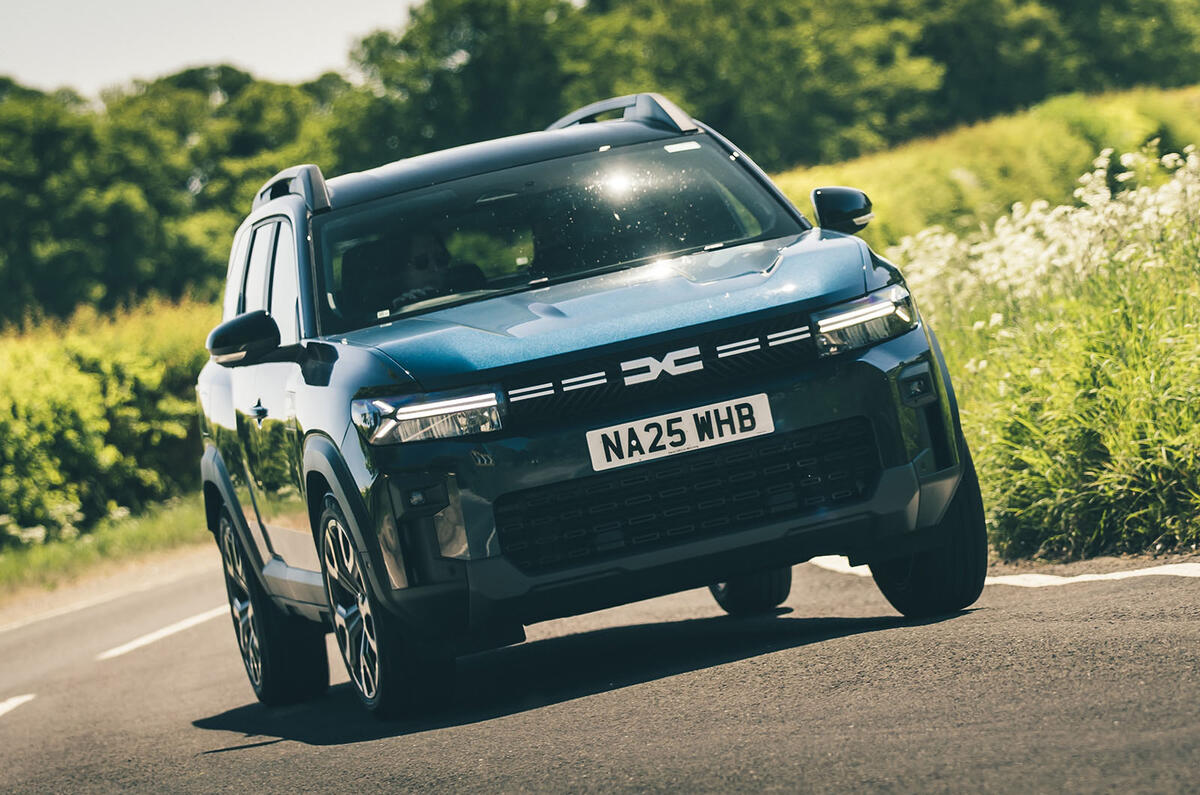
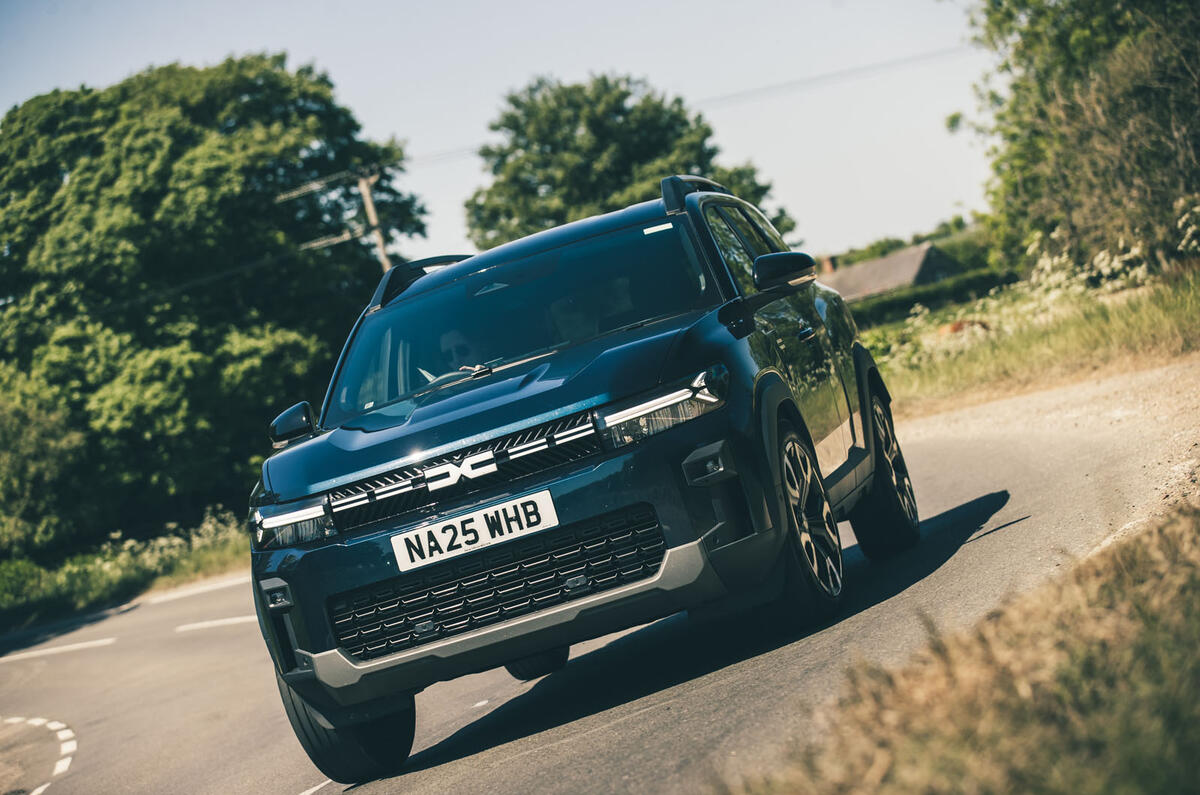
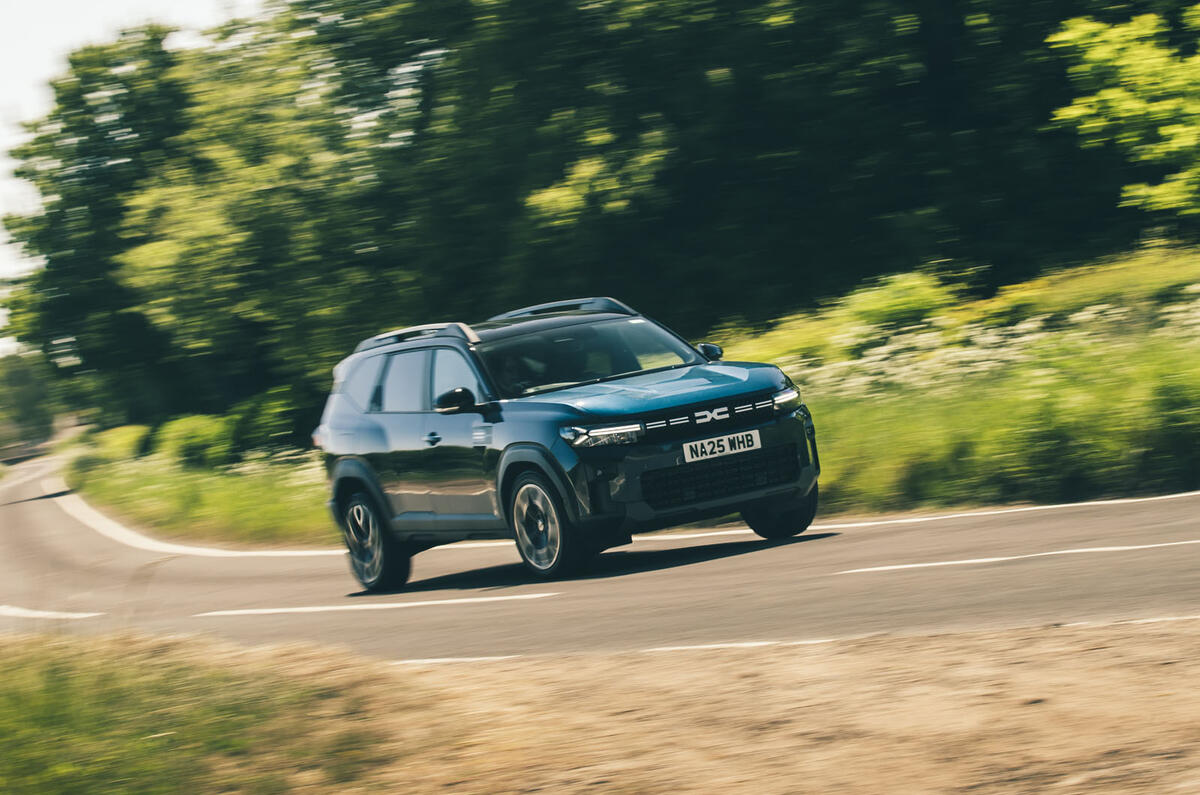
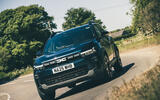
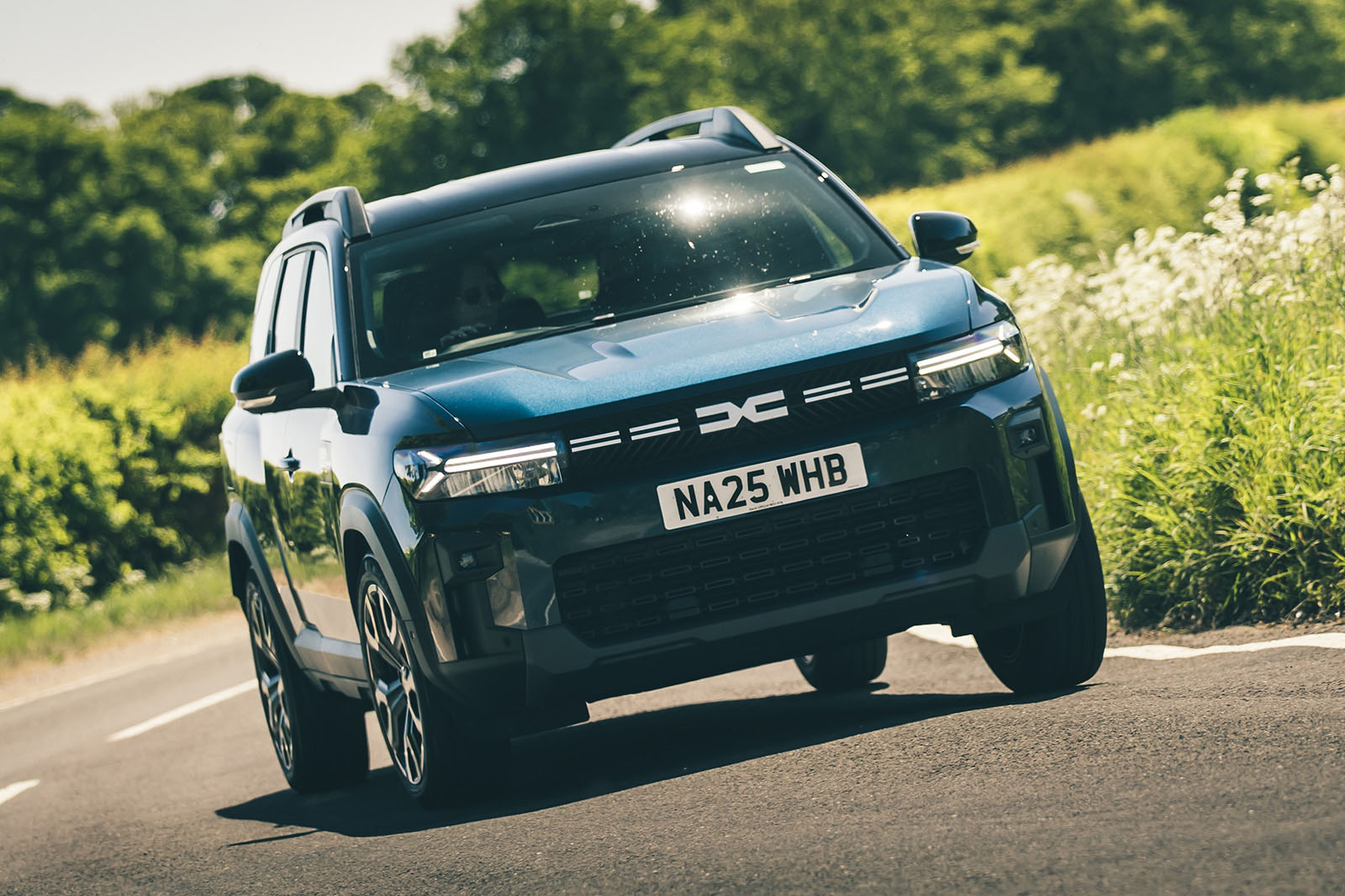
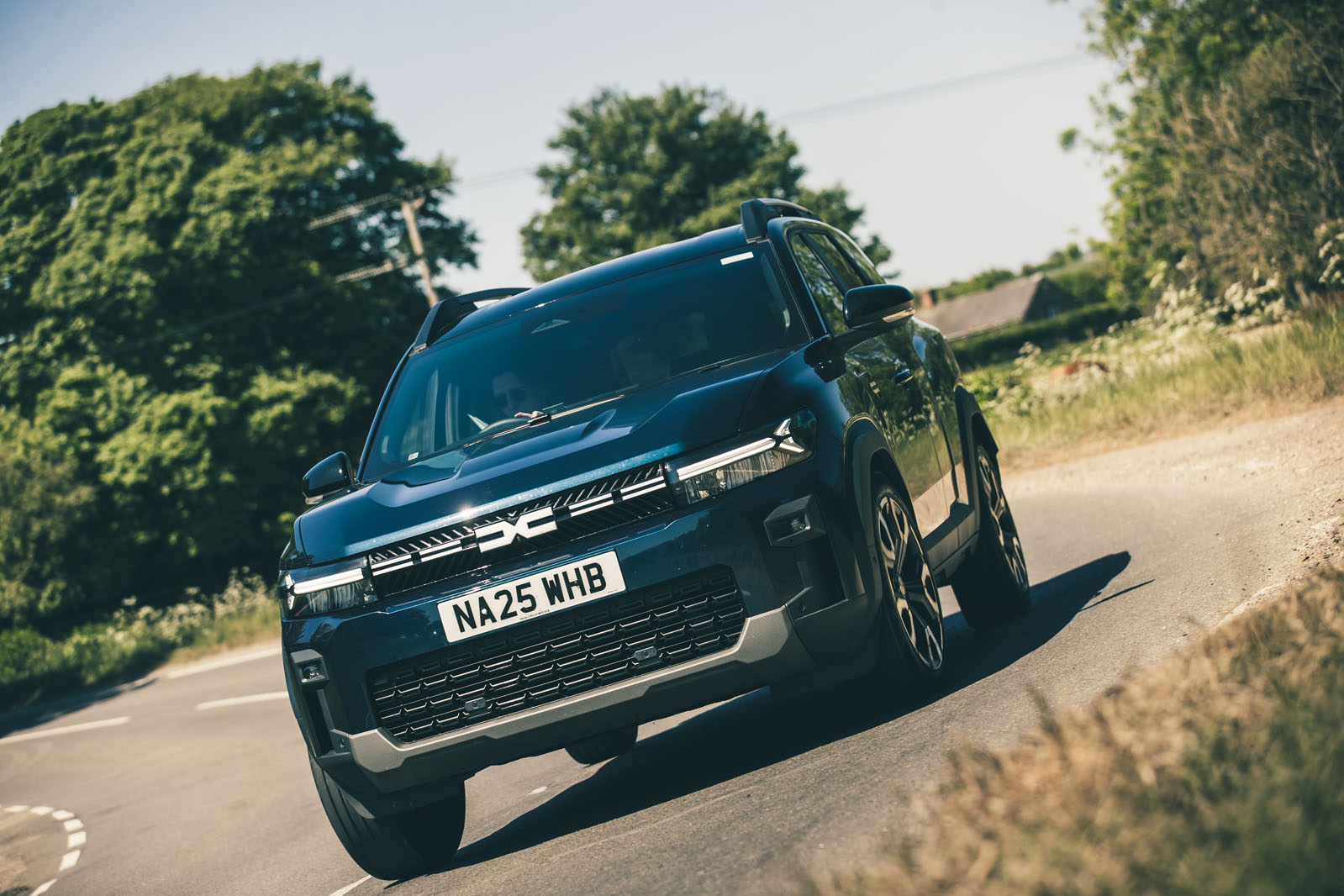
dacia bigster review 2025 01 front cornering

Given they’re about the same size, you might expect the Bigster to be derived from the Renault Austral. However, Dacia takes a more bottom-up approach to car development, building a model to a budget from the components available around the group and thus avoiding unnecessary cost.

As a result, the Bigster uses the lower-cost CMF-B platform, although it must be said that Renault’s platform strategy seems more flexible than the ones at Stellantis and the Volkswagen Group.

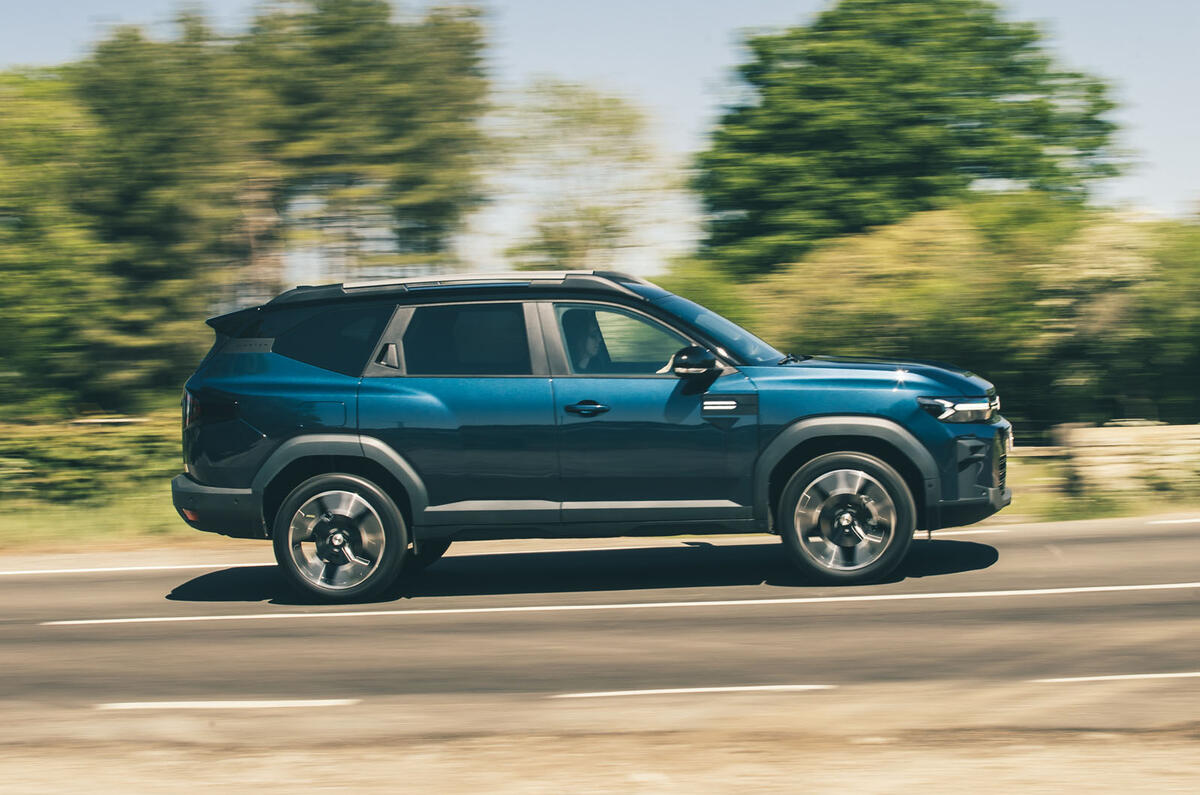
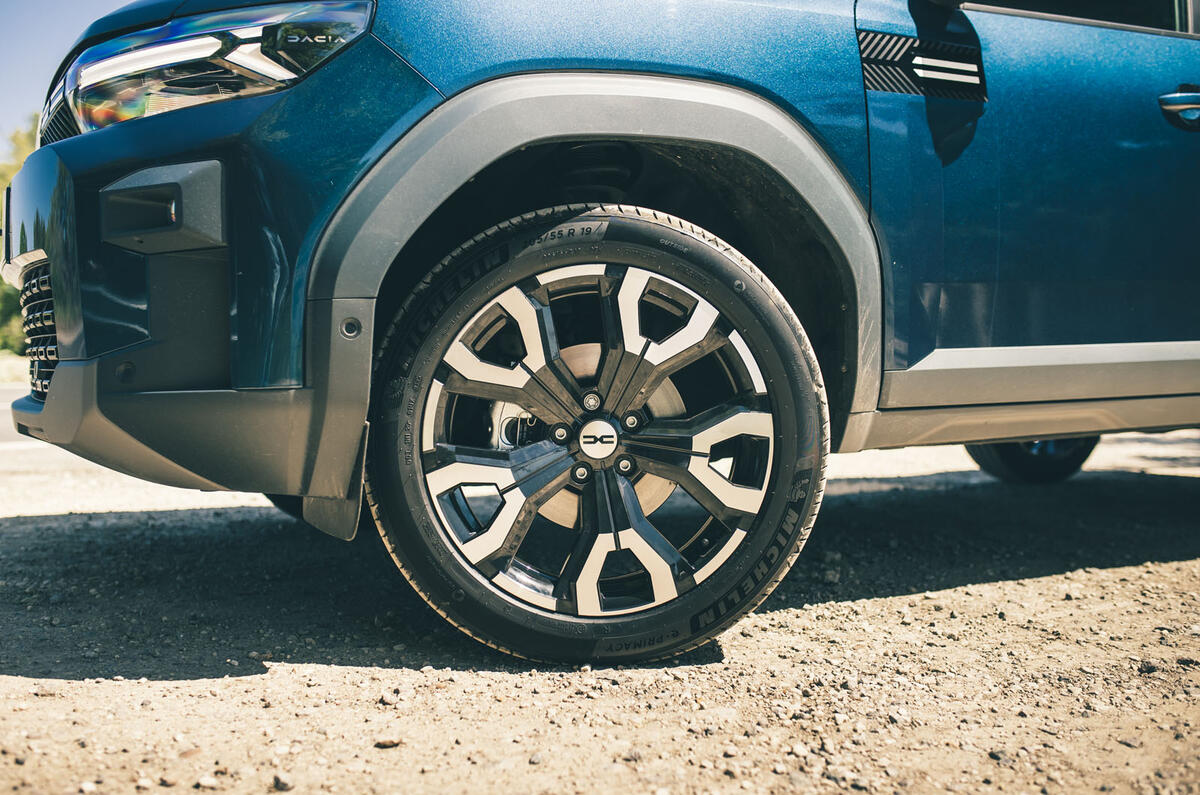
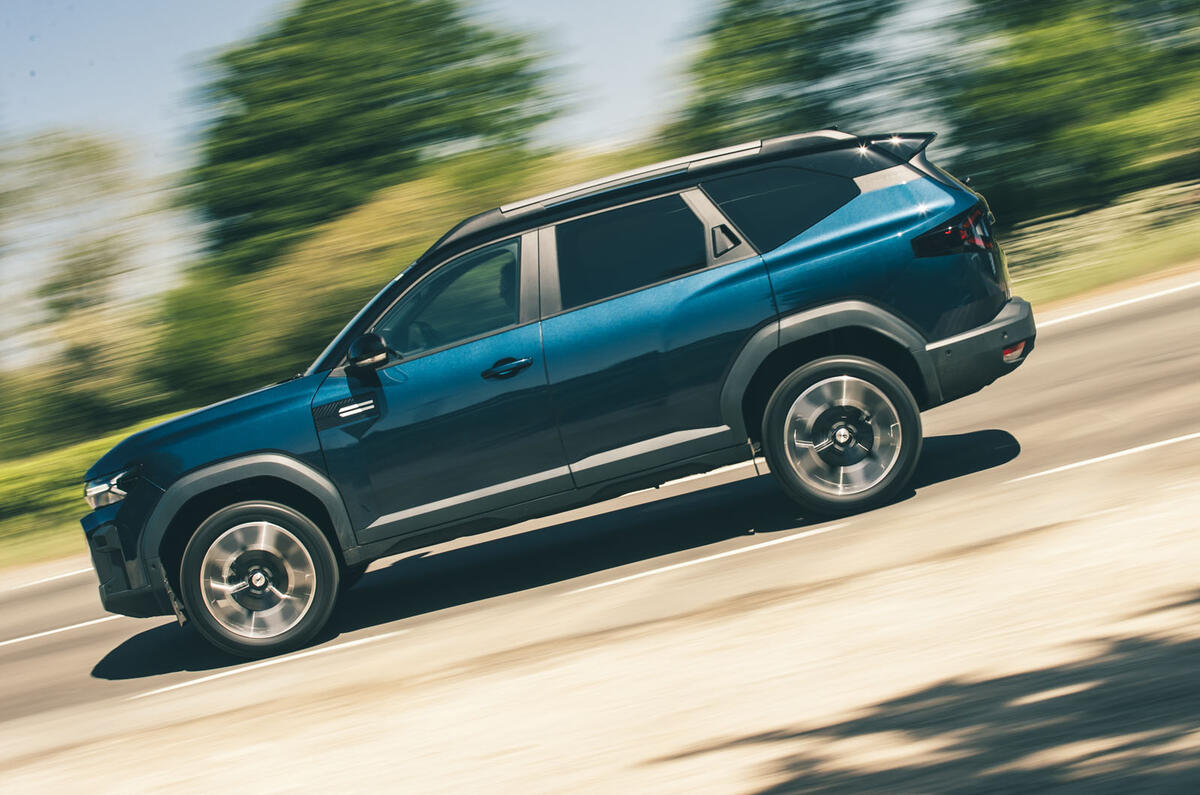
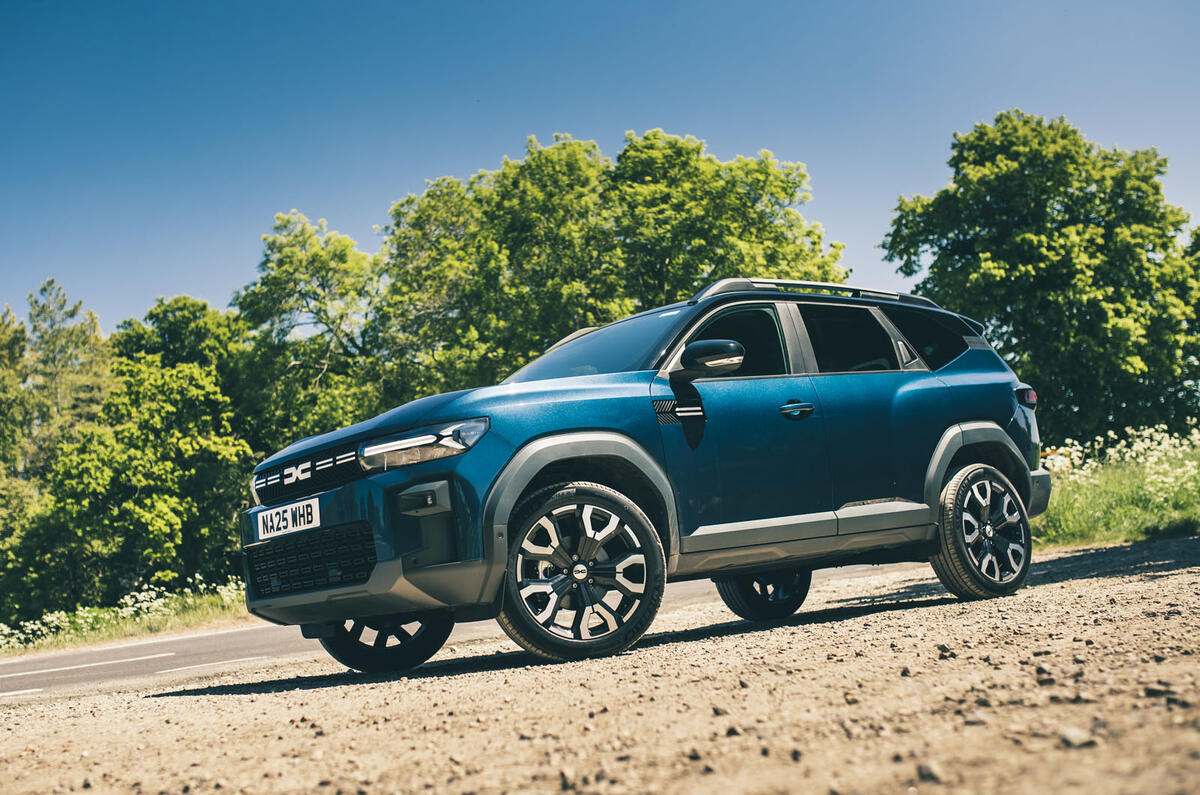
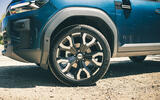
Bigster is the first Dacia to be available with 19in wheels, which come with Journey trim. They look good but don’t do the ride any favours. Expression gets 17in wheels, Extreme 18in. In addition, the mild-hybrid 4x4 gains all-season tyres for some mild off-road capability.

Technically, the Bigster is a longer Duster. It introduced a few new powertrains, but these also became available in the Duster at a later point.

Topping the engine range is a full hybrid. Fundamentally, it’s the same E-Tech hybrid system we’ve known from Renault for a few years.

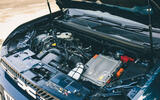
The petrol engine is mated to a clutchless gearbox where the engine can use four ratios, and the main electric motor can use two. A secondary, ISG-style motor is used to start the engine and adjust its RPM to rev-match and enable gearshifts.

This is the cheaper four-speed system rather than the five-speed version in the Renault Rafale and Austral. The difference with early Dusters is that the petrol engine is upgraded from 1.6 to 1.8 litres with an extra 18lb ft for more accessible performance. The drive battery grows from 1.2kWh to 1.4kWh. Presumably, this configuration will make its way to the Duster and other Renault Group cars in time.

The entry-level engine is a 1.2-litre three-cylinder petrol mild hybrid with a six-speed manual gearbox. In front-wheel-drive configuration, it puts out slightly more power (138bhp) than in when it launched in the Duster (128bhp). 

Another unusual aspect, given it’s derived from small cars, is that the Bigster is available with four-wheel drive. Originally, this was achieved by adding a multi-plate clutch and a propshaft to the manual mild-hybrid driveline – as is conventional for four-wheel drive systems with a transverse engine.

However, for 2026, this is being replaced with a hybrid four-wheel drive system. It is rather unusual, however, because it isn't based on the full hybrid. Instead, the new 4x4 is based around the same mild-hybrid 1.2-litre three-cylinder from the rest of the Bigster range, but with a six-speed dual-clutch automatic. This unit puts out 138bhp by itself and only drives the front wheels. Meanwhile, on the rear axle, there is a 31bhp, 64lb ft electric motor with a two-speed gearbox and a disconnect clutch. The electric portion of the drivetrain is fed by the same 0.48kWh battery as the mild hybrid version, which lives under the front seat. The engine can run on petrol and LPG, with an LPG tank in the spare wheel well, but there will also be a petrol-only version for markets where LPG isn’t readily available. That likely includes the UK.

The old manual 4x4 was the only Bigster with a multi-link rear axle, because that gave it additional articulation off-road. Curiously, however, the new, has a torsion beam like the rest of the range. This 'Hybrid 150 4x4' powertrain will also replace the manual 4x4 option in the Duster.

INTERIOR

7
Dacia Bigster review 2025 11 dash

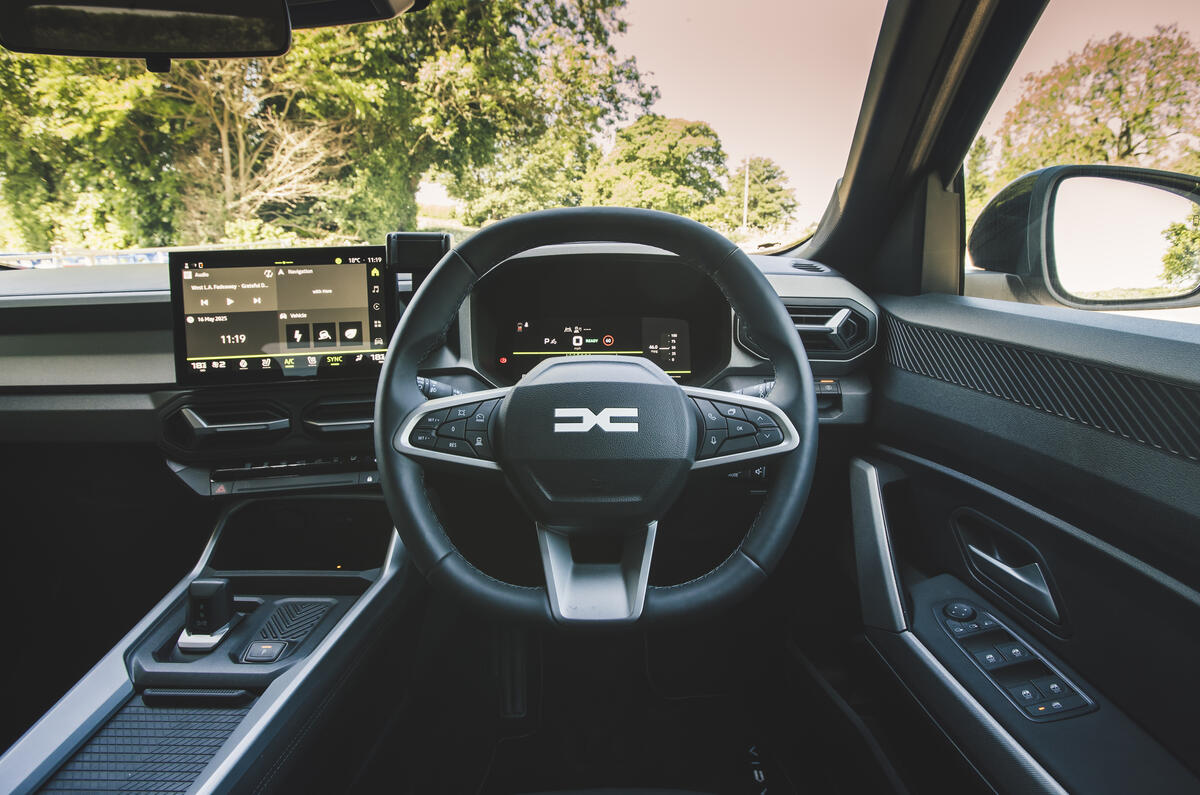
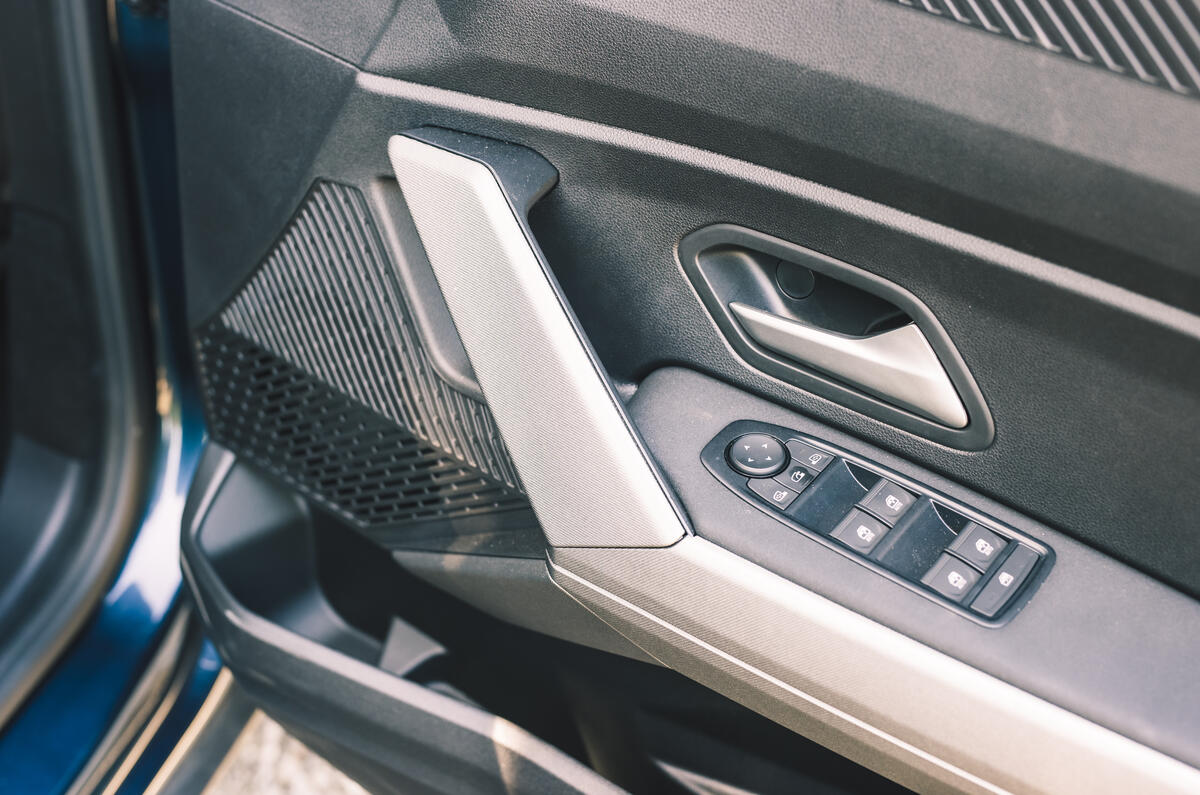
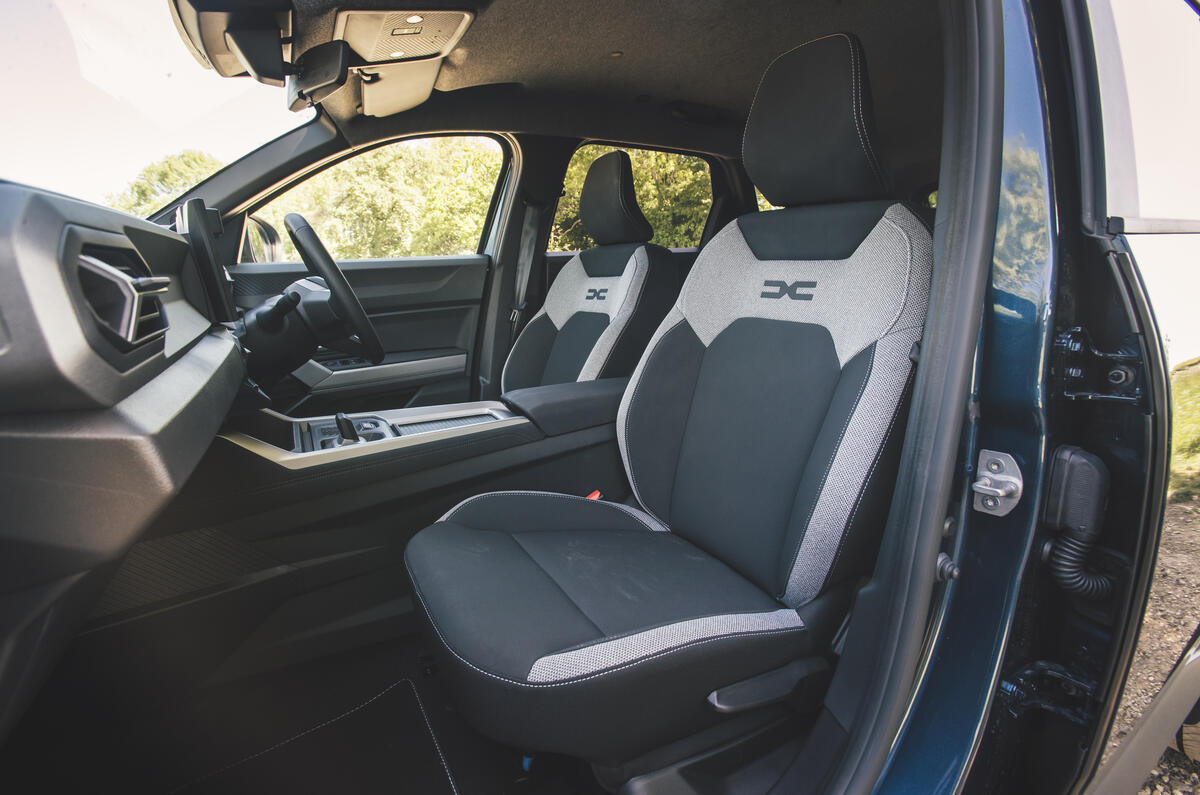
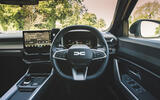
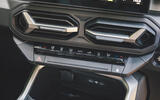
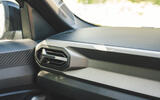
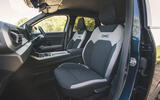
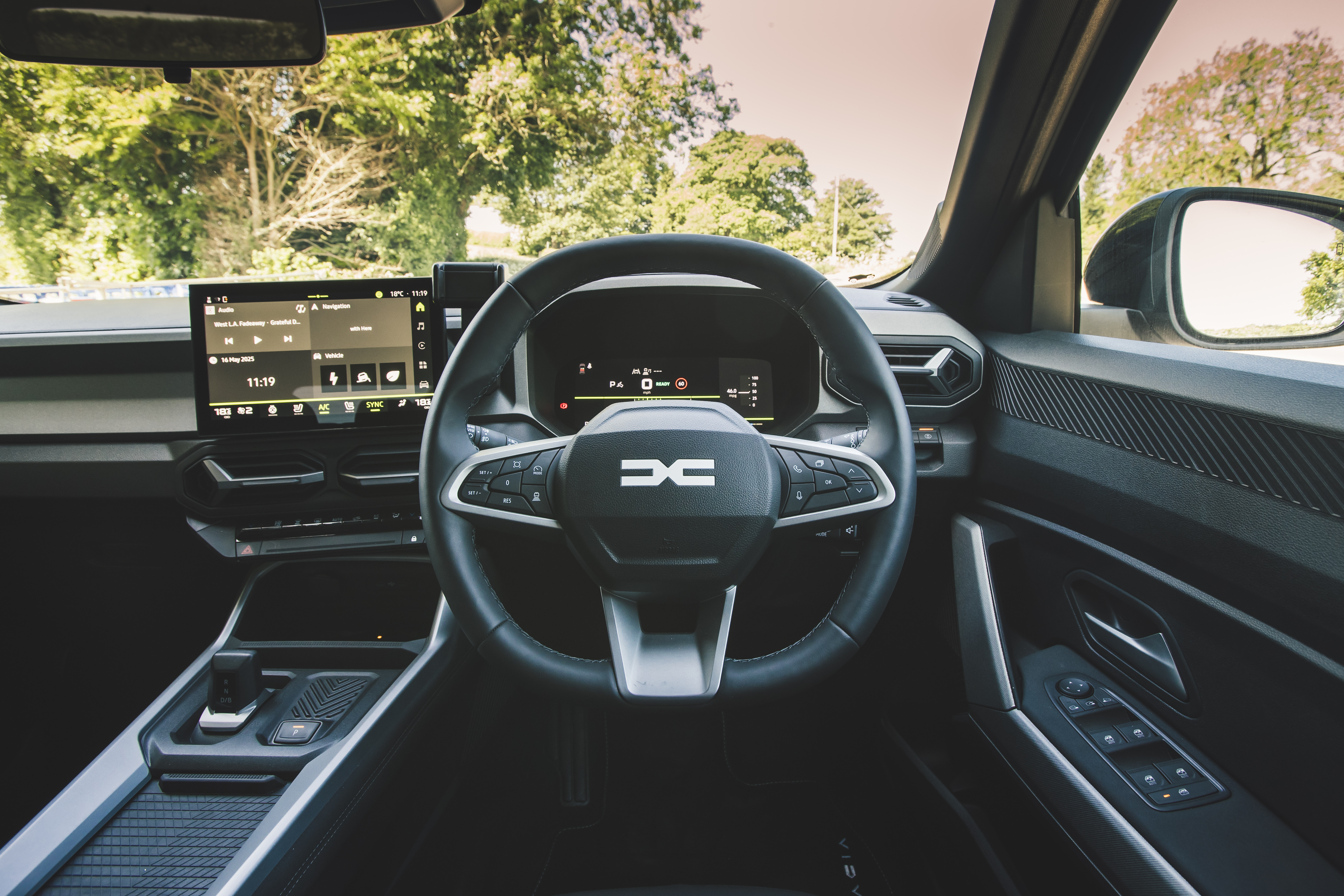
Given the Bigster and a Duster are the same from the B-pillar forwards, it’s no surprise that they are all but identical from the driver’s seat. The front seats, driving position and dashboard are much the same; it’s the second row and the luggage area that benefit from the Bigster’s bigness.

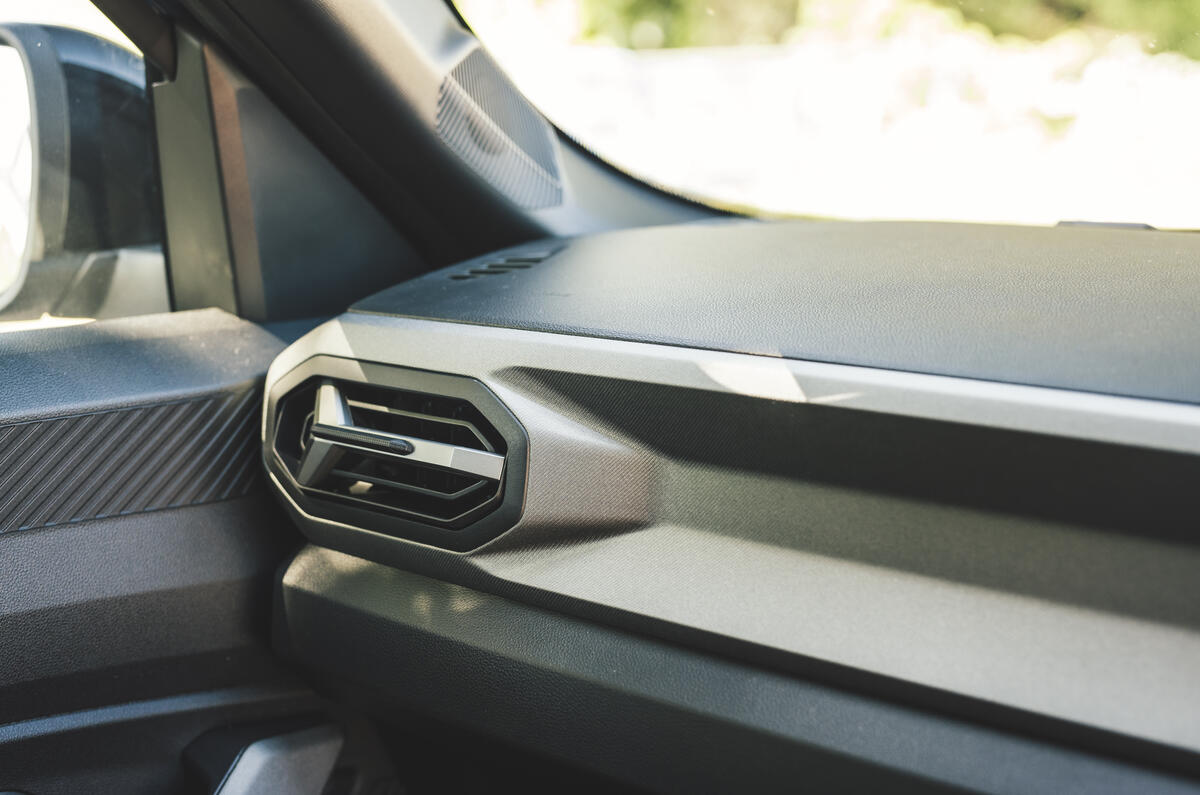
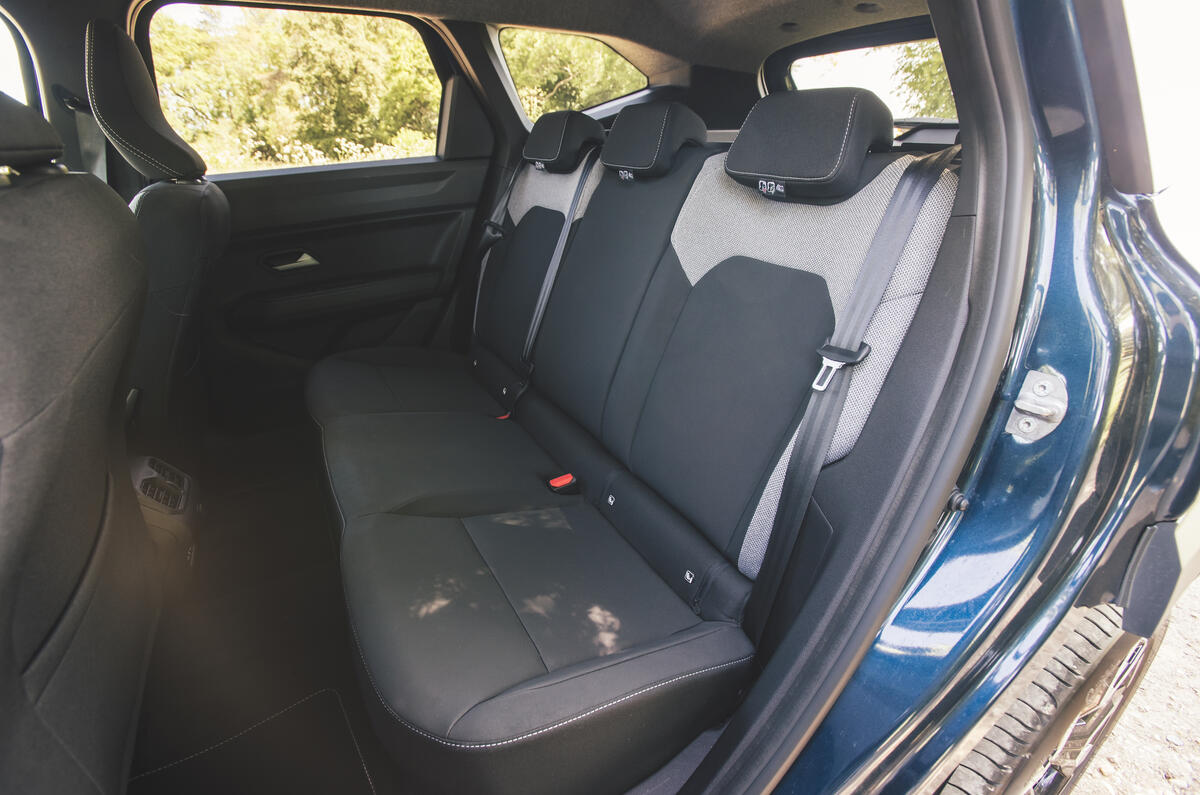
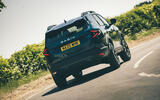
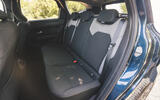
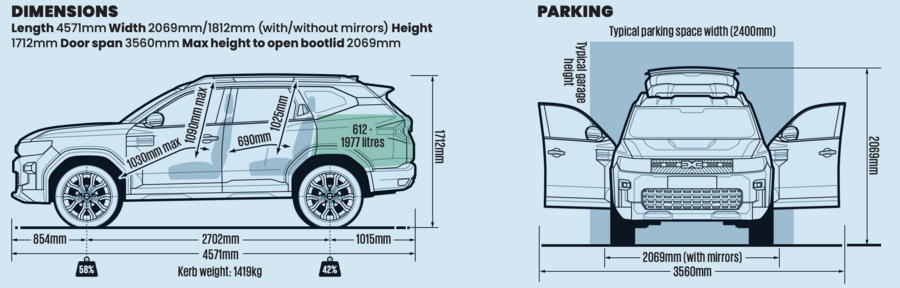
By our measurements, rear leg room is up by 50mm to 690mm. That’s down slightly on cars like the Austral and Volkswagen Tiguan but still enough for adults to have enough space. Head room is generous too, and there are two USB-C ports and a pair of air vents. Thanks to rear doors that are long enough not to look out of place on a long-wheelbase Mercedes S-Class, access is easy too.

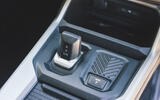
There’s a ledge in front of the gear selector that can support a mobile phone in landscape orientation, underneath the proper phone holder. Behind that is a tray with a wireless phone charger.

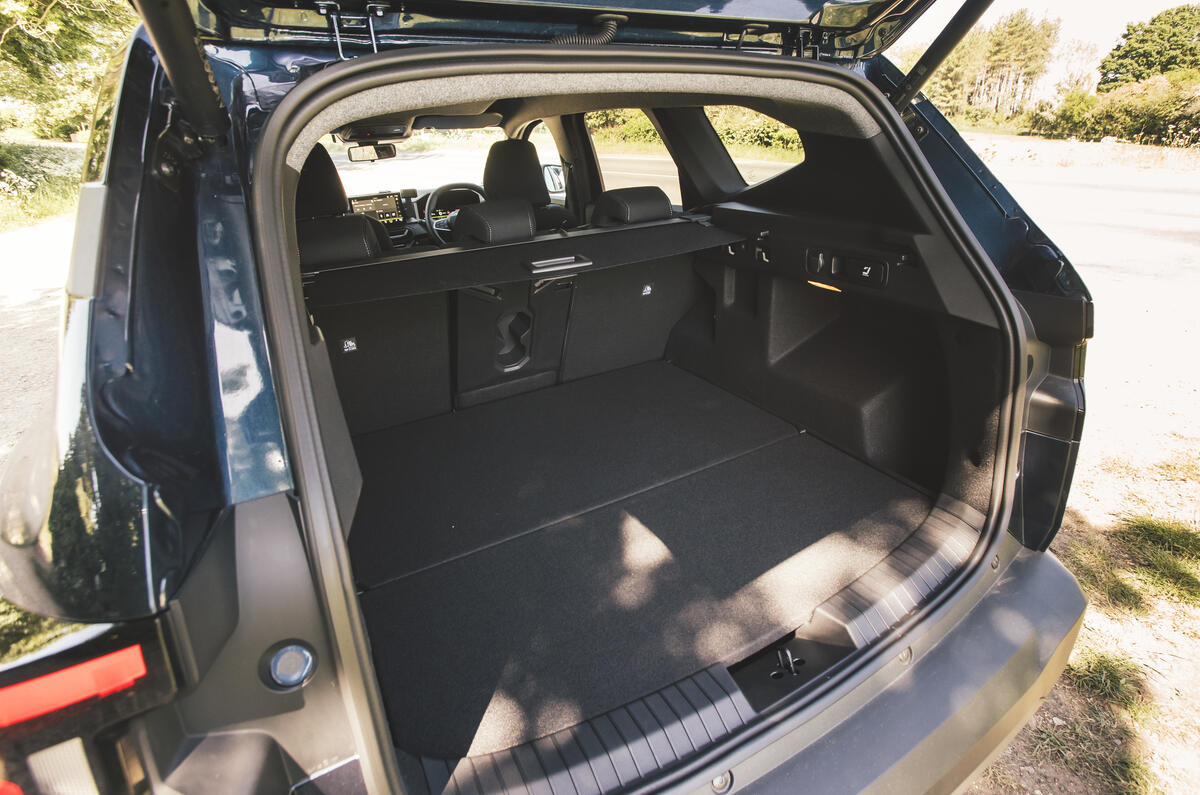
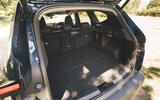
Most of the Bigster’s additional length has gone into boot space, which measures 677 litres in the FWD mild hybrid, 629 litres in the 4WD mild hybrid and 612 litres in the full hybrid, which is bigger than the Kia Sportage Hybrid’s 587 litres.

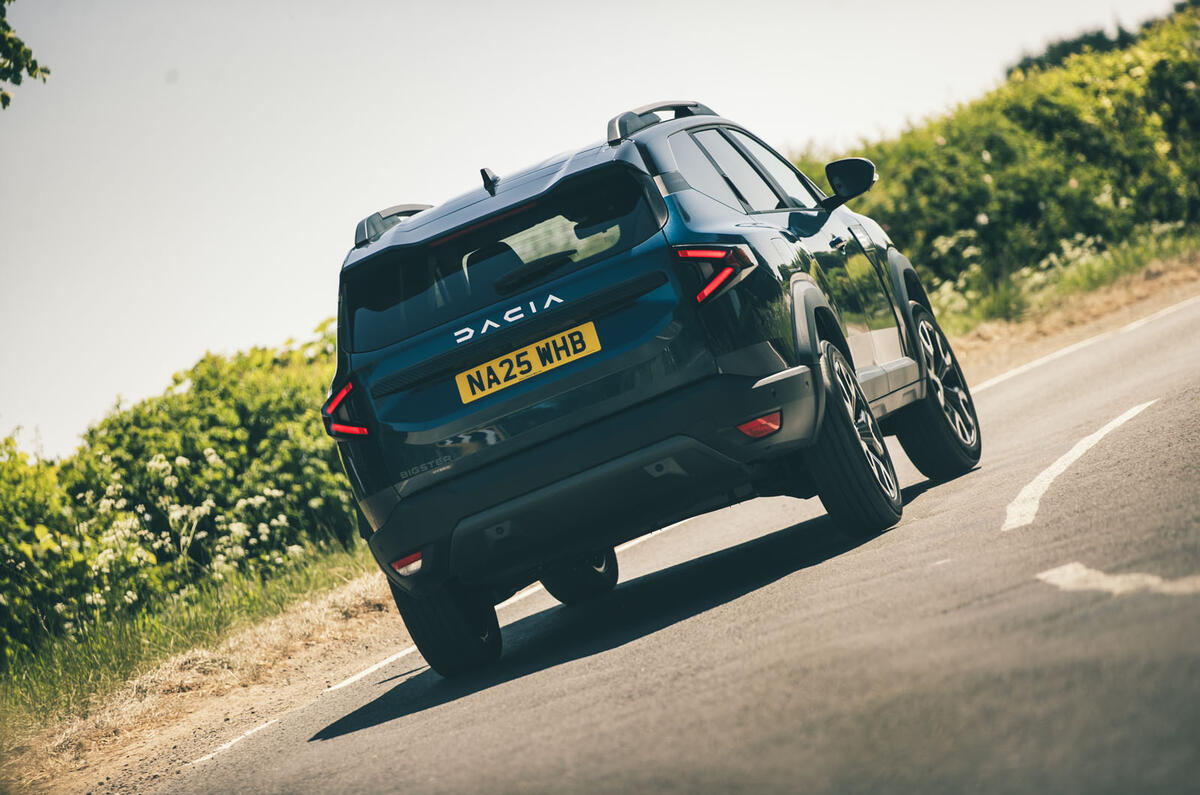
Indeed, by our measurements, the Bigster’s boot is both longer and wider than the Sportage’s. The floor is flat too, with a decent amount of space underneath, which can optionally (£300) accommodate a spacesaver spare wheel, even in the full hybrid.

Some of the Bigster’s upgrades compared with other Dacias only become obvious at second glance. This model needs to conquer Germany, where buyers have notoriously high demands, so Dacia held numerous customer clinics.

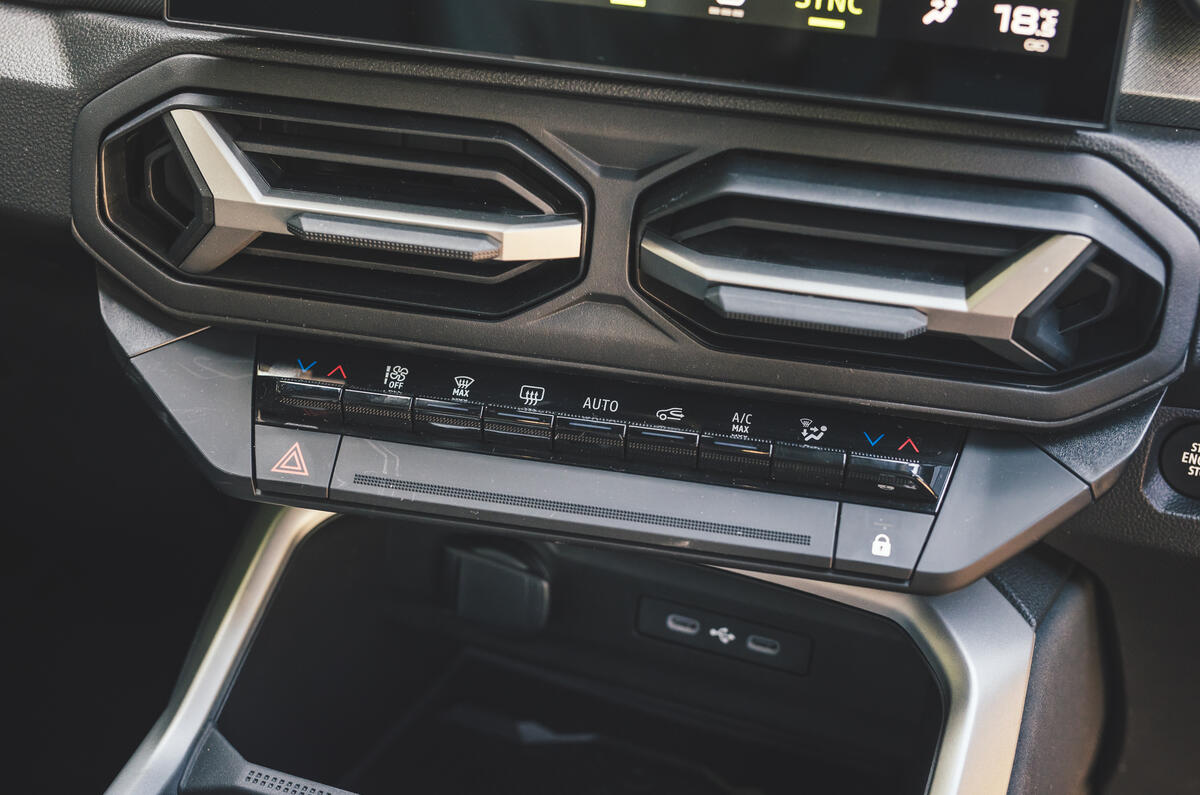
Some of the features that turned out to be non-negotiable for many buyers were dual-zone climate control (standard equipment), an electric tailgate (standard on Journey trim) and a panoramic sunroof. The sunroof is standard on Extreme and an option on Journey. At £500, it’s quite reasonably priced too, and unlike on the BMW 5 Series it actually opens.

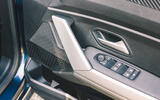
While the Bigster’s not short of equipment, some of the fixtures and fittings that are perfectly acceptable in lower segments start to look a little second-rate compared with cars like the Sportage or even the MG HS. With the exception of some fabric on the armrests and where you might rest your left knee against the centre console, hard plastics dominate. Taller testers also took issue with the seats, which lack thigh support and front-to-rear adjustability.

Multimedia

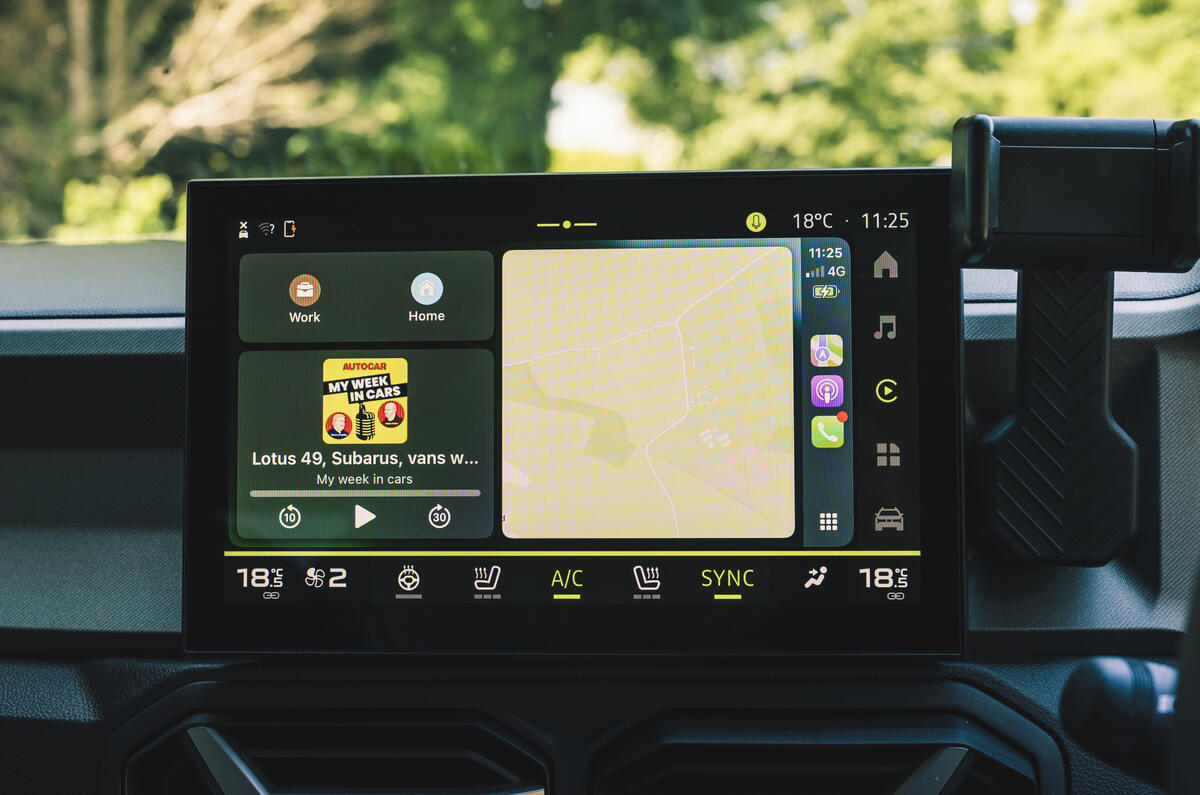
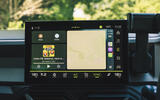
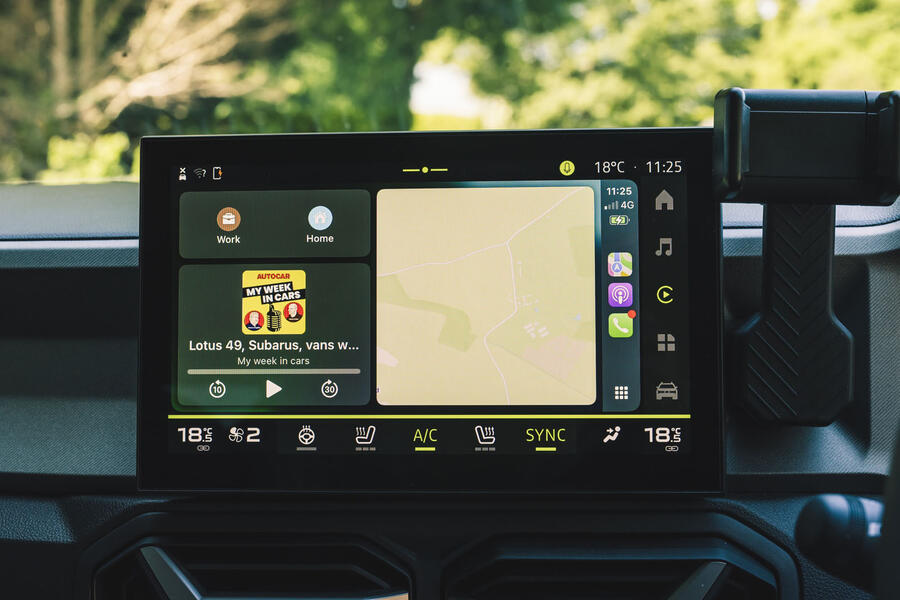
You certainly wouldn’t buy a Dacia if fully featured multimedia was a priority, though the relative simplicity might be a draw to some. The on-screen buttons are large, the menus are uncomplicated and the structure is easy to fathom.

The built-in navigation isn’t a patch on third-party applications like Google Maps or Waze for clarity or traffic awareness but could be useful in a pinch, and the screen generally doesn’t respond particularly quickly. The whole thing seems to be developed with the assumption that most drivers will just use Apple CarPlay or Android Auto (both available with or without a wire), which is probably accurate.

ENGINES & PERFORMANCE

7
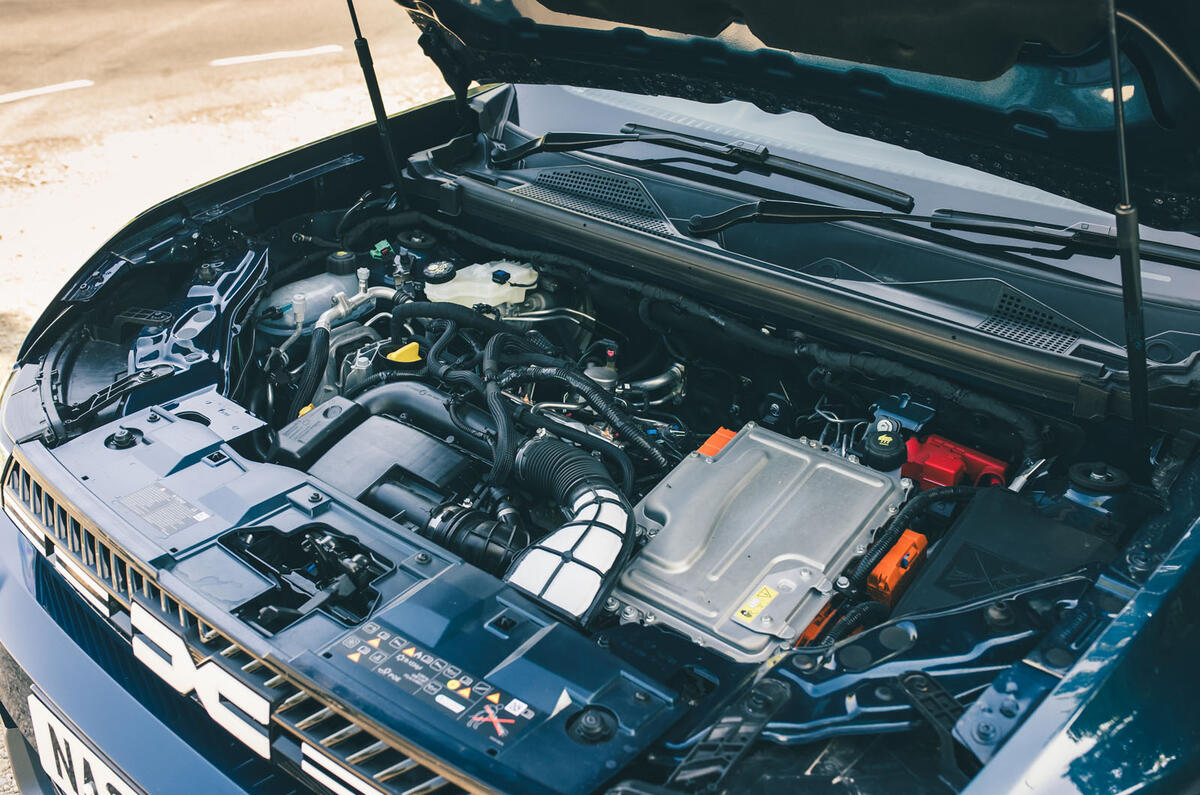
Dacia Bigster review 2025 21 engine bay

We’ve driven the Mild Hybrid 140 and Hybrid 155 versions of the Bigster, and there are some clear differences between the two powertrains. 

Because there is no clutch, the full hybrid always sets off on the electric motor, and because it is reasonably powerful, at 50bhp, the engine might not fire up for a long time, particularly at lower speeds.

The six-speed manual gearbox lacks feel but has an easy throw and pairs nicely with the 1.2-litre engine.

When it does, it may either sit at a fixed rpm to spin the generator and top up the battery, or it may power the car directly. It sounds somewhat coarse when it’s working hard, but because it’s torquier than in previous iterations, that’s not actually too often.

Some of the E-Tech system’s other less pleasant traits – such as slow gearchanges and keeping the engine revs high on inclines – haven’t been completely eliminated but are noticeably reduced and rarely intrusive.

The hybrid system with the 1.6-litre engine could sometimes use up most of its battery, impacting performance, but this new version is much more diligent about replenishing the battery, which itself is larger too. This has eliminated such issues.

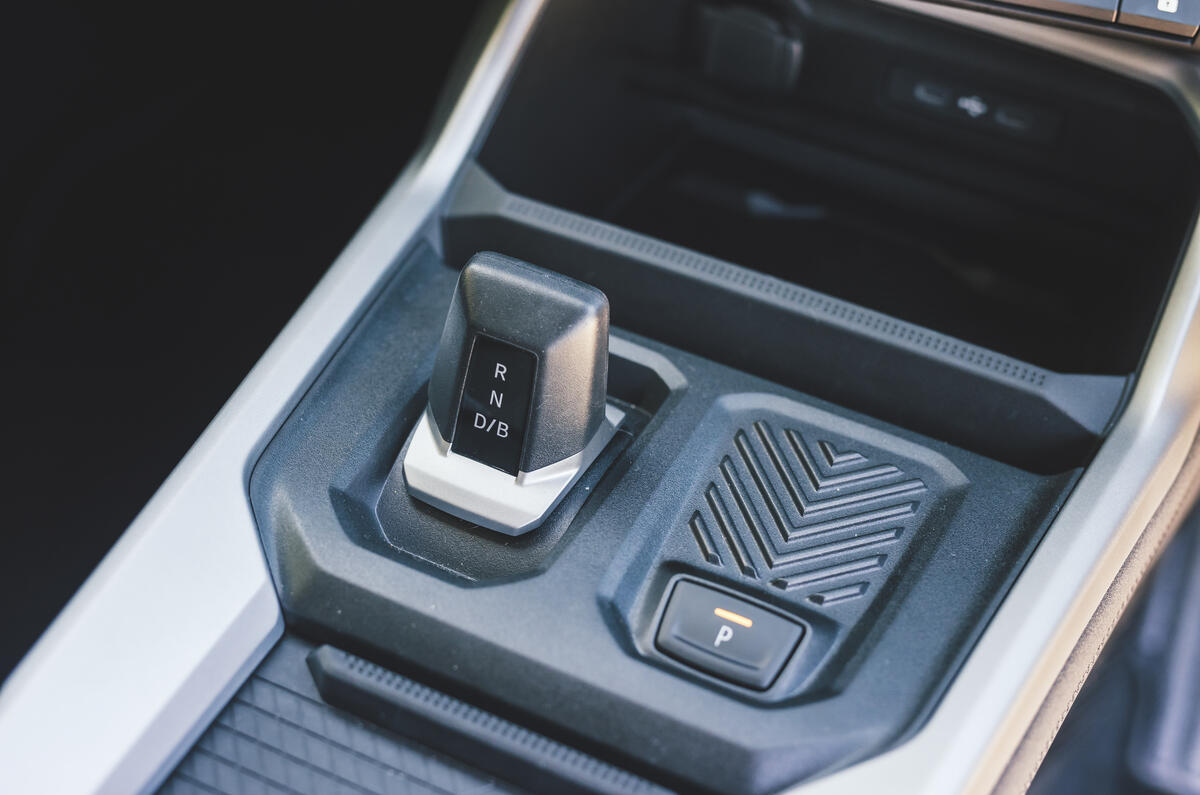
Both the accelerator and brake pedal are easy to modulate, but we wish the regenerative braking was handled differently. When you lift off the accelerator in D, there is fairly strong regen, which seems unnecessary since there is also a B mode on the gear selector for even stronger regen. The Bigster lacks an auto-hold function too and will always creep forwards from a stop when you release the brake pedal.

Despite being slightly heavier, the Bigster enjoys a useful bump in performance compared with the Duster, requiring 0.7sec less to get to 60mph and 4.5sec less to reach 90mph. It’s still clearly slower than the Kia Sportage Hybrid but no less pleasant to drive.

We found the Bigster’s braking performance a little underwhelming. We recorded a 47.5m stopping distance from 70mph on our first stop, which is just adequate. All our subsequent stops were around 50m, however. Similarly, a 59.2m stopping distance in the wet is okay, but the Mazda CX-30 needed just 53.9m.
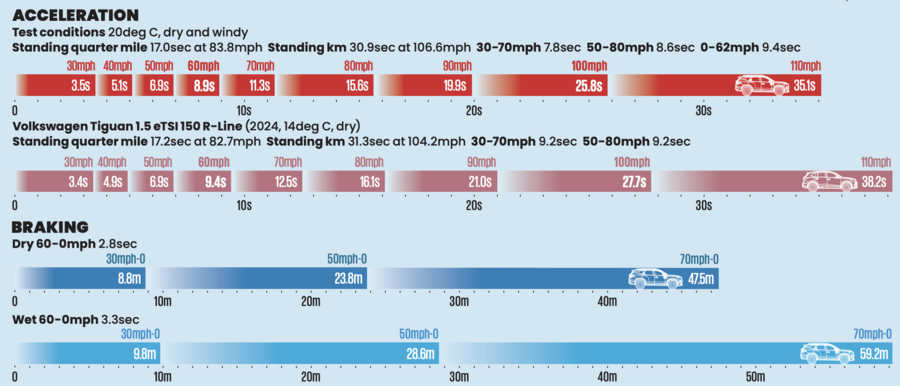
The front-wheel drive mild hybrid may be slightly less powerful than the full hybrid, but there is little to separate them when it comes to accelerative performance. Indeed, it is still more of a sauntering sort, and takes 9.8sec to hit 60mph, but that’s only 0.1sec adrift of the full hybrid. 

There’s an easy throw to the mild hybrid's six-speed manual gearbox and a clearly defined biting point to the clutch. There’s little resistance or feel when shifting; doing so adds only a modicum of engagement to the driving experience. 

That being said, it pairs well with the engine: the ratios are fairly short, and if you pull out of a junction with verve, you will soon be grabbing second.

Speed builds well enough, and while this version of the Bigster is by no means quick, it’s a smooth delivery with enough pace for a car of this size and type – although five-up and loaded with luggage, we imagine it will feel rather staid. 

We've only had a relatively brief drive of the new Hybrid 150 4x4, and we'll get to its off-road performance, but on the road, we’d rather be in the old 4x4 manual or the full hybrid. The hybrid 4x4 can shut off the engine and drive on the electric motor for short distances, which nice, but most of the time it’s quite a rough engine with plenty of vibrations at low revs, and the gearbox is minded to keep it in that range. Even with a stab of throttle, it takes a while for the gearbox to wake up. There are shift paddles, but there might as well not be because the Bigster still lacks a locked-in manual mode or a tachometer.

Putting it in 4x4 Lock mode makes it a lot more pleasant to drive as the gearbox seems to keep the engine revs up more and there’s more help from the electric motor. I’d need more time in it to say for sure, but presumably, leaving it in 4x4 Lock mode all the time would deplete the small battery and make the fuel consumption worse.

RIDE & HANDLING

8
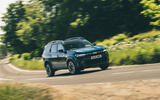
Dacia Bigster review 2025 22 front cornering

Dacia’s low-cost philosophy means that the majority of Bigsters aren’t blessed with the most sophisticated suspension or the most generous sound insulation. Apart from the 4WD versions, all have a torsion-beam rear axle when multi-links are more common in the class, and it was never going to get the highest-quality dampers.

But Dacia has shown in the past that the set-up and tuning are just as important as the hardware, and so it proves again with the Bigster. Like the Duster, it is resolutely not sporty, but there is a general consistency to the way it drives that makes it quite enjoyable in an unassuming way.

Being a fairly slab-sided SUV, the Bigster isn’t particularly agile, with a fair amount of roll through sharper corners.

While the steering is fairly slow, light and not the most precise across all versions, the end result is intuitive and relaxing, and more appropriate than a hyperactive rack would be. The Bigster responds to inputs in a natural way too.

Although it rolls a fair bit and runs out of grip relatively soon, it does so progressively, and the steering will warn you before it happens. Lifting off the accelerator neatly neutralises any understeer and the stability control generally works unintrusively.

The full hybrid we drove came fitted with Michelin e-Primacy tyres, which are very economy-focused. We suspect that even mid-range Primacy 5 rubber would noticeably sharpen the handling with no penalty in comfort and only a slight one in economy.

The benefit of the Bigster’s soft suspension is that it rides fairly well, irrespective of powertrain. It’s particularly adept at ironing out the big bumps, giving it a pliant high-speed gait. Allowing for the full hybrid’s 19in wheels (albeit with a fairly generous 55-aspect sidewall), it handled the sharper stuff relatively well too. The ride never feels brittle; at worst a little clunky. 

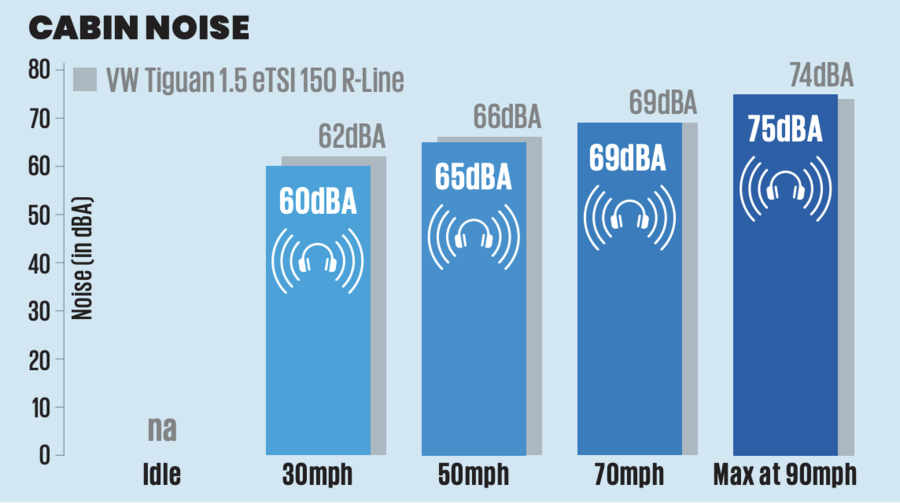
Acoustic refinement paints a more mixed picture. A reading of 69dBA at 70mph shows that more noise enters the cabin at a cruise than in most other cars in the class, even if it stays at an acceptable level. 

More annoying were the slight vibrations that gently buzzed through the structure at motorway speeds. It’s hard to pinpoint the source, but given they were accompanied by some distant humming from the engine, we suspect built-to-a-cost engine mounts.

The mild hybrid is equally competent when it comes to ironing our lumps and bumps. We drove an Extreme-spec FWD version and it came fitted with smaller 18in alloys, and these are the ones we’d go for. The tyres have a bit more sidewall than those on the 19s, and we were impressed by how the Bigster handled beaten-up roads in town. 

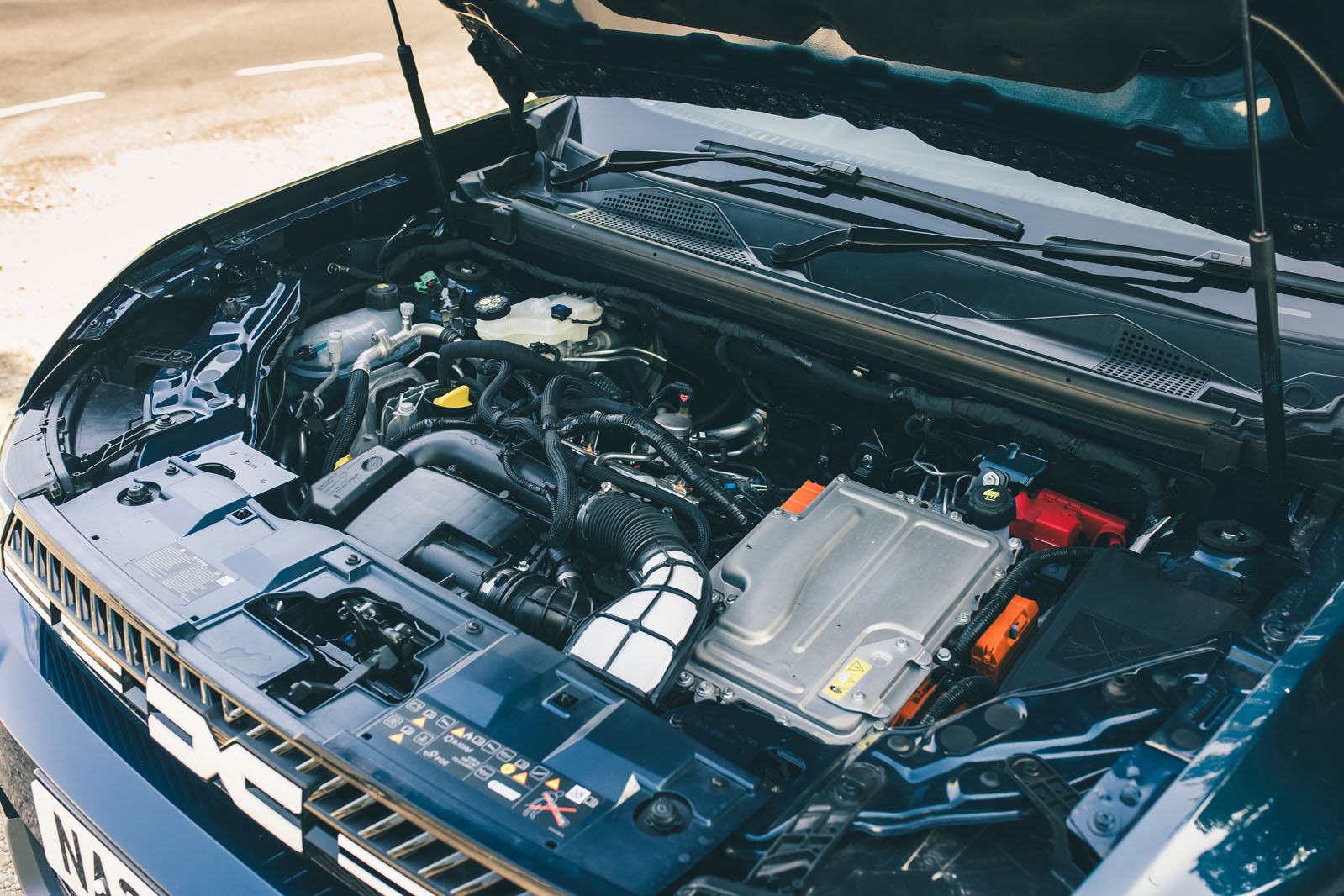
At around 4000rpm, the engine sounds rather thrashy, and even at a standstill there’s a faint clatter from under the bonnet. This tends to settle down at a 70mph cruise on the motorway, but here the Bigster suffers from plenty of wind roar – although a lack of sound deadening is the likely cause of noise intrusions into the cabin.

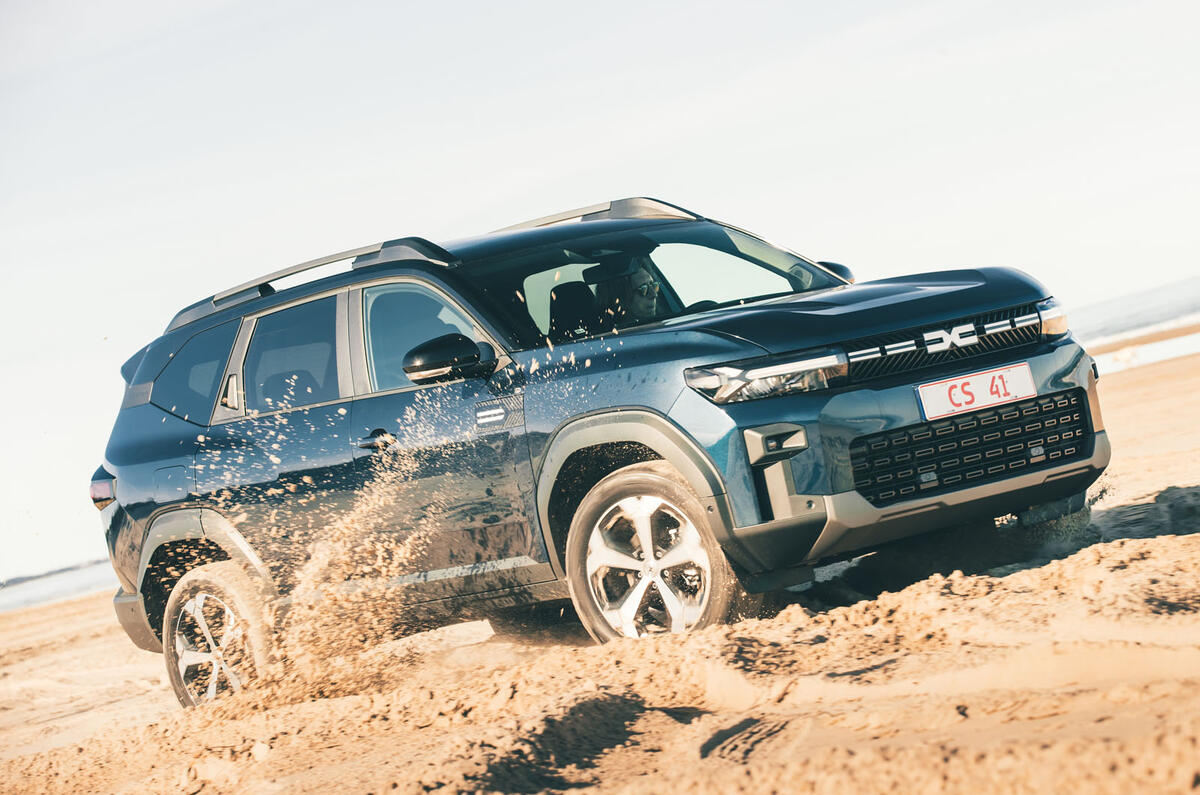
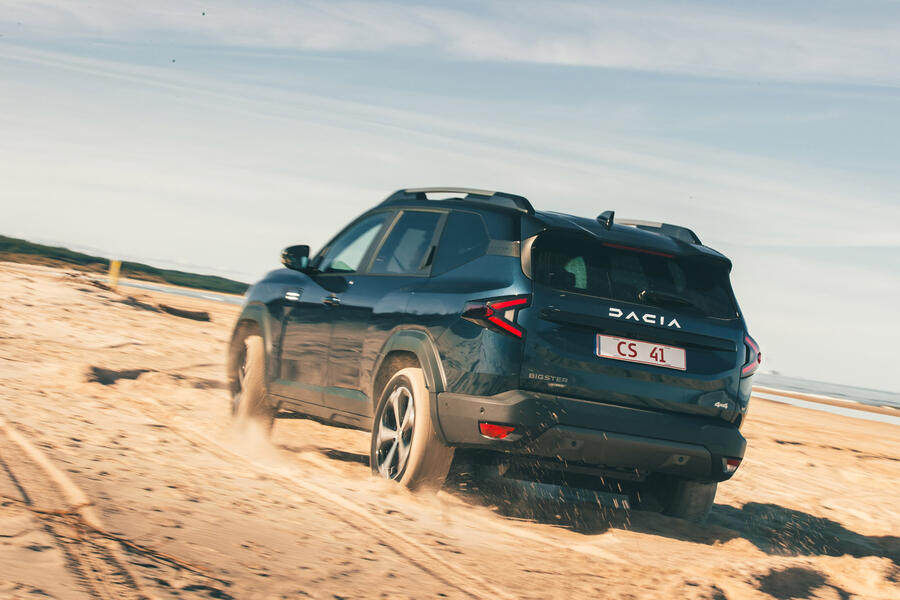
The Hybrid 150 4x4 has much the same ride and handling characteristics as any other Bigster on the road, which we like. We got to try it at the Car of the Year Tannistest, which is held, usefully, by a sandy beach that you’re allowed to drive on. There’s still a drive mode dial with Auto, Eco, Snow, Mud/Sand and 4x4 Lock modes. Auto and Eco supposedly will engage the rear axle when there’s a loss of traction, but on very soft sand, the car would still get stuck. When we then switched to Mud/Sand or Lock, it would neatly motor out, which proves that the system does work to give the Bigster a useful dose of extra traction on loose surfaces, which is the main aim. We didn’t do any hardcore off-roading, but then that’s probably not the point anyway. Dacia promises that the hybrid 4x4 is better off-road than the old mild hybrid manual, despite having less axle articulation. The four-wheel drive system also won’t overheat like the viscous coupling on the old version could do in heavy use.
Assisted Driving 

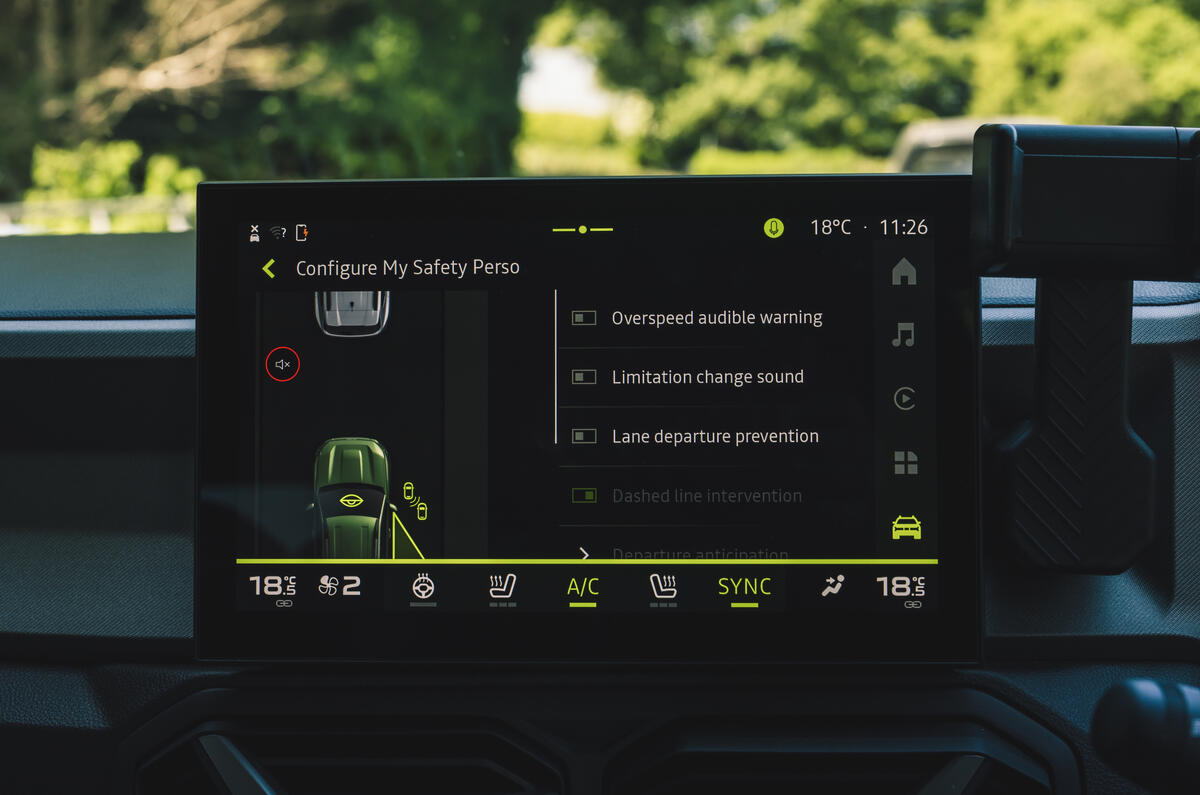
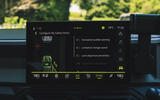
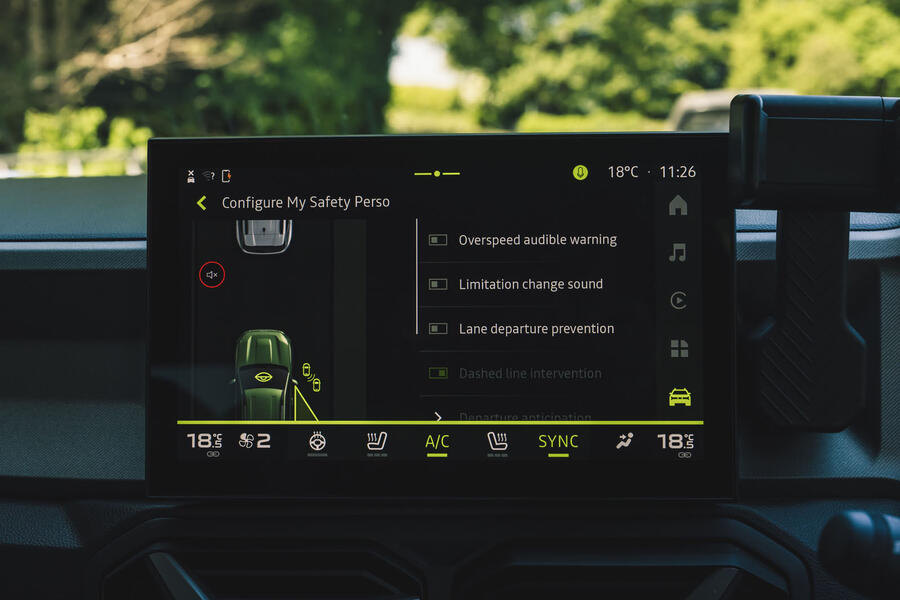
Like all recent Renault and Dacia products, the Bigster features ‘My Safety Perso’, where you can pick which assisted driving systems you want and which ones you don’t. When you get into the car from then on, you simply press a physical button twice to load this configuration.

While this makes it easy to silence the undesirables, the Bigster’s other systems leave some room for improvement. There’s no blindspot monitoring, for one. Some versions (including our test car) are fitted with adaptive cruise control, which is fairly smooth and not overly given to braking for phantom obstacles, but it starts slowing down for slower traffic very early, and even its closest following distance is quite far.
MPG & RUNNING COSTS

10
Dacia Bigster Hyrbid 2025 front cornering sand

Affordability is Dacia’s whole raison d’être, and unsurprisingly the Bigster does extremely well here. Prices start from around £25,000 for the Mild Hybrid 140 in Expression trim, and apart from heated seats there isn’t much essential equipment it lacks.

The Hybrid 155 carries a £3000-ish premium. This may seem a lot, but it will be more economical and also adds an automatic gearbox. Journey and Extreme trims add £1250 and £1500 to the price respectively. 

My preferred spec would be the mild hybrid in Expression trim, because apart from heated seats it has everything I need. I prefer its denim seat fabric and smaller wheels too. The irony of budget brand Dacia is that most buyers go for the most expensive trim and engine.

Journey is more road-focused and gains 19in wheels and the electric tailgate, while Extreme is more adventure-themed, with 18in wheels, the panoramic sunroof and the modular roof bars.

The MG HS is the only rival that matches the Bigster on price, but that’s for a standard petrol version. Dacia offers some very competitive finance deals as well.

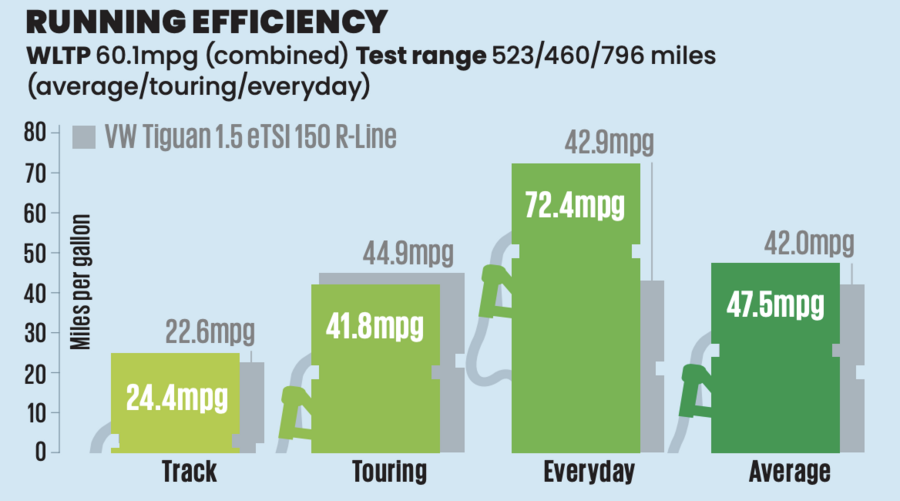
We found our full hybrid test car very economical in the real world, so it should prove cheap to run as well as to buy. It behaved slightly unusually in our economy tests at Horiba MIRA, struggling with the combination of 70mph and banked turns and returning a slightly lacklustre touring economy figure of 41.8mpg.

However, it more than made up for this with a stellar urban economy of 72.4mpg. In daily, motorway-heavy running, we generally observed mid-50s MPG.

We saw an average fuel economy of around 45mpg for the mild hybrid model, and slightly more on motorway stints. That’s almost as good as the full hybrid, so if you're happy to stick with a manual gearbox, the mild hybrid's is still the smarter choice.

VERDICT

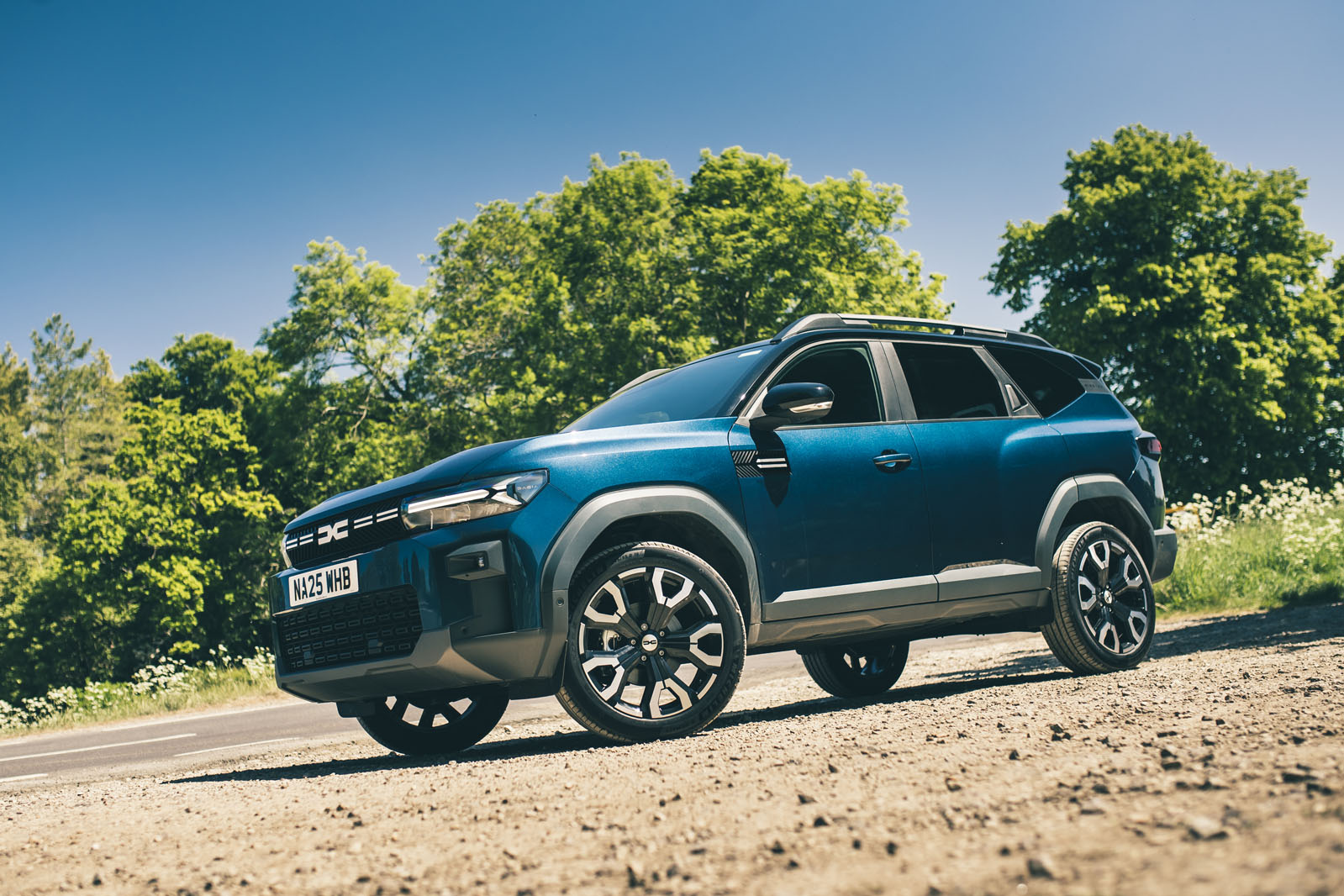
Dacia Bigster review 2025 26 front static

Although the C-segment is only one step up from the B-segment, the difference seems bigger, particularly for Dacia. Where the Duster is simply a good car at an unbeatable price in the B-segment, the Bigster wades into a more serious battle with only a slightly higher grade of weapons.

Is the Bigster on the same level as the Hyundai Tucson, Volkswagen Tiguan or Nissan Qashqai? Quite simply, no: it can’t match those cars for interior quality, tech features or sophistication on the road. But then it’s not priced to be. And, equally, it’s not a million miles off.

The back-to-basics manual Bigster is the pick of the line-up for me. Simple, practical and robust.

If you’re not bothered by the handful of concessions to value that Dacia has made, this is still a blinder of a deal – for a car that is roomy, economical, well equipped and broadly quite nice to drive. Dacia does it again.

Which leaves the question which version to go for. We think the Mild Hybrid 140 is the pick of the line-up, because it's natural to drive, cheaper than the full hybrid and almost as economical. We need to do more testing of the Hybrid 150 4x4. On paper, it will be an improvement over the manual mild-hybrid 4x4 for many people, with lower fuel consumption and only two pedals, but if we were after a Bigster with some off-road capability, we’d be hunting out a last-of-the-line 130 4x4 manual.

Sam Phillips

Sam Phillips
Title: Staff Writer

Sam joined the Autocar team in summer 2024 and has been a contributor since 2021. He is tasked with writing used reviews and first drives as well as updating top 10s and evergreen content on the Autocar website. 

He previously led sister-title Move Electric, which covers the entire spectrum of electric vehicles, from cars to boats – and even trucks. He is an expert in new car news, used cars, electric cars, microbility, classic cars and motorsport. 

Sam graduated from Nottingham Trent University in 2021 with a BA in Journalism. In his final year he produced an in-depth feature on the automotive industry’s transition to electric cars and interviewed a number of leading experts to assess our readiness for the impending ban on the sale of petrol and diesel cars.

Illya Verpraet

Illya Verpraet Road Tester Autocar
Title: Road Tester

As a road tester, Illya drives everything from superminis to supercars, and writes reviews and comparison tests, while also managing the magazine’s Drives section. Much of his time is spent wrangling the data logger and wielding the tape measure to gather the data for Autocar’s in-depth instrumented road tests.

He loves cars that are fun and usable on the road – whether piston-powered or electric – or just cars that are very fit for purpose. When not in test cars, he drives an R53-generation Mini Cooper S.