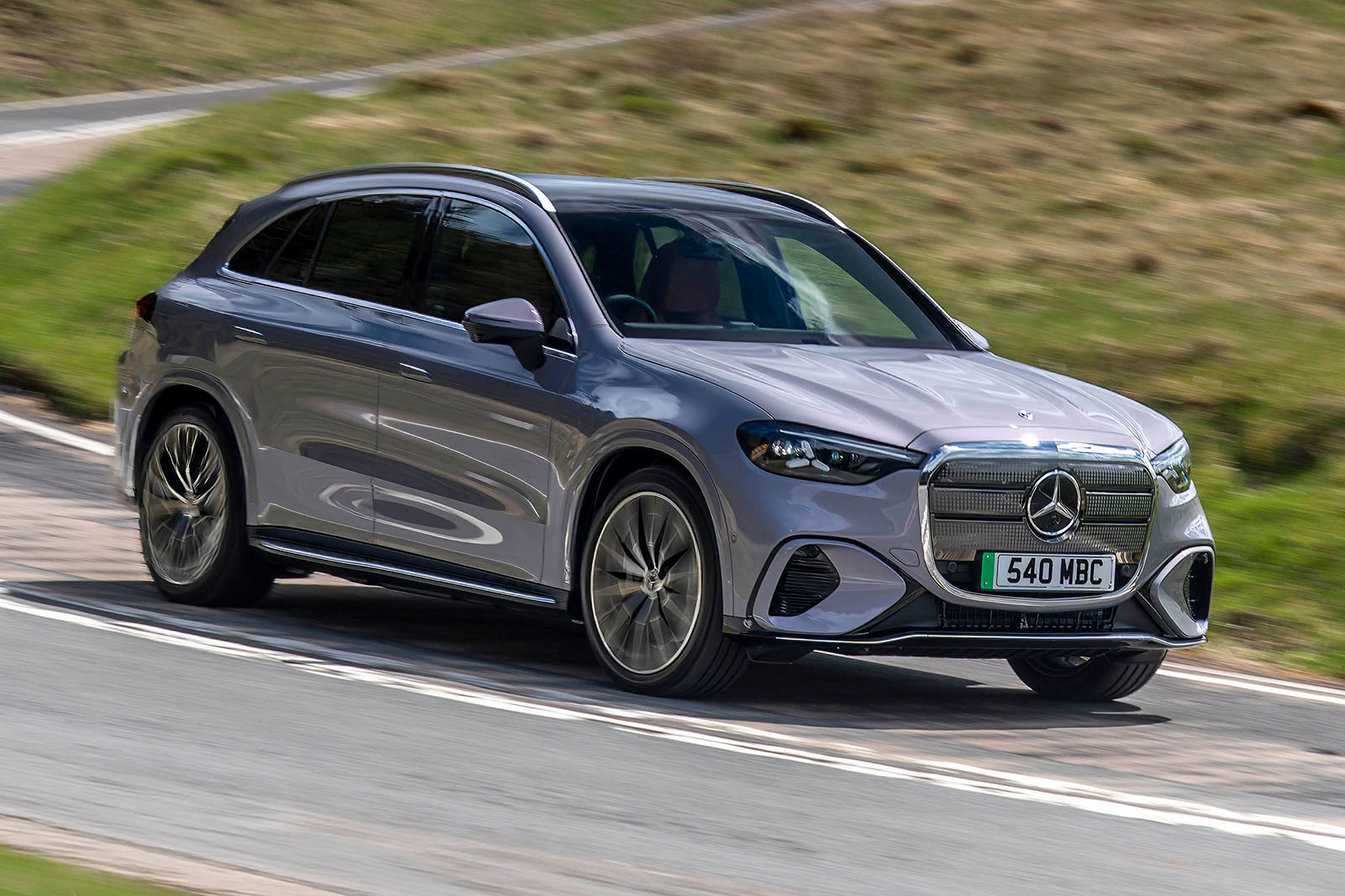
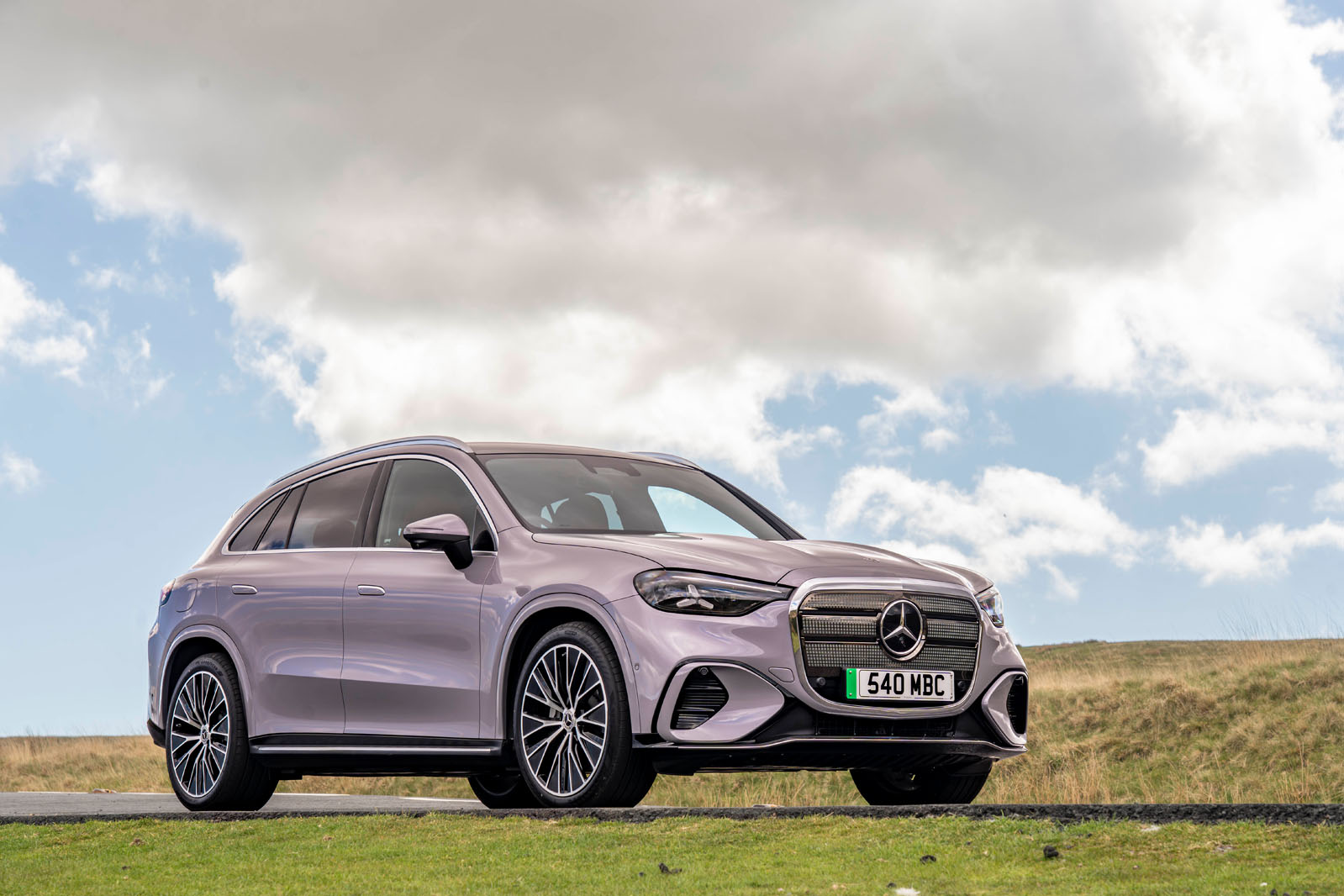
Familiar styling conceals total transformation for brand's best-seller as it turns electric to face the BMW iX3

Find Mercedes-Benz GLC Electric deals
Other Services
Sell your car
84% get more money with

I don’t know about you, but my home doesn’t have a four-dimensional surround sound system or a 39.1in touchscreen and it can’t autonomously reverse itself 120 metres back down a winding alley if it gets stuck. It certainly doesn’t have an electronically opacifying sunroof. 

But home is exactly what the new Mercedes-Benz GLC Electric is meant to feel like. In a bid to re-up its credentials as one of the world’s leading purveyors of supremely comfortable and generously equipped cars, Mercedes pledges that all its new cars will be so cosseting, intuitive and tastefully appointed that you get the “welcome home” feeling whenever you step aboard. 

It’s a refreshingly warm and fuzzy rhetoric that smartly runs counter to the growing perception of modern cars as sleek, soulless Swiss army knives on wheels with unbelievable functionality but little in the way of cosy familiarity - and it’s first embodied by this bold new electric equivalent to Mercedes' best-selling model. 

Like its closest rival, the BMW iX3, the new GLC with EQ Technology is technically unrelated to its hugely popular, combustion-engined namesake, instead being based on a new-generation, electric-native platform that promises huge advances in performance, utility and packaging compared with the structures its manufacturer used for its first-generation EVs. 

For BMW, that’s the Neue Klasse platform; here it’s the new MB.EA platform that Mercedes has developed for a new range of mid-sized EVs, which will include a closely related electric C-Class, to be revealed imminently as a rival to BMW’s freshly revealed i3 saloon.

Advertisement
Back to top

DESIGN & STYLING

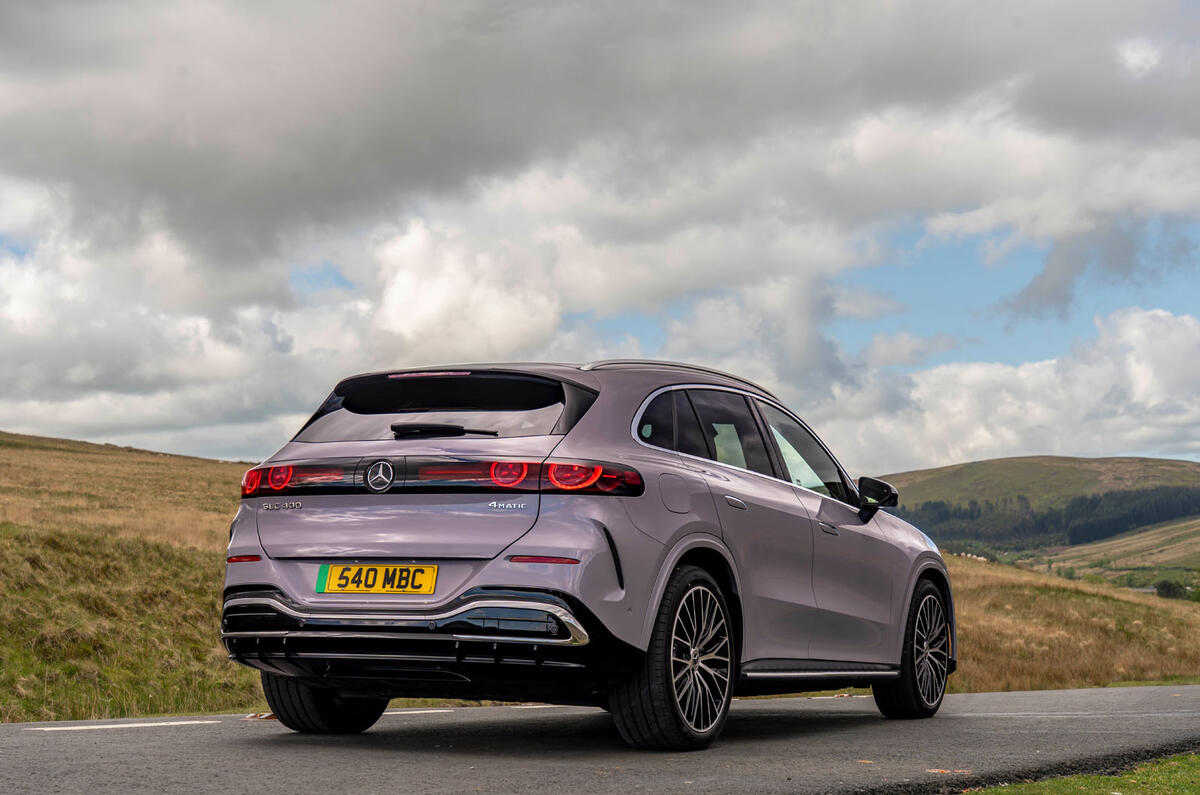
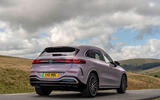
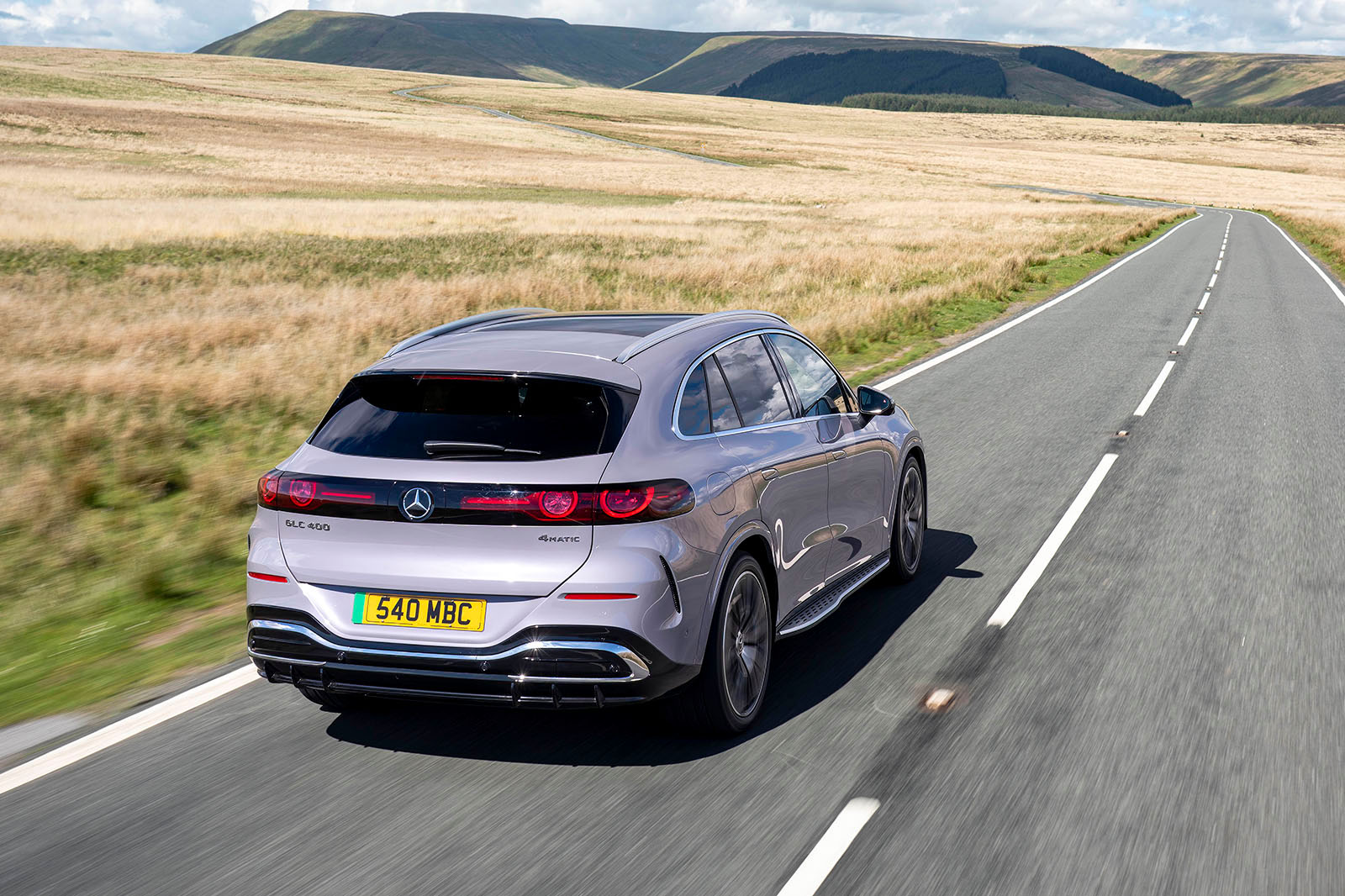
GLC rear driving

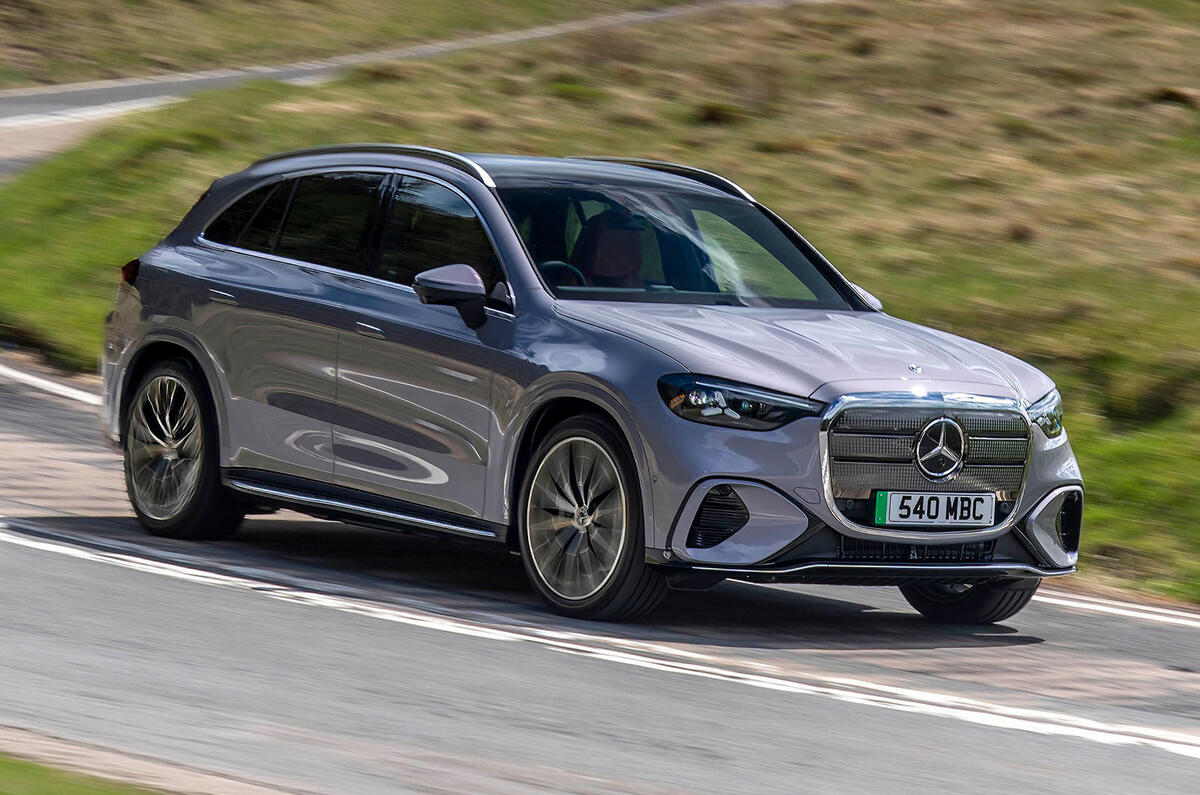
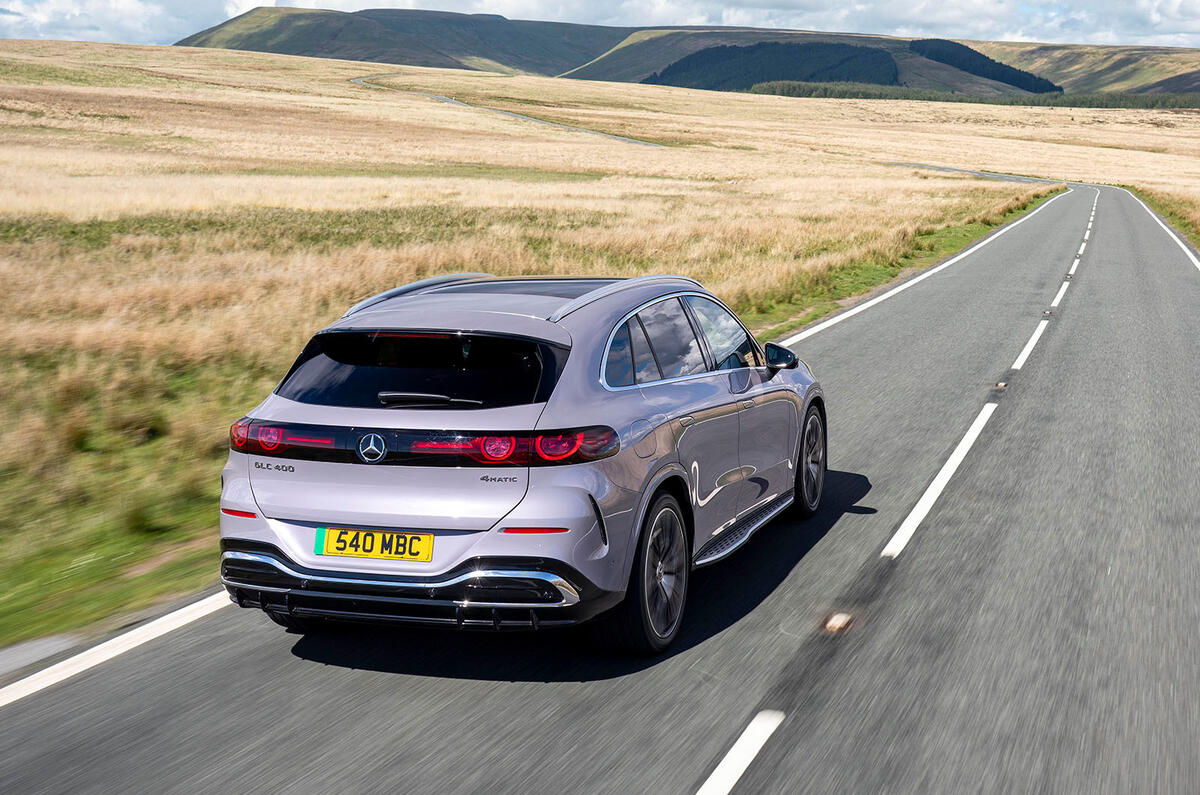
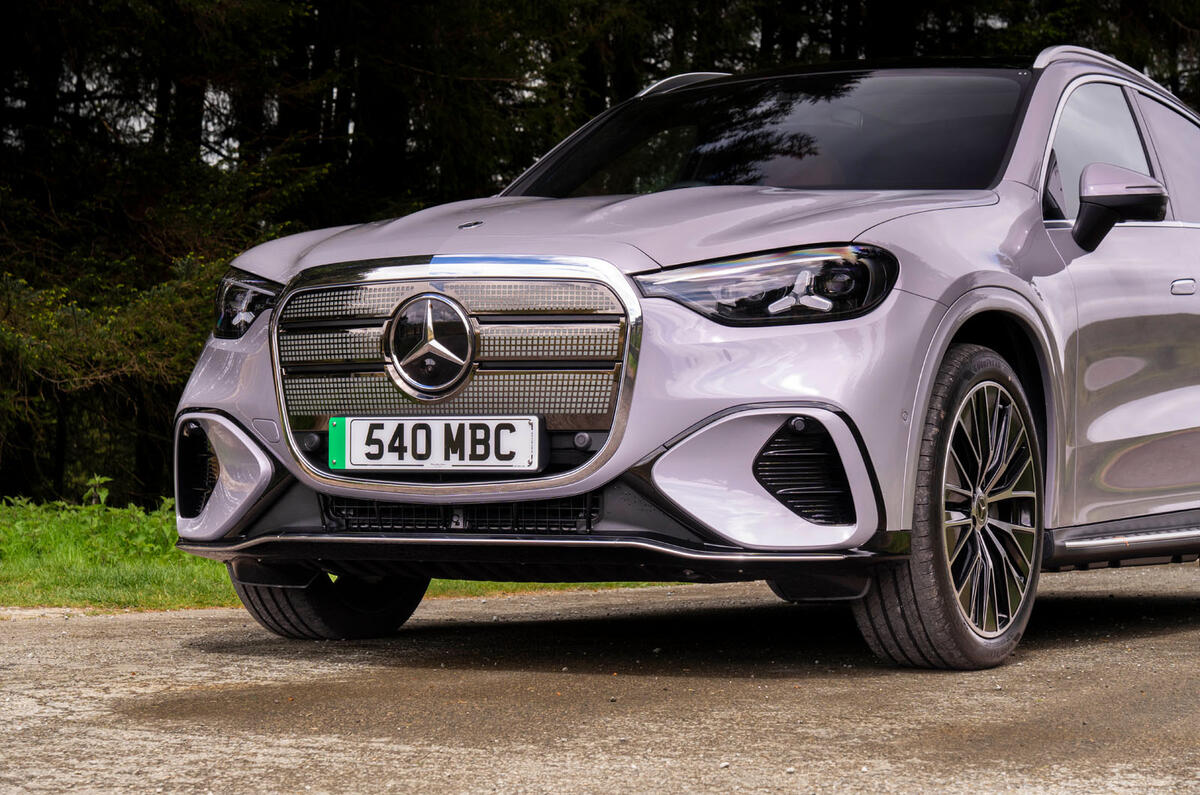
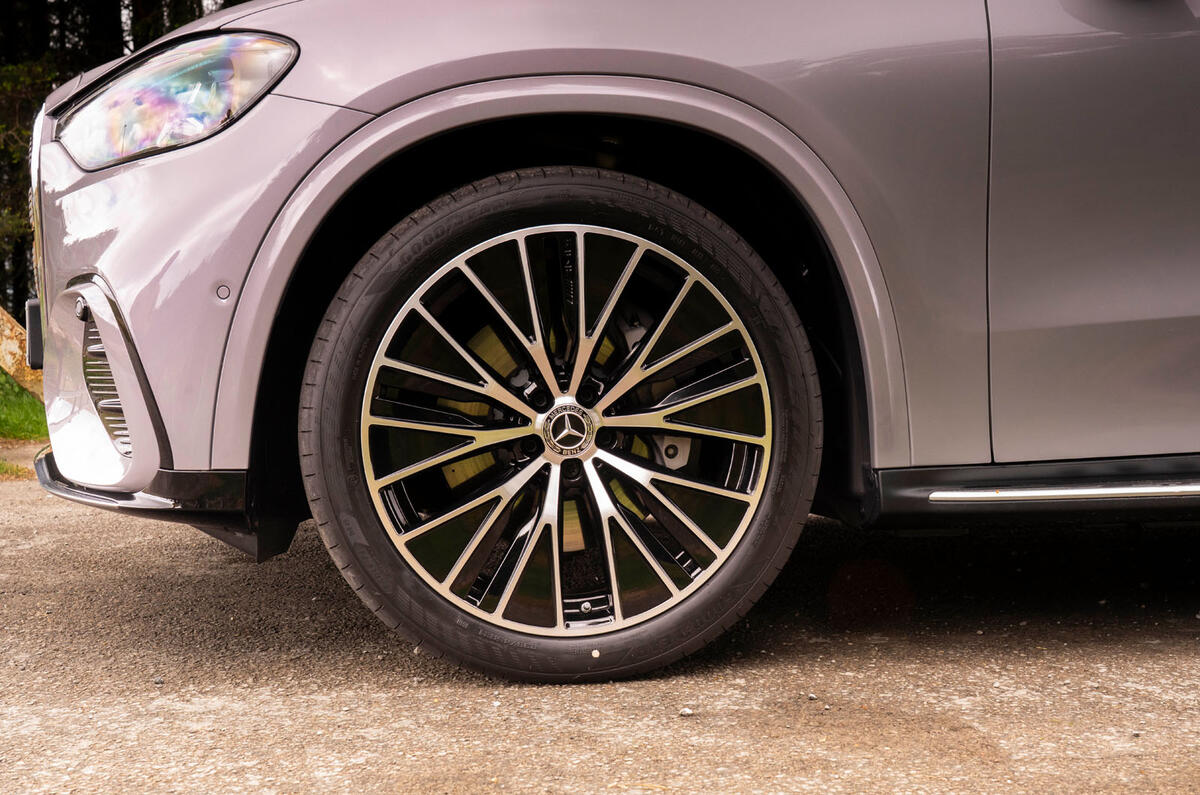
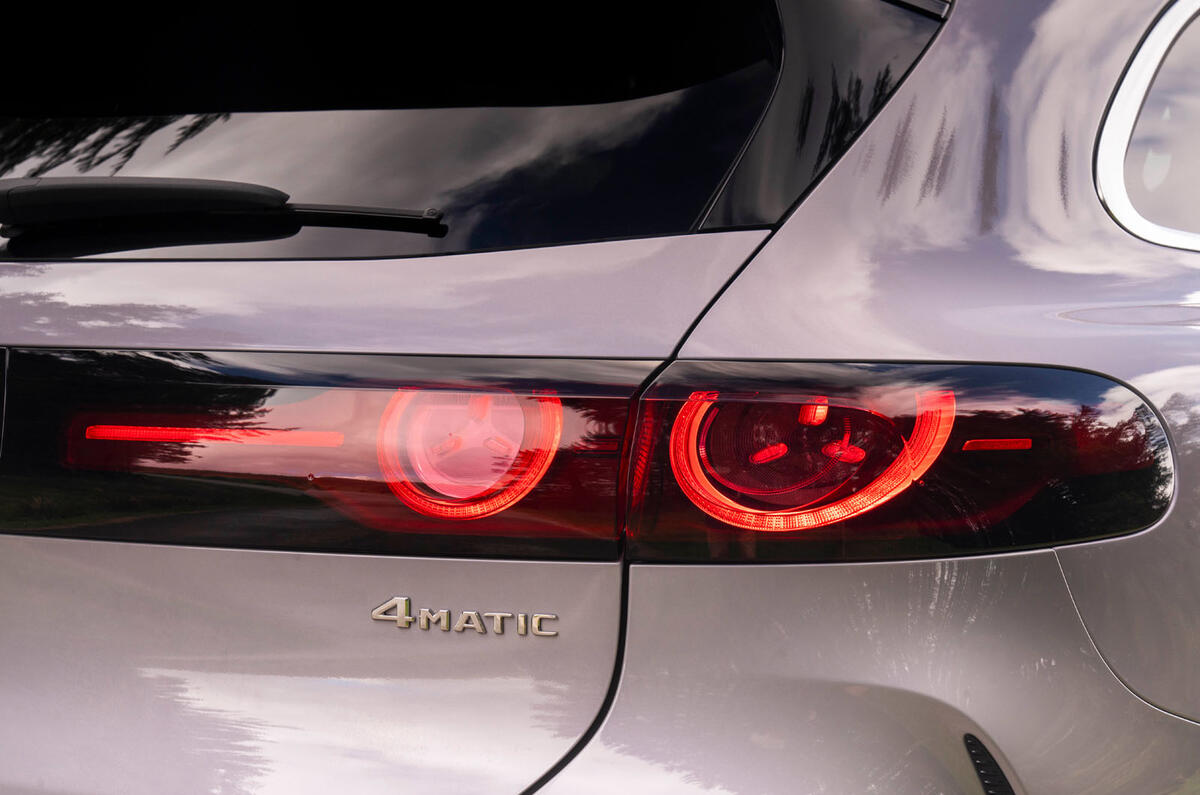
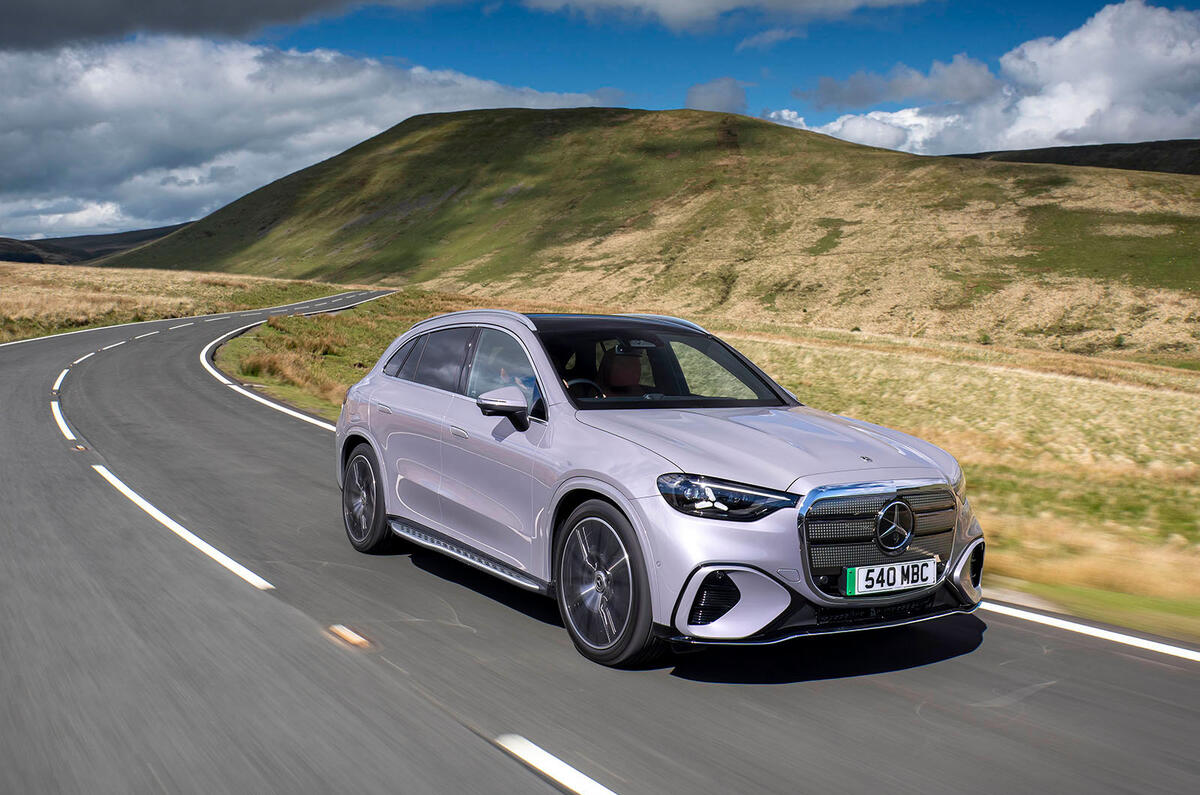
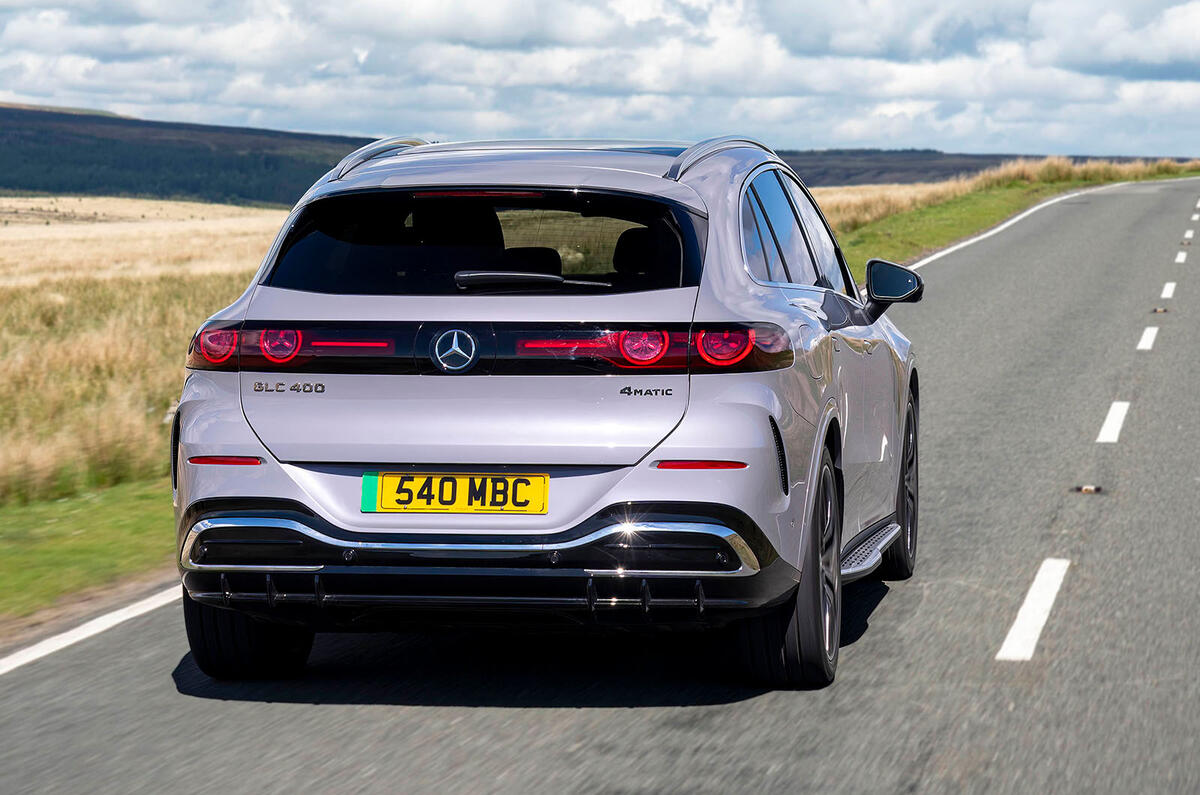
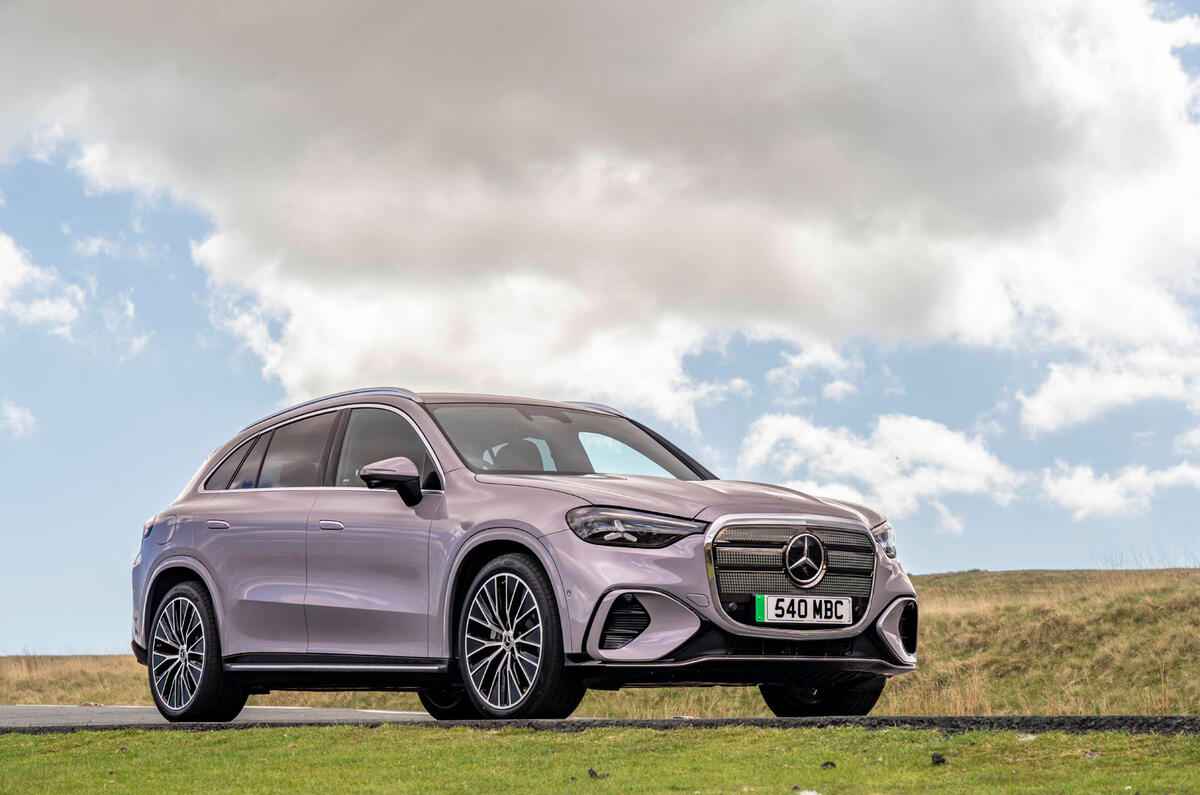
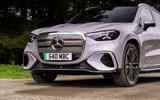
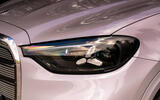
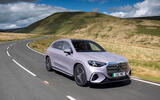
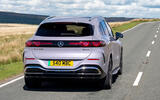
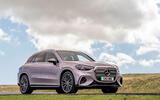
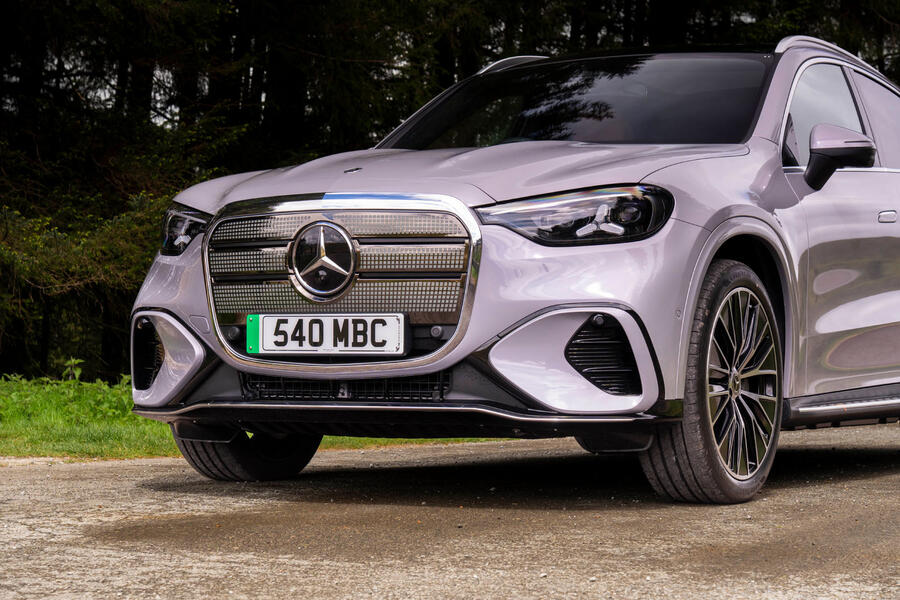
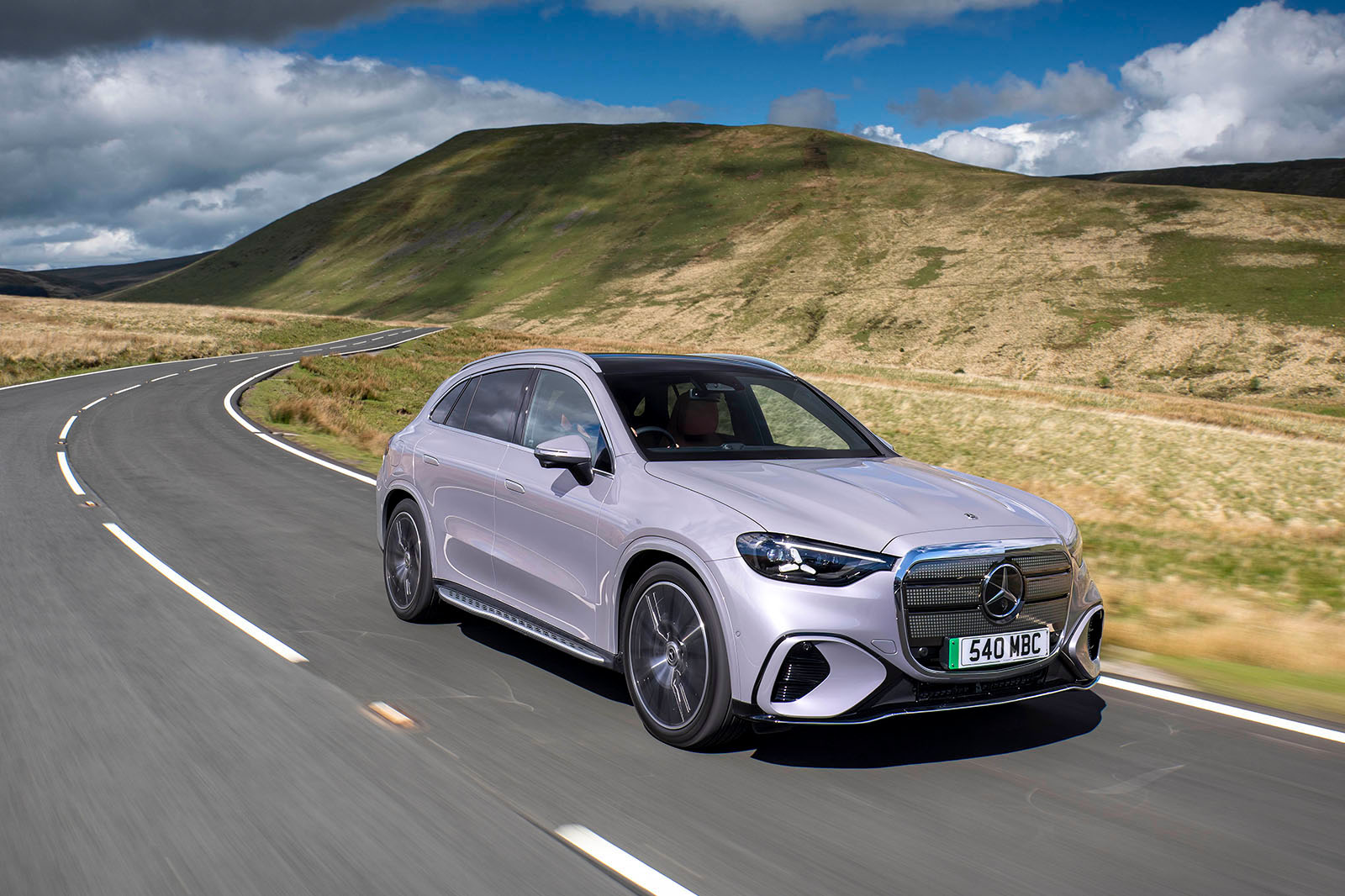
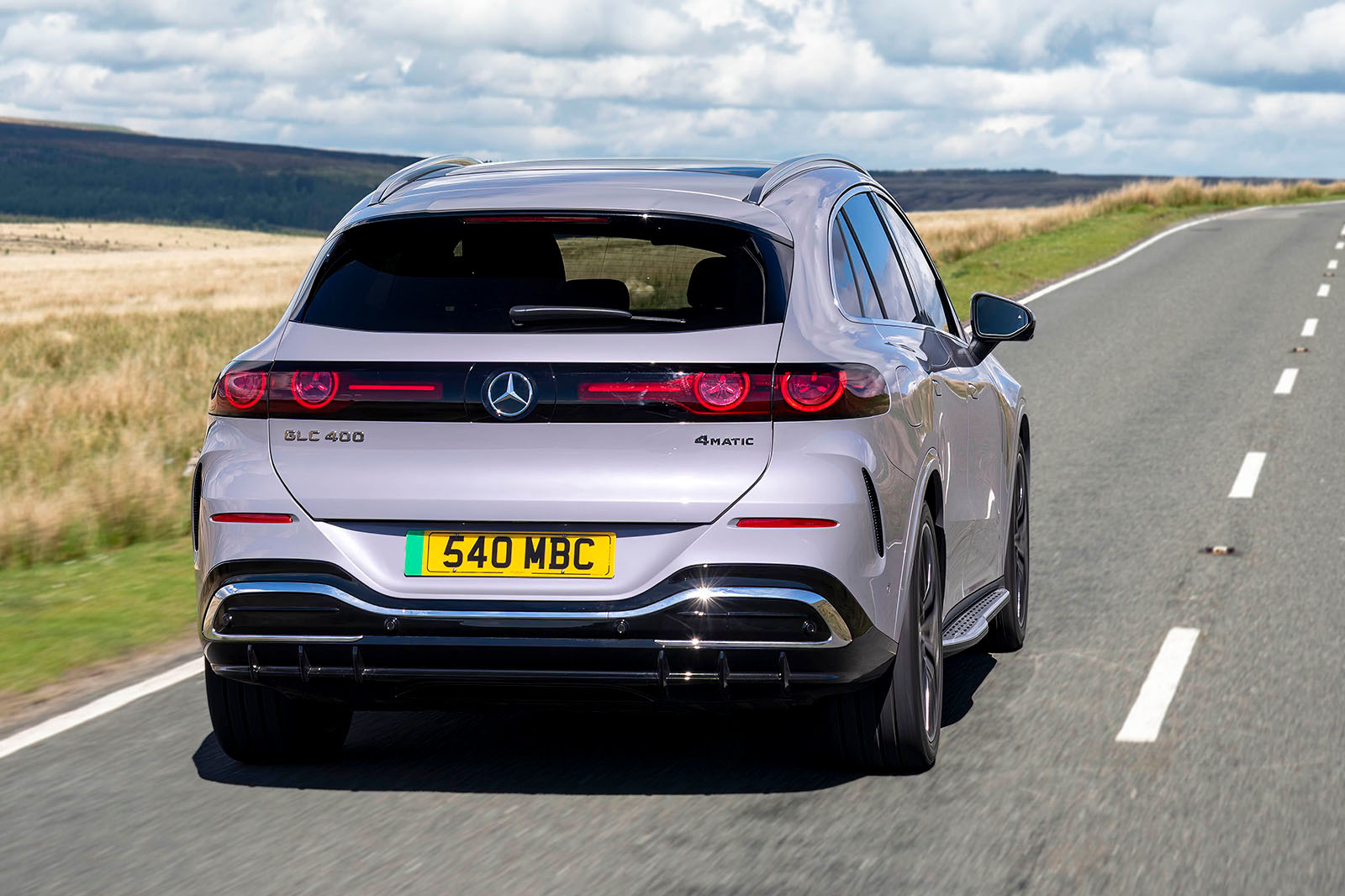
It might be all change underneath, but immediately it’s plain to see the fruits of Stuttgart’s endeavour to more obviously tie its electric cars and ICE cars together visually, with this bold new era-defining EV flagbearer looking broadly similar to the ICE GLC that has been on sale for a couple of years. Except, of course, for that unmissable grille - which makes it debut here before being rolled out across the line-up. 

The GLC EQ has been launched in 400 4Matic form, as driven here, which has a pair of permanent-magnet synchronous motors combining for 483bhp and 590lb ft of torque. The front motor chimes in under load but disconnects when not needed, and both draw power from a 94kWh battery.

That's rated for a maximum range of 433 miles in this European spec (406 miles in the UK), but a more efficient single-motor version is expected soon, nudging that range closer to the hallowed 500-mile mark, while feistier versions are tipped to include a full-fat AMG version with three motors pumping out in excess of 900bhp.

All versions will have 800V wiring and be capable of charging at up to 330kW (the fastest you can realistically charge in the UK anyway). And following the furore that met Mercedes' decision to offer one as an option on the CLA EQ, UK-bound GLCs will be fitted as standard with a 400V inverter so that they remain compatible with the majority of our public chargers. 

The GLC will be offered in the UK initially in five trims, ranging from Sport at just over £60k to top-line AMG Line Premium Plus at £70k - broadly matching the pricing structures of the iX3, Volvo EX60 and Audi Q6 E-tron and representing a premium of around £6k compared with the equivalent ICE GLCs.

INTERIOR

Mercedes GLC review 2026 004

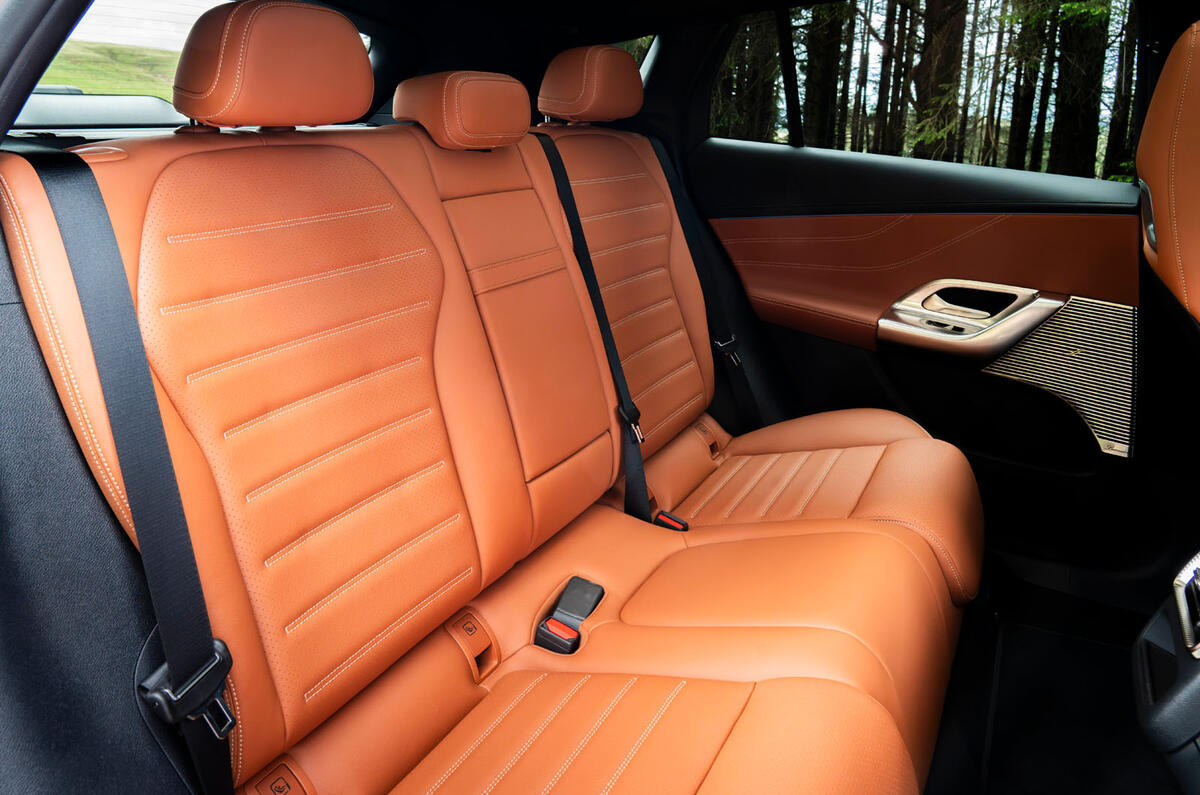
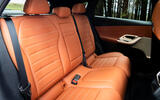
The GLC may not look outrageously different to the ICE GLC, but it is a substantially bigger car, at more than 100mm longer overall and with a useful 84mm of extra metal between the axles for a tangible boost in leg room in both rows.

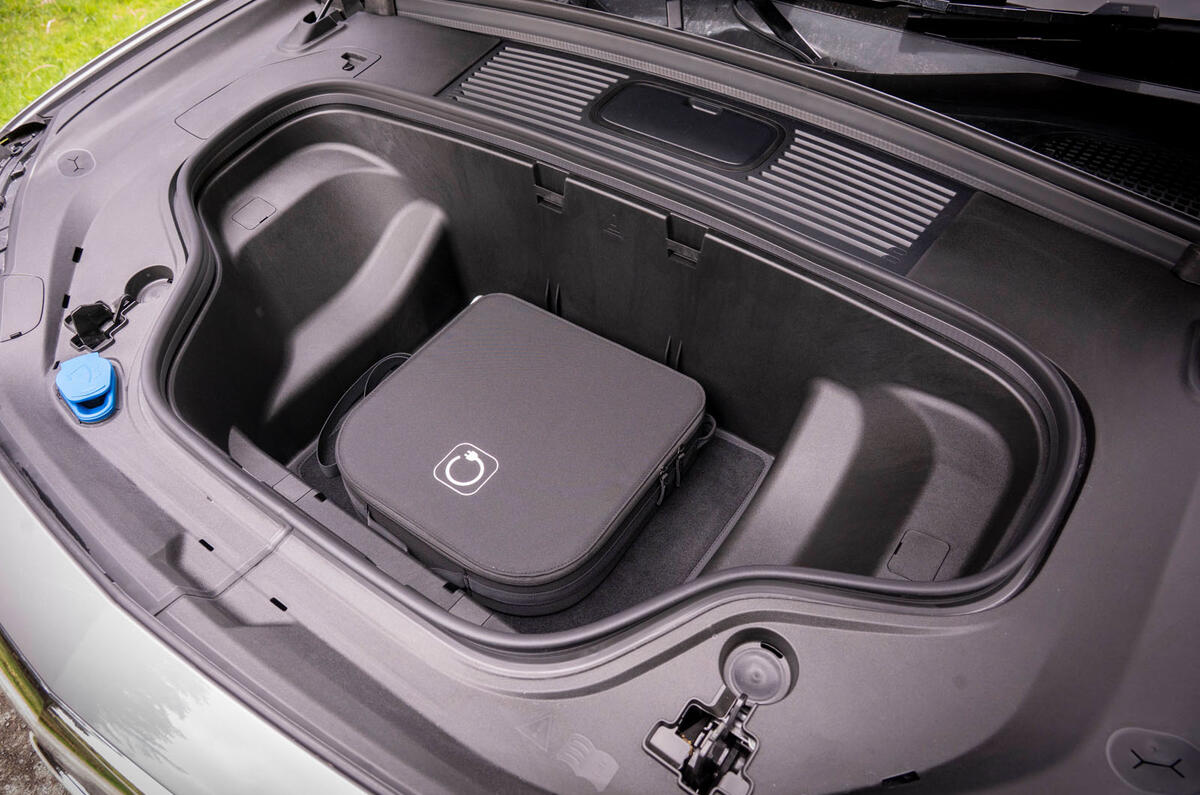
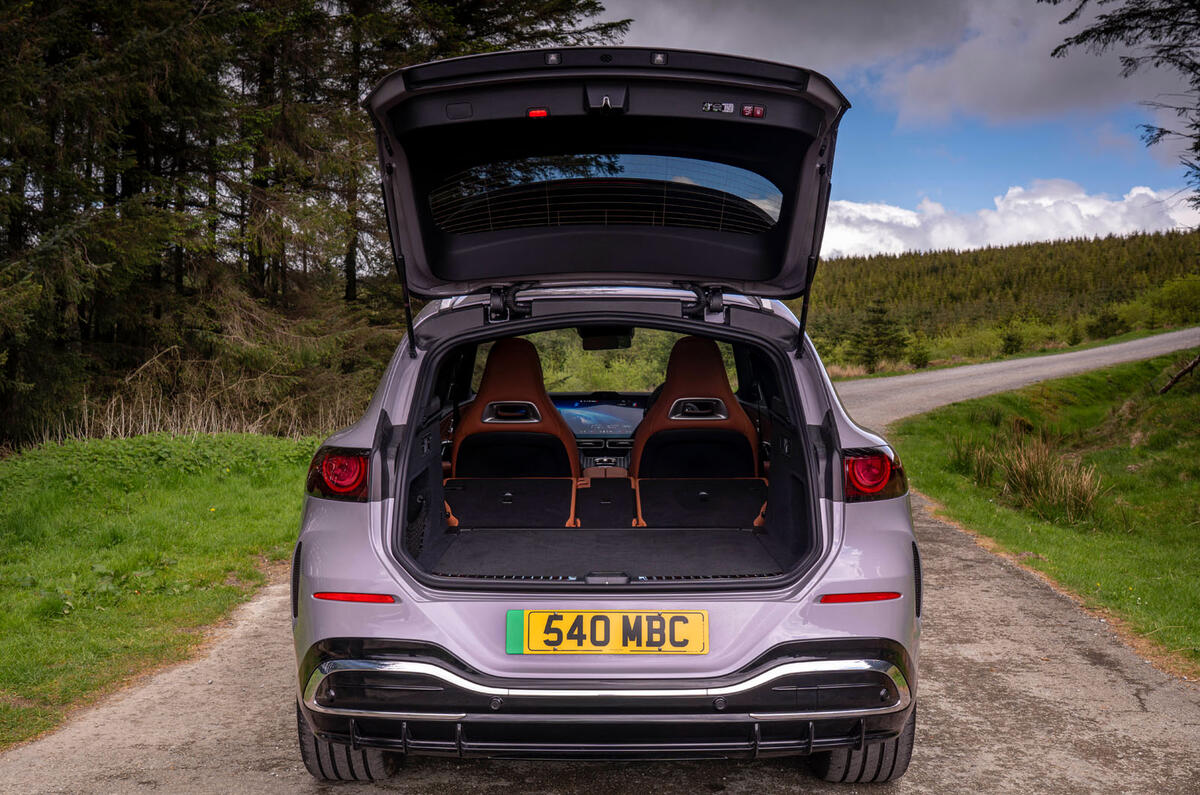
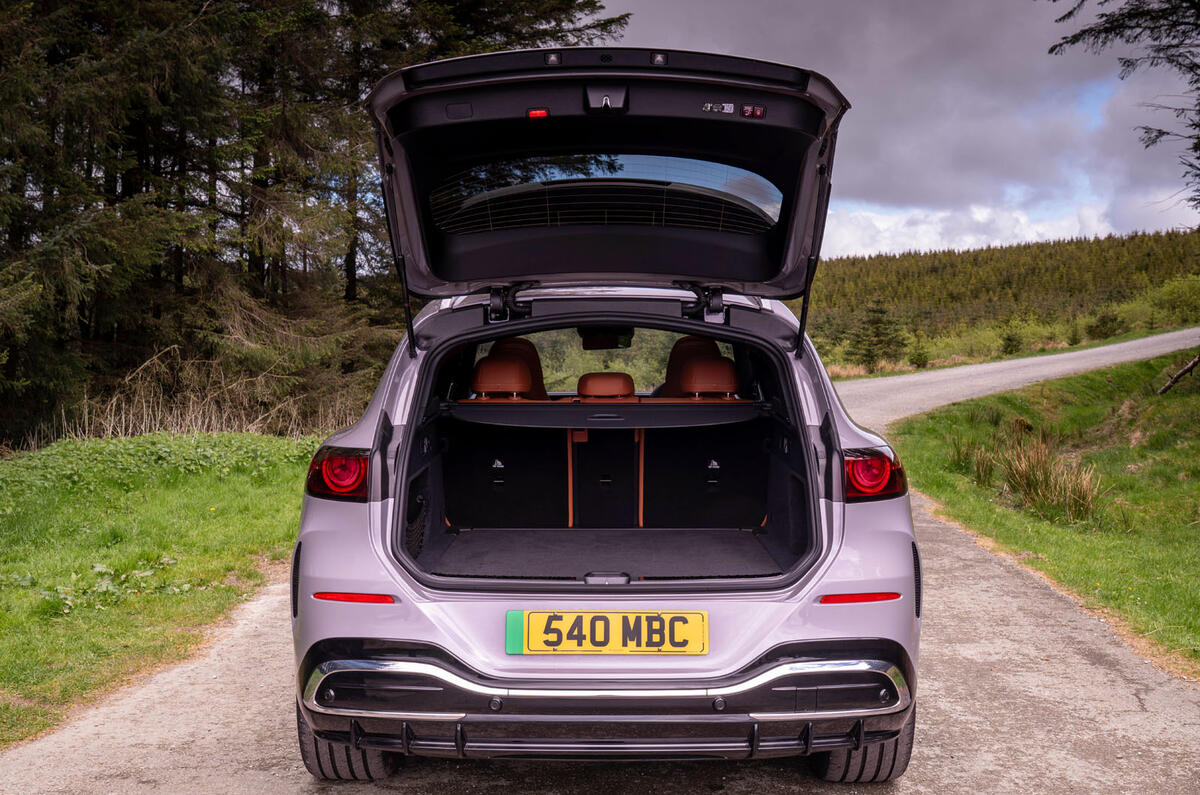
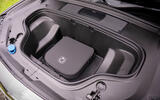
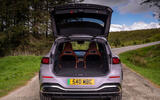
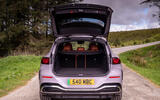
Head room is slightly better, too, and while the boot is slightly smaller, at 520 litres, it's supplemented by a relatively whopping 128-litre frunk that will take the charging cables and all your family's muddy boots. 

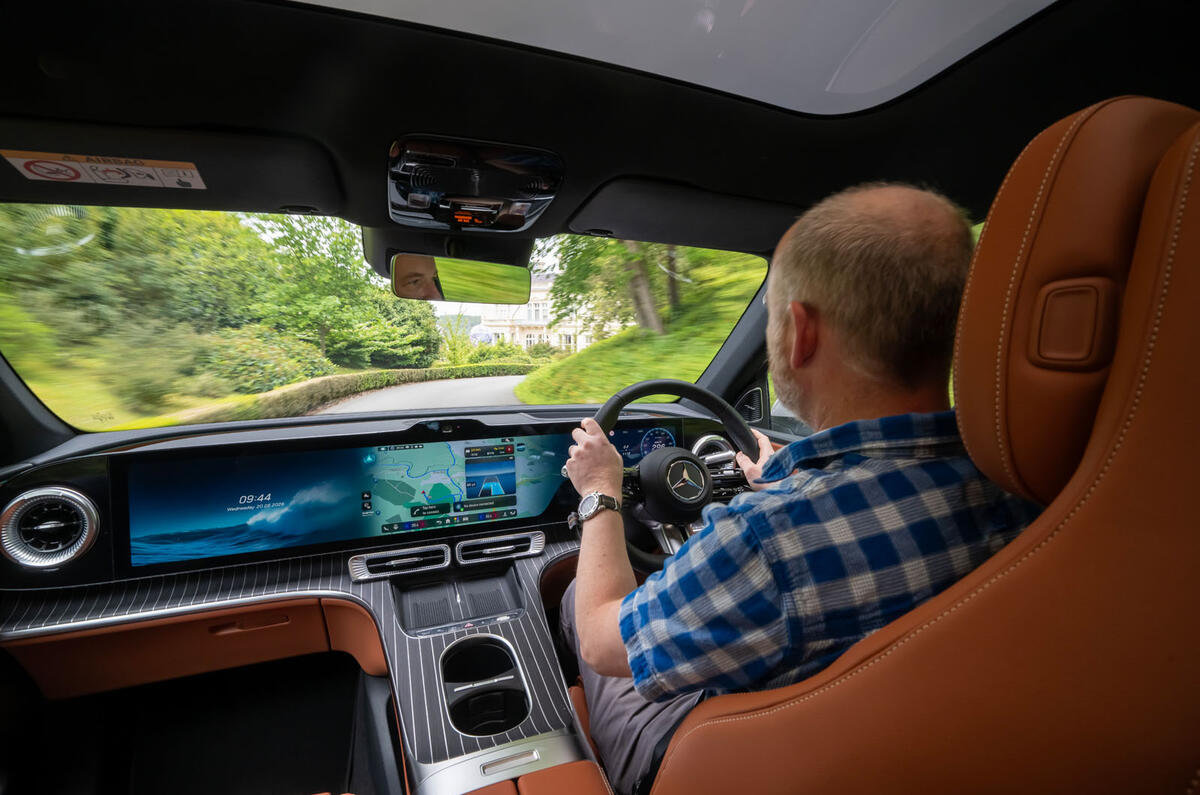
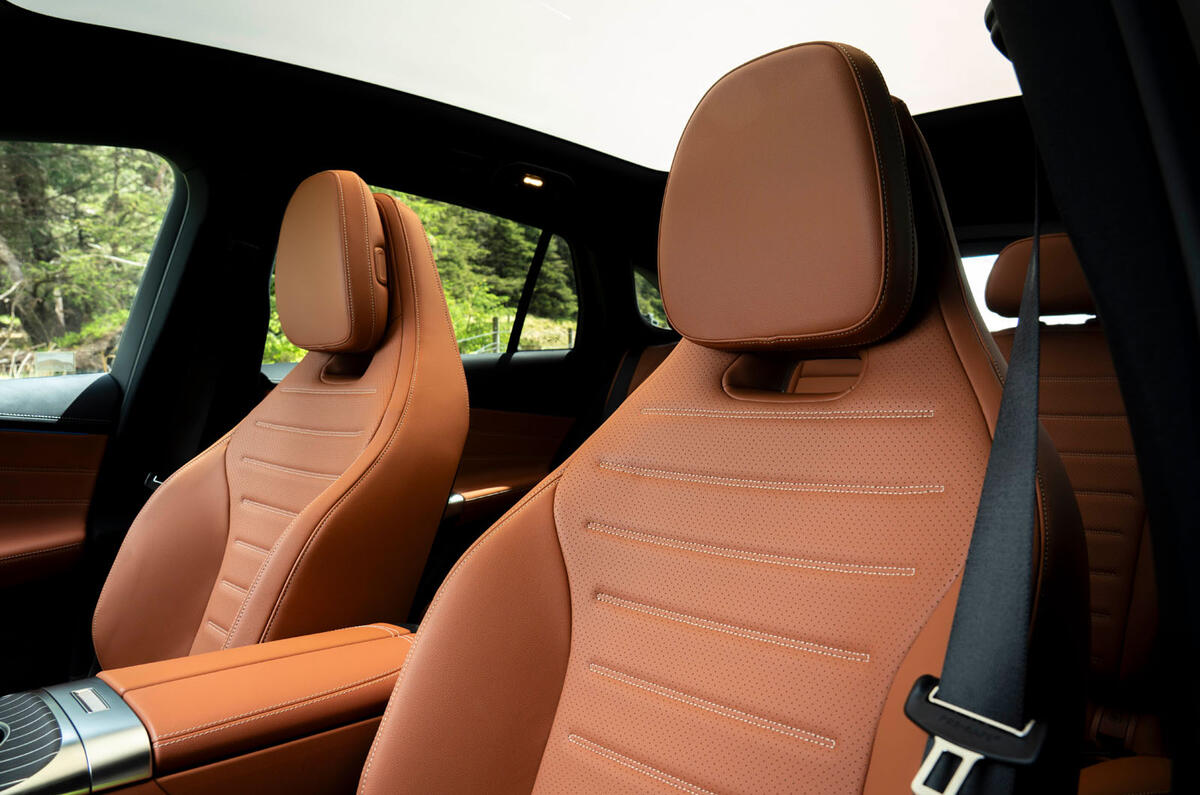
It feels pretty massive inside: bright, airy (partly courtesy of the standard panoramic sunroof) and far better packaged than the old EQC that it indirectly replaces - testament to the benefits of using an EV-native platform rather than an adapted ICE car platform.
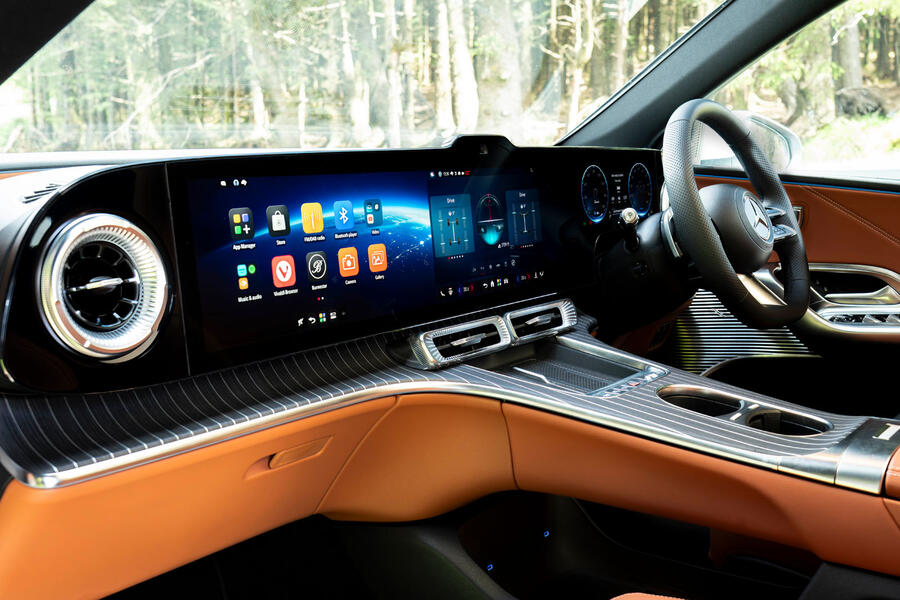
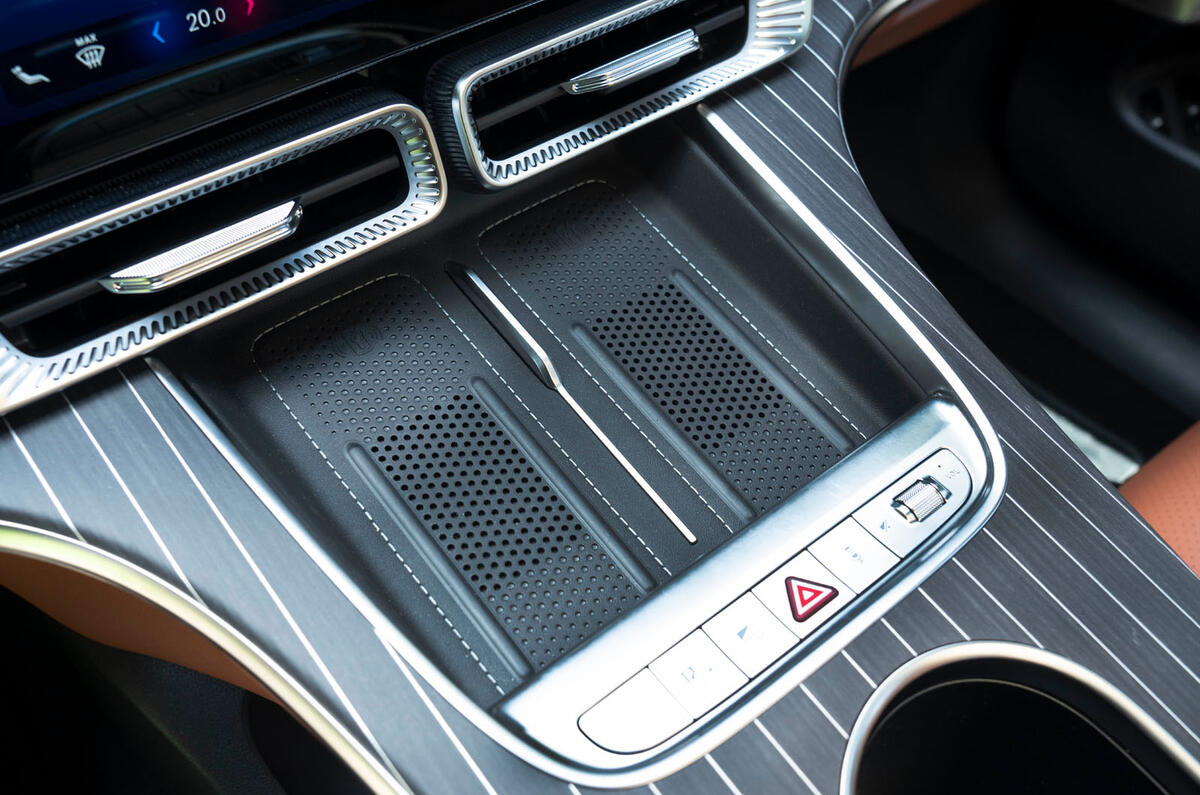
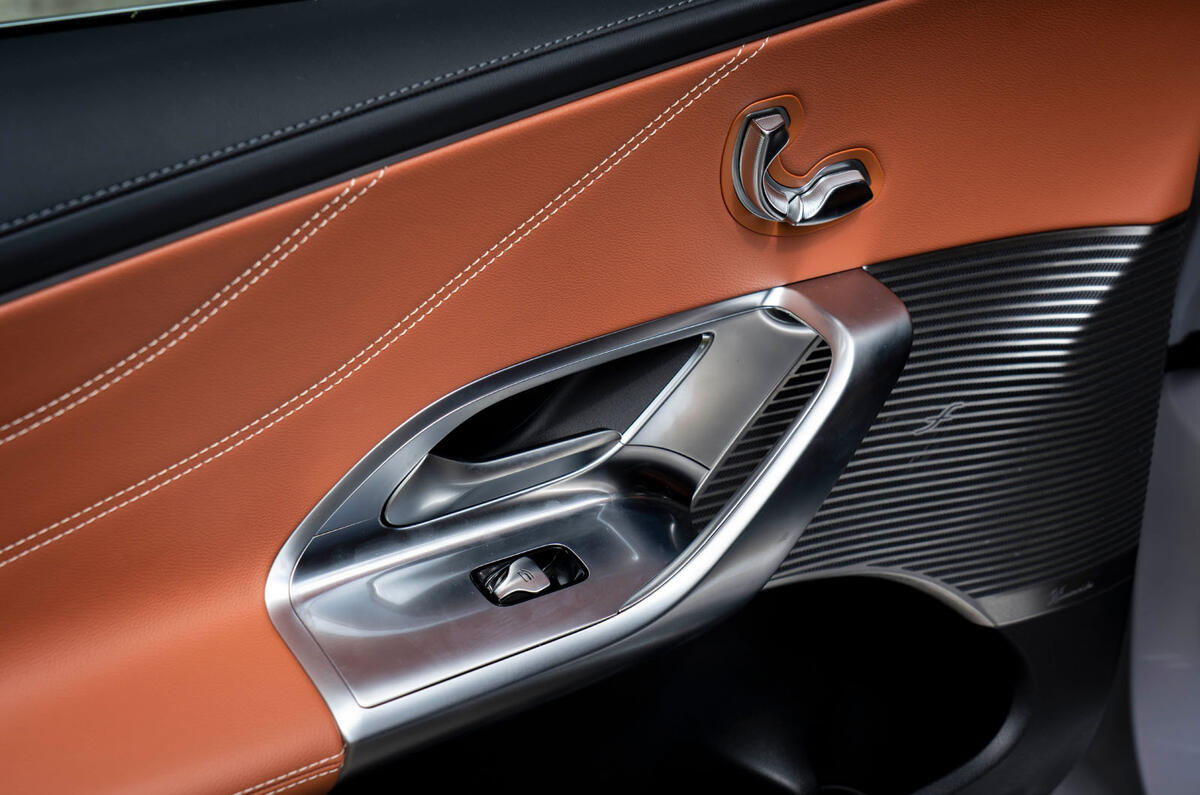
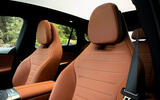
It’s also a seriously luxurious environment in here: material quality is extremely impressive, the seats are excellent, the voice control works like a dream (“Hey Mercedes, open my window and turn off the speed limit warning bong” etc) and, while there’s not exactly a surfeit of physical controls, those that do feature have a solid feel to them, clicking and clacking with that reassuring vibe of quality craftsmanship.

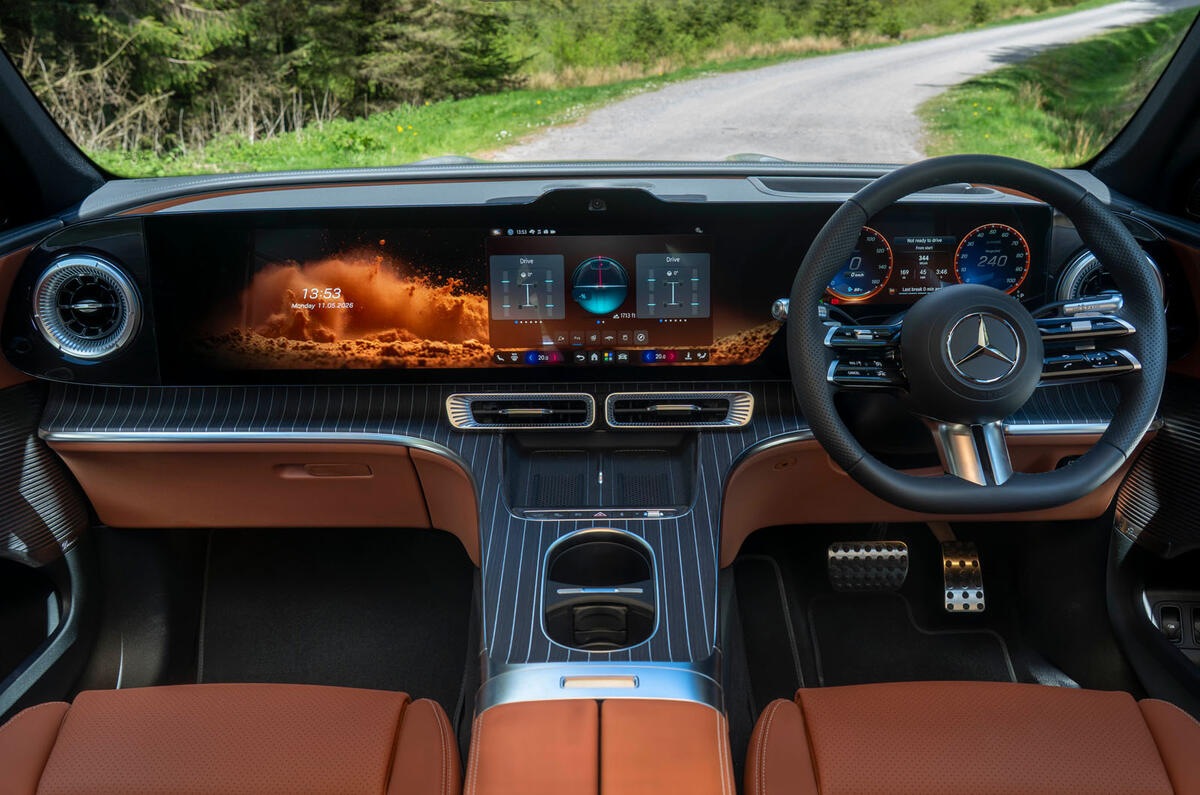
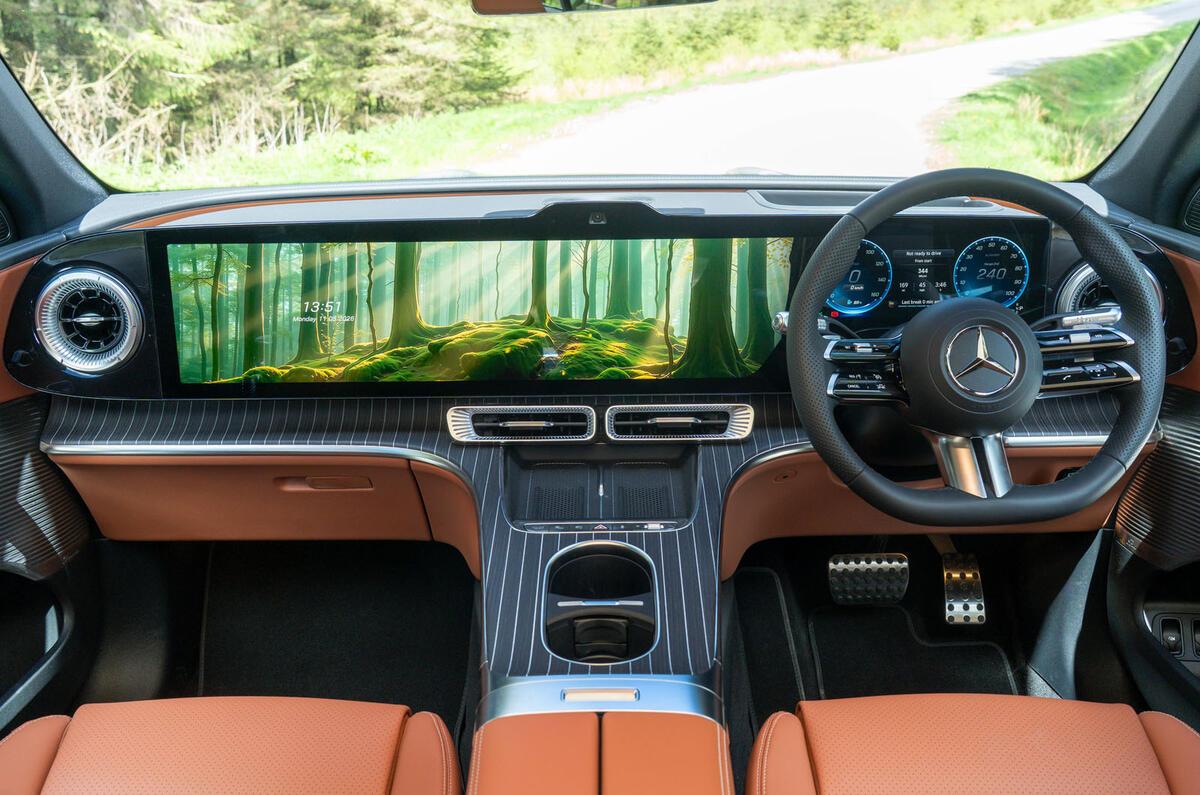
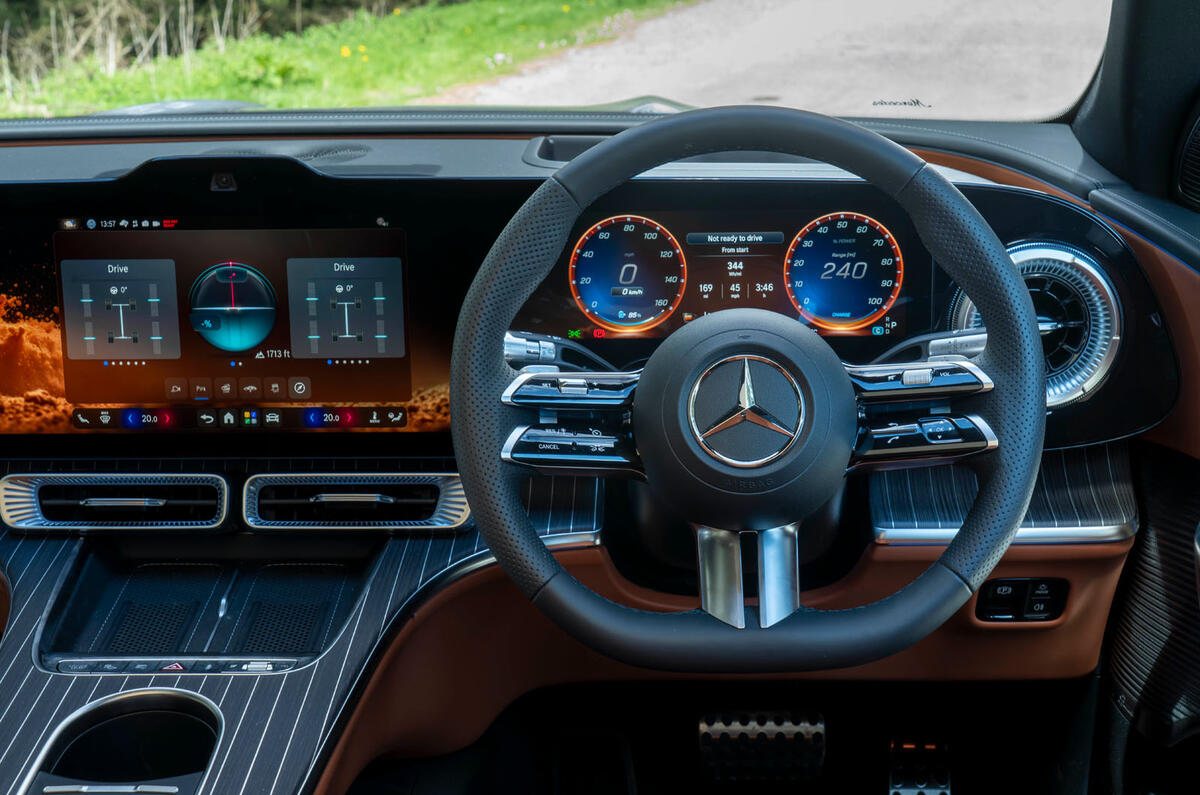
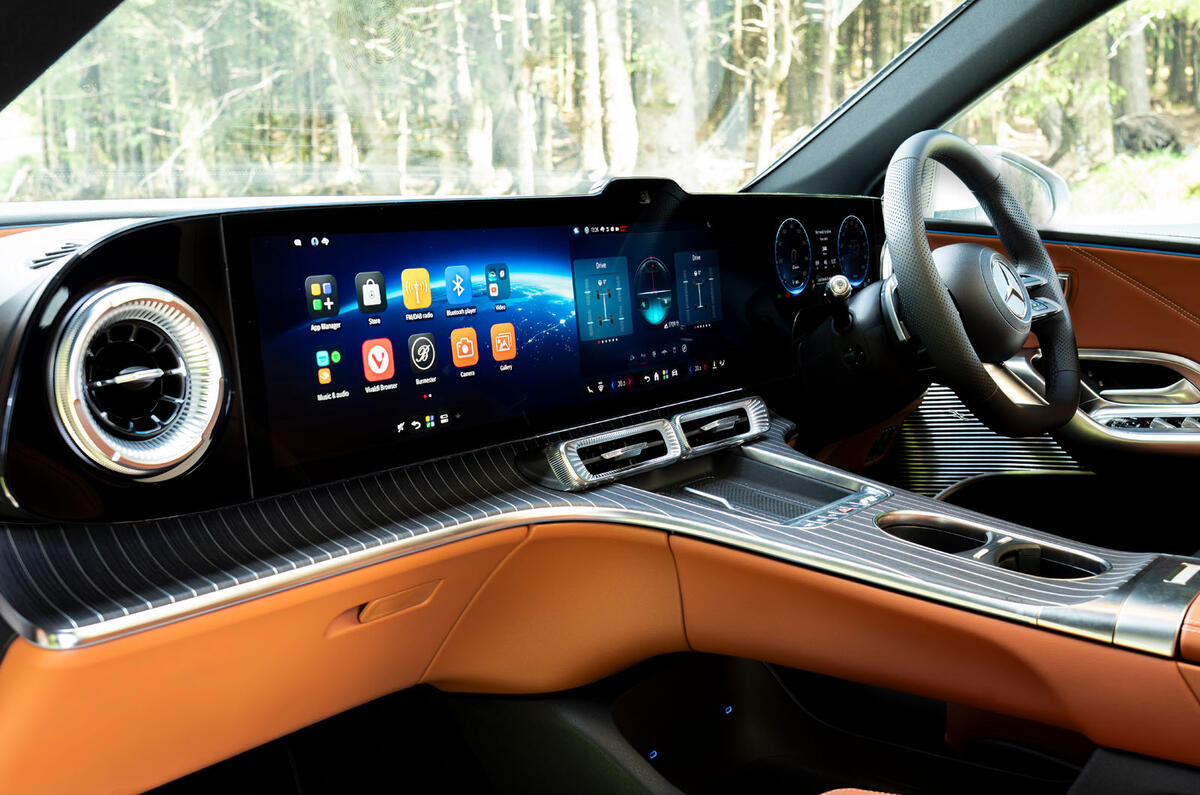
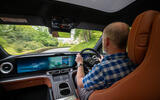
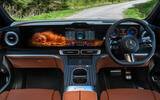
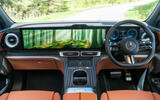
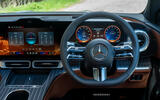
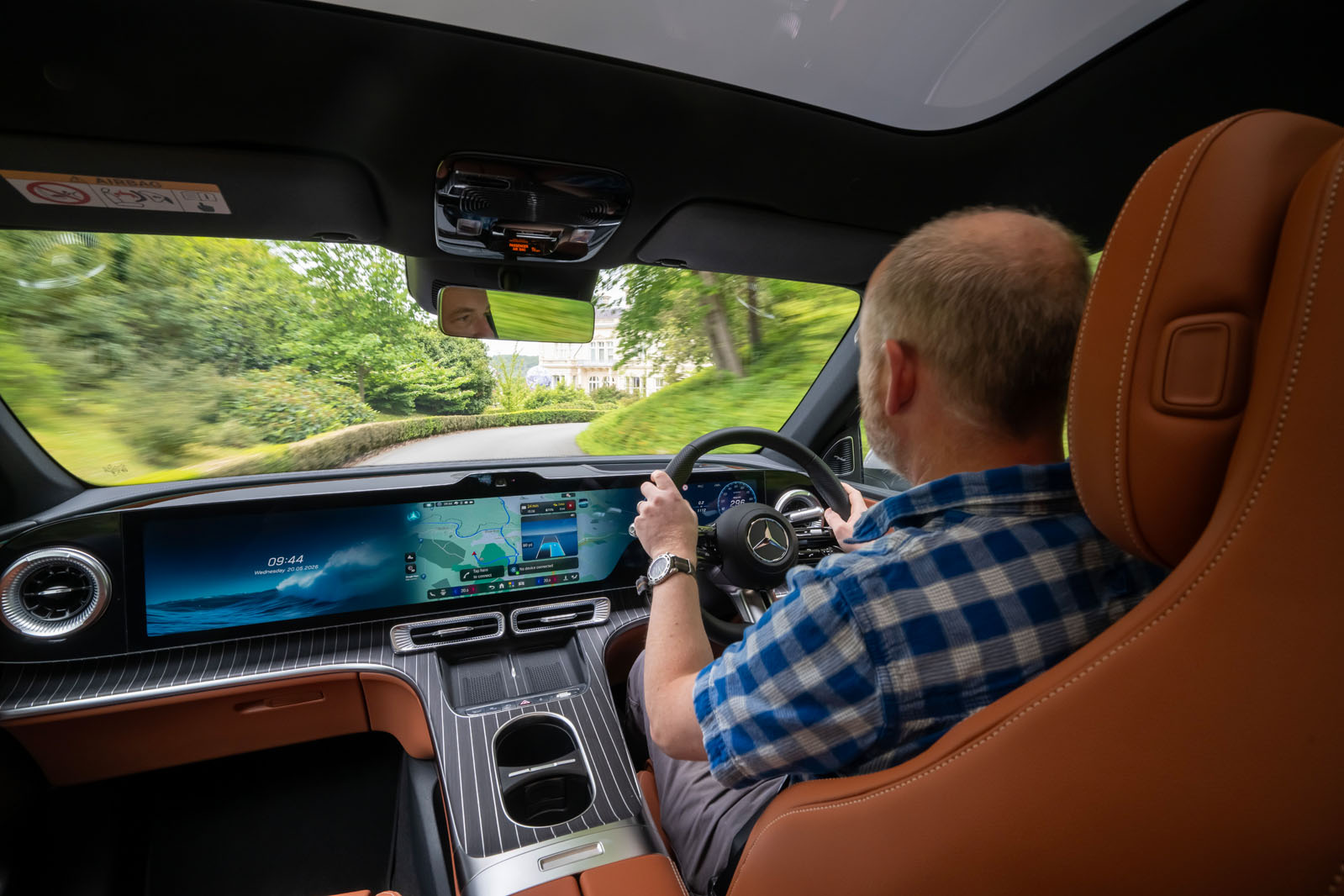
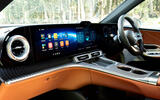
But there’s only so long you can talk about the interior before you have to address the inelegance in the room. Even the iX3’s whopping 18in central display, strikingly parallelogramic as it is, feels subtle and unobtrusive by comparison to the GLC’s full-width digital interface. 

This is simply too much screen. What little you gain in real-world functionality, you more than lose in visual appeal: it’s no more than a massive slab of fingerprint-smeared black plastic when turned off. And if you don’t spec the passenger touchscreen, you essentially just get a digital photoframe, with the option to display one of your phone pics in the car. 

Less digitally dependent alternatives in this space do a better job of cultivating a sense of occasion through interesting dashboard design flourishes and luxurious materials.

It can’t half do a lot, though. Powered by a new internal operating system said to be capable of 254 trillion operations per second, this latest iteration of Mercedes’ MBUX is one of the quickest and most impressive infotainment systems I’ve yet used in a car. With a new ‘AI-driven superbrain’ powered partly by both Microsoft and Google (we’re moving away from ‘welcome home’ a bit here), this feels like the sort of car you could conceivably run for an entire four-year PCP contract and still not try all of the functions available to you. 

While hunting for the button that makes the panoramic roof cloudy or clear (or a combination of both in curiously named ‘motif’ mode), I got distracted and watched a bit of a programme in the Disney+ streaming app, sampled the Campfire and Aquarium ‘emotional modes’ and then settled in for a couple of levels on Angry Birds.

Mercedes also proudly highlights the inclusion of Microsoft Teams, with an inbuilt webcam allowing you to join meetings virtually and presentation slides displayed on the central screen - but I was careful not to tell anyone back at the office about this functionality. 

Impressive utility aside, though, the fact remains that this is quite a tricky interface to use on the move, requiring a fair bit of eyes-off time to make adjustments while driving and always lingering just within your line of sight at all other times. 

The clever head-up display is a winner, though, with its snazzy holographic directional arrows, and the ADAS are all nicely integrated: the ones you don’t want are extremely easy to deactivate (some by voice control) and the ones you do want are intuitive and intelligent.

I particularly liked, for example, the polite “Caution: bump” announcement that comes about 100 metres before a big pothole or speed hump – although if it works so effectively in the UK, it will be activated so often as to give the poor AI voice assistant a sore throat.

ENGINES & PERFORMANCE

glc front driving

None of its next-level interior technology or design cues, though, should detract from the simple fact that the GLC EQ is a very pleasant car to drive. 

Naturally, it’s really, really fast. We're used to circa-500bhp being about the norm for EVs of this ilk these days, so the 2.5-tonne GLC’s ability to keep pace with an AMG C63 from 0-62mph isn’t quite the headline it once was. But there’s still a pleasing incongruity to the way it leans slightly back on its haunches and surges towards the vanishing point, with the rear motor’s two-speed gearbox ensuring a near-constant acceleration curve right up to top speed, like in a Porsche Taycan.

You can’t feel it change ratios (there’s no set speed: it decides when to swap according to drive mode and various other factors), but you can feel the surfeit of grunt that’s still on offer even when already at a high-speed cruise. 

Perhaps inevitably, there's not a lot of character to it - and as is often the case with such things, you floor it once for the novelty factor and never again, so nauseating and inefficient is acceleration like this. There is a Sport mode, naturally, but I found it a bit too synthetically twitchy and energetic for this sort of car, with a tiresomely jabby throttle response, and quickly reverted to do-it-all Comfort mode, which is better for range anyway.

Driven normally, the GLC presents as a composed and sensibly tuned cruiser, with smooth take-up from a nicely weighted accelerator pedal and a linear power curve that means it's as manageable at all speeds as an ICE equivalent with half the power. 

Custom dictates that the inevitable single-motor derivative will emerge as the pick of the range, being cheaper, lighter, longer-legged, softer-riding and potentially sweeter-handling by dint of being rear-driven. But this 4WD version seems to make so few compromises in those respects that the lower-powered option would have to represent a significant cost saving to tip the balance in its favour.

RIDE & HANDLING

Mercedes GLC review 2026 016

GLCs riding on air get a rear axle that steers up to 4.5deg (either in opposition to the front wheels for a tighter turning circle at low speed or in parallel to them for improved stability at a cruise), which does help to mask its generous dimensions and kerbweight in enthusiastic manoeuvres. You can feel it rotating assuredly and stably around an apex in a manner that encourages a degree of exuberance, even if the fairly numb steering and slightly wallowy suspension preclude any real capacity for engagement. 
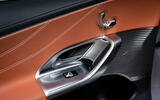
It’s probably here that the GLC most markedly falls short of the iX3. Neither is ever going to be the default driver’s choice, but where the BMW's satisfyingly resistant steering rack and rigid suspension lend it an air of dynamic pizzazz, the Mercedes concedes that outright agility for a more cossetting and lolloping gait that incentivises a more relaxed driving style.

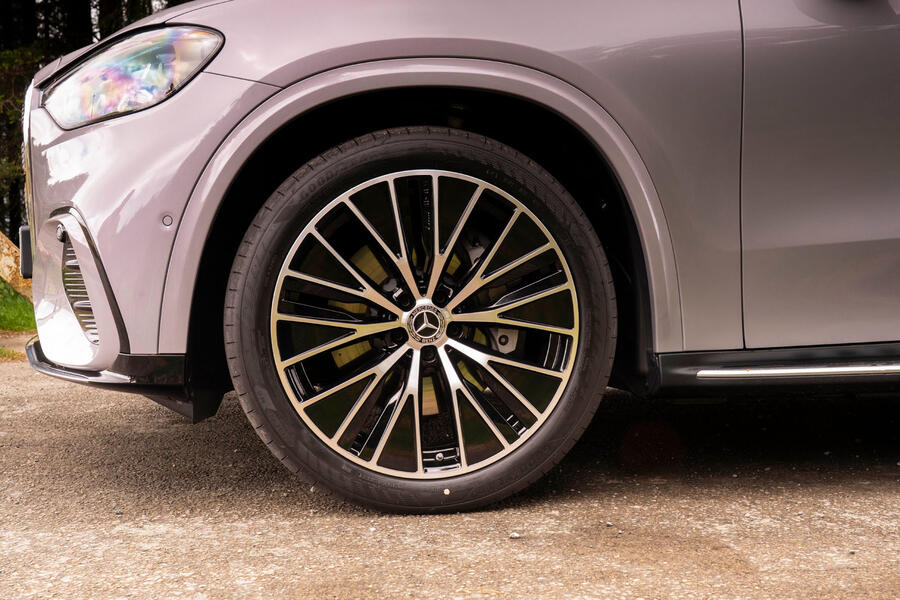
It’s still nicely tractable, and you can drive it on its (pleasingly conventional) door handles without quickly succumbing to roll-induced motion sickness, but there’s a little too much tipping and diving for the GLC to emerge as the dynamic star of this class. 

The trade-off, of course, being that it would seem to edge ahead in the daily refinement stakes. Usually, these international first drives come with caveats about how the test routes were completely incomparable to the UK’s shattered Tarmac, but actually the twisting rural B-roads of the Algarve felt like they hadn’t seen the underside of a paver for a good few years either, allowing a more conclusive verdict on ride quality. 

And it’s good news. I was really impressed by how effectively the GLC rounded out potholes and crumblier sections, and the cabin remained extremely quiet at motorway speeds - to an extent that I haven’t yet experienced outside of the top-drawer luxury car class. Big-wheeled, big-batteried, big-bodied EVs of this ilk tend to lose a bit of premium sheen when you show them a bit of cracked concrete, but there are genuinely cushy cruising credentials on offer here, in line with a pretty impressive (warm-weather) motorway range north of 300 miles - attributes that combine to make this a viable cross-continent cruiser. 

Hopping straight into an equivalent-spec iX3 when I landed back in Britain laid bare the contrasts. I'll make no bones about it: Munich’s take on the formula is commendable for its propensity to offer engaging, traditionally BMW-esque handling traits that belie its size and shape, but its slightly keener chassis set-up means that it fidgets and fusses over rough sections that I think the GLC will do a better job of smoothing over. (There is caveat here: the cars that Mercedes brought to the launch were all fitted with adaptive air suspension and I’ve tried the iX3 only on passive steel springs so far.) 

MPG & RUNNING COSTS

Mercedes GLC review 2026 001

The UK-spec GLC concedes a significant Top Trumps victory in offering a maximum of ‘only’ 406 miles of official range on the WLTP combined cycle compared with the equivalent-spec iX3’s 497.

The conditions of my test didn’t facilitate a proper economy run, but some quick maths suggest I would’ve gone around 370 miles without trying too hard - and our testers returned an ‘everyday’ range of 435 miles in the iX3's full road test in the same week, so the disparity might not be as stark as it seems on paper.

We will have to send both on a few laps of the M25 as soon as we can for a definitive verdict.

VERDICT

Mercedes GLC review 2026 015

The timing of the electric GLC's launch and its closeness in specification and positioning to various other 'era-defining' electric SUVs mean it's naturally going to be judged on the basis of how well it stacks up against those direct competitors.

Broadly speaking, though, to discuss the GLC’s attributes exclusively in the context of its inevitable rivalry with the iX3 (and the EX60 and Q6, and maybe even the Tesla Model Y) is to do a disservice to an impressively well-rounded and distinctive proposition that holds appeal both on a rational and an emotional level.

In an objective sense, the numerical disparities that would seem to paint the GLC EQ as a runner-up on paper should be slim enough to overlook - and if not, there’s more than enough subjective appeal to sweeten the deal. It doesn't 'change the game' to the same extent that its smaller CLA EQ sibling did last year, but it's a welcome addition to a still-nascent segment.
Felix Page

Felix Page
Title: Deputy editor

Felix is Autocar's deputy editor, responsible for leading the brand's agenda-shaping coverage across all facets of the global automotive industry - both in print and online.
He has interviewed the most powerful and widely respected people in motoring, covered the reveals and launches of today's most important cars, and broken some of the biggest automotive stories of the last few years.