From £65,1709

This is the future of BMW – and maybe the future of electric motoring too

Any accusation that European car makers have slept on EVs would probably be taken as an insult by BMW, which has actually played the game rather cleverly.

Ignoring 20th-century science projects like the electric 1602e built for the 1972 Olympics, it was the i3 that kicked things off in 2013. Since EV drivetrain technology still wasn’t mature enough to hit the big time, it was quite a canny move to make the i3 experimental and interesting, with distinctive design and a carbonfibre chassis.

After that, BMW’s CLAR platform was developed to accommodate both electric and combustion-engine drivetrains, to surprisingly good effect, because cars like the i4 were nice to drive and decently efficient, and gave BMW the flexibility to compensate for unsteady EV demand with ICE alternatives.

Whereas the first BMW iX3, a Chinese-built sibling of the combustion-engined X3, was BMW’s first tentative attempt at a mainstream electric SUV, this brand-new iX3 is BMW shifting gears.

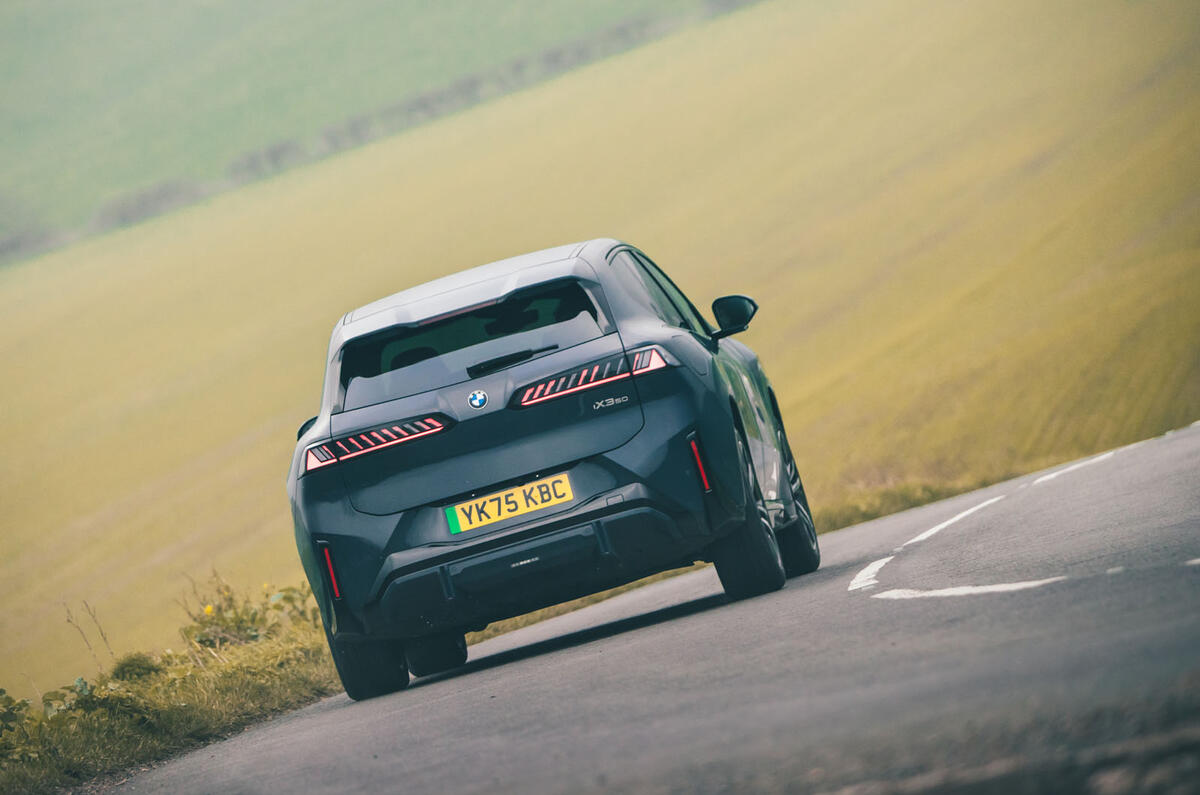
It’s the first of many ‘Neue Klasse’ EVs on a dedicated platform unencumbered by the compromises necessary to fit engines. It introduces a new design language and a host of new tech that should futureproof the line-up for years to come.

Early drives have been very promising. Now for the full UK assessment with a day of testing at Horiba Mira to find out whether the iX3 can go for the full five stars.

Advertisement
Back to top

DESIGN & STYLING

10
BMW iX£ road test review 2026 002

The Neue Klasse (new class) name harks back to the range of sporty compact saloons BMW launched in the 1960s to turn its fortunes around from beleaguered maker of landyachts and bubble cars to the highly successful premium brand we know. Today, BMW is doing a lot better than when it needed its first Neue Klasse moment, but with the industry in flux it pays not to wait until the bailiffs are at the door to shake things up.

Hence the new platform. Saying that a new car sits on a new architecture can be a way to big-up the fact that some crossmember has been moved about. In this case, though, it signifies a wholesale rethink of how the company approaches electric cars.

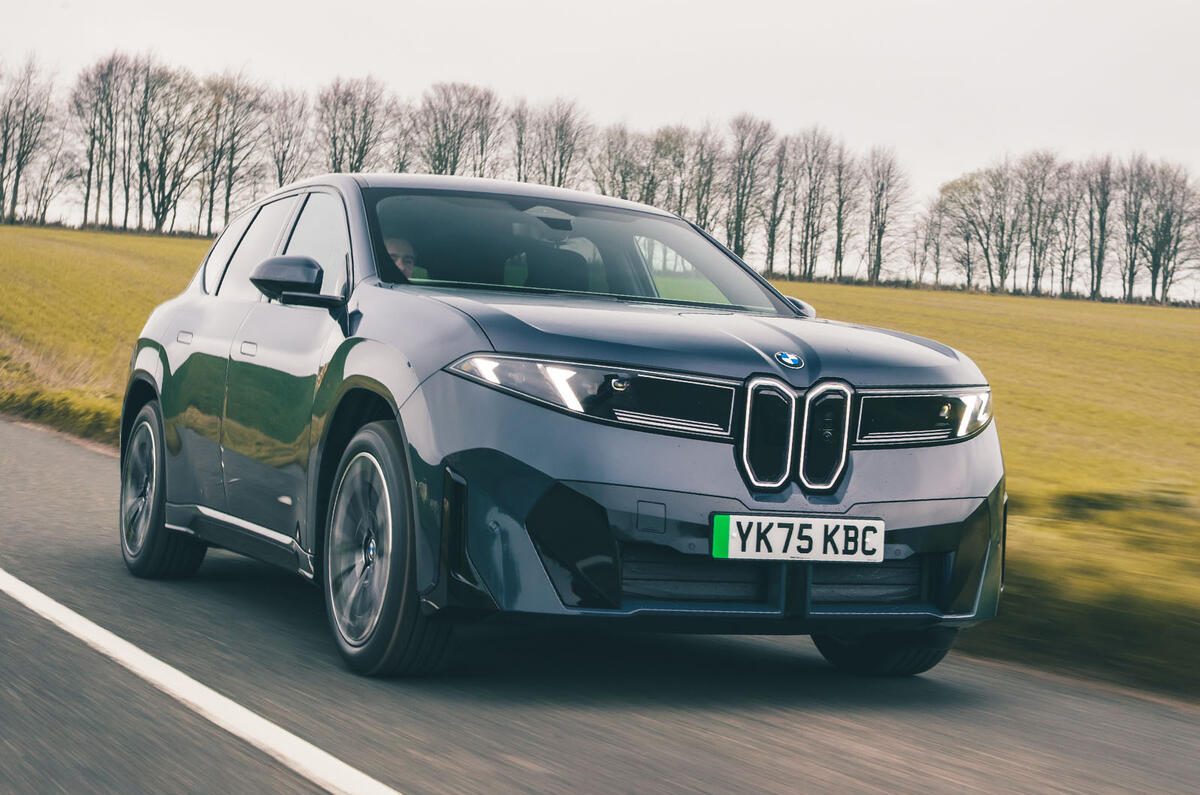
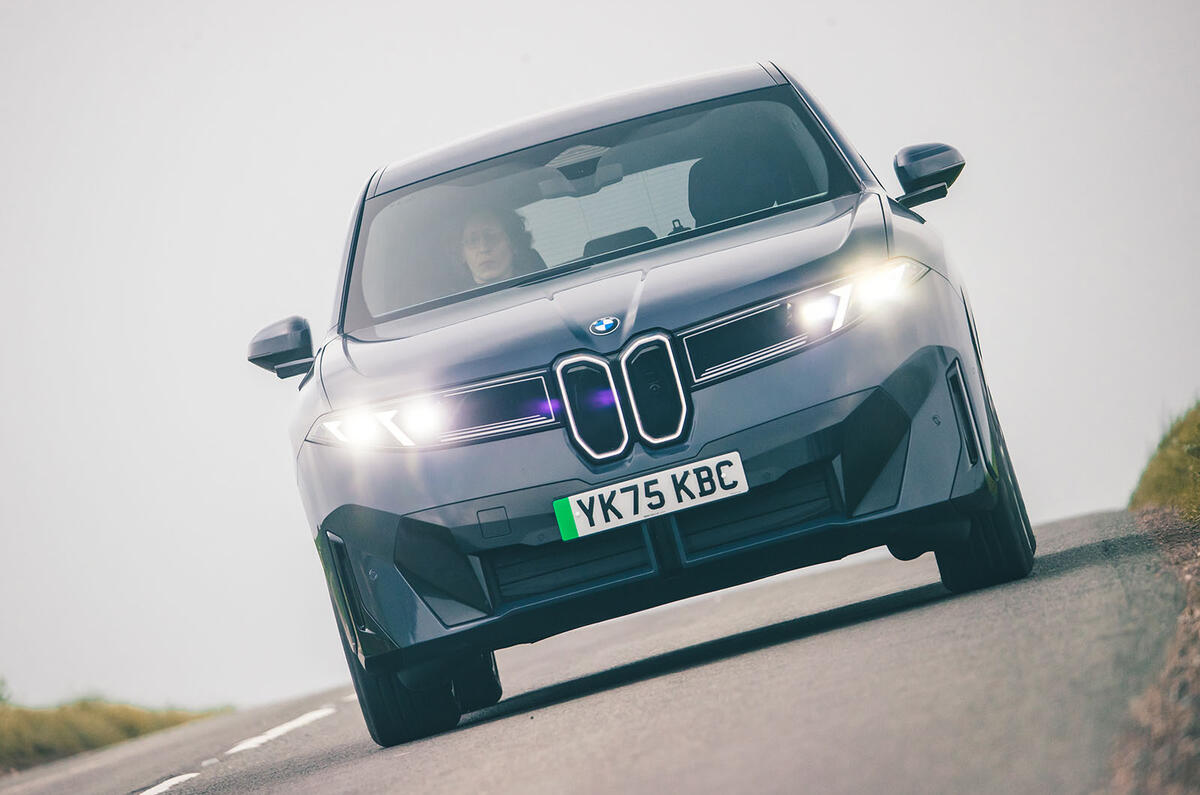
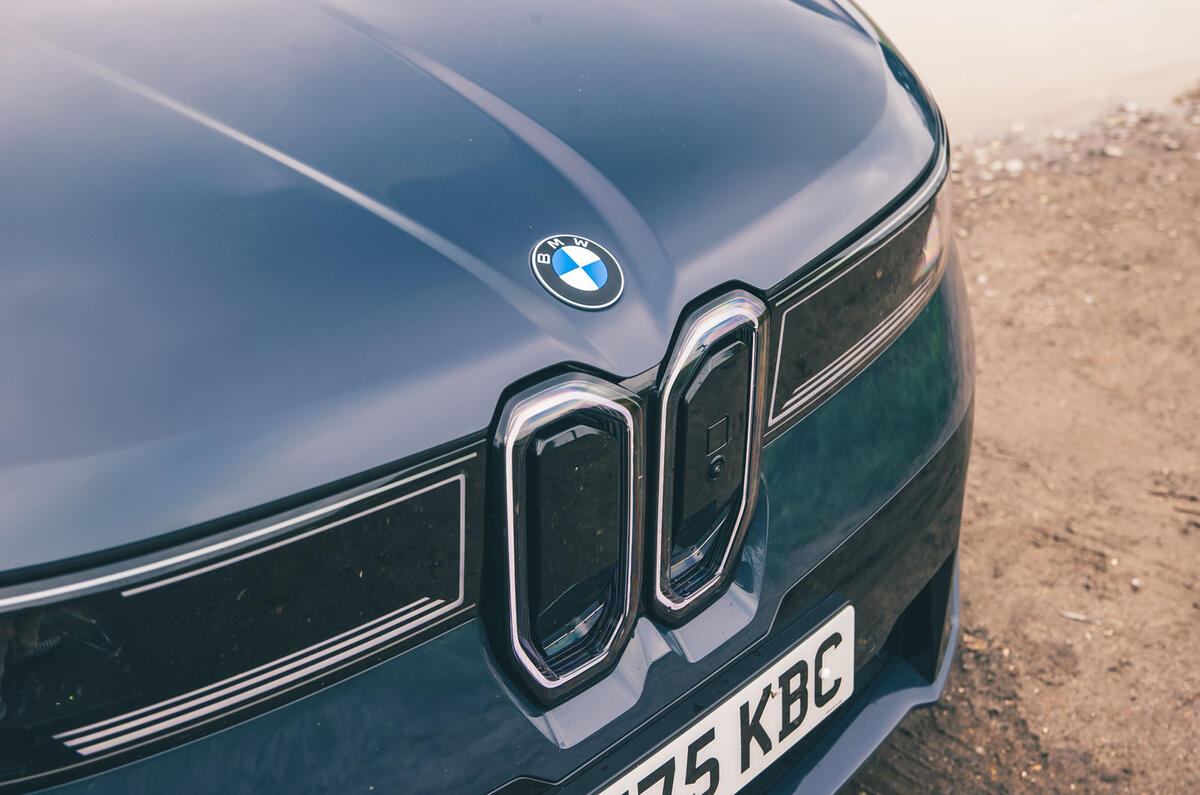
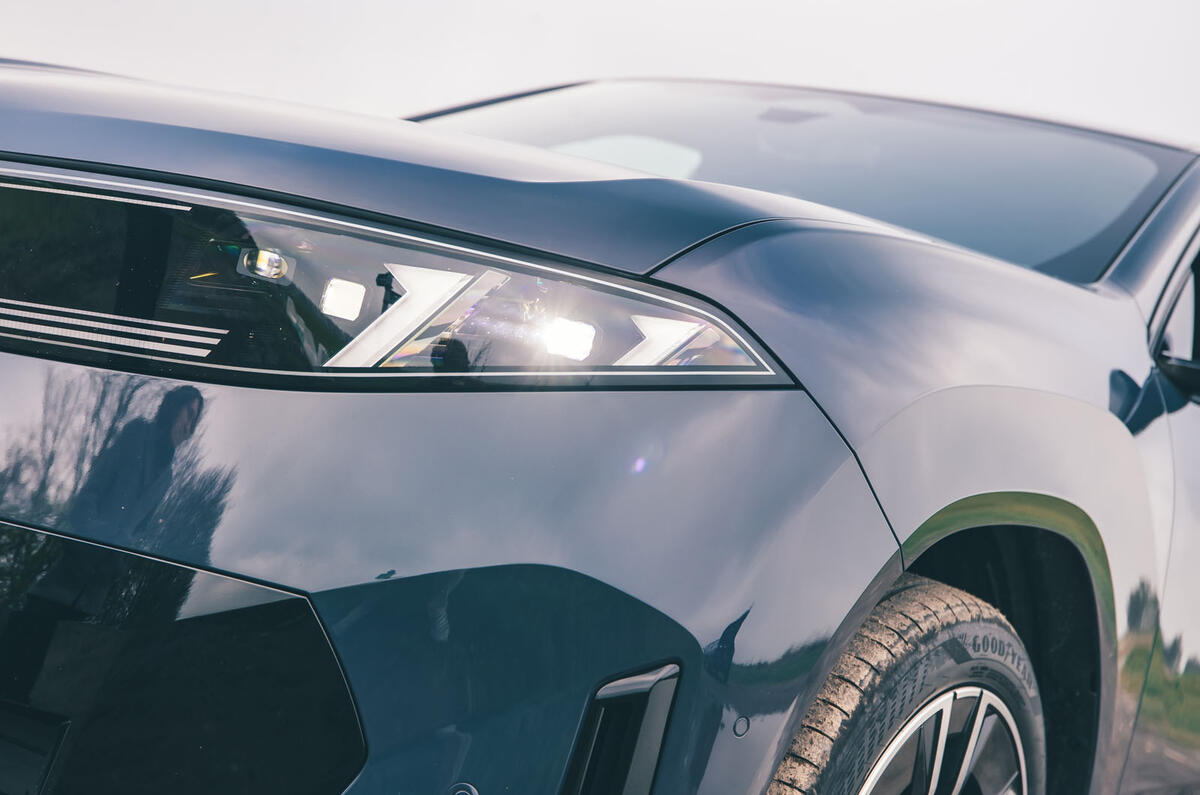
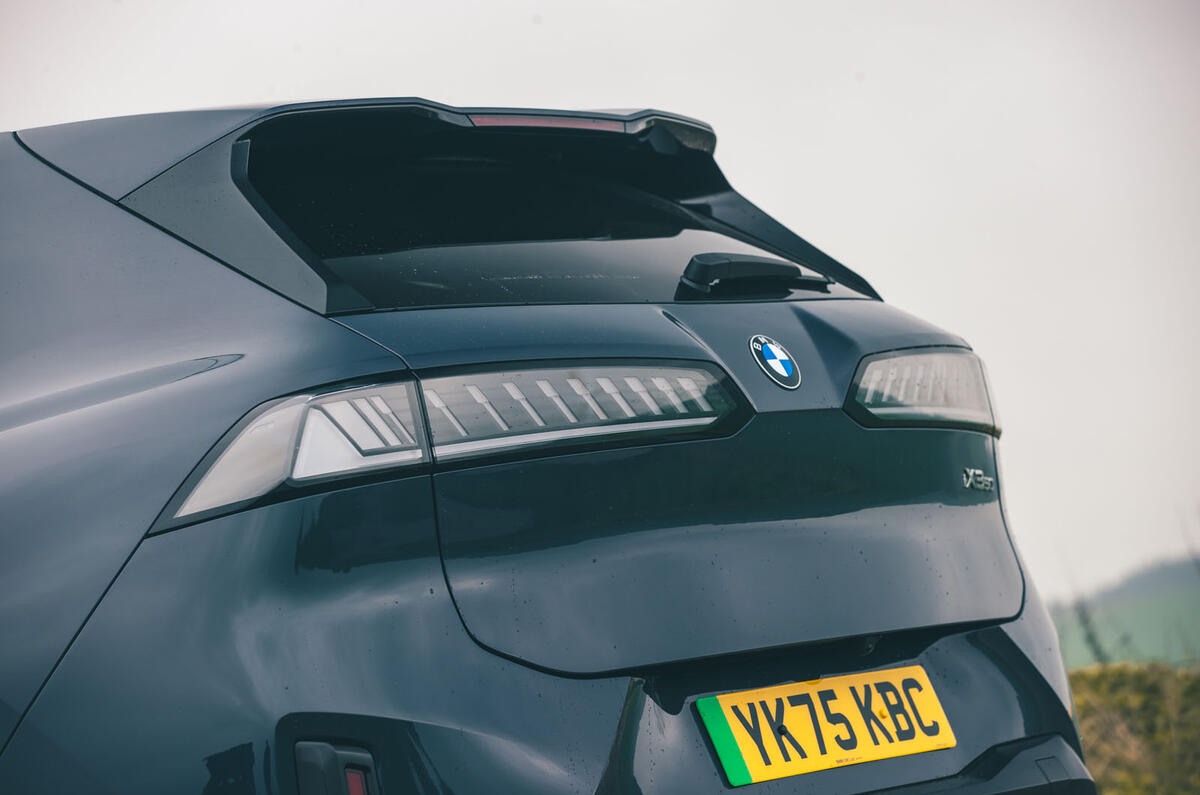
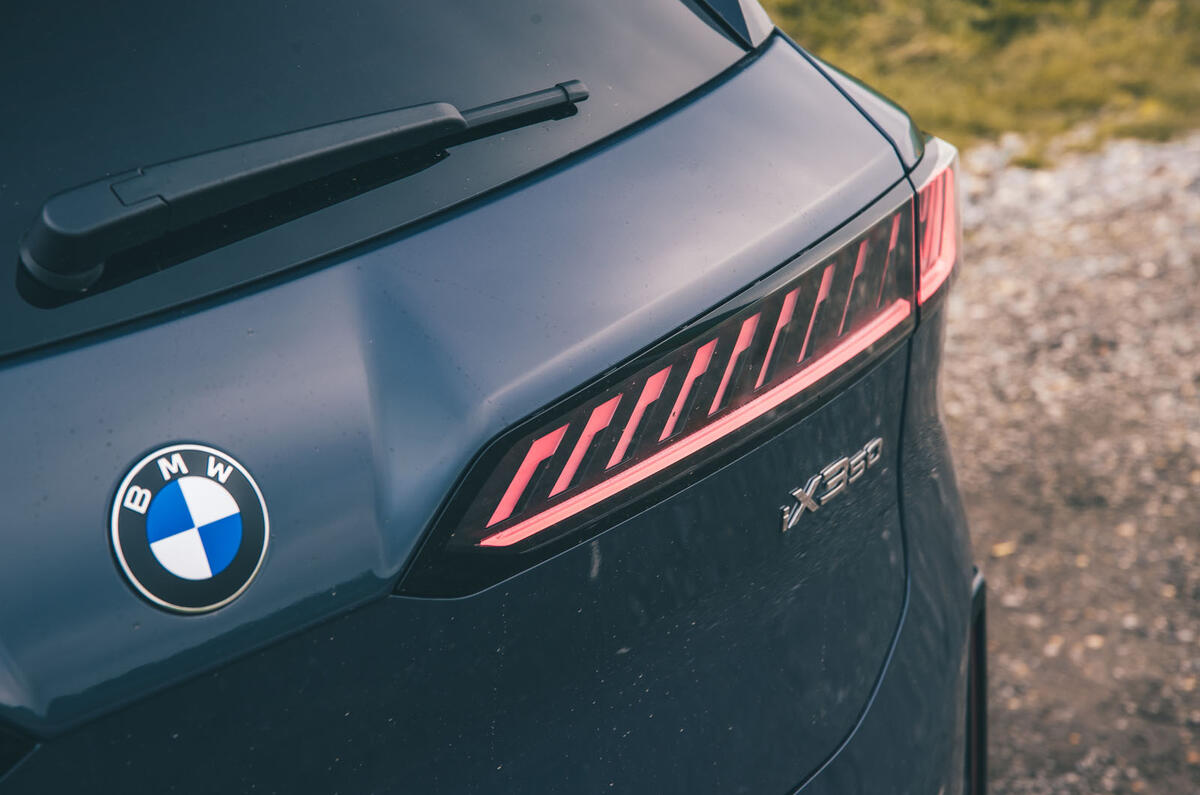
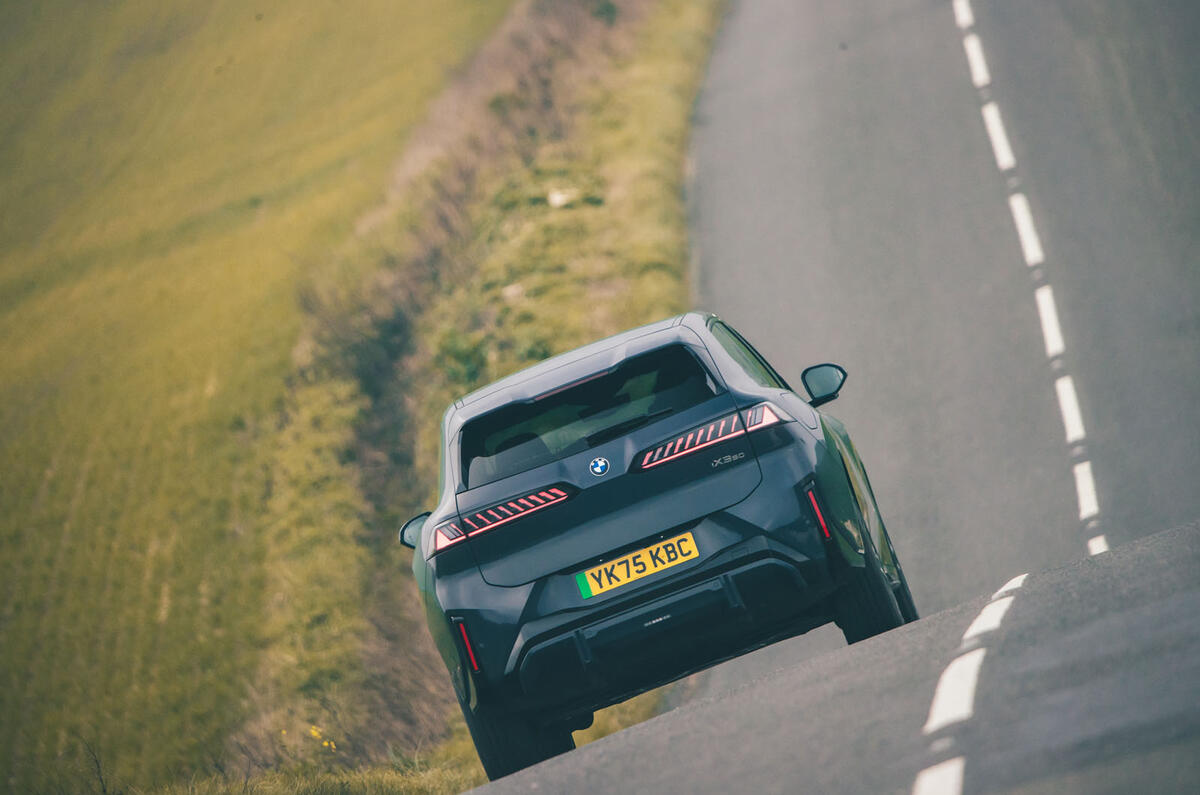
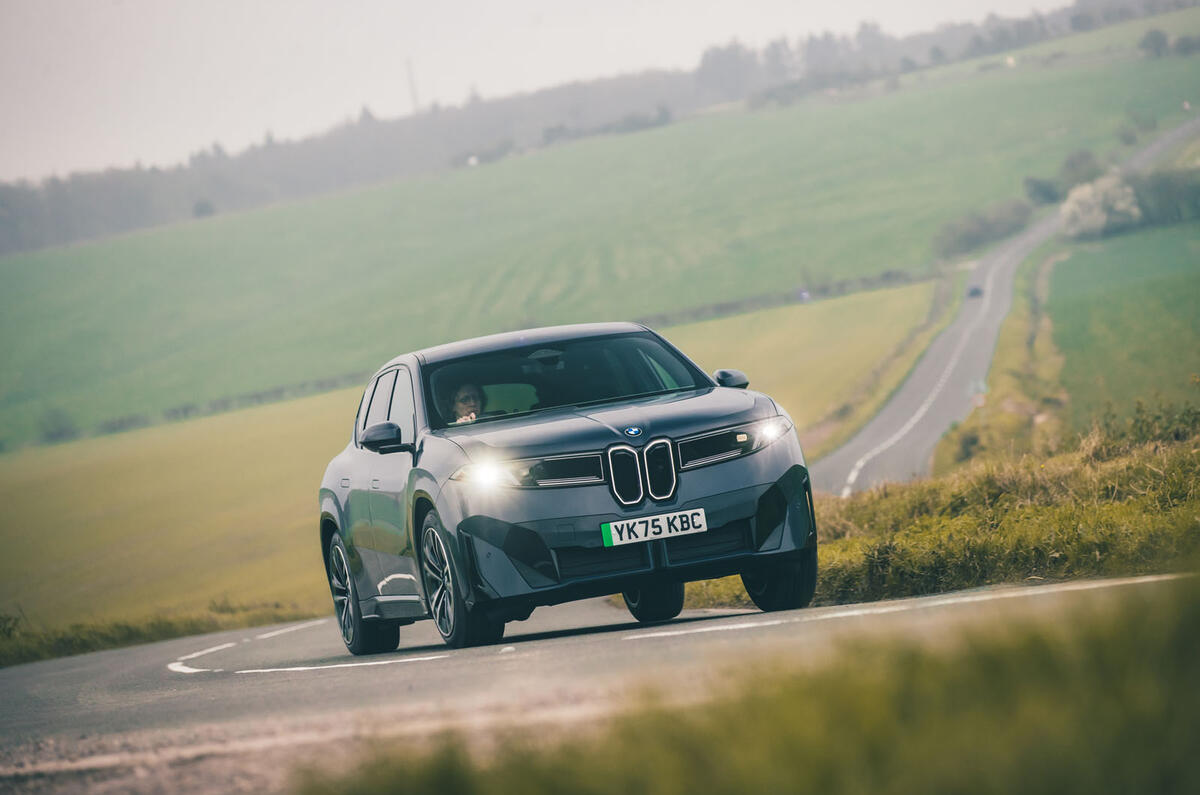
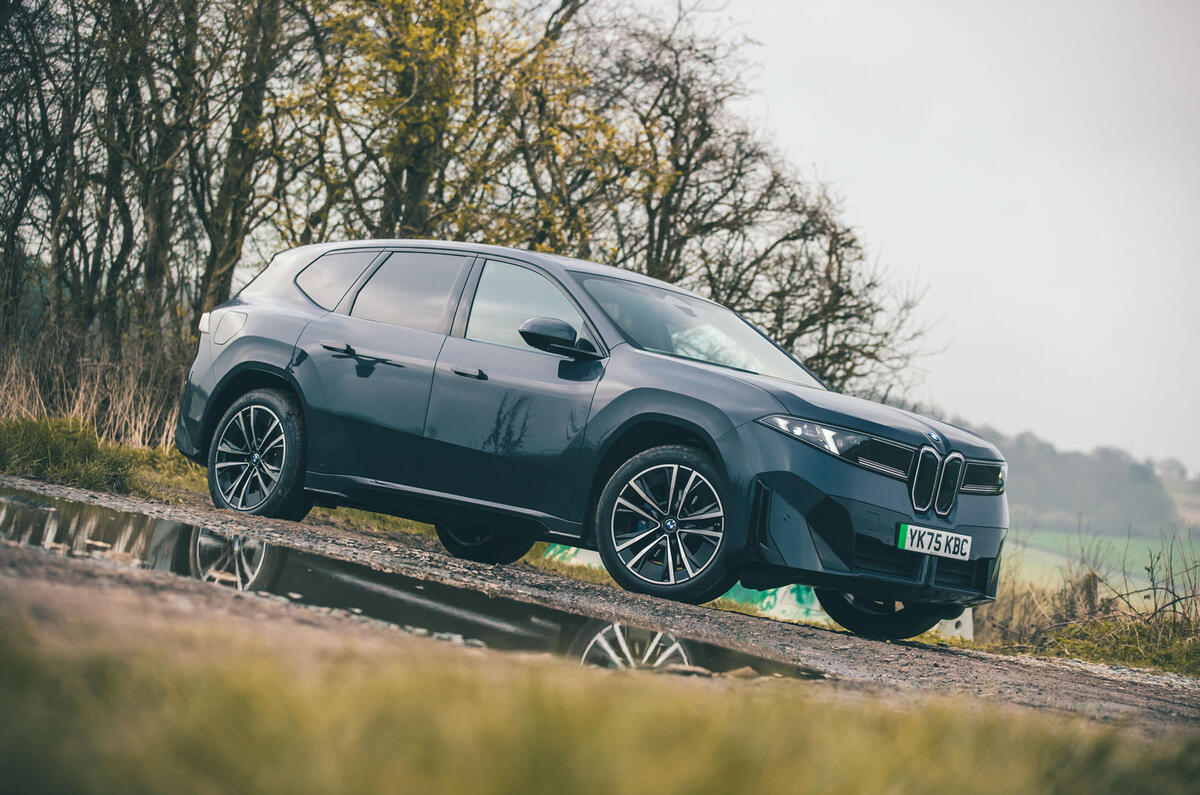
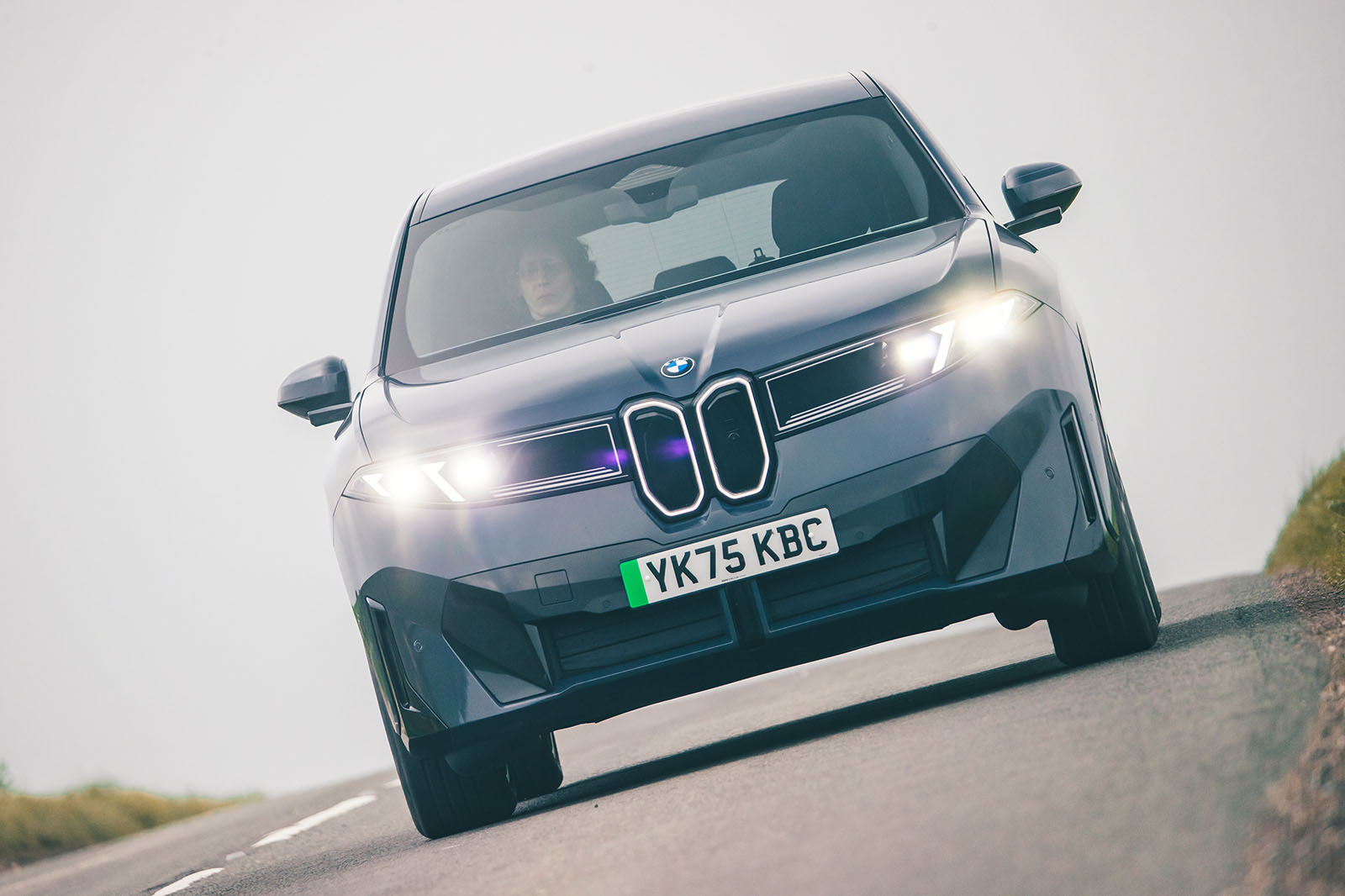
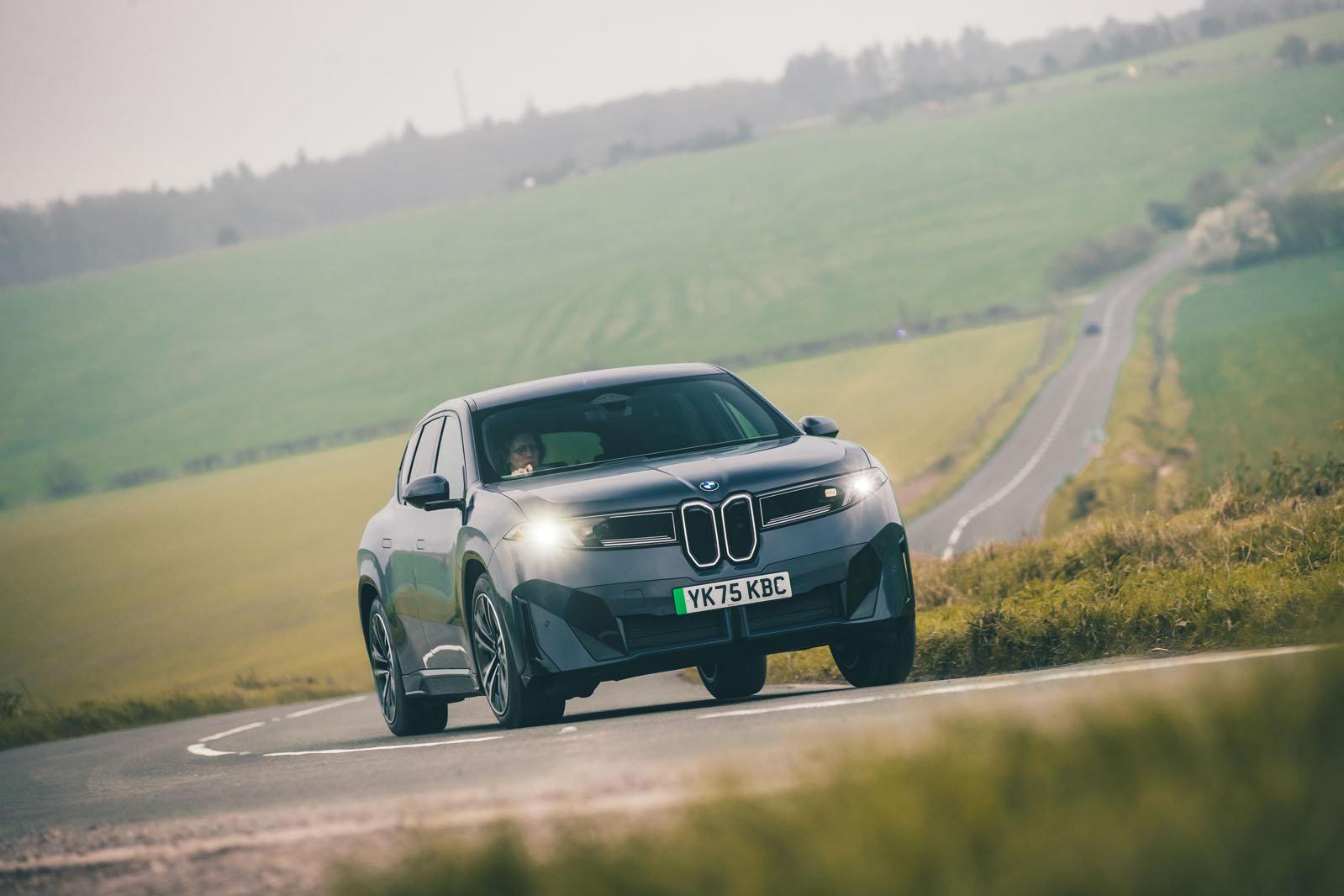
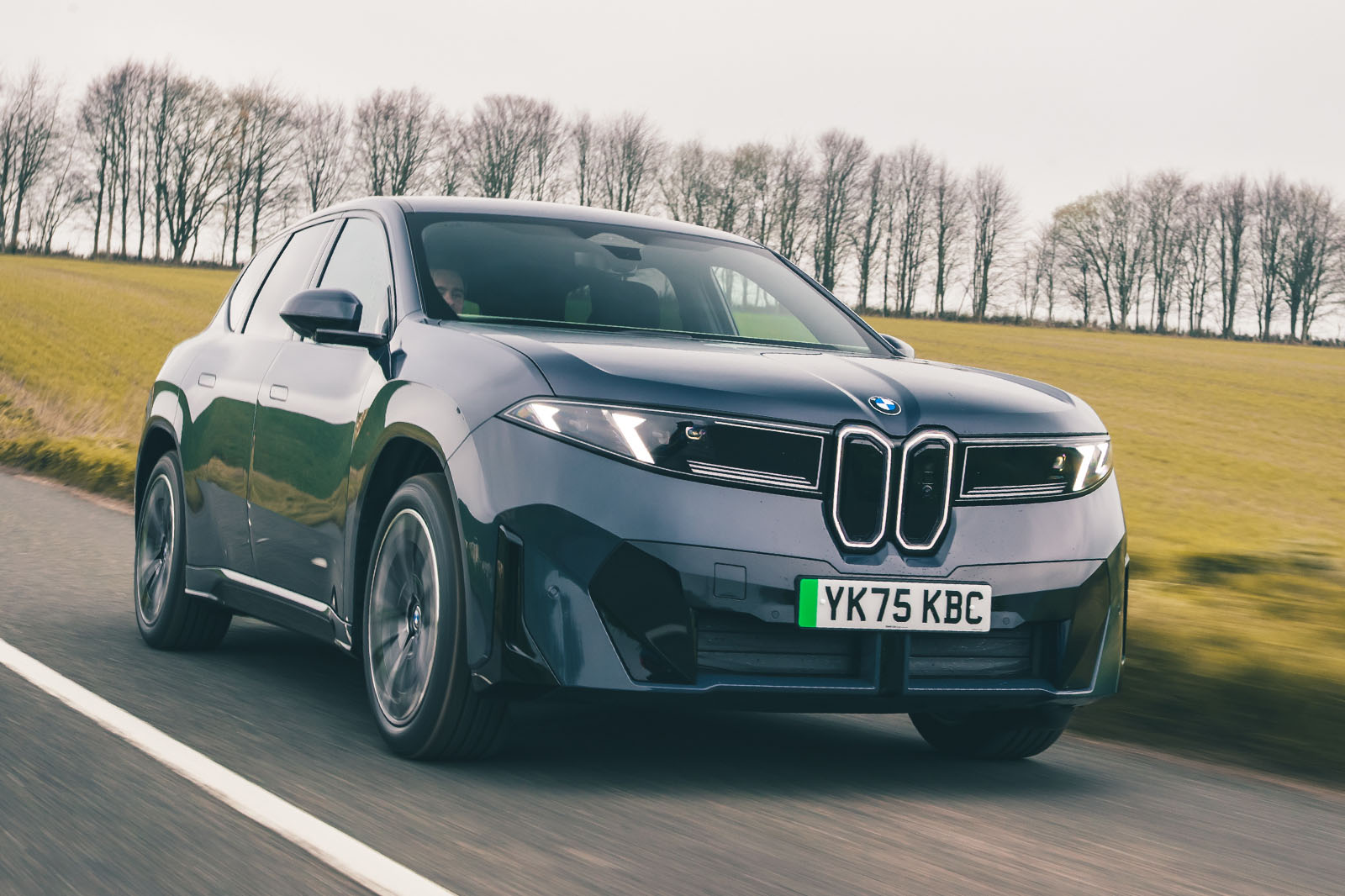
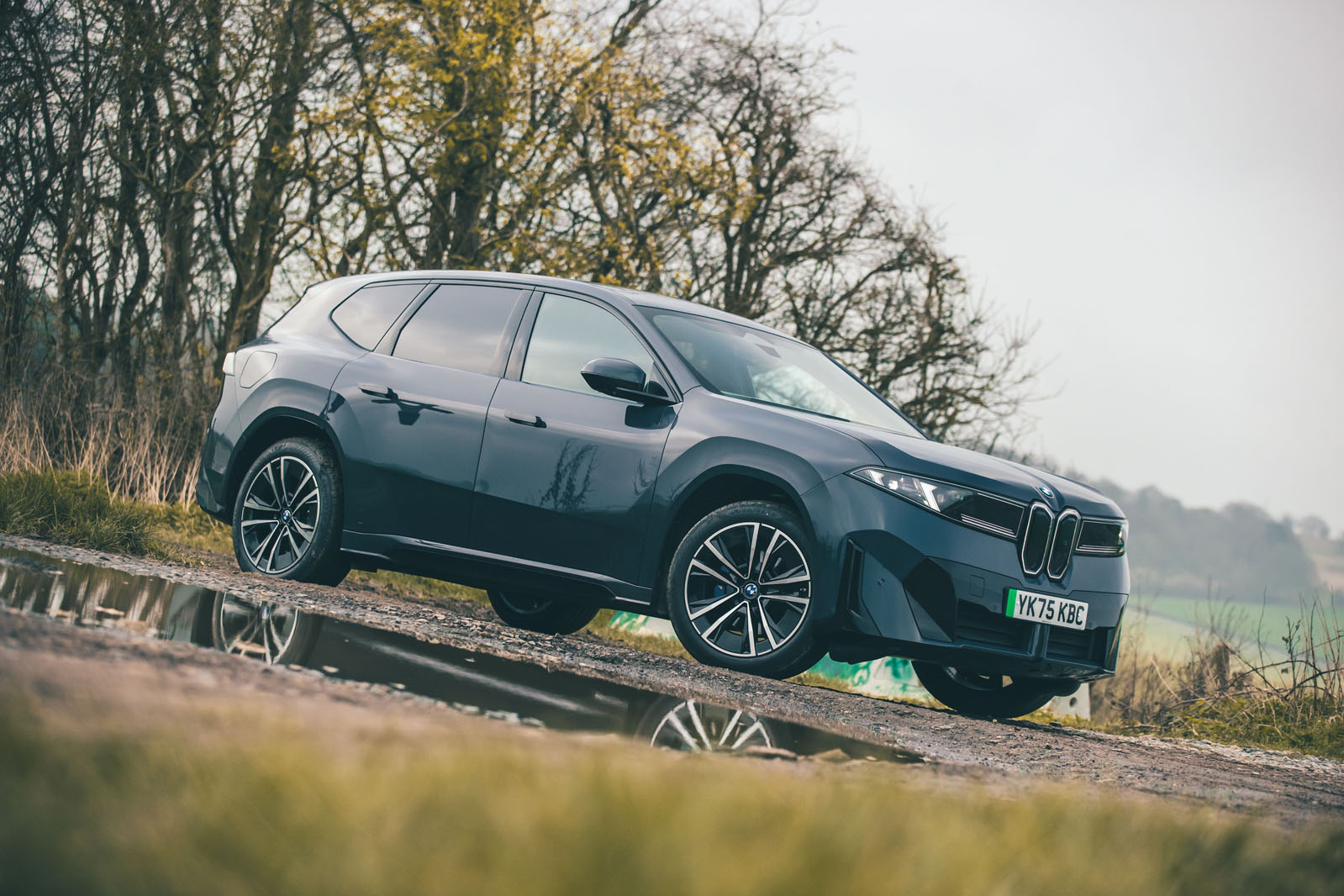
The front end radically departs from the busy current styling direction. Although ruthlessly modern, it does recall the shark-nose, ‘four-eye’ light signature and slim kidney grilles of ’70s and ’80s BMWs.

For the longest time, Tesla has comfortably had the best electric drivetrains, if not the best cars overall, and a big part of the reason is the firm’s vertical integration. In other words, it develops and makes everything itself, which lets it tune all the components to work in perfect harmony. Automotive manufacturing historically relies on a complex network of suppliers, but ‘legacy’ car makers are coming around to the new way of working.

The Neue Klasse platform is BMW’s Tesla moment. BMW has built a brand-new and highly automated factory in Debrecen, Hungary, to produce the iX3, including a battery plant.

In fact, BMW has done away with battery modules entirely for its ‘sixth-generation BMW eDrive technology’. Instead, it followed Tesla and Rivian in ditching pouch cells in favour of cylindrical ones, which get assembled into one big pack rather than being sub-divided into modules.

The thinking goes that the cylindrical cells are easier to cool and therefore more performant and efficient, while a ‘cell-to-pack’ construction is more compact. BMW stuck with the prismatic cells for a long time, because making the switch requires a big investment, and dividing a battery up into modules theoretically makes it more repairable. However, BMW says that it’s extremely rare for batteries to actually need repair, and it’s usually the control electronics that require attention.

It has therefore amalgamated all of these in the somewhat pretentiously named Energy Master, which sits on top of the battery and can easily be accessed by swinging the rear seat out of the way. As you would expect from new battery and electrical architecture, it runs at 800V, which is a first for BMW.

As well as the battery, BMW has taken the motors in-house. They are built alongside combustion engines in BMW’s plant in Steyr, Austria (not to be confused with Magna Steyr in Graz) and comprise a main drive motor at the back and a secondary one at the front. As usual with electric BMWs, the rear motor is a separately excited synchronous motor, which means that instead of rare-earth magnets, it uses electrically excited windings to perform the function of magnets. The motor at the front, however, is asynchronous. That’s quite typical for a secondary drive motor, as they sap less energy when not in use, but it’s new for BMW.

One other significant instance of centralising things in-house is what BMW calls the Heart of Joy, which is one powerful ECU that unites the functions of what would previously have been separate units – most likely made and developed by suppliers – for acceleration and braking, vehicle stabilisation, dynamic steering functions and charging management. Because these functions are now processed in one place, the response times can be faster, and the different systems can work together better. This is particularly significant for the regen, which can now slow the car all the way down to a stop and is 25% more efficient than the previous generation, claims BMW.

INTERIOR

8
BMW iX£ road test review 2026 012

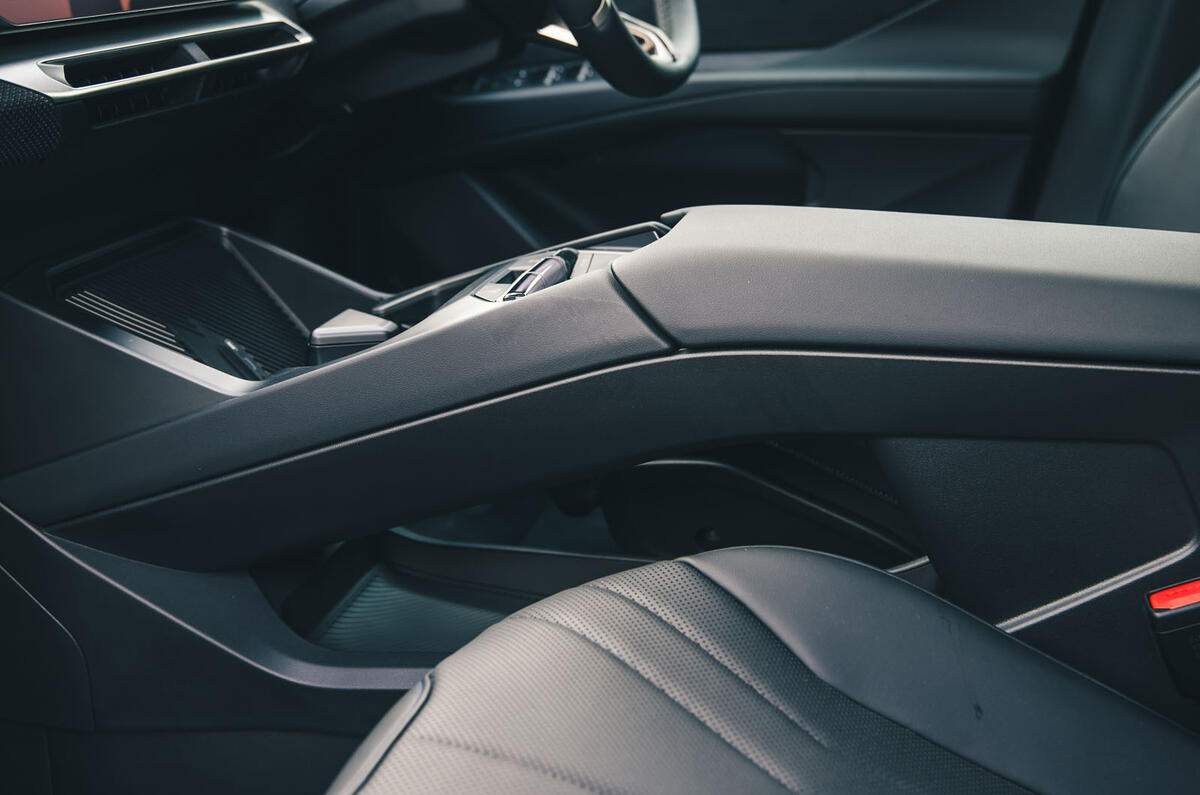
Before looking at how these changes have affected the way the iX3 drives, we have to get over the shock of the interior. With the exception of the column stalks, everything inside is different from the current cohort of BMWs, let alone a 10-year-old X3. This isn’t just a generation change. It’s a change in philosophy.

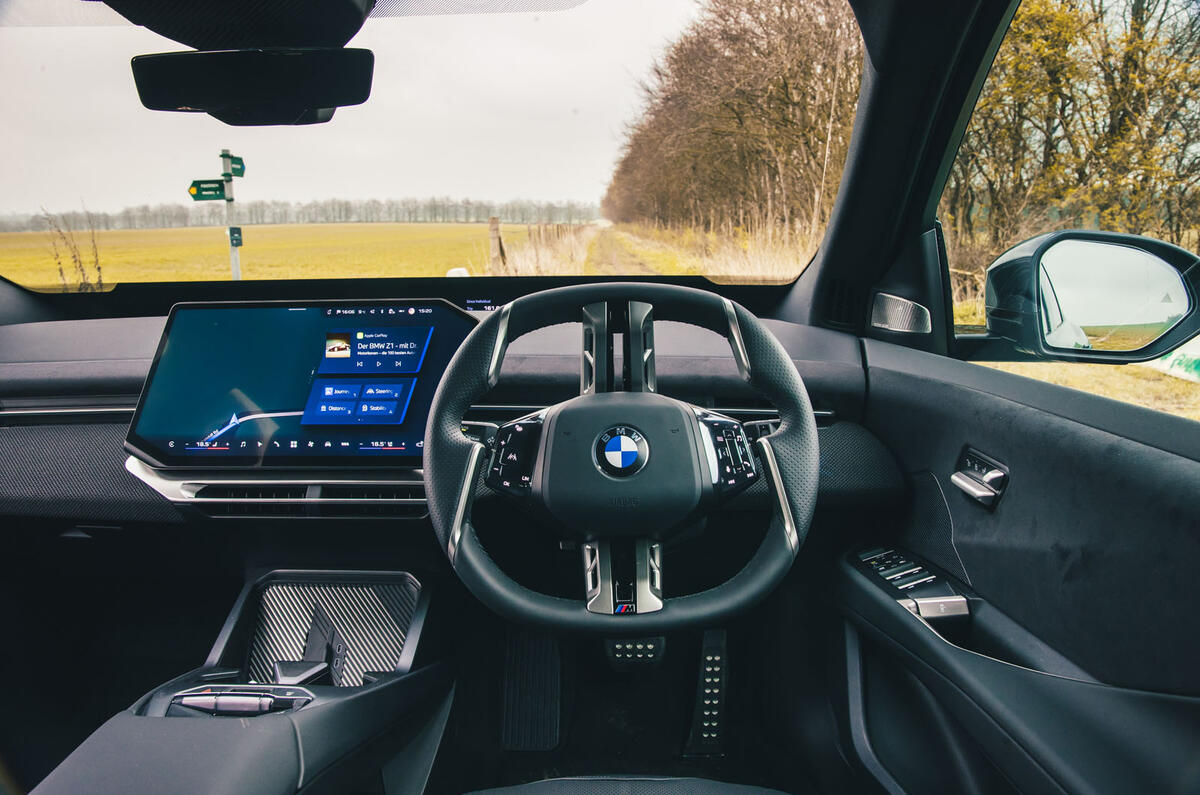
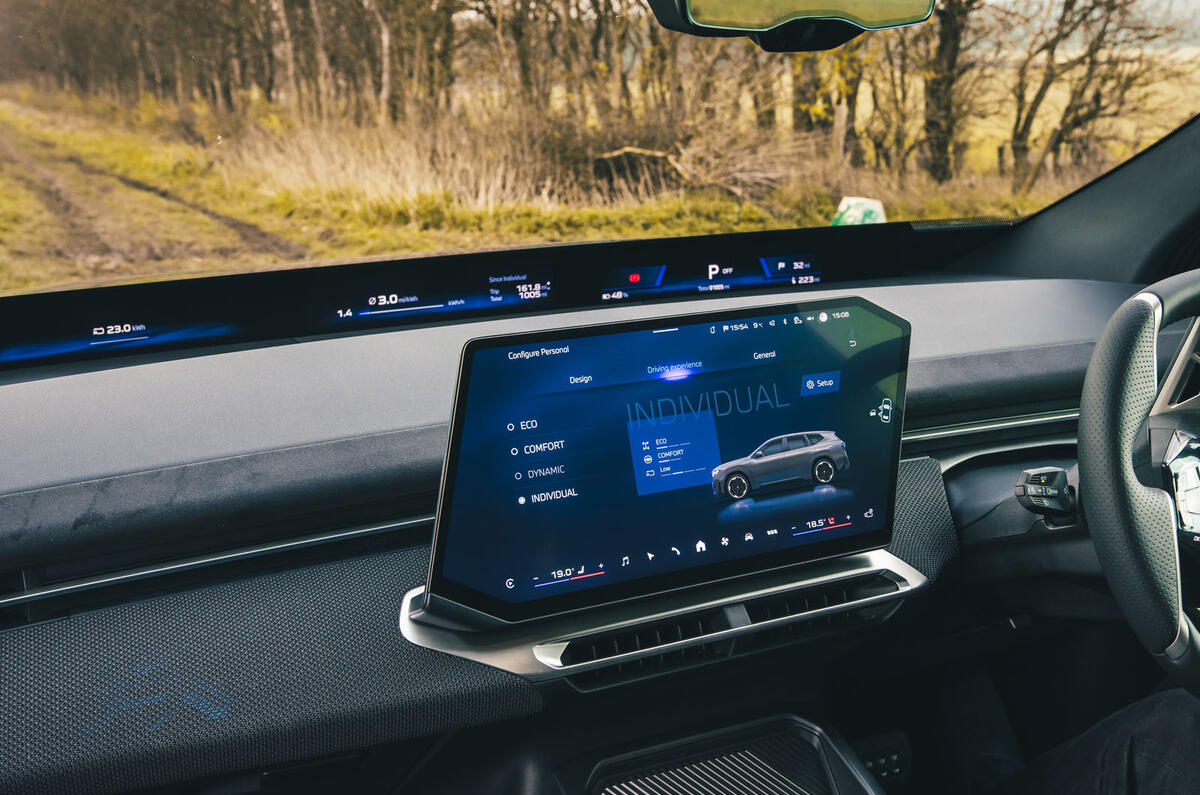
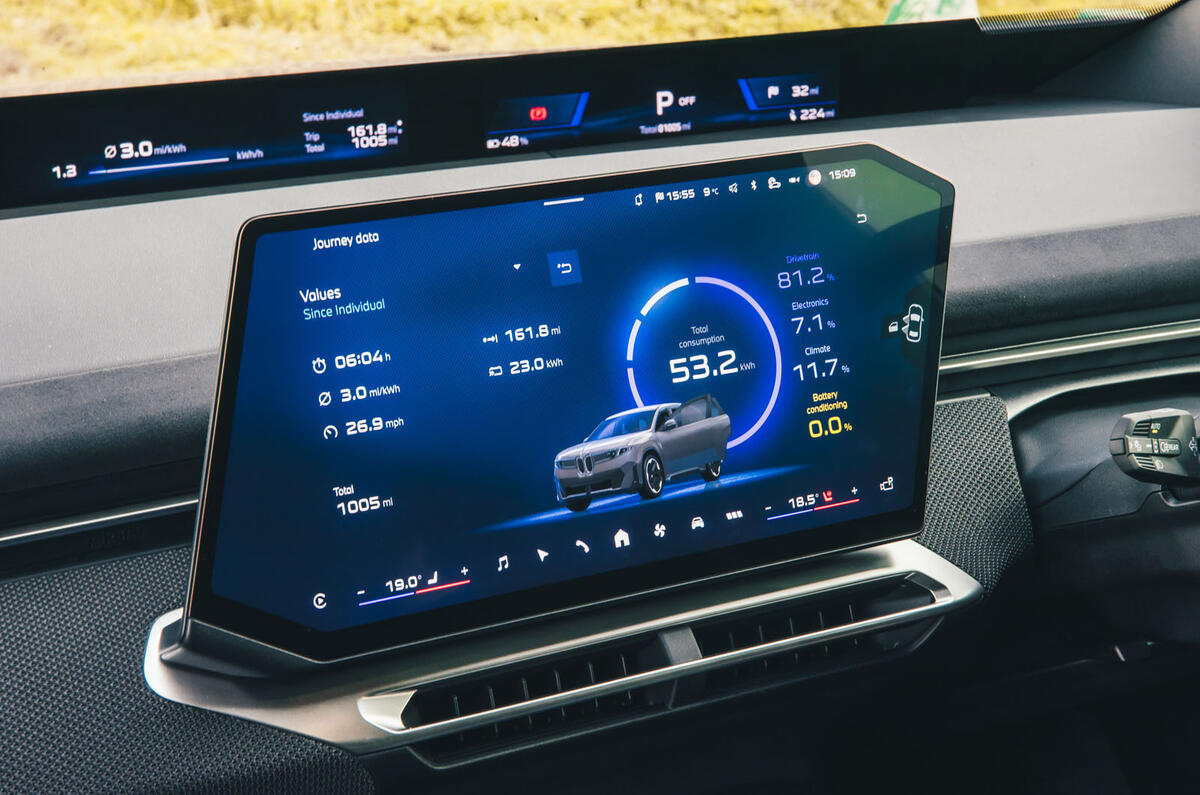
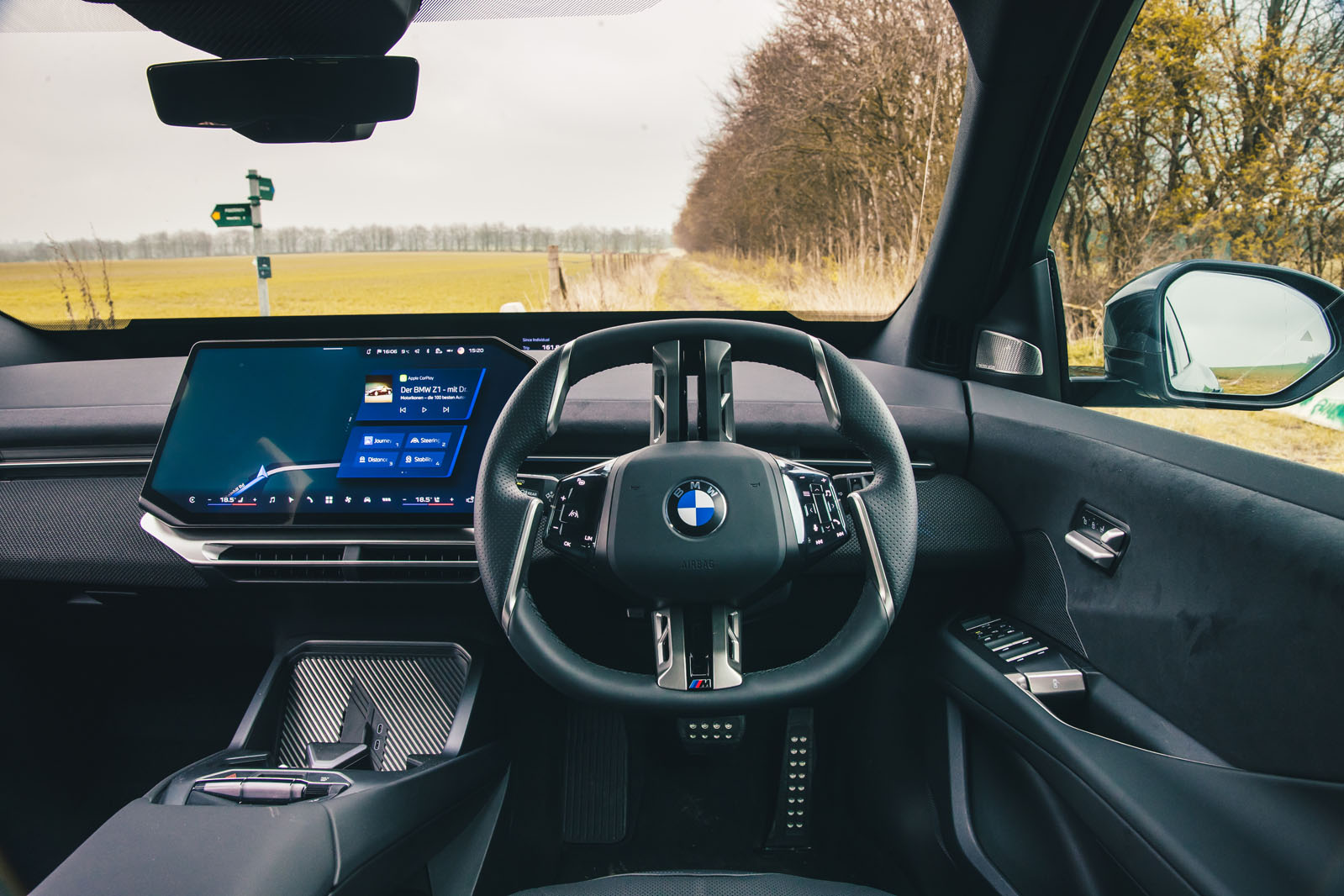
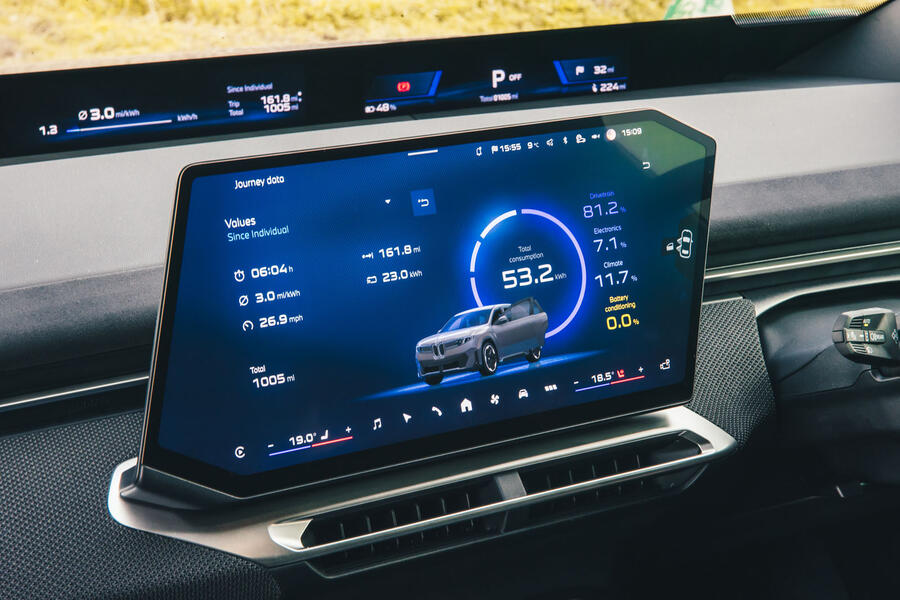
In some ways it’s quite refreshing, because BMW has neither plastered the dashboard with wall-to-wall touchscreens, as Audi and Mercedes are doing, nor resorted to the cold, forgettable minimalism of many Chinese cars. At 17.9in, the central touchscreen is large, sure enough, but it somehow doesn’t dominate the cabin because it’s positioned just below your eyeline.

BMW has some of the best column stalks around, with a weighty action and an intuitive spread of functions. We particularly like that when the wipers are in automatic mode, you can still push the stalk forwards for a single wipe.

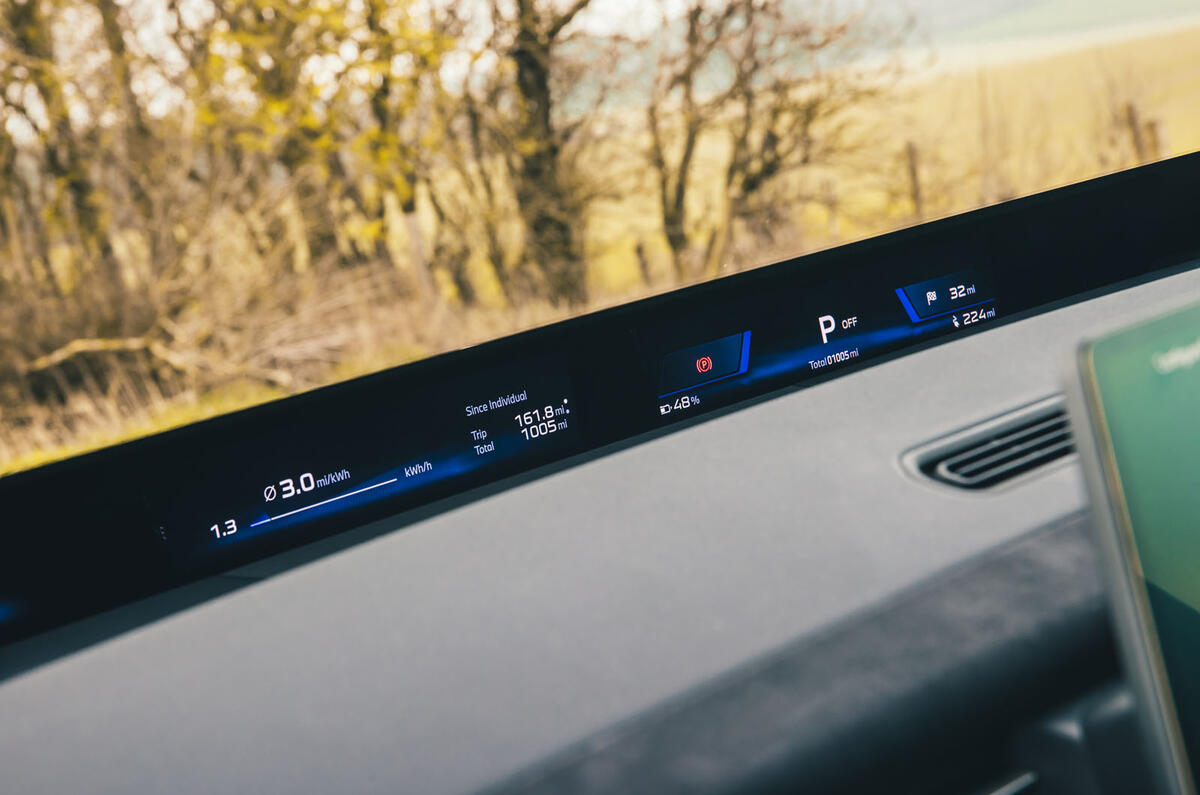
It’s also the only true screen. Your main instruments are projected onto a band under the windscreen – much like a head-up display, but with more detail and not constantly in your vision. This Panoramic Vision Display is fully customisable to show the things you want to see, with the options of trip information, navigation, battery stats and more.

Unlike BMW’s digital driver displays of the past five years, the graphics are elegant and calm, which lets it present information clearly. The positioning at the bottom of the windscreen means your eyes need to refocus less than with a normal digital driver display, making it much less fatiguing, particularly if you wear varifocal glasses. This is a rare thing in being a genuinely new piece of technology in a car that’s also better than what came before, rather than just novel. A true head-up-display, projected onto the windscreen, is available as part of the optional Technology Pack, but we found the panoramic display makes it mostly redundant.

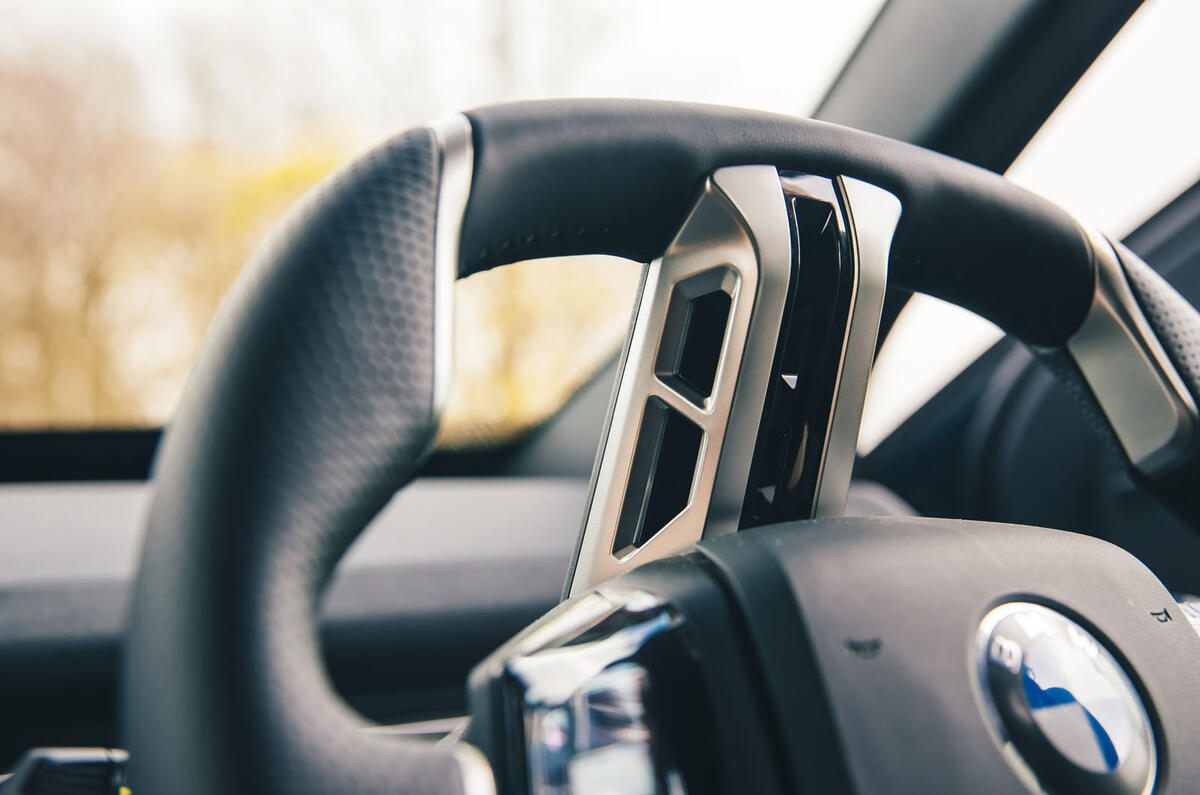
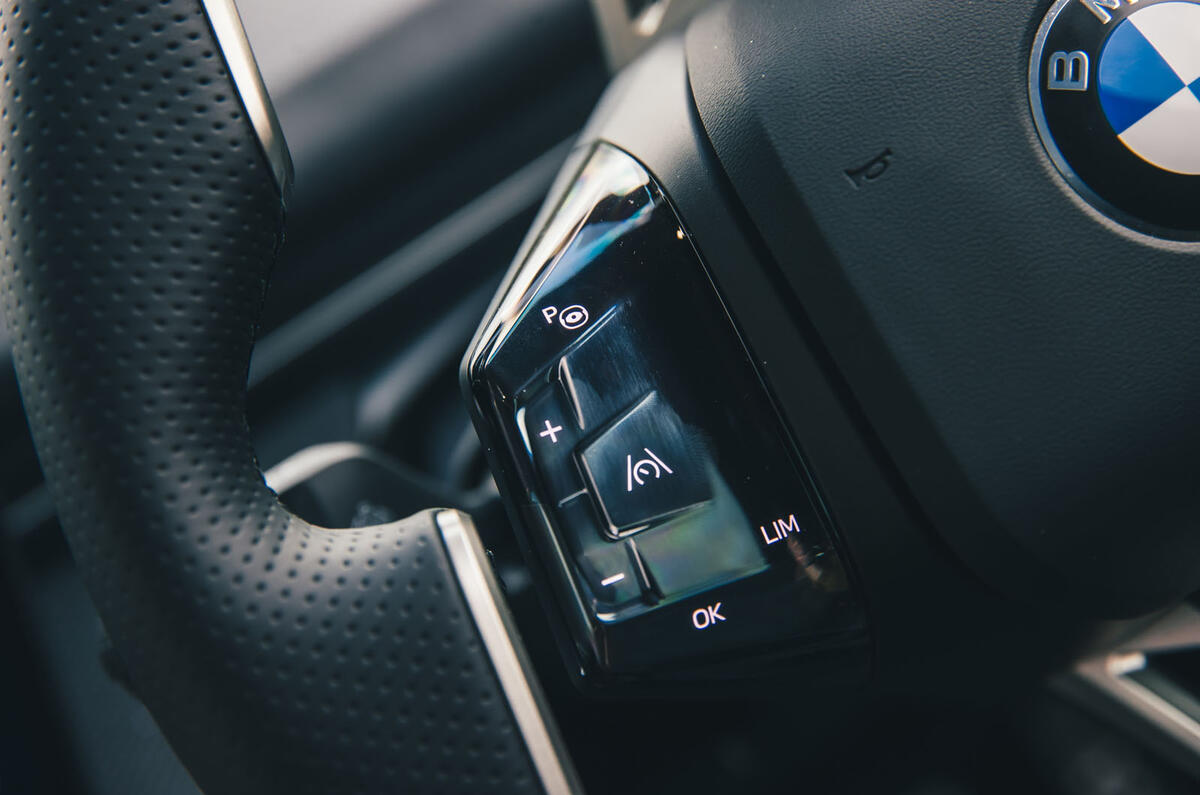
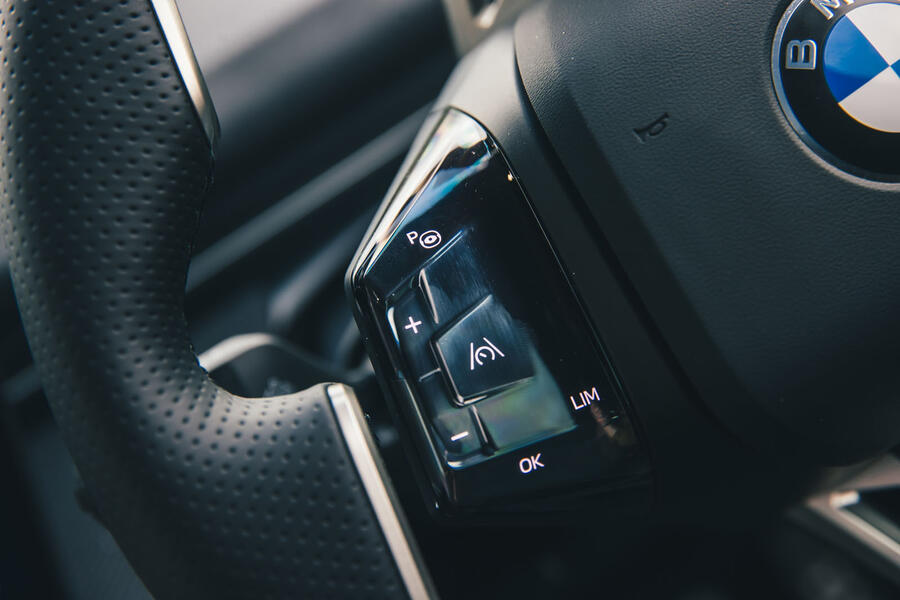
While they were in their innovative mood, the BMW designers turned their attention to the steering wheel. Because you look over rather than through it, there was scope to experiment with the shape, so the standard wheel has two spokes, at 12 and 6. As weirdly shaped steering wheels go, we find this one of the better attempts, because with no spokes in the way, you can comfortably wrap your fingers around the rim at the usual quarter-to-three position, and it gives you a couple of different places to rest your hands. The buttons on the wheel are one solid panel that gives haptic feedback when you press them, which is more reliable than the touch-sensitive surfaces in Audis and Mercedes. That said, it still fails to improve on a simple round wheel with real buttons.

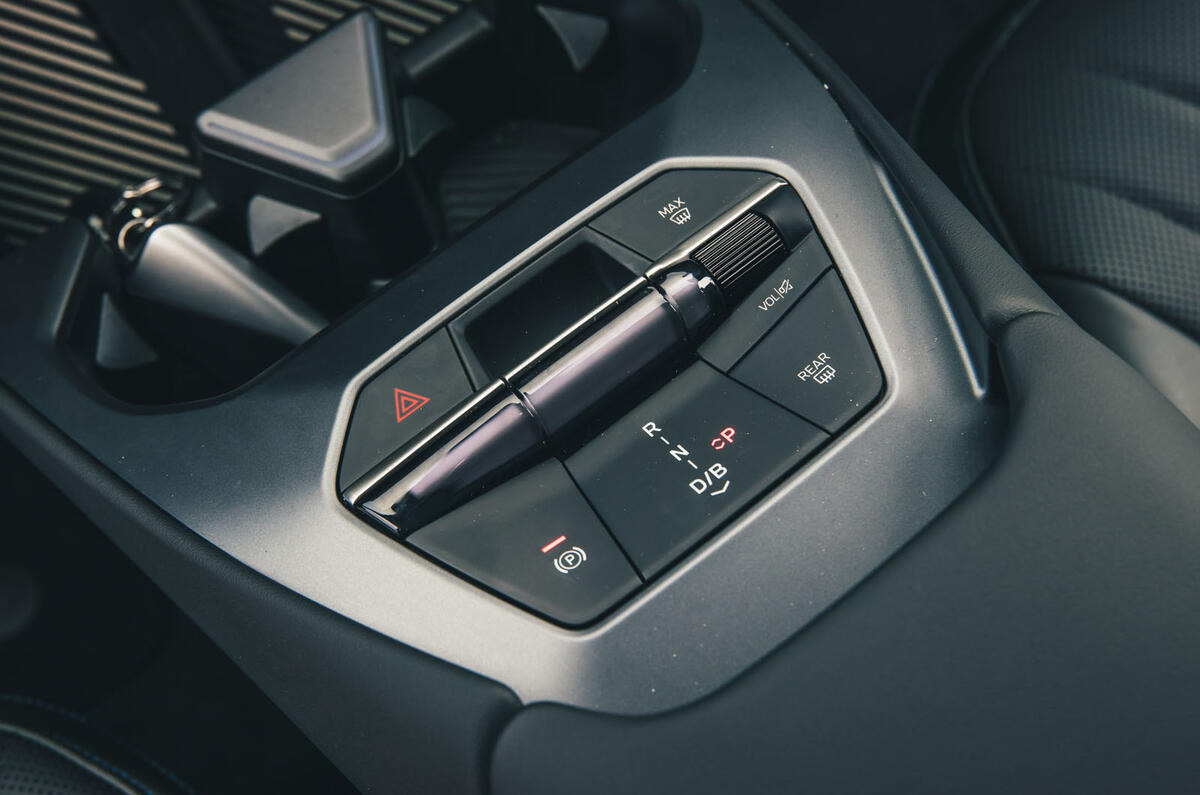
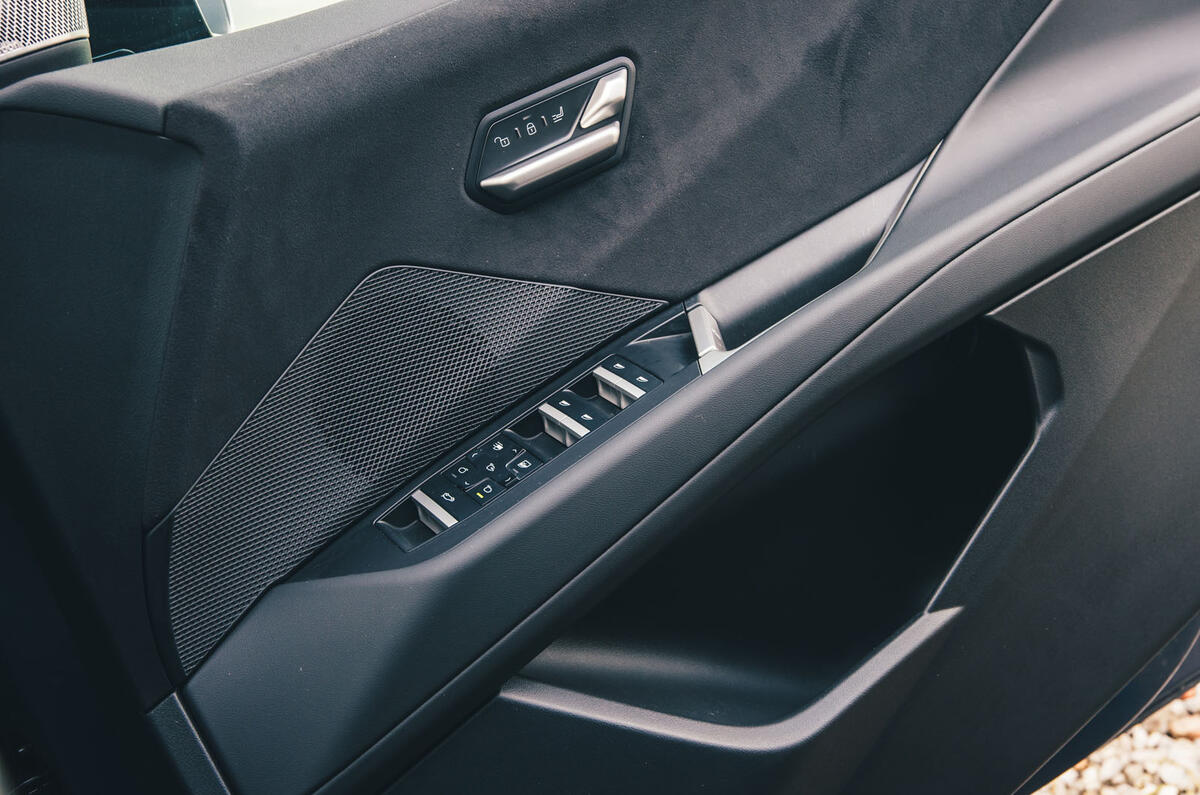
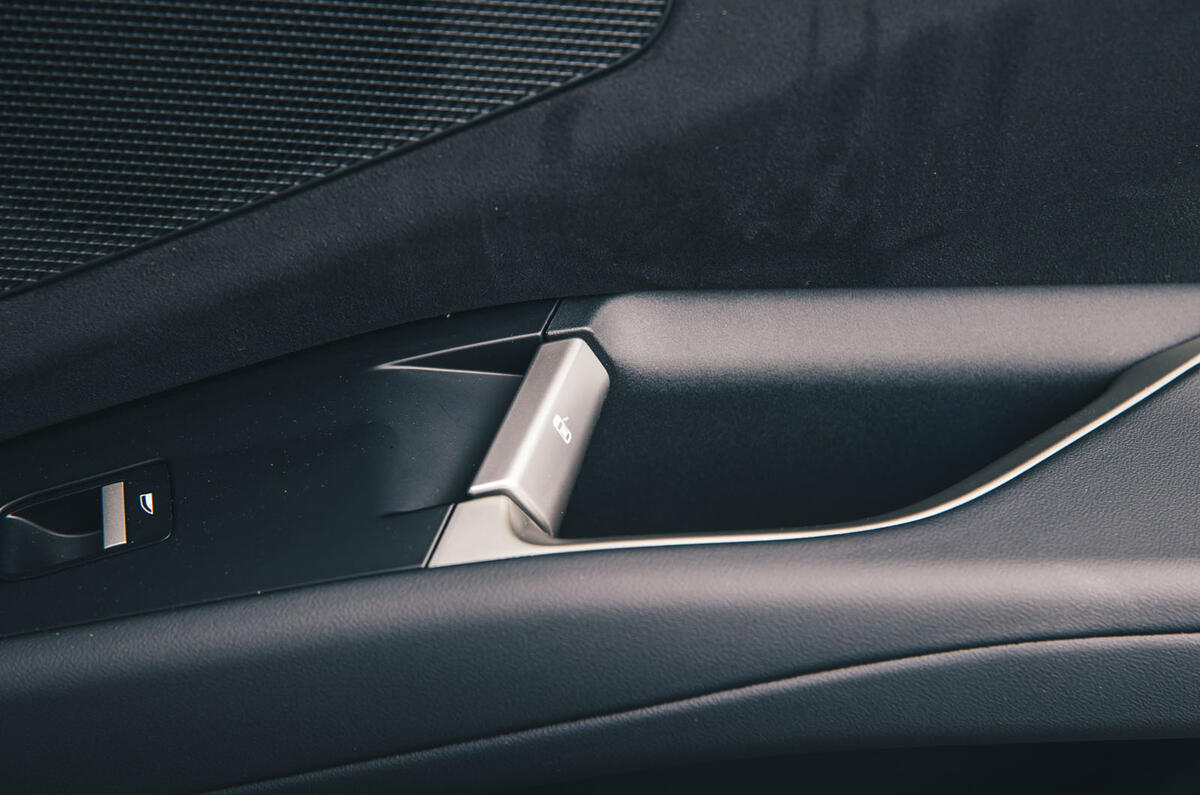
Apart from those on the wheel, there are very few buttons in the iX3’s cabin. Thankfully, BMW hasn’t tried to be clever with the mirror and window adjustment – those are entirely conventional. However, the infotainment, climate control and essential vehicle functions are all controlled through the touchscreen. Even the seat controls are minimal to a fault – if you want to adjust the lumbar support or side bolsters, you need the touchscreen.

All of this works better than it sounds, but worse than if the car had simple tactile controls. Although the main climate controls and infotainment shortcuts are permanently displayed on the bottom of the screen, the icons are relatively small, so they make you look away from the road and still aren’t the easiest to hit on the move.

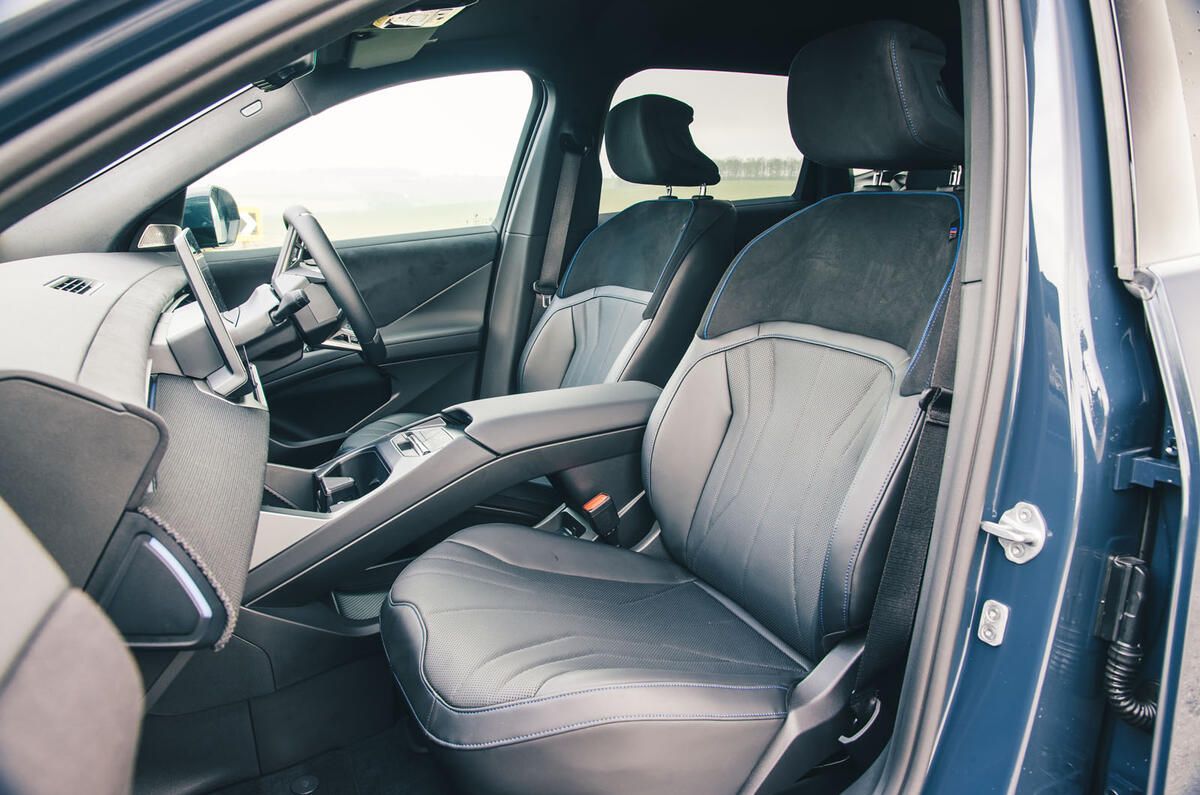
Otherwise, the driving environment is nicely appointed. BMW is quite proud of the volume of recycled materials it uses in the iX3, and the car’s own level of recyclability. The good thing is that, as an owner, you needn’t know or care. The faux leather is mostly indistinguishable from the real stuff, and all the surfaces you touch feel of high quality.

Unlike many rivals, BMW still offers quite a high level of personalisation. Most buyers will most likely opt for a restrained spec similar to our test car’s, with black synthetic leather and suede, but BMW also offers white and brown alternatives as well as attractive fabric and genuine leather options.

You also get to choose between a couple of different seats. Our test car had the simplest ones, which lacked lumbar and cushion angle adjustment, but were still quite comfortable over long drives. There’s also a sport seat option, but we would always spec the ‘multifunctional’ seats, which are even more supportive and add a host of adjustment options.

Whichever seat you pick, the iX3 gives you a medium-high driving position that feels appropriate for a sporty SUV. As we have come to expect from BMW, you can pull the steering wheel close to your chest, and thanks to the new display set-up the wheel never blocks out any of the information.
In the back

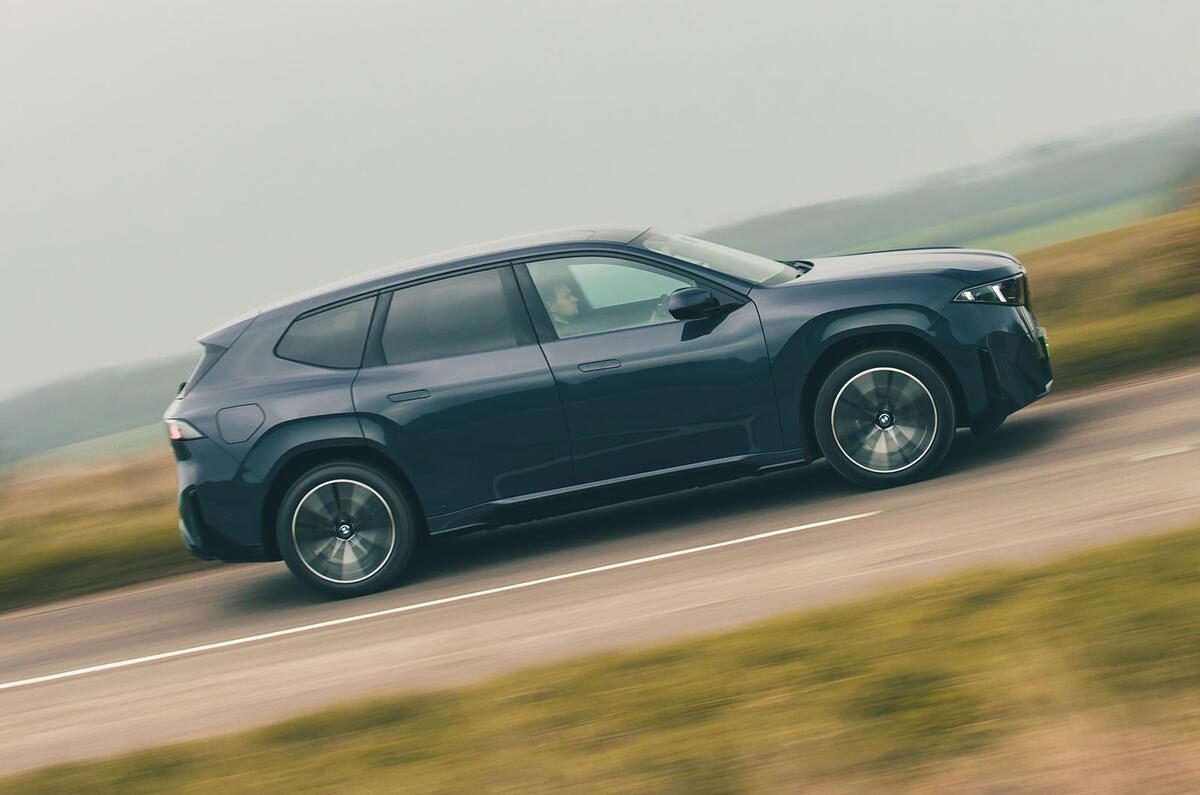
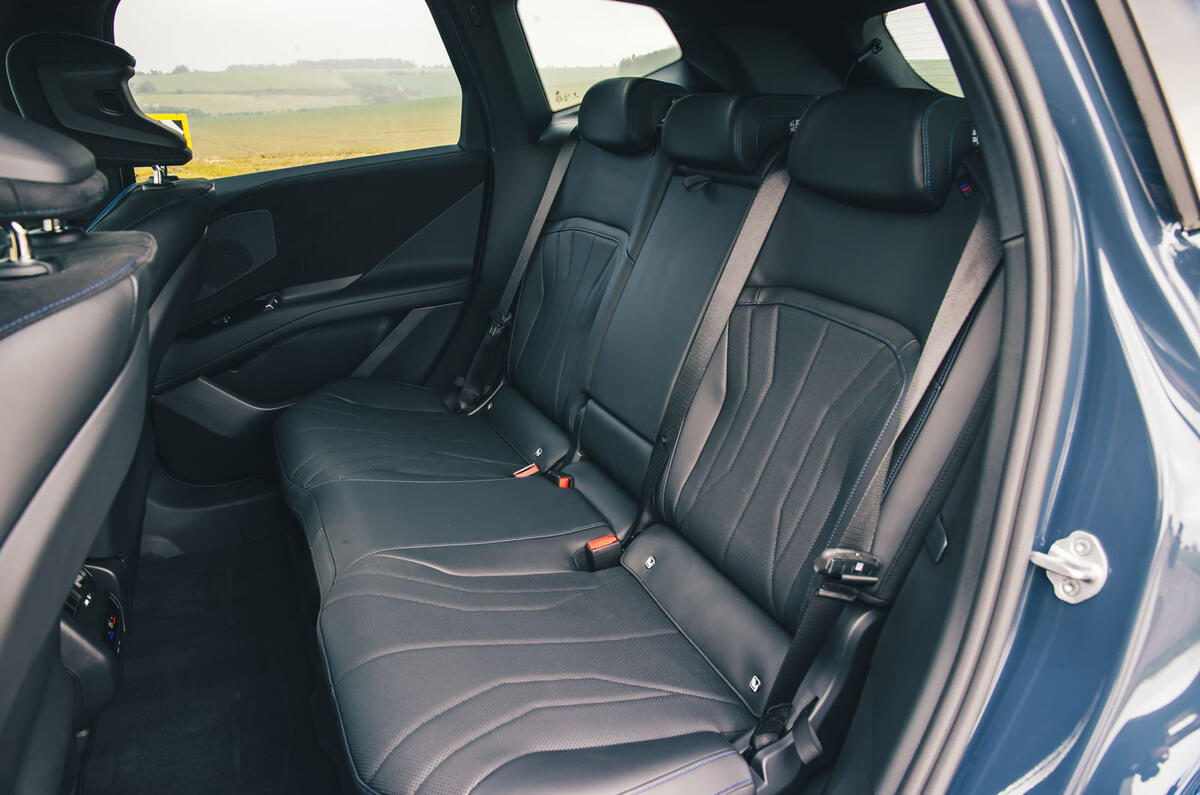
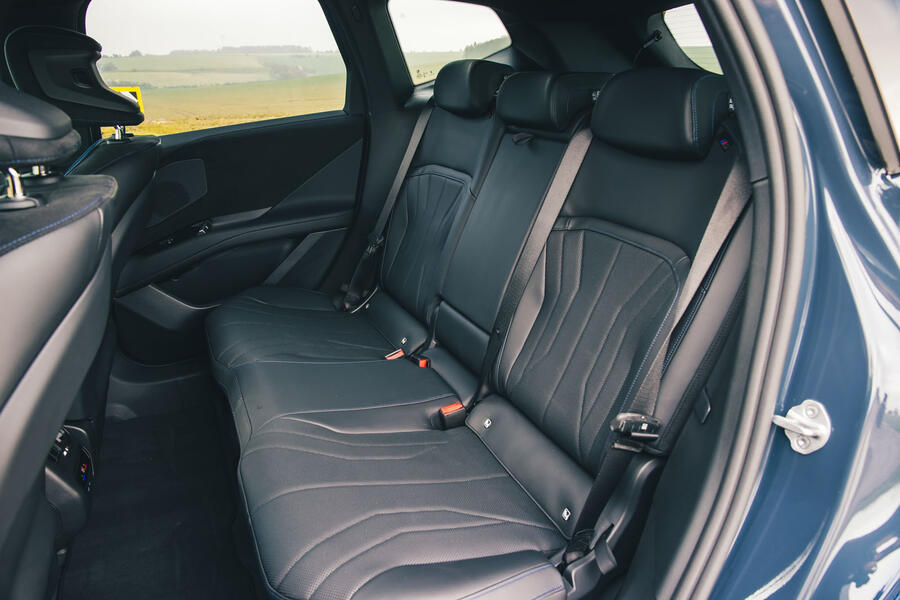
Logic dictates that an EV on a purpose-built platform can dedicate more of its length to passenger accommodation, because it doesn’t need a long bonnet to house an engine. Be that as it may, the iX3 doesn’t offer particularly distinguishing rear accommodation.

While it upholds its premium image with soft-touch materials, all of its key rivals offer the same or more leg room. However, it does have a relatively low floor for an EV, so its seating position is more comfortable than most. Most adults would be perfectly comfortable in the back of an iX3. As you would expect with a dedicated EV platform, the floor is entirely flat, so you could seat three people across the bench in a way that you couldn’t in an X3.

BMW also isn’t particularly generous with amenities. Separate control for the rear climate (via a little touchscreen) and heated seats are optional extras, and rear passengers get neither grab handles nor seat pockets. The backrest reclines, if not very much, but doesn’t slide.
In the boot 

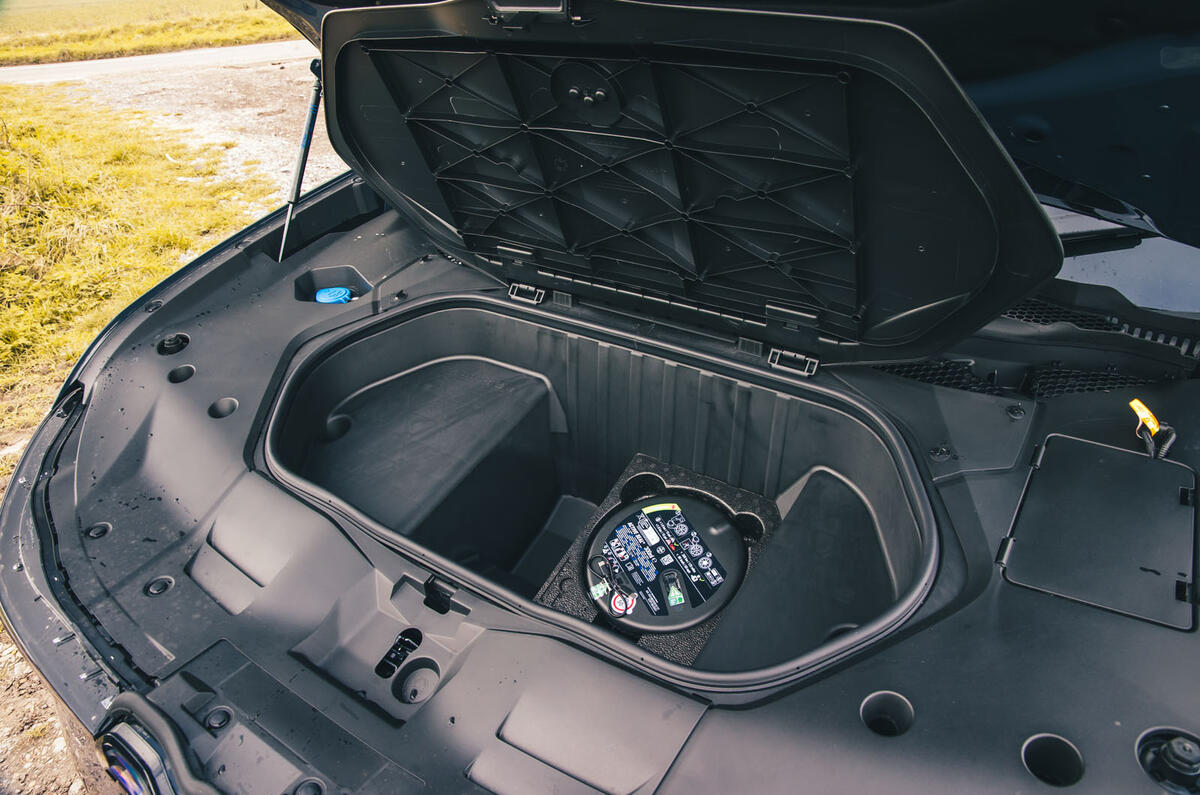
In a first for an electric BMW, the iX3 offers a front luggage compartment. However, it feels like BMW’s heart was still not fully in it, because opening the frunk requires you to pull a lever in the interior, which means you’re unlikely to actually use it. On the forthcoming Mercedes-Benz GLC EQ, you open the frunk by pressing the Mercedes emblem, and we would have liked to see a similar solution from BMW. The space itself is also quite small and unevenly shaped.

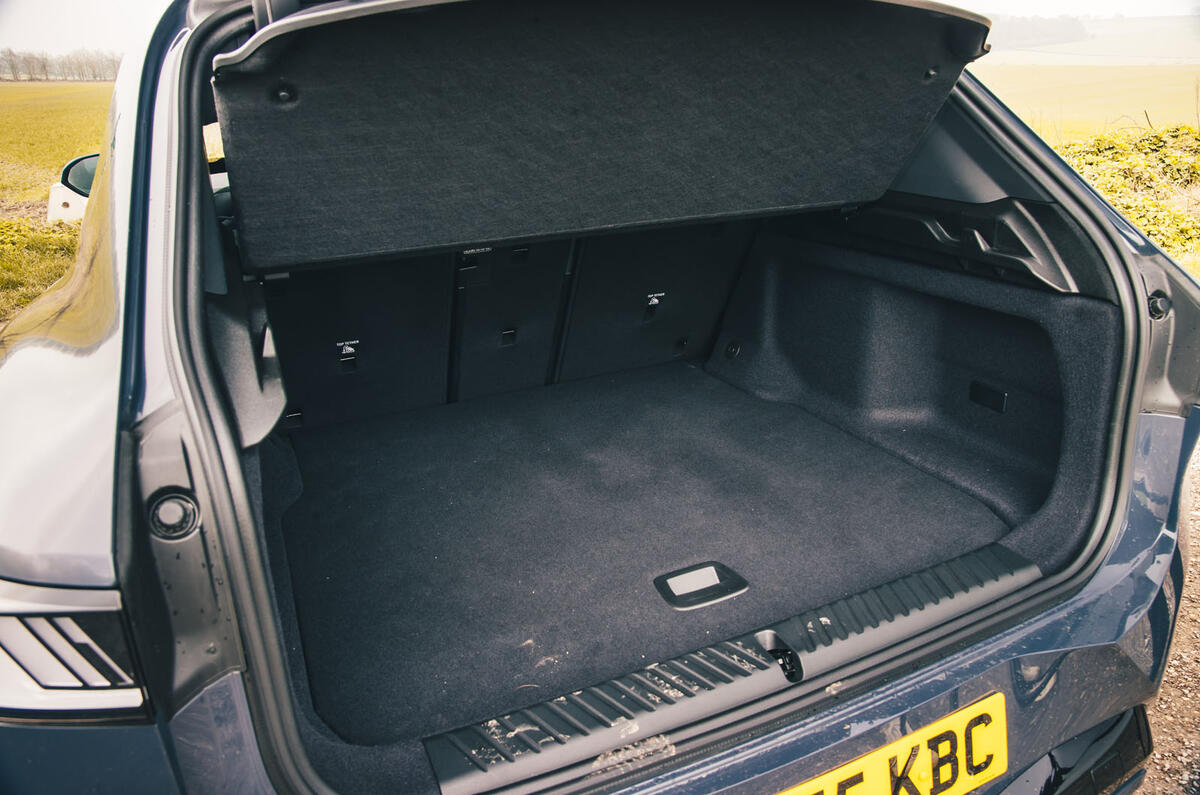
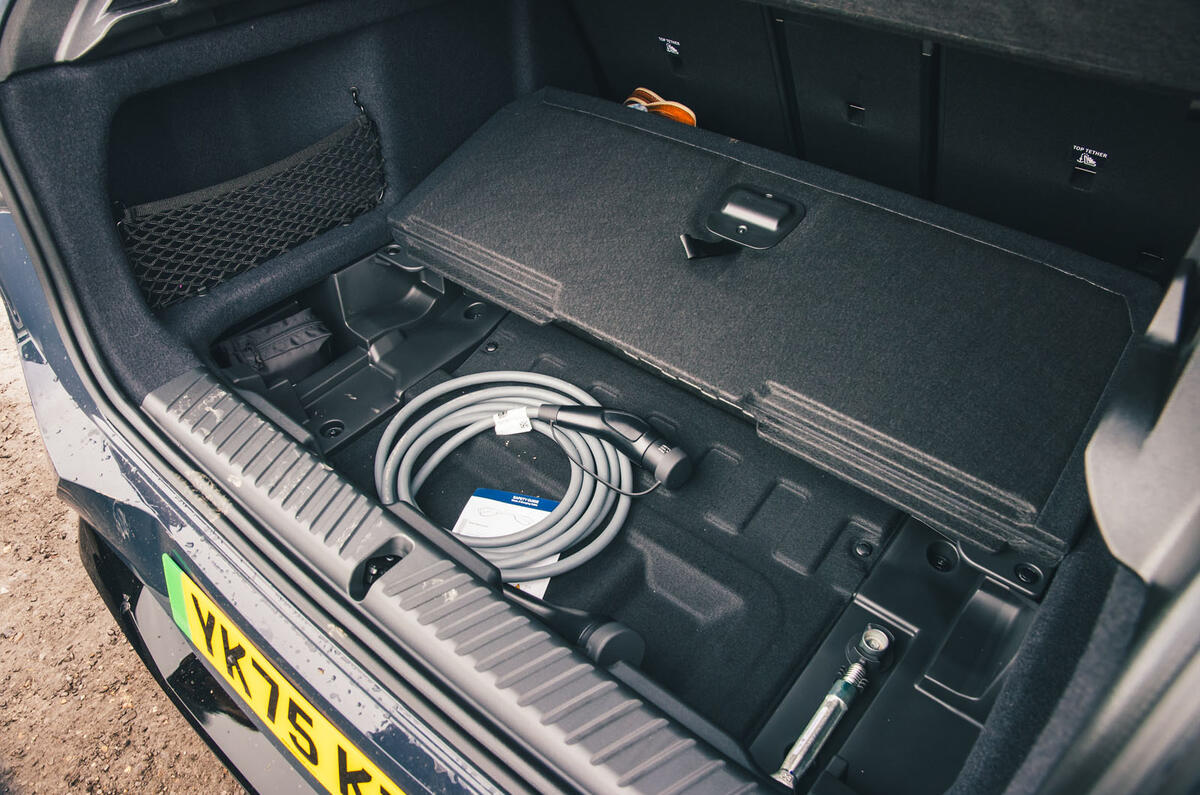
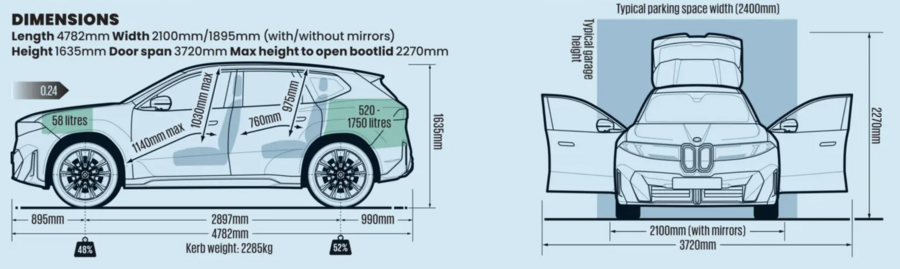
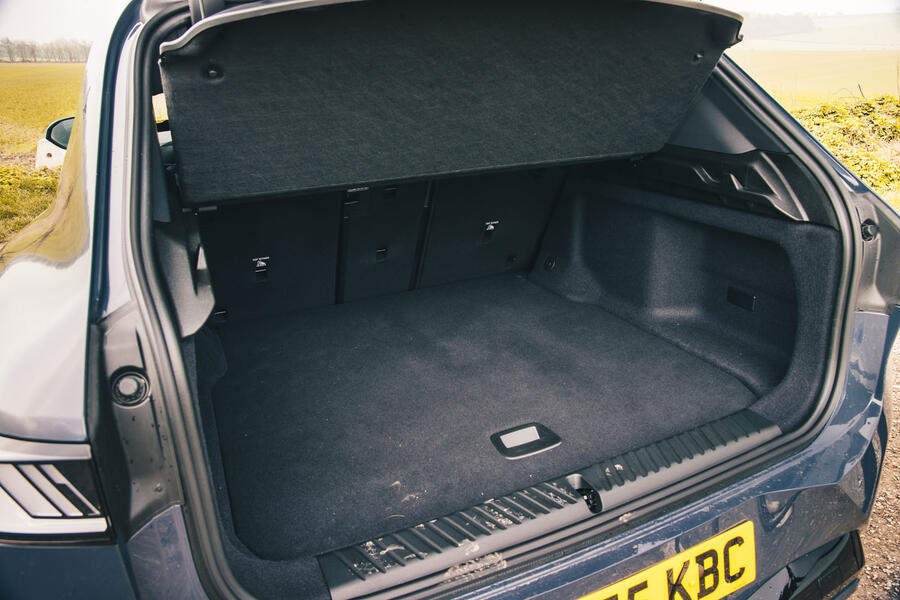
The main boot at the back is better, offering a competitive amount of room and a flat, square load area. The rear seats fold flat in a 40/20/40 split and there’s further space under the floor that could be used to store the charging cables.

Even so, there are no remote handles to fold the rear seats, and there’s a hatchback-style parcel shelf rather than a retractable load cover, so carrying a dog will be more of a faff than in an estate or an Audi Q6 E-tron, which feels a bit mean in a £60,000 car.
Multimedia

The same owner of a 10-year-old X3 might be shocked at the iX3’s new infotainment system, but in reality, OS X, as BMW calls it, is a logical development from Munich’s latest efforts. The rotary controller’s death warrant is now fulfilled, but in fully optimising the interface for touch input, BMW has made this a more logical system than the previous generation of BMW iDrive.

It’s still a busy interface, with lots of functionality and interactive elements, so it might take some familiarisation. Once you learn how BMW thinks, it’s a versatile system, however. The home screen in particular is very well designed, with a big, interactive map element and two customisable tiles. We preferred to use them for media and for functional shortcuts, but they can display weather, additional navigation functions and more.

The built-in navigation itself is well worth using over Google Maps or Waze, because it’s clear, good at avoiding traffic and with excellent charge planning. We were also impressed with the sound quality of the optional Harman Kardon hi-fi.

It’s frustrating that you have to log in to the car with a BMW profile in order to unlock certain important functions, but at least it is a quick and easy process, and BMW’s phone companion app is excellent, letting you do useful things like scout chargers ahead of time, send the destination to the car and control the climate and the remote parking.

ENGINES & PERFORMANCE

9
BMW iX£ road test review 2026 027

Single-motor and high-performance dual-motor versions will surely follow, but the iX3 launches in just one mechanical specification. With 462bhp from its dual motors, this middle-grade SUV is more powerful than an M340i. Then again, it does weigh 2316kg, according to our scales. That’s fairly typical for this sort of car, although it does bear mentioning that a dual-motor Tesla Model Y weighs nearly 300kg less.

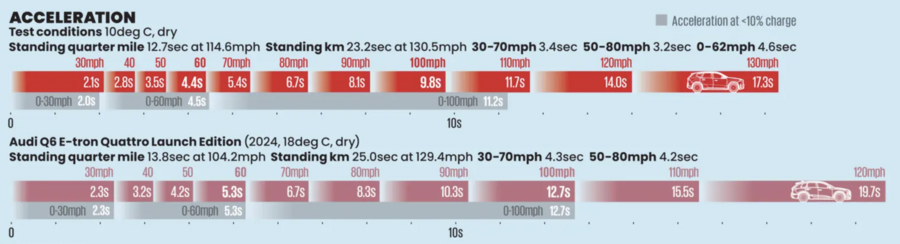
Still, it’s good for very healthy straight-line performance, posting numbers that were super-saloon territory not so long ago. We observed some slight performance degradation with the battery below 10%, but even then the iX3 managed to beat its claimed 0-62mph time and hit its 130mph limiter with ease.

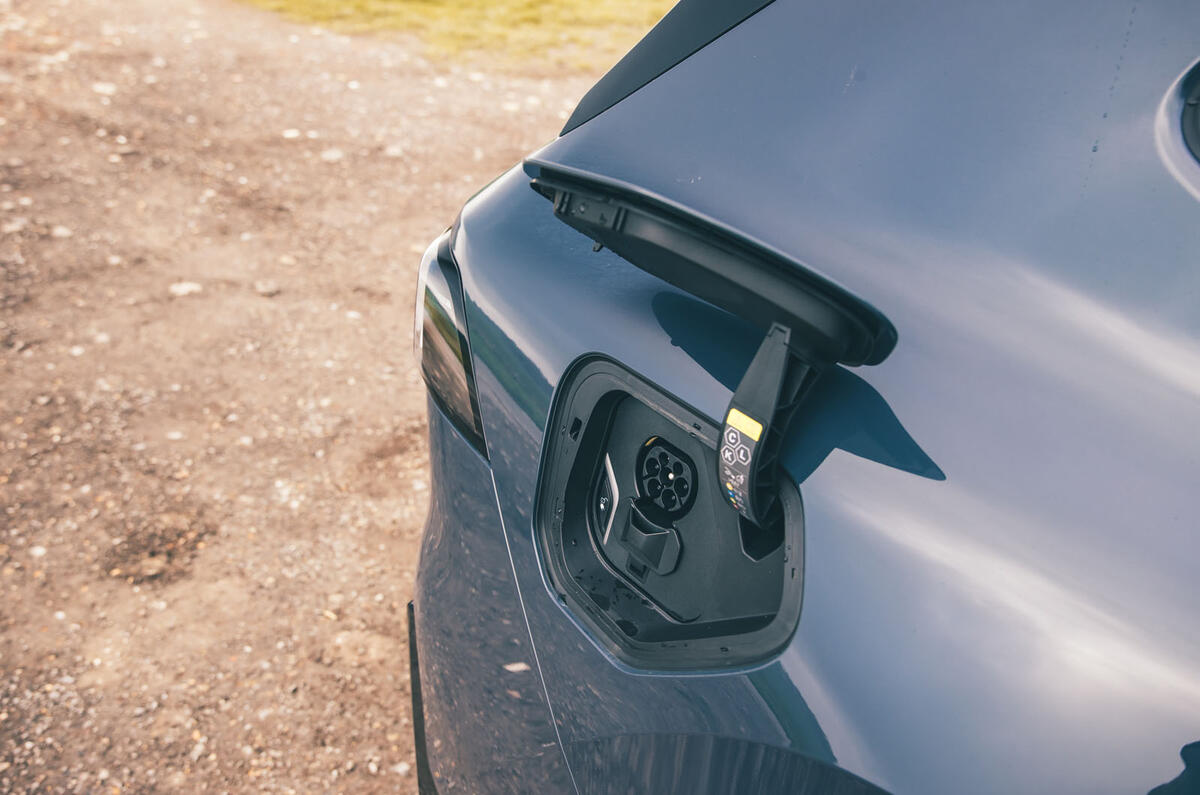
The car knows when you arrive at a charger and opens the flap before you’re out of the car. It closes again automatically while you put the charge cable away. If you’ve ever driven away with the flap still open, you’ll know this isn’t a gimmick.

When you hold the brake while applying full throttle in Sport mode, a ‘launch control’ banner flashes up in the instruments, and the car will violently jump away from the line when you release the brake. Amusingly, though, it produces exactly the same acceleration figures in Efficient mode without the supposed launch control.

In fact, we preferred Efficient for everyday driving because it calms down the accelerator, without actually limiting power. This lets you drive more smoothly, while still giving you the punch for overtakes. The accelerator calibration is just one part of the iX3’s first-rate drivability, because the by-wire brake pedal is reassuringly firm and superbly progressive too.

BMW says that the Heart of Joy central ECU lets the car use regen all the way down to a stop, and allows for the ‘Soft Stop’ function, which automates limo driver stops. It’s not the first car to advertise such a function, but it is the first where it actually works, even if you already bleed off the brakes yourself just before coming to a stop.

You can choose from low, medium, strong and adaptive regen in the settings. The adaptive setting works better than most such systems, but we preferred the more predictable fixed rates. Pulling the drive selector engages B mode, which is a supremely controllable and smooth one-pedal mode. The iX3 just misses out on full marks in this area because it offers neither a full freewheeling mode nor a granular way of varying the throttle-off regen on the fly.

All-out braking performance is impressive too, with less than 50 metres needed to stop from 70mph in the wet. We observed some slight fade in the dry, and the Polestar 3 posted even shorter stopping distances, but there’s still nothing to seriously complain about here.

RIDE & HANDLING

9
BMW iX£ road test review 2026 028

The iX3’s relatively simple and unchangeable mechanical specification defines its ride and handling even more than its performance. Where the Porsche Macan Electric and Polestar 3 are available with air suspension, fancy differentials and, in the case of the Macan, four-wheel steering, the iX3, with its conventional steel coil suspension, gets none of that.

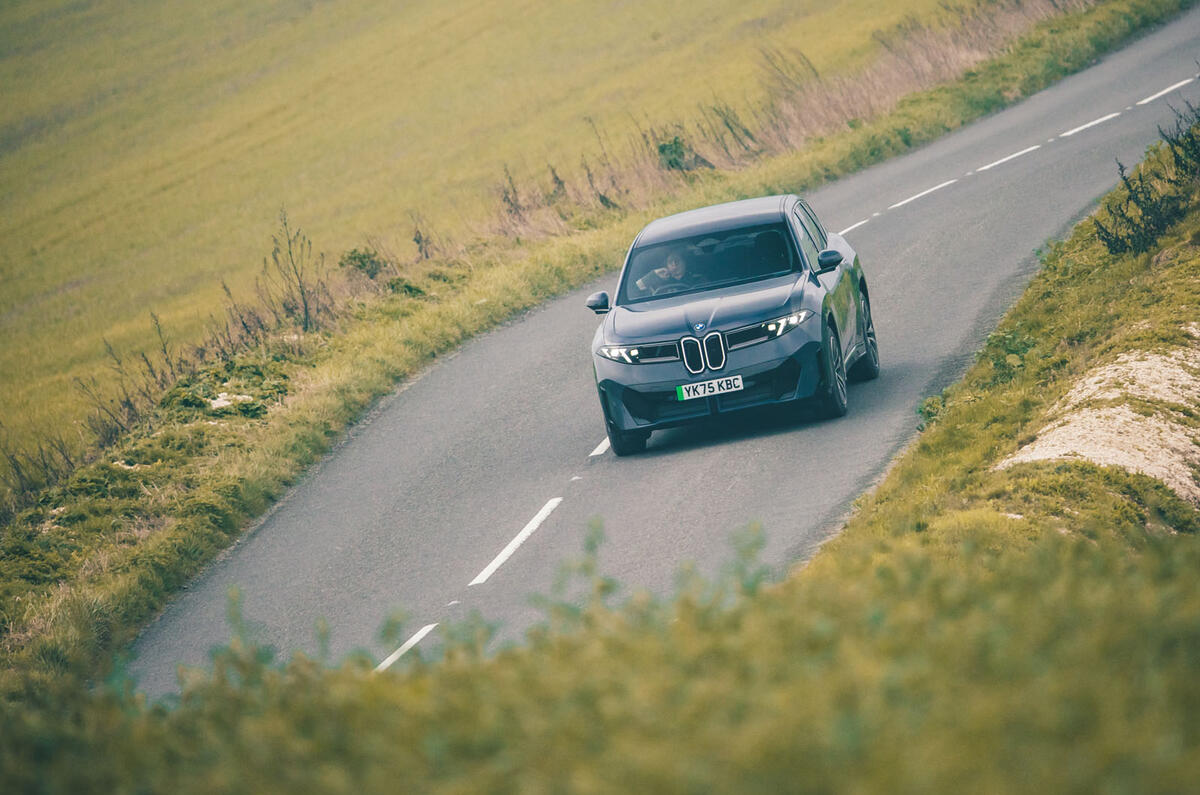
In most respects, that’s to the iX3’s benefit, because it is a beautifully natural-handling car. While the steering isn’t brimming with feedback, there’s enough to know where you stand, and its weighting and responses are perfectly progressive – always feeling intuitive and reassuring.

That 12 o’clock spoke on the steering wheel is never in the way of your hands but can be confusing. I had a few instances when manoeuvring where I caught a glimpse of it in my peripheral vision and thought I still had a quarter-turn of lock on, when I didn’t. It also happened on the wet handling circuit and made for a less than elegant end to a drift.

With the springs and dampers fixed at one firm level, body roll is always kept in check, so that there’s enough movement to avoid the teetering feeling of some ‘sporty’ SUVs, but with a reassuring sense of poise and solidity.

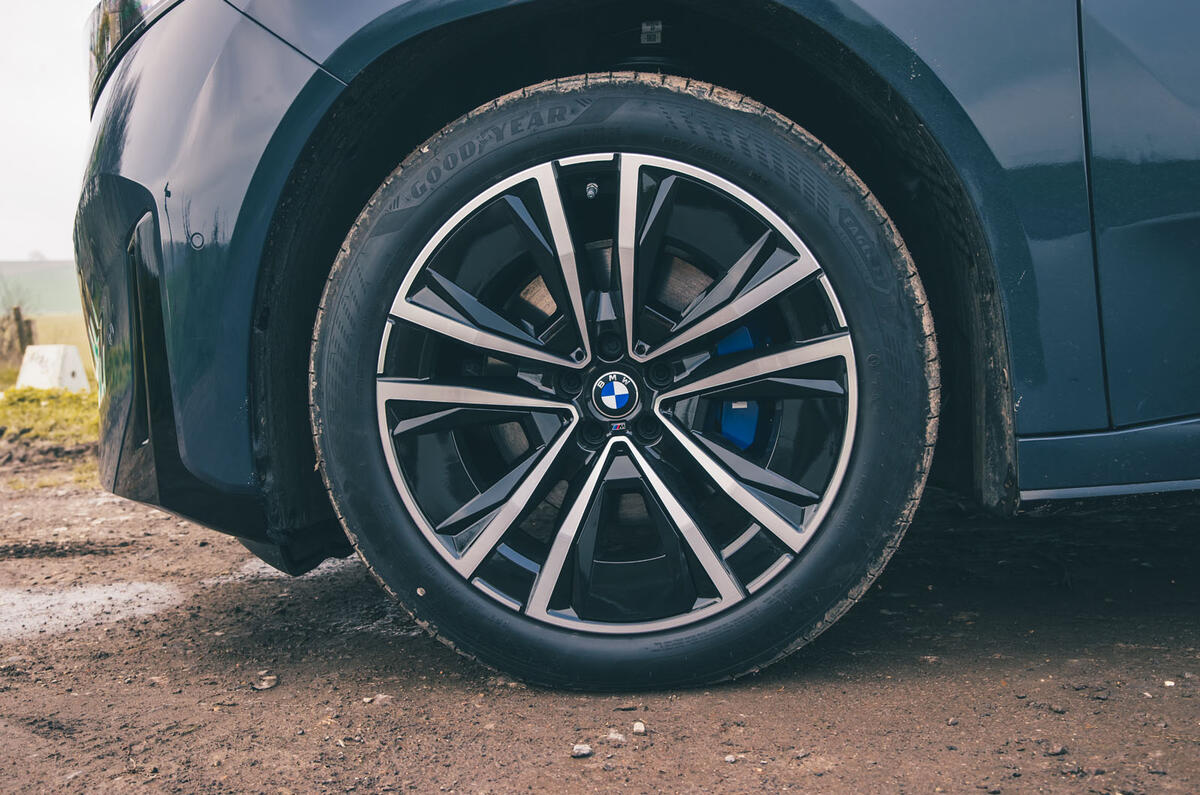
This encourages you to chuck the iX3 into a corner and get on the power nice and early, at which point the strongly rear-biased power delivery makes itself felt. Even with all the systems left on, there’s a satisfying sense of rotation. Switch them off and despite the lack of a limited-slip differential, the rear end will slip gently sideways in the wet. Our car was on the standard 20in wheels, with the same 255-section tyres front and rear. Some of the bigger wheels are staggered and have 275-section rears, which slightly dull the iX3’s agility.

On Mira’s wet and dry handling circuits, this made this mainstream electric SUV highly entertaining. At the limit, the iX3 defaults to slight stabilising understeer, which can be neutralised with either a well-timed stab of throttle or brakes, after which it can be held in an extended oversteer slide with incredible ease.


Comfort & Isolation

While the firmly set-up passive suspension lets the iX3 face up to the Polestar 3 and Porsche Macan dynamically, it can feel a little highly strung on the daily grind. Large undulations are actually handled remarkably well, but the suspension certainly doesn’t smooth over potholes and corrugations. It’s all tightly controlled and well damped, so it feels sporty rather than downright uncomfortable, but based on our experience with other BMWs, it’s very likely that the adaptive dampers (which will become an option later in 2026) will give the iX3 more breadth, maintaining its handling and body control while taking the edge off the ride. With all that said, we felt no notable difference in ride quality between the 20in and 22in wheels.

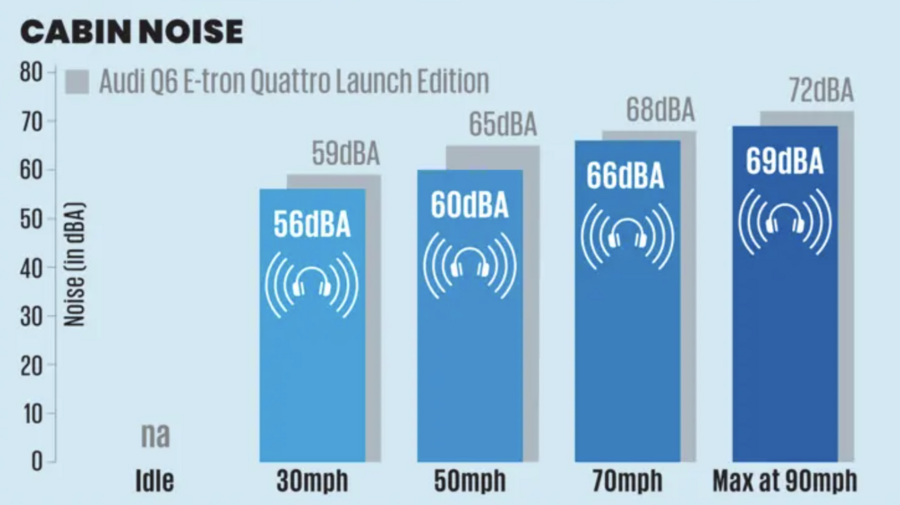
At a cruise, the iX3 is perfectly relaxed. The ride settles down at motorway speeds, the seats are very comfortable and while a 66dBA sound level at 70mph isn’t class-leading (the Polestar 3 recorded 65dBA), it’s quieter than average.

Assisted Driving

Things don’t start particularly well for the iX3 in this area, because BMW has stuck with its decision to remove controls for the following distance of the adaptive cruise control. It is possible to tell the car a preferred distance in a touchscreen menu, but by and large you have to trust it, which is very frustrating if you like to be in control, particularly because there is clearly space on the steering wheel for the relevant buttons.

Thankfully, the system is actually very well calibrated. The adaptive cruise control tends to keep a distance that’s on the long side but usually gets the message if you override it with the accelerator, and is very smooth to adjust its distance. We never experienced it doing anything abrupt, which is a real rarity. What’s more, it is still possible to switch to standard cruise control, even if this requires going into a settings menu. Later in 2026, it will be capable of hands-off driving on selected motorways.

The other assisted driving systems are also among the best we have experienced. They never beep, bong or intervene unless they have genuine cause to. Even the lane keeping assistance is clever enough to somehow distinguish between the driver deliberately going over a white line or straying accidentally. It’s easy to disable, but in practice you rarely do. The driver monitoring system also never gave us any grief, and the overspeed warning takes one tap to turn off.

BMW is also quite proud of its automated parking system, and while a half-decent driver can still do a better job more quickly, it is the most impressive of its kind. It’s very quick and easy to engage, and will parallel park the car into remarkably small spaces, though if you are of a mechanically sympathetic disposition, you will wince at its tendency to ‘dry steer’. Using the phone app, it’s possible to get the car to drive in and out of perpendicular parking bays, a process that is quite quick and smooth. When the car detects an obstacle, it will try to steer around it initially, rather than just stopping.

MPG & RUNNING COSTS

10
BMW iX3 road test review 2026 001

The iX3 is the first car on sale in the UK to achieve a 500-mile range on the WLTP cycle. Even considering all the caveats, and that the upcoming Volvo EX60 is set to beat it, that’s hugely impressive.

That headline 500-mile figure is for the most efficient iX3, and most versions are rated for less, but BMW deserves credit for how transparent it is in this respect: the online configurator shows exactly what impact your choice of wheels, trim level and equipment will have. The biggest variable is the wheels and tyres: opt for the 21in wheels with sport tyres, and the projected range is slashed by more than 60 miles.

Most buyers will choose M Sport, but don’t discount the base trim. All the good equipment is optional anyway. The multifunctional seats and heated steering wheel are essential. Big wheels may look nice but hurt range. The excellent adaptive headlights are hidden in the configurator as ‘Iconic Glow’.

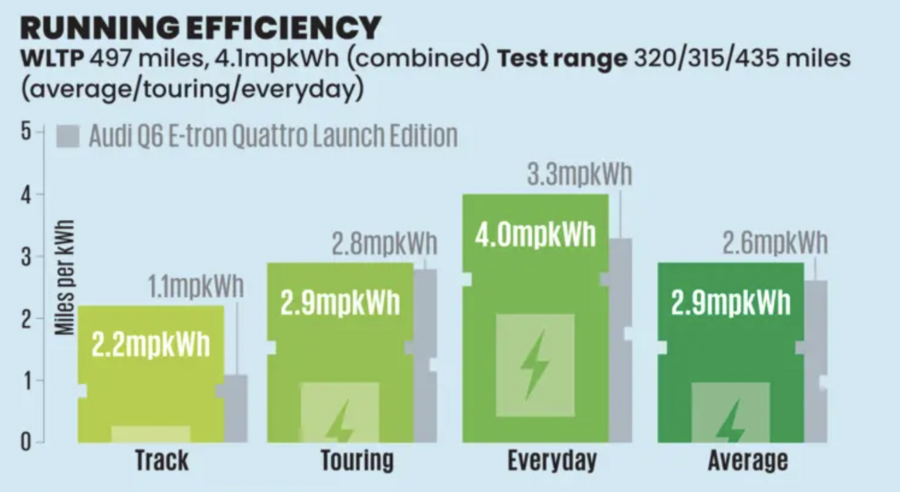
Our car was fitted with the most efficient choice of wheels and returned a creditable 4.0mpkWh on our suburban ‘everyday’ test and 2.9mpkWh on the 70mph touring test. That’s better than any European rival we have tested, but still slightly worse than the dual-motor Tesla Model Y we tested four years ago, which is quite sobering.

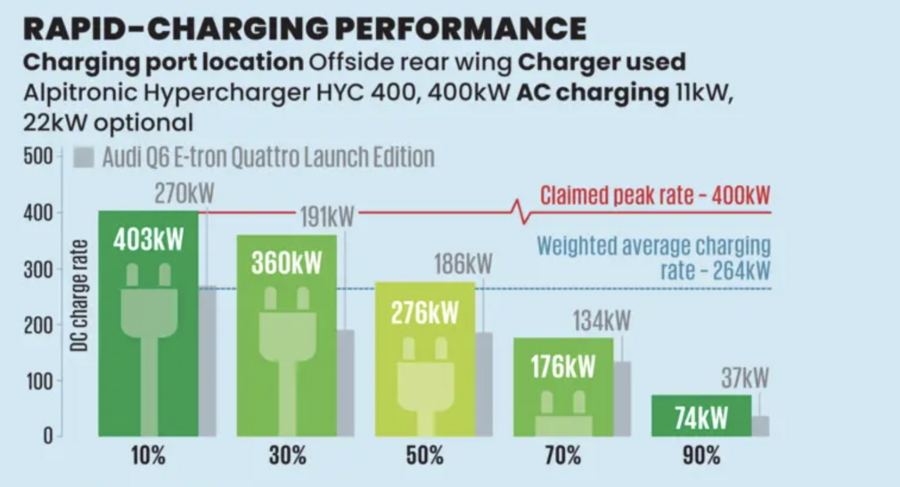
Still, combined with the iX3’s 108.7kWh battery, that yields a motorway range of well over 300 miles, after which it can charge at a class-leading 400kW. In our testing, the car hit that peak very briefly, after which the speed slowly dropped off. It’s also compatible with 400V chargers, where it can still pull up to 200kW.

One of the iX3’s greatest weapons is its value. With a starting price of £58,755, or around £65,000 for a well-specced one, it undercuts all of its direct rivals by a big margin. Rivals from Porsche, Audi, Mercedes and Polestar are either substantially more expensive or have much less range, equipment or performance. The only rival that compares on paper is the upcoming Volvo EX60. A Model Y Long Range AWD Premium is cheaper, but feels it and has less range.

VERDICT

BMW iX£ road test review 2026 031

Developing an all-new car on an all-new platform requires a gargantuan investment, and for BMW it looks to have paid off, because the iX3 makes its rivals from Audi, Porsche and Polestar look a bit silly. Promising alternatives from Volvo and Mercedes are just around the corner, but we’ll cross those bridges when we come to them.

For now, the iX3 is a triumph. A firm ride and some usability grumbles preclude a perfect score, but here stands an electric SUV that shifts boundaries for range and charging, and applies novel interior and ADAS tech in a way that actually improves the experience. True to BMW’s reputation, the iX3 entertains with its handling and controls.

Facelift fixes? 1. The i4 and i5 have flush door handles too, but they’re mechanical and they work. Fit those to the iX3. 2. Offer the option of a round steering wheel with proper buttons, including for the adaptive cruise control. 3. Fit a button panel under the touchscreen with physical controls for the climate and a few infotainment shortcuts.

If that’s your priority, you might want to hold out for the i3 saloon, but SUVs are where the market is at the moment, and the iX3 has all the required attributes to dominate it.

Illya Verpraet

Illya Verpraet Road Tester Autocar
Title: Road Tester

As a road tester, Illya drives everything from superminis to supercars, and writes reviews and comparison tests, while also managing the magazine’s Drives section. Much of his time is spent wrangling the data logger and wielding the tape measure to gather the data for Autocar’s in-depth instrumented road tests.

He loves cars that are fun and usable on the road – whether piston-powered or electric – or just cars that are very fit for purpose. When not in test cars, he drives an R53-generation Mini Cooper S or a 1990 BMW 325i Touring.