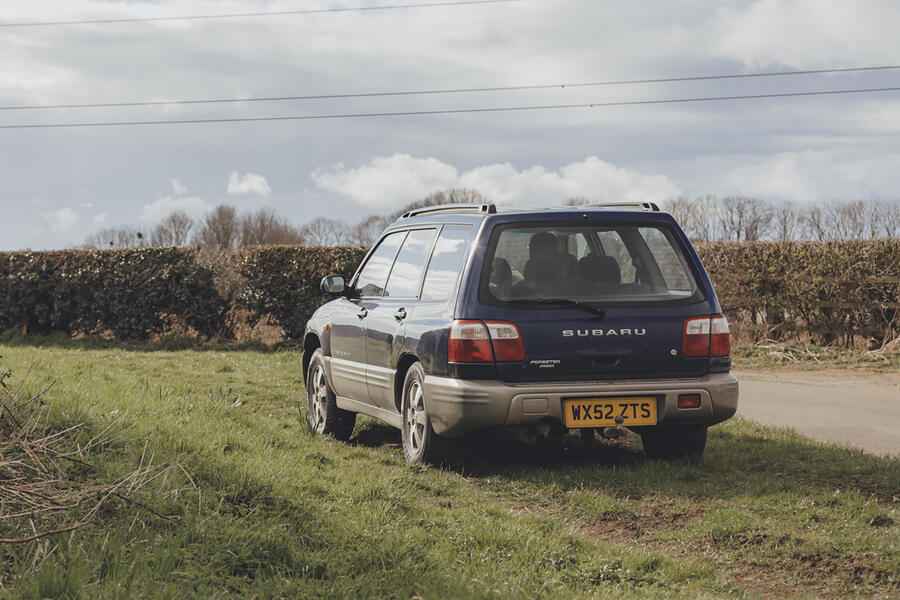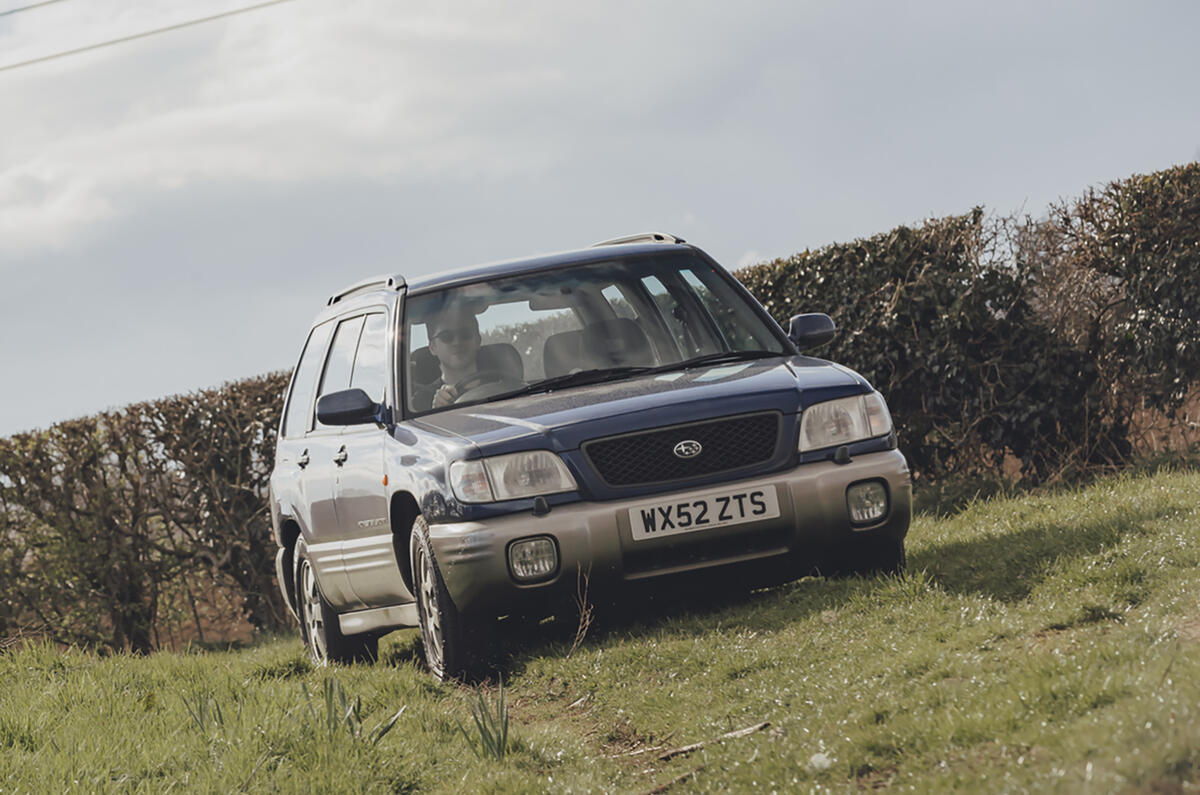

Ranger. Explorer. Wrangler. Forester. Naming cars after assertive, glamorous or adventuresome careers is almost as old as the motor car itself.
Subaru’s Forester is intended to evoke a far milder employment choice and one hinting at some appealingly rugged usage. The first Forester, emerging in 1997, was promoted with the simple explanation “SUV Tough, Car Easy”.
What you got was a tall, all-wheel-drive estate car, served with unexpected aural character via the rhythmic beat of a flat-four engine. Flat four apart, it was no ground-breaker. Toyota’s 1984 Tercel estate offered much the same mix, if with a conventional motor.
The high-roofed Tercel estate has long gone, however, while the Forester endures, albeit as a machine of slightly different conception from the early editions.
Subaru’s second, 2002 take on the Forester stuck to the same recipe, which proved especially wholesome in the US - but the near-inevitable drift towards a full SUV came in 2008. And today’s Subaru Forester really is conceptually much the same beast as other SUVs on the road.
But it’s this original version that we’re getting nostalgic about here. The Forester’s secret, for those in the know, is that it shares its foundations with the Subaru Impreza, a dull little saloon car that warbled its way to a trio of World Rally Championships across the globe when fired with a turbo, prepared by Prodrive and driven by Colin McRae, Ari Vatanen and Carlos Sainz.
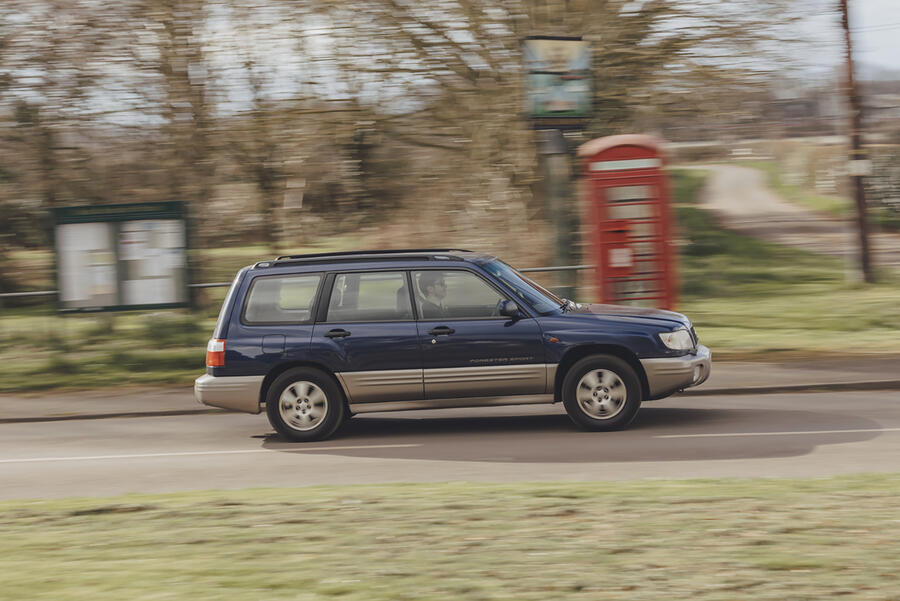
At heart, the Forester was this same, stage-busting car, with the same chassis, the same boxer engine, all-wheel drive and low centre of gravity.
Which went some way to compensating for the height of its roof. True, the Forester’s innards weren’t honed to the levels of Impreza STis and WRXs, but it was still game enough to be a lot of fun and grin-inducingly quick on a twisty road when turbo boosted. If the Forester’s robust-looking two-tone bodywork provided little clue to its game athleticism, neither did its cabin.
This was late 20th century workmanlike Subaru, the 50 shades of grey plastic relieved only by diagonally striped upholstery that looked like someone had collapsed across the seats with a rake. The upholstery was grey, too. Top-of-the-range Foresters provided some colour relief because the air vents and centre stack were framed with burr walnut. It was fake, despite this Subaru’s arboreal name, and clashed uncomfortably with the seat fabric.