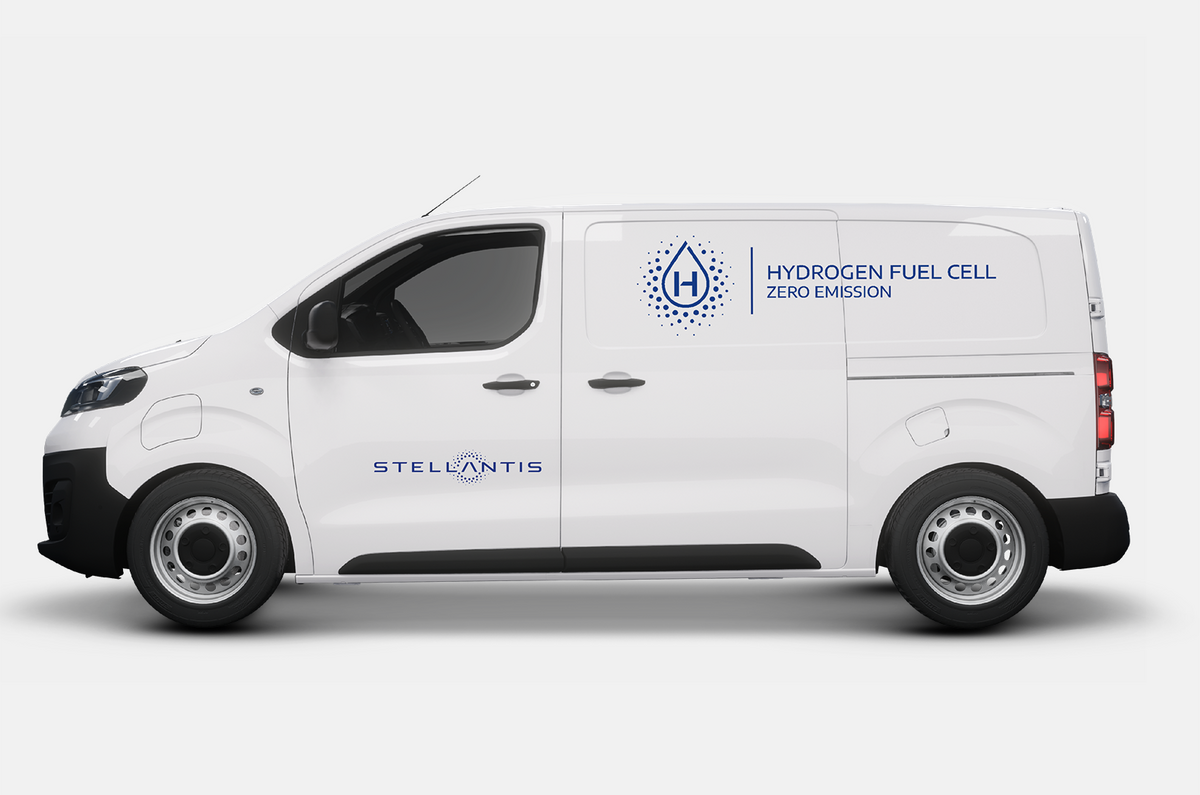


Stellantis has increased its range of zero-emissions light commercial vehicles (LCVs) with a plug-in hydrogen van that will be available from Citroën, Peugeot and Vauxhall retailers.
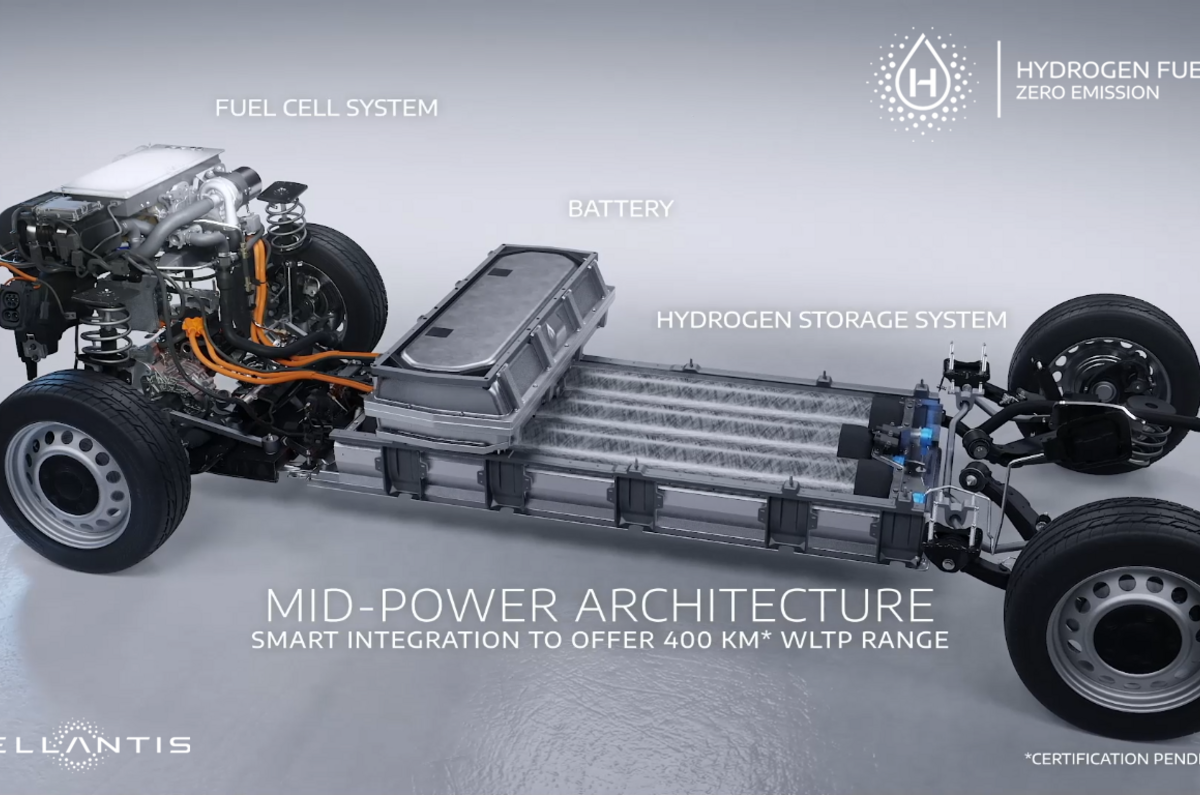
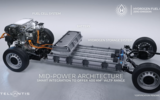
Based on the same architecture as the battery-electric versions of the Citroën Dispatch, Peugeot Expert and Vauxhall Vivaro, the new mid-size van can store 4.4kg of liquid hydrogen under its cargo area floor at a pressure of 700bar, with an additional 10.5kWh battery housed under the seats. The rest of the fuel cell system and electric motor lie within the engine bay.
As a result of this packaging solution, the hydrogen van offers the same payload and cargo volume as the equivalent ICE model (up to 1100kg and 6100 litres respectively). It has a 250-mile range and can be refilled with hydrogen in three minutes – a similar time to diesel models.
The battery element, adapted from Stellantis's plug-in hybrid vans, can be recharged in roughly an hour at a rate of 11kW. Battery-only running is possible for up to 30 miles.
Maximum power is 134bhp and maximum torque is 192lb ft, giving the van a 0-62mph time of 15sec and a top speed of 81mph. It's also capable of towing up to a tonne.
Stellantis claims that the move towards hydrogen is as a result of customer demand - research conducted by the company has shown that its range of battery-electric vans don’t give certain customers sufficient range.
Although 83% of its customers drive fewer than 125 miles per day and 44% never drive more than 185 miles a day, that still leaves a significant proportion who require more range and faster refill times than is currently available.
Despite the hydrogen van's launch, planned in left-hand-drive for the end of 2021 with the UK following afterwards, there are still four challenges remaining around the fuel, according to Stellantis.
These are full-scale production of green hydrogen, a network of hydrogen filling stations, integration of fuel cell systems into vehicle architecture and cost. As a result, Stellantis will continue to offer multiple propulsion options.
READ MORE
Stellantis: the facts & brands behind the world's newest car giant
UPS orders 10,000 electric vans from British start-up Arrival