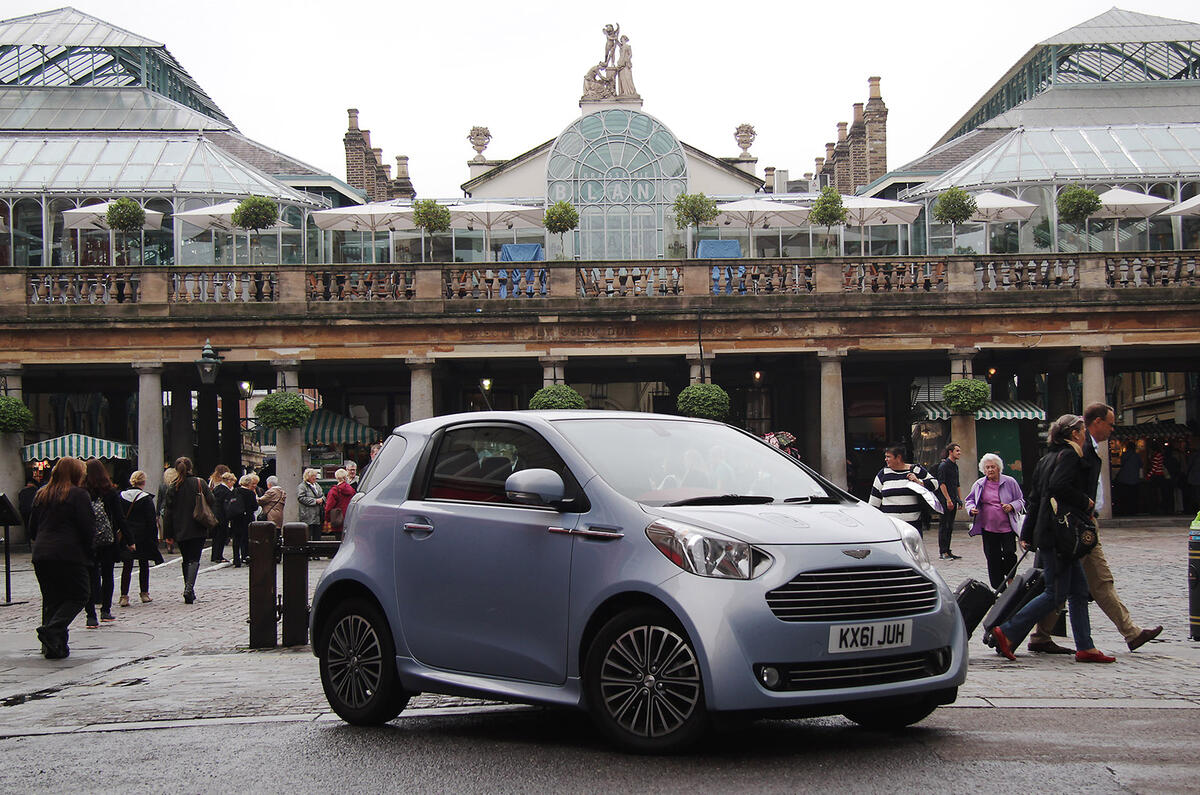
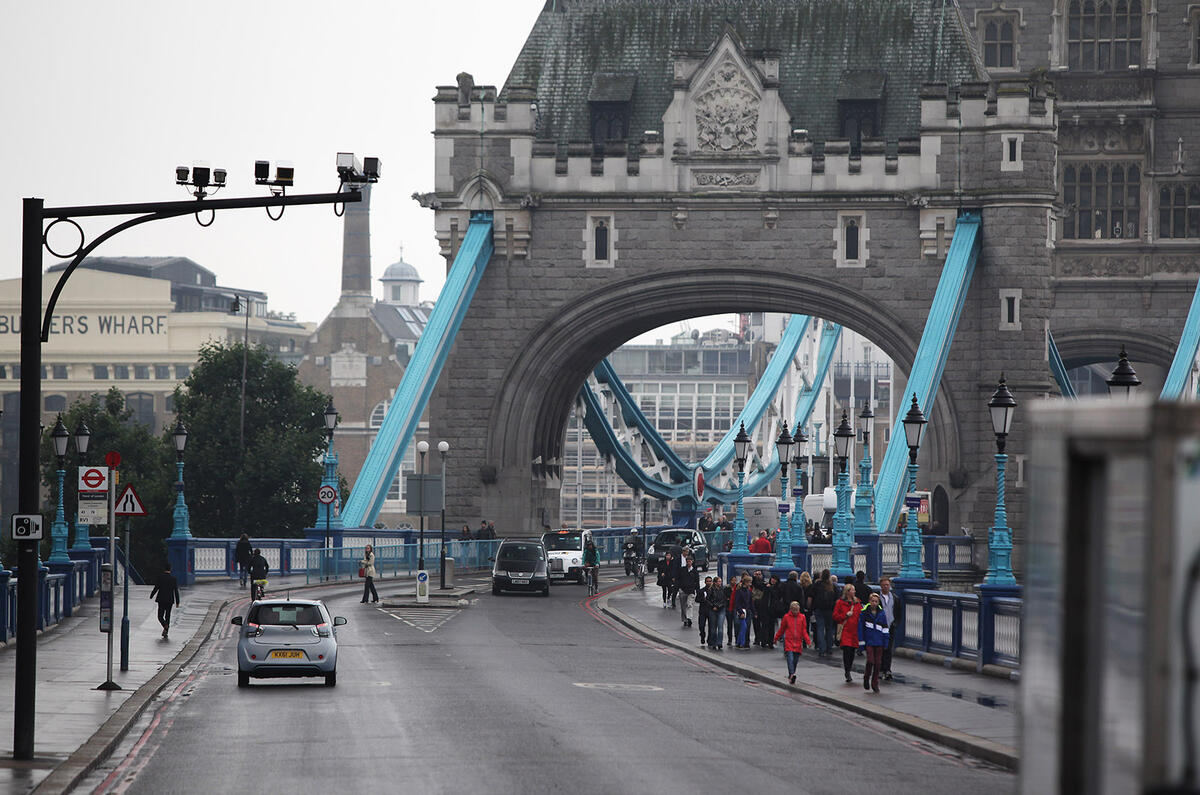








It is entirely to his credit that despite the hand-bagging that he fully expects his car to receive, Duncan Johnson is still sufficiently game to lend me his Aston Martin Cygnet.
Unless you count things like the Tickford Metro, there has never been a car like the Cygnet and I suspect that it’ll be a while before there is again. Despite being, in real terms, the cheapest car ever to fly the Aston wings, it seems that to call sales glacial would be to insult slow-moving mountains of ice.
Although Aston goes all coy when you ask how many it has sold since the Cygnet went on sale in 2011, speculation suggests it was considerably less than 1000, and we do know that there are just 143 on UK roads, making it even less popular in its homeland than Aston’s biggest ever turkey, the late-1980s Virage.
Then again, Aston’s smallest ever turkey is not an Aston at all. Looking at it brought to mind those poor children in the US whose ghastly parents think that slathering them in make-up and entering them into beauty pageants is somehow consistent with them growing up into well-adjusted adults. Toyota provided the child in the form of an entirely blameless iQ. Aston Martin applied the slap.
I use the past tense because the Cygnet project is no more, and having never had the pleasure when it was new (inexplicably, no car was available), I still wanted to know what provoked Aston Martin to cosmetically reconstitute a 1.3-litre Toyota city car.
There was another reason, too: Duncan Johnson paid £15,000 for his perfect two-year-old Cygnet, which is very little more than you’d pay today for a new top-of-the-range iQ. At that level and given that, in the UK, Cygnets are outnumbered two to one by Mercedes-Benz SLSs, could it possibly even be a buy?
I was getting ahead of myself. At the time of the Cygnet’s creation, Aston boss Ulrich Bez provided us with three reasons for its existence, and it is fair to say that the first – Aston’s need for a sustainable product line-up – has not gone according to plan. No manufacturer launches a car intending it to spend fewer than three years in the marketplace.
The second was the desire to satisfy demand and, in this regard, the Cygnet has clearly succeeded insofar as anyone who wanted one could have one, at least once Aston abandoned its highly courageous original position of offering them to existing Aston customers only. Unfortunately, there just weren’t very many of them.
The third reason quoted was the need to reduce the average emissions of the Aston fleet ahead of ever more punitive environmental legislation being introduced around the world, which it undoubtedly would have done had it hung around long enough to finish the job. Now that the Cygnet has gone, I suspect more than ever that the recently announced ‘technical partnership’ with AMG is a mere harbinger of a much closer association with or even acquisition by Mercedes-Benz.
I digress. In every mechanical detail that matters, the Cygnet is a 1.3-litre iQ available with either six manual gears or a CVT transmission. To justify more than doubling its price to that of a Range Rover Evoque, Aston painted the car and trimmed the interior in Alcantara honeycomb and the same hide used for the DB9.
It also provided its own grille, badging and slightly redundant bonnet vents and refaced the instruments to make them like all Aston dials – as beautiful to look at as they are tricky to read.