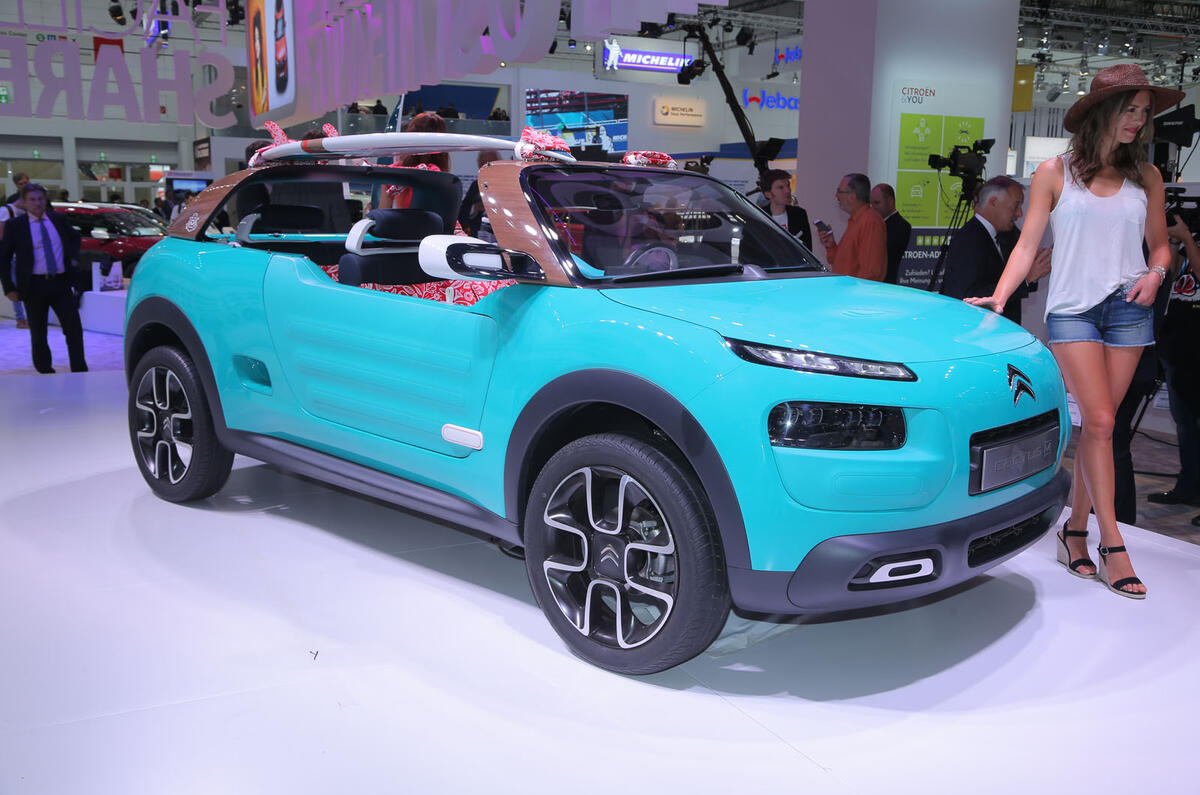
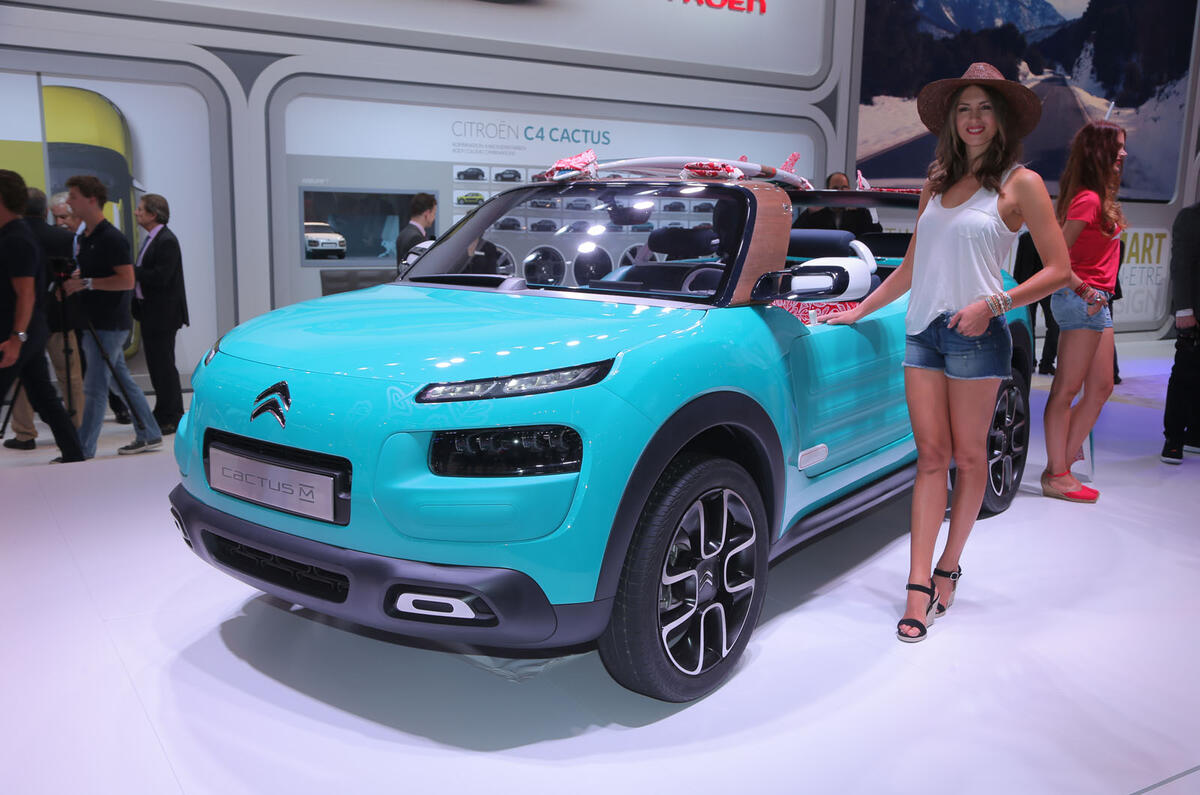
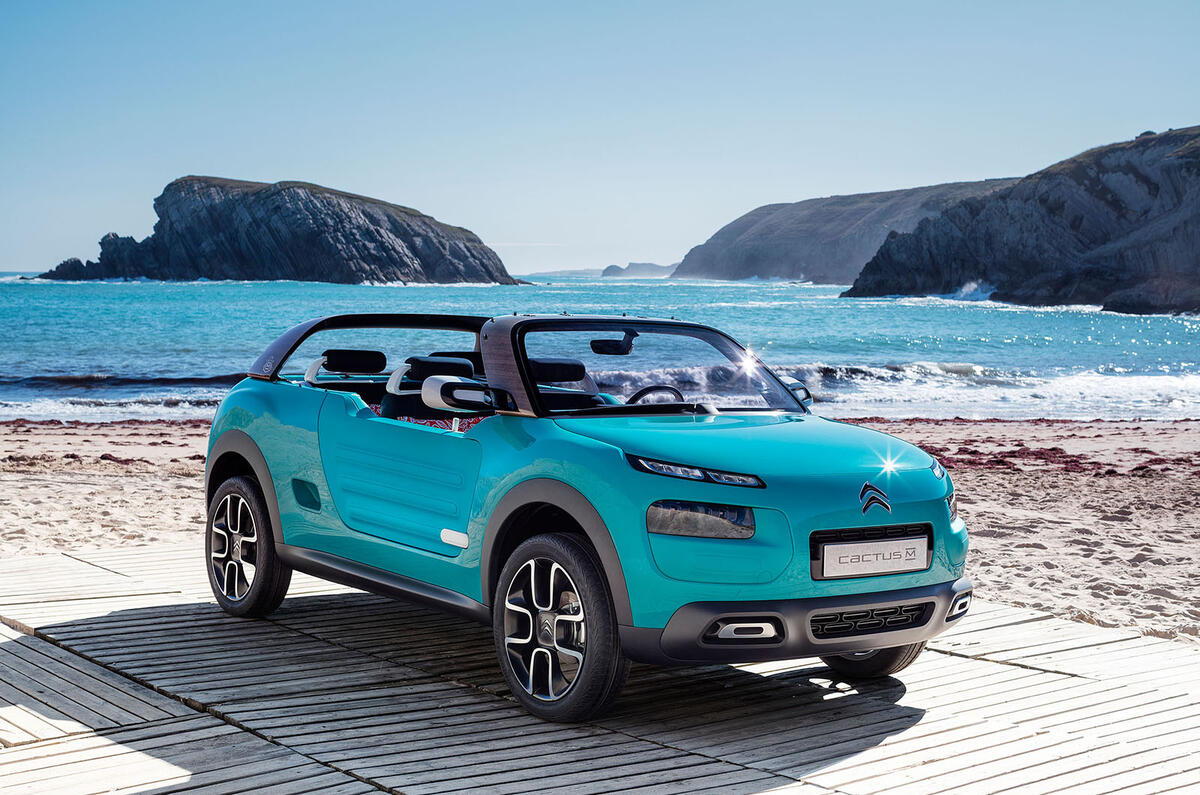
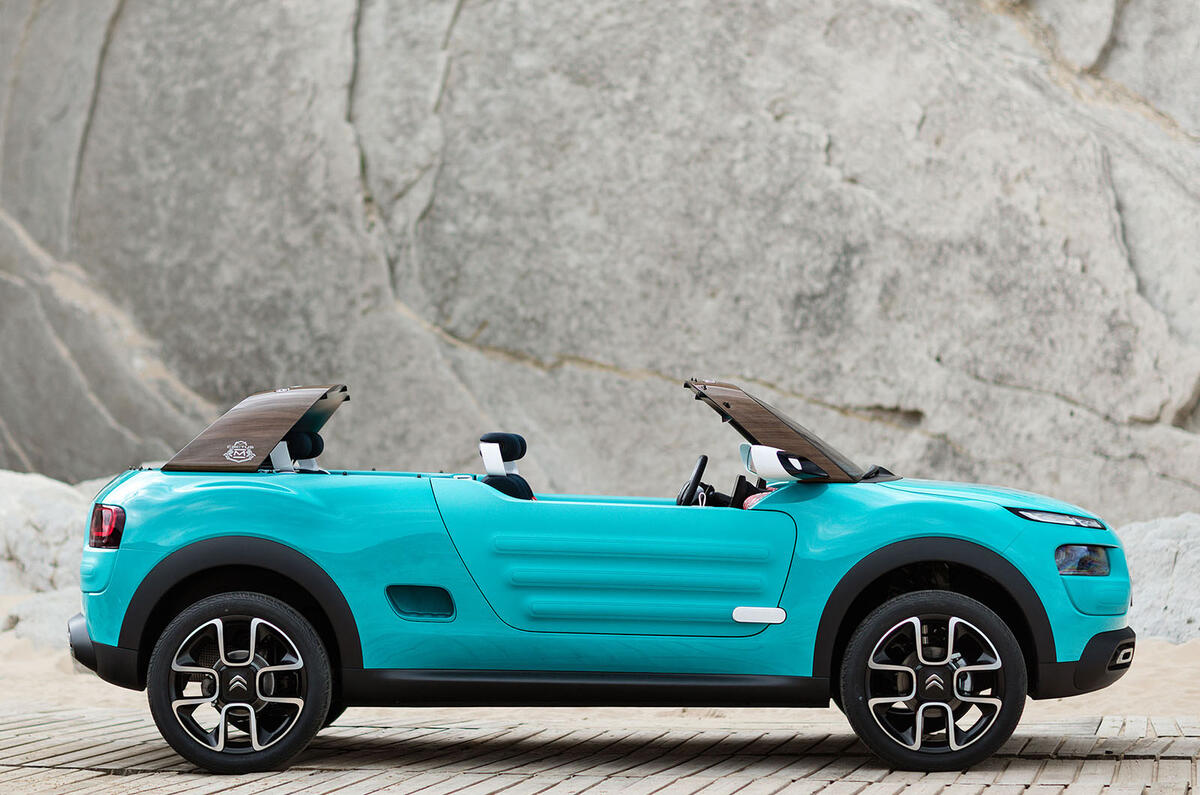
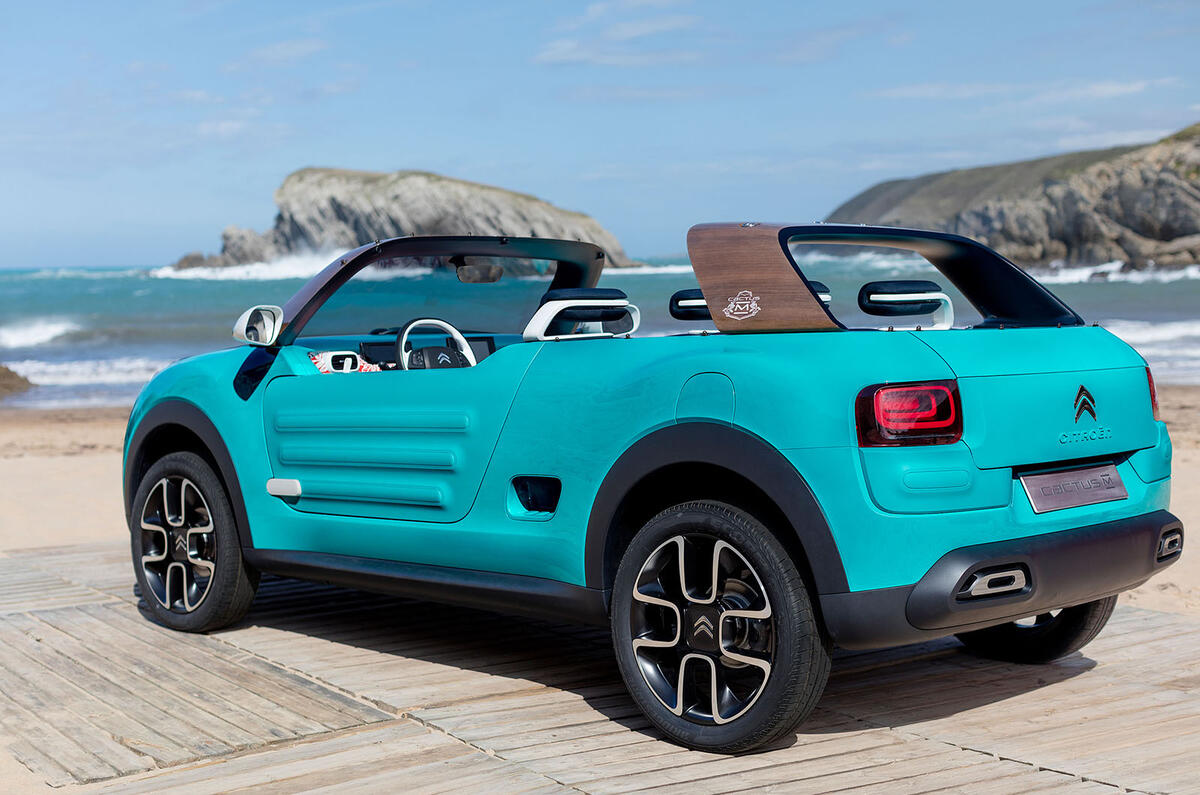
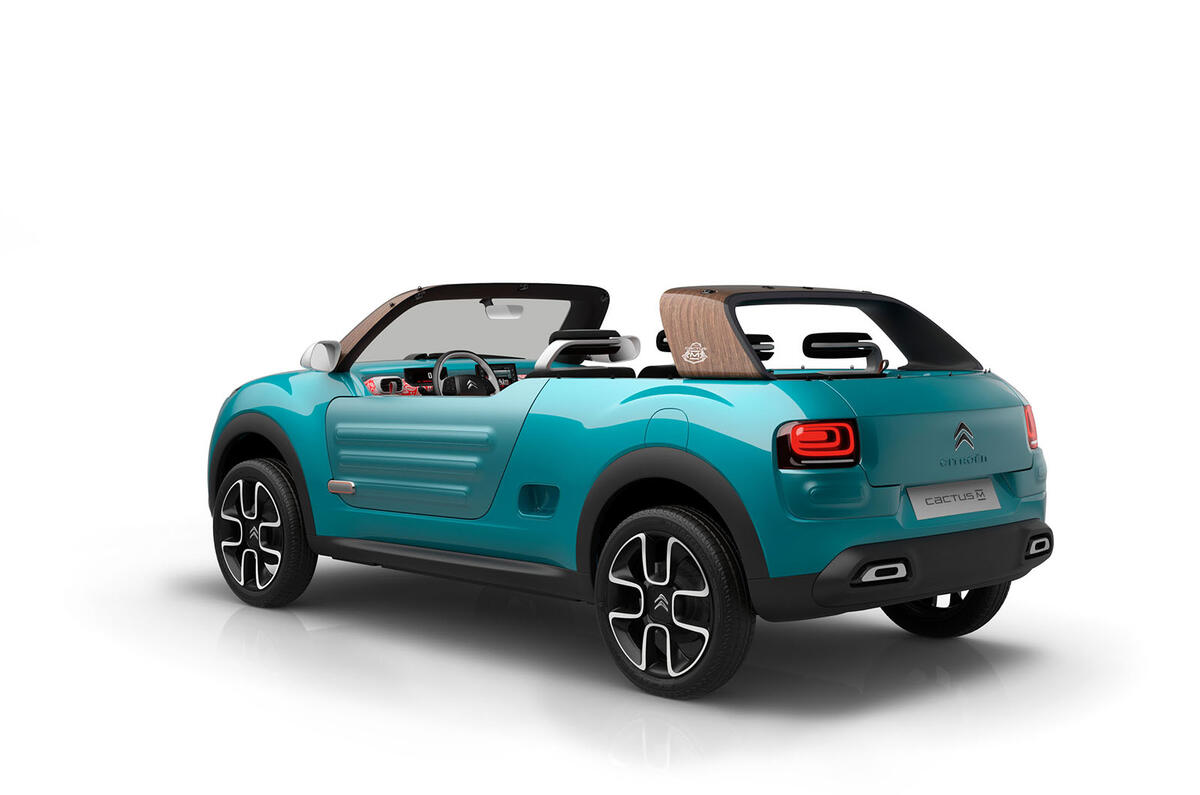
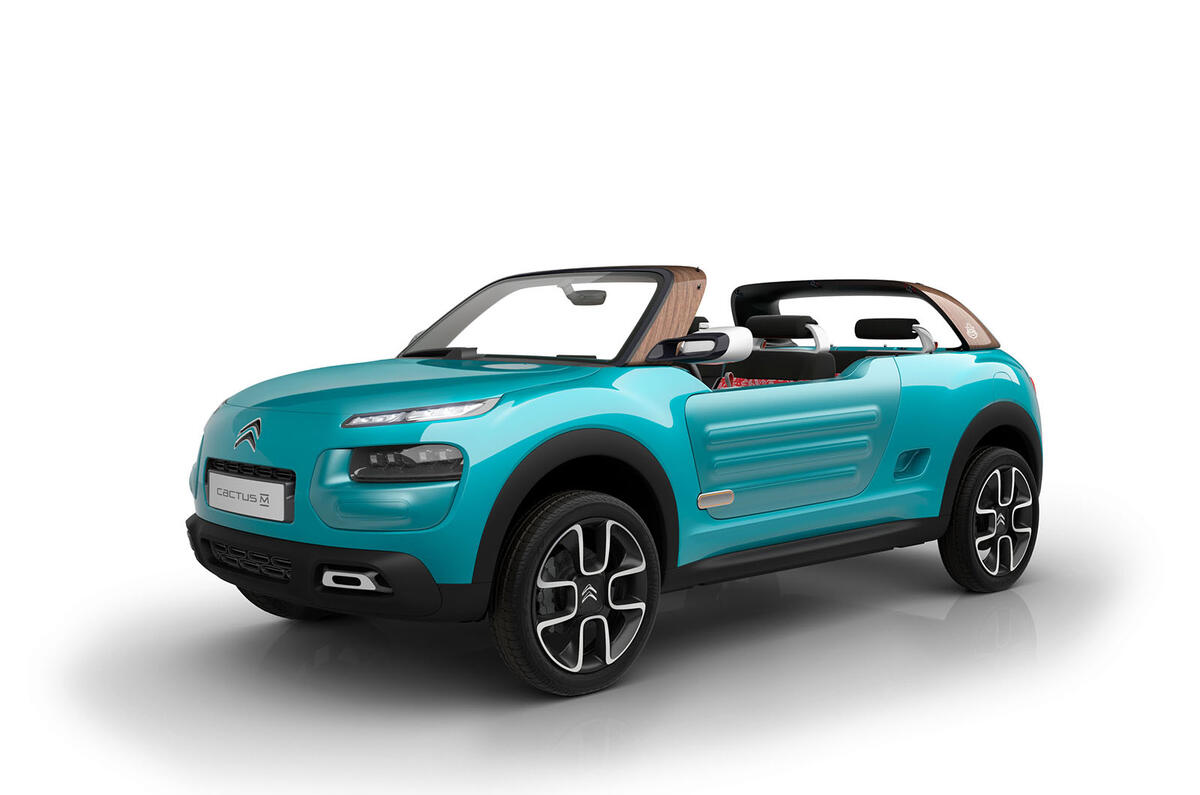
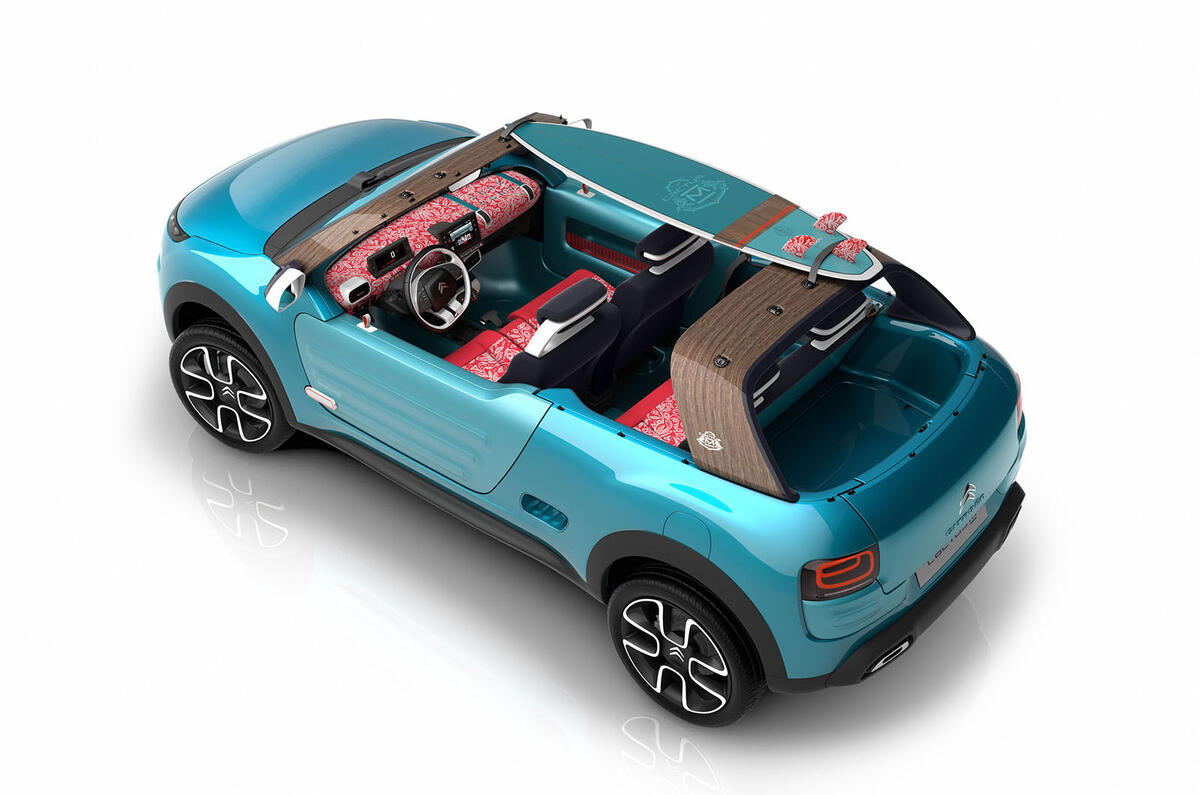
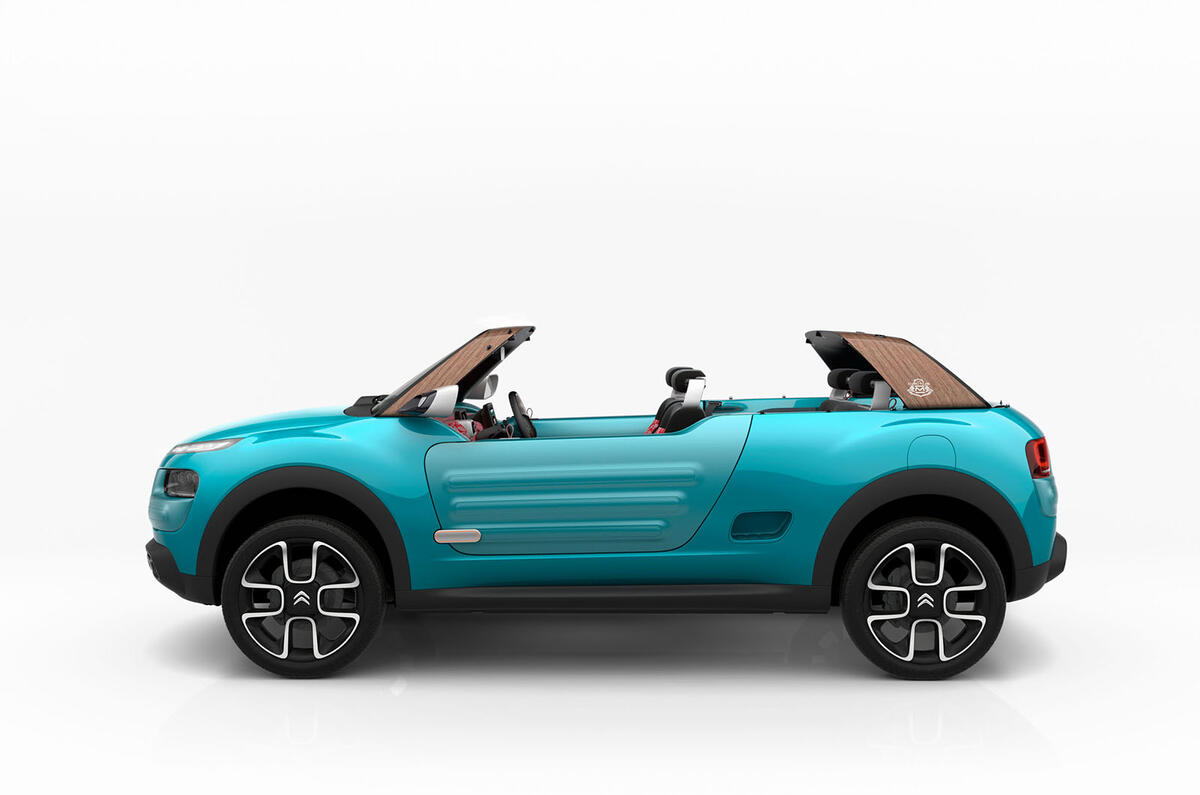
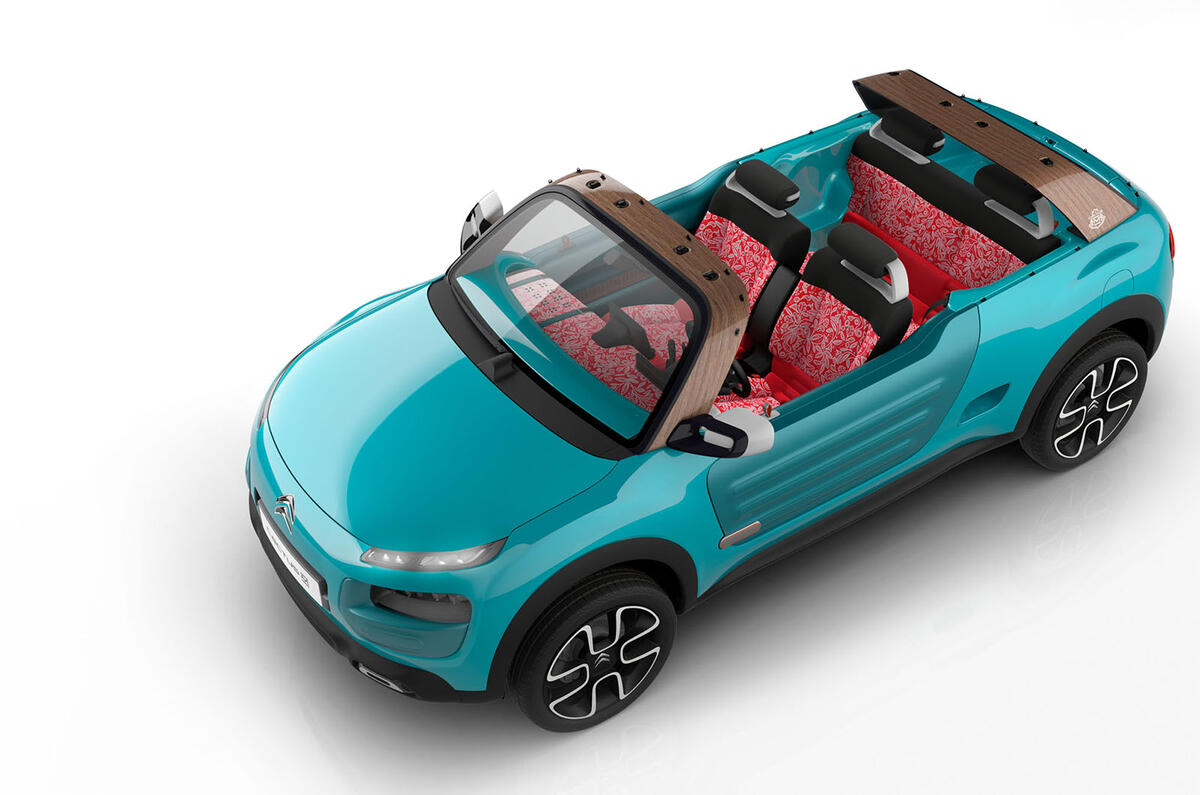

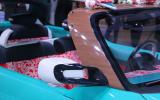






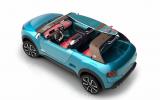




The Citroen Cactus M revealed at the Frankfurt motor show is not just a show car, with the company assessing the reaction to the convertible concept.
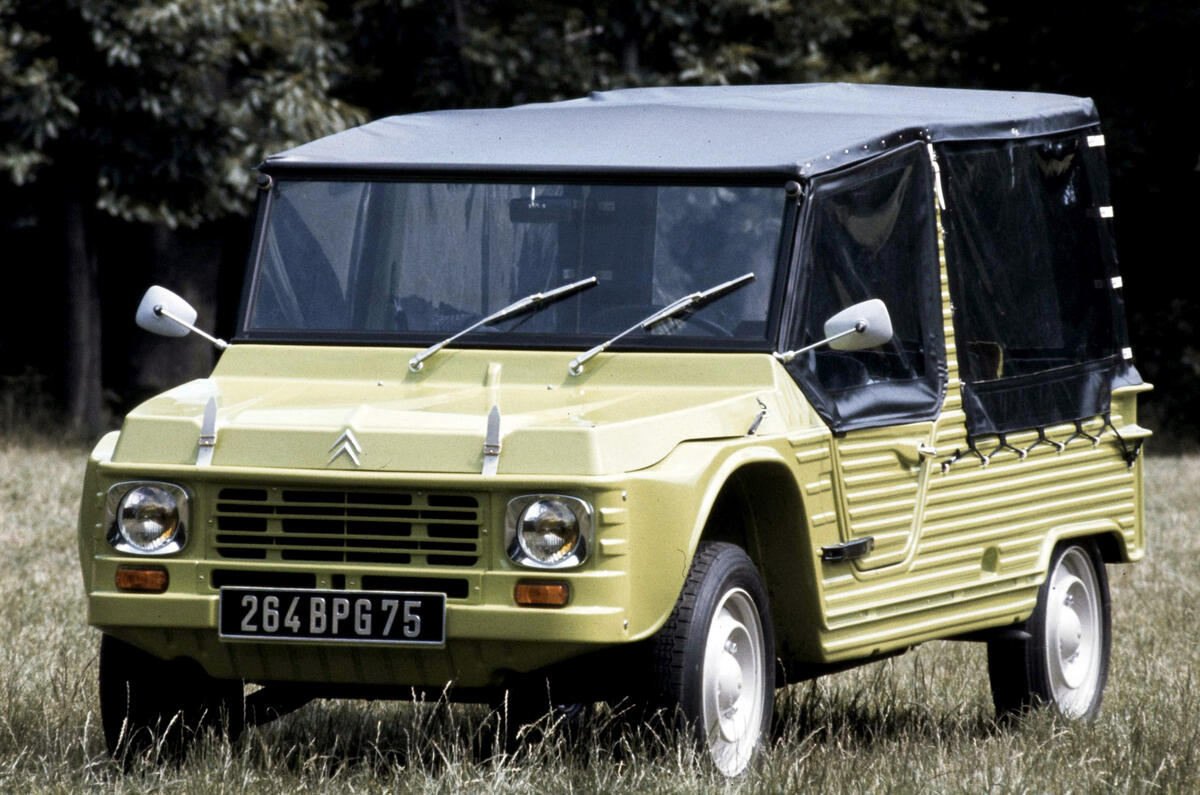
The open-top concept car is based on the same underpinnings as the production Cactus hatchback and takes styling inspiration from the Citroen Mehari lightweight off-road vehicle, which was sold from 1968 to 1988.
“We are testing to see what the reaction is,” said Citroen boss Linda Jackson. “We’ve done it to take Cactus a bit further. Clearly there is a hint, a little spirit of Mehari.”
She said that a convertible production model has not yet been signed off but remains a possibility: “It isn’t planned for production but we are testing reaction, and it has been a fantastic reaction.”
However, any production version would be more toned down than the wash-clean, waterproof model on the show stand, as Jackson said: “If we were to produce one it wouldn’t be like that, but who knows?”
Despite its Cactus platform, the concept is a permanent open-top car. The only roof it comes with is a lightweight canvas arrangement that can also double up as a tent. It takes strong inspiration from the Aircross concept, which was shown at the Shanghai motor show earlier this year.
Frédéric Duvernier, Citroen’s external designer responsible for concept cars, said that the Cactus M is designed to pay homage to the Mehari rather than copy it. “There is some pressure. If you respect the spirit of the car it is alright; if you just try to redo the car the same way it is wrong,” he said. “Physically the spirit remains it is true to the original Mehari. It is not a copycat.”
The front and rear of the car are kept largely the same as the Cactus while the rest of the car has been largely redesigned. Unlike the four-door Cactus, the Cactus M is a two-door vehicle.
The two doors are much longer than those on the standard car and are constructed of one piece of moulded plastic to reduce weight. The outside of the door is covered in the same thermoformed TPU coating as the airbumps on the Cactus, and stretch across the entire door.
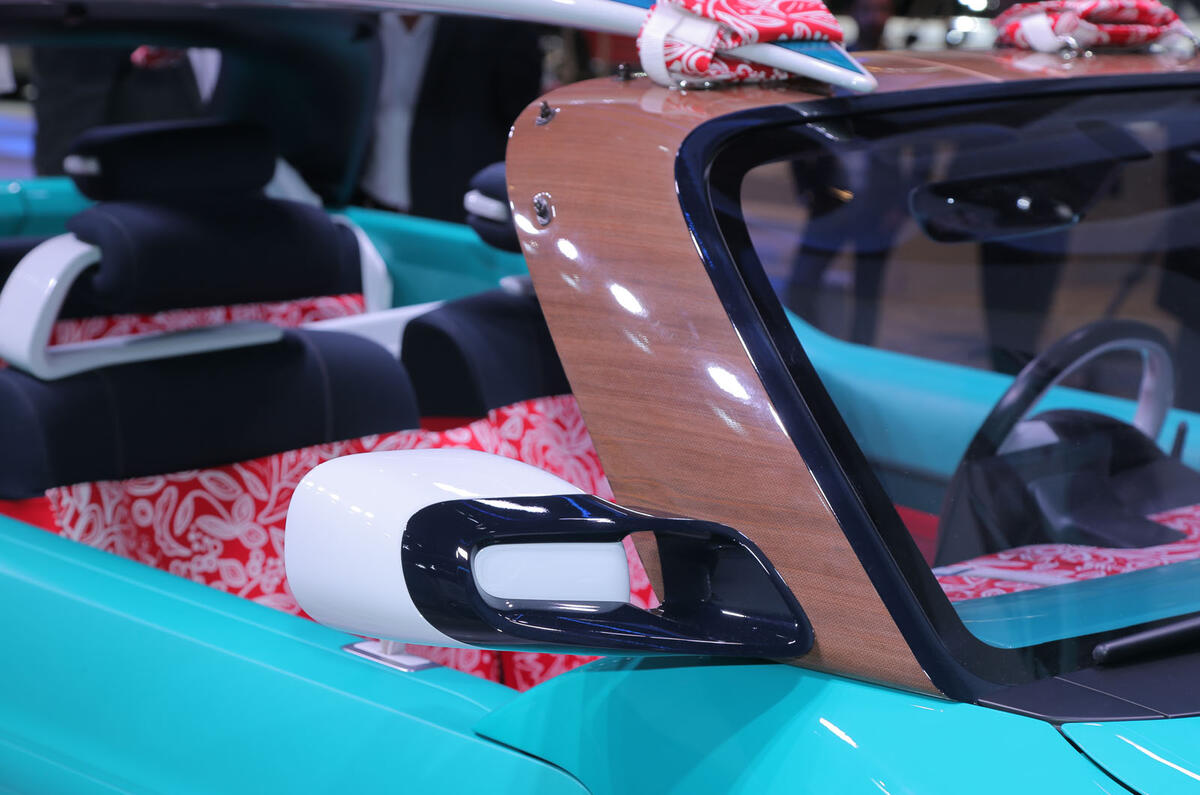
The windscreen has been made more upright than on the Cactus, partly to make the car appear shorter and partly to improve the feeling of space in the cabin. The front windscreen surround and the similarly styled rear U-shaped hoop are both reinforced to improve safety and body rigidity.
Citroën says that the Cactus M is designed to be used at the beach, and it features a pair of standard surfboards that are strapped to the roof. The cabin is much more basic than that of the Cactus, and is largely fabric free, making it waterproof. It also has drainage holes under the floor mats, allowing it to be hosed down. The seats and dashboard are covered in the same material that is used to make wetsuits - meaning passengers can get in without drying themselves.
Although the front seats move forward slightly, there are two steps cut into the side of the car to act as steps so passengers can climb into the rear of the car.
The lightweight roof also doubles up as a tent, which can be attached to the top of the car and extend out to the back. The rear seats can then be dropped, and the boot lid folded down to create a sleeping area large enough for two. It is tall enough to be stood up in, too, at 1.80m high.