

Growth in the UK’s public electric car charger network will come from dedicated charger companies, utilities and the government, rather than car makers, an Autocar investigation has concluded.
Apart from the Ionity rapid-charging network, which is funded by a consortium of nine car makers, very few if any of the 60-plus car brands operating in the UK are funding charging infrastructure to speed up the adoption of electric cars. “We consider it is up to private network operators and the government,” said the Society of Motor Manufacturers and Traders.
At the recent launch of the Peugeot e-208, Carlos Tavares, boss of the PSA Group that owns Peugeot, made it clear that PSA does not see charging networks as a core business, even though uptake of battery-electric vehicles (BEVs) like the e-208 might be held back by buyers’ concern over public charging networks.
A recent survey by Autocar sibling title What Car? linked buyers’ caution to buying BEVs to sparse charging networks, alongside range anxiety and a shortage of affordable models.
A PSA Group UK spokesman confirmed that Tavares’ view is also policy for its UK subsidiary, Vauxhall, whose Corsa-e will be launched in April 2020.
The same goes for PSA’s UK sales operations for Peugeot, Citroën and DS, also with new EVs due in 2020 and ’21. “This is a business decision because there are companies already in the infrastructure area better placed to supply that service,” said the spokesman.
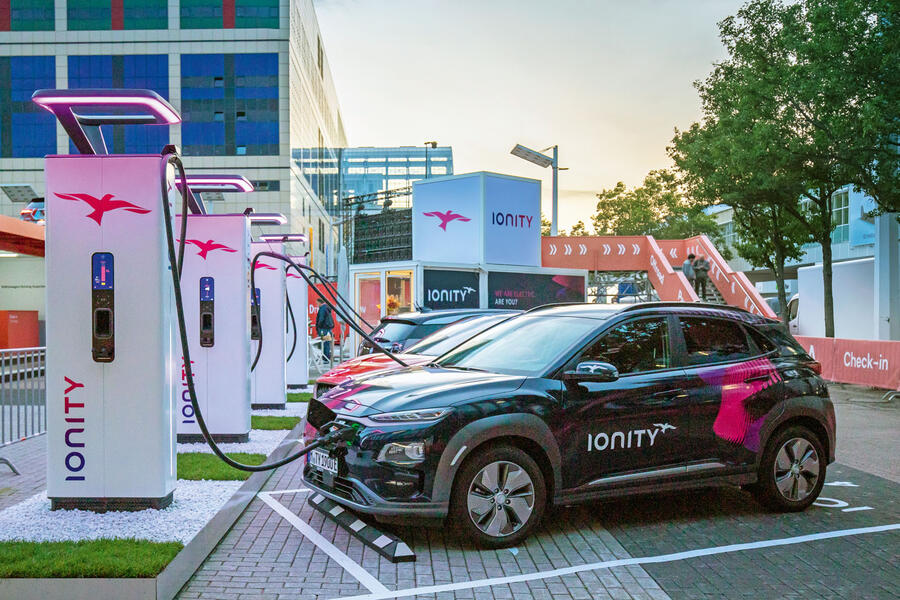
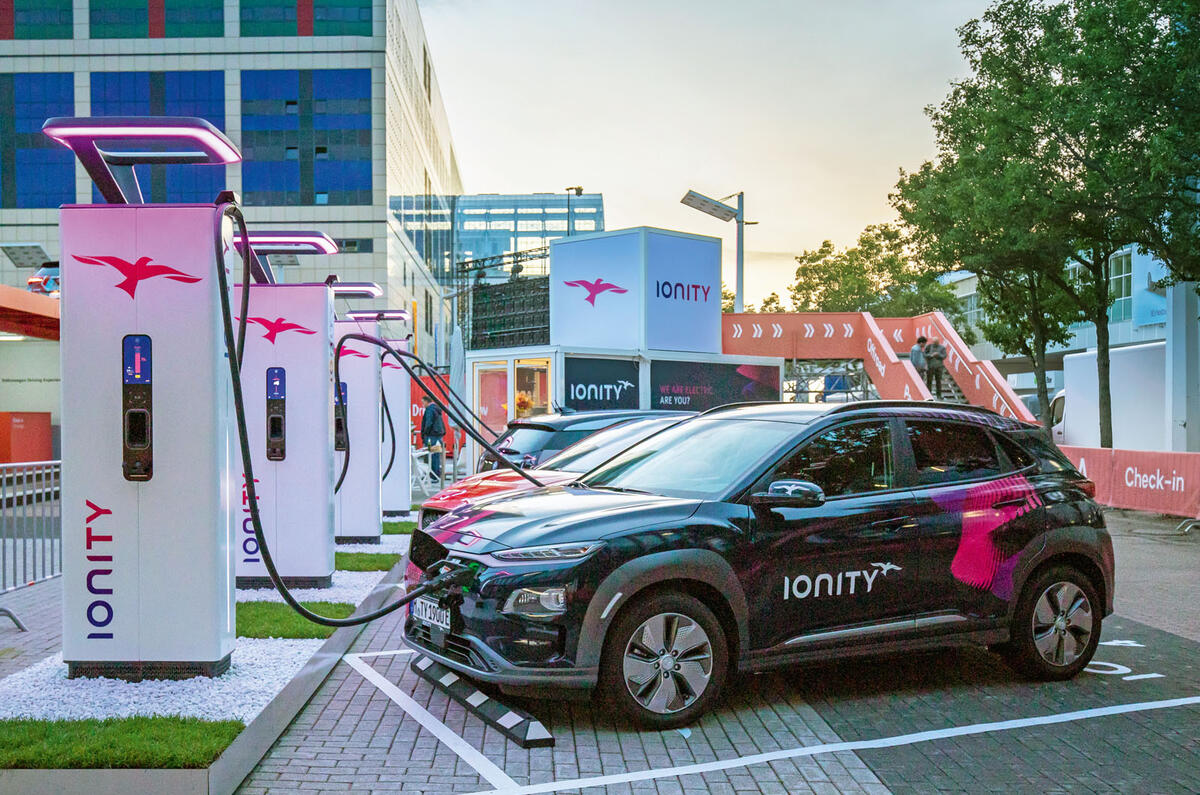
UK car market leader Ford is taking a different approach as a founding partner in Ionity, which this year opened its first 350kW fast-charge sites in the UK as part of a Europe-wide plan to mirror the Tesla Supercharger network.
Ionity’s other partners are Volkswagen, Hyundai and Kia, plus premium market leaders Audi, BMW, Mercedes, Mini and Porsche. Progress isn’t happening overnight, but Ionity now has three sites operating in the UK, with a fourth being built.
Electric car pioneer Renault has steered clear of investing in public charging, although, like all car makers with a BEV in its range, it has a preferred supplier of 7kW home chargers and exploits the commercial potential of RFID cards, which process the payments of Renault Zoe drivers using public chargers.
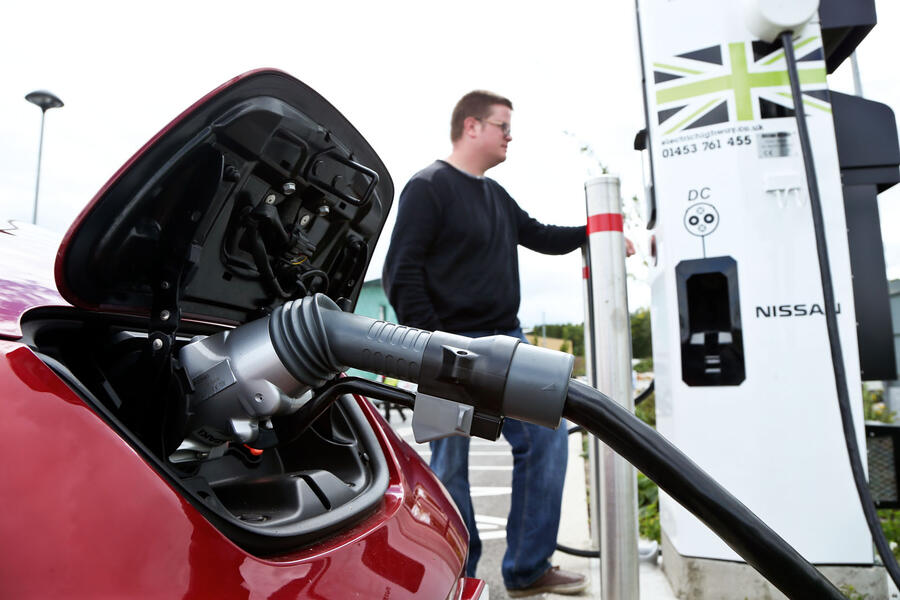
Nissan, also a BEV pioneer, took a significant step in 2012 as a co-funder of the Ecotricity 50kW fast-charging network, now up to 300 charging points. But that marked the limit of its public charging investment and now Ecotricity is struggling to deliver a reliable service.