



Despite the vast advances in electric car technology in recent years, range anxiety remains an issue for prospective buyers. A survey last year by the Transport Research Laboratory (TRL), for example, showed that only 50% of consumers would consider an EV as a main car if it offered a range of 200 miles, but that figure rose to 90% if the range increased to 300 miles.
That’s reflected in the success of cars such as the Hyundai Kona, Jaguar I-Pace, Tesla Model 3 and other models with ranges close to or exceeding 300 miles – and several EVs with even longer ranges are planned.
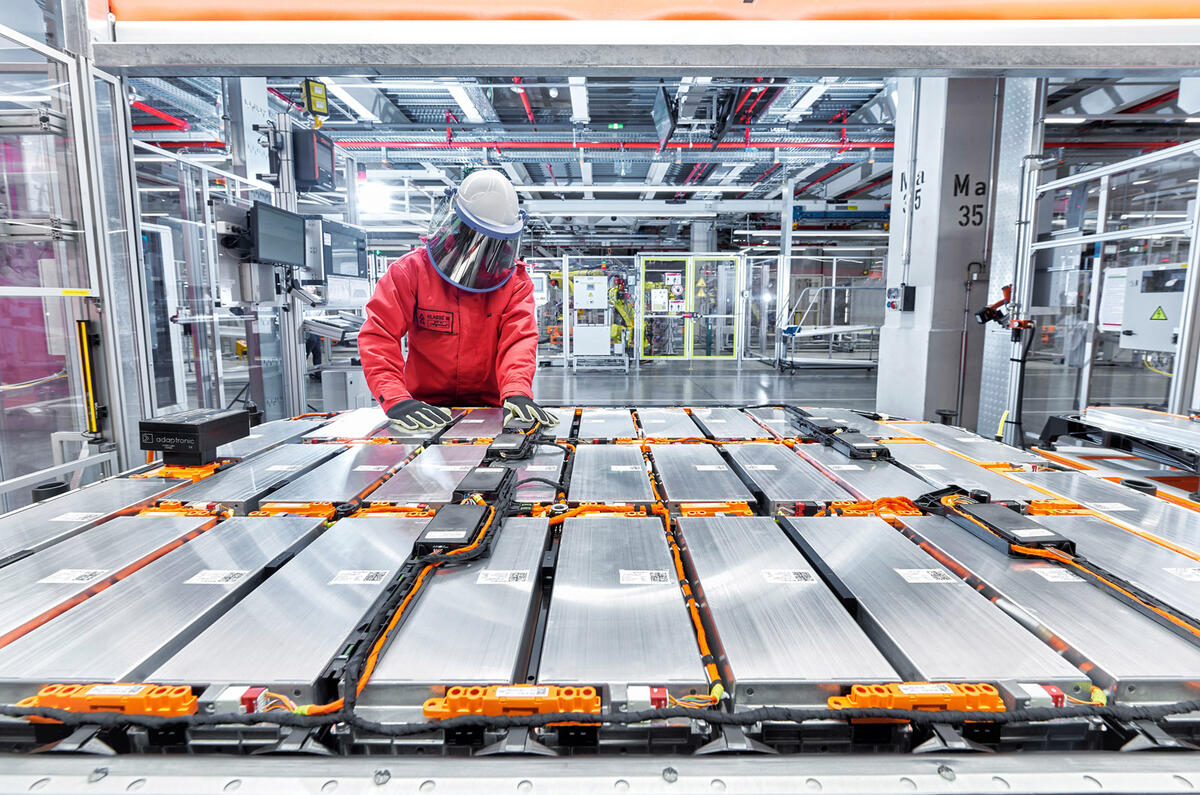
But adding more lithium ion batteries to increase range comes at a price: they add to the cost of EVs for consumers, and the extra weight affects the dynamic performance of the vehicle while reducing its efficiency. And, crucially, adding more batteries adds to the CO2 used to produce an EV, in turn impacting one of their key environmental benefits.
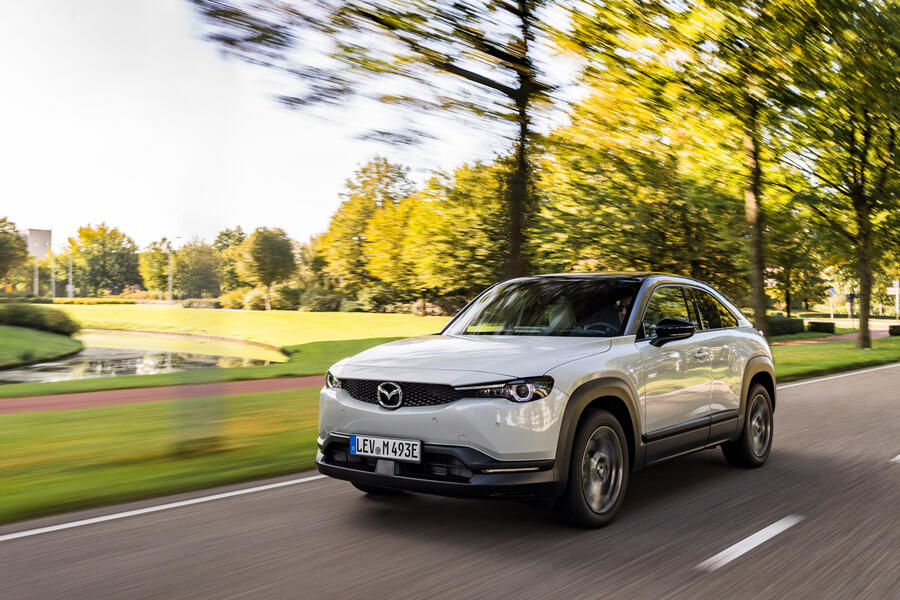
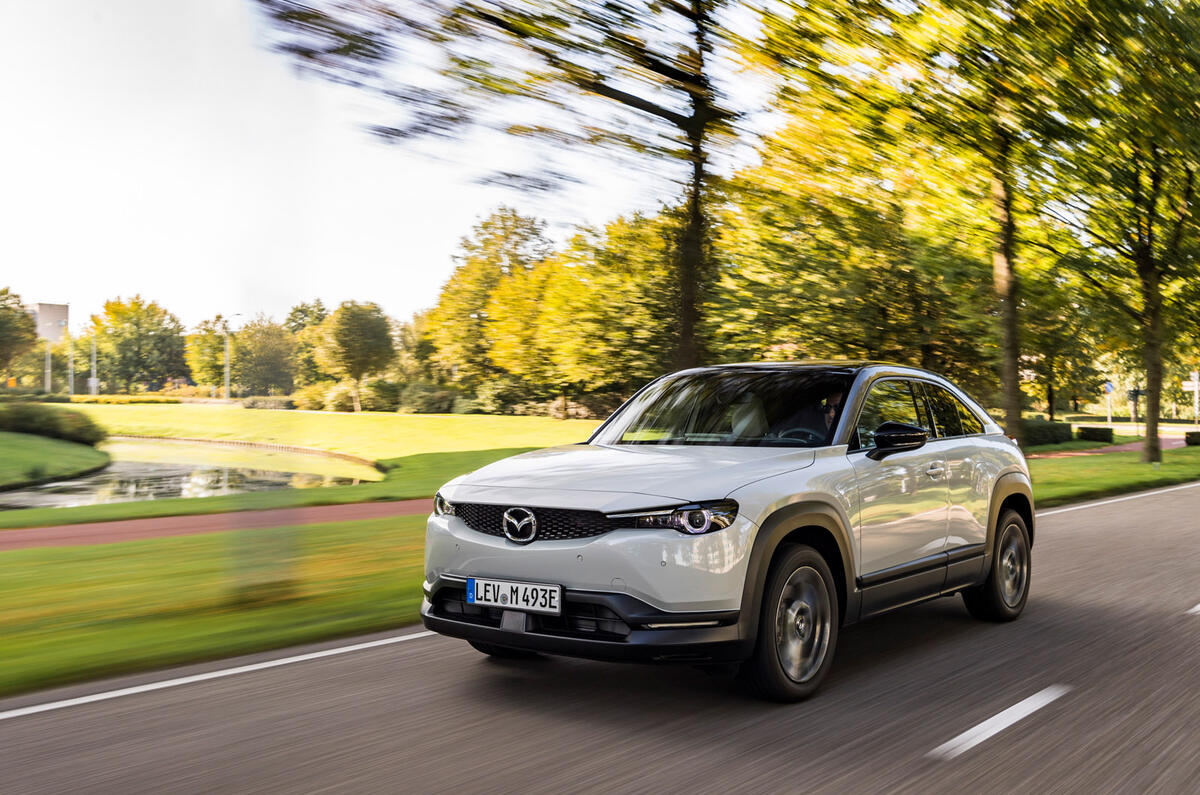
Some car firms have now started to push back against the trend for bigger batteries. Mazda recently launched its first electric production car, the MX-30, which has a 35.5kWh battery offering a claimed 124-mile range. While the range is smaller than that of most of the MX-30’s electric SUV rivals, the firm’s European R&D boss, Joachim Kunz, says it was developed with the concept of “right-sizing” in mind.
“We don’t believe a very big battery, which means a large and heavy vehicle, is the right direction for the future for two aspects: the environment and for being fun to drive,” said Kunz. He noted Mazda’s emphasis on reducing ‘well-to-wheel’ CO2 emissions, which provides a measure of the total CO2 used during a vehicle’s creation and lifespan.
“Battery production comes with very high CO2 emissions from the material extraction and production,” he said. “This ‘backpack’ is much smaller if the battery is smaller, and during usage the energy consumption is lower because of the reduced weight.”
Mazda settled on the MX-30’s range by researching vehicle usage among its customers, balancing it against vehicle dynamics and production CO2 output. “We believe the normal usage is customers charging at home in the week, but for longer trips the range is sufficient to reach the next public charging station,” said Kunz.
In the UK and other markets, Mazda is developing a range-extender version of the MX-30, featuring a small rotary engine, which the firm says will offer similar range to a current petrol car but with less overall environmental impact than an EV with similar range.