
Currently reading: Ford hopes Renault deal can plug its weakness in small vans

The Transit Custom is a success story for Ford, but it has struggled in the sub-tonne van class

Back to top

Ford’s domination of the van sales chart in the UK hides a weakness that it hopes to plug through a new partnership with Renault

News that Renault will build Ford two small electric cars, one a Fiesta replacement, overshadowed the announcement that the two plan to work together on the development of future vans. And of the two, the van partnership could be the more significant.

“We are matched very well,” Ford CEO Jim Farley said on 8 December. “Together we can create a powerhouse of LCV [light commercial vehicles] in Europe.”

Farley admitted that, despite Ford leading the van chart in Europe, its business was “very lumpy”, with strengths and weaknesses.

Those weaknesses aren't evident in the UK. To the end of the November 2025, Ford had captured around a third of the UK van market and held the top three positions with the Transit Custom mid-sized van (one-tonne payload), Transit large van (two-tonne payload) and Ranger pick-up truck, according to figures from the SMMT.

Even with all of its van-selling brands added together, Stellantis still finished second behind Ford last year, with 113,000 sales. Renault meanwhile was a distant third, with 28,000.

The UK is Ford’s turf, however, in the same way that Renault dominates van sales in France, Europe’s largest van market, again with around a third of its sales.

In fact, Ford and Renault have swapped between the number one and number two slots across Europe over the last 10 years.

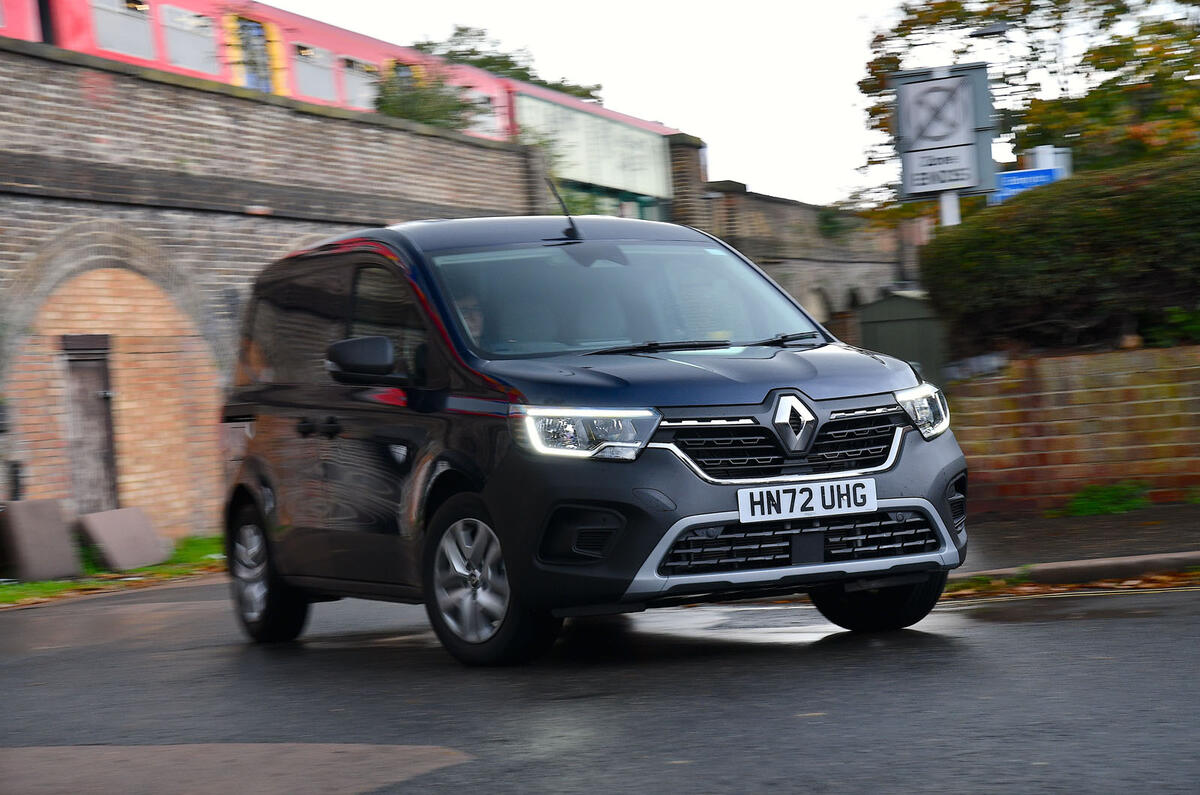
In France this year, the Renault Trafic was top in the first half, according to figures from sales aggregator Bestsellingcarsblog.com, but it’s the Kangoo compact van in second that really appeals to Ford.

“Ford is very good at one-tonne, very good at pick-ups, but with two-tonne and small vans, we haven't had the same success as others. Renault's case is quite complementary in that perspective,” said Farley, referring to Renault’s success with the Master large van and Kangoo.

The Renault van news was surprising for anyone following Ford’s van partnership with Volkswagen in Europe, which has been flowing nicely since its announcement back in 2019.

Ford now builds the Volkswagen Transporter (based on the Transit Custom) in its factory in Turkey, as well as the Volkswagen Amarok pick-up alongside the related Ranger in South Africa. Transporter sales are growing, and it even displaced the Ranger for third place in the UK LCV charts for November 2025.

In return, Volkswagen builds the Ford Transit Connect compact van, based on the Volkswagen Caddy, but that hasn’t exactly troubled the leaderboards, likely causing some dissatisfaction on the Ford side. 

“Volkswagen has been a great start; we've really learned a lot,” Farley said. “We see this as a complement to our existing partnerships. The Volkswagen relationship is very, very important to us in the one-tonne space.” 

He added that Volkswagen will be invited to join the Ford-Renault partnership if the letter of intent between the two firms turns into a full-blown relationship.

Renault didn’t admit to any weakness in its LCV line-up, but CEO François Provost said: “We are facing the evolution of the market, future threats by new competitors like the Chinese [and] the strong burden on regulations and electrification, which is even more difficult in LCV. There is no choice but to share resources to deepen our strengths in LCV."

European van makers have lead a relatively charmed life over the last few years: vans are generally far more profitable than cars for volume manufacturers and the market doesn't suffer from the same white-heat competition. Stellantis, Renault and Ford shared the spoils at the top, with Volkswagen and Mercedes-Benz following behind.

Any sales from the Japanese have come from badge-engineered partnerships with Stellantis or Renault in the main, and there has been nothing of any note from the Koreans or Chinese – but that’s expected to change.

“It's true that our Chinese competitors are late in all LCV areas. They will come. It’s why I don’t want to wait,” said Provost.

Geely-owned Farizon and SAIC-owned Maxus are starting to gain toeholds in Europe, starting in the UK, with no additional tariffs to hold them back, unlike with electric cars in the EU.

Van makers are being held to strict electrification timetables, forcing them into partnerships to help drive down the cost of batteries in the urgent hope of getting electric vans as affordable and profitable as their diesel counterparts.

Established firms have one big advantage however: relationships. Fleet customers are loyal to brands, and Ford’s digital telematics service helps in this regard.

Said Farley: “We believe this is a big differentiation compared to the Chinese – a place where we can create an industrial capability on the LCV side that would be very difficult for the Chinese to compete with."