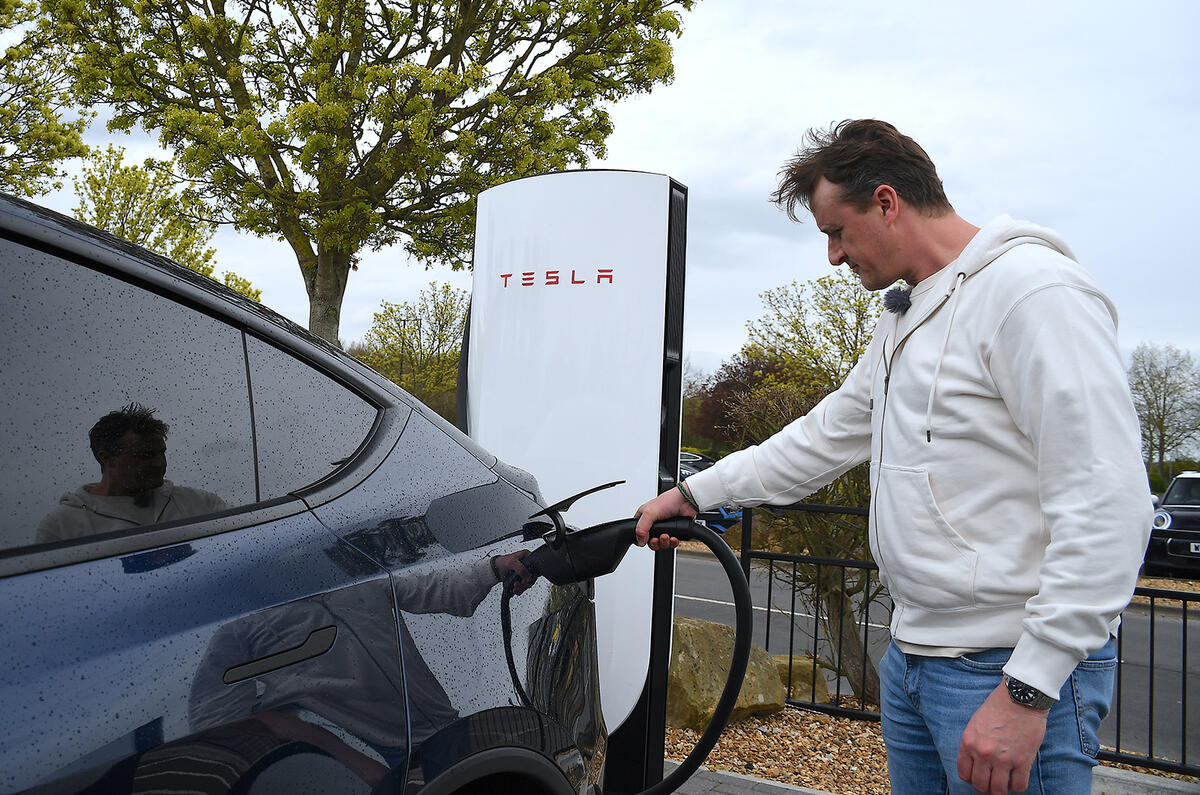



The shift from refuelling to charging is one of the biggest adjustments if you’re swapping into an electric car – and, for the most part, it’s often a positive experience these days.
Instead of rushing to the fuel station when you’re running low, an electric vehicle can be topped up almost anywhere with an electrical outlet – at home, work, or on the road – and you don’t have to hang around while it’s doing so.
However, that flexibility means mileage claims for business trips are a little less straightforward than for a petrol or diesel car, and it’s easy to end up out of pocket or on the wrong side of HMRC if you get it wrong. Here’s why.
What can you claim for charging at home?
Plugging in overnight is the cheapest and most convenient way to top up an electric vehicle, but it’s also the most complicated from an expenses point of view. It effectively bundles charging into your household energy bill, which means it can be difficult to prove how much was used for business journeys if you’re driving a company car.
HMRC was slow to offer a solution. The Advisory Electric Rate (AER) was introduced in 2018, enabling drivers to claim charging expenses at a quibble-free per-mile rate, just like Advisory Fuel Rates (AFRs) for a petrol or diesel car, but it hasn’t solved the problem completely.
It took four years, a global energy crisis and plenty of complaints before the AER was adjusted quarterly, like AFRs, then another three before it recognised the price difference between home and public chargers.
The current rates (June-August 2026) are 7p per mile for home, and 15p for public charging, and drivers are tasked with deciding a fair split between them to suit the journey.
It’s a step in the right direction, but still simplistic. Whereas the Advisory Fuel Rates (AFRs) for petrol and diesel cars are set based on engine size, the AER doesn’t differentiate between frugal city cars like the Dacia Spring and the seven-seat Mercedes-Benz EQV MPV.
Even in a mid-size EV (think Volkswagen ID.3), the AER doesn’t line up with real-world costs. The 7p home rate overcompensates drivers using cheap overnight rates (which cut costs to 2p per mile), while the 15p rate for public charging falls a long way short of paying 22p per mile to use the priciest rapid chargers. Of course, those two can balance each other out if you’re using a mix of both.
Do fleets have to use the Advisory Electric Rate?
No. Fleets are allowed to set their own rates, as long as they can prove (if audited) that it isn’t over- or under-paying drivers’ expenses. There could be an additional tax charge if it looks like they’re topping up their profits or giving drivers additional income.