1.6 h T-GDi Pure SUV 5dr Petrol Hybrid Auto Euro 6 (s/s) (235 bhp)
Submitted by dev_editor on
There are more than 30,000 rapid and ultra-rapid EV chargers in the UK, across more than 7000 locations.
Capable of delivering up to 480kW of power, they're key to the uptake of electric cars, but what are they like to use?
To find out, I visited 10 charging stations, a mix of large 'hubs' near major routes and one or two smaller ones, whose operators tend to favour more local sites. I wanted to know how easy the chargers were to use, how suitable the locations were, how easy they were to find and what state the toilets were in. There were surprises and disappointments…
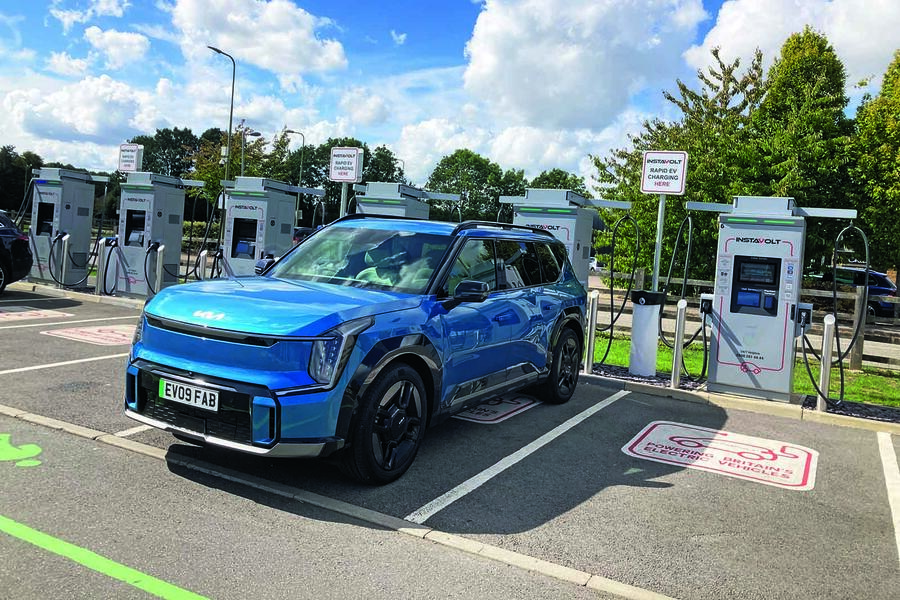
Test location: Stroud Park, Banbury, Oxfordshire
Charging speed: 160kW
Cost: 92p/kWh
We like: Easy to find and to use
We don't like: Missed out on the summer tariff
Instavolt's special summer tariff of 70p/kWh (65p for subscribers) was available at Winchester but not here..
Still, that felt immaterial when my selected charger wouldn't recognise my credit or debit cards. A fellow user suggested I do a chip and PIN purchase to 'reset' one of them. At the nearby Costa, I bought some water with the credit card and was back in business. My Kia EV9 was at 79% so I just gave it a top-up to 81%, which took five minutes. A 'how to charge' info board made the process pain-free.
The site was well signed from the access road but hard to miss anyway, being essentially a large car park with 32 rapid chargers in bright white. It was EV driver Keith Kelsey's first time there. "I saw the other chap helping you," he said. "We EV drivers stick together at times of crisis. Contactless doesn't always work."
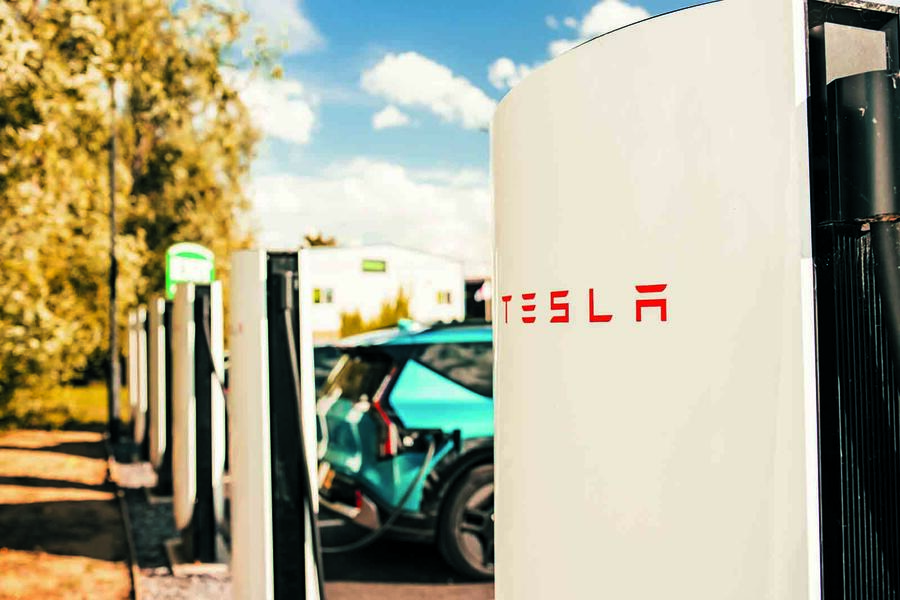
Test location: Brookfield Shopping Centre, Cheshunt, Hertfordshire
Charging speed: up to 250kW
Cost: 36p-58p/kWh for non-Tesla owners; 26-42p/kWh for Tesla owners
We like: Great value, all makes
We don't like: Not obvious to see, non-EV parkers
Located just off the busy A10 and only a few miles from the M25, this 16-charger station sits within a vast shopping centre complex at the back of a car park. In Tesla terms, it's pretty standard, discreet and no shelter but plenty of room to manoeuvre. It is an all-makes site (not all are), and with one tap of the card, my Kia was drawing around 85kW. There were six cars present when I visited.
Polat was charging his Kia Niro and told me the site could get busier and not just with people charging their cars. "Because it's a shopping centre, at peak times people just park in the charging bays if the car parks are full," he said. On the upside, he told me that with his £9.99 monthly Tesla subscription, he paid from just 26p/kWh.
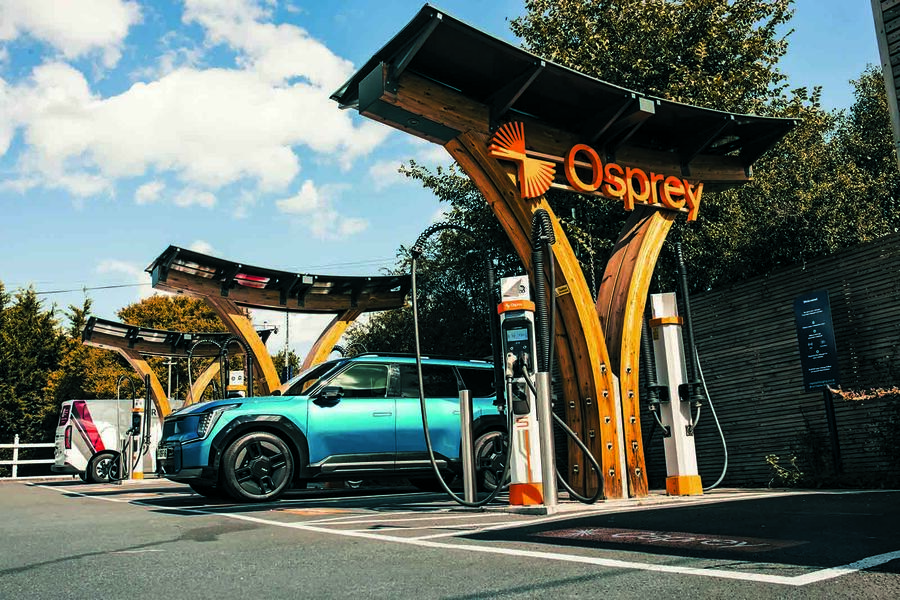 Test location: Halfway House restaurant, Brentwood, Essex
Charging speed: up to 180kW
Cost: 87p/kWh (82p/kWh using Osprey app)
We like: Attractive canopies, easy to use
We don't like: The signage could be clearer
Just off the busy A127 London-Southend road, this charging station is indicated only by a small sign that is easy to miss. More obvious are the notices warning visitors of a £100 fine if they break the parking rules, which include logging your EV with reception within 15 minutes.
The charging station was spacious and attractive, with sturdy wooden canopies offering users decent shelter. An information board told us how to charge: "Choose charger, tap card, plug in." My EV9 drew power at around 79kW.
There were six ultra-rapid chargers but only two other users, both charging vans. "It's a nice, quiet spot," one said. "I come here a lot and there have only been two occasions when the chargers were down." In the Halfway House itself, the toilets were clean, and a latte was £1 cheaper than in the Double Tree (see Ionity, overleaf).
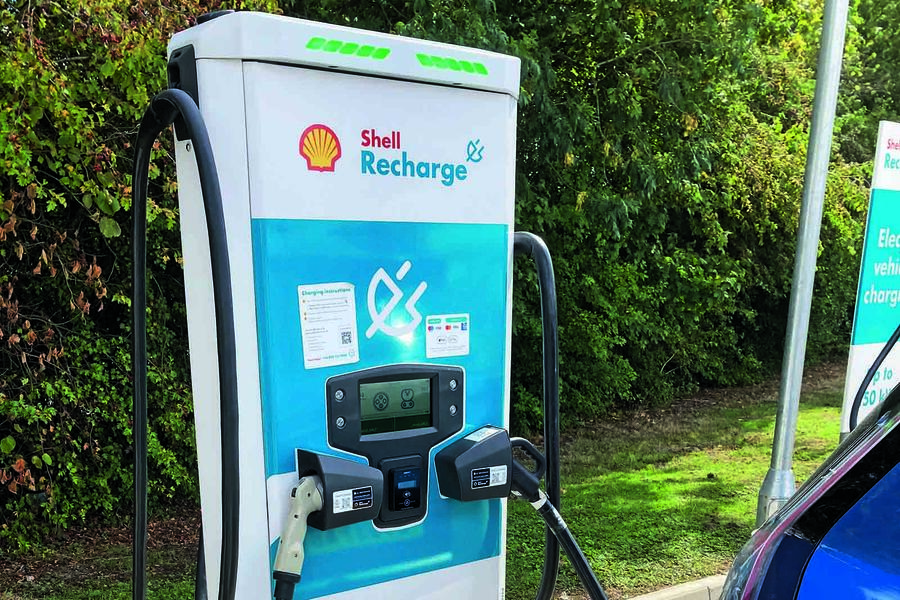
Test location: Southam, Warwickshire
Charging speed: 150kW Cost 79p/kWh
We like: Location, facilities
We don't like: Confusing to use
At this charging station, not far from the M40 and located in the countryside, I was struck by just how right Keith had been at the Instavolt site.
This would have been a lovely place to relax with a meal deal from the forecourt shop, except that two of the eight chargers I tried wouldn't recognise my cards. Was it me? I couldn't work out which buttons to press on the charger and in which order, so I was left wondering if the cards were actually okay. I tried resetting them again but the shop had just gone offline and couldn't do transactions. I settled for a toilet assessment (clean) and a general site survey (smart and tidy).
The next day I tried a different Shell Recharge, at Folly Hill, Farnham, Surrey. It couldn't have gone better. The 180kW charger (there were two) was much easier to use (plug, tap, charge) and had a clear 'Stop' button (not all chargers do). The tariff was 79p/kWh.
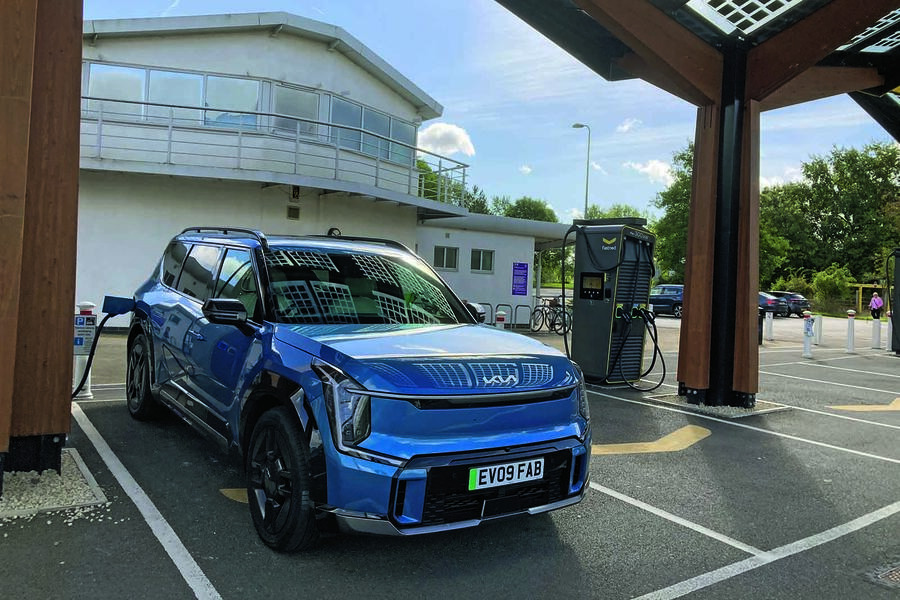
Test location: Redbridge Park and Ride, Oxford, Oxfordshire
Charging speed: Up to 300kW
Cost: 79p/kWh or 55p/kWh with 30% Gold membership discount
We like: Powerful, easy-to-use chargers
We don’t like: Parking rules, grubby facilities
As the UK's first park and ride, this place knows how to charge and how to fine. A small sign beside each charger tells users to register their car for a free ticket. What it doesn't say is that you have 10 minutes to do so or face a £100 penalty. Eleven minutes in and I was still queuing at the pay machine...
It took the shine off an otherwise seamless charging experience plug in, choose a connector on the screen, select payment method, tap and wait as your 300kW charger (one of 10) gets to work. Behind us was what looked like the UK's first public lavatory. However, the Fastned site itself was clean and tidy, with users protected by solar canopies.
The driver of a Volkswagen ID 5 was happy. "I never queue and the chargers are quick," she said. She had just paid £54 for a charge but could have saved 30% by subscribing. "I can't be bothered," she said.
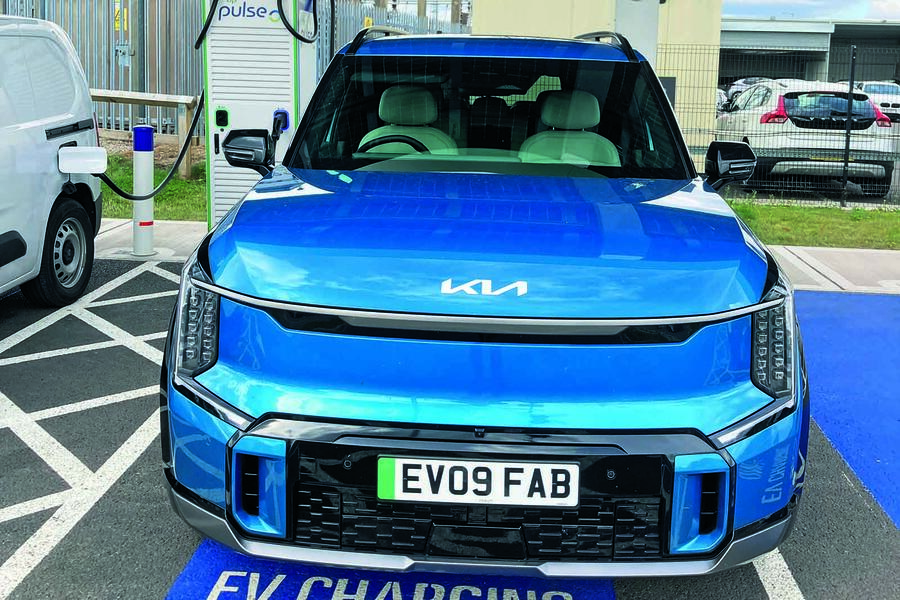
Test location: NEC Gigahub, Birmingham, West Midlands
Charging speed: Up to 300kW
Cost from 63p/kWh for subscribers up to 93p/kWh ‘pay as you go’
We like: Powerful, easy-to-use chargers
We don't like: Parking rules, grubby facilities
This charging hub is well signed from the M42. That said, on the approach I nearly entered the long-stay car park next door, with its slow chargers.
Once in the hub, notices warning drivers they would be fined for parking on the red routes reminded me that the threat of punishment is never far away.At least the chargers (30kW, 150kW and 7kW) were reasonably easy to use and backed up by instructions: press Start, choose charger and then what? I decided to plug in and then tap. It worked but some chargers require you to tap first and then plug in.
A fellow user was unfazed. "Chargers can be such a faff," he said, "but with these, the order you have to do things in seems logical." There was good weather protection, although, with it being close to going home time, most of the bays were taken. The nearby Starbucks was doing good business and the toilets were cleanish.
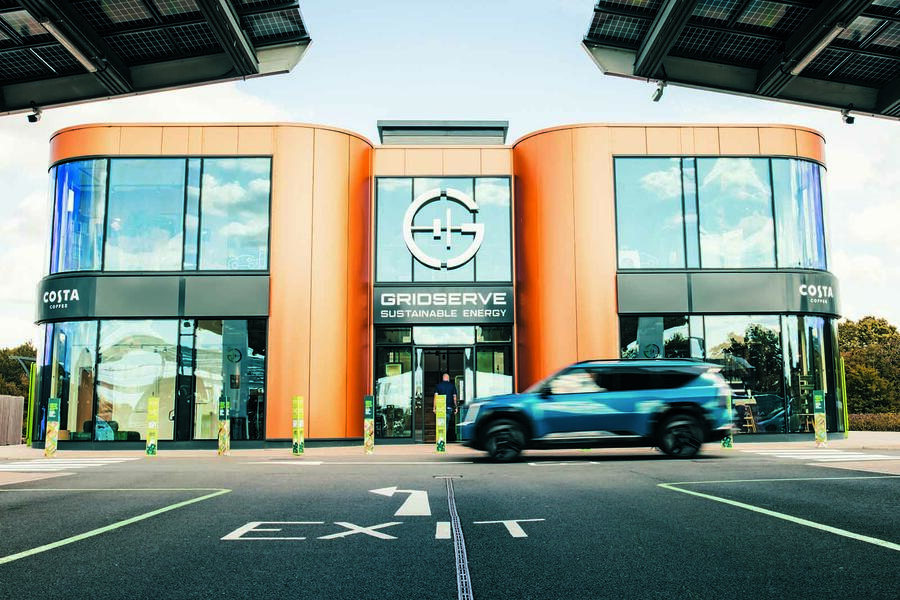
Test location: Electric Forecourt, Braintree, Essex
Charging speed: 360kW
Cost: 59p-85p/kWh with 25% off for holders of Gridserve Plus membership at £7.99 per month
We like: Easy to use, good facilities
We don't like: It would be helpful if the totem pole displayed tariffs
No trouble finding this charging station thanks to a large totem pole on the roadside advertising 10p off a kWh with the Gridserve app.
The forecourt is home to 32 charging bays including 12 high-power ones sheltered by two huge solar canopies. Each bay has enough room to park side-on, handy whether your car's charge port is at the back or the front. There are also six unsheltered Tesla Superchargers to the side.
Plug and tap and the EV9 was soon drawing 85kW. The refundable pre-authorisation charge was £10 compared with an average of £40. Music was piped around the forecourt and in the main building, with its shops and bookable meeting rooms. "I've been coming here for four years and never had to queue," said one user. The following day, I called into Gridserve's M4 Reading services location. It was harder to find but the chargers (uncovered) dispensed up to 350kW and the EV9 was soon gulping 93kW for the same 92p/kWh.
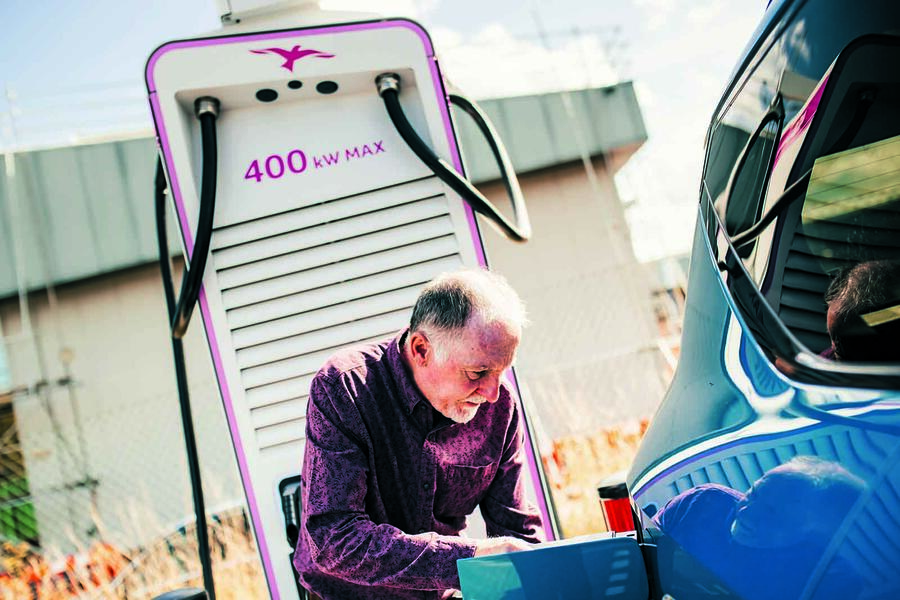
Test location: Double Tree Hilton, Dartford, Kent
Charging speed: Up to 350kW
Cost: 81p/kWh, 77p/kWh with Ionity app or 46p/kWh with Ionity subscription
We like: Tidy and efficient
We don't like: Tricky to find, parking notices
There were no signs directing me to this charging station but there were plenty warning me of a £100 fine if I broke the parking rules. Reception assured me the first two parking hours were free and I didn't have to log the EV9's registration.
The charging area was clean and tidy, there was lots of room to manoeuvre my big Kia (there were only two other cars present on the 24-charger site) and the chargers and the contactless payment system worked smoothly. At 19% full, my EV9 was drawing 129kW and still doing so at 73%.
"The location is very good and it's always very quiet," said one driver. "With a subscription, I pay just 49p/kWh." There was no shelter while I hooked up but, fortunately, the weather was kind. Inside the hotel, the toilets were spotless but, at £4.25, I skipped the latte in the bar.
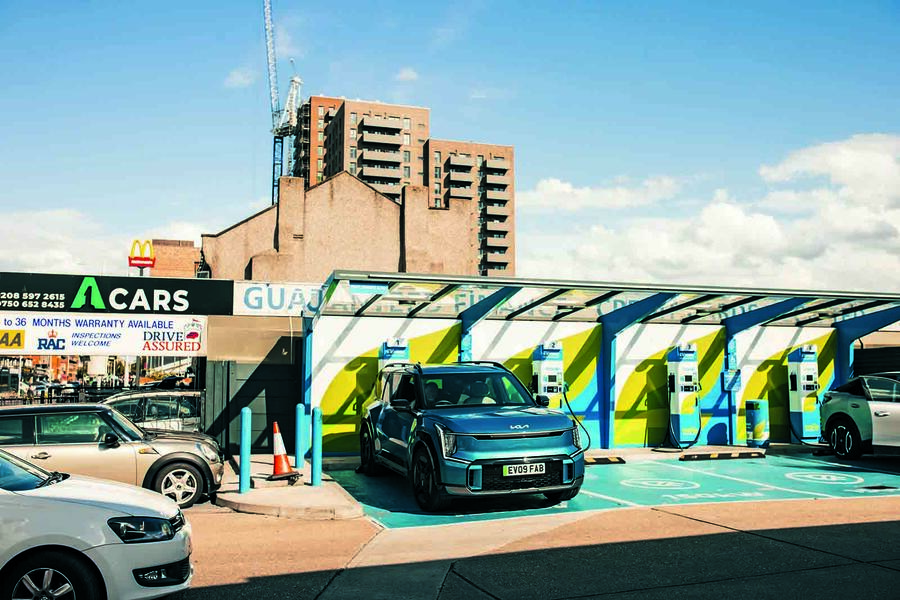
Test location: Ilford, Greater London
Charging speed: 150kW
Cost: 59p/kWh (promotional summer rate until 30 September 2026, down from standard 79p)
We like: Unpretentious, good customer service
We don't like: Not easy to use at first
The dreaded parking notices were present at this station but this time to deter non-EV drivers.
Unlike the other sites I visited for this survey, it is by no means a major location but it is close to the busy A12 and M11. It is a classic MFG site, with just enough manoeuvring space, good weather protection and a well-stocked forecourt shop. There were four 150kW CCS chargers. However, I had to call MFG to understand how to operate a charger, which wasn't obvious (using buttons, you have to select your connector, tap, then press continue).
Plugged in, my Kia drew power at around 75kWh. Later the same day, I called in at a 300kW MFG station at a Morrisons in Fleet, Hampshire, with more space and where, at 60% full, the EV9 drew an impressive 150kW. This time I knew which buttons to press.
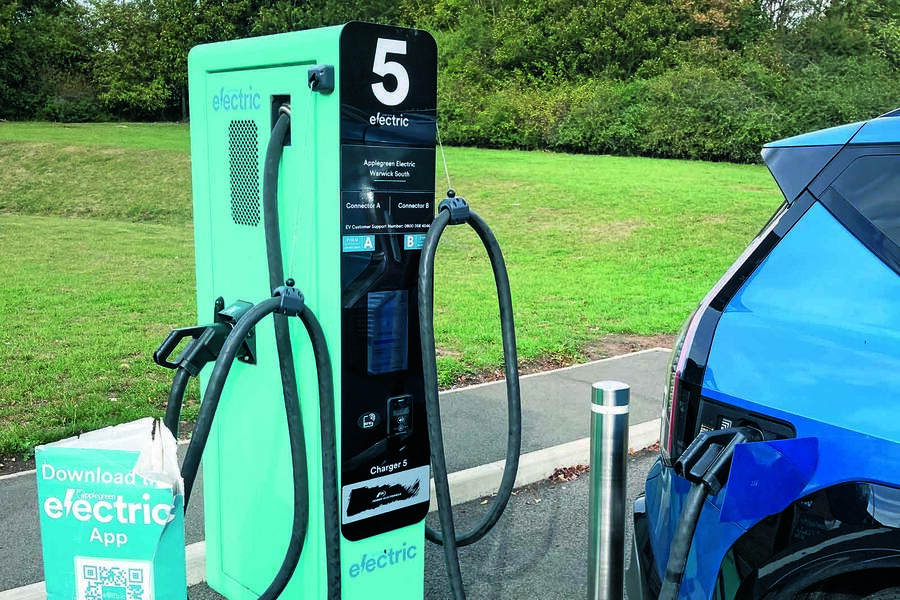
Test location: Welcome Break, M40, Warwickshire
Charging speed: 180kW
Cost: 79p/kWh
We like: Low refundable pre-authorisation charge, reasonably easy to use
We don't like: Charging time restriction
The traditional parking notice had a fresh twist here: "£100 fine if not charging in bay for longer than 10 minutes." I hoped the allowance included operating the charger, which was one of 16.
Fortunately, it was a straight plug and tap. Drawing 133kW, the Kia's battery went from 79% to 92% in just nine minutes. But how to stop: tap my card? It wasn't recognised. Customer services said it happened occasionally, so just unplug. The session cost £12 a reasonable sum for 10 minutes' parking, surely? The refundable pre-authorisation charge was only £1.
There were no canopies offering shelter but, as an alternative to waiting in the car, there was a Starbucks. Directions to the site were good off the motorway but soon became confusing. This was first-time EV driver Philip Major's second experience of charging. "Twice now, I've had to second guess which button to press to charge. The machines don't tell you!" he wailed.
When it works, being able to pay contactlessly has made life easier for those EV drivers who have no allegiance to any of the charging firms and prefer to pay directly for their charge.
Of course, by not paying via a subscription app, they are missing out on sizeable tariff reductions. Meanwhile, the new generation of rapid and ultra-rapid chargers are so fast that most drivers I saw were happy to wait in their cars rather than in the local cafe killing time with a £4.50 coffee. In any case, almost without exception, the charging stations were pleasant places with clean charging cables.
However, to that old complaint about range anxiety (still an issue in some parts of the country including North Yorkshire, as one Scarborough-based driver told us) must be added charger anxiety.
Often during my two-day survey, I found myself worrying how easy the next charger would be to operate. A control interface common to all chargers would be a huge step forward. And then there are the parking notices.
I appreciate that many sites are on third-party land and non-EV drivers must be deterred from parking in charging bays, but the signs are intimidating and create uncertainty for users simply wishing to charge their cars.
We have had small electric hot hatchbacks such as the Alpine A290 and large ones like the Hyundai Ioniq 5 N but, as yet, not a lot in the real heartland of Volkswagen Golf GTI-sized machinery.
To be fair, the lack of traditional family-sized electric hot hatches has been due to a near total absence of donor cars. Almost all five-door, five-seat, circa 4.3m-long EVs have been homogenised crossovers, in part because of the need to accommodate the depth of a battery pack. A few years down the line, it's an excuse that is starting to wear a bit thin.
But then the Kia EV4 arrived, as arguably the first electric family hatch in the traditional mould. And now Kia has decided to turn it into the first Golf GTI-sized electric hot hatch as well. The Cupra Born, Volkswagen ID 3 and MG 4 are the closest conceptual rivals, but none dip under the 1500mm mark in terms of height (not even the 'little' Alpine), as the EV4 GT does. It feels like a bit of a watershed moment for the performance EV.
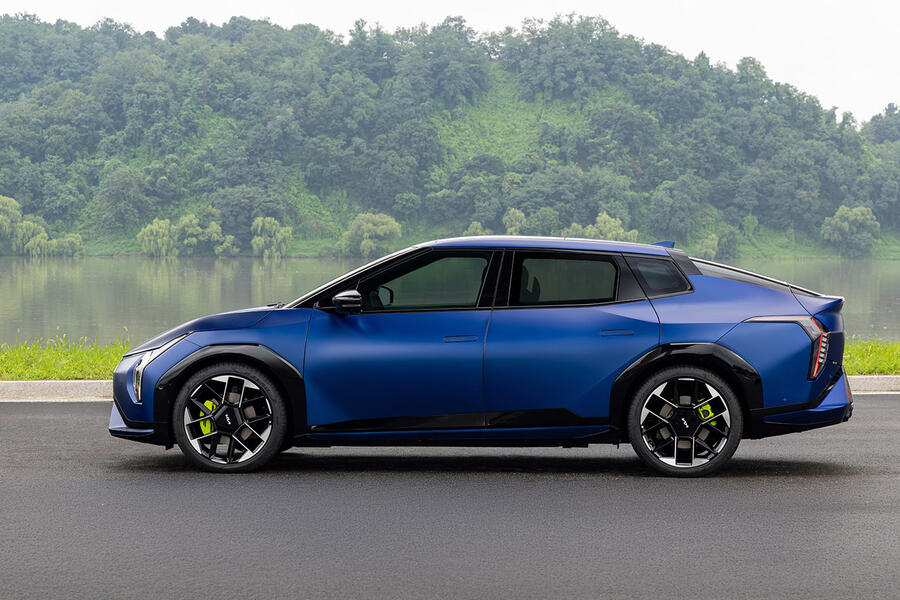
So what exactly is an EV4 GT? Mechanically it is near-identical to the new EV3 GT crossover, and is one third of a GT-badged offensive that Kia is launching in 2026 (the third car being the larger EV5 GT).
Why so many new GT models all of a sudden? Kia R&D chief Manfred Harrer some time ago accepted the notion that the dynamic enjoyment of the company's car handn’t kept pace with the recent improvements in design and desirability. He told us the GT models would be his starting point in trying to address that, and that is now happening, with the EV4 GT being perhaps the most convincing of the gaggle.
Its dynamic make-up is more Golf R than Golf GTI, not just owing to the technical fact that it has four-wheel drive (thanks to an additional 94bhp motor for the rear axle) rather than front-wheel drive (the 194bhp motor from the standard EV4 remains at the front) but also in how it goes down the road.
The suspension makeover, comprising new springs and new valving for the three-mode dampers, versus the standard EV4 feels particularly significant: the 288bhp EV4 GT does a Golf R impression in offering commendable comfort and compliance alongside plenty of grip and stability when being pushed, although its limits reserves of body control, outright grip and general poise are ultimately lower than the famous German car's.
As with the EV3 GT, because of the arrangement of the motors, the balance gives more of a front-drive hot hatch feel than Kia’s hitherto rear-biased more senior GT creations, so the EV4 GT can’t be steered gently on the accelerator in the way that, say, a Cupra Born VZ can. The less powerful rear motor exists mainly to neutralise the cornering balance, not fundamentally alter it for tail-happy antics. Equally, the EV4 GT is perhaps a touch more willing to tighten its line with a gentle mid-corner lift that its crossover sibling.
There’s no form of diff lock at the front, either, only a torque-vectoring programme that uses both physical and regenerative braking to help the car pivot. Traction is not generally a problem, and in Korea there was no sign of axle-tramp or torque-steer, but trail the EV4 GT into a tight bend and the attempt at a swift exit can scruffily expose the limitations of the torque-vectoring system.
That all being said, the EV4 GT’s lower centre of gravity really tells in the way it gets that Tron-like snout into corners. It doesn’t steer with genuine alacrity, but it is appreciably crisper than the EV3 GT. The steering is also more resolute in its self-centring and has a gratifying elasticity to the pick-up and motion as you load it up into a bend. With the EV4 GT there simply seems to be more meat on the bone for people who love driving, rather than simply going fast with plenty of security underwheel.
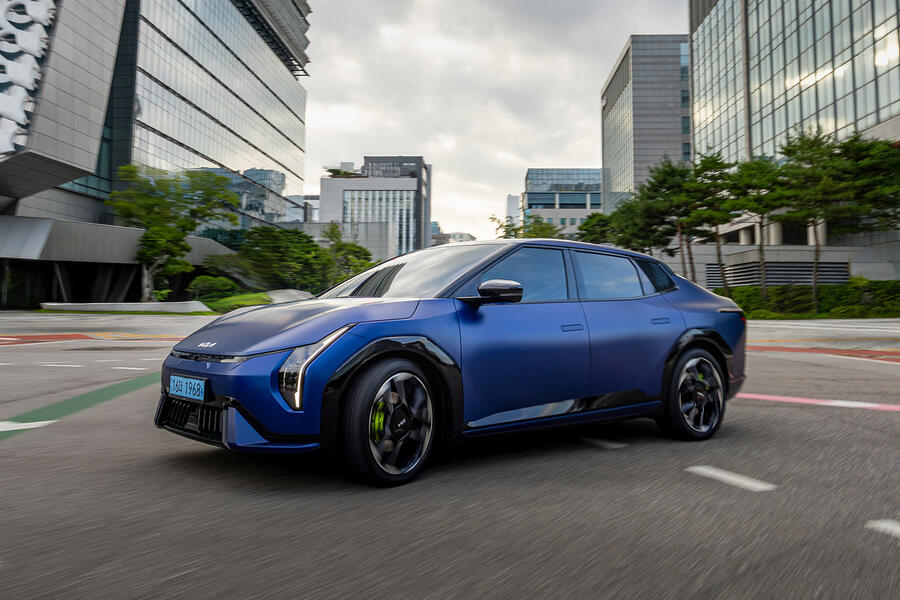
And it is quick enough, with a 5.6sec 0-62mph time, although according to the performance data-logger you can view on the central touchscreen, in reality it can manage closer to five seconds dead. The virtual gearshift function made famous by the Ioniq 5 N also features, and among the driving modes is one labelled GT (enabled by a button on the steering wheel) that makes everything as fast or as stiff as it goes.
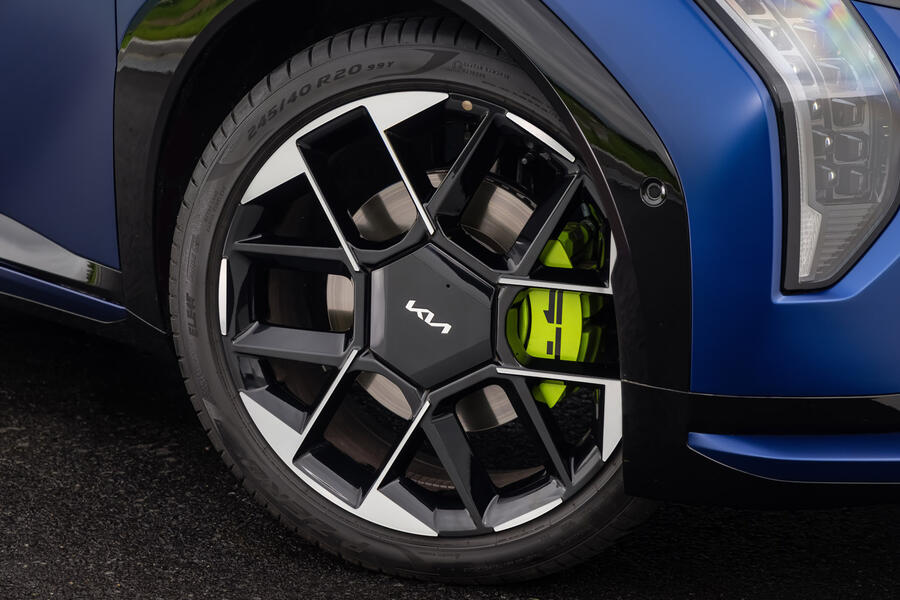
Pirelli P Zero 4S tyres (245/45 front and rear) are wrapped around 20in alloys and behind them are some beefed-up brakes with, on this liveried prototype at least, some fetching neon-coloured calipers. In truth, brake pedal-feel is the weakest point of the package, and highlights the fact that Kia's GT wares are less committed than those of sister-brand Hyundai's N models.
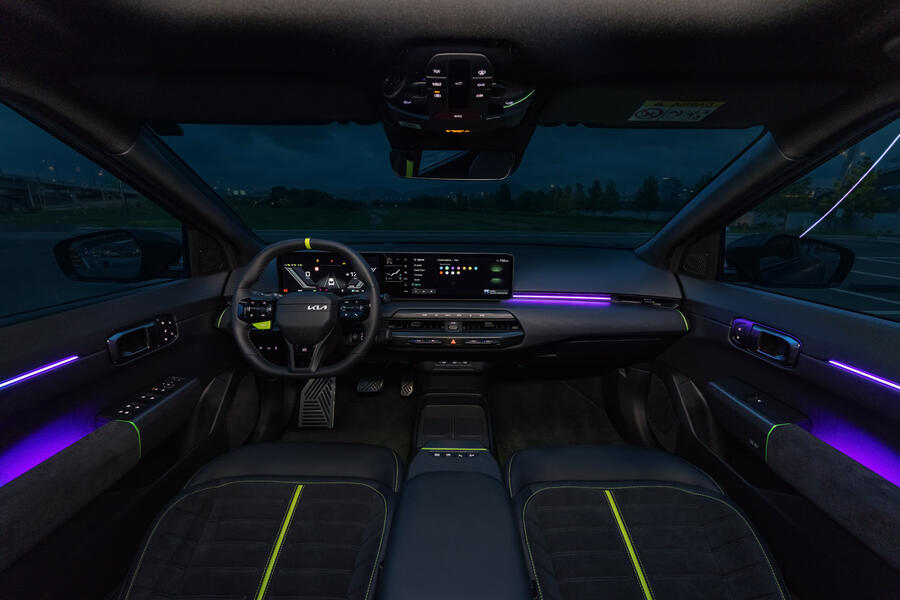
Inside, the EV4 GT receives some meaningful upgrades over the donor car in a cabin that feels classy with some sporty touches. Best among them are new sports seats that make it seem like you're sitting lower than in the standard EV4, and they feel great too, with an Alcantara-like wrapping and leather trim.
Piece it all together and you get a car that, on the basis of this early drive in Korea, shows lots of promise and in several different ways. There is headroom here and space for an even more engaging car, but the EV4 GT shows that more humble Kia hatches can be as good to drive as they look.
| Feature | Specification |
|---|---|
| Price | £49,500 (est) |
| Engine | Two permanent magnet synchronous motors |
| Power | 194bhp (front), 94bhp (rear) |
| Torque | 345lb ft |
| Gearbox | 1-spd reduction gear, 4WD |
| Kerb weight | 2220kg (est) |
| 0-62mph | 5.6sec |
| Top speed | 105mph |
| Battery | 81.4/78.0kWh (total/est usable) |
| Range, economy | 333 miles, 4.3mpkWh (est) |
| CO2, tax band | 0g/km, 4% |
| Rivals | Abarth 600e, Cupra Born VZ |
Submitted by dev_editor on
Submitted by dev_editor on
Submitted by dev_editor on
Submitted by dev_editor on
Submitted by dev_editor on
Submitted by dev_editor on
Submitted by dev_editor on
Submitted by dev_editor on