AT Show in Used Car dropdown menu:
AT Show in app feed:
AT Show in car finder dropdown menu:
AT Make Id:
459cc090aa5ebb32329b292726f74f35
Dredge your memory and it's possible to come up with a handful of interesting MPVs.
The Renault Espace had sharply sleek lines, composite skin panels, cabin design worthy of an imaginative architectural practice and was so good that it would inspire a whole segment’s worth of imitators.
Like the sheep that they are, almost every car-maker scrambled to make MPVs, initially on the same big-car scale as the Espace but soon to the footprint of Renault's smaller and almost as influential Scenic.
There was less imagination but more realism from these designs, unless you went shopping in a Fiat dealer, where you would be shocked by the profound ugliness of the bug-eyed and big-windowed Multipla.
The rarely bought Fiat was one of the cleverer designs out there, but perhaps the best executed, most complete and most satisfying MPV, and one much the same size as the Espace, came - a little unexpectedly - from Ford. Unexpectedly because Ford was not a brand known for making exceptionally practical cars, nor cars that strayed somewhat from the market segment at which they were aimed.
The 2006 S-Max was a derivative of the big Galaxy, a people carrier entirely conventional in its conception and none the worse for that, although the word derivative massively undersells the cleverness of the S-Max.
Which was a more rakish and somewhat sportier version of its boxier big brother, despite which it still packed seating for seven and a phenomenally generous loadspace.
This was a car that could swallow six by four-foot slices of mdf and allow you to shut the tailgate on your load. It could heft sizeable items of furniture and a mighty heap of smaller things besides.
And because each of the two rear rows of seats folded individually, you could carry plenty of stuff and more than two people. Even with seven aboard the S-Max had a pretty decent boot.
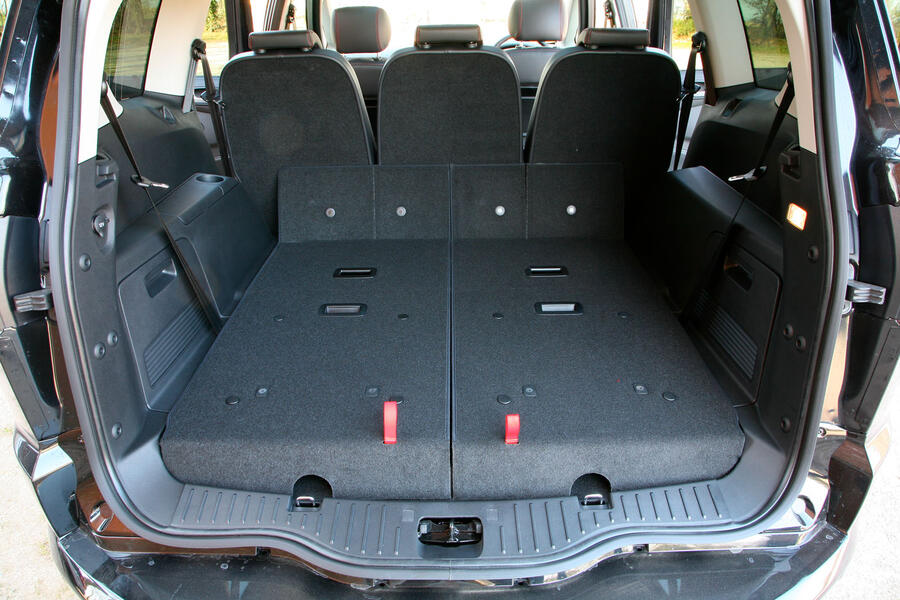
At least as impressive was the fact that all these seats folded absolutely flat, any gaps between them covered by folding carpeted panels. It was a marvel of spatial engineering, and as an additional flourish – two, actually – Ford allowed each of the trio of middle row seats to slide, and provided a pair of covered cubbies beneath the feet of their occupants.
Its sleek lines, neat detailing and the high quality of the interior indicated another tour de force from Ford, which by the early 2000s had earned a fine reputation for making real driver’s cars of its mainstream models.
Indeed, Ford reckoned that the S-Max was enough of a dynamic performer to award it a different acronym, SAV an abbreviation of Sports Activity Vehicle. It was a term coined by BMW for models not quite as sporty as a two-door 3 Series, and not inaccurate for the S-Max if driving was one of your favoured sports. Because this big van did bends in the manner of machines far slinkier.
As it happens your reporter owns a S-Max 2.0 TDCi, a 2007 specimen of 122,000 miles and many battle scars from a previous life.
It was bought cheap as a non-runner – that’s another story – and having been resurrected it never fails to impress with its civility, comfort, deft handling and superb steering feel. It’s quick, too, the diesel’s torque delivering plenty of thrust. No less amazing is the aforementioned ability to carry stuff – with no kids, we use it as a very well upholstered van – and the ease with which it will pull a classic car-laden trailer.
Loads of buyers discovered the same mix of usefulness, refinement, performance and driving enjoyment, making the S-Max a big hit for several years.

"A jet engine is not that much different from an internal combustion engine in that it pushes the air in, squeezes it, ignites it and pushes it out.”
Simon Lipscombe’s idiot-proof explanation of the jet engine’s basic operating principle would surely have delighted Sir Frank Whittle, inventor of the jet engine. That he knows how one works is because he bought one, like you do…
“I found it on eBay,” he says. “It’s from a Mk3 Avro Shackleton. The plane had two jet engines, one each behind the outermost Griffin V12 prop engines to push it along. It produces 2600lb of thrust and with a few extra bits it cost me and my dad Richard £2000.
With his new jet engine safely in his garage, Simon, who is chief mechanic at a hire car firm, began exploring how it worked. He says: “I started fiddling around, working out what everything did.
YouTube was my friend; there’s enough information out there to give you an idea where you should go. Once I had worked it out, I decided to run it up, so screwed it to a trailer attached to a tree. My friends were all gathered behind an 8ft dirt bank but I was too busy looking for oil leaks to be scared.”

Now with the jet engine running, Simon’s next task was to decide what to do with it. “I already had a Ford P100 with a V8 in the back, so another with a jet engine seemed like a good plan,”he says.
“The P100 can carry a ton and has an 8ft load bay. The jet engine weighs 800kg and is quite short. You can buy an unrestored P100 for as little as £2000, so that’s what I did.”
Second P100 sourced and restored, Simon then fitted the jet engine to its load deck, wisely leaving the vehicle’s original 1.8-litre diesel engine in place at the front. “The pick-up is driven by the normal engine and the jet engine provides thrust,” he says.
“You only want to drive it in a straight line under jet power. Jet engines don’t go around corners very well. The centrifugal forces in the engine tend to make things go in a straight line.”
Simon controls the jet engine using a small hand control with two buttons on it. One kills the engine and the other is a three-way switch that allows him to nudge the throttle up or down.
The engine is a multi-fuel type that can burn unleaded petrol, diesel or paraffin. “Avgas is about three times the price of petrol so I’m relieved it can run on ordinary fuels,” he says.

For insurance reasons, Simon isn’t allowed to run the engine at shows. Instead, he plans to take it to Santa Pod and run it down the drag strip. He says: “They will probably only let me do a soft run rather than full throttle. It will be a noisy but interesting spectacle.”
Whatever he does with it, his P100 jet car has given him an idea for a future project: “I’ve just bought a Nimbus 105 turboshaft engine out of a Wasp helicopter. I’m thinking of taking the V8 engine out of my other P100 and putting it in that.
Being shaft driven, it can be connected via a drive box to the Ford’s axles. It should be fun!”
"A jet engine is not that much different from an internal combustion engine in that it pushes the air in, squeezes it, ignites it and pushes it out.”
Simon Lipscombe’s idiot-proof explanation of the jet engine’s basic operating principle would surely have delighted Sir Frank Whittle, inventor of the jet engine. That he knows how one works is because he bought one, like you do…
“I found it on eBay,” he says. “It’s from a Mk3 Avro Shackleton. The plane had two jet engines, one each behind the outermost Griffin V12 prop engines to push it along. It produces 2600lb of thrust and with a few extra bits it cost me and my dad Richard £2000.
With his new jet engine safely in his garage, Simon, who is chief mechanic at a hire car firm, began exploring how it worked. He says: “I started fiddling around, working out what everything did.
YouTube was my friend; there’s enough information out there to give you an idea where you should go. Once I had worked it out, I decided to run it up, so screwed it to a trailer attached to a tree. My friends were all gathered behind an 8ft dirt bank but I was too busy looking for oil leaks to be scared.”
Now with the jet engine running, Simon’s next task was to decide what to do with it. “I already had a Ford P100 with a V8 in the back, so another with a jet engine seemed like a good plan,”he says.
“The P100 can carry a ton and has an 8ft load bay. The jet engine weighs 800kg and is quite short. You can buy an unrestored P100 for as little as £2000, so that’s what I did.”
Second P100 sourced and restored, Simon then fitted the jet engine to its load deck, wisely leaving the vehicle’s original 1.8-litre diesel engine in place at the front. “The pick-up is driven by the normal engine and the jet engine provides thrust,” he says.
“You only want to drive it in a straight line under jet power. Jet engines don’t go around corners very well. The centrifugal forces in the engine tend to make things go in a straight line.”
Simon controls the jet engine using a small hand control with two buttons on it. One kills the engine and the other is a three-way switch that allows him to nudge the throttle up or down.
The engine is a multi-fuel type that can burn unleaded petrol, diesel or paraffin. “Avgas is about three times the price of petrol so I’m relieved it can run on ordinary fuels,” he says.
For insurance reasons, Simon isn’t allowed to run the engine at shows. Instead, he plans to take it to Santa Pod and run it down the drag strip. He says: “They will probably only let me do a soft run rather than full throttle. It will be a noisy but interesting spectacle.”
Whatever he does with it, his P100 jet car has given him an idea for a future project: “I’ve just bought a Nimbus 105 turboshaft engine out of a Wasp helicopter. I’m thinking of taking the V8 engine out of my other P100 and putting it in that.
Being shaft driven, it can be connected via a drive box to the Ford’s axles. It should be fun!”
"A jet engine is not that much different from an internal combustion engine in that it pushes the air in, squeezes it, ignites it and pushes it out.”
Simon Lipscombe’s idiot-proof explanation of the jet engine’s basic operating principle would surely have delighted Sir Frank Whittle, inventor of the jet engine. That he knows how one works is because he bought one, like you do…
“I found it on eBay,” he says. “It’s from a Mk3 Avro Shackleton. The plane had two jet engines, one each behind the outermost Griffin V12 prop engines to push it along. It produces 2600lb of thrust and with a few extra bits it cost me and my dad Richard £2000.
With his new jet engine safely in his garage, Simon, who is chief mechanic at a hire car firm, began exploring how it worked. He says: “I started fiddling around, working out what everything did.
YouTube was my friend; there’s enough information out there to give you an idea where you should go. Once I had worked it out, I decided to run it up, so screwed it to a trailer attached to a tree. My friends were all gathered behind an 8ft dirt bank but I was too busy looking for oil leaks to be scared.”
Now with the jet engine running, Simon’s next task was to decide what to do with it. “I already had a Ford P100 with a V8 in the back, so another with a jet engine seemed like a good plan,”he says.
“The P100 can carry a ton and has an 8ft load bay. The jet engine weighs 800kg and is quite short. You can buy an unrestored P100 for as little as £2000, so that’s what I did.”
Second P100 sourced and restored, Simon then fitted the jet engine to its load deck, wisely leaving the vehicle’s original 1.8-litre diesel engine in place at the front. “The pick-up is driven by the normal engine and the jet engine provides thrust,” he says.
“You only want to drive it in a straight line under jet power. Jet engines don’t go around corners very well. The centrifugal forces in the engine tend to make things go in a straight line.”
Simon controls the jet engine using a small hand control with two buttons on it. One kills the engine and the other is a three-way switch that allows him to nudge the throttle up or down.
The engine is a multi-fuel type that can burn unleaded petrol, diesel or paraffin. “Avgas is about three times the price of petrol so I’m relieved it can run on ordinary fuels,” he says.
For insurance reasons, Simon isn’t allowed to run the engine at shows. Instead, he plans to take it to Santa Pod and run it down the drag strip. He says: “They will probably only let me do a soft run rather than full throttle. It will be a noisy but interesting spectacle.”
Whatever he does with it, his P100 jet car has given him an idea for a future project: “I’ve just bought a Nimbus 105 turboshaft engine out of a Wasp helicopter. I’m thinking of taking the V8 engine out of my other P100 and putting it in that.
Being shaft driven, it can be connected via a drive box to the Ford’s axles. It should be fun!”
"A jet engine is not that much different from an internal combustion engine in that it pushes the air in, squeezes it, ignites it and pushes it out.”
Simon Lipscombe’s idiot-proof explanation of the jet engine’s basic operating principle would surely have delighted Sir Frank Whittle, inventor of the jet engine. That he knows how one works is because he bought one, like you do…
“I found it on eBay,” he says. “It’s from a Mk3 Avro Shackleton. The plane had two jet engines, one each behind the outermost Griffin V12 prop engines to push it along. It produces 2600lb of thrust and with a few extra bits it cost me and my dad Richard £2000.
With his new jet engine safely in his garage, Simon, who is chief mechanic at a hire car firm, began exploring how it worked. He says: “I started fiddling around, working out what everything did.
YouTube was my friend; there’s enough information out there to give you an idea where you should go. Once I had worked it out, I decided to run it up, so screwed it to a trailer attached to a tree. My friends were all gathered behind an 8ft dirt bank but I was too busy looking for oil leaks to be scared.”
Now with the jet engine running, Simon’s next task was to decide what to do with it. “I already had a Ford P100 with a V8 in the back, so another with a jet engine seemed like a good plan,”he says.
“The P100 can carry a ton and has an 8ft load bay. The jet engine weighs 800kg and is quite short. You can buy an unrestored P100 for as little as £2000, so that’s what I did.”
Second P100 sourced and restored, Simon then fitted the jet engine to its load deck, wisely leaving the vehicle’s original 1.8-litre diesel engine in place at the front. “The pick-up is driven by the normal engine and the jet engine provides thrust,” he says.
“You only want to drive it in a straight line under jet power. Jet engines don’t go around corners very well. The centrifugal forces in the engine tend to make things go in a straight line.”
Simon controls the jet engine using a small hand control with two buttons on it. One kills the engine and the other is a three-way switch that allows him to nudge the throttle up or down.
The engine is a multi-fuel type that can burn unleaded petrol, diesel or paraffin. “Avgas is about three times the price of petrol so I’m relieved it can run on ordinary fuels,” he says.
For insurance reasons, Simon isn’t allowed to run the engine at shows. Instead, he plans to take it to Santa Pod and run it down the drag strip. He says: “They will probably only let me do a soft run rather than full throttle. It will be a noisy but interesting spectacle.”
Whatever he does with it, his P100 jet car has given him an idea for a future project: “I’ve just bought a Nimbus 105 turboshaft engine out of a Wasp helicopter. I’m thinking of taking the V8 engine out of my other P100 and putting it in that.
Being shaft driven, it can be connected via a drive box to the Ford’s axles. It should be fun!”
"A jet engine is not that much different from an internal combustion engine in that it pushes the air in, squeezes it, ignites it and pushes it out.”
Simon Lipscombe’s idiot-proof explanation of the jet engine’s basic operating principle would surely have delighted Sir Frank Whittle, inventor of the jet engine. That he knows how one works is because he bought one, like you do…
“I found it on eBay,” he says. “It’s from a Mk3 Avro Shackleton. The plane had two jet engines, one each behind the outermost Griffin V12 prop engines to push it along. It produces 2600lb of thrust and with a few extra bits it cost me and my dad Richard £2000.
With his new jet engine safely in his garage, Simon, who is chief mechanic at a hire car firm, began exploring how it worked. He says: “I started fiddling around, working out what everything did.
YouTube was my friend; there’s enough information out there to give you an idea where you should go. Once I had worked it out, I decided to run it up, so screwed it to a trailer attached to a tree. My friends were all gathered behind an 8ft dirt bank but I was too busy looking for oil leaks to be scared.”
Now with the jet engine running, Simon’s next task was to decide what to do with it. “I already had a Ford P100 with a V8 in the back, so another with a jet engine seemed like a good plan,”he says.
“The P100 can carry a ton and has an 8ft load bay. The jet engine weighs 800kg and is quite short. You can buy an unrestored P100 for as little as £2000, so that’s what I did.”
Second P100 sourced and restored, Simon then fitted the jet engine to its load deck, wisely leaving the vehicle’s original 1.8-litre diesel engine in place at the front. “The pick-up is driven by the normal engine and the jet engine provides thrust,” he says.
“You only want to drive it in a straight line under jet power. Jet engines don’t go around corners very well. The centrifugal forces in the engine tend to make things go in a straight line.”
Simon controls the jet engine using a small hand control with two buttons on it. One kills the engine and the other is a three-way switch that allows him to nudge the throttle up or down.
The engine is a multi-fuel type that can burn unleaded petrol, diesel or paraffin. “Avgas is about three times the price of petrol so I’m relieved it can run on ordinary fuels,” he says.
For insurance reasons, Simon isn’t allowed to run the engine at shows. Instead, he plans to take it to Santa Pod and run it down the drag strip. He says: “They will probably only let me do a soft run rather than full throttle. It will be a noisy but interesting spectacle.”
Whatever he does with it, his P100 jet car has given him an idea for a future project: “I’ve just bought a Nimbus 105 turboshaft engine out of a Wasp helicopter. I’m thinking of taking the V8 engine out of my other P100 and putting it in that.
Being shaft driven, it can be connected via a drive box to the Ford’s axles. It should be fun!”
"A jet engine is not that much different from an internal combustion engine in that it pushes the air in, squeezes it, ignites it and pushes it out.”
Simon Lipscombe’s idiot-proof explanation of the jet engine’s basic operating principle would surely have delighted Sir Frank Whittle, inventor of the jet engine. That he knows how one works is because he bought one, like you do…
“I found it on eBay,” he says. “It’s from a Mk3 Avro Shackleton. The plane had two jet engines, one each behind the outermost Griffin V12 prop engines to push it along. It produces 2600lb of thrust and with a few extra bits it cost me and my dad Richard £2000.
With his new jet engine safely in his garage, Simon, who is chief mechanic at a hire car firm, began exploring how it worked. He says: “I started fiddling around, working out what everything did.
YouTube was my friend; there’s enough information out there to give you an idea where you should go. Once I had worked it out, I decided to run it up, so screwed it to a trailer attached to a tree. My friends were all gathered behind an 8ft dirt bank but I was too busy looking for oil leaks to be scared.”
Now with the jet engine running, Simon’s next task was to decide what to do with it. “I already had a Ford P100 with a V8 in the back, so another with a jet engine seemed like a good plan,”he says.
“The P100 can carry a ton and has an 8ft load bay. The jet engine weighs 800kg and is quite short. You can buy an unrestored P100 for as little as £2000, so that’s what I did.”
Second P100 sourced and restored, Simon then fitted the jet engine to its load deck, wisely leaving the vehicle’s original 1.8-litre diesel engine in place at the front. “The pick-up is driven by the normal engine and the jet engine provides thrust,” he says.
“You only want to drive it in a straight line under jet power. Jet engines don’t go around corners very well. The centrifugal forces in the engine tend to make things go in a straight line.”
Simon controls the jet engine using a small hand control with two buttons on it. One kills the engine and the other is a three-way switch that allows him to nudge the throttle up or down.
The engine is a multi-fuel type that can burn unleaded petrol, diesel or paraffin. “Avgas is about three times the price of petrol so I’m relieved it can run on ordinary fuels,” he says.
For insurance reasons, Simon isn’t allowed to run the engine at shows. Instead, he plans to take it to Santa Pod and run it down the drag strip. He says: “They will probably only let me do a soft run rather than full throttle. It will be a noisy but interesting spectacle.”
Whatever he does with it, his P100 jet car has given him an idea for a future project: “I’ve just bought a Nimbus 105 turboshaft engine out of a Wasp helicopter. I’m thinking of taking the V8 engine out of my other P100 and putting it in that.
Being shaft driven, it can be connected via a drive box to the Ford’s axles. It should be fun!”
"A jet engine is not that much different from an internal combustion engine in that it pushes the air in, squeezes it, ignites it and pushes it out.”
Simon Lipscombe’s idiot-proof explanation of the jet engine’s basic operating principle would surely have delighted Sir Frank Whittle, inventor of the jet engine. That he knows how one works is because he bought one, like you do…
“I found it on eBay,” he says. “It’s from a Mk3 Avro Shackleton. The plane had two jet engines, one each behind the outermost Griffin V12 prop engines to push it along. It produces 2600lb of thrust and with a few extra bits it cost me and my dad Richard £2000.
With his new jet engine safely in his garage, Simon, who is chief mechanic at a hire car firm, began exploring how it worked. He says: “I started fiddling around, working out what everything did.
YouTube was my friend; there’s enough information out there to give you an idea where you should go. Once I had worked it out, I decided to run it up, so screwed it to a trailer attached to a tree. My friends were all gathered behind an 8ft dirt bank but I was too busy looking for oil leaks to be scared.”
Now with the jet engine running, Simon’s next task was to decide what to do with it. “I already had a Ford P100 with a V8 in the back, so another with a jet engine seemed like a good plan,”he says.
“The P100 can carry a ton and has an 8ft load bay. The jet engine weighs 800kg and is quite short. You can buy an unrestored P100 for as little as £2000, so that’s what I did.”
Second P100 sourced and restored, Simon then fitted the jet engine to its load deck, wisely leaving the vehicle’s original 1.8-litre diesel engine in place at the front. “The pick-up is driven by the normal engine and the jet engine provides thrust,” he says.
“You only want to drive it in a straight line under jet power. Jet engines don’t go around corners very well. The centrifugal forces in the engine tend to make things go in a straight line.”
Simon controls the jet engine using a small hand control with two buttons on it. One kills the engine and the other is a three-way switch that allows him to nudge the throttle up or down.
The engine is a multi-fuel type that can burn unleaded petrol, diesel or paraffin. “Avgas is about three times the price of petrol so I’m relieved it can run on ordinary fuels,” he says.
For insurance reasons, Simon isn’t allowed to run the engine at shows. Instead, he plans to take it to Santa Pod and run it down the drag strip. He says: “They will probably only let me do a soft run rather than full throttle. It will be a noisy but interesting spectacle.”
Whatever he does with it, his P100 jet car has given him an idea for a future project: “I’ve just bought a Nimbus 105 turboshaft engine out of a Wasp helicopter. I’m thinking of taking the V8 engine out of my other P100 and putting it in that.
Being shaft driven, it can be connected via a drive box to the Ford’s axles. It should be fun!”