Not so long ago I firmly believed that the last of the high-revving, naturally-aspirated sports, super and luxury cars would be revered long into history as the pinnacle of human achievement with the internal combustion engine, in road terms at least.
These vehicles, I believed, would be studied with misty-eyed awe. Those who were lucky enough to have driven them would be afforded a hushed silence and rapt attention as they recounted bumping off the rev limiter, unassisted steering in hand. Those who had the wherewithal to collect and treasure them would be made for life, owning a slice of automotive history that would surely always be prized.
Today, though, I’m not so sure that they won’t be seen as some stain on a consumption-obsessed society that we’d rather forget, rather like the fur coats referred to in the headline, or perhaps even the stuffed heads of animals that were once hung on walls as prized possessions, or bear or tiger skins that were removed, head included, and used as rugs. History is full of many such examples of treasured goods that simply lost their allure.
Yes, I know there are people who need fur in order to sustain life - as well some might require the internal combustion engine in the remotest parts of the world long into the future - but today they sit in a mostly respected minority. However, anyone who prizes any of these animal-based trophies, once the quintessential displays of opulence, wealth and sophistication, are mainly looked upon with disdain by the modern world.
Could the cars we admire today go the same way? And what could that mean for the wider car industry into the future?
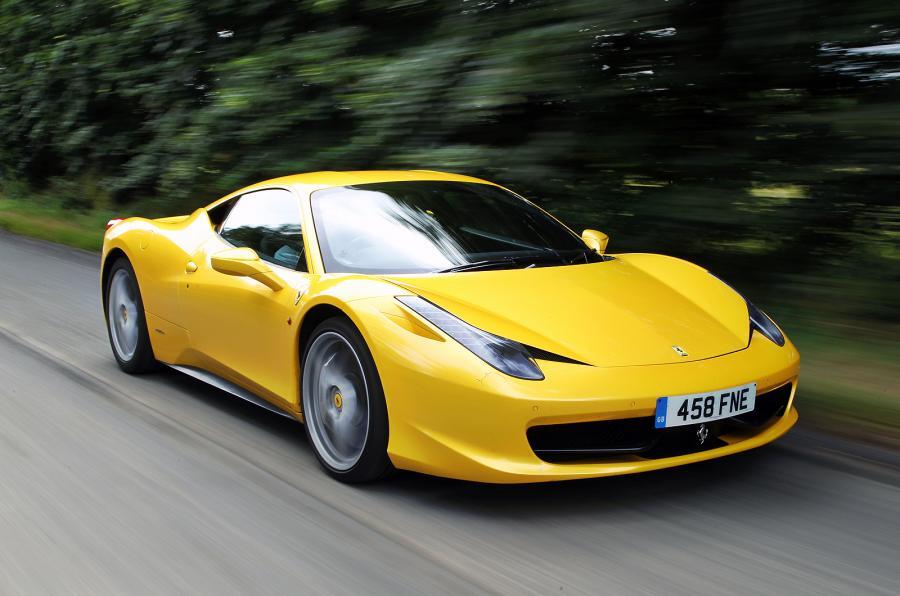
After listening to the great and the good of the car industry speaking at the recent Frankfurt motor show, I’m persuaded to believe that the is a truth to the fur analogy, and that anyone who preserves a machine such as a Ferrari 458 Italia for future oil-boring blasts may well be looked upon in the same way as a blood-thirsty hunter who simply must have a photo of themselves next to a lion they have just shot. I also wonder if that comes to pass it may only be the tip of the iceberg as far as concerns for car enthusiasts, and the car industry as a whole, is concerned.
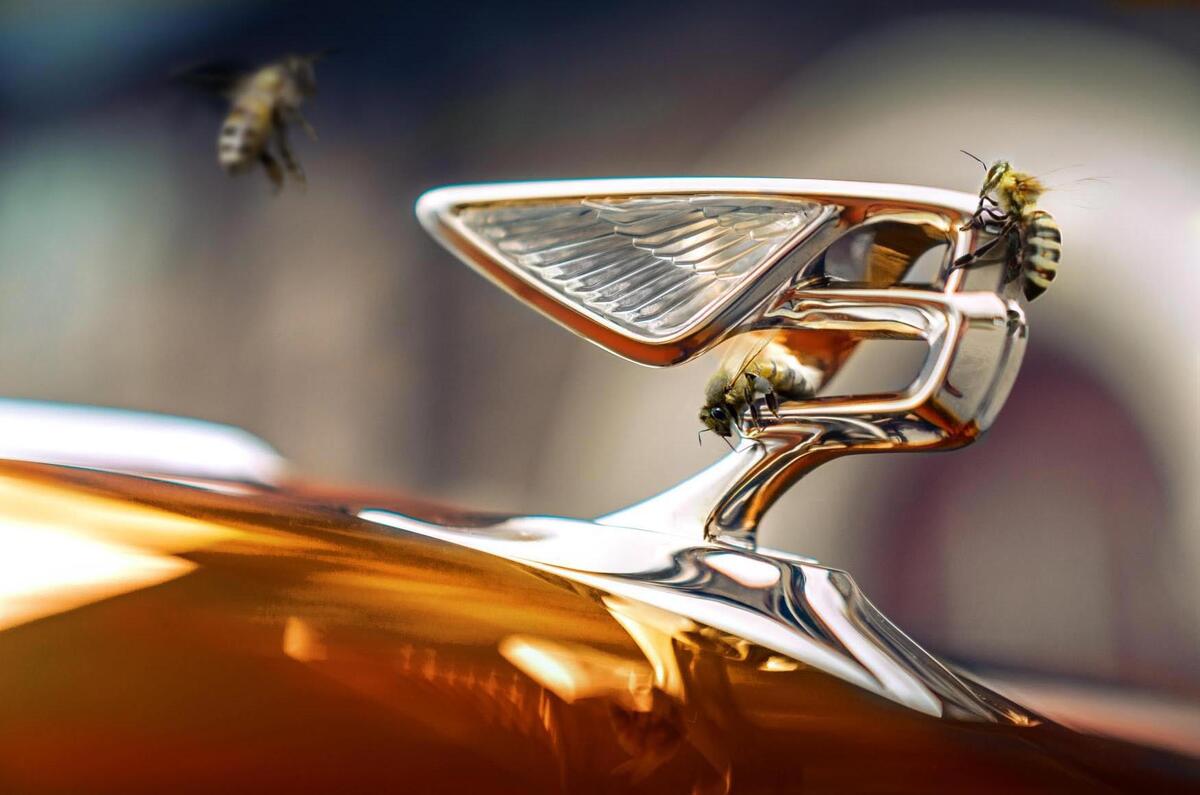
Bentley’s CEO Adrian Hallmark is perhaps the most erudite on the subject, and it’s his philosophy I’ve abbreviated and adapted to outline the above point. It’s also why last week’s announcement of Bentley harvesting its first honey from two hives installed at its headquarters last May is of more significance than initially meets the (raised) eye(brow).

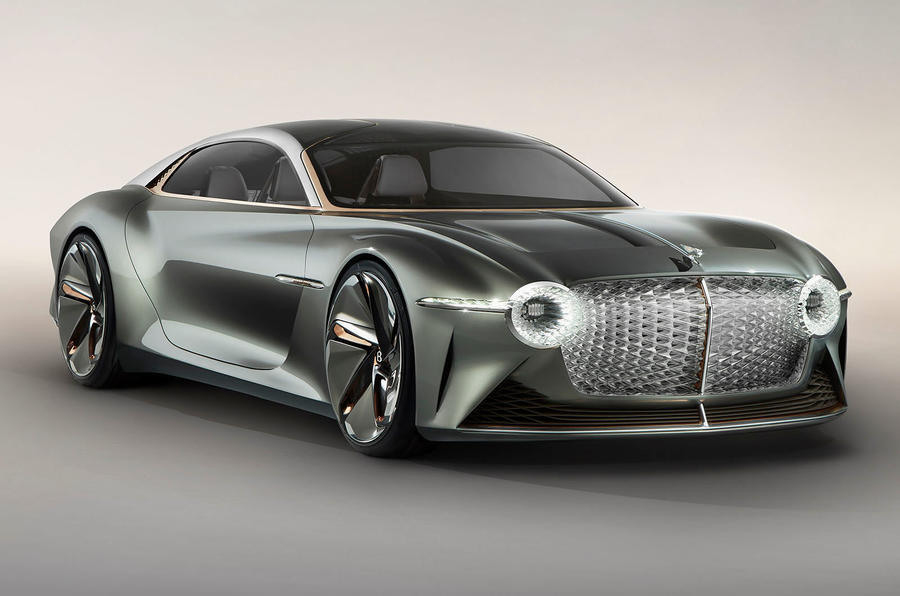
Make no mistake, sustainability is now the defining message emanating from the majority of luxury and premium brands, and by extension it is filling the minds of mass market makers too. Two hives won’t change the world but they do send a clear message. Look back to the Bentley EXP 100 GT concept revealed earlier this year and you quickly get the direction of travel, from sustainable trim materials through to the electric drivetrain.
Across the Frankfurt show, there were similar themes. This from Ola Kallenius, CEO of Mercedes: “If you believe in the concept of personal mobility, which after all we have built our lives around and driven our economies forward with for 120 years, then you must understand that the future can only be viewed through the lens of sustainable transport, from carbon neutral manufacturing processes through to zero-emissions vehicles.”

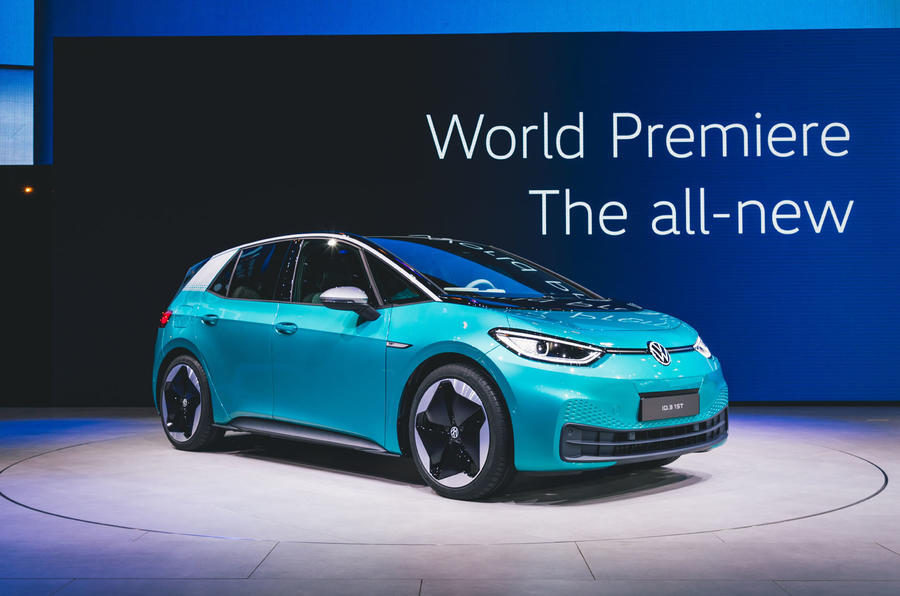
There were echoes wherever you went. Herbert Diess, CEO of the VW Group, is open that his firm accounts for around 1% of CO2 produced in the world each year. Too much, he reasoned as the wraps came off the ID 3 and he set targets by which the firm will be judged to move swiftly towards carbon neutral production targets. This is a snowball that is gathering pace and threatening to leave some behind, be they slow-moving or not up to the financial challenge.
If you’re still shaking your head in disbelief, mix in these considerations. Outside the Frankfurt show hall environmental protesters were gathering not to picket about vehicle emissions, but to campaign for the end to cars altogether, no matter what their propulsion systems. Similar arguments were made by environmentalists in London yesterday (Sunday), as sections of the UK's capital held the first car-free day.
The argument was simple: personal transport comes at too high a price in terms of environmental consumption. You may scoff, but the protests were not small.
And then there was last week, when the force of nature that is Greta Thunberg put climate change back in the headlines, her canny leadership energising millions of like-minded protesters around the world. It’s easy to dismiss such movements - especially if you lived through a similar rise in green politics in the late Eighties that dampened down in the face of the recession - but this time it is surely different, a scientifically-proven climate crisis now looming for all but most wilfully Trumpian minds to acknowledge.
The challenge of delivering an all-electric future is a shared goal between legislators and the car industry alike. The clock is ticking and the glide path largely set. I have no doubt car makers will deliver as required.
But as the words of Hallmark, Kallenius, Diess et al testify, delivering electric cars will almost certainly not be enough: suitability means far more than no emissions from a vehicle’s tailpipe, and the challenge of achieving it’s holistic goals is far more complex and expensive than just that. Make no mistake, though, there are many companies that stand proud today that may be viewed as relics of a bygone age pretty quickly if they do not respond.
Read more
Volkswagen unveils new logo as part of company reboot with focus on reducing CO2 output
New car CO2 emissions hit highest point since 2013
Opinion: Government approach to emissions is counter-productive

Join the debate
Add your comment
Considered, insightful, and prophetic
There is a careful construction and eloquence to this article which to me suggests the author took pains over its creation. To me that seems entirely praiseworthy. Maybe it paints things in black and white, and the author is consciously taking a position which he knows may be controversial, especially on a car magazine website.
Times they are a changing, and even though today I read this article, and thought it is spot on, who knows what the future will bring when there is such rapid upheaval?
Stil, also this week I have been reading and watching videos about the first hands on impressions of the Porsche Taycan. I'd have to blow a significant chunk of my savings, or a lottery win, to buy one, but what a beautiful machine. Hope for the future! Maybe within the next ten years that's the kind of engineering excellence we may expect to find in mass market premium EVs priced around the level of today's 3 Series. I hope so.
Let's get a grip on ourselves
Let's get a grip on ourselves. "News" is so easily accessible and spreads so rapidly now that, given so many people with opinions -- and often very little knowledge -- it is very difficult to distinguish fact from fiction. Almost everyone writing or speaking about this has an agenda, some noble, some not, some well-informed, some spectacularly ignorant. Most of the "news" on both sides is the extreme view -- "the world is ending in 10 years" vs. "this is all nonsense." It's extremely difficult to find actual facts rather than opinion masquerading as fact. The difference is extremely important. As usual, the truth almost certainly lies somewhere in the middle. The extremes, on both sides, harm their own credibility as well the credibility of everyone involved. Let us not forget that a "zero emissions" car isn't -- what matters is "cradle to grave" -- from drilling, mining, manufacturing, disposal, recycling. The electric car is hardly zero emissions, certainly not yet. Neither, obviously, are oil-powered cars. This issue MUST be addressed intelligently, but most of what is going on is propaganda from people and entities with agendas. The level of group-think is frightening. The notion that the "science is settled" is preposterous -- it's ongoing, often conflicting, and constantly turing up new information and discoveries, as well as overturning old ones. This has to be done carefully and properly, and everyone involved in an important and influential manner has to be open to opposing perspectives that are credible -- that's the only way we may determine what actually needs to be done.
"I've seen cyclists attacking
"I've seen cyclists attacking car drivers when the cyclist has been completely in the wrong, but because they are not damaging the environment (at least from exhaust emissions), seem to think they can get away with doing anything they like on pain of dishing out an environment-justified kicking to those that take issue with the way they are dangerously conducting themselves on the road (or pavement)."
Do they?