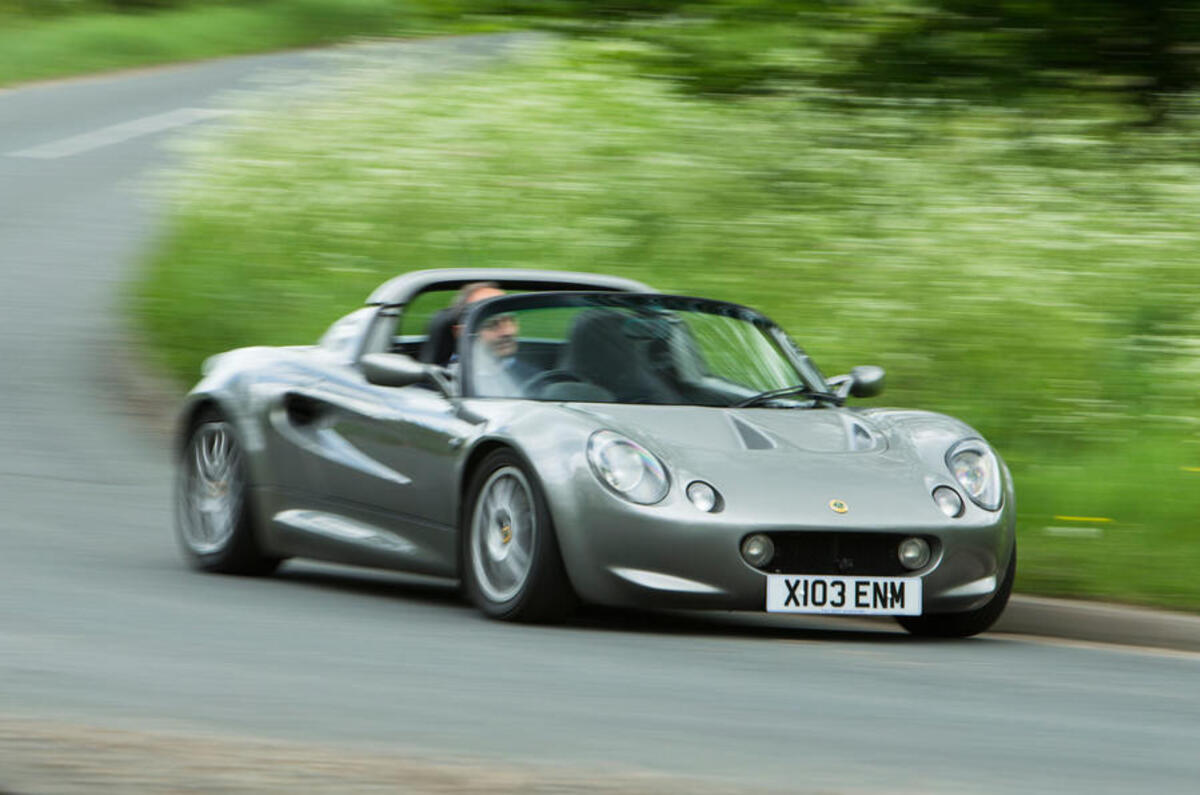

As everyone knows, the Lotus Elise is one of those natural, right-first-time cars that, although 20 years old in its basics, still informs sports car design and manufacture around the world.
Rival manufacturers continue to ape the Elise’s ultra-rigid, box-section ‘tub’ chassis, bonded and riveted from extruded aluminium components. And when they do, they call it modern and progressive, even though Lotus has been using the process for decades.
Read more about the 2020 Lotus Elise
Successive owners of Lotus Cars have always concluded that for success, the marque needs a simple sports car to sell in decent numbers (like it had during the good days of the original Elan) but it has had some significant struggles getting there.
At the beginning of the 1980s, when Toyota owned the company, it worked on a compact coupé based on Celica components and called M90. It was mid-engined with rear-wheel drive; some people said it bore a relationship with the first Toyota MR2. But the idea didn’t enthuse the management, perhaps because Toyota was soon to sell its interest in Lotus.
In 1986 General Motors bought Lotus and the company set about launching the transverse-engined, front-wheel-drive Elan M100, largely for reasons of expediency. Development funds were tight and Isuzu had a convenient, sporty and very durable turbocharged 1.6-litre engine and gearbox that fitted. The extent to which design was driven by the availability of parts is plainly visible in the massive track of the rear axle, sourced from a saloon. It skewed the styling.
Still, the car lasted for seven years and, for a time, Lotus marketing men caught the mood of expediency; their brochure copy even argued that on some roads, a frontdrive sports car was quicker than its rear-drive equivalent.
That soon stopped in 1993, though, when Italian tycoon Romano Artioli bought the company from GM and gave the green light to the Elise concepts we know today. The rest is modern history…