
The Beijing motor show is vast. The basic stats are mind-bending: the show spanned 17 exhibition halls that stretched for 1.2km, with close to 1500 vehicles on display.
Over the two press days, 181 brand new models were launched, along with 71 concept cars. Well, that’s what the organisers claim, at least: I’m afraid that despite my best efforts and diligence, I doubt I could have actually checked out every new machine.

Besides, even those numbers don’t really convey the scale of the show. Since Auto China was last held in Beijing two years ago (it alternates annually with Shanghai) an entirely new and larger convention centre was built and opened next door to the China International Exhibition Centre. So, like Field of Dreams with neon-lit show halls replacing corn fields, the show simply expanded to fill both venues.
The dramatic architecture and scale of the new exhibition centre wasn’t the only showcase of Chinese ambition: the grandiose displays and unveilings by the homegrown firms inside the show halls showed matching scale and ambition.
Chinese firms have long stopped trying to emulate western car giants: their confidence is shown in their increasingly aggressive global expansion plans – especially to markets with few tariff barriers, such as the UK – and their technological development. It makes sense: part of the reason the Chinese government has pushed the development of the automotive industry in recent years is because of how it can fuel whole other sectors of the economy.
Electric cars require batteries, e-motors, semiconductors, infotainment chips, AI systems and more – and the Chinese car firms, many of which have expanded into automotive from other industries, are bringing vast swathes of that in-house. Leapmotor, for example, says its produces 65% of the parts that go into its cars. Such vertical integration is a key part of achieving ‘China speed’ model development times of under two years, and part of the reason these firms can grow so quickly.
At its pomp, the Frankfurt motor show was known for its vast, unwieldy scale, but even that pales in comparison to Beijing. And just as Frankfurt’s size was driven by the big German firms all trying to outdo each other with ever bigger and grander show stands, so Beijing’s growth is driven by the big Chinese players all trying to outdo each other. But with the twist that established global rivals, after a few years being firmly overshadowed, are now aggressively fighting back.
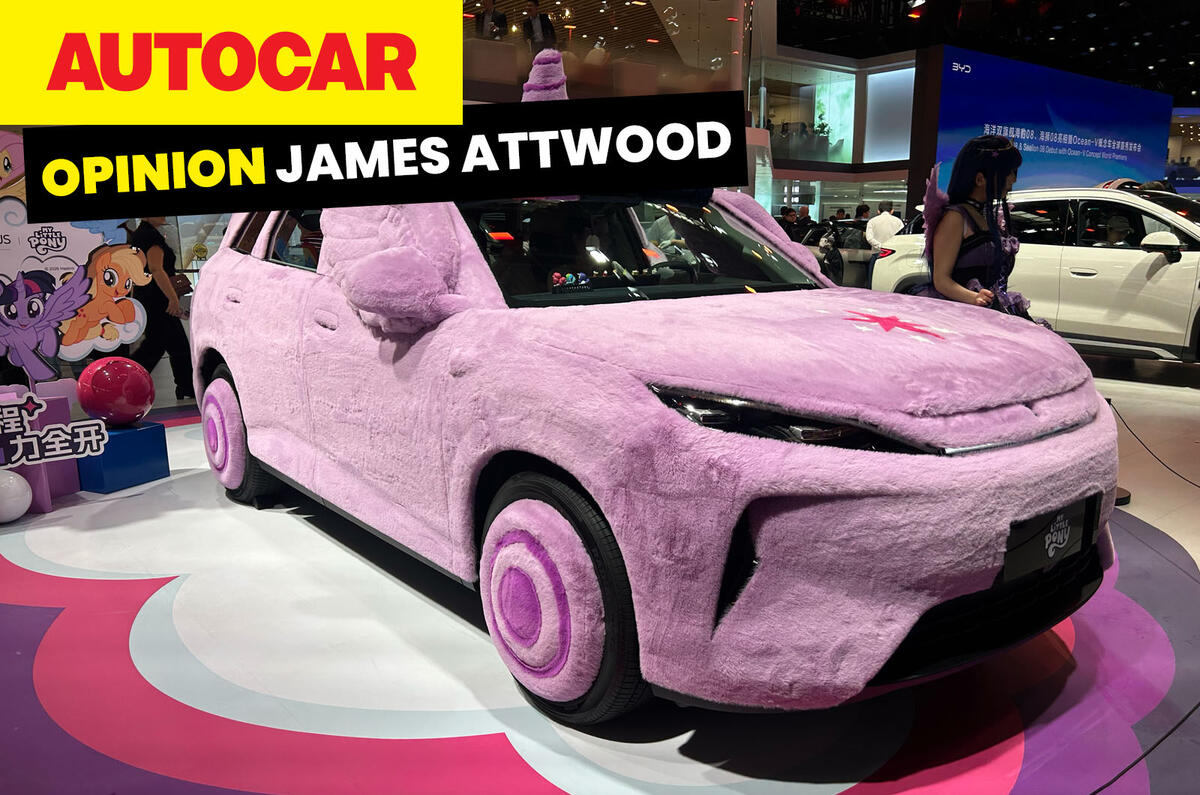
BYD, along with its various sub-brands, filled an entire exhibition hall by itself. Well, how else was it going to find room to display the BYD Ocean V MPV concept (pictured below), Denza Z GT convertible, carbonfibre-bodied Formula X roadster from its Fangchengbao premium brand and a unicorn-horned Yuan Plus coated in pink fur, part of a collaboration with My Little Pony?


Add your comment