Currently reading: 11 Fascinating Cancelled Helicopters

11 Fascinating Cancelled Helicopters

Like cursed penguins, a whole barrage of helicopter designs has failed to make it.

From advanced stealth helicopters that cost billions, to sleek gunships and vast flying cranes that proved too much, many promising designs never made it. Here is a celebration of some magnificent rotorcraft that have been relegated to obscurity in the scrapheap of aviation history:


11: Lockheed Martin VH-71 Kestrel
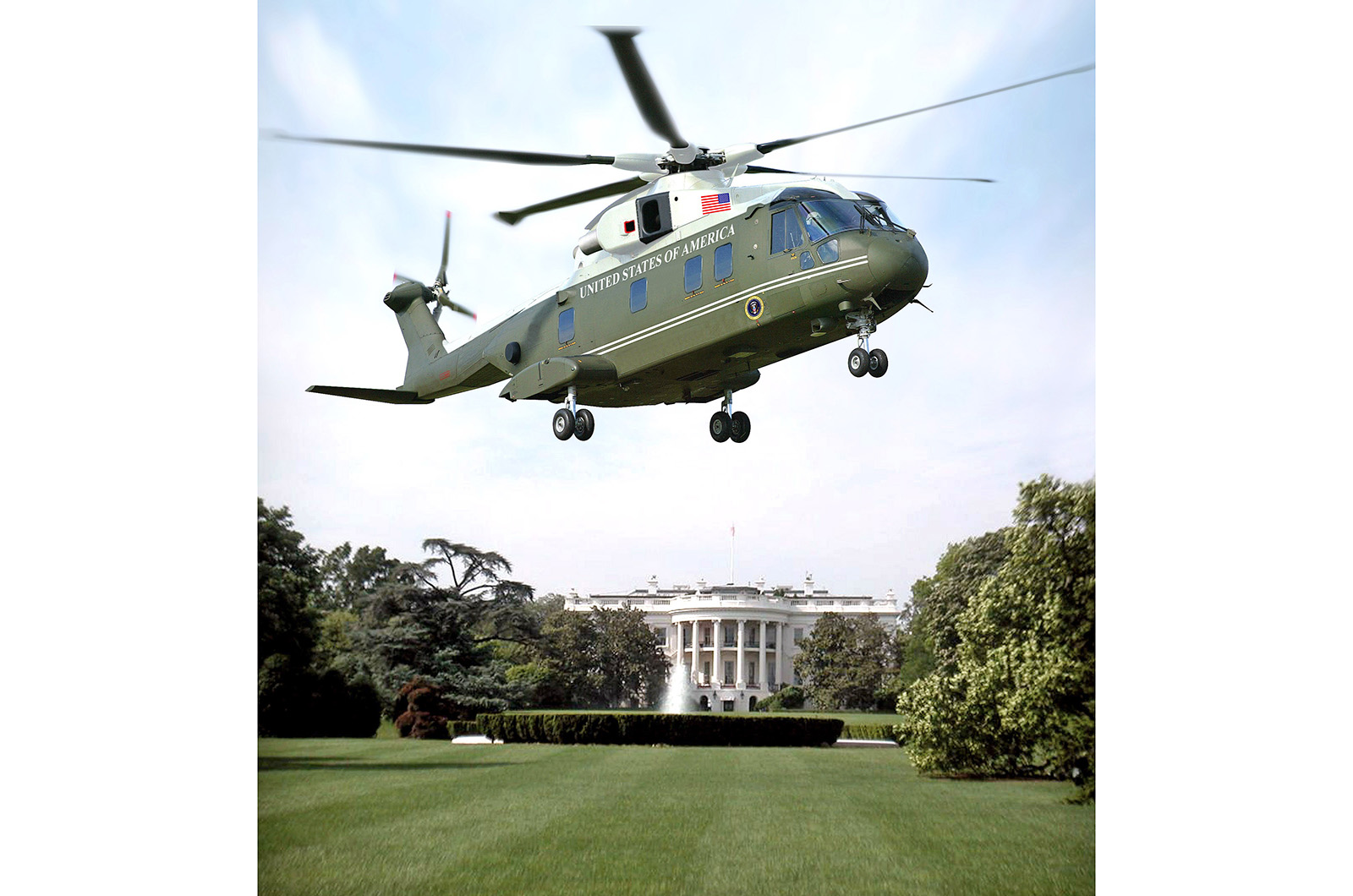
 Lockheed Martin VH-71 Kestrel

Originally envisioned as a state-of-the-art replacement for the ageing Marine One fleet, the VH-71 Kestrel was an ambitious military adaptation of the AgustaWestland (now Leonardo) AW101 Merlin. With its tri-national industrial pedigree, the aircraft promised range, capacity, and cutting-edge communications — it would have been a 'flying White House' tailored for the President of the United States.

Led by Lockheed Martin, with AgustaWestland and Bell Helicopter in support, the project was intended to deliver 28 helicopters. But as new security and communication demands emerged, requirements ballooned. Design revisions followed. With each one, costs climbed, and delays lengthened.


11: Lockheed Martin VH-71 Kestrel
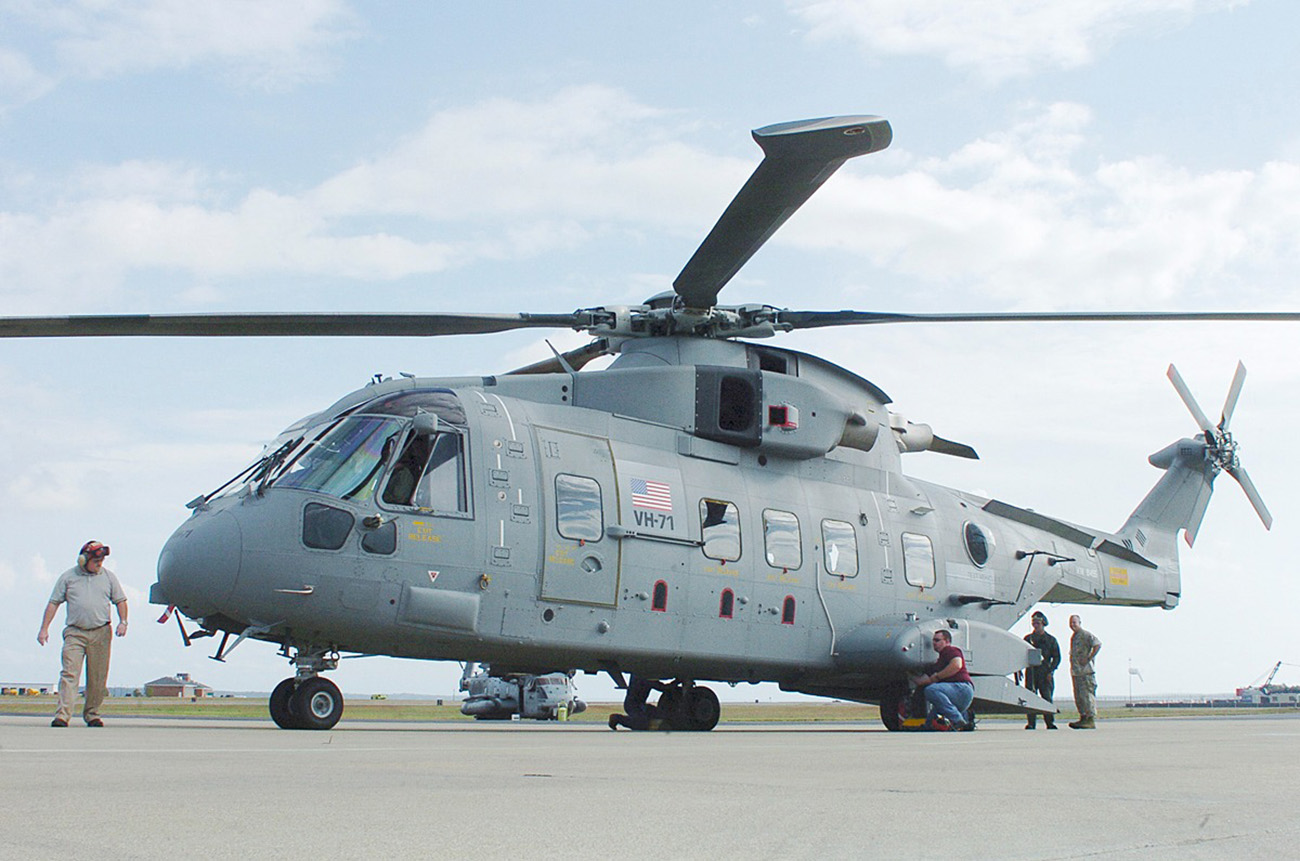
 Lockheed Martin VH-71 Kestrel

By 2009, after nine aircraft had been delivered in a preliminary configuration and a whopping $4.4 billion already spent, the programme was axed. The projected total cost had soared to over $13 billion — a colossal figure deemed politically indefensible amid budgetary scrutiny after the 2008 global financial crisis. President Obama's administration pulled the plug entirely.

The airframes, no longer presidential, were quietly sold to Canada at a steep discount and repurposed for spare parts. The VH-71's collapse stands as a cautionary tale in modern defence procurement — not of technological failure, but of overreach, shifting goals, and the perils of adapting off-the-shelf designs for the world's most demanding mission.


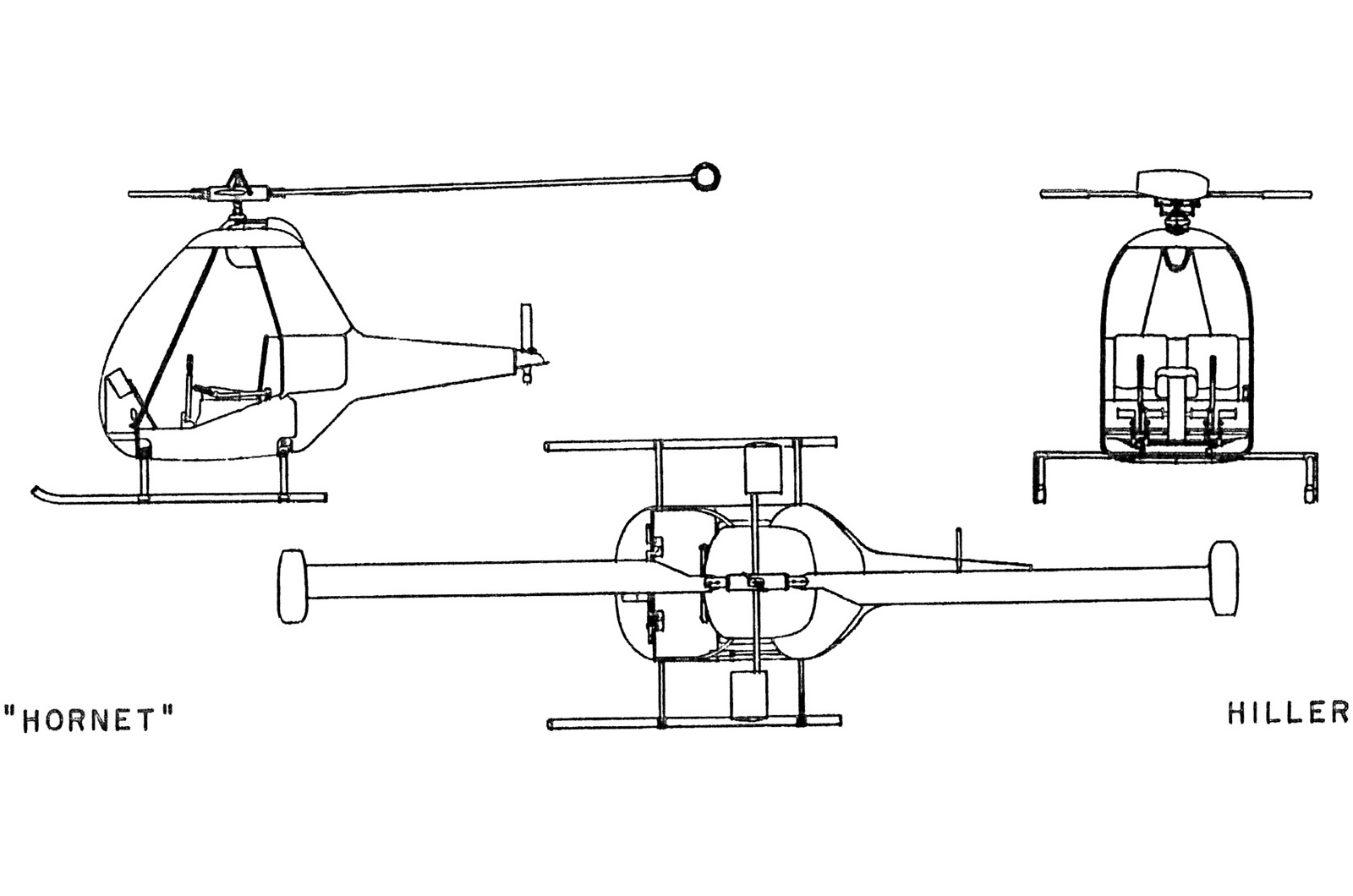
9: Hiller YH-32
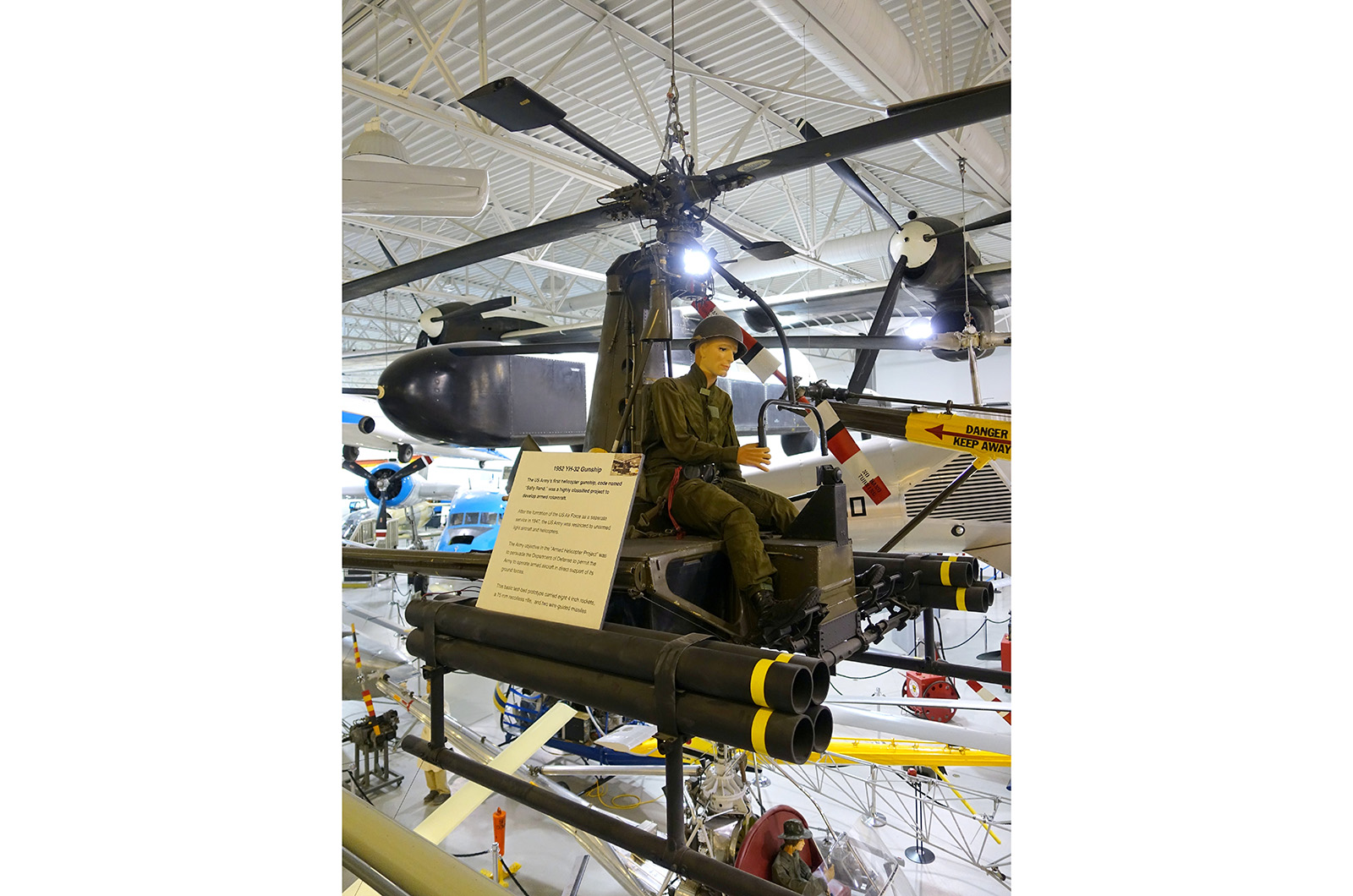
 Hiller YH-32

The rather quaint Hiller YH-32 Hornet, originally designated HJ-1, was an experimental ultralight helicopter developed in the United States during the early 1950s. It was powered by two ramjet engines mounted on the rotor tips, each producing 45 horsepower. This innovative design eliminated the need for a conventional tail rotor.

Work began in 1948, following earlier jet rotor experiments like the XH-26 Jet Jeep. Although mechanically simple, the Hornet suffered from major issues. The ramjets suffered from high fuel consumption, and it had a limited range. The helicopter was also extremely noisy, and autorotation proved difficult in a power failure.

Back to top

9: Hiller YH-32

 Hiller YH-32

Despite drawbacks, the Hornet demonstrated impressive lift and was briefly evaluated by the U.S. Army (as YH-32) and Navy (as XHOE-1). The YH-32A variant, dubbed Sally Rand after a burlesque star, was the first helicopter gunship. Trials proved its potential as an armed platform, though limited performance prevented further military interest or production orders.

The Hornet faced stiff competition in military contests for lightweight, portable helicopters, ultimately outperforming the pulse-jet-powered Jet Jeep. However, concerns over noise, visibility, and range led to cancellation. Civil certification delays also meant first deliveries weren't until late 1954, by which time the concept was already considered obsolete.


8: Mil V-12 “Homer”

 Mil V-12 “Homer”

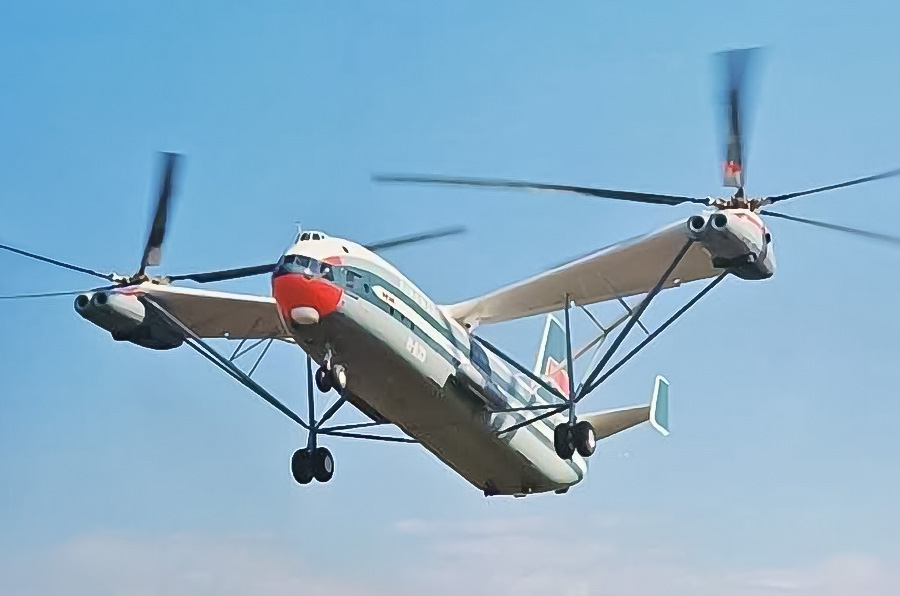
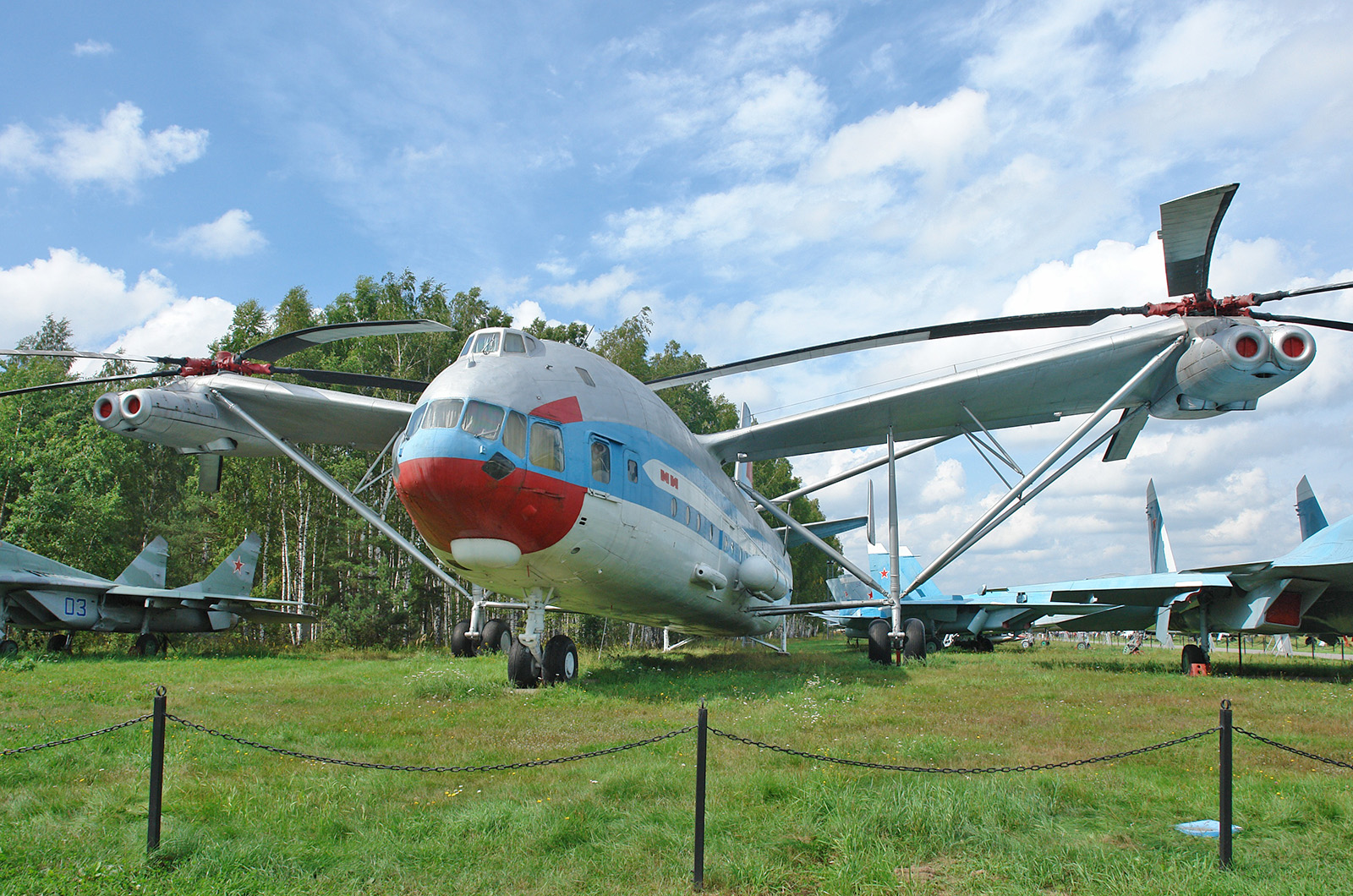
A helicopter with a max take-off weight 43,000 lb (19,454kg) greater than an Avro Vulcan, the Mil V-12 was a prototype helicopter developed in the Soviet Union. It remains the largest helicopter ever constructed. Designated Izdeliye 65, it never entered production as the Mi-12, although that name was reserved for any operational version that might have followed.

Initial design work began in 1959 and was officially authorised in 1961. The aircraft was intended to carry up to 25,000kg, including heavy military equipment and intercontinental ballistic missiles. A transverse twin-rotor layout was selected after other configurations, such as tandem and single-rotor, were deemed unsuitable.


8: Mil V-12 “Homer”

 Mil V-12 “Homer”

The V-12's two massive rotors were powered by twin Soloviev D-25VF engines per side, synchronised by cross shafts. Its enormous fuselage had a spacious cargo bay, accessed via rear clamshell doors and a ramp. Flight control systems were complex, using hydraulics and advanced linkages to manage the aircraft's immense size.

First flown in 1968, the V-12 set several world records, lifting over 44,000kg. Despite impressive performance and international appearances, including the 1971 Paris Air Show, the Soviet military lost interest. The cancellation of its main mission led to the end of development in 1974 after only two prototypes of this mighty goliath were built.

Back to top

7: Hughes XH-17 Flying Crane

 Hughes XH-17 Flying Crane

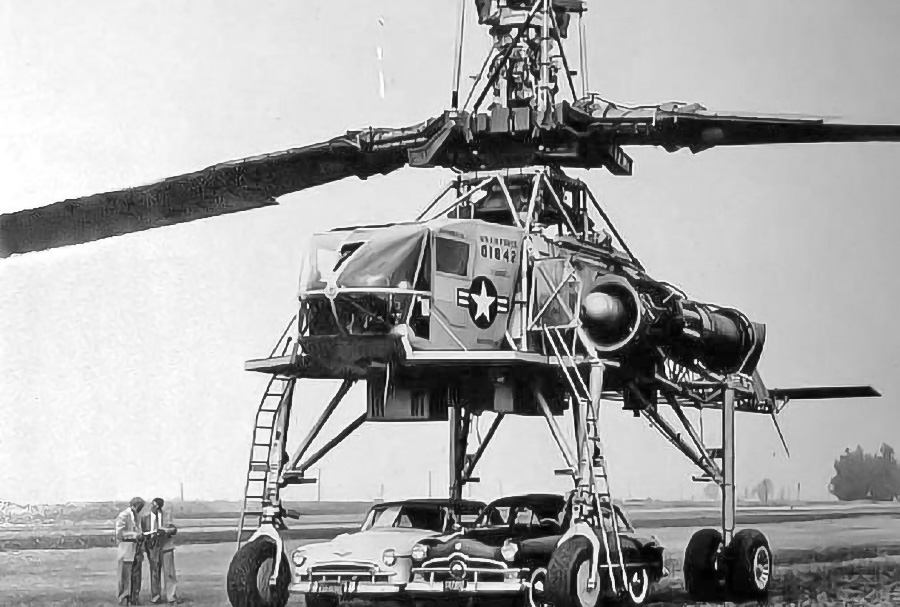
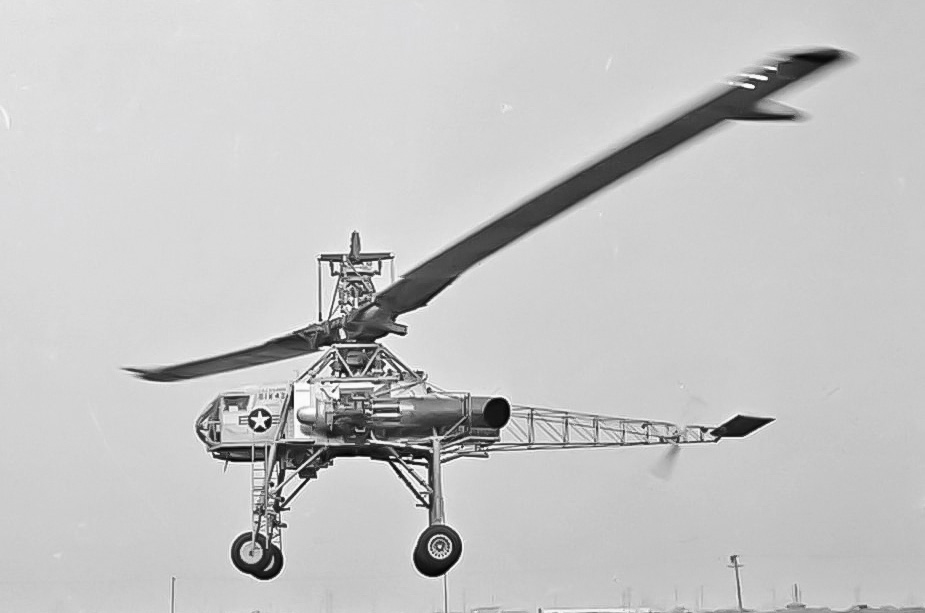
The Hughes XH-17 Flying Crane marked the Hughes Aircraft Company's first foray into helicopter development, setting records and raising eyebrows in equal measure. Featuring a staggering 134-foot rotor - still the world's largest - it first lifted off in 1952, managing to fly with a gross weight of over 50,000 lb (22,727kg). Yet it never flew far.

Dubbed a "flying crane," the somewhat bizarre XH-17 was engineered to haul over 15,000kg, cobbled together from salvaged aircraft parts: wheels (from a B-25 Mitchell), fuel tank (from a B-29), and even a cockpit (from a glider). Built quickly and tested in Culver City, California, its imposing frame soared but lacked commercial promise. Only one prototype was ever produced.


7: Hughes XH-17 Flying Crane

 Hughes XH-17 Flying Crane

The rotorcraft's propulsion system was as experimental as its structure. Instead of turning the rotor from the hub, two GE J35 turbojets blew compressed air through hollow blades to tip jets, rotating the blades at just 88 RPM. This low-speed revolution made it stable but drastically inefficient. It could barely manage 40 miles before needing refuelling.

In concept, it was bold; in practice, it was cumbersome. Not that this stopped them thinking even bigger: the planned successor—the XH-28—was envisioned at nearly double the weight, but never made it beyond the mockup stage. The sky, it seems, had its limits.


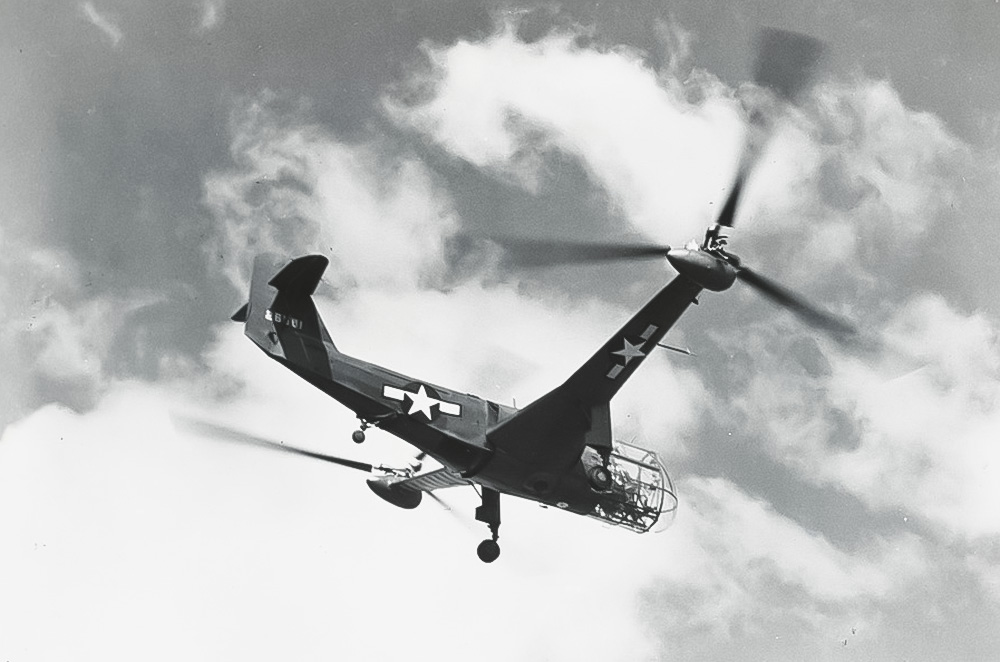
7. Kellett XR-8

7. Kellett XR-8

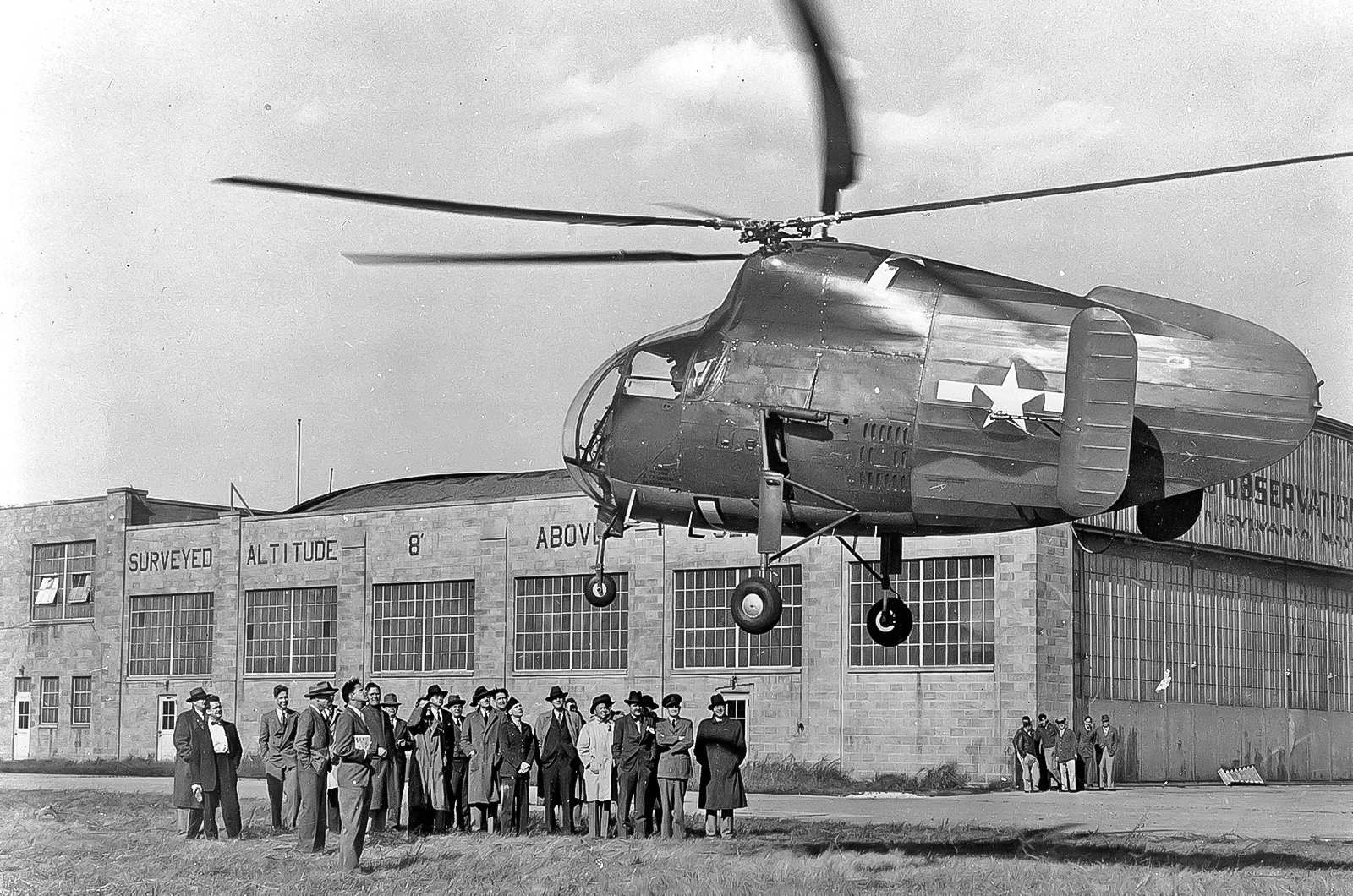
The Kellett XR-8, later redesignated XH-8, was an American two-seat helicopter developed during the second world war. Designed to test a twin-rotor configuration, it succeeded in proving the concept's feasibility. However, serious aerodynamic challenges emerged, ultimately halting further development of this specific rotor arrangement despite initial optimism.

Following the success of the Sikorsky VS-300, the USAAF prioritised helicopters over autogiros. Kellett proposed a twin-rotor helicopter, eliminating the need for a tail rotor. Initially rejected, the idea gained approval after model testing. A contract was awarded in 1943 to build two prototypes, with both three-blade and two-blade systems.

Back to top

7: Kellett XR-8

 Kellett XR-8

The XR-8 featured a compact, egg-shaped fuselage with tricycle landing gear and intermeshing rotors, offset by 12.5 degrees. Its steel-tube frame was covered in metal and fabric. First flown on August 7, 1944, stability issues were discovered and corrected. However, in-flight rotor collisions raised critical safety concerns with the original design.

The second prototype's two-blade rotors caused severe vibration, proving unusable. A proposed rigid rotor system demanded major redesign and was also abandoned. Although briefly accepted for service trials in 1946, the programme was cancelled shortly thereafter. The surviving XR-8 was later transferred to the National Museum of the US Air Force for restoration.


6: Platt-LePage XR-1

 Platt-LePage XR-1

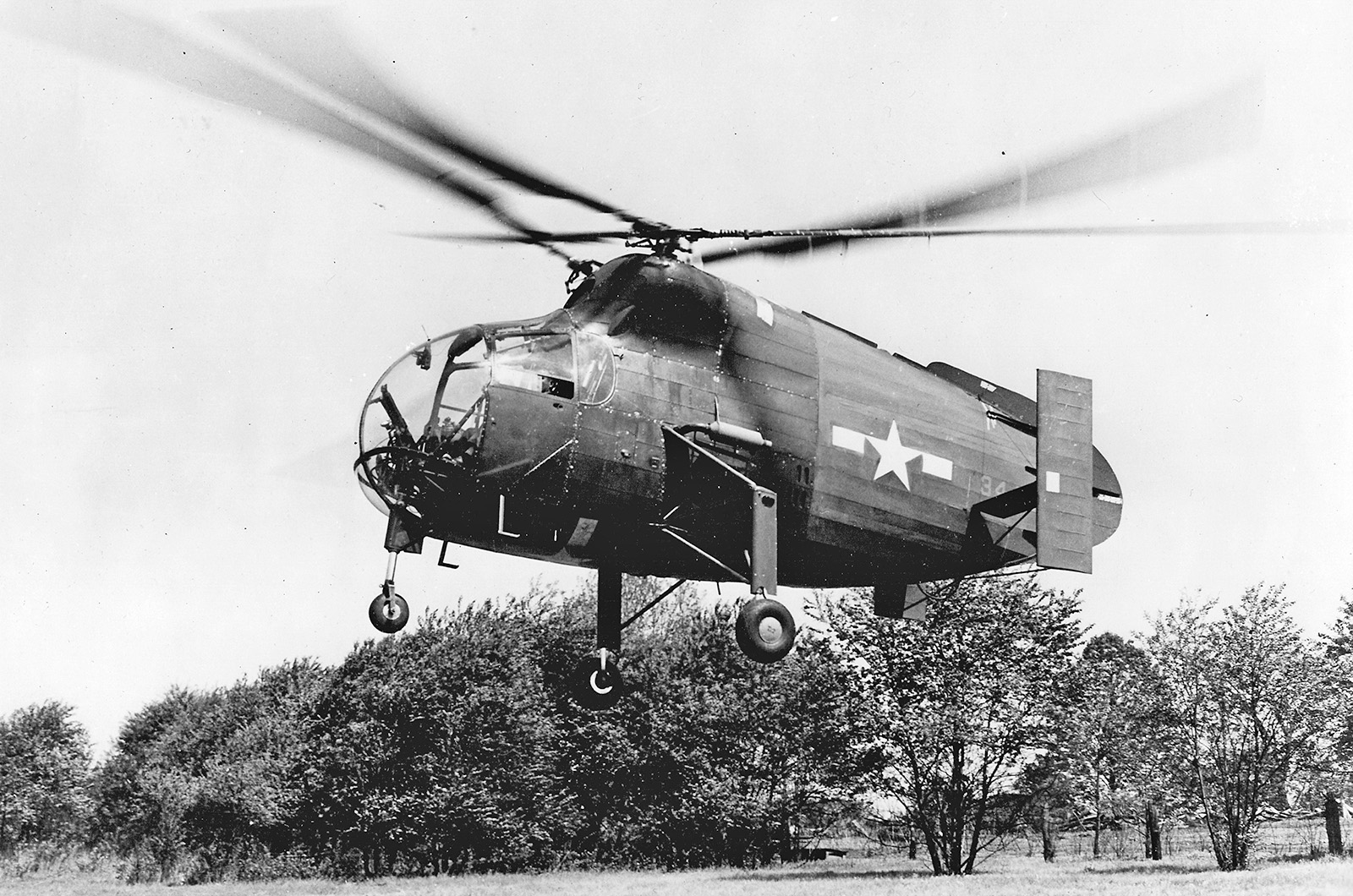
The Platt-LePage XR-1, the first helicopter tested by the USAAF, flew in 1941 after winning a 1940 design competition. Its unusual twin-rotor design was based on Germany's Fw 61, with side-by-side rotors powered by a buried radial engine. Despite the promise, development delays and technical issues soon overshadowed its debut.

Flight testing revealed serious problems with control authority and vibration, limiting performance and delaying progress. Although improvements were made—including the XR-1A version with better visibility and cockpit layout—structural failures and a crash stalled the project. Other helicopters like Sikorsky's XR-4 surpassed it in both reliability and handling.


6: Platt-LePage XR-1

 Platt-LePage XR-1

Despite further investment, including plans for seven YR-1A models, Platt-LePage couldn't meet deadlines. The Army lost confidence, labelling the company's approach "inept," and cancelled all contracts in 1945. Efforts to adapt the XR-1 into a civilian aircraft failed due to financial issues, and the original prototype was retired to the Smithsonian museum.

The XR-1A was briefly revived by its former test pilot, Lou Leavitt, and later acquired by Frank Piasecki, who repurposed it for tiltrotor research. The XR-1's legacy lies not in success, but as a bold, flawed attempt at pioneering American helicopter development during a rapidly advancing wartime era.

Back to top

5: Westland Westminster

 Westland Westminster

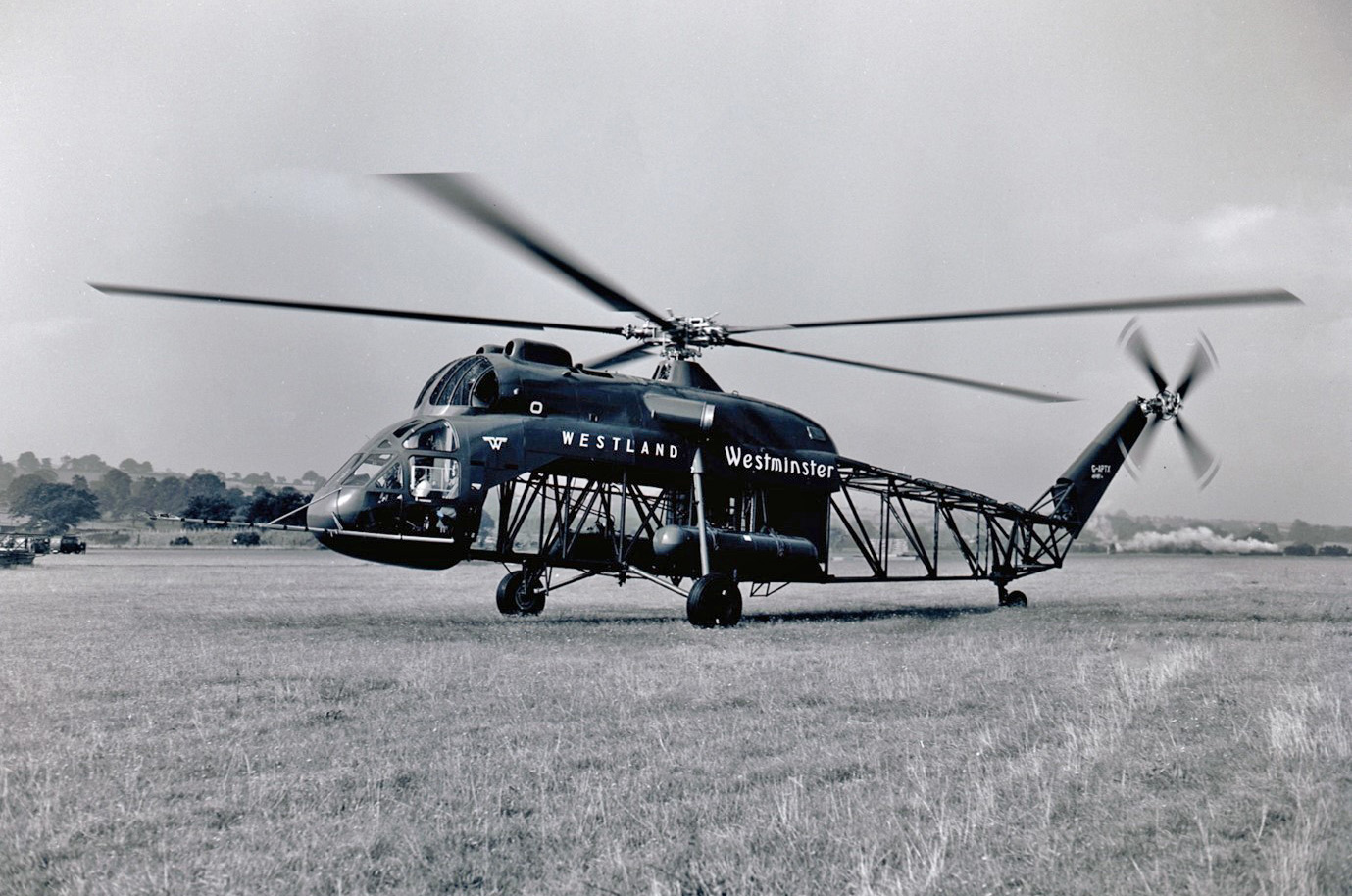
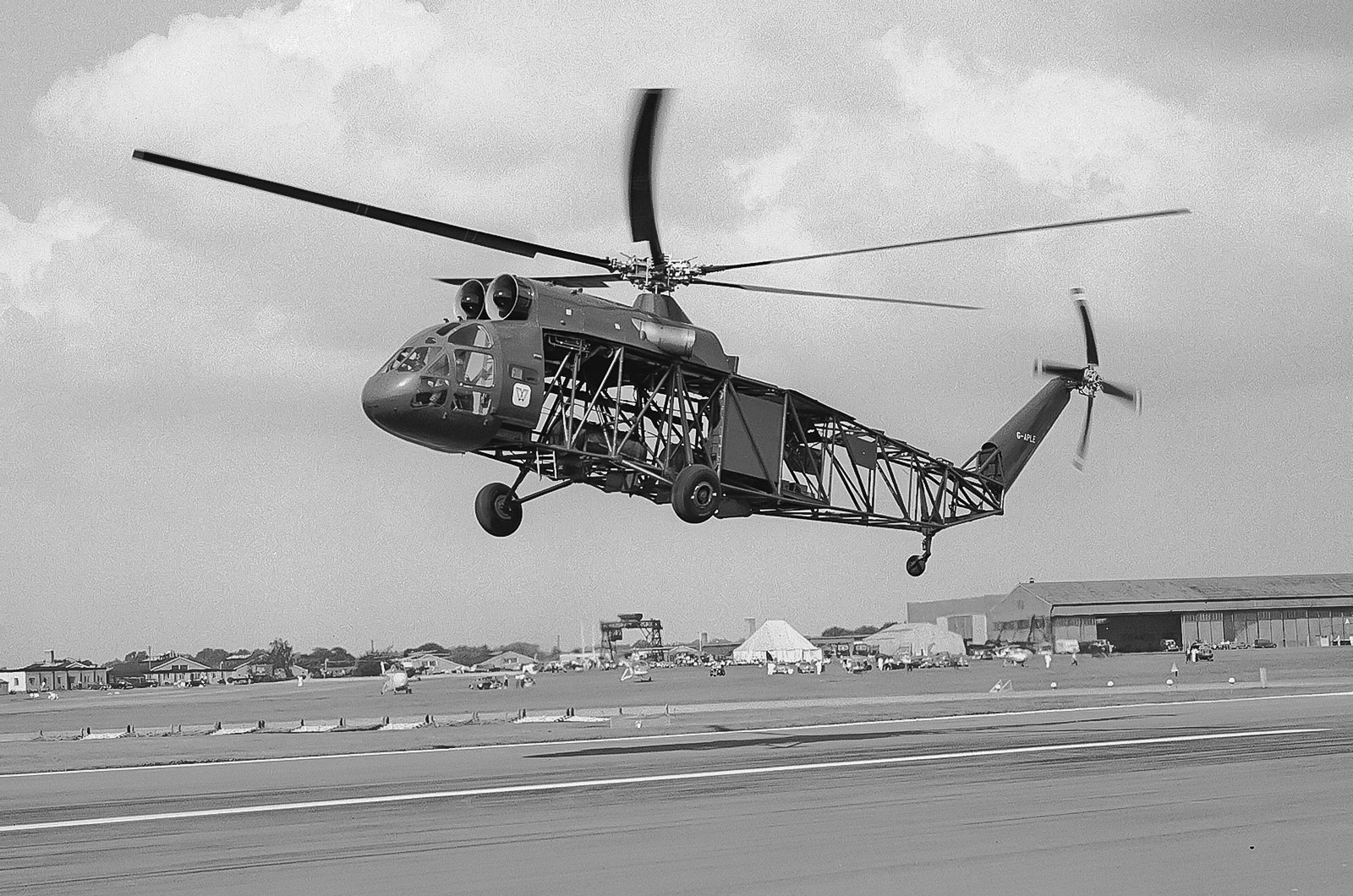
Westland's rather fabulous-looking Westminster began as a British civil transport alternative based on the turbine-powered WS56, aiming to undercut costlier Bristol and Fairey concepts. Initially proposed in 1952 as a UK-sourced helicopter, it gained little traction until it was adapted into a flying testbed. Its spaceframe rig lent itself—accidentally—to its crane-like image.

Once airborne, the Westminster showed utility and flying crane potential. Although overshadowed by Fairey's Rotodyne, it attracted attention as other British designs fell away. The RAF showed limited early interest, but the US Army noticed. They would later buy the Sikorsky S-64 crane, possibly influenced by Westminster, though this remains speculative.


5: Westland Westminster

 Westland Westminster

Despite its promise, the Westminster was cancelled. The reason: money. Westland had no government support while the Rotodyne was officially backed. Having absorbed Fairey, Westland shifted focus. Continuing with a private venture was untenable when a supported programme was available. Strategic funding decisions sealed Westminster's fate.

The US rejected support via the Mutual Weapons Fund, partly due to Westland's perceived lack of helicopter design experience. Though the Westminster embodied successful British adaptations of Sikorsky platforms, the Americans had already begun work on crane variants like the S-60. In a shifting defence climate, the Westminster was simply the wrong project at the wrong time.


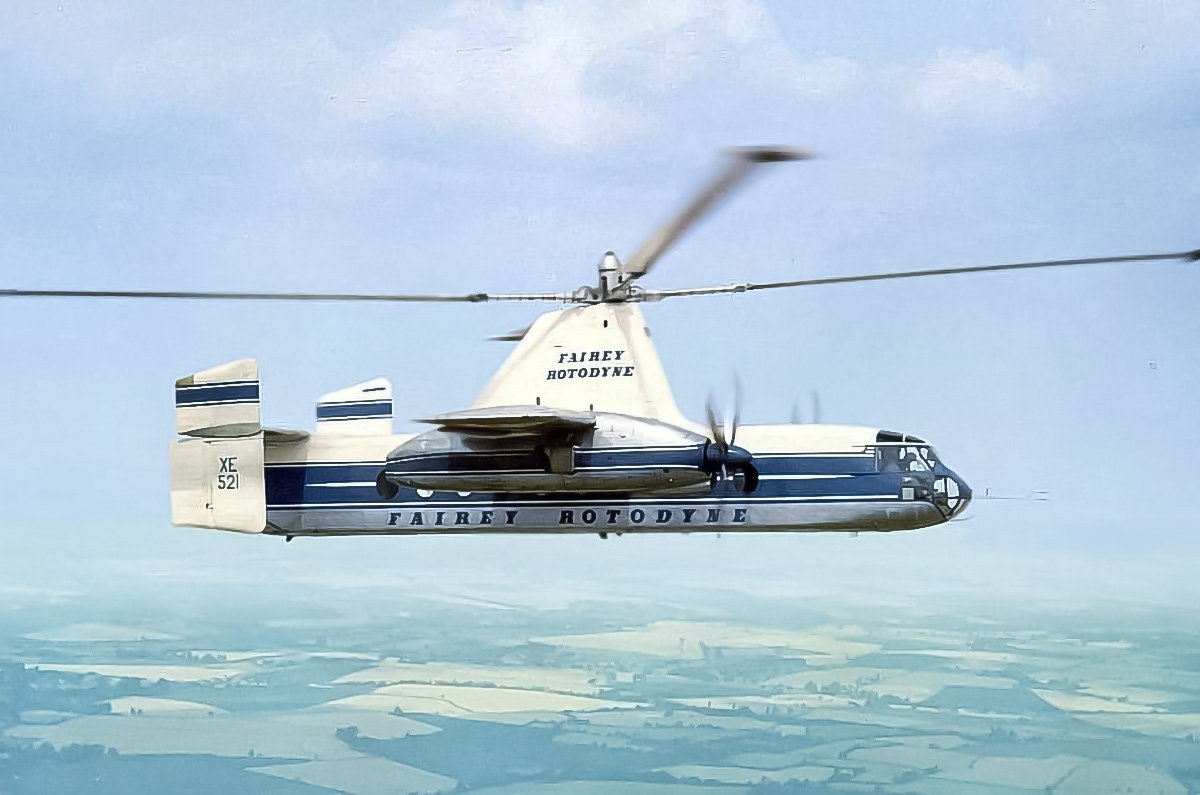
4: Fairey Rotodyne

 Fairey Rotodyne

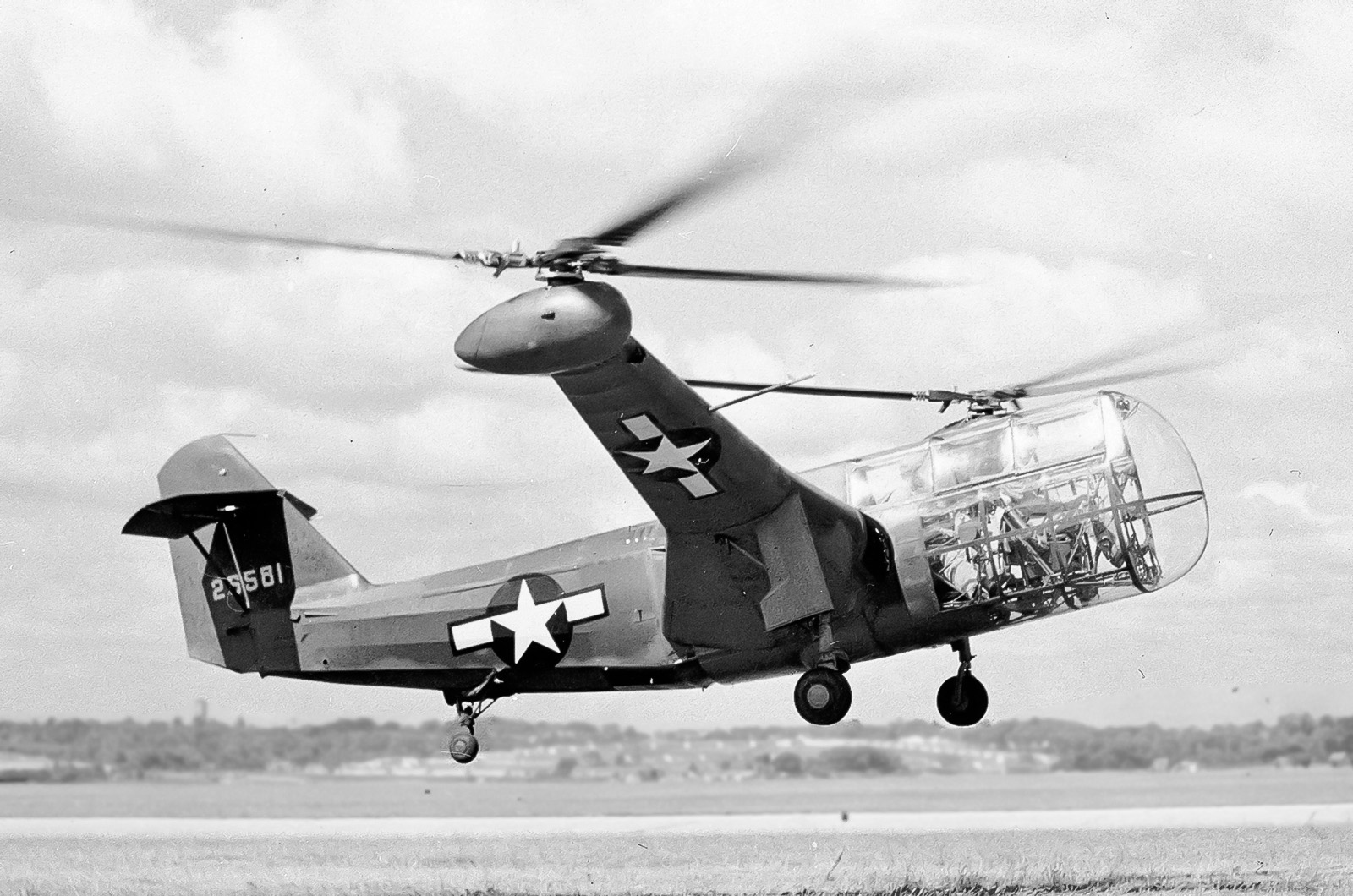
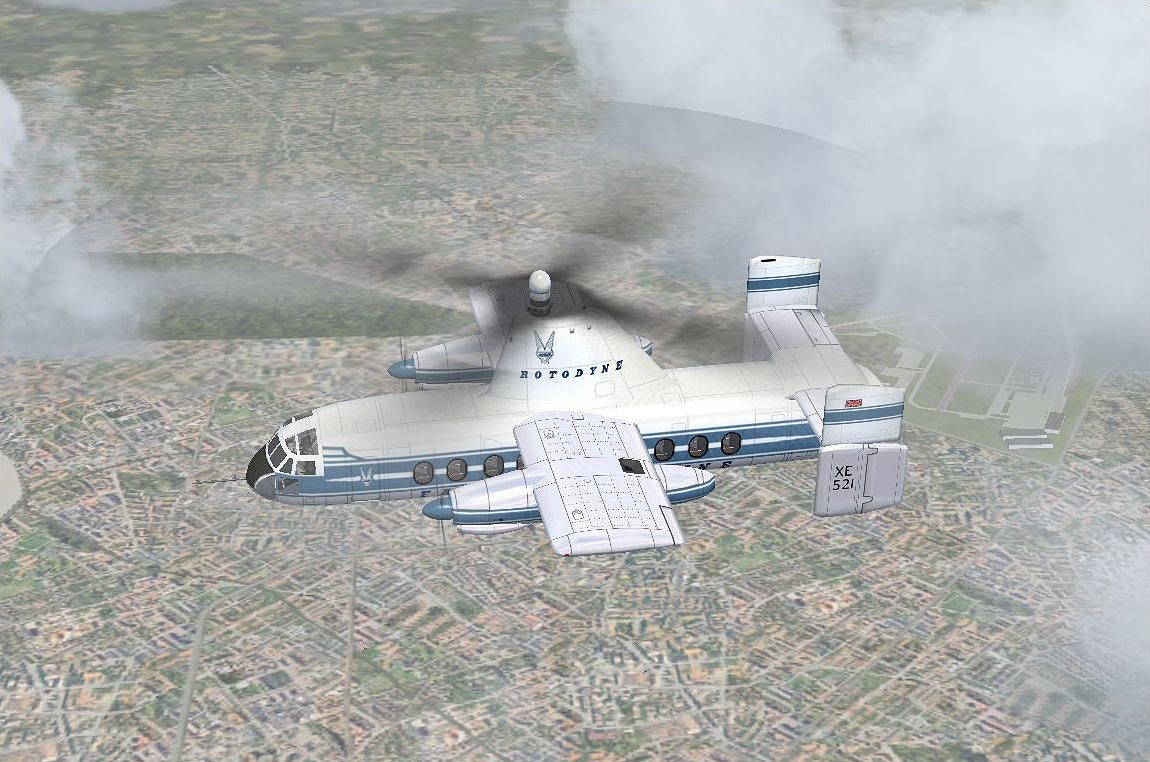
The Fairey Rotodyne was Britain's audacious post-war attempt at creating a revolutionary hybrid rotorcraft. With vertical take-off powered by tip-jet rotors and forward propulsion from twin turboprops, it promised city-centre-to-city-centre transport with speeds and payloads unmatched by conventional helicopters of the time.

Though only one prototype ever flew, it dazzled during trials, setting speed records and demonstrating impressive lift capabilities, including carrying a 100-foot bridge. Yet for all its innovation, the Rotodyne fell victim to mounting technical difficulties, political meddling, and the deafening noise produced by its tip jets - a fatal flaw for urban operations.

Back to top

4: Fairey Rotodyne

 Fairey Rotodyne

Despite letters of intent from British European Airways, the RAF, and overseas interest, no firm orders came. The government, wary of open-ended costs and unconvinced by civilian uptake, pulled support. The project's collapse came not through failure of design but failure of timing, funding, and institutional backing.

By 1962, the programme was officially cancelled, and the prototype dismantled. The Rotodyne remains a potent symbol of British aerospace ambition—a machine decades ahead of its time, undone not by airworthiness but bureaucracy, caution, and compromise. Its legacy survives only in museums and memories, and in some very tantalising promotional material. The concept of combining helicopter functions with that of an aeroplane would eventually appear in the V-22 Osprey.


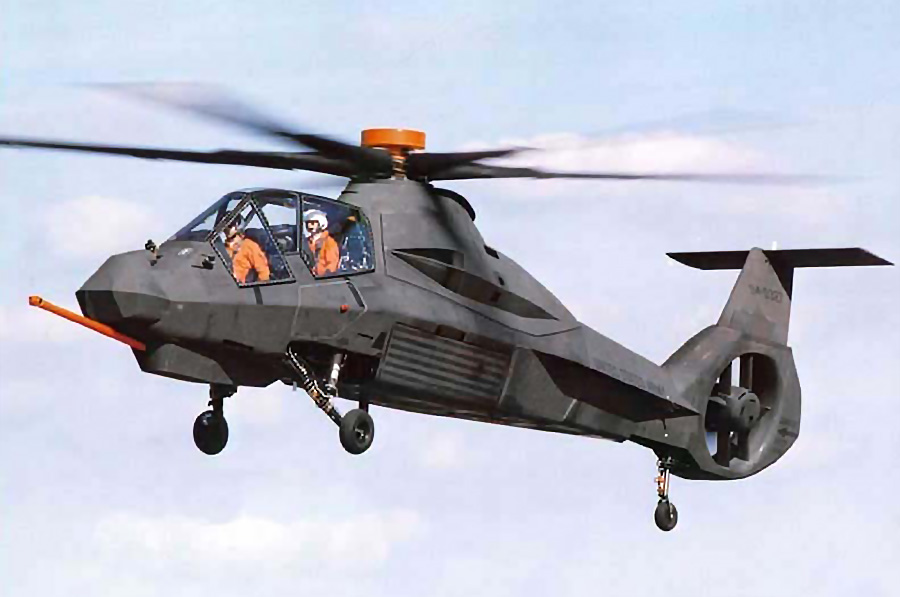
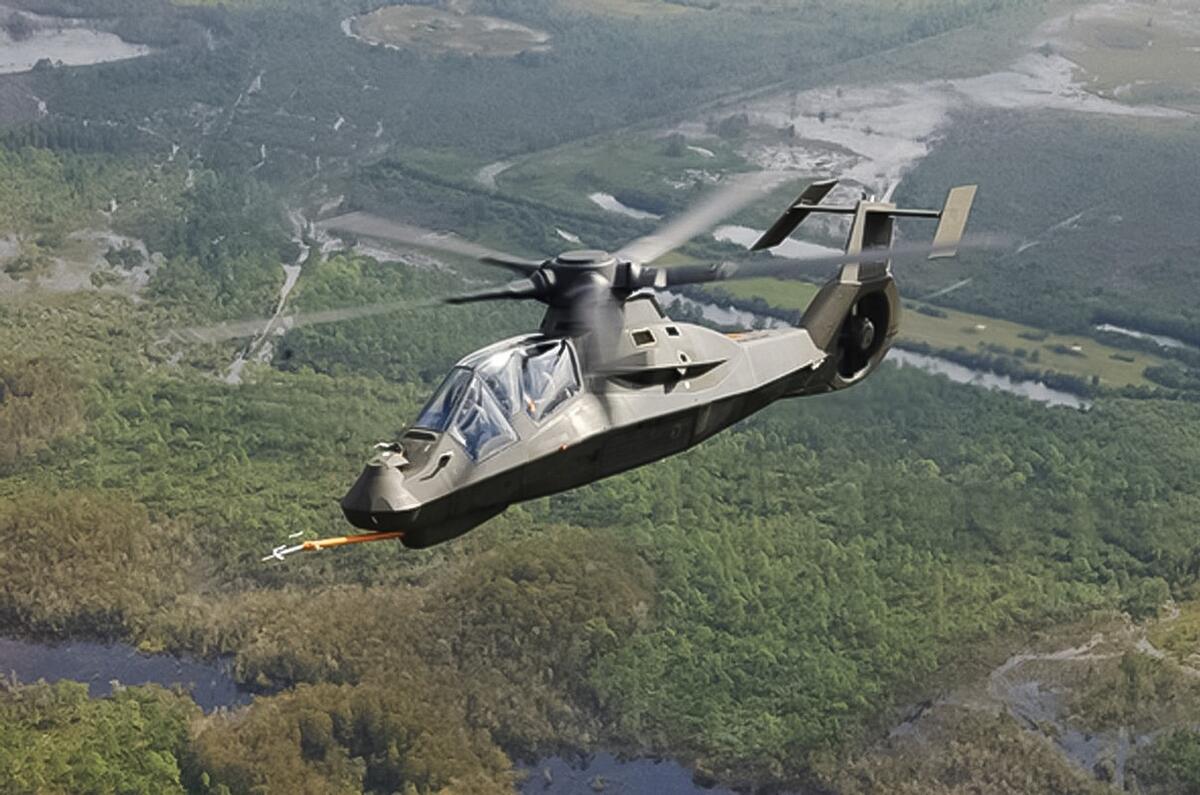
3. Boeing-Sikorsky RAH-66 Comanche

3. Boeing-Sikorsky RAH-66 Comanche

It was to be the crown jewel of America’s post-Cold War battlefield—a stealth helicopter so advanced it could see without being seen, strike before being struck. But after two decades and $7 billion, the Boeing-Sikorsky RAH-66 Comanche was unceremoniously shelved before it even entered full production.

Conceived in Cold War paranoia and faith in the concept of stealth, the Comanche promised a low radar signature, digital cockpits, and far quieter operations than previous helicopters. With internal weapon bays and revolutionary engines, it was a masterpiece of design. Yet military enthusiasm waned, strangled by changing missions, ballooning costs, and the dawning realisation that stealth was a harder proposition for helicopters than jets.


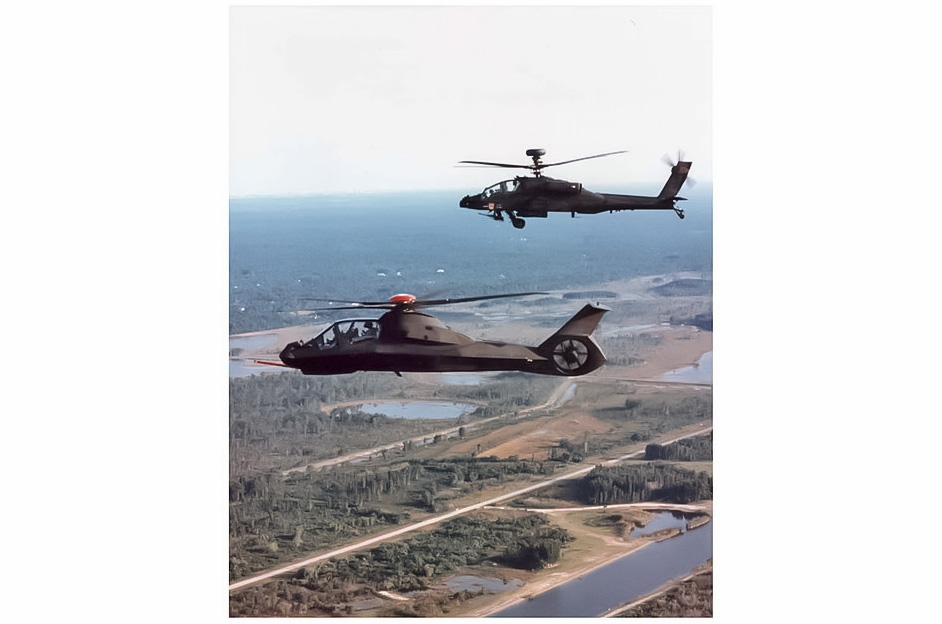
3: Boeing-Sikorsky RAH-66 Comanche

 Boeing-Sikorsky RAH-66 Comanche

By 2002, just two prototypes had flown. While these demonstrated extraordinary agility and engineering precision, questions of relevance loomed large. Drones were cheaper. Older helicopters were reliable. The Cold War was over. And for all its brilliance, the Comanche had no obvious war to fight, no place to call its own.

Today, two models reside in museums, quietly testament to an era of overreach. Elements of its technology live on—in special forces aircraft and the engines’ reuse in British Wildcats—but the Comanche itself remains a cautionary tale. Visionary, flawed, and ultimately abandoned, it proved that cutting-edge dreams can fall victim to timing and politics.

Back to top

PICTURE: RAH-66 with AH-64 Apache


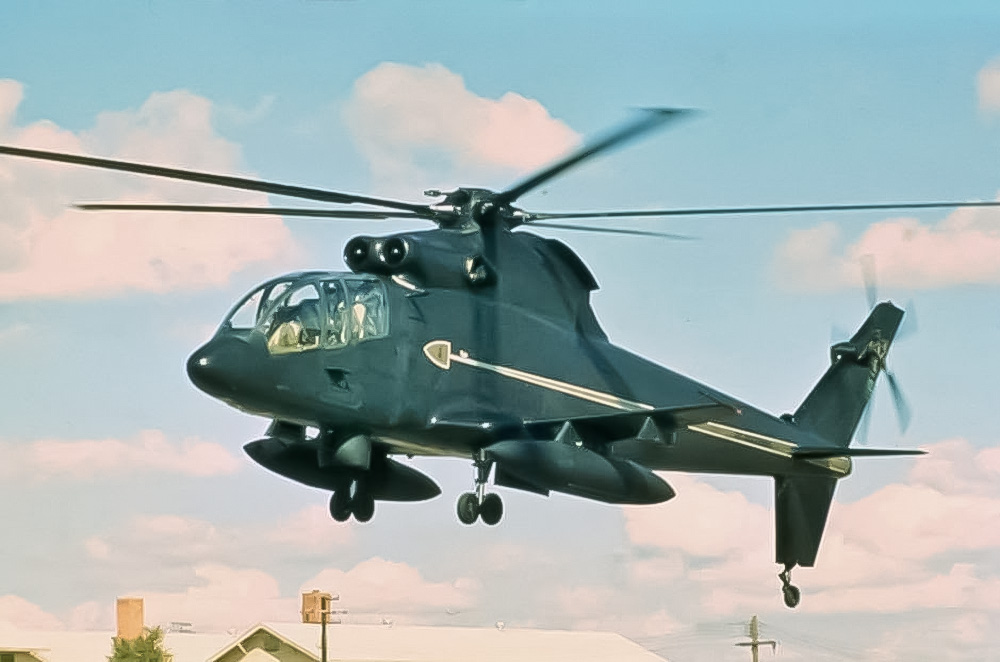
2: Sikorsky S-67 Blackhawk

 Sikorsky S-67 Blackhawk

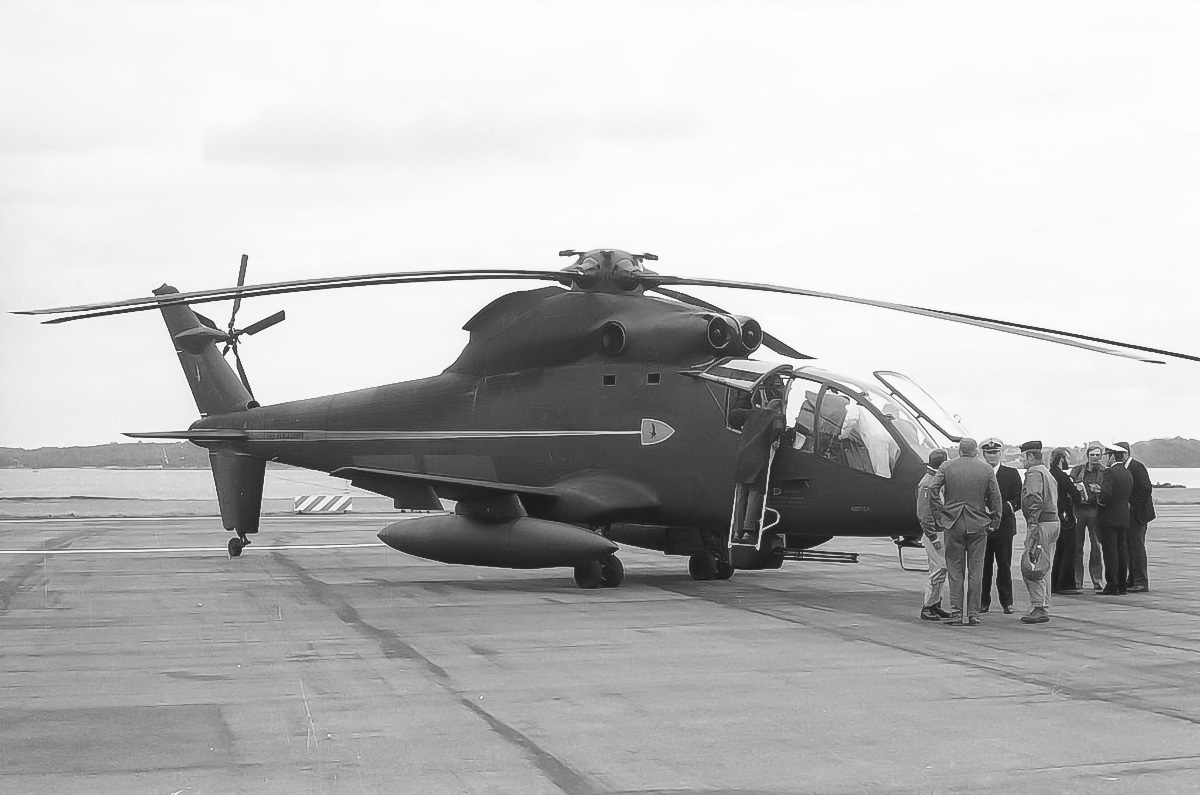
Not to be confused with today's H-60 Blackhawk, the Sikorsky S-67 Blackhawk of 1970 was a far more spectacular beast.  With a top speed exceeding 220 mph and the ability to perform wild split-S turns and impressive rolls, the S-67 was a hot ship. Combined with the ability to carry six soldiers, formidable weaponry, and sports-car good looks, it was a formidable aircraft.

The Sikorsky S-67 Blackhawk was a prototype attack helicopter developed in 1970 by Sikorsky Aircraft. Built as a private venture, it featured a sleek, tandem-seat layout, retractable landing gear, and a five-blade main rotor, aiming to combine speed and agility for gunship roles.


2: Sikorsky S-67 Blackhawk

 Sikorsky S-67 Blackhawk

On December 14 and 19, 1970, Sikorsky test pilots Kurt Cannon and Byron Graham flew the S-67 to two E-1 class world speed records, reaching 348.97 km/h (216.84 mph) and 355.48 km/h (220.89 mph). These records, set over 3 km (1.86 mi) and 15–25 km (9.32–15.53 mi) courses, remained unbeaten for eight years.

Tragically, the prototype was destroyed in a fatal crash during a 1974 demonstration in England, ending further development of the programme. It was not selected by the US Army, which instead launched the AAH ("Advanced Attack Helicopter") programme that culminated in the AH-64 Apache.


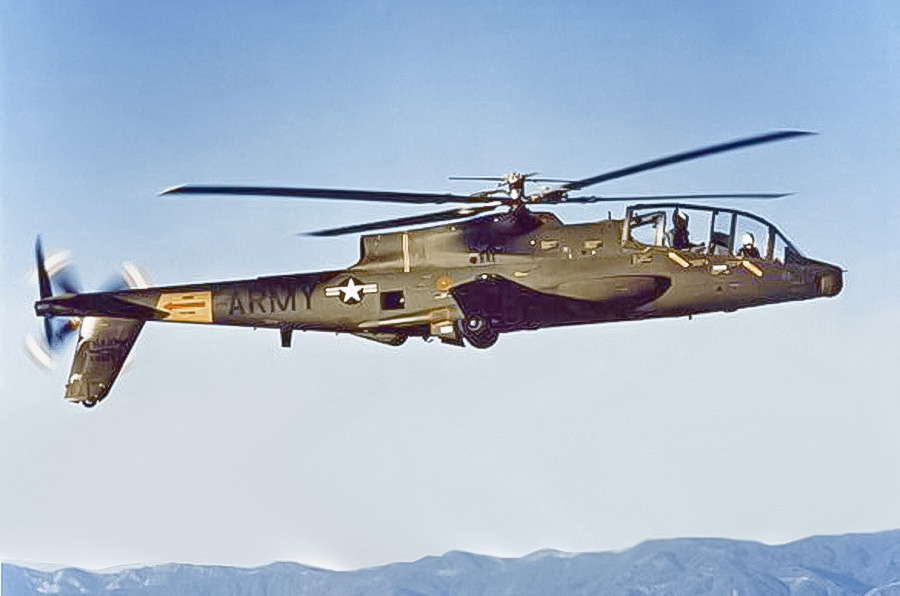
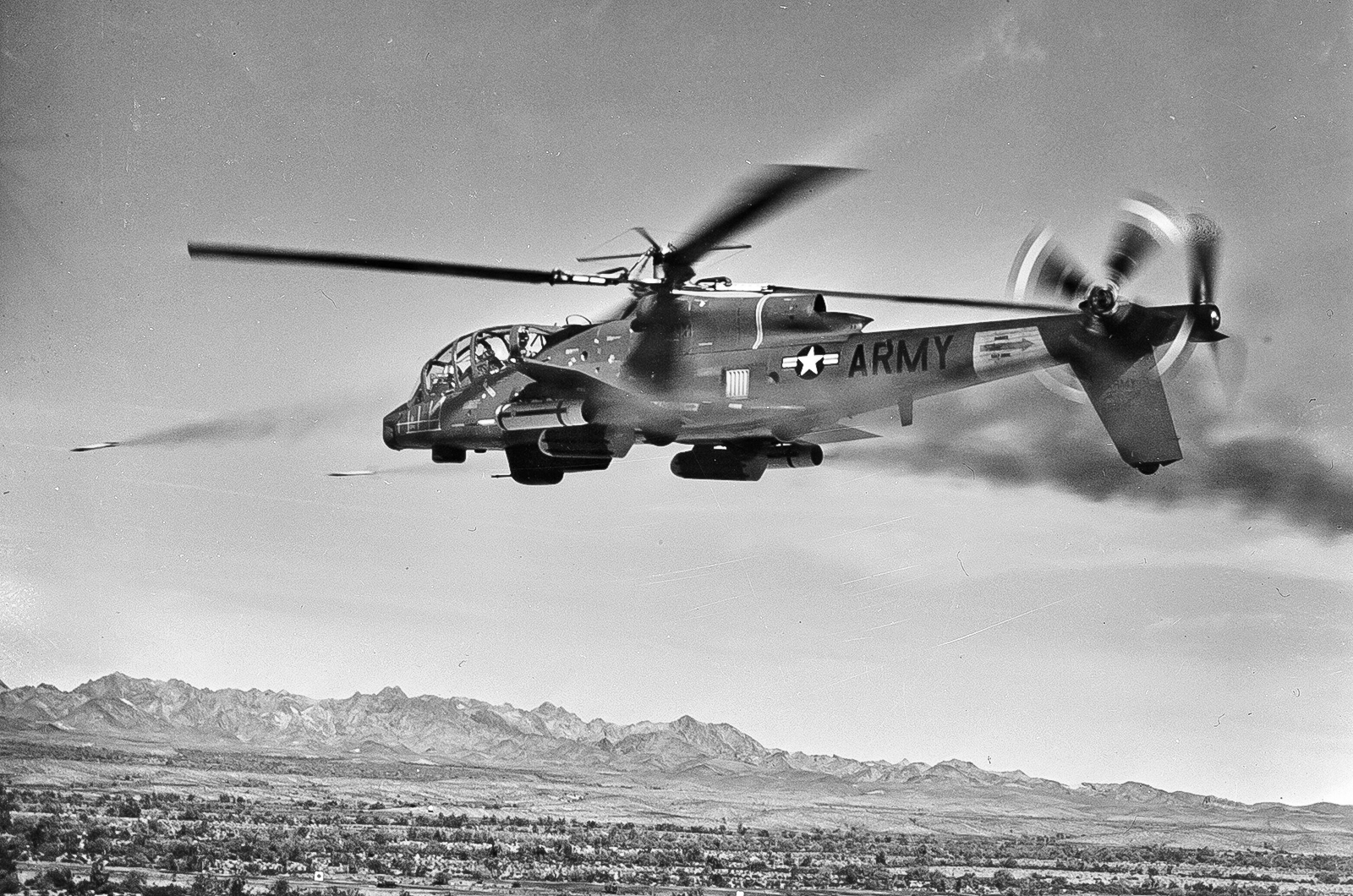
1: Lockheed AH-56A Cheyenne

 Lockheed AH-56A Cheyenne

Fast, formidable and sophisticated, the Cheyenne was an awe-inspiring machine. Its timing, however, was poor. It came at a time when the USAF was trying to justify the A-10 and Nixon was trying to undermine his predecessor’s procurement decisions. Its aeroplane-like performance trod on the toes of the USAF, and its complexity intimidated the US Army, which would have operated it.

The Cheyenne featured both internal and external armament; it had four wing pylons and two fuselage bays. Lift from its large wings increased with speed; these, along with its retractable undercarriage, made it a very 'plane-like' helicopter. To (almost) achieve the 250mph speed requirement, it featured a pusher' thrust propeller' (it achieved 244mph).

Back to top

1: Lockheed AH-56A Cheyenne

 Lockheed AH-56A Cheyenne

The aircraft was massive, with a length of around 54 feet (over sixteen metres), the same as a B-25 bomber! It had a capacious cockpit that provided the crew of two with an excellent view. But the size, complexity and cost of the Cheyenne began alarming those monitoring the project.

A deadly crash of a prototype, and cost and schedule overruns were the final nails in its coffin. The Lockheed AH-56 Cheyenne helicopter program was cancelled on August 9, 1972. Its performance figures and weapons capability remain impressive today, decades after it was cancelled.

Follow Joe Coles on Substack, and X

If you enjoyed this story, please click the Follow button above to see more like it from Autocar

Photo Licence: https://creativecommons.org/licenses/by/4.0/deed.en


Join our WhatsApp community and be the first to read about the latest news and reviews wowing the car world. Our community is the best, easiest and most direct place to tap into the minds of Autocar, and if you join you’ll also be treated to unique WhatsApp content. You can leave at any time after joining - check our full privacy policy here.

Add a comment…