From £29,4108

Incredibly popular compact crossover enters its second generation aiming to right some wrongs

The Volkswagen T-Roc has been its creator's biggest-selling new car in Europe in more calendar years than any other model this decade. Now it’s back for a second tilt at success – and the new one is a lot more serious about capitalising on a receptive European audience. 

Relative to the first version, this Mk2 has all the hallmarks of a significantly extended development budget that only established commercial success can bring. The noises being made about it – concerning greater efficiency, better active safety features, more cabin space, more sophisticated interior quality, and a closer relationship with Volkswagen’s bigger SUVs (Tiguan, Tayron) – describe a car that’s come of age, and is ready to cement a permanent spot as its maker’s MVP.

So is that more rounded, self-assured C-segment SUV the one that the Autocar road test jury is about to recognise? There’s a phased introduction of engine derivatives planned, so we looked to a mild-hybrid 1.5-litre e-TSI model, in entry-grade Life trim, to find out.

Advertisement

DESIGN & STYLING

8
VW T Roc reveiw 2026 02

Europe’s ‘C-SUV’ segment – the one sometimes referred to as the Nissan Qashqai class, in recognition of the car whose success properly inaugurated it, in the UK at least, some 20 years ago – is now a rather broad church. It’s huge business, though: six of the UK’s top 10 best-sellers in 2025 were from the segment, according to the SMMT.

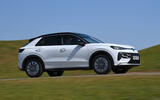
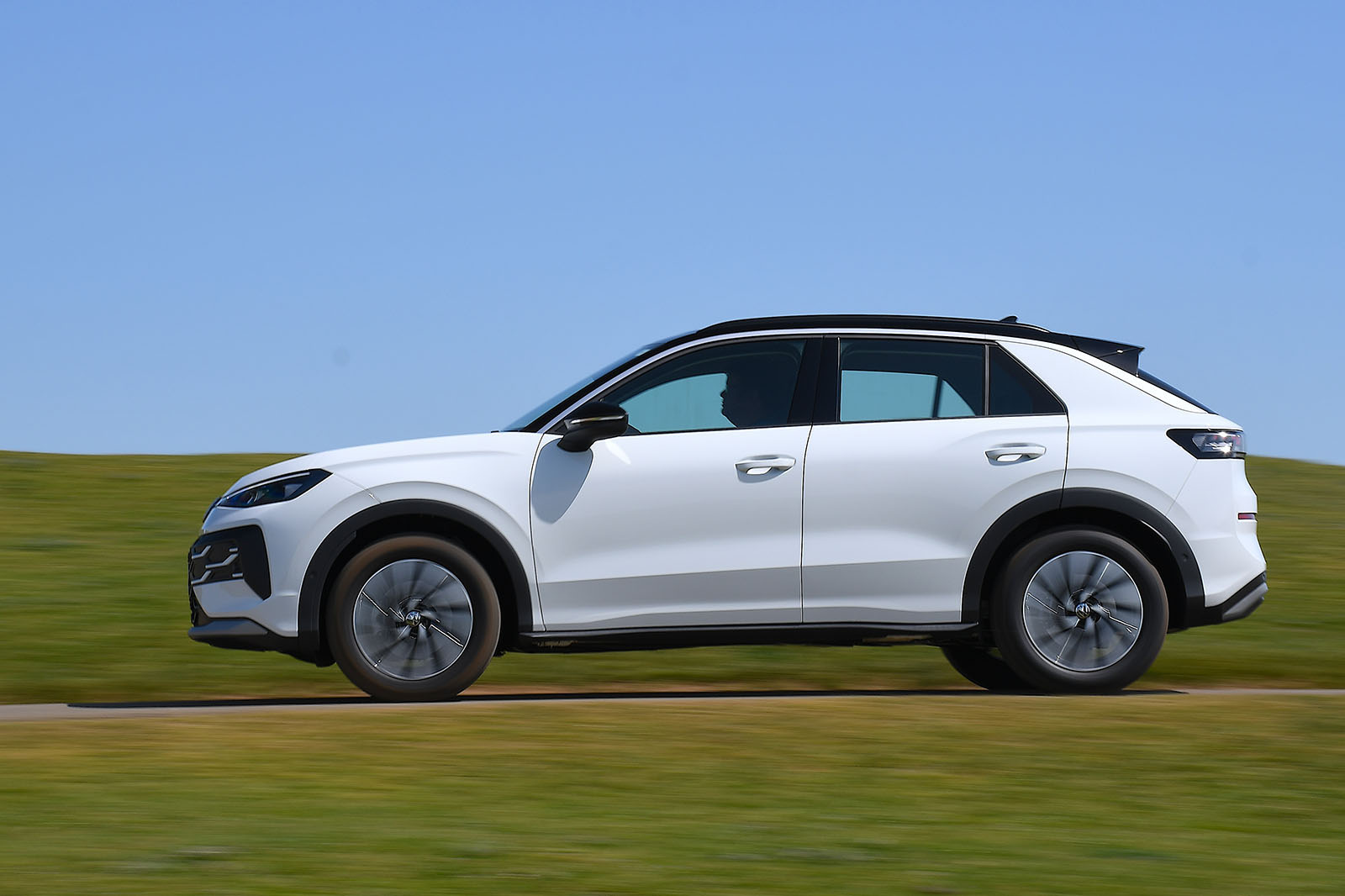
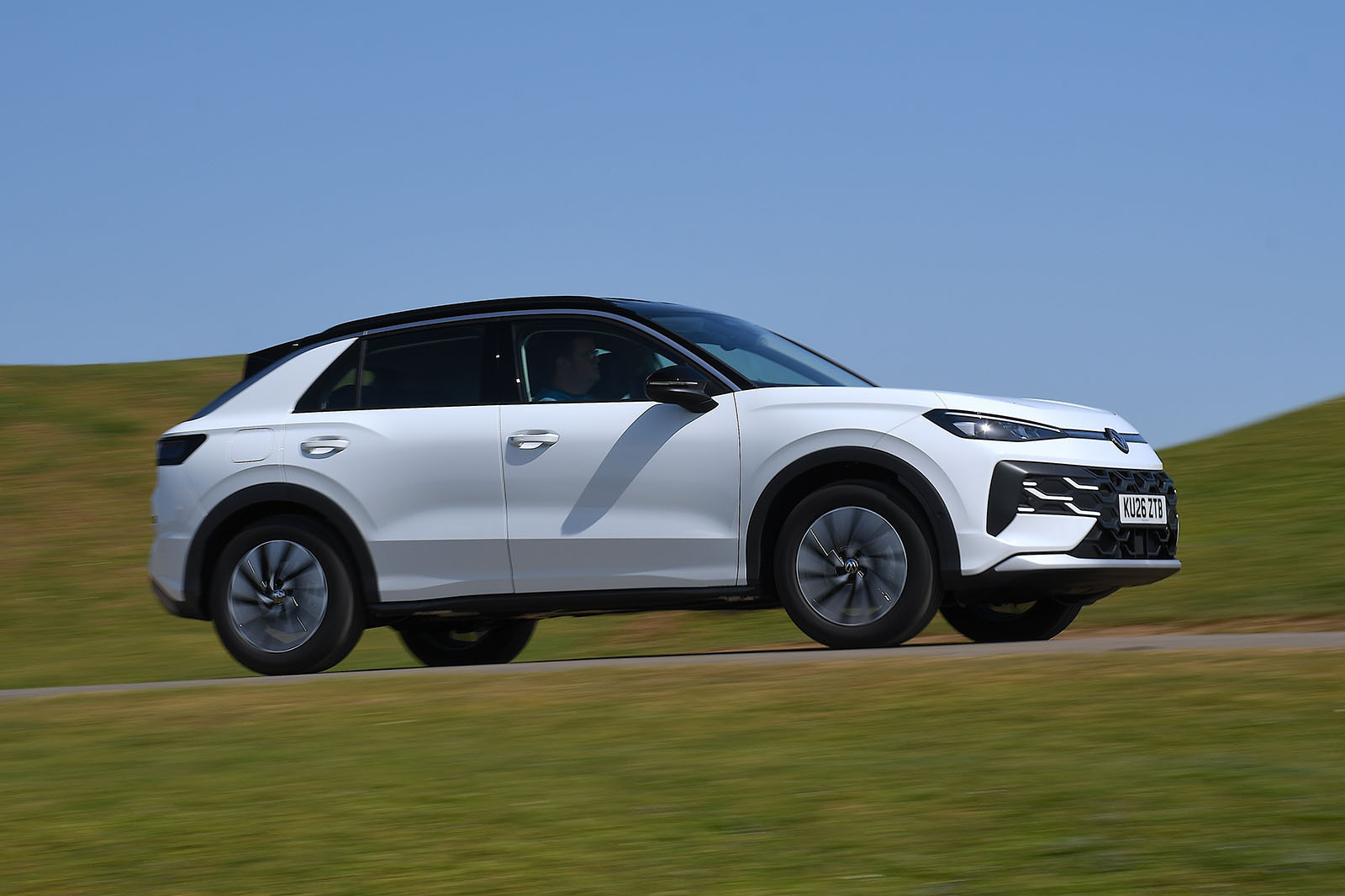
Clearly, there’s room for ‘SUVs’ of quite varied proportions and styles here. The new T-Roc would certainly seem to show as much. The first generation, which appeared in 2017, was smaller than the class norm and aimed to be more of a high-style, practicality-boosted crossover hatchback than a high-rise, bluff-cornered 4x4.

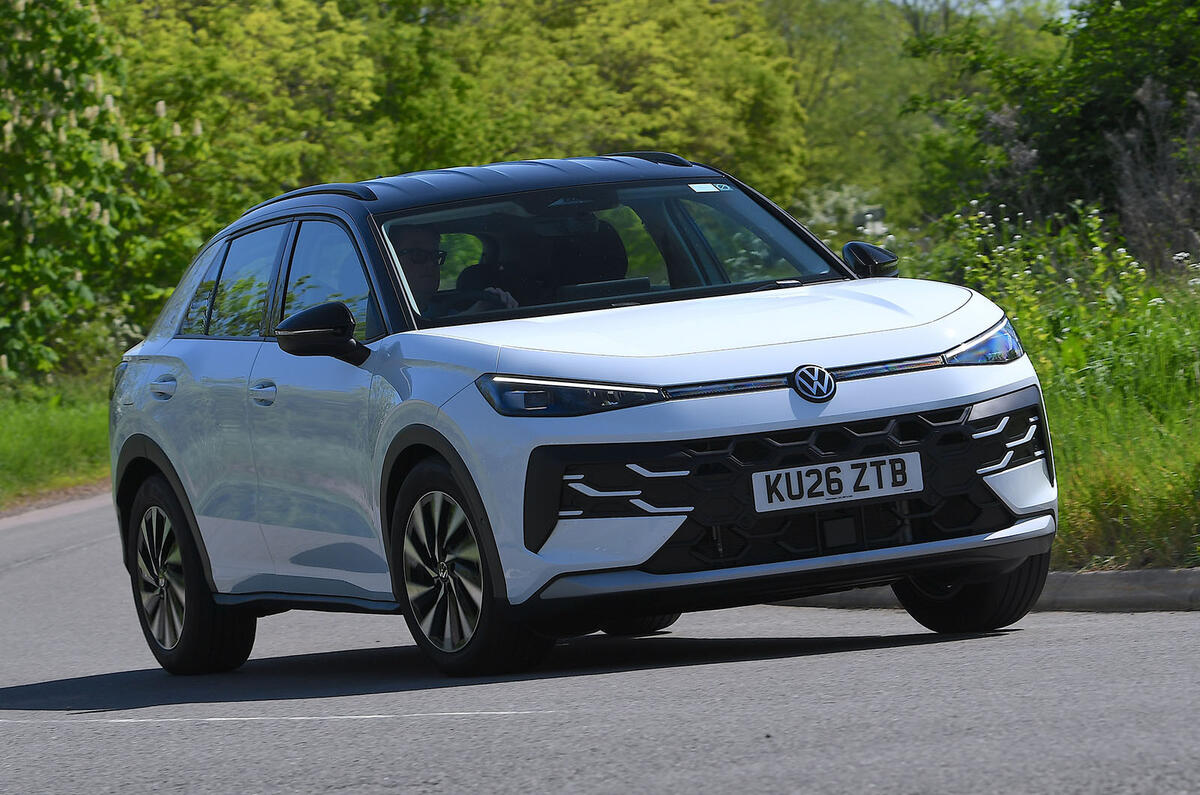
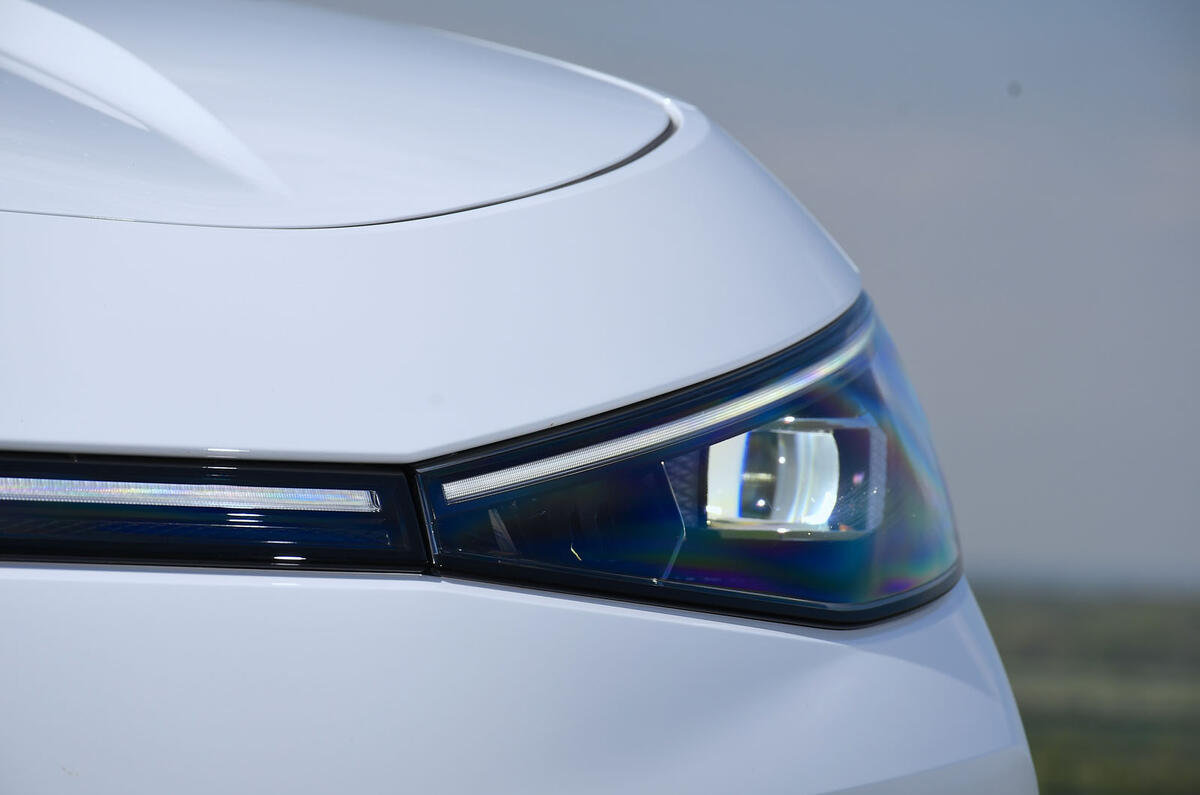
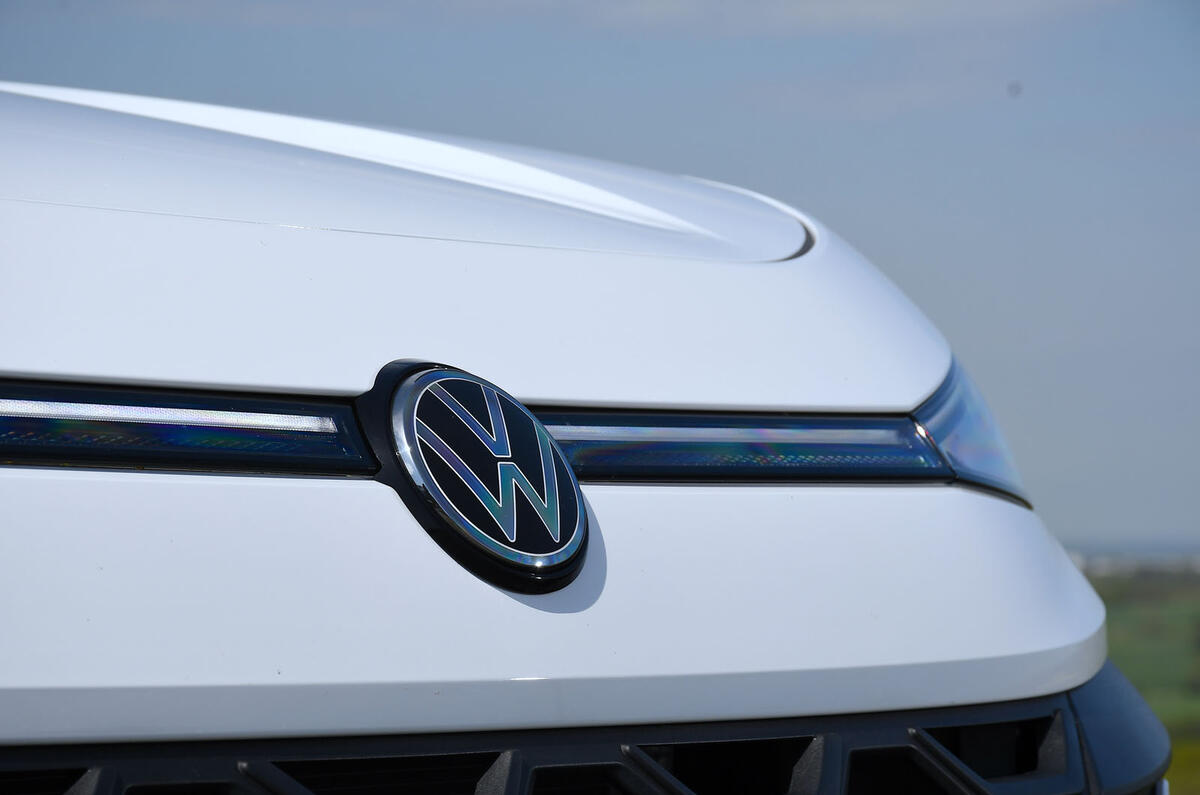
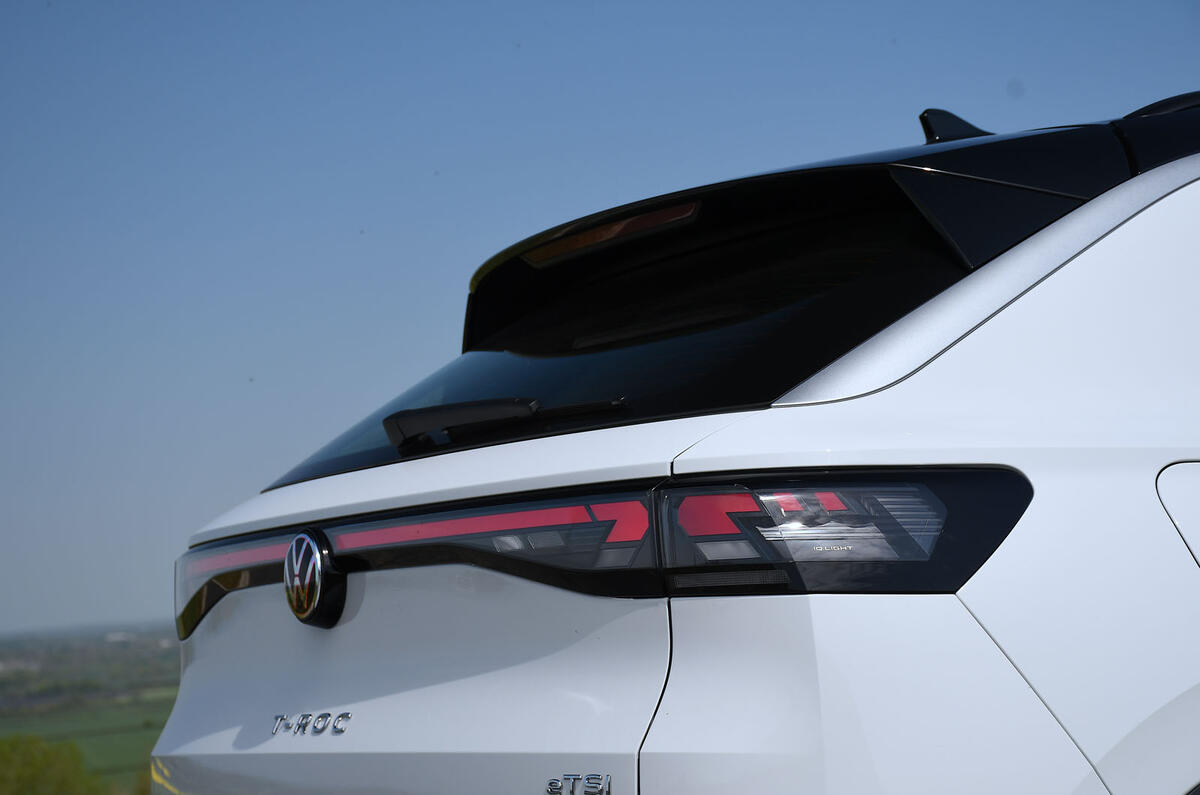
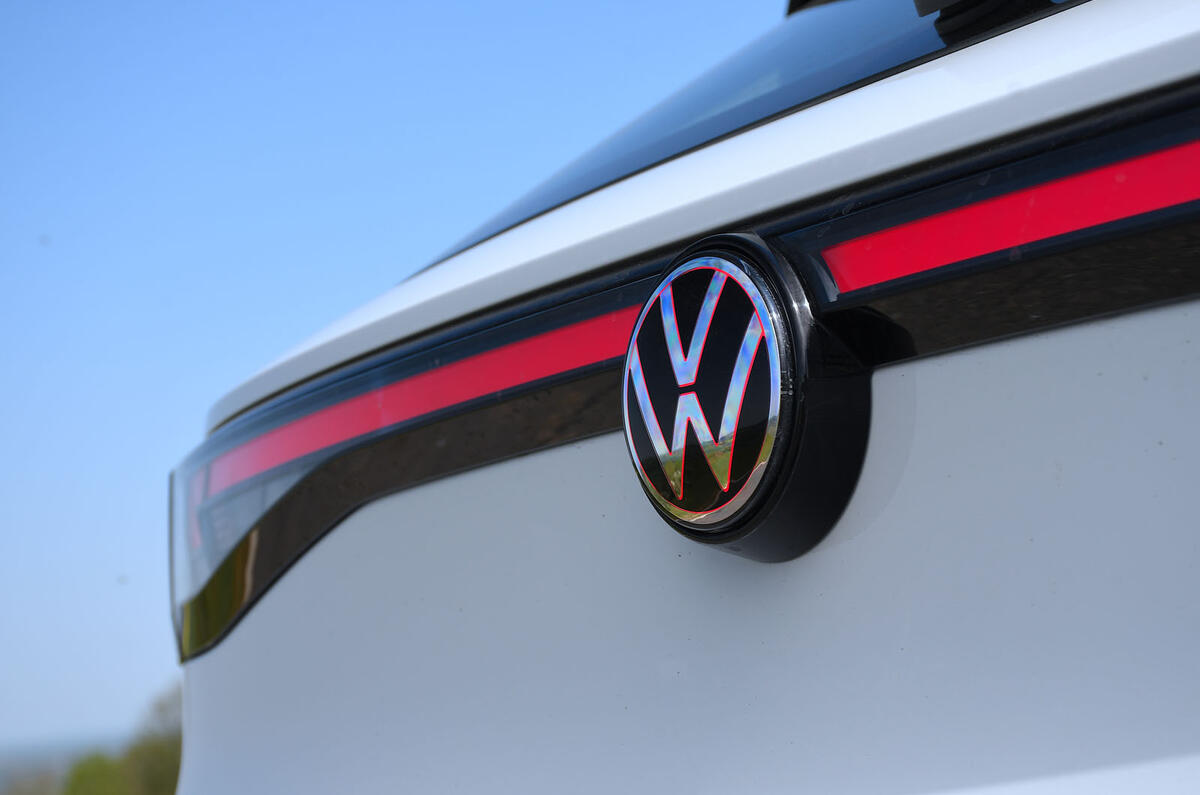
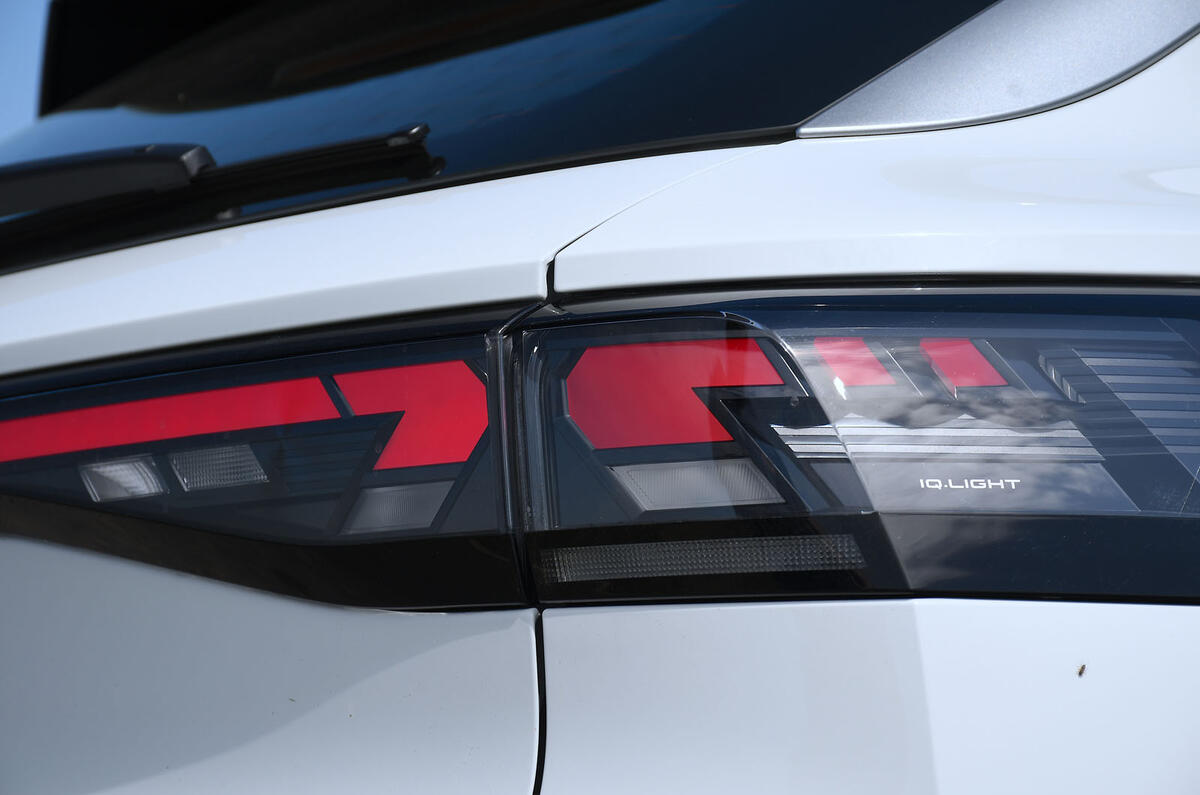
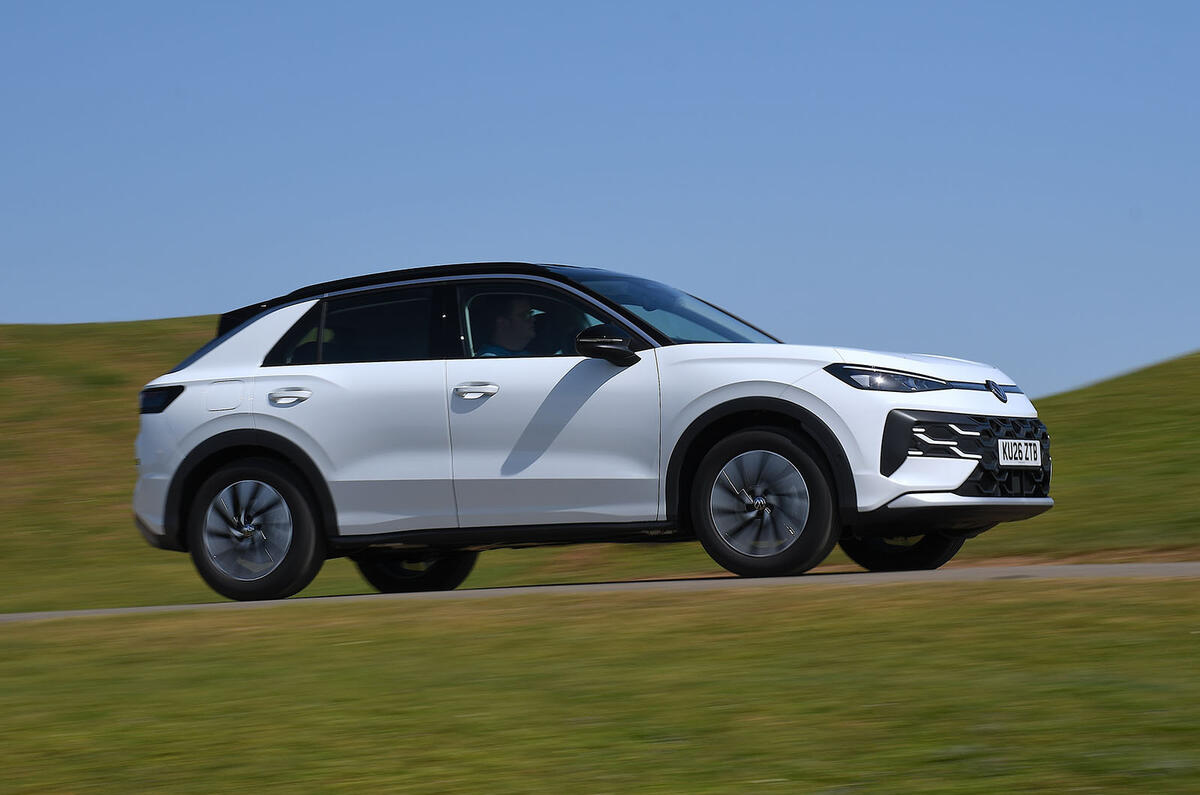
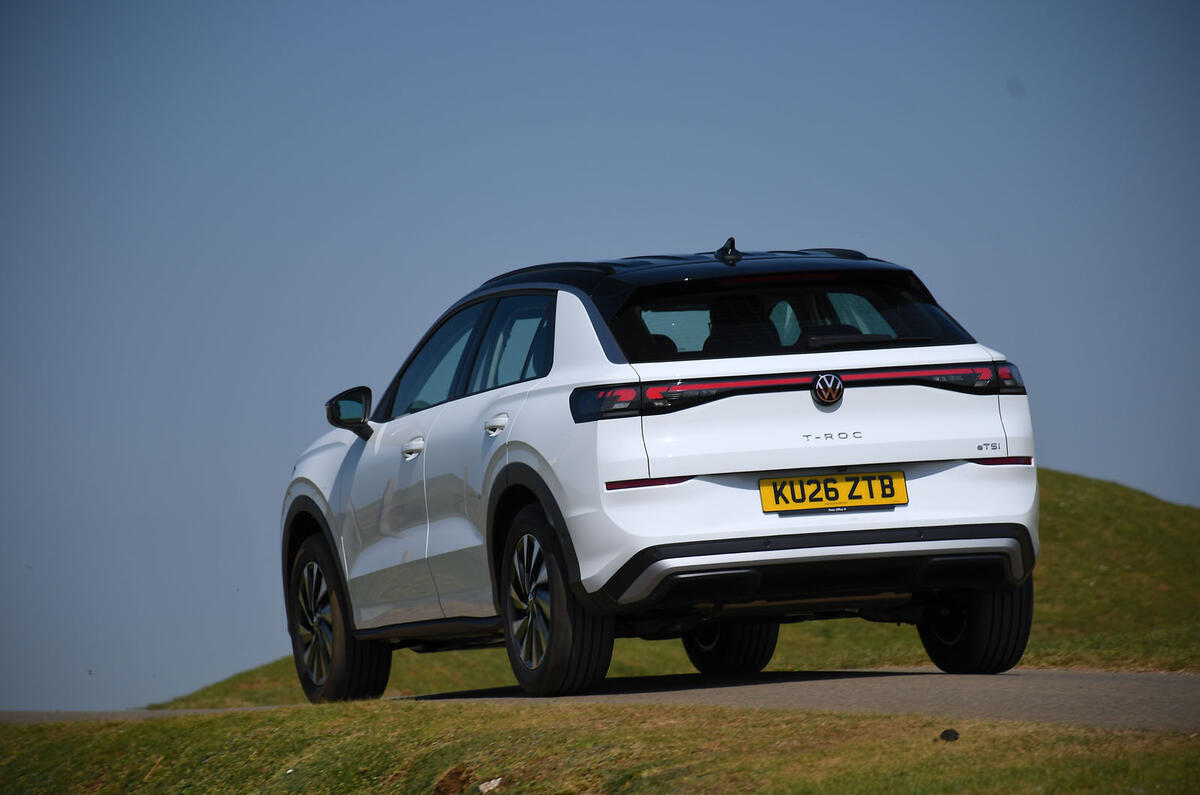
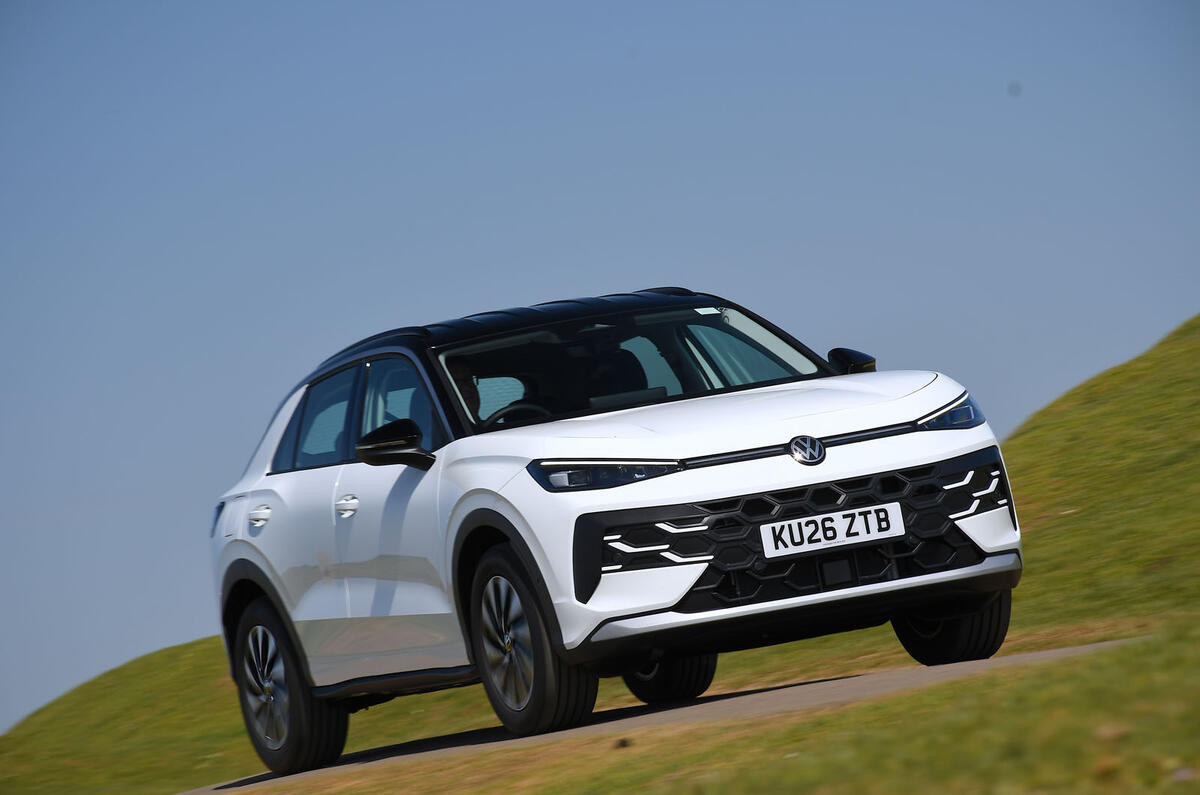
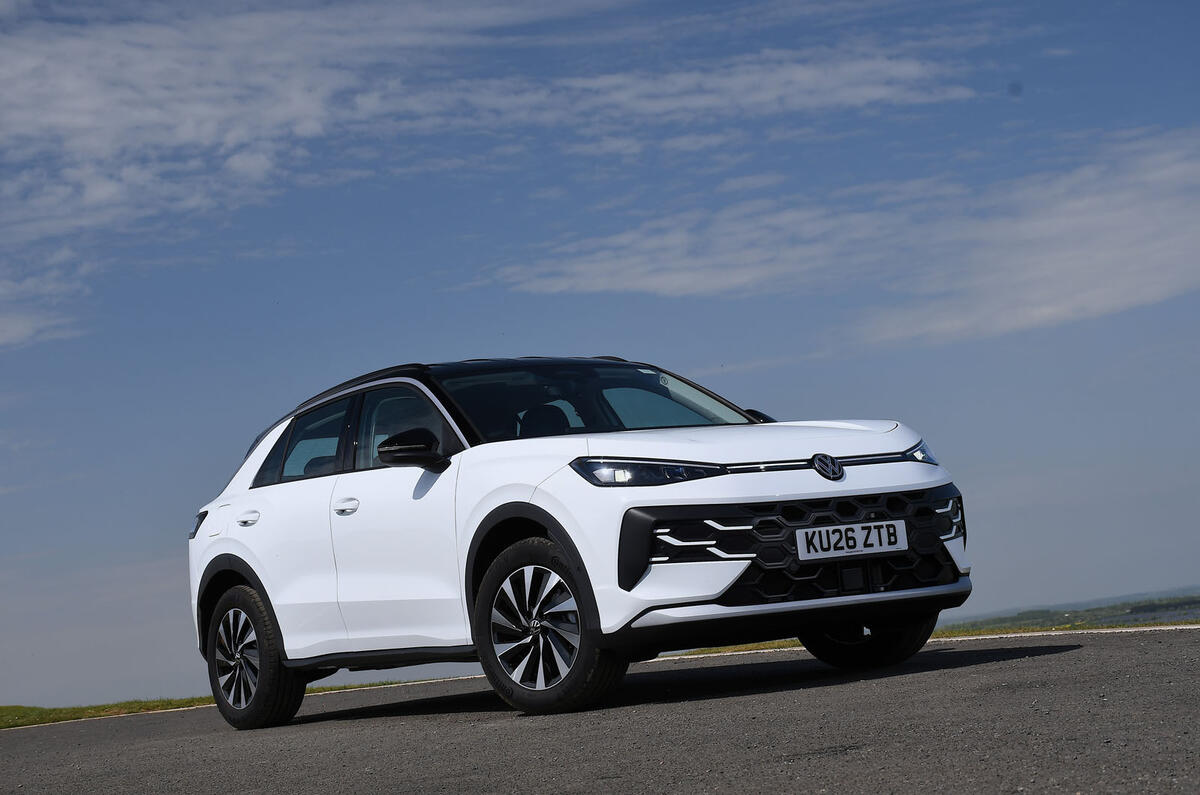
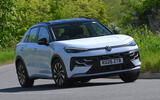
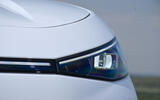
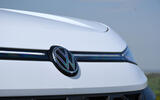
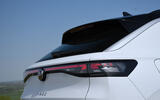
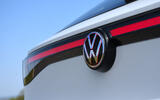
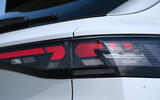
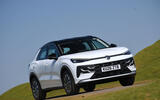
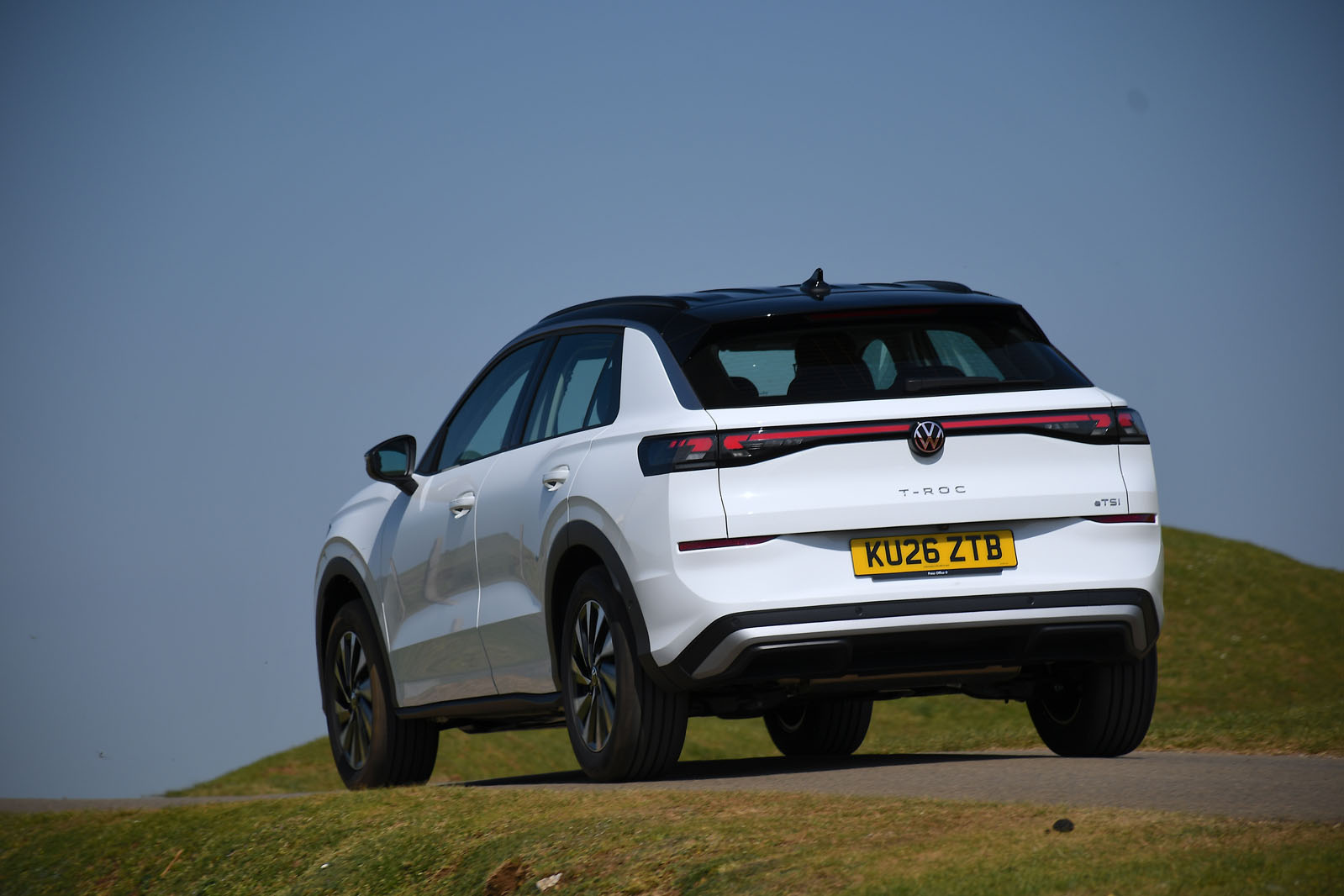
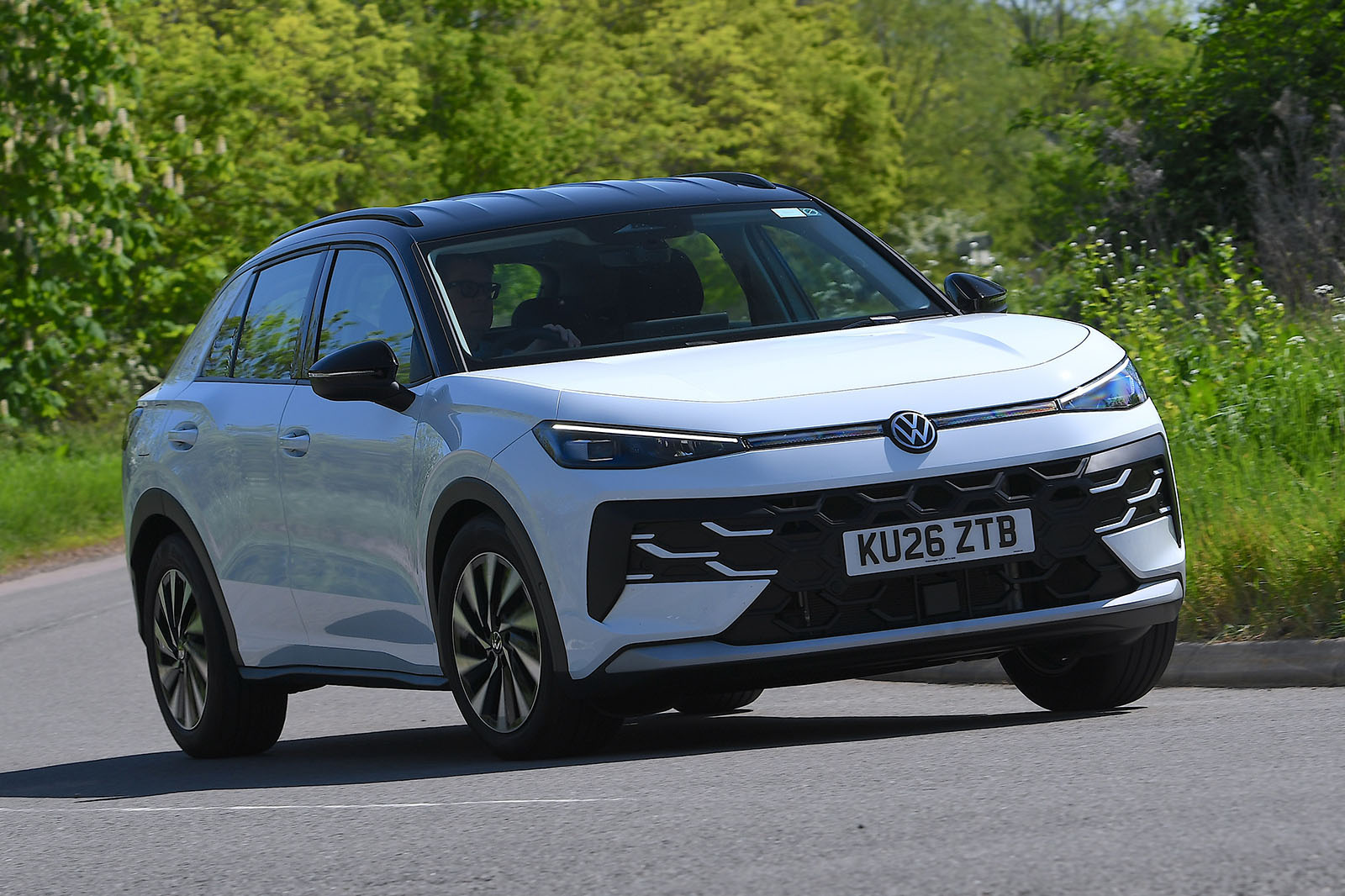
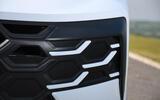
Our Life test car came with adaptive LED headlights, front and rear light bars and illuminated VW logos as part of a £1235 option pack. But I’d happily have avoided the extra outlay and kept a more understated look.

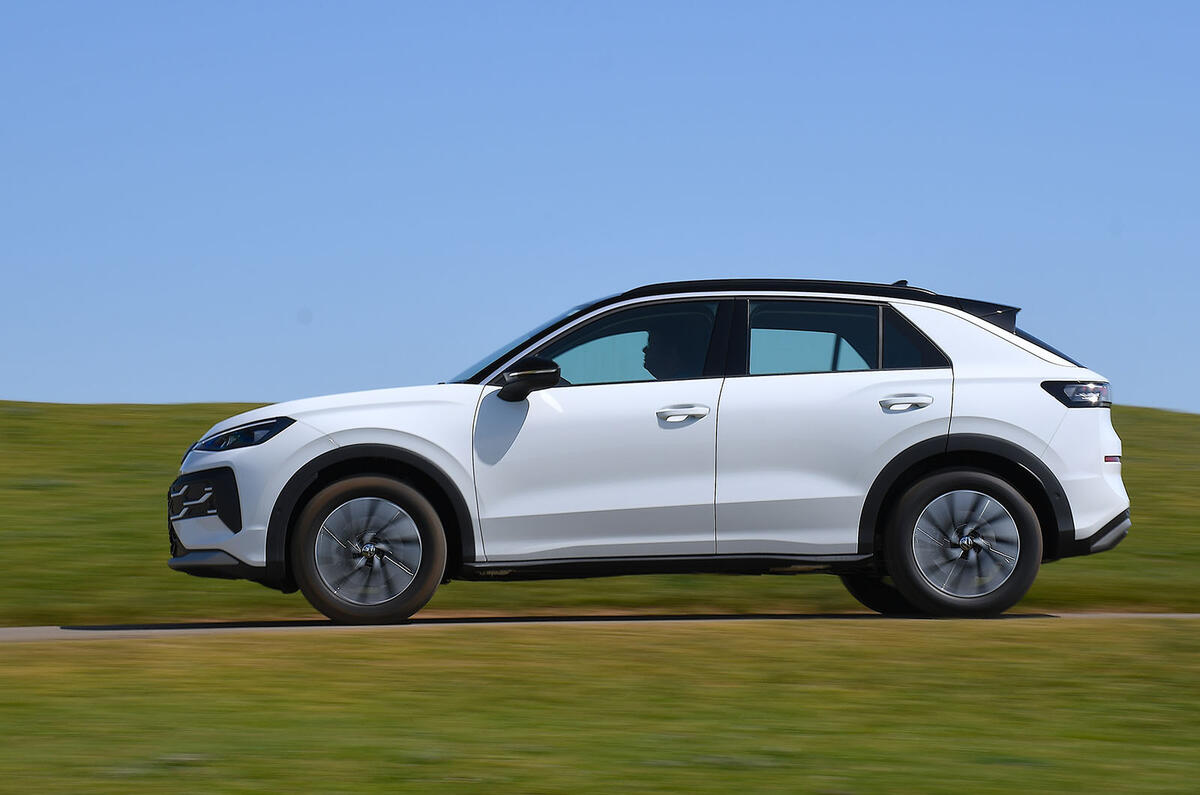
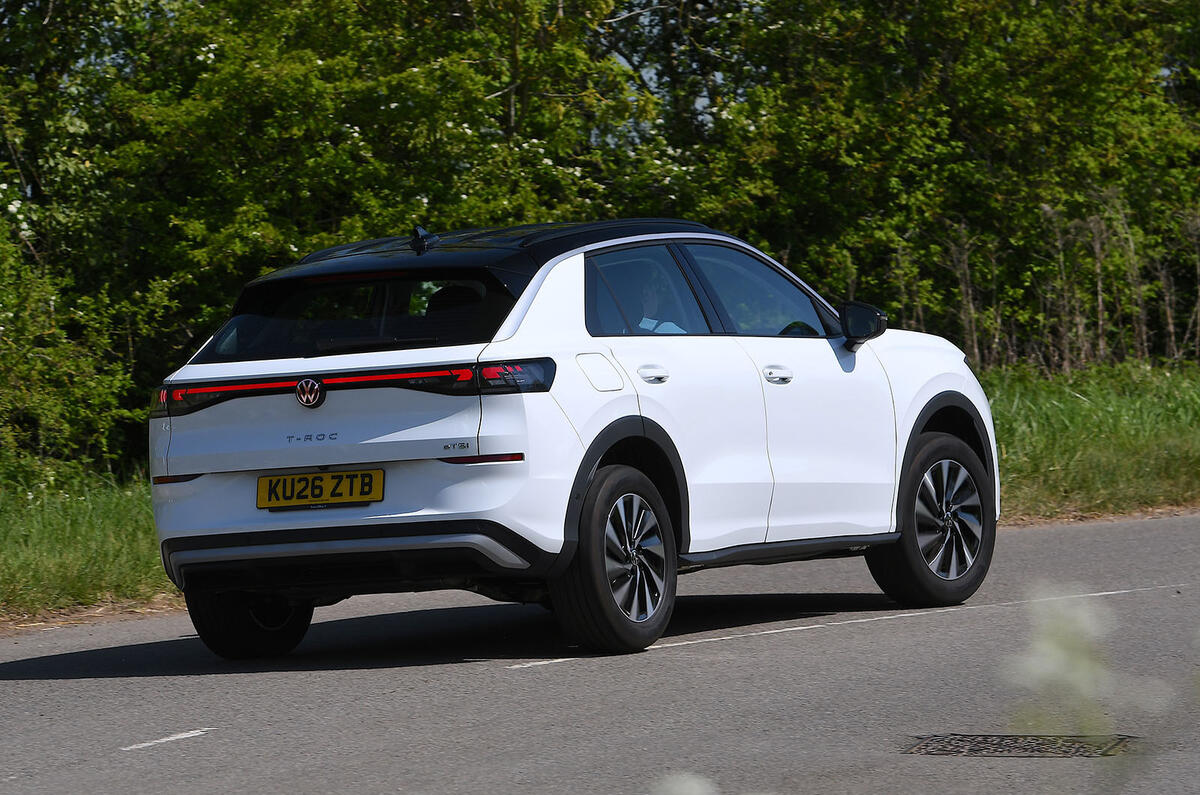
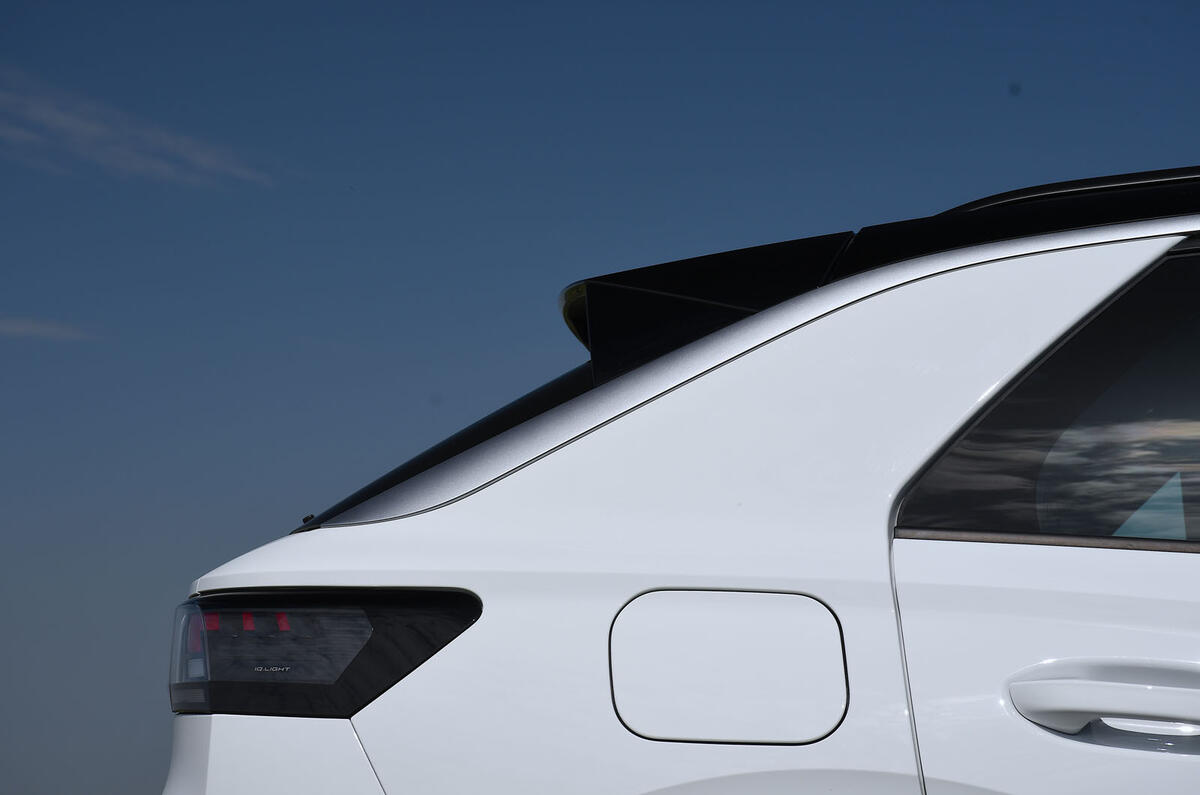
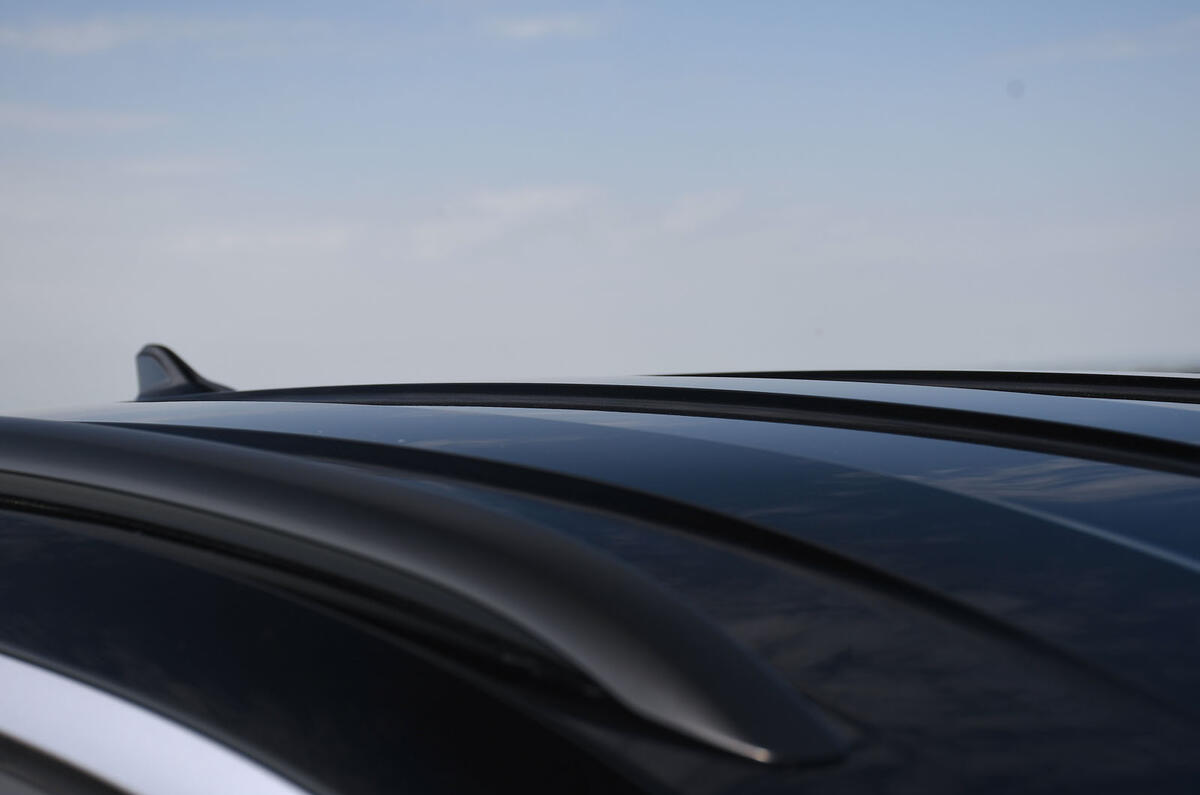
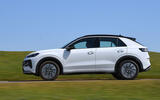
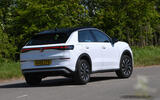
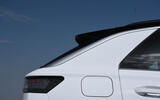
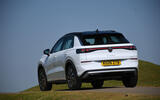
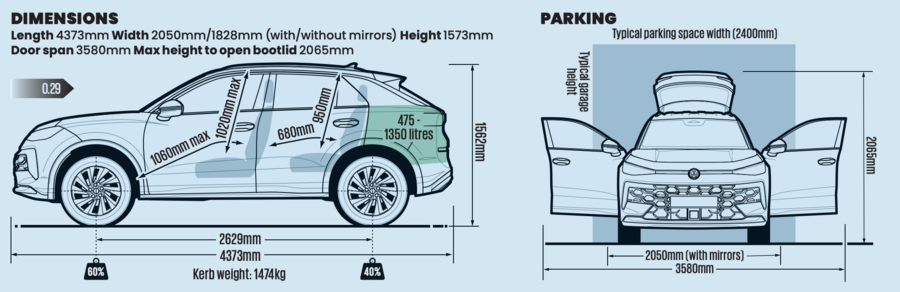
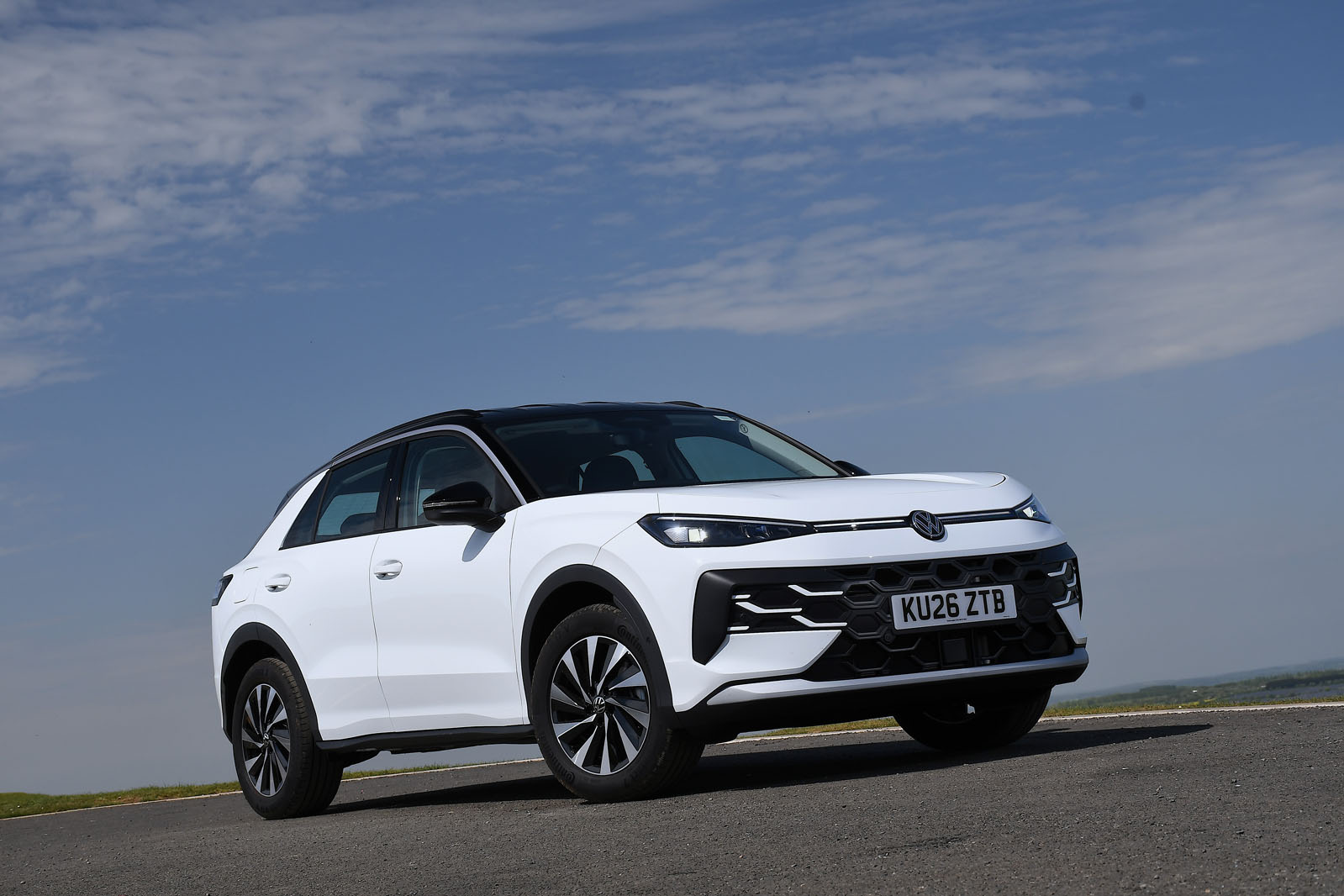
Despite having grown significantly, the new version continues to take that approach. It’s 139mm longer than its forebear, but it remains relatively low-rising in its roofline (1562mm to the Qashqai’s 1590mm and Sportage’s 1645mm) and glasshouse, and sloping in its tailgate angle. Notionally, that continues to make its closest rivals cars like the Toyota C-HR and Mazda CX-30 although, as we’ll discover, it aims to surpass those rivals in terms of interior space.

For platform architecture, the car switches to the updated MQB Evo platform used most notably by the latest Volkswagen Passat, Tiguan and Tayron, as well as cars such as the Audi Q3 and Skoda Superb. That makes for a class-typical mechanical layout and familiar driveline options. Engines are mounted transversely in the front and are all four-cylinder units that use either dual-clutch automatic or hybrid-specific gearboxes. Most derivatives are front-wheel drive – save for the range-topping 2.0-litre e-TSi options, which gain independent rear suspension as well as 4Motion clutch-based all-wheel drive.

An all-hybrid engine line-up is one of the car’s biggest departures. These consist of four 48V mild-hybrid options – producing 114bhp or 148bhp from 1.5 litres in the case of the 1.5 e-TSIs, and 201bhp or 326bhp from 2.0 litres in the case of the brand-new 2.0 e-TSis, which will join the T-Roc range later in 2026 (latterly powering the range-topping T-Roc R). 

In addition to these, there will be two full-hybrid models, which are expected to have series-hybrid-style ‘gearboxless’ drive a little like that of the Honda HR-V or Jaecoo 7, backed up by a 1.5-litre piston engine but driven primarily by electric motor, with 134bhp or 168bhp. Volkswagen says there’s no demand for a PHEV model so it won’t offer one.

Our 1.5-litre e-TSI 150 Life test car weighed 1425kg on the scales with half a tank of fuel on board, which is encouragingly light (Tiguan 1.5 e-TSI 150: 1606kg; Omoda 5 1.5 TGDI: 1430kg).

INTERIOR

8
VW T Roc reveiw 2026 13

The fine detail of exactly what this kind of crossover SUV gives you in terms of available passenger comfort and cargo space over and above a regular hatchback always tends to underwhelm a little when written down in black and white. 

That’s partly because the way we measure leg room and head room for an Autocar road test can’t fully reflect the benefits to comfort, convenience and visibility that a raised hip point affords. When you sit less recumbently in a car than you might otherwise (with hips at a higher point relative to your heels), your legs naturally take up less space in front of you, which makes the same amount of measurable leg room feel greater.

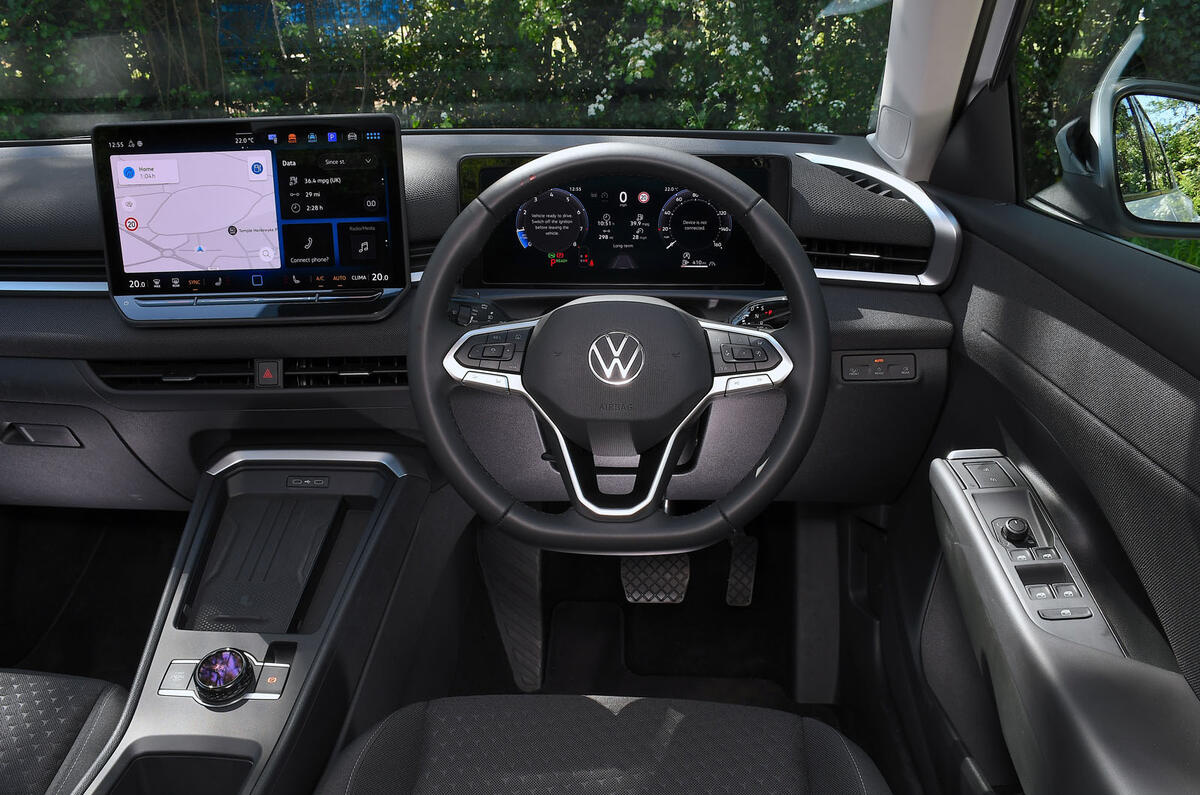
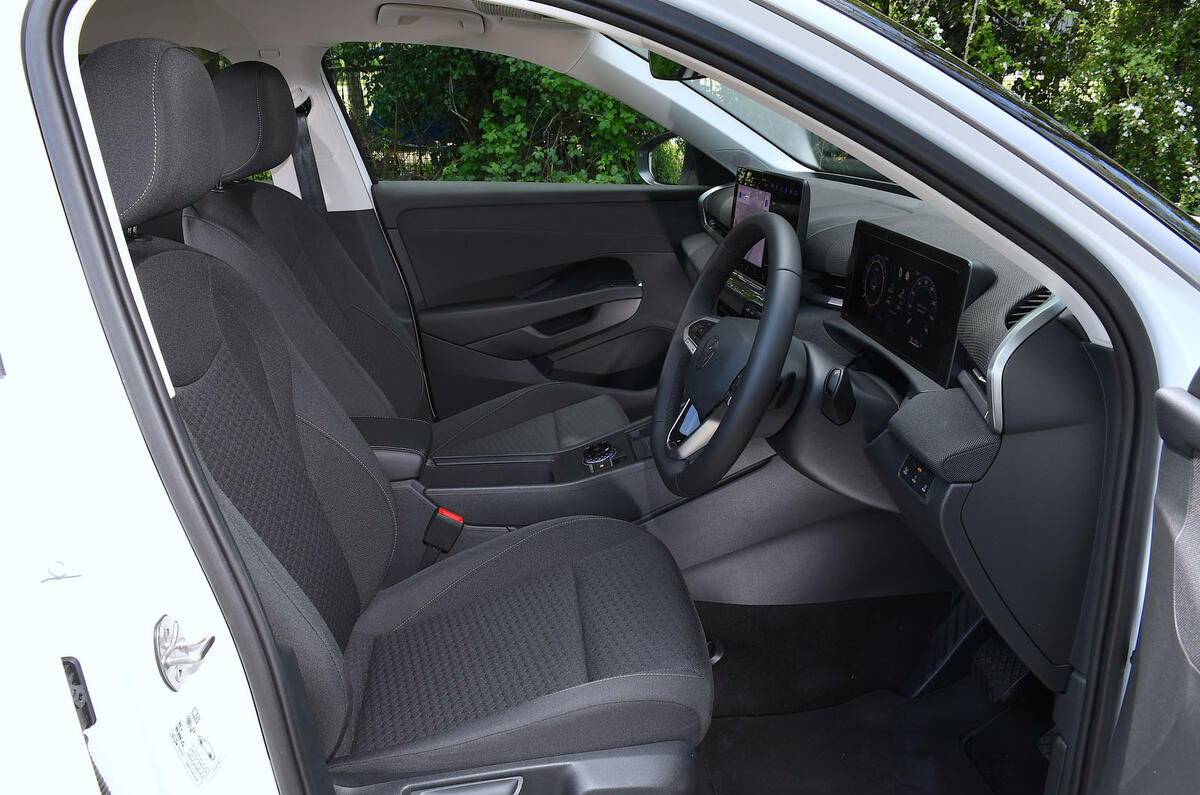
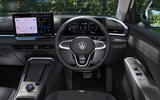
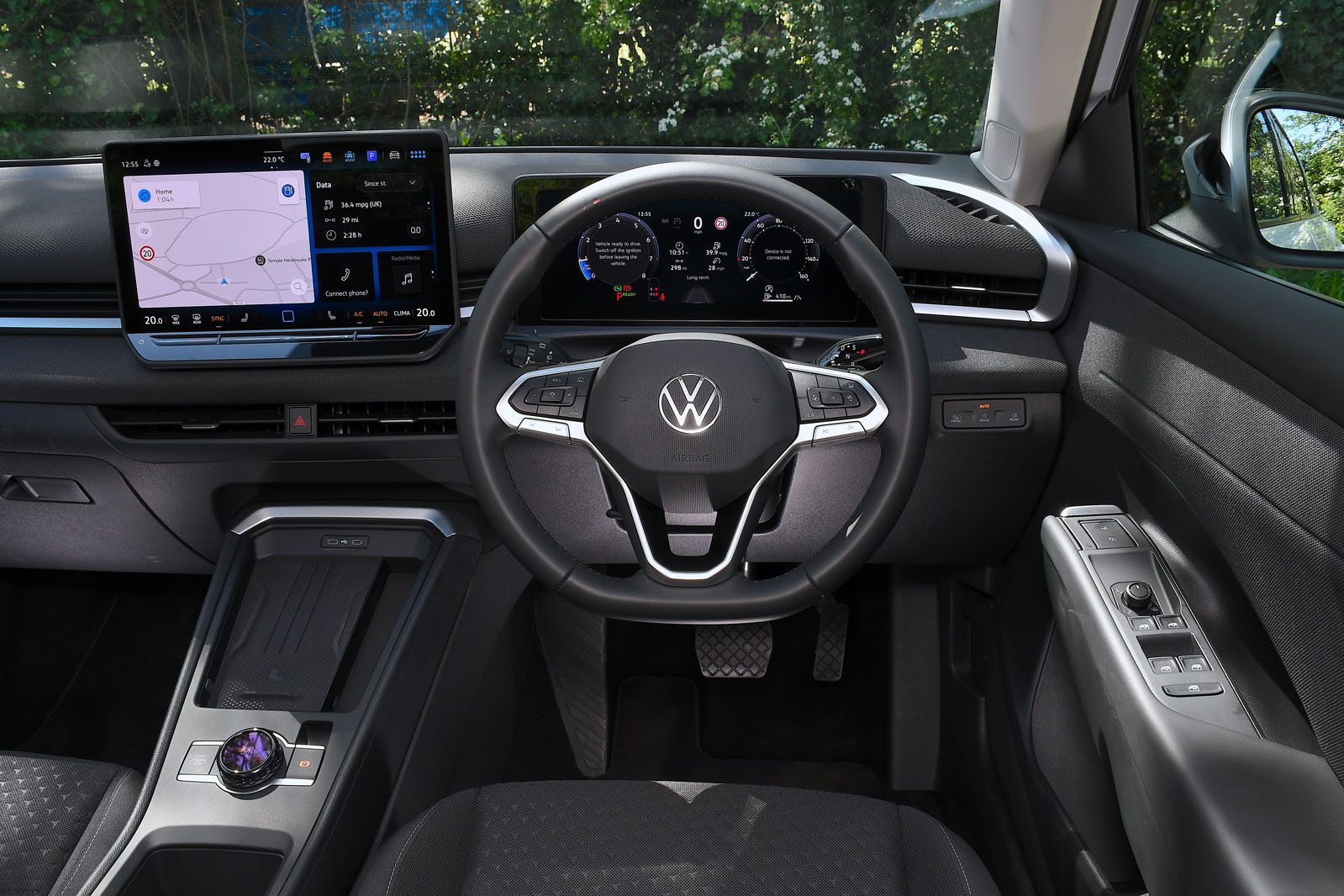
Although the black material doesn’t show it off much, the cloth dash-top creates an appealingly soft, informal, relaxing ambience. It also diffuses the light rather than reflecting it.

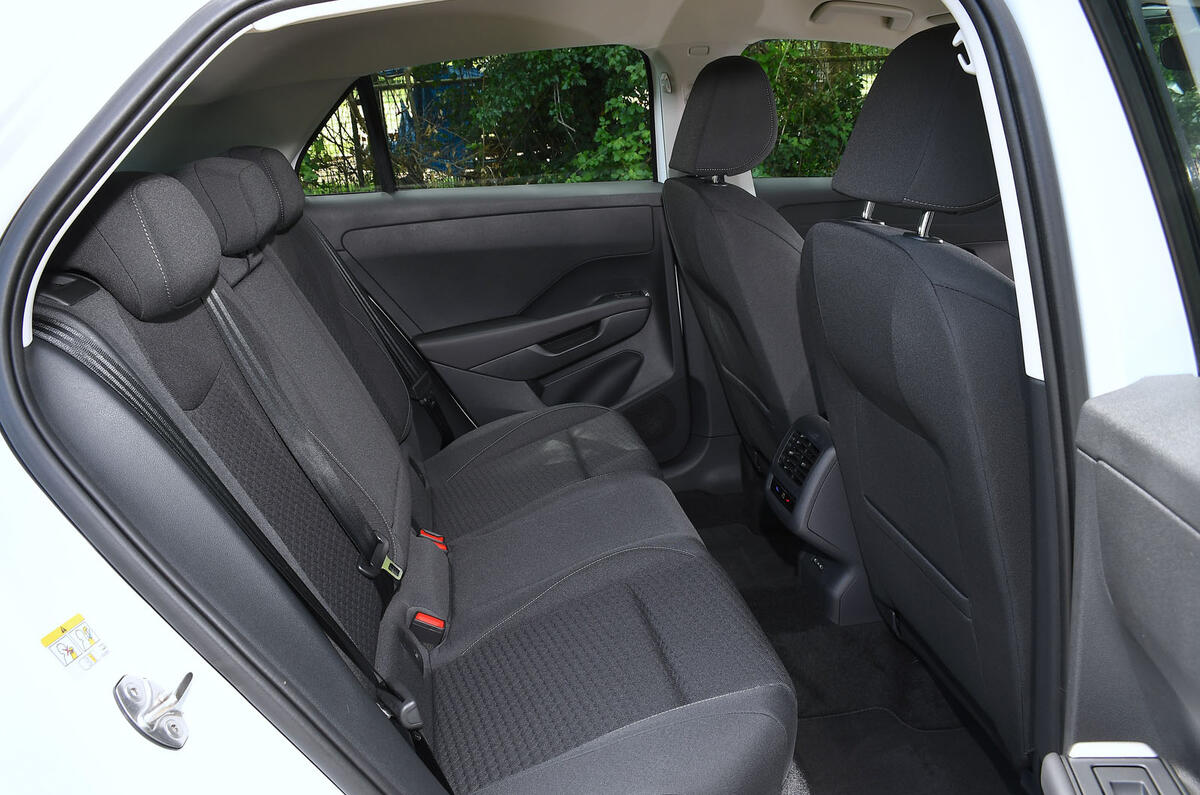
That’s why the measurements for the new T-Roc’s passenger quarters are actually very similar to those of the last Golf hatchback we tested (a Golf e-Hybrid, in 2024). The car presents an only slightly raised driving and seating position as you slide in from the kerb. Although measured leg room, compared with the Golf, doesn’t seem particularly expansive in either row on paper, the car does consistently offer more head room than the Golf, and it does still feel like a roomier car - wherever you’re sitting. 

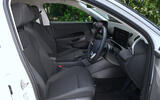
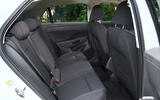
In the front, the standard ‘Comfort’ seats have plenty of manual cushion height adjustment range, electric lumbar support and decent under-thigh support. In the rear, there’s some space for passengers’ feet under the front seats, and appropriate accommodation for average-height adults as well as younger ones.

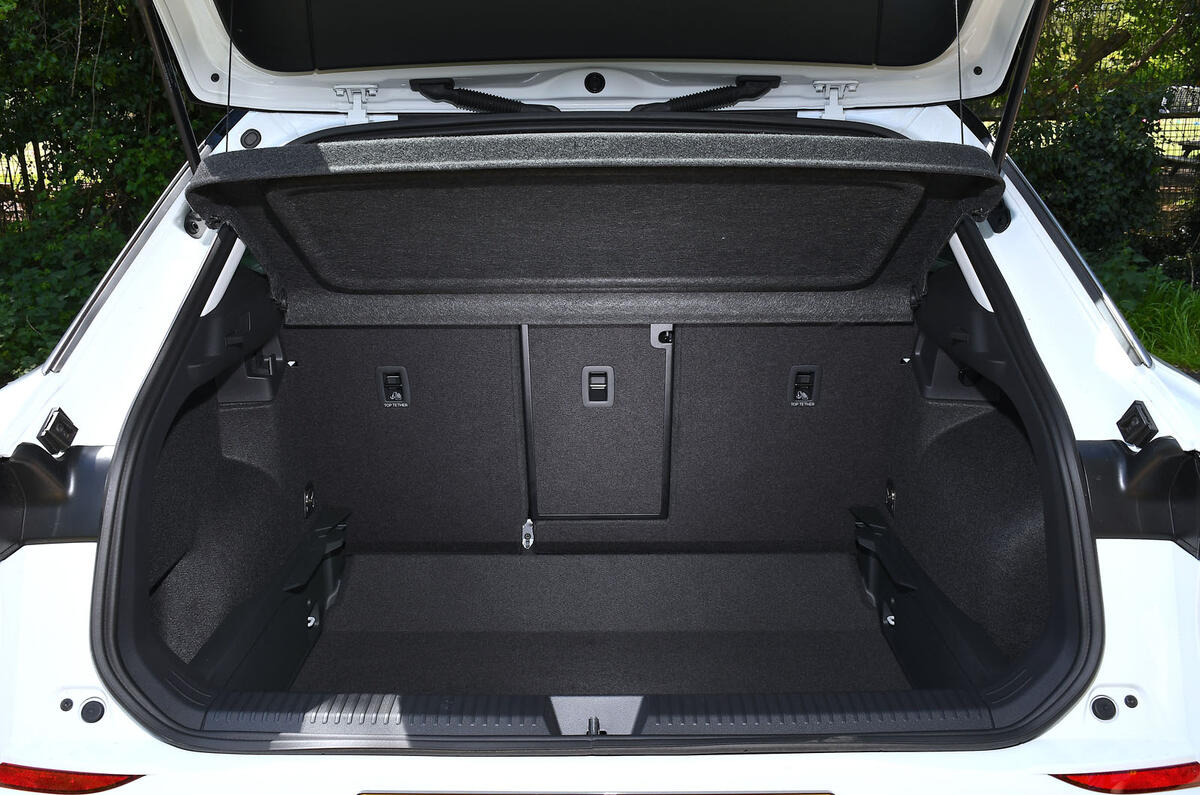
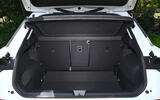
Buyers of this size of crossover SUV are typically estimated to be more interested in extra cargo space than passenger space in any case. The T-Roc’s 475-litre boot is 25% bigger by volume than that of a Golf Mk8 hatchback (381 litres), and bigger also than some key rivals (Toyota C-HR, Mazda CX-30, Ford Kuga) – although not the same size as in the class’s bigger and more bluff competitors (Nissan Qashqai, Kia Sportage).

More widely, Volkswagen insiders have claimed that this car moves back towards its old values in terms of solid, understated, tactile material cabin quality, intuitive functionality and straightforward usability. In other words, it represents a clean break with what is widely considered as the most costly and punishing era in the company’s corporate history, between the outset of the Dieselgate scandal in 2015 and the eventual departure of chairman Herbert Diess in 2022. 

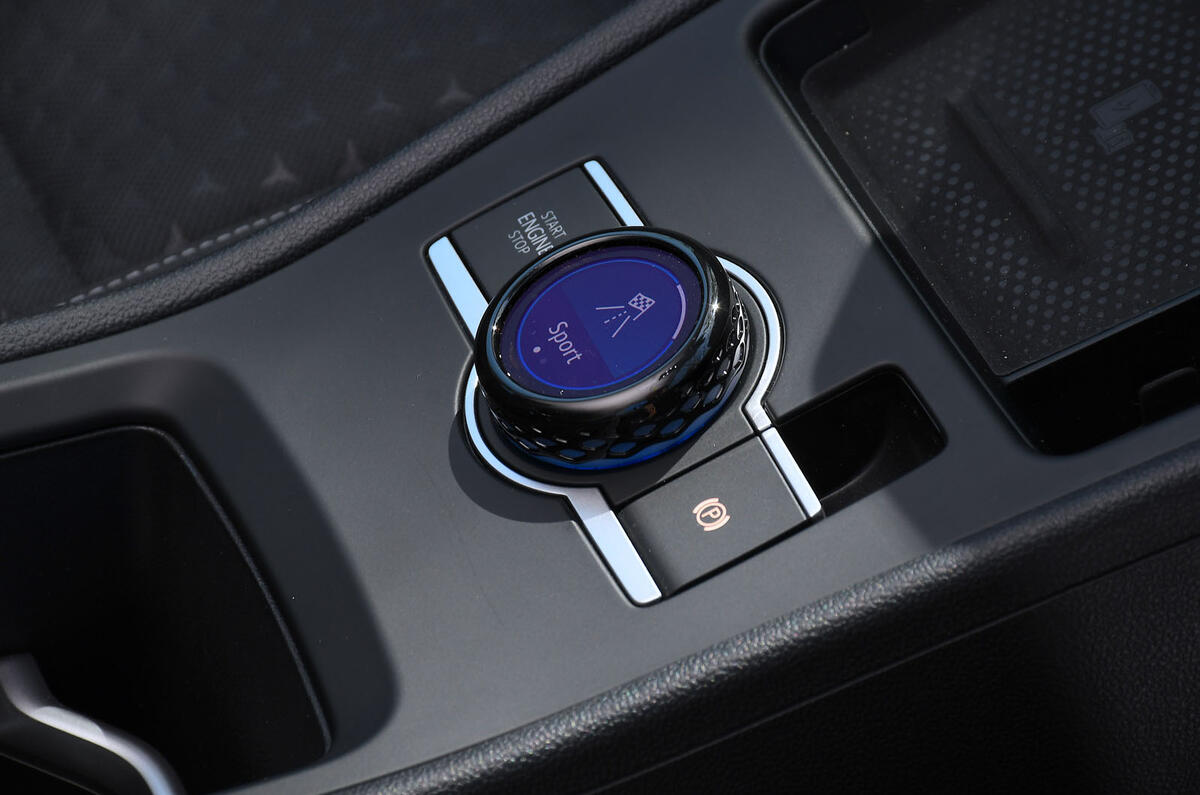
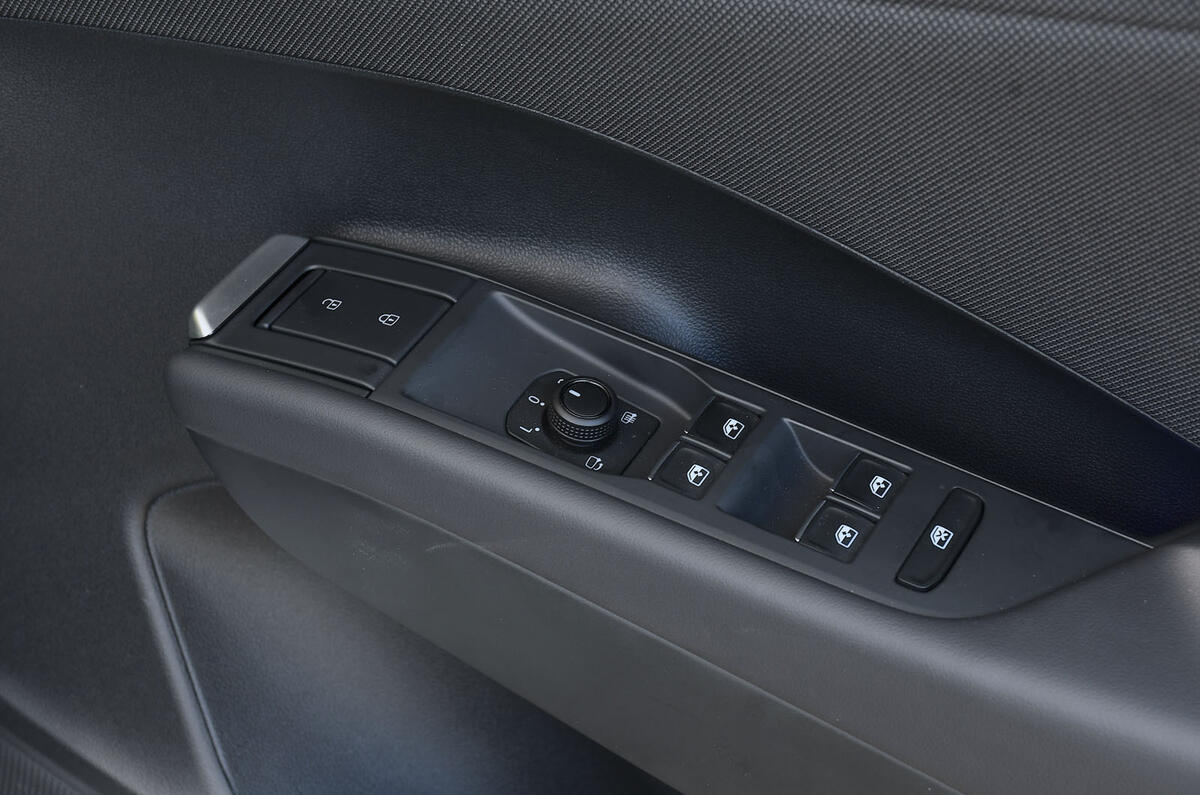
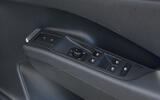
It’s a lot of weight to put on any vehicle’s shoulders. But there is a sense of tactility, simplicity and ungarnished, non-chintzy quality about this interior. Smudgy, high-gloss plastics are very little used, and the switchgear is solid-feeling and uncomplicated. 

Our base-grade test car came with Soul Black upholstery, which was a little dour and conservative. But the fabric-covered dashboard does lend a cosy, lounge-like ambience that – while Volkswagen should probably credit rival Peugeot for popularising the idea in recent years – certainly makes you feel at home.
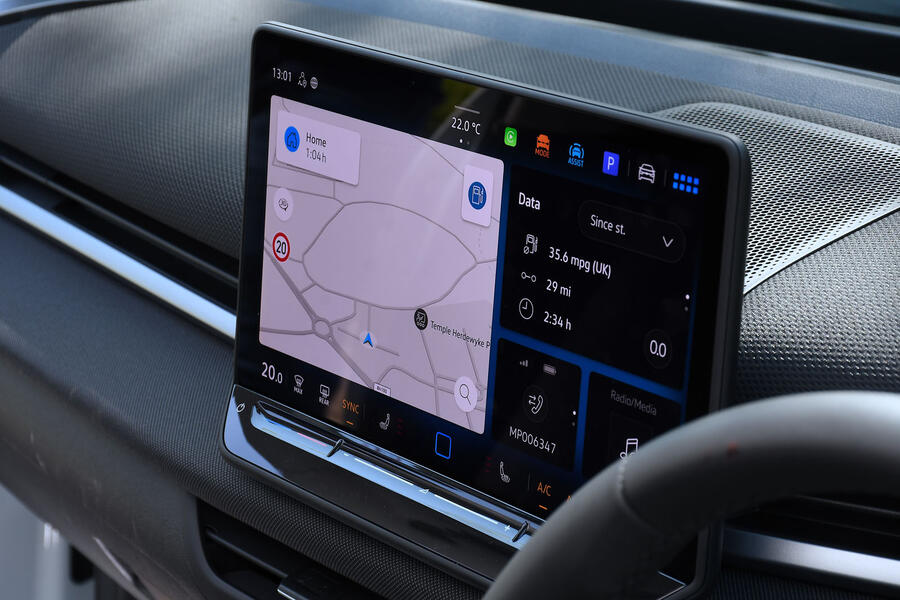
Multimedia - 3.5 stars

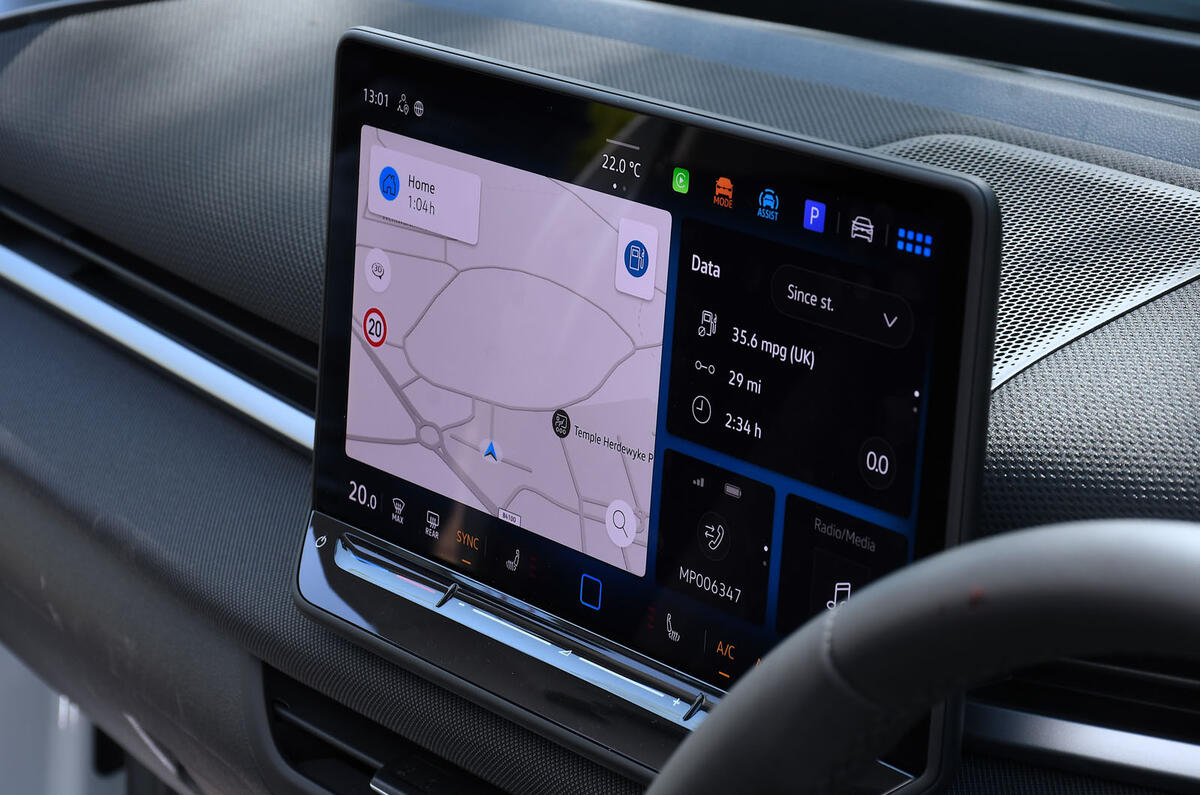
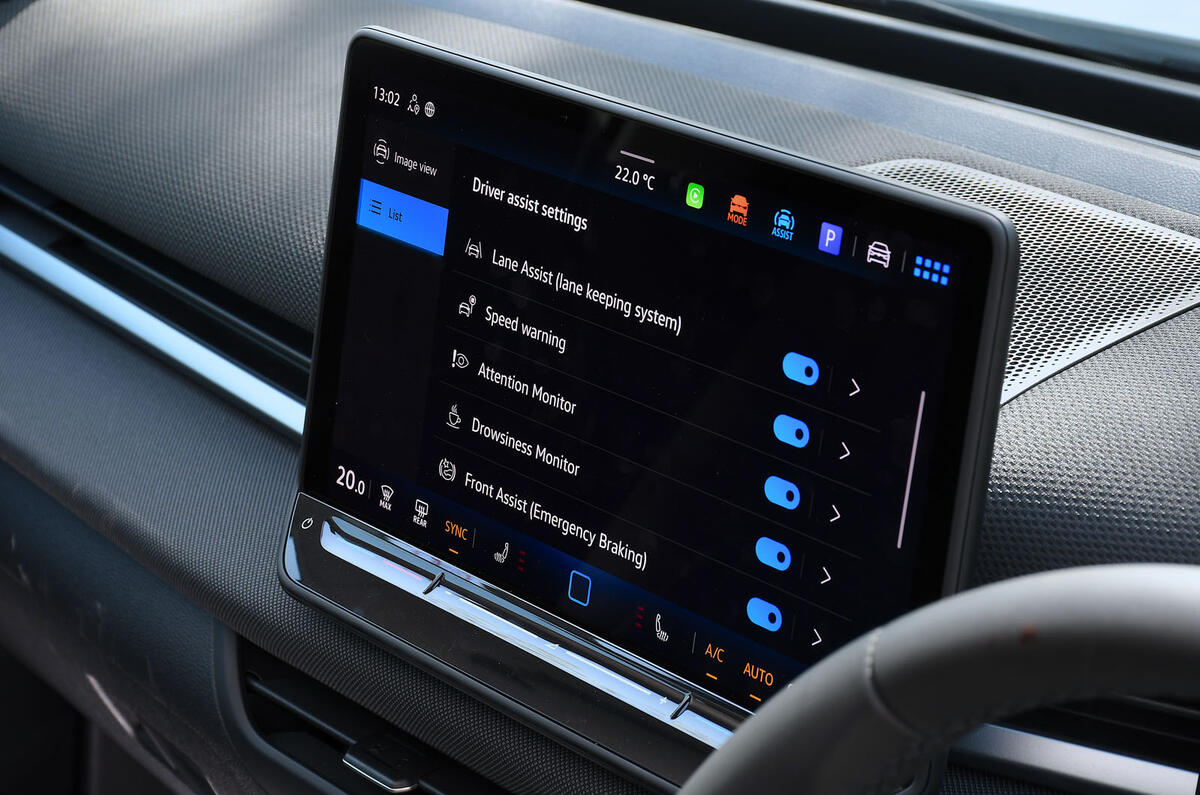
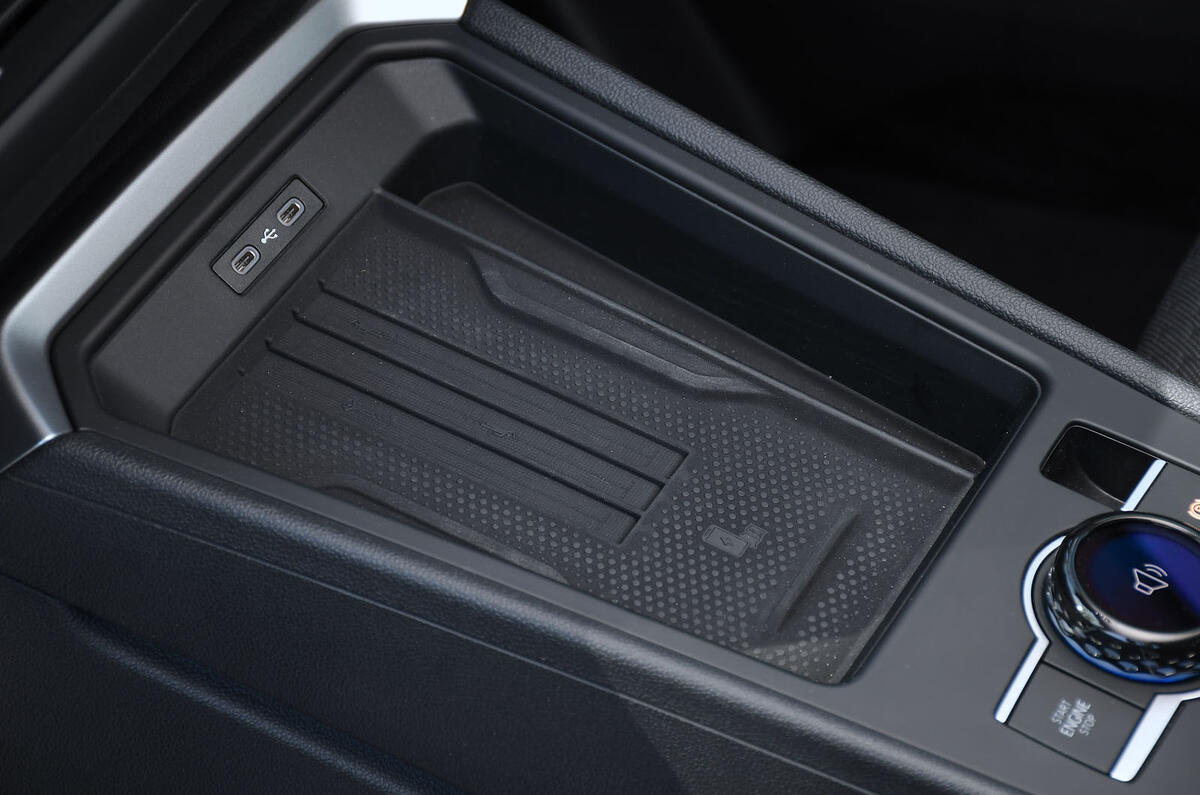
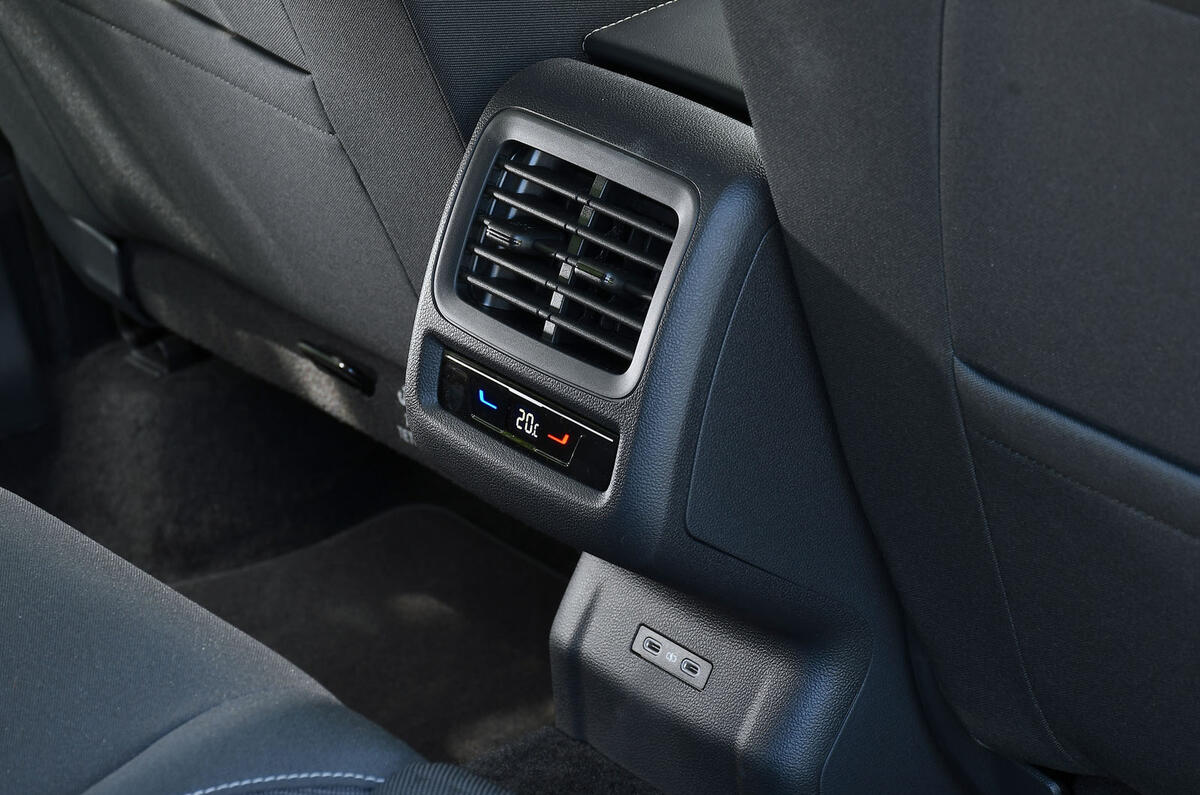
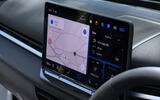
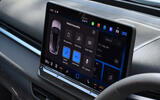
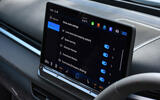
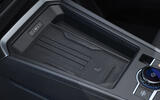
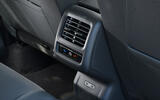
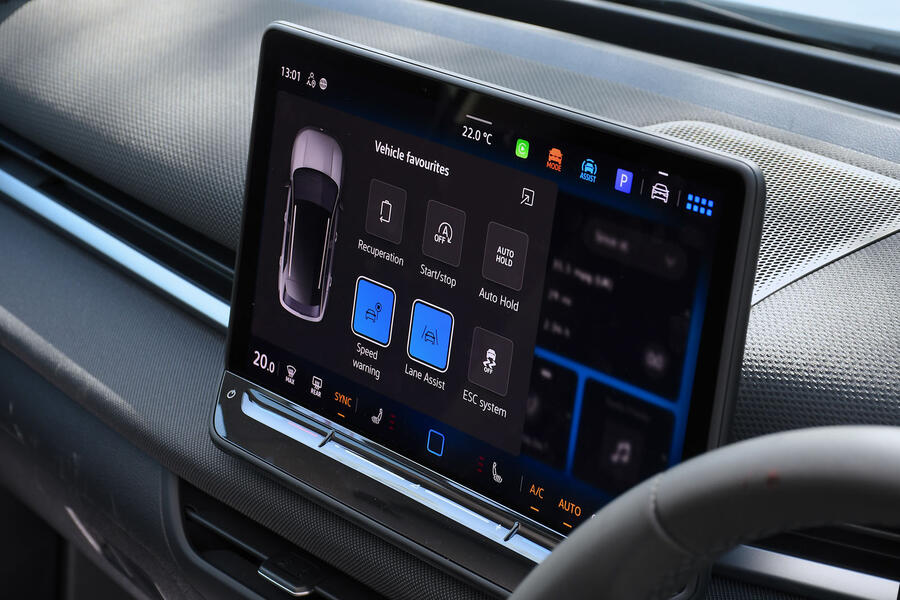
Our test car came with VW’s bottom-rung equipment offering for in-car digital technology. That encompasses an 8in digital instrument display ahead of the driver; a 12.9in free-standing infotainment touchscreen in the middle of the fascia; a six-speaker audio system with full wireless smartphone mirroring compatibility; an inductive device charging pad; and two USB-C device charging ports in each row of seats.

A factory navigation system is not included as standard, although you do get a month’s free trial, which you can activate at a time of your choice. Customers who want one are then expected to pay for it via subscription, or to buy VW’s £1065 Discover Navigation system, which brings with it a ChatGPT-powered, networked voice assistant.

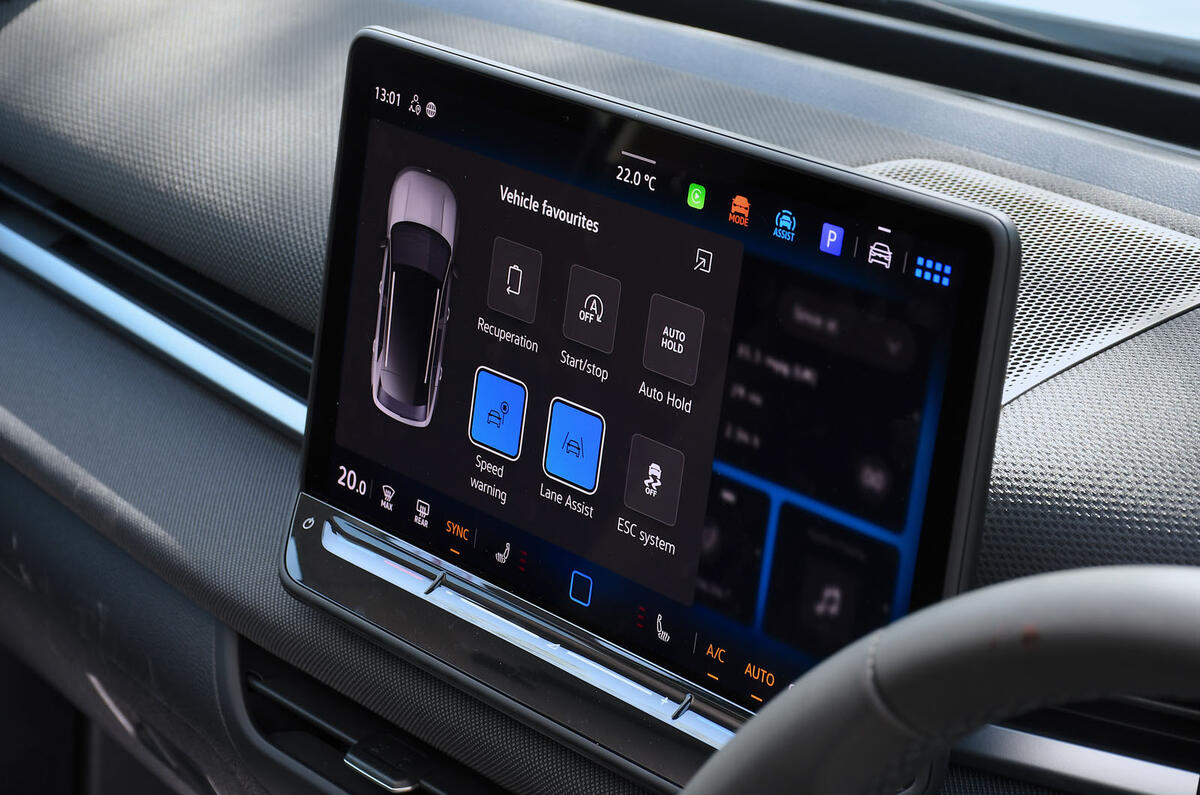
Apple CarPlay certainly works very simply and reliably, so we expect few people to feel the need to upgrade. The multimedia screen has good, customisable toolbars top and bottom and responds fairly quickly. However, we would still prefer fixed physical heating and ventilation controls to the firm’s contentious ‘touch slider’ bar, which doesn’t always seem to work as you intend at the first time of asking.

ENGINES & PERFORMANCE

8
VW T Roc reveiw 2026 25

As we mentioned, the new T-Roc comes with hybrid powertrains across the board. Some prefer the uncomplicated predictability of conventional, unhybridised combustion engines, however; and intuitive operation is supposedly among the core principles that this marque is steering back towards.

The good news here is that Volkswagen’s 48V mild-hybrid powertrain technology doesn’t feel like the equivalent from rival group Stellantis – principally because it only ever assists the piston engine and never drives the wheels while the ICE is shut down, even under very light loads. 

Some VW mild hybrids have an unpredictable brake pedal, as it switches between regen and friction brakes. The T-Roc's isn't perfect, but good enough.

This philosophy – under power, at least – gives the T-Roc good drivability and banishes any possibility of needing a big stab of accelerator pedal to rouse inanimate pistons and to make the car respond to a rapidly developing situation ahead. The engine will deactivate two of its four cylinders under lighter loads, and can shut down entirely for fairly extended periods when coasting and in stationary traffic. You won’t be aware of the former condition, though, because the motor is typically quiet at cruising revs anyway and gives no sign of any change in its running behaviour.

When the hybrid system scavenges energy under a trailing throttle and via the drive wheels, using regen, you do feel it in the first couple of inches of brake pedal response, which can come across as a slight wooliness. This regen effect ebbs and flows somewhat with gear engagement and selection, and with battery condition. But this is the only way in which the e-TSI system really feels in any way different from a conventional ICE powertrain to drive - and it’s not at all problematic once you’re used to it.

The 148bhp e-TSI has quite a torquey-feeling delivery at low and medium crank speeds and on part-throttle, thanks to the starter-generator motor’s addition of up to 41lb ft. As revs rise, so the motor’s otherwise good isolation becomes more coarse and its appetite for work wanes somewhat. 

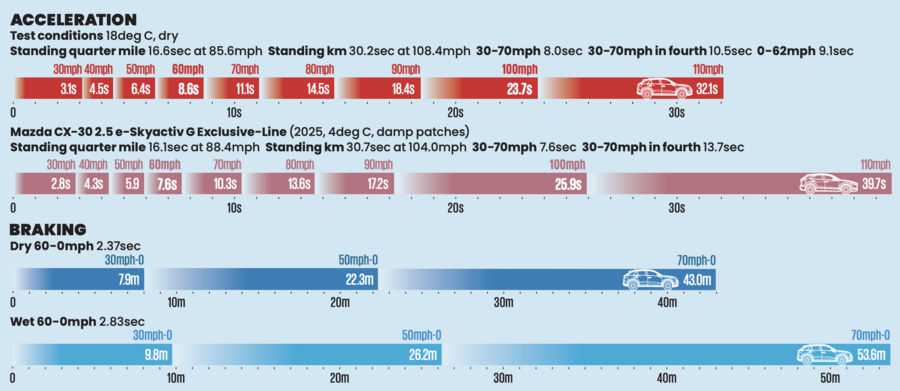
But there’s perfectly adequate performance on tap for a mid-sized, everyday-use, compact family car. It achieved 30-70mph through the gears in 8.0sec, which is almost a second faster than the identically engined but heavier Audi Q3 managed last year, and only a few tenths behind the more powerful Mini Countryman C that we road tested in 2024.


RIDE & HANDLING

7
VW T Roc reveiw 2026 26

The T-Roc offers a classic Volkswagen driving experience that doesn’t set out to put itself between its driver and his or her destination. It’s a car whose handling is assured, competent and the core of respectability, albeit mostly remarkable for how painstakingly unremarkable it actually seems, and how little it does to snag your attention.

It has medium-paced and -weighted steering; a medium-firm, well-controlled ride; and handling that is composed, rather than darting or energetic, and that never fails to make the car proceed pretty much exactly how you intend it to.

A Mazda CX-30 has a marginally more appealing blend of easily won grip, levelness and cornering poise, while a Peugeot 3008 rides more gently and is more superficially agile but has less higher-speed composure on country roads.

The T-Roc is, in short, a dynamic moderate and centrist, in that it doesn’t aim to cater to any extreme but instead to the greatest possible cohort of owners.

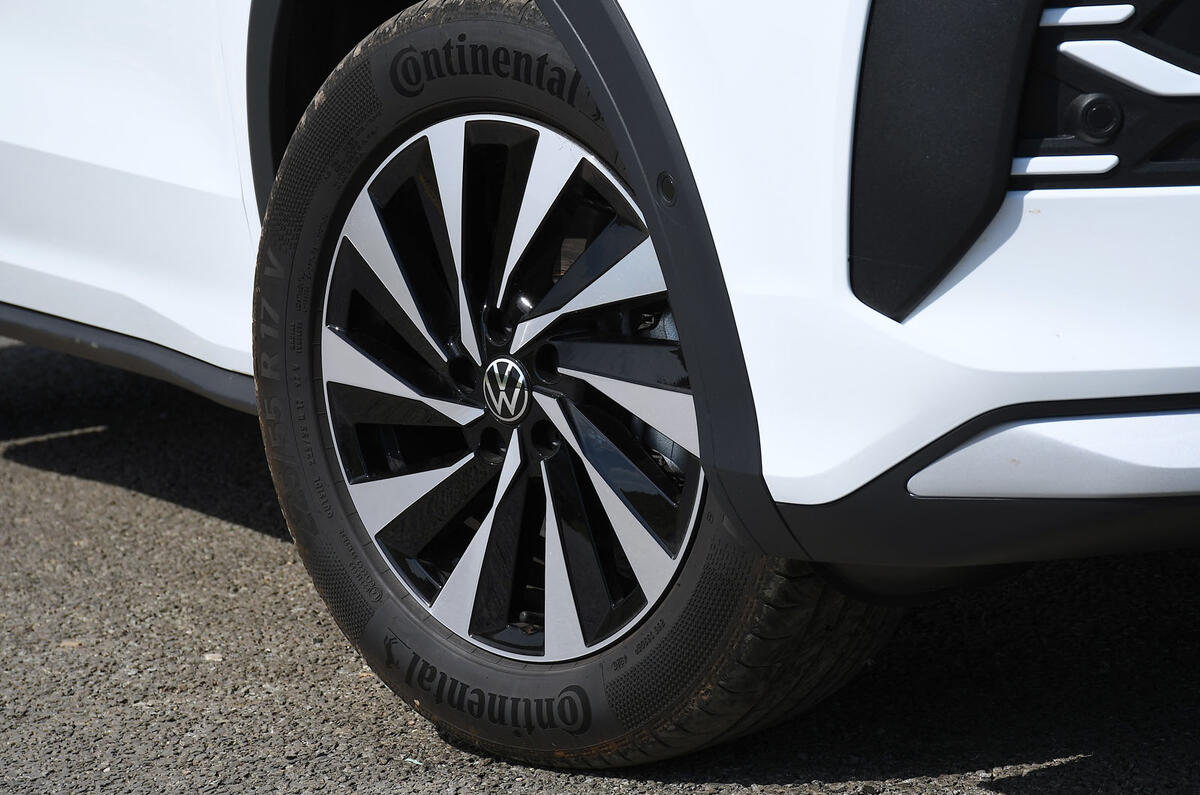
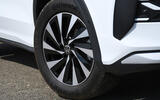
We tested the car on its smallest available (17in) alloy wheels and with efficiency-minded tyres that had plenty of sidewall. It rode competently well, but not with the outright compliance or isolation likely to challenge the most comfortable cars in the class.

Adaptive dampers are offered on this car but only in conjunction with R-Line trim in the UK. Wider test experience suggests that an R-Line model, on 18in wheels and with those DCC dampers, might well leave you with a more dynamically adaptable and sophisticated ride. But go for the 19in or 20in rims instead and you’ll likely only be robbing Peter to pay Paul.

Assisted Driving - 4 stars

One benefit of the T-Roc’s move to the same platform as bigger, more expensive siblings is the availability of the company’s latest assisted driving technology. Volkswagen therefore claims that the car’s Travel Assist semi-autonomous motorway cruise control functionality (automatic lane change etc) is unique in its class. It also offers Park Assist Pro automated parking, controllable via your phone once you’ve left the cabin. Furthermore, it’s claimed, the sophistication of the sensors it needs to deliver all of the above even gives it better anticipatory automatic energy regeneration.

We found the driver monitoring system a little quicker to intrude and more irksome than is Volkswagen’s familiar standard, but its ADAS are otherwise effective and discreet, with easy top-level accessibility to disable them if you prefer.

MPG & RUNNING COSTS

8
VW T Roc reveiw 2026 01

The T-Roc range has effectively opened for business at the value end of the spectrum. Both the full-hybrid 1.5 and 4Motion 2.0 e-TSI models set to join the range later will do so at higher price points than the 1.5 e-TSIs sit at now. 

The entry-grade 114bhp Life model can be had for just under £32,000 – not the sort of offering likely to tempt anyone eyeing up one of the class’s newish value options, whether that be a Chery Tiggo 7, Dacia Bigster or Geely Starray. It’s cheap enough, though, to give the T-Roc range what seems like a grounded, reasonable base.

Our Life test car came with adaptive LED headlights, front and rear light bars and illuminated VW logos as part of a £1235 option pack. We’d happily have avoided the extra outlay and kept a more understated look.

Most T-Roc owners will be expected to explore richer trims and engines, and end up at a transaction price closer to £40,000 than £30,000. That makes this car’s true competitors the likes of the Peugeot 3008, Mini Countryman and Toyota C-HR, against which it’s fairly competitively positioned.

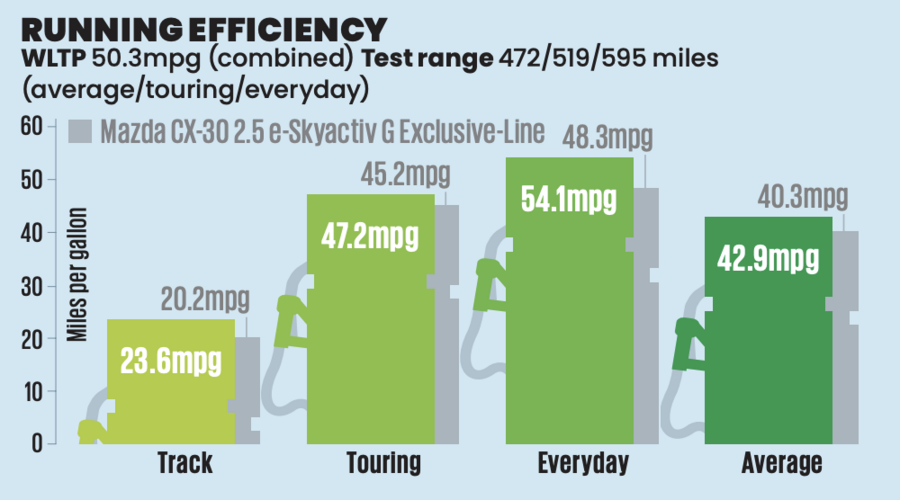
Test economy proved quietly commendable. The T-Roc beat cars such as the Mazda CX-30 and Mini Countryman C mild hybrids for both motorway (‘touring’) and urban commuter (‘everyday’) efficiency, but narrowly missed the standards of rivals we’ve tested lately with Stellantis’s 1.2-litre 48V Hybrid 145 powertrain (Vauxhall Grandland, Peugeot 5008).

VERDICT

8
VW T Roc reveiw 2026 28

The T-Roc reminds you of a time, 30 years ago, when volume-brand German cars had a defining reputation for substance, durability and versatility. It’s a reputation that those same German brands have spent subsequent decades resisting. 
Has VW decided, finally, to embrace its core strengths again? The T-Roc makes it feel a little that way. It’s spacious, solid, comfortable and versatile; fairly efficient and refined too. But it’s also unprepossessing, stable and easy to drive, rather than desirable, outgoing, characterful or especially dynamically appealing.
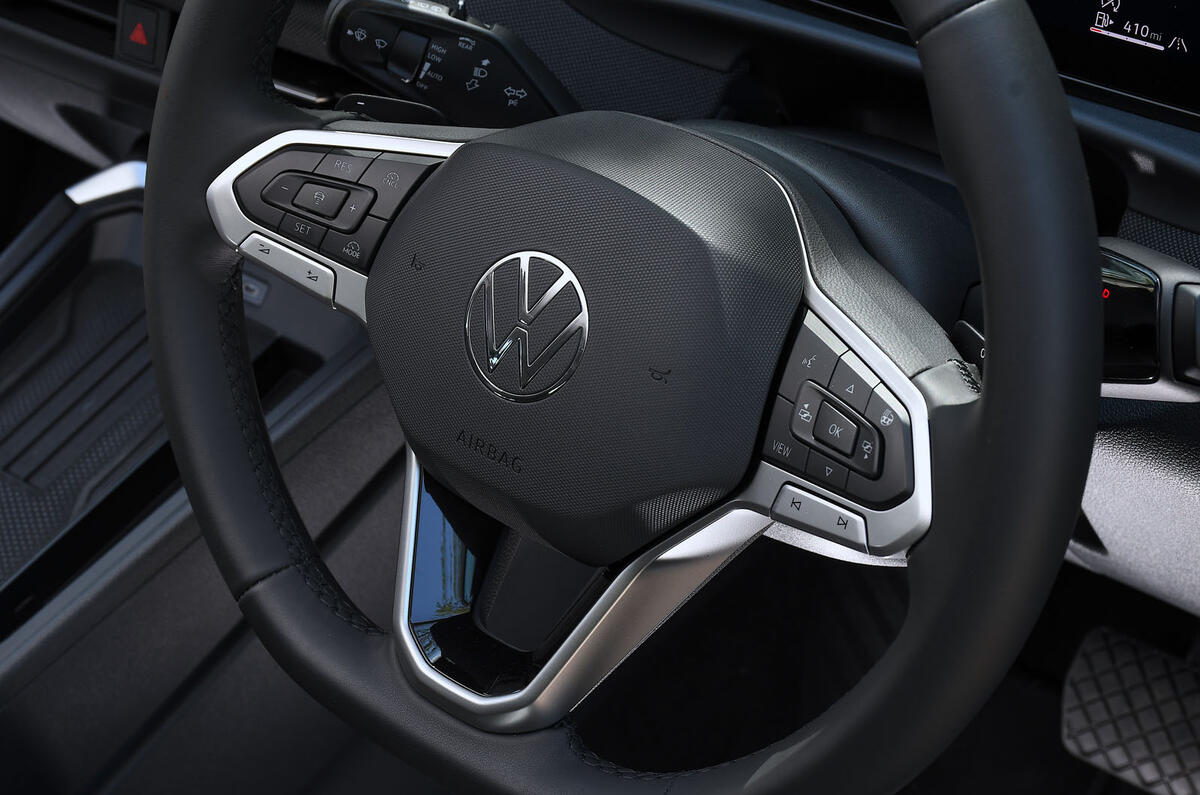
Life trim is tailor-made for people irritated by unnecessary technology on modern cars. It gets manual cruise control, and even shuns LED matrix headlights, and illuminated badges and light bars. A curmudgeon’s dream.
This, you could say, is Volkswagen providing dependable, reassuring ‘Volkswagen’ qualities, and banking on them to distinguish it. Given the apparent state of flux of the car market in 2026, that seems a smart strategy to us.

Matt Saunders

Matt Saunders Autocar
Title: Road test editor

As Autocar’s chief car tester and reviewer, it’s Matt’s job to ensure the quality, objectivity, relevance and rigour of the entirety of Autocar’s reviews output, as well contributing a great many detailed road tests, group tests and drive reviews himself.

Matt has been an Autocar staffer since the autumn of 2003, and has been lucky enough to work alongside some of the magazine’s best-known writers and contributors over that time. He served as staff writer, features editor, assistant editor and digital editor, before joining the road test desk in 2011.

Since then he’s driven, measured, lap-timed, figured, and reported on cars as varied as the Bugatti Veyron, Rolls-Royce PhantomTesla RoadsterAriel Hipercar, Tata Nano, McLaren SennaRenault Twizy and Toyota Mirai. Among his wider personal highlights of the job have been covering Sebastien Loeb’s record-breaking run at Pikes Peak in 2013; doing 190mph on derestricted German autobahn in a Brabus Rocket; and driving McLaren’s legendary ‘XP5’ F1 prototype. His own car is a trusty Mazda CX-5.